Elias: The Man with an Animal Connection – Better Than Dr Doolittle And Wiser Than Dr Livingstone

2–3 minutes

The Listener

Elias never thought of himself as special. He lived in a small cabin at the edge of the woods. There, he worked as a carpenter. In the evenings, he fed the stray cats that wandered in from the trees. He had always felt an odd comfort around animals. He attributed this to his quiet nature and patient hands.

It began with his dog, Rusty. One evening while Elias rubbed behind the old hound’s ears, he thought he heard a whisper. It wasn’t a sound exactly, but a clear impression: “Don’t stop, that feels good.” Elias froze, hand hovering mid-scratch. Rusty nudged him insistently, and the thought returned, playful and warm. At first, Elias dismissed it as his imagination. The barn cat slinked across the porch the next morning. Yet, he felt a sharp pang of hunger that wasn’t his own. He realized something impossible was happening.

At first, the animals spoke only in feelings. They expressed affection when he stroked their fur. There was annoyance if he pulled away too soon, and gratitude when he left out food. But as days passed, the impressions grew sharper, almost like sentences forming inside his mind. One afternoon, Rusty limped. Elias felt a jolt of pain in his knee. This was followed by the plea: “It hurts, please help.” He checked and found a thorn buried deep in the dog’s paw. A sparrow darted to his windowsill and flooded him with urgency: “Nest broken, chicks in danger.” Elias followed its pull and discovered a nest toppled in the wind. He rescued the hatchlings before the foxes found them.

Word seemed to spread, though Elias never understood how. Stray dogs lingered near his cabin. Deer stared at him without fear. Once, even a wounded hawk landed on his porch rail. Each brought with it a silent voice—requests for healing, warnings of predators, messages of danger to others of their kind. With every answered call, Elias felt the bond deepen.

Soon he realized this gift was more than companionship. It was responsibility. He can bridge a gap no one else: soothing fear, preventing harm, guiding creatures toward safety. A flood threatened the lower fields. He was awoken by the frantic voices of burrowing animals. He led the farmer’s family to higher ground just in time. Poachers crept through the forest one autumn night. The owls carried their presence to him in overlapping echoes. He alerted the rangers. Before long, his reputation surpassed even that of Dr. Doolittle, carrying an edge that would have made famed explorer Dr. Livingstone himself take notice.

Elias no longer saw himself as just a man in a cabin. He was part of a living chorus, every feather, paw, and claw connected through an unseen thread. And though it sometimes weighed heavy on him, he carried it gladly. For the first time in history, animals had found someone who truly listened. He had discovered a purpose greater than he’d ever imagined.


By Benjamin GroffMedia© | benandsteve.com | 2025

The Heartwarming Bond: My Three Childhood Dogs

By Benjamin GroffMedia© | benandsteve.com | 2025 Truth Endures©

By Benjamin GroffMedia© | benandsteve.com | 2025 Truth Endures©

3–4 minutes

My Three Dogs

Growing up, we had dogs that made our lives richer in ways I’m still discovering today. There were three of them: a St. Bernard–Collie mix, a German Shepherd, and a Rat Terrier—Oggy, Bruiser, and Jackie.

These three would become my best friends throughout my childhood.

The first to arrive was Oggy. He was a big, playful dog who loved to wrestle in the front yard for hours. But more than anything, he was our guardian. Oggy knew his role: to watch over us. Every afternoon, he met us at the gate when the school bus dropped us off and escorted us home. No stranger ever approached our house without Oggy ensuring they had our blessing to be there.

Next came Jackie, a spry little hound named after a friend’s dog. Jackie quickly became our best mouser and a fierce snake fighter, teaming up with Oggy on countless backyard missions.

Finally, Bruiser joined the pack—a German Shepherd with a name tougher than his heart. Although Bruiser had been obedience-trained and sounded intimidating, he was naturally gentle and shy. But when it mattered, he showed real courage, standing shoulder to shoulder with Oggy and Jackie to guard our home.

By age 13, the three of them followed me everywhere. We hiked deep into the forests near my dad’s ranger station, trekking miles through wildland few others dared to explore. Jackie scouted ahead, flushing out surprises. Oggy stayed close, my sturdy shield. And Bruiser brought up the rear, quietly ensuring nothing came up behind us.

Looking back, I realize they created a cone of safety around me, a living circle of love and protection. Whether I was on foot, on horseback, or driving a tractor, my trio was always there. They were my constant companions through childhood adventures.

Sometimes, we’d stop at a fallen log and sit together. I would talk to them about my troubles—problems that seemed so large at 13—and they would listen in silence. When I stood up again, the issues felt either solved or less heavy.

We would set off again every afternoon after school unless I had work to do for my dad. If I did have chores, they stayed right by my side, enduring the labor with me.

When I turned 17, we lost Oggy. His arthritis had left him nearly unable to walk, and his eyes had gone cloudy. With love and sorrow, my dad had a veterinarian help him cross over to a better place.

Jackie passed a few years later while I was away from home, already carving my path in the world. And then, in 1984, Bruiser’s body gave out after a long struggle with an incurable skin condition. After months of holding on, my parents made the painful but loving decision to let him go.

Those three dogs had been with me through it all. They ran beside me along ridges. They chased waterfalls. They climbed cliffs to the highest points of the land. They sat with me as we watched the world stretch out for miles.

Jackie once fought off a copperhead snake. She suffered terrible bites that swelled her head to twice its size. Yet, she survived and came running with us again. Oggy and Bruiser learned to shadow me unseen while I rode horseback, quietly blocking any stranger who came too close. It wasn’t training. It was friendship—the kind that instinctively protects without being asked.

In the end, the pain became too much for them to bear. Love helped us let them go. It broke our hearts. I’m grateful my dad made those final decisions because, to me, they weren’t just dogs.

They were my most faithful friends, making my childhood a place of wonder, safety, and unconditional love.

The Great Dog Escape: A Story of Resourcefulness

GROFF MEDIA 2024© TRUTH ENDURES IMDBPRO

Presented by benandsteve.com By: Benjamin Groff II©s

2–3 minutes

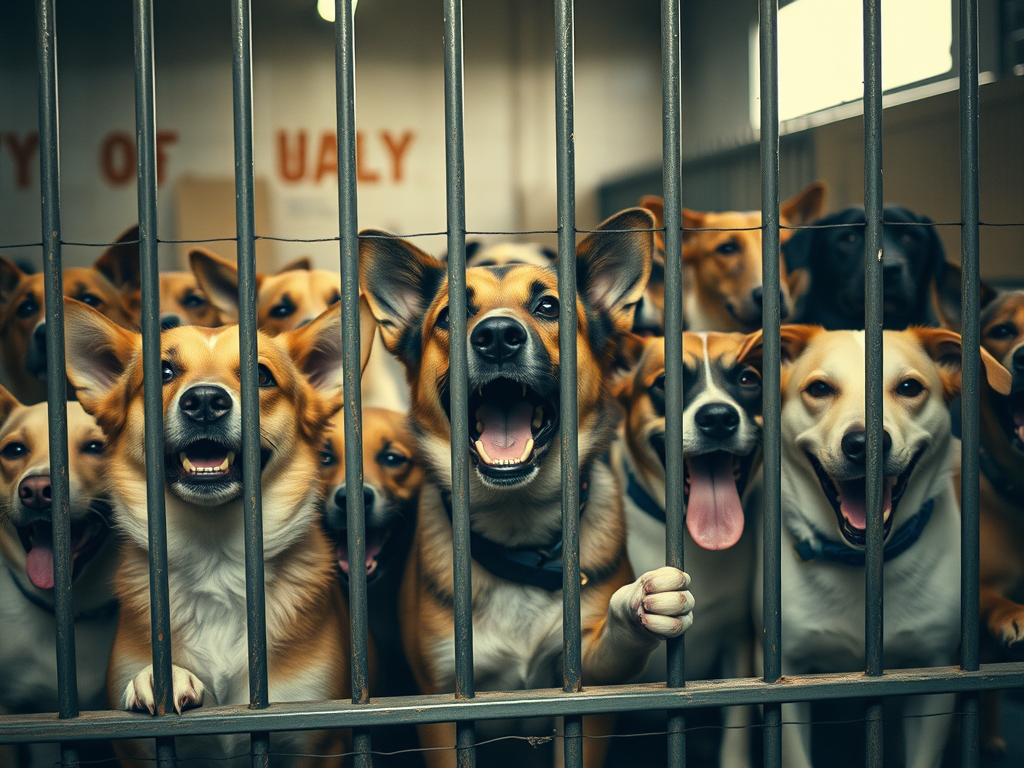
Huey sat in the corner of the kennel, ears perked, eyes darting toward the metal gate between them and freedom. Max, his trusted partner, paced back and forth, tail flicking with nervous energy. Around them, the others—Spike, Bella, and Rufus—pretended to be sleeping, but they were all listening, waiting for the signal.


“Tonight’s the night,”

Huey whispered.

“The screws turn in at nine. We give ’em an hour, then we move.”

Max nodded.

“Bella, you’re on distraction. Get that yapper down the row to start barking. When the guard checks on him, we make our move.”


Bella wagged her tail.

“Piece of kibble.”


Spike chimed in,

“I got the latch covered. I’ve been watching the humans do it for weeks. I think I can pop it.”


“Good,”

Huey said.

“Once we’re out, we head for the back gate. Rufus, you still got that big brute act down?”


Rufus grinned, his jowls flopping.

“One good growl and the yard mutt will scatter.”


The plan was perfect. They had worked out every detail. The humans thought they were dumb dogs, but they’d prove them wrong tonight.


The lights went out, and the night settled over the pound. A low growl rumbled from the cage at the far end. Right on cue, the little yapper started up. Bella joined in, then Spike, then the whole row. Sure enough, heavy boots clomped down the hall. The guard muttered something about “dumb mutts” and stomped off to quiet them down.


“Go time,”

Huey whispered.


Spike reached through the bars, jiggling the latch—a click. The gate swung open. One by one, they slipped out, moving fast and low, paws silent on the concrete. They were almost to the back gate when Max skidded to a stop.


“What is it?”

Huey hissed.


Max’s eyes gleamed in the dark. His tail quivered.

“Bone.”


Huey sighed.

“Forget it, we gotta—”


“Bone,”

Max repeated, but the others saw it, too. A big, juicy, perfectly gnawed bone, lying right there, almost like fate had placed it in their path.


Rufus whined.

“It’s beautiful.”


“No time!”

Huey barked.

“We gotta go!”


Max, still, had already lunged for it. Spike growled, trying to shove him aside. Bella snapped at them both. Chaos erupted. Snarls and yips filled the air.


Lights flicked on. A door slammed. The humans were coming.


“Run!”

Huey yelled, but it was too late.


A net came down over Rufus. Bella yelped as a leash snapped around her neck. Huey dodged left, but a firm hand grabbed his collar.


Max? He was still chewing.


The next day, they sat in their cages, tucked tails, watching the humans talk about “bad dogs” and “extra security.”


Max sighed, staring at the bone still sitting outside the fence.

“Worth it.”


Huey groaned.

“Next time, we leave you behind.”


But they all knew there would be a next time. Because a good dog never quits, and a great dog always has another plan.

Juniper and Luma: A Tale of Unlikely Friendship

GROFF MEDIA 2024© TRUTH ENDURES IMDBPRO

Presented by benandsteve.com By: Benjamin Groff II©s

1–2 minutes

The Fox and the Firefly

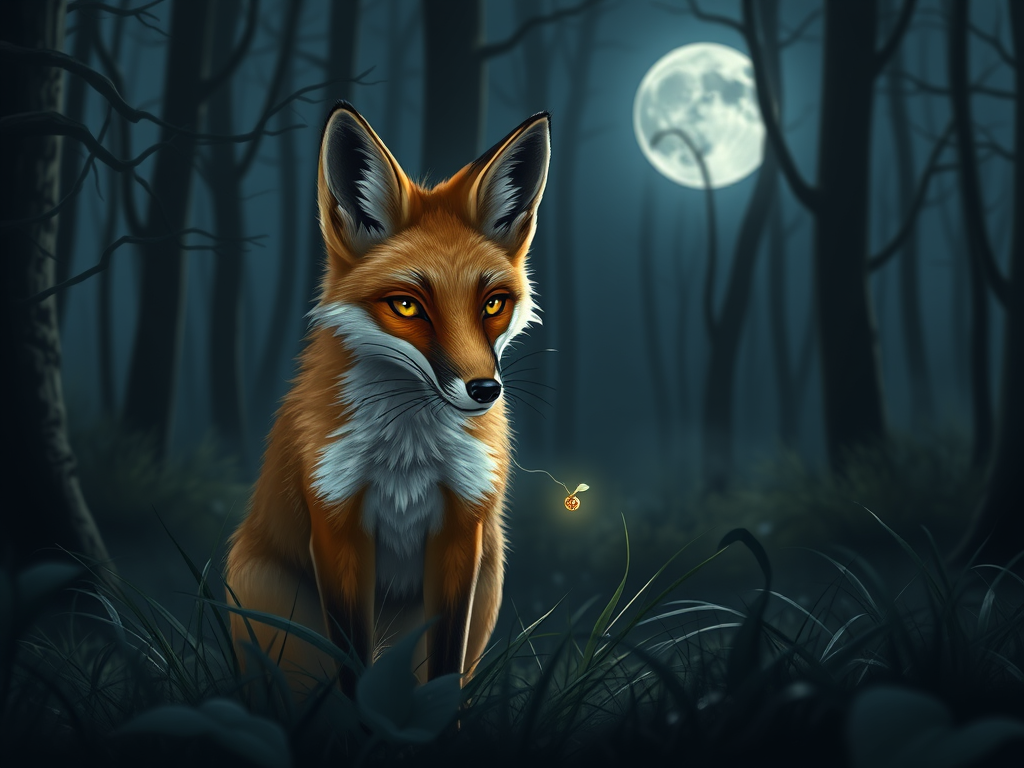
The trees hummed with the wind in the Whispering Woods’s heart. The moon painted silver on the forest floor. There lived a fox named Juniper. She was sleek, clever, and always alone. Other animals whispered about her, calling her a trickster, a thief. She had learned that being alone was more manageable than fighting their expectations.

One evening, a tiny glow flickered near her nose as she padded along the riverbank. A firefly, tiny and trembling, hovered in the air.

“You’re in my way,”

Juniper said, flicking her tail.

“I’m lost,”

The firefly admitted its light dimming.

Juniper sighed.

“Lost? How do you lose your way when you can fly?”

The firefly hesitated.

“I followed my friends, but the wind carried me away.”

Juniper should have walked on. She wasn’t the type to help. She had grown used to being alone, and companionship was foreign to her. But something about the firefly’s quivering glow made her pause.

“Fine,”

She said,

“I’ll help you, but only because I know these woods better than anyone.”

The firefly buzzed with gratitude.

“Thank you! I’m called Luma.”

For the first time in a long while, Juniper felt a glimmer of companionship. As they traveled together, Luma lit the dark paths. She guided Juniper through the thickest parts of the forest. Juniper used her sharp nose to avoid danger.

They spent the night talking. Luma didn’t fear or expect her to be anything other than what she was.

By dawn, they reached a clearing filled with twinkling lights—Luma’s family.

“Stay,”

Luma said.

Juniper almost did. But she was a fox, a creature of the earth, and Luma belonged to the sky.

Still, as she turned to leave, Luma promised,

“Whenever you walk the woods at night, look for my light. You’ll never be alone.”

And so, every night, as Juniper wandered, a tiny flickering glow followed her—an unlikely friendship that lit the darkness forever.

COYOTES CAUSING TROUBLE IN METRO AREAS

Groff Media 2024© Truth Endures IMDbPro

Presented by benandsteve.com By: Benjamin Groff II© 


The overpopulation of coyotes in many metropolitan areas, including Arizona, California, and Nevada, is a severe issue. This poses a threat to our pets and disrupts the balance of the local ecosystem, leading to potential conflicts with humans and other wildlife.

  • Bring Pets Indoors: When a coyote is spotted nearby, the most effective action is immediately bringing pets inside. Never leave small pets, like dogs or cats, unattended outdoors, especially at night, as they are at high risk. This simple step can significantly reduce the chances of a coyote attack, giving you control over your pet’s safety.Make Noise: If you can do so safely, use loud noises to scare the coyote away. Yelling, clapping, or banging objects can be effective, as coyotes tend to be skittish around loud sounds.
  • Use Water or Bright Lights: If accessible, spray water or turn on outdoor lights to deter the coyote from staying near your property. Many coyotes dislike sudden light exposure or water splashes.
    • Secure Food Sources: Coyotes are drawn to food left outdoors, such as pet food, garbage, or bird feeders. Remove these attractants by keeping pet food indoors, securing trash bins, and cleaning up fallen fruit or food from patios.
    • Fence Your Yard: Installing a tall, solid fence (at least 6 feet high) with a roller at the top can prevent coyotes from jumping over. A ‘coyote roller’ is a simple yet effective device that one can add to the top of a fence. It consists of a PVC pipe or metal rod that spins freely, making it difficult for coyotes to gain a foothold. Use Coyote Repellents: Commercial coyote repellents around the yard. These products typically use strong odors to discourage coyotes from venturing too close.
      • Consult Arizona Wildlife Authorities: For ongoing issues, contacting local wildlife or animal control agencies can help address concerns about coyote activity. In Arizona, the Arizona Game and Fish Department offers guidance on wildlife management.

        Organizing neighborhood awareness of wildlife encounters is crucial in building a united approach to preventing conflicts with coyotes. Sharing best practices and staying alert about sightings will benefit other pet owners and encourage community-wide efforts to limit coyote activity. Educating the community can all play a part in keeping our pets and properties safe.

        Why Being Different is Special: Spot’s Lesson

        A Story By: Benjamin Groff© Groff Media 2024© Truth Endures

        Once upon a time on Cloverfield Farm, there was a little dog named Spot. Despite his name, he didn’t have a single spot on his smooth, white coat. All the other animals had their own unique markings—some had spots, some had stripes, and even Patch the cat had a patch over one eye. Spot often felt left out, especially when the other animals teased him.

        “Hey, Spot! Where are your spots?”

        the goats would bleat, snickering amongst themselves.

        “Spot doesn’t even look like a Spot,”

        the chickens clucked, pecking around the yard as Spot’s ears drooped in embarrassment.

        Tired of feeling like he didn’t belong, Spot decided he’d make his own spots. One day, he found some mud by the pond and rolled around in it, making little brown splotches all over himself. He trotted proudly into the barn, thinking he looked just like everyone else.

        But the cows mooed with laughter.

        “Those spots don’t look real, Spot,”

        they teased.

        “You’re still plain!”

        Spot tried again the next day, sneaking into the farmer’s house and dipping his paws in paint from an art set left out on the porch. This time, he dotted his fur with black paint, carefully pressing little paw prints all over his coat. Spot thought he looked quite spotty now, but as he strutted around the barnyard, the animals just laughed louder.

        One day, feeling disheartened, Spot wandered to the edge of the pasture and lay down beneath a big shady tree. Just then, a large bull—well, he looked like a bull—ambled over and lay beside him.

        “What’s the matter, Spot?”

        asked the bull.

        “Oh, everyone teases me because I don’t have any spots,”

        Spot sighed.

        “I’ve tried everything to fit in, but they always laugh.”

        The bull nodded thoughtfully.

        “You know, Spot, they laugh because they don’t understand. And by the way, I’m not a bull—I’m a steer.”

        Spot’s eyes widened.

        “A steer?”

        The steer chuckled.

        “Yes. I may look like a bull, but I’m not. And that’s okay. I learned a long time ago that who you are inside doesn’t need to match what everyone thinks they see on the outside. And it doesn’t have to match what they want, either.”

        Spot tilted his head, listening.

        “You see, Spot,”

        continued the steer,

        “everyone has something that makes them different. And sometimes, animals make fun of others because they don’t want their own differences noticed. It’s easier for them to point at you than to face their own insecurities. But those differences are what make each of us unique.”

        Spot thought about this for a moment.

        “So… you think it’s okay that I don’t have spots?”

        “More than okay,”

        said the steer with a warm smile.

        “You don’t need spots to be special. Being you is what matters. When you’re proud of who you are, those who tease you may just stop because they’ll see that you don’t need their approval.”

        Spot felt something warm and happy inside. For the first time, he realized that maybe being himself was enough.

        After that, Spot didn’t roll in mud or try to paint on spots. Instead, he ran and played with the animals, joining in with confidence. He still got a few teasing remarks, but now he just wagged his tail and smiled.

        And little by little, the other animals started to see Spot differently. The cows noticed how fast he could run, the goats admired his cleverness, and even Patch the cat stopped by to share stories with him under the big shady tree. Spot was no longer “the dog without spots”—he was simply Spot, the friend who was comfortable being himself.

        And from then on, Cloverfield Farm was a happier place for everyone.

        The Legend of Arizona’s Red Ghost Faris And His Caravan Of Former Calvary

        Presented by benandsteve.com By: Benjamin Groff II© Groff Media 2024© Truth Endures IMDbPro

        Sailors and an Arab camel herder load
        a Bactrian camel aboard the USS Supply
        during one of the two expeditions to
        procure camels – National Archives

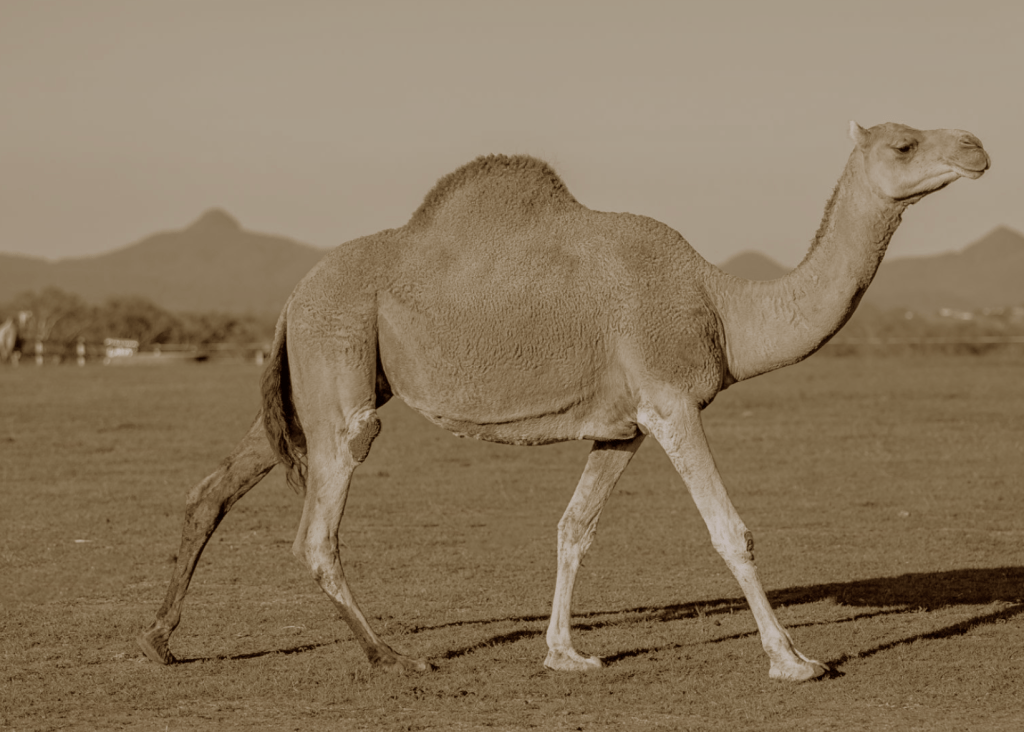
        In the sun-scorched deserts of Arizona, the vast emptiness was once filled with the pounding hooves of horses and the steady march of soldiers from the United States Cavalry. But for a brief moment in history, an unlikely companion joined their ranks—the camel. Brought from distant lands, these towering creatures with their humped backs and long legs had intended to be the army’s answer to the challenges of traversing the rugged terrain of the Wild West.

        A/I Created Photo

        In the mid-1800s, under the guidance of Secretary of War Jefferson Davis, the U.S. government embarked on a truly unique experiment-the ‘Camel Corps’. Camels, renowned for their endurance in desert conditions, were imported to America and tasked with the challenging job of carrying supplies across the barren landscapes where wagons and horses often struggled. The soldiers stationed at the forts in Arizona and New Mexico were initially skeptical. They were baffled by the strange creatures that spit and moaned, their massive feet gliding over the desert sands as if weightless.

        Among the camels, one stood out—a massive bull camel named Faris. He had traveled across the seas from the deserts of Egypt, his broad hump towering over his fellow camels. With piercing eyes and a personality as stubborn as the most seasoned cavalrymen, Faris became the pack’s leader, guiding the other camels through endless miles of scorching desert, carrying their loads without complaint.

        Library of Congress

        But the experiment was short-lived. As the Civil War loomed, funding for the Camel Corps dried up, and the forts in the Arizona desert began to close one by one. With the forts gone and no practical use for the camels, the military made a fateful decision: they turned them loose, setting them free in the vast desert wilderness. The soldiers and settlers who remained watched with mixed emotions as the camels slowly strode off into the horizon, their long necks and humps silhouetted against the setting sun.

        Library of Congress

        Faris led the herd, now wild, into the vast stretches of land where no human tread. Once tethered and burdened with human supplies, the camels embraced their freedom, roaming the desert, their calls echoing in the canyons and across the mesas.

        For years, sightings of the camels became the stuff of legend. Travelers and settlers spoke of giant creatures wandering the wilderness, spooking horses, and disappearing into the dunes as quickly as they were seen. Stories of ‘The Red Ghost’ surfaced, a phantom camel said to be terrorizing ranchers, with strange tracks left in the dust after raids on isolated farms. The mystery deepened with some claiming to see a human skeleton strapped to the back of one rogue camel, but no one knew for sure whether this was fact or fiction.

        Library of Congress

        Faris, now older but still commanding, led his herd deeper into the desert as the years passed. The camels, with no soldiers to guide them, learned to live off the sparse vegetation, adapting as always. They became masters of the land, surviving where few others could, a testament to their remarkable adaptability.

        Generations of Arizonans grew up hearing tales of the camels. Old ranchers would sit by the fire, recounting when they saw a lone camel watching them from the top of a ridge, its eyes gleaming in the moonlight before they vanished into the desert night. Cowboys whispered of Faris, the great camel leader, still roaming the wild, the last of a forgotten army, king of the untamed desert.

        So, the camels of the Wild West became more than just a footnote in history—they became legends, ghosts of a time when even the most foreign creatures found a place in the rugged and unforgiving land of the Arizona desert.

        A released camel or a descendent of one is believed to have inspired the Arizonan legend of the Red Ghost.

        One of the few camel drivers whose name survives was Hi Jolly. He lived out his life in the United States. After his death in 1902, he was buried in Quartzsite, Arizona. His grave is marked by a pyramid-shaped monument topped with a metal profile of a camel.

        Weiner: The Bravest Piglet of Maplewood Farm

        Once upon a time, in a picturesque countryside, set between rolling hills and verdant fields, there was a farm known as Maplewood. This farm was home to various animals, each with unique charm, but none were as spirited and curious as a little piglet named Weiner. The air was always filled with the sweet scent of hay, and the sound of chirping birds and rustling leaves was a constant backdrop to their lives.


        Weiner was a tiny, rosy piglet with a button nose and twinkling eyes that sparkled with mischief and curiosity. He lived in a cozy style with his mother and siblings, who were a mix of different farm animals. The farm was a bustling place, with chickens clucking, cows mooing, and sheep baaing. Unlike his siblings, who were content with their daily routine, Weiner always dreamt of adventure. He would often sneak out to explore the farm, befriending every animal he met, from the clucking chickens to the gentle cows.
        One sunny morning, while Weiner was innocently frolicking near the edge of the farm, he noticed something unusual. The air felt different, and there was a faint smell of smoke. His tiny heart began to race as he trotted closer to the source. To his horror, he saw a small fire spreading near the barn, where all the hay was stored. The entire farm, his home, could be in grave danger if it reached the barn.


        Weiner knew he had to act fast. He dashed back towards the farmhouse, his tiny hooves kicking up dust as he ran. Reaching the farmhouse, he found Farmer Brown sitting on the porch, sipping his morning coffee.


        “Oink! Oink!” Weiner squealed frantically, tugging at Farmer Brown’s pant leg. His eyes were wide with fear, and his little body was trembling.


        Farmer Brown looked down, puzzled. “What’s the matter, little Weiner?”
        Weiner kept squealing and pulled harder, trying to convey the urgency. He was scared, but he knew he had to do something. Sensing something was wrong, Farmer Brown set down his coffee and followed the piglet. As they neared the barn, the smell of smoke became unmistakable.

        “Oh no! The barn’s on fire!”

        Farmer Brown exclaimed.

        He quickly ran to the water pump and started filling buckets. Weiner, thinking swiftly, dashed off again, this time towards the duck pond. There, he found his friend, Daisy, the duck, a wise and gentle creature, and explained the situation in frantic oinks and quacks.


        Daisy, understanding the urgency, rallied her duck friends. Together, they formed a line from the pond to the barn, each duck passing water in their beaks. Weiner joined the line, using his snout to help splash water on the flames. The ducks’ feathers glistened in the sunlight as they worked, and Weiner’s tiny hooves splashed in the water, creating a rhythmic sound.


        The commotion attracted the attention of the other animals. The cows used their strength to push heavy water troughs closer while the chickens flapped their wings to fan the flames away from the barn. The sheep, not wanting to be left out, used their woolly bodies to smother smaller fire patches. It was a true display of teamwork and unity.


        The farm was a flurry of activity. Thanks to Weiner’s quick thinking and the cooperation of all the animals, the fire was soon under control. The flames were extinguished before they could reach the barn, saving the precious hay and the farm itself from disaster. It was a moment of triumph and relief for everyone.


        Farmer Brown, covered in soot but immensely grateful, gathered all the animals around. “Thank you, everyone, for your help. But especially you, Weiner. If it wasn’t for your bravery and quick thinking, we could have lost everything.”


        Weiner blushed under his pink fur, happy to have helped save his home. From that day on, Weiner was known as the hero of Maplewood Farm. The other animals looked up to him, and he became a symbol of courage and teamwork. Though he still loved to explore, Weiner did so with a new purpose, knowing that sometimes, even the smallest piglet could make the most significant difference.


        Maplewood Farm continued to thrive, with Weiner’s tale of heroism becoming a cherished story passed down through the generations. The little piglet who saved the farm had shown everyone that anything was possible with bravery and a little teamwork.

        THE END!