Dre Love’s Legacy: Bridging American and Italian Music

By Benjamin GroffMedia© | benandsteve.com | 2025 Truth Endures©

3–4 minutes

André Thomas Halyards, known artistically as Dre Love, was a central and pioneering figure in Italian hip hop. He has passed away in Florence at the age of 55.

Dre Love was born in the Queens borough of New York City. He became a Florentine by adoption in the 1990s. Dre Love was a versatile artist: DJ, rapper, beatmaker, songwriter, and tireless collaborator. He had a gritty voice and unmistakable style. He brought the groove and soul of African American funk into the sounds of Italian hip hop. This helped to write some of its most authentic and vital chapters.

Dre Love arrived in Italy in the early 1990s. He made his home in Florence. This city would shape both his artistic and personal journey. There, he joined Radical Stuff, one of Italy’s very first hip hop groups. He became a living bridge between American street culture and the emerging urban scenes taking shape across the country. He was also a member of the collective Messaggeri della Dopa. He helped to redefine Italian rap with a style that blended social consciousness. His approach also incorporated sophisticated musicality and spirituality.

His Collaboration with Neffa

Dre Love’s name is often linked with Neffa, with whom he collaborated on the Campanian rapper’s first two albums. He worked with a wide array of Italian and international artists. These include Irene GrandiAlex BrittiAlmamegrettaDJ GruffDJ EnzoGopher DReggae National Tickets. His collaborations even touched on the soul-funk sound of Jamiroquai.

Dre Love was never just a guest artist. He was a true collaborator in the deepest sense. He was an artist who opened doors. He created connections between musical worlds that seemed far apart. A messenger who made every beat, every bar, a statement of purpose. His music was a captivating blend of rap, funk, soul, and electronic experimentation. It was deeply rooted in a visceral respect for African American culture. His work always pushed toward innovation.

With his band, Dre Love delivered live performances. The band featured talented Italian musicians like Diego Leporatti (drums), Gianni Pantaleo (keyboards), and Niccolò Malcontenti (bass). It also included Tiziano Carfora (percussion), Andrea Rubino (guitar), Leandro Giordani (saxophone), and Emanuele Campigli (trumpet). Each performance was a true sonic journey through the past, current, and future of Black music.

Unlike the other famous “Dre” in hip hop history, Dr. Dre, Dre Love built his legend in a different way. He did not do it through the spotlight of the music industry. Instead, he made a direct impact with audiences, scenes, and people. He didn’t seek confrontation, but dialogue. Not profit, but connection. Where Dr. Dre of Compton made significant changes in hip hop with The Chronic, he further transformed the music industry with Beats. In contrast, Dre Love revolutionized hearts and stages, leaving an indelible mark on the history of Italian rap.

(By Paolo Martini)


A Tribute from Casino Royale

“Just a little while ago, a ‘great’ one made the big leap. This was a soul who gave so much. He contributed both humanly and in terms of sound and attitude to the Italian scene. Casino Royale was never a hip hop project. Still, we had the privilege of crossing paths with many figures. These figures made history in this country’s hip hop culture. Dre Love was one of those. He will always stay in our Olympus of demigods. We had the honor of meeting such people.

Every time we crossed paths, there were genuine hugs. They were full of mutual respect. We always promised that one day, we’d play that game together. It’s the game that becomes a mission for those who feel the responsibility. They also experience the joy of doing things a certain way.

ROCK ON!!! That was his goodbye.
The sky is the limit’—fly light, Dre Love. See you on the other side.”

(From a post published by Casino Royale on Facebook)

Originally posted at adnkronos

From Alps to Illinois: Ulrich L. Groff’s Inspiring Life Story

By Benjamin GroffMedia© | benandsteve.com | 2025 Truth Endures©

3–5 minutes

The Life and Legacy of Ulrich L. Groff

Ulrich Groff Sr.

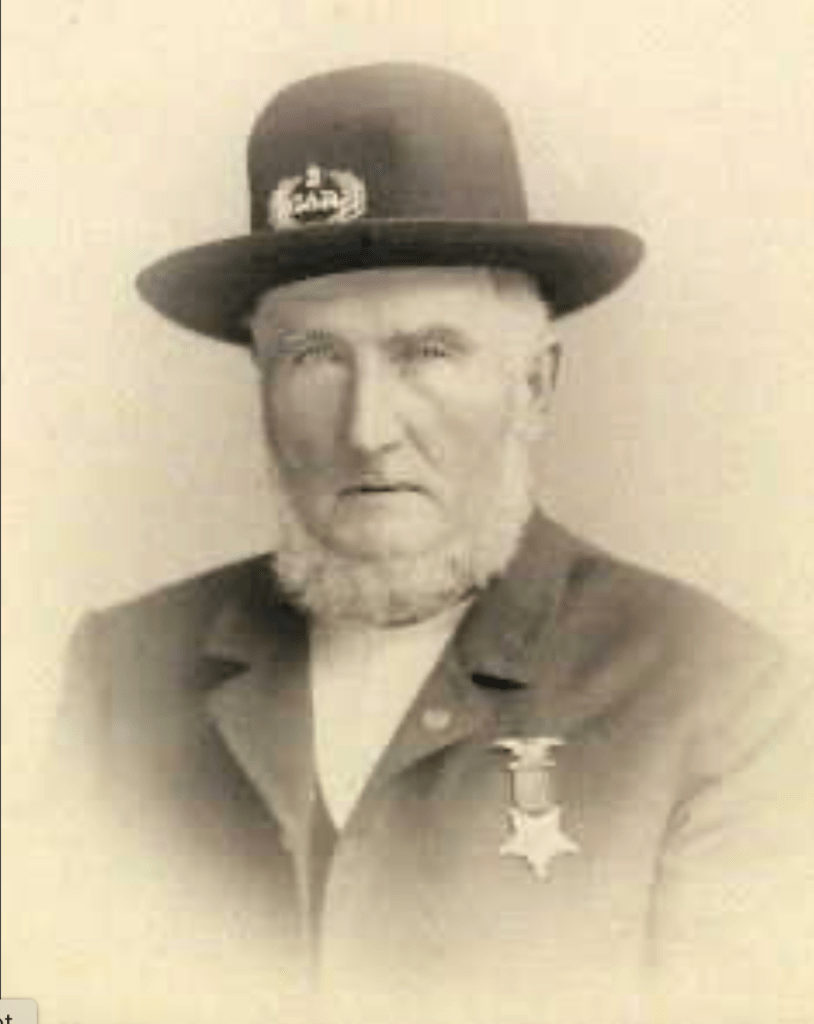
Ulrich L. Groff was born on October 8, 1848, in the alpine village of Wengen, nestled in the canton of Bern, Switzerland. Ulrich and Mary Miller Groff were Swiss natives. They were described on their immigration papers as “tillers of the soil.” These were farmers seeking a better future. In Switzerland, the Groff family lived in a small but close-knit community. It was in this environment that Ulrich learned the values of hard work. He also learned perseverance and family unity.

In 1852, when Ulrich was just four years old, the Groff family made a monumental journey to America. 

Their voyage took them across the Atlantic Ocean. This information is from family records shared by Sylvia Little, the mother of Jackie Lee Little. They traveled aboard one of the last great sailing ships. The journey lasted a whole month at sea before they landed in the port of New Orleans. From there, the family traveled north through the Wabash and Illinois Rivers, eventually arriving in Vincennes, Indiana.

There, they purchased wagons and teams of oxen to make the final leg of their journey. The Groffs settled in Richland County, Illinois. They would lay down roots and build a new life from the ground up. They faced challenges like language barriers, unfamiliar customs, and the harshness of the American frontier.

By 1860, the Groffs had firmly established themselves in Claremont Township, Richland County. The census that year listed young Ulrich as a ten-year-old student, attending school alongside his brothers Michael and Joseph. His father, a determined farmer, was farming 640 dollars’ worth of land—no small feat for an immigrant family. It was a humble beginning but one filled with purpose and promise.

On December 6, 1870, Ulrich Jr. married Martha Allen Eaks in Richland County. Martha had been born in Cannon City, Tennessee, on December 11, 1849, to William C. and Frances Eakes. Ulrich and Martha began a family together and raised their children on the Illinois prairie.

Ulrich Groff Jr. And Family

By 1880, Ulrich was a working farmer, and he and Martha had three sons: Ira Allen, Harvey S., and Otis E. Over the years, their household expanded to include nine children, with Benjamin H. Groff I. becoming a middle child. Eight of Ulrich Jr.’s children survived to adulthood. The Groff household, a warm and united family, also became a multi-generational home. By 1900, Ulrich’s mother, Mary, was a 74-year-old widow. She had survived the long journey from Switzerland. She also overcame the challenges of building a life in a new land. At that time, she was living with the family.

Martha passed away on February 22, 1906, at 56, and was laid to rest in Eureka Cemetery in Claremont. In 1909, Ulrich remarried, taking Ellen L. Richter of Olney, Illinois, as his wife. Ellen had been born in Bullitt County, Kentucky, to James and Catherine Yates Richter. Ulrich and Ellen had no children together. Later, they helped raise two grandchildren, Cleo and Walker. They stepped in after the children lost their father, Odis Edward Groff.

Ulrich bridged two continents and saw a century of change. He became a U.S. citizen in 1869 and worked on Illinois soil, much like his ancestors did in Switzerland. He never learned to read or write but valued education and ensured his children access it. His life was defined by perseverance, faith, and the quiet strength of a man who carried his family’s burden. Ulrich also became a respected member of the Richland County community. He was known for his hard work, honesty, and willingness to help others.

Ulrich Jr. passed away on June 6, 1927, at the age of 78 years, 7 months, and 29 days. He was buried beside Martha in Eureka Cemetery. Ellen lived on until 1939 when she passed away at the age of 82. She, too, was buried in Eureka.

The legacy of Ulrich L. Groff endures in the farmland he once tilled. It continues through the descendants he raised. The journey his family made was filled with hope. It was marked by courage and the will to start again. They traveled from the Alps of Switzerland to the heartland of Illinois.

Before Otis passed away, he and Ulrich’s son, Benjamin, discovered land in Oklahoma. In the early 1900s, they began farming it together. Benjamin and his sister, Laura Alice Dowty, eventually settled there permanently. They raised their families there and spent the rest of their lives on that land.

From Cotton Fields to Sheriff: The Story of Jess Bowling

By Benjamin GroffMedia© | benandsteve.com | 2025 Truth Endures©

4–5 minutes

Sheriff Jess “Pooch” Bowling, Jr.: From Cotton Fields to County Leader

Jess ‘Pooch’ Bowling

Jess Bowling, Jr. was born in Binger, Oklahoma, on August 23, 1924. At just 11 years old, he left behind half his family. He also left the dusty plains of Oklahoma. He sought a new beginning in California. With his father and brother, young Jess traveled west in a weathered 1929 Buick. They finally settled in the small agricultural town of Dos Palos. His mother, two sisters, and another brother stayed behind in Oklahoma—a family split by circumstance but not by love.

Life in California was anything but easy. Jess Jr. rose with the sun. He toiled in the cotton fields until it set. He contributed what he could to help his family survive. It was hard work—grueling and endless—but there was resilience in the struggle. Sheriff later joked, “We did live in the biggest tent in Dos Palos!”

His father, Jess Sr., quickly became a cornerstone of the growing town. He opened a grocery store, invested in rental properties, and became active in local politics. His leadership and business savvy earned him a seat on the city council and, eventually, the title of Mayor.

Jess Jr. worked in the family store while attending school. He graduated from Dos Palos High School with a reputation for dependability and quiet strength. Not long after, fate stepped in when he met Darlene, a young woman from Iowa visiting relatives. The two married in 1945 and raised three children—Sharlynn, Shirley, and Michael.

The Badge and the Beat

Simulated Photo

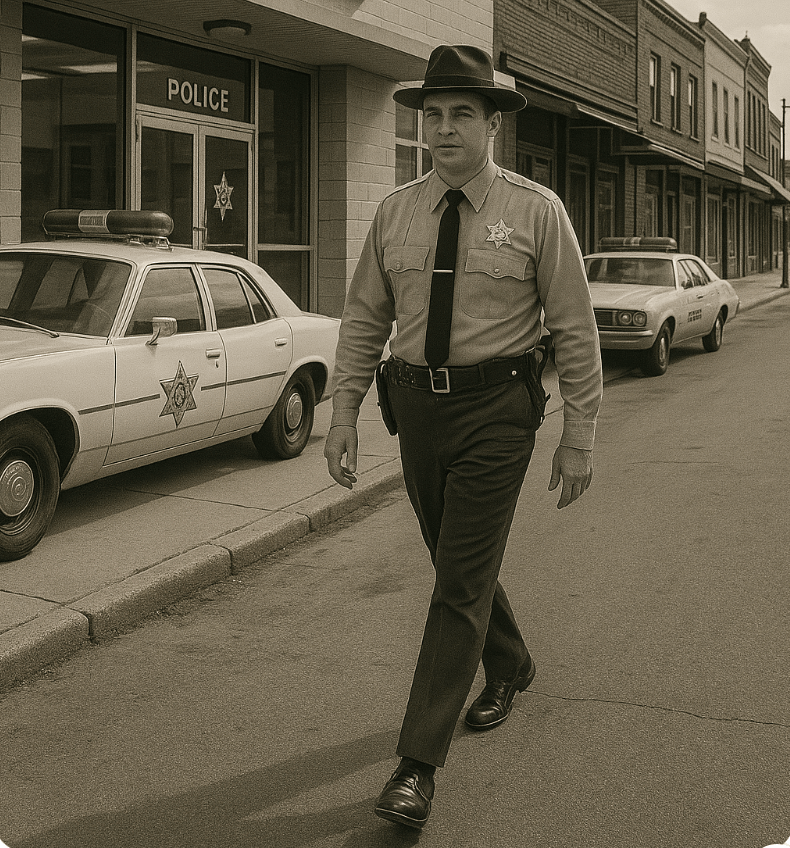
Jess Bowling’s journey into law enforcement began in 1953 when he joined the Dos Palos Police Department. His first assignment? Tackling the town’s parking problem. Officer Bowling issued dozens of citations, doing so with a steady hand and a sense of duty. He even issued one to his father, the Mayor. Years later, he found that very ticket among his father’s possessions, a keepsake of humor and integrity.

Although that first stint in law enforcement was brief, it planted a seed. After returning to the family store, Bowling joined the Atwater Police Department in 1956. In 1958, he made the move that would define his career: joining the Merced County Sheriff’s Department.

Simulated Photo

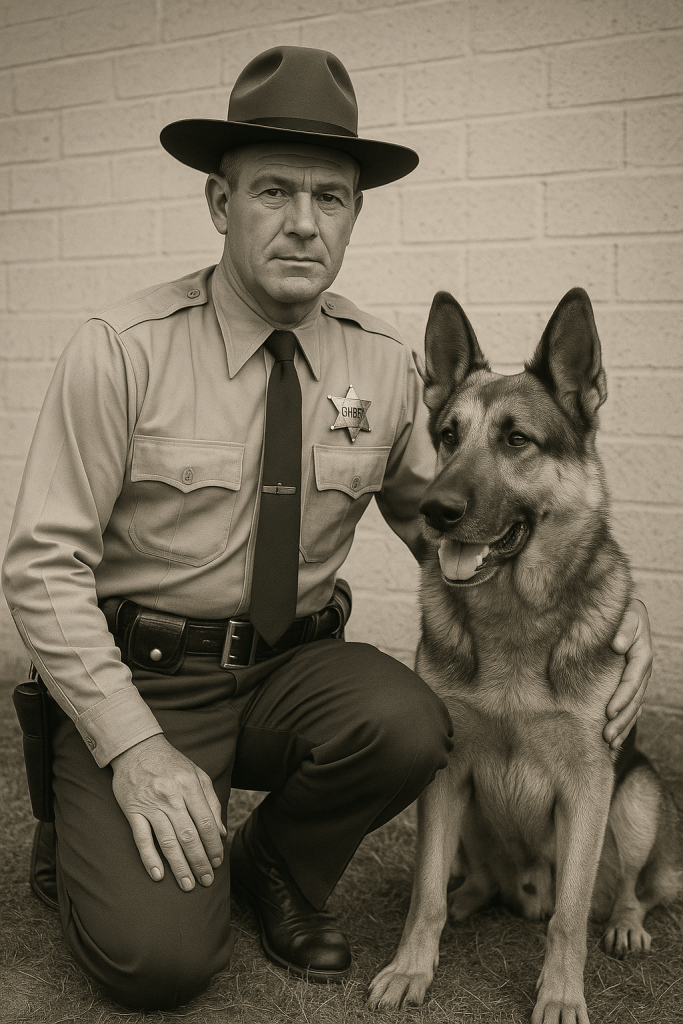
In 1963, Bowling became the department’s first-ever canine handler, partnered with a large, loyal German Shepherd named Jim. Together, they helped pioneer a new era of policing.

By 1974, Jess Bowling had risen to the rank of Lieutenant when tragedy struck—the sudden passing of Sheriff Earl McKeown. In the aftermath, Bowling was appointed interim Sheriff. The people had already decided by the time the special election rolled around in May 1975. Bowling’s steady leadership and quiet competence earned him the Sheriff’s badge in his own right.

Reformer, Leader, Trailblazer

Sheriff Bowling led the department through six transformative years. He spearheaded major innovations that professionalized law enforcement in Merced County. Under his administration:

  • The Corrections Division was established, moving jail staffing from deputies to trained corrections officers.
  • Dispatch services were assigned to civilian professionals, freeing up sworn deputies for fieldwork.
  • He launched the county’s first-ever 24-hour patrol, marking the end of the “resident deputy” model.
  • He hired Merced’s first female deputy, breaking gender barriers in local law enforcement.
  • The department acquired its first handheld radios, enabling Bowling to reintroduce the classic “walking beat cop” in areas like Winton.

These weren’t just administrative changes but foundational shifts that shaped the Sheriff’s Department into a modern, responsive force.

His achievements were not only admired—they were preserved. Jess “Pooch” Bowling’s remarkable career is documented in a collection. His family lovingly maintains it as a tribute to a life of service.

Legacy and Final Salute

I had the privilege of knowing the Bowling family. One of my sisters even married Jess’s nephew. Every time he returned to town, Sheriff Bowling brought a yearbook from the department he once led. He proudly pointed out the growth and accomplishments of his former team. The department’s scope, the number of divisions, and the professionalism he helped instill always struck me, as did his accomplishments.

1974 – The first female deputy was sworn in

1974 – First portable transceivers issued to deputies

1974 – The first 24-hour patrol begins

1977 – First Special Emergency Response Team (SERT) organized

1977 – Marshal’s Office established

1980 – Hostage negotiators were trained and included on the SERT team

Merced County Sheriff’s Office, California

But behind the badge was a man who never forgot where he came from. Before the titles and the accolades, Jess “Pooch” Bowling was a boy in a Buick. He was a cotton picker working under the sun. He was a young man doing what he could to help his family survive.

After a doctor advised him to retire due to a serious heart condition, Sheriff Bowling stepped down in 1980. He lived to celebrate his 80th birthday during Merced County’s 150th anniversary in 2005. This honor was fitting for a man who helped shape its modern history.

Jess “Pooch” Bowling passed away on April 18, 2007. He was laid to rest beside his beloved Darlene in Dos Palos Cemetery.

His story is one of grit, integrity, and service. It is a journey from the cotton fields to the highest badge in the county.

Memorable Family Moments During a Storm

Benjamin GroffMedia© | benandsteve.com | 2025 Truth Endures©

4–5 minutes

My parents rarely attended celebrations, so seeing them at a party in our old town was a significant change. This meant that my two sisters and I would need to stay with my grandparents while they were “in town.” By then, my three older brothers had grown up and left home, marking a shift in our family dynamics.

It was unusual for my sisters to join me and my grandparents in their den. We affectionately referred to them as Mom and Pop. They usually came to the house for a celebration. This could be Christmas, Thanksgiving, or a birthday. We would all gather in the front living room. But we nestled with Mom and Pop this night in their cozy den.

Mom and Pop were old-timey. Mom had a rocking chair. She would rock endlessly in it. Pop sat stoically in his oversized comfort chair. He puffed on his pipe. They habitually glanced out the front door, tracking how often their neighbors left their homes. One neighbor, in particular, drove them crazy by leaving every thirty minutes. They never figured out why.

As evening settled in, the steady ticking of the mantle clock lulled us children into a calming trance. It was a good thing, too, because what was about to unfold would test our nerves.

A thunderstorm at night!

It roared in just as the clock struck seven—thunder, lightning, and a barrage of heavy rain. Mom and Pop had lived through the Dust Bowl. They had seen the Great Woodward, Oklahoma, Tornado. The tornado wiped out the town and claimed many lives in the black of night. Because of that, they had a deep respect for storms. They headed straight for the cellar at the first sign of a tornado threat.

Like an air raid siren, the storm siren was the town’s lifeline. In the early 1970s, we didn’t have the advanced weather alerts we do today. The local police alerted the residents. The fire departments would sound the alarm if a tornado was spotted. This gave residents only minutes to take cover.
My grandmother hushed us, straining to listen for the whistle. Just as she did, a lightning strike took out the electricity—

NO LIGHTS!

Without hesitation, she calmly instructed,

“Pop, go in the bedroom and get the flashlight.”


Pop stood, walked to their bedroom, retrieved the flashlight, and handed it to her.

She scolded him.

“Pop, you could have turned it on, for heaven’s sake. Why didn’t you turn it on?”

Pop replied innocently,

“Well, Mom, you just said go get it—you didn’t tell me to turn it on.”

We sat in the dark, stifling laughter. Then it got worse.
Mom attempted to turn on the flashlight, but nothing happened. She sighed.

“Pop, I thought we got new batteries for this last week?”

“We did, and I put them in,”

He answered confidently.

Confused, she asked,

“Pop, you left the new batteries on top of the chest of drawers, and I had to put them in. You never changed them.”

Pop puffed up.

“Mom, those were the old batteries I put up there after I changed them out.”

Mom groaned.

“Pop, why would you keep the old batteries? Why didn’t you throw them away?”

Pop’s reply ––

“If you saw them there, you’d know I’d already changed the batteries.”

Then Mom ––

“Pop, why would I assume that?”

She took a breath, trying to stay calm.

“Well, I put the old batteries in. So, what happened to the new ones?”

Pop hesitated.

“I thought they were the old batteries… so I threw them away.”

Mom clenched her jaw.

“So now we have no batteries and no flashlight. Wonderful.”

Determined, she announced,

“I’ll go upstairs and get the oil lantern.”

Pop offered to go, but she waved him off.

“No, you’ll mess it up. I’ll take care of it.”

While she was gone, it gave Pop time for improvisation. 

He asked us kids,

“You know where Moses was when the light’s when out?

We all answered,

“No!”

Pop humorously responded,

“He was in the dark!”

He got such a chuckle out of telling it and we of coursed laughed.

Mom carefully navigated the stairs in the dark. Within minutes, she returned with the glowing lantern. The lantern finally illuminated the room.

All the while, my sisters and I sat on the den floor. We were petting Mom and Pop’s chihuahua. We tried to contain our laughter over the events of the evening. We were laughing so hard that, had the siren blown, we couldn’t even hear it. Still, we attempted to keep some composure out of respect for Mom and Pop.

Pop lit up his pipe, turned to Mom, and said

“You ought to put it on your list for when we go shopping to get batteries.”

Our parents didn’t return until nearly ten, when the lights came on. I don’t know how fun their party had been, but ours couldn’t have been any better. Mom and Pop swore us to silence. They didn’t want our dad to think they were becoming forgetful. Until this day, that story has never been privately or publicly shared.

George  Kalinsky A Man Of Pictures 1936-2025

GROFF MEDIA 2024© TRUTH ENDURES IMDBPRO

Presented by benandsteve.com By: Benjamin Groff II©

1–2 minutes

A Man Of Pictures 1936-2025 George Kalinsky Obituary
George Kalinsky

George Kalinsky was born in 1936 in Hempstead, New York. He was a renowned American photographer. His work captured some of the most iconic moments in sports and entertainment history. Finding Aids

His photography journey began serendipitously in the mid-1960s. He noticed Muhammad Ali entering the 5th Street Gym while on vacation in Miami. Intrigued, Kalinsky followed and was allowed to photograph Ali after a brief exchange with trainer Angelo Dundee. These images marked the start of his illustrious career. Interview Magazine

In 1966, Kalinsky became the official photographer for Madison Square Garden, a position he held for nearly six decades. He documented over 10,000 events throughout his tenure. He captured legendary figures like Frank Sinatra, Elvis Presley, and Pope John Paul II. His work has been featured in major publications like Sports Illustrated, People, Newsweek, and The New York Times. Kalinsky authored ten books. His photographs were exhibited in esteemed institutions, including the Museum of Modern Art and the Metropolitan Museum of Art. – From The Lens of George Kalinsky

Over the years, Kalinsky has received many accolades for his contributions to photography. In 2001, the PhotoImaging Manufacturers and Distributors Association named him International Photographer of the Year. He was inducted into the New York City Basketball Hall of Fame in 2010. He received the Pratt Institute’s Legends Award in 2017. Wikipedia

George Kalinsky passed away on January 16, 2025, at the age of 88. His legacy endures through the timeless images he captured. These images continue to inspire. They evoke memories of significant moments in sports and entertainment history. Wikipedia

Sources

Favicon
Favicon
Favicon
Favicon

Country Music Singer Melba Montgomery Dies

GROFF MEDIA 2024© TRUTH ENDURES IMDBPRO

Presented by benandsteve.com By: Benjamin Groff II©


Melba Joyce Montgomery, a distinguished figure in country music, passed away on January 15, 2025, at the age of 86. Born on October 14, 1938, in Iron City, Tennessee, and raised in Florence, Alabama, Montgomery’s musical journey was deeply influenced by her father, a fiddler and guitarist, who introduced her to the world of music. 

Montgomery’s career gained momentum in the early 1960s through her collaborations with George Jones. Their 1963 duet, “We Must Have Been Out of Our Minds,” achieved significant success, reaching number three on the Billboard Hot Country Songs chart. The duo continued to charm audiences with albums like “What’s in Our Heart” (1963), which also peaked at number three on the Billboard Top Country Albums chart. Throughout the 1960s, Montgomery partnered with other notable artists, including Gene Pitney, with whom she recorded the top 20 single “Baby Ain’t That Fine” in 1965.

In the 1970s, Montgomery’s solo career flourished. Her 1974 single “No Charge” became a standout hit, topping the country charts and crossing over to the Billboard Hot 100. The accompanying album reached number 14 on the Top Country Albums chart. She followed this success with albums like “Don’t Let the Good Times Fool You” (1975), whose title track secured a spot in the top 20 country charts.

Over her extensive career, Montgomery released 22 solo studio albums and seven collaborative albums, alongside 42 solo singles and 18 collaborative singles. Her contributions to country music have left an indelible mark, influencing countless artists and resonating with fans worldwide.

Montgomery was married to Jack Solomon in 1968, a union that lasted until his passing in 2014. 

She is survived by her children and grandchildren, who remember her not only as a musical icon but also as a loving mother and grandmother.

Services to honor Melba Montgomery’s life and legacy will be announced by her family in the coming days. Her enduring influence on country music ensures that her voice and songs will continue to be cherished by generations to come.