A Love That Endures

GROFF MEDIA 2024© TRUTH ENDURES IMDBPRO

Presented by benandsteve.com By: Benjamin Groff II©

2–3 minutes

Anna sat on the edge of her porch swing, the crisp autumn air wrapping around her like a familiar shawl. She cradled a weathered photo album filled with snapshots of a life well-lived with her husband, Thomas. Though he had passed a year ago, his presence lingered in every corner of their home. She noticed the faint scent of his aftershave in the closet. The carved wooden birdhouse he made hung by the garden. The laughter seemed to echo from the walls.

The sun dipped below the horizon. It painted the sky in hues of orange and violet. Anna whispered, “Death have taken your body, Thomas, but you’re still here.”

In the quiet, she remembered the words their pastor had spoken at his funeral: *Death takes the body. God takes the soul. Our minds hold the memories. Our hearts holds on to the love. Our spiritual beliefs let us know we will meet again.

Her memories of Thomas were not just memories, they were vibrant, living moments. They replayed in her mind like a cherished movie. She saw how his eyes crinkled when he smiled. She heard his deep belly laugh. She felt the strength of his hand in hers as they danced in the kitchen.

Though grief often pressed against her chest, her heart was not empty. It was full of love—a love that hadn’t dimmed with time. She placed a hand over her chest and smiled. She knew it was where Thomas still resided. He was a glowing ember that would never go out.

Every Sunday, Anna would visit the little white church where they had exchanged vows so long ago. She found not just solace, but peace there, her faith bridging the earthly and the divine. She believed Thomas was in God’s care now, his soul at peace, waiting patiently for her.

One evening, as she closed the photo album, she noticed the first star twinkling in the sky. She gazed upward and whispered, “I’ll see you again, Thomas. Until then, I’ll carry you here.” She touched her head. “Here.” She placed her hand on her chest. “And here.” She folded her hands in prayer.

At that moment, Anna felt a warmth envelop her. It seemed like Thomas himself was reminding her. Real, enduring love that never truly is separated by time or space.

She smiled and rocked gently on the swing, humming the melody of their favorite song. The stars above her were a quiet witness to the eternal connection between two hearts.

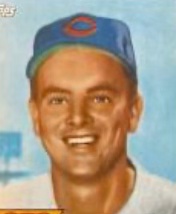
Bob Kelly, 97, Former Major League Pitcher and Last Surviving Player Managed by Hornsby and Frisch

Groff Media 2024© Truth Endures IMDbPro

Presented by benandsteve.com By: Benjamin Groff II©

2–3 minutes

In Memoriam

Bob Kelly

Robert Edward “Bob” Kelly, a distinguished former Major League Baseball pitcher. And an enduring symbol of the golden era of baseball. He passed away peacefully on November 27, 2024, in Old Lyme, Connecticut. He was 97 years old.

Born on October 4, 1927, Kelly’s journey to the Major Leagues began on the sandlots of East Cleveland, Ohio. His exceptional talent emerged early, leading East Cleveland Shaw High School to a state championship in 1944. A standout pitcher, he achieved a 7–2 record in 13 games, striking out an impressive 75 batters.

Kelly’s college baseball years, playing for Purdue University from 1946 to 1947. And Western Reserve (now Case Western Reserve University) from 1948 to 1949. Both were a testament to his resilience and skill. These formative years set the stage for a professional career that would be marked by these very qualities.

Kelly made his Major League debut in 1951 with the Chicago Cubs. He went on to pitch for the Cincinnati Redlegs and Cleveland Indians. Over his career, he demonstrated remarkable adaptability, competing during an era defined by legendary hitters and managerial icons. His versatility was a testament to his love for the game and his dedication to his craft.

Kelly enjoyed a significant time in the Major League. He was also a mainstay in the minor leagues. Notably, he played with the Los Angeles Angels of the Pacific Coast League. His contributions to the sport extended beyond his pitching abilities. He became a mentor to younger players. He instilled in them the values of professionalism and sportsmanship. His influence on them will be felt for generations to come.

Off the field, Kelly was deeply devoted to his family. He was a loving husband, father, and grandfather. He valued time spent with loved ones. He was known for his warmth, wit, and humility. His legacy extends beyond baseball, touching the lives of those fortunate enough to know him.

Bob Kelly’s life was a testament to the enduring spirit of baseball and the power of perseverance. His impact on the game and the people around him will be remembered fondly by fans, friends, and family.

In keeping with his family’s wishes, a private funeral service will honor his life. The family requests donations to youth baseball programs. This is to honor his memory. They want to make sure that Kelly’s love for the game inspires future generations.

A Last Breath in Elk City –– An Emergency Calls Impact

Groff Media 2024© Truth Endures IMDbPro

Presented by benandsteve.com By: Benjamin Groff II©

2–4 minutes

Officer Ben Groff was sipping his coffee when the dispatcher’s voice crackled over the radio:

Ben’s heart sank. Unresponsive calls rarely ended well, but there was no time for speculation. He flipped on his patrol car’s lights, the urgency of the situation palpable, and sped through Elk City’s quiet streets.

Pulling up to the modest brick house, upon arrival, Ben was met by the frantic figure of a woman waving her arms. Her cries cut through the crisp evening air.

“Help him! Please, he’s not breathing!” 

She screamed, her voice thick with terror and desperation, cutting through the crisp evening air.

Ben rushed through the backyard gate to find a man sprawled on the grass. His skin had a bluish tinge, his lips ashen. A can of tobacco lay spilled nearby, and the faint, acrid scent of chewing tobacco lingered in the air. Without hesitation, Ben dropped to his knees and began chest compressions.

“Stay with me, buddy!” 

He muttered, counting each press. He tilted the man’s head back and prepared for rescue breaths. As his lips met the man’s, the bitter taste of tobacco hit him like a punch. He pushed past the revulsion, determined to do everything he could.

Minutes felt like hours as he alternated compressions and breaths. The wife, clutching her robe, sobbed uncontrollably nearby.

The wail of the Elk City Fire Department’s engine announced the arrival of help. Firefighters and paramedics streamed into the backyard, their calm precision contrasting with the chaos. The wife’s sobs turned into hopeful gasps as they quickly took over, attaching monitors and preparing to transport the man.

Ben stood back, his chest heaving, sweat mixing with the cool night air. The lead paramedic gave him a somber shake of the head. “We’ll do what we can on the way.”

The wife collapsed to her knees.

“He can’t be gone! He just can’t!” 

She cried, clutching at Ben’s uniform. He knelt beside her, steadying her trembling shoulders.

“Ma’am, listen to me,”

He said gently.

“Let’s get you to the hospital. I’ll take you.”

Ben helped her into his patrol car and jumped into the driver’s seat. With lights and sirens blazing, he circled Elk City’s streets, his mind racing. This kind of call never left you—the taste of desperation as real as the tobacco on his tongue, the weight of every life lost or saved resting heavily on your shoulders.

As they reached the hospital, Ben parked and helped the woman inside. She stumbled into the emergency room, her cries echoing in the sterile space. He stayed close, quietly offering whatever comfort he could, the uncertainty of the man’s fate hanging heavy in the air.

“Thank you for trying,” 

The medical team wheeled the man into the ER, leaving Ben and the man’s wife in a stark, quiet waiting room. She gripped his arm as though it were a lifeline.

She whispered between sobs.

Ben nodded, feeling the weight of her words. In a job where victories were rare, and heartbreak was plenty, sometimes all you could do was try. And for this woman, in her darkest hour, his effort mattered. Officer Groff remained with the lady until her family arrived to hear the news and begin to support her grieving. The heartbreaking call was not the first for Groff and would not be the last!

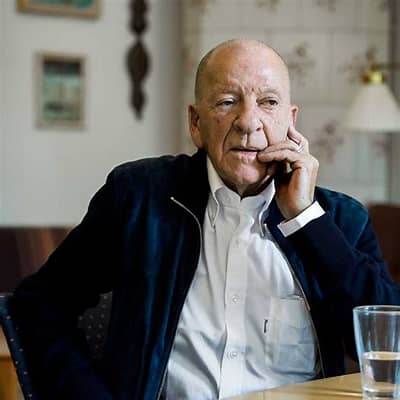
Pehr Gustaf Gyllenhammar, Former CEO and Chairman of VOLVO –––– ––– April 28, 1935 – November 2024 ––– 

Groff Media 2024© Truth Endures IMDbPro

Presented by benandsteve.com By: Benjamin Groff II©


2–3 minutes

Pehr Gustaf Gyllenhammar, a visionary Swedish businessman whose leadership and influence extended across industries and continents, passed away in November 2024 at 89. Born in Gothenburg, Sweden, on April 28, 1935, to Pehr Gyllenhammar Sr. and Aina (née Kaplan), Pehr G. Gyllenhammar was a man of profound intellect, ambition, and a global vision that inspired many. 

Gyllenhammar is best remembered for his transformative tenure as CEO and chairman of Volvo from 1970 to 1994, during which time he led the company through a period of dynamic growth and innovation, leaving an indelible mark on the automotive and industrial sectors. His bold attempt to merge Volvo with Renault in the 1990s exemplified his forward-thinking, even as it marked the end of his career with the company.  

Beyond Volvo, Gyllenhammar’s career spanned various leadership roles, including Aviva’s chairman and Rothschild Europe’s vice chairman. A fervent advocate for European industrial collaboration, he co-founded the European Round Table of Industrialists, promoting cooperation among the continent’s leading companies.  

His contributions were recognized with numerous accolades, including France’s *Ordre National du Mérite* in 1980 and the *Legion of Honour* in 1987. In 2001, he was named an Honorary Master of the Bench of the Inner Temple in London.  

Gyllenhammar’s intellectual curiosity and political engagement made him a public figure beyond the boardroom. An early proponent of social liberalism, he championed the Scandinavian model of governance and was a vocal advocate for European unity. His political views and engagement with social issues often influenced his business decisions, making him a unique and influential figure in both the political and business spheres. At one point, he was even considered a potential leader of Sweden’s Liberal People’s Party.  

He balanced his professional endeavors with a rich personal life. He married Christina Engellau, the daughter of Volvo’s former CEO, in 1959 and shared nearly five decades with her until her passing in 2008. Together, they raised four children—Cecilia, Charlotte, Sophie, and Oscar—each of whom carved out successful paths in the arts, business, and design. Later in life, Gyllenhammar found love again, marrying Lee Welton Croll in 2013, with whom he welcomed a child in 2016.  

A man of deep conviction, Gyllenhammar exemplified leadership and resilience, leaving an indelible mark on the business world and the communities he served. His resilience in the face of challenges is a testament to his character and the impact of his legacy. He is survived by his wife, Lee, his five children, and a legacy that will inspire future generations.  

A private family service will honor his memory. The service, which will be held at a private memorial, and will be a time for family and close friends to share their memories of Gyllenhammar and celebrate his life. In place of flowers, the family requests donations to causes reflecting Gyllenhammar’s dedication to innovation, education, and European unity.

Killed Walking Along The Highway – How A Killer Is Captured –– By Two Keen Deputies!

Groff Media 2024© Truth Endures IMDbPro

Presented by benandsteve.com By: Benjamin Groff II©

On a dark, silent night in 1980, the highways through Caddo County near the rural communities of Gracemont and Binger, Oklahoma, were deserted. Residents had long settled in their homes, leaving the quiet stretches of U.S. Highway 281 nearly void of movement. It was a time when law enforcement in rural Oklahoma had limited resources and technology, making cases like this all the more challenging to solve.

That night, an Indigenous man, Jasper Williams, had set out on foot from his home, heading south along a dirt road that eventually led to the pavement of Highway 281. It was common for community members to walk from one home to another, no matter the distance, and Jasper was going to a friend’s house. The night was pitch black, with no moonlight or streetlights to guide him, save for the faint outline of the highway stretching before him.

As Jasper walked, visibility was almost nonexistent. The road was shrouded in darkness, with no nearby lights to help him stay clear of the highway’s center. At some point, as he walked around six miles north of Gracemont—almost midway between there and Binger—tragedy struck. Jasper was hit by a passing vehicle, which left him severely injured on the side of the road. By daylight, he was found deceased, having bled to death, with no car in sight and no immediate reports of an accident.

Upon closer inspection, deputies discovered fragments of evidence scattered on Jasper’s clothing and body: broken glass, bits of chrome, a hubcap, and remnants of a car’s signal light and headlight assembly, as well as traces of paint. With these clues, investigators determined the incident might not be an ordinary accident but potentially a case of vehicular homicide.

Deputy Hamilton drove a
Ford Ranchero

The case was assigned as a homicide due to the absence of witnesses, the lack of any report from the driver, and the fact that the vehicle fled the scene. Caddo County Deputies Hamilton and Ware—both of whom have since passed—took on the painstaking task of finding the person responsible. Armed with the physical evidence, they began an exhaustive search of autobody shops across the county and surrounding areas, hoping to find a vehicle with damage matching the debris at the scene.

After several weeks, their search finally paid off. The deputies located a damaged vehicle that matched the evidence they’d collected. The owner was identified and subsequently interviewed, leading to the arrest of a man named Larry Johnson.

During questioning, Johnson admitted he had left a bar in Binger around 2 a.m. on the night Jasper was killed. On his drive home, he confessed to drifting in and out of sleep, initially thinking he had hit an animal, possibly a dog. However, he chose not to stop. Later, after hearing news of the fatal accident, he realized he was likely the driver involved but continued to hope he was wrong.

Binger Main St. There Were
Bars On Both Sides of Street.

Johnson was later tried in Caddo County, where a jury found him guilty of manslaughter. He was sentenced to serve 15 years at Oklahoma’s Granite Reformatory.

Note: Some names, dates, and details have been altered to protect individuals’ privacy.

Remembering Henderikus “Pim” Sierks (10 March 1932 – 7 November 2024) The Brave Pilot

Groff Media 2024© Truth Endures IMDbPro

Presented by benandsteve.com By: Benjamin Groff II©

Henderikus “Pim” Sierks, a Dutch aviator known for his bravery and unwavering dedication both in military and civilian aviation, passed away on 7 November 2024, at the age of 92. Born in Haren, Groningen, on 10 March 1932, Sierks devoted his life to the skies, first serving with distinction in the Royal Netherlands Air Force before transitioning to a celebrated career as a commercial airline captain with Transavia.

Sierks trained with the Royal Canadian Air Force, where he gained experience on various aircraft, including the Airspeed Horsa, Auster AOP.6, and Avro 626. Back in the Netherlands, he became one of the foremost pilots of the Hawker Hunter fighter jet, serving over 11 years in the Royal Netherlands Air Force and solidifying his reputation as a skilled and disciplined aviator.

In 1974, Captain Sierks’ legacy was cemented during the infamous French Embassy hostage crisis in The Hague. When three Japanese Red Army members stormed the French Embassy and demanded a French aircraft to facilitate their escape, Sierks bravely volunteered to captain the flight. He skillfully negotiated with the hostage takers, gaining their assurance for the safety of his crew and the hostages, then flew them from Amsterdam to Damascus, Syria, with a critical refueling stop in Aden, Yemen. Sierks’ calm courage in this tense, unpredictable situation was hailed as exemplary, and he returned safely to deliver both the money and weapons back to the French Embassy in Damascus.

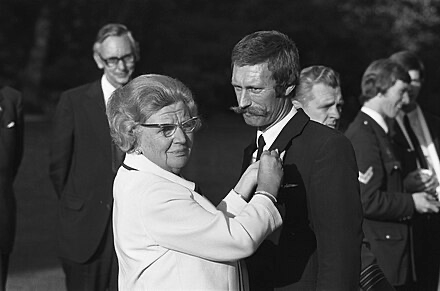
For his heroism, Sierks was awarded the Knight Grand Cross of the Order of Orange-Nassau by Queen Juliana, in addition to the Order of the Netherlands Lion and the Airman’s Cross. His actions that day made him a national hero and exemplified his lifelong dedication to duty, courage, and peace.

Following his career, Sierks moved to West Sussex, England, where he enjoyed a quiet life in retirement. He is remembered as a loving father, devoted friend, and a gentleman whose life and career left a mark on Dutch aviation history.

NASCAR FIGURE And Family Man Walter Ballard Sr. Funeral Services Planned For Nov.

A Service Provided By benandsteve.com By: Benjamin©Groff Media2024© Truth Endures

Walter Harvey Ballard, Sr., a pioneering NASCAR figure and beloved family man, passed away surrounded by loved ones. Born on January 12, 1933, in Summerdale, Alabama, he was the second of six boys raised by Bernice Louise and Victor Ballard, Sr. Walter was preceded in death by his parents, his first wife, Rose Ballard; his second wife, Katy Ballard; and his daughter, Anna Marie Lorenzo.

Walter is survived by his children, Wayne and Catherine Henton, Walter Harvey Ballard, Jr., Clinton and Christine Ballard, Stony and Jerry Ann Ballard, Danny and Kim Ballard, and Lee-sa Krapish. He also leaves behind five devoted brothers and their wives: Carlos and Martha, Donald and Merry, Victor and Linda, Harold, and Rita, and Ernest and Beverly, along with fifteen grandchildren, fifteen great-grandchildren, and one great-great-grandchild.

Leaving home at a young age with only a ninth-grade education, Walter forged his path, beginning with service in the U.S. Army during the Korean War, where he served as a Sergeant in France. Following his military service, Walter channeled his ambition into building a successful career around his love of automobiles. He earned NASCAR’s first Rookie of the Year title in 1971 and, despite health challenges, remained deeply involved in racing as a team owner. Walter’s influence extended beyond the racetrack; his wife, Katy, co-founded one of the first NASCAR ladies’ organizations, underscoring their shared dedication to the sport.

To honor Walter’s commitment to helping others, the family requests that memorial gifts be made to St. Jude’s Children’s Hospital or the Wounded Warriors Project, two causes dear to him.

Walter’s life will be celebrated on Monday, November 4 at 2:00 p.m. at James Funeral Home, with burial to follow at Northlake Memorial Gardens. Visitation will be held before the service from 12:00 to 2:00 p.m. at James Funeral Home.

Walter’s memory will be cherished by all who knew him. He was a devoted father, a trailblazer in NASCAR, and a man of strength and kindness.

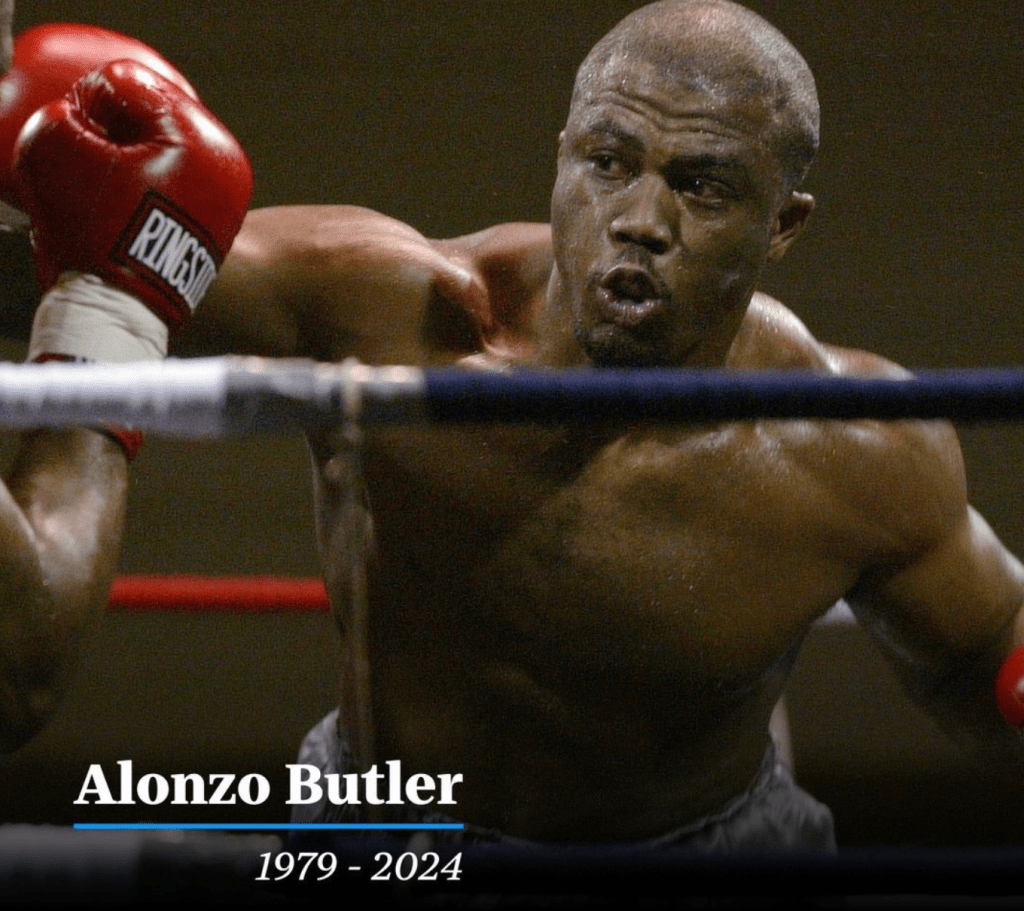
Former Heavyweight Boxer ‘ Big Zo’ Dead At Age 44 – Alonzo “Big Zo” Butler, 1980 – 2024

Provided a Service of benandsteve.com By: Benjamin©Groff Media 2024© Truth Endures

Alonzo Butler, a beloved former heavyweight boxer known to fans as “Big Zo,” passed away on Monday at age 44, as confirmed by his daughter, Jazlyn. A Chattanooga native who found his home in Knoxville, Alonzo impacted the boxing world and his community. His exceptional athleticism and dedication to his sport are reflected in his professional record of 35-3-2, with 25 knockouts. He fought mainly in Knoxville and East Tennessee, with a notable match in Auckland, New Zealand, in 2014. His achievements are a source of pride and celebration for all who knew him.

Butler’s decision to pursue boxing over football, where his power and precision earned him a devoted following, is a testament to his determination and courage. In 2006, Butler was honored as the Greater Knoxville Sports Hall of Fame’s Professional Athlete of the Year, a recognition he accepted with immense pride. Reflecting on the challenges of his career, Butler once shared, “Ace Miller told me four or five years ago I could be a champion, and I’ve stuck with it through the hard times. I’ve felt a responsibility to be a good model with the kids working with Golden Gloves, and I try to watch myself closely.” His commitment to being a positive role model and his dedication to his sport are qualities that will continue to inspire others.

Guided by legendary trainer Ace Miller, who managed and trained Butler during his undefeated run in the mid-2000s, Alonzo’s talent and warm personality left a mark on everyone he encountered. Miller spoke to Butler’s remarkable speed and strength, noting, “Alonzo could have done well in football because of his speed; at 250 pounds, we’ve timed him at 4.3 in the 40-yard dash. With his pure, warm personality, people want to know how he could be mean enough to be heavyweight champ of the world someday.”

Alonzo Butler’s legacy will endure in the hearts of those who knew him, from family and friends to fans and young athletes he inspired. His impact on the community through his boxing career and his role as a mentor is immeasurable. He leaves behind his daughter, Jazlyn, and a community that will forever be grateful for the kindness and strength he brought to the ring and beyond. His absence will be deeply missed in the lives of those dearest, but his memory will continue to inspire.

Former Chief Deputy A.G. Charles Brandt Dead At Age 82

Announcement A Service Of BenandSteve.com By Benjamin© GROFF MEDIA 2024© Truth Endures.

Charles Brandt, a former Delaware chief deputy attorney general and author of I Heard You Paint Houses, the book that inspired the acclaimed 2019 film The Irishman, passed away on Tuesday at the age of 82.

Brandt, who lived between Lewes, Delaware, and Sun Valley, Idaho, passed at Delaware Hospice at St. Francis in Wilmington. His daughter, Jenny Rose Brandt, a registered nurse and his primary caregiver, shared that he died due to complications from multiple chronic health conditions.

I Heard You Paint Houses, Brandt’s work of narrative nonfiction published in 2005, explores the life of Frank “Big Frank” Sheeran, a towering World War II veteran and former president of Teamsters Local 326 in Wilmington who also worked as a Mafia hitman. Brandt spent five years interviewing Sheeran, who, in those conversations, confessed to the killing of labor leader Jimmy Hoffa. Hoffa disappeared in 1975, and his body has never been found. Sheeran’s chilling accounts, shared in detail with Brandt, suggested he felt freed to speak as those he once feared were no longer alive.

The movie went to the big screen in The Irishman, directed by Martin Scorsese and featuring Robert De Niro and Al Pacino. The epic film, which runs over three hours and garnered 10 Academy Award nominations, brought widespread attention to Brandt’s extraordinary insights into Sheeran’s life and his ties to organized crime.

Charles Brandt leaves behind a legacy in law, literature, and film, his work casting light on some of America’s most notorious mysteries.

The Impact Of Loss: Remembering A Childhood Best Friend For Life

A True Story By: Benjamin Groff II© Groff Media 2024© Truth Endures

When I was just eight years old, death was a concept that I hadn’t fully grasped. The only time it touched my life was when my grandparents’ neighbor, a gentleman named Tom, passed away. I was only seven then, and it happened so quickly that it didn’t leave a deep mark. My grandfather had sat up with Tom the night before he passed, a tradition people followed back then—sitting with the dying. It was a tradition, and my dad would continue the practice as I grew up, sitting with many men in our small town of 750 souls. I always wondered why he was asked to do that.

That night, when Pop, my name for my grandfather, went to sit with Tom, it was just my grandmother and me alone in their big, quiet house. It felt different without him there. Early the following day, around 6:00 AM, my grandmother and I were preparing breakfast when Pop came in through the backdoor. He quietly spoke to her, and I suspected what had happened. Mom, my grandmother, suggested I open the dining room door to let the morning light in. As I did, I overheard their conversation growing louder, and when I looked outside, I saw a hearse slowly pulling up to Tom’s house. I knew Tom had passed.

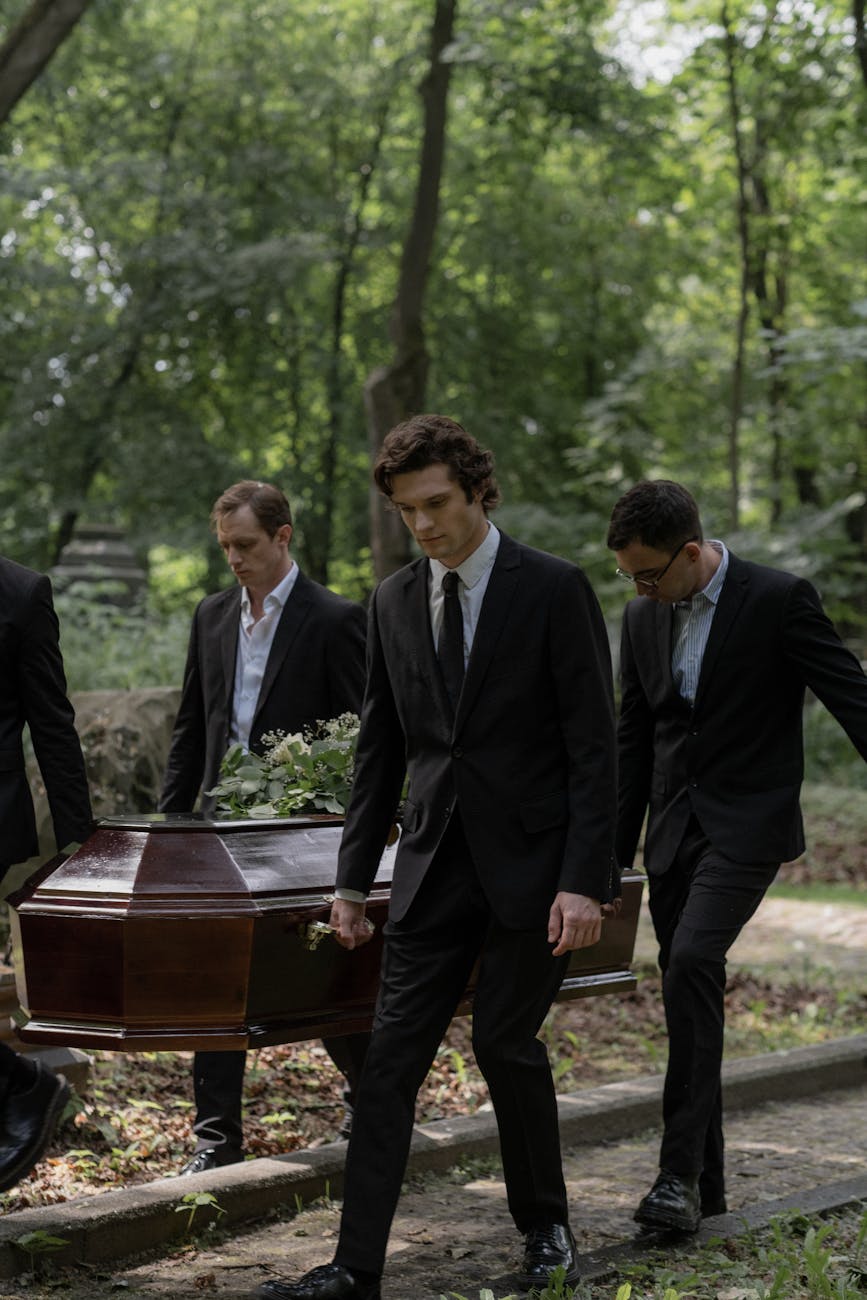
A few days later, my grandmother took me to his funeral, and Pop was one of the pallbearers. It was the first time I ever saw a person in a casket, and Tom still looked like Tom. After the service, my grandmother praised me to my father, saying I behaved so well—sitting quietly and respectfully. I thought I was just being myself. In those days, grandparents didn’t need to ask permission to take their grandchildren anywhere—funerals, courthouses, doctors’ offices, or even jails. The places they took me were some of the most fascinating.

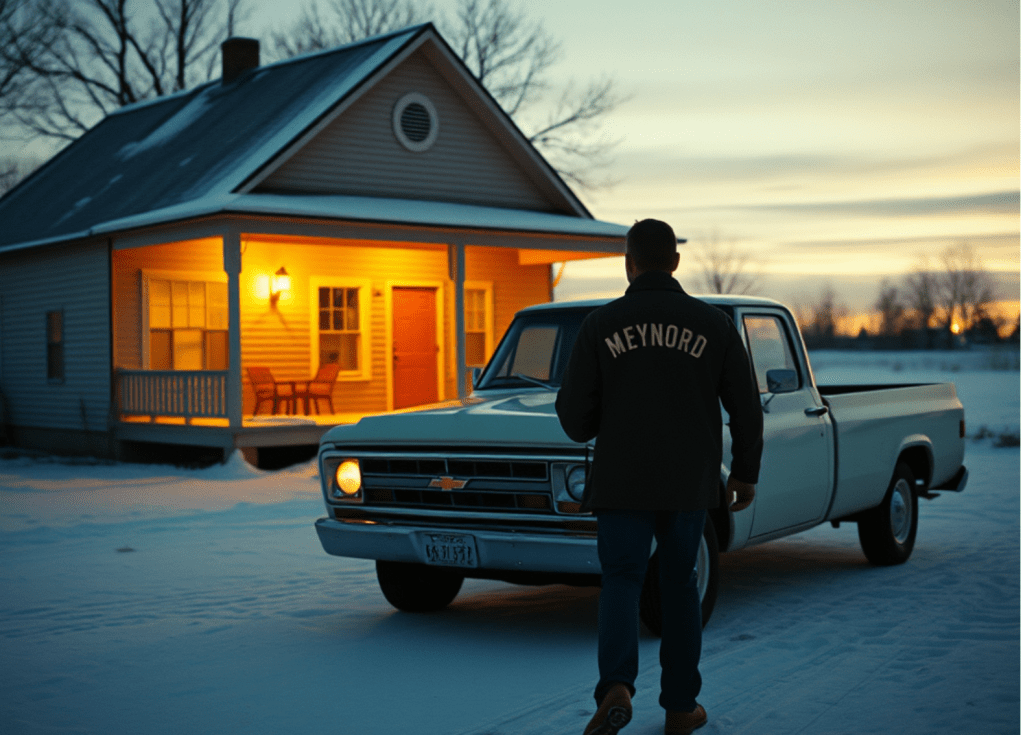
But this story isn’t about Tom. It’s about someone much closer to my heart, a man named Maynord Rider, one of my dad’s dearest friends. Maynord often accompanied us to horse sales on Friday and Saturday nights, and I thought the world of him. He lived two miles south of our farm, a farmer like many others in our area. One cold winter night, our water well froze, and my dad had to drive out over the pasture to fix it. When his headlights passed over Maynord’s bedroom windows, Maynord, instinctively knowing we were in trouble, got out of bed, climbed into his old white Chevrolet pickup, and drove to our house. He pulled up with a five-gallon water thermos and asked if our well had frozen. My mother was surprised—how could he have known? When my dad returned, he asked,

“Maynord, what are you doing here?”

They talked, and it turned out Maynord had guessed right. My dad told him there was no use in fixing it in the dark, and they’d work on it the next day. My dad promised to let Maynord help him the following morning to get him to leave.

There were many stories about Maynord, but they all ended one Thursday in September 1971.

It was the start of a four-day weekend from school due to a statewide teachers’ meeting. The day was beautiful for September in Oklahoma—warm with the usual breeze. I had been pestering my oldest sister, who was tasked with watching me and my other sister. It was just after noon, and the day felt perfect—no school, no bus to catch, just freedom. Then the phone rang. My oldest sister answered, and I could hear her voice change as she said,

“Oh no!” followed by, “I’m not telling him. You should.”

A moment later, she said,

“Mother wants to talk to you.”

I ran to the phone, stretched the cord as far as it would go, and answered.

“Yes, Mother!”

I said, but I could hear a siren approaching in the background. My mother’s voice was calm but direct,

“Benji, Maynord Rider just dropped dead.”

The words hit me like a punch, and I dropped the phone, screaming.

The news hit me like a physical blow, and I dropped the phone, screaming. The rest of the day is a blur, but I remember Ryder, the dog Maynord had given me, howling at the front door, leaning against it as if he, too, understood what had happened. None of the other dogs made a sound—just Ryder, the one I had named after Maynord’s last name.

I wouldn’t see my dad for hours, but I learned the whole story when I did. Maynord had come in from working on the farm for lunch. He ate, felt a bit of indigestion, and decided to lie down for a nap. While his wife, Bonnie, worked in the kitchen, she heard a moan, and when she went to check on him, she found him unresponsive. Panicked, she called my dad at the barbershop, where he cut hair. When he got the call, he told her to call the ambulance and that he’d be there immediately. He told the customers in his shop what had happened, leaving the man in his chair and the shop open as he rushed out.

Driving his Buick Le Sabre station wagon, my dad said the speedometer hit 120 miles per hour as he raced to Maynord’s farm, hoping to get there in time. Hearing this story comforted me, knowing that my dad did everything he could, even though we had lost one of the best men I had ever known.

That Friday night, my parents took me to see Maynord at the funeral home. It was more complicated than when I had seen Tom in his casket. The grief was overwhelming, and I couldn’t contain my tears. It felt like the worst day of my life. For years after Maynord’s death, I would look up at the sky, hoping for some way to talk to him again, but that day never came.

Eventually, I learned that, in life, there would be days harder than that one—the loss of my grandparents and my dad—, but somehow, we keep going, hoping that one day, someone will see our headlights coming over the hill and come to help us, just like Maynord did for us.


John Owsley Manier, Beloved Nashville Music Entrepreneur, Dies at 77

In Memoriam By: Benjamin H Groff II© Groff Media 2024© Truth Endures

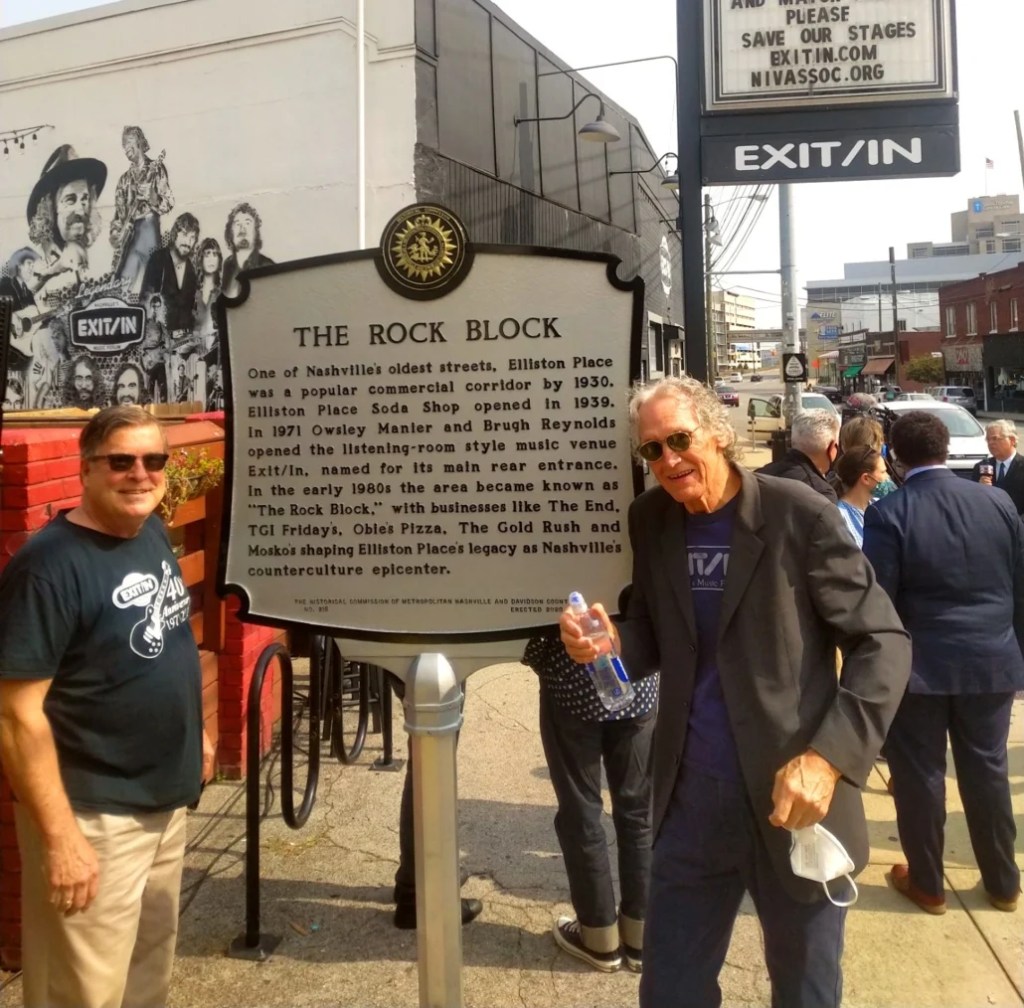
John Owsley Manier, a beloved figure in the Nashville music scene and co-founder of the legendary Elliston Place nightclub, The Exit/In, passed away at his home in Dowelltown, Tennessee, on Friday, October 1. He was 77.

A native of Nashville, Owsley’s passion for music was evident from an early age. 

In the 1960s, he was a member of the rock band The Lemon Charade, but his entrepreneurial spirit left an inerasable mark on the city’s cultural landscape. 

In 1971, alongside Brugh Reynolds, he co-founded The Exit/In, a venue that would become one of Nashville’s most iconic music clubs. What began as a small listening room for local songwriters soon transformed into a celebrated 500-person capacity rock venue in the 1980s.

The Exit/In was not just a stage, but a platform for both local talent and global superstars, hosting a diverse array of artists over its 50-plus years. From The Red Hot Chili Peppers to Etta James, Johnny Cash to R.E.M., The Allman Brothers to Willie Nelson, Linda Ronstadt, and many more, the venue welcomed all, fostering a sense of inclusivity and diversity in Nashville’s music scene. 

It was also the site of numerous memorable moments, such as comedian Steve Martin leading the crowd into the streets for a parade or the venue’s feature in Robert Altman’s 1975 film Nashville.

Over the years, The Exit/In solidified its place in Nashville’s music history and became the anchor of the city’s “Rock Block” on Elliston Place. In 2023, it became listed on the National Register of Historic Places, proof of its enduring cultural significance. 

While the club has seen over 25 owners throughout its history, its influence on the local music scene has remained constant, a testament to its enduring legacy.

Owsley is survived by his son, Aaron Manier, sisters Cynthia Barbour and Helen Bryan, and niece McKeen Butler. A Celebration of Life will be held at The Exit/In on Sunday, October 13, at 3:00 PM, honoring his legacy with the music and stories that shaped his life and career. 

This event is a fitting tribute to a man who has left an indelible mark on Nashville’s music scene.

John Owsley Manier’s contributions to Nashville’s music community will not be forgotten. His enduring legacy continues to reverberate through the legends of artists and enthusiasts passing through the entrances of The Exit/In, leaving a lasting impression that commands respect and admiration.

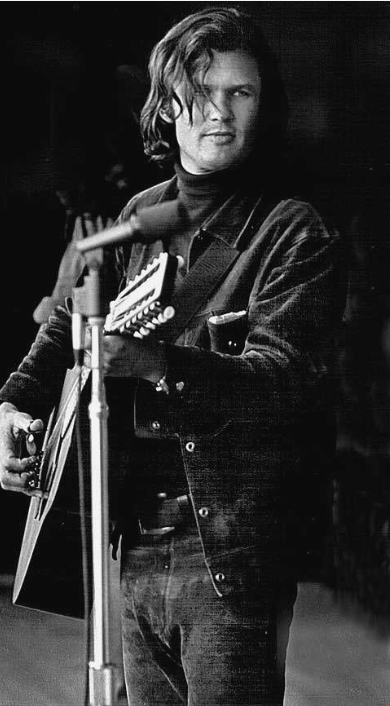
Remembering Kris Kristofferson: A Personal Tribute

A Tribute to Kris Kristofferson by Marion Toehay Jr., Friend and Former Chief of Police

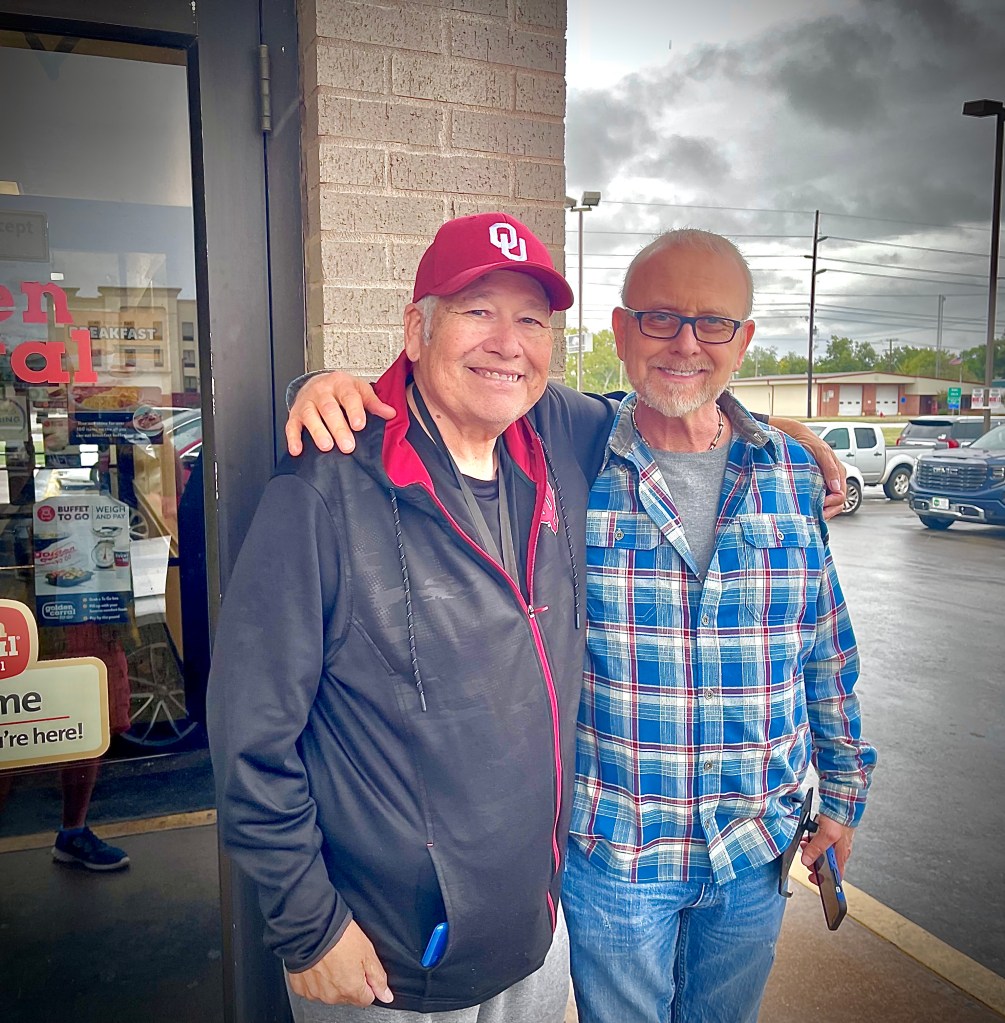
Marion Toehay JR. (Left)
Benjamin Groff (Right)

Marion Toehay Jr., a close friend of Benjamin Groff II, who typically authors this page, shares his heartfelt memories today as the world mourns the passing of Kris Kristofferson. The legendary singer-songwriter passed away on Saturday at age 88 in Hawaii. Marion met Kris in the summer of 1968, during the early days of Kristofferson’s career, at the Silver Dollar Saloon in Phoenix, Arizona.

In 1980, Marion became Benjamin’s first Chief of Police in Oklahoma, and today, he reflects on the unforgettable encounter he had with Kris all those years ago:


Kris Kristofferson was one of a kind. I had the chance to meet him when I was just 13 years old, working with my stepdad during the summer of 1968. We were selling produce to bars around Phoenix, Tucson, and the mining towns in the White Mountains. On our last stop in Phoenix, at a place called the Silver Dollar Saloon in what was known as Cowtown, we went inside—and there he was.

I remember seeing Kris Kristofferson stand up from a table and walk right over to us. He greeted my stepdad like an old friend, saying, “Y’all come sit down and have a beer.” At the table with him were none other than Johnny Cash and Waylon Jennings.

My stepdad had always told me he knew Kristofferson, Cash, and Jennings, but up until then, I hadn’t met them myself. Every time we passed through, they just weren’t there. I was starting to think I’d never get the chance to meet them. But that evening, out of nowhere, they were larger than life. It was like a dream come true for me—a 14-year-old kid with a love for country life.

We spent the evening laughing, sharing stories, and, yes, drinking some beer. When we finally headed home, my mom awaited us, wondering why it had taken so long. I told her about meeting Kris, Johnny, and Waylon, and she just smiled and said, “Oh, okay,” as if it was no big deal. She’d met them before, too, thanks to my stepdad. But for me, it was the highlight of the summer—and a memory I’ll never forget.

Hearing about Kris Kristofferson’s passing is sad for everyone who admires him. My family and I send our deepest condolences and hope he rests in peace.

Bishop Basil Harry Losten, a revered figure in the Ukrainian Greek Catholic Church

Posted By: Benjamin Groff© Groff Media 2024© Truth Endures

Basil Harry Losten (May 11, 1930 – September 15, 2024)

Bishop Basil Harry Losten, a revered figure in the Ukrainian Greek Catholic Church, passed away peacefully on September 15, 2024, in Stamford, Connecticut, after a brief illness. He was 94 years old. At the time of his passing, he was Bishop Emeritus of the Ukrainian Catholic Diocese of Stamford, a role he held with grace and devotion until his final days. Bishop Paul Patrick Chomnycky succeeds him.

Born in Chesapeake City, Maryland, on May 11, 1930, Basil Losten embarked on a life of faith and service that began with his early education at St. Basil School in Philadelphia. His journey into the priesthood was marked by years of dedicated study, first at the Ukrainian Catholic Seminary in Stamford and later at St. Basil College, where he earned a bachelor of arts in philosophy. His theological education culminated in a graduate degree from the Catholic University of America in 1957.

Basil Losten was ordained to the priesthood on June 10, 1957, by Bishop Constantine Bohachevsky. His initial assignments saw him serve the Philadelphia Archdiocese as chancery secretary and in various parishes across the city. In 1962, his leadership and loyalty were acknowledged when he was appointed personal secretary to Archbishop-Metropolitan Ambrose Senyshyn.

In 1968, Pope Paul VI recognized his contributions by elevating him to the rank of papal chamberlain. On March 23, 1971, he was nominated to the episcopacy, and on May 25 of that year, he was consecrated as auxiliary bishop of the Ukrainian Archdiocese of Philadelphia. He continued to serve with distinction, later being appointed apostolic administrator of the diocese in 1976 during the declining health of Archbishop-Metropolitan Senyshyn.

Bishop Losten was admired throughout his career for his unwavering dedication to his faith, leadership, and tireless service to the Ukrainian Catholic community. Losten’s impact on clergy and laity alike will be remembered for generations.

Bishop Losten is being mourned by his many parishioners, colleagues, and the communities he served. Funeral services will be held at Stamford’s Ukrainian Catholic Cathedral of the Immaculate Conception. May his memory be eternal.

Tragic Loss: Coping with Grief and Family Support | Campground Incident

A Story By: Benjamin Groff© Groff Media 2024© Truth Endures

Sammie had just turned fourteen and was riding his bike around the campgrounds his dad patrolled as a ranger. The family lived in a state-owned residence provided as part of his father’s compensation package while he got assigned to the western part of the state. Life in the park was usually quiet, but earlier that year, a tragedy struck a different campground on the state’s eastern side.


Two families had been brutally murdered in their sleep, sending shockwaves across the state. In response, the state implemented new security measures at every campground. Entrance gates were locked, and everyone entering was logged by their driver’s license or other identification. Unsuspected patrols got scheduled, lighting around the parks flickered on and off without notice, and campers got direct communication links to the ranger’s headquarters. Additional officers were stationed along park perimeters at night, keeping a vigilant eye on the fencelines.

It was nearing 5 PM when Sammie pulled up in front of his home and started to get off his bike. A car horn suddenly blared from the gate entrance, catching his attention. Squinting, he saw a familiar figure waving from the vehicle.


“Sammie—it’s your Uncle Ned! Let me in; I need to see your dad and mom!”


Sammie quickly hopped back on his bike, racing to the gate. He pulled out his key ring, unlocked the gate, and swung it open with a grin.

“Wow! This is a pleasant surprise. It’s great to see you, Uncle Ned! I’ll lock the gate and meet you back at the house.”


Ned was accompanied by a man Sammie didn’t recognize, but there was no time to dwell on it. The car pulled through the gate, and Sammie secured it before pedaling back to the house. As he approached, his sister burst through the back door, tears streaming down her face.
Startled, Sammie tried to comfort her, but before he could, Uncle Ned stepped forward to hold her.

Confusion and fear knotted rolled in Sammie’s chest as he asked, –––

“What’s going on? Is it Grandma or Grandpa? Did one of them die?”


Uncle Ned’s voice was heavy. –––

“No, Sammie. It’s your Uncle Richard. He was killed this afternoon.”


Sammie stood frozen, his mind racing, but no words came. The weight of the news pressed down on him like a physical force. He stumbled into the living room, where his parents were. His father held his mother close, her body trembling with sobs. His dad turned to Sammie, his voice raw with grief. –––

“Your Uncle Ricky is dead. He got hit by a train in Oklahoma City. That’s all we know right now.”

The shock numbed Sammie. He recalled watching the afternoon news and seeing a report of a car struck by a train. The paramedics had been performing CPR on one of the occupants, and Sammie had thought the head looked familiar. But he had dismissed the thought—it couldn’t have been someone he knew.


As the reality of the situation sank in, Sammie told his family about the news broadcast. –––

“I think… I think I watched the last moments of Uncle Richard’s life on television. It might be on the ten o’clock news again.”


That night, the family sat together, waiting for the broadcast. Sure enough, the footage replayed, and there was no doubt—it was Uncle Richard. The sight left them in stunned silence, the grief fresh all over again.


Days passed, and soon, it was time for the funeral. The family chose Sammie and five of his cousins to be pallbearers. The day was heavy with sorrow, and Sammie, feeling overwhelmed, approached his father. –––

“Dad, I don’t like going to funerals why do I have to go?”


His father’s response was gentle yet firm. –––

“Well, first, it’s the right thing to do: to show respect for another person’s life. As you age, you’ll realize that funerals are among the few times we come together as a family. They unite people who otherwise never see each other. You go to pay your respects and leave having been paid dearly for your time.”