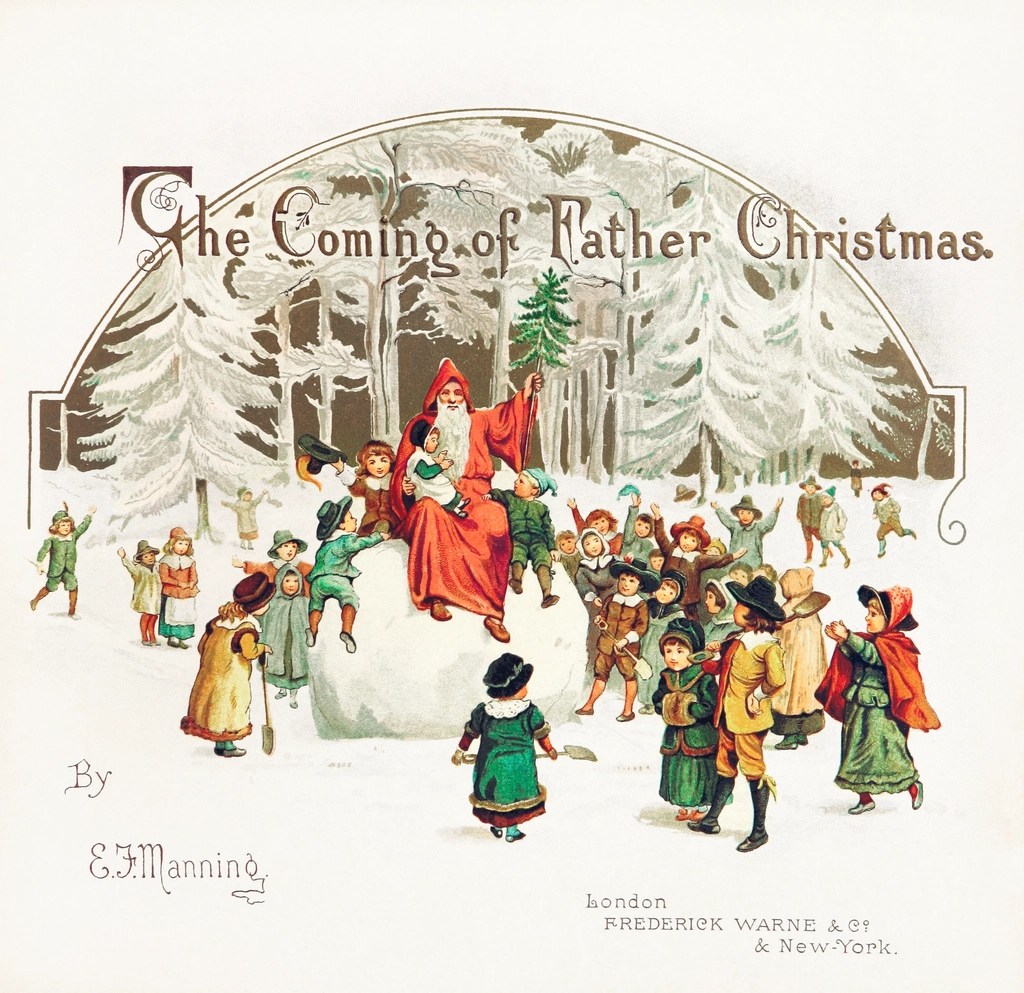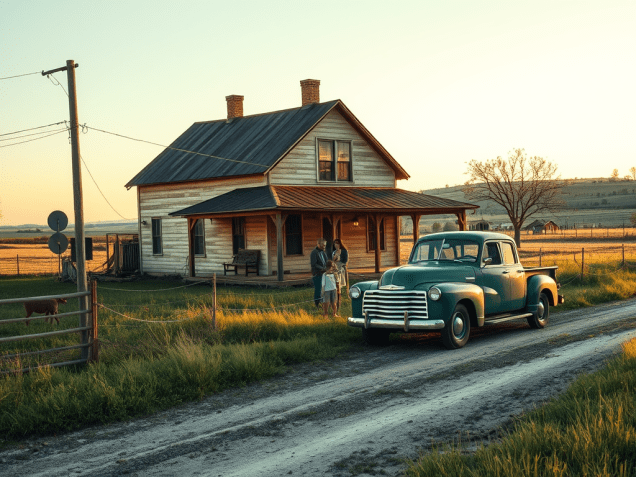
The Year Joey And Jimmy Saved Christmas

This story is pulled from the archives as a celebration for the season edition.

Groff Media 2024© Truth Endures IMDbPro

Presented by benandsteve.com By: Benjamin Groff II©

3–5 minutes

Joey and Jimmy McAllister were known in the little town of Maple Hollow for their endless mischief. Like clockwork, Santa’s naughty list bore their names in bold, red ink every year. The brothers raided the cookie jar before dinner. They set off firecrackers in the backyard. They also sneaked frogs into their teacher’s desk drawer. The brothers always found trouble. Trouble always found them.

But this year was different. Something strange was happening in the McAllister household. Joey and Jimmy were behaving like angels. They shared their toys, completed their chores without being asked, and even helped old Mrs. Henshaw carry her groceries home. The town was surprised as the boys’ antics disappeared like melting snow. It wasn’t long before whispers reached the North Pole.

Santa Claus, peering over his list in his workshop, rubbed his spectacles in disbelief. 

“Joey and Jimmy?”

He muttered. 

“Good? All year?” 

He scribbled a note to Mrs. Claus. 

“Something isn’t right. I need to investigate.”

So, with Christmas Eve approaching, Santa decided to do undercover work. Disguised as a kindly repairman, he appeared at the McAllister’s doorstep one frosty afternoon.

Joey answered the door, his face pale with worry.

“Hello, sir,” 

He said politely. 

“Can I help you?”

“Just checking the neighborhood for chimneys in need of repair,” 

Santa said, glancing around. 

“I couldn’t help but notice you and your brother have been outstanding this year. What’s brought about the change?”

Joey’s face fell. 

“We just wanted to make sure we were good enough to get what we wished.”

Santa’s heart warmed. 

“Well, that sounds lovely. What did you wish for?”

Jimmy appeared behind Joey, his voice barely a whisper. 

“We don’t want toys or anything like that. We want Mom to get better.”

Santa’s heart ached. He noticed their pale and frail mother sitting by the fireplace. Her knitting needles trembled in her hands. He realized the boys’ sudden good behavior wasn’t driven by selfishness, love, and desperation. As only children can, they believed. If they were perfect, their Christmas wish would come true. Their mother’s illness would vanish like the morning frost.

Back at the North Pole, Santa sat in his armchair that evening, deep in thought. 

“How do I tell them?” 

he murmured. 

“How do I explain that even the magic of Christmas can’t fix everything?”

Mrs. Claus placed a hand on his shoulder. 

“Remind them of what Christmas truly means,” 

she said softly. 

“It’s not about making everything perfect. It’s about love, hope, and being together, even in the hardest times.”

Christmas Eve arrived, and Santa climbed down the McAllisters’ chimney. He found Joey and Jimmy waiting by the tree, their eyes wide with hope. Santa knelt before them, his eyes twinkling but serious.

“Joey, Jimmy,” he began, “I know what you’ve wished for, and I need you to understand something significant. Your love for your mother is the most powerful gift you can give her. It’s stronger than anything I can put in my sack.”

Tears welled in Joey’s eyes. “But we thought if we were good, you’d save her. Isn’t that how it works?”

Santa pulled the boys close. 

“Sometimes, even the best magic can’t stop someone we love from becoming an angel. Your mother’s journey is not something you can control, but your love will make every moment she has brighter. And no matter what happens, she will always be with you.”

The boys sobbed quietly, and Santa held them until their tears slowed. Then he reached into his sack and pulled out a small, glowing star ornament. 

“Hang this on your tree. It’s a reminder that the people we love are never truly gone. They watch over us like stars in the night sky.”

When Christmas morning came, the McAllister family gathered around the tree. Weak but smiling, their mother held the glowing ornament in her hands. The boys’ hearts felt heavy but full, knowing their love was the best gift they gave her.

That year, Joey and Jimmy stayed off the naughty list for good. Though their mother passed the next spring, her love and courage became the foundation of their lives. Every Christmas, they hung Santa’s star on their tree. It was a beacon of hope, love, and the enduring magic of family.

Santa Claus And The Tree In Apartment 828B

This story is pulled from the archives as a celebration for the season edition.

Groff Media 2024© Truth Endures IMDbPro

Presented by benandsteve.com By: Benjamin Groff II©

3–5 minutes

An apartment in a towering complex held a remarkable secret. It was located in the heart of a sprawling New York where high-rise buildings scraped the skies. Neon lights flickered day and night. Apartment 828B on Floor 39 was home to a Christmas tree unlike any other. The tree had glistening emerald branches. Its ornaments seemed to hum with a soft, otherworldly glow. This tree had the power to light up the entire city. It illuminated not just with light but with warmth, hope, and joy.

The tree belonged to an elderly widow named Mrs. Clarabelle, a retired teacher with a kind smile and a knack for storytelling. She had decorated the tree for decades. Her collection of ornaments included a porcelain angel from her childhood. She also had a wooden sled carved by her late husband. Former students gifted her glittering baubles. Each ornament carried a story. When the tree had its lights on, it radiated a magic that reached far beyond her tiny apartment.

The tree’s light flickered to life as Christmas Eve descended upon the city. Golden beams streamed through the apartment’s windows, spilling onto the streets below. Strangers paused to gaze upward. Their hurried steps slowed. The tree’s glow softened the sharp edges of their busy lives. For one night, the relentless hum of the city seemed to quiet.


Late that night, a figure appeared on Mrs. Clarabelle’s balcony as snowflakes began to fall. Santa Claus was dressed in red. A twinkle was in his eye. He had a heavy sack slung over his shoulder. He stepped into the cozy living room. The tree’s magic had drawn him there, as it had every Christmas Eve for years.

“Ah, my old friend,”

Santa said, touching the tree’s sturdy trunk.

“How bright you shine, even in a world that’s grown so dim.”

The tree’s ornaments twinkled, and its branches swayed gently as if responding to Santa’s words. The tree couldn’t speak like humans. Its magic allowed it to communicate with Santa. He understood its every rustle and shimmer.

“Yes, I know,”

Santa said, settling into Mrs. Clarabelle’s armchair.

“People have forgotten the spirit of Christmas. Fewer homes are decorated, and fewer hearts are open. It’s as if they’ve lost their way.”

The tree’s lights dimmed momentarily, mirroring Santa’s sadness.

“Do you remember,”

Santa continued,

“When was every street filled with twinkling lights? When children left milk and cookies by the fireplace, and families gathered to sing carols by the fire?”

He sighed, his shoulders drooping.

“Now, so many homes are dark. It’s harder to find my way. And harder still to find the joy I once felt.”

The tree’s glow brightened as if to comfort him. Its magic reached out, filling the room with warmth. It reminded Santa of the countless small acts of kindness that still existed. A child shared their toys with a friend. A neighbor shoveled snow for an elderly couple. A stranger paid for someone’s coffee. Though the world seemed dim, the light of Christmas still flickered in the hearts of many.

Santa smiled, his spirits lifting.

“You’re right,”

He said, his voice steady.

“The spirit of Christmas isn’t gone. It’s just harder to see. But it’s there, in the small, quiet moments of love and generosity.”

He stood, his boots crunching softly on the rug.

“Thank you, old friend. Your light reminds me of why I do this, year after year.”

The tree’s lights shimmered, a silent acknowledgment of Santa’s words.

Before leaving, Santa placed a small, wrapped package beneath the tree. It glowed faintly, infused with his magic.

“For Mrs. Clarabelle,”

He said.

“A thank-you for keeping the spirit of Christmas alive.”

With a final nod to the tree, Santa stepped onto the balcony, his sleigh waiting above. The tree’s golden light followed him, illuminating the city as he soared into the night sky. For a brief moment, every window glowed with its reflection. The people below felt a spark of warmth they couldn’t quite explain.

In Apartment 828B on Floor 39, the tree’s light continued to shine. It served as a beacon of hope in New York City. The city needed it more than ever. And in the hearts of those who paused to look up, the spirit of Christmas found a home once again.

Christmas the Cat: That Lost The Day Of Christmas And Found It All Over Again For Good!

This story is pulled from the archives as a celebration for the season edition.

Groff Media 2024© Truth Endures IMDbPro

Presented by benandsteve.com By: Benjamin Groff II©

3–4 minutes

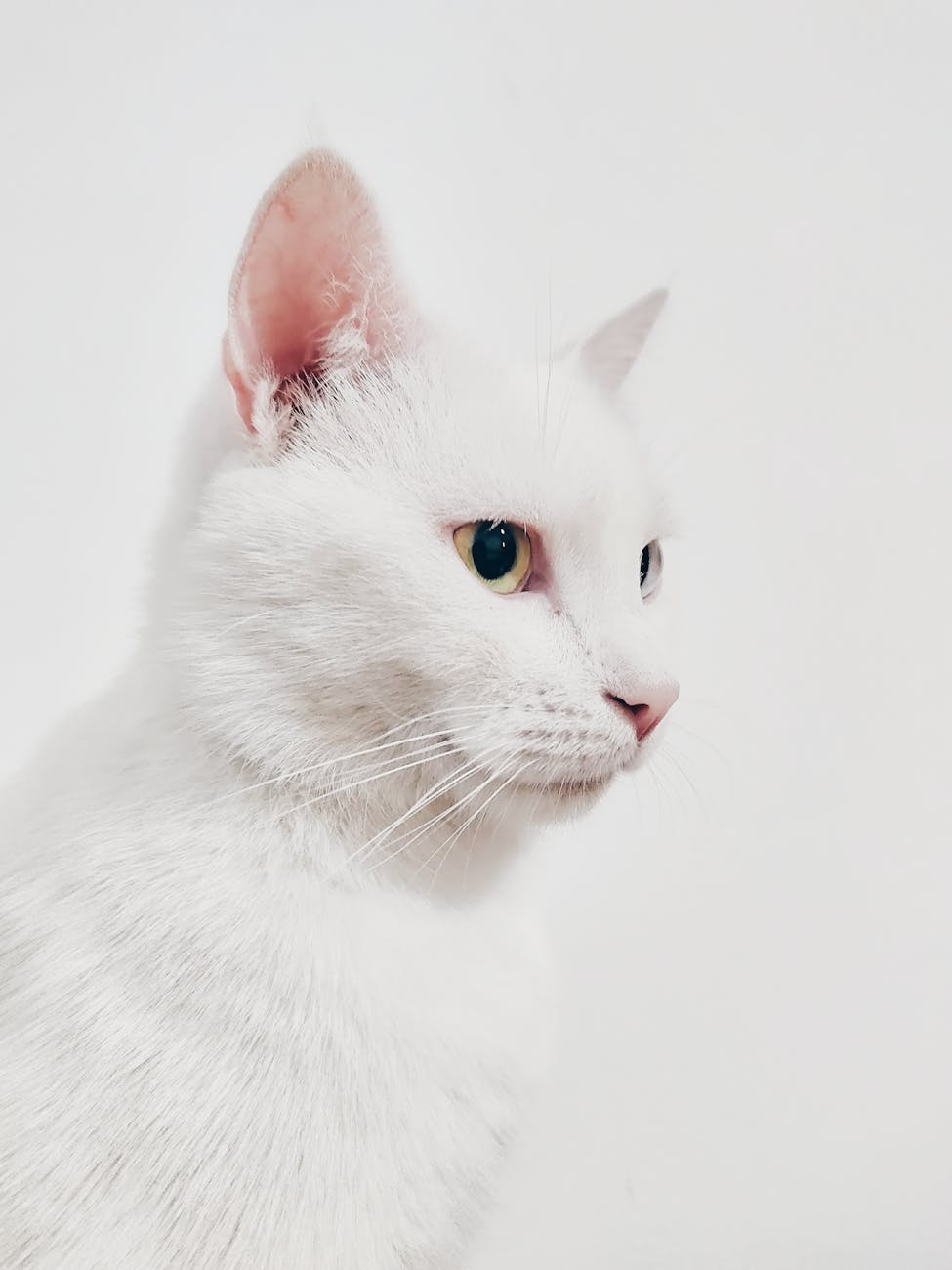
Christmas was a sleek, white cat with a bright red collar and a tiny bell. He sported one green eye. One eye blue. Christmas twinkles the kids called them. He got his name because he was born on Christmas Eve. Since then, his life revolved around the festive season. He loved the glittering lights and the scent of pine. He enjoyed the rustling of wrapping paper. He cherished the joy he saw in his family’s faces.

Christmas morning, the children had excitedly unwrapped their gifts. Afterward, the family went off to visit relatives. Christmas the Cat had wandered into the pantry. Curious, he batted at a loose box of crackers, which tipped over with a crash. Startled, he darted behind a stack of canned goods. In the commotion, someone closed the pantry door, locking him inside.

At first, Christmas thought this was just an oversight. Someone would open the door soon and scoop him up for a cuddle. But the minutes stretched into hours, and the house grew silent. Panic set in. 

He imagined the family around the table, sharing laughter, turkey, and pie. He pictured the children playing with their new toys. The warmth of the fireplace filled the room. Soft carols were in the air. And here he was, trapped in the dark, with only a box of crackers for company. 

Christmas, becoming convinced it was too late until the family returned that evening. His heart sank as he heard the keys jingle and the front door creak. He sat dejectedly on the pantry floor, his tail curled around him.

“Christmas! Where are you, buddy?” 

Called the youngest child, Emily.

The pantry door swung open, and a flood of light spilled in. Christmas blinked and looked up. Emily scooped him into her arms, covering him in kisses.

“We were so worried!” 

She exclaimed. 

“We couldn’t find you anywhere.”

The rest of the family gathered around, showering him with attention. Despite their love, Christmas couldn’t shake his gloom. He meowed mournfully, his usual purr absent.

“What’s wrong, Christmas?” 

Emily asked, stroking his fur. 

“You’re safe now.”

Her father, overhearing, knelt beside her.

“I think Christmas thinks he missed Christmas Day.” 

He said with a chuckle.

Emily’s eyes widened. 

“Oh no! That isn’t very good. We need to tell him it’s okay.”

She cradled Christmas close and said softly,

“You didn’t miss Christmas, silly kitty. Even if the day is over, Christmas isn’t just one day. It’s about love, kindness, and being together. We can celebrate Christmas every single day.”

He looked up at her, his green eyes shining. The bell on his collar jingled as he rubbed his head against her cheek.

That night, Emily insisted they set up a special celebration for him. They lit the tree again. They brought out leftover turkey for a feast. They even gave him a shiny bow to play with. As Christmas sat in Emily’s lap, batting at the bow, he realized she was right. Christmas wasn’t just about one day. It was about the joy and love that filled the house every day of the year.

Christmas the Cat didn’t fret about the calendar from that moment on. Whether it was July or December, he purred as loudly when the family was together. After all, every day is Christmas as long as there was love.

The Secret Santa of Cordell, Oklahoma

Groff Media 2024© Truth Endures IMDbPro
Presented by benandsteve.com By: Benjamin Groff II©

3–4 minutes

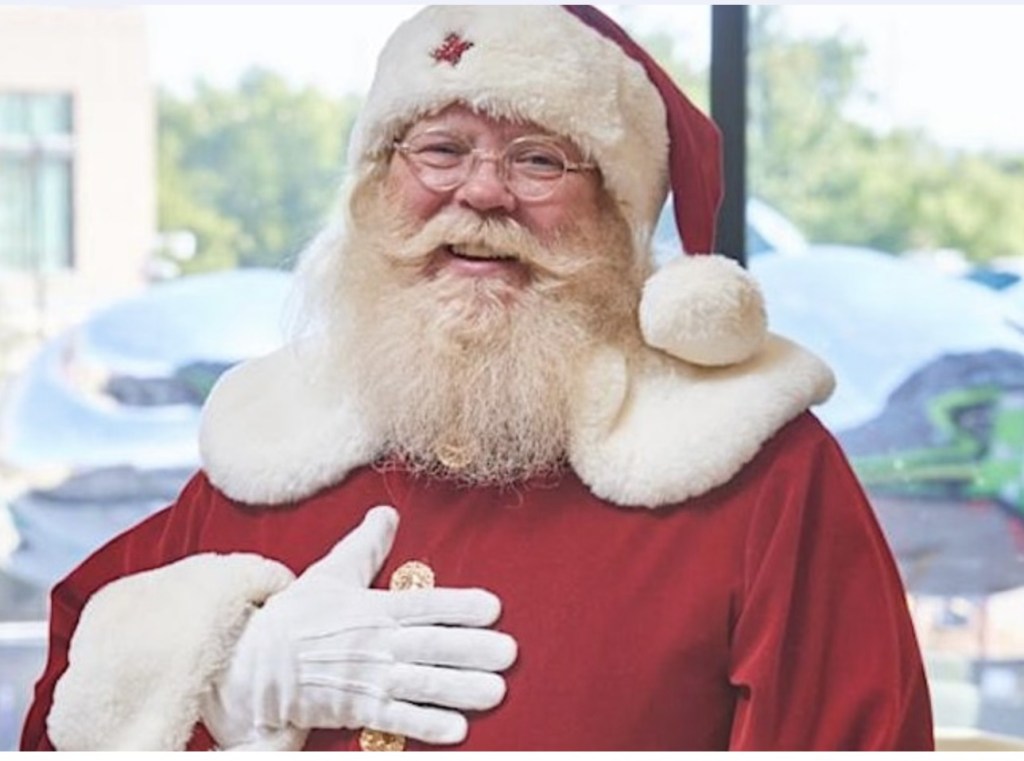
In the small, snow-covered town of Cordell, Oklahoma, Police Chief Eby Don Walters had a secret. Every December, the frost painted the windows and the smell of pine and cinnamon filled the air. During this time, he would don a plush red suit and strap on a padded belly. He transformed into the town’s beloved Santa Claus.

Decades ago, a young Eby Don joined the force. The town’s Santa fell ill just days before the annual Christmas Eve festival. Eby Don, with his deep, booming laugh, twinkling eyes, and short, round build, stepped in. The kids adored him, and the tradition was born, bringing enduring joy to the community.

The children of Cordell adored Santa. They poured their hearts into their whispered wishes. They handed him carefully drawn pictures. They giggled when he joked about knowing if they’d been naughty or nice. Eby Don never broke character. He stayed in character even when his nieces and nephews sat on his lap. Their eyes were wide with wonder.

As the years passed, the children grew up, never suspecting that Santa was their own Chief Walters. Many returned with their kids, eager to introduce them to the magical figure from their childhoods. Eby Don played along. He listened with a warm smile as grown adults recounted their cherished memories of Santa. He waited for the moment when they would discover the truth. Their surprise and delight added to the magic of Christmas.

One Christmas Eve, nearing his sixties, Eby Don felt the weight of the years. The suit fit slightly tighter, and his knees creaked as he crouched to hug the smallest children. Yet, he couldn’t bear the thought of passing the torch. This was his gift to the town, his way of keeping its spirit alive. The Santa suit took a physical toll on him. Despite this, Eby Don continued to wear it. He knew the joy it brought to the children and the community.

That night, a little girl named Emma tugged at his sleeve, her big blue eyes searching his face.

“Santa, will you be here forever?”

she asked.

Eby Don knelt, his voice gentle.

“Santa’s spirit is always here, sweetheart, as long as people keep believing in the magic of Christmas.”

He knew that the belief in Santa was not just about a man in a red suit. It was about the spirit of giving, love, and hope that Christmas symbolizes. It was this belief that kept the Secret Santa tradition alive in Cordell.

The festival ended with the usual fanfare: carols, laughter, and the lighting of the town tree. Eby Don slipped to the small changing room behind the stage, trading his Santa suit for his police uniform. He stepped out into the cold night. The snow fell softly around him. He overheard a group of parents. Some of them were his former ‘kids’. They were talking about how lucky Cordell was to have a Santa who never missed a year. It was a warm and nostalgic end to the festive evening.

Eby Don smiled to himself. They would never know how much those words meant to him. He returned to his patrol car. His heart was as full as the sack of presents he had left under the tree. Chief Eby Don Walters cherished the greatest gift. It was knowing he had brought a little magic into the lives of everyone in Cordell. It was knowing he had brought a little magic into the lives of everyone in Cordell. They never knew the man behind the beard.

Guardians of Memory: Writing Our Truth Before It’s Rewritten

© Benjamin H. Groff II — Truth Endures / benandsteve.com

1–2 minutes

Tell It Like It Is

There comes a time in every nation’s history when silence becomes more dangerous than speaking. We are living in such a time now. Books are being banned, lessons erased, and truths rewritten to serve new agendas. What once stood as collective memory is being scrubbed clean, leaving behind a shell of what was. But history, real history, lives in the people who lived it — and that means you.

If the history of your people, your town, your family, or your country is under attack, write it down. Don’t wait for permission. Don’t assume someone else will record it for you. Every letter and every diary is a piece of the truth. Every recollection of how life was is also a piece of the truth. This includes the food you ate and the songs that played on your street. This truth is something that no one can erase.

Print it. Bind it. Keep it in a box, a drawer, or a chest. Place it anywhere it can be found by those who come after you. Share copies among your family members. Hide one in a place that time itself will forget. Digital memories are fleeting; servers fail, passwords vanish, and what is “deleted” online is often gone forever. But paper endures.

We have the power, still, to protect the soul of a free people — not through politics, but through preservation. Keep the banned books. Read them. Understand why they were silenced. They are often the keys to liberty’s locked door. The stories, poems, and records we save are not only for nostalgia’s sake. They defend against those who claim freedom was always fragile. They made it seem that way to future generations.

When freedom falters, truth is what leads us back.
Write your book. Tell your story.
Save it as if your grandchildren’s liberty depends on it — because one day, it just will.


By Benjamin GroffMedia© | benandsteve.com | ©2025 

Take Me Back To Yesterday Once More

5–8 minutes

The Farm That Built Me

When I look back on my childhood, I’m struck by how much life changed. The changes happened between the time I was born and when I turned eight. We didn’t have indoor plumbing at first. Initially we hauled water from town in five gallon buckets. That was for drinking and cooking. In a big tank in the back of my dad’s truck, water was hauled for the livestock. Eventually water was found on the farm in a well far south of our house. Than ran pipe as far as possible. But, the water pipe stopped about twenty feet shy of our kitchen door. My parents couldn’t afford to run it inside. Every day, we carried buckets from the outdoor faucet to the house. This was still an improvement over hauling water all the way from town.

If you have ever heard of the ‘little brown shack out back.’ Well we had one. We used it even after water was found on the place. Because their wasn’t a bathroom in built in the house. It would be added later. We would walk a trail to the shack in the summer and winter. It wasn’t fancy built at all. It had yellow jackets nest high on the wall. It had a hook and eye lock to secure the door when you were inside. A wooden block turned to keep the door shut when you left. It was cold as ice in winter and hot as hell in the summer. And our company didn’t take to it. It would cut their visits short. And sometimes I wondered if that wasn’t my dad’s plan for having for so long to start with.

Around the same time, we got our first telephone. The line lay exposed down the center of the dirt road. It was shared on a party line with two other houses. Every time the road grader came, the blade cut the wire. We would wait weeks for the phone man to splice it back together. They buried it once, but the sandrock kept them from going deep. The grader still found it. Eventually, someone figured out how to run it four feet off to the side of the road. That man got a promotion—and passed away not long after. These were the everyday challenges of our farm life.

Electricity was another novelty. We had it most of the time. But if it went off during a storm, it was especially bad during a snow event. We would be without lights for a week or longer. They were also the threads that wove our family together. These challenges taught us the value of perseverance. They also brought the joy of shared triumphs.

Heat was another story. Before our fireplace was installed, a single stove in the living room was turned down at night to save propane. We woke up to breath clouds in the cold air before school. Summers weren’t much easier. With no air conditioning, the whole family slept in the living room on pallets. We threw every door and window open. This helped capture the breeze from the five-acre lake a quarter mile south. We’d even open the fireplace flue to pull in a cool draft. It sounds uncomfortable now.

Back then, it was more than just a living arrangement. It was a testament to the value of family closeness. Six kids, two parents, visitors, and dogs—living in one big indoor campsite every night. If you’ve never known family closeness, you’ve missed something truly special. It’s these moments that I look back on with nostalgia and a deep appreciation for the bond we shared.

My father raised American Quarter Horses, and our farm revolved around them. We only kept one stud at a time to avoid brutal fights. Mares were bred individually, often requiring long hauls to other states to introduce new bloodlines. Our horses went everywhere—rodeo circuits, calf-cutting competitions, and even television shows. One star from Gunsmoke, Buck Taylor, called about a horse. Another buyer phoned from New York City during the Garden Square Futurity. He called to thank my dad for the mare Molly. Molly had taken him to the finals. My dad didn’t like us talking about our customers because he valued humility over reputation. As a kid, I didn’t understand. Now I do.

I remember the early 1970s and how tight our family budget must have been. My dad would come home from his barbershop with sacks of horse feed loaded in the back of his truck. He’d park in front of the house. Then, he’d hoist a heavy sack onto his shoulder and walk nearly two city blocks. He’d go down a hill, across a pasture, and all the way to our barn. He had back and leg issues that made every step painful, but he refused to “waste” fuel in his truck.

At the time, I didn’t grasp how precious that gallon of gas was during the oil crisis of the 1970s. To me, it was just Dad doing what he always did. He worked hard. He quietly bore pain. He put his family and animals first. Only now do I understand it was more than thrift; it was discipline and determination passed down like an heirloom.

That simple act—carrying those sacks of feed instead of burning a gallon of gas—left a mark on me. It taught me that sacrifice, resourcefulness, and responsibility are not always loud or dramatic. Sometimes they’re a man. He is alone at dusk, carrying a heavy burden down a path. This happens because it’s the right thing to do.

Everything shifted when Dad took a job at a Girl Scout camp. Horses were sold off until only a few remained for us to ride. We moved to the camp and poured ourselves into cleaning trails, rebuilding facilities, and living outdoors. Yet Dad’s passion for horses never dimmed. We still attended auctions and brought home horses to train. One day, I spotted a skittish dun mare at an auction—Lady. I knew she’d been mistreated and asked Dad to buy her. With patience, grooming, and daily walks, she became the smoothest riding horse I ever had. Lady followed me everywhere without reins, just like a loyal dog. Later, bred to a stud sixty miles away, she gave birth to a colt with the same gentle spirit.

Those years formed me. They were a school of life. They taught me resourcefulness. They also taught patience. I learned how to read the quiet signals of both people and animals. We didn’t have much, but we had each other. And now, decades later, every time a cool breeze brushes my face, I remember those nights in the living room. The windows were open. I hear the sound of our horses in the pasture. These are proof that even the simplest moments can shape a lifetime. The lessons I learned from farm life continue to inspire me. They shape my perspective. I appreciate the value of patience, resourcefulness, and the importance of family.


By Benjamin GroffMedia© | benandsteve.com | ©2025

The Man Who Fell Asleep One Night-Dreaming He Became A Sheriff In The Wild West.

He awakes the next morning to find he is still there.

2–3 minutes

Sheriff Without a Gun

Harold was an ordinary man living in a small house on the edge of town. He spent most of his evenings quietly—reading, cooking for one, and watching old Western movies before bed. One night, after drifting off in his recliner, Harold dreamed he was a cowboy riding across the dusty plains.

When he awoke the next morning, he nearly fell out of bed. The world outside his window was no longer his quiet backyard—it was a wild west frontier town. And tied right outside his kitchen door stood a horse named Gus, saddled and ready. Harold blinked twice, rubbed his eyes, and muttered,

“Well… this is new.”

Stepping outside, he was greeted by the townsfolk calling him Sheriff. Sheriff Harold, that is. The twist? He wore no gun.

“Best sheriff we ever had,”

they cheered,

“because you don’t bring trouble.”

But soon, trouble found them anyway. A group of gunslingers rolled into town, looking to cause mayhem.

Harold had no firearm to fight back. Thinking fast, he filled the pockets of his vest with smooth river rocks. When the gunslingers strutted down Main Street, Harold let fly. Whack—right in the shin—crack—one to the forehead. Pebbles rained down like hail until the bandits doubled over, tears streaming, too humiliated to continue.

Harold yelled –

“You get the hell out of here and don’t come back!”

They scrambled for their horses, chased out of town by the rock-throwing Sheriff himself.

From that day on, Sheriff Harold became a legend. The townsfolk swore he was the greatest Sheriff they’d ever known. This wasn’t because he outgunned the bad guys. It was because he outsmarted them. Every morning, Harold would pat Gus on the neck and tip his hat. He remembered that sometimes the simplest tools—a rock, a clever mind, and a little courage—are enough to keep the peace.

But somewhere else, in another world, Harold lay still. His daughter sat quietly at his bedside, holding his hand, eyes brimming with worry.

“Do you think he’ll ever regain consciousness?” 

She asked the doctor softly.

The doctor shook his head. 

“I don’t know. Stroke victims sometimes choose to stay where they are. Maybe Harold is better off living where he is. In that other place, he’s strong and needed. He is riding tall as Sheriff.”

His daughter squeezed his hand, whispering through tears, 

“Then I hope he knows we’ll always be proud of him—here, or there.”

And in the world of his dreams, Sheriff Harold tipped his hat, smiled, and rode Gus into the golden horizon.


By Benjamin GroffMedia© | benandsteve.com | ©2025 

The Healing Impact of Simple Acts: A Hug Can Change Everything

2–3 minutes

The Hug That Changed Everything

Mina at the Farmer's Market
Mina hugging at the Market

It was about five weeks after my back surgery when Steve and I went shopping at our farmers’ market. Normally, Saturdays are our day, but since he had volunteered the day before, we made our visit on Sunday instead. That simple change in schedule turned into something unexpected and heartwarming.

We ended up in the checkout lane of one of our favorite “checkout girls,” as we call her. Mina. She hadn’t seen me since before my surgery, and when she spotted us, her face lit up. She came running from behind the register. She wrapped her arms around both of us and hugged us tight. It felt like a son coming home from college after a long absence. She even insisted we give her our address so she can invite us to a family event she was planning. We’re still not sure what event it will be, but the invitation itself felt like a gift.

That hug reminded me of something simple yet profound. It showed the power of being openly accepting. Let people into your life regardless of who they are, what they look like, or where they come from. In Mina’s hug, I felt seen, valued, and welcomed back into the community.

It brought to mind another story—one shared with me for this blog.

It was 3 a.m. in a quiet hospital corridor when a young musician, newly diagnosed with leukemia, sat in fear and loneliness. The sterile lights and hum of machines gave her no comfort. She cried quietly, believing no one noticed.

But someone did.

A nurse named Ben saw her distress and asked, “Are you okay?” He didn’t prescribe medicine or adjust a machine—he offered a hug. That single gesture, simple as it was, gave her strength. It reminded her she wasn’t just a patient but a person worth comforting. She later said that hug stayed with her long after the treatments, even into remission.


Kindness has a transformative power. It’s impactful whether shown by a nurse in a hospital or a cashier in a farmers’ market. It can change moments and sometimes lives. We often think it has to be grand or costly. The truth is, the simplest acts—a hug, a smile, an invitation—can ripple far beyond what we imagine.

Mina’s hug will not make the news. Nurse Ben’s probably didn’t either. But for the people who received them, they became unforgettable.


  • When was the last time a small act of kindness made a real difference in your day?
  • Have you offered something that felt ordinary to you but has meant the world to someone else?
  • What small kindness can you extend today to be someone’s “Mina” or “Nurse Ben”?

Life is full of struggles and invisible battles, but kindness—especially when it surprises us—has the power to heal. A hug. A smile. An invitation. They seem small, but they carry extraordinary weight.

You never know whose burden you’ll lighten or whose courage you’ll restore. Sometimes the smallest things are the biggest miracles. And without even realizing it, you are the miracle-giver.


By Benjamin GroffMedia© | benandsteve.com | ©2025 

How Far Is Heaven? A Reflection on Belonging

2–3 minutes

How Far Is Heaven?

The little boy tugged at his father’s sleeve as they walked home one quiet evening. The sky stretched wide above them, painted in soft shades of pink and gold. After a long silence, the boy asked a question that seemed to hang as heavy as the clouds.

“Dad… how far is Heaven?”

The father slowed his steps, looking down at his son. For a moment, he didn’t answer. Then he smiled gently.

“That’s a big question, son. And the truth is—I don’t know.”

The boy’s brow furrowed.

“Don’t know? Isn’t it up there?”

He pointed toward the fading light above the rooftops.

“Well,”

his father began,

“that depends on what you believe Heaven is. For some people, Heaven is a faraway place where souls go when life here is over. For others, Heaven is closer than you think.”

He stooped down so they were eye to eye.

“Heaven can be the feeling of home when everyone’s together at the dinner table. It can be walking into your grandparents’ house and smelling fresh pies cooling on the counter. It can be the peace of sitting in a quiet cabin deep in the woods. There is no noise but the trees and the wind.”

The boy listened, his eyes wide, as though trying to imagine all those Heavens at once.

“You see, son,”

his father continued,

“Heaven doesn’t have just one location. It can mean different things to different people, at different times in their lives. Sometimes it’s a place, sometimes it’s a feeling. And sometimes, people think of it as a reward beyond this life. But no matter what, it’s something we long for—a place where we belong, where everything feels right.”

The boy was quiet, mulling it over. Then he looked back up at the sky.

“So… Heaven isn’t always far away?”

His father smiled, squeezing his hand.

“No, son. Sometimes, Heaven is right here—closer than we ever imagine.”

As they walked the rest of the way home, the boy noticed the laughter of his mother. She was waiting at the door. He smelled the supper drifting through the air. He felt the warmth of his father’s hand in his own. And for that moment, he decided, Heaven was not far at all.


Reflection

How Far Is Heaven?

By Benjamin Groff II

A boy once asked his father, “How far is Heaven?”

The father said, “That depends. For some, it’s beyond the stars where souls go when life is done. For others, it’s much closer. It is found in the smell of pies at Grandma’s. It is in the quiet of a cabin in the woods or the laughter of family at the dinner table.”

He paused and added, “Heaven is different for everyone, son. Sometimes it’s a dream, sometimes a memory, and sometimes it’s right here, in the moments we hold close.”

The boy thought for a while, then smiled. Heaven, he decided, was not so far away after all.


By Benjamin GroffMedia© | benandsteve.com | 2025 

The Four Magic Words: A Father’s Legacy

2–3 minutes

Ebom Shoobem Shoobem Shoobem

The four magic words a father passed down to his four children. He told them that anytime they were about to face trouble, they should speak those words. The assistance they required would eventually. But only if they took the necessary action for it to occur. 

The words were only to be used when necessary. They should not be used as a want. Use them during a crisis, more than a wish. And a threat to life, rather than a threat to pride. If they ever abused the use of the words, then their special powers would no longer be available to them. The magic words would only be passed on when they reached the age of 18. They needed to have made plans to leave the family home.

The four children had each left their home by the time the father had reached 55 years of age. He had spent a great deal of his life enjoying his time with each of them. Now, he looked ahead to adventuring into his own life. 

The father’s four children carried the words with them into the wide world. Each one held them differently. One tucked them away like a secret prayer. Another spoke them aloud when fear pressed too heavily. A third doubted them but remembered all the same. The fourth treated them like a compass hidden in the lining of a coat.

In time, each child faced a moment that tested the promise of those words. One found themselves stranded in a snowstorm, far from home. Another stood at the edge of despair after losing nearly everything they had built. A third was cornered by deceit, betrayed by someone they had trusted. And the last stood between danger and an innocent life.

In every trial, the magic words did not summon thunderbolts or winged guardians. Instead, they sharpened courage, opened a hidden door, or drew the right ally to their side. The father had spoken true—the words alone were not enough. But when joined with action, with faith, with that one step ahead, help always came.

Years later, when the father’s hair had silvered and his own journeys were slowing, the children returned to him. Around the fire, they told their stories—each different, but threaded with the same truth. The words had worked. This was not because they carried power of their own. Instead, they reminded each child that strength and salvation arrive only when one dares to act.

The father smiled, warmed by both the fire and the glow in his children’s faces. He whispered, almost to himself, “Ebom Shoobem Shoobem Shoobem.” The four children echoed it back, not as magic, but as memory.

And from then on, they knew—the words were not only for escaping danger. They were meant to be carried ahead to their own children one day. The words served as a charm. They also posed a challenge. Help will come, but only if you rise to meet it.


By Benjamin GroffMedia© | benandsteve.com | 2025 

The Idiocy Of Name Calling – Woof Whistles And Such!

1–2 minutes

The Great Name-Calling Open

The morning was sunny on the golf course. A group of doctors noticed a team of nurses playing a round a few holes over. One of the doctors cupped his hands and hollered across the fairway:

“Hey! When you walked by the gate, the watchdog said WOOF! WOOF!”

The nurses froze, glaring back. One of them raised her club like a microphone and shouted,

“Oh yeah? When you all walked by the pond, the ducks went QUACK! QUACK!”

The golf course grew quiet. A couple of retirees nearby peeked out of their carts to see what the commotion was. The trash talk had officially begun.

Just then, a police officer—off duty but still in uniform for reasons only he knew—wandered up and added his grievance.

“That’s nothing! I went into a restaurant today and a bunch of teenagers started going OINK! OINK! OINK! at me!”

The doctors and nurses nodded sympathetically, but before long they were all laughing. It seemed no profession was safe from ridicule.

“Well,” said one of the nurses, grinning. “If we’re going to keep score, I went to a rock concert last week. The singer stopped mid-song, pointed straight at the crowd, and called us every name in the book. I felt like I’d paid extra for the insults.”

By now, the golfers had abandoned their shots. The officer had parked his cart. The conversation had spiraled into a full-blown “who got called what” competition. Farmers chimed in about “moo” jokes. Teachers griped about “boring” chants. A barber also complained about being called “clip-clop” at the horse races.

The sun dipped lower, balls went unhit, and nobody remembered the score of the game. One thing was certain: the Great Name-Calling Open had been played on that course. Every profession—dog, duck, pig, or otherwise—walked away laughing.


By Benjamin GroffMedia© | benandsteve.com | 2025 

The Flying Wagon – A Bribed Brother – A Frightened Mother

A true story about two brother’s antics on the Western Plains of Oklahoma in the 1920s and ’30s.

By Benjamin GroffMedia© | benandsteve.com | 2025 Truth Endures©

3–4 minutes

The Flying Wagon

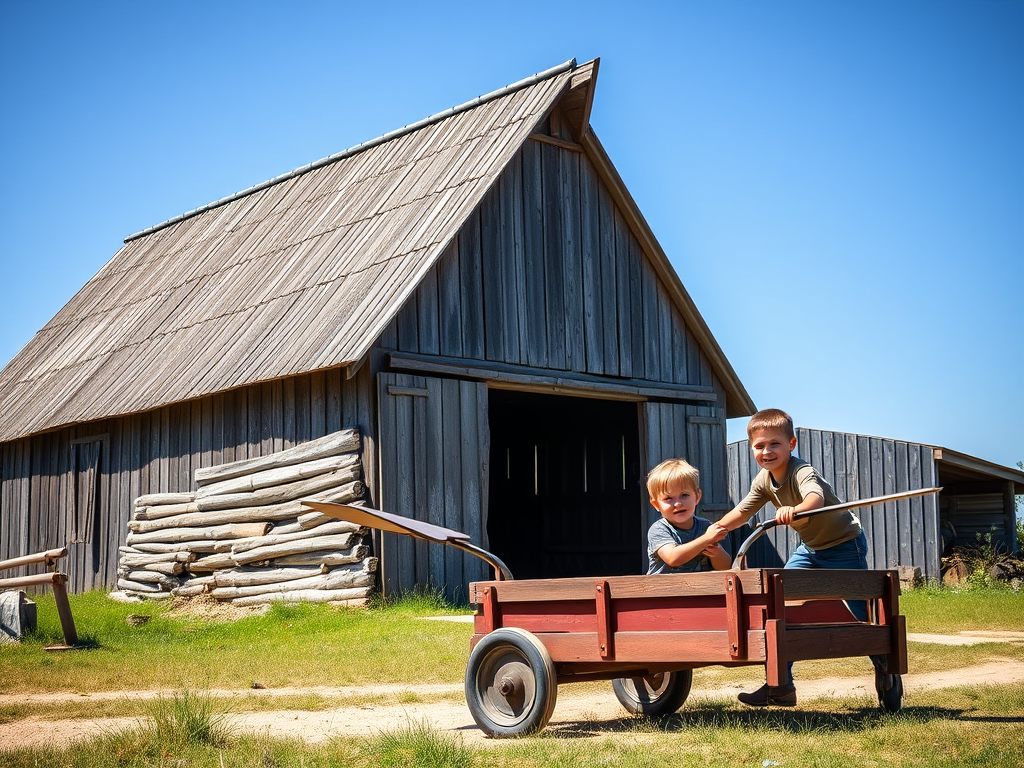
You’ve heard of the Wright Brothers, but you probably haven’t heard of the Groff Brothers—JD and Bennie. Two western Oklahoma boys growing up wild and dusty in the 1920s and ’30s. They didn’t have blueprints or flying machines. What they had was imagination, a tall barn, and a battered old wagon that Bennie believed could fly.

Bennie was the older one. He was full of ideas that didn’t always make sense. They always sounded like fun—at least to him. JD, the youngest, often found himself drafted into Bennie’s adventures under what you might call “big brother persuasion.” Bennie had a way of making cooperation seem more appealing. He would start listing all the minor sins JD had committed that week. JD wasn’t dumb. He knew how to pick his battles.

One summer day, Bennie got it in his head that their wagon could be made to fly. All it needed were wings—planks nailed out to the sides—and a launch platform. The barn roof, with its steep pitch and high drop, was just the place. Bennie did the math. He calculated it as only a 1930s farm kid could. He figured the wagon might be too heavy to lift both of them. So, of course, he chose JD to be the pilot.

JD protested. Loudly. But Bennie made his case and called in his leverage. They went up with the wagon. They dragged it onto the roof like a couple of cartoon inventors chasing the wind.

Perched high above the ground, JD sat nervously in the creaking wagon, holding on to the sides. The wings were loose, the wheels rattled, and JD knew better than anyone how this would end.

“Hold on tight and don’t jump out!” Bennie shouted.

“I won’t,” JD called back, “I’ll fall!”

And with that, Bennie gave the wagon a mighty shove.

It was right about then that their mother—Mom—looked out the kitchen window. She saw what no mother should ever see: her youngest son soaring off the roof in a makeshift flying contraption. She dropped what she was doing and ran out the door, just in time to witness gravity take over. The wagon left the barn roof for the briefest moment of flight—then fell straight down like a stone.

JD hit the ground in a cloud of dust and bent wood. Miraculously, he survived—more scared than scraped, and too winded to say anything right away. Bennie stood nearby, squinting at the wreckage like a disappointed engineer.

“Well,” Bennie muttered, “I guess there wasn’t enough lift.”

Mom had a different theory: they would never try that again.

JD agreed with Mom.

That was just one of many scrapes the Groff brothers got into over the years. Bennie had the ideas, and JD often paid the price. But through it all, they stuck together—laughing, fighting, inventing, surviving. That’s what brothers did.

The wild stunts and hijinks came to an end far too soon. Bennie passed away in his mid-forties, and with him, a certain spark left the family. One relative said the family had been “a little less jovial” ever since.

It’s true. A parent never fully recovers from losing a child. And a brother never fully recovers from losing his bud.

For a moment, a wagon flew on top of a barn in western Oklahoma. Two boys believed they could touch the sky.

Embracing the Constant of Change

By Benjamin GroffMedia© | benandsteve.com | 2025 Truth Endures©

2–3 minutes

“The Constant of Change”

There are stories worth telling—stories shaped by the countless experiences we collect in life. In mine, there have been unforgettable moments. I visited with friends, shared laughter, and exchanged hugs. Then I returned home—only to learn the next day that they were gone. No warning. No signs. One moment, they were part of my world; the next, they had vanished from it.

Those moments taught me a truth that often goes unspoken: nothing in life is definite.

Even when it feels like we’re stuck—repeating the same routines, going through the same motions—life is still moving. The world shifts beneath our feet, often without our awareness, certainly without our consent. Change is not something we invite; it’s something that happens. It shows itself in every breath we take. It appears with every face that enters or leaves our lives. It influences every decision made far beyond our control—from government chambers to hospital rooms.

Change is the only constant.

Sometimes, a change is so small it goes unnoticed—until its effects stretch across history. On February 2, 1959, Waylon Jennings gave up his seat on a chartered airplane to the Big Bopper, J.P. Richardson, who was feeling ill. The plane also carried Buddy Holly and Ritchie Valens. It crashed in an Iowa field just minutes after takeoff. Everyone aboard died.

Waylon Jennings

That one seat swap—an act of kindness, -–– saved Jennings’s life. No one was at fault. But that simple moment, that ordinary change in plan, altered the course of music history and Jennings’s own future. He carried the weight of that change for the rest of his life. And yet, that change gave him more years, more music, more life.

That is how change works. Quiet. Sudden. Unfair. Unpredictable. But real.

When everything feels bleak, we must remember: change is still at work. When loss feels unbearable or the path ahead seems hidden, we must remember: change is still at work. What feels like the end today reveals itself as the beginning of something new tomorrow.

Time moves. People change. Life adapts. Always.

And in that, we find our only real choice: acceptance.

Accepting change—no matter how painful—does not mean surrendering to it. It means choosing to live with eyes open, hearts ready, and spirits willing to grow from what has been lost. We don’t have to like every change. But by accepting it, we start to transform with it—and even rise because of it.


Postscript:

After a tragic 1991 plane crash claimed the lives of several members of Reba McEntire’s band, it was Waylon Jennings—haunted by his own near-miss decades earlier—who offered her a few words she never forgot:

“Reba, you’ll never get over it, but you’ll get through it.”

And that’s the final truth about change. We don’t get over it—we live through it. And somehow, life keeps going.

The Illinois Folks Would Visit Cordell, Oklahoma Every Year…To See Family

By Benjamin GroffMedia© | benandsteve.com | 2025 Truth Endures©

4–6 minutes

Summer Roads to Oklahoma to Visit Uncle Ben and Aunt Florence

By Benjamin Groff II

Every summer—without fail—a car would ease out of the driveway in Olney, Illinois. It was packed tight with suitcases and ham sandwiches. Kids pressed against window glass. Stories were waiting to be lived again. The road ahead led straight to Cordell, Oklahoma. Uncle Ben and Aunt Florence kept the porch swept. They also kept the table set.

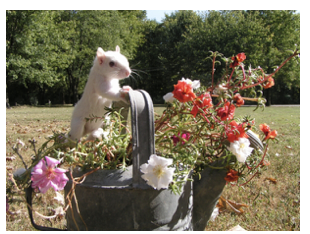
Olney was a quiet place, best known for something that always fascinated me as a child: white squirrels. My grandmother told me about them as if they were magical creatures. They were rare and watchful, darting through yards and city parks. I always hoped I’d see one myself, but somehow we always left too early or came back too late. Still, the idea of them stuck in my imagination like a bright stone in the pocket.

But the real adventure was always in Oklahoma.

Uncle Ben and Aunt Florence lived in a modest home in Cordell. There, the wind blew with purpose. Time slowed enough to sit and stay a while. The cousins from Caddo and Washita Counties began to arrive shortly after us. Many of them had been raised alongside the Illinois kin during the lean years of the 1920s and ’30s.

The car would keep rolling through Binger, Carnegie, Weatherford, and Colony. It traced out a web of family ties that never wore thin. There were hugs that lasted too long and pies that didn’t last long enough. Kids ran barefoot through the same red dirt that had once dusted our grandparents’ boots. The grownups told stories from both sides of the Dust Bowl.

“You remember when that storm blacked out the sky?”
“Your mama used to chase us out of the cellar with a broom!”


And everyone laughed, even if the memories came with a tear or two.

The trips began in the early 1960s. They stretched well into the 1980s. Each summer became a soft echo of the one before. Faces aged, but names stayed familiar. Porch swings creaked. Tin-roof rain was still the best music at night.

Eventually, the trips grew fewer, as the elders passed and the younger ones built lives farther away. But in my mind, a stretch of two-lane highway still runs from the white-squirrel town of Olney. It continues to the wide-open sky of Oklahoma. It’s a road paved with memory and love that survives distance, time, and even silence.

And one day, I still hope to see one of those white squirrels.

One cousin wrote a memory down in a letter to another -––

The tires hummed low against the highway as we crossed into Oklahoma, and I felt it—the shift. Not just in geography, but in memory. It had been years since we’d made this drive from Olney, Illinois. However, the road still felt familiar. It was like an old hymn you didn’t realize you remembered until you started humming along.

I leaned my head against the window, watching the land roll out in shades of tan and green. My thoughts rolled back too. I remembered the summers of my childhood. We’d pile into the car every year and head south to visit Uncle Ben and Aunt Florence in Cordell.

They were waiting when we arrived back then—porch light on, arms wide, iced tea already sweating on the kitchen table. The smell of fried chicken greeted us. We could hear the sound of someone laughing from the backyard before our feet ever hit the ground.

We’d stay for a week or more, using Cordell as home base. Then we’d branch out, visiting cousins scattered across Caddo and Washita Counties—Binger, Carnegie, Gotebo. Some were practically siblings. They were raised alongside our parents during the hard years of the 1920s and ’30s. Those were times when everyone shared everything. The stories from those days came freely over pie and coffee. They were told with the kind of clarity that only comes from having truly lived it.

But this trip—this time—was different.

There were no porch lights waiting. No tea glasses on the counter. Uncle Ben had been gone for years now. Aunt Florence too. And many of the cousins had passed, their homes quiet or sold. This time, we came to remember—not just to visit.

We stopped by the old places. Some were still standing, others just foundations and memories. We drove to the Cordell, Eakly, Colony and Alfalfa, cemeteries. I stood at the resting place of our folks I could remember seeing as if it was yesterday. I could still hear their voices in my head. I spoke softly, unsure if the wind could carry my words back to them, but I tried anyway.

Later that evening, we drove out to Binger. One of the cousins—now gray-haired and slow-moving—met us on the porch with a smile that hadn’t changed in 40 years.

“I didn’t think anyone remembered to come back,” she said.

“We never forgot,” I told her.

And we hadn’t.
Because the roots ran deep.
Deeper than distance.
Deeper than time.

So we returned to Oklahoma—not just to see the land or the gravestones, but to feel that presence again. To walk the same dusty paths, sit under the same wide skies, and remember who we are—and who we loved.

Some journeys are round trips.
Others are returns.
This was both.

As always time came when we had to return. And it always seemed longer going back to Illinois. It was sad to leave. Who would not be here next time we came to visit? Who on our crew would not make the trip next time? Uncle Ben always choked up when he said goodbye. He knew it could be the last time he saw us. Eventually, he was right.

Leaving A Writing That Opens A Window To Their Souls

By Benjamin GroffMedia© | benandsteve.com | 2025 Truth Endures©

2–3 minutes

In Their Own Hand: How Handwriting Revealed the Soul of My Ancestors

I’ve been tracing my family tree for years, patiently tracking each lead and clue like breadcrumbs through time. Some discoveries came through census records, others through photographs or whispered family legends. But nothing has stirred my spirit more deeply than the sight of my great-grandparents’ handwriting—elegant, looping, unmistakably human.

The moment I first held a document written in their own hand, I felt something shift. Their penmanship, carefully practiced and beautifully formed, didn’t just tell me who they were—it revealed how they lived. It was a window to their character, their care, and their time.

The Lost Art of Penmanship

In the 19th and early 20th centuries, good handwriting was a matter of pride, discipline, and social standing. Penmanship was taught rigorously in schools. Techniques like the Spencerian script dominated in the mid-1800s. This was followed by the Palmer Method in the early 1900s. These systems weren’t just about communication—they emphasized grace, control, and personality in each letter’s curve and flow. A person’s handwriting was part of their reputation.

To write beautifully was to show respect: for the reader, for the message, and for oneself. That’s something we’ve largely lost in today’s age of keyboards and quick texts.

A Personal Connection

As I sorted through old family papers—birth certificates, letters, recipe cards—I found myself lingering over the handwriting. There was something intimate about it, something tender. These weren’t just names on a tree or dates on a ledger. These were real people, and here they were, writing. Their fingers once held that pen, their thoughts shaped these lines.

My great-grandmother’s cursive was especially elegant, delicate yet confident. Her capital “L” swept like a violin bow, and her lowercase “r” curled just so. She had taken her time. Her writing carried weight. And somehow, through the shape of her letters, I felt like I knew her.

Handwriting as Legacy

Before voice recordings or home videos, handwriting was how our ancestors captured themselves. They wrote love letters, grocery lists, prayers, and goodbyes. They signed their names to marriage licenses and land deeds, wills and war drafts—leaving behind a fingerprint of the soul.

Today, when we stumble across those scraps, they don’t just offer genealogical evidence. They give us a bridge—a real, living connection to the people who came before us. As the world moves faster, something sacred arises. It comes from slowing down to read their words in their own hand.

Preserving the Past

If you’ve begun your own family history search, don’t overlook the handwritten notes. Scan them, preserve them, study them. Teach younger generations about their significance. They may not understand the loops and flourishes right away—but they’ll feel the legacy behind them.

Because sometimes, a single line of cursive can carry more emotion than a thousand digital files.


Have you come across your ancestors’ handwriting? Share your story in the comments below—or better yet, share an image of it. Let’s celebrate the quiet beauty of those who came before us, one pen stroke at a time.

One of The Most Powerful Farming Recovery Stories Of This Day

It came only after failing, suicide and horror. A true story. That matters!

The Tragic True Story of Jean-Michel “Michou” — A Farmer’s Silent Cry

Location: Loire-Atlantique, France
Year: 2011
Category: Real Farmer Story | Mental Health | Agriculture Crisis

🌱 Chapter 1: Born in the Soil

Jean-Michel, lovingly called Michou by his village neighbors, was born into a family of farmers in the rural province of Loire-Atlantique, France. His family had been farming for three generations — milking cows, sowing wheat, harvesting barley, and living off the land.

From a young age, Michou learned how to wake before sunrise, milk the cows, repair fences, and drive tractors.
Farming wasn’t a job for him — it was identity, love, and legacy.

“City people see cows as business. For us, they are family.” – Michou

🐄 Chapter 2: A Life of Relentless Labor

Michou managed a small dairy farm with 47 cows. He woke every day at 5:00 AM, fed his cattle, and milked them before the sky even turned blue. After that, he toiled in the fields, checking irrigation, sowing seeds, fixing old machines.

He worked 365 days a year — no holidays, no weekends.

Everyone saw him as the “hardworking farmer of the region,” always smiling, always moving.

But inside, Michou was collapsing.

📉 Chapter 3: The Economic Collapse

After 2008, the dairy industry in Europe began to spiral downward.

Milk prices dropped from €0.32/liter to €0.22/liter

Cost of production was €0.30/liter

Michou was losing money with every drop of milk

He took a loan of €24,000. Then another €18,000. Then mortgaged his tractor.
Still, the bills kept piling up: electricity, fodder, tractor repairs, fertilizers.

“I’m no longer a farmer. I’ve become a machine that produces milk… and debt.” – from Michou’s diary

💔 Chapter 4: When Support Fades

His wife, Lucie, fell ill — stress and fatigue.
His only son, Julien, moved to the city for work.

Michou was left completely alone — with cows and his memories.
His best friend Jacques, also a farmer, had taken his own life just a year before. Another neighbor followed the same path.

The village got quieter. Michou got quieter.

🧠 Chapter 5: Silent Depression

One day, Michou wrote:

“One of my cows was sick today. I cried. Maybe because I am sick too.”

He never shared his pain.
He would feed the cows and whisper to them… but talk to no one else.
Evenings were spent staring at the barn walls, thinking if all his life had been for nothing.

⚰️ Chapter 6: The Last Morning – Continue reading the story click here. The original posting continues with the rest of the story and a turning point that you won’t expect. I wanted to direct you to the original post where you can leave any comments for the author.

A Story About Tuff – The Dog That Became A Family Legend!

By Benjamin GroffMedia© | benandsteve.com | 2025 Truth Endures©

4–5 minutes

The Legend of Tuff

Tuff!

Tuff was no ordinary dog. He was a broad-chested, mixed-breed bulldog from the dusty plains of western Oklahoma. He was loyal to the core. He was tough as nails—just like his name. He belonged to a boy named JD, and from the moment they met, the two were inseparable.

Wherever JD went, Tuff followed. JD rode across the Caddo and Washita County prairie on his sturdy pony. He even rode it to the one-room schoolhouse west of Eakly. He rounded up cattle on the family farm. Regardless Tuff was there, his paws pounding the dirt in time with the horse’s hooves. At school, while JD sat through his lessons, Tuff stayed with the horse, standing guard like a seasoned sentry. Rain or shine, he never left his post. He stayed until the bell rang. Then, the trio trotted home together, just three-quarters of a mile up the road.

One warm afternoon, while JD was still in school, trouble came calling. A neighbor’s ornery bull had pushed its way through a loosely latched gate and wandered off. As luck would have it, it made its way straight to JD’s homestead, snorting and stomping with agitation. JD’s mother was outside hanging laundry to dry in the Oklahoma breeze. The bull burst through the linens like a locomotive. It tore shirts and sheets from the line as it charged.

Startled, she dropped her clothespin basket and backed toward the yard fence, but there was nowhere left to go. The bull pawed at the dirt, its head low, flaring its nostrils as it prepared to strike. Streaks of foam, mixed with dust and sweat, ran from its mouth. Its bulk towered just yards away from her.

Thinking fast, JD’s mom cupped her hands to her mouth and called out with everything she had:

“Tuff! Ole Tuff! Come on, boy!”

Three-quarters of a mile away, in the tall grass outside the schoolyard, Tuff heard her. His ears perked up. He knew that voice—and he knew something was wrong.

Without a moment’s hesitation, Tuff shot off like a bullet, heading for home. He crossed pasture and ditch, squeezing under fences and dodging brush, driven by pure instinct.

When he arrived, the bull was still threatening JD’s mother. Tuff didn’t bark or hesitate. He charged.

The bull turned at the last second. It was startled and tried to lower its head for a fight. But, Tuff was already on him. He raced in circles, nipping and weaving, confusing the brute. The bull spun to face him again and again, becoming dizzy from the dog’s unrelenting speed.

Then, in one perfectly timed leap, Tuff clamped down on the bull’s nose—hard. The bull bucked and shook, kicked and bawled, but Tuff held firm, teeth sunk deep, refusing to let go. He brought the angry beast to its knees, pinning it in place with nothing but grit and jaw strength.

Just then, a cowboy riding by spotted the commotion. JD’s mother waved him down, shouting, “Ride fast to the Yarnell place! Tell ’em their bull’s out before someone gets hurt!”

The man nodded and galloped off in a cloud of dust.

Within the hour, the Yarnells arrived with ropes, a nose ring, and a long wooden block to secure the bull. The farmer jumped down from his saddle, shaking his head in disbelief.

“I’m real sorry, ma’am,” he said. “I reckon I forgot to latch the gate. Wind must’ve blown it wide open.” He paused, nodding toward the growling dog still latched onto the bull’s nose. “But first, we’re gonna need that dog to let go.”

JD’s mom looked at Tuff, calm and composed despite the ordeal. “Tuff, let go now, boy. Come here.”

Without hesitation, Tuff released the bull and trotted obediently to her side, tongue lolling, chest heaving but proud. The bull didn’t move again until ropes were secured and the men began the long walk back to their farm.

JD’s mom glanced at her watch and smiled. “Tuff, JD’s about to get out of school. You’d better go meet him.”

And with that, Tuff turned and loped back down the road. He was headed to the schoolyard just in time to greet his boy.

That evening, Tuff was treated like a king. JD’s mom gave him the biggest soup bone she’d been saving. He was even allowed to lie on the kitchen floor during supper. This was something normally off-limits. As the family passed dishes and swapped stories, JD’s mom told them what Tuff had done.

The story of Ole Tuff was told time and again. It was passed down through the years by my grandmother and my dad. Every time it was told, Tuff got a little tougher. Tuff got a little braver. Yet, the heart of the story stayed the same.

Because sometimes, legends aren’t born in books or movies.

Sometimes, they’re born in backyards—with a boy, his dog, and a mama hanging laundry.

The Story Behind Grandma’s Pie Shelf

By Benjamin GroffMedia© | benandsteve.com | 2025 Truth Endures©

1–2 minutes

“The Pie Shelf”

It sat on the back porch, just outside the screen door. It was an old wooden shelf, weather-worn and slightly crooked. Everyone in the family knew it as “the pie shelf.”

Nobody remembered who gave it that name. Maybe it was Grandma. She used to cool her pies on it every Sunday afternoon. That was back when a breeze still found its way through the kitchen windows. There were always two pies—one for dinner and one “just in case someone dropped by.”

That shelf saw more life than most furniture in the house. Birthday cakes cooled there. Jars of canned peaches lined up in neat rows. Once, a baby kitten was found curled up in the corner, fast asleep next to a lemon meringue.

Years later, after Grandma had passed and the house had new owners, the pie shelf remained. Weathered, yes. Empty, often. But it stood—quiet and proud—like it was waiting for one more pie to be set on top.

When I visited the house last fall, I found it just the same. I brushed off the dust. Then, I straightened one of the legs with a folded napkin. For no reason at all, I baked an apple pie and set it right there on the top shelf.

I didn’t expect visitors. But just before sunset, a neighbor from years ago strolled by, drawn by the scent. He laughed when he saw the pie shelf.

“Some things,”

he said,

“don’t ever really leave us.”

We each took a slice and sat there on the porch, sharing stories of the people who came before us. For a brief moment, it seemed as though they were still here. They felt just inside the screen door, waiting for us to come in.

Remembering An Inlaw Who Is Dearly Departed (But – Yes…Still Alive)

By Benjamin GroffMedia© | benandsteve.com | 2025 Truth Endures©

3–4 minutes

There are moments in life when we contemplate our relationships with relatives who are dearly departed. Some have passed on, leaving behind only memories. Others are dearly departed in a different sense. They are no longer married into the family. Yet their presence lingers in our stories, our recollections, and sometimes, in our affections.

This story is about one such family member, who dearly departed not through death, but through divorce—from my sister. For nearly eighteen years or more, he was a big part of our family. Long before the wedding, during their dating years, he was already woven into our daily lives. He would often spend the night at our house. More than a few times, he slept in my room just to be near her. He was older than both of us, and a farmer by trade. During the winter months, farming slowed down. During this time, he worked as a parts clerk at his father’s Chevrolet dealership in town.

Since I worked for him on the farm, I spent nearly as much time with him as my sister did. From sunrise to sunset, we toiled together—planting crops, moving irrigation pipe, working cattle, and hauling hay. He even pitched in at the Girl Scout Camp where my dad was the ranger. And that’s where this story takes place.

It was the summer of 1978. A flood had wiped out a water line. The line ran from a well to a storage tank at the Girl Scout Camp. Special piping was needed for repairs. My dad asked Benny to take me to Clinton, Oklahoma, to pick up the materials. I was thrilled when he handed me the keys to one of the camp’s state-owned ranger vehicles. For a brief moment, I thought, “Wow, I get to drive!” But then he said, “Give these to Benny—he’ll be the one driving.” Shucks.

Still, the outing promised a break from our usual routine. We set out just before noon, heading west on State Highway 152. As we neared the town of Eakly, an Oklahoma Highway Patrol car coming toward us slowed dramatically. The trooper gave us both a piercing look, as if trying to place us. After passing us, he glanced back as though deciding whether to turn around. Odd, we thought—we hadn’t been speeding or doing anything wrong.

A few miles farther west, another patrol car did the exact same thing. Now we were both feeling uneasy. We even pulled over to check the truck—maybe something was dragging, maybe we had a flat tire—but everything checked out.

Four more patrol units gave us the same strange treatment. By now we were more than a little paranoid. What were we missing? We hadn’t turned on the radio, thinking it wasn’t our place to use official equipment in the state-owned truck. If we had, we’d have had our answer.

When we finally returned to the Ranger’s Quarters with the piping, we were greeted with wide eyes and urgent questions. Turns out, there had been a prison break nearby. The escapees had stolen a state vehicle—same color, same model, same government-issued license plate as the one we were driving. No wonder the troopers were ready to pounce. If we had known, we would’ve waved our Girl Scout badges out the window. We would have done this for the entire ride, like waving a white flag.

That trip became one of the many memorable moments I shared with my once-brother-in-law Benny. It was the story told every holiday. And it got laughs no matter how many times it was heard. Benny was a close comrade through much of my youth and during family gatherings. It was hard to see him and my sister go their separate ways. Still, I understood and respected her reasons. Sometimes life and family change in ways you don’t expect. And sometimes, those changes, though painful, lead to something better.

But Benny—well, he’ll always be one of our dearly departed.