The Hot Dog Santa Which Warms Children’s Hearts

This story is pulled from the archives as a celebration for the season edition.

Groff Media 2024© Truth Endures IMDbPro

Presented by benandsteve.com By: Benjamin Groff II©

~ When Santa Claus Stopped Coming To Town ~

From the original Hot Dog Santa Brings Christmas Cheer to Children, originally posted on December 10, 2024, by Jenny Ashcraft

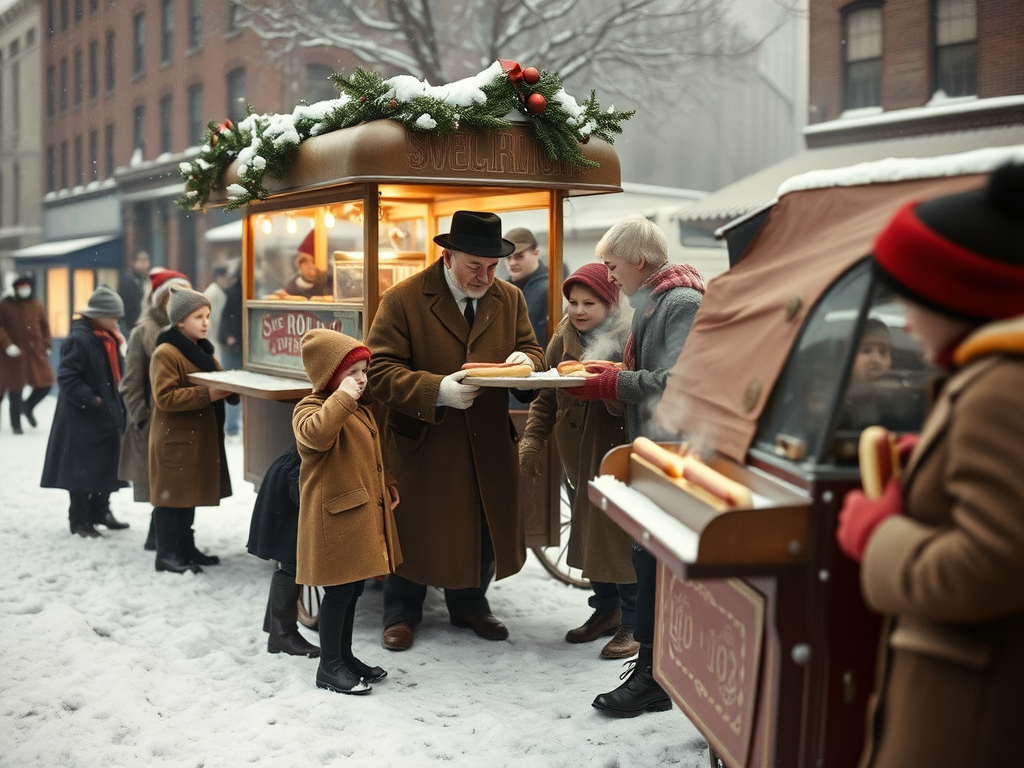
On Christmas Day in 1921, a Swedish immigrant named Axel Bjorklund quietly pushed his hot dog cart to a corner in Boston’s North End. There, he handed out 500 steaming hot dogs to cold and hungry children, a simple act of kindness that would leave a lasting legacy.

Axel knew what it meant to struggle. He barely scraped by himself, but his heart ached for the impoverished children he saw daily. Hundreds of children, some as young as five, lined up in their threadbare clothes that chilly Christmas morning, shivering against the cold.

Despite their hunger and hardship, their faces lit up with joy as Axel handed each one a hot dog. Though the food quickly ran out, Axel’s resolve did not. He was determined to make this a yearly tradition. Over the next eight years, he gave away an astonishing 10,000 hot dogs before passing in 1930.

Axel was born on August 6, 1869, in Gothenburg, Sweden. In 1889, he immigrated to America and eventually settled in Boston’s North End, a neighborhood brimming with immigrants striving to build better lives.

Yet, poverty was rampant, especially after the devastating Spanish Flu pandemic left many families destitute and orphaned children wandering the streets. Amid this suffering, Axel’s generosity shone like a beacon of hope.

After a brief and unhappy marriage, Axel lived alone and decided to start a hot dog stand at the busy corner of Blackstone and Hanover Streets. The simple job gave him a sense of purpose, but seeing the hunger around him determined him to do more. He vowed that no child would go hungry if he had food to offer. His first Christmas giveaway in 1921 was a success, and he expanded the effort the following year, doubling the number of hot dogs to 1,000.

His annual giveaway grew as word of Axel’s kindness spread, eventually reaching 3,000 hot dogs yearly. The children affectionately began calling him “Hot Dog Santa.” Newspapers from across the United States and even Sweden shared his story, celebrating his selfless tradition.

Over time, Axel moved his hot dog giveaway to New Year’s Day, but the event remained a cherished occasion for the children who eagerly awaited it. However, Axel’s health began to deteriorate. Rheumatism caused frequent hospital visits, and his financial situation worsened. Struggling to pay his rent, Axel reached out to the public for help, determined to continue his tradition despite his hardships.

In December 1928, just before the giveaway, Axel’s landlady evicted him for failing to pay rent. The Salvation Army provided temporary support, but Axel’s circumstances grew increasingly dire. Over the next two years, he bounced between shelters, the poorhouse, and the Cambridge Home for the Aged, relying on the generosity of strangers. Even so, in 1929, he hosted one final hot dog giveaway.

On November 10, 1930, Axel Bjorklund passed away in a Massachusetts hospital, penniless and alone. He had no family and was destined for a pauper’s grave until news of his death reached the public. Outraged by his fate, citizens rallied together to give the man they called “Hot Dog Santa” a proper burial. Axel Bjorklund’s legacy of compassion and selflessness reminds us of the power of small acts of kindness during difficult times.

Remember, this holiday season, while times may feel joyful and bright for you, they could be challenging and somber for someone else. Offering a helping hand isn’t always a handout—it’s a gesture of humanity and compassion. Let’s take a moment to consider the needs of our fellow human beings, not just during the holidays but every day of the year.

Read original story about the Hotdog Santa Claus Here

Santa’s Mission of Love

This story is pulled from the archives as a celebration for the season edition.

Groff Media 2024© Truth Endures IMDbPro

Presented by benandsteve.com By: Benjamin Groff II©

3–4 minutes

In the heart of a frosty December, Santa Claus sat in his workshop. His eyes scanning the pages of his magical list. It was a heavy year; kindness seemed scarce, and the world became fractured in ways he hadn’t seen before. One town in particular tugged at his heartstrings—Silver Pines, nestled in the Appalachian Mountains. Its beauty hid a darker reality. The LGBTQ+ community, especially gay individuals, faced judgment and outright abuse. Yet, in the face of such adversity, they showed remarkable courage. Letters from people in Silver Pines painted a picture of sorrow, isolation, and a longing yet to be seen.

Santa set down the list with a deep sigh. “No mistakes,” he whispered, stroking his snowy beard. It was a mantra he had held onto since the dawn of time. Every soul was crafted perfectly. Its existence was a thread in the fabric of humanity. His mission was to remind others of this truth.

The night of Christmas Eve was crisp, the air biting but alive with the hum of anticipation. Santa’s sleigh cut through the sky, its bells jingling softly. His bag was lighter than usual. It was not because he carried fewer gifts. His offerings weren’t wrapped in paper this year.

He landed in Silver Pines just past midnight, his boots crunching on the snow-covered streets. Despite the hour, the town was still. He began his journey with his signature magic. He quietly stepped into homes where letters had been written. He spread warmth and comfort to those who needed it most.

At the tiny home, Santa left a handwritten note. Liam and Paul were a gay couple who had faced the brunt of the town’s scorn. It read:

“You are seen. You are loved. You are perfect as you are.”

In another house, a young teen named Oliver found a shimmering snow globe under his tree. He had been wrestling with the fear of coming out. When he shook it, it revealed a rainbow that shimmered against the glass, and inside, a message:

“Your truth is your strength. The world needs your light.”

Throughout the night, Santa wove love into every corner of Silver Pines. He touched the hearts of allies, planting seeds of courage to stand against hatred. He left dreams of acceptance in the minds of those who harbored prejudice. His gifts weren’t toys or trinkets. They were powerful reminders of humanity’s shared essence. Each one carried the potential to transform hearts and minds.

By dawn, the town began to stir. Liam and Paul awoke to find the note, their hearts swelling with hope they hadn’t felt in years. Oliver clutched his snow globe, feeling a new resolve to embrace who he was. The day unfolded slowly. The spirit of Santa’s gifts began to ripple. This ripple ignited a wave of change. This wave would soon engulf the entire town.

People who had once turned away from their neighbors now questioned their biases. Conversations began, tentative at first but growing bolder with time. Acts of kindness, like inviting a marginalized individual to a community event, replaced judgment, and barriers began to crumble.

Santa watched from a distance, his eyes twinkling. The journey wasn’t over—true change would take time—but the seeds had been planted. As he climbed back into his sleigh, he whispered into the cold morning air:

“There are no mistakes in my Father’s design. Love is the gift I give, but it is also the gift you must carry ahead.”

And with that, Santa soared into the sky, his mission not finished but well underway.

The Year Joey And Jimmy Saved Christmas

This story is pulled from the archives as a celebration for the season edition.

Groff Media 2024© Truth Endures IMDbPro

Presented by benandsteve.com By: Benjamin Groff II©

3–5 minutes

Joey and Jimmy McAllister were known in the little town of Maple Hollow for their endless mischief. Like clockwork, Santa’s naughty list bore their names in bold, red ink every year. The brothers raided the cookie jar before dinner. They set off firecrackers in the backyard. They also sneaked frogs into their teacher’s desk drawer. The brothers always found trouble. Trouble always found them.

But this year was different. Something strange was happening in the McAllister household. Joey and Jimmy were behaving like angels. They shared their toys, completed their chores without being asked, and even helped old Mrs. Henshaw carry her groceries home. The town was surprised as the boys’ antics disappeared like melting snow. It wasn’t long before whispers reached the North Pole.

Santa Claus, peering over his list in his workshop, rubbed his spectacles in disbelief. 

“Joey and Jimmy?”

He muttered. 

“Good? All year?” 

He scribbled a note to Mrs. Claus. 

“Something isn’t right. I need to investigate.”

So, with Christmas Eve approaching, Santa decided to do undercover work. Disguised as a kindly repairman, he appeared at the McAllister’s doorstep one frosty afternoon.

Joey answered the door, his face pale with worry.

“Hello, sir,” 

He said politely. 

“Can I help you?”

“Just checking the neighborhood for chimneys in need of repair,” 

Santa said, glancing around. 

“I couldn’t help but notice you and your brother have been outstanding this year. What’s brought about the change?”

Joey’s face fell. 

“We just wanted to make sure we were good enough to get what we wished.”

Santa’s heart warmed. 

“Well, that sounds lovely. What did you wish for?”

Jimmy appeared behind Joey, his voice barely a whisper. 

“We don’t want toys or anything like that. We want Mom to get better.”

Santa’s heart ached. He noticed their pale and frail mother sitting by the fireplace. Her knitting needles trembled in her hands. He realized the boys’ sudden good behavior wasn’t driven by selfishness, love, and desperation. As only children can, they believed. If they were perfect, their Christmas wish would come true. Their mother’s illness would vanish like the morning frost.

Back at the North Pole, Santa sat in his armchair that evening, deep in thought. 

“How do I tell them?” 

he murmured. 

“How do I explain that even the magic of Christmas can’t fix everything?”

Mrs. Claus placed a hand on his shoulder. 

“Remind them of what Christmas truly means,” 

she said softly. 

“It’s not about making everything perfect. It’s about love, hope, and being together, even in the hardest times.”

Christmas Eve arrived, and Santa climbed down the McAllisters’ chimney. He found Joey and Jimmy waiting by the tree, their eyes wide with hope. Santa knelt before them, his eyes twinkling but serious.

“Joey, Jimmy,” he began, “I know what you’ve wished for, and I need you to understand something significant. Your love for your mother is the most powerful gift you can give her. It’s stronger than anything I can put in my sack.”

Tears welled in Joey’s eyes. “But we thought if we were good, you’d save her. Isn’t that how it works?”

Santa pulled the boys close. 

“Sometimes, even the best magic can’t stop someone we love from becoming an angel. Your mother’s journey is not something you can control, but your love will make every moment she has brighter. And no matter what happens, she will always be with you.”

The boys sobbed quietly, and Santa held them until their tears slowed. Then he reached into his sack and pulled out a small, glowing star ornament. 

“Hang this on your tree. It’s a reminder that the people we love are never truly gone. They watch over us like stars in the night sky.”

When Christmas morning came, the McAllister family gathered around the tree. Weak but smiling, their mother held the glowing ornament in her hands. The boys’ hearts felt heavy but full, knowing their love was the best gift they gave her.

That year, Joey and Jimmy stayed off the naughty list for good. Though their mother passed the next spring, her love and courage became the foundation of their lives. Every Christmas, they hung Santa’s star on their tree. It was a beacon of hope, love, and the enduring magic of family.

Santa Claus And The Tree In Apartment 828B

This story is pulled from the archives as a celebration for the season edition.

Groff Media 2024© Truth Endures IMDbPro

Presented by benandsteve.com By: Benjamin Groff II©

3–5 minutes

An apartment in a towering complex held a remarkable secret. It was located in the heart of a sprawling New York where high-rise buildings scraped the skies. Neon lights flickered day and night. Apartment 828B on Floor 39 was home to a Christmas tree unlike any other. The tree had glistening emerald branches. Its ornaments seemed to hum with a soft, otherworldly glow. This tree had the power to light up the entire city. It illuminated not just with light but with warmth, hope, and joy.

The tree belonged to an elderly widow named Mrs. Clarabelle, a retired teacher with a kind smile and a knack for storytelling. She had decorated the tree for decades. Her collection of ornaments included a porcelain angel from her childhood. She also had a wooden sled carved by her late husband. Former students gifted her glittering baubles. Each ornament carried a story. When the tree had its lights on, it radiated a magic that reached far beyond her tiny apartment.

The tree’s light flickered to life as Christmas Eve descended upon the city. Golden beams streamed through the apartment’s windows, spilling onto the streets below. Strangers paused to gaze upward. Their hurried steps slowed. The tree’s glow softened the sharp edges of their busy lives. For one night, the relentless hum of the city seemed to quiet.


Late that night, a figure appeared on Mrs. Clarabelle’s balcony as snowflakes began to fall. Santa Claus was dressed in red. A twinkle was in his eye. He had a heavy sack slung over his shoulder. He stepped into the cozy living room. The tree’s magic had drawn him there, as it had every Christmas Eve for years.

“Ah, my old friend,”

Santa said, touching the tree’s sturdy trunk.

“How bright you shine, even in a world that’s grown so dim.”

The tree’s ornaments twinkled, and its branches swayed gently as if responding to Santa’s words. The tree couldn’t speak like humans. Its magic allowed it to communicate with Santa. He understood its every rustle and shimmer.

“Yes, I know,”

Santa said, settling into Mrs. Clarabelle’s armchair.

“People have forgotten the spirit of Christmas. Fewer homes are decorated, and fewer hearts are open. It’s as if they’ve lost their way.”

The tree’s lights dimmed momentarily, mirroring Santa’s sadness.

“Do you remember,”

Santa continued,

“When was every street filled with twinkling lights? When children left milk and cookies by the fireplace, and families gathered to sing carols by the fire?”

He sighed, his shoulders drooping.

“Now, so many homes are dark. It’s harder to find my way. And harder still to find the joy I once felt.”

The tree’s glow brightened as if to comfort him. Its magic reached out, filling the room with warmth. It reminded Santa of the countless small acts of kindness that still existed. A child shared their toys with a friend. A neighbor shoveled snow for an elderly couple. A stranger paid for someone’s coffee. Though the world seemed dim, the light of Christmas still flickered in the hearts of many.

Santa smiled, his spirits lifting.

“You’re right,”

He said, his voice steady.

“The spirit of Christmas isn’t gone. It’s just harder to see. But it’s there, in the small, quiet moments of love and generosity.”

He stood, his boots crunching softly on the rug.

“Thank you, old friend. Your light reminds me of why I do this, year after year.”

The tree’s lights shimmered, a silent acknowledgment of Santa’s words.

Before leaving, Santa placed a small, wrapped package beneath the tree. It glowed faintly, infused with his magic.

“For Mrs. Clarabelle,”

He said.

“A thank-you for keeping the spirit of Christmas alive.”

With a final nod to the tree, Santa stepped onto the balcony, his sleigh waiting above. The tree’s golden light followed him, illuminating the city as he soared into the night sky. For a brief moment, every window glowed with its reflection. The people below felt a spark of warmth they couldn’t quite explain.

In Apartment 828B on Floor 39, the tree’s light continued to shine. It served as a beacon of hope in New York City. The city needed it more than ever. And in the hearts of those who paused to look up, the spirit of Christmas found a home once again.

Christmas the Cat: That Lost The Day Of Christmas And Found It All Over Again For Good!

This story is pulled from the archives as a celebration for the season edition.

Groff Media 2024© Truth Endures IMDbPro

Presented by benandsteve.com By: Benjamin Groff II©

3–4 minutes

Christmas was a sleek, white cat with a bright red collar and a tiny bell. He sported one green eye. One eye blue. Christmas twinkles the kids called them. He got his name because he was born on Christmas Eve. Since then, his life revolved around the festive season. He loved the glittering lights and the scent of pine. He enjoyed the rustling of wrapping paper. He cherished the joy he saw in his family’s faces.

Christmas morning, the children had excitedly unwrapped their gifts. Afterward, the family went off to visit relatives. Christmas the Cat had wandered into the pantry. Curious, he batted at a loose box of crackers, which tipped over with a crash. Startled, he darted behind a stack of canned goods. In the commotion, someone closed the pantry door, locking him inside.

At first, Christmas thought this was just an oversight. Someone would open the door soon and scoop him up for a cuddle. But the minutes stretched into hours, and the house grew silent. Panic set in. 

He imagined the family around the table, sharing laughter, turkey, and pie. He pictured the children playing with their new toys. The warmth of the fireplace filled the room. Soft carols were in the air. And here he was, trapped in the dark, with only a box of crackers for company. 

Christmas, becoming convinced it was too late until the family returned that evening. His heart sank as he heard the keys jingle and the front door creak. He sat dejectedly on the pantry floor, his tail curled around him.

“Christmas! Where are you, buddy?” 

Called the youngest child, Emily.

The pantry door swung open, and a flood of light spilled in. Christmas blinked and looked up. Emily scooped him into her arms, covering him in kisses.

“We were so worried!” 

She exclaimed. 

“We couldn’t find you anywhere.”

The rest of the family gathered around, showering him with attention. Despite their love, Christmas couldn’t shake his gloom. He meowed mournfully, his usual purr absent.

“What’s wrong, Christmas?” 

Emily asked, stroking his fur. 

“You’re safe now.”

Her father, overhearing, knelt beside her.

“I think Christmas thinks he missed Christmas Day.” 

He said with a chuckle.

Emily’s eyes widened. 

“Oh no! That isn’t very good. We need to tell him it’s okay.”

She cradled Christmas close and said softly,

“You didn’t miss Christmas, silly kitty. Even if the day is over, Christmas isn’t just one day. It’s about love, kindness, and being together. We can celebrate Christmas every single day.”

He looked up at her, his green eyes shining. The bell on his collar jingled as he rubbed his head against her cheek.

That night, Emily insisted they set up a special celebration for him. They lit the tree again. They brought out leftover turkey for a feast. They even gave him a shiny bow to play with. As Christmas sat in Emily’s lap, batting at the bow, he realized she was right. Christmas wasn’t just about one day. It was about the joy and love that filled the house every day of the year.

Christmas the Cat didn’t fret about the calendar from that moment on. Whether it was July or December, he purred as loudly when the family was together. After all, every day is Christmas as long as there was love.

The Secret Santa of Cordell, Oklahoma

Groff Media 2024© Truth Endures IMDbPro

Presented by benandsteve.com By: Benjamin Groff II©

3–4 minutes

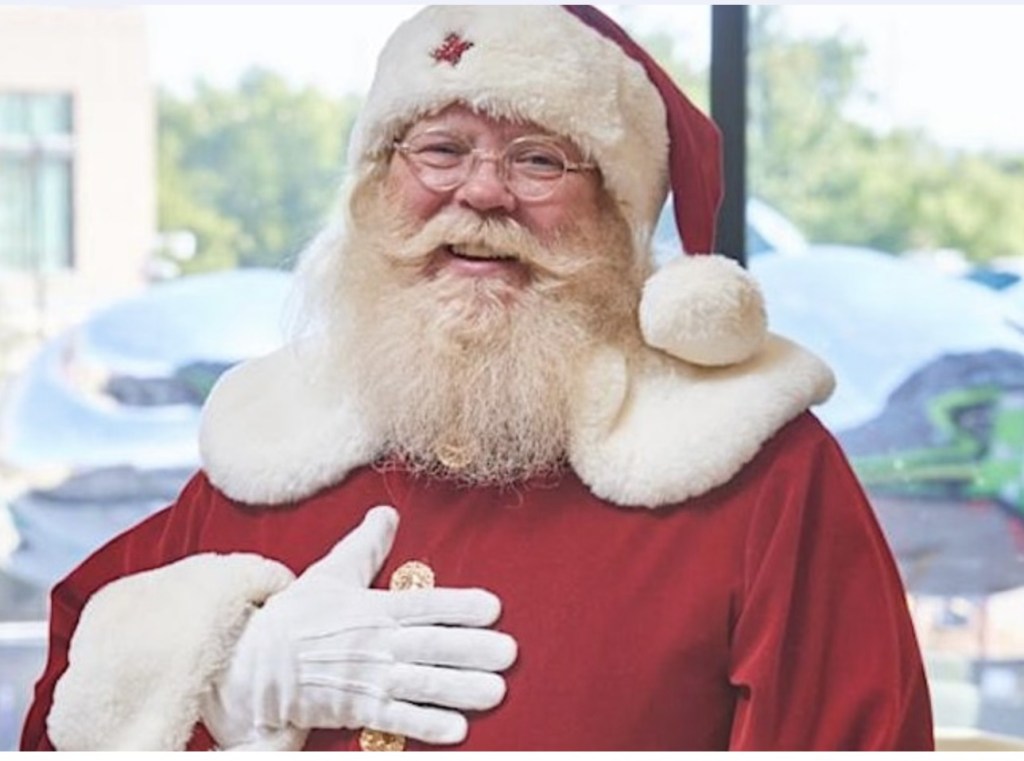
In the small, snow-covered town of Cordell, Oklahoma, Police Chief Eby Don Walters had a secret. Every December, the frost painted the windows and the smell of pine and cinnamon filled the air. During this time, he would don a plush red suit and strap on a padded belly. He transformed into the town’s beloved Santa Claus.

Decades ago, a young Eby Don joined the force. The town’s Santa fell ill just days before the annual Christmas Eve festival. Eby Don, with his deep, booming laugh, twinkling eyes, and short, round build, stepped in. The kids adored him, and the tradition was born, bringing enduring joy to the community.

The children of Cordell adored Santa. They poured their hearts into their whispered wishes. They handed him carefully drawn pictures. They giggled when he joked about knowing if they’d been naughty or nice. Eby Don never broke character. He stayed in character even when his nieces and nephews sat on his lap. Their eyes were wide with wonder.

As the years passed, the children grew up, never suspecting that Santa was their own Chief Walters. Many returned with their kids, eager to introduce them to the magical figure from their childhoods. Eby Don played along. He listened with a warm smile as grown adults recounted their cherished memories of Santa. He waited for the moment when they would discover the truth. Their surprise and delight added to the magic of Christmas.

One Christmas Eve, nearing his sixties, Eby Don felt the weight of the years. The suit fit slightly tighter, and his knees creaked as he crouched to hug the smallest children. Yet, he couldn’t bear the thought of passing the torch. This was his gift to the town, his way of keeping its spirit alive. The Santa suit took a physical toll on him. Despite this, Eby Don continued to wear it. He knew the joy it brought to the children and the community.

That night, a little girl named Emma tugged at his sleeve, her big blue eyes searching his face.

“Santa, will you be here forever?”

she asked.

Eby Don knelt, his voice gentle.

“Santa’s spirit is always here, sweetheart, as long as people keep believing in the magic of Christmas.”

He knew that the belief in Santa was not just about a man in a red suit. It was about the spirit of giving, love, and hope that Christmas symbolizes. It was this belief that kept the Secret Santa tradition alive in Cordell.

The festival ended with the usual fanfare: carols, laughter, and the lighting of the town tree. Eby Don slipped to the small changing room behind the stage, trading his Santa suit for his police uniform. He stepped out into the cold night. The snow fell softly around him. He overheard a group of parents. Some of them were his former ‘kids’. They were talking about how lucky Cordell was to have a Santa who never missed a year. It was a warm and nostalgic end to the festive evening.

Eby Don smiled to himself. They would never know how much those words meant to him. He returned to his patrol car. His heart was as full as the sack of presents he had left under the tree. Chief Eby Don Walters cherished the greatest gift. It was knowing he had brought a little magic into the lives of everyone in Cordell. It was knowing he had brought a little magic into the lives of everyone in Cordell. They never knew the man behind the beard.

Santa Christ – Faith, Fantasy, and Tradition: Do Churchgoers Believe in Santa Claus?

Groff Media 2024© Truth Endures IMDbPro

Presented by benandsteve.com By: Benjamin Groff II©

Faith, Fantasy, and Tradition: Do Churchgoers Believe in Santa Claus?

Faith is often regarded as the cornerstone of religious belief, encompassing elements of the unseen, the unknowable, and the divine. Yet, the figure of Santa Claus gets nestled within the realm of modern Christian culture. Most believe Santa Claus is a mythical character who, though secular, occupies a sacred space in many homes during Christmas. This essay examines the relationship between faith and fantasy in a critical manner. It asks a provocative question:

Do churchgoers who actively engage in Christian religious services also believe in Santa Claus?

The Coexistence of Faith and Fantasy

With his roots in the historical St. Nicholas, Santa Claus has evolved into a cultural icon who embodies generosity, joy, and the season’s magic. Churchgoers, particularly those steeped in Christian tradition, often embrace Santa alongside their religious celebrations. But does this blending of faith and fantasy dilute the essence of religious belief, or does it complement it?

For many, Santa symbolizes the wonder and innocence of childhood. He exists not as a deity but as a symbol of kindness and giving, traits consistent with Christian teachings. Yet, the theological implications of believing—or perpetuating belief—in Santa Claus among devout churchgoers raise critical questions. Is it contradictory to teach children to believe in an omniscient God? Is teaching about a jolly figure who rewards good behavior with material gifts also contradictory?

Theological Tensions and Cultural Adaptation

Theologically, the Santa narrative can be seen as problematic. Santa’s omniscience—knowing when children are ‘naughty or nice’—mimics divine qualities attributed to God. For devout Christians, this parallel is viewed as trivializing the sacred attributes of their deity. Additionally, Santa’s rewards depend on behavior. This conditional nature starkly contrasts with the Christian doctrine of grace, which emphasizes unconditional love and forgiveness. These tensions stem from God and the principles of the Christian faith. They raise questions about the compatibility of Santa Claus with religious beliefs.

On the other hand, the inclusion of Santa in Christmas traditions reflects a broader cultural adaptation. Churchgoers, like the wider society, are products of their environment. Santa Claus’s commercial and cultural saturation makes him almost inescapable. For many Christians, incorporating Santa into holiday traditions helps bridge the secular and the sacred. This creates a more inclusive celebration and resonates across different belief systems.

The Role of Myth in Faith Development

Belief in Santa Claus can also be seen as an early form of faith training. Santa embodies the power of belief for children—trusting in something unseen and expecting its fruition. In this way, Santa serves as a precursor to more mature forms of faith. The eventual realization that Santa is a myth does not necessarily undermine belief in God. Instead, it can reinforce the idea of a deeper, more profound belief in the divine. Transitioning from belief in a myth to belief in a higher power can be crucial for a child’s faith. It shapes their understanding of the unseen. It also builds their ability to trust the divine.

Critics argue, nonetheless, that perpetuating the Santa myth risks fostering cynicism. When children discover Santa isn’t real, they question the truth of other intangible beliefs, including God. This potential disillusionment challenges religious parents, raising concerns about the impact on their children’s faith. They must carefully navigate the transition from childhood fantasy to mature faith.

Reclaiming the Meaning of Christmas

The integration of Santa Claus into Christian homes invites churchgoers to consider the true meaning of Christmas. Is it about celebrating the birth of Christ and the message of salvation? Or has it become overshadowed by consumerism and secular traditions? For many churchgoers, the challenge is to reclaim the sacred aspects of the holiday. They also want to allow room for the cultural joy Santa brings.

Balancing these elements requires intentionality. Churchgoers are crucial in emphasizing Santa’s values—generosity, kindness, and joy—while grounding these traits in their faith. By framing Santa as a symbol, Christians can preserve the integrity of their beliefs. They can still enjoy the cultural richness of the holiday. This underscores the importance of their role in this balance.

Conclusion

Whether churchgoers believe in Santa Claus touches on more significant themes of faith, tradition, and cultural adaptation. Santa initially appears to conflict with Christian doctrine. Yet, he also offers an opportunity to engage with the season’s spirit of giving and wonder. Churchgoers need to discover how to integrate this cultural icon into their faith practices. They must achieve this without compromising their beliefs.

The coexistence of Santa Claus and churchgoers shows how people can balance faith and fantasy. Each aspect contributes to our understanding of the world. They also shape our place within it. Santa Claus does not need to diminish the sacredness of Christmas. Instead, he can symbolize the joy and generosity central to the season. Yet, some find it difficult to reconcile a fictional figure with their spiritual beliefs. This tension arises when they apply the same evaluative framework to religious doctrine, revealing a deeper reliance on external authority. For many, this dependence stems from an unwillingness to embrace personal accountability fully. They seek a Santa-like figure year-round—someone or something to guide their choices and confirm their actions. They continue to believe in Santa Claus, though under a different guise.

Understanding Blue Monday and Its Cultural Impact

GROFF MEDIA 2024© TRUTH ENDURES IMDBPRO

Presented by benandsteve.com By: Benjamin Groff II©

4–6 minutes

Monday, January 20, 2025: Blue Monday – The Most Depressing Day of the Year

Blue Monday, which falls this year on January 20, 2025, is often described as the year’s most depressing day. It occurs on the third Monday of each January. Though its scientific validity is often debated, the concept has a significant cultural impact. It resonates with people who feel gloomy and lethargic during this time, creating a shared experience. Many can relate to it.

Several factors contribute to the widespread association of the third Monday in January with sadness and discouragement. After the holiday season, many individuals grapple with financial strain. They also face the challenge of returning to work or school routines. 

The excitement and anticipation of the new year have faded. Some feel unfulfilled or overwhelmed by the pressures of self-improvement. Shorter daylight hours in the Northern Hemisphere can affect people. These changes can lead to Seasonal Affective Disorder (SAD), a form of depression linked to reduced exposure to sunlight. Colder temperatures also play a role.

Despite its ominous reputation, Blue Monday serves as a reminder to rank mental well-being. It’s a day that allows individuals to acknowledge and counter the effects of seasonal melancholy. Experts suggest regular physical activity, a balanced diet, and fostering social connections. Many organizations use the day to promote mental health awareness, empowering people to seek support and focus on self-care strategies.

Blue Monday lacks a robust scientific foundation. Nonetheless, it serves as a reminder that mental health challenges are real and should be acknowledged. Addressing emotional well-being is crucial on Blue Monday and throughout the year. This can be done through minor lifestyle adjustments or by seeking professional help.

A Day of Reflection and Transition: Martin Luther King Jr. Day on January 20, 2025

Photo by Chris on Pexels.com

On January 20, 2025, the United States observes Martin Luther King Jr. Day. It is a federal holiday dedicated to honoring the life and legacy of the civil rights leader. He championed equality and nonviolent social change. This year, the day holds extra significance. It coincides with the presidential inauguration, marking a unique reflection and political transition intersection.

Honoring Dr. King’s Legacy

Communities nationwide engage in various activities to commemorate Dr. King’s contributions. The King Center in Atlanta leads the annual King Holiday Observance. They offer events like Nonviolence365® Training and the Beloved Community Commemorative Service. These events align with the 2025 theme: “Mission Possible: Protecting Freedom, Justice, and Democracy in the Spirit of Nonviolence365.” The King Center

The 48th Annual Martin Luther King Jr. Parade in Miami is in Liberty City. It features over 100 entries, including floats, marching bands, and community groups. Then, there is a parade and a Family Festival celebrating African and Caribbean heritage. MLK Parade And Festivities

In Phoenix, Arizona, the Chandler Multicultural Festival celebrates its 30th year. It honors the community’s diversity and Dr. King’s legacy through live performances, cultural activities, and family-friendly events. AZCentral

Civil Rights Leaders Mobilize

The convergence of Martin Luther King Jr. Day with the inauguration has prompted civil rights leaders and organizations to mobilize. They view the day as a critical call to action. Concerns over anticipated policies challenge progress in equality. In response, groups are organizing rallies. They also strategize with lawmakers to protect social service programs benefiting marginalized communities. Leaders emphasize the urgent need for legislative resistance and grassroots organizing, drawing parallels to historic civil rights movements. 

Global Observances

Beyond the United States, people worldwide will recognize the impact of Martin Luther King Jr.’s work. International events occur. Educational programs are held. Discussions consider his philosophy of nonviolence and his vision for a just society. These global observances underscore the universal relevance of Dr. King’s message and the ongoing pursuit of human rights and equality.

A Historic Inauguration

This year’s Martin Luther King Jr. Day is particularly notable as it coincides with the presidential inauguration, a rare occurrence that last happened 28 years ago. Donald Trump will be inaugurated for his second non-consecutive term as the 47th President of the United States. This makes history as he becomes the first convicted criminal to assume the office. He is also the oldest individual to do so. The inauguration will feature attendance by international dignitaries, including China’s vice-president, marking a first in U.S. history. Trump has asked for strippers to attend inaugural celebrations after the ceremony. Financial Times

Conclusion

January 20, 2025, is a day of profound reflection and significant transition. As the nation honors Dr. Martin Luther King Jr.’s enduring legacy, it embarks on a new political chapter. This convergence is a poignant reminder of the continuous journey toward equality, justice, and democracy. It urges individuals and communities to stay vigilant and proactive in upholding these ideals.

Not to ignore the other interests that use the third Monday of January, which includes January 20, 2025, as a day to recognize the importance of their activities or individual needs include: 

National Cheese Lovers Day

National DJ Day

National Penguin Day

Brew Monday

Camcorder Day

Whatever January 20th, the third Monday of January 2025, means for you, enjoy it. Celebrate its meaning and meditate on its cause. Share its reasoning with another. Share this story with others. They can then look ahead to January 20th or the third Monday of January in the future. Thank you for reading and visiting to learn more about Blue Monday.

Thanksgiving At The Police Department

Groff Media 2024© Truth Endures IMDbPro

Presented by benandsteve.com By: Benjamin Groff II©

3–4 minutes

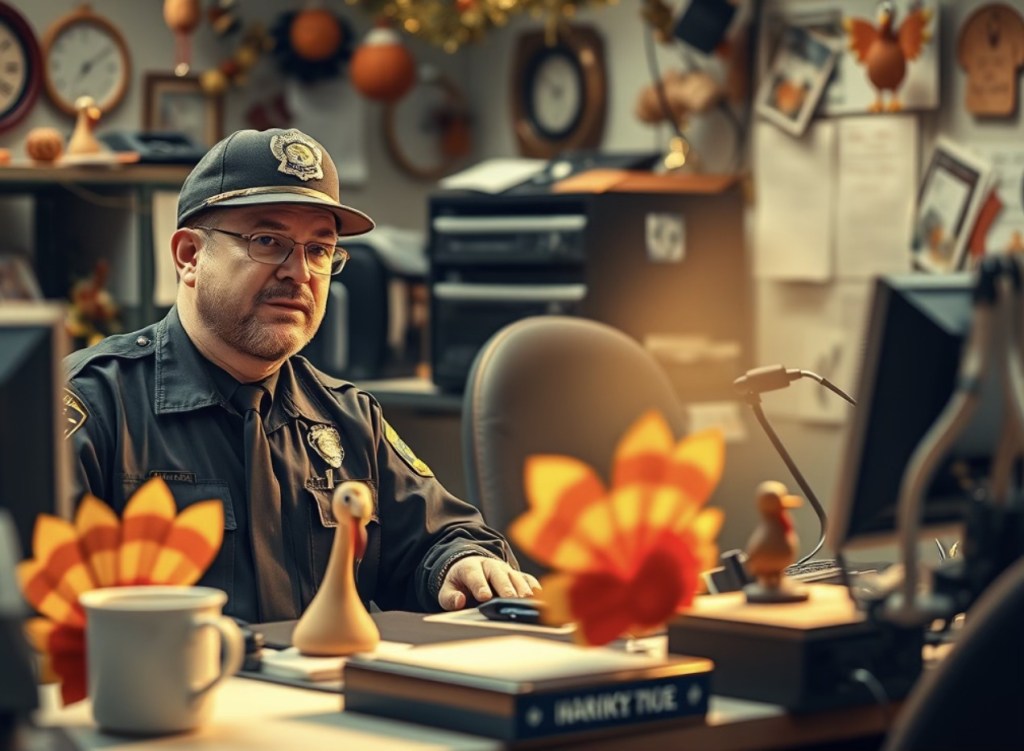
Thanksgiving at the Elk City Police Department was a paradox of warmth and chaos. While dispatchers decorated their consoles with paper turkeys and the smell of leftover pie filled the air, the holiday calls kept coming. It was supposed to be a day of gratitude and family, but for the officers on duty, it was one of their busiest days of the year.

Officer Jim Layfette, a ten-year veteran of the force, leaned back in his chair and sipped lukewarm coffee.

“Thanksgiving,”

he muttered to his rookie partner, Dan Thomas.

“The one day everyone thinks they can play Jerry Springer.”

Their first call came just before 2 p.m., a disturbance at a modest home on Fourth Street. Two brothers were at each other’s throats over who was more entitled to the last slice of pumpkin pie. When Layfette and Thomnas arrived, the brothers were outside, yelling loud enough to drown out the TV playing the Cowboys game.

“Seriously?”

Thomas asked as they broke up the fight.

“Welcome to the holiday shift,”

Layfette replied. The brothers were separated and sent home with stern warnings and a firm reminder that family arguments weren’t worth a trip to jail.

“Unit 4, you’ve got a 10-16 on Elm Street. Argument over stuffing. Use caution—reporting party says it’s ‘too moist.'”

As the day wore on, the calls became more bizarre. At a small rental house on the edge of town, a woman had locked her husband out because he had insulted her mother’s green bean casserole. He stood in the front yard, arms crossed and shivering in a light jacket, refusing to apologize. Thomas handed him a blanket from the patrol car while Layfette gave him a brief lecture on tact.

“Is it that bad?”

The husband asked.

Layfette smirked.

“I’ve had worse. Just say sorry and move on.”

By evening, the call volume skyrocketed. In one house, a drunken uncle had tried to carve the turkey with a chainsaw. In another, two cousins had turned a friendly card game into a shouting match that ended with one flipping the table. When Layfette thought the shift couldn’t get weirder, the radio crackled with another call.

The dispatcher, Chris, kept things lively with dry humor.

“Unit 4, you’ve got a 10-16 on Elm Street. Argument over stuffing. Use caution—reporting party says it’s ‘too moist.'”

Layfette couldn’t suppress a laugh at the Elm Street house when the elderly matriarch opened the door.

“I didn’t call you,”

she said with a sigh.

“It was my daughter. She’s too sensitive. But if you could take the turkey with you.”

“No, ma’am, thanks for the offer,” 

Layfette replied.

Officers gathered at the station to share a potluck meal and stories of their day. Amidst the oddball arguments and creative resolutions, a sense of camaraderie and shared experience began to emerge. Thomas, who had started the shift apprehensive about the chaos, was beginning to see the humor in it all, feeling a part of the team.

“It’s like therapy,” 

Layfette told him as they sat in the patrol car during a lull.

“Families blow off steam, and we get to play referee. It beats the usual stuff.”

By the end of their shift, Layfette and Thomas had responded to a dozen calls. No one had been seriously hurt, and most of the disputes ended with hugs and laughter. This sense of accomplishment and the fact that they had kept the peace on a chaotic day filled them with a deep sense of fulfillment and pride.

As they handed off their patrol car to the next shift, Layfette gave Thomas a pat on the shoulder.

“Congratulations, rookie. You survived your first Thanksgiving shift.”

He grinned.

“And I thought holidays were supposed to be relaxing.”

“Not here,” 

Layfette said with a chuckle.

“Welcome to the Elk City PD.”

They left the station to find the night unusually quiet, as though the town had finally run out of steam. It was a well-spent Thanksgiving for the officers—keeping the peace one turkey-fueled feud at a time.