Simple Moments: How a Bench Transformed a Neighborhood

1–2 minutes

The Bench by the Willow Tree

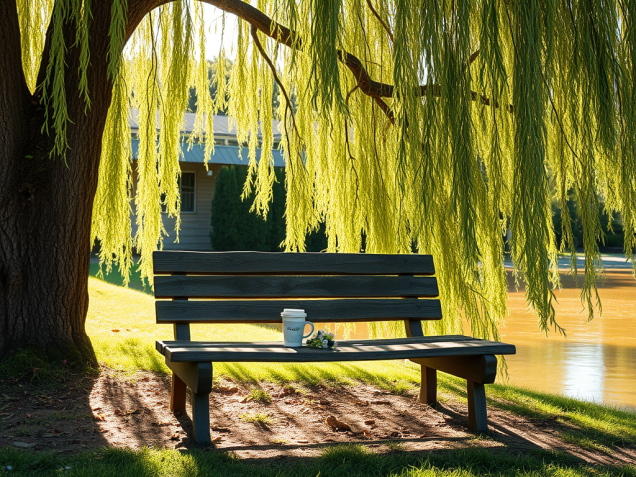
On the edge of town, near a quiet creek, there’s an old willow tree. Beneath its sweeping branches sits a wooden bench—simple, weather-worn, and unremarkable to anyone passing by. Yet, for the people who live nearby, it has become something more: a gathering place of unexpected kindness.

It started with an elderly woman who came to rest her legs each morning. One day, a teenager walking his dog sat down beside her. They began talking. By the time the boy left, she was smiling in a way her neighbors hadn’t seen in years. The next day, the boy came back—with coffee in hand for her.

Word spread. Soon, others began stopping at the bench. A widower brought extra tomatoes from his garden. A young mom offered homemade muffins. A pair of joggers left fresh flowers tucked into the slats. Strangers became neighbors, and neighbors became friends—all because of an old bench no one ever noticed before.

The willow still stands, and so does the bench. It hasn’t been polished, painted, or rebuilt—it doesn’t need to be. Its gift is not in how it looks. Its gift is in what it holds: conversations, kindness, and the small reminders. Even in a world that feels divided, we can still find each other in the simplest of places.


 The Takeaway: Sometimes hope and connection aren’t found in grand gestures. They aren’t always in perfect plans. Instead, these are found in an ordinary spot where people choose to show up for one another.


By Benjamin GroffMedia© | benandsteve.com | 2025 

Building Peace: Steps Toward a Better Tomorrow

By Benjamin GroffMedia© | benandsteve.com | 2025 Truth Endures©

2–4 minutes

A Plan for Peace: One Step at a Time

I’ve been thinking a lot about peace lately.

Not the peace that lives only in headlines or history books—the grand treaties, the ceasefires, the official proclamations. I’m talking about the peace we build in our daily lives. This peace begins around kitchen tables. It is found in community meetings. It happens in the quiet moments when we choose to listen rather than shout.

What would it take to create a more peaceful world? That question sits heavy on my heart.

I don’t pretend to have all the answers, but I believe peace isn’t something we wait for others to deliver. It’s something we shape, step by step, together. And maybe, just maybe, it starts with a plan. Its not a perfect plan, but it’s a real one. It’s something we can reach for and return to, like a compass in uncertain times.

Step One: Start With Listening

Peace begins with the willingness to hear someone else’s story—especially when it challenges our own. We don’t have to agree on everything, but we do have to care enough to listen.

Imagine what would change if we listened without preparing to argue back. If we asked “What is it like to be you?” and waited long enough for a real answer.

Step Two: Make Room for Justice

There can be no true peace where injustice lives unchecked. That means looking closely at the systems around us—schools, courts, hospitals, policing, housing—and asking, “Who is being left behind? Who is being harmed? And what can we do to fix it?”

Justice isn’t about blame. It’s about repair. Peace doesn’t ask us to forget the past. It asks us to heal from it—together.

Step Three: Practice Kindness Like It’s a Skill

We talk about kindness like it’s something we either have or don’t. But I think it’s more like a muscle. You build it every day—with patience, with humility, and with a little humor when things get hard.

Sometimes, peace looks like biting your tongue. Sometimes, it looks like reaching out. And sometimes, it’s just not walking away.

Step Four: Educate for Empathy

To give the next generation a better shot at peace, we must teach them differently. Not just math and reading—but empathy, conflict resolution, critical thinking, and how to talk across differences without losing our humanity.

We should teach history honestly, too—not just the polished parts, but the painful truths that still echo today. Healing begins with honesty.

Step Five: Be Brave Enough to Hope

Hope can be a radical thing. Especially when the news is bleak and the divisions feel endless. But hope is not weakness. It’s strength disguised as belief. It’s faith in what we can build, even if we haven’t seen it yet.

A plan for peace isn’t a single event. It’s not something we sign and file away. It’s a lifelong effort. It’s showing up, over and over, with open hands and an open heart.

We will never achieve a perfect peace. But if we can bring peace into one more conversation, one more neighborhood, one more generation—then it’s worth everything.

So here’s my plan. It starts with me. It starts with you. And it keeps going—as long as we keep walking ahead, one small, hopeful step at a time.

Finding Hope in Difficult Times

GROFF MEDIA 2024© TRUTH ENDURES IMDBPRO

Presented by benandsteve.com By: Benjamin Groff II©

2–3 minutes

Every morning, the sun rose over Willow Creek. Clara Jackson would pour herself a cup of coffee. She would then sit by the window and scroll through the news on her phone. Headlines blared with despair. Civil rights were being denied. People were being removed from their families because of their citizenship status. There were natural disasters, economic struggles, and political turmoil. It seemed as if the world was unraveling thread by thread. Each day felt heavier than the last, and Clara found it harder to believe in a brighter tomorrow.

One cold morning, as the weight of the world’s problems sat on her chest, she noticed her elderly neighbor, Mr. Thompson, hobbling down the sidewalk with a broom in hand. His frail figure moved with purpose. He swept the fallen leaves away from everyone’s doorstep. As he worked, he whistled a tune that carried a sense of ease Clara hadn’t felt in a long time.

Curious, she stepped outside and called out,

“Mr. Thompson, what are you doing out here so early?”

The old man looked up and smiled warmly.

“Clearing the way, my dear. It’s a little thing, but it makes the morning brighter for everyone.”

Clara laughed softly.

“With all that’s happening in the world, does this really make a difference?”

Mr. Thompson leaned on his broom and nodded.

“Oh, it does, Clara. You see, the world’s got its troubles, but right here, right now, we can still bring goodness. You can’t control the storms outside, but you can light a candle inside.”

His words settled into Clara’s heart like a gentle breeze pushing away the clouds. That afternoon, instead of drowning in the news, she baked cookies and shared them with neighbors. She took her old paintbrushes out of the closet and added splashes of color to the worn fence outside. And as she handed out treats to passing children, she felt something stir inside her—hope.

Days turned into weeks, and Clara found that small acts of kindness helped her navigate the darkness in the world. She volunteered at the local shelter. She also planted flowers along the sidewalks. Clara spent more time listening to the laughter of children at the park. The news was still grim, but Clara had found something stronger—hope born from action, not fear.

One evening, she closed her book and looked out at the quiet street. She realized the world hadn’t changed overnight. But she had. And that was enough to believe in a brighter tomorrow.

A Letter From Paul Harvey, To His Grandchildren

GROFF MEDIA 2024© TRUTH ENDURES IMDBPRO

Presented by benandsteve.com By: Benjamin Groff II©

3–4 minutes

I am sharing a writing listed as “Paul Harvey’s Letter To His Grandchildren. It has been tucked away in a drawer. Finally I pulled it out and made use of it.

Paul Harvey was a news commentator for ABC NEWS in the United States and has been heard worldwide. He was known for “The Rest of The Story” and his Noon News Broadcast from the 1960s through the 1990s.. He provided updates well into his elder years, working from home a lot of the time. His son had built a studio in the Harvey Home. This studio allowed him to work as if he were in the News Room. Paul is always dressed in a suit and tie to report the news. Saying he had to look professional to sound professional.

Here is the letter that is attributed to him.

Grandchildren,

We tried so hard to improve our kids’ lives that we made them worse. I’d like better for my grandchildren.

I’d like them to know about hand-me-down clothes, homemade ice cream, and leftover meatloaf sandwiches.

I hope you learn humility by being humiliated and honesty by being cheated.

I hope you learn to make your bed, mow the lawn, and wash the car.

And I hope nobody gives you a brand-new car when you are sixteen.

It will be good if at least one time you can see puppies born. You should also witness your old dog being put to sleep.

I hope you get a black eye fighting for something you believe in.

I hope you have to share a bedroom with your younger brother or sister. It’s all right if you have to draw a line down the middle of the room. But, when he wants to crawl under the covers with you because he’s scared, I hope you let him.

You want to see a movie. If your little brother or sister wants to tag along, I hope you’ll let them.

You must walk uphill to school with your friends and live in a town where you can do it safely.

I hope you don’t ask your driver to drop you two blocks away on rainy days. It would be unfortunate if you didn’t want to be seen riding with someone as uncool as your Mom.

If you want a slingshot, I hope your Dad teaches you how to make one instead of buying one.

I hope you learn to dig in the dirt and read books.

When you learn to use computers, I hope you also learn to add and subtract in your head.

I hope you get teased by your friends when you have your first crush on a boy or girl. When you talk back to your mother, I hope you learn what ivory soap tastes like.

Try to skin your knee climbing a mountain. By accident burn your hand on a stove. Playing around try to you stick your tongue on a frozen flagpole.

I don’t care if you try a beer once. I hope you don’t like it. If a friend offers you dope or a joint, realize they are not your friend.

I sure hope you make time to sit on a porch with your Grandma or grandpa. I also hope you go fishing with your Uncle.

You will feel a mixture of emotions. Sorrow and joy will arise during the holidays at a funeral. You should stop and understand why.

I hope your mother punishes you when you throw a baseball through your neighbor’s window. I also hope she hugs you at Christmas. I hope she kisses you when you give her a plaster mold of your hand.

I wish you tough times and disappointment, hard work, and happiness. To me, these are the only ways to appreciate life!

The End.

Portions of this entry was edited to allow for space and grammar.