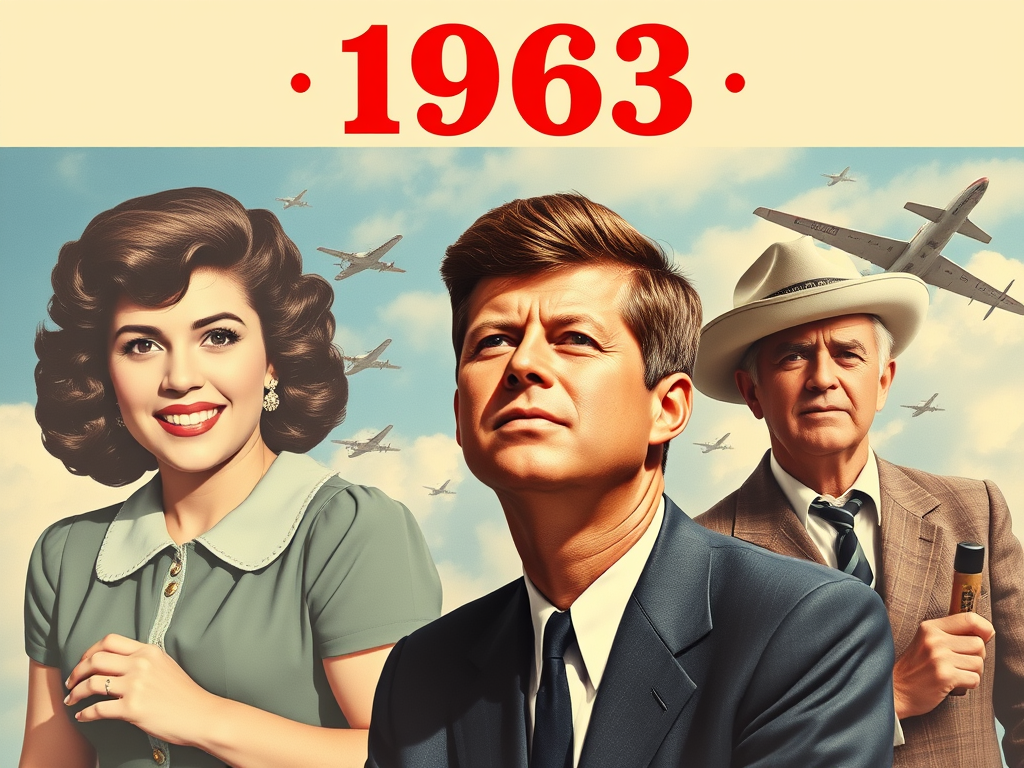
1963: A Year Between Heartbreak and Hope

The Year Many Were Born And The World That Shaped It

By Benjamin GroffMedia© | benandsteve.com | ©2026 

2–3 minutes

A topic came up recently about naming the most interesting—or most defining—events from the year you were born. For me, that year was 1963, which was sixty-two years ago. It was a year that carried an unusual weight, filled with moments of deep loss alongside remarkable progress and hope.

For fans of country music, 1963 was especially heartbreaking. In March, a plane crash claimed the lives of Patsy ClineHawkshaw HawkinsCowboy Copas, and Cline’s manager. Just a few months later, another aviation accident occurred. It took the life of Jim Reeves, one of the genre’s most beloved voices. The sorrow didn’t end there. Jack Anglin, one half of the duo Johnny & Jack, was killed in a car accident. He was driving to attend Patsy Cline’s memorial service. In a matter of months, country music lost several of its brightest stars, leaving a lasting scar on the industry.

Nationally, the year is most remembered for tragedy. President John F. Kennedy was assassinated in Dallas, Texas, an event that stunned the nation and the world. Two days later, the man accused of the assassination, Lee Harvey Oswald, was himself shot and killed. Oswald’s murder caught on live television by the shooter Jack Ruby, a Dallas nightclub owner. Because both men died before standing trial, no jury verdict was ever rendered regarding the assassination itself. While the Warren Commission later concluded that Oswald and Ruby acted alone, lingering questions have remained for decades.

There has also been confusion surrounding Jack Ruby’s legal fate. Ruby was convicted of murder with malice in March 1964 and sentenced to death, but that conviction did not stand. In October 1966, the Texas Court of Criminal Appeals overturned the verdict. The decision was due to excessive pretrial publicity. The court ordered a new trial. Before that retrial could occur, Ruby died on January 3, 1967, from complications related to lung cancer. As a result, no final conviction was in place at the time of his death.

Yet 1963 was not defined by tragedy alone.

Despite its losses, the year was also marked by hope, courage, and meaningful progress. On August 28, Martin Luther King Jr. delivered his “I Have a Dream” speech during the March on Washington. The speech inspired millions. It accelerated the push toward civil rights legislation that would soon follow. In science, Valentina Tereshkova became the first woman in space, orbiting Earth aboard Vostok 6—a milestone celebrated around the globe.

Popular culture flourished as well. The Beatles rose to international fame, bringing a sense of excitement and unity to a generation. Television, animation, and film offered families shared moments of comfort during a rapidly changing time. On the world stage, the United States, the Soviet Union, and the United Kingdom signed the treaty. This treaty was the Partial Nuclear Test Ban Treaty. This treaty represented a hopeful step toward easing Cold War tensions.

Looking back, 1963 stands as a year of contrast—one of profound sorrow and extraordinary progress. It reminds us that even in times of loss, history continues to progress. Resilience and creativity shape it. There is also the enduring hope for something better.


By Benjamin GroffMedia© | benandsteve.com | ©2026

The Island – A Serialized Dystopian Story * Chapter Four 

1–2 minutes

Haven’s Reach: Whispers in the Dark

By the time autumn winds swept across the island, Brant Harrow’s “First Rules” had been etched into daily life. They weren’t written on parchment or stone, but repeated so often that they became second nature.

“No theft, no violence, no waste, no words outside the Council.”

At first, the people complied out of respect. Later, they complied out of habit. And slowly, they began to comply out of fear.

It started small. A fisherman’s wife was overheard criticizing the Council for rationing nets unfairly. Days later, her family’s hut was mysteriously stripped of its lantern oil. Her husband’s catch was rejected at the communal market. There was no official punishment or public decree. It was just a quiet reminder of who held sway.

Families learned to whisper in the dark, if they whispered at all. Children were warned not to repeat what their parents said at home. Laughter around the fire grew more careful, guarded, as though shadows themselves carried ears.

Yet not all were cowed. A young teacher named Elara began meeting secretly with her students in the caves near the shoreline. She reminded them of the island’s first days. During those times, the people worked freely together. Voices rang out with no fear of reprisal. She called it 

“The Memory.”

“Don’t let them take The Memory from you,” 

She urged. 

“Because when the memory dies, so do we.”

Above them, in the Council chamber, Brant Harrow and his circle drew lines on a map of the island. They were dividing it into districts. 

“Control the land,”

He muttered, 

“And we control the people.”

Unseen and unspoken, the first embers of resistance flickered in Haven’s Reach.


By Benjamin GroffMedia© | benandsteve.com | ©2025 

How Far Is Heaven? A Reflection on Belonging

2–3 minutes

How Far Is Heaven?

The little boy tugged at his father’s sleeve as they walked home one quiet evening. The sky stretched wide above them, painted in soft shades of pink and gold. After a long silence, the boy asked a question that seemed to hang as heavy as the clouds.

“Dad… how far is Heaven?”

The father slowed his steps, looking down at his son. For a moment, he didn’t answer. Then he smiled gently.

“That’s a big question, son. And the truth is—I don’t know.”

The boy’s brow furrowed.

“Don’t know? Isn’t it up there?”

He pointed toward the fading light above the rooftops.

“Well,”

his father began,

“that depends on what you believe Heaven is. For some people, Heaven is a faraway place where souls go when life here is over. For others, Heaven is closer than you think.”

He stooped down so they were eye to eye.

“Heaven can be the feeling of home when everyone’s together at the dinner table. It can be walking into your grandparents’ house and smelling fresh pies cooling on the counter. It can be the peace of sitting in a quiet cabin deep in the woods. There is no noise but the trees and the wind.”

The boy listened, his eyes wide, as though trying to imagine all those Heavens at once.

“You see, son,”

his father continued,

“Heaven doesn’t have just one location. It can mean different things to different people, at different times in their lives. Sometimes it’s a place, sometimes it’s a feeling. And sometimes, people think of it as a reward beyond this life. But no matter what, it’s something we long for—a place where we belong, where everything feels right.”

The boy was quiet, mulling it over. Then he looked back up at the sky.

“So… Heaven isn’t always far away?”

His father smiled, squeezing his hand.

“No, son. Sometimes, Heaven is right here—closer than we ever imagine.”

As they walked the rest of the way home, the boy noticed the laughter of his mother. She was waiting at the door. He smelled the supper drifting through the air. He felt the warmth of his father’s hand in his own. And for that moment, he decided, Heaven was not far at all.


Reflection

How Far Is Heaven?

By Benjamin Groff II

A boy once asked his father, “How far is Heaven?”

The father said, “That depends. For some, it’s beyond the stars where souls go when life is done. For others, it’s much closer. It is found in the smell of pies at Grandma’s. It is in the quiet of a cabin in the woods or the laughter of family at the dinner table.”

He paused and added, “Heaven is different for everyone, son. Sometimes it’s a dream, sometimes a memory, and sometimes it’s right here, in the moments we hold close.”

The boy thought for a while, then smiled. Heaven, he decided, was not so far away after all.


By Benjamin GroffMedia© | benandsteve.com | 2025 

The Four Magic Words: A Father’s Legacy

2–3 minutes

Ebom Shoobem Shoobem Shoobem

The four magic words a father passed down to his four children. He told them that anytime they were about to face trouble, they should speak those words. The assistance they required would eventually. But only if they took the necessary action for it to occur. 

The words were only to be used when necessary. They should not be used as a want. Use them during a crisis, more than a wish. And a threat to life, rather than a threat to pride. If they ever abused the use of the words, then their special powers would no longer be available to them. The magic words would only be passed on when they reached the age of 18. They needed to have made plans to leave the family home.

The four children had each left their home by the time the father had reached 55 years of age. He had spent a great deal of his life enjoying his time with each of them. Now, he looked ahead to adventuring into his own life. 

The father’s four children carried the words with them into the wide world. Each one held them differently. One tucked them away like a secret prayer. Another spoke them aloud when fear pressed too heavily. A third doubted them but remembered all the same. The fourth treated them like a compass hidden in the lining of a coat.

In time, each child faced a moment that tested the promise of those words. One found themselves stranded in a snowstorm, far from home. Another stood at the edge of despair after losing nearly everything they had built. A third was cornered by deceit, betrayed by someone they had trusted. And the last stood between danger and an innocent life.

In every trial, the magic words did not summon thunderbolts or winged guardians. Instead, they sharpened courage, opened a hidden door, or drew the right ally to their side. The father had spoken true—the words alone were not enough. But when joined with action, with faith, with that one step ahead, help always came.

Years later, when the father’s hair had silvered and his own journeys were slowing, the children returned to him. Around the fire, they told their stories—each different, but threaded with the same truth. The words had worked. This was not because they carried power of their own. Instead, they reminded each child that strength and salvation arrive only when one dares to act.

The father smiled, warmed by both the fire and the glow in his children’s faces. He whispered, almost to himself, “Ebom Shoobem Shoobem Shoobem.” The four children echoed it back, not as magic, but as memory.

And from then on, they knew—the words were not only for escaping danger. They were meant to be carried ahead to their own children one day. The words served as a charm. They also posed a challenge. Help will come, but only if you rise to meet it.


By Benjamin GroffMedia© | benandsteve.com | 2025 

The Elevator of Life: A Profound Story of Honesty

2–3 minutes

The Whiskey Sea and the Elevators

The man had lived his life in balance—not a saint, not a sinner, but somewhere in between. He had helped when strong. He erred when he was weak. Now, in his elder years, he carried the weight of both. His body ached. His breath came shorter. One night, he sank into a sleep so deep it felt like stepping into another world.

A ship appeared from the darkness. Its hull was blackened with age. It floated on a sea of whiskey. The whiskey shimmered like molten amber under the moonlight. A cigar extended from the deck like a gangplank, smoke curling in lazy ribbons. Hesitant but curious, the man stepped onto the cigar and walked across, balancing himself as if crossing into another reality.

On board, a captain awaited him—tall, weathered, eyes that had seen too much. “I’m here to take you to your next destination,” the captain said, voice low and certain. The man nodded. The ship cut across the whiskey sea. It came to rest before a towering building of glass and brass. Its entrance was lined with golden elevators, each gleaming like judgment itself.

Inside, a sharply dressed man waited in the lobby. His shoes were polished so bright they caught the reflection of the man’s weary face. He gestured toward a chair. “Tell me your life story,” he said.

And so the man spoke. He told of the good—moments of kindness, loyalty, laughter. He confessed to the bad—times of selfishness, anger, and failure. He left nothing out, for what use was there in lying at the end? The suited man listened, not judging, only nodding as though each word was weighed like coin on a scale.

At the end, silence hung heavy. The suited man pressed a single button. The doors of one elevator slid open, glowing with light the man did not quite see. He stepped ahead, heart pounding. Whether the elevator rose or fell, he did not know. But as the doors closed, he understood something profound. The true measure had never been perfection. It was honesty. It was the courage to walk the bridge, board the ship, and face the truth of who he had been.


By Benjamin GroffMedia© | benandsteve.com | 2025 

Simple Moments: How a Bench Transformed a Neighborhood

1–2 minutes

The Bench by the Willow Tree

On the edge of town, near a quiet creek, there’s an old willow tree. Beneath its sweeping branches sits a wooden bench—simple, weather-worn, and unremarkable to anyone passing by. Yet, for the people who live nearby, it has become something more: a gathering place of unexpected kindness.

It started with an elderly woman who came to rest her legs each morning. One day, a teenager walking his dog sat down beside her. They began talking. By the time the boy left, she was smiling in a way her neighbors hadn’t seen in years. The next day, the boy came back—with coffee in hand for her.

Word spread. Soon, others began stopping at the bench. A widower brought extra tomatoes from his garden. A young mom offered homemade muffins. A pair of joggers left fresh flowers tucked into the slats. Strangers became neighbors, and neighbors became friends—all because of an old bench no one ever noticed before.

The willow still stands, and so does the bench. It hasn’t been polished, painted, or rebuilt—it doesn’t need to be. Its gift is not in how it looks. Its gift is in what it holds: conversations, kindness, and the small reminders. Even in a world that feels divided, we can still find each other in the simplest of places.


 The Takeaway: Sometimes hope and connection aren’t found in grand gestures. They aren’t always in perfect plans. Instead, these are found in an ordinary spot where people choose to show up for one another.


By Benjamin GroffMedia© | benandsteve.com | 2025 

The Other Laws That Are Weird And Strange That Snag People!

2–4 minutes

When Weird Laws Get Real: Strange Rules That Actually Snagged People

We’ve all heard about oddball laws that lurk in dusty legal books. Some examples include bans on whistling at canaries or outlawing whale hunting in landlocked states. Most sound like punchlines, not punishments. But here’s the kicker: some of America’s strangest laws have actually been enforced. Real people have faced consequences because of them.


In Woburn, Massachusetts, city ordinances once required that bar patrons stay seated while drinking. Sounds silly? Local authorities enforced it. The rule came from strict licensing codes. Bar owners had to police their customers. A little too much standing around with a pint trigger fines or even a license suspension. Imagine being told to “sit down or get out” just for holding your beer upright!


In Alaska, it’s illegal for someone who is intoxicated to stay in a bar. That’s right: you can’t be drunk in a place that exists to serve alcohol. Police actively enforce this law. They have arrested bar patrons. They have even fined bartenders for allowing visibly drunk people to hang around. It’s like a bouncer’s dream written into law, with teeth.


Here’s one that isn’t just quirky—it’s downright controversial. Civil forfeiture laws let police seize property, like cars or cash, without ever charging the owner with a crime. It’s happened across the country. Regular folks are stripped of thousands of dollars. They have to fight uphill battles in court just to get their property back. Technically legal, often enforced, and more than a little surreal.


Another group that bumps into odd laws are self-proclaimed “sovereign citizens.” These are individuals who claim they’re not bound by U.S. laws, often flooding courts with bizarre paperwork or filing fake liens on judges and officials. Sounds like a fringe hobby—until the arrests come down. Many sovereign citizens have faced jail time for fraud, impersonation, or obstruction. Turns out the government doesn’t take kindly to “opting out” of its authority.


In 1997, Chandler, Arizona, became the stage for one of the strangest law enforcement crackdowns in modern memory. Police, alongside Border Patrol, conducted sweeps that targeted hundreds of people suspected of being undocumented immigrants. The problem? Many of those arrested were actually legal residents or citizens. What was meant to be law enforcement turned into a scandal over racial profiling and civil rights.


It’s easy to laugh at quirky laws about dogs’ hair or Sunday shopping bans. But when enforced, even the strangest rules can shape lives, communities, and freedoms. These cases remind us that laws, no matter how odd they sound, carry real consequences. Sometimes, the difference between comedy and tragedy is simply whether the rulebook is dusted off.


About the Author:

Benjamin Groff is a former police officer and radio news anchor. He has hosted programs for CNN and ABC News affiliates in Colorado and Wyoming. His career in law enforcement began in 1980 and lasted more than two decades. This gave him first hand insight into the criminal mind and public safety. Moreover, it provided him with an understanding of the human stories that often go untold. His writing draws on these experiences, blending street-level truth with a journalist’s eye for the bigger picture.

By Benjamin GroffMedia© | benandsteve.com | 2025 

Counting Seconds: A New Perspective on Time

2–3 minutes

How Counting Seconds Can Change Your View of Time

He almost walked past the park bench that morning. Another day, another half-forgotten hour drifting into the pile of others. Life, he thought, had been nothing special. Sixty years gone, and what was left? A handful of photographs, some worn-out stories, and too many missed chances.

Something pulled him down onto the bench. An older gentleman sat next to him. The man’s eyes seemed to know something he didn’t. They exchanged the small talk of strangers until the conversation wandered toward time itself.

“You say sixty years is nothing?”

The old man asked with a quiet smile.

“Let’s count it differently.”

He leaned back, gaze fixed on the trees swaying above them.

“In your life, the Earth has spun on its axis more than 21,900 times. That’s 21,900 sunrises and sunsets — not one of them the same. You’ve lived through over 525,000 hours. Do you realize how many conversations, choices, and quiet moments fit into that span? More than 31 million minutes. More than 1.8 billion seconds. And each one a chance to live, to change, to love.”

The man swallowed. He had never thought of it like that. He had always measured himself by birthdays, promotions missed, or years lost to routine. But suddenly his life didn’t seem so small. Each second, he realized, was a story. Every minute, a chance to change one.

“And here’s the wonder,”

the older man continued.

“Every one of those seconds kept you alive. Your heart beat. Your lungs pulled in air. The Earth carried you through another rotation of light and shadow. You’ve orbited the Sun sixty times, son. That’s not nothing. That’s a journey.”

They sat in silence after that. The bench creaked beneath them. The leaves whispered. And for the first time in a long time, he felt his life wasn’t slipping away. Instead, it was unfolding — second by second, minute by minute. It unfolded in ways he had never stopped to count.

As he stood to leave, the old man gave him a final thought:

“Don’t measure your worth in years, or even decades. Measure it in seconds well-lived. Those, my friend, are endless if you pay attention.”

By Benjamin GroffMedia© | benandsteve.com | 2025 

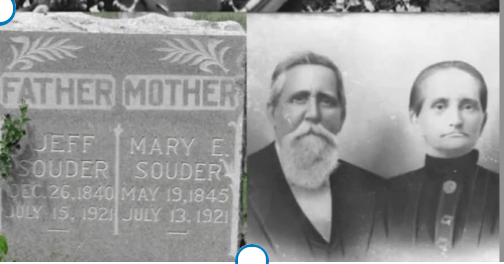
Until Death, Never Did They Part – Thomas & Mary Ellen Souder

In 1921, Thomas and Mary Ellen Souder of Texas proved love doesn’t end at goodbye.

1–2 minutes

A Story of Devotion: Thomas Jefferson Souder & Mary Ellen

In the gentle stillness of Hurst, Texas, Thomas Jefferson Souder and Mary Ellen East Souder shared a quiet love. It spanned six decades. They were married for 60 years. They raised a family and cultivated a home. They remained inseparable through every upturn and downturn of life.

July 1921 brought a cruel twist. Both fell victim to “the flux.” It was a brutal wave of gastroenteritis. It was so swift that it swept Mary Ellen away first, on July 13. Thomas Jefferson, already weakened, succumbed to grief and illness just two days later on July 15.

The community mourned—especially those who believed no bond was stronger than theirs. So it was decided: they would rest together, side by side, in a unique double coffin. Their shared burial echoed their life—inseparable, even in death.

Newspapers of the day captured the sentiment well. The Fort Worth Star-Telegram, on July 16, headlined their story: “Death fails to Separate Couple Wed 60 Years.” They honored not just the passing of two individuals. It was a love that truly endured it all.

More than a century later, their story endures. It is not a tragedy but a testament. True devotion can span lifetimes. It quietly reminds us that love, in its purest form, touches eternity.

Fact-Checked Details

  • Thomas Jefferson Souder and Mary Ellen East Souder were married for about 60 years. They passed within a couple of days of one another in July 1921 (1).
  • Mary Ellen died on July 13, 1921, and Thomas Jefferson followed two days later, on July 15, 1921 (2).
  • Their cause of death was identified as dysentery. It was referred to at the time as “the flux.” This is a severe form of gastroenteritis (3).
  • Both were well-known pioneers of Hurst in Tarrant County, Texas. They were buried together in a double coffin. It was a striking symbol of their lifelong unity (4).
  • Their joint burial made front-page news in the Fort Worth Star-Telegram on July 16, 1921, under a headline expressing how “Death fails to Separate Couple Wed 60 Years”

By Benjamin GroffMedia© | benandsteve.com | 2025 

Some Memories Are Best Left Unchanged

By Benjamin GroffMedia© | benandsteve.com | 2025 Truth Endures©

3–4 minutes

Some Memories Are Best Left Unchanged

At 62, I’ve lived through six decades of friendships. Every ten years or so, there’s an evolution. New people come into your life. A few stay, and most eventually move on. In that revolving cycle, we come to appreciate each other’s company, character, talents, and sometimes, our usefulness. Life seems to have been designed this way for me. Over time, I’ve even developed an instinct for craving these transitions. Maybe it’s self-preservation. It’s growth.

Recently, I came across a post that stopped me in my tracks. It said, 

“There’s a heavy emotional toll that comes with holding on to dead relationships. They fill your life with noise—unanswered messages, awkward small talk, the guilt of obligation just because something once meant something.” 

That struck a chord.

Because the truth is—life isn’t a museum of past connections. It’s meant to be lived peering ahead, with people who show who you are now, not who you once were.

Outgrowing someone isn’t betrayal. It’s growth. Letting go doesn’t mean you never loved them. Instead, it means you love yourself enough to protect your peace.

That’s how I feel about many past connections. Some, I miss dearly. Others, I’ve outgrown. And a few? I had to run for my survival.

One thing I’ve learned about long-term relationships—whether with people, places, or versions of ourselves—is the importance of taking regular inventory. What am I still carrying? What deserves to come with me into the future, and what needs to be laid to rest?

For me, I try to leave behind no unfinished business where love, sincerity, or kindness once lived. If you hope to rekindle old ties after a long silence, I offer this gentle caution. Some memories are best left untouched. If you plan to relive the past, go ahead. But please, go without me. We survived it once. I’m not eager to tempt fate with a rerun.

These days, I want to do something different. If there’s something we always talked about doing—some dream we never dared to chase—let’s talk about that. Let’s look ahead, not backward.

Getting older has made me clearer about what I want—and what I refuse to carry. It’s also made me think about my father. I remember him telling stories from the war, from his school days, from the old neighborhoods we lived in. He’d speak fondly of his buddies, show me their photos, and share their shenanigans. But he kept them in their place. He never tried to drag them ahead into the current day. He understood something I now understand: some memories belong to a time and place that can’t—and should not—be reentered.

I still get news from “back home,” as I call it. From the town I left 44 years ago. Many of the people I grew up with never left it. And I can’t return there—not fully—without recalling the world I chose to leave behind.

Of the 25 classmates I graduated with, at least eight are gone now. Some were lost to murder, some to accidents, and others to illness. I came from a small farming town where everyone knew everyone. If the death toll isn’t sobering enough, something even more surprising is how many of us turned out differently. This is more than anyone would’ve guessed. Five of my classmates have since come out as gay. A revelation that would have stunned our small-town sensibilities back then.

Interestingly, it’s not the ones who stayed close to home who thrived—it’s the ones who left. Who dared to change? Who moved ahead?

And maybe that’s the lesson.

Some memories deserve our respect—but not our resurrection.

Some people, our gratitude—but not our return.

Because the past has its place—and so do we.

And some memories…

are best left unchanged.

Embracing the Constant of Change

By Benjamin GroffMedia© | benandsteve.com | 2025 Truth Endures©

2–3 minutes

“The Constant of Change”

There are stories worth telling—stories shaped by the countless experiences we collect in life. In mine, there have been unforgettable moments. I visited with friends, shared laughter, and exchanged hugs. Then I returned home—only to learn the next day that they were gone. No warning. No signs. One moment, they were part of my world; the next, they had vanished from it.

Those moments taught me a truth that often goes unspoken: nothing in life is definite.

Even when it feels like we’re stuck—repeating the same routines, going through the same motions—life is still moving. The world shifts beneath our feet, often without our awareness, certainly without our consent. Change is not something we invite; it’s something that happens. It shows itself in every breath we take. It appears with every face that enters or leaves our lives. It influences every decision made far beyond our control—from government chambers to hospital rooms.

Change is the only constant.

Sometimes, a change is so small it goes unnoticed—until its effects stretch across history. On February 2, 1959, Waylon Jennings gave up his seat on a chartered airplane to the Big Bopper, J.P. Richardson, who was feeling ill. The plane also carried Buddy Holly and Ritchie Valens. It crashed in an Iowa field just minutes after takeoff. Everyone aboard died.

Waylon Jennings

That one seat swap—an act of kindness, -–– saved Jennings’s life. No one was at fault. But that simple moment, that ordinary change in plan, altered the course of music history and Jennings’s own future. He carried the weight of that change for the rest of his life. And yet, that change gave him more years, more music, more life.

That is how change works. Quiet. Sudden. Unfair. Unpredictable. But real.

When everything feels bleak, we must remember: change is still at work. When loss feels unbearable or the path ahead seems hidden, we must remember: change is still at work. What feels like the end today reveals itself as the beginning of something new tomorrow.

Time moves. People change. Life adapts. Always.

And in that, we find our only real choice: acceptance.

Accepting change—no matter how painful—does not mean surrendering to it. It means choosing to live with eyes open, hearts ready, and spirits willing to grow from what has been lost. We don’t have to like every change. But by accepting it, we start to transform with it—and even rise because of it.


Postscript:

After a tragic 1991 plane crash claimed the lives of several members of Reba McEntire’s band, it was Waylon Jennings—haunted by his own near-miss decades earlier—who offered her a few words she never forgot:

“Reba, you’ll never get over it, but you’ll get through it.”

And that’s the final truth about change. We don’t get over it—we live through it. And somehow, life keeps going.

Building Peace: Steps Toward a Better Tomorrow

By Benjamin GroffMedia© | benandsteve.com | 2025 Truth Endures©

2–4 minutes

A Plan for Peace: One Step at a Time

I’ve been thinking a lot about peace lately.

Not the peace that lives only in headlines or history books—the grand treaties, the ceasefires, the official proclamations. I’m talking about the peace we build in our daily lives. This peace begins around kitchen tables. It is found in community meetings. It happens in the quiet moments when we choose to listen rather than shout.

What would it take to create a more peaceful world? That question sits heavy on my heart.

I don’t pretend to have all the answers, but I believe peace isn’t something we wait for others to deliver. It’s something we shape, step by step, together. And maybe, just maybe, it starts with a plan. Its not a perfect plan, but it’s a real one. It’s something we can reach for and return to, like a compass in uncertain times.

Step One: Start With Listening

Peace begins with the willingness to hear someone else’s story—especially when it challenges our own. We don’t have to agree on everything, but we do have to care enough to listen.

Imagine what would change if we listened without preparing to argue back. If we asked “What is it like to be you?” and waited long enough for a real answer.

Step Two: Make Room for Justice

There can be no true peace where injustice lives unchecked. That means looking closely at the systems around us—schools, courts, hospitals, policing, housing—and asking, “Who is being left behind? Who is being harmed? And what can we do to fix it?”

Justice isn’t about blame. It’s about repair. Peace doesn’t ask us to forget the past. It asks us to heal from it—together.

Step Three: Practice Kindness Like It’s a Skill

We talk about kindness like it’s something we either have or don’t. But I think it’s more like a muscle. You build it every day—with patience, with humility, and with a little humor when things get hard.

Sometimes, peace looks like biting your tongue. Sometimes, it looks like reaching out. And sometimes, it’s just not walking away.

Step Four: Educate for Empathy

To give the next generation a better shot at peace, we must teach them differently. Not just math and reading—but empathy, conflict resolution, critical thinking, and how to talk across differences without losing our humanity.

We should teach history honestly, too—not just the polished parts, but the painful truths that still echo today. Healing begins with honesty.

Step Five: Be Brave Enough to Hope

Hope can be a radical thing. Especially when the news is bleak and the divisions feel endless. But hope is not weakness. It’s strength disguised as belief. It’s faith in what we can build, even if we haven’t seen it yet.

A plan for peace isn’t a single event. It’s not something we sign and file away. It’s a lifelong effort. It’s showing up, over and over, with open hands and an open heart.

We will never achieve a perfect peace. But if we can bring peace into one more conversation, one more neighborhood, one more generation—then it’s worth everything.

So here’s my plan. It starts with me. It starts with you. And it keeps going—as long as we keep walking ahead, one small, hopeful step at a time.

Lessons from the street: Shattered Expectations

By Benjamin GroffMedia© | benandsteve.com | 2025 Truth Endures

3–4 minutes

“Shattered Expectations”

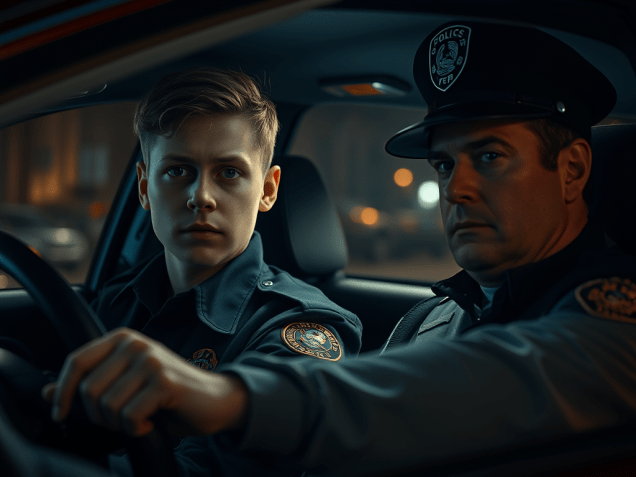
The night was calm in that tense, waiting way cops get used to. It was the quiet that makes your stomach coil. You know it won’t last. I was still new then, riding with my training officer. He was a crusty, seen-it-all type who barely spoke unless it was to point out something I’d done wrong. If I ever earned his approval, it’d be the same day pigs sprouted wings and took to the skies.

We cruised down a dark side street when I spotted a car weaving just enough to catch my attention. I hit the lights. It was a rust-bucket sedan packed with teenagers—maybe five of them, wide-eyed and frozen as I approached. My training officer stayed in the car. That was his style: throw the rookie in the water and see if he sank.

I had the driver step out. He was lanky, maybe seventeen. He wore his coat like a belt, tied around his waist. It seemed too warm for sleeves but too cool to ditch. As he stepped out, the hem of the coat caught on something. Then—clink clink clink—CRASH. Three or four bottles of beer tumbled from under the coat like traitors abandoning ship. They hit the pavement. The bottles shattered in an amber mess around our feet.

The kid froze. I froze. Then we both looked at the puddle between us. From where my training officer sat, it probably looked like I’d lost my temper and smashed the bottles myself. Great.

Before I processed the situation, the radio crackled with a priority call—armed robbery. We were the closest unit.

“Back in the car,”

Came the voice from the patrol unit.

I turned to the kids, who now looked ready to faint.

“Go to the police station. Wait there. I’ll meet you after this call.”

They didn’t argue. They didn’t run. I just nodded in frightened unison, which, in hindsight, has been the most surprising part of the whole thing.

We sped off. The call was a blur—adrenaline, sirens, controlled chaos. When it wrapped, I reminded my training officer about the teens.

“We need to swing by the station. The kids should be there.”

He gave me a skeptical glance.

“Right…”

But sure enough, there they were when we rolled up to the front of the station. All of them were sitting on the bench outside like they were waiting for a ride to Sunday school. Nobody had moved. Nobody had tried to hide or ditch the evidence.

I had them step inside one at a time. No citations. No handcuffs. It was just a firm talk I remembered getting when I was about their age. I laid it on thick—the “blood on the highway” speech, consequences, how lucky they were, all of it. They nodded solemnly. They got the message.

As we returned to the patrol car, my training officer gave me a sideways look.

“You know,”

He said,

“you didn’t have to bust the beer bottles like that. That was an asshole move.”

I laughed.

“That wasn’t me. The kid’s coat dragged them out. Total accident.”

He squinted at me like I was trying to sell him beachfront property in Kansas.

“Uh-huh,”

he said.

“Sure.”

I never did convince him. But a week later, during roll call, he told another officer I had

“a decent head on my shoulders.”

Coming from him, that was a standing ovation.

And me? I still smile every time I think of those kids. They sat quietly in front of the station, smelling like cheap beer and bad decisions. They were waiting for the rookie cop who didn’t quite screw it all up.

Red ‘Pinky’ Green: The Man Behind Marlow’s Legend – A Man They Called “Blue”

By Benjamin GroffMedia© | benandsteve.com | 2025 Truth Endures©

3–5 minutes

The Curious Legacy of Red “Pinky” Green, Known to All as Blue

The little town of Marlow’s Ridge was nestled between dusty hills and a river. This river had long forgotten how to rush. In this quaint setting lived a man named Red Green. His middle name was “Pinky,” a leftover from a grandmother who thought nicknames were good luck. But everyone in town—young, old, shopkeeper, sheriff, or schoolkid—called him Blue.

No one quite remembered how the name Blue came to be. Some said it was due to the denim shirt he always wore. It was frayed at the cuffs and patched at the elbows. Others swore it was because of his eyes. They were deep and stormy. They held stories no one ever heard him tell. Whatever the reason, the name stuck. And so did he.

Blue wasn’t what you’d call important. He wasn’t elected to anything. He didn’t own a business. He didn’t sing in church or march in parades. He wasn’t married and never had kids. He lived alone in a one-room shack on the edge of town. He built it himself, board by salvaged board. His house had a tin roof and a potbelly stove. The garden always grew more vegetables than one man can eat.

He was a fixture more than a figure. You’d see him mending a neighbor’s fence one day. The next day, he is fishing at the creek. Sometimes, he’d sit on the courthouse bench, whittling a stick into something halfway useful. He spoke little, smiled often, and always paid cash—exact change. Kids liked him because he had a knack for fixing broken toys with bits of wire and rubber bands. Adults liked him because he never asked for anything and always showed up when you needed another set of hands.

Blue was what folks called thrifty. He wore the same clothes for years. He repurposed everything. He carried a coffee can full of loose screws like it was a treasure. He never took credit, never owed money, and never once called attention to himself.

He died peacefully, in his sleep, sometime between dusk and dawn. So when he passed, the town mourned. They felt that soft, uncertain way people do when they realize someone quiet had been a cornerstone all along.

There was no family to speak of. The county handled the burial, and someone brought a pie to the service, which seemed appropriate. The people were about to scatter and return to their lives. Just then, the county clerk arrived with a letter in hand.

It was Blue’s ‘Will.’

Written in neat cursive on lined notebook paper, the will was short, but what it said stunned everyone with its unexpected generosity:

To the Town of Marlow’s Ridge,

If you’re hearing this, it means I’ve gone on ahead. It’s no use making a fuss, but I have a few things to leave behind.

First, I’ve set aside $20,000 for the school’s library. I want to make sure the kids get real books with pages they can turn.

Second, I’m giving $15,000 to the fire department. You’ve bailed me out more than once when I let that stove get too hot.

To Miss Delaney at the diner, you’ll find I’ve paid off your mortgage. You gave me free coffee every Monday for ten years. I figured it was time I returned the favor.

To the town mechanic, I left you my truck. It barely runs, but the toolbox in the back can come in handy.

The rest—over $300,000 in cash and savings—I want to put into a fund for the town. I want to fix up the playground, paint the church, and replace the town hall’s roof. You know what needs doing.

You were all my family. Maybe I didn’t say it, but I hope I showed it.

Thanks for everything.

Red “Pinky” Green, but you knew me as Blue.

There was silence. It was not the kind that follows shock or grief. It was the kind that settles when truth lands heavy and sweet, like the last snowfall of winter.

In the next weeks, the town changed. It didn’t change in the way bulldozers and scaffolding alter things. It changed in how people react when they realize they’ve misjudged someone. Children now whispered stories of Blue’s secret treasure. Adults spoke his name with a new reverence. The diner added a “Blue Plate Special” in his honor. Every kid at school got a brand new library card. His actions inspired a wave of kindness and respect that swept through the town.

The bench outside the courthouse where he used to sit remained empty. Someone carved his name into it, not his full name, just the one that mattered. A simple yet powerful tribute that ensured his memory would never fade.

BLUE

No title. No explanation.

This is just a reminder that sometimes, the quietest lives leave the loudest echoes.

Life with Otis: The Rascal Dog’s Adventures

By Benjamin GroffMedia© | benandsteve.com | 2025 Truth Endures©

1–2 minutes

Otis the Rascal

Our dog Otis is a handful—and that’s putting it mildly. He’s been part of our lives for over eight months now, and frankly, he has us wrapped around his paw. That’s how I see it, anyway.

Each morning, I dig into news articles. Meanwhile, Otis curls up on my lap. He looks like the innocent angel he most definitely is not. Don’t be fooled by the calm exterior—he’s always on high alert. He knows the sounds of the mail truck, the delivery van, and anything that dare to approach our house. With every rumble outside, he barks thunderously. He is desperate to storm the front lines. If only that pesky screened door weren’t in his way.

A simple knock on the door transforms Otis into a spinning, barking whirlwind. Imagine a Tasmanian devil with a bark louder than his bite (but don’t tell him that). He’s so protective that we often must hold him back when company arrives. Sometimes, he gets so worked up. He earns a timeout in his kennel. There, he huffs in protest like a disgruntled dragon.

Sunday was a special day—Otis got to join us for a visit with friends, one of his all-time favorite activities. He made nice with their dog, at least at first. But soon, his sly, bullish side took over. He snatched the ball and refused to return it, parading it like a trophy, asserting his love for socializing.

After a long day of play, Otis stayed awake the entire ride home, refusing to miss a moment. He joined us for some late-night TV, eyes heavy but stubbornly open. When bedtime finally arrived, he collapsed into a deep sleep filled with dreams. He was chasing tennis balls. He also was reliving his glorious day of dominance and friendship. I like to think he also dreamed of the day he outsmarted the mail truck.

Sharing A Story About “Cleaning Nana’s House” by KJ Stafford

By Benjamin GroffMedia© | benandsteve.com | 2025 Truth Endures©

4–7 minutes

My mother will turn 95 this August—if she makes it that far. Of the six siblings, only my youngest sister and I have cared for her in her old age. Two of the others gradually drifted away after our father passed. They chose, for their own reasons, to cut contact year by year. The two oldest brothers have both died in recent years.

My mother has always had a sharp mind and a strong, toned body. She was constantly on the move, always busy. Even into her 90s, she remained active and mentally alert. But over the past year, she’s started to slip. She now experiences episodes of sundowning. During these moments, she loses track of what she’s saying. She also becomes unaware of where she is or where she’s been.

She now lives far away from me. Our once hour-long phone conversations, filled with talk of daily life, have been reduced to five minutes or less. Her thoughts drift. She forgets what we’re discussing, where she is, or even who she’s speaking with.

The next is a piece shared with me by KJ Stafford, titled “Cleaning Nana’s House.” It resonated deeply. My sisters and I cleaned the house we’d all grown up in. This was before my mother moved in with me for several years. She later moved in with my sister, where she now lives. Stafford’s words capture an experience I believe many can relate to, and with her blessing, I’m sharing it here.

CLEANING NANA’S HOUSE

BY: KJ Stafford

In January of 2024 we moved my Nana into my parents house. Her health was failing, and so was her mind. She was no longer able to live alone anymore and she hated that fact. The woman had been independent her entire life. And now at 90 years old she was forced to be cared for. She could no longer take care of herself. I remember the thought hurting my heart. 


Fast forward to February 2025, I held her hand hours before she passed. I had never experienced death in that way before. Don’t get me wrong, I’ve dealt with death- both grandpa’s, aunts, uncles… but this was different. It had never been so in my face the way this was. I had never been physically there, witnessing the deterioration every day, every hour. I had never actually watched death slowly take someone. They are memories that will be buried inside my brain until death comes for me. Descriptions that will never make it down on paper ––


April 25th 2025: We piled in our cars, drove the 7 hours to my Nana’s house and began the task of clearing out our memories to make room for someone else’s. My Nana had lived in that house for over 50 years. My mom grew up there. My siblings and I spent weeks there during the summer and until 2024 every Thanksgiving of my life was spent in that tiny dining room around the round, antique wood table. The kitchen looks as if it got stuck in the 70’s. Yellow countertops remind me of sunflowers. The floor is tiled and worn from years of cooking. Years of family gatherings. Years of love. There’s the iconic green couch that sits in the living room…or sat- now it will be given to another family. Moved into a different living room after sitting comfortably in it’s corner for all of these years.

We found love letters from my Grampy to my Nana, boxes of old black and white photographs, ancient toys, jewelry, coats that have somehow found their way back in style, antique glass and trinkets galore. Each find triggering a specific memory. Each find making me wish I could go back 15 years ago. When I was just coming up for the week to visit. Instead of it being the last time within these cozy walls. 


My Nana was by far the strongest woman I’ve ever met. She grew up in Canada, abandoned by her mother before she was 8 years old, left with an alcoholic for a father who was never around. She spent Canadian winters in their small, wooden shack often times by herself. Venturing out into the thick snow every so often to find more logs for the fire- the only thing keeping her warm enough to survive. Scavenging for scraps of food. Eventually being passed on and off to relatives, never having a home to call her own. Never truly feeling loved by a family….


Upon finally coming to America, she met her first husband. She married him when she was only 17 and had three children by the time she was 27. He was a drunk. He was a cheater. She deserved better. One night he got back a little too late, my Nana kicked him out. Divorced his ass. She was the talk of the town. It was unheard of at that time. What woman with three young children abandons her husband? A STRONG one, that’s who. 


She set goals for herself. She knew she wanted to work at the University. She knew that is where she would meet someone else. And she DID. She worked hard until she got hired. And shortly after, she met my Grampy. The sweetest man to ever walk this earth. Years later they had my Mom. 
Without my Nana’s strength. Without her knowing her self-worth, I would have never existed. Had she not followed her intuition. Had she not trusted her gut, there would be no me. No family. And for that, I am forever grateful. 


I like to think she gave me a little of that strength. I feel it within myself sometimes. It’s why I took Stafford as my pen name. I am so honored. Honored that I was able to grow up with her in my life. Thankful that I had her to teach me how to become a strong woman. I vow to live my life as my Nana did. Never accepting less than I deserve and never being afraid to put myself out there, take a risk, trust my gut and grow. 

To read the original story CLEANING NANA’S HOUSE by KJ Stafford click here.

Clicking the line above will also supply images that go with the story.

The Day a House Fell: A Family Tale of Humor and Chaos

By Benjamin GroffMedia© | benandsteve.com | 2025 Truth Endures©

3–4 minutes

The Day a House Fell on My Mother’s Head

When we first moved to the farm, my father bartered for just about everything. It was the 1960s. He had a wife and six kids. My young uncle, who felt more like an older brother, was also part of the family. He had plenty of mouths to feed. There were also many projects to tackle.

One of his deals involved tearing down an old house on a neighbor’s property in exchange for the lumber. It wasn’t a one-man job—my three older brothers, my uncle, and even my mother had to pitch in. My two sisters and I were assigned a very important task: holding down the tailgate of the pickup truck.

We were told in no uncertain terms to stay put. We knew exactly what that meant. From our perch on the tailgate, we watched as our dad and brothers clambered across the roof, tossing down boards. My mother hustled to pick them up, stacking them onto a flatbed trailer and into another old truck.

I still don’t know exactly why my mother did what she did next. Maybe she wanted to check on us; maybe she wanted to warn us again. But as boards kept flying off the house, she walked around to where we sat—into what my dad had firmly declared “the danger zone”—and yelled:

“You three stay away from here, or you’ll get hit in the head with a board with a rusty nail!”

And no sooner had the words left her mouth than—WHACK! A board sailed down and smacked her right on the head. Of course, it had a rusty nail. Of course, she screamed. And of course, all three of us screamed right along with her.

Almost instantly, my dad’s head popped up over the roof’s edge.

“What the hell are y’all screaming about?”

We all shouted at once:

“Mama’s bleeding! A board hit Mama in the head! There’s a nail in her head!”

My dad scrambled down the ladder, muttering adult words under his breath.

“Shit. Goddammit, Marge, why the hell were you standing where we told the kids not to go?”

My mother, ever unflappable, shot back:

“You threw that board at me on purpose!”

He glared at her.

“Dammit, I didn’t even know where you were. Kids, get off the tailgate and sit on that log. I gotta take your mother into town.”

They drove off toward Doc’s office, leaving my brothers to finish tearing down the house and loading up the wood. The sun set. The old trucks were filled. My brothers piled us into the pickup. They drove the mile and a half back home.

When we pulled into the yard, our parents were just arriving. My dad helped my mom out of the truck and told us she was fine—just a scratch, he said. Doc had cleaned her up, given her a tetanus shot, and sent her home with something “to relax her.”

Naturally, we kids had to see the wound for ourselves. It didn’t look like much—just a small cut hidden in her hair, surrounded by a bruise. Not exactly a house falling on someone’s head. But it had bled plenty, enough to scare us all.

That night, we sat around eating a casserole that had baked while we were gone, everything back to normal. Or so it seemed.

Later, as my mom recounted what happened, the story took on a life of its own. Over the years, at family gatherings and on phone calls, we’d hear her say,

“Well, you know, the day that house fell on my head…”

In the background, my dad’s familiar sigh would follow:

“Dammit, Marge. It was just a board. And it wouldn’t have hit you if you’d stayed where I told the kids not to go.”

But she never wavered. Even now, at 95, if you ask her, she’ll tell you straight:

“A house fell on my head.”

Lessons from Bill: Radio Adventures and Childhood Memories

By Benjamin GroffMedia© | benandsteve.com | 2025 Truth Endures©

4–7 minutes

I have many stories about growing up. Sometimes, I wonder how I fit everything I did into the years leading to where I am now. As a young teen, I always felt my family was boring. We never seemed to do anything special. But when I share our family stories today, people tell me they spark their forgotten memories. They bring back moments they thought were lost.


One such story involves our neighbors, Bill and his wife, Marie. They rescued every stray dog they found and invited each one into their growing pack.


I first met Bill while riding my bike home from a friend’s house. He had stopped his car to get the mail from his old roadside mailbox. I couldn’t help but stop and say hello. I asked him where he lived. He pointed across the road toward a distant antenna. It stood tall above the trees. “Right under that antenna,” he said with a smile. I had watched that antenna for years. It was massive. It perched on rotating poles to turn the shortwave and CB radio antennas in any direction he wanted. Seeing my interest, Bill invited me to visit the next day—but told me to check with my parents first.


I didn’t know it then, but Bill had been instrumental in bringing electricity to our area through a rural cooperative. He’d helped light up countless homes across several counties. My parents permitted me to visit but warned me not to overstay my welcome.


The next day after school, I finished my chores and pedaled toward Bill and Marie’s. As I left the paved road and turned onto the dirt path, barking erupted. A pack of dogs rushed to greet me, but they wagged their tails instead of attacking and licked my hands. It was like I was the first human they’d seen in years. They crowded around me, gently herding me up the porch steps. I reached for the doorbell, but before pressing it, the dogs nudged me ahead, practically carrying me into the house.


“Hello? Anyone home?”

I called out.


Marie’s sweet voice answered from the kitchen,

“I bet you’re JD’s boy. Bill told me you’d be stopping by. He’ll be out in a minute—say hello to the family.”


She gestured toward the dogs as she named them individually, expecting me to remember each name. There had to be twenty dogs in that living room alone. As I looked around, another thought puzzled me: how did she know I was my dad’s son? I hadn’t even introduced myself yet.
A moment later, Bill entered, smoking his pipe, followed by four more dogs circling his legs. He shook my hand warmly and led me into his den, where I would spend hours learning from him. Bill introduced me to the world of shortwave radio and explained how to get a license. He even lent me a Morse code training record to help me prepare for the exam.


But radios were just the beginning. Bill showed me his greenhouse, where he taught me how starting seedlings early gives a head start in spring. One day, he took me to another outbuilding—a woodworking shop filled with the scent of freshly cut lumber. There, he showed me how he crafted furniture and home goods, staining and treating each piece with care.


When I was almost sixteen, Bill revealed yet another surprise: a mechanic’s shop hidden behind his house. Inside sat an old Datsun pickup.

“I haven’t driven it in years,”

Bill admitted,

“but it’s still here.”


I could feel the gears turning in my head. I was about to get my driver’s license, and that old truck looked like the perfect first car. Before I said anything, I knew I had to check with my dad.
When I asked, my dad said,

“We can look at it.”

To me, that was a yes.


The next day, I returned to Bill’s and asked if he might be interested in selling the truck.
Bill chuckled.

“I never thought about selling it—but if the price is right, maybe.”


“I’ll need a car when I get my license,”

I told him.

“And my dad said we could take a look.”


“Bring your dad down,”

Bill grinned,

“and we’ll talk.”


Dad and I stood in Bill’s mechanic shop a week later, looking over the Datsun. Bill puffed his pipe thoughtfully.

“It ran fine when I parked it. Might go ten miles, might go another hundred thousand. Hard to say with an old truck.”

He smiled at Dad.

“You know how it is with cars.”


Then Bill turned to me.

“I’ll talk price with the boy. You’re too good a horse trader for me to haggle with.”


My dad laughed.

“You know what you’ve got in your savings,”

he told me.

“Don’t spend more than that—and don’t forget tax, title, and insurance.”


At that moment, I felt the weight of adulthood settling on my shoulders. I bartered with Bill for ten minutes, careful with every dollar. Later, I discovered an interesting fact about Bill and my dad. They had been late-night radio buddies for years. They even arranged for a state newspaper courier to toss them papers at a secret highway drop each morning.


I kept visiting Bill and Marie for years. As I grew older, I began to understand Marie’s quiet burdens. They were things I wish I’d been capable of helping with then. I only understood them now, knowing what I know. Bill and his beloved dogs carried on their calm, legendary life on the edge of town.


No one else ever visited them—not like I did. And sometimes, I wonder if that had been the plan all along.


Bill and Marie passed away in the 1990s. Per their wishes, their property was sold to help the local community center. Their home, once full of vibrant life with voices, radio signals, and loyal dogs, became part of something greater. It was destined to be that way.

Every time I turn on a radio, I still feel them with me. When I smell fresh-cut wood or see an old pickup truck, I also think of them. Their stories live on—in mine.

Reflecting on the Oklahoma City Bombing: 30 Years Later

By Benjamin GroffMedia© | benandsteve.com | 2025 Truth Endures©

2–4 minutes

Thirty Years Ago Today

Thirty years ago, today, I was standing in a Federal Building when my pager went off. The screen lit up with all 9s—a code used to signal an emergency assignment. I needed to contact headquarters right away.

I had just stepped out of a federal courtroom in Denver, Colorado. Moments earlier, I had been inside, preparing to testify in a significant case involving a syndicated burglary operation. I’d been working undercover, embedded deep within their ranks. The courtroom was tense, but a recess had been called, and a few of us decided to grab coffee downstairs.

As we stepped into the elevator, my pager buzzed. I glanced around—no one else’s device had gone off. A sinking feeling set in, but I said nothing. When we reached the first floor, I peeled away from the group and went to a pay phone. I called my office.

My supervisor’s voice was grim on the other end of the line. A bombing had just occurred in downtown Oklahoma City. It was devastating—an entire city block destroyed, surrounding buildings heavily damaged. The scope of it was hard to fathom.

My first words were my gut instinct.
If they’re still alive, the person who did this is already on the road, on one of the Interstates. They’re putting as much distance as possible between themselves and the blast. They’ll go until they feel safe, then hunker down and watch.

Shortly after that call, my pager buzzed again—this time from the Federal Prosecutor’s Office. They informed me that all federal court proceedings were being canceled nationwide. I wouldn’t be needed back in court that day.

With nothing more to do, I contacted relatives in Oklahoma to ensure their safety. Then, like so many others, I returned to my room. I sat glued to the television and watched the horror unfold in real time.

The next day, I waited to hear if I’d stay in Denver. I wondered whether I would be reassigned. Another page came in from my office. A state trooper had made a traffic stop north of Oklahoma City. The individual taken into custody matched a profile. My instincts had been right.

In the weeks that followed, the nation learned his name. I choose not to say it now. Some people deserve to be remembered. He is not one of them.

Now, on this Saturday, April 19th, 2025, it’s been thirty years. Half of the people living in Oklahoma City today were either not born or didn’t live there in 1995. The memory of that day is fading, becoming a chapter in history instead of a scar felt daily.

Many survivors have since passed. Families of the victims have grown older, some have gone entirely. Some of those in the building that day were too young to remember it now. The face of that tragedy has changed, but its weight remains.

The Oklahoma City Bombing was the first of two national tragedies I learned about while standing in an elevator. The second came years later, on a crisp September morning—9/11. I remember thinking about stairs a lot after that. Elevators started to feel cursed.

But I never gave in to fear. I always got back in and waited for the doors to close. I figured if I didn’t, they would win.

And I wasn’t about to let that happen.

The Last Ride: A Father’s Legacy of Protection

Benjamin GroffMedia© | benandsteve.com | 2025 Truth Endures©

3–4 minutes

Dad’s Last Ride

Dad (JD Groff) on his horse, My Mollies Reed

My Dad was a man of fierce independence and deep protective instincts. He and my mom practiced defensive maneuvers as the days of aging grew—he had a plan. She would drop to the ground, and he would shoot over her, neutralizing any imagined threat. This was his way of ensuring our safety, a comforting thought for all of us. Of course, during practice, the gun was always unloaded. But as they grew older, my sisters became worried. Dad was on medication. It sometimes clouded his thinking. They feared he might one day forget to remove the bullets.

Years before, he had suffered a devastating injury. While inspecting a swimming pool facility, a large chlorine container malfunctioned, releasing a gas blast into a control room. He inhaled the toxic cloud, severely damaging his lungs. From that day onward, his breathing was labored, his movements slow and painful. The injury gradually robbed him of his strength until, eventually, he became bedridden.

As his physical strength faded, his concern for my mother’s safety grew stronger. He was terrified that they were vulnerable to burglars or intruders. And so, he devised a plan—an extension of the old drills. My mom would guide them to a specific location if someone ever forced their way into the house. He saw this spot clearly. She would drop to the floor just like in the old days, and he would be ready to fire.

That’s when my sisters turned to me. I’m a law enforcement officer, and they hoped I could safely remove the firearm from his possession. But that was easier said than done. When I spoke to him, he saw what I was thinking. Even in his weakened state, he firmly grasped his beliefs and authority. His determination was palpable. He made it clear that this was his home and responsibility. It was his plan to protect his wife.

But he also took the time to explain how seriously he took the safety of it all. His explanation wasn’t reckless or confused; it was thoughtful. He was rational and transparent in his thinking. In the end, I agreed. He was doing what he believed was best for them.

Still, I wanted to do something more—something that would help ease everyone’s minds. That day, I installed a motion detection system in the house. It covered the living and dining rooms, alerting them if anyone approached. Every door was now an alarm. It gave them peace of mind and ended the dramatic drop-and-shoot rehearsals.

Dad & Buck

Eventually, Dad was unable to get out of bed. He was confined to a hospital-style bed in a small office near their bedroom. His gun was out of reach, and it tore at him. One day, he felt sorrow and frustration. He asked for it not to defend the home. He wanted it to end his pain.

Two weeks later, my mother called an ambulance to rush my Dad to the hospital. They sedated Dad as fluid built up in his lungs, and he passed away there. Quietly, heavily, and—if I’m honest—less on his terms than he would have wanted.

I often think of the day he asked for the gun and couldn’t reach it. Part of me believes it would’ve been a more dignified end. He had spent his life in control. He always defended his family and lived by principle. But the law is clear, and so is the burden of those left behind. As much as it hurt, I nor anyone could hand it to him.