The Enduring Love Story of Henry and Harry

GROFF MEDIA 2024© TRUTH ENDURES IMDBPRO

Presented by benandsteve.com By: Benjamin Groff II©s

4–6 minutes

Henry and Harry met by accident one evening when Henry was riding with Harry’s roommate and fellow police officer, Teddy. Henry and Teddy stopped by Teddy’s house to pick up the legal papers Teddy needed for a court filing. He invited Henry in to meet his roommate, Harry.

When they entered the door, Harry was getting ready for his shift. He walked down a hallway wearing only his trousers and no shirt. Henry and Harry’s eyes locked onto each other as Teddy introduced them. Neither knew the other’s intentions or interests; they nodded and said hello, an electric charge lingering between them.

Harry worked at the police station’s front desk and communications center. Suddenly, Henry worked for the local radio station. He began coming to the station instead of calling on the phone for the day’s latest police activity. Henry would sit patiently. He went through the radio and comment logs. He looked for items to place in his news reports on the radio. Then, he would make small talk with Harry, their conversations stretching a little longer each time.

One day, Henry asked Harry if the officer was off the next weekend. Harry confirmed that he was. Henry explained that his boss wanted him to travel to Loca City. He needed to pick up his son and return him to Elm City. Harry said he’d love to go along for the adventure. Henry explained they go there on Saturday and return on Sunday. This way, he would be there to get the youngster after he got out of church.

When Saturday came, the two left Elm City for the nearly two-hour drive to Loca City. During the drive, they talked, learning more about each other’s pasts, dreams, and fears. At times, their arms brushed against each other on the armrest of Henry’s Ford Thunderbird. Unknown to each were the butterflies fluttering in their stomachs as the pair drove down the highway.

Upon arriving in Loca City, the pair stopped for burgers. Across the street, there was a movie theater. And, of course, they would take in a movie— Friday the 13th: Season of the Witch.

By all standards, the movie was a flop. But the film still had spooky moments, especially for Harry, who jumped and yelped throughout. It was ironic—him being the one who worked for the police department. Afterward, the two laughed at how jumpy Harry had been, and Harry was embarrassed.

It was getting late, and they decided to find a motel for the night. The two found a Holiday Inn Holidome. Henry said he would take care of the room. Harry was asked to watch the car. Harry complied. A few minutes later, Henry returned with room keys and said—

“I’m sorry about this. The hotel only had one room, and it had a queen bed.”

Harry’s reply was accepting.

“I don’t have a problem with it. I slept with my best friends all through hay harvest.”

Once in the room, the television came on. Of all things, it was a rerun of The Tonight Show with Joan Rivers. The two settled in with Joan Rivers rattling on. At some point, one of their elbows flinched into the other. Then, a tickling match ensued. The tickling led to rolling around in the bed, which led to a still moment.

Henry reached up and kissed Harry. That was in 1982. And in 2024, that kiss still lasts.

They demonstrated remarkable courage, enduring the hardships of hiding their relationship to protect their careers. They faced moments of having to pretend to be twin brothers to avoid violent repercussions. They even experienced the loss of family members who couldn’t accept their love. But through it all, they clung to each other, a testament to their resilience and the power of their love.

They were finally capable of marrying. They did so without fanfare—just them and a few close friends. There was a quiet understanding that this was always meant to be. But even then, their love faced challenges. They faced the threat of losing their rights as a married couple. Additionally, there was the ever-existing worry of discrimination in housing, employment, and medical care.

After over forty years together, they pridefully ponder on their journey. The fights, love, laughter, and pain were all part of their story. If anything, the years only strengthened their love. Their relationship is a beacon of hope for enduring love in a world that often challenges it.

Henry reaches for Harry’s hand as they sit on their porch, watching the sun set over their quiet neighborhood. His grip is weaker than it used to be, but the warmth is still the same.

“No matter what they take from us,” Henry says softly, “they can’t take this.”

Harry smiles, his thumb brushing over Henry’s knuckles.

“No, they can’t.”

After all, it is where they began—and will always belong. Their home is their sanctuary. It is where their love has blossomed and endured. Their home is a testament to their resilience and the power of love.

This is a true story. The names and places have been changed to protect the identities of those lives involved.


Discovering a Father’s Hidden Letters

GROFF MEDIA 2024© TRUTH ENDURES IMDBPRO

Presented by benandsteve.com By: Benjamin Groff II©s

3–5 minutes

The last of the guests had left. A heavy silence remained, seeming to fill every corner of the house. It had been a long day. Victor placed his hands over his face. He tried to collect himself from everything that had happened in the last few days. His father had passed, and the funeral had brought together friends and family he had not seen in years. Once filled with laughter and conversation, the house now stood eerily silent.

He walked to the refrigerator for a cold glass of water. Something caught his eye—a wooden cigar box atop a cabinet. It was the old kind –– the type that hadn’t been made in years. It was a mystery, a relic from a bygone era. His father must have been holding onto it.

Curious, Victor set his glass on the kitchen table and reached for the box. He found letters bundled with a rubber band as he pried it open. The postmark on the top envelope was dated 1942. He ran his fingers over the stack, noticing the new rubber band. His father had handled these recently.

Victor’s mother, Emily, had passed nearly seven years ago. Since then, his father, Bob, has never been the same. He continued with life, but something had changed—like a light had dimmed.

He carefully removed the band and unfolded the first letter. A small tobacco sack slipped out as he did, landing softly on the table. It felt empty, save for dust. Pushing it aside, Victor began to read.

My Dearest Emily,

Today, we are adrift going “over there.” I don’t know what we will find when or if we wash ashore. Yet, I know one thing—I wish to get back to you more than anything. You are my love, my most faithful and one and only! I promise with all my heart to survive this mission and see you again! I have to make this quick to get to the mail plane before it takes off.

Love, Bob

Letter after letter, Victor saw the same unwavering devotion. His hands trembled as he read the words, feeling the weight of his father’s love and sacrifice. Then, one in particular caught his attention:

My Dearest Emily,

We ran into trouble and had to fight the Japanese in the middle of the ocean. We won. The chiefs say it will be a decisive battle in the war. I certainly hope so. We took losses. Some of my buddies are gone. But I am still here, as I promised you I would be. I love you and can only count the days until this war ends, and I am back home with you. I promise I will never leave your side again once I return!

Love, Bob

Victor looked at the date on the letter and the weight of his father’s words. Could Bob have been in the Battle of Midway? He had never spoken much about his military service. The letters seemed to carry the burden of his unspoken past.

No kid should have to be a killer of another. It is the most horrible thing you can imagine.

Those were the only words his father had ever spoken about the war.

Victor leaned back in his chair, staring at the letters before him. His father had seen horrors he had never spoken of and endured trials he had buried deep. Yet, through it all, the one thing that had kept him going was his profound and unwavering love for Emily.

He suddenly understood why, after her passing, his father had never quite been the same. Bob had kept his promise—he had never left her side. And when Emily was gone, so too, in a way, was Bob.

A lump began to form in Victor’s throat. He had always known his parents’ love was strong, but he had never truly grasped its depth until now. He had a newfound appreciation for the man his father had been. He gently and reverently returned the letters to the cigar box. Each one was a testament to his father’s enduring love.

As he placed the box back on the cabinet, he felt something shift within him. Grief remained, but now it was accompanied by a deep admiration. His father had lived and loved with an intensity few understood.

And finally, after all these years, he was with Emily again.

A Letter From Paul Harvey, To His Grandchildren

GROFF MEDIA 2024© TRUTH ENDURES IMDBPRO

Presented by benandsteve.com By: Benjamin Groff II©

3–4 minutes

I am sharing a writing listed as “Paul Harvey’s Letter To His Grandchildren. It has been tucked away in a drawer. Finally I pulled it out and made use of it.

Paul Harvey was a news commentator for ABC NEWS in the United States and has been heard worldwide. He was known for “The Rest of The Story” and his Noon News Broadcast from the 1960s through the 1990s.. He provided updates well into his elder years, working from home a lot of the time. His son had built a studio in the Harvey Home. This studio allowed him to work as if he were in the News Room. Paul is always dressed in a suit and tie to report the news. Saying he had to look professional to sound professional.

Here is the letter that is attributed to him.

Grandchildren,

We tried so hard to improve our kids’ lives that we made them worse. I’d like better for my grandchildren.

I’d like them to know about hand-me-down clothes, homemade ice cream, and leftover meatloaf sandwiches.

I hope you learn humility by being humiliated and honesty by being cheated.

I hope you learn to make your bed, mow the lawn, and wash the car.

And I hope nobody gives you a brand-new car when you are sixteen.

It will be good if at least one time you can see puppies born. You should also witness your old dog being put to sleep.

I hope you get a black eye fighting for something you believe in.

I hope you have to share a bedroom with your younger brother or sister. It’s all right if you have to draw a line down the middle of the room. But, when he wants to crawl under the covers with you because he’s scared, I hope you let him.

You want to see a movie. If your little brother or sister wants to tag along, I hope you’ll let them.

You must walk uphill to school with your friends and live in a town where you can do it safely.

I hope you don’t ask your driver to drop you two blocks away on rainy days. It would be unfortunate if you didn’t want to be seen riding with someone as uncool as your Mom.

If you want a slingshot, I hope your Dad teaches you how to make one instead of buying one.

I hope you learn to dig in the dirt and read books.

When you learn to use computers, I hope you also learn to add and subtract in your head.

I hope you get teased by your friends when you have your first crush on a boy or girl. When you talk back to your mother, I hope you learn what ivory soap tastes like.

Try to skin your knee climbing a mountain. By accident burn your hand on a stove. Playing around try to you stick your tongue on a frozen flagpole.

I don’t care if you try a beer once. I hope you don’t like it. If a friend offers you dope or a joint, realize they are not your friend.

I sure hope you make time to sit on a porch with your Grandma or grandpa. I also hope you go fishing with your Uncle.

You will feel a mixture of emotions. Sorrow and joy will arise during the holidays at a funeral. You should stop and understand why.

I hope your mother punishes you when you throw a baseball through your neighbor’s window. I also hope she hugs you at Christmas. I hope she kisses you when you give her a plaster mold of your hand.

I wish you tough times and disappointment, hard work, and happiness. To me, these are the only ways to appreciate life!

The End.

Portions of this entry was edited to allow for space and grammar.

The Impact Of Loss: Remembering A Childhood Best Friend For Life

A True Story By: Benjamin Groff II© Groff Media 2024© Truth Endures

When I was just eight years old, death was a concept that I hadn’t fully grasped. The only time it touched my life was when my grandparents’ neighbor, a gentleman named Tom, passed away. I was only seven then, and it happened so quickly that it didn’t leave a deep mark. My grandfather had sat up with Tom the night before he passed, a tradition people followed back then—sitting with the dying. It was a tradition, and my dad would continue the practice as I grew up, sitting with many men in our small town of 750 souls. I always wondered why he was asked to do that.

That night, when Pop, my name for my grandfather, went to sit with Tom, it was just my grandmother and me alone in their big, quiet house. It felt different without him there. Early the following day, around 6:00 AM, my grandmother and I were preparing breakfast when Pop came in through the backdoor. He quietly spoke to her, and I suspected what had happened. Mom, my grandmother, suggested I open the dining room door to let the morning light in. As I did, I overheard their conversation growing louder, and when I looked outside, I saw a hearse slowly pulling up to Tom’s house. I knew Tom had passed.

A few days later, my grandmother took me to his funeral, and Pop was one of the pallbearers. It was the first time I ever saw a person in a casket, and Tom still looked like Tom. After the service, my grandmother praised me to my father, saying I behaved so well—sitting quietly and respectfully. I thought I was just being myself. In those days, grandparents didn’t need to ask permission to take their grandchildren anywhere—funerals, courthouses, doctors’ offices, or even jails. The places they took me were some of the most fascinating.

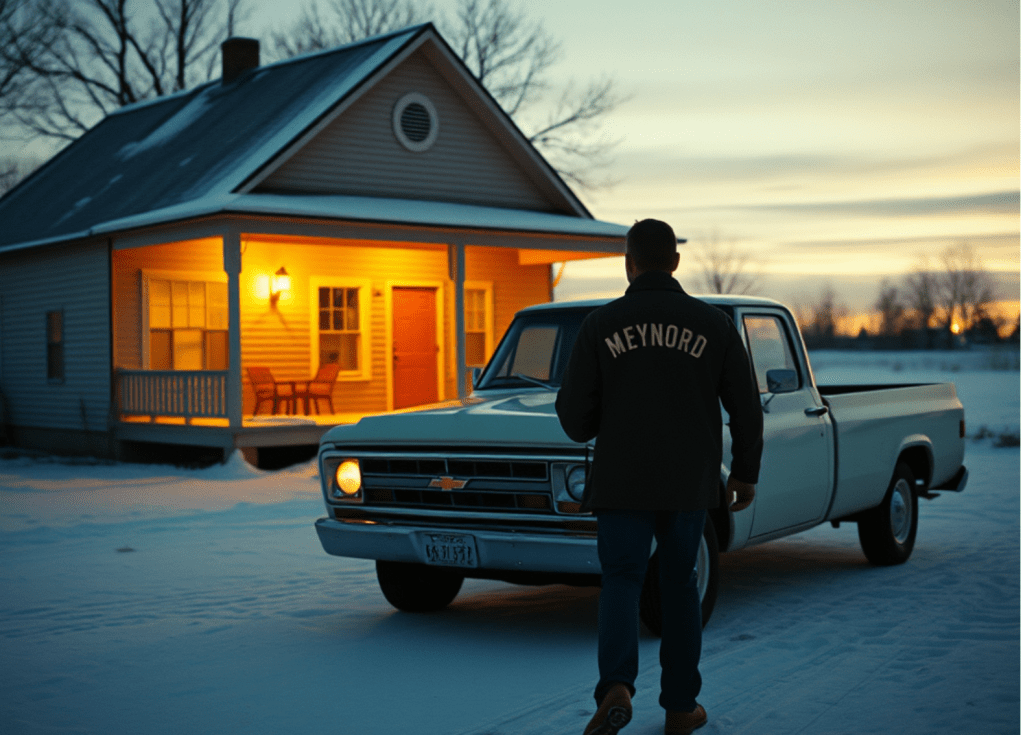
But this story isn’t about Tom. It’s about someone much closer to my heart, a man named Maynord Rider, one of my dad’s dearest friends. Maynord often accompanied us to horse sales on Friday and Saturday nights, and I thought the world of him. He lived two miles south of our farm, a farmer like many others in our area. One cold winter night, our water well froze, and my dad had to drive out over the pasture to fix it. When his headlights passed over Maynord’s bedroom windows, Maynord, instinctively knowing we were in trouble, got out of bed, climbed into his old white Chevrolet pickup, and drove to our house. He pulled up with a five-gallon water thermos and asked if our well had frozen. My mother was surprised—how could he have known? When my dad returned, he asked,

“Maynord, what are you doing here?”

They talked, and it turned out Maynord had guessed right. My dad told him there was no use in fixing it in the dark, and they’d work on it the next day. My dad promised to let Maynord help him the following morning to get him to leave.

There were many stories about Maynord, but they all ended one Thursday in September 1971.

It was the start of a four-day weekend from school due to a statewide teachers’ meeting. The day was beautiful for September in Oklahoma—warm with the usual breeze. I had been pestering my oldest sister, who was tasked with watching me and my other sister. It was just after noon, and the day felt perfect—no school, no bus to catch, just freedom. Then the phone rang. My oldest sister answered, and I could hear her voice change as she said,

“Oh no!” followed by, “I’m not telling him. You should.”

A moment later, she said,

“Mother wants to talk to you.”

I ran to the phone, stretched the cord as far as it would go, and answered.

“Yes, Mother!”

I said, but I could hear a siren approaching in the background. My mother’s voice was calm but direct,

“Benji, Maynord Rider just dropped dead.”

The words hit me like a punch, and I dropped the phone, screaming.

The news hit me like a physical blow, and I dropped the phone, screaming. The rest of the day is a blur, but I remember Ryder, the dog Maynord had given me, howling at the front door, leaning against it as if he, too, understood what had happened. None of the other dogs made a sound—just Ryder, the one I had named after Maynord’s last name.

I wouldn’t see my dad for hours, but I learned the whole story when I did. Maynord had come in from working on the farm for lunch. He ate, felt a bit of indigestion, and decided to lie down for a nap. While his wife, Bonnie, worked in the kitchen, she heard a moan, and when she went to check on him, she found him unresponsive. Panicked, she called my dad at the barbershop, where he cut hair. When he got the call, he told her to call the ambulance and that he’d be there immediately. He told the customers in his shop what had happened, leaving the man in his chair and the shop open as he rushed out.

Driving his Buick Le Sabre station wagon, my dad said the speedometer hit 120 miles per hour as he raced to Maynord’s farm, hoping to get there in time. Hearing this story comforted me, knowing that my dad did everything he could, even though we had lost one of the best men I had ever known.

That Friday night, my parents took me to see Maynord at the funeral home. It was more complicated than when I had seen Tom in his casket. The grief was overwhelming, and I couldn’t contain my tears. It felt like the worst day of my life. For years after Maynord’s death, I would look up at the sky, hoping for some way to talk to him again, but that day never came.

Eventually, I learned that, in life, there would be days harder than that one—the loss of my grandparents and my dad—, but somehow, we keep going, hoping that one day, someone will see our headlights coming over the hill and come to help us, just like Maynord did for us.

Resilience and Change: The Life of a Depression-Era Farmer

A Story By: Benjamin H Groff II© Groff Media 2024© Truth Endures

Benjamin Harrison Groff stood at the edge of his farmland west of Eakly, on Cobb Creek in Caddo County, Oklahoma, his weathered hands resting on his hips as he surveyed the fields. The sun was setting behind the Oklahoma hills, casting a golden hue over the land he’d come to love and toil. It was 1930, and though the country was heading into hard times, B.H. Groff had built a life here, one of stability and quiet perseverance.

Ben H and Florence Groff

He was 38 years old, married to Florence, and father to three children—Bennie, Dorothy, and JD. His modest but sturdy house had been their home for as long as he could remember. Its value was $3500, and though it wasn’t much compared to the sprawling estates some wealthier landowners had, it was theirs. They had a lodger, Lex Long, a 22-year-old man who had come to stay a while back. The Groffs didn’t need the money, but Lex had been good company with the world the way it was; having an extra hand around never hurt.

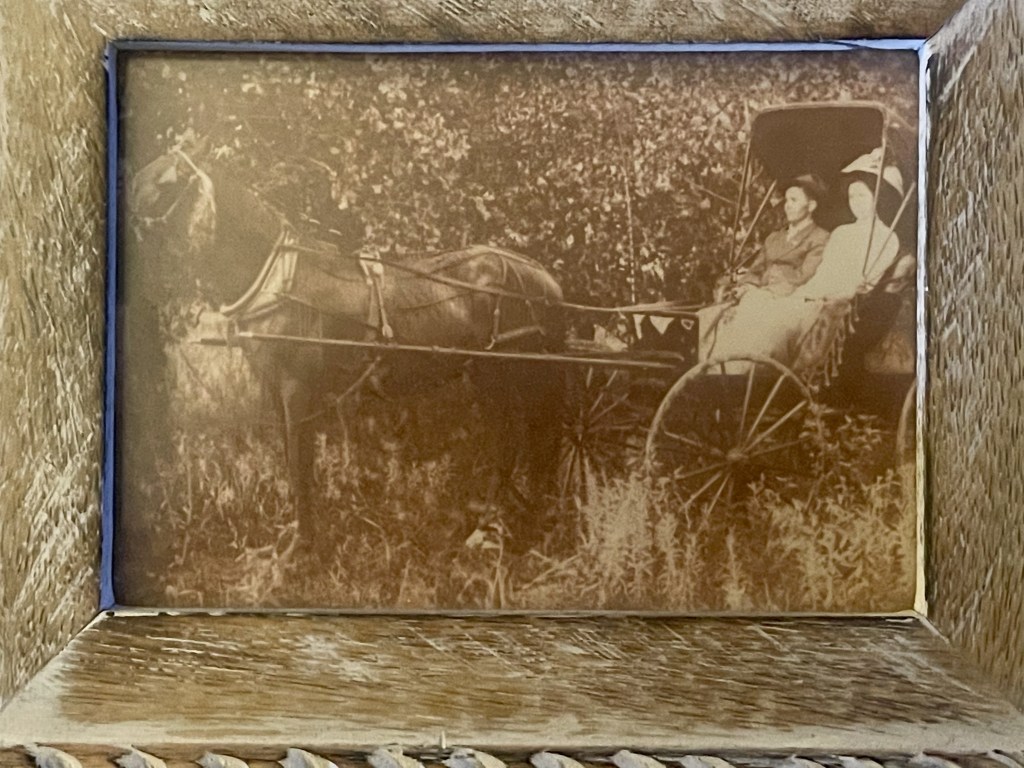
Draught Horses like those kept on Groff’s Farm.

B.H. had been a farmer for most of his life, following in the footsteps of his father, Ulrich Groff, who had immigrated from Switzerland in the late 1800s. B.H. remembered his father well—stubborn, proud, and meticulous about his work. Ulrich had come to America with nothing, finding his way to Illinois, where he built a life with Martha, B.H.’s mother, who hailed from Tennessee. Ulrich had passed a few years ago, but his values and work ethic lived on in his son. Farming had been the family’s lifeblood; Ulrich Groff is a name well known around Olney, Illinois, as the man who, along with his sons, built a barn without any metal, using only wood. It remained a place to see when people visited the town. Through the current day, but lately, B.H. has been reconsidering.

The census taker had come by not too long ago, scribbling down notes as B.H. answered the questions. He had explained that, while still farming, he had recently taken on a new role as an employer, overseeing other farms and workers. The long days of breaking his back were coming to an end. He felt more like a foreman now, guiding others and ensuring the crops were harvested on time. This transition was not just a change in his work but a step towards providing more stability for his family and the families of his workers.

Nearby Binger, Oklahoma 1930s

But still, something was unsettling in the air. The world was shifting—money was tight for many, and the Groffs, while not destitute, were careful with every penny. B.H. looked at their old house, and the absence of a radio set inside was a testament to their simpler lifestyle. He had thought about getting one, but Florence had insisted it wasn’t necessary. “We have each other,” she would say, “What more entertainment do we need?” The lack of a radio, a luxury many families could afford, was a stark reminder of the economic hardships of the time.

At dinner, B.H. would listen to Bennie, Dorothy, and J.D. chatter about school and life on the farm. Bennie, at 13, was getting taller by the day, eager to follow in his father’s footsteps, while Dorothy and J.D. still had a spark of youthful innocence. Florence, ever watchful, would smile softly, her hands always busy with mending or preparing food. The simplicity of their lives didn’t bother her—it was how she preferred it. Their home was a haven of warmth and contentment, a place where the simple joys of life were cherished. The family’s unity and resilience in the face of adversity were a beacon of hope, a testament to the strength of the human spirit during the Great Depression, uplifting those who hear their story.

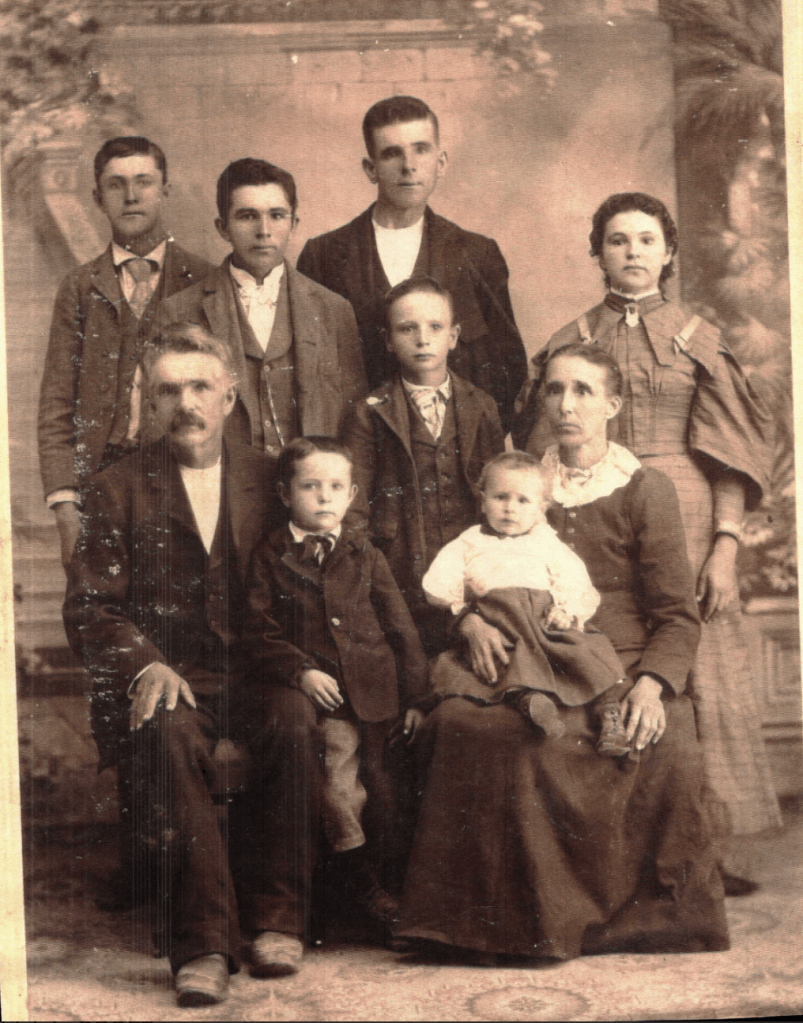
Ulrich Groff & Family

B.H. often wondered what his father would think of the life he’d built. Ulrich had been proud of his roots, reminding B.H. of the Groff family’s journey from Switzerland to America. Now, with Ulrich gone, B.H. felt the weight of his legacy. He wanted to honor it, but times were changing. Ben wasn’t just a farmer anymore but a man responsible for more than his land. He was an employer now, managing men who had their own families. This shift in his role was a sign of progress and a departure from his father’s more straightforward life, reflecting the uncertain and changing dynamics of the farming community during the Great Depression.

The fields stretched out before him, endless and full of promise. As the sun dipped below the horizon, B.H. looked at the land. He knew that whatever the future held, it would be shaped by hard work, perseverance, and the simple joys of family. And perhaps there was room for a bit of change along the way. The future was uncertain, but B.H. was ready to face it with the same determination that had guided him so far.

Embracing a New Chapter: The Journey of Clean Slate Services

Photo by Alexander Grey on Pexels.com

Lemi stood at the threshold of his tidy apartment, staring at the email that had just ended his decade-long tenure at the executive office. He had been a critical player with innovative ideas and unmatched dedication. But the corporate world had no room for loyalty when profits wavered. The company’s polite yet impersonal farewell words blurred as he fought back the rising tide of emotions. The sense of loss and betrayal was overwhelming, and he found himself questioning his worth and identity. Yet, amidst the turmoil, a flicker of hope began to emerge, a whisper that maybe, just maybe, this was an opportunity for something new and fulfilling.

At first, Lemi saw it as a temporary measure. He printed flyers, set up a simple website, and spread the word. His first clients were mostly friends and acquaintances, curious and supportive of his new venture. The physical work starkly contrasted his former desk job, but he found unexpected satisfaction in transforming spaces from dusty and cluttered to spotless and serene.

The next few days were a whirlwind of updating resumes, connecting with old contacts, and browsing job boards. But as the days turned into weeks, the stress of bills and dwindling savings forced Lemi to confront a stark reality: he needed an immediate source of income. Yet, in the midst of this uncertainty, a flicker of hope ignited. He had always found a strange solace in cleaning, a control over chaos that was missing in his current life. And thus, Clean Slate Services was born, a testament to his resilience and adaptability.

One sunny afternoon, Lemi arrived at the grand home of his new client, Daniel. The man who opened the door was effortlessly handsome, with a warm smile that lit up his face. As Lemi introduced himself and got to work, he couldn’t help but notice Daniel’s frequent, friendly visits to the rooms he was cleaning. They chatted about everything from the latest books to favorite travel destinations. There was an undeniable spark, a twist in the tale that Lemi tried to dismiss as mere friendliness, but couldn’t ignore.

Days turned into weeks, and Lemi looked forward to his sessions at Daniel’s home more than any other. The routine of cleaning became almost secondary to their growing friendship. One day, as Lemi was packing up his supplies, Daniel invited him to stay for coffee. They sat on the patio, the afternoon sun casting a warm glow around them.

“Lemi, I’ve been meaning to tell you,”

Daniel started, hesitant yet sincere.

“I admire what you’re doing here. Not just the cleaning, but how you’ve turned things around after –– well, you know.”

Lemi felt a warmth spread through him at Daniel’s words.

“Thank you, Daniel. It’s been quite a journey, but it’s been more rewarding than I ever expected.”

Their eyes met, and the world seemed still for a moment. Lemi’s heart raced as he realized the depth of his feelings. But alongside this, a new realization dawned: he genuinely loved what he was doing. The satisfaction of making things clean and bright, the connections he was forming, and the control over his destiny were things he had never found in his corporate job. This realization filled him with a sense of fulfillment and contentment he had long been searching for.

As he drove home that evening, Lemi thought about the path ahead. He had always seen Clean Slate Services as a stopgap, but now he wondered if it was something more. The pride he felt in his work, the joy of seeing his clients happy, and the possibility of exploring his feelings for Daniel combined to create a new vision for his future.

A few days later, Lemi met with an old colleague for lunch. The conversation inevitably turned to job openings in the executive world. As his colleague spoke, Lemi felt a strange detachment. The allure of high-powered meetings and corporate ladders no longer enticed him. He thanked his friend for the information but politely declined to pursue any leads. He had found a new path, a path that was more aligned with his values and brought him true satisfaction. The corporate world, with its politics and pressures, no longer held the same appeal.


Returning home, Lemi sat at his desk, staring at the Clean Slate Services logo he had hastily designed months ago. He lifted up his cell phone and texted Daniel, inviting him to dinner. He felt a new sense of purpose, a feeling that he was precisely where he needed to be.

Lemi had found his true calling—not in the towering office buildings of the corporate world but in the simple, honest work of cleaning homes and the unexpected love blossoming with a kind-hearted client. Looking around his spotless apartment, he knew now was the time to embrace a new chapter with an open mind, arms, and heart.