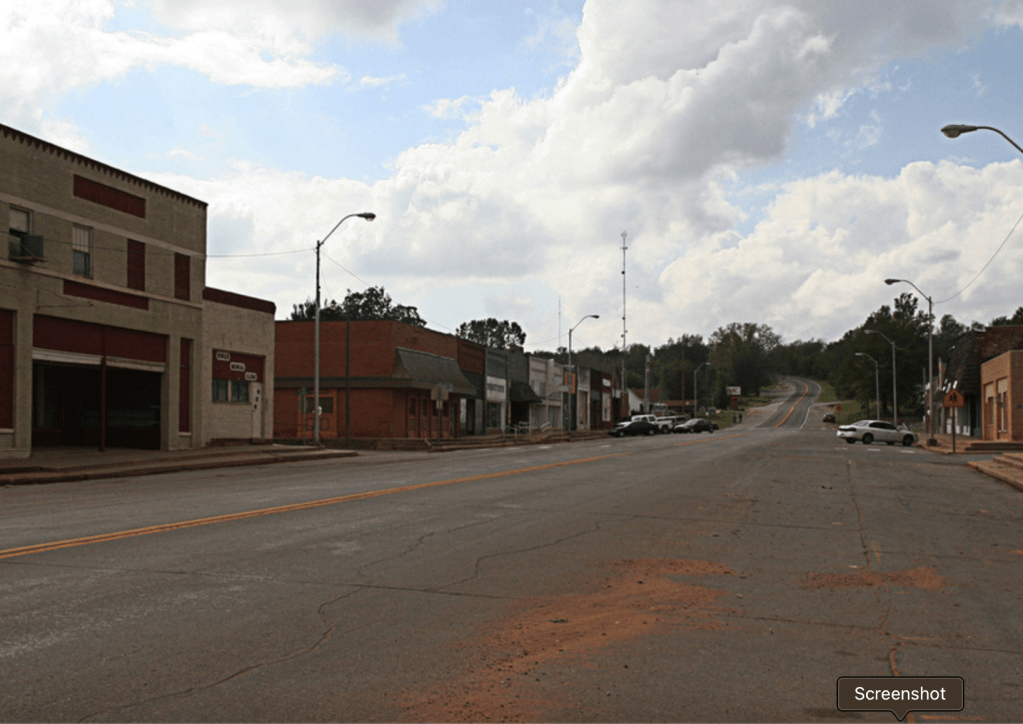
The Bell That Retrop Forgot

By Benjamin GroffMedia© | benandsteve.com | ©2025 

4–7 minutes

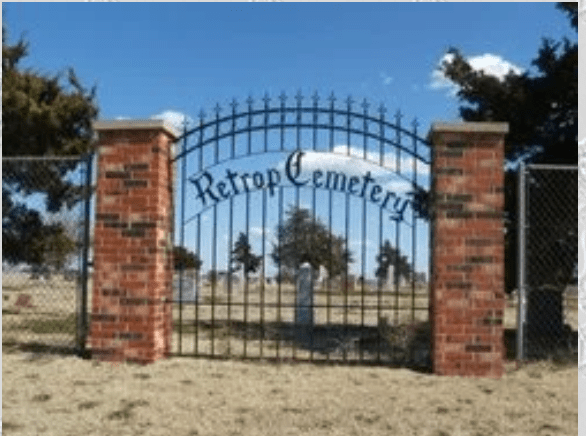
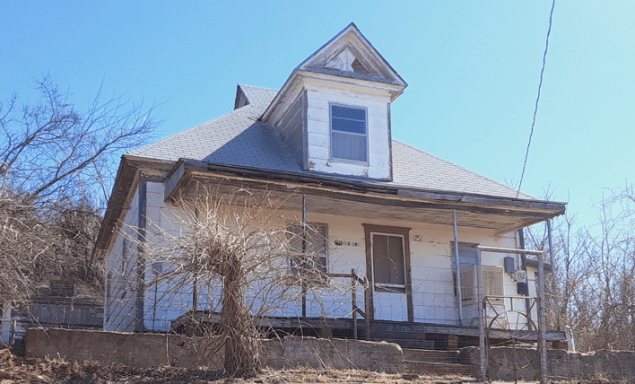
Most people driving the stretch between Granite and Elk City never realize they’re passing over a ghost. The four-lane highway hums along smoothly. Underneath its concrete spine once stood a town with a name born from a clever workaround. The town was called Retrop, simply Porter spelled backward.

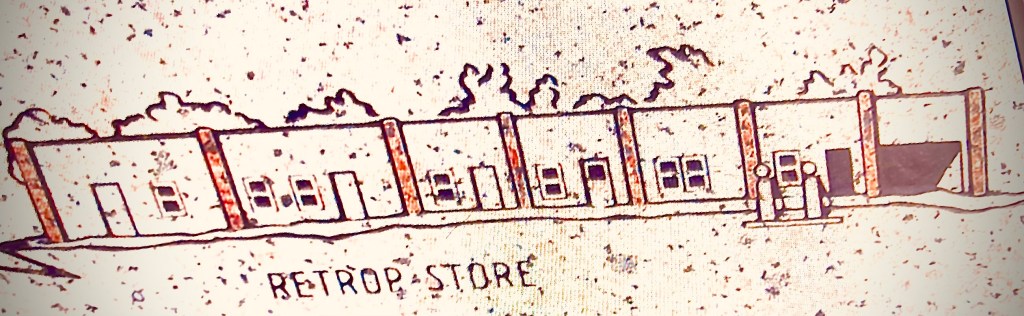
Back in the early 1900s, the community wanted its own post office. But Oklahoma already had a Porter, and the postal authorities weren’t about to sort through that confusion. So the folks along the dusty road west of Sentinel shrugged, flipped the name around, and mailed in the paperwork. Retrop got its post office, its school, and its place on the map—at least for a while.

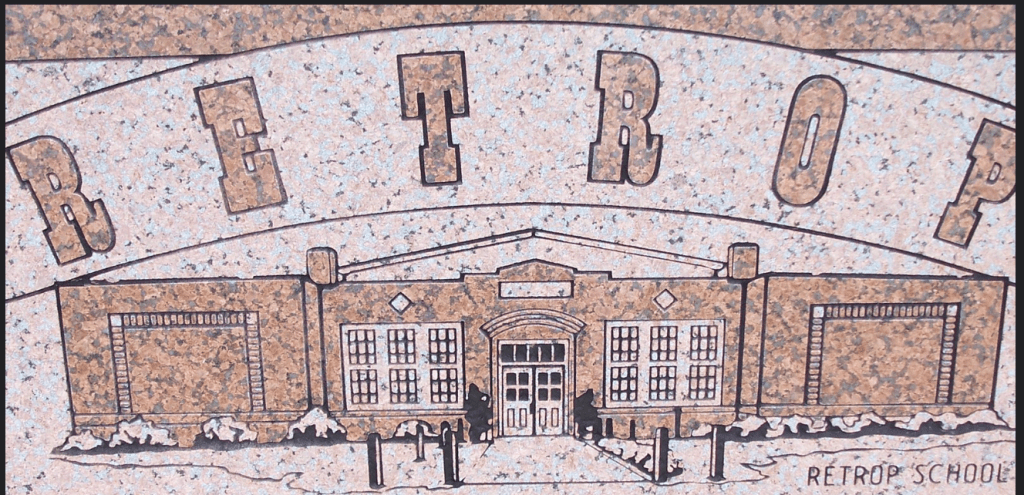
The school sat at the center of it all. A sturdy brick building with wide windows and a playground carved out by decades of small feet. Children rode in from miles around, their lunches wrapped in wax paper, their futures unwritten. There were stories—quiet ones—of students who went on to big cities and bigger lives. A doctor in Chicago. An engineer for NASA. A novelist whose pen never found its way back home.
They carried Retrop inside them, even after the town itself faded away.

But Retrop’s beginning was clever. Its ending was swift.

When the new highway came through, the town didn’t stand a chance. Businesses folded. Families moved. The school closed its doors. The post office was shuttered. One by one, the foundations cracked and the roofs caved until only fields remained—fields pretending nothing had ever stood there.

Except for one detail people still talk about, though no one can confirm it anymore: the missing bell.

Retrop had its own Masonic Lodge in the 1940s

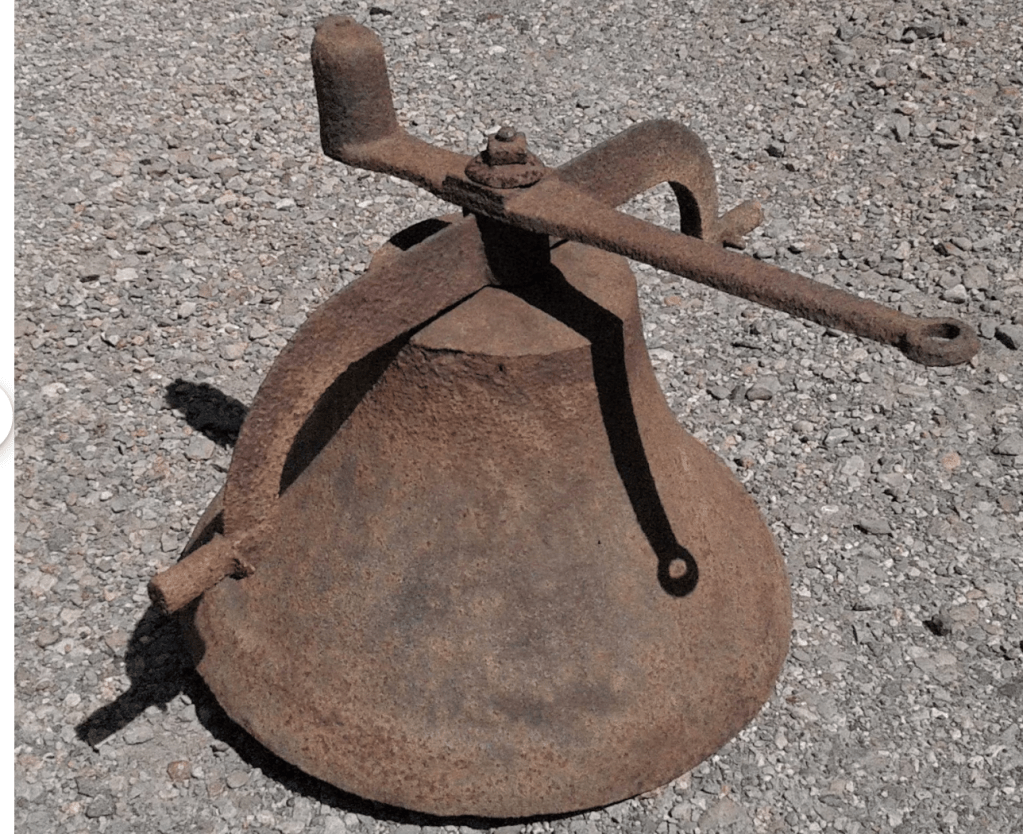
The school’s bell had hung proudly in the tower for decades. It called children in from recess and sent them home at day’s end. Then one year—a generation before the school closed—it vanished. Not stolen, exactly. Just gone. People assumed it had been taken for safekeeping. They thought it was stored in somebody’s barn for future repairs. Others believed it had been hauled away accidentally during a renovation.

The last families left Retrop. Then, bulldozers finally erased the last bricks of the school. Yet, the bell was still missing.

Some say the bell found another tower along the prairie. Others swear it sits buried beneath the highway, trapped in silence under thousands of cars a day. A few whisper that the bell rings on its own now and then—never heard, but felt. A tug in the chest. A memory rising like dust in a beam of sunlight. A sound from a place people forgot existed.

Most modern maps don’t show Retrop anymore.

But every once in a while, someone driving that long Oklahoma stretch will slow down for no reason at all. They will stare out toward the open fields. They swear they can sense something that has no business being there.

A town that isn’t.
A school that was.
And a bell—somewhere—still waiting to be found.

The Bell on County Road 7

No one knew who put the bell there. The old timers from the old school days at Retrop had all gone. Buried. The generation had died off. The families had sold their farms. Or, the farms had been handed down through generations. The old school bell had been forgotten. Until…

It appeared one Tuesday morning. It stood silent, rusted, and leaning a little to the left. The scene was at the far end of County Road 7, right where the asphalt surrendered to red dirt. The bell looked ancient, the kind you’d expect to find hanging outside a one-room schoolhouse or a long-gone prairie church. But there it stood, bolted to a cedar post that hadn’t been there the day before.

Folks in town had theories, of course. In places like Washita County, theories sprout faster than wheat after a spring rain.

Old Mrs. Peabody said it was a sign from the Lord. Hank Ballard at the feed store claimed it was an art project. College kids with too much time and not enough sense created it. Deputy Collins figured someone dumped it there after cleaning out a barn.

But no one claimed responsibility. And no one can explain what started happening a week later.

Every morning at exactly 5:17 a.m.—never a minute sooner, never a minute later—the bell rang.

Just one tone.

Clear. Strong. Impossible to ignore.

At first people thought it was a prank. Someone out there at dawn, pulling a rope and having a good laugh. But when a few curious souls drove out at that hour, no one was ever there. They’d wait in their cars or stand beside the fence line with coffee steaming in cold hands. The prairie would hold its breath. Coyotes would go quiet.

And then the bell would ring.

The sound didn’t vibrate through the metal—folks swore it vibrated through them. It was as if it reached down and stirred up something old they’d forgotten. It is a memory, a regret, or a promise left sitting too long on a dusty shelf.

For some, the mornings changed them.

Mr. Conway, who hadn’t spoken to his brother in twenty years, drove to Elk City and patched things up. Annie Lucas finally mailed the letter she’d been writing and rewriting for a decade. Deputy Collins insisted the whole thing was nonsense. Despite this, he found himself stopping by a certain headstone in Sentinel more often.

But on the eighth morning, the bell didn’t ring.

Not at 5:17. Not at all.

When people went to check, the bell was gone—post and all. As if erased. Only a square of red earth remained. It was freshly disturbed. It was like someone had quietly lifted a piece of the world and carried it away.

The next day, life went on. Coffee brewed, trucks rumbled to work, and theories fluttered around like tumbleweeds. But every now and then, people found themselves glancing toward County Road 7, half-expecting a sound that no longer came.

Still, there are some who swear, when the wind blows just right across the prairie, they can hear it faintly in the distance:

One clear, steady ring.

A reminder of something they’re still meant to do.

Never forger RETROP!


By Benjamin GroffMedia© | benandsteve.com | ©2025 

Photos From Journey’s and Images To Memories

By Benjamin GroffMedia© | benandsteve.com | ©2025 

4–6 minutes

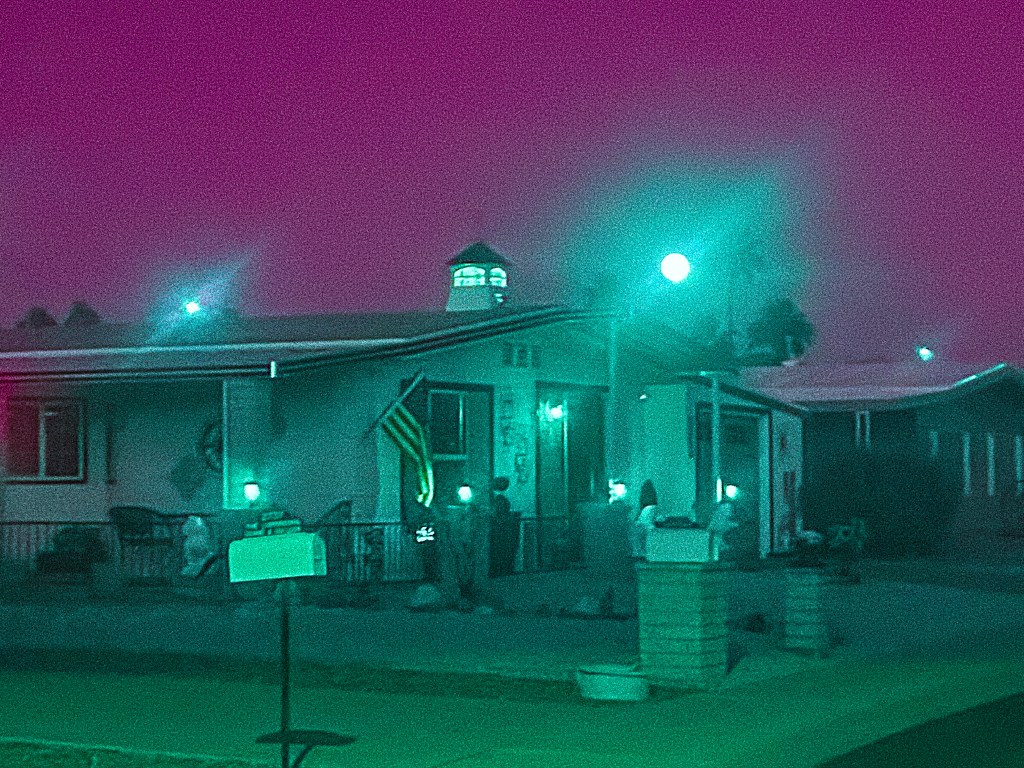
Home Is Where The Heart Is

This ditty is possible using a lighting trick. A photo of our home in Arizona on a full moon night in October 2025

Over the years, I’ve taken countless photographs during my travels across the United States. They are not professional grade. Together they tell a story of moments, places, and memories I felt worth sharing. This is the first collection I’m beginning with, and over time I will add more as the journey continues. Depending on how these are received, future sets will follow. For now, I invite you to enjoy this glimpse through my lens.

THE COURT HOUSE

The Washita County Court House. In Cordell, Oklahoma where my
Grandparents hailed from when I was a child.

The Washita County Courthouse, located in Courthouse Square in New Cordell, is the county courthouse serving Washita County, Oklahoma. The Classical Revival courthouse was built in 1910. It was added to the National Register of Historic Places on August 24, 1984. Wikipedia

 111 E Main St, New Cordell, OK 73632

Opened: 1910 Area: 43,560 ft²

Architectural style: Neoclassical architecture

I first attended holiday events with my grandparents here. Later as a police officer I testified at murder trials in the historic court room.

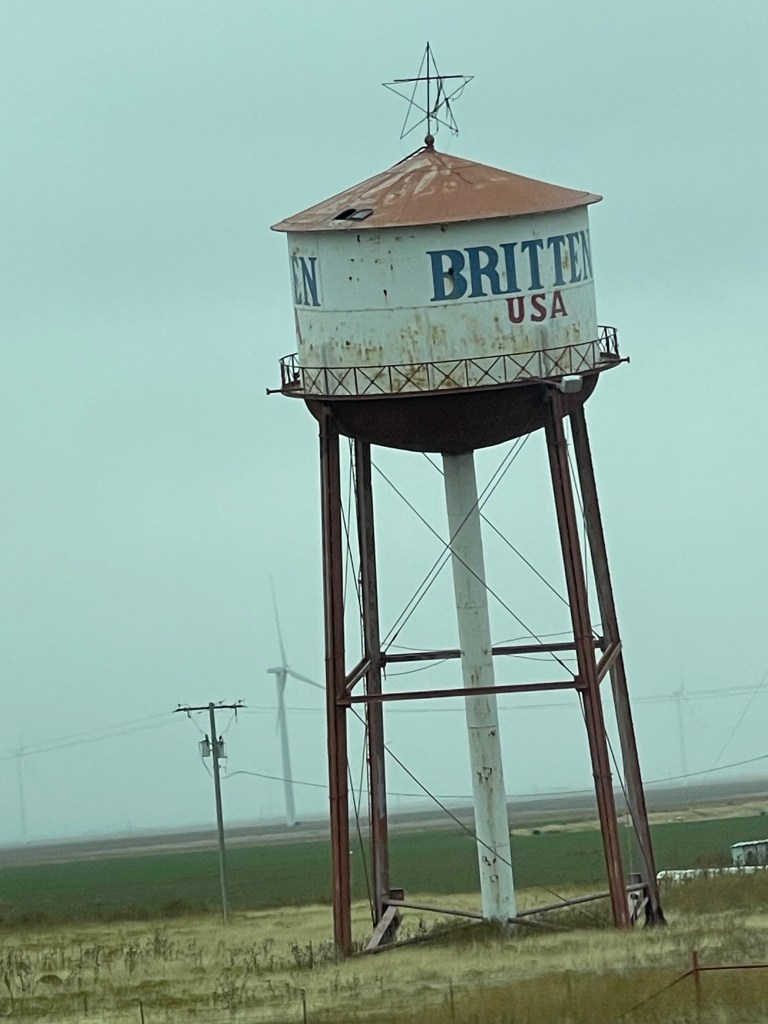
Britten USA

Every time we travel east to visit relatives we pass this landmark in Groom Texas. On this particular day we were heading west hurrying home. A ice storm had been predicted and we were trying to beat it over the mountains.

“Britten USA” most commonly refers to the Britten U.S.A. Leaning Tower of Texas in Groom, Texas, a roadside attraction on Route 66 created by Ralph Britten. Alternatively, it can also refer to Britten Inc., a marketing and branding company that specializes in visual engagement solutions for events and advertising. 

The Leaning Tower of Texas

Current status: It remains a popular tourist attraction and a landmark on historic Route 66. 

What it is: A roadside water tower that is tilted about five degrees from vertical.

Location: Groom, Texas, along the westbound frontage road of Interstate 40 near the historic Route 66 path.

History: Ralph Britten bought the tower from a nearby town. He installed it as a marketing tool for his truck stop and restaurant in the early 1980s. An electrical fire later destroyed the buildings, leaving only the tower.

Oklahoma Windmills

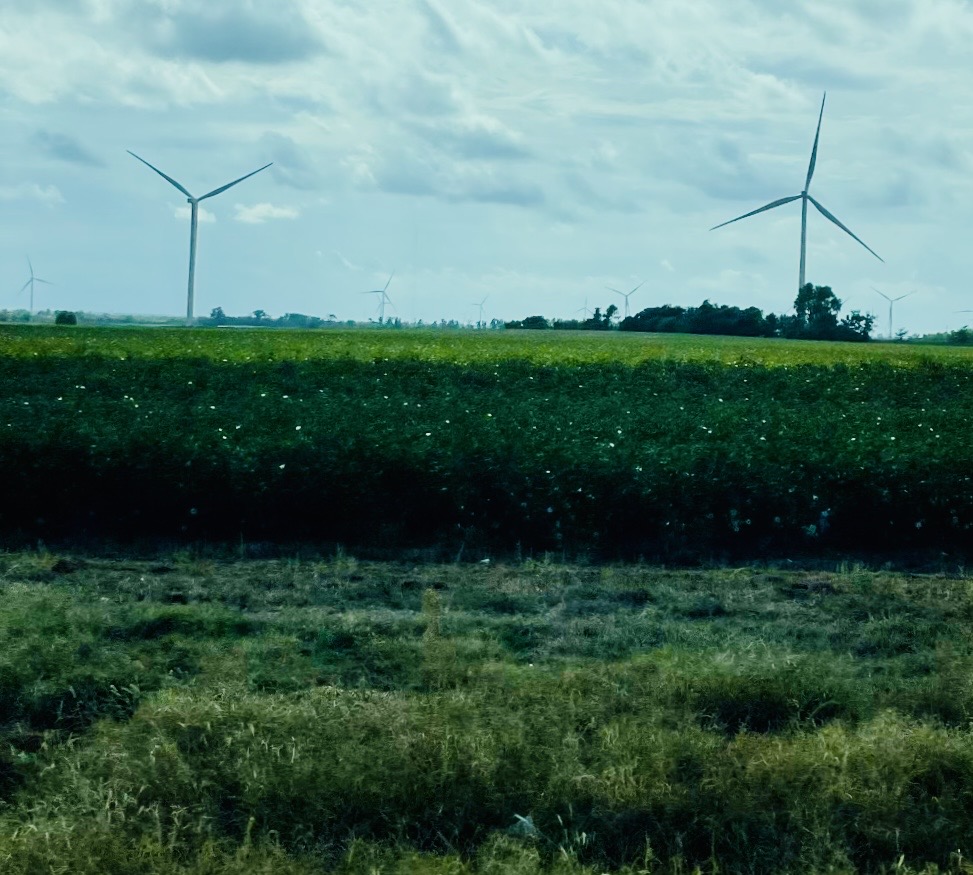
Windmills in Oklahoma. A field in Western Oklahoma to be exact.

Windmills stretch across the American landscape. They stand quietly in a field of Western Oklahoma — steady sentinels of what renewable energy can represent. Yet in the current political climate, the future of clean energy in the United States feels increasingly uncertain. Progress once promised innovation and leadership. Now, it risks being slowed by shifting priorities. Resistance at the highest levels of government contributes to this challenge, particularly within the current administration and Republican leadership.

Each pause in advancing renewable energy costs more than time; it costs momentum, opportunity, and global standing. Other nations continue to move ahead. They invest in sustainable solutions and future infrastructure. Meanwhile, America risks falling further behind. This gap is not by years, but by decades. Every delay today echoes as missed potential tomorrow.

MOUNTAINS OF UTAH

This black-and-white industrial scene was captured many years ago. I was accompanying my better half on a business trip to Salt Lake City, Utah. Somewhat surprisingly, the photo was taken from the third-floor window of our modest motel room.

As I looked out, the contrast of rigid industry against the soft sweep of snow-capped mountains stirred something in me. It was a moment that begged to be preserved. It served as a quiet reminder of winter’s presence. This was rare compared to the sun-baked valley we call home near Phoenix. Instinct took over, and I froze the memory in time with a simple click.


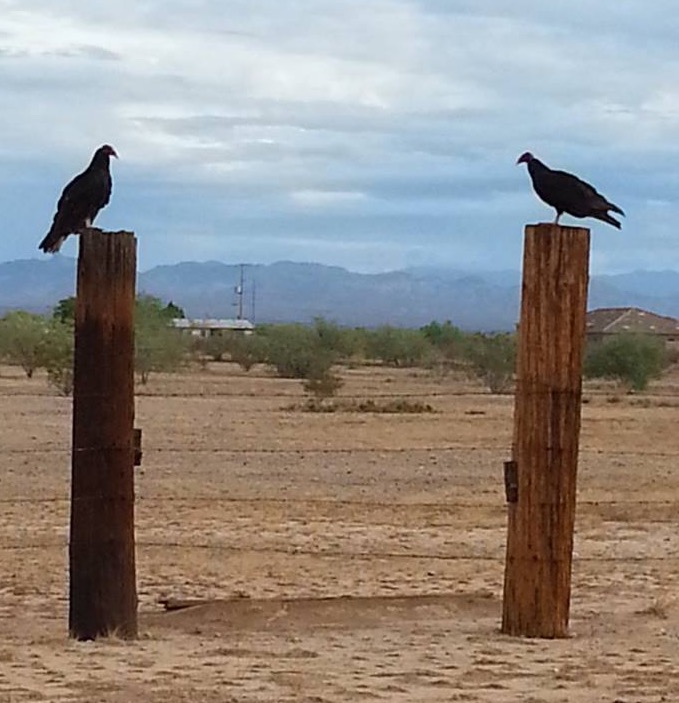
The photo above comes from a much earlier time. It is a fleeting capture of two vultures perfectly perched on weathered fence posts. This scene is in the desert near our old Road’s End Ranch, west of Phoenix, Arizona. We lived there for nearly eleven years, and it remains one of the richest chapters of our lives. Open range, endless sky, and a wildness that felt both rugged and beautiful.

Cattle wandered freely into our yard, trailing no rules but their own. Coyotes called at dusk. Javelina passed through like restless shadows. Rattlesnakes reminded us daily that we were sharing their world. The Western Diamondback (Crotalus atrox) was among the most common. The Mojave Rattlesnake (Crotalus scutulatus) and the Sidewinder (Crotalus cerastes) were also frequent visitors. They were constant guardians of the desert floor.

This particular moment was captured on the fly — literally. We sped through the desert in a golf cart. I clung to the passenger seat. At the same time, I attempted to steady a camera. The vultures sat motionless, almost statuesque, watching over some unseen feast just beyond the fence line. A raw, unplanned moment — and yet one that perfectly reflects the untamed spirit of the life we cherished there.

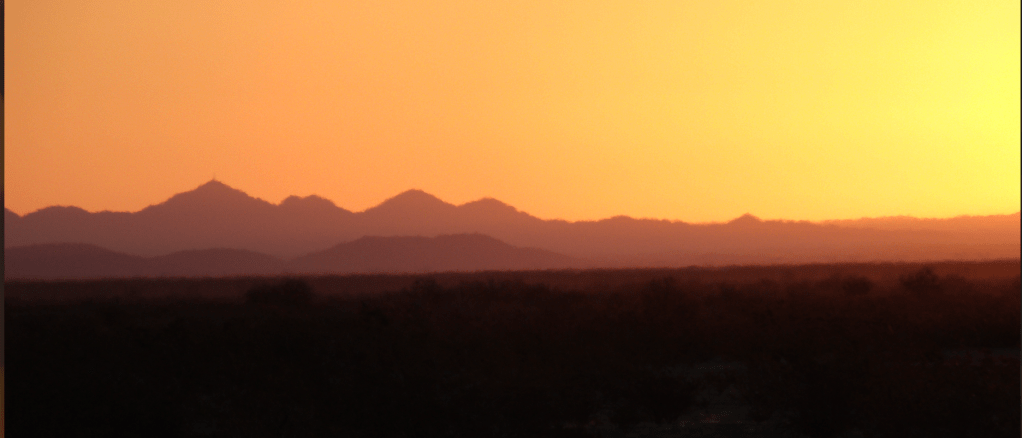
Sunset at Road’s End Ranch. It was one of the last we were fortunate enough to witness before selling our desert home. We moved to the city in 2013. The White Tank Mountains stretch softly across the western horizon. They catch the fading light in a way only the desert can offer.

This marks the close of the current collection. Many more photographs will be shared in the days, weeks, and months ahead. Thank you for your thoughtful comments, memories, and kind suggestions along the way.

The Haunting Experience of a Small Town Funeral Home

2–4 minutes

The Dead Has Gone – A Night Call to the Funeral Home

Jake Roff was a man of routine. Up before the sun, station lights on by 4:30, coffee brewed by 4:35. He liked the quiet hours before the town woke up. There was no traffic and no gossip. Just the hum of the soda cooler and the smell of gasoline.

That’s when the hearse pulled in.

The local funeral director appeared. He was a man who had perfected the art of wearing a solemn face. He maintained this expression even when discussing baseball scores. He leaned out the window and said,

“Jake… I can use an extra set of hands unloading a client.”

Jake wasn’t sure “client” was the right word, but he was too polite to argue. He locked the station door and climbed into the passenger seat. The ride was short. It was a ride where the air feels colder than it should. You can’t shake the notion that someone in back is listening.

At the funeral home, the place was dark. A single light illuminated the hallway. It was the light that leaves more shadows than it removes. The two men wheeled their passenger toward the prep room, the floor squeaking under the gurney wheels.

That’s when Jake’s hip clipped something.

The “something” was another gurney, parked just out of sight. The bump sent the sheet sliding to the floor in slow, terrible motion. It was like a curtain rising before a play no one wants to see.

Underneath was a woman. Her hair was a halo of white, frizzed and jutting out like she’d been caught mid-scream in a lightning storm. Her eyes were wide and glassy, locked on Jake as if she’d been waiting for him specifically. Her jaw hung slack. Her teeth were just visible. It was an open-mouthed stare that made him wonder if she was about to say something.

Jake didn’t stick around to find out. He backpedaled so fast he nearly tipped the “client” he’d come to help with. His heart was pounding. He mumbled something about

“forgetting to check the oil at the station.”

Then, he made a break for the door.

The funeral director called after him. By then, Jake was halfway down the block. He vowed never to set foot in that place again. For the rest of his days, he’d open his station early. Yet, if a hearse rolled in before sunrise, Bill always ensured he had a sudden, urgent appointment anywhere else.

William Irwin “Bill” Krisher (September 18, 1935 – 2025, age 89)

GroffMedia© | benandsteve.com | 2025 Truth Endures©

1–2 minutes

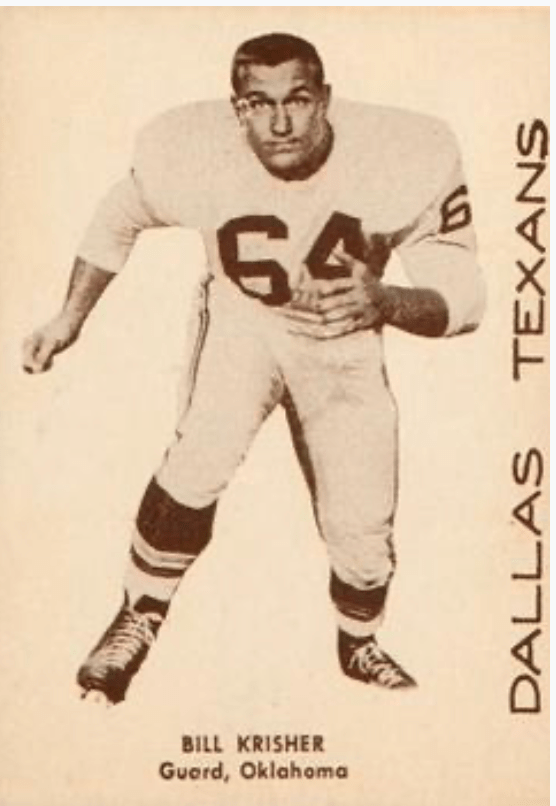
William Irwin “Bill” Krisher (September 18, 1935 – 2025, age 89)

William Irwin Krisher, known to football fans as Bill Krisher, passed away in 2025 at age 89 (1). 

He was born on September 18, 1935, in Perry, Oklahoma. He grew up in Midwest City. He developed into a standout lineman for the University of Oklahoma under coach Bud Wilkinson (2). 

Krisher’s college career was decorated. He earned consensus All-American honors in 1957. He helped the Sooner’s win consecutive national championships in 1955 and 1956 3

Selected in the third round of the 1958 NFL draft, he played for the Pittsburgh Steelers before moving to the AFL’s Dallas Texans (now Kansas City Chiefs), where he was named to the All‑AFL Team in 1960 and honored as a division All‑Star in 1961 4

Off the field, Krisher dedicated himself to faith and mentorship. He was an active member of the Fellowship of Christian Athletes and served as its southwestern regional director by the mid‑1970s 5

Bill Krisher leaves behind a legacy of excellence in collegiate and pro football. He dedicated his life to uplifting others through faith and service. 

He is remembered by family, teammates, and athletes inspired by his example.

The Flying Wagon – A Bribed Brother – A Frightened Mother

A true story about two brother’s antics on the Western Plains of Oklahoma in the 1920s and ’30s.

By Benjamin GroffMedia© | benandsteve.com | 2025 Truth Endures©

3–4 minutes

The Flying Wagon

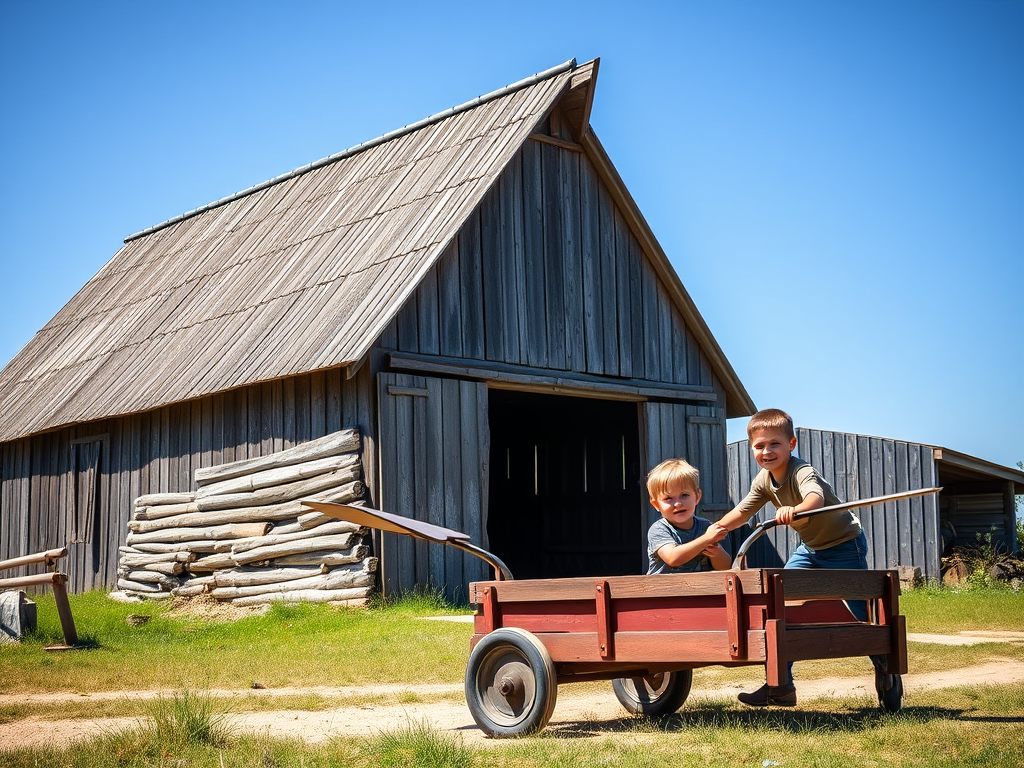
You’ve heard of the Wright Brothers, but you probably haven’t heard of the Groff Brothers—JD and Bennie. Two western Oklahoma boys growing up wild and dusty in the 1920s and ’30s. They didn’t have blueprints or flying machines. What they had was imagination, a tall barn, and a battered old wagon that Bennie believed could fly.

Bennie was the older one. He was full of ideas that didn’t always make sense. They always sounded like fun—at least to him. JD, the youngest, often found himself drafted into Bennie’s adventures under what you might call “big brother persuasion.” Bennie had a way of making cooperation seem more appealing. He would start listing all the minor sins JD had committed that week. JD wasn’t dumb. He knew how to pick his battles.

One summer day, Bennie got it in his head that their wagon could be made to fly. All it needed were wings—planks nailed out to the sides—and a launch platform. The barn roof, with its steep pitch and high drop, was just the place. Bennie did the math. He calculated it as only a 1930s farm kid could. He figured the wagon might be too heavy to lift both of them. So, of course, he chose JD to be the pilot.

JD protested. Loudly. But Bennie made his case and called in his leverage. They went up with the wagon. They dragged it onto the roof like a couple of cartoon inventors chasing the wind.

Perched high above the ground, JD sat nervously in the creaking wagon, holding on to the sides. The wings were loose, the wheels rattled, and JD knew better than anyone how this would end.

“Hold on tight and don’t jump out!” Bennie shouted.

“I won’t,” JD called back, “I’ll fall!”

And with that, Bennie gave the wagon a mighty shove.

It was right about then that their mother—Mom—looked out the kitchen window. She saw what no mother should ever see: her youngest son soaring off the roof in a makeshift flying contraption. She dropped what she was doing and ran out the door, just in time to witness gravity take over. The wagon left the barn roof for the briefest moment of flight—then fell straight down like a stone.

JD hit the ground in a cloud of dust and bent wood. Miraculously, he survived—more scared than scraped, and too winded to say anything right away. Bennie stood nearby, squinting at the wreckage like a disappointed engineer.

“Well,” Bennie muttered, “I guess there wasn’t enough lift.”

Mom had a different theory: they would never try that again.

JD agreed with Mom.

That was just one of many scrapes the Groff brothers got into over the years. Bennie had the ideas, and JD often paid the price. But through it all, they stuck together—laughing, fighting, inventing, surviving. That’s what brothers did.

The wild stunts and hijinks came to an end far too soon. Bennie passed away in his mid-forties, and with him, a certain spark left the family. One relative said the family had been “a little less jovial” ever since.

It’s true. A parent never fully recovers from losing a child. And a brother never fully recovers from losing his bud.

For a moment, a wagon flew on top of a barn in western Oklahoma. Two boys believed they could touch the sky.

The Illinois Folks Would Visit Cordell, Oklahoma Every Year…To See Family

By Benjamin GroffMedia© | benandsteve.com | 2025 Truth Endures©

4–6 minutes

Summer Roads to Oklahoma to Visit Uncle Ben and Aunt Florence

By Benjamin Groff II

Every summer—without fail—a car would ease out of the driveway in Olney, Illinois. It was packed tight with suitcases and ham sandwiches. Kids pressed against window glass. Stories were waiting to be lived again. The road ahead led straight to Cordell, Oklahoma. Uncle Ben and Aunt Florence kept the porch swept. They also kept the table set.

Olney was a quiet place, best known for something that always fascinated me as a child: white squirrels. My grandmother told me about them as if they were magical creatures. They were rare and watchful, darting through yards and city parks. I always hoped I’d see one myself, but somehow we always left too early or came back too late. Still, the idea of them stuck in my imagination like a bright stone in the pocket.

But the real adventure was always in Oklahoma.

Uncle Ben and Aunt Florence lived in a modest home in Cordell. There, the wind blew with purpose. Time slowed enough to sit and stay a while. The cousins from Caddo and Washita Counties began to arrive shortly after us. Many of them had been raised alongside the Illinois kin during the lean years of the 1920s and ’30s.

The car would keep rolling through Binger, Carnegie, Weatherford, and Colony. It traced out a web of family ties that never wore thin. There were hugs that lasted too long and pies that didn’t last long enough. Kids ran barefoot through the same red dirt that had once dusted our grandparents’ boots. The grownups told stories from both sides of the Dust Bowl.

“You remember when that storm blacked out the sky?”
“Your mama used to chase us out of the cellar with a broom!”


And everyone laughed, even if the memories came with a tear or two.

The trips began in the early 1960s. They stretched well into the 1980s. Each summer became a soft echo of the one before. Faces aged, but names stayed familiar. Porch swings creaked. Tin-roof rain was still the best music at night.

Eventually, the trips grew fewer, as the elders passed and the younger ones built lives farther away. But in my mind, a stretch of two-lane highway still runs from the white-squirrel town of Olney. It continues to the wide-open sky of Oklahoma. It’s a road paved with memory and love that survives distance, time, and even silence.

And one day, I still hope to see one of those white squirrels.

One cousin wrote a memory down in a letter to another -––

The tires hummed low against the highway as we crossed into Oklahoma, and I felt it—the shift. Not just in geography, but in memory. It had been years since we’d made this drive from Olney, Illinois. However, the road still felt familiar. It was like an old hymn you didn’t realize you remembered until you started humming along.

I leaned my head against the window, watching the land roll out in shades of tan and green. My thoughts rolled back too. I remembered the summers of my childhood. We’d pile into the car every year and head south to visit Uncle Ben and Aunt Florence in Cordell.

They were waiting when we arrived back then—porch light on, arms wide, iced tea already sweating on the kitchen table. The smell of fried chicken greeted us. We could hear the sound of someone laughing from the backyard before our feet ever hit the ground.

We’d stay for a week or more, using Cordell as home base. Then we’d branch out, visiting cousins scattered across Caddo and Washita Counties—Binger, Carnegie, Gotebo. Some were practically siblings. They were raised alongside our parents during the hard years of the 1920s and ’30s. Those were times when everyone shared everything. The stories from those days came freely over pie and coffee. They were told with the kind of clarity that only comes from having truly lived it.

But this trip—this time—was different.

There were no porch lights waiting. No tea glasses on the counter. Uncle Ben had been gone for years now. Aunt Florence too. And many of the cousins had passed, their homes quiet or sold. This time, we came to remember—not just to visit.

We stopped by the old places. Some were still standing, others just foundations and memories. We drove to the Cordell, Eakly, Colony and Alfalfa, cemeteries. I stood at the resting place of our folks I could remember seeing as if it was yesterday. I could still hear their voices in my head. I spoke softly, unsure if the wind could carry my words back to them, but I tried anyway.

Later that evening, we drove out to Binger. One of the cousins—now gray-haired and slow-moving—met us on the porch with a smile that hadn’t changed in 40 years.

“I didn’t think anyone remembered to come back,” she said.

“We never forgot,” I told her.

And we hadn’t.
Because the roots ran deep.
Deeper than distance.
Deeper than time.

So we returned to Oklahoma—not just to see the land or the gravestones, but to feel that presence again. To walk the same dusty paths, sit under the same wide skies, and remember who we are—and who we loved.

Some journeys are round trips.
Others are returns.
This was both.

As always time came when we had to return. And it always seemed longer going back to Illinois. It was sad to leave. Who would not be here next time we came to visit? Who on our crew would not make the trip next time? Uncle Ben always choked up when he said goodbye. He knew it could be the last time he saw us. Eventually, he was right.

The Legend of Ghost Mound: A Heartfelt Tale

By Benjamin GroffMedia© | benandsteve.com | 2025 Truth Endures©

3–5 minutes

The Story of Ghost Mound

There’s a story my dad loved to tell. It was one of his favorites. He told it often to friends, family, and customers in his barber shop. He shared it with anyone who needed a good tale. He and his friend GH rode out on horseback one afternoon. They went to a little rise in northern Caddo County called Ghost Mound.

Ghost Mound – Caddo County – Oklahoma

Ghost Mound is one of those landmarks that doesn’t quite belong to any one town. It’s south of Hydro, north of Eakly, east of Colony, and west of the Sickles community. It’s a rocky, oddly-shaped hill. It looks like a miniature volcano. It is steep on one side and more gradual on the other. Back in the 1930s, it was open country. Kids would ride or walk out there on lazy afternoons. They climbed the rocks, explored the cracks, and wasted time in the best way.

On that particular day, my dad, JD, and GH set out. They had nothing more in mind than a good ride. They were also looking for a little adventure. GH had just celebrated a birthday and was proudly carrying a brand-new wallet in his back pocket. Before they saddled up, he showed JD the five-dollar bill. It was tucked inside and was quite a lot of money for a kid in those days.

Once they reached the Mound, the boys began to climb, making a show of how tough it was. About halfway up, GH lagged behind. Suddenly, he shouted:

“HELP! I’ve lost it!”

JD turned and saw GH crouched down, peering into a narrow crack in the rocks. Sliding back to him, he asked what was going on.

GH pointed. He said his birthday wallet had slipped out of his pocket and fallen deep into the crack. The wallet was whole with the five-dollar bill. The boys tried everything to retrieve it. They rolled up their sleeves, dug around, tried moving rocks, even tried widening the gap—but nothing worked. The wallet was gone.

From that moment on, the story of the wallet lost in Ghost Mound became family legend. I grew up hearing about it. Over and over, my dad would retell the tale. Sometimes it was a quick story; other times it grew with detail. Always, it ended the same way. The wallet was still there. It was wedged in the rocks with a crisp 1930s five-dollar bill, waiting to be discovered. He told it with such conviction, I was sure it had to be true. Dad told people whose hair he cut. Keeping an entire room of waiting customers spellbound. Sometimes GH would be there to re-enforce what dad was telling.

The day of my father’s funeral arrived. It was deeply emotional. The house was full of people who had known and loved him. Among them was GH. I had a chance to sit with him, and naturally, I asked him about the wallet. He threw his head back and laughed.

“Yeah,” he said, “the wallet did fall out of my pocket. But your dad was the only one with arms skinny enough to reach in and get it. We got it back that same day.”

I was stunned.

“Then why did you say it was still up there?” I asked.

GH grinned and said, “Because your dad was the biggest joker in the world. He made me promise not to tell anyone the truth. After that, we’d ride our horses out. We would just sit back and watch folks climb all over that Mound looking for that five-dollar bill. We’d laugh and laugh. If anyone had found it, they wouldn’t have brought it back to us anyway!”

And suddenly, a memory clicked. Every time we’d drive past Ghost Mound, we’d see someone out there climbing. It was usually someone who had been in my dad’s barber chair just days before. My dad would start laughing to himself. I never understood why. Not until GH let me in on the real story.

So maybe there’s no wallet up there after all. But the legend my dad spun from that day? That’s still very real. And just like Ghost Mound itself, it’s stuck with me for good.

Twila Elouise: The ‘Standard Oil Baby’ and Her Amazing Birth Story

By Benjamin GroffMedia© | benandsteve.com | 2025 Truth Endures

3–4 minutes

A Frightening, Comical, and Hostile Ride: The Birth of Twila Elouise

By early June of 1960, Oklahoma’s summer heat had already settled in, pressing down across the vast plains. In Oklahoma City, JD Groff attended a convention of oil producers. He was representing Standard Oil Company alongside his superior. His superior was a man named Harold. Harold had a reputation for being both respected and heavy-handed with a whiskey glass.

Meanwhile, back in Clinton, JD’s wife Marjorie—known to family and friends as Margie—had decided to stay home during JD’s trip. Margie had four children already—Sheldon, Terry, Dennis, and Juli. She wanted to stay close to JD’s sister and brother-in-law. They could quickly step in and help with the kids if she needed to go to the hospital. It was a decision made with foresight and care, and as it turned out, it was the right one.

On June 2, Margie went into labor.

Her calm steadiness defined her actions. She went to the hospital, and the children were safely in good hands. Virgil Downing, her son-in-law, knew that JD needed to be reached quickly. He called the hotel in Oklahoma City. The oil convention was being held there. He had the front desk page, JD Groff.

“They called my name right in the middle of the banquet,” 

JD later recalled. 

“Everything stopped. I knew right then — it was time.”

JD bolted from the room, his heart pounding and his hands reaching for his keys when Harold intercepted him.

“You’re not driving,”

Harold slurred, wagging a finger. 

“You’ll crash the damn car. You’re too excited, Groff. I’ll take you.”

JD tried to argue and pry the keys back, insisting that Harold should not drive. He even asked him multiple times to pull over. They should then switch places. Harold refused every time. He repeated with drunken certainty that he was the safer choice.

“You’ll wrap us around a tree,” 

Harold barked, gripping the wheel with one hand and gesturing wildly with the other. 

“You’re gonna be a daddy tonight, shaking too much to steer.”

A two-hour rollercoaster ride across the Oklahoma highways followed. It was a journey that JD would remember for the rest of his life.

“He passed cars on the left, passed them on the right,” 

JD said later. 

“He cussed at every truck, hollered at every red light, and nearly rear-ended a tractor. At one point, he tried lighting a cigar while doing 80 down a back road.”

As JD would describe, 

“frightening, comical, and hostile all at once.”

By some miracle, they made it to Clinton in one piece. JD leaped from the car, bolted into the hospital, and made it to Margie’s side just in time.

That evening, on June 2, 1960, their daughter was born: Twila Elouise Groff.

JD had already picked the name. Twila for its soft, lyrical sound. Elouise served as a tribute to the Groff family lineage. This name stretched back to the family’s Swiss heritage. It was carried by strong women long before the Groffs ever set foot in America.

Twila’s birth quickly became more than a family milestone — it became a local legend.

In the next weeks and months, oil producers stopped by JD’s Standard Oil station in Clinton. Sales associates also visited. Colleagues from the convention came by as well. They checked in. 

“How’s the baby?”

They’d ask. 

“Did Harold drive you the whole way like a bat out of hell?”

Before long, the story had taken on a life of its own. Twila became affectionately known among oil company executives as 

“The Standard Oil Baby.” 

Her name would be mentioned at future conventions and meetings across Oklahoma. JD’s wild ride—and Twila’s prompt arrival—became an industry folklore, retold with laughter, awe, and camaraderie.

Years later, when new sales associates came through Clinton, they’d stop in and say, 

“Is this where the Standard Oil Baby lives?”

And JD, with that familiar half-smile, would nod proudly and say, 

“Yes, sir. That’s her.”

Reflecting on the Oklahoma City Bombing: 30 Years Later

By Benjamin GroffMedia© | benandsteve.com | 2025 Truth Endures©

2–4 minutes

Thirty Years Ago Today

Thirty years ago, today, I was standing in a Federal Building when my pager went off. The screen lit up with all 9s—a code used to signal an emergency assignment. I needed to contact headquarters right away.

I had just stepped out of a federal courtroom in Denver, Colorado. Moments earlier, I had been inside, preparing to testify in a significant case involving a syndicated burglary operation. I’d been working undercover, embedded deep within their ranks. The courtroom was tense, but a recess had been called, and a few of us decided to grab coffee downstairs.

As we stepped into the elevator, my pager buzzed. I glanced around—no one else’s device had gone off. A sinking feeling set in, but I said nothing. When we reached the first floor, I peeled away from the group and went to a pay phone. I called my office.

My supervisor’s voice was grim on the other end of the line. A bombing had just occurred in downtown Oklahoma City. It was devastating—an entire city block destroyed, surrounding buildings heavily damaged. The scope of it was hard to fathom.

My first words were my gut instinct.
If they’re still alive, the person who did this is already on the road, on one of the Interstates. They’re putting as much distance as possible between themselves and the blast. They’ll go until they feel safe, then hunker down and watch.

Shortly after that call, my pager buzzed again—this time from the Federal Prosecutor’s Office. They informed me that all federal court proceedings were being canceled nationwide. I wouldn’t be needed back in court that day.

With nothing more to do, I contacted relatives in Oklahoma to ensure their safety. Then, like so many others, I returned to my room. I sat glued to the television and watched the horror unfold in real time.

The next day, I waited to hear if I’d stay in Denver. I wondered whether I would be reassigned. Another page came in from my office. A state trooper had made a traffic stop north of Oklahoma City. The individual taken into custody matched a profile. My instincts had been right.

In the weeks that followed, the nation learned his name. I choose not to say it now. Some people deserve to be remembered. He is not one of them.

Now, on this Saturday, April 19th, 2025, it’s been thirty years. Half of the people living in Oklahoma City today were either not born or didn’t live there in 1995. The memory of that day is fading, becoming a chapter in history instead of a scar felt daily.

Many survivors have since passed. Families of the victims have grown older, some have gone entirely. Some of those in the building that day were too young to remember it now. The face of that tragedy has changed, but its weight remains.

The Oklahoma City Bombing was the first of two national tragedies I learned about while standing in an elevator. The second came years later, on a crisp September morning—9/11. I remember thinking about stairs a lot after that. Elevators started to feel cursed.

But I never gave in to fear. I always got back in and waited for the doors to close. I figured if I didn’t, they would win.

And I wasn’t about to let that happen.

The Heartbeat of Small Towns: Lessons from Main Street

Benjamin GroffMedia© | benandsteve.com | 2025 Truth Endures©

4–6 minutes

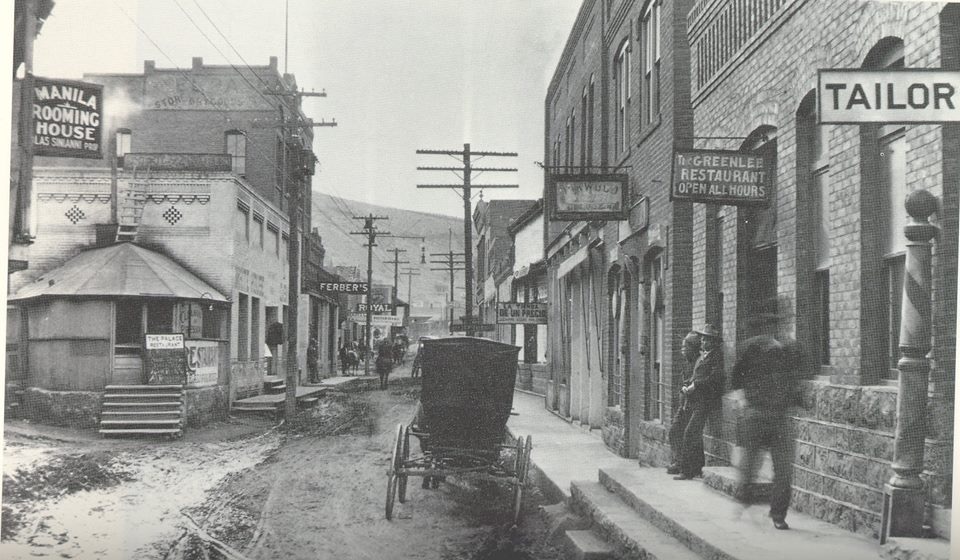
The Old Main Street

The Old Groff House
The Groff House, first moved to Binger from Anadarko.

Our move to the farm east of Binger, Oklahoma marked a drastic change in life. It was vastly different from our life in Cordell. My dad had bought a house set on a modest foundation. A propane stove heated it. There was no running water. We had no telephone. The electricity worked until a snowstorm or thunderstorm blew through and took it down. In time, things would improve, but first, we had to learn a new way of living.

Each evening, my dad brought home two five-gallon containers of water and set them on the kitchen floor. Hanging above them was a metal ladle, which we all used to scoop ourselves a drink. It was a crude method, but it worked—and we didn’t think twice about it.

Going to the restroom was another matter. Several attempts had been made to drill wells, but all came up dry. My dad had the holes filled in, except one. Over that one, he placed an old-fashioned outhouse—worn, sun-bleached, and splintered. It looked fifty years old, and maybe it was. But he fitted it with a new toilet seat, and we used it like it was brand new. The worst part? The yellow jacket wasps that swarmed it in summer. They built their cones overnight, and chasing them off was a risky job that none of us looked ahead to.

This story isn’t about the outhouse or the water jugs. It’s about the town’s Main Street during that time. The impression it left on me was significant. I was only five years old, but the images are burned into my memory.

My dad was the town barber. His shop sat on a steep sidewalk, at least three feet above the street. Set into the concrete were old metal rings. For the longest time, I had no idea what they were for. One spring morning, I was playing on the sidewalk. I was flipping one of the rings back and forth. An old timer stopped and looked down at me.

“Do you know what that ring is for, Sonny?” 

He asked.

I shook my head. 

“No.”

He grinned. 

“Those were for tying up horses and wagons. Back in the day, folks would come to town on Saturdays—buggies and wagons lined this whole street. Horses everywhere.”

That answered a mystery I’d long wondered about. But there were more to come—and like those rings, they’d slowly be explained to me, one by one.

That same sidewalk saw a lot of stories. I remember one day. A slick Chevrolet four-door pulled up. Two men and their children—a boy and a girl—went into the drugstore next to Dad’s barbershop. My oldest brother had come into town to visit and was sitting in the shop when someone waiting for a haircut suddenly shouted, 

“FIRE! FIRE! THAT CAR IS ON FIRE!”

The man bolted into the drugstore to alert the others. Someone must’ve called the fire department—but “fire department” was a stretch. The town had a 1945 fire truck with a rusted tank and an engine that wouldn’t start. They had to tow it with another truck to get it to the fire. My brother ran to the car and had one of the men pop the hood. Without hesitation, he ripped off his shirt and began beating out the flames around the carburetor.

The twins—those two kids—stood next to me on the sidewalk, watching. They would later become my classmates and lifelong friends. That introduction during the chaos would forge a connection we kept through the years.

My brother eventually put out the fire. The fire truck, still leaking water, finally rolled to a stop behind the car—just as the tank began to empty. The scene would’ve been funny if it hadn’t been so sad. Laughter erupted from my dad’s shop. The volunteer firefighters were embarrassed, and I remember feeling bad for them.

It wasn’t the last mishap. Months later, a house caught fire just behind the fire station. The truck’s wheels locked up that time, and it couldn’t even be towed out. The town then decided it was time for a new truck. 

Through donations and fundraisers, they finally got one. The arrival of the new fire truck was a significant moment in our town’s history. It was a testament to our resilience and the importance of community support. It was a real point of pride—a saving grace when it finally arrived.

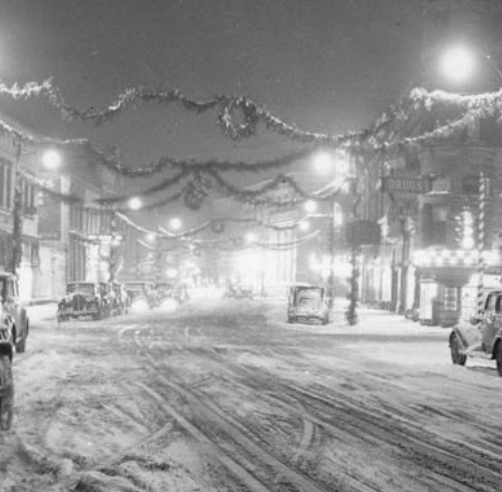
Main Street had its beautiful moments, too, especially at Christmas. The decorations draped across the street like something out of It’s a Wonderful Life. Seeing them lit up at night turned Main Street into a glowing wonderland.

One Christmas, the town threw a parade. The governor came. And so did our hometown hero, Johnny Bench, riding in the back of a convertible. I stood beside my dad in front of his barbershop, watching as they passed by. It was one of the biggest things to happen to our little town of 750 souls.

Main Street had different values back then, too. I remember a funeral procession once drove through town. My dad stopped cutting hair and closed the shop until the last car had passed. Other businesses did the same. That quiet gesture of respect left an impression on me that’s never gone away.

Looking back now, I realize that old Main Street was more than just a stretch of asphalt and storefronts. It was the heartbeat of a simpler time. Life was slower and more mindful then. It taught me about community, kindness, hard work, and the small moments that shape our lives. Those sidewalk rings, flickering Christmas lights, and clunky fire trucks are gone, but the memories stay. And in my heart, Main Street still stands—just as it was.

Boise City: The Unusual WWII Bombing Incident

GROFF MEDIA 2024© TRUTH ENDURES IMDBPRO

Presented by benandsteve.com By: Benjamin Groff II©s

2–3 minutes

You have heard the news. South Korean forces mistakenly bombed a civilian area, thinking it was a training site. You ask how such a mistake happened? But did you know it isn’t the first time it has happened?

It happened in the United States when the U.S. Army accidentally bombed Boise City, Oklahoma, on July 5, 1943, during World War II. The attack on the homeland wasn’t the only time the Army bombed the continental United States during the war. It was a friendly fire incident. There have been other cities bombed in the United States by mistake, in Texas and Nebraska. The United States has even accidentally bombed Switzerland during World War II, killing over 80 people. But this story is the one I have heard described with color and moments of community involvement.

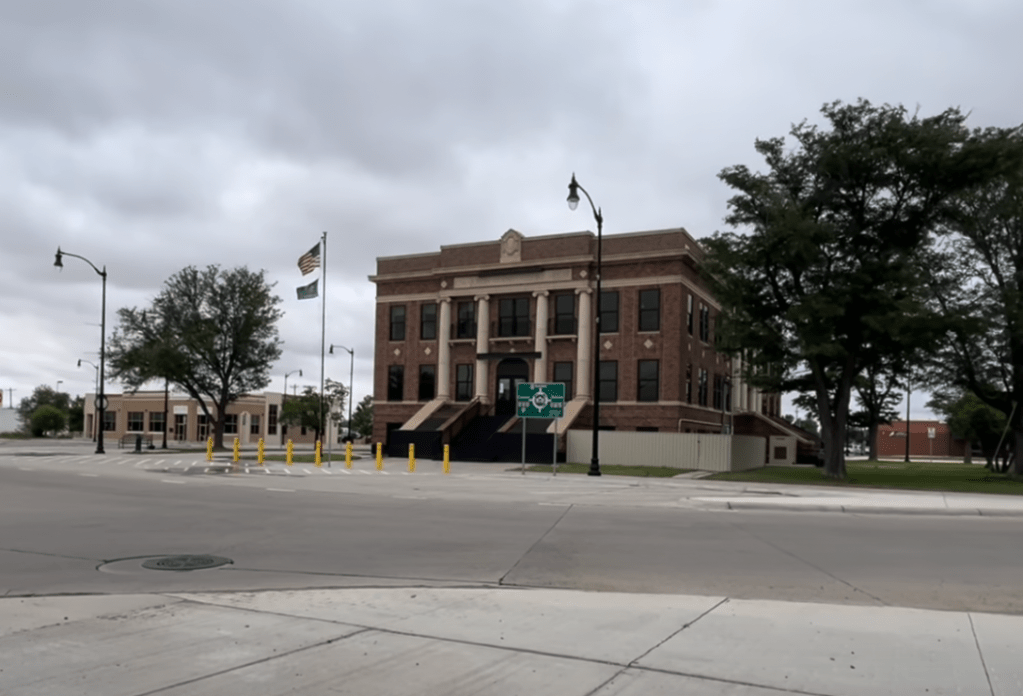
Cimarron County Court House
Cimarron County, Oklahoma

I have visited Boise City, and locals will tell you the pronunciation is, as you would say, “Boys City.” The town is small. You arrive at the courthouse circle as you enter from the east or north. A highway leads west into New Mexico. A trail takes you south toward Texas. The better highway is east of the town. Colorado is just up the road to the north. Kansas is just a jog to the Northeast. More of Oklahoma awaits out to the east. The community hasn’t grown much since it first sprung up.

Hearing locals tell of what happened in Boise City, Oklahoma, is somewhat comical. Nonetheless, it would not have been so funny to those who lived through the experience.

It happened on July 5, 1943.

A B-17 Flying Fortress bomber was on a nighttime training mission from Dalhart Army Air Base in Texas. It mistakenly dropped six practice bombs on Boise City’s town square. These bombs were mostly filled with sand and small charges.

What Happened?

  • The bomber crew was supposed to hit a designated target outside Conlen, Texas. They got lost and mistook Boise City’s well-lit downtown for their practice site.
  • At around 12:30 AM, the first bomb landed near a garage, shaking the town awake.
  • Five more bombs followed, hitting areas near businesses, a church, and a residential district.
  • Miraculously, no one was injured, and the damage was minimal.

Aftermath

  • The Army quickly apologized for the mistake.
  • The town embraced the incident as a quirky part of its history.
  • Today, Boise City proudly commemorates the event with a replica bomb displayed in the town square.

It remains one of the most unusual incidents in U.S. military training history! Would you like any more details?

If you ever go through Boise City, Oklahoma, stop and have a meal. As you travel west, you will hear more stories. These stories are about people living in what many consider the last town worth stopping in. Then, you move on to your next stop.

Uncovering Crime: The Relentless Pursuit of Justice

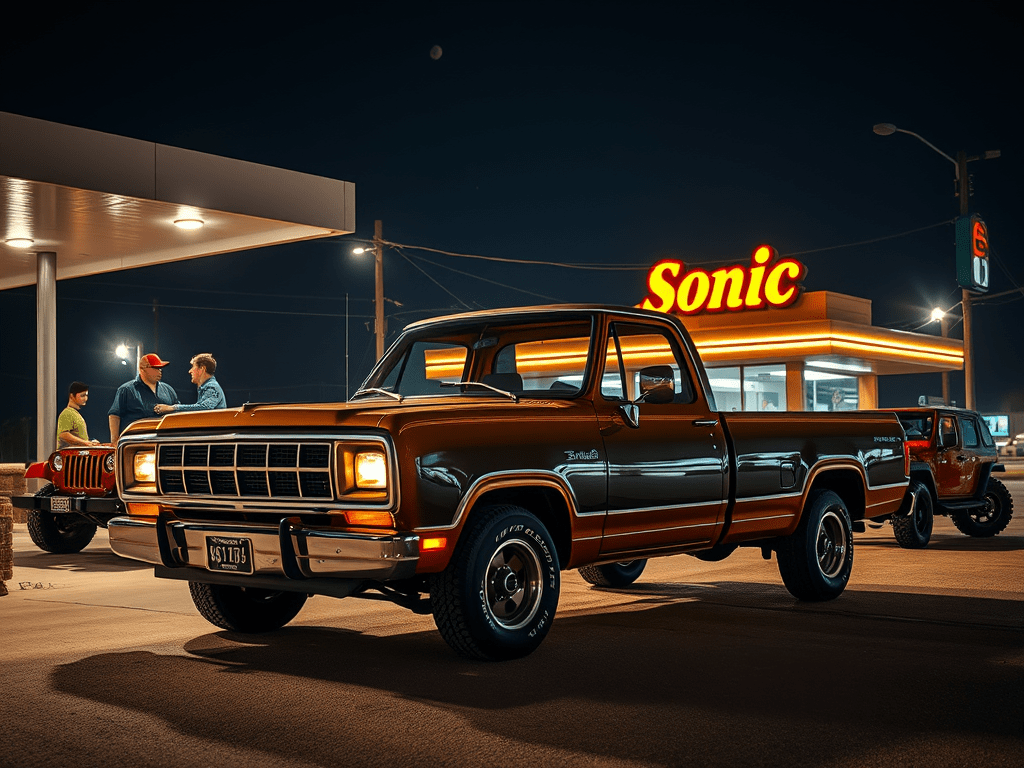
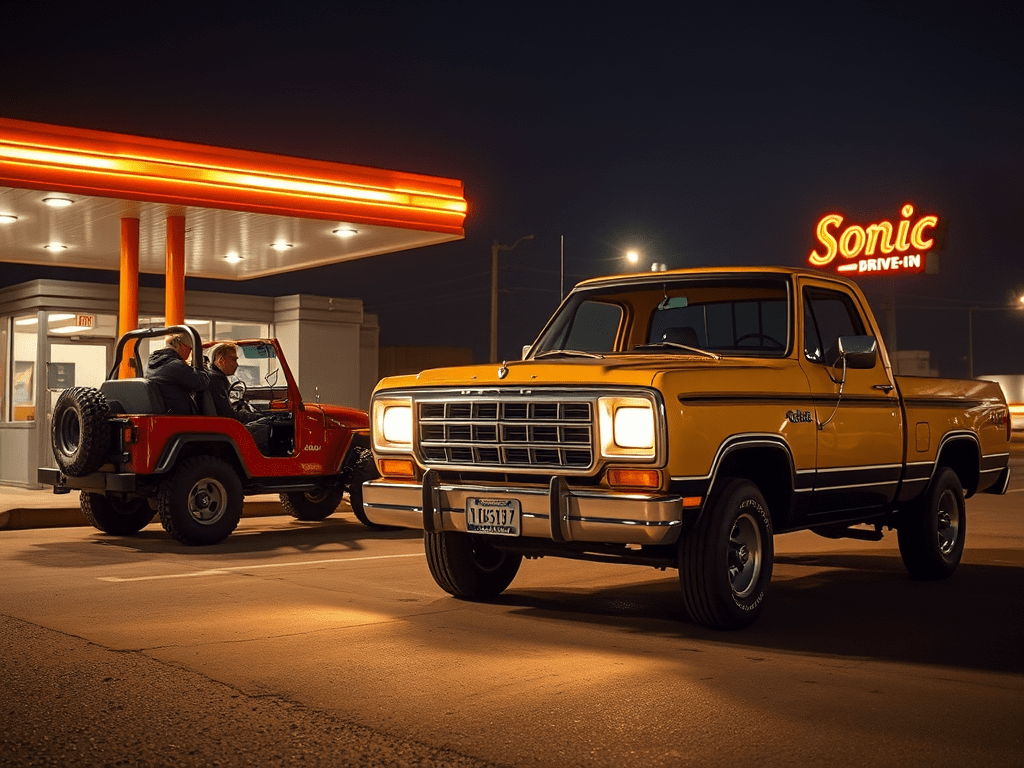
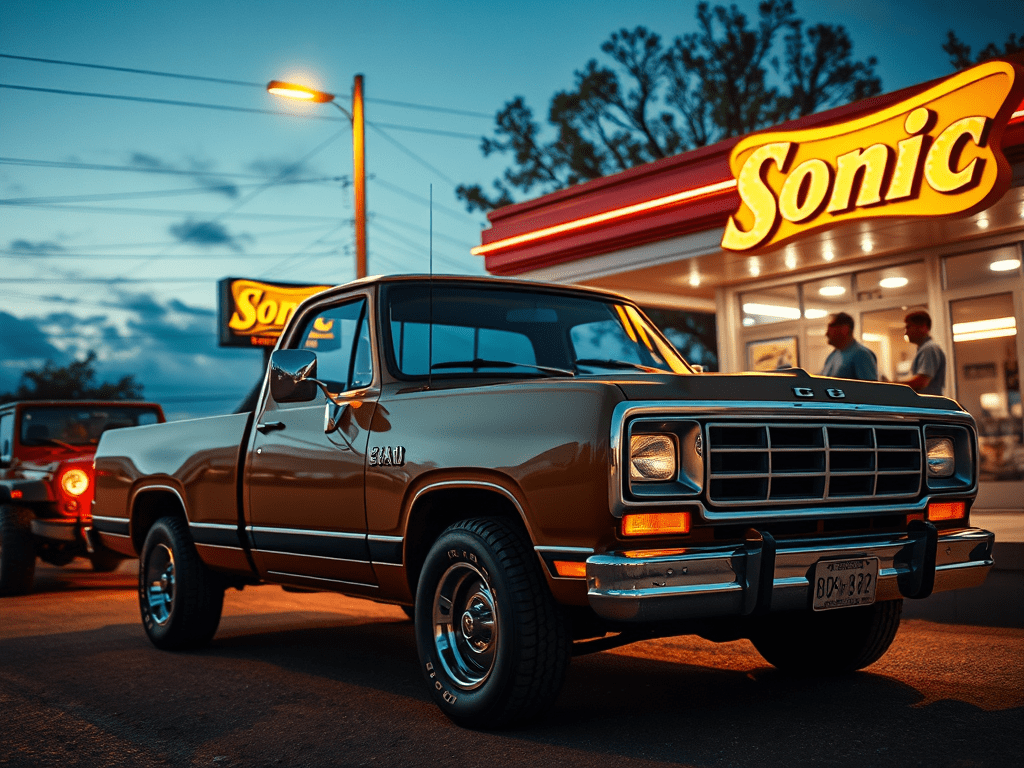
It was a typical summer night in western Oklahoma, and Officer Ben Groff enjoyed a rare night off. He planned to eat at a restaurant on the city’s west side. He drove there in his newly purchased 1985 Dodge Ram. Gaming gold and black under the streetlights, the pickup was his pride and joy. As he cruised along old Route 66, he rolled down the window to enjoy the cool evening breeze.

At an intersection, a red Jeep pulled up beside him. Its driver, a man about Groff’s age, turned down his radio and hollered over the traffic.

“I like your truck; that is slick, man!

Groff grinned.

“Thanks! Your Jeep’s pretty nice too!”

The man motioned toward the Sonic drive-in up ahead.

“Pull over. Let’s talk!”

Curious and lacking close friends outside the police department, Groff agreed. They parked at Sonic, grabbed burgers, and swapped stories about their vehicles and work. The man introduced himself as Lenny and said he had a knack for making fast friends. Groff, still, couldn’t ignore the possibility that this chance meeting lead to more than small talk. Lenny’s interest in trucks worried Groff. His easy charm also raised Groff’s suspicion.

That night, over beers at Groff’s house, a tentative friendship began to form. But Groff had a strategy. He suspected Lenny was his way into a group linked to a string of thefts plaguing the city. The Chief of Police gave a cautious blessing. Groff embedded himself in this new circle of acquaintances. He balanced camaraderie with the thin line of professional detachment.

Walking the Tightrope


The deeper Groff immersed himself, the more skeptical his fellow officers became. Some resented his approach, accusing him of consorting with known criminals. Others were envious of how the community responded positively to Groff’s efforts. For Groff, the criticism was a necessary price. He knew abandoning the operation would make months of effort meaningless.

By late November 1985, Groff’s relentless work—juggling undercover meetings, regular patrol shifts, and state-mandated training—was starting to pay off. A critical breakthrough came unexpectedly when one of Lenny’s associates sold Groff a set of truck railings. The thrill of the chase was palpable as Groff made the buy and then cross-referenced recent police reports. Sure enough, a burglary at Bill’s Auto listed truck railings among the stolen items.

It was the break he’d been waiting for.

Closing the Net


The next day, Groff burst into the Chief’s office, his excitement barely contained.

“I’ve got them, Chief! One of them sold me stolen property. If I press him, I can flip him and take down the whole operation!”

The Chief, weary but intrigued, leaned ahead.

“Are you serious? You’re sure this will work?”

Groff nodded.

“I’m sure. But I need to move fast before they catch wind of it.”

“Not alone,”

the Chief said firmly.

“We’ll grab a detective. Let’s do this right.”

The weight of responsibility was heavy on Groff’s shoulders. He agreed but insisted on leading the first confrontation alone. He wanted to avoid spooking the suspect. The Chief and the detective parked discreetly down the street as Groff pulled into the suspect’s driveway.

Groff agreed but insisted on leading the first confrontation alone to avoid spooking the suspect. The Chief and the detective parked discreetly down the street as Groff pulled into the suspect’s driveway.

The suspect, Joey, took his time answering the door. His surprise was clear when he saw Groff in uniform.

“Joey,”

Groff began, his voice steely,

“I know everything—the railings, the bumpers, all of it. This is your one shot to come clean before this place gets torn apart. Don’t blow it.”

Joey’s defiance crumbled.

“How’d you find out?”

he stammered.

Groff played it cool.

“You sold me stolen property. It wasn’t hard to figure out.”

Joey hesitated, then blurted,

“There’s more—way more.”

The Haul


Inside Joey’s attic, Groff and the suspect found a treasure trove of stolen goods. They discovered jewelry, electronics, vehicle accessories, and a firearm. Over $40,000 in items were recovered from Joey’s residence alone. Joey’s confession led to six extra arrests, dismantling a theft ring that had operated for three years.

But the investigation didn’t end there. Interviews with the subjects hinted at more profound corruption, implicating former high-ranking officers in a grocery robbery scheme. Groff pressed for a deeper probe, but political resistance and departmental politics hampered his efforts.

Despite these setbacks, Groff’s work earned him a reputation as a relentless investigator. He was willing to make personal sacrifices to serve justice. The satisfaction of justice served was palpable. Groff’s relentless pursuit of the truth led to the dismantling of a major theft ring. That summer night on Route 66 started a chain of events. It led to one of the most significant cases of his career.

Rebuilding Trust: The Impact of a New Police Facility

Groff Media 2024© Truth Endures IMDbPro
Presented by benandsteve.com By: Benjamin Groff II©

In a gleaming, state-of-the-art facility, I yearned for the old station. The building at 303 West Fifth Street had something the new place lacked—character. It bore the marks of its long history, each crack and stain a testament to its battles and stories. By contrast, the new facility felt overly polished, almost ostentatious. Yet, I couldn’t deny its benefits. It offered the community better services and restored a sense of dignity lost after years of wear, neglect, and the relentless battering of Oklahoma’s weather.

The new station brought more than aesthetics; it symbolized the department’s renewed professionalism. After years of enduring lousy press and negative public perception, the facility served as a much-needed fresh start. The change was palpable. Officers began taking pride in their appearance—shining their brass, maintaining their units meticulously, and improving their health. Fast food runs gave way to salads and healthier choices. Quarterly fitness tests became mandatory, along with regular firearm qualifications.

Meanwhile, I was immersed in building the station’s new crime information center, logging details that painted a clearer picture of the city’s criminal landscape. Patterns emerged from seemingly unrelated incidents. Though not enough to secure warrants, the connections hinted at the methods and motives behind a string of burglaries. It was like assembling a jigsaw puzzle, piece by piece.

My role included ride-a-longs with patrol officers to understand their work firsthand. Having served both in dispatch and on patrol in previous departments, I could see both sides. During these rides, I shared my theories about the crimes, but my ideas were often met with skepticism. The officers humored me, though politely dismissive, and I couldn’t help but feel a pang of frustration. There had to be another way to make them see what I was uncovering.

Amid this, my focus shifted when the Chief of Police gave me unexpected news: I was to start competing in pistol-shooting matches across western Oklahoma. The announcement caught me off guard. As a Communications Officer, I only carried a sidearm if assigned to special events like parades or rodeos. Nonetheless, I attended the matches, often pitted against seasoned professionals. My performance, however, left much to be desired. It wasn’t until years later that I discovered the real issue—I was nearsighted. Once I got glasses, both my shooting and driving skills improved significantly.

The Chief’s directive had a purpose. On October 1, 1984, I received official notice of my transfer from Communications to the Patrol Division, effective October 25. My new assignment under Lieutenant Wheeler marked the beginning of a new chapter.

In my final weeks in Communications, I worked tirelessly to ensure a seamless transition for my replacement. I completed data entries and left the crime database in pristine order. The move to patrol was a dramatic shift that would challenge me in ways I couldn’t yet imagine—but also shape my career in profound and unexpected ways.

Saying Goodbye to The Old Station – And Hello to A New Destination 16

Groff Media 2024© Truth Endures IMDbPro

Presented by benandsteve.com By: Benjamin Groff II

The days felt strange for those of us who worked nights. As the darkness stretched on, one night blending into the next, daylight seemed more a memory than reality. Law enforcement is more than just a job; it’s a close-knit community, a world. There’s a deep-rooted fellowship among officers and an unbreakable chain of command that’s everything. Yet, that structure was sometimes a challenge for me to accept.

In a large family—four older brothers, two older sisters, a strict father, and a devoted mother—order was part of life. In a rural setting, the school was the only place outside the home where I experienced a different structure. Dad was the highest authority in our household, followed by Mom, then the eldest sibling present, down to the youngest. Dad’s words held firm even in his absence; his authority was an invisible force that needed no reinforcement.

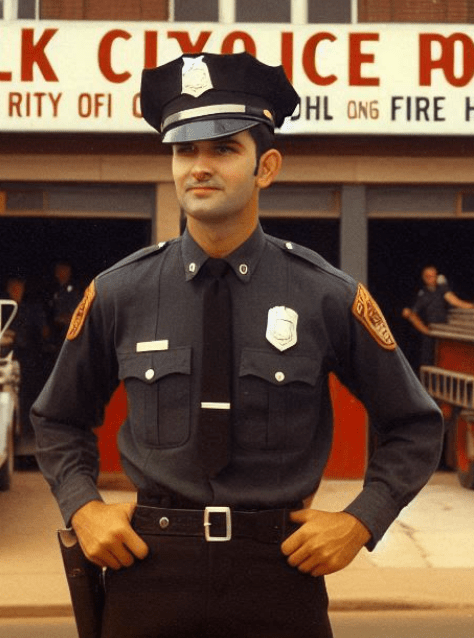
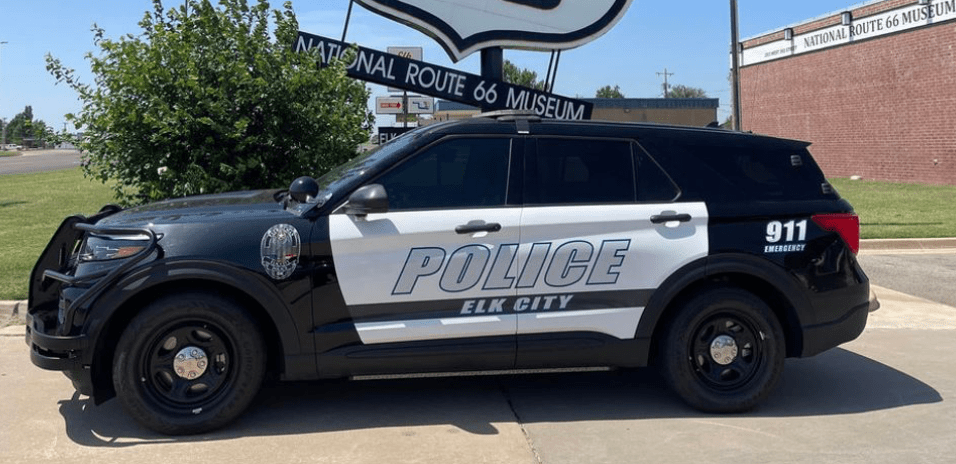
Adjusting to the chain of command in law enforcement took me time, especially after starting in small departments with more relaxed structures. But at Elk City Police Department, things were different. There was a formal hierarchy: chief, assistant chief, major, captain, lieutenant, sergeant, patrolman, and communications officer. Here, I quickly learned that approaching the chief directly with questions or concerns was a breach of protocol, often met with a firm reminder to follow the ranks.

Simple tasks became lessons in patience. Whether I needed a lightbulb replaced or advice on a report, the chain of command required me to go through several levels before reaching a solution; I would have to wait days to get a minor answer. Frustrated, I eventually bit my lip and followed the structure, even if I didn’t like it. My captain called me out over the most minor lapses, like failing to change a burnt lightbulb on time, and I’d swallow my frustration, understanding that order was paramount.

As the community passed a tax to fund a new police station, we began to outgrow the quirks of our aging headquarters at 303 West Fifth Street. The old building, despite its shortcomings, was more than just a structure. It was a part of us, a place where we shared stories, laughed, and supported each other. Built in the 1930s, it had weathered time and neglect. Prisoners on the second floor could flood toilets, causing wastewater to seep into the dispatch and booking area below. But it was our home, filled with memories and camaraderie.

The new station was completed in 1984. Moving was bittersweet, not just for the community, who’d grown used to stopping by the old station for a friendly chat, but for us, too. The new facility was a symbol of progress, outfitted with state-of-the-art security, bulletproof glass, and advanced communication systems. The dispatch had better lighting, new mirrors, and high-tech computers; the National Law Enforcement Telecommunications System and National Crime Information Center computers were side-by-side. Every call was recorded and could be retrieved at any moment.

The jail had electronically controlled gates, holding cells, a kitchen, and a secure emergency exit. Security cameras covered the entire facility, displaying activity on monitors in the booking area. There were dedicated offices for records, evidence, detectives, and the command staff. In every way, it was an upgrade.

On the day of the move, I was instructed by ‘Captain Bick’ to stay home and prepare for the night shift. Despite my eagerness to be part of the transition, I respected his orders. Later that evening, I found myself driving to the old station out of habit. As I parked and entered, I was struck by the emptiness of the dispatch office. This was where I had sent officers out, received urgent calls, and coordinated responses. Now, it was a mere shell of its former self. Assistant Fire Chief Bob, who was also present, chuckled, ‘You’re at the wrong place—no cops here anymore!’

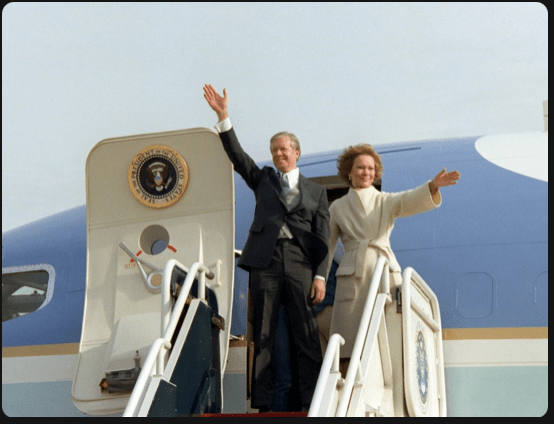
I smiled, feeling a wave of nostalgia, and pointed to the old wall that separated our side from the fire department. ‘Did you know President Carter’s original ‘Beast’ limousine was parked right on the other side of that wall one night? All the fire trucks were cleared out, and our officers watched to ensure no one touched it.’

Bob laughed, “Yeah, I remember that night. I was here too.”

It was hard to let go of stories like that—stories that had lifted people’s spirits and given them a break from their own troubles. With a sigh, I left the old building, heading to the new station, marveling at the thought of a facility so high-tech that even the door lock had a security code… which someone had promptly taped over because officers kept forgetting it.

After settling in, I was tasked with a significant assignment: entering city burglary data into the new computer system. I approached this task with the same dedication I gave every task, and it quickly provided me with valuable insights into the patterns of theft in the city. Over the next two years, this groundwork would prove instrumental in helping us dismantle a significant theft ring. But that’s a story for another time—this one is about the journey to a new place and the adjustments, big and small, that shaped us along the way.

Echoes of Laughter: Nights at the Red Barn Café. ~ Cordell, Oklahoma 1968

A Story By: Benjamin Groff© Groff Media 2024© Truth Endures

The sun dipped low over the plains, painting the sky with hues of yellow and burnt orange. As dusk embraced the town, a familiar buzz began to build around the old auction barn. Trucks and trailers, caked in red dirt, lined the gravel lot. The air was thick with the mingling scents of hay, leather, and anticipation. But as the final gavel fell and the last winning bidder of the last horse to sell walked up to the young gelding and led him away, the real excitement shifted just east of the heart of Cordell: The Red Barn Café.

Perched on the corner of Main and Elm, the café’s crimson façade glowed warmly under the neon sign that blinked “Open.” Its rustic wooden doors beckoned the weary and the jubilant alike. A symphony of clinking glasses, spirited chatter, and the occasional burst of laughter filled the room.

Photo is simulated image, it does not represent the actual design of the actual Red Barn in Cordell.

Tonight was no different.

Big Jake JD Groff, a seasoned auction hand with a penchant for tall tales and horse trader, sauntered in, his boots echoing on the worn wooden floor, followed by his son, Benjamin, age 6. Jake tipped his hat to Mary Lou, the ever-smiling waitress who’d been serving slices of pie and pots of coffee since anyone could remember.

“Evenin’, Mary Lou. Got any of that pecan pie left?” Jake drawled.

“For you, Two-Bit? Always,” she winked, scribbling his order.

At the corner booth, a group of cowboys huddled close, their hats resting on the table, revealing sweat-stained brows and sunburned necks. Among them was young Delmer Scott, with a bearded-faced and eager, attending his 100th auction. His eyes sparkled as he recounted his purchase. He was known to everyone as “Scott!”

“Got me a real beauty tonight,” Scott boasted, his voice brimming with pride. “A chestnut mare, strong legs, and a spirit that’d make the wind jealous.” 

Jake, his best friend, said to him,

“‘You SOB, you bought a goddamn jackass, and you know it!”

Scott shot back, Groff,

“you lying bitch, you’re just jealous because you bought a goddamn nearly dead 30-year-old plow horse that is about to keel.”

Old Man Harris, a legend in these parts, chuckled softly, his grey mustache twitching.

“Son, every horse looks like a winner under those auction lights. Wait till you’re trying to saddle her on a cold morning.”

The table erupted in laughter, the kind that warms the soul. This type of banter draws crowds to the Red Barn after auctions every Saturday Night. The food and service are the icing on the cake.

Near the jukebox, which softly crooned Patsy Cline tunes, a group from out of state compared notes. They’d driven from Texas, lured by tales of the Cordell auctions. Amid shared stories and friendly ribbing, they marveled at the community’s camaraderie.

“It’s like we’ve known y’all our whole lives, if we may; it’s the damnest thing we ever saw!” 

One of them mused, raising a mug of steaming coffee.

As the night wore on, tales grew taller. Jake recounted the time he supposedly outbid a millionaire from Tulsa with just “a wink and a handshake,” while Mary Lou swore she saw Elvis pass through town once, stopping by for a slice of her famous pie.

But beneath the banter and jest, there was an unspoken understanding. These nights at the Red Barn Café were more than just post-auction gatherings; they were the threads that wove the community together. In a rapidly changing world, where traditions faded, and new ways emerged, this little café stood as a testament to simpler times.

By 2:00 AM, as the crowd began to thin and the neon sign’s glow dimmed, the stories had been told, deals celebrated, and friendships fortified. Clutching a worn napkin filled with advice scribbled by his newfound mentors, Scott loved the warmth that had little to do with the strong coffee, but be damned if he’d ever say anything about it around Jake!

Benjamin stepped out into the fantastic night with his dad, Jake. He glanced back at the Red Barn Café, its silhouette etched against the starlit sky. Like so many before him, he knew those smoking, cussing, and storytelling friends who gathered had memories forged within their souls that would be cherished for a lifetime.

Decades later, the tales of Saturday nights at the Red Barn Café in Cordell, Oklahoma, would become legends as the world moved on. Stories of laughter, camaraderie, and the indelible spirit of a community bound by shared passions and dreams were only folktales of a time gone by; the Red Barn had been torn down, and its memory erased for generations. The true legends of those days are left to a few who remember Saturday Nights at the Red Barn Cafe in Cordell, Oklahoma!

The First Man To Buy A Car In Town – The Model T Pioneer of Binger, Oklahoma

A Story by Benjamin Groff©II – Groff Media2024© Truth Endures

He was the first to buy a Model T in a town east of his farm. I am referring to Benjamin Groff I. The guy everyone called “Pop” was my grandfather. He was not a flashy guy. He wasn’t wealthy. He was a farmer on the lower plains who had survived the Dust Bowl and made a living on the scant meager crops that grew in the 1930s; he battled through the shortages of provisions to provide for his family from 1911 to when his wife died in 1975.
Sometime before 1920, he rode a draft (draught) horse to a small town where a horse trader had just opened a Ford dealership. His mission was not to get a car. It was to sell his horse, get items for the farm, and maybe a pony in trade.

My grandfather was a talker just as quick in his elder years. He must have been a whiz when he was young. He could quietly engage you in a conversation and have you change your view on a subject without knowing how or when you did. And he was good at it. He must have done some slick horse trading because he left the Ford dealership with a New Model T, $100, and an unrestricted driver’s lesson.

He was the first to buy a Model-T in Binger, Oklahoma, and drive to a farm West of Eakly, Oklahoma, in Caddo County. His wife, Florence, who everyone affectionately referred to as “Mom,” stepped out of their kitchen door and pouted out,

“Oh Lord, what have you done now, Pop?”

Replying proudly, Pop said –––

“Ma Ma Mom, I went and traded that dead head for us a motorized buggy and a way to get around where we will be warm and dry!”

News of Pop’s new car spread like wildfire in the countryside. Their kids had already dashed out of the house and clambered into the vehicle. The oldest had sprinted down the road to the neighbors, proudly announcing their newfound ‘riches ‘. As the news rippled from home to home, a sense of shared excitement and anticipation filled the air. Everyone wanted Pop to accompany them for horse trading, to help them secure a car. It was the start of a bustling Spring, filled with shared goals and a united sense of purpose.

The request for bartering went on for months, and finally, Pop had to stop people coming over and say look, I have to get my crops in for the summer; if you want to help me plow my fields and get my livestock ready for sales I will be glad to catch your bartering, but I am so far behind I won’t be able to feed my family. So when do you want to come over? The calls stopped except for one.

A lady named Loranne had six children and was single. The oldest child was a boy about 15, then a girl about 13, another boy about 10, a boy about 8, a boy about 6, and a baby girl about 2. Her husband had died in a farming accident two years ago. She lived alone with them and had no means of support except for the work she took in from neighbors, such as ironing, washing, helping with food, watching children for families, etc.

Loranne said –––

“If you can help me get a car, I will plant your fields and care for your animals. You won’t have to do anything.”

Pop said to her –––

“You won’t do no such thing; your two oldest boys and mine and I will get the crops and livestock taken care of; you can help Mom around the house and do whatever you need for your home. You take care of your children!”

Loranne was grateful for the opportunity and agreed to begin working bright and early the following day.
Pop’s farm, once a quiet expanse of land, now buzzed with life and activity. Loranne’s boys, alongside Pop’s children, worked tirelessly in the fields. Their laughter and shared experiences brought a renewed sense of hope and camaraderie to the farm. Under Pop’s wise guidance, the boys learned the intricacies of farming, infusing the farm with fresh energy and determination. The farm had transformed into a vibrant community hub, a testament to the power of collaboration and shared goals.

Mom and Loranne quickly formed a close bond. While the boys were out in the fields, the women would work together in the house, preparing meals, mending clothes, and sharing stories. Mom’s gentle nature complemented Loranne’s resilience; together, they created a warm and welcoming home for all the children.

Days turned into weeks, and the farm began to flourish. Pop and the boys plowed the fields and planted the crops, and the livestock was well cared for. The hard work and cooperation paid off, and the farm soon thrived once again. Pop kept his promise to help Loranne get a car. After a successful summer harvest, he took her to the Ford dealership, and with his keen negotiating skills, he secured a reliable Model T for her and her children.

The day Loranne drove her new car back to her home was a moment of triumph for everyone involved. The children cheered and joy filled Loranne’s eyes as she thanked Pop and Mom for their generosity and support.

Pop smiled and said, ––––
“We’re all in this together, Loranne. That’s what neighbors are for.”

As the years passed, the bond between the two families grew stronger. The children grew up, and the farm continued to prosper. Pop’s act of kindness had a lasting impact, changing the lives of Loranne and her children. It also brought the community closer together. His legacy of compassion, hard work, and generosity lived on through the stories passed down by those who knew him, a beacon of hope and inspiration for future generations.

And so, the tale of Pop, the first man in town to buy a Model T, became more than just a story about a car. It was a testament to the power of community, the strength of the human spirit, and the enduring impact of one man’s kindness.

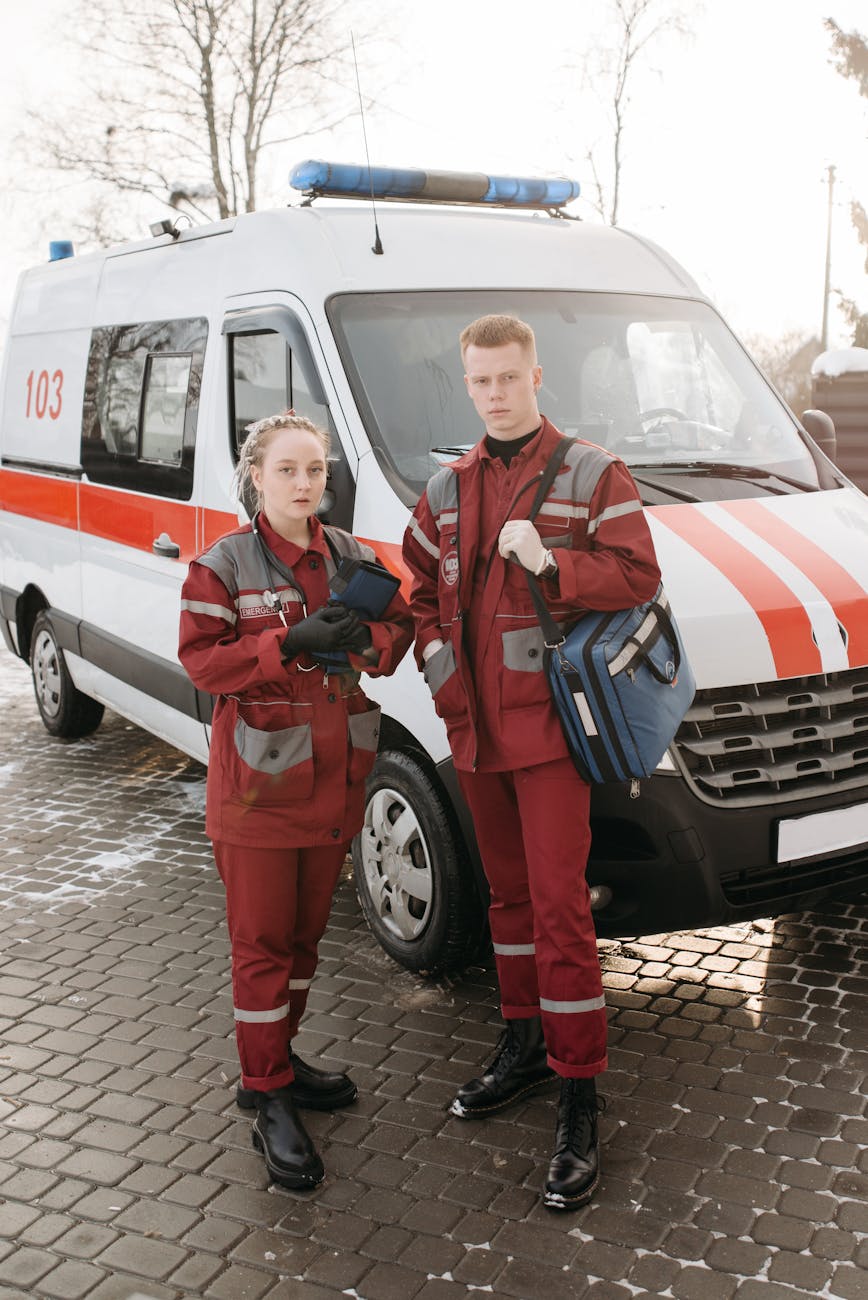
A SMALL TOWN VOLUNTEER AMBULANCE TEENAGE DRIVER

BenG

AT 16 YEARS OLD I VOLUNTEERED AS A DISPATCHER FOR OUR POLICE DEPARTMENT AND AMBULANCE SERVICE. I DROVE HALF THE PEOPLE IN OUR TOWN TO THE HOSPITAL THIRTY MILES AWAY.


In the quaint town of Binger, nestled amidst rolling hills and whispering woods, life moved at its own unhurried pace. It was the 1970s, and I, at the tender age of sixteen, found myself immersed in the h.eart of the community as a volunteer dispatcher and ambulance driver.

Binger boasted a modest population of 850 souls, a close-knit tapestry of neighbors who looked out for one another. Our town’s medical emergencies were once tended to by the local undertaker, a man of solemn demeanor and a heart of gold. But as time marched on, age had caught up with his trusty driver, rendering him unable to steer the old ambulance through the town’s winding streets.

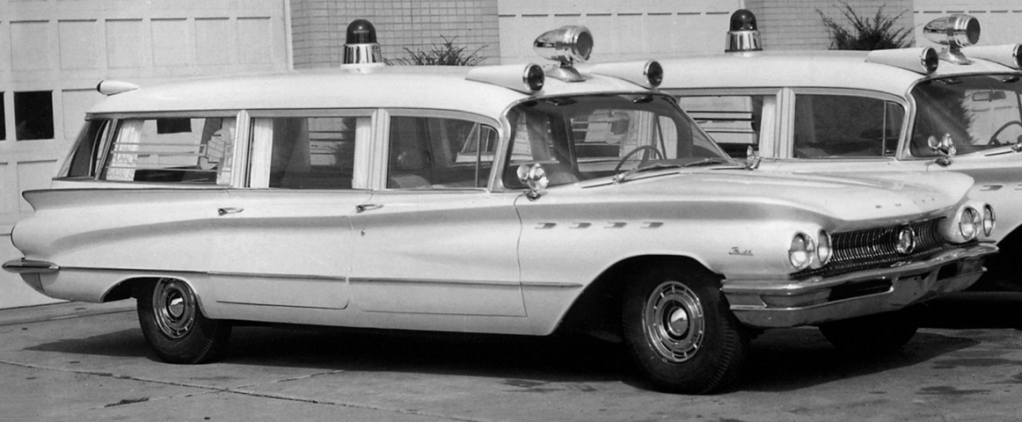
With a sense of duty and a touch of nostalgia, the undertaker donated his faithful 1962 Buick station wagon to serve as our makeshift ambulance. It was a relic of bygone days, rigged with flashing lights, a wailing siren, a sturdy stretcher, and a precious oxygen bottle. Thus, a new chapter unfolded in Binger’s history, with a rotating roster of ten volunteers, including myself, standing ready to answer the call of distress.

In those days, the rhythm of life was punctuated by the shrill ring of the telephone, summoning us into action. I would leap into the driver’s seat, adrenaline coursing through my veins, as I raced through the streets, navigating the twists and turns with practiced precision. The urgency of the situation would lend wings to my feet as I rushed to the aid of my fellow townsfolk.

The years rolled by, and Binger evolved. In 1978, the benevolent gesture of the Chevrolet dealer brought a gleaming new station wagon into our midst, a symbol of progress and prosperity. We felt like modern-day heroes, equipped with state-of-the-art technology to serve our community.

But as the 1980s dawned, change swept across the land. The state enacted stringent laws mandating EMT training and certification for ambulance attendants, a noble but burdensome requirement. Our volunteer organization, unable to meet the new standards, faced dissolution.

With heavy hearts, we bid farewell to an era marked by camaraderie and selflessness. The nearest ambulance service now lay twenty-eight miles away, a stark reminder of the passage of time and the inexorable march of progress.

Yet, amidst the bittersweet farewell, the spirit of Binger endured, a testament to the resilience of small-town values and the enduring bonds of community. And though our roles as volunteer dispatchers and ambulance drivers may have faded into memory, the echoes of our service reverberated through the annals of time, forever etched in the fabric of Binger’s history.