Remembering John S. Foster Jr.: A Key Figure in Nuclear Deterrence

By Benjamin GroffMedia© | benandsteve.com | 2025 Truth Endures©

2–3 minutes

John S. Foster Jr., 102, Pioneering Physicist and Architect of U.S. Nuclear Deterrence, Dies

John Stuart Foster Jr. was a visionary physicist. His career spanned over eight decades of American scientific and defense innovation. He passed away on April 25, 2025, in Goleta, California. He was 102.​ (1)

Born on September 18, 1922, in New Haven, Connecticut, Foster was the son of renowned Canadian physicist John S. Foster Sr. He began his academic journey at McGill University, earning a Bachelor of Science degree in 1948. He later obtained a Ph.D. in physics from the University of California, Berkeley, in 1952.​ (2)

Foster’s skill during World War II was instrumental in developing radar and countermeasure technologies at Harvard’s Radio Research Laboratory. He served as a scientific advisor to the 15th Air Force in the Mediterranean Theater. This role further demonstrated his dedication to the war effort. (3)

In 1952, Foster was recruited by Edward Teller to join the Lawrence Livermore National Laboratory (LLNL). His leadership in nuclear weapons design at LLNL was groundbreaking. He eventually became the director in 1961. This leadership fostered a culture of innovation and collaboration that continues to inspire today.

From 1965 to 1973, Foster served as the Director of Defense Research and Engineering at the U.S. Department of Defense, advising four Secretaries of Defense and two Presidents. He championed advancements in smart weapons, night vision, and reconnaissance technologies.​ (4)

After his tenure at the Pentagon, Foster joined TRW Inc. as Vice President of Science and Technology, later serving on its board of directors. He remained an influential figure in national security. He participated in the Defense Science Board. He also joined the President’s Foreign Intelligence Advisory Board. Additionally, he served on the Commission to Assess the Threat to the United States from Electromagnetic Pulse (EMP) Attack. ​(5)

Foster’s contributions earned him many accolades. These include the Enrico Fermi Award and the Founder’s Award from the National Academy of Engineering. He also received multiple Department of Defense Distinguished Public Service Medals. He was also honored internationally. He received the Knight Commander’s Cross of the Order of Merit of the Federal Republic of Germany. He was named Commander of the French Legion of Honor.​ (6)

In recognition of his enduring legacy, LLNL established the John S. Foster Jr. Medal, awarded annually to individuals demonstrating exceptional leadership in national security science and technology. (7)

Foster is survived by his family and a legacy that continues to influence U.S. defense policy and scientific research.​

A memorial service will be held at Lawrence Livermore National Laboratory. Instead of flowers, the family requests donations be made to the Livermore Lab Foundation in his honor.​ (8)

Grassroots Movement Transforms American Politics

GROFF MEDIA 2024© TRUTH ENDURES IMDBPRO

Presented by benandsteve.com By: Benjamin Groff II©s

3–4 minutes

The Grassroots Movement for Economic and Political Justice

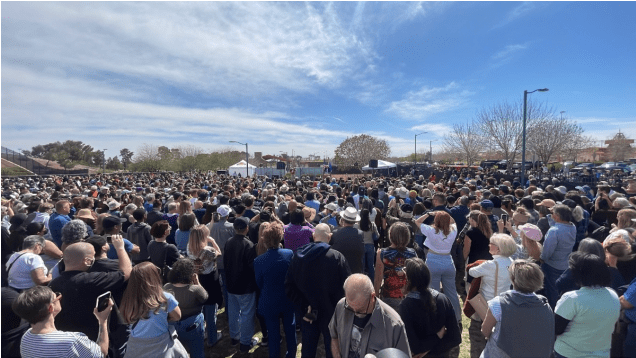
Arizona Rally March 2025
Senator Bernie Sanders and Representative Alexandria Ocasio-Cortez mark a defining moment in American politics. Tempe, Arizona Rally 2025 Groff Media©

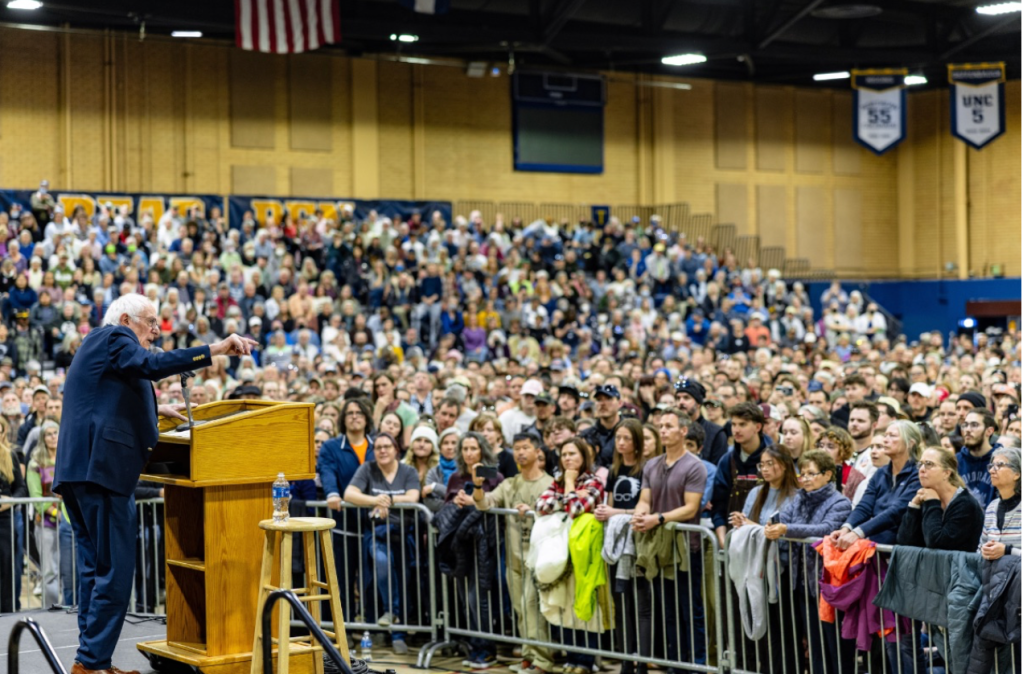
The recent rallies by Senator Bernie Sanders and Representative Alexandria Ocasio-Cortez mark a defining moment in contemporary American politics. Across five rallies in three states, tens of thousands gathered. They made a resounding call for change. This signals widespread dissatisfaction with the current political and economic systems. The overwhelming attendance at these events reveals a deep-rooted movement. It is fueled by a demand for economic fairness. There is also a call for political integrity and grassroots-driven reform.

Greeley Colorado, Groff Media©

One of the key takeaways from these rallies is the rejection of Trumpism, oligarchy, and authoritarianism. The presence of thousands in North Las Vegas, Tempe, Greeley, Denver, and Tucson shows collective opposition to massive income inequality. Wealth inequality has left many working-class Americans behind. This movement directly responds to a political system. In this system, billionaires hold disproportionate power. They use their wealth to influence elections and dictate policy. The rallies were not simply campaign events; they were gatherings of individuals. They were determined to reclaim democracy from corporate interests. They also wanted to challenge political elites.

Tucson, Arizona, Groff Media©

Moreover, the movement echoes historical struggles that have shaped the United States. Sanders draws parallels between this modern fight and past movements that have successfully challenged oppression. These include the abolitionist, labor, civil rights, and women’s rights movements. These historical precedents offer a blueprint for today’s progressive movement. They emphasize that real change arises when ordinary people organize. Real change occurs when they take action against systemic injustice.

A critical part of this movement is grassroots organization. Sanders and Ocasio-Cortez stress the need to mobilize people in all 50 states through consistent engagement. Mobilizing thousands of people means not only attending rallies but also translating that enthusiasm into political action. Encouraging progressives to run for office at all levels is crucial. This includes positions from school boards to state legislatures. It is a core strategy to enact lasting change. Local elections, often overlooked in the national political discourse, hold immense power in shaping policies that affect daily life.

Denver, Colorado, Groff Media©

Additionally, the movement extends beyond electoral politics. It calls for strong communities where people support one another despite economic and social challenges. The emphasis on solidarity reflects the understanding that political change is inseparable from fostering a culture of mutual aid. It also involves building collective strength. The movement creates networks of engaged citizens. The goal is to counteract the feelings of loneliness that many experience in today’s economic landscape. It also addresses feelings of helplessness.

This movement does not overstate the urgency. Sanders highlights the significance of this moment not only for current generations but also for future ones. Climate change, economic disparity, and political corruption are existential issues that need immediate action. The message is clear: now is the time for mobilization, not despair. The fight for a fair and just society depends on ordinary people. They must be willing to challenge entrenched power structures. They must demand a system that works for all.

The rallies led by Senator Bernie Sanders and Representative Alexandria Ocasio-Cortez signify a pivotal moment in U.S. politics, reflecting widespread dissatisfaction with inequality and a demand for economic justice.
Arizona, Nevada, Colorado,

In conclusion, the rallies held across Nevada, Arizona, and Colorado exemplify the strength of a growing progressive movement in America. The record-breaking turnouts illustrate a profound discontent with the status quo and a wish for systemic change. By organizing, running for office, and building community solidarity, this movement can redefine the future of American democracy. The path ahead is not easy. History has shown that when people unite for justice, they can overcome even the most powerful obstacles.

The Impact of Discrimination on Society and Human Rights

GROFF MEDIA 2024© TRUTH ENDURES IMDBPRO

Presented by benandsteve.com By: Benjamin Groff II©s

2–3 minutes

Discrimination Vs. Inclusion
Discrimination Vs Inclusion.
The difference between darkness and light

Discrimination is an act rooted in fear, ignorance, and an unwillingness to accept the fundamental dignity of all people. It has profound consequences for society. Wanting to deny others housing, clothing, and respect shows a belief that some lives hold less value. Such a stance reveals a deep-seated lack of empathy. It shows an indifference to the struggles of fellow human beings and a troubling inclination toward social division. It speaks volumes about moral values. It reflects the character of those who wish to wield power to diminish the lives of others.

The wish to remove protections that have given minority groups equal footing within society shows a disregard for historical injustices. These injustices have shaped the need for these safeguards. These protections exist not to give anyone an unfair advantage. They guarantee everyone has equal rights, opportunities, and access to resources without prejudice. Seeking to dismantle these safeguards implies a refusal to acknowledge historical injustices. It also shows a disregard for the ongoing struggles faced by marginalized communities. It shows a yearning for a past where exclusion was the norm. It rejects embracing a future that strives for fairness and justice.

Moreover, those who advocate for policies that exacerbate the hardships already endured by vulnerable populations are not merely indifferent. They are complicit in their suffering. If making life more difficult for those struggling is acceptable, what does that say about one’s character? It signals a lack of compassion, an absence of moral responsibility, and a failure to grasp the interconnectedness of humanity. A society that pays no heed to suffering undermines its stability, for one group’s oppression ultimately harms the whole. This is not just a moral issue but a societal one that demands immediate attention and action.

Most revealing is the wish to control who can join legal institutions like marriage. Love and family are not exclusive to a select few but are among the most fundamental aspects of human existence. To decide who can share in these joys is to place oneself in a position of unjust power. It denies them to others. It stems from a belief in personal superiority. It also involves a willingness to impose one’s values on others. This approach restricts their freedoms. It suggests an inability to recognize that love is universal. Love is deserving of legal and social acknowledgment. This is true regardless of the individuals involved.

Ultimately, seeking to discriminate, exclude, and strip away rights reveals one’s insecurity, fear, and wish for control. A society is judged by how it treats its most vulnerable members. Those who work to undermine equality and fairness reveal far more about themselves. They show more about their nature than they do about those they seek to oppress. True strength is found in embracing diversity. Morality involves protecting the rights of all. Decency ensures that everyone has the dignity and respect they deserve.