The Christmas Bells of Valley Brook

Groff Media 2024© Truth Endures IMDbPro

Presented by benandsteve.com By: Benjamin Groff II©

3–4 minutes

Every Christmas Eve, the quiet village of Valley Brook transformed into a magical tableau. As snow blanketed the streets, an ethereal ringing of bells echoed through the valley. The sound was sweet and haunting, like a melody from another world. The villagers marveled at the phenomenon for decades, yet no one knew where the bells came from.

The mystery was part of Valley Brook’s charm. Some claimed the bells were angels’ gifts, while others swore they were the spirits of Christmases past. But to Ethan, a curious young man with a heart full of wonder, the mystery demanded answers.

Ethan had lived in Valley Brook his entire life. Each Christmas, he stood at the frozen brook’s edge. He strained to hear even the faintest hint of the bells’ origin. Now 19 and filled with determination, Ethan resolved that this year would be different.

On Christmas Eve, armed with a lantern and his father’s old compass, Ethan entered the night. The air was crisp, and the snow crunched beneath his boots. As the bells began their enchanting tune, he paused to listen.

“North,” he whispered to himself, turning toward the sound.

The first stretch of his journey led him to the forest bordering the village. The tall pines were heavy with snow, their branches arching over him like cathedral ceilings. The bells grew louder as he walked deeper into the woods. Then, they seemed to shift direction, drawing him toward the hills.

Ethan climbed steadily, his lantern casting long shadows against the rocks. At the top of the hill, he paused to catch his breath. The bells sounded closer now, but their source still eluded him. His compass needle jittered as if caught in some unseen magnetic pull.

After the sound, Ethan descended into a hidden ravine. At the bottom, he discovered an ancient stone bridge, its surface worn smooth by time. Beneath it, the brook that gave the village its name flowed silently, its surface coated in thin ice. Ethan crouched and pressed his ear to the stones. The bells resonated through the bridge itself.

“This must be it!”

he exclaimed, but as soon as the thought formed, the melody shifted again, beckoning him onward.

Ethan continued his pursuit for hours, weaving through snow-covered meadows and icy trails. Finally, the first light of Christmas morning touched the horizon. He arrived at the mouth of a cavern nestled in the cliffs at the valley’s edge.

Inside, the bells chimed more clearly than ever. He entered cautiously, the glow of his lantern illuminating crystalline walls that shimmered like diamonds. He found them at the cavern’s heart. Rows of bronze bells were suspended in midair. Their surfaces were adorned with intricate carvings of holly and ivy.

Ethan approached in awe, reaching out to touch one of the bells. When his fingers brushed the metal, a warm light enveloped the cavern. A figure appeared—a woman in flowing robes, her face serene and timeless.

“Who are you?”

Ethan asked, his voice trembling.

“I am the Keeper of the Bells,”

she replied.

“These bells have rung for centuries to remind Valley Brook of the spirit of Christmas—hope, love, and unity. Only those who seek their origin with a pure heart will find them.”

“Why me?” 

Ethan whispered.

“Because you dared to wonder,”

 she said with a smile.

“Now, you must decide: will you keep their secret or share their magic with the world?”

Ethan thought of his village and how the bells brought everyone together each Christmas. Their mystery was part of what made them special. He nodded.

“I’ll keep the secret.”

The Keeper’s smile widened.

“Then the bells will continue to ring, their magic preserved for all who believe.”

When Ethan returned to Valley Brook, the bells still rang as they always had, their melody echoing through the valley. But now, when he stood at the edge of the brook, he smiled. He knew he was part of their timeless magic. He was a secret keeper of the Christmas Bells of Valley Brook.

Confronting Darkness: Stories from the Beat

Benjamin GroffMedia© | benandsteve.com | 2025 Truth Endures©

2–3 minutes

In The Dark Of Night

When I began my career in law enforcement, I experienced many “firsts.” One of the earliest was being assigned to a beat. I patrolled the alleys and streets of downtown, checking businesses and parks at night. The darkness was deep and constant. If fear crept in, the silence can feel almost haunting at times.

But I never let the shadows spook me. Not the sudden dash of a stray cat nor the wind rattling loose tin from an awning overhead. For a long time, I found nothing out of the ordinary. That is, until one night.

It happened in the park, beneath a pavilion by the river’s edge. I noticed someone lying across a picnic table. At nearly 2 a.m., the park was supposed to be empty. I stayed alert as I approached. I was constantly aware that people didn’t always travel alone. I didn’t want to be caught off guard.

As I approached, I spotted a can of spray paint beside her. A streak of glossy red paint coated her nose and mouth, dripping down her chin. She was a woman, and visibly pregnant, nearly full-term by the look of her.


I tried to wake her, but she didn’t respond. Her pulse was faint. Luckily, I had just been issued a portable radio—until recently, we’d relied on call boxes for communication. The radio gave me direct access to headquarters.

I keyed the mic and said,

“I need an ambulance under the pavilion at the river’s edge entrance. I have an unconscious female subject who appears to have been huffing paint. She’s approximately nine months pregnant.”

Headquarters confirmed and dispatched an ambulance promptly. Once it arrived, I assisted the paramedics. The woman was transported to a local hospital and then transferred to a larger facility for specialized care.


While searching the area, I found someone nearby who had passed out by the riverbank. I managed to rouse him. He was a man, around 32 years old, clearly intoxicated and unsteady. I placed him under arrest for public intoxication.

As I helped him up to the road, he turned to me and asked quietly,

“Is she going to be okay? I told her not to do that–– but she wouldn’t listen. That’s my baby, you know? I hope she’s alright.”

“Yes,”

I said.

I said,

“I hope the baby is okay, too. I’ve arranged a ride and a safe place for you to sleep tonight.”

The transport unit pulled up. As he climbed in, he paused, looked at me, and said,

“I’m glad you found us. It has saved both of us. Thank you!”

I nodded and replied,

“You’re welcome, try to get some sleep.”

It was one of the few times someone going to jail thanked me for stepping into their life. There would be other moments like this, but not many involving an unborn child.

I later learned the mother’s actions had not affected the baby. She had been admitted for addiction treatment, and hopefully, she stayed through the delivery and beyond. I never saw her again. I often think of that night. I think of how close things came to ending differently. Sometimes, just showing up can change everything.

The Man Who Belonged: A Dark Psychological Mystery

GROFF MEDIA 2024© TRUTH ENDURES IMDBPRO

Presented by benandsteve.com By: Benjamin Groff II©s

4–6 minutes

The Man Who Belonged

Ethan Caldwell woke up every morning with the certainty that he was where he was supposed to be. His town, Dunridge, was a place people left but rarely arrived at. It was a quiet, tree-lined community. The roads curved in familiar ways. The seasons changed precisely when expected. The faces at the local diner never seemed to age.

He belonged here. He had always belonged here.

And yet, something was wrong.

It wasn’t how he looked—Ethan was an ordinary man with an ordinary life. He had ten fingers, ten toes, and a name that didn’t feel borrowed. Ethan had memories of childhood scraped knees. He remembered teenage love. His father taught him how to drive down the old county road. He worked at the hardware store. He knew which coffee shop made the best brew. He navigate the town with his eyes closed.

But deep within him, something itched. It wasn’t a feeling of displacement—it was the opposite.

He fit in too well.

There were no awkward silences when he spoke to strangers. No one ever misheard his name or mistook him for someone else. When he ordered at the diner, the waitress nodded as if she had already known his choice. His keys never went missing. The mail always arrived right when he expected.

He tried to shake the feeling, but it settled deeper.

One night, he walked the streets of Dunridge in search of something—he didn’t know what. The town was calm, quiet, and lit by the amber glow of streetlamps. As he passed the shops, he caught his reflection in the glass.

He looked at himself. Normal.

But the reflection wasn’t watching him.

It was waiting.

A chill ran down his spine, and Ethan took a step back. 

The moment he did, the feeling disappeared. He was himself again, the same Ethan Caldwell who had lived here his whole life.

But the thought lingered: Had he lived here his whole life?

The next day, he tried to recall his first memory of Dunridge. It was not just any memory. It was his first one, the earliest thing he remembered.

But there was nothing before the age of twenty-seven.

That wasn’t right.

He had childhood memories. He had school pictures. He had friends who swore they’d known him since grade school.

Hadn’t they?

He asked his neighbor, Mrs. Wallace, how long she had lived in Dunridge. She smiled, hands on her porch railing.

“Oh, all my life.”

“And me?” 

He asked.

She blinked, her smile unwavering. 

“Why, Ethan, you’ve always been here.”

He swallowed. 

“Right. Always.”

Mrs. Wallace nodded as if the question itself was odd. 

“You belong here, Ethan. Always have.”

His stomach twisted.

Somewhere in the distance, a clock tower chimed. Ethan had never noticed it before.

And suddenly, he was sure—something was wrong with this place.

Or maybe something was wrong with him.

That night, incapable of shaking the feeling, Ethan wandered the streets again. The town was as still as ever, its perfection unnerving. He passed the grocery store, the barbershop, and the town hall. Then he found himself in front of the library—its doors unlocked, though he had never seen anyone inside past closing.

He stepped in.

Dust motes filtered in the air, interrupted by his presence. The smell of old paper filled his nostrils. He ran his fingers along the spines of books until he reached the town records. He pulled one down and flipped through its pages.

And his blood ran cold.

There were no births recorded in Dunridge. No deaths. Only arrivals.

A new book, bound in leather, sat on a lower shelf. Inside, Ethan found the names of the people he’d known all his life next to brief descriptions. Scanning the pages, his hands trembled as he read:

Ernest Thatcher – Arrived: October 12, 1956 – Deformed hands, two thumbs on the left hand.

Lillian Monroe – Born without eyes

Samuel Dwyer – three-legged, five-arms, ousted by family at age 1

Patricia Thorne – Hairless, extra digits on each hand

The list went on. Each name was followed by a peculiarity—some mild, others grotesque, all rejected from wherever they came.

Ethan hesitated before flipping to the last page, where his name should have been. And when he found it, he almost dropped the book.

Ethan Calloway – 27 years old. No known origin. No memories before arrival. There is no past to recall. No home before Dunridge.

His breath hitched. His hands shook.

The town knew. All the townsfolk knew.

They were all misfits. They were cast out, discarded, and abandoned. They were left to disappear into a world where their abnormalities were masked. No one asked questions in this world. No one looked out of place because everyone had become perfect.

Even Ethan himself.

But why was he here? Why was he the only one who looked –– normal?

He turned to the mirror again, staring at his reflection under the streetlight.

And then, for the first time, he indeed saw himself.

He saw what he had been blind to all along.

And that’s when the horror set in.

Ethan had ears where his nose should be. There was a mouth where his ears should go. A nose sat on top of his head. His eyes looked back at him from his throat. Then, Ethan wished that he had never questioned his being. 

Sometimes, it is best to not change memories.

A Life-Changing Dilemma at Midnight

GROFF MEDIA 2024© TRUTH ENDURES IMDBPRO

Presented by benandsteve.com By: Benjamin Groff II©s

4–6 minutes

The letter arrived on a Wednesday, sealed with a wax insignia that Alex didn’t recognize. There was no return address, just his name scrawled in an elegant, old-fashioned script. The envelope itself was thick, the parchment that felt out of place in the modern world.

He hesitated before opening it, but curiosity won out. The letter inside was written in the same exquisite handwriting:

Mr. Alex Carter,

Your presence is requested at Blackwood Manor at precisely midnight this Friday. Do not be late. Bring only your wits, and tell no one of this invitation. All will be explained upon your arrival.

This is not a request.

There was no signature.

Alex stared at the letter, his pulse quickening. He had never heard of Blackwood Manor and wasn’t in the habit of receiving cryptic invitations. A prank? Or a mistake? But something about the paper’s texture, the commanding tone, and the archaic penmanship made him doubt that. He felt he had just been drawn into something far more significant than himself.

He spent the next two days researching. There was no official record of Blackwood Manor. Late one night, he found a reference buried in an obscure historical forum. It mentioned an estate on the outskirts of town, abandoned for nearly a century. There were no photographs, no listed owners, just a footnote about a once-prominent family that had vanished without explanation.

At midnight on Friday, Alex stood before the imposing iron gates of the manor. His heart pounded in his chest. The estate, a grand structure that seemed to defy the laws of time, loomed in the darkness. Its ivy-covered walls and Gothic architecture were barely illuminated by the sliver of moonlight breaking through the clouds. Despite their rusted appearance, the gates creaked open at his touch as though they had been waiting for him.

He stepped ahead, the gravel crunching beneath his feet. The air was thick with something replaceable, a tension that made his skin prickle. The massive wooden doors at the entrance groaned open before he knocked.

From a source unknown to Alex, a smooth and knowing voice called from within the manor, echoing through the night.

“Welcome, Mr. Carter. We’ve been expecting you.”

And with that, the door shut behind him, sealing his fate. The candles along the grand hallway flickered to life, casting eerie shadows on the walls. A sudden whisper echoed through the chamber, though no one was visible. Then, the voice returned, this time closer.

“There are three doors to which you must pass through to find what you have lost. If you can’t find your way through all three doors, you will not survive.”

Alex’s breath caught in his throat. He turned, expecting to see the speaker, but the hallway was empty. As he took another step ahead, the world around him seemed to flicker—like a light struggling to stay on. His head pounded, and suddenly, the floor beneath him dissolved. He was falling into a void of darkness, his senses overwhelmed by the absence of light and sound.

Then, a distant beeping noise. Faint voices. A feeling of weightlessness.

Somewhere far away, Alex lay in a hospital bed, his body unmoving. The monitors beeped steadily, measuring a life that hung in the balance. He didn’t know it yet, but the letter, manor, and voice were all part of something more profound. It seemed as though something was urging him to fight his way back.

The first door loomed before him, its frame flickering like a mirage. His hands trembled as he reached for the handle, knowing that whatever lay beyond was the key to his survival.

He entered and found he had to walk across a tightrope to reach the second door. Alex only saw blackness below. He was afraid of heights and not very well-balanced. Alex attempted to steady himself on the rope and inch across, but he couldn’t stay balanced. He returned to the first door and decided to belly crawl across the rope to the second door. It took longer, but he eventually got there. 

At the second door, he found it locked by a combination. Only two numbers would open it. Alex tried combinations endlessly, his heart pounding in his chest, until finally pushing in 00, and the door opened. Inside was a spinning floor with different sections that would align with the third door. If he chose the right section, the third door would open. If not, the floor would continue spinning. Alex attempted six different sections before choosing the straightway section that led him to the third door. At the door, he can push or pull. Depending on which way he opened the third door would decide if he lived or died.

Standing at the third door, Alex contemplated which way to open it. His life flashed before him from when he was a baby to his current age. He saw friends and relatives who had passed and noticed things he had forgotten. It would be a gamble. He knew he couldn’t go back. All the doors behind had disappeared once he went through them. His situation hit him with immense gravity. He realized that his decision would decide his fate. 

This was it. Would Alex pull or push? He decided to push. As he went through the door, a bright light appeared. Voices loudly chattered. It was as if Alex was opening his eyes for the first time. Then he heard his mother’s voice, 

“My God, his eyes are open; Alex, can you hear me?”

Alex, looking around at a sterile room trying to figure out where he had ended up, replied –––

“Yes, Ma, I chose to push through the door.”

Ramone’s Lonely Adventure: A Tale of Discovery

GROFF MEDIA 2024© TRUTH ENDURES IMDBPRO

Presented by benandsteve.com By: Benjamin Groff II©s

4–6 minutes

Ramone was not supposed to go to town without his older siblings. Nonetheless, he felt he had to on this day. He had awoken without finding anyone in his home. The house was empty. The animals had disappeared. Even the dogs were not there. They typically stayed at home when everyone had to go to work. 

Ramone was alone. There was no reason he knew of for this. The boy had woken up in a strange place. He was stuffed under a bed and pushed between a bed and the wall. He thought he must’ve had a dream and wandered there. Why else would he be in such a place? Ramone was never left alone and was beginning to worry something terrible had happened.

Ramone crawled out from under the bed, his heart thumping in his tiny chest. He rubbed his sleepy eyes, trying to make sense of the eerie silence around him. The morning light poured through the cracked window. Yet, the house felt different. It was empty and hollow as if no one had been there for a long time.

He ran to the kitchen. He expected to see his mother at the stove. He also thought his older sister would scold him for being late for breakfast. Instead, the table was bare. There was no food, no dishes, nothing. He called out, his voice small against the stillness.

“Mamá?”

No answer.

He hurried outside, stepping onto the dusty ground with bare feet. The corral was empty. The goats, the chickens—gone. Even the dogs that always lounged in the shade were missing—a lump formed in his throat. Something was wrong.

Ramone had often been told not to go to town alone, but fear overpowered any thoughts of disobedience. If his family wasn’t home, maybe they had gone to town for help. He had to find them.

He slipped on his too-big sandals and started down the narrow dirt path that led to town. The sun was climbing higher, and the heat pressed against his small frame. The closer he got to town, the more his stomach twisted.

Something felt –– off.

When he reached the outskirts, he stopped. The usual chatter of morning markets and passing cars was missing. The streets were strangely quiet. Shops stood open, but no one was inside. Tables were set with half-eaten meals as if people had left in the middle of breakfast.

His breath came in quick gasps. His family wasn’t there.

No one was.

Ramone was alone in an empty town.

And then, a sound broke the silence from somewhere down the street—soft, slow footsteps echoing against the abandoned buildings.

Someone was coming. The footsteps became louder. It became clear that a cart being pulled by a donkey was coming around the corner. But there wasn’t a person with it.

Ramone’s heart pounded in his chest. The cart rattled onward, its wooden wheels creaking against the empty street. The donkey plodded ahead, its ears flicking as if listening for a command that would never come.

But there was no driver.

Ramone took a step back, his tiny hands trembling. His words from the day before echoed in his mind. He yelled words after getting into trouble for mischief that had found its way into his life.

“I wish I was the only person in the world!”

Had he wished for this? Had his anger somehow made it real?

His legs felt heavy as if the ground itself wanted to pull him down. He turned in circles, hoping—praying—to see someone step out of a doorway or call his name. But no one did.

Tears welled in his eyes. He hadn’t meant it. He didn’t want to be alone.

The cart rolled past him, and the donkey’s slow, steady steps were the only sound in the world.

Ramone squeezed his eyes shut, shaking his head.

“Wake up, wake up!” 

He whispered, pressing his fists against his temples. 

“This has to be a dream.”

He forced his eyes open.

The town was still empty.

He ran, his sandals slapping against the dusty road. He ran past the silent market. He ran past the still houses. He passed the church where the bells should have been ringing. But they weren’t ringing.

And then—he saw his home.

It looked just as he had left it. The door was slightly open, swaying in the wind.

He rushed inside, desperate. 

“Mamá!”

he cried.

“Papá! Anybody!”

Silence.

Ramone stumbled into his room, his breath coming in sharp gasps. The bed was there. The blankets were rumpled as if someone had pushed them aside in the middle of the night.

His knees buckled, and he collapsed onto the mattress. He curled up, his tiny body shaking.

“I take it back,” 

He whispered into the fabric. 

“I don’t want to be alone. I want my mamá. My papá. My sisters. Please…”

The weight of exhaustion pressed down on him, his eyelids growing heavy. The room began to spin, the world around him fading into darkness.

Then—

A voice.

Soft. Familiar.

“Ramone? Mijo, wake up.”

His eyes fluttered open.

The morning light streamed in. Ramone’s mamá stood over him, her warm hand brushing his forehead. From the kitchen, he heard his sisters laughing, the clatter of dishes, and the barking of the dogs outside.

His heart leaped.

It was just a dream.

It was a terrible, lonely dream.

Ramone threw his arms around his mamá, holding onto her tightly.

She chuckled, stroking his hair. 

“What’s gotten into you, mi niño?”

Ramone didn’t answer. He just held on, knowing that, no matter what, he would never wish to be alone again.

Maintaining Integrity Amidst Conflict

GROFF MEDIA 2024© TRUTH ENDURES IMDBPRO

Presented by benandsteve.com By: Benjamin Groff II©s

2–3 minutes

Keeping Your Side of the Street Clean

The smell of fresh rain lingered as Mark walked down Elm Street toward his favorite café. It was his usual morning routine, a quiet moment before the day unraveled. He reached the entrance. Then he saw him—Greg Turner. Greg was leaning against a lamppost, arms crossed. He was watching him with a smirk that dripped with disdain.

Greg had never made it a secret that he disliked Mark. Their history goes back to a business deal gone wrong. Mark handled it ethically, but Greg saw it as a betrayal. Since then, Greg had made it his mission to smear Mark’s name. He spread rumors and whispered doubts into the ears of anyone who would listen.

Mark adjusted his posture, exhaled slowly, and kept walking. He knew better than to engage.

“Hey, Mark,” 

Greg called out loud enough for people at the café’s outdoor tables to turn their heads.

“Still fooling people into thinking you’re the good guy?”

A few customers looked up from their coffee, eyes shifting between them, waiting for a response. Mark felt the moment’s weight pressing against his back, the temptation to defend himself bubbling under the surface.

But he had learned something long ago—some battles weren’t worth fighting. Not in the mud. Not at the expense of his peace.

He turned slightly, just enough to meet Greg’s gaze, and nodded.

“Good morning, Greg.” 

His voice was even, void of malice, but firm. Then, without another word, he stepped inside the café.

The barista, Sarah, greeted him with a warm smile. 

“The usual?”

Mark nodded as he took out his wallet.

“Yep. And maybe an extra shot of patience today.”

Sarah chuckled as she prepared his coffee. 

“Don’t let him get to you.”

He shook his head. 

“I won’t.”

Moments later, as he stirred his coffee, he glanced outside. Greg was still there, now talking to someone else, his hands animated, spinning another version of his tired tale. Mark took a sip, savoring the rich warmth of his drink, and let the moment pass.

There was no need to wade into the mess or wrestle with the bitterness that wasn’t his to carry. His conscience was clear. His integrity was intact.

He walked out of the café with his head high. His side of the street was clean. Mark was guilt-free and ready to face his day. He had not gotten down to Greg’s level; even better, he showed respect for doing so. 

Finding Hope in Difficult Times

GROFF MEDIA 2024© TRUTH ENDURES IMDBPRO

Presented by benandsteve.com By: Benjamin Groff II©

2–3 minutes

Every morning, the sun rose over Willow Creek. Clara Jackson would pour herself a cup of coffee. She would then sit by the window and scroll through the news on her phone. Headlines blared with despair. Civil rights were being denied. People were being removed from their families because of their citizenship status. There were natural disasters, economic struggles, and political turmoil. It seemed as if the world was unraveling thread by thread. Each day felt heavier than the last, and Clara found it harder to believe in a brighter tomorrow.

One cold morning, as the weight of the world’s problems sat on her chest, she noticed her elderly neighbor, Mr. Thompson, hobbling down the sidewalk with a broom in hand. His frail figure moved with purpose. He swept the fallen leaves away from everyone’s doorstep. As he worked, he whistled a tune that carried a sense of ease Clara hadn’t felt in a long time.

Curious, she stepped outside and called out,

“Mr. Thompson, what are you doing out here so early?”

The old man looked up and smiled warmly.

“Clearing the way, my dear. It’s a little thing, but it makes the morning brighter for everyone.”

Clara laughed softly.

“With all that’s happening in the world, does this really make a difference?”

Mr. Thompson leaned on his broom and nodded.

“Oh, it does, Clara. You see, the world’s got its troubles, but right here, right now, we can still bring goodness. You can’t control the storms outside, but you can light a candle inside.”

His words settled into Clara’s heart like a gentle breeze pushing away the clouds. That afternoon, instead of drowning in the news, she baked cookies and shared them with neighbors. She took her old paintbrushes out of the closet and added splashes of color to the worn fence outside. And as she handed out treats to passing children, she felt something stir inside her—hope.

Days turned into weeks, and Clara found that small acts of kindness helped her navigate the darkness in the world. She volunteered at the local shelter. She also planted flowers along the sidewalks. Clara spent more time listening to the laughter of children at the park. The news was still grim, but Clara had found something stronger—hope born from action, not fear.

One evening, she closed her book and looked out at the quiet street. She realized the world hadn’t changed overnight. But she had. And that was enough to believe in a brighter tomorrow.

Finding Peace in a Day of Upset

GROFF MEDIA 2024© TRUTH ENDURES IMDBPRO

Presented by benandsteve.com By: Benjamin Groff II©

2–3 minutes

Maggie sat on her porch swing. The soft creak of the old chains was the only sound in the still afternoon air. The sun hung low, casting golden hues across her small Arizona town, but inside her chest, a storm raged. The day had been a whirlwind of mishaps. She missed deadlines at work. She had an argument with her sister. She also nagged worry about her aging father’s health. Each problem was stacked like bricks on her shoulders, weighing her with unresolved concern. She was in the midst of a battle for her Peace.

She sipped her tea. She hoped the warmth would soothe the ache. Yet, peace felt distant, like a mirage on the desert horizon. Her mind churned with “what-ifs” and “should-haves,” a relentless cycle that robbed her of the quiet she desperately craved.

Maggie took a deep breath and closed her eyes. She listened to the distant rustling of mesquite trees. Occasionally, she heard the bark of a neighbor’s dog. The natural sounds around her conveyed a message of resilience and adaptability. Slowly, she exhaled, reminding herself of her grandmother’s words: “You can’t stop the wind, but you can learn to bend.”

She stood and walked to the edge of her yard. Her fingers brushed over the delicate petals of the wildflowers. They had sprung up after last month’s rare rain. Their resilience struck her—fragile yet persistent, thriving even in the harsh desert soil.

Realizing she couldn’t control everything, Maggie focused on the now. She let the day’s stress settle, acknowledging it but not giving it power. She watched the sky darken into twilight. The first stars peeked through. She felt a little lighter with each breath. It was the power of being here, of living in the moment, that brought her Peace.

She realized Peace wasn’t about escaping the chaos but finding a quiet place. And tonight, as the desert cooled and the cicadas began their evening song, she finally let herself rest. The relief was palpable, like a weight lifted from her shoulders, as she surrendered to the tranquility of the night.

Otis The Dog That Trouble Finds

Groff Media 2024© Truth Endures IMDbPro.

Presented by benandsteve.com By: Benjamin Groff II© 


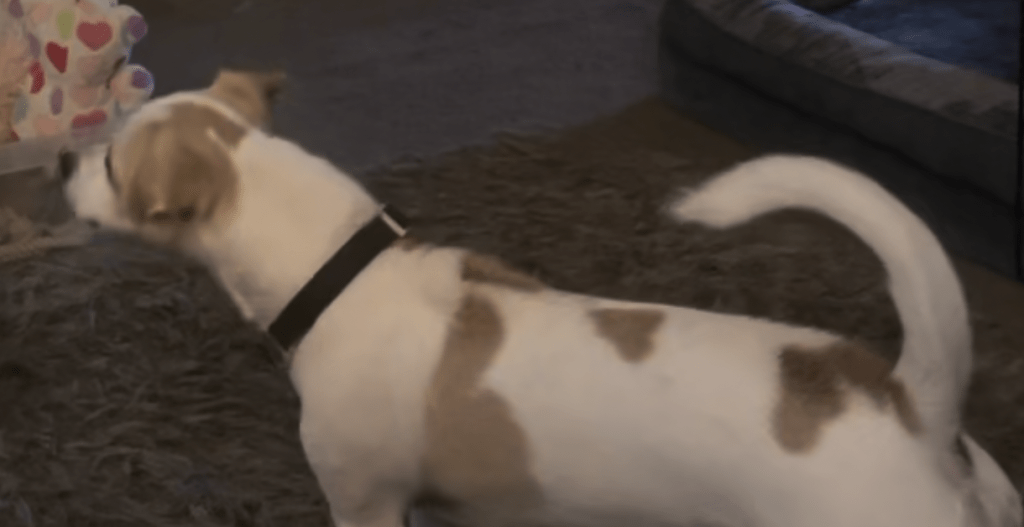
One sunny morning, Otis, a slick Jack Russell Terrier with a gleam in his eyes

and mischief in his heart, woke up. His fur was a brilliant shade of gold, shimmering in the sunlight, and his tail wagged with such enthusiasm that it could power a windmill. The day started innocently enough; we had breakfast at our favorite restaurant and came home. With his wagging tail and big, innocent eyes, Otis welcomed us home and helped us as we tidied up around the house. But Otis is no ordinary dog—trouble seems to find him as a squirrel finds an acorn. He gets these spurts of energy known well as zoomies.

It’s like he’s a magnet for mishaps, a walking comedy show. Wherever he goes, calamity follows. He’s so adorable that it’s impossible not to chuckle when his wrecking ball hits.

It wasn’t long before Otis’s nose led him to the kitchen. The scent of freshly baked bread cooling on the counter was just too tempting. He stood on his hind legs, stretching his neck as far as it would go. Just then, a slight breeze blew through an open window, knocking a paper off the fridge and startling Otis. He yelped and bumped into the counter in a flurry of fur and paws. The bread tumbled down, landing squarely on the floor.

When we walked in, Otis stood over the fallen loaf, his big, brown eyes looking up at us with a mix of innocence and apology. His expression seemed to say, “I didn’t mean to!” It’s hard not to forgive him when he looks at you like that.

We sighed but couldn’t help the tiny smile tugging at your lips. Before picking up the bread, Otis had darted out of the room, ears flapping, tail wagging like a flag, and disappeared into the yard.

As the day went on, Otis’s streak of bad luck continued. While exploring under the porch, he got tangled in a ball of twine that a handyman had left behind. Emerging from the shadows, he looked wide-eyed and confused, like a dog-sized spider web. The neighbors couldn’t help but chuckle when they saw him, tangled and guilty-looking. One even offered to help untangle him, but Otis, being Otis, managed to free himself in a comical fashion.

Capping off his day – Otis’s curiosity got the best of him once more when he found a potted plant by the front door. It only took a nudge from his nose for the pot to tip over, spilling soil all over the welcome mat. He sniffed the dirt, sneezed, and left tiny paw prints leading to his bed, where he flopped down, exhausted.

When found, he looked up with that sweet, guilty face as if saying, I swear, I don’t know how it happened!

Despite the chaos, we knelt and scratched behind his ears. Otis nuzzled into my hand, eyes closing in contentment. As much trouble as he got into, he was ours, and those mishaps only make our days a little more memorable—and a lot more fun. His presence, filled with joy, even amid his mischievous adventures, is a constant reminder of the happiness pets bring into our lives.