This Story From The Classics. Posted Originally in 2024 it is Reposted this year as part of the best of the best stories benandsteve.com are sharing at years end.
The year was drawing to a close. In the small town of Willow’s End, the final days carried a weight of reflection and anticipation. The air was cold but not bitter. The snow was soft and forgiving. Every storefront on Main Street was adorned with strings of lights that twinkled like tiny stars.
December 27th
Emily wandered through the park, her boots crunching against the frost-bitten ground. She carried a notebook. Its pages brimmed with half-written resolutions. They held sketches of dreams she hoped to realize in the coming year. Her golden retriever, Milo, bounded ahead, his tail wagging like a metronome.
The park was quiet, save for the sound of distant laughter from the skating rink.
Emily paused by the frozen pond, watching the skaters glide effortlessly across the ice.
She scribbled in her notebook:
Be brave enough to try something new.
December 28th
The morning dawned with a vibrant sunrise, streaks of orange and pink painting the horizon. Friends and families gathered for breakfast at the local diner, sharing stories of their year. Old Mr. Harper, the town’s unofficial historian, sat by the window, regaling a group of children with tales of Willow’s End’s founding.
Emily listened from a nearby booth, smiling to herself. Inspired, she jotted another resolution:
Learn the stories of those who came before me.
December 29th
The storm arrived unexpectedly, blanketing the town with fresh snow. Emily stayed indoors, wrapping herself in a quilt by the fireplace. She reread letters from old friends, rediscovering the warmth in their words.
Milo lay at her feet, snoring softly. The snowstorm felt like a pause, a chance to breathe before the year’s end. In her notebook, she wrote:
Reconnect with those who matter most.
December 30th
By morning, the storm had passed, leaving the town glistening under the winter sun. Emily joined the townsfolk in clearing sidewalks and helping neighbors dig out their cars. Laughter echoed as children built snowmen and adults exchanged cups of steaming cocoa.
As Emily shoveled, she realized how connected the community felt in such moments. That evening, she added another note to her resolutions:
Be an active part of something bigger than myself.
December 31st
The year’s final day arrived, bringing a mix of celebration and introspection. The town square rang with energy as the community readied for the annual New Year’s Eve bonfire.
Emily stood among the crowd, her notebook tucked safely in her coat pocket. When the clock struck midnight, fireworks began exploding, painting the sky with bursts of color. Cheers and laughter filled the air.
Emily closed her eyes and whispered her final resolution:
Embrace the unknown with hope.
The last five days of the year hadn’t been filled with grand adventures. There weren’t dramatic changes. Yet, they had been quietly transformative. As Emily walked home under the starlit sky, she felt ready for the year ahead. She was also prepared for whatever life had in store.
John’s eyes fluttered open, the sterile white ceiling of the hospital room coming into focus. His head throbbed, and he felt disoriented. He overheard two doctors talking outside his room as he tried to piece together what had happened.
“Only seven days left,” one of them said. “We need to make sure everything is in order.”
John’s heart sank. Seven days left? He must be dying. Panic surged through him as he realized he had only a week to live. But instead of succumbing to fear, a fierce determination took hold. He couldn’t stay in the hospital; he had to escape and make the most of his remaining time.
Ignoring the pain in his head, John began to formulate a plan. He waited until the nurses changed shifts, then quietly slipped out of bed. John found a set of scrubs in a nearby closet and put them on, hoping to blend in. With his heart pounding, he made his way down the hallway, avoiding eye contact with anyone who would recognize him.
As he reached the exit, a nurse called out to him.
“Excuse me, sir, where are you going?”
John’s mind raced.
“I… I need some fresh air,”
he stammered.
The nurse frowned but didn’t pursue him. John pushed open the door and stepped into the cold winter air. He had made it out, but now what? He had no money, phone, or idea where to go.
John was determined to make the most of his final days. He wandered the city and visited places he had always wanted to see. He watched the sunrise from the top of a hill, the sky ablaze with colors. He fed the ducks at the park, their quacks a symphony of nature. And he even ate a fancy dinner by sneaking into a high-end restaurant, savoring every bite.
As the days passed, John felt a strange sense of peace. He had lived more in those few days than he had in years. On the seventh day, he found himself back at the hospital, drawn by a need for closure.
He walked through the doors and was instantly recognized by a nurse. “John! We’ve been looking for you everywhere. You need to be in bed; your head wound is serious.”
John sighed and allowed himself to get led back to his room. As he lay in bed, he overheard the doctors talking again.
“Only one day left,”
one of them said.
“I can’t believe the year is almost over.”
John’s eyes widened in realization. They talked about the end of the year, not his life. Relief, pure and unadulterated, washed over him, followed by a wave of exhaustion. He had been running from a misunderstanding, and now he was free.
As the clock struck midnight, John smiled to himself. He had a new lease on life and a newfound appreciation for every moment. He vowed to live each day with the same passion and urgency he had felt during those seven days. He understood that life was too precious to waste. His experience had transformed him, filling him with hope and a deep appreciation for the gift of life.
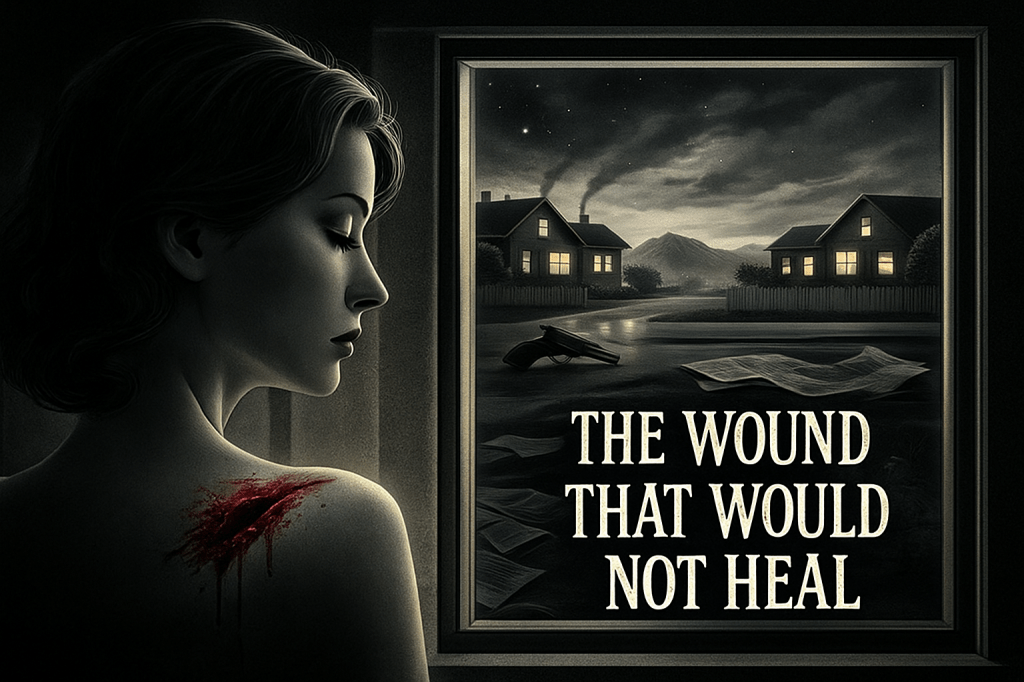
No one remembers precisely when the truth first slipped away. They only knew it had happened quietly. It occurred somewhere between the gunshot and the bandage.
Mara Ellison had lived beside Harold Pike for seven years without incident. They exchanged polite nods, sometimes a forced smile across the narrow strip of gravel separating their properties. So when the bullet tore into her foot one late afternoon — fired inexplicably from Harold’s back porch — she assumed the world would respond with reason.
It did not.
The police arrived within minutes, yet their questions drifted strangely away from the obvious. Why had she been standing there? Had she provoked him? Were there prior disagreements she had neglected to mention? Harold, calm and unsettlingly sincere, claimed the gun had “gone off on its own.” Soon, the incident was reclassified as an unfortunate misunderstanding.
Mara limped through the next weeks on swelling and disbelief. Her foot healed slowly. But the real pain settled elsewhere. It lingered in the way neighbors crossed the street to avoid her. It was noticeable in the whispers that followed her like dust. She was suddenly labeled unstable. Dramatic. A troublemaker.
She filed complaints. She documented every detail.
Each report vanished like breath on cold glass.
Harold began mowing his yard at odd hours, staring straight ahead, humming tunelessly as though nothing had happened. His friends brought casseroles. People clapped him on the back. Someone even hung a banner on his fence that read:
WE STAND WITH HAROLD.
Mara woke one morning to discover a court summons slid beneath her door. Harold claimed she had injured herself deliberately. He said it was to ruin his reputation.
The town agreed.
Reality itself began to warp. The scar on her foot throbbed while local newsletters praised Harold for his patience and “strength of character.” A small feature in the paper framed Mara as a disturbed woman seeking attention. Her own name felt foreign in print, warped by accusation.
Street signs near her home began to shift. Directions pointed nowhere. Familiar shops closed overnight. Conversations dissolved mid-sentence when she approached.
One night, she saw herself on the evening news. She looked laughing, cheerful, and perfectly fine. In reality, she sat alone. She stared at the bandage that never quite came off.
The bullet wound refused to disappear.
Nor did the silence that followed everyone’s denial of it.
On the final day anyone heard from her, Mara stood before the cracked mirror of her hallway. She whispered,
“If the world insists I am wrong, then what am I supposed to become?”
Outside, Harold watered his flowers with careful devotion.
Inside, Mara stepped into a reality no longer willing to recognize her. She vanished into a story written by others. This story never spoke the truth. Yet it was repeated loudly enough to become law.
Some said the house stood empty.
Others swore that if you passed it at dusk, you hear the faint echo of limping footsteps. They claimed to hear a voice pleading, again and again, to simply be believed.
Harold, meanwhile, withdrew mysteriously from society after Mara disappeared. He became a recluse, a shadow of the man the town once defended so fiercely.
Mara, in time, became folklore — “the woman no one believed.” Some claimed she had simply self-immolated. Others said she cried herself into nothing. A few insisted they saw her walking away from her home. She moved slowly toward the setting sun. She never once looked back.
Then, exactly ten years to the day of Mara’s shooting, Harold was found dead.
His body bore the evidence of prolonged torment . — Gunshot wounds in both feet, knees, hips, abdomen, hands, elbows, and upper arms. Each injury, save for the final one, had healed. The coroner confirmed a chilling pattern: Harold had been shot, treated, allowed to recover ––and shot again. Repeatedly, over the span of a decade.
The final bullet entered the right side of his head.
Nearby, written in a trembling hand, were the words: “I can’t take it anymore.”
Had Harold been punishing himself for the truth he buried? Had Mara’s spirit delivered a slow and deliberate reckoning? Or had she never left at all — only waited?
Silence and shadows enveloped the town. It learned a lesson far too late: When truth is denied long enough, it finds other ways to speak.
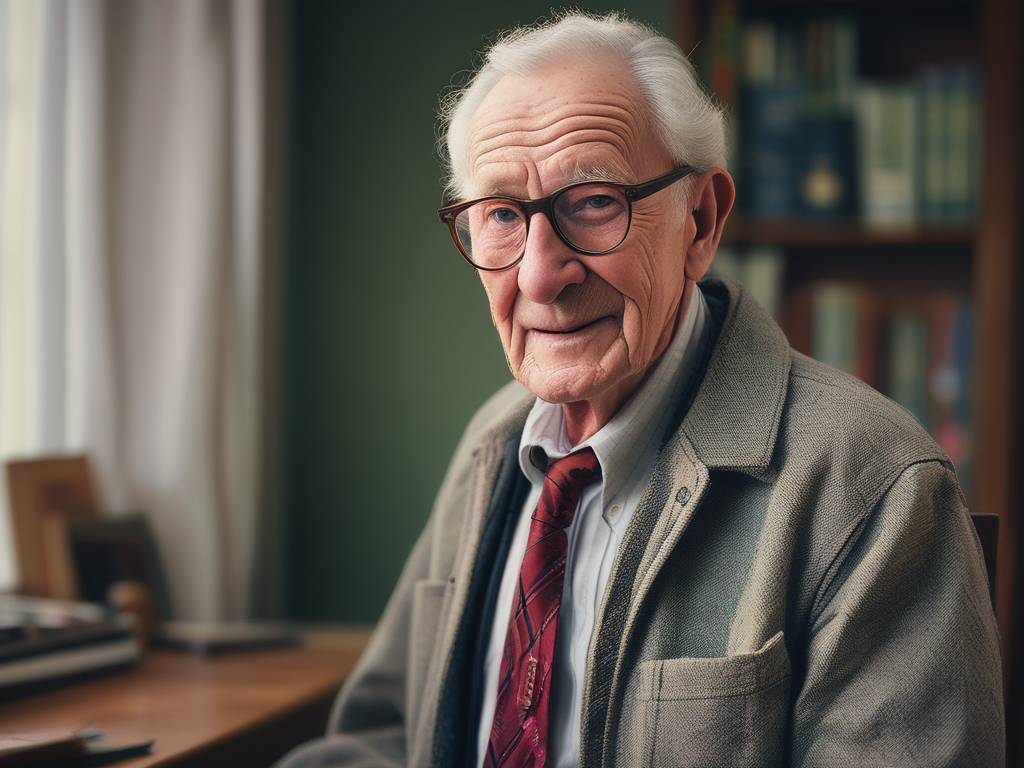
The town coroner was also the same man who delivered most of the people’s babies in town. He was nearly 97 years old and still doing business. His name was Dr. Doodley. Dr. Doodley began working as a doctor when he graduated from Medical School at age thirty in 1957. He made his home in Meadowview. He had a significant other. He was a gentleman Dr. Doodley had met in college. Together, they raised Dr Doodley’s two nephews. They were the sons of Dr. Doodley’s brother, who got killed in an auto accident along with his wife. The community never questioned the couple’s union. They never questioned the children raised by the two men. Everyone welcomed the couple as they joined in events.
Dr. Doodley was the only doctor in the county. He was on call twenty-four hours a day. He would be available seven days a week. With such a schedule, it was common for the family only to see the older family member on the go. He was known for delivering nearly every child in the county for over 70 years. In as much, he declared dead nearly everyone who passed away in the county. This spanned the past 71 years. He had brought into the world and seen many of the same people leave it. He was known to many as an indirect member of their family for his declarations.
On a foggy Tuesday morning, Dr. Doodley received a call for his services. It was from a lady twelve miles from town. At the home, there was also a man. His wife was gravely ill too. It wasn’t until Dr. Doodley arrived that he discovered two other expecting mothers were present. There was also an older man who appeared about to die.
Dr. Doodley was 97 years old and thought to himself, ––
“I hope I am up to this chore. If all these people require my services, I will have my hands complete.”
A young lady at the home received Dr. Doodley, took his hat, and directed him to the kitchen. She had prepared several pans of hot water, clean towels, and sticks there. Dr. Doodley always required those three things to be available. He liked to have hot water for cleaning. Towels for drying and sticks for placing in people’s mouths to bite down on and grit through pain.
The doctor was known to use the sticks himself on occasion to avoid using curse words when he was stressed.
Mildred was a big lady. She was also Dr. Doodley’s first patient and was expecting twins. Her water had broken, and she was about to deliver. The conditions at the home were not ideal for privacy; there was only one room, and everyone was in it.
Mildred yelled ––
It is happening. They’re coming!
Dr. Doodley crunched his 97-year-old body down while Mildred sisters held her hands, trying to do breathing exercises.
Dr Doodley said to Mildred ––
Honey, you have to push, push like there is no tomorrow.
Mildred yelled ––
I’m trying. They’re fighting.
Dr. Doodley trying to soothe Mildred replied ––
They’re not fighting. They’re just taking their time.
Dr. Doodley smiled and, with a cough, shouted.
Looky here, they are here. Mildred! You did it! You got three! Boy, Girl, Boy!
Mildred, exhausted and sweating, shocked stewed back
What’s that, doc? Did you say Three? I was expecting two. Where is the third one from?
Dr. Doodley smiled and laughed,
Mildred, the third one is from you. You had a little hider in you—what a surprise!
The doctor went to announce the new arrivals to the rest of the family. Upon hearing that Mildred had triplets, two of the older family members dropped dead.
The triplets were the first ever born into the family since the 1800s. It was a blessing of riches for the family to get them. An old Irish family tale had always suggested such. The doctor tried to revive the two family members, but their aged bodies were nonrevivable. So he put on his Coroner hat, declared them dead, and called for the funeral home.
Dr. Doodley turned to the family. He told them their two older family members, Elmer and Magnolia, had passed away. He offered his condolences. As he explained the situation, Mildred’s sister, Ethel, entered labor.
Ethel was bigger than Mildred and only slightly smaller than Minnie, her twin sister, who was also expecting. Neither sister knew what they were expecting. They wanted to keep it a surprise for their families. It was also a surprise for the doctor.
Dr. Doodley barely had time to catch his breath before Ethel’s cries filled the room. With a weary but determined look, he wiped his brow and prepared for the next round. He had seen many things in his 97 years. Yet, he had a feeling that today would be one for the books.
Ethel’s contractions came fast and fierce. Dr. Doodley quickly realized that this delivery would be anything but ordinary. He moved swiftly, calling for more towels and hot water, his voice steady despite the chaos around him.
Ethel, gripping her sister Mildred’s hand, screamed out as the first baby appeared.
“Push, Ethel, just a little more,”
Dr. Doodley encouraged. To his astonishment, another head was crowned instantly after the first.
“Twins!”
He announced, but as he cradled the two newborns, he felt another tiny foot.
“Wait—triplets!”
The room buzzed with excitement and disbelief. But Ethel’s labor still needed to be done. With one final push, a fourth baby emerged, making history in the small town of Meadowview.
“Quadruplets!”
Dr. Doodley gasped, his voice cracking with the thrill of the moment. The room erupted in cheers, even as Minnie, the third sister, began to feel the unmistakable pangs of labor herself.
Dr. Doodley was now running on pure adrenaline. He had delivered quadruplets in his nearly seven decades of practice, but never had he faced such a succession. As Minnie’s labor intensified, he steeled himself for what was to come.
Minnie, the largest of the three sisters, began laboring with a determination that matched her size. The room grew quiet, anticipation thick in the air. The first baby arrived, the second, then the third, and when a fourth followed, the room collectively held its breath.
But Minnie wasn’t done. To the astonishment of all, a fifth baby emerged, followed by a sixth. Dr. Doodley, his hands trembling, delivered each child with care, his heart pounding with the sheer impossibility of it all.
“Six babies!”
He declared, his voice a mix of awe and exhaustion. Minnie lay back, breathless but smiling, as the room buzzed with the excitement of the extraordinary event.
Then in the back of the room a cousin named Sissy screamed ––
Doc I think I need you!
As the doctor walked back to her, he could see she had given partial birth to a child, and he said ––
Oh dear, lets get this corrected, and cleaned up. Lay back and hold your aunts hand while we help you!
And that is when the last baby of the night entered the world.
By the end of that foggy Tuesday, Meadowview had welcomed fourteen new babies. It made history in the sleepy little town.
Dr. Doodley, despite his age, had once again proven why he was the most revered doctor in the county. As he looked at the fourteen newborns swaddled and cooing, he couldn’t help but smile. It was a significant day in the history of Meadowview. An elderly man, nearly a century-old, delivered a miracle. No one would ever forget this event.
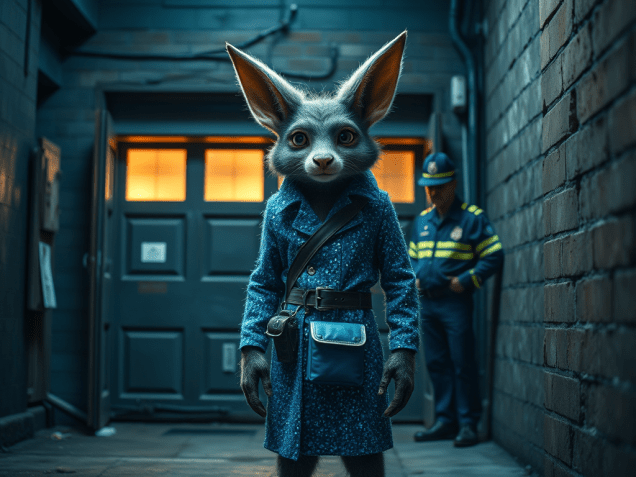
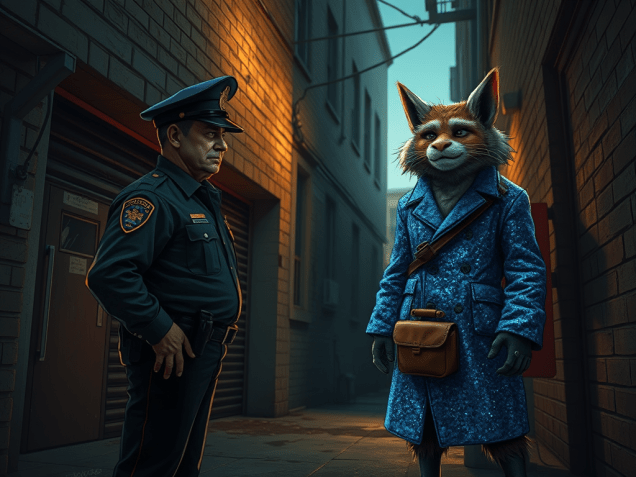
Surveying the town, the Detective realized he was facing a unique challenge. His task was to apprehend the suspect responsible for the laundry mat break-in. Some witnesses described the suspect as an unusual figure. He towered at 6’5 and had distinctive pointy ears. His face was furry.
Wanda, the laundry mat attendant, was first to be interviewed by Detective Jim Roff. She told him the suspect had furry knuckles, too. She had watched through the office’s one-way mirror. He pried open washing machines’ coin boxes. Then, he filled a pouch in his front coat pocket. A coat, she said, was very blue and sparkly.
Merle was standing on the sidewalk outside. He was picking up cigarette butts along the walkway. He said the thief bumped into him while making his getaway. A few of the coins managed to roll down into the parking lot, where Merle had captured them.
“Fifty cents,”
Merle said.
Detective Roff asked Merle if he knew the person who had broken into the machines. Merle told the Detective that the suspect was known on the streets as Carpet Face.
Merle told the Detective,
“The dude used to work for a local carpet layer.” He got right down to his face, stretching the carpet across the floor. They called him Carpet Face. But I don’t think that is why he was named Carpet Face.”
The Detective asked out loud,
“Then why did he have such a furry appearance?”
A doctor who had seen the incident spoke up,
“It’s because of his genes.”
Detective Roff replied,
“His Blue Jeans?”
The Doctor laughed,
“No, his g-e-n-e-s”. “
“Oh,”
Roff said,
My bad.”
“That is ok, he should have been nicknamed Furboy. His real name is Lickery Nickery. He lives on the south side of town. His home is in an alleyway near an old garage. This garage is falling off Hickery Street.”
Doctor Badd, sadly proclaimed, Dr. Badd listed in the phone book as ‘Badd Doctor,’ played a significant role in the case. He informed the Detective that he had been discreetly treating Nickery, attempting to help him achieve a more conventional appearance. Yet, all his efforts with various medications had been in vain.
Detective Roff got into his police car and drove to the area where Nickery was supposed to live. Sure enough, there stood the suspect. Tall, furry, and stirring outside an old garage in an alleyway. Nickery still had a pouch attached to his waist just below a bright blue coat. As the Detective approached, Nickery stood in an offensive position. Detective Ross had brought Dr. Badd with him. This was in case medical attention was required. It would be needed as a result of the pending arrest of either the suspect or the Detective.
Nickery almost instantly stood ready for the capture. He told the Detective he had broken into the machines and taken the coins. It was his only way to get funds to buy food. The Detective asked him about his old carpet-laying job. Nickery told him he was fired after the clients saw him stretching carpet in their home. This frightened them.
The Detective asked Nickery.
“So you thought a life of crime was the answer?”
Nickery -ugh Carpet Face replied in kind,
“Not really, I thought it was a way to get food.”
Dr. Badd chimed in at this point and said,
“I have literally tried everything and can’t get anything to work.”
Detective Roff looked at Nickery, then at Dr. Badd, and finally at the furry blue coat.
The Detective, after a moment of contemplation, shared his insight with the others. He said, “Gentlemen, sometimes the most straightforward solution is the one we fail to see.”
Both stared back at him, puzzled. That’s when Roff pulled a small electric trimmer from his pocket.
“Try this.”
The hum of the clippers filled the alley. Within minutes, Carpet Face began to look less like a legend and more like a man. The crowd that had gathered gasped. Children laughed. Wanda from the laundry mat even clapped.
Nickery blinked at his reflection in a car window and whispered,
“I… I look normal.”
“You look like yourself,”
Roff corrected.
“Now go make something of it.”
And he did. Lickery Nickery was once the scourge of washing machines everywhere. He became a barber’s apprentice. Then he became a shop owner. Finally, he became a beloved mayor. His campaign slogan?
~ Sometimes the simplest solution is the one we overlook. ~
By the time autumn winds rolled across Haven’s Reach, something in the air had shifted. The Council’s decrees were no longer whispered with unease. They were shouted from wooden platforms. The decrees were painted on walls and nailed to doors. “Obedience is Freedom,” one sign read. “Order Before All,” declared another. The rules had once been tolerated as minor irritations. Now, they pressed down like a boot on the neck of the people.
It began with curfews. Families were ordered indoors at dusk, lanterns extinguished by the ninth bell. Then came the bans. First, there was one on foreign books. Next, gatherings of more than five were forbidden. Finally, music played in public squares was banned. One by one, pieces of life that had once defined Haven’s Reach fell away. The Council insisted it was “for safety.” But everyone knew better—fear was safer for rulers than for the ruled.
Harper saw it most clearly when her younger brother, Eli, vanished. One evening, he was at the bakery kneading dough by her side. The next morning, his cot was empty. Blankets were folded neatly as though no one had ever lived there. Whispers reached her ears: Eli had spoken too freely about the Council in the market, and someone had reported him. Now he was “detained for questioning.” No one who had been questioned ever came home the same.
Harper’s grief sharpened into something more complex. She began wandering beyond her bakery’s door after curfew, listening at corners, watching shadows. That’s how she stumbled across The Quiet Ones. It was a ragtag circle of neighbors, merchants, and teachers. They took it upon themselves to preserve what the Council feared most: memory. They hid forbidden books in flour sacks. They scribbled children’s rhymes on the backs of ledgers. They whispered songs under their breath in defiance.
When Harper revealed her brother’s name, the Quiet Ones did not look away. An older man with ink-stained hands touched her shoulder and said,
“You’re one of us now, whether you meant to be or not. The fight isn’t about one boy. It’s about all of us.”
The fracture had come—not just between ruler and ruled, but within the people themselves. Some chose silence and survival. Others, like Harper, chose risk and resistance. Haven’s Reach was no longer simply an island under rule. It was a tinderbox, waiting for a single spark to ignite.
Mr. Dink had always dreamed of growing a grand, bushy beard. He wanted more than a scruffy patch or stubble. He desired the beard that inspired respect. It was like the beard of a ship’s captain or a wise old philosopher. For years he tried: tonics, oils, even rubbing garlic on his chin (his grandmother’s advice). Nothing worked. At best, he muster a shadow of stubble that made him look perpetually halfway through shaving.
One lazy afternoon, flipping through a magazine, something caught his eye: an ad for “Undercover Agent Supplies.” The list included fake passports, invisible ink, and, most importantly, false facial hair kits. Mr. Dink’s heart skipped. At last, a way to see himself with a beard! He sent in his order, expecting a modest beginner’s kit.
But somewhere in the warehouse, a mistake was made. Instead of the novice set, Mr. Dink received a professional-grade disguise kit—the very same used by secret service agents. When he opened it, the contents dazzled him. There were full beards in every style imaginable. Mustaches curled or drooped. Eyebrows that changed a man’s entire face. There were wigs, glasses, voice changers, even adhesive skin molds.
Mr. Dink began experimenting right away. In one disguise, he was a grizzled lumberjack. In another, a mysterious professor. And when he wore the gray beard and cap, not even his closest neighbors recognized him. To his shock, the disguises worked so well that people began speaking freely around him. He heard what they really thought about Mr. Dink—sometimes kind, sometimes critical, sometimes hilariously wrong.
At first it stung. But as he listened, he realized how little people truly saw of him, how much they judged by appearances. And oddly, this knowledge freed him. He began wearing the disguises not to hide, but to understand. And the beard—the one he never grew—became a symbol of all the lives he slip into.
In the end, Mr. Dink discovered he hadn’t needed a beard to be respected. He needed confidence, curiosity, and a little humor. Still, he kept the kit. There were times when being a secret agent was just too much fun. The allure of having a glorious beard was hard to resist.
Elias never thought of himself as special. He lived in a small cabin at the edge of the woods. There, he worked as a carpenter. In the evenings, he fed the stray cats that wandered in from the trees. He had always felt an odd comfort around animals. He attributed this to his quiet nature and patient hands.
It began with his dog, Rusty. One evening while Elias rubbed behind the old hound’s ears, he thought he heard a whisper. It wasn’t a sound exactly, but a clear impression: “Don’t stop, that feels good.” Elias froze, hand hovering mid-scratch. Rusty nudged him insistently, and the thought returned, playful and warm. At first, Elias dismissed it as his imagination. The barn cat slinked across the porch the next morning. Yet, he felt a sharp pang of hunger that wasn’t his own. He realized something impossible was happening.
At first, the animals spoke only in feelings. They expressed affection when he stroked their fur. There was annoyance if he pulled away too soon, and gratitude when he left out food. But as days passed, the impressions grew sharper, almost like sentences forming inside his mind. One afternoon, Rusty limped. Elias felt a jolt of pain in his knee. This was followed by the plea: “It hurts, please help.” He checked and found a thorn buried deep in the dog’s paw. A sparrow darted to his windowsill and flooded him with urgency: “Nest broken, chicks in danger.” Elias followed its pull and discovered a nest toppled in the wind. He rescued the hatchlings before the foxes found them.
Word seemed to spread, though Elias never understood how. Stray dogs lingered near his cabin. Deer stared at him without fear. Once, even a wounded hawk landed on his porch rail. Each brought with it a silent voice—requests for healing, warnings of predators, messages of danger to others of their kind. With every answered call, Elias felt the bond deepen.
Soon he realized this gift was more than companionship. It was responsibility. He can bridge a gap no one else: soothing fear, preventing harm, guiding creatures toward safety. A flood threatened the lower fields. He was awoken by the frantic voices of burrowing animals. He led the farmer’s family to higher ground just in time. Poachers crept through the forest one autumn night. The owls carried their presence to him in overlapping echoes. He alerted the rangers. Before long, his reputation surpassed even that of Dr. Doolittle, carrying an edge that would have made famed explorer Dr. Livingstone himself take notice.
Elias no longer saw himself as just a man in a cabin. He was part of a living chorus, every feather, paw, and claw connected through an unseen thread. And though it sometimes weighed heavy on him, he carried it gladly. For the first time in history, animals had found someone who truly listened. He had discovered a purpose greater than he’d ever imagined.
Harold was not your average backyard pet. For one thing, he was a tortoise—stoic, slow-moving, and entirely uninterested in chew toys or squeaky balls. He had a knack for testing boundaries. He focused specifically on the wooden fence that separated his little patch of green from the rest of the world.
It was a warm Thursday morning when Harold spotted his chance. The gate, left just barely ajar, beckoned. And so, with all the urgency of a creature who could nap through an earthquake, he set off.
The first few feet were thrilling—new smells, unfamiliar blades of grass. Soon he found himself among tall weeds. They brushed the top of his shell. The sunlight dappled through in golden patches. Harold was, for the first time in years, truly free.
Back at the house, his caretaker, Miriam, noticed the absence almost instantly. Panic bloomed. Harold wasn’t fast, but he was determined, and that made him unpredictable. She called the local HOA, who wasted no time sending out a neighborhood alert. Within the hour, a small army of retirees—sun hats on, binoculars in hand—fanned out through the cul-de-sacs and common areas. They called his name as if he actually come when called.
“Check under the hedges!”
shouted Frank from three doors down.
“Don’t forget the drainage ditch!”
added Ethel, peering into a shrub like it might hold the crown jewels.
But Harold was nowhere near the hedges. He was ambling through a corridor of tall grass, blissfully unaware of the search party. The grass parted to reveal shimmering water ahead—one of the golf course ponds, its surface gleaming like a mirror. Harold paused at the edge, the water rippling as a golf ball plunked in somewhere across the way.
It was here, in this quiet moment, that his adventure almost took a turn. The pond’s soft edge gave way under his front foot. Harold slid ahead, catching himself just in time. He gave the pond a slow, thoughtful look, decided it was not his scene, and turned back toward the grass.
Hours later, Miriam spotted him in the shade of a ficus tree near the clubhouse. He was calm, content, and entirely unbothered by the chaos he’d caused. The search party gathered, relieved, and one by one, they drifted back to their homes.
Harold was returned to his yard, the gate firmly latched this time. If you looked closely the next morning, you might have seen him sitting by that same gate. He was staring out at the world beyond. He was already plotting his next great escape.
The envelope had no return address—just Ben Keller’s name written in neat, looping script he hadn’t seen in twenty years.
It arrived on a Wednesday, the gray morning when the world felt slightly out of focus. He set it on the kitchen table. He stared at it over his coffee. The handwriting gnawed at a half-buried memory.
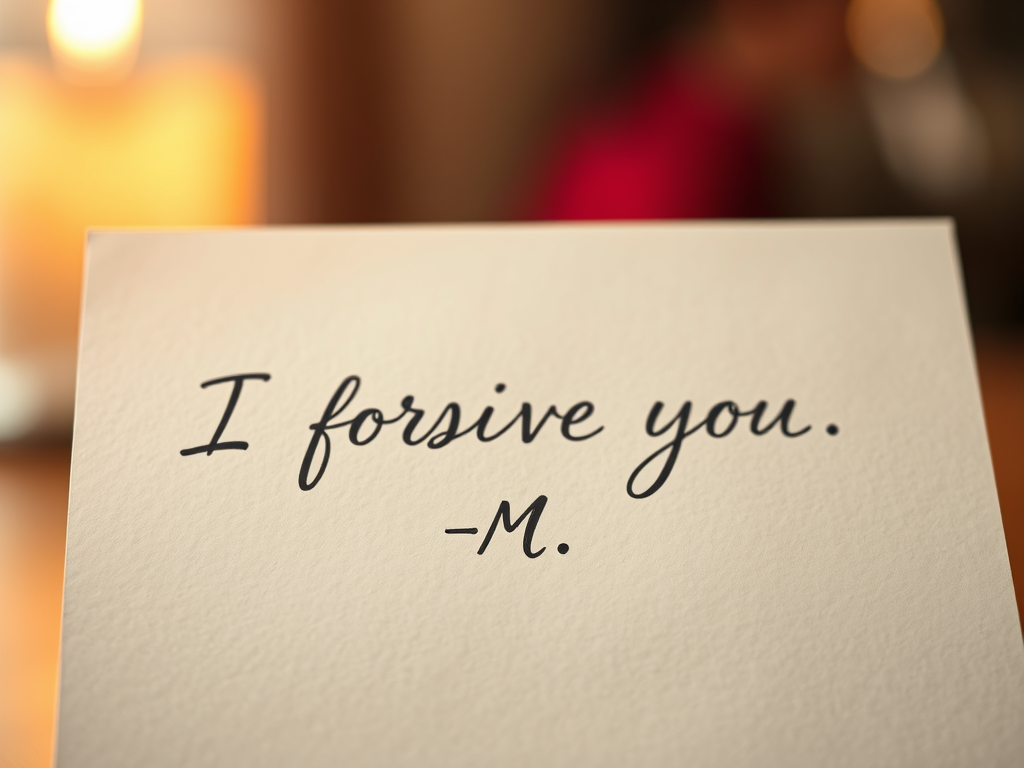
When he finally opened it, there were only four words inside: “I forgive you. – M.”
Ben’s mind spun. M had only one reason to forgive him. It was Maggie Lowe, his best friend from the summer of ’98. They were both seventeen then. The girl who vanished after that last night on the lake. The girl everyone assumed had run away.
For the rest of the day, the letter sat in his jacket pocket, a warm weight against his chest. That night, he drove out to the lake. It looked smaller than it had in his memory. The old pier was still there. The boards were warped and groaned under his steps.
Halfway down, he stopped. Someone was standing at the end of the pier, back to him, long hair rippling in the wind.
“Maggie?”
The figure turned. Same face. Same eyes. Not aged a day.
Ben’s breath caught.
“How…?”
She smiled faintly, holding up her hand. A folded sheet of paper slipped from her fingers, catching the wind before it hit the water.
“You always wondered what happened. Now you’ll remember.”
When Ben blinked, she was gone.
And in his pocket, the original letter was gone too.
Everyone in town knew Earl’s Brothers Benches. The name was painted in hand-cut wooden letters across the weathered front of the shop. The scent of sawdust lingered in the air like an old hymn. Customers would often ask about the other brother—the one whose name they didn’t see behind the counter.
“Oh, he had to go away for a while,”
Earl would say with a small smile, never elaborating.
“I expect to see him again someday.”
Most people took it at face value, assuming the absent brother was traveling, sick, or otherwise tied up. No one guessed the truth—that “the silent partner” had been dead before the shop even opened. His name was there only out of love and respect. Earl had lost a sibling decades earlier in a winter tragedy. The boy fell through the ice on a frozen pond and never came back.
But the story of the missing brother was more tangled than anyone knew.
The boy who drowned wasn’t Earl’s only brother. Earl didn’t tell customers this. He didn’t even tell his closest kin. As a young man, Earl’s father had been married before. The union was brief and ended when he was drafted into the military. Afraid he would die in service, he’d released his young bride from her vows. She remarried while he was overseas, but not before giving birth to a son—his son.
That son grew up two cities away, unaware of his father’s new life and family. For years, the two boys—half-brothers—lived separate lives. Then, after the drowning, the surviving twin grew restless, convinced there was “someone else out there.” His persistence finally wore down their father, who told him the truth.
In secret, the two half-brothers met. They became friends, confidants—and eventually, quiet business partners. The late brother’s name went on the sign. The living half-brother kept his part in the business quiet. This was a private arrangement that suited them both.
The shop carried on for years until Earl’s death. Only when the will was read did the family learn of a “beneficiary” in another city. He was a man no one recognized. When he arrived, the room fell silent. He looked exactly like Earl.
The resemblance was uncanny—two men from different lives, bound by the same father’s face. Only then did the family start to piece together the truth: the “silent partner” they thought had been long dead had been right there all along…
And now, the other brother stood before them. He was alive and held the keys to a business. This business had carried both their names.
The Dead Has Gone – A Night Call to the Funeral Home
Jake Roff was a man of routine. Up before the sun, station lights on by 4:30, coffee brewed by 4:35. He liked the quiet hours before the town woke up. There was no traffic and no gossip. Just the hum of the soda cooler and the smell of gasoline.
That’s when the hearse pulled in.
The local funeral director appeared. He was a man who had perfected the art of wearing a solemn face. He maintained this expression even when discussing baseball scores. He leaned out the window and said,
“Jake… I can use an extra set of hands unloading a client.”
Jake wasn’t sure “client” was the right word, but he was too polite to argue. He locked the station door and climbed into the passenger seat. The ride was short. It was a ride where the air feels colder than it should. You can’t shake the notion that someone in back is listening.
At the funeral home, the place was dark. A single light illuminated the hallway. It was the light that leaves more shadows than it removes. The two men wheeled their passenger toward the prep room, the floor squeaking under the gurney wheels.
That’s when Jake’s hip clipped something.
The “something” was another gurney, parked just out of sight. The bump sent the sheet sliding to the floor in slow, terrible motion. It was like a curtain rising before a play no one wants to see.
Underneath was a woman. Her hair was a halo of white, frizzed and jutting out like she’d been caught mid-scream in a lightning storm. Her eyes were wide and glassy, locked on Jake as if she’d been waiting for him specifically. Her jaw hung slack. Her teeth were just visible. It was an open-mouthed stare that made him wonder if she was about to say something.
Jake didn’t stick around to find out. He backpedaled so fast he nearly tipped the “client” he’d come to help with. His heart was pounding. He mumbled something about
“forgetting to check the oil at the station.”
Then, he made a break for the door.
The funeral director called after him. By then, Jake was halfway down the block. He vowed never to set foot in that place again. For the rest of his days, he’d open his station early. Yet, if a hearse rolled in before sunrise, Bill always ensured he had a sudden, urgent appointment anywhere else.
This is a true story as told to the author. JD Groff experienced it first-hand. He passed it down through generations. Other family members kept it alive over the years. JD had a flair for telling this tale at family gatherings—something this written piece can only hope to capture. One thing’s certain. After that night, he never again helped unload another “client.” That was the case for as long as he lived in Cordell, Oklahoma.
About the Author:
Benjamin Groff is a former police officer and radio news anchor. He has hosted programs for CNN and ABC News affiliates in Colorado and Wyoming. His career in law enforcement began in 1980 and lasted more than two decades. This gave him firsthand insight into the criminal mind and public safety. Moreover, it provided him with an understanding of the human stories that often go untold. His writing draws on these experiences, blending street-level truth with a journalist’s eye for the bigger picture.
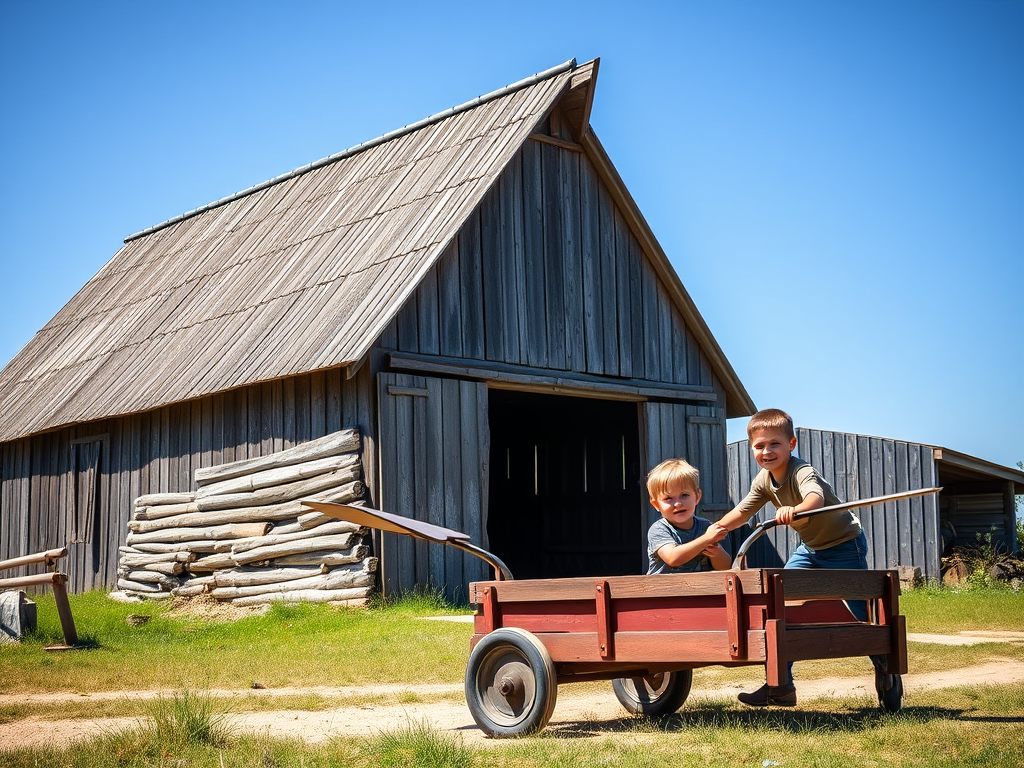
You’ve heard of the Wright Brothers, but you probably haven’t heard of the Groff Brothers—JD and Bennie. Two western Oklahoma boys growing up wild and dusty in the 1920s and ’30s. They didn’t have blueprints or flying machines. What they had was imagination, a tall barn, and a battered old wagon that Bennie believed could fly.
Bennie was the older one. He was full of ideas that didn’t always make sense. They always sounded like fun—at least to him. JD, the youngest, often found himself drafted into Bennie’s adventures under what you might call “big brother persuasion.” Bennie had a way of making cooperation seem more appealing. He would start listing all the minor sins JD had committed that week. JD wasn’t dumb. He knew how to pick his battles.
One summer day, Bennie got it in his head that their wagon could be made to fly. All it needed were wings—planks nailed out to the sides—and a launch platform. The barn roof, with its steep pitch and high drop, was just the place. Bennie did the math. He calculated it as only a 1930s farm kid could. He figured the wagon might be too heavy to lift both of them. So, of course, he chose JD to be the pilot.
JD protested. Loudly. But Bennie made his case and called in his leverage. They went up with the wagon. They dragged it onto the roof like a couple of cartoon inventors chasing the wind.
Perched high above the ground, JD sat nervously in the creaking wagon, holding on to the sides. The wings were loose, the wheels rattled, and JD knew better than anyone how this would end.
“Hold on tight and don’t jump out!” Bennie shouted.
“I won’t,” JD called back, “I’ll fall!”
And with that, Bennie gave the wagon a mighty shove.
It was right about then that their mother—Mom—looked out the kitchen window. She saw what no mother should ever see: her youngest son soaring off the roof in a makeshift flying contraption. She dropped what she was doing and ran out the door, just in time to witness gravity take over. The wagon left the barn roof for the briefest moment of flight—then fell straight down like a stone.
JD hit the ground in a cloud of dust and bent wood. Miraculously, he survived—more scared than scraped, and too winded to say anything right away. Bennie stood nearby, squinting at the wreckage like a disappointed engineer.
“Well,” Bennie muttered, “I guess there wasn’t enough lift.”
Mom had a different theory: they would never try that again.
JD agreed with Mom.
That was just one of many scrapes the Groff brothers got into over the years. Bennie had the ideas, and JD often paid the price. But through it all, they stuck together—laughing, fighting, inventing, surviving. That’s what brothers did.
The wild stunts and hijinks came to an end far too soon. Bennie passed away in his mid-forties, and with him, a certain spark left the family. One relative said the family had been “a little less jovial” ever since.
It’s true. A parent never fully recovers from losing a child. And a brother never fully recovers from losing his bud.
For a moment, a wagon flew on top of a barn in western Oklahoma. Two boys believed they could touch the sky.
There used to be four chairs at the table. Every Sunday, without fail, they were filled.
Anna always brought the rolls. George never remembered the salad. And Michael, the youngest, made them laugh so hard someone usually spilled something. Then there was Claire. The one who set the table. Who kept the tradition.
But life doesn’t ask for permission when it starts rearranging things.
Anna moved three states away for a job that offered better pay and less time. George passed unexpectedly—just one late afternoon in September, gone with no goodbyes. Michael, grief-stricken and incapable of facing the silence, stopped coming.
And Claire… she kept setting the table. All four chairs. Every Sunday.
It felt foolish at first—preparing a meal for no one. But over time, the quiet stopped being so loud. She began to remember George’s voice not as an echo of absence, but as a smile in her thoughts. She started writing letters to Anna and cooking Michael’s favorite dish, just in case he came.
And one Sunday, he did.
He didn’t say much—just sat in his chair like it had never been empty. They ate. They laughed. No one mentioned the salad.
Recovery isn’t about replacing what’s lost. It’s about honoring it enough to keep living.
There’s a story my dad loved to tell. It was one of his favorites. He told it often to friends, family, and customers in his barber shop. He shared it with anyone who needed a good tale. He and his friend GH rode out on horseback one afternoon. They went to a little rise in northern Caddo County called Ghost Mound.
Ghost Mound – Caddo County – Oklahoma
Ghost Mound is one of those landmarks that doesn’t quite belong to any one town. It’s south of Hydro, north of Eakly, east of Colony, and west of the Sickles community. It’s a rocky, oddly-shaped hill. It looks like a miniature volcano. It is steep on one side and more gradual on the other. Back in the 1930s, it was open country. Kids would ride or walk out there on lazy afternoons. They climbed the rocks, explored the cracks, and wasted time in the best way.
On that particular day, my dad, JD, and GH set out. They had nothing more in mind than a good ride. They were also looking for a little adventure. GH had just celebrated a birthday and was proudly carrying a brand-new wallet in his back pocket. Before they saddled up, he showed JD the five-dollar bill. It was tucked inside and was quite a lot of money for a kid in those days.
Once they reached the Mound, the boys began to climb, making a show of how tough it was. About halfway up, GH lagged behind. Suddenly, he shouted:
“HELP! I’ve lost it!”
JD turned and saw GH crouched down, peering into a narrow crack in the rocks. Sliding back to him, he asked what was going on.
GH pointed. He said his birthday wallet had slipped out of his pocket and fallen deep into the crack. The wallet was whole with the five-dollar bill. The boys tried everything to retrieve it. They rolled up their sleeves, dug around, tried moving rocks, even tried widening the gap—but nothing worked. The wallet was gone.
From that moment on, the story of the wallet lost in Ghost Mound became family legend. I grew up hearing about it. Over and over, my dad would retell the tale. Sometimes it was a quick story; other times it grew with detail. Always, it ended the same way. The wallet was still there. It was wedged in the rocks with a crisp 1930s five-dollar bill, waiting to be discovered. He told it with such conviction, I was sure it had to be true. Dad told people whose hair he cut. Keeping an entire room of waiting customers spellbound. Sometimes GH would be there to re-enforce what dad was telling.
The day of my father’s funeral arrived. It was deeply emotional. The house was full of people who had known and loved him. Among them was GH. I had a chance to sit with him, and naturally, I asked him about the wallet. He threw his head back and laughed.
“Yeah,” he said, “the wallet did fall out of my pocket. But your dad was the only one with arms skinny enough to reach in and get it. We got it back that same day.”
I was stunned.
“Then why did you say it was still up there?” I asked.
GH grinned and said, “Because your dad was the biggest joker in the world. He made me promise not to tell anyone the truth. After that, we’d ride our horses out. We would just sit back and watch folks climb all over that Mound looking for that five-dollar bill. We’d laugh and laugh. If anyone had found it, they wouldn’t have brought it back to us anyway!”
And suddenly, a memory clicked. Every time we’d drive past Ghost Mound, we’d see someone out there climbing. It was usually someone who had been in my dad’s barber chair just days before. My dad would start laughing to himself. I never understood why. Not until GH let me in on the real story.
So maybe there’s no wallet up there after all. But the legend my dad spun from that day? That’s still very real. And just like Ghost Mound itself, it’s stuck with me for good.
Tuff was no ordinary dog. He was a broad-chested, mixed-breed bulldog from the dusty plains of western Oklahoma. He was loyal to the core. He was tough as nails—just like his name. He belonged to a boy named JD, and from the moment they met, the two were inseparable.
Wherever JD went, Tuff followed. JD rode across the Caddo and Washita County prairie on his sturdy pony. He even rode it to the one-room schoolhouse west of Eakly. He rounded up cattle on the family farm. Regardless Tuff was there, his paws pounding the dirt in time with the horse’s hooves. At school, while JD sat through his lessons, Tuff stayed with the horse, standing guard like a seasoned sentry. Rain or shine, he never left his post. He stayed until the bell rang. Then, the trio trotted home together, just three-quarters of a mile up the road.
One warm afternoon, while JD was still in school, trouble came calling. A neighbor’s ornery bull had pushed its way through a loosely latched gate and wandered off. As luck would have it, it made its way straight to JD’s homestead, snorting and stomping with agitation. JD’s mother was outside hanging laundry to dry in the Oklahoma breeze. The bull burst through the linens like a locomotive. It tore shirts and sheets from the line as it charged.
Startled, she dropped her clothespin basket and backed toward the yard fence, but there was nowhere left to go. The bull pawed at the dirt, its head low, flaring its nostrils as it prepared to strike. Streaks of foam, mixed with dust and sweat, ran from its mouth. Its bulk towered just yards away from her.
Thinking fast, JD’s mom cupped her hands to her mouth and called out with everything she had:
“Tuff! Ole Tuff! Come on, boy!”
Three-quarters of a mile away, in the tall grass outside the schoolyard, Tuff heard her. His ears perked up. He knew that voice—and he knew something was wrong.
Without a moment’s hesitation, Tuff shot off like a bullet, heading for home. He crossed pasture and ditch, squeezing under fences and dodging brush, driven by pure instinct.
When he arrived, the bull was still threatening JD’s mother. Tuff didn’t bark or hesitate. He charged.
The bull turned at the last second. It was startled and tried to lower its head for a fight. But, Tuff was already on him. He raced in circles, nipping and weaving, confusing the brute. The bull spun to face him again and again, becoming dizzy from the dog’s unrelenting speed.
Then, in one perfectly timed leap, Tuff clamped down on the bull’s nose—hard. The bull bucked and shook, kicked and bawled, but Tuff held firm, teeth sunk deep, refusing to let go. He brought the angry beast to its knees, pinning it in place with nothing but grit and jaw strength.
Just then, a cowboy riding by spotted the commotion. JD’s mother waved him down, shouting, “Ride fast to the Yarnell place! Tell ’em their bull’s out before someone gets hurt!”
The man nodded and galloped off in a cloud of dust.
Within the hour, the Yarnells arrived with ropes, a nose ring, and a long wooden block to secure the bull. The farmer jumped down from his saddle, shaking his head in disbelief.
“I’m real sorry, ma’am,” he said. “I reckon I forgot to latch the gate. Wind must’ve blown it wide open.” He paused, nodding toward the growling dog still latched onto the bull’s nose. “But first, we’re gonna need that dog to let go.”
JD’s mom looked at Tuff, calm and composed despite the ordeal. “Tuff, let go now, boy. Come here.”
Without hesitation, Tuff released the bull and trotted obediently to her side, tongue lolling, chest heaving but proud. The bull didn’t move again until ropes were secured and the men began the long walk back to their farm.
JD’s mom glanced at her watch and smiled. “Tuff, JD’s about to get out of school. You’d better go meet him.”
And with that, Tuff turned and loped back down the road. He was headed to the schoolyard just in time to greet his boy.
That evening, Tuff was treated like a king. JD’s mom gave him the biggest soup bone she’d been saving. He was even allowed to lie on the kitchen floor during supper. This was something normally off-limits. As the family passed dishes and swapped stories, JD’s mom told them what Tuff had done.
The story of Ole Tuff was told time and again. It was passed down through the years by my grandmother and my dad. Every time it was told, Tuff got a little tougher. Tuff got a little braver. Yet, the heart of the story stayed the same.
Because sometimes, legends aren’t born in books or movies.
Sometimes, they’re born in backyards—with a boy, his dog, and a mama hanging laundry.
There’s a movie out there—The Fall Guy—that reminds us of a truth we often forget. In Hollywood, when the action gets dangerous, they call in a stunt double. Someone else takes the fall, gets bruised, and gets burned. Then, they step aside so the star can walk away without a scratch.
But out here, in the real world, there are no stand-ins.
I was raised on a farm. My stand-in never showed up when I fell off the back of a truck hauling hay. They didn’t when I landed wrong jumping a ditch with a bale slung over my shoulder. No one else was there to take my place when a horse threw me. A cow with more attitude than brains also decided I was in her way. Every bruise, every scar, every ache in my knees—those were earned the hard way, by me.
When I became a police officer, the stakes only got higher. I was the one in the scuffle, the one trying to wrestle control out of chaos. I went through a windshield once during a pursuit. Another time, I got clipped by a car while waving traffic around a wreck on a rainy night. I never saw it coming—but I sure felt it. I still do.
There were fires, chemical spills, panicked families crying out for help. I didn’t hand off the breathing problems that came after pulling someone out of a smoky building. There was no double standing in my boots, breathing what I breathed, lifting what I lifted, hurting where I hurt.
The human body doesn’t forget. It keeps the ledger. Muscles remember the weight. Bones remember the falls. Your mind moves on. But, your back doesn’t let you forget the day you lifted more than you should’ve. It also reminds you of the time you hit the ground harder than expected.
There’s no editing room where the rough scenes get cut, no second take when a decision goes sideways. Every moment counts. Every choice echoes. That’s real life.
It’s not glamorous. You don’t get stunt bonuses. There is no applause when you get up off the ground with dust in your mouth. You have a limp in your step. But it’s yours. Every fall, every break, every bruise—it’s part of the story. And no one else gets to claim it.
The movies make heroes out of actors. But out here, the real stories are written in blood, sweat, and healing bones. No stand-ins. Just you.
There are moments in life when we contemplate our relationships with relatives who are dearly departed. Some have passed on, leaving behind only memories. Others are dearly departed in a different sense. They are no longer married into the family. Yet their presence lingers in our stories, our recollections, and sometimes, in our affections.
This story is about one such family member, who dearly departed not through death, but through divorce—from my sister. For nearly eighteen years or more, he was a big part of our family. Long before the wedding, during their dating years, he was already woven into our daily lives. He would often spend the night at our house. More than a few times, he slept in my room just to be near her. He was older than both of us, and a farmer by trade. During the winter months, farming slowed down. During this time, he worked as a parts clerk at his father’s Chevrolet dealership in town.
Since I worked for him on the farm, I spent nearly as much time with him as my sister did. From sunrise to sunset, we toiled together—planting crops, moving irrigation pipe, working cattle, and hauling hay. He even pitched in at the Girl Scout Camp where my dad was the ranger. And that’s where this story takes place.
It was the summer of 1978. A flood had wiped out a water line. The line ran from a well to a storage tank at the Girl Scout Camp. Special piping was needed for repairs. My dad asked Benny to take me to Clinton, Oklahoma, to pick up the materials. I was thrilled when he handed me the keys to one of the camp’s state-owned ranger vehicles. For a brief moment, I thought, “Wow, I get to drive!” But then he said, “Give these to Benny—he’ll be the one driving.” Shucks.
Still, the outing promised a break from our usual routine. We set out just before noon, heading west on State Highway 152. As we neared the town of Eakly, an Oklahoma Highway Patrol car coming toward us slowed dramatically. The trooper gave us both a piercing look, as if trying to place us. After passing us, he glanced back as though deciding whether to turn around. Odd, we thought—we hadn’t been speeding or doing anything wrong.
A few miles farther west, another patrol car did the exact same thing. Now we were both feeling uneasy. We even pulled over to check the truck—maybe something was dragging, maybe we had a flat tire—but everything checked out.
Four more patrol units gave us the same strange treatment. By now we were more than a little paranoid. What were we missing? We hadn’t turned on the radio, thinking it wasn’t our place to use official equipment in the state-owned truck. If we had, we’d have had our answer.
When we finally returned to the Ranger’s Quarters with the piping, we were greeted with wide eyes and urgent questions. Turns out, there had been a prison break nearby. The escapees had stolen a state vehicle—same color, same model, same government-issued license plate as the one we were driving. No wonder the troopers were ready to pounce. If we had known, we would’ve waved our Girl Scout badges out the window. We would have done this for the entire ride, like waving a white flag.
That trip became one of the many memorable moments I shared with my once-brother-in-law Benny. It was the story told every holiday. And it got laughs no matter how many times it was heard. Benny was a close comrade through much of my youth and during family gatherings. It was hard to see him and my sister go their separate ways. Still, I understood and respected her reasons. Sometimes life and family change in ways you don’t expect. And sometimes, those changes, though painful, lead to something better.
But Benny—well, he’ll always be one of our dearly departed.
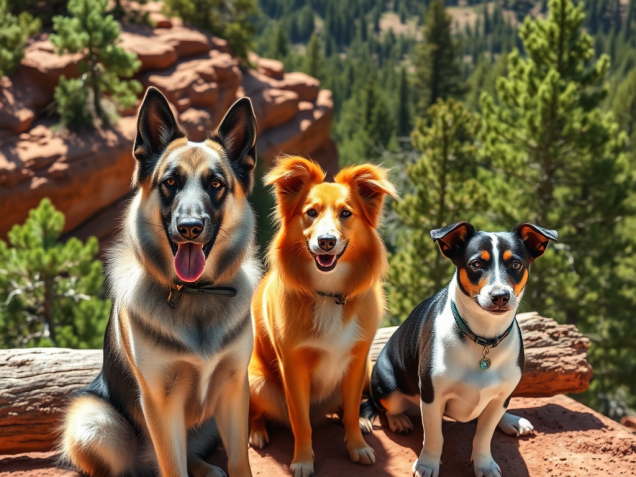
Bruiser, Oggy and Jackie, three friends that protected Benji.
It was Three O’clock in the morning before the Doctor arrived at Benji’s home. The Doctor had been tied up delivering twin babies out in the country, 12 miles south of town. When he returned to his office, his night nurse instructed him to go to Benji’s house for an emergency. The Doctor hadn’t wasted any time. Benji’s parents led the Doctor down the hall to Benji’s room. Benji’s mother explained in detail to the Doctor. She shared that Benji has had a 106-degree temperature.
“I haven’t managed to get it to break. I have tried everything I know to use.”
The Doctor took a look at Benji, who was mumbling. Shining a light into Benji’s pupils, they were dilated and fixed, something the Doctor didn’t like. He took his temperature, and it read 107. He checked the inside of Benji’s mouth. He saw what looked like the start of mouth blisters caused by the temperature. Oddly, Benji’s ears were clear. The Doctor turned to Benji’s parents, Mr. and Mrs. Roff.
“I’m not at liberty to reveal what it is. Is it is an allergic reaction to something the boy found in the forest? Possible. Is it a splinter infection we can’t see. Or it is a virus. Plenty of those are circulating these days. The important thing for us to do is get him cooled down.”
The Doctor instructed Benji’s mother to soak him in a bathtub filled with cold water and ice.
“He needs ice baths every hour. He’ll start fighting it. I would, too. But, we need to lower the temperature to at least 100. Then, we can give him some over-the-counter medication to help from there. Plus, while you are soaking him, be sure to watch his feet for thorns or splinters he has. Do the same with the legs, arms, and hands. Check any part of his body for that matter. We want to make sure he hasn’t got some foreign item infecting him.”
Madge, Benji’s mother, was quick to start running cold tap water into the tub. She emptied ice trays and sent Jake to the store to buy bags of ice. Benji’s temperature continued to rise. It climbed to 109. The Doctor was sitting in the kitchen. He had a cup of coffee. He said,
“I don’t like this one bit. If it goes up much further, we are going to have to put him in a hospital. I know it is costly and a ways from home. But, we need access to fluids and IVs that only a hospital can offer. Continue bathing him and try to see if we can lower the temperature.”
As Benji’s parents moved him from the bed to the bath, he talked about feral hogs. He also mentioned wildcats and bottomless pits. Benji’s mother asked her husband, Jake, if he had any idea what he was talking about. Jake, scratching his head, replied wearily,
“Not – A- Clue! I have never heard him talk of any of them, and we ain’t got that thing around here.”
Madge asked Jake if he had wandered into No Man’s Land and got the ideas from there. Jake replied,
“I don’t see how. All that is back there is old scrub brush and blackjack trees. Maybe a few bobcats and a coyote or two. Our cows won’t even go in there. The most he’d get if he went in there is dirty.”
Benji kept having visions of Bruiser standing in front of him. Bruiser was fighting off a feral hog. Oggy distracted a second hog. Then, Jackie barked at a third. Then, his vision went black. And a cold wash went over him. SPLASH! Next, he was in a cave. He heard a scream and looked around for its source. He felt the dogs surrounding him. Again, a Cold wash went over him, and it went dark again. SPLASH! Next, he was near the Bottomless Pit. He looked around and saw the straight-down drop-off. His stomach became unsettled. Then, another cold wash, SPLASH! He was at the clearing with his parents. This time, they were drying him off. Benji began struggling and squealing -––– yelling out,
“Oh, please tell me I didn’t fall into the Bottomless Pit! “
Madge and Jake, both happy that he was awake and the temperature appeared to have broken, called to him. Madge, hugging him, cried.
“Benji, Benji, can you hear us? You have been so sick, son.”
Jake wanted to know what Benji had been talking about. He asked,
“What is all this talk about? You mentioned feral hogs, wildcats, and bottomless pits. You had us all going for a minute. That must’ve been some dream!”
Benji said it wasn’t a dream; it happened. He knew it did. He wanted to know how are Bruiser, Oggy, and Jackie? Jake assured him they were fine. They had all been fed. They were sleeping on their pads by the door. They were being lazy. Benji asked if Bruiser had to have stitches. Jake laughed, asking,
“What are you talking about? Bruiser is fine; he has been playing with Oggy out in the front yard all afternoon. But I can tell they all three are missing you being out there with them.”
Benji couldn’t figure out how this could all be just a dream. It had to be real. It had to have been something he did. He stopped elaborating on the story. He was cautious because he didn’t want his parents to limit where he go. After a week of healing and receiving the Doctor’s approval, Benji was back to his regular habits. The Doctor suspected he must’ve had some spoiled food. The last thing Benji remembers eating before getting sick was canned Vienna Sausages. They had stayed in a pack in a locked car in the sun’s heat for some time. He and his pals were on the fringes of the yard, playing rescue. It required rations of sorts to get back to home base. So, Benji used cans of Vienna Sausages. He had been carrying them with him for a year or longer. He had left them in his backpack in locked cars throughout the summer and winter months. The Doctor guessed. Those things must have marinated well over sixty times. They probably tasted like prime rib to Benji. After a week and a half, Benji was back to his regular self, as were the dogs. Leading and trailing the youngster wherever he went.
Benji promised himself he had to know. He got down on one knee before leaving the house that day. He told Bruiser, Oggy, and Jackie,
“You guys don’t have to come with me. I know in my dream, if that was what it was, you almost got hurt badly. Especially you, Bruiser. It is okay if you want to stay home and sit this one out. I understand!”
The three pooches glanced at each other. It seemed like they were taking a moral inventory. Then they looked back at Benji. In unison, they all barked -––
“We’re in!”
They were all off to the Hollow that led to the area Benji called “No Man’s Land.”
This time, they got there early in the morning, just after 7:00 a.m. Benji called his trio of pals and said –––
“Here we go, guys! A, One, a two, and a three.”
With that, the four crossed the imaginary line Benji had always set for “No Man’s Land.” They hiked, scampering through underbrush and thick overgrowth for thirty minutes when they came to a clearing. One clearing matched where the feral hogs had attacked. But on this day, it was peaceful. No critters were around. His three dogs’ ears were all on alert. Their eyes scanning the trees around them, but they found nothing to be alarmed over. Benji sat on a log, Bruiser, Oggy and Jackie circled him for a pep talk.
“So far, so good. We’ve been enjoying our beef jerky up to this point, so here are your pieces.”
Benji looked east, feeling out of sequence with his dream. He saw the Bottomless Pits. He decided to walk over to the drop-off. As Bruiser, Oggy, and Jackie looked over the cliff at the water below, it was just like Benji’s dream. Now, Benji started to question whether he had a dream. How did I know what this would look like if I had never been here? He didn’t have an answer, but he still wanted to go further and see what was deeper inside.
As he and the three dogs crept through the brush, another clearing came. As Benji got to the center, he looked up, and there were Sandrock cliffs all around him. On one side was a cave. It seemed like the cave he had spent a night in with his three dogs. Had it been a dream, or was it real? He and the dogs walked up to the cave. It didn’t look as if anything had disturbed the soil in a very long time. No animals, no person, not even a bird. Which Benji thought to be odd.
Benji wanted to examine the watering hole where the Wildcat had been spotted the night of his ‘dream.’ When he got to it, he saw that it was clear as day and ice cold. It was a natural spring. You can drink from this Spring without getting ill. It was not contaminated. The Spring fed a creek; Benji looked at the creek flowing north. It was one of the few creeks in the county to do so. The creek is on his Dad’s farm. He always wondered where the creek water flowed from. Now he knew. And he knew it was Spring fed—another interesting fact.
Benji turned to take the path he and the dogs used to enter the opening. Surprising him, there stood an older man. He wore a white shirt with suspenders paired with pants tucked into knee-high boots and a floppy hat. Behind him stood a mule saddled.
“Young man, you lost?”
He asked.
“No, I don’t think so,”
Benji replied.
“This is on my father’s farm. I have never been brave enough to venture into these parts. I’m here to take a look around.”
The older man laughed.
“Well, my name is Elmer. I have lived out here in these parts all my life. And there ain’t nothing to be afraid of. But, this is the second time you’ve been here with your buddies. I helped you out of here the other night. I was afraid for all four of you. You and your dogs looked like you had stopped and eaten loco weed. That’s the devil, weed, boy; it will make your head spin.”
Benji, looking confused, asked Elmer,
“You said Loco Weed? What is that?”
Elmer rubbed his mule’s head. He propped his hat back on his head. He let out a breath. –
It looks like Polk Salad. That is what gets many people to mistake it for Polk. But it is LOCO. I’ve seen horses and cows do all kinds of crazy on the stuff. I tried to kill it all off my place. But it keeps finding its way back; birds, animals, and such have a way of replanting things.
Benji then asked,
“So, you helped me out of here? “
Elmer was quick to oblige –
“Yep, me and old Sara here; that’s my mule’s name. We were over here trying to find a couple of my hogs that got loose. They retreat to the Blackjack Trees and wallow in the cool soil. Anyway, we were trying to find our hogs, and we came across you guys trying to fight them. You thought they were some third-world alien implant. I got a big laugh out of that.”
Benji, scratching his head, looked at Elmer.
“I don’t remember that part, and I don’t remember meeting you.”
Elmer said he doubted that he would. He was surprised to see the boy back out there ever again. You were having a tough time. I have no idea what drove you to eat loco weed. Benji explained that he was trying to live off the land. He wanted to be a true backwoodsman. He thought he’d be eating something like Polk. He had never heard of loco weed. Elmer told me he’d know, and he’d be smart to stay clear of it. Benji said the dogs ate when Benji wrapped it around a Vienna Sausage.
Elmer said,
‘Now I have heard everything.’
Elmer explained to Benji he was in “No Man’s Land” all of two hours that night.
“I loaded you on old Sara. I took you down to your parents. I told them I found you and the dogs in the woods very sick. I was hoping I wouldn’t have to do it again tonight. Benji said no, now that I know what I did, I won’t do it again. Thank you for talking to me.”
Elmer said your big dog there looks like he’s got into some briers. Benji looked, and it appeared just as it had when the injuries from the boars were inflicted on Bruiser. Benji said I need to get him home. He needed to take care of the injury. Benji also need to make sure the other two were okay. Benji thanked Elmer for telling him about what happened. Elmer flashed a peace sign to Benji and told him,
“Well, son, just you and I know. That is all that matters. Of course, these three friends of yours know, but they won’t say anything. Just remember to be careful about chasing make-believe.”
That night, Benji sat on the porch. A bandaged Bruiser rested at his feet. Oggy curled up on the welcome mat. Jackie sat beside him, her eyes watchful and wise. His father stepped outside.
“Heard some wild barking earlier. Everything okay?”
Benji smiled.
“Better than okay. Oggy warned us. Bruiser protected me. And Jackie brought us home.”
Jake scratched Bruiser’s ear.
“Looks like we’ve got ourselves three of the best dogs in the county!”
From that day on, every afternoon, the school bus came to a halt at 3:35. Three dogs waited at the gate. They were ready for the next trail, the next challenge, and the next memory to be made. Because no matter how wild the world became, Benji never hiked alone.
Sunrise sparkled through the trees, casting golden streaks through the ridge of the canyon as a new day began. The dogs had curled up around Benji during the long night after the wildcat screams. Sleep had eluded him, but at least their warmth had kept the cold at bay.
Jackie the Snake Fighter
Benji checked his backpack. Two cans of Vienna sausages. Two bottles of water. Not much, but enough if he rationed carefully. He didn’t know how long it would be before he saw civilization again. He jumped to his feet. He kicked dirt over the glowing embers of the fire. Then he spotted an old bucket lying in the grass. He fetched water from the same spot where he’d seen the wildcats drink and thoroughly doused the coals.
He whistled and called out,
“Okay, guys! Let’s find our way out of here!”
The dogs were now rested after the brutal meeting with the hogs the day before. They let out a few excited barks. They circled around him. They were ready.
“Jackie!”
Benji called out, his voice clear and hopeful.
“Let’s get going and take us home, girl!”
It was Jackie’s moment to lead.
She barked once, turned, and began moving with purpose down a faint trail. Her nose worked the ground like a compass, tracing the path with quiet certainty. She paused now and then to sniff, confirming her route, then pressed ahead.
Benji followed without hesitation.
“Good girl, Jackie. Take us home.”
As they retraced their steps, Benji noticed something he’d missed before. The chaos of the hog attack had distracted him from exploring further. Just east of where that meeting occurred, he saw something new. It was something he’d only ever heard described in hushed tones: the Bottomless Pits.
He turned to the dogs.
“Come on, guys. We’re close. I need to see this.”
He approached the edge of a steep cliff. It was seventy-five feet straight down to a deep, green pool below. The surface was fed by water trickling from the mouth of a sand rock ridge. “That’s a natural spring,” Benji murmured to himself, “surrounded by vegetation and carved into the canyon by wind and rain.” The erosion had shaped the space into something mysterious and timeless. There was no telling how far the pit actually went.
He stood there, staring into the depths. He imagined what happened to those who had entered “No Man’s Land” and never returned. No sane person would ever try a descent.
The dogs looked at each other, almost as if wondering whether this was going to turn into their next mission. They seemed relieved when Benji turned back and said, “Okay, Jackie. Take us on home.”
Their return journey was quieter, more deliberate. The woods themselves seemed to exhale—less ominous now, more at peace, as if the danger had passed.
Eventually, the familiar rise of Miller Hill came into view. Beyond it stood the barn, and flickering on the porch was the warm, welcome glow of a light. As they emerged from the tree line, Benji spotted people in the clearing. A search party—his father among them, his mother as well. They had been looking everywhere… except in the place no one dared go.
Benji’s dad stepped ahead quickly, his face a mix of relief and frustration.
“Son,”
he said,
“you knew that area was off-limits. No one goes back there. Why did you?”
Benji, still trembling slightly from nerves and exhaustion, answered quietly,
“I wasn’t looking for anything, really. But now I know what’s back there.”
His father narrowed his eyes.
“What? What did you find? No one ever comes back.”
Benji looked him in the eye.
“Feral hogs. Wildcats bigger than our dogs. And pits that look bottomless. I figure the people who disappeared… they didn’t make it out because they were walking in the dark. They either fell in—or the hogs got to them.”
The searchers stood silently for a moment, absorbing his words. Then came relief, and the reunions began.
Benji made a point to thank everyone who’d come looking for him. One by one. Then, he helped lift each of the dogs into the back of his father’s pickup. This time, he insisted they ride up front.
Oggy, Bruiser, and Jackie settled into the cab like visiting royalty, each peering out the windows with pride and dignity. They had saved Benji, and he knew they deserved far more than a truck ride.
The truck rolled down the familiar dirt road toward home. Benji sat in the open bed under the early morning sun. He leaned back. He opened his last two cans of Vienna sausages. Then, he drank from one of his remaining bottles of water. He was there, alone in the quiet. The wind brushed his face. The trees grew smaller behind him. He finally relaxed.
He had made it out of No Man’s Land.
Benji would never forget what he found there. But even better, he wouldn’t forget how his three pals had worked together to take care of him. And when he got home he would tell his dad about the dogs doing the great things they did. He also wanted to repay his canine friends in some way. In Chapter 5, Benji repays them and that is how the story ends in an unexpected way.
How can this story end in any unexpected way? A boy and his dogs have made it out of No Man’s Land. They are safe, aren’t they? We all are, aren’t we? Or are we? What Chapter five holds will have you asking questions of your own. It looks like the dogs will still be looking for a tree or two come Chapter Five!












 benandsteve.com