Winning the Battle for Health, Security, and Equality in America

By Benjamin H. Groff II
3–5 minutes

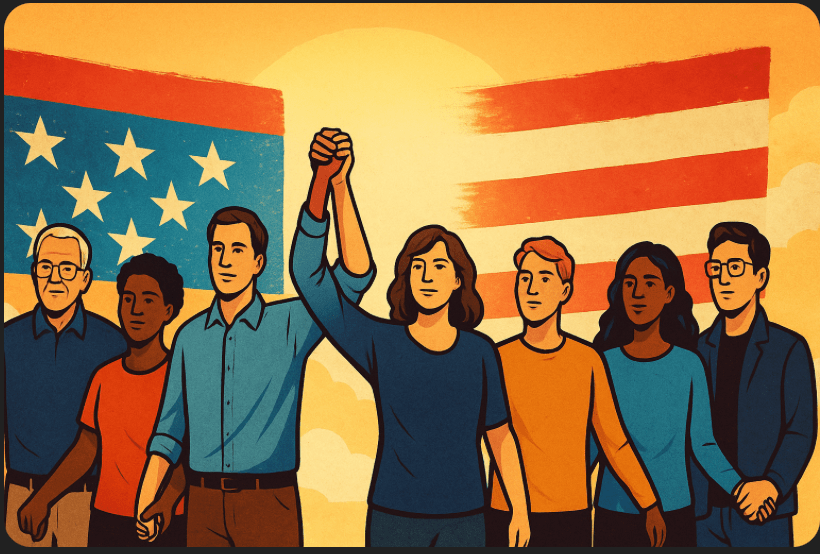
We are living in a time when critical issues are being tossed around like poker chips in Washington. These include health care, Social Security, disability support, and the rights of the LGBTQ+ community. The game has gotten meaner, the stakes higher, and the players more reckless. But if history teaches us anything, it’s that ordinary Americans can outshine the biggest machines of power. They can outlast them when they work smart and stay focused.

This isn’t about red or blue. It’s about who gets to live with dignity and who doesn’t.

1. Protecting What We’ve Paid For

Let’s start with the basics: Social Security and Medicare are not entitlements—they’re earned benefits. Working Americans paid into them every payday of their lives. Yet, each election cycle, someone in Congress floats the idea of “sunsetting” or “restructuring” them. That’s political code for cutting.

The smart move? Make every elected official—Republican or Democrat—go on record promising no cuts to Social Security and Medicare. It’s a winning issue across party lines because nearly every voter depends on it, or soon will. The average monthly advantage for retirees is about $2,000. You can’t afford to lose that—and neither can your parents.

2. The Health Care Frontline

Medicare drug price negotiations are already law, and they’re starting to bite down on Big Pharma. Those savings need to be expanded and defended. Keep the issue local—talk about your neighbor’s insulin cost, your pharmacy’s long lines, and your doctor’s limited hours. These stories hit harder than any campaign ad.

If you live in a state that still refuses Medicaid expansion, that’s another battle worth fighting. States like Oklahoma and Missouri proved that when citizens put Medicaid expansion on the ballot, it wins—even in conservative territory. It keeps rural hospitals open and saves lives. Simple as that.

3. Disability Rights Are Human Rights

For millions of Americans, especially seniors and people with disabilities, Medicaid is the real safety net. It funds long-term care, home health aides, and community services. Most people don’t realize that these programs face constant threats. This occurs at both the state and federal levels.

It’s time to make disability policy visible again. Discuss the waiting lists. Talk about the family caregivers working without rest. Tackle the closures of group homes that once kept people safe. Every one of those stories is a vote for compassion and common sense.

4. Standing Up for the LGBTQ+ Community

Across the nation, hundreds of anti-LBGTQ+ bills have been introduced under the banner of “protecting children.” But what they really do is threaten the safety and rights of already vulnerable people—students, families, and workers.

The answer isn’t more shouting matches. It’s telling real stories. These are parents who want their trans kid to live without fear. There is a teacher who wants to keep their job. Or a couple wants the same hospital visitation rights as anyone else. When the conversation becomes personal, hearts shift—and politics follows.

5. Building Alliances That Win

You don’t win these battles alone. You build coalitions that surprise people. Seniors and veterans defend Social Security. Small business owners back drug price reform. Nurses and church groups advocate dignity in care. That’s how movements grow—through unexpected allies who realize they’re all fighting for the same thing.

The revisionist thrives on division. A winning strategy thrives on unity.

6. How to Get Loud, Smart, and Effective

  • Use your voice locally. County health boards, school boards, and hospital districts make real decisions about care and coverage. Attend those meetings.
  • Tell your story. A 30-second video of your experience with health care or benefits will reach more people than a dozen speeches.
  • Learn it. Agencies post new rules all the time—public comments matter. Gather friends, go to Regulations.gov, and leave thoughtful, factual remarks. Bureaucrats read them.
  • Stick to clear messages:
    • “Protect what we’ve paid for.”
    • “Keep care close to home.”
    • “Freedom to make personal medical decisions.”
    • “Dignity for every family.”

7. The Bottom Line

The fight for affordable health care, strong social programs, and equal rights isn’t about party loyalty—it’s about survival. You can’t eat ideology, and you can’t pay for prescriptions with political slogans.

The people who built this country deserve to live out their years in peace, not fear. The next generation deserves to inherit something more significant, fairer, and more human.

That’s how we win. We don’t hate what’s broken. Instead, we protect what still works. We fight like hell to fix what doesn’t.


© Benjamin H. Groff II — Truth Endures / benandsteve.com
Top Financial Worries in 2025: What You Need to Know

2–3 minutes

The Biggest Concern Facing People Today

We live in a world filled with constant change and uncertainty. One theme keeps bubbling to the surface no matter where you look: economic anxiety. Money-related worries top the charts of what keeps people awake at night. These concerns range from the price of groceries to the dream of owning a home.


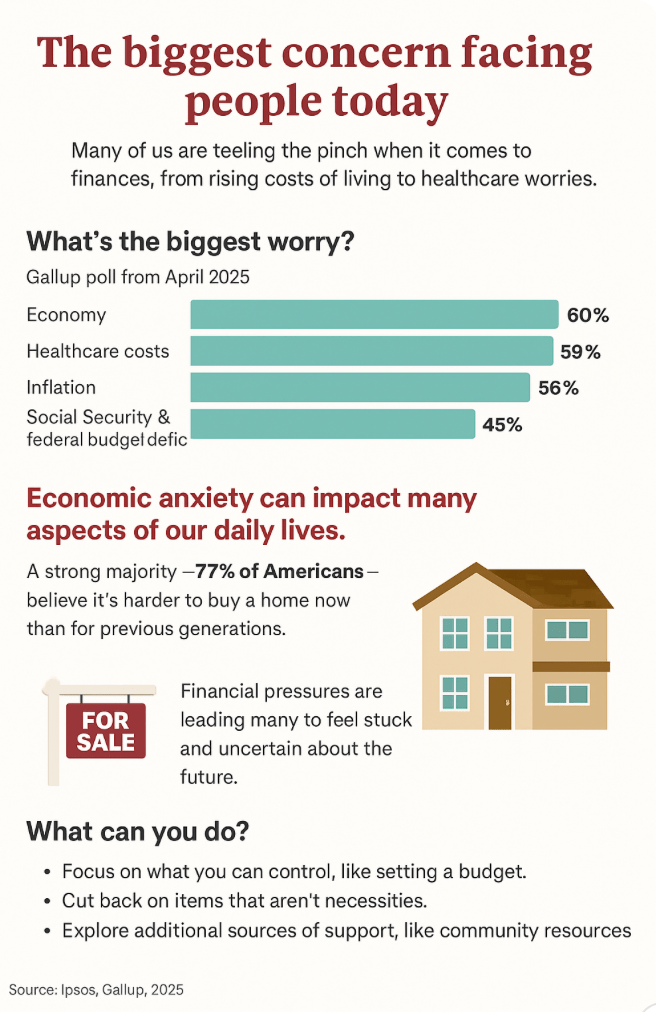
Gallup poll from April 2025 found that:

  • 60% of Americans worry “a great deal” about the economy.
  • 59% lose sleep over healthcare costs.
  • 56% are stressed about inflation.
  • Nearly half worry about Social Security and the federal budget deficit.

Globally, it’s no different. According to Ipsos, the leading concerns include inflation (30%)poverty (29%)unemployment (28%), and corruption (26%).

To make matters feel even heavier, 77% of Americans believe it’s harder to buy a home today. They feel it’s more difficult than it was for past generations. That frustration touches nearly every household—young people trying to buy, older adults trying to downsize, and families squeezed in between.


Staying together through rough times!

This isn’t just about numbers—it’s about people. Rising rent, higher grocery bills, climbing medical costs—each of these chip away at security. Families cut corners, young people delay milestones like marriage or kids, and many retirees wonder if their savings will last.

Economic stress also spills into mental health, relationships, and communities. When you feel like you’re always one paycheck away from disaster, it’s hard to focus on thriving—you’re stuck surviving.


While we can’t solve inflation or rewrite housing policy alone, there are small, powerful steps we can take:

The Mysteries of Financial Security.
  • Focus on control: Create a budget and stick to it. Even small wins matter.
  • Cut back strategically: Trim unnecessary expenses, but give yourself permission to keep the things that bring you joy.
  • Tap into resources: Community groups, food banks, and local organizations often have programs to ease the burden.
  • Stay connected: Talking about financial stress reduces shame. You’re not alone.

The economy, healthcare, inflation—they’re big, intimidating problems. But your response doesn’t have to be. Focus on what you can control. Find support in your community. Remember: sometimes resilience comes not from having more, but from facing less with wisdom, planning, and hope.


By Benjamin GroffMedia© | benandsteve.com | ©2025 

What Will Happen If PLANS To End Social Security Happens?

3–4 minutes

If Social Security were eliminated, the effects would be wide-ranging. It would touch nearly every part of American life. This is especially true for retirees, people with disabilities, and survivors of deceased workers. Here’s how it would unfold:


Social Security now provides monthly benefits to over 70 million Americans, including retirees, disabled individuals, and surviving spouses or children. Without it, many of these households would lose their main or only source of income overnight.

  • Retirees: Many older Americans rely on Social Security for the bulk of their income—especially those without significant savings or pensions.
  • Survivors: Widows, widowers, and children who now get survivor benefits would lose critical support.
  • Disabled workers: People incapable of work due to disability would lose a major safety net.

Before Social Security, poverty among the elderly was extremely high—estimates put it at around 35–50%. The program cut that rate dramatically. Without it, poverty rates among older Americans will return to pre-1935 levels.


The financial burden of caring for elderly or disabled relatives would shift heavily to families. Those without family support be forced into underfunded state programs or charitable care.

  • Families need to delay retirement, take on extra jobs, or house multiple generations under one roof.
  • Local charities and churches would see rising demand for basic necessities like food and shelter.

Social Security benefits aren’t just “checks”—they fuel spending in local economies. Without those payments:

  • Rural and small-town economies (which often have higher percentages of retirees) see sharp declines in consumer spending.
  • Certain industries—especially healthcare, retail, and housing—would feel immediate impacts.

Because Social Security is one of the most popular federal programs, ending it would be politically explosive. It would lead to intense public backlash, large-scale protests, and significant shifts in voter behavior.

  • States try to create their own replacement programs, but poorer states struggle to fund them.
  • The wealth gap would widen sharply. Those without private retirement savings would be left with little to no safety net.

By Benjamin GroffMedia© | benandsteve.com | 2025 

August 2025 commemorates its 90th anniversary. It marks its unwavering commitment to the financial security and dignity of millions of Americans. President Franklin D. Roosevelt signed the Social Security Act into law on August 14, 1935. Since then, the program has grown into one of the most successful and trusted institutions in American history.

“For 90 years, Social Security has stood as a promise kept. It ensures that older Americans have the support they need. It also aids people with disabilities, as well as families facing loss,”

said Commissioner Frank J. Bisignano.

“As we honor this legacy, we are also building a future. This future is where service is faster, smarter, and more accessible than ever before. Through President Trump’s vision, we are protecting and preserving Social Security. We achieve this by delivering extraordinary customer service through technological improvements. Enhanced process engineering also plays a crucial role.”

In an open letter to the American people, Commissioner Bisignano emphasized the importance of Social Security. He highlighted his commitment to strengthening the agency. He also mentioned the significant improvements to customer service achieved in his first 100 days in office.

Read the Letter:  Commissioner Bisignano’s Open Letter to the American People

Today, Commissioner Bisignano also joined President Donald J. Trump at the White House. The President issued a presidential proclamation. He recommitted to always defend Social Security. He recognized the countless contributions of every American senior. They have invested their time, talent, and resources into our Nation’s future. 

Read the Proclamation: Presidential Proclamation: 90th Anniversary of the Social Security Act