A Blinding Prank That Wasn’t FoolProof

A Story By Benjamin H Groff© Groff Media Copyright 2024©

In the small town of Havenbrook, two blind men, Al and Bert, were renowned for their cunning and mischievous antics. Despite their lack of sight, they possessed a sharp wit and an uncanny ability to navigate the world around them. They orchestrated elaborate practical jokes daily, relishing in the townspeople’s reactions.

Yesterday, Al and Bert made an unusual purchase: a driverless car. They had saved up for months, and now their latest scheme was about to unfold. The sleek, shiny vehicle arrived at their doorstep, and the two friends couldn’t contain their excitement.

“This is going to be legendary!” Al exclaimed, his face lighting up.

Bert nodded, grinning from ear to ear. “Let’s give Havenbrook a show they won’t forget.”

That morning, Al and Bert put on a show. They dressed in a deliberately disheveled manner, with their clothes inside out and their hair tousled. They staggered down the street, feigning confusion and disorientation. The townspeople looked on in bewilderment as the two blind men stumbled around, bumping into things and seeking directions.

“Excuse me, can you help us? We seem to have lost our way,” Bert asked a passerby, his voice trembling with fake desperation.

The kind-hearted woman pointed them in the right direction, her face filled with concern. Al and Bert thanked her profusely before stumbling off in the opposite direction, leaving the woman and the other townspeople in a state of amused bewilderment.

Their antics continued throughout the day, with Al and Bert putting on an Oscar-worthy performance. They wandered into shops, interrupted conversations, and generally caused chaos wherever they went. Each time someone offered help, the duo responded with exaggerated confusion, leaving the townspeople scratching their heads and bursting into laughter at the same time.

By midday, they decided it was time to unveil the pièce de résistance. Al and Bert climbed into their driverless car, pretending to argue about who should take the wheel.

“You drive, Al! I can’t see a thing!” Bert insisted, his voice rising in mock panic.

“Neither can I, you fool! We’re both blind!” Al shot back, throwing his hands up in frustration.

The car, programmed to respond to voice commands, smoothly pulled out of the driveway and began its route through town. The sight of two blind men driving a car sent shockwaves through Havenbrook. People gawked, some laughed, and others chased after the vehicle, shouting warnings and pleas for them to stop, adding to the chaotic and humorous scene.

Inside the car, Al and Bert were beside themselves with laughter. They marveled at the chaos unfolding outside, their faces aching from so much smiling.

“Look at them! They think we’re driving!” Al gasped, clutching his sides.

Bert nodded, tears of joy streaming down his cheeks. “Best prank ever!”

The car continued its journey, obediently following its pre-programmed path. Realizing they got duped again, the townspeople couldn’t help but chuckle at the elaborate ruse. Al and Bert’s reputation as the town’s resident tricksters became cemented even further.

As the day drew close, the car returned to their home, and the two friends climbed out, exhausted but exhilarated. They high-fived each other, basking in the success of their latest prank.

“Well, Bert, we’ve done it again,” Al said, a satisfied smile on his face.

Bert nodded in agreement. “Indeed we have, Al. Indeed we have.”

In the days that followed, the story of the blind men and their driverless car became the stuff of legend in Havenbrook. Al and Bert continued their daily pranks, always finding new ways to keep the townspeople on their toes. And though their sightless eyes never saw the results of their efforts, their hearts were full of the joy and laughter they brought to their beloved town.

Being Blindsided By Two Of The Craziest Drivers In Town ––– Leaves Everyone Jumping Out Of The Way.

A Story By Benjamin H Groff© Groff Media Copyright 2024©

In the quaint town of Willow Springs, the residents were known for their simple and predictable way of life. It was a place where everyone knew everyone, and the townspeople tended to accept change skeptically. That is, until the day Leonard and Frank, two elderly blind men, decided to shake things up with an adventure that would change the town forever.


Leonard and Frank, with their mischievous humor and lighthearted attitudes, had been best friends for decades, bonded by their shared experiences and a mutual love for adventure. Despite their blindness, they were known for their spirited attitudes and naughty humor. So, when they heard about the new self-driving car, they were immediately intrigued.


“Frank, can you believe it?”

Leonard exclaimed one morning over tea.

“A car that drives itself! Imagine the freedom it would give us!”


Frank, equally excited, nodded vigorously.

“Let’s do it, Leonard. Let’s buy one!”


The townsfolk of Willow Springs were accustomed to the sight of Leonard and Frank navigating the streets with their canes, always laughing and chatting animatedly. So, the entire town was curious when a shiny, futuristic self-driving car appeared in front of their modest home.


“Have you heard? Leonard and Frank got one of those new self-driving cars!”

Mrs. Thompson whispered to her neighbor.


“Those two? In a car? The two driving, I’ve got to see,”

her neighbor replied.


On a sunny Saturday morning, Leonard and Frank decided to take their new car, which they affectionately named “Freedom,” for its maiden voyage through town. As they settled into the plush seats, the car’s AI voice greeted them.


“Good morning, Leonard and Frank. Where would you like to go today?”


“To the park, please,”

Leonard said confidently.


As “Freedom” smoothly pulled away from the curb, the neighbors watched in a mix of astonishment and amusement. Some cheered, others gasped, and a few crossed themselves, praying for the safety of everyone involved. A dog barked, a child pointed, and a few people even dropped their groceries in shock.


The car moved gracefully through the streets, impeccably adhering to all traffic laws. Leonard and Frank laughed heartily, relishing the novelty of their adventure. They waved to passersby, who stared in disbelief at the sight of two blind men being chauffeured by a car without a driver.


However, things turned unexpectedly when “Freedom” encountered a detour due to road construction. The car, programmed to follow alternative routes, led Leonard and Frank on a scenic drive through the unfamiliar backstreets of Willow Springs. The residents, already on edge, began to panic.


“Where are they going? They don’t know those roads!”

Mr. Jenkins shouted, hopping on his bicycle to follow them.


As word spread, more townspeople joined the impromptu parade, trailing behind Leonard and Frank’s self-driving car. Some were on foot, others on bikes, and a few even in their cars, all trying to keep up with the unexpected journey.


Oblivious to the commotion behind them, Leonard and Frank were having the time of their lives. “Freedom” took them past the old mill, the blooming orchards, and even down the riverbank. It was a tour of Willow Springs like they had never experienced before.


Meanwhile, the crowd grew more extensive and more frantic. Children pointed and laughed, dogs barked, and a few people even attempted to flag the car down, worried about the safety of their beloved town characters. The mayor, Mr. Roberts, received dozens of calls and texts demanding he do something about the situation.


Finally, “Freedom” brought Leonard and Frank to the town square, where the weekly farmer’s market began. As the car came to a gentle stop, the two friends stepped out, greeted by a mixture of cheers, applause, and sighs of relief.


“What a ride!” Frank exclaimed, grinning from ear to ear.


Leonard nodded, equally ecstatic.

“I haven’t had this much fun in years!”


The mayor approached them, catching his breath from running to the square.

“Gentlemen, you certainly know how to cause a stir,”

he said, trying to suppress a smile.


Leonard and Frank looked at each other and burst into laughter.

“We didn’t mean to cause any trouble,”

Leonard said.

“We just wanted to explore a bit.”


“And explore you did,”

The mayor replied.

“But perhaps giving us a little warning would be appreciated next time.”


From that day on, Leonard and Frank became local legends. The story of the two blind men and their self-driving car spread far and wide, bringing a newfound sense of pride and unity to Willow Springs. Initially thrown into chaos, the community embraced the spirit of adventure and innovation, inspired by their two beloved residents.


And Leonard and Frank? They continued to explore, always ready for their next adventure, with “Freedom” leading the way and a town full of friends cheering them on.

The Comm Commander Tells About Jailing His First Arrest

A Story By Benjamin H Groff© Groff Media Copyright 2024©

It was slightly after 2 AM, and the calls had slowed to officers making traffic stops. They were watching for drunk drivers. The local bars closed then, and the streets would fill with drivers hitting light posts and speed signs.


Keeping track of their locations was a breeze, and the Comm Commander kept a log with details, including every detail radioed over the airwaves. The gals had been egging the Comm Commander to tell them one of his stories about his time at the other departments he had worked at. With a lull in activity, he thought, well, now is as good a time as any.

Edna and Gail had stayed over from their earlier shifts for the occasion. They were both much older than the Comm Commander, and he liked to tease them whenever he could pull a good trick on them. They, in turn, returned the favor. Edna, a divorcee, was snappy and wise. Gail was from the deep South and had a twang in her voice. Plus, she talked of her roots and Alabama every chance she got.

Well, ladies, the Comm Commander began,
“my first arrest was when I was barely 17. I arrested a man known as 15,000. The nickname 15,000 had been given him for the many times he had been arrested for public intoxication. Anyway, he walked into the police department and nearly fell over the dispatch desk. I told him he was going to the tank, and he thanked me. Then he tried to resist arrest when I got the door to the drunk tank open. I got him in there, and he went to sleep. A few days later, after seeing the judge, he was sentenced to two weeks in jail. I was checking on him, and he was having D.T.’s Delirium Tremens”

“Yes, we know what they are Comm Comm.” The ladies interrupted.

The Communications Commander continued,

“Well, I told our Chief JR Toehay, and he said give him a cup of liquor. So, I went to the evidence vault and found the alcohol bottle with the lowest proof that wasn’t evidence for court. I poured a shot into a cup and went to his cell. I opened the door and said hey Wallace, I have a drink for you. He lapped it up. Within a few minutes, he settled down. Over a week, I did that until he was clean, and when he left jail, he was sober. He stayed sober for the first time in years; he had never taken another drink, and he would come by the police department and thank me every night when I was working. He would thank me for being kind to him and helping him. That was when I thought I had finally reached someone doing this job.”

The next guy I arrested came into the police department like that; I had to fight and call for help. He started throwing things over the counter at me and going wild. When we got him into the cell, the Chief told me he was the suspect believed to have beaten a man to death behind the jail not long before I went to work for the department. There wasn’t enough evidence to support an arrest, and he would never have admitted to doing it. I asked if anyone had ever asked him when he was drunk and got told anything he admitted to being intoxicated wouldn’t hold up as a confession. The girl’s eyes were wide and expecting something more, so I said the biggest thing that happened was when the Chief and I helped in a kidnapping.

WHAT? The two ladies both said?

The Comm Commander explained it was under pretenses that a judge got brought to the jail. Five people with Federal Identifiers and Bureau of Indian Affairs Police Badges brought a lady to the town’s jail; the jail was contracted with the BIA as a facility for their agency. They provided legal paperwork authorizing the detention of a lady they had in custody as a material witness. She was to have no visitor, and no one was to know she was in our protective custody. The police department secured her in a female cell with the paperwork signed and sealed by a judge. She did not talk to anyone at the police department.

Two days later, while the Communications Commander was working, he happened to read in the paper that unknown people had kidnapped a federal judge from the Commanche Indian Tribal Headquarters. It also showed the picture of the lady we had in custody. He went to the Chief and told him to show him the newspaper article. The Chief said several colorful words and then called the city attorney. The Chief and Comm Comm, went to the cell, removed the lady, and told her they believed they knew who she was and that she was safe. They also said she could make a phone call and encouraged her to call anyone she thought she could trust. She could stay with the police department and only leave once she knew who she was going with could be trusted. Eventually, the Oklahoma Highway Patrol and a Federal Bureau of Investigation Agent arrived. The Communications Commander explained he stayed by the radio. And said he knew she left with a massive group of people around her, which shows how easy it can be for someone to be falsely locked up in a small town.

The ladies said –– “all this happened in that small town where you came from?”

The Comm Commander said ––

“oh, there was much more that happened while I was there. These are just a few of the things that happened at the jail. We did so much more out on the street. I will have to save for another time because I have three units bringing in prisoners, and I have to go to book them!”

The Gorb Touch: Continuing the Tradition of Personalized Farewells in Elderton

A Story By Benjamin H Groff© Groff Media Copyright 2024©

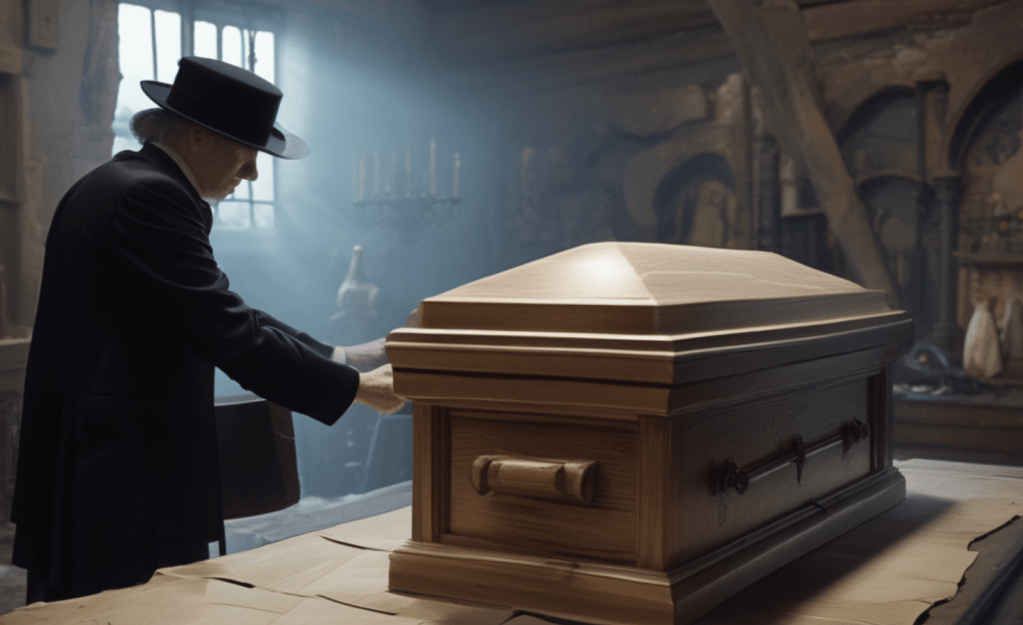
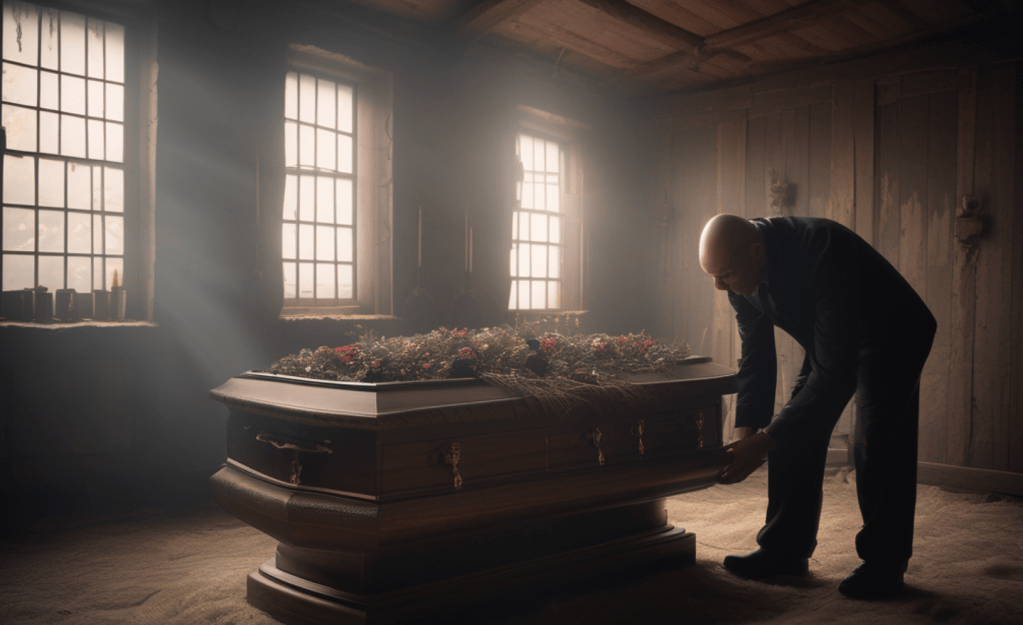
In the small town of Elderton, nestled between rolling hills and dense forests, there lived a man named Mr. Gorb. Mr. Gorb was a meticulous man, a perfectionist in every sense. His business dealings were unique, for Mr. Gorb was the town’s undertaker. However, unlike others in his profession, Mr. Gorb went above and beyond to ensure each client received a personal touch.


Although Mr. Gorb’s clients were all deceased, that didn’t mean they deserved any less care. He believed that everyone deserved a final sendoff that reflected who they were. This philosophy became known as the “Gorb Touch,” a term that resonated deeply within the community.


When someone in Elderton passed away, Mr. Gorb would embark on a journey to recreate their likeness as closely as possible to how they appeared when they last walked down Main Street. He would search the town for the most recent photographs of the deceased, often speaking with family members and friends to gather any images they had. He delved into the history of his clients, learning about their favorite outfits, their unique hairstyles, and any other defining features that made them who they were.

Mr. Gorb’s dedication was unparalleled. He would spend hours carefully applying makeup, arranging hair, and selecting the perfect attire for each individual. His attention to detail was astounding, and the results were always breathtaking. The people of Elderton loved Mr. Gorb for his personal touch and the comfort it brought them during their loss.


One crisp autumn morning, the townspeople awoke to shocking news. Mr. Gorb had passed away in his sleep. The entire town was at a loss. Who would now carry on the tradition of the Gorb Touch? Who would prepare Mr. Gorb himself for his final farewell?

Unbeknownst to the townspeople, Mr. Gorb had been quietly training an apprentice. A young man named Thomas had come to Elderton a few years prior, seeking guidance and a place to belong. Mr. Gorb had seen potential in Thomas and had taken him under his wing, teaching him everything he knew about the delicate art of caring for the deceased.


Thomas had learned well. He had absorbed every lesson, technique, and philosophy Mr. Gorb shared with him. And now, as the town mourned the loss of their beloved undertaker, Thomas stepped forward to fulfill his mentor’s legacy.


With a heavy heart, Thomas prepared Mr. Gorb for his final journey. He meticulously followed the same process Mr. Gorb taught, ensuring that every detail was perfect. The townspeople watched in awe and gratitude as Thomas recreated Mr. Gorb’s likeness with the same dedication and care that had become synonymous with the Gorb Touch.


The funeral was a beautiful tribute to Mr. Gorb’s life and work. As the townspeople gathered to say their final goodbyes, they saw the continuation of a tradition that had brought them so much comfort and peace in Thomas. They knew that Mr. Gorb’s legacy would live on through his apprentice and that the personal touch that had defined their community would never be lost.


Thomas continued to serve the people of Elderton with the same compassion and attention to detail that Mr. Gorb had instilled in him. As the years passed, the Gorb Touch remained a cherished tradition, a testament to the enduring impact of one man’s dedication to his craft and community.

Heroic Night in Cedar Hollow: The Legend of Fred Harper

A Story By Benjamin H Groff© Groff Media Copyright 2024©

Fred Harper was a man of simple routines. The mild-mannered police officer of Cedar Hollow, a quaint town of 700 nestled between rolling hills and dense forests, had a nightly patrol route that rarely changed. He preferred it that way. Cedar Hollow was a peaceful place where not much happened, and Fred liked it that way.

His nightly rounds consisted of checking the locked doors of businesses, shining his flashlight into the occasional darkened alley, and waving at the few night owls who might be walking their dogs or taking a late-night stroll.

But on this particular night, the tranquility of Cedar Hollow was shattered by a series of unexpected events, disrupting Fred’s usual routine.
It all began with a frantic call from Mary Jenkins, the usually composed wife of the mayor. Her voice was filled with urgency as she relayed the news about Helen’s labor.

Fred’s heart raced. He’d never delivered a baby before. He rushed to his squad car and sped to Helen’s house. When he arrived, he found Helen in the living room, breathing heavily, with Mary by her side. The tension in the room was palpable, and Fred could feel the weight of the situation on his shoulders.

Upon Fred’s arrival, Mary’s relief was palpable. “Fred, thank God you’re here,” she exclaimed, her face a picture of relief. “You need to help her. Now.”

Fred took a deep breath, remembering the emergency childbirth training he’d received years ago. With Mary’s assistance, he coached Helen through the contractions. After what felt like an eternity, but was in reality only a few intense minutes, the cries of a newborn filled the room. Fred cradled the baby in his arms, his uniform shirt now soaked with sweat.

Just as he handed the baby to a tearfully grateful Helen, his radio crackled to life. “Fred, we need you at the fire station. There’s a fire behind the building, and no one can start the engine.”

Leaving Helen and the baby in Mary’s capable hands, Fred raced to the fire station. Flames were licking the sky, dangerously close to City Hall. Fred jumped into the fire engine, praying his training would return to him. He managed to start the engine and drove it to the blaze. With no other firefighters in sight, he took hold of the hose and aimed it at the inferno. Neighbors, awakened by the commotion, formed a bucket brigade to help douse the flames. Together, they managed to keep the fire from spreading and saved City Hall.

As the last embers got extinguished, Fred’s radio buzzed again. “Officer Harper, there’s a break-in at the bank. Thieves are trying to rob the place.”

Exhausted but determined, Fred headed to the bank. He found a group of masked men attempting to pry open the vault. Drawing his service weapon, he shouted, “Freeze! Cedar Hollow Police!” The thieves, startled by his sudden appearance, attempted to flee. Fred, with unwavering courage, managed to subdue two, but the others escaped into the night. He secured the captured thieves and called for backup from neighboring towns.

The thieves, startled by his sudden appearance, attempted to flee. Fred managed to subdue two, but the others escaped into the night. He secured the captured thieves and called for backup from neighboring towns.
Just as he thought the night couldn’t get any worse, the call came in: “Fred, there’s been a four-car accident at the intersection. Significant injuries reported, and the town’s ambulance is thirty miles away.”

Fred’s mind raced as he arrived at the scene of the collision. Cars were crumpled, and injured people strewn across the road. He did what he could, providing first aid and comforting the victims while calling for an ambulance from a neighboring town. The ambulance, however, got lost on the way, and Fred’s patience became stretched to its limit.

As the first rays of sunlight lit up the sky, Fred finally saw the flashing lights of the neighboring town’s ambulance. He directed them to the injured, ensuring everyone received their needed care. The lady and her newborn, the fire at the station, the bank heist, and now the accident had been the most eventful night in Cedar Hollow’s history.

When the town woke up to a new day, Fred was utterly exhausted. His uniform was torn and dirty, and his body ached from the night’s exertions, but he was filled with a sense of accomplishment. He had faced every challenge alone and come through for his community.

As the townsfolk learned of the night’s events, they became filled with deep admiration and gratitude for Fred. They hailed him as a hero, their voices echoing through the streets of Cedar Hollow. But Fred, the humble officer, just smiled and said, “I was just doing my job.” His modesty only added to the townsfolk’s reverence for him, strengthening the bond of respect and unity within Cedar Hollow.

And Fred Harper, the humble police officer of Cedar Hollow, became a legend. In a town where life was usually quiet and uneventful, the night of chaos and heroism is a stark contrast, etching Fred’s name into the town’s history and leaving a profound mark on Cedar Hollow’s narrative.

The Unforgettable Story of Ethan: A Three-Legged Hero’s Courage and Sacrifice in Willowbrook

A Story By Benjamin H Groff© Groff Media Copyright 2024©

A man named Ethan lived in the quaint village of Willowbrook, nestled among rolling hills and serene landscapes. Ethan was unlike any other in the town; he was born with a third leg. Though some initially viewed him with curiosity and even pity, he became an integral part of the community, his unusual limb symbolizing resilience and strength.


The village cherished its traditions, and none was more beloved than the annual Christmas service held in the old stone church at the heart of Willowbrook. On Christmas Eve, every villager would gather for a night of songs, stories, and the sharing of a festive feast.
However, one fateful Christmas Eve, the peaceful village was disrupted by a band of ruthless hoodlums. Known for their brutal raids, they had been terrorizing nearby towns, leaving a trail of destruction in their wake. The villagers of Willowbrook had heard whispers of their approach but hoped their remoteness would spare them.


As the service commenced, distant hoofbeats grew louder, echoing ominously through the church. Panic spread among the villagers as the doors burst open, revealing the menacing figures of the hoodlums. They forced everyone into the central aisle, threatening violence and demanding valuables.


Ethan, seated near the back, watched the chaos unfold. His heart pounded, not out of fear for himself but for his friends and family. He knew he had to act. As the hoodlums corralled the villagers, Ethan stumbled and fell in the narrow central aisle, his third leg jutting out awkwardly.


Shouts of anger and confusion erupted from the hoodlums as they tripped over Ethan’s leg, one after another. Understanding Ethan’s silent signal, the villagers began to leap over his third leg with practiced ease. The invaders, unfamiliar with the anomaly, continued to fall, rendering themselves unconscious as they hit the stone floor.


Ethan’s bravery gave the villagers the precious moments they needed. The stronger men and women quickly disarmed the stunned hoodlums, binding them with whatever they could find. The church that had been a place of sanctuary became a fortress of courage and quick thinking.
In the aftermath, the village celebrated Ethan as a hero. His act of selflessness and his unique third leg had saved them all. Yet, Ethan, who had always been modest and kind-hearted, succumbed to injuries sustained in the struggle. He passed away that night, surrounded by those he had saved.


Ethan’s story became a legend, and when the townspeople spoke his name, it was done so with reverence and gratitude. A statue was erected in the village square, depicting him with his three legs, a testament to his bravery and the night he saved Willowbrook. Every Christmas Eve, the villagers would gather at the church, now with a plaque dedicated to Ethan, and recount the tale of the man whose unique gift had become their salvation.
The legend of Ethan, the three-legged savior of Willowbrook, lives on, symbolizing how even the most unexpected traits can be the greatest of blessings.

The Discovery of Beeping Moon Rocks: Dr. Richard Campbell’s Journey

A Story By Benjamin H Groff© Groff Media Copyright 2024©

In the bustling halls of NASA’s Johnson Space Center, where scientific minds collaborated to unlock the mysteries of the universe, there was a man named Dr. Richard Campbell. An experienced geologist, Dr. Campbell spent decades studying lunar samples and meteorites. His colleagues revered him for his meticulous research and unyielding skepticism—a trait that earned him both admiration and exasperation.


It all began one unassuming Wednesday morning when a rumor started circulating among the younger scientists—whispers of “moon rocks that beep” echoed through the labs, sparking excitement and curiosity. The story was that during a routine analysis, a peculiar sound echoed from one of the lunar samples hauled back to earth the Apollo missions.


Dr. Campbell dismissed these rumors as sheer nonsense. “Rocks don’t beep,” he asserted firmly whenever the topic arose. His logical mind couldn’t entertain the idea of lunar rocks emitting any sound, let alone beeping. He considered it a prank or, at best, a misinterpretation of data.


However, the buzz around the beeping moon rocks grew too loud to ignore. A young researcher named Dr. Emily Hayes, fresh out of her post-doc, approached Dr. Campbell with a determined look in her eyes. She respected his skepticism but believed there was something worth investigating.
“Dr. Campbell, I’d like you to see this for yourself,” she insisted, holding a tiny sample encased in a protective glass container. Reluctantly, he agreed to examine it in the lab.


Under the laboratory’s sterile white lights, they set up the sample on the analysis table. Dr. Hayes connected it to an array of sensors and amplifiers, the same setup that had reportedly detected the beeping. Dr. Campbell watched with skepticism and curiosity, arms crossed over his chest.


As the seconds ticked by in the sterile laboratory, a faint, almost imperceptible series of beeps reverberated through the speakers. Dr. Campbell’s eyes widened in disbelief. He leaned closer, adjusted his glasses, and listened again. There it was—a clear, rhythmic beeping sound emanating from the moon rock, a sound that defied his logical understanding of lunar geology.


“How is this possible?” he muttered, more to himself than to Dr. Hayes. His mind raced with potential explanations: electrical interference, experimental error, or even a practical joke. But, anticipating his doubts, Dr. Hayes showed him the logs of previous tests, all yielding the same results.


Driven by a newfound curiosity, Dr. Campbell embarked on a meticulous investigation of the phenomenon. He conducted a series of rigorous tests, eliminating every conceivable source of error. Days turned into weeks as he and Dr. Hayes worked tirelessly, scrutinizing every detail, leaving no stone unturned in their pursuit of scientific truth.


Their breakthrough came when they discovered a minute crystalline structure within the rock that had previously been overlooked. These crystals had piezoelectric properties, meaning they could create an electrical charge in response to mechanical stress. They theorized that the beeping was a result of tiny vibrations within the lunar environment that caused these crystals to emit electrical signals, which were then picked up as sound by their sensors.


Dr. Campbell’s initial skepticism gave way to a sense of awe and excitement. The discovery of the beeping moon rocks was not just a scientific breakthrough, but a leap toward our understanding of the moon’s geology and unique properties. He and Dr. Hayes co-authored a paper detailing their findings, a paper that was not just published, but widely celebrated in scientific journals worldwide.


The story of the beeping moon rocks became legendary at NASA, a testament to the importance of curiosity, skepticism, and collaboration in scientific discovery. Dr. Campbell, once the man who didn’t believe in beeping moon rocks, became their most passionate advocate, reminding everyone that the most extraordinary discoveries sometimes come from the most unlikely sources.

City Mice Max and Lily’s Countryside Picnic Adventure

In the summer of 2024, two city mice, Max and Lily, took a break from their bustling urban lives. Yearning for fresh air and tranquility, they planned a weekend getaway to the serene countryside. They packed a delightful picnic basket filled with cheese, bread, and a selection of berries and set off for the rolling hills and meadows.be

After a few hours of travel, they found the perfect spot—a grassy knoll overlooking a gentle river winding through the valley. The beauty of the countryside was breathtaking, with the sun casting a golden glow above the rolling hills. They laid out their blankets, unpacked their baskets, and enjoyed their feast under the warm sun, surrounded by the serene beauty of nature.

As the day went on, dark clouds began to gather on the horizon. Max, ever the cautious one, suggested they pack up and head back to the cottage they had rented. But Lily, captivated by the beauty of the countryside, convinced him to stay a bit longer. “It’s just a little rain, Max. We’ll be fine,” she said with a reassuring smile.

However, the little rain quickly turned into a torrential downpour. The river, once calm and serene, began to swell and rage. Realizing the severity of the situation, Max and Lily quickly gathered their belongings and started returning to the cottage. But the water rose faster than they could move, soon turning the meadow into a swirling expanse of water. The danger was palpable, and their hearts raced with fear as they struggled to reach safety.

They spotted an old, hollow oak tree on a small hill with nowhere to go and the floodwaters rising around them. “There!” shouted Max. “We can take shelter in that tree!” They waded through the water, which was now waist-deep, and climbed into the hollow trunk just as the floodwaters swept over their picnic spot.

Max and Lily huddled inside the tree, shivering from the cold and damp. The hours dragged on, and the rain showed no sign of letting up. They could hear the river’s roar and the crashing of debris being swept along by the flood.

Just as they were beginning to lose hope, the rain finally stopped. The relief was palpable, and they felt a surge of hope as the floodwaters started to recede, leaving a landscape transformed by the storm. Cautiously, Max and Lily emerged from their shelter. The meadow was a muddy mess, and their picnic spot was nowhere to be seen. But they were safe.

Determined to make the best of their situation, Max and Lily set to work. They used their city smarts to fashion a makeshift raft from fallen branches and debris, which they used to navigate the still-swollen river. Eventually, they reached the cottage, which had miraculously remained untouched by the flood.

Tired but relieved, Max and Lily dried off and warmed themselves by the fire. They reflected on their adventure and the dangers they had faced. “Maybe next time, we’ll check the weather forecast before our picnic,” Max joked, eliciting Lily’s tired but genuine laugh.

Their countryside picnic had turned into an unexpected adventure, strengthening their bond and reminding them of the importance of being prepared. As they settled in for the night, they were grateful for their safety and each other, ready to face whatever future adventures might bring.

Jamie: The New Face of Laughter in the Land of Sorrow

In a land where laughter was the currency of happiness, the funniest person on earth was Charlie, “Buckles” McGuffin –– who reigned supreme. His wit was sharper than the finest blade, and his laughter was contagious enough to cure the deepest sorrows. As everyone fondly called him, Buckles had the uncanny ability to turn the gloomiest days into festivals of joy with just a word or a gesture.


Then, one fateful day, Buckles was found lifeless in his cozy little cottage. The news spread like wildfire, and an unimaginable hush fell across the country. Once bustling with joy and merriment, the towns and cities became silent, their streets echoing with the void left by his absence. Even the skies seemed to mourn, covered with a blanket of gray clouds that mirrored the people’s collective sorrow.


The days turned weeks and weeks into years, but the silence persisted. The theaters, once filled with roaring laughter, were now empty. The cafes, where friends gathered to share jokes and stories, were now quiet. The country’s heart had stopped beating, its lifeblood of laughter drained with the passing of Buckles. No one could fill the void he left behind, and the silence was a constant reminder of the irreplaceable loss.


Years later, a child named Jamie was born in a small, forgotten village on the outskirts of the country. From the moment he could speak, it was clear that Jamie had a gift. His first word wasn’t “Mama” or “Dada,” but a hilarious mispronunciation of “banana” that had his parents in stitches. As he grew, his knack for humor became more evident. He had an innate ability to see the world in a light that others couldn’t, turning mundane situations into comedic gold.


By the time Jamie was a teenager, his reputation had spread. People would travel from far and wide to hear him speak. His humor was fresh, and his perspective was unique. He didn’t mimic Buckles; he brought something new to the table. His jokes blended innocence and cleverness, and his laughter was a beacon of hope in a land shrouded in sorrow.


Jamie’s rise to fame was meteoric. His performances began to draw crowds that were more significant than any seen since Buckles’ time. Theaters filled with fans once more, and the streets echoed with laughter. It wasn’t long before Jamie’s influence spread beyond his village, reaching the farthest corners of the country. The silence that had gripped the land for years dissipated, replaced by the joyous sound of laughter and celebration.


The people, initially hesitant, found themselves embracing this new wave of humor. Jamie’s presence was a breath of fresh air, a reminder that while no one could ever replace Buckles’, the spirit of laughter and joy could live on. The country began to heal. The wounds became soothed by the gift that Jamie brought. He wasn’t a replacement for Buckles but a new chapter in the book of laughter.


Jamie’s name became synonymous with joy in time, just as Buckles’ had been. Once plunged into darkness, the light of his humor now illuminated the nation. The silence became broken, and in its place, a new era of laughter and happiness began. Buckles’ legacy lived on, not in the form of a shadow but as a foundation upon which Jamie built his own unique brand of comedy, forever changing the land and restoring the laughter that was its lifeblood.

Hank and Sam: A Tale of Unconditional Love in Petersville

In the picturesque town of Petersville, cradled in a valley embraced by undulating hills, two dogs stood out. Hank and Sam, their bond as unique as it was strong, were a sight to behold. They roamed the town freely, their tails wagging in unison, a living testament to a companionship that transcended norms. Unowned yet cherished, they embodied the spirit of communal love.


The townspeople had long accepted Hank and Sam as part of their daily lives. Local business owners took turns leaving out food bowls, ensuring the dogs were well-fed. The town’s veterinarian, Dr. Lisa, ensured they were up-to-date on all their vaccinations, offering them the same care she gave to her pets. Hank and Sam were more than just dogs; they symbolized Petersville’s collective heart.


Despite the warm community, Petersville had its share of challenges. Among them was a group of rigid, unyielding townsfolk who harbored deep-seated biases against anything they deemed different. These individuals, led by a man named Harold, were vocal about disapproving of anyone or anything that didn’t fit into their narrow definition of normal.


One crisp autumn day, an event occurred that would test the town’s unity and challenge its deepest prejudices. Hank and Sam, as usual, were seen trotting through the main square. They played together, rolling in the fallen leaves, their bond evident to anyone watching. Their interactions were not just affectionate, but also pure and simple, a testament to the innocence of their love.


Word of the dogs’ behavior spread quickly. While most of Petersville adored the dogs regardless, Harold and his group saw this as a sign that something needed to change. They began to murmur about “unnatural” behavior and “influences,” pushing for a town meeting to address the “problem.”
The meeting was held in the town hall, which had seen decades of heated debates and resolutions. Harold stood at the podium, his face flushed with anger.

“These dogs,” he began, “are a bad influence. What kind of message are we sending to our children by allowing this—– display to continue?”


The room fell into a hush as Dr. Lisa stepped forward, her voice steady and resolute. “Hank and Sam are not just dogs,” she declared.

“They are ambassadors of love and companionship. They harm no one, and their presence brings joy to all. Are we going to condemn them for loving each other?”


Her words struck a chord with many in the room. People began to murmur in agreement, recalling the countless times the dogs had lifted their spirits with their playful antics and gentle presence. Yet, Harold remained unmoved.


It was then that little Emily, a girl no older than seven, stood up. She held a drawing she had made of Hank and Sam playing in the park.

“Hank and Sam make me happy,” she said softly. “They love each other, and that’s okay. My mommy says love is always okay.”


Her innocent words pierced through the tension. The townspeople began to reconsider their stance, seeing the situation through the eyes of a child who saw the world in simpler, purer terms. Gradually, the room shifted from division to a shared sense of understanding.


In the following days, the mood in Petersville changed. Harold and his group grew quieter, their influence waning in the face of the community’s collective decision to embrace love in all its forms. Hank and Sam continued their carefree lives, blissfully unaware of the transformative power of their love, which had helped resolve the turmoil in the town.


The dogs remained Petersville’s beloved mascots, their presence a constant reminder that love is love, no matter the form it takes. As the seasons changed and the town grew, Hank and Sam’s legacy lived on, teaching acceptance and equality through their simple, unwavering bond.
In time, even the most rigid hearts softened, and Petersville became known not just for its picturesque landscapes but also for its capacity to grow, change, and love unconditionally.

The Three Billy Goats Gruff: A Tale of Courage and Unity

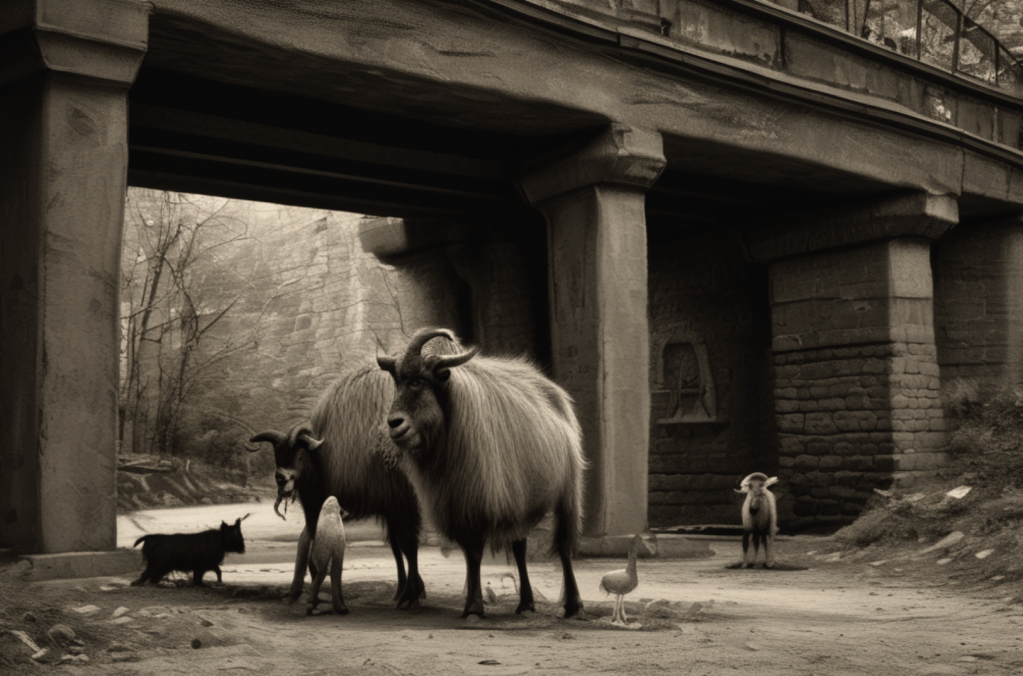
Once upon a time, in a Meadow not too far away, there lived three Billy Goats. There was the papa Billy Goat, a towering figure with a heart of gold, the mama Billy Goat, a gentle soul who radiated love, and the Kid Billy Goat, a tiny bundle of nerves and curiosity, still learning about the world.

Every day, the three Billy Goats embarked on a journey from their cozy home, through a winding lane, to a lush pasture. Here, they feasted on the freshest green grass, filling their bellies to the brim. Their path took them through a dense, mysterious forest, and down a steep, rocky canyon wall, leading to a narrow passage with a bridge that spanned a gurgling creek.

Under the Bridge lived a crabby, mean, and dirty troll who threatened to grab anyone who crossed his Bridge, drag them below, and lock them in a cavern he had carved in the creek bank. He had threatened the deer in the forest, the birds who had tried to sit on the Bridge, and the rabbits and other animals who had attempted to use the Bridge to cross the creek. All the animals were afraid of the Troll. The goats were the only animals that used the Bridge because the Troll would not threaten them. He was intimidated by Papa Billy Goat, who was muscled and strong.

One day, the Papa Billy Goat had to work and told the Mama Billy Goat and the Kid Billy Goat to go without him to the Meadow. As they arrived at the Meadow, the Troll, his voice dripping with malice, saw that Papa Billy Goat was not with them. He came out and stopped them, his threats hanging in the air like a dark cloud, telling them if they tried to cross his Bridge, he would take them to his cavern and lock them up, adding that he would devour them! The Mama Billy Goat and Kid Billy Goat, their hearts pounding with fear, ran back home. That night, Papa Billy Goat heard what happened and his anger burned like a raging fire.

The next day, the Papa Billy Goat, his protective instincts in full force, decided to teach the Troll a lesson. He instructed the Mama Billy Goat and the Kid Billy Goat to go to the Bridge without him while he hid in the nearby woods. As the Troll emerged, his foul stench wafting through the air, and began his threats, the Papa Billy Goat, fueled by his love for his family, charged with all his might, the sound of his hooves thundering against the ground, using his horns to knock the Troll off the Bridge and into the creek.

Stunned by the Papa Billy Goat’s reaction, the Troll got up, unsure of what had happened; as he did, the Papa Bill Goat said to him,

“This Bridge is for all of us to use,” Papa Billy Goat bellowed, his voice echoing through the canyon. “And you, TROLL, no longer have the power to decide who can or can’t cross it. Do you understand?”

The Troll, now deeply remorseful for his past actions, admitted his wrongdoings and shuffled off to his little shack. This time, his heart was filled with a newfound understanding and respect for the others. His transformation was a beacon of hope, showing that change is possible.

As if on cue, all the animals in the forest burst out of their hiding places and began to run back and forth across the Bridge, their joy and freedom palpable. They finally had the right to cross the Bridge, a right that had been denied to them for far too long by a greedy, prejudiced troll. And the Billy Goats, their hearts filled with happiness, danced their way to the green Meadow, their home.

Family Love and Understanding: A Parenting Journey Unveiled

Photo by Anastasia Shuraeva on Pexels.com

Eric’s and Marie’s parents, Donald and Jasmine, married for thirteen years. They were a biracial couple and parents, of Eric and Marie, a set of twins about to turn twelve years old. At the end of the school year, Donald and Jasmine sat down with Eric and Marie and said they needed to talk to them.

As the end of the school year approached, the twins, Eric and Marie, found themselves in a state of anticipation. They hadn’t broken any rules or caused any major disturbances at home, so what could this conversation be about? Their minds raced with possibilities: Could one of their parents be seriously ill? Or perhaps a financial crisis had struck, forcing them to downsize their home?

It didn’t take long for Donald and Jasmine to clear the air. Donald began ––

“For years we knew we would one day have to talk to you about this and we always promised we would tell you when you are 12 years old. We’ve been preparing for this conversation, considering your maturity and understanding, and we believe now is the right time.”

Jasmine joined in ––

“That’s right, we feel you are at the age that you will understand what we are about to tell you and why we want to tell you this. It is important for you to know that we love you very much, and you both are the reason we did this. Our love for you is the foundation of this decision, and we hope you understand that.”

Eric and Marie, in their twin fashion, said in unison ––

“So what did you guys do, rob a bank and run from the law?”

Donald firmly replied ––

“No! What we have to say is more important than that, and this is about something that would have been much more severe if it didn’t work initially!”

The twins were shocked. What could be more severe than being on the run from the law?

Jasmine, wanting to direct the topic back to its intended purpose, suggested everyone take a deep breath. Saying ––

“What we are talking about isn’t Spy Stuff.”

Donald replied ––

It almost was!

Jasmine, tired of the kids and Donald’s propensity for dragging out any conversation to make it a lecture, much as he would a class of his at the University, took control of the room ––

“Look, we have to say what we are here to talk about. It isn’t up for guessing or beating around the bush. The kids are supposed to know now. Kids, your mother and father are gay! We have been since the day you were born. Since we both were born. I gave birth to you; your father is your real daddy. But we have never had sex. I became pregnant through in vitro fertilization. Do you know what that is?”

The twins both nodded their heads, again answering together,

“Yes, we learned about this year at school.”

Then Eric replied ––

I always knew Pop was gay, but I never thought it of you, Mom.

Marie sputtered out ––

Well, I always thought Mom was, but I would have never guessed it of Pops!

Donald and Jasmine just stood there, looking at each other, somewhat dumbfounded. Each wondered what they could have done to cause their children to make such conclusions. But that wasn’t as important as helping them accept the news they had heard.

Donald said to both children ––

“Kids, we want to ensure you know you can talk to us about this and are okay with asking questions.”

Eric and Marie sat silently for a moment, processing this significant revelation. Then, Marie broke the silence.––

“Are you both happy?”

She asked softly, looking between her parents.

Donald and Jasmine exchanged glances before Jasmine replied ––

“Yes, sweetheart. We are delighted. Our relationship works because we love and support each other. We decided to raise you as a family to provide you with a loving home. And we do love each other, just not in the way you might think of traditional marriages.”

Still absorbing everything, Eric asked ––

“So, does this mean you have other partners or are you just… like roommates?”

Donald took a deep breath and said ––

“We do have partners. We’ve kept this part of our lives private because we wanted to wait until you were old enough to understand. We both have partners who mean a lot to us, and they support and love you, too.”

Jasmine added ––

“We wanted to ensure you both felt safe and secure in our family before introducing you to anything confusing. Now that you’re older, you can understand and handle this better.”

Eric and Marie exchanged a glance. Marie asked ––

“So, when do we get to meet them?”

Jasmine smiled warmly ––

“We’ll introduce you to them when you’re ready. We want to make sure you get enough at a time. It’s important that you feel comfortable and smooth with this transition.”

Eric nodded thoughtfully ––

“It’s a lot to take in, but we get it. We want you both to be happy.”

Marie chimed in ––

“Yeah, we love you both, no matter what. It’s different, but it doesn’t change anything for us.”

Donald and Jasmine both felt a wave of relief. They knew there would be more questions and possibly some challenging moments ahead, but they had taken the first step. The important thing was that they had started this journey with honesty and love.

Jasmine said ––


“Thank you for being so understanding. We know it’s a lot, but we are here to support each other. Always.”

Eric and Marie smiled. Marie reached out and hugged her parents, with Eric joining in. They sat together, holding onto each other, feeling the strength of their family’s bond. In that moment, they knew that whatever challenges came their way, they would face them together, with love and understanding guiding them through.

As the twins headed to their private bedrooms, Eric said to Marie ––

“I told you Pop’s wasn’t sleeping in a separate bedroom because of his snoring!”

Marie replied ––

“And I told you it wasn’t because of Mom’s cold feet!”

Embracing a New Chapter: The Journey of Clean Slate Services

Photo by Alexander Grey on Pexels.com

Lemi stood at the threshold of his tidy apartment, staring at the email that had just ended his decade-long tenure at the executive office. He had been a critical player with innovative ideas and unmatched dedication. But the corporate world had no room for loyalty when profits wavered. The company’s polite yet impersonal farewell words blurred as he fought back the rising tide of emotions. The sense of loss and betrayal was overwhelming, and he found himself questioning his worth and identity. Yet, amidst the turmoil, a flicker of hope began to emerge, a whisper that maybe, just maybe, this was an opportunity for something new and fulfilling.

At first, Lemi saw it as a temporary measure. He printed flyers, set up a simple website, and spread the word. His first clients were mostly friends and acquaintances, curious and supportive of his new venture. The physical work starkly contrasted his former desk job, but he found unexpected satisfaction in transforming spaces from dusty and cluttered to spotless and serene.

The next few days were a whirlwind of updating resumes, connecting with old contacts, and browsing job boards. But as the days turned into weeks, the stress of bills and dwindling savings forced Lemi to confront a stark reality: he needed an immediate source of income. Yet, in the midst of this uncertainty, a flicker of hope ignited. He had always found a strange solace in cleaning, a control over chaos that was missing in his current life. And thus, Clean Slate Services was born, a testament to his resilience and adaptability.

One sunny afternoon, Lemi arrived at the grand home of his new client, Daniel. The man who opened the door was effortlessly handsome, with a warm smile that lit up his face. As Lemi introduced himself and got to work, he couldn’t help but notice Daniel’s frequent, friendly visits to the rooms he was cleaning. They chatted about everything from the latest books to favorite travel destinations. There was an undeniable spark, a twist in the tale that Lemi tried to dismiss as mere friendliness, but couldn’t ignore.

Days turned into weeks, and Lemi looked forward to his sessions at Daniel’s home more than any other. The routine of cleaning became almost secondary to their growing friendship. One day, as Lemi was packing up his supplies, Daniel invited him to stay for coffee. They sat on the patio, the afternoon sun casting a warm glow around them.

“Lemi, I’ve been meaning to tell you,”

Daniel started, hesitant yet sincere.

“I admire what you’re doing here. Not just the cleaning, but how you’ve turned things around after –– well, you know.”

Lemi felt a warmth spread through him at Daniel’s words.

“Thank you, Daniel. It’s been quite a journey, but it’s been more rewarding than I ever expected.”

Their eyes met, and the world seemed still for a moment. Lemi’s heart raced as he realized the depth of his feelings. But alongside this, a new realization dawned: he genuinely loved what he was doing. The satisfaction of making things clean and bright, the connections he was forming, and the control over his destiny were things he had never found in his corporate job. This realization filled him with a sense of fulfillment and contentment he had long been searching for.

As he drove home that evening, Lemi thought about the path ahead. He had always seen Clean Slate Services as a stopgap, but now he wondered if it was something more. The pride he felt in his work, the joy of seeing his clients happy, and the possibility of exploring his feelings for Daniel combined to create a new vision for his future.

A few days later, Lemi met with an old colleague for lunch. The conversation inevitably turned to job openings in the executive world. As his colleague spoke, Lemi felt a strange detachment. The allure of high-powered meetings and corporate ladders no longer enticed him. He thanked his friend for the information but politely declined to pursue any leads. He had found a new path, a path that was more aligned with his values and brought him true satisfaction. The corporate world, with its politics and pressures, no longer held the same appeal.


Returning home, Lemi sat at his desk, staring at the Clean Slate Services logo he had hastily designed months ago. He lifted up his cell phone and texted Daniel, inviting him to dinner. He felt a new sense of purpose, a feeling that he was precisely where he needed to be.

Lemi had found his true calling—not in the towering office buildings of the corporate world but in the simple, honest work of cleaning homes and the unexpected love blossoming with a kind-hearted client. Looking around his spotless apartment, he knew now was the time to embrace a new chapter with an open mind, arms, and heart.

Embracing Differences: Robella’s Journey to Belonging

Robella, a woman with physical differences, was born into a world that seemed to reject her. Her hair grew out long and kinky on one side and short and stubby on the other, and she was nearly bald in the back. Her left leg was shorter than the right. The elbow on her right arm is three inches higher than the left. Her nose had a long mole on end, which, when she was in school, all the children nicknamed her ‘witchy-pooh.’ Her body had grown misshaped, and she had to wear specially-made clothes that she made since her parents had distanced themselves from her for being so embarrassing.

Robella, often misunderstood and feared, would rummage the town’s alleys for whatever she could find. She would growl feverishly at anyone who said hello to her or offered to help her, a response born out of years of rejection. However, even this didn’t stop the town’s nicest people from trying to help her. Mrs. Meyers, who ran the bakery, would make a point to set a hot loaf of bread out on the back steps of her store every Monday, knowing that Robella would soon be looking for items the store owners had discarded. Robella would rummage through the cans and junk in the alley until she got to the bread, every week she would sniff it and say out loud,

“Mrs. Myers Bakery always forgets and leaves a loaf of bread in the oven over the weekend. My gain!”

She proceeded down the alley, finding other items that store owners had carefully placed for her, knowing where she would look for them. Robella would find the goods, and she would let out a grunt and laugh and proceed on.

One cold winter day, as Robella made her usual rounds through the alley, she stumbled upon something unexpected. There was a small, wrapped package with a note attached among the carefully placed items. Curiosity piqued, and she hesitated before picking it up.

The note read:

“To Robella,
You are special and loved just as you are. Please join us at the town square tonight for a surprise.

With love,
Your Neighbors”

Robella frowned and grumbled to herself, unsure what to make of it. Despite her mistrust, a flicker of curiosity and hope stirred within her. She decided to see what kind of joke the townspeople might be playing on her.

As the evening approached, Robella made her way to the town square, staying in the shadows so she would not be seen. To her surprise, the square was transformed into a magical wonderland, filled with lights and decorations. The townspeople had gathered, and a large table was set with all kinds of delicious food. At the center of it all stood Mrs. Meyers, holding a beautifully decorated cake.

“Robella, we’ve been waiting for you,”

Mrs. Meyers called warmly, spotting her in the shadows. The crowd turned, and they all smiled at her, to her amazement.


“Come, join us, “
one of the townspeople said, extending a hand towards her.

“We’ve prepared a feast in your honor.”

Robella hesitated, unsure of what to make of this unexpected show of kindness. But Mrs. Meyers, sensing her hesitation, walked over and gently took her hand, leading her to the center of the square.

“This is for you, dear. We want you to know that we see you, we care about you, and we want you to be part of our community. Your differences are what make you special, and we celebrate them.”

Tears welled up in Robella’s eyes. For so long, she had felt nothing but rejection and loneliness. Now, faced with genuine kindness and acceptance, her hardened exterior began to crack. She felt a mix of emotions-disbelief, gratitude, and a glimmer of hope. Could it be that she was finally finding a place where she belonged?

“But I’m so different,”
she whispered, looking down.

“And that makes you unique and wonderful,”
Mrs. Meyers replied.

“We all have our differences, which makes our community rich and beautiful.”

The townspeople came forward one by one, each offering a word of kindness or a small gift. They shared stories of their struggles and how they had overcome them with the support of each other. Robella listened, her heart slowly warming with each tale.

As the night went on, Robella felt something she hadn’t felt in years: a sense of belonging. She realized that she didn’t have to be alone or angry anymore. These people truly cared for her, and they wanted her to be a part of their lives. Their kindness, their acceptance, had the power to transform her life.

From that day forward, Robella became an integral part of the community. She used her skills to help others, sewing clothes for those in need and sharing her resourcefulness. The townspeople, in turn, included her in their daily lives, and she formed deep, meaningful friendships. It was the collective acceptance and kindness of the community that had transformed her life, showing her that she was not alone and that her differences were not a barrier to belonging.

Robella’s heart softened, and her once harsh demeanor transformed into one of kindness and warmth. She learned to smile and laugh genuinely, and the townspeople celebrated her unique qualities, seeing the beauty in her differences. She became an integral part of the community, using her skills to help others, sewing clothes for those in need and sharing her resourcefulness. The townspeople, in turn, included her in their daily lives, and she formed deep, meaningful friendships.

New Haven: Rebuilding Humanity After the First Contact War

In 2147, the world was altered irrevocably by the catastrophic aftermath of the First Contact War, a conflict that erupted when humanity made its first contact with an alien civilization. This discovery, instead of being the peaceful meeting of cultures and ideas that many had hoped for, led to a devastating war that ravaged Earth, leaving it a shadow of its former self, with much of the planet in ruins.

Amidst the desolation, small pockets of survivors, resilient and determined, tried to rebuild their lives. One such place was the settlement of New Haven, a converted underground research facility that provided refuge to humans and non-humans alike. In the dimly lit corridors of New Haven, it was here that a group of survivors, their spirits unbroken, made their way to the main meeting hall.

Leading the group was Dr. Rithian Torvak, a Xelorian biologist from a race that had formed a crucial alliance with humanity against the common enemy. The Xelorians, known for their green, textured skin, and elongated ears, were a race of peaceful scholars who had never engaged in warfare before. Despite the prosthetic arm—a reminder of the war’s brutal cost—he was a source of strength and wisdom, a testament to the unity forged in the face of adversity.

Anaya Patel, a young woman who had become a beacon of hope for many, closely followed Dr. Torvak’s research. Anaya had emerged as a natural leader, her compassionate heart and unyielding spirit rallying the survivors, united in their struggle, through their darkest days. Her parents had perished defending their home, but she had sworn to honor their memory by protecting those who remained.

Beside him, clutching a tattered blue blanket, was Samuel Grant, a former engineer who had lost his family in the initial invasion. Samuel’s eyes appeared haunted, but he found solace in aiding Dr. Torvak with his research, hoping their efforts might lead to a brighter future. His knowledge of pre-war technology was invaluable in keeping New Haven operational.

As they walked through the corridor, the walls echoed with the murmurs of the other residents, each carrying their own stories of loss and survival. The group was heading to a crucial meeting to discuss the latest developments in their efforts to reclaim the surface and search for other survivors.

The corridor opened into a large room filled with makeshift tables and chairs. On one wall, a digital display showed the map of their known world, with red zones marking areas still too dangerous to explore. These zones, remnants of the war, were filled with mutated creatures and unstable terrain, posing a constant threat to anyone who dared to venture into them. The air was thick with a mix of hope and desperation, as the survivors were acutely aware of the dangers that lurked just beyond their reach.

Dr. Torvak stepped forward to address the gathered crowd.

“We have received a transmission from what we believe to be another survivor enclave. This communication could mean there are more of us out there than we thought.”

The room buzzed with whispers. Anaya, her voice steady but filled with emotion, raised her hand, silencing the crowd.

“If there are more survivors, we must find them and bring them here. Every life matters, and together, we can rebuild.”

Her words, a testament to the hope that still burned within them, resonated with the survivors, filling the room with a renewed sense of purpose and determination.

Samuel nodded in agreement.

“We have the technology to send a team, but it will be dangerous. We must prepare for anything.”

Dr. Torvak glanced around the room, his eyes filled with determination.

“We have faced darkness and survived. Now, it is time to reclaim our world, to rebuild what we have lost, and to forge a future where all races can live in peace.”

His words, a rallying cry for the survivors, echoed in the room, filling them with a renewed sense of determination and unity.

As the meeting concluded, the survivors of New Haven felt a renewed sense of purpose. They knew the road ahead was perilous, but they believed, with a flicker of hope in their hearts, they could overcome any obstacle together. In the shadows of their broken world, they found the strength to hope, fight, and dream of a brighter, more peaceful tomorrow.

Despite their broken world, hope remained to rebuild even in the presence of a mixed culture of individuals—all who were put together not out of choice but out of a twist of fate!

Victor: A Man of Mystery and Resilience | Uncovering the Lost Relic in Haunting Mansion

A forgotten mansion, shrouded in mystery, stood in the heart of the old city, nestled among the cobblestone streets and gothic architecture. Its grandiose facade, though worn by time, still retained an enigmatic elegance. On a stormy evening, Victor, a man of mystery and resilience, found himself drawn to this mansion, its secrets whispering to him.

Victor, a man of mystery and resilience, had always been a seeker of the unusual, the arcane. His latest obsession had led him to this mansion, rumored to be the repository of a lost relic. He was a formidable presence in his black leather attire, adorned with silver studs and zippers. His attire, a blend of functionality and style, spoke volumes of his readiness for whatever the night might bring.

The mansion’s interior was a haunting blend of past grandeur and eerie decay. The flickering candlelight cast eerie shadows on the portraits of stern-faced ancestors that lined the walls, their eyes seeming to follow him as he made his way through the dimly lit halls. The air was thick with the scent of old books and the faint, lingering traces of incense, and the floorboards creaked under his weight.

Victor’s destination was the study; a room said to contain a hidden compartment where the relic was concealed. He had done his homework; old blueprints and cryptic notes had led him here. With a determined stride, he entered the study, its heavy wooden door creaking ominously.

The room was a testament to the mansion’s former glory, with rich mahogany shelves lined with ancient tomes, a grand fireplace, and a massive desk that dominated the space. Victor approached the desk, his leather-clad fingers tracing the intricate carvings on its surface. He had a hunch that the key lay in the hidden compartment of the desk itself.

After a meticulous search, Victor’s fingers found a small, concealed latch. A secret drawer slid open with a soft click, revealing a velvet-lined compartment. Inside lay an ornate box, its surface inlaid with mother-of-pearl and silver filigree. Victor’s heart raced as he carefully lifted the box and opened it.

Inside, nestled in velvet, was the relic: an ancient amulet, its center a polished obsidian stone encircled by symbols of power and protection. As Victor held it, a surge of energy coursed through him, confirming the amulet’s authenticity; this was what he had been searching for. The amulet, rumored to hold the key to immortality, was a prize coveted by many.

His triumph was interrupted by the sound of footsteps echoing through the hall. Victor quickly stashed the amulet in his belt pouch and closed the drawer, his senses on high alert. He had been cautious, but it seemed he was not alone in his quest.

The door to the study burst open, and a figure clad in dark robes stepped in. ‘You have something that belongs to me,’ the intruder hissed, eyes glinting with malice. ‘You’re too late,’ Victor replied, his voice steady. ‘The amulet is mine now.’

Victor stood his ground, his hand instinctively moving to the hilt of his concealed dagger. “The amulet is not yours to claim,” he replied coolly. “It belongs to no one but itself.”

A tense silence filled the room, broken only by the distant rumble of thunder. The intruder moved with surprising speed, lunging towards Victor. But Victor was ready. In a swift, fluid motion, he drew his dagger and deflected the attack, the blade glinting in the dim light. His heart pounded in his chest, his senses heightened as he focused on the task at hand.

The fight was a whirlwind of intensity. Victor’s combat training and the intruder’s desperate aggression clashed in a flurry of movement. The air crackled with tension as they circled each other, each seeking an opening. In the end, Victor’s skill and determination prevailed. The intruder, defeated and disarmed, lay on the floor, gasping for breath.

Victor looked down at his defeated opponent, his eyes a mix of pity and resolve. ‘Leave now and never return,’ he ordered, his voice firm but tinged with a hint of sadness. ‘The amulet’s power is beyond your understanding.’

The intruder, cowed and beaten, scrambled to his feet and fled into the night. Victor watched him go, his eyes filled with a mix of pity and resolve. He knew his journey was far from over. The relic’s true power and purpose were yet to be revealed, and he was resolute in his determination to unravel its mysteries.

With the amulet safely in his possession, Victor left the mansion and stepped into the stormy night. Lightning illuminated his path, and the rain washed away the remnants of the battle. As he disappeared into the shadows, one thing was sure: Victor’s legend was only beginning.

The Heartwarming Story of Jello: From Community Beloved Dog to Honorary Mayor of Millbrook

Jello, a spirited dog with golden fur, floppy ears, and a tail that wagged like a metronome, lived in the quaint town of Millbrook. He was a free spirit, beloved by all, and a fixture of the community, embodying the warmth and unity of Millbrook.

Jello had his routines. Every morning, he would trot to the bakery where Mrs. Thompson would have a fresh scone waiting for him. Then, he’d visit the school playground, where children would shower him with affection and sneak him bits of their lunches. Jello often spent afternoons lounging in the sun outside the library, where Mr. Caldwell would read to him from the latest novels. By evening, he would make his rounds at the town square, greeting everyone with a joyful bark before curling up under the big oak tree for the night. The community’s love for Jello was palpable, creating a sense of unity and togetherness.

The townspeople adored Jello so much that someone humorously suggested nominating Jello for Mayor when the mayoral election came around. The idea quickly gained traction. “Who better to represent our town than Jello?” they said. “He’s loyal, kind, and brings everyone together.” And so, in an unprecedented turn of events, Jello’s name appeared on the ballot.

As the election drew near, excitement buzzed through Millbrook. Posters of Jello, donning a makeshift mayoral sash, adorned shop windows and bulletin boards. The slogan “A Mayor Who Cares” echoed through the streets. But a week before the election, something terrible happened: Jello went missing.

Panic spread like wildfire. Where could he be? The entire town, deeply concerned, rallied to search for him. Kids formed search parties, calling his name through the woods and fields. Shopkeepers closed early to join the search; even the local police were on high alert. There were flyers everywhere: ‘Missing: Jello. Our Town Hero. Please Help!’. The town’s reaction to Jello’s disappearance was a testament to their deep empathy and concern.

As days passed with no sign of Jello, whispers of foul play began to circulate. The thought was too dreadful to bear, but the town’s unity shone through their worry. They held candlelight vigils, their collective hope a beacon in the darkness, a testament to their resilience and unity.

On the eve of the election, a familiar bark echoed through the town square just as hope was waning. It was Jello, looking a bit dirty and tired but otherwise unharmed. The townspeople greeted Jello with cheers and tears of joy. Mr. Caldwell, who had been leading a search party near the old mill, found him trapped in an abandoned shed, likely having chased a squirrel inside and gotten stuck.

The town’s relief was palpable. Shopkeepers cleaned him up, fed him his favorite treats, and gave him more attention. Election day arrived, and with Jello safe and sound, the town celebrated their unusual but heartwarming choice for Mayor. After tallying the votes, it was no surprise that Jello won by a landslide. Although the title of Mayor was symbolic, the gesture embodied the spirit of Millbrook: a community united by love, kindness, and the belief that sometimes the best leaders remind us of the simple, unspoken bonds we share.

Jello, the dog who roamed freely but belonged to everyone, was now the honorary Mayor of Millbrook. His tale became a cherished legend, reminding all who heard it of the power of community and the unexpected ways in which leaders can emerge.

The Paradox of Charlie North

The man whose loving heart brought conflict and rift with unexpected rewards he showered on others.

Charlie North was a familiar figure in the small town of Millbrook, known for his heart as expansive as the sky. He would readily abandon his own tasks to assist a neighbor with a leaky roof or chauffeur an elderly friend to a medical appointment. His acts of kindness and warmth were unparalleled, and everyone who crossed paths with Charlie held a special place for him in their hearts.

Yet, Charlie’s well-intentioned nature had a flip side that often led to discord: he was overbearing. His eagerness to assist frequently transformed into a forceful insistence that his approach was superior, and his constant involvement in others’ lives often left them feeling suffocated. This dichotomy of love and overbearingness earned him a mixed reputation.

One sunny morning, Charlie decided to help Mrs. Henderson with her garden. The widow was grateful for the help but soon became overwhelmed by Charlie’s detailed plans and strict schedules. He dictated the type of flowers to plant, the precise soil mixture, and the exact watering schedule. Mrs. Henderson, who enjoyed gardening as a leisurely and personal hobby, felt her joy drained by Charlie’s micromanagement.

“I appreciate your help, Charlie, but I think I’d like to do some of this on my own,”

Mrs. Henderson said, trying to sound polite.

Charlie was taken aback. He wanted to help, but he needed help to see how his thorough plans were anything but beneficial.

“But, Mrs. Henderson, if we don’t follow the schedule, the flowers won’t thrive as they should,”

he insisted.

As the weeks went by, similar incidents unfolded. At the community bake sale, Charlie’s meticulous organization turned into a rigid control. Initially, the townsfolk appreciated his dedication, but soon they felt stifled and unappreciated. The once vibrant community events started to lose their charm, replaced by a silent resentment towards Charlie’s overbearing ways.

One evening, as Charlie sat on his porch, his lifelong friend, Tom, joined him. Tom was one of the few people who could speak candidly to Charlie.

“Charlie, I’ve known you forever,” Tom began gently. “You’ve got a heart of gold, but sometimes you don’t realize how you come across to others.”

Charlie frowned, puzzled. “I just want to help, Tom. I want everything to be perfect for everyone.”

“I know you do, and that’s what makes you so special,”

Tom said, choosing his words carefully.

“But people need space to make their own choices, even if things don’t turn out perfectly.”

Determined to change, Charlie began to pull back. He continued to offer his help, but he consciously tried to listen more and dictate less. Charlie volunteered at the next community event but let others take the lead. He bit his tongue when things didn’t go as he would have planned, learning to appreciate the different ways people approached problems.

It was a difficult adjustment for Charlie, and he often felt the urge to step in and take control. But slowly, he noticed a difference. Mrs. Henderson’s garden flourished in its way; it was not perfect, but vibrant and full of life. The bake sale was a chaotic success, filled with laughter and camaraderie. People began to welcome Charlie’s presence again without the undercurrent of tension that had once accompanied his help.

Over time, Charlie found a balance. He channeled his love and generosity in ways that empowered others rather than overshadowing them. He was still the same Charlie North—big-hearted and always ready to lend a hand—but had learned to temper his overbearing nature. This transformation made him not only loved but truly appreciated, a testament to the power of self-awareness and the enduring strength of a loving soul.

That night, Charlie lay awake, wrestling with Tom’s words. He reflected on the times his help had been more of a hindrance, the faces of his friends and neighbors flashing through his mind—grateful at first but then strained and unhappy.

And so, Charlie’s story became one of growth and redemption, a testament to the power of self-awareness and the enduring strength of a loving soul.

Riverton Police: A Night in the Life of Detectives Jake and Sam

The city of Riverton never slept, nor did Detectives Jake Harris and Sam O’Reilly. Partners for over a decade roamed the nocturnal streets with the kind of synergy only best friends could muster. Their squad car, an unremarkable blue-and-white cruiser, was a beacon of hope for some and a symbol of fear for others.

Jake, with his gruff exterior and piercing blue eyes, was the kind of cop who could read a crime scene like a book. Sam, a lean figure with a quick wit and a knack for defusing tense situations, complemented Jake perfectly. Together, they led the department in felony arrests, arriving at calls faster than anyone else and building relationships with the community that others could only dream of.

One brisk autumn night, their radio crackled to life with a call that made their hearts race: an armed robbery in progress at the 24-hour diner on 5th and Maple. Without a word, Jake hit the lights and sirens, and they sped through the dimly lit streets. They arrived in just under three minutes, a record even for them.

The diner was eerily quiet as they approached, save for the distant hum of neon lights. Inside, a masked man brandished a gun, demanding cash from the terrified cashier. Jake motioned for Sam to flank the back entrance while he took the front.

Jake entered slowly, his voice calm but authoritative. ––––

“Riverton PD, drop the weapon and come out with your hands up.”

The gunman whipped around, eyes wide with panic.

From the rear, Sam’s voice cut through the tension.

“No, you won’t. You don’t want to hurt anyone. Put the gun down, and we can talk.”
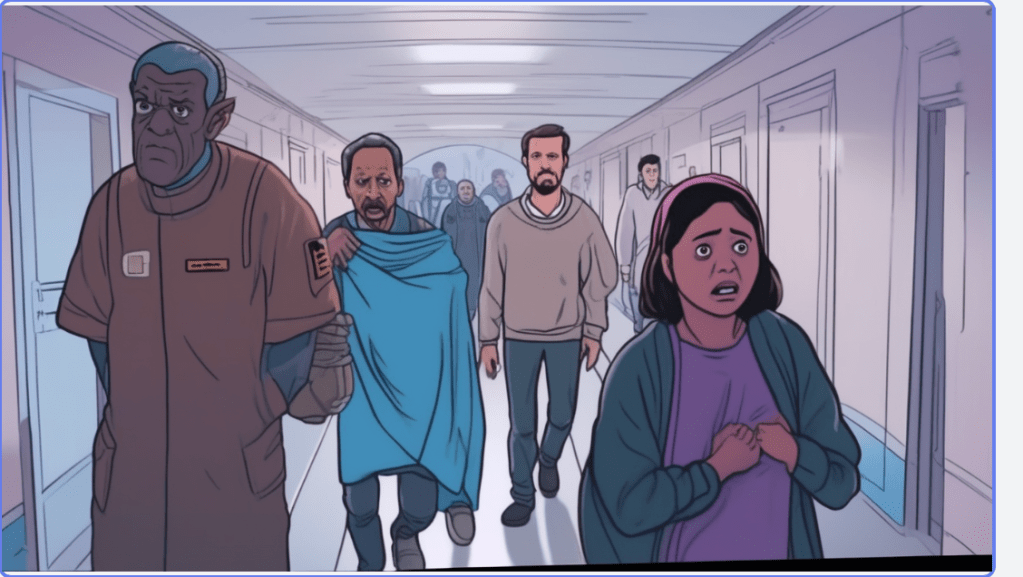
The gunman’s grip on the weapon faltered. In that split second, Jake lunged forward, disarming him with a swift, practiced motion. Sam was at his side instantly, cuffing the man and guiding him to the squad car.

As they processed the scene, the cashier, a young woman named Maria, approached them with tears in her eyes.

“Thank you. I don’t know what would’ve happened if you hadn’t come.”

Jake gave her a reassuring nod. “Just doing our job, ma’am.”

The rest of the night was a blur of paperwork and patrols. But their most memorable interaction came just before dawn. While cruising through a quieter part of town, they spotted a boy sitting alone on a bench, clutching a backpack to his chest. They pulled over, and Sam approached him gently.

“Hey there, buddy. Everything alright?”

The boy, who couldn’t have been more than ten, looked up with tear-streaked cheeks.

“I ran away from home. My parents are always fighting.”

Sam sat next to him, listening with the patience of a father and says –––

“I get it, kid. Sometimes, home can be tough. But running away won’t solve anything. Let’s get you back home and see if we can help sort things out.”

Jake contacted the boy’s parents while Sam spoke with him. The sun was peeking over the horizon when they returned the boy home. Now more worried than angry, the parents hugged their son tightly and thanked the officers.

As they drove back to the station, Jake glanced over at Sam, sighs then says –––

“Another night, another set of stories, huh?”

Sam chuckled. “Wouldn’t have it any other way.”

In Riverton, one could become a legend in the shadows, and for Jake and Sam, every night was another chance to protect and serve, forging connections and fighting crime in ways that others could only admire.

Verdantia: The Rainbow City and the Festival of Lumina

Once upon a time, in a small, unassuming town named Verdantia, an extraordinary phenomenon brought magic to the lives of its residents. Verdantia was known for its picturesque streets lined with red-brick buildings and verdant trees, but what truly set it apart was its ability to produce the most stunning rainbows anyone had ever seen.

One late afternoon, after a sudden downpour, the clouds parted, and the sun cast its golden rays across the wet streets. As the townsfolk went about their business, a magnificent rainbow began to form, arching over the town’s central square. It wasn’t just any rainbow; it was a double rainbow, with vibrant colors so vivid they seemed almost tangible.

The people of Verdantia, who had grown accustomed to the beauty of rainbows, stopped in their tracks, mesmerized by the sight. The rainbow appeared to touch down at two significant landmarks in the town—the spire of the old church and the ancient oak tree standing proudly at the intersection of Main Street and Elm.

As legend had it, Verdantia was a place where rainbows were believed to be portals to realms of wonder and enchantment. The townspeople knew this was no ordinary occurrence. The elders of the town, keepers of its history and secrets, gathered quickly. They had long awaited the appearance of such a rainbow, a sign foretold in their lore that marked the beginning of a special event known as the Festival of Lumina.

The Festival of Lumina was a rare celebration that took place once every hundred years, marked by a rainbow so grand that it stretched across the sky, connecting the past with the future, the ordinary with the extraordinary. This festival was a time when the boundaries between the human world and the world of magic blurred, allowing dreams and reality to intertwine.

As the double rainbow shimmered, a soft, melodic hum filled the air. Children giggled with delight, and adults felt a warm, nostalgic pull at their hearts. The air around the rainbow seemed to sparkle, and for a moment, time itself felt as if it had slowed down. From the base of the rainbow at the church, a figure emerged—a guardian of the ancient lore, known as Seraphina, the Keeper of Light.

Seraphina, with her radiant presence and flowing silver robes, held out a staff that glowed with the colors of the rainbow. She spoke in a voice that resonated like the soft chime of bells, “People of Verdantia, the time has come to celebrate the Festival of Lumina. Today, the veil between worlds is thin, and the magic of the rainbow is at your command.”

The town erupted in joyous celebration. Musicians played enchanting melodies, artisans displayed their finest crafts, and bakers offered sweet treats that seemed to shimmer with a magical glaze. Children ran around, chasing the elusive ends of the rainbow, hoping to find hidden treasures and secret wonders.

As evening fell, the rainbow’s glow intensified, casting a luminous light over Verdantia. The townspeople gathered under the ancient oak tree, where Seraphina led a ritual to honor the rainbow and its magic. She spoke of unity, hope, and the power of dreams, encouraging everyone to embrace the wonder within their hearts.

The Festival of Lumina continued through the night, with stories of old being shared around bonfires, and dances that seemed to weave through the very fabric of the rainbow’s light. As dawn approached, the double rainbow slowly faded, but the magic lingered in the hearts of the people.

Verdantia, forever touched by the beauty and enchantment of the rainbow, became a place where dreams were cherished, and the magic of the Festival of Lumina was remembered and celebrated in smaller ways every day. The rainbow city, as it came to be known, stood as a beacon of hope, joy, and the enduring power of wonder.