The Heartbeat of Small Towns: Lessons from Main Street

Benjamin GroffMedia© | benandsteve.com | 2025 Truth Endures©

4–6 minutes

The Old Main Street

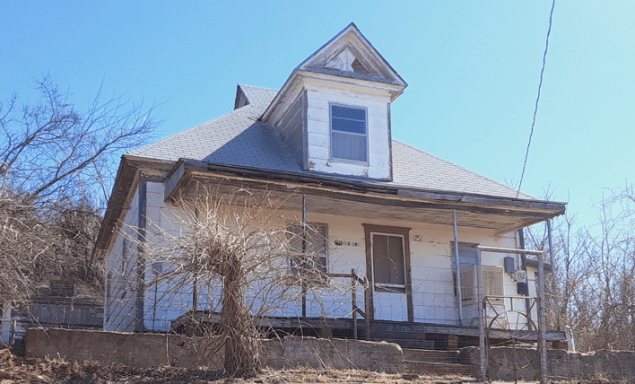
The Old Groff House
The Groff House, first moved to Binger from Anadarko.

Our move to the farm east of Binger, Oklahoma marked a drastic change in life. It was vastly different from our life in Cordell. My dad had bought a house set on a modest foundation. A propane stove heated it. There was no running water. We had no telephone. The electricity worked until a snowstorm or thunderstorm blew through and took it down. In time, things would improve, but first, we had to learn a new way of living.

Each evening, my dad brought home two five-gallon containers of water and set them on the kitchen floor. Hanging above them was a metal ladle, which we all used to scoop ourselves a drink. It was a crude method, but it worked—and we didn’t think twice about it.

Going to the restroom was another matter. Several attempts had been made to drill wells, but all came up dry. My dad had the holes filled in, except one. Over that one, he placed an old-fashioned outhouse—worn, sun-bleached, and splintered. It looked fifty years old, and maybe it was. But he fitted it with a new toilet seat, and we used it like it was brand new. The worst part? The yellow jacket wasps that swarmed it in summer. They built their cones overnight, and chasing them off was a risky job that none of us looked ahead to.

This story isn’t about the outhouse or the water jugs. It’s about the town’s Main Street during that time. The impression it left on me was significant. I was only five years old, but the images are burned into my memory.

My dad was the town barber. His shop sat on a steep sidewalk, at least three feet above the street. Set into the concrete were old metal rings. For the longest time, I had no idea what they were for. One spring morning, I was playing on the sidewalk. I was flipping one of the rings back and forth. An old timer stopped and looked down at me.

“Do you know what that ring is for, Sonny?” 

He asked.

I shook my head. 

“No.”

He grinned. 
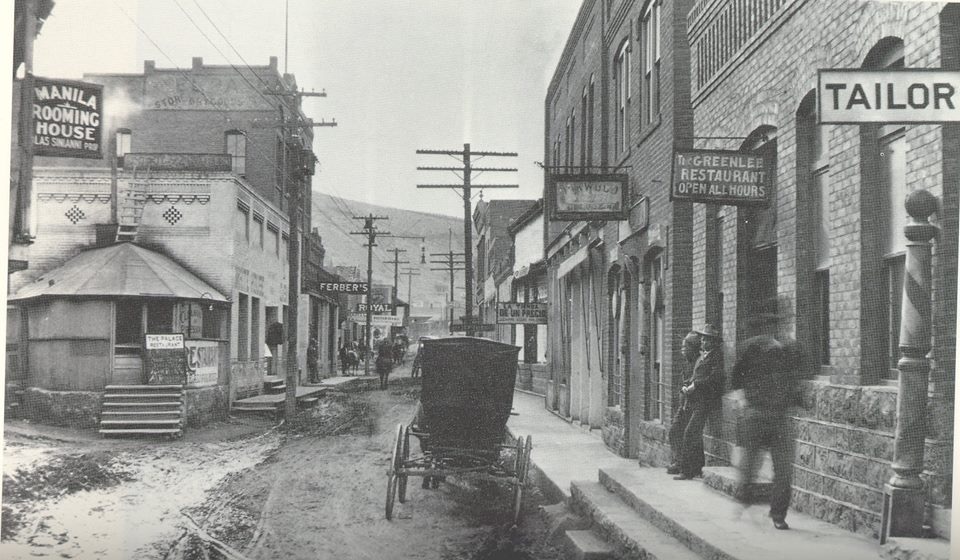
“Those were for tying up horses and wagons. Back in the day, folks would come to town on Saturdays—buggies and wagons lined this whole street. Horses everywhere.”

That answered a mystery I’d long wondered about. But there were more to come—and like those rings, they’d slowly be explained to me, one by one.

That same sidewalk saw a lot of stories. I remember one day. A slick Chevrolet four-door pulled up. Two men and their children—a boy and a girl—went into the drugstore next to Dad’s barbershop. My oldest brother had come into town to visit and was sitting in the shop when someone waiting for a haircut suddenly shouted, 

“FIRE! FIRE! THAT CAR IS ON FIRE!”

The man bolted into the drugstore to alert the others. Someone must’ve called the fire department—but “fire department” was a stretch. The town had a 1945 fire truck with a rusted tank and an engine that wouldn’t start. They had to tow it with another truck to get it to the fire. My brother ran to the car and had one of the men pop the hood. Without hesitation, he ripped off his shirt and began beating out the flames around the carburetor.

The twins—those two kids—stood next to me on the sidewalk, watching. They would later become my classmates and lifelong friends. That introduction during the chaos would forge a connection we kept through the years.

My brother eventually put out the fire. The fire truck, still leaking water, finally rolled to a stop behind the car—just as the tank began to empty. The scene would’ve been funny if it hadn’t been so sad. Laughter erupted from my dad’s shop. The volunteer firefighters were embarrassed, and I remember feeling bad for them.

It wasn’t the last mishap. Months later, a house caught fire just behind the fire station. The truck’s wheels locked up that time, and it couldn’t even be towed out. The town then decided it was time for a new truck. 

Through donations and fundraisers, they finally got one. The arrival of the new fire truck was a significant moment in our town’s history. It was a testament to our resilience and the importance of community support. It was a real point of pride—a saving grace when it finally arrived.
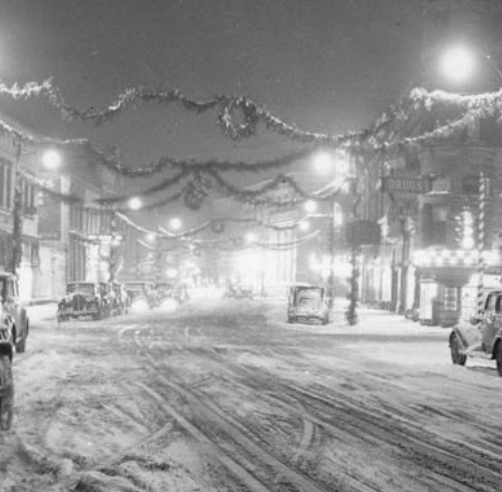
Main Street had its beautiful moments, too, especially at Christmas. The decorations draped across the street like something out of It’s a Wonderful Life. Seeing them lit up at night turned Main Street into a glowing wonderland.

One Christmas, the town threw a parade. The governor came. And so did our hometown hero, Johnny Bench, riding in the back of a convertible. I stood beside my dad in front of his barbershop, watching as they passed by. It was one of the biggest things to happen to our little town of 750 souls.

Main Street had different values back then, too. I remember a funeral procession once drove through town. My dad stopped cutting hair and closed the shop until the last car had passed. Other businesses did the same. That quiet gesture of respect left an impression on me that’s never gone away.

Looking back now, I realize that old Main Street was more than just a stretch of asphalt and storefronts. It was the heartbeat of a simpler time. Life was slower and more mindful then. It taught me about community, kindness, hard work, and the small moments that shape our lives. Those sidewalk rings, flickering Christmas lights, and clunky fire trucks are gone, but the memories stay. And in my heart, Main Street still stands—just as it was.

A Life of Humility: The Story of Wayne Handy

Benjamin GroffMedia© | benandsteve.com | 2025 Truth Endures©

3–4 minutes

In Memory of Wayne Jackson, Handy ––– The Unlikely Rock and Roller

Wayne Handy

Wayne Jackson Handy was a man whose velvet voice once crooned over the airwaves of American Bandstand. His voice later soothed those navigating the mortgage banking world. He passed away peacefully on April 1, 2025, at 89. Wayne started from humble beginnings on a farm in Eden, North Carolina. He then moved on to the dazzling lights of 1950s television. Later, he found the quiet steadiness of a career in finance. Wayne lived an entire and remarkable life. It was defined not by fame or fortune but by kindness, creativity, and unwavering devotion to his family.

Wayne’s love and commitment to his family were unwavering. The youngest of five children, Wayne was born in Eden and raised helping his parents in the fields. He graduated from Reidsville High School in 1953. Two years later, he married the love of his life, Marjorie Louise Smith of Cassville. He charmed her at a local baseball game. This was a story he told with a twinkle in his eye. His smile hinted at the hopeless romantic within. Their marriage endured over six decades. It was a bond marked by deep affection and laughter. Their steadfast partnership lasted until Marjorie’s passing in 2018.

Wayne’s musical talent was a source of inspiration for many. His velvet-smooth voice and playful way with melody, often accompanied by his ukulele, were a joy to behold. In 1957, his passion for music led him to a national stage. He performed on American Bandstand. He shared the screen with some of rock and roll’s earliest stars there. His brush with fame was brief. Yet, it left a glimmer of rockabilly stardust. This touch of stardust was on a life otherwise grounded in humility and grace.

After enlisting in the U.S. Army in 1958, Wayne served two years in Alaska as a field radio operator. Upon returning home, he pursued higher education. He studied business at North Carolina State University and the University of North Carolina at Chapel Hill. He graduated in 1962. His career in mortgage banking took him and his family across the Southeast. They even moved to Utah. His career eventually culminated in his time with Carolina Bank in Greensboro. He worked there until his retirement in the mid-2000s.

In every chapter of his life, Wayne’s character remained consistent: humble, gracious, patient, meticulous, and quietly dignified. He gave generously of himself, donating blood regularly and ringing the Salvation Army bell during the holidays. He was profoundly artistic and playfully inventive. His children celebrated him for his affectionate nicknames. Adults also appreciated his funny songs, silly voices, and irrepressible sense of the absurd.

Despite his many accomplishments, Wayne’s humility was a defining trait. He was never one to boast. He preferred to show love through small, steady acts. This included a freshly repaired item. It was a perfectly stacked rock wall, a gentle word, or a slow walk in the evening light. He was a natural storyteller. He was a dapper dresser. His gentle Southern accent and kind eyes conveyed a rare and genuine warmth.

He is remembered with love and admiration. His children include Christopher Handy, Jeff Handy, and Meredith Brunel (Richard). His grandchildren include Louise, Henri, Carlene, Charlotte, Erendira, and Matthew. He is also remembered by his great-grandchildren. Wayne was predeceased by his beloved wife, Marjorie, with whom he now reunites in eternal peace.

A graveside gathering and inurnment of ashes will occur at Bethesda Presbyterian Church in Ruffin. The date is yet to be announced.

Wayne Handy lived with a quiet brilliance. He was a rock and roller by surprise, a banker by choice, and a gentleman by nature. His life reminds us that grace, humor, love, and a good melody can carry us further than fame ever could.

Rest well, Wayne. You sang your song, walked your path, and left the world a gentler place.

Lessons from a Fateful Day at Sayler’s Lake

Benjamin GroffMedia© | benandsteve.com | 2025 Truth Endures©

4–6 minutes

A Day at Sayler’s Lake

Sayler’s Lake, SH152 Binger, OK

Growing up, it often felt like there wasn’t much to do. With six siblings and a life rooted on the farm, family trips or outside adventures seemed few and far between. But looking back now, I see how much my parents did to involve us in meaningful experiences.

They took us to local places of interest. They spent time with each of us in ways many parents couldn’t. At the time, I thought we were the ultimate close-knit family. My dad and I shared rodeos, horse sales, parades, and trail rides. He and my mother supported my sister’s love for basketball, attended games, and nurtured her talent. Another sister was given a piano, music lessons, and encouragement toward college. One of my brothers was allowed to buy into the farm and build a home. The two oldest boys had long since charted their paths. One went into the Marines. The other entered a world that eventually led to affluence. But no matter how far they went, they always came home for the holidays.

My mom’s youngest brother—my uncle—was a bonus sibling. He’d been born late in my grandparents’ lives, and as a teen and young adult, he often lived with us. He’d served in Vietnam. Though he was quiet about it, he carried a weight we all respected—even if we didn’t understand it fully.

One weekend, something unexpected happened. When I was 9, my uncle and brothers convinced my dad to take us to the lake. It was a rare outing, especially with all of us. I’d heard stories of him taking the family boating at lakes years before I was born. Yet, he had stopped going by the time I came along.

This lake trip, still, wasn’t a return to those stories. It was just up the road—Sayler’s Lake. It wasn’t much to look at. An old log cabin marked the entrance. The water looked murky and unsettling—it resembled a scene from a horror movie. Locals whispered that the lake had claimed lives—more than a few. It didn’t seem right, but the place had a reputation.

We arrived around 10 a.m. I was eager to get in the water, but my mother insisted I wear a life vest. I didn’t know how to swim, and she wasn’t taking any chances. I hated the bulky vest, but hated the thought of drowning more. My sisters had taken swimming lessons when we lived in town—those services didn’t exist where we were.

I paddled around, watching others enjoy themselves. 

Across the water, people were diving from a rocky cliff. Some men dove headfirst, then climbed back up and did it again. It looked reckless, almost like a dare to death. Then, one of them dove in—and didn’t come back up.

I’ll never forget the girl on the cliff yelling, 

“Where is he?”

People jumped into action. After five or ten long minutes, someone pulled his body from the water and dragged him to shore. The owner of the lake raced down in a pickup and began CPR. I stood there, stunned. It was the first time I’d ever seen someone dead—or nearly dead—pulled from water.

Then, the town ambulance arrived. It wasn’t like the ones you see on TV—it was a white Buick station wagon. An old man climbed out carrying an oxygen tank. When the victim’s friends saw him, they shook their heads and told him it was too late. 

“You need a body bag.” 

One of them said.

I didn’t know what a body bag was. But I figured it out when the old man pulled a stretcher from the back of the car. With the help of bystanders, he loaded the man’s body. Out of compassion, he turned on the red lights and the siren. Then he drove off.

I returned to where our family had set up a picnic. I don’t remember what I said—maybe something a little too grown-up or too curious—but I remember my father flicking me on the ear and speaking sharply, 

“You aren’t quite that old yet.”

I’ve often wondered what that moment meant to him. Maybe he wasn’t angry—he was just shaken. Perhaps he didn’t want me to see what I had seen. That day made me grow up faster than he wanted. He liked to keep things under control, and this wasn’t one of those things.

Life doesn’t always allow us to choose the lessons we learn. Sometimes, they arrive uninvited on an ordinary day by a haunted lake.

When we arrived home that evening, the television was on in the living room. The news was starting. And there it was—Sayler’s Lake. A reporter stood near the very spot we’d been earlier, microphone in hand, delivering details about the drowning. I sat in disbelief, watching the event replay like it belonged to someone else’s world, not ours.

I remember thinking: How did they find out so fast? How had the news team gotten there? How did they film the scene, return to the station, and prepare the report all before dinner? It made the whole thing feel surreal—too real but somehow distant. The reporter confirmed what we had already feared. The man had died.

That moment glued itself to my memory. The sound of the television stayed with me, and the familiar living room around me lingered in my thoughts. The weight of what we had observed just hours earlier was still there. It layered into a quiet understanding. The world outside our farm can change in an instant. Sometimes, there are no answers—just echoes left behind by events too big to fully grasp.

Remembering Gordon Faith: A Legacy in Acting and Voice Coaching

Benjamin GroffMedia© | benandsteve.com | 2025 Truth Endures©

1–2 minutes

Gordan Faith
Gordon Faith

Gordon Faith, a distinguished actor and voice coach, has passed away at 94 in Tyne, England. Gordon was born in 1931. His passion for the performing arts led him to a successful career on stage and screen. He also held a respected position as an educator in voice and speech.​

Gordon’s acting career spanned several decades, with notable performances in London’s West End productions. 

He appeared as a Neighbor in “Bye Bye Birdie” in 1961. He portrayed the Cantor in “Bar Mitzvah Boy” in 1978.  His television credits were extensive. He took roles in “Doctor Who,” “The Liver Birds,” and “War and Peace.” He also acted in “When the Boat Comes In,” “Z Cars,” “Crossroads,” and “Colditz.” ​

Beyond his acting accomplishments, Gordon was deeply committed to the art of voice and speech. He studied under Cicely Berry. She was the esteemed voice coach for the Royal Shakespeare Company. He furthered his skills with phonetics specialist Greta Colson. Gordon shared his knowledge through teaching positions at several institutions. These included the Guildford School of Acting, the Webber Douglas Academy, Rose Bruford College, and Mountview Drama School. He was Head of Voice at the London Academy of Performing Arts and London’s Method Studio. 

Gordon’s dedication to voice coaching extended to private clients. He offered guidance in interview techniques, vocal projection, elocution, and stage confidence. His students included aspiring actors, business professionals, and individuals seeking to enhance their communication skills.

Colleagues and students remember Gordon for his exceptional ability to convey the importance of bodily support in voice production. Actress and playwright Naomi Willis remarked,

“Gordon is brilliant at conveying how every part of the body must support the voice for it to be strong.” 

Gordon Faith’s legacy in the performing arts is invaluable. Those who had the privilege of learning from him will cherish his influence in voice coaching communities. Those who worked with him will also hold his influence dear.​

A Close Encounter: Horseback Riding and a Snake Surprise

Benjamin GroffMedia© | benandsteve.com | 2025 Truth Endures©

3–5 minutes

When a Snake Crosses Your Path

Photo by Turuncu Sakal on Pexels.com

I was nine when my dad, sisters, and I rode horseback along the four-mile-long road circling our property. My dad liked the longer ride of four miles. He guided the horses through the deep sand that had accumulated in the red dirt of Western Oklahoma.

It was a bright, crisp spring afternoon. The season had warmed the land for several weeks. Still, I wore a light jean jacket to ward off the lingering chill.

Riding with my dad was always a solemn occasion. We never spoke much; we rode. Yet, when we returned home, we understood each other completely. Words weren’t necessary—the simple joy of riding together across the open land spoke directly to the soul.

Like my sisters, I had been on horseback since I could remember. My dad had propped me up in the saddle before I could sit upright. I considered myself a decent rider. Still, I was nowhere near my father’s skill. He seemed to move with his horse as though they were one being.

That afternoon, I sensed that my sisters were there more out of duty than enjoyment. Their smiles felt forced, their laughter shallow. Though they didn’t do it outright, I could tell their hearts were elsewhere. I didn’t think this would be the last time they rode with us. They were growing up. My sisters were drawn to other interests. They were leaving behind the horses that had once been a central part of our childhood.

Photo by Darya Sannikova on Pexels.com

I was the fourth rider in our single-file procession, coming behind my dad and sisters. We had traveled this route countless times. I knew the landmarks well. There was an oil well pump that sometimes startled the horses. Barking dogs lived at a neighbor’s line. A tattered rag flapped from a barbed-wire fence. These were the things that made a horse shy, and I took note of them with each ride.

We had covered nearly three miles when I noticed my dad and sisters had gained some distance ahead of me. It was just a few lengths, nothing unusual. But as I would later learn, riding close together has its benefits.

As we neared a mainly sandy stretch of road, my oldest sister turned in her saddle. She glanced back at me. Her expression was unreadable, but how she looked made my stomach tighten.

And then I saw it—a six-foot black bullsnake slithering onto the road.

It had watched the first three horses pass, believing the coast was clear. But I was still coming. Just as my eyes locked onto the snake, my horse saw it, too.

Photo by hayriyenur . on Pexels.com

His reaction was immediate—dodge and run.

My horse reared before I knew what was happening, jerking to the left while I pitched to the right. The world tilted, and sand rushed up to meet me. Then, there was an impact. I hit the ground hard, my breath escaping in a sharp gasp.

I hated snakes. At that age, I was convinced they were all out to kill me. I was lying in the dirt. My heart pounded as I scrambled to my feet, half-expecting the snake to strike. But my faithful horse hadn’t abandoned me. The horse trotted back, ears flicking, nostrils flaring with the same nervous energy I felt.

Ahead, my dad turned in the saddle, completely unaware of what had just happened. He saw me standing there, dust-covered and rattled, and called out in his usual no-nonsense tone:

“Would you quit fooling around and get back on your horse?”

Photo by Bozan Gu00fczel on Pexels.com

I was “fuming.” I muttered curses under my breath—at my horse, my dad, and that wretched snake. And at myself for not anticipating the spook that can send a horse sideways.

I climbed back into the saddle. I was convinced the snake would follow us up the road. It would try its luck again. It didn’t. But my horse remained, shying at every stick and shadow for the rest of the ride.

When we finally arrived home, I unsaddled and brushed him down, smoothing his coat and murmuring reassurances. He had been just as much a victim in the afternoon’s chaos as I had.

That afternoon was the second time I was ever thrown from a horse. The last time came when I was twenty. I was riding a high-spirited horse that my dad no longer handled. That horse was downright mean—no snakes needed to send him bucking.

Breaking Habits: Harold Wexley’s Journey

Benjamin GroffMedia© | benandsteve.com | 2025 Truth Endures©

2–3 minutes

Harold Wexley meets Clara.
Harold Wexley Meets Clara And Breaks A Lifetime Habit.

Harold Wexley had long been known as a man of chance, a stochastic gentleman in the truest sense. Every decision he made was determined by a roll of the dice. It is also a flip of a coin, or even the pull of a card from his always on-hand deck. From his morning coffee to his afternoon walk, these decisions were all governed by chance. He couldn’t help himself; he believed the universe spoke best through randomness.

Harold’s peculiar habits started in childhood, much to the frustration of his parents. When asked whether he wanted vanilla or chocolate ice cream, he had a peculiar method. He would spin a top to let its direction decide his fate. By adulthood, his stochastic tendencies had taken total hold of his life. He never planned meetings but let a shuffled calendar decide his day. His wardrobe choices were dictated by pulling slips of paper from a hat. Even Harold’s relationships were governed by chance. If a coin landed on heads, he’d go on a second date. If it landed on tails, he’d never call again.

One day, Harold found himself at an unfamiliar café. That morning, he drew a card from his well-worn deck. It led him three blocks further than his usual haunt. He sat down with his coffee—black, no sugar. The choice was dictated by the number he rolled. He noticed a woman sitting across from him, watching with curiosity. She had auburn hair, a sharp gaze, and a half-smile that suggested amusement.

“You look like a man who just lost a bet,”

She said, sipping her latte.

“Not lost,”

Harold corrected, pulling a die from his pocket and rolling it across the table.

“Just after fate.”

She watched as the die landed on a four. Harold nodded. He reached for a muffin from the café’s showcase. It was as if he had just received permission from the universe.

“And if it had been a five?”

She asked, tilting her head.

“No muffin,”

He replied, taking a bite.

She chuckled.

“So, does chance decide everything for you?”

Harold hesitated. For the first time in years, he found himself unsure. The habit had become so ingrained that Harold had never considered questioning it. But as he met her gaze, something unfamiliar stirred—a wish to choose, not just to follow.

“Not everything,” he admitted, slipping the die back into his pocket.

“At least… not today.”

And for the first time in as long as he remembered, Harold decided without rolling, flipping, or shuffling. He asked for her name.

She smiled.

“Clara.”

He extended a hand.

“Harold.”

The universe held its breath, waiting. But for once, Harold ignored it.

Memorable Family Moments During a Storm

Benjamin GroffMedia© | benandsteve.com | 2025 Truth Endures©

4–5 minutes

My parents rarely attended celebrations, so seeing them at a party in our old town was a significant change. This meant that my two sisters and I would need to stay with my grandparents while they were “in town.” By then, my three older brothers had grown up and left home, marking a shift in our family dynamics.

It was unusual for my sisters to join me and my grandparents in their den. We affectionately referred to them as Mom and Pop. They usually came to the house for a celebration. This could be Christmas, Thanksgiving, or a birthday. We would all gather in the front living room. But we nestled with Mom and Pop this night in their cozy den.

Mom and Pop were old-timey. Mom had a rocking chair. She would rock endlessly in it. Pop sat stoically in his oversized comfort chair. He puffed on his pipe. They habitually glanced out the front door, tracking how often their neighbors left their homes. One neighbor, in particular, drove them crazy by leaving every thirty minutes. They never figured out why.

As evening settled in, the steady ticking of the mantle clock lulled us children into a calming trance. It was a good thing, too, because what was about to unfold would test our nerves.

A thunderstorm at night!

It roared in just as the clock struck seven—thunder, lightning, and a barrage of heavy rain. Mom and Pop had lived through the Dust Bowl. They had seen the Great Woodward, Oklahoma, Tornado. The tornado wiped out the town and claimed many lives in the black of night. Because of that, they had a deep respect for storms. They headed straight for the cellar at the first sign of a tornado threat.

Like an air raid siren, the storm siren was the town’s lifeline. In the early 1970s, we didn’t have the advanced weather alerts we do today. The local police alerted the residents. The fire departments would sound the alarm if a tornado was spotted. This gave residents only minutes to take cover.
My grandmother hushed us, straining to listen for the whistle. Just as she did, a lightning strike took out the electricity—

NO LIGHTS!

Without hesitation, she calmly instructed,

“Pop, go in the bedroom and get the flashlight.”


Pop stood, walked to their bedroom, retrieved the flashlight, and handed it to her.

She scolded him.

“Pop, you could have turned it on, for heaven’s sake. Why didn’t you turn it on?”

Pop replied innocently,

“Well, Mom, you just said go get it—you didn’t tell me to turn it on.”

We sat in the dark, stifling laughter. Then it got worse.
Mom attempted to turn on the flashlight, but nothing happened. She sighed.

“Pop, I thought we got new batteries for this last week?”

“We did, and I put them in,”

He answered confidently.

Confused, she asked,

“Pop, you left the new batteries on top of the chest of drawers, and I had to put them in. You never changed them.”

Pop puffed up.

“Mom, those were the old batteries I put up there after I changed them out.”

Mom groaned.

“Pop, why would you keep the old batteries? Why didn’t you throw them away?”

Pop’s reply ––

“If you saw them there, you’d know I’d already changed the batteries.”

Then Mom ––

“Pop, why would I assume that?”

She took a breath, trying to stay calm.

“Well, I put the old batteries in. So, what happened to the new ones?”

Pop hesitated.

“I thought they were the old batteries… so I threw them away.”

Mom clenched her jaw.

“So now we have no batteries and no flashlight. Wonderful.”

Determined, she announced,

“I’ll go upstairs and get the oil lantern.”

Pop offered to go, but she waved him off.

“No, you’ll mess it up. I’ll take care of it.”

While she was gone, it gave Pop time for improvisation. 

He asked us kids,

“You know where Moses was when the light’s when out?

We all answered,

“No!”

Pop humorously responded,

“He was in the dark!”

He got such a chuckle out of telling it and we of coursed laughed.

Mom carefully navigated the stairs in the dark. Within minutes, she returned with the glowing lantern. The lantern finally illuminated the room.

All the while, my sisters and I sat on the den floor. We were petting Mom and Pop’s chihuahua. We tried to contain our laughter over the events of the evening. We were laughing so hard that, had the siren blown, we couldn’t even hear it. Still, we attempted to keep some composure out of respect for Mom and Pop.

Pop lit up his pipe, turned to Mom, and said

“You ought to put it on your list for when we go shopping to get batteries.”

Our parents didn’t return until nearly ten, when the lights came on. I don’t know how fun their party had been, but ours couldn’t have been any better. Mom and Pop swore us to silence. They didn’t want our dad to think they were becoming forgetful. Until this day, that story has never been privately or publicly shared.

Midnight Mission: A Cop’s Fight Against Child Abuse

Benjamin GroffMedia© | benandsteve.com | 2025 Truth Endures©

4–6 minutes

New Year’s Eve 1986: Officer Tim Roff’s Midnight Mission

A True Story

New Year’s Eve 1986: Officer Tim Roff’s Midnight Mission

Officer Roff New Year's Eve Call

It was New Year’s Eve, 1986. Officer Tim Roff had just received a dispatch call. It sent him to the farthest point in the southern district of his patrol area. The report was grim, suspecting abuse of a newborn child.

In Oklahoma during the 1980s, police officers had significant authority in child abuse cases. If they believed a child was in danger, they would promptly remove the child from a home. They did this without a court order. No approval from higher authorities was needed.

As Officer Roff pulled up to 22735 SE 30th, Lot #14, he found himself in a trailer park. The location led him to a white single-wide mobile home with yellow trim. The porch light was on, illuminating a screaming woman on the front steps.

As he exited his patrol car, a backup unit from the traffic division arrived. Officer Wynn Peters stepped out and surveyed the scene.

Roff turned to him and said, 

“Take care of the screaming lady. I need to check on the child.”

“Got it,” 

Peters responded, moving toward the woman, who was now slurring her words. It didn’t take long to find she was intoxicated.

Inside the trailer, Roff found the baby. The infant, barely a few months old, lay bundled in a thin sheet—no diaper, no proper clothing. His tiny body bore the unmistakable signs of abuse: cigarette burns and raised welts from a cord.

Roff’s calm professionalism evaporated in an instant, replaced by controlled fury. Gently, he lifted the baby, cradling him close. The child whimpered, and Roff whispered, 

“You’re safe now.”

As he carried the infant outside, the mother, now identified, spat out her excuse. 

“I couldn’t get the little bastard to hush. It got to me! His father won’t come around because of it. I had to do something to shut it up!”

Roff’s jaw tightened. He turned to her.

 “Well, you got your wish. The baby is quiet. And you? You’re going to jail.”

Before the woman reacted, Officer Peters had her in cuffs and secured in the back of his patrol car.

Roff gently placed the baby in his cruiser’s car seat and radioed dispatch. He needed someone to hold the baby since he didn’t have a child seat in his unit.

“I need Child Services at my location ASAP. I have an infant who needs immediate placement before transport to the county shelter.”

After locking the trailer and securing the scene, Roff returned to the patrol cars. He informed the suspect that detectives would issue a search warrant before she was even out of jail. The charges? Felony child abuse. Her chance of bonding out before seeing a judge? Slim.

As Roff spoke, a man approached from the shadows. 

“I was sent by Child Protective Services to hold the baby.” 

He said.

Roff sized him up quickly, then gestured toward his patrol car. 

“Get in the front seat.” 

As the CPS worker did, Roff handed him the baby, who was still wrapped in the sheet. 

“Hold him close and buckle up.”

Now, it was time to move.

Roff flipped on his headlights and pulled out onto the darkened road. The county seat was twenty-five miles away, and the streets were dangerous on New Year’s Eve. Drunks, criminals, and gang activity all made for unpredictable hazards.

When it happened, they had nearly reached their destination—just five miles from the shelter.

Gunfire.

Bullets cracked through the night air. The unmistakable pop-pop-pop of semi-automatic fire echoed as Roff’s black-and-white patrol unit came under attack.

“DOWN! GET DOWN!” 

He barked, shoving the CPS worker onto the floorboard.

More shots rang out, shattering the tension of the night. Roff slammed his emergency lights on, flipped the siren, and grabbed his radio.

“Unit 852 to Headquarters—I’m under fire near NE 23rd and Blackwell! I have a baby and a Child Services worker in the vehicle. I can’t stop! Send units!”

Every muscle in his body tensed as he navigated the streets. He weaved through traffic and pushed the car to its limits. The next five miles felt like an eternity, but Roff never let up. The patrol car screamed through the city at full speed, sirens blaring.

Then, finally, the shelter’s lights appeared ahead.

As Roff pulled in, he exhaled sharply and keyed his radio. 

“We’re safe. We made it.”

Moments later, Headquarters responded. 

“Copy that, 852. Three suspects are in custody. They were shooting at vehicles in your last known area.”

Roff stepped out, his pulse still hammering. He unwrapped the baby, handing it over to the shelter staff.

The CPS worker stood frozen.

Roff raised an eyebrow. 

“You need a ride back to your car?”

The man swallowed hard. 

“If it’s all the same to you, Officer, I think I’ll catch a ride from someone here. Or maybe –– get a taxi.”

Roff nodded, the ghost of a smirk touching his lips. 

“Good call.”

And with that, he turned and walked back to his cruiser. Another night. Another battle. But at least, on this night, one child would see a safer tomorrow.

This is a true story! Names and locations have been changed to protect the privacy of those concerned.

The Secrets We Keep From Our Parents

Benjamin GroffMedia© | benandsteve.com | 2025 Truth Endures©

3–4 minutes

Things I didn’t tell my Father.

JD GROFF

I think about my life and often find myself lost in daydreams. I think about what I have done, what I have left undone, and what I have never said. Among those lingering thoughts, my Father stands at the center of many. There is a growing list of moments I wish I had shared with him. Time always held me back. Fear held me back, too. Sometimes, stubbornness was also to blame.

Every child keeps secrets from their parents. It’s an unspoken rule of growing up, a silent understanding that some things are best left unsaid. Some secrets were harmless. Others were reckless. I believed a few were withheld to protect us from disappointment, confrontation, or painful truths.

I never told my dad I put frogs in my sister’s bed. They were scattered all over her room. He didn’t need to be a detective to know who the culprit was, but I never admitted it. It was a childish prank, one of many that shaped my mischievous youth.

I never told my dad I took his prized pickup truck for a drag race down the state highway. I was old enough to drive but not wise enough to make good decisions. By the time I got home that night, I had already faced my punishment. I felt humiliated for losing the race. There was also the quiet shame of knowing I had betrayed his trust. He never confronted me about it, but I suspect he knew. Fathers often do.

I never told my dad this story. One afternoon after school, I thought I had the rare gift of a chore-free evening. Then I opened the refrigerator and found a note beside the cola cans. His handwriting instructed me to bring the tractor to the meadow to help him build a fence.

Frustrated, I stomped outside, my young temper flaring. In my haste, I spun around and dented the fender of his truck. Later, he assumed someone had hit it with a car door while he was in town. I let him believe that. I convinced myself I’d tell him we’d laugh–– when the time was right. That moment never came. And until now, I’ve never told another soul.

But the most significant thing I never told my Father was how much he meant to me. He was my hero. His wisdom shaped me in ways I never fully understood until adulthood. I always thought there would be time to say those words. Yet, life has a cruel way of taking time away before we realize its worth.

I never told my dad that. As I stood before his casket, I saw not just the man who raised me. He was the embodiment of dignity, integrity, and strength. I wanted to tell him then, but it was too late.

But I can tell you.

“I’ll be dead, but the older you get, the wiser I’ll be!” – JD Groff.

JD Groff was the epitome of a great father. He had his flaws, as all men do. Nevertheless, his presence and character were a foundation. His unwavering values were something I always relied on. And though I never spoke the words to him, I hope Dad knew. I hope he felt it in the way I listened. I hope he recognized it in the way I followed his example. I hope he saw it in the life I have tried to live in his honor.

Some things stay unspoken, but they are never forgotten.

Sophie’s Baseball Blog Is Back At Bat!

Benjamin GroffMedia© | benandsteve.com | 2025 Truth Endures©

1–2 minutes

Spring is here, and that means baseball season is in full swing—just like Sophie’s Baseball Blog! Keeping up with the Phillies and Nationals has never been easier. For a quick way to stay updated, visit benandsteve.com. Click on the NEWS4YOU tab. Then, slide down to Sophie’s page—your one-stop shop for all the latest game insights and highlights. It’s a home run every time! ⚾🔥

Memories of My Grandmother and the Whippoorwill

GROFF MEDIA 2024© TRUTH ENDURES IMDBPRO

Presented by benandsteve.com By: Benjamin Groff II©s

2–3 minutes

My grandmother, whom I affectionately called Mom, often shared childhood memories filled with the enchanting call of the whippoorwill. She spoke of its song with reverence, describing it as a sound of pure beauty that she dearly missed. Her stories wove a special bond between us. They spanned the miles that separated our homes in Northeast Texas, Southwest Arkansas, and Southeast Oklahoma.


Nowhere else, she insisted, did the whippoorwill’s call sound as sweet.


I lived nearly forty miles east of her. It was on a farm where the evenings were alive with the calls of night birds. When Mom visited, I would take her on walks to the barns. We listened to the quail and other birds stirring in the brush.


“Mom, are those the whippoorwills you were talking about?”

I’d ask eagerly.


She would shake her head, smiling softly.

“No, that’s not them.”


Her answer certainly puzzled me. I knew the birds in our region. What I heard matched the description of a whippoorwill. At least, it did to my ears. Yet she remained firm. The sound she longed for existed only in the woods of her childhood, some two hundred miles away.


Mom passed away in April 1975, and with her, I thought, went the mystery of the whippoorwill. But fate had other plans.


Not long after, my parents decided we would take a trip. We went to visit my great-uncle Sam and great-aunt Dora. They lived in the very place where Mom had been born. I expected only a family visit. Yet, something remarkable happened as we settled onto my great-uncle’s front porch.


The evening air cooled as the sun dipped below the horizon. Towering trees stood like silent guardians, their leaves rustling in the gentle breeze. The Ouachita Mountains stretched beyond us, their shadows deepening as dusk settled in. And then, clear as a bell, I heard it.


“Whip-poor-will! Whip-poor-will!”


The call rang through the crisp and melodic trees, carried by the mountains and forest floor acoustics. It was so rich and hauntingly beautiful, unlike anything I had ever heard.

At that moment, I understood.


I knew why Mom had never heard it quite the same anywhere else. Here, and only here, the whippoorwill’s call possessed a magic she had never been capable of finding again.
I have never heard it since.


But in that fleeting moment, I was surrounded by nature’s beauty. I heard the echoes of the whippoorwill’s song. I found peace. It was as if I had brought her wish full circle. I was hearing the sound she longed for. I was honoring her memory in a way that words never could.


And in that sound, I found her again.

Hear the sound in the video below.

Learn about the Whippoorwill here!

The Man Who Walked in Circles: A Journey of Acceptance

GROFF MEDIA 2024© TRUTH ENDURES IMDBPRO

Presented by benandsteve.com By: Benjamin Groff II©s

2–3 minutes

The Man Who Walked in Circles

Everett Langston was trapped in a perpetual orbit. He had been walking in circles for as long as he remembered. It wasn’t a choice, but a fate that had befallen him. Seeing a circular object, even if insignificant, would betray his feet. This sight led him into an endless loop.

Doctors had puzzled over his condition. Some called it a compulsion, others a neurological disorder. But Everett knew the truth: it was a curse.

It started when he was a boy. One autumn afternoon, he saw a pumpkin on his grandmother’s porch. Without realizing it, he walked around it once. Then again. And again. His grandmother, amused at first, soon grew concerned when he wouldn’t stop. His father physically picked him up and carried him inside to break the spell.

As he grew older, the compulsion became more disruptive. A simple trip to the grocery store became an ordeal. Aisles stocked with oranges would catch his eye. The wheels on carts made him spin them in his mind. The bakery’s showcase of bagels would pull him into endless rotations. He learned to avoid certain places. He refused to go near playgrounds. Merry-go-rounds were his nemesis. He avoided tire shops. He walked with his head down in parking lots to keep from spotting hubcaps.

But the world was an entire circle.

One day, Everett found himself in the city’s heart, caught in a storm of misfortune. A coin flipped onto the pavement—a round-the-clock hanging above a storefront. A drain cover was embedded in the sidewalk. He circled each one, his breath coming faster, his steps quick and mechanical. Passersby stared. Some chuckled. Others whispered.

Then he saw it.

In the middle of the city square stood an enormous fountain, its base a perfect, unbroken circle. Panic gripped him. His legs moved before he resisted, pulling him into a slow, deliberate orbit—once, twice, ten times. A police officer approached, asking if he was lost. But Everett only mutter, “I just have to finish.”

The sun dipped below the skyline. His legs ached. His vision blurred. But still, he walked.

And then—just as exhaustion took hold, something remarkable happened.

For the first time in his life, he stopped.

In the fountain’s reflection, he saw the stars above, scattered across the sky in celestial loops, infinite and unending. A smile of understanding crept onto his face. The world had been walking in circles all along, and he was just a part of it.

And so, he kept walking—not because he had to.

He continued to walk. It was not out of compulsion but from a newfound understanding. He accepted his place in the world.

Three Impacts of a Collision Explained

GROFF MEDIA 2024© TRUTH ENDURES IMDBPRO

Presented by benandsteve.com By: Benjamin Groff II©s

2–3 minutes

Understanding the Three Impacts in a Collision

Photo by Pixabay on Pexels.com

We often think there is just one impact when imagining an accident. Be this is a fall, a bicycle crash, or a car collision. Yet, physics and medical studies, based on rigorous research and analysis, show that every crash has three distinct impacts. Each one contributes to potential injury.

Let’s use a crash as an example, though the same principles apply to other accidents.

Impact #1: Vehicle Collision

This is the first crash. The moving vehicle collides with another object. Whether it is a wall or a stationary object. The force of this impact determines the severity of the accident.

Impact #2: Body Impact

Even after the vehicle stops or slows down, the occupants continue moving ahead due to inertia. This often causes a secondary impact. The person collides with the car’s interior, like the dashboard, windshield, airbag, or seatbelt. It’s important to note that seatbelts and airbags play a crucial role. They reduce injuries and make us feel safer on the road.

Impact #3: Internal Organ Impact

The most overlooked but critical impact happens within the body itself. Even after a person stops moving, their internal organs shift and collide with bones and other structures. This can lead to serious injuries like concussions, internal bleeding, and organ damage.

Delayed Symptoms and the Body’s 

Response Of The Body instantly after an accident, many people don’t feel the extent of their injuries. Adrenaline and shock mask the pain. The body naturally responds by triggering inflammation and swelling to protect damaged areas. Yet, once this response subsides—sometimes hours or even days later—the true severity of injuries becomes obvious.

The Delay Between Sight and Sound in a Crash

If you witness an accident from a distance, you notice another phenomenon. There is a delay between what you see and hear.

Because light travels faster than sound (186,000 miles per second vs. 1,125 feet per second), you will see a crash before you hear it. This creates a lag, where the sequence of events seems different from what happened.

Photo by Pixabay on Pexels.com

For example, if a plane crashes and explodes, a witness will report hearing multiple booms and assume three separate explosions. In reality, they are hearing the first impact, secondary collisions, and final resting impact—all of which happened quickly. The delay in sound reaching the observer can create confusion, especially during traumatic or high-stress situations.

Key Takeaways

  • Accidents involve three distinct impacts: vehicle collision, body impact, and internal organ impact.
  • Injuries are not always instantly clear, as the body’s natural mechanisms can mask symptoms.
  • Witnesses misinterpret the sequence of events because of the delay between light and sound. Hence, investigators must analyze physical evidence carefully.

Understanding these factors can help individuals recognize the risks involved in crashes. They can then make informed decisions about safety and medical attention.

Understanding Loss: A Decade of Reflections

GROFF MEDIA 2024© TRUTH ENDURES IMDBPRO

Presented by benandsteve.com By: Benjamin Groff II©s

6–9 minutes

Reflections
Reflections On Every Ten Years

It started when I was around ten years old—I began seeing life in ten-year intervals. Every decade, I would take stock of where I was. I would think about where I am going. I would consider who was still with me and who was no longer there. Sometimes, life separates us through distance, sometimes through death.

In my first ten years, I had already experienced both. Friends I met in school came and went, their families moving away before we had time to build anything lasting. Loss was something my grandparents had gently prepared me for, though it didn’t soften the blow when it happened.

One of the first deaths I remember was a neighbor of theirs, a man named Tom. I often visited his house with my grandfather, sitting and listening as they talked. When he passed, I already knew before anyone told me. That morning, the hearse pulled up to his house after passing my grandparents’ place. I also knew my grandfather had spent the night with him, sitting in quiet vigil. Tom’s funeral was the first I ever attended.

Then there was Maynord, a clumsy old farmer with an Okie drawl and a stride to match. He was my dad’s friend, but I saw him as my best friend. His death hit me harder than I ever expected. One moment, he was there. He was laughing and rambling on as he always did. The next moment—gone—a heart attack took him suddenly and finally. I was only eight. I carried that weight for years, incapable of understanding how life takes people without warning.

By the time I turned ten, I thought I had braced myself for loss. I believed that nothing would catch me off guard again. But life has a way of proving us wrong.

At eleven, I came home from school one afternoon. I found my mother already there. This was unusual enough to make my stomach tighten. She called me outside. We stood together on the ledge in front of our house. She then broke the news. My grandmother had died suddenly that day. No warning. No time to prepare. Just gone.

I didn’t cry right away. Instead, my mind turned inward, searching for meaning in something so senseless. Was this some punishment? Had I done something wrong? Was God teaching me a lesson? And if so—what was it? It took years for me to understand that life doesn’t work that way. It happens and keeps happening, regardless of what we think or how ready we believe we are.

Over the next decade, I watched more family members slip away—some suddenly, others with the slow certainty of time. Friends moved and lives shifted. By the time I reached twenty, I had seen the past ten years as a lesson in endurance. I had learned what to hold onto and what to let go of.

But life doesn’t follow our plans. It unfolds in its way, teaching us not through intention but experience. And the next ten years would drive that lesson home in ways I never expected.

As a law enforcement officer, I would be called to homes where deaths had occurred. I had attended so many of these that the coroner trusted me. He allowed me to make the death declaration over the phone. Then, he signed the death certificate. I sat with family members until the body was removed from the home. I held grieving loved ones the best I was able. 

The hardest of these instances included the death of a 15-year-old disabled child. She depended on her parents for every facet of life. Feeding, being on a respirator, medications, cleaning, and moving about the home. They had been the life inside her, literally. She passed one morning as the mother was feeding her and couldn’t get the respirator back on quickly enough. The parents were wrecks when I arrived on the scene. It was the most emotional death scene I ever had to deal with. I called a police Chaplain to the scene because, quite frankly, it was beyond what I was equipped to handle. 

I discovered he was speechless and powerless to be of much use either. I sat with the parents and promised them it wasn’t their fault. That life goes when we don’t want it to. I couldn’t tell them about all my experiences, but I wanted them to know they were not alone. I left my calling card and asked them to call if they needed anything. I checked back in on them days later. It was no easier then. 

During my time as a police officer, I experienced the ultimate sacrifice twice. Two fellow officers were killed in the line of duty.

The first happened late one night during a robbery at a hotel on the city’s edge. The officer interrupted the thieves, but they overpowered him. One of the assailants shot him, and then—adding to the horror—they used his weapon to finish the job. The hotel clerk, hidden in an ideal location, saw their getaway and critically described the vehicle. Thanks to that information, the suspects were arrested soon after. The gunman was convicted and sentenced to death. He was executed in 2000.

I was on radio duty. An ambulance was transporting the officer. It tried to navigate through thick fog on its way to a larger hospital. When the driver suddenly exited the highway, I knew what that meant—the officer was gone. I promptly called the chief’s office. But by then, news outlets, always tuned into police transmissions, had already picked up on the situation. The department’s phone lines were jammed with calls. I took on the role of spokesperson. I did my best to clear the lines quickly. This was so they can be used for local needs. That was January 1983.

Less than two years later, in October 1984, I had been transferred to patrol. One night, we were responding to a vehicle accident outside our jurisdiction. My unit’s radio picked up an urgent transmission. A state trooper was down.

We were en route to the accident. Then, the assigned ambulance reported it was just a car in a ditch. We weren’t needed. But by then, we were already far outside the city, and no other units were nearby. I radioed the county sheriff’s office, advising them of our location and availability. They authorized us to continue north on State Highway 6.

As we traveled, more details about the suspect’s vehicle came through. Then, we spotted it. My partner and I intercepted the car and pulled it over. The driver’s license was expired, but we knew little else at the time. Only later did we learn a chilling detail. He had left his valid driver’s license with the trooper he had shot.

We were transferring the suspect to a deputy’s vehicle. Then, word came through that the ambulance transporting the trooper was lost. They were struggling to find the hospital. We raced to intercept them.

We arrived at the emergency room. A First Lieutenant with the highway patrol and I broke the safety keepers on the stretcher. We pulled the trooper out of the ambulance ourselves. The paramedics were in shock, frozen by the weight of what had happened. We pushed the stretcher down the corridor. As we rounded a corner into the ER, the trooper’s arm fell from the cot. It knocked pens and pencils everywhere. That’s when I knew.

He was gone.

Still, I refused to leave him. I stood at the head of the stretcher, unwilling to let him be alone. Finally, the doctors and nurses forced me away. I didn’t want to go.

Out in the hallway, my own Lieutenant stood waiting. 

“We’ve got reports to write,” 

He said. 

“While it’s fresh in your mind.”

I looked him straight in the eye. 

“This night will forever be fresh in my mind.”

Every ten years, I look back on the events of the earlier decade. I wonder what will be in store for the next ten years! My mother is pushing 95 years-of-age and I doubt she is in my next ten years. I am just hoping that I am in my next ten years.

Grassroots Movement Transforms American Politics

GROFF MEDIA 2024© TRUTH ENDURES IMDBPRO

Presented by benandsteve.com By: Benjamin Groff II©s

3–4 minutes

The Grassroots Movement for Economic and Political Justice

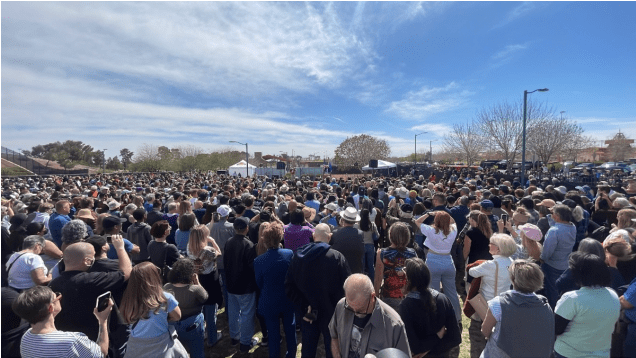
Arizona Rally March 2025
Senator Bernie Sanders and Representative Alexandria Ocasio-Cortez mark a defining moment in American politics. Tempe, Arizona Rally 2025 Groff Media©

The recent rallies by Senator Bernie Sanders and Representative Alexandria Ocasio-Cortez mark a defining moment in contemporary American politics. Across five rallies in three states, tens of thousands gathered. They made a resounding call for change. This signals widespread dissatisfaction with the current political and economic systems. The overwhelming attendance at these events reveals a deep-rooted movement. It is fueled by a demand for economic fairness. There is also a call for political integrity and grassroots-driven reform.

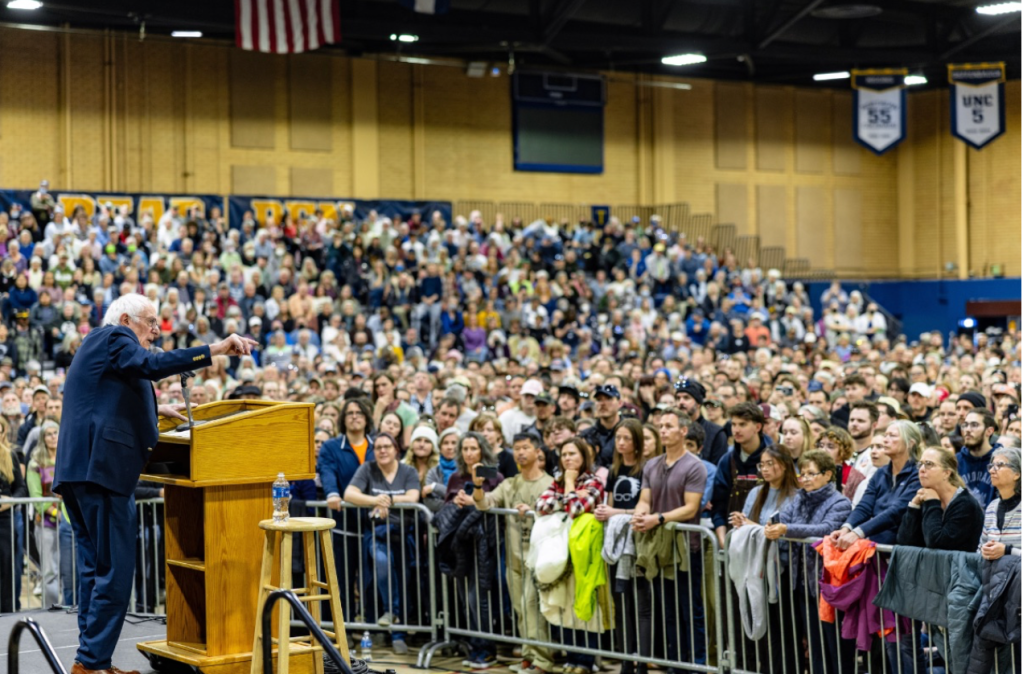
Greeley Colorado, Groff Media©

One of the key takeaways from these rallies is the rejection of Trumpism, oligarchy, and authoritarianism. The presence of thousands in North Las Vegas, Tempe, Greeley, Denver, and Tucson shows collective opposition to massive income inequality. Wealth inequality has left many working-class Americans behind. This movement directly responds to a political system. In this system, billionaires hold disproportionate power. They use their wealth to influence elections and dictate policy. The rallies were not simply campaign events; they were gatherings of individuals. They were determined to reclaim democracy from corporate interests. They also wanted to challenge political elites.

Tucson, Arizona, Groff Media©

Moreover, the movement echoes historical struggles that have shaped the United States. Sanders draws parallels between this modern fight and past movements that have successfully challenged oppression. These include the abolitionist, labor, civil rights, and women’s rights movements. These historical precedents offer a blueprint for today’s progressive movement. They emphasize that real change arises when ordinary people organize. Real change occurs when they take action against systemic injustice.

A critical part of this movement is grassroots organization. Sanders and Ocasio-Cortez stress the need to mobilize people in all 50 states through consistent engagement. Mobilizing thousands of people means not only attending rallies but also translating that enthusiasm into political action. Encouraging progressives to run for office at all levels is crucial. This includes positions from school boards to state legislatures. It is a core strategy to enact lasting change. Local elections, often overlooked in the national political discourse, hold immense power in shaping policies that affect daily life.

Denver, Colorado, Groff Media©

Additionally, the movement extends beyond electoral politics. It calls for strong communities where people support one another despite economic and social challenges. The emphasis on solidarity reflects the understanding that political change is inseparable from fostering a culture of mutual aid. It also involves building collective strength. The movement creates networks of engaged citizens. The goal is to counteract the feelings of loneliness that many experience in today’s economic landscape. It also addresses feelings of helplessness.

This movement does not overstate the urgency. Sanders highlights the significance of this moment not only for current generations but also for future ones. Climate change, economic disparity, and political corruption are existential issues that need immediate action. The message is clear: now is the time for mobilization, not despair. The fight for a fair and just society depends on ordinary people. They must be willing to challenge entrenched power structures. They must demand a system that works for all.

The rallies led by Senator Bernie Sanders and Representative Alexandria Ocasio-Cortez signify a pivotal moment in U.S. politics, reflecting widespread dissatisfaction with inequality and a demand for economic justice.
Arizona, Nevada, Colorado,

In conclusion, the rallies held across Nevada, Arizona, and Colorado exemplify the strength of a growing progressive movement in America. The record-breaking turnouts illustrate a profound discontent with the status quo and a wish for systemic change. By organizing, running for office, and building community solidarity, this movement can redefine the future of American democracy. The path ahead is not easy. History has shown that when people unite for justice, they can overcome even the most powerful obstacles.

The Merman’s Transformation: Wally Askins’ Final Voyage

GROFF MEDIA 2024© TRUTH ENDURES IMDBPRO

Presented by benandsteve.com By: Benjamin Groff II©s

2–3 minutes

The Merman’s Final Voyage

The Mernan
Wally Askins – The Merman Groff Media©

Wally Askins had spent his life dreaming of the sea. He did not aspire to be a sailor or fisherman, but as something far more elusive—a merman. His belief in the sea was so strong that it seemed to shape his very being. He often spoke of the freedom of the water. It was a world unchained by the burdens of war. It was free from politics and human frailty. He believed neither in heaven nor hell. Still, he knew where he belonged if there was a way to pass into another existence.

His family and friends humored him over the years. They nodded along as he recounted legends of mermaids and mermen. These creatures swam in secret beneath the moonlit waves. Wally passed at seventy-eight. There was no question. His ashes would be scattered in the fabled river he had always spoken of.

On a misty morning, his loved ones gathered at the water’s edge. The river stretched before them like a silver ribbon. It dissolved into the fog. The air was thick, the kind that swallowed sound, leaving only the hush of lapping waves. They carried out his wish with solemn hands, releasing his ashes into the current.

At first, it was just water meeting dust. But then the river stirred.

The mist swirled, deepening, shifting into shapes that moved with intention. A ripple grew into a form—long, sinuous, and glistening like fish scales under moonlight. A figure emerged, half-man, half-sea creature, his eyes glowing with an otherworldly light. It was a sight that left the onlookers breathless, their hearts pounding with a mix of fear and wonder.

Wally Transitions Into A Merman After His Ashes Are Spread
The Merman – The Late Wally Askins Groff Media©

It was Wally.

His beard had turned to strands of seaweed, and his hands webbed like the legends foretold. A great, shining tail flicked behind him, disappearing beneath the water before rising again. The mourners gasped. Their hearts pounded in their chests. They stepped back in awe. Terror filled them at the sight of their beloved Wally transformed into a creature of the sea.

Then, through the thickening fog, a sound echoed—a ship’s bell, distant and struggling. The fog was too dense for a lighthouse beam to cut through. The boat would be lost.

Wally turned toward the river’s mouth, where the sea was called. Without hesitation, he dove ahead, his form shimmering as he swam into the mist. As he did, a soft glow spread in his wake. It was a beacon unlike any other. It guided the ship safely past the unseen dangers lurking in the fog. The sailors, their hearts filled with relief and gratitude, whispered of the merman who had saved them.

From that day on, sailors whispered of a presence in those waters. They spoke of a merman who led lost ships to safety. This happened when lighthouses failed. Some say the river was repaying him for his belief, others that he had found his way home.

His family and friends never spoke of what they saw. Yet, whenever they returned to the river, they would watch the mist. They waited for the shimmer of scales just beneath the surface.

Waiting for Wally.

Lessons from Pa Pa J: The Joy of Simple Traditions

GROFF MEDIA 2024© TRUTH ENDURES IMDBPRO

Presented by benandsteve.com By: Benjamin Groff II©s

1–2 minutes

Pa Pa J.
Pa Pa J., Dad,

We never took a trip or spent a day alone without resorting to Vienna sausages. It was a ritual. Sometimes we’d have crackers with them. Sometimes not. But one thing was sure: the lid of that little can popped open when hunger struck.


I’m talking about my dad, JD. He refused to stop at roadside cafés or even at convenience stores. If we needed gas, we’d pull into a filling station. But for food, we used whatever we brought from home. As a child, I never minded. Sitting there, sharing those sausages with my dad, I saw they tasted better than anything we bought.


Years passed, and I eventually moved out. But my dad’s traditions didn’t stop with me. His grandkids soon got to experience his simple pleasures, though I didn’t realize it then.
Recently, while visiting with my nephew, he shared a memory that made me smile.

“Pa Pa,”

he said,

“always had a can of Vienna sausages when he visited. We’d sit together and share them like he used to do with you.”

But then he added something even more telling about my dad’s practical ways.


One day, they were out on the back patio. When the last sausage was gone, my nephew picked up the empty can. He was ready to throw it away. But Pa Pa stopped him.

“No, give it to me,”

Pa Pa J. said.

He walked to a pipe with an open end. This pipe was leading into the house. He placed the can over it. It fit perfectly, sealing the opening. My nephew chuckled as he realized the simple genius behind it—Pa Pa’s foolproof way of keeping wasps from nesting inside.


And so, somewhere in that old homeplace, if someone tinkering around. They find a pipe with a can stuck inside. They should leave it be. Because if Pa Pa put it there, you can bet it was for a good reason. Unless, of course, they want a house full of Yellow Jackets.

The Great Dog Escape: A Story of Resourcefulness

GROFF MEDIA 2024© TRUTH ENDURES IMDBPRO

Presented by benandsteve.com By: Benjamin Groff II©s

2–3 minutes

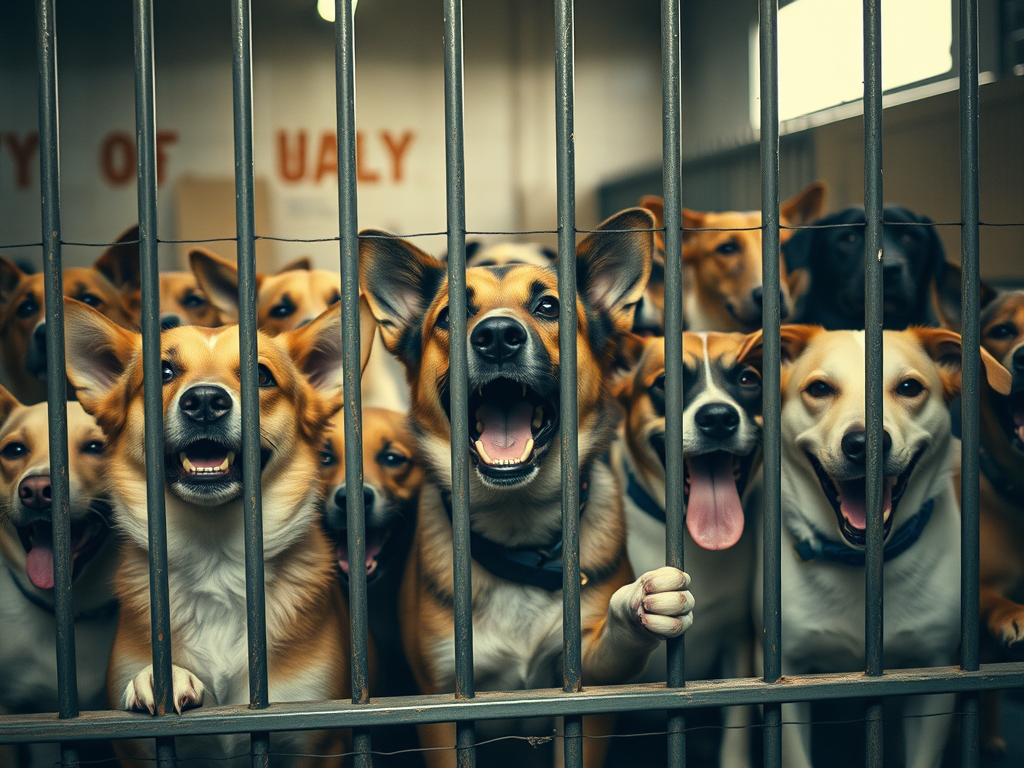
Huey sat in the corner of the kennel, ears perked, eyes darting toward the metal gate between them and freedom. Max, his trusted partner, paced back and forth, tail flicking with nervous energy. Around them, the others—Spike, Bella, and Rufus—pretended to be sleeping, but they were all listening, waiting for the signal.


“Tonight’s the night,”

Huey whispered.

“The screws turn in at nine. We give ’em an hour, then we move.”

Max nodded.

“Bella, you’re on distraction. Get that yapper down the row to start barking. When the guard checks on him, we make our move.”


Bella wagged her tail.

“Piece of kibble.”


Spike chimed in,

“I got the latch covered. I’ve been watching the humans do it for weeks. I think I can pop it.”


“Good,”

Huey said.

“Once we’re out, we head for the back gate. Rufus, you still got that big brute act down?”


Rufus grinned, his jowls flopping.

“One good growl and the yard mutt will scatter.”


The plan was perfect. They had worked out every detail. The humans thought they were dumb dogs, but they’d prove them wrong tonight.


The lights went out, and the night settled over the pound. A low growl rumbled from the cage at the far end. Right on cue, the little yapper started up. Bella joined in, then Spike, then the whole row. Sure enough, heavy boots clomped down the hall. The guard muttered something about “dumb mutts” and stomped off to quiet them down.


“Go time,”

Huey whispered.


Spike reached through the bars, jiggling the latch—a click. The gate swung open. One by one, they slipped out, moving fast and low, paws silent on the concrete. They were almost to the back gate when Max skidded to a stop.


“What is it?”

Huey hissed.


Max’s eyes gleamed in the dark. His tail quivered.

“Bone.”


Huey sighed.

“Forget it, we gotta—”


“Bone,”

Max repeated, but the others saw it, too. A big, juicy, perfectly gnawed bone, lying right there, almost like fate had placed it in their path.


Rufus whined.

“It’s beautiful.”


“No time!”

Huey barked.

“We gotta go!”


Max, still, had already lunged for it. Spike growled, trying to shove him aside. Bella snapped at them both. Chaos erupted. Snarls and yips filled the air.


Lights flicked on. A door slammed. The humans were coming.


“Run!”

Huey yelled, but it was too late.


A net came down over Rufus. Bella yelped as a leash snapped around her neck. Huey dodged left, but a firm hand grabbed his collar.


Max? He was still chewing.


The next day, they sat in their cages, tucked tails, watching the humans talk about “bad dogs” and “extra security.”


Max sighed, staring at the bone still sitting outside the fence.

“Worth it.”


Huey groaned.

“Next time, we leave you behind.”


But they all knew there would be a next time. Because a good dog never quits, and a great dog always has another plan.

Real-Life Drama: Officer Finds Missing Dialysis Patient

GROFF MEDIA 2024© TRUTH ENDURES IMDBPRO

Presented by benandsteve.com By: Benjamin Groff II©s

4–6 minutes

The Missing Man Case 1986

It had been a relatively slow night. There were the usual calls—nothing out of the ordinary. A lady reported a prowler near her home in the North Division. Tim was assigned there for the night due to staffing shortages. Usually, he worked in the South Division, but tonight, he was covering unfamiliar ground. He had made several traffic stops—broken taillights, expired tags, and speeding violations—but nothing major.

Tim was known for his relentless patrol work, stopping burglaries in progress, nabbing car thieves, and making felony arrests. He led his department in felony arrests. But just after midnight, he got a call from dispatch that promised to be something different.

“Unit 852, report of a missing man. Dialysis patient. Suicidal. See the reporting party at 515 North Main Street.”

515 North Main was in the oldest part of town. The houses date back to when the city was just a settlement. It wasn’t a known trouble location—not one of the repeat offenders officers constantly got sent to.

As Tim pulled up, he saw a porch light glowing. The house was a white A-frame with an overhang, modest but well-kept. Before he knocked, the door swung open. Inside, several people stood around, dressed as if they were about to go out for the evening.

Tim identified himself.

“Hello, I’m Officer Roff. I understand someone is missing?”

A woman stepped ahead. 

“I’m Kathy Gifford. Yes, my husband is missing. I don’t know how, but he’s gone!”

Tim raised an eyebrow.

“You don’t know how?”

Mrs. Gifford wrung her hands. 

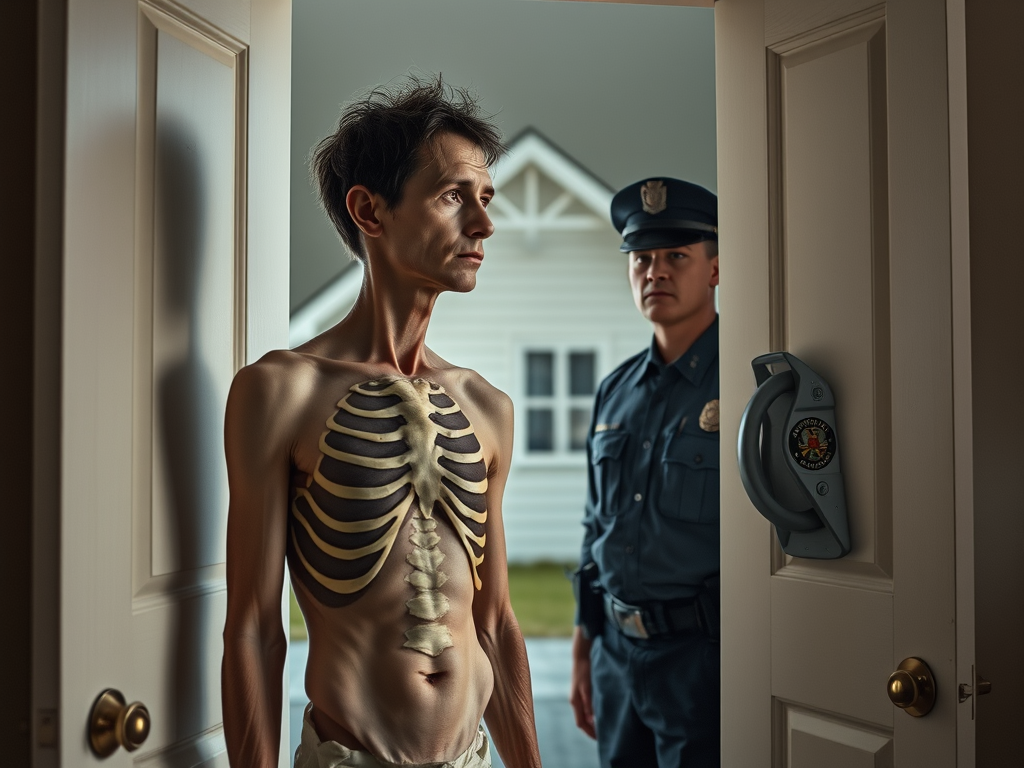
“He’s skin and bones. He can barely walk. He’s on dialysis, and he probably doesn’t have long to live.” 

She took a deep breath. 

“He didn’t want me to go dancing with my friends tonight. He begged me to stay. He said it would be the last time I saw him if I walked out that door. But I thought he was just being dramatic.”

Tim had been a cop long enough to know that people sometimes exaggerated. He took her words with caution. 

“Did you search the house?”

Everyone nodded. 

“We did. He is not here.”

“What’s his name?”

“James Gifford, but he goes by Jimmy.”

Tim instructed everyone to stay put as he searched the house. He checked every room, corner, under sheets, and inside closets, calling out Jimmy’s name at every turn.

Ten minutes into the search, he entered the couple’s bedroom.

Mrs. Gifford sighed. 

“There’s no use looking in here. I’ve already searched everywhere.”

Tim wasn’t about to take her word for it.

“I have to be thorough before filing a missing persons report.”

He called out again. 

“Jimmy, this is Officer Roff with the Police Department. If you’re in here, tell me now! I’m about to search your room, and anything unlawful I find will result in criminal charges.”

Silence. Then, whispers from the people behind him.

Tim checked under the bed. Nothing was there. He turned to scan the room when Mrs. Gifford suddenly gasped.

“Oh my God, he has the gun!”

Tim spun around. 

“A gun? Don’t you think that’s something you should’ve mentioned earlier?”

His hand instinctively went to his sidearm, unsnapping the holster. He stepped to the closet door and pulled it open. It was dark inside. He clicked on his flashlight and swept the beam across the space. Nothing. Then, near the front of the closet, he saw a pile of laundry.

Beneath it, Jimmy lay motionless, staring straight up at the ceiling. A .25 Automatic rested on his bony chest.

Tim’s breath caught. 

“Jesus!” 

His outburst sent the people behind him scattering, running out of the house.

His training took over. Tim drew his weapon and leveled it at Jimmy.

 “Don’t move! Don’t reach for the gun!”

But Jimmy never flinched. He just looked up at Tim, his expression empty.

Tim quickly reached down, grabbed the pistol off Jimmy’s chest, and took a step back. 

“Get up. Get out of the closet.”

Jimmy slowly sat up, his frail body trembling.

Tim exhaled, his adrenaline still surging. 

“What the hell was this all about?”

Jimmy sighed. 

“I just wanted to scare her. Make her feel bad for leaving me. Make her think twice next time. That’s all.”

Tim shook his head. 

“You know, there are better ways to ask for attention.”

Jimmy just looked at him, defeated.

Tim crossed his arms. 

“Look, you have two choices. Either you voluntarily go to a mental health unit tonight, or you surrender this gun until Monday.”

Jimmy hesitated.

Tim pressed on. 

“You can come pick it up at the police department after you cool down. But I’m not walking out of here knowing I am back in two hours for a murder-suicide.”

After a long pause, Jimmy sighed. 

“Fine. Take the gun.”

Tim secured the weapon and turned back toward the doorway, where Mrs. Gifford and her friends had cautiously gathered again. He shook his head and muttered, 

“This is the Ruby Don’t Take Your Love to Town call to beat all others.”

One of the men raised an eyebrow. 

“What?”

Tim smirked. 

“You know, the song. The guy’s disabled, and his woman goes out dancing anyway. I never thought I’d see it play out in real life.”

The room fell silent.

Tim exhaled, holstered his weapon, and radioed in. 

“Unit 852, situation under control. Subject located. No further assistance needed.”

As he walked out, he couldn’t help but shake his head. 

“Damn country songs. They’re always right.”

The Long Holiday Journey: Family Moments on the Road

GROFF MEDIA 2024© TRUTH ENDURES IMDBPRO

Presented by benandsteve.com By: Benjamin Groff II©s

3–4 minutes

The Long Holiday Ride

Going Home
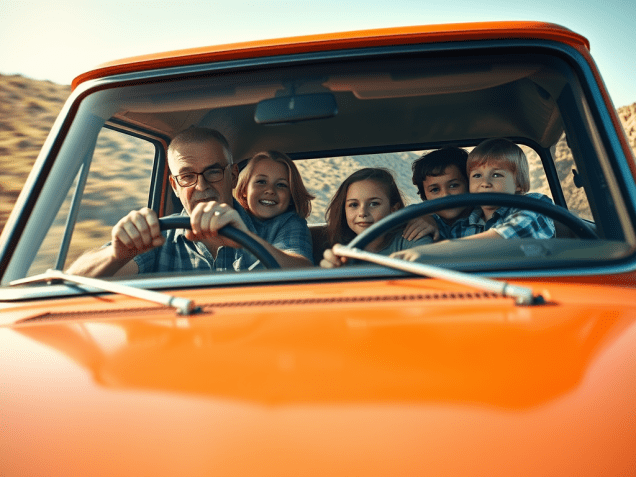
The Miller Family Going Home For the Holidays,

The old pickup truck rattled down the highway, packed tight with the Miller family. The father, Dale, gripped the steering wheel, his sharp eyes scanning the road ahead. Beside him, their mother, Janice, balanced a warm dish of sweet potatoes wrapped in a towel on her lap. Every thirty seconds she would let out a ‘hiss,’ and reach for the dash, her only comment to Dale’s driving. In the same seat, the children jostled for space. Clayton, the eldest at twenty-two, leaned against the window with his arms crossed. His younger sisters, Maggie and Rachel, squeezed in beside him. Then there was little Jack. He was the baby of the family, barely eight, and sat between his sisters. His feet barely touched the floor.


It was the same every year. They drove forty miles on bumpy roads. Gravel spat against the undercarriage. The chilly air sneaked in through cracks in the old truck’s frame. The family’s first stop was Janice’s side, the sprawling Henderson clan, where a sea of cousins, aunts, and uncles waited. The noon meal would be loud, laughter filling the air along with the scent of roasted turkey and homemade pies.

Clayton was ever the quiet one. He watched the open fields pass by. Meanwhile, Maggie chattered about the games she’d play with her cousins. Rachel checked the food in the back. She made sure nothing had tipped over. Meanwhile, Jack, restless, kicked his feet. He asked every ten minutes, “How much longer?”

When they finally pulled into the driveway of Janice’s childhood home, they heard the noise instantly. It hit them before they even got out of the truck. Kids ran around the yard. Adults stood in clusters laughing. The kitchen was an organized chaos of steaming dishes and busy hands. The family squeezed through the door, greeted by warm hugs, as coats were peeled off and plates were filled.

After lunch, games and stories took up the afternoon. Clayton found himself talking with an uncle about work on the ranch, while Maggie and Rachel gossiped with their cousins. Jack, after an impressive three plates of food, ran outside to join a game of tag. Dale was talking to his favorite brother-in-law, about a horse he was bringing along.

But there was no time to linger too long. As the sun began to sink, Dale gave the usual call: “Time to load up! We still got another stop!” They groaned and said their farewells. Everyone piled back into the truck with full stomachs. Hands waved through the window.

The second stop was Dale’s side, a quieter gathering with just his sister’s family. Fewer cousins, a calmer atmosphere, and jokes cracking from Bus and Virgil. Aunt Sis served coffee and pie, and the talk was slower, nostalgic—old family stories, memories of Christmases past.

Rachel curled up in a chair with a book while Maggie helped Aunt Sis in the kitchen. Jack, fighting off sleep, leaned against his mother, his eyes drooping. Clayton sat with his dad and uncle, talking about the year’s crops and the price of cattle.

By the time they left, the truck was much quieter. The ride home was filled with drowsy murmurs, Jack fast asleep against his mother’s side. Rachel and Maggie leaned on each other, the warmth of the long day still lingering. Dale, was dreaming of all the memories he had been reminded of while seeing his folks and kin.

As the headlights cut through the darkness, Dale glanced in the rear view mirror at his family. It was a long trip every year. Yet, as he looked at his wife and children—fed, happy, and together—he knew it was always worth it.

The holidays weren’t about the miles traveled, but the moments shared. He never had a million dollars, but he sure felt like it.