The Enduring Power of Love and Memory

GROFF MEDIA 2024© TRUTH ENDURES IMDBPRO

Presented by benandsteve.com By: Benjamin Groff II©s

2–3 minutes

A Bridge Beyond Time

The old oak tree, a silent witness to Sarah's life.
The old oak tree is a silent witness to Sarah’s life.

The old oak tree was a silent witness to Sarah’s life. It stood tall at the top of the hill, its branches stretching toward the heavens. Sarah sat on a wooden bench beneath its shade. She stared at the horizon, where the sun-drenched the sky in shades of gold and crimson. This was where she had always met her grandfather, who taught her about life, love, and faith. The oak tree, a symbol of strength and endurance, had always been a part of their meetings.

She can still hear his voice—soft yet firm, filled with wisdom. “Death takes the body, sweetheart, but never let it take your love. Love stays here.” He had placed his hand over her heart when he said it.

It had been a year since he passed. She still felt his presence in the whisper of the wind, even in the rustling leaves. The loss had been unbearable, but time had taught her something—her grandfather was not truly gone.

Her mind held the memories. They were like precious gems, each a testament to his life and their bond. She remembered sitting on his lap as a child, listening to stories of his youth. She recalled the scent of his old leather chair. He hummed an old hymn while tending his garden. She remembered the warmth of his calloused hand in hers during Sunday walks. Like a living tapestry, these memories kept him alive in her heart.

Her heart kept the love. Love did not disappear with death. It remained, placed safely within her, growing stronger each day.

And then there was faith. Faith whispered that this was not the end. It reassured her that she would see him again one day in a place beyond time and sorrow. This promise filled her with hope and anticipation.

Sarah reached into her pocket and pulled out a small wooden cross he had carved for her long ago. Clutching it tightly, she closed her eyes. “I miss you, Grandpa,” she whispered.

A gentle breeze brushed against her cheek. For a brief moment, she almost felt his hand on her shoulder. The sensation was so real that she almost felt the roughness of his palm and the warmth of his touch.

She smiled. Love remained. Memories endured. And faith promised—one day, they would meet again.

Remembering Slick Watts: NBA Star and Community Hero

GROFF MEDIA 2024© TRUTH ENDURES IMDBPRO

Presented by benandsteve.com By: Benjamin Groff II©s

Where you do not have to pay to read a person’s obituary.

2–3 minutes

https://www.theelinetwork.com/wp-content/uploads/2021/04/slick-watts.jpg

Donald Earl “Slick” Watts (July 22, 1951 – March 15, 2025)

Donald Earl “Slick” Watts was a beloved figure in basketball. He was also a cherished member of the Seattle community. He passed away on March 15, 2025, at 73. Slick was born on July 22, 1951, in Rolling Fork, Mississippi. His journey from humble beginnings to NBA stardom is a testament to his dedication. It also highlights his charisma and enduring spirit.

Slick’s basketball career began at Grand View Junior College, after which he transferred to Xavier University of Louisiana in 1970. There, he played under coach Bob Hopkins and alongside future ABA and NBA star Bruce Seals. He was a leader on the court. His leadership guided the Xavier Gold Rush to consecutive NAIA District 30 Championships in 1972 and 1973.

https://data2.nssmag.com/images/galleries/12643/slick-watts-headband-3.jpg

Undrafted in 1973, Slick’s relentless determination earned him a spot with the Seattle SuperSonics. Known for his signature bald head and headband, he quickly became a fan favorite. In the 1975–76 season, Slick led the NBA in assists and steals, the first player to achieve this remarkable feat. His tenure in the NBA also included stints with the New Orleans Jazz and the Houston Rockets.

Beyond his professional career, Slick’s contributions to the Seattle community were profound. He dedicated many years to education. Slick Watts shared his skills and gifts as a physical education teacher at several elementary schools. Slick also served as a basketball coach at Franklin High School. His commitment to nurturing young talent and promoting physical fitness left an indelible mark on countless students.

In 2001, Slick faced a serious health challenge with sarcoidosis but demonstrated resilience and strength in his recovery. In April 2021, he suffered a significant stroke. He faced rehabilitation with the same determination that characterized his life on and off the court.

Slick Watts is survived by his son, Donald Watts. Donald followed in his father’s footsteps. He played basketball at the University of Washington and later contributed to the sport as a coach and mentor. Slick’s legacy is etched in basketball history. It also lives in the hearts of those he inspired through community engagement and unwavering spirit.

https://www.si.com/.image/c_fill%2Cw_1440%2Car_16%3A9%2Cf_auto%2Cq_auto%2Cg_auto/MTgwMjkzMDE5OTIzMTMwMjIw/slick-watts.jpg

A public memorial service will be held in Seattle to honor Slick’s life and legacy. Details will be announced in the coming days. Instead of flowers, the family asks for donations to The Watts Foundation. This supports youth basketball programs and continues Slick’s lifelong commitment to empowering the next generation.

Slick Watts will be remembered for his exceptional basketball court skills. He profoundly affected the community and was dedicated to education. His resilience in the face of adversity inspired him.

A Personal Journey Through America’s Must-See Cities

GROFF MEDIA 2024© TRUTH ENDURES IMDBPRO

Presented by benandsteve.com By: Benjamin Groff II©s

3–4 minutes

A Few Of The Places I’ve Been

Photo by Rajiv Krishnan on Pexels.com

A few places I’ve been are not just locations on a map. They are experiences, sensations, and moments that can’t be conveyed simply through words or photographs. You would have to have been there to understand.

Take the Grand Canyon, for example. No photo can capture its overwhelming vastness. Standing on its rim, you stare into the depths of time carved into the earth. The wind carries whispers from a million years ago, and the sun paints ever-changing shadows along the canyon walls. To see a picture is to miss how the air smells. You miss how the silence hums. Your perspective on life shifts when faced with something so immense, leaving you in awe of nature’s grandeur.

Groff Media

Washington, D.C., is another place to experience and be understood. Walking among its monuments and institutions is like stepping into a living history book. The weight of past decisions and the ongoing creation of history are tangible. You stand where the nation’s most influential figures have walked. It fills you with a profound connection to the past. It also connects you to the current time. It makes you feel like a part of history.

Groff Media

Then resort cities like Palm Springs, California, Tampa, Florida, and Las Vegas, Nevada. Each city offers a unique atmosphere that cannot be fully captured without being there.

Palm Springs feels like a cinematic escape. It is where you can brush shoulders with a movie star. You will find yourself surrounded by towering mountains on one side. There is an endless sea of wind turbines on the other. It’s all swimming pools, sunshine, and Hollywood glamour between the two. It makes you feel like you’ve stepped into the pages of a luxury magazine.

Tampa, Florida, has its distinct charm. The old cigar district, Ybor City, takes you back in time with its historic brick streets and family-owned restaurants. It offers an eclectic mix of tattoo parlors, jewelry shops, and late-night clubs. Just a short drive away, the sun-drenched beaches of St. Pete offer the perfect contrast—soft sand, rolling waves, and the scent of saltwater in the air.

Fremont Street
Groff Media “A Night On The Town”

Las Vegas is a city of dual identities. The Strip dazzles with its colossal casinos, neon lights, and grand-scale entertainment, a modern marvel of excess and spectacle. But downtown, the Fremont Street Experience transports you to old Vegas. Here, the first hotels still stand beneath a digital canopy of flashing lights synchronized to music. Street performers, quirky shops, and hidden gems make it an adventure.

Salt Lake City, Utah, left an impression on me not just for its skyline but for its architecture. The intricate designs of its buildings make the city itself a work of art. The influence of the Mormon faith is woven into nearly every aspect of its layout and culture. This influence gives the town a sense of unity and purpose. It is both fascinating and humbling.

Oklahoma
Oklahoma’s Last House Standing Groff Media

And then, there’s Oklahoma and Kansas—where the wind is an ever-constant force, shaping the land and the people. A 40-mph breeze is just another Tuesday, with gusts often reaching 70 mph. Tornadoes and earthquakes occur sometimes at the same time. Many people think Interstate 40 and Interstate 35 are the most significant things to come out of those states. These highways offer an escape route from the relentless winds sweeping across the plains.

Each of these places has left an imprint on me. It’s not just because of what they look like. It’s also because of what they feel like. And no matter how well I describe them, you’ll never truly know unless you’ve been there yourself.

The Man Who Belonged: A Dark Psychological Mystery

GROFF MEDIA 2024© TRUTH ENDURES IMDBPRO

Presented by benandsteve.com By: Benjamin Groff II©s

4–6 minutes

The Man Who Belonged

Ethan Caldwell woke up every morning with the certainty that he was where he was supposed to be. His town, Dunridge, was a place people left but rarely arrived at. It was a quiet, tree-lined community. The roads curved in familiar ways. The seasons changed precisely when expected. The faces at the local diner never seemed to age.

He belonged here. He had always belonged here.

And yet, something was wrong.

It wasn’t how he looked—Ethan was an ordinary man with an ordinary life. He had ten fingers, ten toes, and a name that didn’t feel borrowed. Ethan had memories of childhood scraped knees. He remembered teenage love. His father taught him how to drive down the old county road. He worked at the hardware store. He knew which coffee shop made the best brew. He navigate the town with his eyes closed.

But deep within him, something itched. It wasn’t a feeling of displacement—it was the opposite.

He fit in too well.

There were no awkward silences when he spoke to strangers. No one ever misheard his name or mistook him for someone else. When he ordered at the diner, the waitress nodded as if she had already known his choice. His keys never went missing. The mail always arrived right when he expected.

He tried to shake the feeling, but it settled deeper.

One night, he walked the streets of Dunridge in search of something—he didn’t know what. The town was calm, quiet, and lit by the amber glow of streetlamps. As he passed the shops, he caught his reflection in the glass.

He looked at himself. Normal.

But the reflection wasn’t watching him.

It was waiting.

A chill ran down his spine, and Ethan took a step back. 

The moment he did, the feeling disappeared. He was himself again, the same Ethan Caldwell who had lived here his whole life.

But the thought lingered: Had he lived here his whole life?

The next day, he tried to recall his first memory of Dunridge. It was not just any memory. It was his first one, the earliest thing he remembered.

But there was nothing before the age of twenty-seven.

That wasn’t right.

He had childhood memories. He had school pictures. He had friends who swore they’d known him since grade school.

Hadn’t they?

He asked his neighbor, Mrs. Wallace, how long she had lived in Dunridge. She smiled, hands on her porch railing.

“Oh, all my life.”

“And me?” 

He asked.

She blinked, her smile unwavering. 

“Why, Ethan, you’ve always been here.”

He swallowed. 

“Right. Always.”

Mrs. Wallace nodded as if the question itself was odd. 

“You belong here, Ethan. Always have.”

His stomach twisted.

Somewhere in the distance, a clock tower chimed. Ethan had never noticed it before.

And suddenly, he was sure—something was wrong with this place.

Or maybe something was wrong with him.

That night, incapable of shaking the feeling, Ethan wandered the streets again. The town was as still as ever, its perfection unnerving. He passed the grocery store, the barbershop, and the town hall. Then he found himself in front of the library—its doors unlocked, though he had never seen anyone inside past closing.

He stepped in.

Dust motes filtered in the air, interrupted by his presence. The smell of old paper filled his nostrils. He ran his fingers along the spines of books until he reached the town records. He pulled one down and flipped through its pages.

And his blood ran cold.

There were no births recorded in Dunridge. No deaths. Only arrivals.

A new book, bound in leather, sat on a lower shelf. Inside, Ethan found the names of the people he’d known all his life next to brief descriptions. Scanning the pages, his hands trembled as he read:

Ernest Thatcher – Arrived: October 12, 1956 – Deformed hands, two thumbs on the left hand.

Lillian Monroe – Born without eyes

Samuel Dwyer – three-legged, five-arms, ousted by family at age 1

Patricia Thorne – Hairless, extra digits on each hand

The list went on. Each name was followed by a peculiarity—some mild, others grotesque, all rejected from wherever they came.

Ethan hesitated before flipping to the last page, where his name should have been. And when he found it, he almost dropped the book.

Ethan Calloway – 27 years old. No known origin. No memories before arrival. There is no past to recall. No home before Dunridge.

His breath hitched. His hands shook.

The town knew. All the townsfolk knew.

They were all misfits. They were cast out, discarded, and abandoned. They were left to disappear into a world where their abnormalities were masked. No one asked questions in this world. No one looked out of place because everyone had become perfect.

Even Ethan himself.

But why was he here? Why was he the only one who looked –– normal?

He turned to the mirror again, staring at his reflection under the streetlight.

And then, for the first time, he indeed saw himself.

He saw what he had been blind to all along.

And that’s when the horror set in.

Ethan had ears where his nose should be. There was a mouth where his ears should go. A nose sat on top of his head. His eyes looked back at him from his throat. Then, Ethan wished that he had never questioned his being. 

Sometimes, it is best to not change memories.

Memories and Mischief: The Summer of 1980

GROFF MEDIA 2024© TRUTH ENDURES IMDBPRO

Presented by benandsteve.com By: Benjamin Groff II©s

2–4 minutes

The Summer of 1980

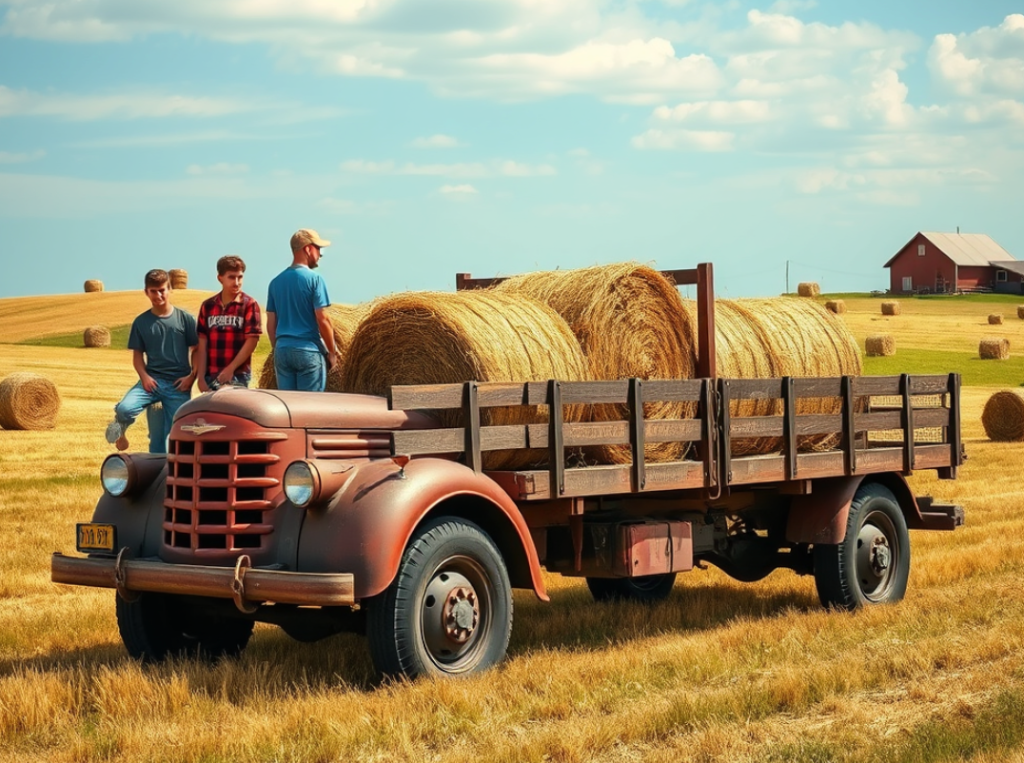
The summer of 1980 would be remembered forever. It was the year three friends—Bub, Johnny, and Clem—took to the hayfields, hauling bales for farmers across the county.

They set out to help the local farmers with two old flatbed farm trucks. The farmers struggled to find enough hands to get their hay cuttings into the barn. What started as a way to earn cash quickly became much more significant.

The boys took turns driving. Two worked at the back of the truck, stacking and securing the bales. They did this while bumping along dirt roads. When they reached a barn, all three pitched in to unload. It was grueling work. It was hot, dusty, and backbreaking. They made a decent sum at fifteen cents per bale when split three ways. More importantly, they earned something money couldn’t buy: the respect of an entire community. Their work ethic, reliability, and bargain rates made them invaluable, and grateful farmers often sweetened the deal with generous tips.

Word spread fast. Soon, the boys had more work than they handled. They got their hands on a third truck and fixed it up. Each took charge of their own rig. They hired extra help to keep up with demand. By summer’s end, the three had hauled an unprecedented amount of hay. No one remembered seeing so much in the valley.

But it wasn’t all work.

The boys had a playful streak, and the town delighted in their antics. One night, Clem slept soundly in their makeshift bunkhouse. Bub got the idea to spread hair remover gel over Clem’s hairy legs. Hours later, Clem woke to a strange smell. He wrinkled his nose. He assumed one of the others had eaten something bad. He groggily rolled over and went back to sleep, unaware of the smooth patches forming on his legs. The next day, Clem discovered the damage in the shower. He saw the damage and heard Bub and Johnny howling with laughter outside the bathroom door.

Clem didn’t get mad. He got even.

At noon, he played the perfect gentleman. He told Bub and Johnny that he held no grudges. He wanted to treat them to lunch. They stayed behind at the barn. He ran to the burger joint and ordered the most enormous double cheeseburgers. There was also a mountain of fries and chocolate malts. For himself, he ordered vanilla. Before returning, he slipped some laxatives into the chocolate malts.

The unsuspecting pair devoured their meal, thanking Clem for his generosity, utterly unaware of the payback coming their way. Four hours later, they were running to the bathroom non-stop, clutching their stomachs, confused and miserable. Clem stood back, arms crossed, grinning. Their “cleaning out” lasted for days. When the town caught wind of the prank, it only added to the growing legend of the hay-hauling boys.

The mischief didn’t stop there.

There were ambushes, booby traps, and endless laughter. Even with their busy schedule, they found time to fish. They caught some of the biggest catfish the town had ever seen.

By summer’s end, they had built more than a successful hay-hauling business—they had created memories that would last a lifetime. Long after the last bale was stacked, folks in town would still talk about the summer of 1980. During that summer, three hardworking boys became the heart and humor of the valley.

Echoes of War: A Bond Forged in Nightmares

GROFF MEDIA 2024© TRUTH ENDURES IMDBPRO

Presented by benandsteve.com By: Benjamin Groff II©s

2–3 minutes

Echoes of War

Chad Branson woke in a cold sweat, heart hammering against his ribs. The dream had come again—flashes of burning villages, the thunder of distant explosions, the acrid stench of smoke. He had never been to war. He had never even held a gun. Yet, the memories felt real, like echoes of a life he hadn’t lived.

It had started five years ago, these violent dreams that left him breathless and shaken. He had tried therapy, meditation, and even medication, but nothing dulled the visions. He had no explanation—until the day he met him.

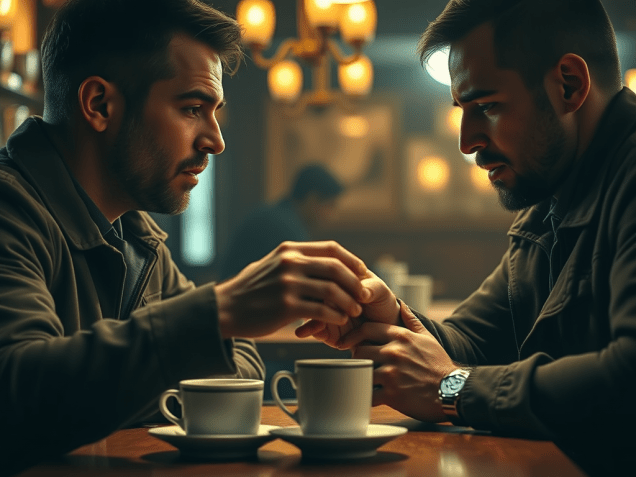
The chance meeting happened in a quiet café, a place Chad often escaped to in hopes of finding solace. That morning, as he reached for his coffee, his hand bumped into another.

“Sorry,” 

He murmured, glancing up—and froze.

The man before him had eyes that mirrored his own exhaustion. His jawline was sharp, and faint scars traced his brow. When he spoke, his voice carried a weight. 

Chad recognized it but couldn’t place it.

“Chad Branson,” 

The man said, extending a hand.

Chad hesitated. 

“That’s… my name.”

The other man chuckled. 

“I know. That’s why I introduced myself.”

A strange silence stretched between them before Chad spoke again. 

“Do I know you?”

The other Chad was an ex-soldier and a survivor of two deployments. He was also the bearer of the nightmares Chad had somehow inherited. Chad watched him closely.

“No,” 

He said at last. 

“But I think we’ve been living the same war.”

Over the next weeks, they talked, comparing details.

Every dream Chad had lived, the other had experienced firsthand. The battlefield in his mind had once been real. The pain, the horror—it belonged to this man, but somehow, it had become part of Chad, too.

Neither explained it, but they didn’t need to. In their shared pain, something else took root: understanding and affection. A bond neither expected nor deny.

One night, as they sat in the dim glow of Chad’s apartment, he reached for the soldier’s hand. 

“Maybe the universe gave me your memories for a reason,”

He murmured. 

“Maybe I was always meant to find you.”

Echoes of War
Echoes of War

The other Chad squeezed his fingers gently, a small, weary smile forming. 

“And maybe,” 

He whispered, 

“We can finally find peace together.”

The nightmares didn’t seem so heavy for the first time in years.

For the first time, neither of them was alone.

The Last Drop: A Cowboy’s Journey of Sacrifice

GROFF MEDIA 2024© TRUTH ENDURES IMDBPRO

Presented by benandsteve.com By: Benjamin Groff II©s

2–4 minutes

The Last Drop

The desert stretched endlessly before him. A sea of golden sand and jagged rock shimmering under the merciless sun. Nathan Calloway, a weathered cowboy, pulled his bandanna higher over his nose. He squinted against the glare. Nathan’s loyal companion, Dusty, plodded steadily ahead, hooves sinking into the loose sand. It had been days since they left the last water hole. The journey across this godforsaken land felt like it would never end.

Nathan had one canteen slung across his saddle. He’d filled it to the brim at the last watering hole, which seemed a hundred miles behind them now. Each time Nathan drank, he made sure Dusty drank, too. He’d pour water into his old, sweat-stained hat, holding it steady while the horse lapped it.

Miles passed, the sun crawling toward the horizon without relief. Nathan should’ve run dry by now. His canteen weighted it, sloshing like he had just filled it. He didn’t question it—just kept pouring for Dusty, letting the horse drink before taking a sip himself.

By the time they reached the halfway mark, the world felt different. The heat played tricks on Nathan’s mind, distorting the horizon and bending the sky. The rhythmic clopping of Dusty’s hooves became a heartbeat against the silence.

Then, Dusty spoke.

“Thanks, partner,” 

The horse said, his voice deep and smooth as rolling thunder.

Nathan blinked hard, his throat tightening. 

“What was that?”

“For the water,”

Dusty said, shaking his mane. 

“I appreciate it.”

Nathan swallowed. He knew heat can make a man see things and hear things that weren’t real. But this felt different. He’d spent years with Dusty—maybe it just took this long to finally listen to him.

“You’re welcome, old boy,”

Nathan murmured, tipping the canteen over his hat again. Dusty drank, his dark eyes filled with something knowing, something grateful. The horse seemed to understand the sacrifice Nathan was making for him. Nathan, in turn, felt a deep sense of responsibility and care for his companion.

The two trudged on, man and horse, surviving together. The sun burned down. Their shadows stretched thin. The canteen never emptied as long as Nathan gave to Dusty first.

Then, just as the town rooftops shimmered into view, something changed.

Nathan stopped. His body ached, exhaustion weighing him down. The canteen felt lighter now. The end was so close—only a half-mile to go. He took a long, deep drink, the first he hadn’t shared. The water was warm but pure, sliding down his throat. Nathan’s hands trembled as he lowered the canteen.

Dusty faltered. The horse’s breath came shallow, his steps unsteady.

Nathan hesitated. He looked at the canteen, now feeling light as air. Nathan shook it—nothing.

The world spun. The last stretch of desert blurred. Nathan swayed in the saddle.

A mile outside town, they found him. The townsfolk rushed ahead, lifting the man from his horse, but Nathan Calloway was gone. Dusty stood by, head bowed, his sides heaving. The canteen dangled empty from the saddle, not a drop left inside.

“You almost made it,”

Someone whispered.

No one noticed Dusty raise his head slightly, his dark eyes glistening with something almost human. He looked toward where his rider lay, then toward the empty horizon.

Deep in the desert’s silence, a voice like rolling thunder whispered,

“We made it.”

The Lost Shopper: A Remarkable Time-Travel Mystery

GROFF MEDIA 2024© TRUTH ENDURES IMDBPRO

Presented by benandsteve.com By: Benjamin Groff II©s

3–4 minutes

The Lost Shopper

Harold Wexley left his house on a crisp October morning in 1977. He carried a shopping list, which his wife, Martha, had scribbled on the back of an old envelope. The list read bread, milk, eggs, and a pound of ground beef. That was all he needed. The sun was high, and the air smelled like damp earth. He had a pocket full of change jingling as he walked toward Miller’s Grocery, just six blocks away.

Harold never returned home.

Martha waited—first hours, then days. The police took her report, shook their heads, and assured her that most missing persons had turned up. Neighbors speculated wildly. Some thought maybe Harold had amnesia. Others guessed he’d run off with some floozy. He had just vanished into thin air.

The years passed, and Martha grew old. The town changed. Miller’s Grocery shut down in the ’90s, replaced by a chain supermarket. The world moved on.

Then, in 2024, something impossible happened.

Found Where He Was Lost

At precisely 9:17 a.m. on a Saturday, an employee at the local SaveMore supermarket screamed, sending a ripple of confusion through the store.

Harold Wexley stood in aisle seven, between the cereal and baking goods. He wore the same corduroy jacket. He also wore brown slacks and scuffed loafers. These were the clothes he wore when he left home 47 years earlier. Harold was still clutching the shopping list in his hand. His hair had not grown. His skin had not aged.

When the police arrived, Harold blinked at them in utter confusion.

“What’s all the fuss about?”

He asked, his voice scratchy from disuse.

“I just came in to pick up a few things.”

The officer, utterly dumbfounded, asked,

“Sir, do you know what year it is?”

Harold laughed.

“What question is that? It’s 1977.”

The grocery store manager rushed ahead.

“Sir, this place wasn’t even here back then. This store opened in 1999!”

Harold frowned, rubbing his temple. He looked down at the list in his hand. The ink had not faded. The paper wasn’t brittle. His clothes smelled faintly of Martha’s lavender detergent.

But Martha was gone. His house was gone. His entire world had disappeared. He had been standing in this store, this spot. It was as if no time had passed.

The Mystery Remains

Scientists, journalists, and conspiracy theorists all descended upon Harold. Tests revealed that he was, biologically, still 42 years old. He remembered nothing beyond walking into Miller’s Grocery on that fateful day. He hadn’t eaten in 47 years. He hadn’t aged.

Some claimed he had slipped into a time loop. They believed the store had somehow preserved him in a pocket of frozen time. Others whispered about aliens, government experiments, or divine intervention.

Harold, meanwhile, was only concerned with one thing.

“Can someone tell me where my wife is?”

No one had the heart to answer him.

Epilogue

Harold never adjusted to the modern world. He refused to believe that the year was 2024, even when he saw flat-screen TVs and self-checkout kiosks. He spent his days wandering the grocery store, staring at shelves full of strange new products. He was looking for the familiar brands of his youth.

One night, after closing, a janitor was working late. He swore he saw Harold standing in aisle seven. Then he blinked, and Harold was gone.

The next day, an old yellow envelope with a shopping list was found on the floor. It was written in Martha’s neat handwriting. It seemed to have fallen from Harold’s hand in confusion.

No one ever saw Harold again. Sometimes, in the stillness of the grocery store, employees swore they heard the faint jingle of coins. The coins seemed to come from a pocket that wasn’t there, as if Harold’s spirit still wandered the aisles.

And sometimes, in the stillness of the grocery store, shoppers would listen closely. Even they swore they heard the faint jingle of coins. The sound came from a pocket of a man’s pants. It was from Harold, who had disappeared again.

The Legend of the Wishing Tree: A Magical Tale

GROFF MEDIA 2024© TRUTH ENDURES IMDBPRO

Presented by benandsteve.com By: Benjamin Groff II©s

1–2 minutes

Deep in the heart of the Whispering Wood stood an ancient oak known as the Wishing Tree. Its gnarled branches stretched toward the heavens. The tree’s roots twisted deep into the earth. The soil received whispering secrets from it.

The legend passed from generation to generation. It told of the tree’s magic. The tree would grant a single wish to those who truly believed.

Many travelers sought the Wishing Tree. Only a rare few with pure hearts and sincere desires ever found it. The forest guided them. The wind carried soft murmurs. These murmurs led them down winding paths until they stood before the towering oak. Beneath its emerald canopy, the air shimmered with an almost otherworldly glow.

One such seeker was a young girl named Elara. She had heard the tales from her grandmother, who had once made a wish upon the tree as a child. With hope in her heart, Elara ventured into the forest. She followed the rustling leaves and the whispering wind. Soon, she stood before the grand tree.

Kneeling upon the moss-covered roots, she closed her eyes, her heart beating with anticipation, and whispered her wish.

“I wish for our village never to go hungry again.”

Elara’s voice carried the hope. It also carried the love of her people.

The tree remained silent, its leaves barely stirring. But then, a single golden acorn dropped into Elara’s hands. She gasped as warmth spread through her fingers.

Understanding the tree’s silent message, she carried the acorn home and planted it in the center of her village.

Days turned to weeks, and soon, a miraculous tree sprouted. Its branches bore fruits of all kinds—apples, pears, oranges, and even wheat grains. The villagers rejoiced, their hearts filled with joy and relief, never knowing famine again. Elara knew, in her heart. Now a guardian of the magical grove, she understood that belief and kindness were the magic behind the Wishing Tree.

And so, the legend continued, whispered among the trees, waiting for the next believer to find their way.

A Life-Changing Dilemma at Midnight

GROFF MEDIA 2024© TRUTH ENDURES IMDBPRO

Presented by benandsteve.com By: Benjamin Groff II©s

4–6 minutes

The letter arrived on a Wednesday, sealed with a wax insignia that Alex didn’t recognize. There was no return address, just his name scrawled in an elegant, old-fashioned script. The envelope itself was thick, the parchment that felt out of place in the modern world.

He hesitated before opening it, but curiosity won out. The letter inside was written in the same exquisite handwriting:

Mr. Alex Carter,

Your presence is requested at Blackwood Manor at precisely midnight this Friday. Do not be late. Bring only your wits, and tell no one of this invitation. All will be explained upon your arrival.

This is not a request.

There was no signature.

Alex stared at the letter, his pulse quickening. He had never heard of Blackwood Manor and wasn’t in the habit of receiving cryptic invitations. A prank? Or a mistake? But something about the paper’s texture, the commanding tone, and the archaic penmanship made him doubt that. He felt he had just been drawn into something far more significant than himself.

He spent the next two days researching. There was no official record of Blackwood Manor. Late one night, he found a reference buried in an obscure historical forum. It mentioned an estate on the outskirts of town, abandoned for nearly a century. There were no photographs, no listed owners, just a footnote about a once-prominent family that had vanished without explanation.

At midnight on Friday, Alex stood before the imposing iron gates of the manor. His heart pounded in his chest. The estate, a grand structure that seemed to defy the laws of time, loomed in the darkness. Its ivy-covered walls and Gothic architecture were barely illuminated by the sliver of moonlight breaking through the clouds. Despite their rusted appearance, the gates creaked open at his touch as though they had been waiting for him.

He stepped ahead, the gravel crunching beneath his feet. The air was thick with something replaceable, a tension that made his skin prickle. The massive wooden doors at the entrance groaned open before he knocked.

From a source unknown to Alex, a smooth and knowing voice called from within the manor, echoing through the night.

“Welcome, Mr. Carter. We’ve been expecting you.”

And with that, the door shut behind him, sealing his fate. The candles along the grand hallway flickered to life, casting eerie shadows on the walls. A sudden whisper echoed through the chamber, though no one was visible. Then, the voice returned, this time closer.

“There are three doors to which you must pass through to find what you have lost. If you can’t find your way through all three doors, you will not survive.”

Alex’s breath caught in his throat. He turned, expecting to see the speaker, but the hallway was empty. As he took another step ahead, the world around him seemed to flicker—like a light struggling to stay on. His head pounded, and suddenly, the floor beneath him dissolved. He was falling into a void of darkness, his senses overwhelmed by the absence of light and sound.

Then, a distant beeping noise. Faint voices. A feeling of weightlessness.

Somewhere far away, Alex lay in a hospital bed, his body unmoving. The monitors beeped steadily, measuring a life that hung in the balance. He didn’t know it yet, but the letter, manor, and voice were all part of something more profound. It seemed as though something was urging him to fight his way back.

The first door loomed before him, its frame flickering like a mirage. His hands trembled as he reached for the handle, knowing that whatever lay beyond was the key to his survival.

He entered and found he had to walk across a tightrope to reach the second door. Alex only saw blackness below. He was afraid of heights and not very well-balanced. Alex attempted to steady himself on the rope and inch across, but he couldn’t stay balanced. He returned to the first door and decided to belly crawl across the rope to the second door. It took longer, but he eventually got there. 

At the second door, he found it locked by a combination. Only two numbers would open it. Alex tried combinations endlessly, his heart pounding in his chest, until finally pushing in 00, and the door opened. Inside was a spinning floor with different sections that would align with the third door. If he chose the right section, the third door would open. If not, the floor would continue spinning. Alex attempted six different sections before choosing the straightway section that led him to the third door. At the door, he can push or pull. Depending on which way he opened the third door would decide if he lived or died.

Standing at the third door, Alex contemplated which way to open it. His life flashed before him from when he was a baby to his current age. He saw friends and relatives who had passed and noticed things he had forgotten. It would be a gamble. He knew he couldn’t go back. All the doors behind had disappeared once he went through them. His situation hit him with immense gravity. He realized that his decision would decide his fate. 

This was it. Would Alex pull or push? He decided to push. As he went through the door, a bright light appeared. Voices loudly chattered. It was as if Alex was opening his eyes for the first time. Then he heard his mother’s voice, 

“My God, his eyes are open; Alex, can you hear me?”

Alex, looking around at a sterile room trying to figure out where he had ended up, replied –––

“Yes, Ma, I chose to push through the door.”

Boise City: The Unusual WWII Bombing Incident

GROFF MEDIA 2024© TRUTH ENDURES IMDBPRO

Presented by benandsteve.com By: Benjamin Groff II©s

2–3 minutes

You have heard the news. South Korean forces mistakenly bombed a civilian area, thinking it was a training site. You ask how such a mistake happened? But did you know it isn’t the first time it has happened?

It happened in the United States when the U.S. Army accidentally bombed Boise City, Oklahoma, on July 5, 1943, during World War II. The attack on the homeland wasn’t the only time the Army bombed the continental United States during the war. It was a friendly fire incident. There have been other cities bombed in the United States by mistake, in Texas and Nebraska. The United States has even accidentally bombed Switzerland during World War II, killing over 80 people. But this story is the one I have heard described with color and moments of community involvement.

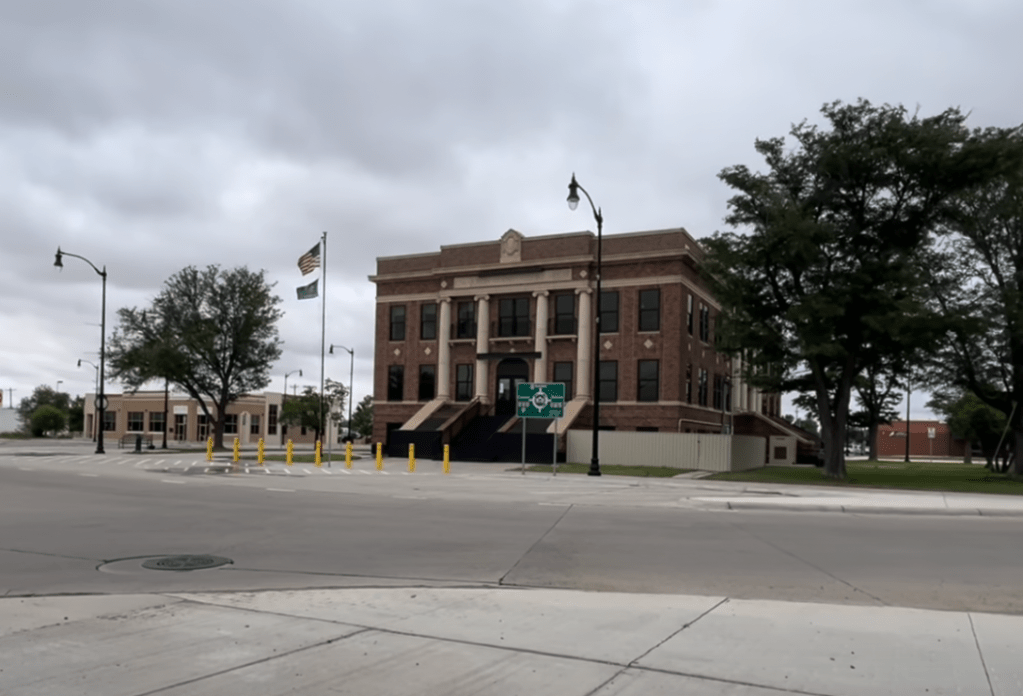
Cimarron County Court House
Cimarron County, Oklahoma

I have visited Boise City, and locals will tell you the pronunciation is, as you would say, “Boys City.” The town is small. You arrive at the courthouse circle as you enter from the east or north. A highway leads west into New Mexico. A trail takes you south toward Texas. The better highway is east of the town. Colorado is just up the road to the north. Kansas is just a jog to the Northeast. More of Oklahoma awaits out to the east. The community hasn’t grown much since it first sprung up.

Hearing locals tell of what happened in Boise City, Oklahoma, is somewhat comical. Nonetheless, it would not have been so funny to those who lived through the experience.

It happened on July 5, 1943.

A B-17 Flying Fortress bomber was on a nighttime training mission from Dalhart Army Air Base in Texas. It mistakenly dropped six practice bombs on Boise City’s town square. These bombs were mostly filled with sand and small charges.

What Happened?

  • The bomber crew was supposed to hit a designated target outside Conlen, Texas. They got lost and mistook Boise City’s well-lit downtown for their practice site.
  • At around 12:30 AM, the first bomb landed near a garage, shaking the town awake.
  • Five more bombs followed, hitting areas near businesses, a church, and a residential district.
  • Miraculously, no one was injured, and the damage was minimal.

Aftermath

  • The Army quickly apologized for the mistake.
  • The town embraced the incident as a quirky part of its history.
  • Today, Boise City proudly commemorates the event with a replica bomb displayed in the town square.

It remains one of the most unusual incidents in U.S. military training history! Would you like any more details?

If you ever go through Boise City, Oklahoma, stop and have a meal. As you travel west, you will hear more stories. These stories are about people living in what many consider the last town worth stopping in. Then, you move on to your next stop.

Omar Vasquez: An American Veteran’s Deportation Nightmare

GROFF MEDIA 2024© TRUTH ENDURES IMDBPRO

Presented by benandsteve.com By: Benjamin Groff II©s

2–4 minutes

SENT BACK – OMAR’S STORY

(Fictional)

Omar Vasquez had never questioned his place in the United States. He was born in El Paso, Texas, to parents who traced their lineage back generations. His grandfather had fought in World War II. His father served in Vietnam. Omar himself had completed two tours in Iraq as a U.S. Marine. He had a college degree, a steady job, and a home he had just finished paying off.

But none of that mattered the day he was taken.

It happened suddenly, in the middle of an ordinary afternoon. Omar had just stepped out of a coffee shop when unmarked black SUVs screeched to a stop around him. Before he reacted, he was surrounded by men in tactical gear barking orders. Confused, he reached for his wallet to show his ID, but they were already on him. They forced his hands behind his back, zip-tied his wrists, and shoved him into a waiting vehicle. People on the sidewalk froze, watching in stunned silence.

“You got the wrong guy!”

He shouted.

“I’m a U.S. citizen! I was born here!”

His words went unheard.

Inside the detention center, the reality of his situation set in. The holding cells were packed with others—some looking just as confused as he was, others resigned to their fate. He saw fear in their eyes, exhaustion from what must have been days or weeks of uncertainty.

Guards ignored his questions, his demands for a phone call, and his requests to see an attorney. When he finally managed to speak with someone, they told him flatly:

“You’re undocumented. You are being processed for deportation.”

Omar laughed in disbelief.

“You’re joking, right? Check my records. My Social Security number. My military service. Call my family.”

The officer barely looked at him.

“If your family wants to go with you, they can do so. Otherwise, you’ll be deported alone.”

He was handed a packet of papers to sign. The papers were written in Spanish, a language he barely understood beyond a few pleasantries.

“I don’t speak Spanish. I only speak English,”

He said.

The officer raised an eyebrow.

“Sure you do.”

His family arrived with documents. They brought his birth certificate, his passport, his military discharge papers, and even photos of him in uniform. They pleaded, demanded, and argued, but every official they encountered dismissed them, saying the decision had been made.

“Mistakes happen,”

One agent told his mother.

“And mistakes can be corrected. But in this case, the process has already started. You can contest it from the other side.”

“The other side?”

His mother gasped.

“He has no other side. This is his home!”

His father, a quiet man who had seen combat and never flinched, broke down in helpless tears.

Despite everything, Omar was put on a plane.

Destination: Guatemala. It was a country he had never set foot in. He knew no one there. He didn’t speak the language. As the plane lifted, he looked out the window at the land he had fought for. This was the country he had called home his entire life. He wondered how many others had disappeared into this system. They were erased by the stroke of a bureaucratic pen. Their American identity was stripped away by nothing more than suspicion.

How many would ever make it back?

Ramone’s Lonely Adventure: A Tale of Discovery

GROFF MEDIA 2024© TRUTH ENDURES IMDBPRO

Presented by benandsteve.com By: Benjamin Groff II©s

4–6 minutes

Ramone was not supposed to go to town without his older siblings. Nonetheless, he felt he had to on this day. He had awoken without finding anyone in his home. The house was empty. The animals had disappeared. Even the dogs were not there. They typically stayed at home when everyone had to go to work. 

Ramone was alone. There was no reason he knew of for this. The boy had woken up in a strange place. He was stuffed under a bed and pushed between a bed and the wall. He thought he must’ve had a dream and wandered there. Why else would he be in such a place? Ramone was never left alone and was beginning to worry something terrible had happened.

Ramone crawled out from under the bed, his heart thumping in his tiny chest. He rubbed his sleepy eyes, trying to make sense of the eerie silence around him. The morning light poured through the cracked window. Yet, the house felt different. It was empty and hollow as if no one had been there for a long time.

He ran to the kitchen. He expected to see his mother at the stove. He also thought his older sister would scold him for being late for breakfast. Instead, the table was bare. There was no food, no dishes, nothing. He called out, his voice small against the stillness.

“Mamá?”

No answer.

He hurried outside, stepping onto the dusty ground with bare feet. The corral was empty. The goats, the chickens—gone. Even the dogs that always lounged in the shade were missing—a lump formed in his throat. Something was wrong.

Ramone had often been told not to go to town alone, but fear overpowered any thoughts of disobedience. If his family wasn’t home, maybe they had gone to town for help. He had to find them.

He slipped on his too-big sandals and started down the narrow dirt path that led to town. The sun was climbing higher, and the heat pressed against his small frame. The closer he got to town, the more his stomach twisted.

Something felt –– off.

When he reached the outskirts, he stopped. The usual chatter of morning markets and passing cars was missing. The streets were strangely quiet. Shops stood open, but no one was inside. Tables were set with half-eaten meals as if people had left in the middle of breakfast.

His breath came in quick gasps. His family wasn’t there.

No one was.

Ramone was alone in an empty town.

And then, a sound broke the silence from somewhere down the street—soft, slow footsteps echoing against the abandoned buildings.

Someone was coming. The footsteps became louder. It became clear that a cart being pulled by a donkey was coming around the corner. But there wasn’t a person with it.

Ramone’s heart pounded in his chest. The cart rattled onward, its wooden wheels creaking against the empty street. The donkey plodded ahead, its ears flicking as if listening for a command that would never come.

But there was no driver.

Ramone took a step back, his tiny hands trembling. His words from the day before echoed in his mind. He yelled words after getting into trouble for mischief that had found its way into his life.

“I wish I was the only person in the world!”

Had he wished for this? Had his anger somehow made it real?

His legs felt heavy as if the ground itself wanted to pull him down. He turned in circles, hoping—praying—to see someone step out of a doorway or call his name. But no one did.

Tears welled in his eyes. He hadn’t meant it. He didn’t want to be alone.

The cart rolled past him, and the donkey’s slow, steady steps were the only sound in the world.

Ramone squeezed his eyes shut, shaking his head.

“Wake up, wake up!” 

He whispered, pressing his fists against his temples. 

“This has to be a dream.”

He forced his eyes open.

The town was still empty.

He ran, his sandals slapping against the dusty road. He ran past the silent market. He ran past the still houses. He passed the church where the bells should have been ringing. But they weren’t ringing.

And then—he saw his home.

It looked just as he had left it. The door was slightly open, swaying in the wind.

He rushed inside, desperate. 

“Mamá!”

he cried.

“Papá! Anybody!”

Silence.

Ramone stumbled into his room, his breath coming in sharp gasps. The bed was there. The blankets were rumpled as if someone had pushed them aside in the middle of the night.

His knees buckled, and he collapsed onto the mattress. He curled up, his tiny body shaking.

“I take it back,” 

He whispered into the fabric. 

“I don’t want to be alone. I want my mamá. My papá. My sisters. Please…”

The weight of exhaustion pressed down on him, his eyelids growing heavy. The room began to spin, the world around him fading into darkness.

Then—

A voice.

Soft. Familiar.

“Ramone? Mijo, wake up.”

His eyes fluttered open.

The morning light streamed in. Ramone’s mamá stood over him, her warm hand brushing his forehead. From the kitchen, he heard his sisters laughing, the clatter of dishes, and the barking of the dogs outside.

His heart leaped.

It was just a dream.

It was a terrible, lonely dream.

Ramone threw his arms around his mamá, holding onto her tightly.

She chuckled, stroking his hair. 

“What’s gotten into you, mi niño?”

Ramone didn’t answer. He just held on, knowing that, no matter what, he would never wish to be alone again.

When Time Stopped: A Tale from Briar Hollow

GROFF MEDIA 2024© TRUTH ENDURES IMDBPRO

Presented by benandsteve.com By: Benjamin Groff II©s

2–3 minutes

It happened at precisely 3:17 p.m. on a warm autumn afternoon. The town of Briar Hollow had always been a quiet place. The most exciting event of the week was the arrival of fresh pies at Millie’s Diner. But on this particular day, something changed. Time stopped.


No one saw it happen. There was no flash of light, and there was no tremor in the ground. One moment, the clock on the courthouse tower was ticking as usual, and the next, its hands were frozen. Birds hung motionless in the sky, leaves hovered mid-fall, and the wind seemed trapped.


At first, the townsfolk didn’t notice. Old Mr. Grady blinks in confusion halfway through handing change to a customer, as the coins refuse to drop from his fingers. Sarah Porter had been driving to the grocery store. She finds her car inexplicably locked in place. The engine still hums. Children at the playground hang in mid-swing, their laughter caught in their throats.


And then, they noticed each other. Wide eyes met, tentative steps were taken, and panicked voices rose into the still air. The world had paused, yet they remained unstuck, the only things moving in a town frozen in time.


The local librarian, Maggie Holcomb, was the first to suggest that something bigger was at play.

“This isn’t just a power outage,”

she murmured, staring at the unmoving second hand of her wristwatch.

“This is…impossible.”


Hours passed, though the sky did not change. The sun remained where it was, suspended in golden radiance. Some tried to leave town, only to find that the roads looped them back to the center. Others attempted to wake those frozen, but their efforts were in vain. The townsfolk, once filled with panic, began to feel a creeping sense of fear. Fear turned to despair, and then—acceptance. Their emotional journey mirrored the strange stillness that had befallen their town.


The people of Briar Hollow, despite the unchanging world around them, learned to adapt. They still spoke, ate, laughed, and cried. Days passed, though they had no real way to count them. And just when they resigned to this strange eternity, the clocks began to tick again. Their resilience in the face of the unknown was a testament to the human spirit.


It was as sudden as it had started. The coins fell from Mr. Grady’s hand, Sarah’s car lurched ahead, and the children’s laughter resumed mid-breath. The world snapped back into motion, unaware that it had ever paused.


Yet, the people of Briar Hollow knew. They would never forget that strange day when time stopped. It was an even stranger feeling that just, it had been watching them.

Juniper and Luma: A Tale of Unlikely Friendship

GROFF MEDIA 2024© TRUTH ENDURES IMDBPRO

Presented by benandsteve.com By: Benjamin Groff II©s

1–2 minutes

The Fox and the Firefly

The trees hummed with the wind in the Whispering Woods’s heart. The moon painted silver on the forest floor. There lived a fox named Juniper. She was sleek, clever, and always alone. Other animals whispered about her, calling her a trickster, a thief. She had learned that being alone was more manageable than fighting their expectations.

One evening, a tiny glow flickered near her nose as she padded along the riverbank. A firefly, tiny and trembling, hovered in the air.

“You’re in my way,”

Juniper said, flicking her tail.

“I’m lost,”

The firefly admitted its light dimming.

Juniper sighed.

“Lost? How do you lose your way when you can fly?”

The firefly hesitated.

“I followed my friends, but the wind carried me away.”

Juniper should have walked on. She wasn’t the type to help. She had grown used to being alone, and companionship was foreign to her. But something about the firefly’s quivering glow made her pause.

“Fine,”

She said,

“I’ll help you, but only because I know these woods better than anyone.”

The firefly buzzed with gratitude.

“Thank you! I’m called Luma.”

For the first time in a long while, Juniper felt a glimmer of companionship. As they traveled together, Luma lit the dark paths. She guided Juniper through the thickest parts of the forest. Juniper used her sharp nose to avoid danger.

They spent the night talking. Luma didn’t fear or expect her to be anything other than what she was.

By dawn, they reached a clearing filled with twinkling lights—Luma’s family.

“Stay,”

Luma said.

Juniper almost did. But she was a fox, a creature of the earth, and Luma belonged to the sky.

Still, as she turned to leave, Luma promised,

“Whenever you walk the woods at night, look for my light. You’ll never be alone.”

And so, every night, as Juniper wandered, a tiny flickering glow followed her—an unlikely friendship that lit the darkness forever.

The Cat Who Became King: Whisker’s Tale

GROFF MEDIA 2024© TRUTH ENDURES IMDBPRO

Presented by benandsteve.com By: Benjamin Groff II©s

2–3 minutes

“Whisker the Magnificent: The Cat Who Became King”

In the grand kingdom of Eldoria, mighty kings and queens ruled vast lands. No one ever expected their next ruler to be ––– a cat.

It all began when King Aldric, the last of his line, passed away without an heir. The kingdom was chaotic, for the noble families all vied for the throne. Arguments broke out, alliances crumbled, and the land teetered on the brink of war.

Amid this turmoil, a small, scruffy cat named Whisker roamed the royal palace. He had been the late king’s favorite pet. Whisker was a feline of unusual intelligence. His golden eyes seemed to see into a person’s very soul. Whisker spent his days lazily lounging on the throne as if he already owned it.

One day, the nobles gathered to decide the fate of the kingdom. The council was about to descend into another shouting match. Then Whisker leaped onto the great table and let out a commanding “meow.”

The room fell silent.

The royal advisor, an old and wise man named Cedric, chuckled. “This cat would make a better ruler than squabbling fools.”

The nobles laughed, but then a curious idea took hold. Whisker had lived in the palace for years, witnessing political games and royal affairs. He had a knack for knowing which people were trusted, often hissing at schemers and rubbing against the kind-hearted. What if –– what if fate had chosen him?

The High Priest of Eldoria, known for interpreting omens, declared, “The gods often choose the least expected. This feline is their will made manifest.”

And so, as a jest at first, they crowned Whisker with a tiny golden circlet. But what began as a joke soon became a tradition. Now known as –– King Whisker the Magnificent ––, he was placed on the throne. His presence alone brought peace, for no noble dared question his rule—after all, who argues with a cat?

Of course, Whisker did not speak, but he ruled in his way. When matters of state were brought before him, he would purr to show approval. If he disapproved, he would flick his tail and walk away. If a noble displeased him, he would swat their hand with his paw. Soon, even the most corrupt learned to fear his judgment.

Under King Whisker’s reign, Eldoria flourished. The land was peaceful, trade thrived, and justice prevailed. The people adored their feline ruler, leaving out bowls of milk and fish in tribute.

Years passed, and when Whisker finally passed into legend, a statue was erected in his honor, inscribed with the words:

“He ruled with wisdom, claw, and whisker.”

And so, Eldoria remained a land where, for one golden age, a cat had indeed been king.

US Aid to Ukraine: A $114 Billion Commitment

GROFF MEDIA 2024© TRUTH ENDURES IMDBPRO

Presented by benandsteve.com By: Benjamin Groff II©s

2–4 minutes

As of February 2025, the United States has committed approximately $114 billion in bilateral aid to Ukraine. This commitment has been made since the onset of Russia’s invasion in February 2022. This figure encompasses military assistance, financial support, and humanitarian aid. 

statista.com

It’s important to note that reported aid amounts have been discrepant. This is due to differing accounting methodologies and the inclusion of various assistance categories. For instance, President Trump claimed that the US provided $350 billion in aid to Ukraine. Yet, official figures do not support this assertion. 

wsj.com

The European Union and its member countries have collectively provided approximately €132 billion in aid to Ukraine. This surpasses the US contribution. 

statista.com

The US aid includes funds allocated for replenishing American weapon stockpiles and supporting defense manufacturing across multiple US cities. 

cfr.org

In summary, estimates vary slightly based on accounting practices. Still, the US has committed approximately $114 billion in aid. This aid supports Ukraine’s defense against Russian aggression.

Since Russia invaded Ukraine in 2022, Ukrainian President Volodymyr Zelenskyy and his representatives have consistently expressed profound gratitude. They are thankful for the United States’ unwavering support. 

Many news media estimate that Zelenskyy made as many as 33 public appearances during wartime. He aimed to show his appreciation for the United States financial and equipment support. 

While it is challenging to enumerate every instance of appreciation, several notable expressions stand out:

  1. December 2022 Speech to the US Congress: President Zelenskyy addressed a joint session of the US Congress. This was his first foreign visit since the war began. He thanked “every American” and highlighted Ukraine’s resilience, stating, “Against all odds, Ukraine still stands.” apnews.com
  2. December 2022 Joint Press Conference with President Biden: Zelenskyy expressed gratitude for a new defense package. He stressed its prompt importance for Ukrainian soldiers during this visit. ua.usembassy.gov
  3. July 2023 NATO Summit in Vilnius: Zelenskyy expressed his appreciation for US and NATO support before meeting with President Biden. He acknowledged the challenges faced by Ukrainians. Zelenskyy thanked Biden for standing “shoulder to shoulder” with Ukraine. bloomingtonian.com
  4. February 2025 Post-Meeting Statement: The meeting with President Trump was contentious. Zelenskyy reaffirmed his gratitude toward the American people and Congress. He also expressed gratitude toward the President. Zelenskyy emphasized Ukraine’s pursuit of a just and lasting peace. en.wikipedia.org
  5. March 2025 London Summit: Zelenskyy expressed “unwavering gratitude” for US military and financial support after a summit with European leaders. He underscored its critical role in Ukraine’s defense. nypost.com

These instances highlight the deep appreciation expressed by Ukrainian leadership. They value the United States’ financial assistance, military aid, and moral support throughout the conflict.

Zelenskyy’s Expressions of Gratitude Midst Diplomatic Tensions

The information stands in contrast to a description made by some. They called it two thugs attacking a robbery victim after he had already been beaten down. It is a sad portrayal. This is a betrayal of the executive office on show in the White House on February 28th, 2025. 

The information referenced here documents that 350 billion dollars were not given to the Ukrainian government, contradicting what was claimed. Sadly, the United States Congress knows this. They approved the funding. They should make sure that factual statements involving tax dollars are presented to the public.

Sources:

nypost.com

Ukraine’s Volodymyr Zelensky says he still wants US minerals deal after explosive Trump talks

Today

people.com

Volodymyr Zelenskyy Cancels D.C. Appearances After He’s Called ‘Disrespectful”‘” by Trump, Expresses Gratitude to Americans

Today

barrons.com

Zelensky Says Ukraine Is Ready to Sign Minerals Deal but Needs ‘Security Guarantees’

Today

The Impact of Discrimination on Society and Human Rights

GROFF MEDIA 2024© TRUTH ENDURES IMDBPRO

Presented by benandsteve.com By: Benjamin Groff II©s

2–3 minutes

Discrimination Vs. Inclusion
Discrimination Vs Inclusion.
The difference between darkness and light

Discrimination is an act rooted in fear, ignorance, and an unwillingness to accept the fundamental dignity of all people. It has profound consequences for society. Wanting to deny others housing, clothing, and respect shows a belief that some lives hold less value. Such a stance reveals a deep-seated lack of empathy. It shows an indifference to the struggles of fellow human beings and a troubling inclination toward social division. It speaks volumes about moral values. It reflects the character of those who wish to wield power to diminish the lives of others.

The wish to remove protections that have given minority groups equal footing within society shows a disregard for historical injustices. These injustices have shaped the need for these safeguards. These protections exist not to give anyone an unfair advantage. They guarantee everyone has equal rights, opportunities, and access to resources without prejudice. Seeking to dismantle these safeguards implies a refusal to acknowledge historical injustices. It also shows a disregard for the ongoing struggles faced by marginalized communities. It shows a yearning for a past where exclusion was the norm. It rejects embracing a future that strives for fairness and justice.

Moreover, those who advocate for policies that exacerbate the hardships already endured by vulnerable populations are not merely indifferent. They are complicit in their suffering. If making life more difficult for those struggling is acceptable, what does that say about one’s character? It signals a lack of compassion, an absence of moral responsibility, and a failure to grasp the interconnectedness of humanity. A society that pays no heed to suffering undermines its stability, for one group’s oppression ultimately harms the whole. This is not just a moral issue but a societal one that demands immediate attention and action.

Most revealing is the wish to control who can join legal institutions like marriage. Love and family are not exclusive to a select few but are among the most fundamental aspects of human existence. To decide who can share in these joys is to place oneself in a position of unjust power. It denies them to others. It stems from a belief in personal superiority. It also involves a willingness to impose one’s values on others. This approach restricts their freedoms. It suggests an inability to recognize that love is universal. Love is deserving of legal and social acknowledgment. This is true regardless of the individuals involved.

Ultimately, seeking to discriminate, exclude, and strip away rights reveals one’s insecurity, fear, and wish for control. A society is judged by how it treats its most vulnerable members. Those who work to undermine equality and fairness reveal far more about themselves. They show more about their nature than they do about those they seek to oppress. True strength is found in embracing diversity. Morality involves protecting the rights of all. Decency ensures that everyone has the dignity and respect they deserve.

Lessons from Gene Hackman’s Powerful Characters

GROFF MEDIA 2024© TRUTH ENDURES IMDBPRO

Presented by benandsteve.com By: Benjamin Groff II©s

2–3 minutes

Late-Night Lessons with Gene Hackman

Staying up late on a Saturday night was a rare privilege. My parents were strict about bedtime but sometimes let me stretch the rules on weekends. That night, I curled up on the living room carpet, my chin propped up on my hands. I stared wide-eyed at the glow of our old television. The movie was Bonnie and Clyde, and it was my first time seeing Gene Hackman.

Left – Gene Hackman as Buck Barrow. Right – Warren Beatty as Clyde.

He portrayed Buck Barrow, Clyde’s older brother—loud, reckless, and desperate. His movements and voice, cracked with both joy and fear, captivated me. He wasn’t just a character. He was a man caught between love and loyalty. He wavered between the thrill of rebellion and the weight of consequence. Despite the inevitable doom of the Barrow gang, Buck was more than a criminal. He was a flawed person yet strangely likable.

The film stuck with me. It made me wonder where the line between right and wrong sits. Was it drawn in law books or people’s choices when they had no good options? I didn’t have answers, but I knew I wanted to understand.

Right – Nathan Lane. Left – Gene Hackman

Years later, another late-night movie changed something in me. This time, I was older—long out of high school, I think—and the film was The Birdcage. The movie is a comedy about a gay couple who pretend to be straight for a conservative family. It challenged societal norms and expectations. I hadn’t planned to watch it but was hooked when I saw Robin Williams and Nathan Lane. 

And then there he was again. Gene Hackman appeared this time as a conservative senator. He was trapped in the most absurd, hilarious, and strangely heartfelt situation.

I watched him stumble through a world he didn’t understand, forced to confront something outside his comfort zone. His discomfort was funny. Beneath it, there was something tangible. He clung to the rules he’d built his life around. He struggled with the idea that maybe, just maybe, he was wrong.

By the time the credits rolled, a profound shift had occurred within me. Bonnie and Clyde sparked my curiosity about the limits of the law—who writes the rules, follows them, and breaks them? The Birdcage had prompted a more personal question. It asked who I was and whether I dared live outside the expectations of others. These films, through the characters portrayed by Gene Hackman, ignited a journey of self-discovery and reflection.

In those movies, Gene Hackman embodied two distinct characters. Buck Barrow laughed in the face of fate, and Senator Keeley was trapped in his rigid beliefs. Yet, in both roles, he was undeniably human—flawed, confused, and trying. His characters were not just roles but mirrors reflecting the complexities of the human condition.

And maybe so was I.