What Does It Mean For The LGBTQI+ COMMUNITY IF…There Is A Second Trump Presidency?

Under a potential Trump presidency in 2025, the LGBTQI community, known for its resilience, might face several challenges, considering Trump’s past policies and the positions of his administration. Here’s an overview of what could be expected and how the strong and determined members of the LGBTQI community can prepare:

Expected Policies and Actions

  1. Reversal of Protections: Trump’s previous administration saw rollbacks on protections for LGBTQI individuals, especially in areas like healthcare, education, and employment. This trend might continue, with potential new policies aimed at:
  2. Reversing anti-discrimination protections in healthcare.
  3. Allowing religious exemptions that permit discrimination against LGBTQI people.
  4. Rescinding guidelines that protect transgender students in schools.
  1. Judicial Appointments: Trump is likely to appoint conservative judges who might be less supportive of LGBTQI rights. This could impact rulings on marriage equality, adoption rights, and discrimination cases.
  2. Military Policies: Trump previously attempted to ban transgender individuals from serving in the military. The Trump Administration could reinstate a similar policy affecting LGBTQI service members.
  3. Federal Funding and Grants: LGBTQI organizations and programs could see reduced federal funding and support. Such a move might impact HIV/AIDS programs, community health initiatives, and anti-bullying campaigns in schools.

Preparation Strategies for the LGBTQI Community

  1. Legal Preparation:
  2. Know Your Rights: Stay informed about your federal, state, and local legal rights. People Rights Groupssuch as the Human Rights Campaign (HRC) or the ACLU provide resources and legal assistance.
  3. Legal Documents: Ensure legal papers (like wills, powers of attorney, and healthcare proxies) are in orderand up to date to protect relationships and rights, especially in states with less LGBTQI-friendly laws.
  4. Advocacy and Community Engagement:
  5. Support Advocacy Groups: Get involved with or support organizations that advocate for LGBTQI rights, such as GLAAD, Lambda Legal, and the National Center for Transgender Equality. These groups often lead efforts to fight discriminatory policies and provide resources.
  6. Local Politics: Engage in local and state politics, where significant protections and policies often get enacted. Support candidates and initiatives that champion LGBTQI rights.
  7. Healthcare and Mental Health:
  8. Healthcare Providers: Seek out LGBTQI-friendly providers and ensure access to comprehensive, non-discriminatory healthcare services.
  9. Mental Health Support: Access mental health resources and support networks, especially as policy changes can create stress and anxiety. Organizations like The Trevor Project offer crisis intervention and suicide prevention services for LGBTQI youth.
  10. Education and Workplace Preparedness:
  11. Workplace Rights: Familiarize yourself with workplace anti-discrimination policies and report discriminatory practices. The EEOC, Employment Opportunity Commission, may also be a resource for addressing workplace discrimination.
  12. Education Resources: Support and advocate for inclusive policies in schools to ensure a safe, educational environment for LGBTQI students. Work with school boards and administrators to promote anti-bullying programs and inclusive curricula.
  13. Community Solidarity:
  14. Build Networks: Strengthen community networks and support systems. Local LGBTQI centers and online communities can provide vital support and resources.
  15. Visibility and Awareness: Continue to raise awareness about LGBTQI issues through social media, public events, and community engagement. Visibility can help counteract hostile policies and promote acceptance.

Conclusion

While a potential Trump presidency in 2025 could pose significant challenges for the LGBTQI community, preparation, and proactive engagement, as outlined in this guide, can effectively mitigate some of the impacts. By staying informed, supporting advocacy efforts, and building strong community networks, LGBTQI individuals and allies can work together with confidence and empowerment to protect and advance their rights.
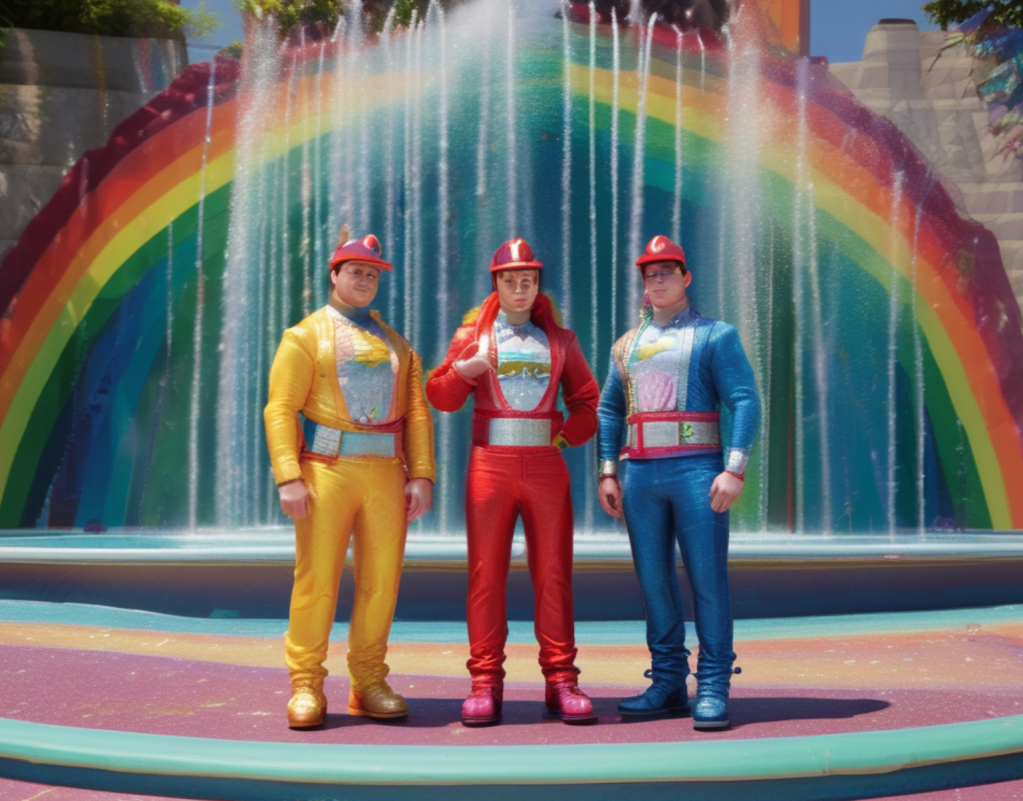
The Gay Super Tweedles Give Safety Advice From Rainbow Heights

In the vibrant city of Rainbow Heights, where diversity and acceptance painted the streets with colors of pride, lived a superhero like no other. The Gay Tweedles, adorned in a dazzling costume of shimmering sequins and a cape that flowed like a river of rainbows, was both a protector and a symbol of love and unity.

Every day, The Gay Tweedles would soar above the city, not just as a protector, but as a friend to the LGBTQI community. Their charismatic charm and sparkling wit made them a beacon of hope and resilience, inspiring everyone to embrace their true selves.

One sunny morning, The Gay Tweedles decided to share some crucial safeguards with the community, ensuring everyone could live their lives with confidence and security. They gathered a crowd in the heart of Rainbow Heights, where the iconic Pride Fountain stood, its waters gleaming with all the rainbow colors.

“Good morning, my fabulous friends! Today, we will discuss how we can all protect ourselves daily. And remember, safety doesn’t have to be boring—it can be as fabulous as we are! Let’s take these steps together and make our community even stronger.”

The crowd cheered, eagerly anticipating the superhero’s advice. With a twirl of the hero’s cape, The Gay Tweedles began.

1. Stay Connected and Informed

“First things first, darlings—stay connected! Join local LGBTQI groups and online communities. Knowledge is power, and staying informed about your rights, resources, and support networks can make a difference. Plus, you’ll make fabulous friends along the way!”

2. Be Aware of Your Surroundings

“As much as we love to shine, we must be aware of our surroundings. Trust your instincts; if something doesn’t feel right, don’t hesitate to leave the area. Your safety comes first, always.”

3. Have a Safety Plan

“Create a safety plan, my lovelies. Ensure your family and friends know your whereabouts, especially when meeting new people. Set up emergency contacts and safe words—communication is key!”

4. Use Technology Wisely

“Technology can either be our best friend or one of our worst enemies. Use the privacy settings on social media, and be cautious about sharing your personal information online. Safety apps are also available that can alert your loved ones if you’re in danger.”

5. Advocate and Support Each Other

“Never underestimate the power of advocacy. Stand up for each other and support those who may be more vulnerable. We must lift each other, whether speaking out against discrimination or offering a listening ear.”

6. Self-Defense and Mental Health

“Consider taking self-defense classes—not only will you learn to protect yourself, but it’s also a great way to boost your confidence. Please remember that mental health is as important as physical safety. Seek support when you need it, and offer it when you can.”

With each piece of advice, The Gay Tweedles performed a little dance move, making the crowd laugh and cheer. They concluded with their signature motto,

“Stay fierce, fabulous, and safe!”

The Gay Tweedles’ message resonated deeply with the community. The practical tips and the sense of unity and support that filled the air empowered them. The superhero’s entertaining approach not only made the vital information memorable and engaging but also instilled a sense of confidence and security in the audience.

As the crowd dispersed, people chatted excitedly about the new safeguards they would implement in their lives. Rainbow Heights felt even more vibrant, with its residents armed with knowledge and a renewed sense of solidarity.

And so, The Gay Tweedles continued their mission, spreading joy, love, and wisdom wherever they went. Their legacy was not just one of protection but of empowerment and celebration of every individual’s right to live authentically and safely.

Hank and Sam: A Tale of Unconditional Love in Petersville

In the picturesque town of Petersville, cradled in a valley embraced by undulating hills, two dogs stood out. Hank and Sam, their bond as unique as it was strong, were a sight to behold. They roamed the town freely, their tails wagging in unison, a living testament to a companionship that transcended norms. Unowned yet cherished, they embodied the spirit of communal love.


The townspeople had long accepted Hank and Sam as part of their daily lives. Local business owners took turns leaving out food bowls, ensuring the dogs were well-fed. The town’s veterinarian, Dr. Lisa, ensured they were up-to-date on all their vaccinations, offering them the same care she gave to her pets. Hank and Sam were more than just dogs; they symbolized Petersville’s collective heart.


Despite the warm community, Petersville had its share of challenges. Among them was a group of rigid, unyielding townsfolk who harbored deep-seated biases against anything they deemed different. These individuals, led by a man named Harold, were vocal about disapproving of anyone or anything that didn’t fit into their narrow definition of normal.


One crisp autumn day, an event occurred that would test the town’s unity and challenge its deepest prejudices. Hank and Sam, as usual, were seen trotting through the main square. They played together, rolling in the fallen leaves, their bond evident to anyone watching. Their interactions were not just affectionate, but also pure and simple, a testament to the innocence of their love.


Word of the dogs’ behavior spread quickly. While most of Petersville adored the dogs regardless, Harold and his group saw this as a sign that something needed to change. They began to murmur about “unnatural” behavior and “influences,” pushing for a town meeting to address the “problem.”
The meeting was held in the town hall, which had seen decades of heated debates and resolutions. Harold stood at the podium, his face flushed with anger.

“These dogs,” he began, “are a bad influence. What kind of message are we sending to our children by allowing this—– display to continue?”


The room fell into a hush as Dr. Lisa stepped forward, her voice steady and resolute. “Hank and Sam are not just dogs,” she declared.

“They are ambassadors of love and companionship. They harm no one, and their presence brings joy to all. Are we going to condemn them for loving each other?”


Her words struck a chord with many in the room. People began to murmur in agreement, recalling the countless times the dogs had lifted their spirits with their playful antics and gentle presence. Yet, Harold remained unmoved.


It was then that little Emily, a girl no older than seven, stood up. She held a drawing she had made of Hank and Sam playing in the park.

“Hank and Sam make me happy,” she said softly. “They love each other, and that’s okay. My mommy says love is always okay.”


Her innocent words pierced through the tension. The townspeople began to reconsider their stance, seeing the situation through the eyes of a child who saw the world in simpler, purer terms. Gradually, the room shifted from division to a shared sense of understanding.


In the following days, the mood in Petersville changed. Harold and his group grew quieter, their influence waning in the face of the community’s collective decision to embrace love in all its forms. Hank and Sam continued their carefree lives, blissfully unaware of the transformative power of their love, which had helped resolve the turmoil in the town.


The dogs remained Petersville’s beloved mascots, their presence a constant reminder that love is love, no matter the form it takes. As the seasons changed and the town grew, Hank and Sam’s legacy lived on, teaching acceptance and equality through their simple, unwavering bond.
In time, even the most rigid hearts softened, and Petersville became known not just for its picturesque landscapes but also for its capacity to grow, change, and love unconditionally.

Embracing Intersexuality: Joe and Nora’s Inspiring Journey at ALBERTS

Joe and Nora had always kept their lives private, guarded by the fear of misunderstanding and judgment. Living in a small town, they worked together at ALBERTS, a large store that sold everything from pillows to housewares. With his kind eyes and soft-spoken nature, Joe worked in the bedding section while Nora managed dinnerware with her quick wit and warm smile. They weren’t a couple, just very supportive friends who shared a bond few could understand.


One evening, they attended a support group meeting for intersexuals, people who are born with physical sex characteristics that don’t fit typical binary notions of male or female bodies. This condition could include a variety of chromosomal, gonadal, or anatomical differences. The support group was a sanctuary for Joe and Nora where they could be themselves without fear.


The meeting is held each week in a modest community center. Joe and Nora entered the room, greeted by a circle of welcoming faces. Some were new, nervously looking around, while others were familiar, offering warm smiles and nods. They took their seats, feeling a sense of relief wash over them.


“Hi, everyone,”

began the group leader, Alex, a tall person with a gentle demeanor.

“Welcome to our new members and our returning friends. Let’s start by sharing how our week has been.”
Joe and Nora listened as each spoke, their stories weaving a tapestry of shared experiences and struggles. When it was Joe’s turn, he hesitated but found his voice.


“This week has been tough,” he said. “At work, I’ve been having trouble with a coworker who keeps commenting on my appearance. It’s not the first time, but it’s getting harder to ignore.”


Nora squeezed his hand supportively.

“I’ve been there too,” she added. “Just yesterday, a customer asked me why I don’t dress more ‘feminine.’ They don’t realize how hurtful their words can be.”


The group members nodded in understanding, offering words of encouragement and advice. The meeting continued, filled with vulnerability, laughter, and shared strength. By the end, Joe and Nora felt recharged, ready to face the world again.


However, events at work would soon test the renewed strength. The following day at ALBERTS, a series of events forced them to confront their secrets. It began when a memo was posted on the employee bulletin board, announcing mandatory medical checks for all staff. The store management wanted to ensure everyone was fit for their roles, a policy that made Joe and Nora uneasy.


Later that day, during a busy shift, Nora overheard two coworkers whispering about her. “Do you think she’s hiding something?” one of them said. “I heard she never talks about her personal life,” the other replied.


Joe faced similar suspicions while helping a customer who made a thinly veiled comment about how

“transparency is important for team cohesion.”
That evening, as they closed the store, Joe turned to Nora.

“I think it’s time,” he said quietly. “We can’t keep hiding who we are.”


Nora nodded. “I agree. But how do we even begin to explain?”


They decided to call a meeting with their team, knowing it was a risk but feeling necessary. The next day, they stood together in the break room, facing their curious and concerned coworkers.
Joe took a deep breath.

“We wanted to talk to you all because there’s been a lot of speculation and assumptions about us.”


Nora continued,

“We are intersexual. This means we were born having physical sex features that don’t fit the usual binary notions of either male or female bodies. It’s a part of who we are but doesn’t define our abilities or worth.”


The room was silent, the weight of their words sinking in. Some faces showed confusion, others empathy. Their manager, who had been skeptical, stepped forward.


“I appreciate your honesty,” he said. “Thank you for trusting us with your story.”


Slowly, their coworkers began to ask questions, not out of suspicion but a genuine desire to understand. Joe and Nora answered patiently, feeling the tension ease with each word. By the end of the meeting, they felt a sense of relief and acceptance.


From that day forward, life at ALBERTS changed. There were still challenges, but Joe and Nora no longer felt like they were hiding. They had found a supportive community at work, just as they had in their support group. Together, they continued their journey, knowing they were not alone.

The Gay Mafia: Ned’s Unlikely Protectors | A Surprising Twist of Fate

The Unsung Headliner

Characters:

  • Ned: A shy and timid typesetter at the Daily Weeds newspaper, who resembles Brad Pitt on a bad day. Ned is modest and unaware of his value and attractiveness.
  • The Cute Bartender (Alex): A charismatic and charming bartender at Lucky C who falls for Ned over their shared love of Shirley Temples.
  • The Daily Weeds Higher-Ups: The newspaper’s executives who take credit for Ned’s brilliant headlines.
  • Rival Newspaper Competitors: A scheming group aiming to kidnap and kill Ned to stop the Daily Weeds’ success.
  • The Gay Mafia: A secretive, protective group willing to go to great lengths to defend Ned, although he is unaware of their existence.

Plot:

Ned lived a quiet life, hidden in the shadows of the Daily Weeds’ newsroom. His days were spent crafting perfect headlines, a talent that brought his employer acclaim and success. Despite his crucial role, Ned remained unnoticed, timidly working at his typesetting desk. His self-esteem was low; he never considered himself attractive, even though he had a rugged charm that could be likened to Brad Pitt on an off day.

Ned’s life took an unexpected turn one evening when he narrowly escaped being hit by a runaway city bus. Disoriented and seeking solace, he stumbled into a bar he had never noticed—Lucky C. With its welcoming atmosphere and vibrant clientele, the bar was a stark contrast to Ned’s usually solitary existence.

At the bar, he ordered the only alcoholic drink he knew—a Shirley Temple. Alex, the cute bartender, was immediately charmed. Alex loved making Shirley Temples, a drink rarely requested by patrons. Their shared moment over this simple drink sparked a connection, and for the first time, Ned felt seen and appreciated.

As Ned began to frequent Lucky C, he started coming out of his shell. The lively environment and supportive community at the bar brought out a side of him he never knew existed. His newfound confidence began to reflect in his work, leading to even more captivating headlines that left the Daily Weeds’ competitors scrambling.

Unbeknownst to Ned, the rival newspaper had been closely monitoring the Daily Weeds’ success. Frustrated by their inability to keep up, they devised a sinister plan to kidnap and eliminate the source of their competition’s success—Ned. 

They would wait until he left the Daily Weeds back office and throw a hood over his head. Then, two thugs would throw Ned into a waiting van and speed him to the outside of town near a seedy pond where he would be shot, still wearing the hood and a weight tied around his neck, and thrown into a boat. One of the thugs would take a boat and shove it away from the shore, and when it got near the center of the pond, the thugs would fill it with bullet holes and make it sink, with Ned inside, weighed down. Never to be found.

However, the rival newspaper and their hired mobsters were unaware of a secret force. The Gay Mafia, a clandestine group operating within the city, had liked Ned. They admired his quiet brilliance and were determined to protect him at all costs. They had been listening through their glitter correspondences. The glitter correspondences were a network of highly sensitive individuals who could pick up on people’s intuitions from across the room. They had been picking up vibes from the thugs at a local coffee shop for over a week. It is what caused the Gay Mafia to concentrate their attention on Ned. There was so much vibing there was almost concern they would have to call in a team from Philly to assist with the operation. With well-laid plans and assistance from the Gay Men’s Choir, a plan got hatched to pull off operation “SAVE NED” at 1700 Hours sharp! The driver, who made up the only civilian of the Gay Mafia, yelled to the rest of the non-mafia members that it was 5 PM, you guys. The rest of the Gay Mafia had belonged to the same Troop in the Middle East when serving the Country and understood military time. 

The rival newspaper’s plot set off a chain of events culminating in a dramatic confrontation. As the thugs moved in on Ned, the Gay Mafia sprang into action. A chaotic collision of forces ensued—a battle that turned the usually quiet city streets into a more vibrant and exhilarating scene than any Pride Parade.

There were unusually high pitches of the singing of Hallelujah coming from the alleyway of the Daily Weeds Office area and then sudden flumes of smoke and glitter, followed by the pomp and circumstance of a Gay Mens Chorus of Lilly of The Valley. The evil thugs were tied up and left in a neat pile for the local police to find—all courtesy of the Gay Mafia. 

Amid the chaos, Ned remained blissfully unaware of the true extent of his importance or the danger he was in. All he knew was that for the first time in his life, people were surrounding him who valued him, both for his talent and who he was. The experience saved his life and transformed it, making Ned realize his worth and the power of community. As he left the Daily Weed, he shut and locked the door and walked to the Lucky C, where he sat on a bar stool and asked Alex for a Shirley Temple. 

Today ––– The Daily Weeds continued to thrive, thanks to Ned’s unmatched headlines. And Ned, no longer the unsung hero, became a celebrated figure in both the newsroom and the vibrant world of Lucky C. His story was a testament to life’s unexpected turns and the hidden strength within us all, yet to be discovered.

Pride Weekend Heat Safety: Tips for Staying Cool and Healthy

DID YOU KNOW?

During Pride Weekends, it’s essential to stay safe while celebrating, especially with record-high temperatures. Here are some recommendations to protect yourself from heat stroke or heat exhaustion during outdoor events:

  1. Stay Hydrated: Drink plenty of water throughout the day. Avoid alcohol and caffeine as they can contribute to dehydration.
  2. Seek Shade: Take breaks in shaded areas to cool down and give your body a rest from the direct sun.
  3. Wear Appropriate Clothing: Opt for light-colored, loose-fitting clothing that allows your skin to breathe and helps regulate your body temperature.
  4. Use Sunscreen: Apply a broad-spectrum sunscreen with at least SPF 30 and reapply every two hours, or more often if you’re sweating.
  5. Plan Ahead: Check the weather forecast and plan your activities during cooler parts of the day, such as early morning or late afternoon.
  6. Know the Signs of Heat-Related Illnesses: Be aware of symptoms like dizziness, nausea, headache, and muscle cramps, and seek medical attention if necessary.

By following these tips, you can enjoy the festivities safely and make the most of Pride Weekends without compromising your health.

You need salts and minerals in your body to function properly. However, you must not take salt tablets unless directed by your doctor. The best way to replace them is by eating foods that contain them. Instead of just water, try drinking fruit juice or sports drinks while you exercise or work in the heat.

You can help us make our Excessive Heat Warnings better by taking our survey.

Safety Tips:

Stay Cool

  1. Limit your outdoor activity to when it’s coolest, like morning and evening hours
  2. Find your nearest cooling center for free access to air conditioning and water
  3. Do not leave children or pets alone in a parked car. The temperature inside can rise quickly and become deadly

Stay Hydrated

  1. Drink plenty of water throughout the day
  2. Avoid alcohol and drinks with high caffeine or sugar
  3. Check the guidelines for adequate hydration when doing moderate activities in the heat

Stay Informed

  1. Look out for signs and symptoms of heat related illnesses
  2. Check the weather forecast for temperature, humidity, and UV index
  3. Learn more about NWS today’s heat risk map
  4. Check in regularly with friends, family, and neighbors who may be more vulnerable to heat exhaustion or heat stroke

Be SunWise

  1. Limit sun exposure with sunglasses, hats, and lightweight clothing
  2. Use SPF 30+ sunscreen to protect your skin from UV rays

Unbreakable Love: Lynn and Trisha’s Journey Through Decades of Heartache

In the small, picturesque town of Elmwood, where traditions ran deep, and change was a slow, meandering stream, Lynn and Trisha found each other amidst the rustling leaves of adolescence. The year was 1974, when the world was still catching up to the notions of freedom and acceptance we now hold dear.

Lynn, with her red hair and curious green eyes, was the daughter of the town’s librarian. She spent her days buried in books, finding solace in stories that took her far beyond the confines of Elmwood. On the other hand, Trisha was the spirited daughter of a local fisherman in Seaside, a neighboring town. Beaming with golden hair and bright blue eyesthat mirrored the ocean, she was a breath of fresh, salty air. The scent of fish and saltwater, the sound of seagulls, and the feel of sand between her toes were all part of Trisha’s essence.

They met on a summer day during the annual Elmwood-Seaside fair. Lynn was helping her mother at a book stall when Trisha walked by, her laughter catching Lynn’s attention. ‘What’s so funny?’ Lynn asked, her curiosity piqued. Trisha turned, her eyes sparkling with mischief. ‘Oh, just a silly joke I heard,’ she replied. Their eyes met, and in that fleeting moment, an unspoken connection was forged.

‘Do you want to explore the fair together?’

Lynn found herself asking. Trisha nodded, and they spent the rest of the fair together, sharing secrets and dreams and eventually a tender kiss behind the carousel.

Their love blossomed in secret, as the world around them would never understand the depth of their feelings. They met in hidden glades, exchanged letters, and carved their initials into the old oak tree by the riverbank. But the shadow of societal expectations loomed large. Their clandestine meetings became increasingly fraught with danger and tension as the years passed. They were constantly on edge, fearing discovery and the consequences it would bring. Yet, they persevered, their love growing stronger with each obstacle they overcame.

One fateful night, an acquaintance saw them kissing, and their secret was discovered. The backlash was swift and unforgiving, a harsh reminder of the societal norms they had dared to challenge. Trisha’s parents, staunch traditionalists, sent her away to live with relatives in Flursville, far from the reach of Lynn’s love. Lynn’s parents, heartbroken and confused, forbade her from contacting Trisha. The two girls, now young women, were torn apart, their hearts left aching with the sudden void of each other’s absence.

As the years turned into decades, Lynn, unable to shake off the memory of her first love, immersed herself in her studies and eventually became a successful author. She wrote under a pseudonym, and her stories were often tinged with the bittersweet essence of lost love and yearning. She remained in Elmwood, surrounded by the familiar but always haunted by Trisha’s absence. Her heart, though scarred, still held a flicker of hope, a belief that one day, they would be together again.

Trisha, in Flursville, married out of societal pressure but found no real happiness. Her husband, though kind, could never fill the void Lynn had left. She had two children, poured her love into them, and eventually opened a small bookstore, a tribute to the memories of those sunlit afternoons spent with Lynn. Her thoughts often wandered back to Elmwood, the oak tree by the riverbank, and the girl with brown hair and green eyes. She often found herself wondering what life would have been like if they had been allowed to be together, her heart aching with the unanswered question. Despite her best efforts, she couldn’t escape the feeling that something was missing from her life, a void that could only be filled by Lynn.

It was the summer of 2004 when fate intervened. Lynn’s father passed away, and she returned to Elmwood to settle his affairs. She was now a middle-aged woman, her hair streaked with grey, her eyes still holding the spark of youth. One day, sorting through her father’s belongings, she found a box of old letters, including the ones she had written to Trisha but never sent.

On a whim, she decided to visit Seaside. Walking along the familiar paths, she felt the weight of memories. She stopped by the beach, where the waves kissed the shore, and there, amidst the crowd, she saw her. Trisha, older but still radiant, was there with her grandchildren. Their eyes met once more, and time seemed to stand still. The world around them faded into the background, leaving only the two of them, their love, and the years they had spent apart. In that moment, all the pain and heartache of their separation was washed away, replaced by a sense of peace and belonging.

Lynn approached, her heart pounding. “Trisha?”

Trisha turned, her blue eyes widening in recognition.

“Lynn?” She whispered,

tears welling up.

They embraced, years of longing and love pouring out in that single moment. They talked for hours, sharing their lives, their losses, and their lingering love. The world had changed, and the acceptance they had longed for was now within reach. The weight of their past struggles seemed to lift, replaced by a renewed sense of hope and joy. They were finally together, and nothing else mattered.

With renewed courage and societal acceptance, Lynn and Trisha decided to live the life they had always dreamed of. Lynn moved to Flursville, where Trisha’s children welcomed her with open arms. They bought a little house by the sea, filled it with books and memories, and planted an oak tree in their garden, symbolizing their enduring love. The world had changed, and the acceptance they had longed for was now within reach. Society had evolved, becoming more inclusive and understanding, allowing them to finally be together without fear or judgment.

Once hidden in the shadows, their love story blossomed in the open, a testament to the power of love and the strength of the human spirit. They spent their days writing, exploring, and cherishing every moment together. They were no longer bound by societal constraints, free to love and live as they pleased. Their love, once a secret, was now a beacon of hope for others, a shining example of the enduring power of love.

Lynn and Trisha’s story became an inspiration and a beacon of hope for many. In a world that had once tried to keep them apart, they finally found their forever, together.

Pride Parade Heroism: Bud and Jake’s Unbreakable Bond

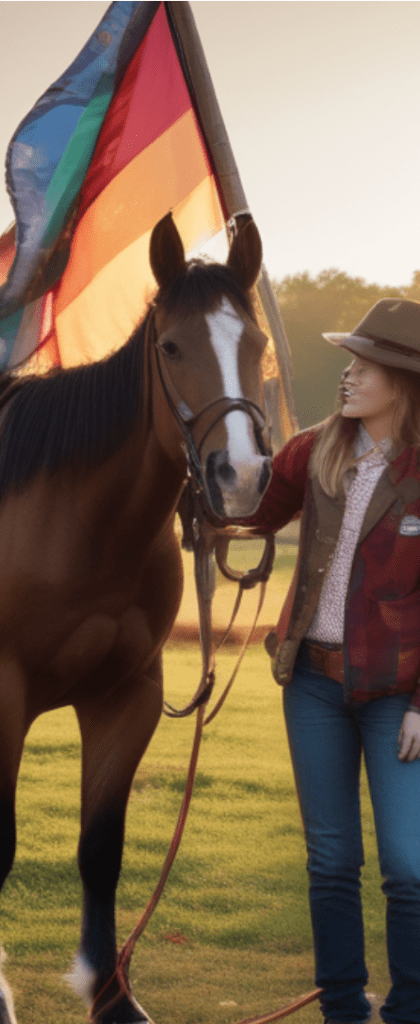
Bud and Jake, two inseparable friends since childhood, shared a bond that was as strong as the fields and stables of their small hometown. As the sun came up on a crisp Saturday morning, they loaded their old pickup truck with supplies and hitched up the horse trailer, ready for the adventure ahead. Inside the trailer, their beloved horses, Star and Blaze, stood patiently, saddled, and prepared for the parade in Cleo Springs.


The air was charged with anticipation as Bud and Jake embarked on their journey, the Pride Flag they’d carefully packed fluttering in the wind. This year, they were resolute in their decision to ride in the parade and demonstrate their unwavering support for equality and love in all its forms. The flag, a beacon of their indomitable spirit, symbolized their commitment to standing up for what they believed in, no matter the odds.


As they drove along the winding country roads, their conversation was light and full of laughter. They reminisced about past adventures and planned the day ahead. However, their joy was short-lived. Out of nowhere, a car screeched to a halt in front of them, forcing Bud to slam on the brakes. Before they could react, two men with hardened faces and a menacing air approached the truck, guns drawn.


“Out of the truck, now!”

One of the thugs barked, his voice rough and commanding. Bud and Jake exchanged a glance, understanding the gravity of the situation. They complied, stepping out slowly with their hands raised.


“We don’t want any trouble,” Jake said calmly, trying to diffuse the tension.

The second thug, his eyes cold and calculating, shoved Bud roughly against the truck.

“We need a ride, and this truck and trailer will do just fine, the first thug snarled.

“Get in the back, and don’t try anything funny.”


With their hands tied behind their backs, Bud and Jake were forced into the truck’s bed, their hearts pounding with fear and uncertainty. The thugs climbed into the cab, and the old pickup roared back to life, veering off the main road and onto a remote, deserted path.


As the miles stretched on, Bud and Jake’s minds raced, searching for a way out of their predicament. They knew they couldn’t let these criminals escape, especially not with their horses. Bud caught sight of the Pride Flag, still within reach in the truck bed. An idea began to form.

“Jake,”

Bud whispered, his voice barely audible over the engine’s rumble.

“When I give the signal, we need to act fast. Trust me.”


Jake nodded, his eyes filled with determination. As the truck slowed to navigate a particularly rough patch of road, Bud made his move. With a swift motion, he grabbed the flag and lunged at the nearest thug. Jake followed suit, using his body to knock the second thug off balance.
The struggle was fierce but fleeting. Bud and Jake, fueled by adrenaline and their unbreakable bond, managed to overpower the thugs and secure them tightly with the Pride Flag. Panting and bruised, they confined the criminals in the back of the truck, a testament to their courage and resilience.


Bud climbed into the driver’s seat, and Jake took a moment to check on the horses, who, though agitated, were unharmed. With renewed purpose, they headed back toward the main road, the thugs’ angry curses silenced by the engine’s roar.


As they neared Cleo Springs, the sight of the parade brought a wave of relief and triumph. They pulled up to the sheriff’s station, where sheriff’s deputies quickly took the thugs into custody. Hearing of their harrowing ordeal, the townspeople greeted Bud and Jake with cheers and admiration.


With the crisis behind them, Bud and Jake joined the parade, and their Pride Flag symbolized their resilience and courage. Riding side by side on Star and Blaze, they waved to the crowd, their hearts full of pride not just for who they were but for what they had overcome together. The parade continued to celebrate love, unity, and the indomitable spirit of friendship.

Embracing Acceptance: A Heartwarming Coming Out Story | Support and Hope

The rain had ended, and the sun was breaking through the clouds; the weather forecast called for sunny and warm conditions for the next week. Ron had left work and drove to his twin brother’s home. He had received a text which read –––

IT IS TIME

Ron knew what the message meant, but he needed to be sure if he was ready. Pulling into the park, Ron’s mother called and told him to get Joe and come for dinner. As he was talking, he entered Joe’s apartment. Joe just rolled his eyes when listening to the conversation. After disconnecting, Joe said –––

It may be a good idea to go there for dinner. It is a sign that tonight is the night!

Joe and Ron, their hearts heavy with a shared secret, sat across from each other in Joe’s cozy apartment. The sunlight, too bright for the weight of their conversation, filtered through the curtains. They had been preparing for this moment for months, yet the courage to face it had remained elusive

.
“It’s time,” – Joe said softly, his voice steady but his eyes betraying his nerves. “We need to tell them, Ron.”

Ron nodded affirmative, his fingers tapping anxiously on the edge of the coffee table.

Saying to Joe –––

“I know. I just, I’m scared, Joe.”


Joe reached across the table, squeezing his brother’s hand –––

“Me too. But we have each other. We can do this.”

Their parents, Sarah and David, had always been loving but traditional. The twins had grown up in a home filled with warmth and support, but the fear of rejection had kept them silent. The idea of disappointing their parents had haunted them for years.


When they arrived at their childhood home later that evening, the familiar smell of their mother’s cooking greeted them at the door. Sarah was in the kitchen, humming to herself as she prepared dinner, while David was already at the table, engrossed in his newspaper.


“Hey, Mom, Dad,”

Joe called out, his voice wavering slightly ––– “We need to talk to you about something.”

Sarah turned, wiping her hands on a dish towel. ––– “Of course, boys. What’s on your mind?

Joe and Ron exchanged glances, silently encouraging each other to plunge. They sat down at the table, and Joe took a deep breath and began –––

“Mom, Dad, we have something important to tell you. We’re both gay.”

There was a brief silence, during which Ron’s heart pounded loudly. But then, to their surprise, their mother’s face softened with a gentle smile, her eyes filled with understanding and love.


“You know, Joe, I thought you were, hon,” Sarah said, calm and understanding. “But I was never sure about Ron.”

Ron blinked in surprise, feeling relief and confusion. –––

“You… you knew?”
Sarah nodded. –––

“A mother knows her children, Ron. I could tell something was bothering you, but I didn’t want to push you before you were ready.”

David, who had been quietly munching on a piece of chicken, looked up with a grin.

“Yeah, it’s not exactly a shocker, boys. Pass the potatoes, will you?”

The twins exchanged another look, this time of disbelief and amusement. Their father’s nonchalance was both hilarious and incredibly sweet. He continued eating as if they had just told him the weather forecast.


Joe laughed, the tension in his shoulders easing.

“Wow, Dad, you’re taking this in stride.”

David shrugged, his mouth full of chicken. Manages to reply ––– you’re my sons. That’s all that matters!.

“You’re my sons. That’s all that matters.”

Joe felt a rush of emotion and began to speak, his voice trembling.

“I’ve been denying myself for a very long time, and I think that’s why we’ve had a bad relationship throughout the teen years because—”

Sarah reached out, placing a hand over his. –––

“Because you could never open up and talk to us. I understand, Ron. But we’re here for you now and always will be.”


Tears welled up in Ron’s eyes, and he squeezed his mother’s hand.

“Thank you, Mom. Thank you, Dad.”

Joe leaned back in his chair, a sense of peace washing over him.

“We should have done this sooner.”

Sarah smiled warmly at both of them.

“The important thing is that you did it. And we’re proud of you both.”

That night, the family shared a meal filled with laughter and stories, and the weight of the unspoken secret finally lifted. Adam and Luke, their hearts brimming with a newfound sense of freedom and acceptance, realized the depth of their parents’ unwavering love. The twins had faced their fears and found that the love of their family was a beacon of hope, more potent than any secret they had kept.

After leaving their parents, Joe was driving and said to Ron –––

“You know our parents took the news well. But how about the people who come out whose outcome isn’t the best? Not everyone has the storybook ending we just did; we should try to do something for the rejected people or even worse.”

Ron thought for a moment and replied ––

“I know what you mean, but what can we do? We are not financially set to take in all the people turned back by their families, and we don’t have the means to support them emotionally.”

Joe, always thinking ahead and having a plan in mind, quickly shot back ––

We don’t have to become a shelter or start providing counseling, but we can actively support the causes that provide these services. There are several we can begin making others aware of and encouraging our friends and family to help financially and publicly. This decision, for us, is not just about supporting a cause. It’s about making a difference in the lives of those who become disowned and suffering. It’s about giving them hope and a voice.

Ron, always looking to best his brother, said ––

Okay, name some of them. Right now, I want to hear a few of them. What are they?

Joe, without pause, began naming the groups –––


PFLAG, Coming Out Later In Life, The Tribe, Rainbow Families—there are many ways to show our support and help others who have the same depression we did.

As Joe and Ron reached the apartment where Joe lived, they had made up their mind, they would volunteer for one of the projects they had talked about and try to help others. They didn’t know what they could do, but maybe just being there and finding their purpose would be a beginning would be a start.

The first thing they planned to do the following day was to each call one of the organizations until they could find one the brothers would fit in with and then call each other back and update one another on their first day of action –– if they were raising funds for a project who got to call mom and dad first? They decided it would be a coin toss over dinner the next night to celebrate their coming out.

Photo by Alexander Grey on Pexels.com

Below are websites utilized in the recent past by benandsteve.com for information on research materials. Ben and Steve have also recognized and in many cases provided financial support to many of these organizations. We urge you to find an organization that fits you so to volunteer, it is in giving that we find healing and recovery. It is giving we find riches and in giving we find outselves. Support groups for the LGBTQI+ Community

The Trevor Project – Suicide Prevention for LGBTQ+ Young PFLAG: Homepage. Coming Out Later in Life. The Tribe – Wellness Community. Support Groups – Rainbow Families Direct Online and Phone Support Services for LGBTQ+ Youth Sacramento LGBT Community Centerhttps://saccenter.org › community-groups

Neglected In The Streets – Except for Jim and Steve – Friendly Hotel’s LGBTQIA+ Security Team

The Friendly Hotel, renowned for its around-the-clock security and welcoming atmosphere, primarily serves LGBTQI clientele. It features a restaurant and two nightclubs that cater to the gay community, making it a popular destination.

The front desk was abuzz with guests checking in on a bustling Saturday night. The diligent clerks worked hard, assigning rooms and ensuring the correct amenities. Meanwhile, security guards Steve and Jim began their shift at 8 PM. Their initial task was to patrol the Hotel’s perimeter, ensuring the safety of all guests, particularly the LGBTQI community. They also made regular rounds at the nightclubs, maintaining a vigilant presence.
Steve and Jim were not just part of the Hotel’s security team but also recognizable figures in the community. Their reliability and assured presence brought peace and safety, reassuring guests and visitors alike.


As long-time officers at the Friendly Hotel, Steve and Jim were known for their no-nonsense approach. They wouldn’t tolerate any arguing or resistance, often telling it like it was and swiftly ejecting or arresting troublemakers. This firm handling of security contributed to the secure feeling that drew many guests to the Hotel.


On this particular Saturday night, a group gathered outside the hotel gates, shouting anti-gay slurs at guests. Due to their location, Steve and Jim couldn’t move them but kept a watchful eye, urging visitors to avoid the area for safety.


Around 2 AM, the crowd had dwindled to six individuals, who positioned themselves on both sides of the street in front of the Hotel. The street led to other nightclubs nearby, and patrons often walked between these clubs and the Hotel. Steve and Jim reported the dangerous situation to local police, warning that assaults could occur. However, the police did not respond.


At 2:39 AM, Steve and Jim, standing near the street on hotel property, saw two guests leaving the Hotel and heading towards other clubs. Suddenly, the six individuals attacked the two men with pipes, brass knuckles, and other weapons, striking them in the head, stomach, ribs, and legs. The two men collapsed, unconscious and bleeding heavily, as the attackers shouted anti-gay slurs.
Steve and Jim rushed to apprehend the assailants, capturing five of them. They handcuffed the suspects and seated them on the sidewalk. Recovered weapons included nunchucks, brass knuckles, metal bars, mace, knives, and a shuriken.


The victims remained unconscious and continued to bleed profusely. The guards tried to apply pressure with whatever supplies they could find. Jim radioed the front desk to call the police, ambulance, and fire rescue. Steve asked if anyone in the crowd had medical training, but no one stepped forward. Emergency services took over thirty minutes to arrive, a typical response time in the gay community during the 80s and 90s.


When the fire department and ambulance finally arrived, they refused to touch the victims. Steve and Jim had to load the victims onto the stretchers and into the ambulances themselves, applying bandages to stop the bleeding. The police department sent only one unit, and the suspects were released a block away without charges. The police filed an incomplete report, and a follow-up investigation concluded insufficient information to pursue further action.


The two assault victims got so severely beaten that they had to be placed in medically induced comas for a week to reduce brain swelling. They lost most of their teeth, had their noses broken, orbital eye sockets crushed, chins broken, and ribs fractured. One suffered a punctured lung, and the other nearly lost an ear.


The story you have just read is an account of actual events experienced by the writer. The Hotel’s original name is no longer in use; it has since been changed and is operated by a different owner. The name used in this story is strictly to serve as a reference for the reader. Any name or likenesses may be coincidental; however, this incident occurred over thirty years ago. The reason for sharing this story is to highlight the results of severe prejudices and their actions in our daily lives. What we say, hear, and do genuinely matter. And how dangerous it can be to turn back the clock in an attempt to make things like they used to be!

To learn more on ASSAULTS IN THE GAY COMMUNITY CLICK HERE!

The Three Billy Goats Gruff: A Tale of Courage and Unity

Once upon a time, in a Meadow not too far away, there lived three Billy Goats. There was the papa Billy Goat, a towering figure with a heart of gold, the mama Billy Goat, a gentle soul who radiated love, and the Kid Billy Goat, a tiny bundle of nerves and curiosity, still learning about the world.

Every day, the three Billy Goats embarked on a journey from their cozy home, through a winding lane, to a lush pasture. Here, they feasted on the freshest green grass, filling their bellies to the brim. Their path took them through a dense, mysterious forest, and down a steep, rocky canyon wall, leading to a narrow passage with a bridge that spanned a gurgling creek.

Under the Bridge lived a crabby, mean, and dirty troll who threatened to grab anyone who crossed his Bridge, drag them below, and lock them in a cavern he had carved in the creek bank. He had threatened the deer in the forest, the birds who had tried to sit on the Bridge, and the rabbits and other animals who had attempted to use the Bridge to cross the creek. All the animals were afraid of the Troll. The goats were the only animals that used the Bridge because the Troll would not threaten them. He was intimidated by Papa Billy Goat, who was muscled and strong.

One day, the Papa Billy Goat had to work and told the Mama Billy Goat and the Kid Billy Goat to go without him to the Meadow. As they arrived at the Meadow, the Troll, his voice dripping with malice, saw that Papa Billy Goat was not with them. He came out and stopped them, his threats hanging in the air like a dark cloud, telling them if they tried to cross his Bridge, he would take them to his cavern and lock them up, adding that he would devour them! The Mama Billy Goat and Kid Billy Goat, their hearts pounding with fear, ran back home. That night, Papa Billy Goat heard what happened and his anger burned like a raging fire.

The next day, the Papa Billy Goat, his protective instincts in full force, decided to teach the Troll a lesson. He instructed the Mama Billy Goat and the Kid Billy Goat to go to the Bridge without him while he hid in the nearby woods. As the Troll emerged, his foul stench wafting through the air, and began his threats, the Papa Billy Goat, fueled by his love for his family, charged with all his might, the sound of his hooves thundering against the ground, using his horns to knock the Troll off the Bridge and into the creek.

Stunned by the Papa Billy Goat’s reaction, the Troll got up, unsure of what had happened; as he did, the Papa Bill Goat said to him,

“This Bridge is for all of us to use,” Papa Billy Goat bellowed, his voice echoing through the canyon. “And you, TROLL, no longer have the power to decide who can or can’t cross it. Do you understand?”

The Troll, now deeply remorseful for his past actions, admitted his wrongdoings and shuffled off to his little shack. This time, his heart was filled with a newfound understanding and respect for the others. His transformation was a beacon of hope, showing that change is possible.

As if on cue, all the animals in the forest burst out of their hiding places and began to run back and forth across the Bridge, their joy and freedom palpable. They finally had the right to cross the Bridge, a right that had been denied to them for far too long by a greedy, prejudiced troll. And the Billy Goats, their hearts filled with happiness, danced their way to the green Meadow, their home.

Bennie: The Heart and Soul of the Melon Group | LGBTQI+ Community Support

The Melon Group was a crowd of friends that began in a small community as a support group. The members had found themselves there as a collective of the LGBTQI+ Community. They ranged from 18 to 80+ and had watched people come and go. Sadly, the group was gathering after attending the funeral of the Melon Group founder, Bennie. He had been the one back in 1981 who had posted an ad in the local paper inviting all the rainbow family members to join him for snacks and treats in the local park. It was a risky move in those days, but Bennie was like that; he took chances. Chances like that gave life to many of the hidden townspeople, who did not have anyone to turn to.

There was Joanne, a closeted lesbian, until 1984 when the help of Bennie’s meetings in the park gave her the courage to confront her family. Thanks to Bennie, Jill, her partner, met her at the park. Jon and Mike, a gay middle-aged couple, found support with the group after relocating to the community for their jobs. Then there were Jett and Freida, who were transgender. They found love from the group when their families had disowned them.

Others, too many to mention, had been through the Melon Group over the years. As they sat in a local coffee shop and began to recall the years that had passed, memories flooded back of those who had once been part of their vibrant community but were no longer there.

Paul, an older gentleman among the first members, always had a warm smile and a knack for baking the best cookies. He had passed away a few years ago, but his recipes lived on in the group, a sweet reminder of his presence. Maria, a young transgender woman, had found solace in the group after escaping an abusive household. She eventually moved to a big city to chase her dreams of becoming an artist, but her sporadic visits and heartfelt messages kept her close to everyone’s hearts.

Bennie, though, was the heart and soul of the Melon Group. His courage and vision created a safe space where none had existed. His laughter was infectious, and his wisdom, always shared with a twinkle in his eye, guided many through their darkest days. Bennie had a way of making everyone feel seen, heard, and loved. He remembered every birthday, celebrated every milestone, and comforted every sorrow. His passing left a void that felt impossible to fill.

The Melon Group wasn’t just a support group but a lifeline. In those early days, gathering in the park was an act of defiance, a statement of existence in a world that often refused to acknowledge them. Over time, the group became a second family. They celebrated, grieved, and, most importantly, stood by each other through thick and thin.

Samantha, a bisexual woman who had joined in the late ’90s, recalled how Bennie had helped her through her messy divorce and subsequent custody battle. “Bennie always knew what to say,” she said, her voice thick with emotion. “He had this way of making you feel like everything was going to be okay, even when it felt like the world was falling apart.”

Jacob, who recently came out as non-binary, shared how Bennie had encouraged them to embrace their true selves. “Bennie saw me,” Jacob said. He saw the real me even before I did. He gave me the strength to be honest with myself and the world.”

The Melon Group had seen countless faces over the years: people who found a place to belong, who found love and acceptance, who found the courage to be themselves. Bennie’s legacy lived on in each of them, in the connections they made, and in the lives they touched.

As they sat in that coffee shop, sharing stories and laughter through their tears, they knew Bennie’s spirit was with them. They vowed to continue his work, keep the Melon Group alive and thriving, and be the beacon of hope and love that Bennie had always been.

The Melon Group had weathered many storms but stood firm, a testament to the power of community, love, and the enduring impact of one man’s dream. Bennie may be gone, but his light shone brightly in the hearts of all who had known him, and in the Melon Group, that light would never fade.

Winning at Any Cost: The Deterioration of Political Ethics

Mudslinging, once the most reprehensible act a political contestant could commit, was a behavior that branded the perpetrator as untrustworthy, someone respectable voters would never support. These were the days when community bonds were robust. Neighbors were familiar faces, and the widow down the street was always checked on. People went out of their way to support a friend’s business, driven by loyalty and the value of relationships.

Courtesy was not just a virtue, it was a way of life. You didn’t honk at the car ahead for hesitating at a stop sign, and everyone, regardless of race, was treated with respect. You honored their facilities at sporting events in neighboring towns, expecting the same respect in return during your homecoming games. These were the values that held our society together, and their erosion is a cause for concern.

Winning an election was once a sign of trust in the democratic process. It meant the elected individual would represent the community, county, state, or nation for their term. There was no need for your parents to rally the neighbors, seeking to punish those who voted differently or to overturn the results. They trusted the process and the enduring truth. However, today, this trust has seemingly eroded, and the need for reflection and change in our political and social interactions is more pressing than ever.

Today, it seems that the aim is not just to win, but to annihilate the opponent’s life and reputation.

History of Gay Pride Parades: From Struggle to Celebration

The story of Gay Pride Parades, also known as LGBTQ+ Pride Parades, begins with a backdrop of systemic discrimination, social stigma, and legal challenges faced by LGBTQ+ individuals. The need for such parades emerged from the historical struggle for recognition, rights, and acceptance. Here’s a concise history of how they became necessary:

Screenshot

In the early 20th century, LGBTQ+ individuals faced severe discrimination and persecution. Homosexuality was criminalized in many parts of the world, and those who identified as LGBTQ+ were often subject to arrest, harassment, and violence. This era was marked by widespread societal stigma, leading many to conceal their identities.

The mid-20th century saw the rise of the homophile movement, with groups like the Mattachine Society and the Daughters of Bilitis advocating for the rights of gay and lesbian individuals. These organizations aimed to improve the public perception of LGBTQ+ people and sought to decriminalize homosexuality. Their efforts laid the groundwork for more visible activism.

The catalyst for the Gay Pride Parades was the Stonewall Uprising in June 1969. The Stonewall Inn, a gay bar in New York City’s Greenwich Village, was a frequent target of police raids. On June 28, 1969, a raid sparked spontaneous and violent demonstrations by the LGBTQ+ community, which lasted several days. The Stonewall Uprising marked a turning point, as it galvanized the LGBTQ+ community and led to the formation of activist organizations like the Gay Liberation Front (GLF) and the Gay Activists Alliance (GAA).

To commemorate the one-year anniversary of the Stonewall Uprising, activists organized the first Christopher Street Liberation Day March on June 28, 1970. This event is widely recognized as the first Gay Pride Parade. It took place in New York City and was followed by similar marches in Los Angeles, Chicago, and San Francisco. The purpose of these marches was to promote LGBTQ+ visibility, celebrate their identity, and demand equal rights.
Throughout the 1970s and 1980s, Pride Parades grew in size and spread to other cities around the world. They became annual events, serving as a platform for activism, community building, and celebration. The AIDS crisis in the 1980s further intensified the need for solidarity and visibility, as LGBTQ+ communities faced immense loss and stigma.

Today, Pride Parades are held in cities worldwide and have evolved into large-scale celebrations that include parades, festivals, concerts, and educational events. They serve multiple purposes: celebrating LGBTQ+ identity and culture, advocating for legal and social equality, and remembering the struggles and achievements of the LGBTQ+ movement.

Despite significant progress, LGBTQ+ individuals still face challenges and discrimination in many parts of the world. Pride Parades remain necessary to combat homophobia, transphobia, and other forms of discrimination. They continue to provide a space for the community to express pride in their identity and to demand full equality and acceptance.

The necessity of Gay Pride Parades stems from a history of marginalization and the ongoing fight for rights and recognition. What began as a reaction to oppression and violence has transformed into a global movement that celebrates diversity, promotes inclusivity, and strives for equality.

Cowgirls Mae and Rosie: A Love Story Spanning Time and Place

In the late 1890s, the vast expanse of the American West stretched endlessly, a sea of golden plains and towering mountains. Two cowgirls named Mae and Rosie, not just friends but soulmates, called home in a remote corner of this wild land. Mae, with her fiery red hair and fierce spirit, and Rosie, with her raven-black braids and gentle demeanor, were an inseparable pair, bound by a love that defied the conventions of their time. In a world where their love was deemed unconventional, they found solace and strength in each other.

One crisp autumn morning, they saddled their horses and rode out, the sun casting long shadows across the rolling hills. Their journey led them to an old wooden fence gate, weathered by years of harsh winds and blazing sun. They spurred their horses forward with a shared glance and a mischievous smile, pushing the gate open and galloping through.

As they rode, the familiar landscape began to change. The dirt road beneath their horses’ hooves transformed into smooth pavement. The rolling hills flattened, and in the distance, a faint hum grew louder, evolving into the roar of engines. The world around them seemed to blur and shift, the sky darkening and then brightening again until suddenly, they found themselves on the edge of a bustling highway. In the face of this bewildering transformation, Mae and Rosie’s courage and resilience shone through, inspiring all who witnessed their journey.

The year was no longer 1898 but 1972. Mae and Rosie reined in their horses, staring in awe at the sight before them. Towering skyscrapers pierced the sky, cars zipped by at dizzying speeds, and people hurried along sidewalks, oblivious to the two cowgirls who had just crossed time itself.

Confusion and excitement swirled within them. They rode cautiously along the highway, their horses nervously stepping onto the strange new surface. They marveled at the colorful billboards advertising things they’d never seen before and the neon lights that promised adventure. It was a journey that was not just physical but emotional, as they navigated the unfamiliar terrain of a world that was changing at a rapid pace.

As they entered the city, the clamor of modern life enveloped them. Mae’s eyes sparkled with curiosity while Rosie gazed wonderfully at the people dressed in fashions so alien to their own. They stopped outside a diner, its large windows showcasing a scene of laughter and warmth. The sign above the door read “Betty’s Diner.”


Mae and Rosie dismounted, tethering their horses nearby. They walked into the diner, the door jingling as they stepped inside. Heads turned, and the chatter ceased momentarily as the patrons saw the two cowgirls, their clothes and demeanor a stark contrast to the modern setting. Some stared in curiosity, others in judgment, but a few smiled warmly, recognizing the courage it took for them to be there.

Betty, the diner’s owner, approached them with a friendly smile. “Welcome, ladies! What brings you to these parts?” she asked, her eyes twinkling with curiosity.
Mae and Rosie exchanged a glance, unsure of how to explain their journey. “We’re just passing through,” Mae said, her voice steady.

Betty nodded, sensing there was more to their story. She led them to a booth and handed them menus. As they sat, they began to notice the small but significant changes around them—the music playing from a jukebox, the variety of food on the menu, the freedom in the air. Mae and Rosie exchanged a glance, their eyes filled with wonder and a hint of apprehension, as they realized they were witnessing a world that was vastly different from the one they had left behind.

Over the next few days, Mae and Rosie explored the city, learning about the incredible advancements and the cultural shifts that had occurred in the seventy-four years they had seemingly leaped over. They discovered a vibrant community of people who defied conventions and lived openly and proudly like them. They learned about the women’s suffrage movement, the civil rights movement of 1964, and the sexual revolution, all of which had reshaped the society they now found themselves in.


One evening, they attended a gathering at a local community center. It was a celebration of love and identity, filled with people from all walks of life. Mae and Rosie felt a deep connection to the stories they heard, the struggles and triumphs resonating with their own experiences.

As they danced under the disco ball, surrounded by newfound friends, they were overwhelmed with a sense of joy and liberation. They realized that they had found a place where their love was not only accepted but celebrated. With all its noise and chaos, the city had given them a glimpse of a future they had never imagined, a future filled with hope and optimism for societal change.

Mae and Rosie decided to stay, embracing the new world with open hearts. They found work, made friends, and built a life together. Their love story began in the wild, untamed West and flourished in the bustling, vibrant city of the 1970s. It was a decision that was not without its challenges, but they were willing to face them for the chance to live and love freely in a world that was slowly but surely becoming more accepting.


Years later, as they sat together on a bench overlooking the skyline, they often spoke of that old wooden fence gate and the magical journey it had taken them on. The city had become their home, where they could live and love freely, forever grateful for the lucky ride that had led them to this extraordinary new chapter in their lives. They reminisced about the changes they had witnessed, the challenges they had overcome, and the love that had remained constant throughout it all.

“A Second Chance: How a Scruffy Terrier Saved a Man From Despair”

Born in a county of less than 12,000 people in the southwest part of the state, Jason grew up in the shadow of his grandfather’s church. Papa Preacher, as he was known, was a fire and brimstone verse-thrower who would have been at home in the 1870s. He led the county revivals in a Save Your Soul from Satan telethon of services every Spring and Fall. Everyone showed up, or people’s names were trashed in the community. 

Jason had heard since the time he could walk how homosexuals would be sent straight to the pits of Hell, with the gnashing of teeth, torture the likes never seen, and burning forever more. From birth, he was scared to believe everything his grandfather said was true.

When Jason began to get older and experienced puberty, his reactions to life differed from those of other teenage boys. His attraction to girls was nonexistent. He had no desire to look at a girl in a way that would be sexual. He had many girls who were friends, but he never wanted to date one or have any relationship other than friendship with any of them. However, when it came to his male friends and older classmates, that was a different story—one he didn’t understand. Jason had never known a person who was gay. He had never been around any books, magazines, or pamphlets that contained gay content. Nor had Jason watched any movies concerning gays. The only thing he knew about gays or the LGBTQI+ Community was that they slept with the same sex and were going to Hell forever! 

Now, he was having intense feelings for other young men, and it was showing. In gym class, he began showing up late or not going at all to avoid going to the locker room. He got roughed up when showering once when he got an erection, and he didn’t mean to. He thought it was difficult enough just trying to hide his excitement walking through the hallways between classes. At least he could use his school books to cover up any problems that could arise. 

What Jason couldn’t cover up was the summer vacation when a foreign exchange student from Germany was staying with a local family, and he was discovered by the local police necking and nearly nude while parked in Jason’s four-wheel drive. They were both in college and of legal age to make their own decisions, but the local police ensured Jason’s grandfather heard about it. The officer then went to the local coffee shop and told the local crowd about it, and soon, the whole town was talking. The foreign exchange student didn’t understand what the big deal was after all, to him, it was well-accepted where he came from, and this upset was so uncalled for. But for Jason, it was the end of his life as he knew it. And, he began to shut down. He was withdrawing and ending communications with everyone. He holed up at home for weeks, sleeping nearly all the time. Then, he began staying awake for days at a time. Finally, he had established a plan to say goodbye. 

Jason sat in his dimly lit living room, the world’s weight pressing down on him. The gun in his hand felt heavy, not just physically but emotionally. His eyes, red from hours of crying, stared at the floor. The only sound was the steady ticking of the old grandfather clock in the corner, a reminder of the seconds slipping away.

He had tried an hour earlier. As he pulled the trigger, his body betrayed him, flinching just enough to send the bullet harmlessly through the open window. He had cursed himself for his cowardice, not knowing that his hesitation had saved a life outside. In the quiet street beyond, a small dog had narrowly missed getting hit, the sound of the shot startling it but not injuring it.

Now, Jason sat there, lost in his thoughts. He had tried to change, to conform to the expectations of his family, church, and society. But he couldn’t change who he was. The rejection, the whispers, the outright hostility—they had all taken their toll. He felt alone, unloved, and hopeless.
Unbeknownst to Jason, the small dog he had unknowingly spared was wandering through the neighborhood. The dog, a scruffy terrier mix with a keen sense of empathy, was drawn to the house. Jason left the door slightly ajar, leaving it open in desperation and distraction. The dog slipped inside, its little paws padding softly on the wooden floor.

Jason didn’t notice the dog at first. He, too, was wrapped up in his sorrow, the cold metal of the gun pressed against his temple. It wasn’t until he felt a soft nudge against his leg that he looked down. Sitting in front of him was the scruffy terrier, its eyes wide and filled with a kind of unconditional love that Jason had never experienced before.

The dog wagged its tail, its eyes never leaving Jason’s. It was as if the dog understood his pain and wanted to offer comfort. Jason lowered the gun, his hand trembling. He reached out hesitantly, and the dog nuzzled his hand, licking his fingers gently.

Tears welled up in Jason’s eyes. He hadn’t felt such warmth in so long. The dog climbed into his lap, curling up as if it was fate to find him in his darkest moment. Jason hugged the dog tightly, sobbing into its fur. The presence of the small, warm creature gave him a glimmer of hope, a reason to hold on.

Hours went by as Jason sat there with the dog in his arms. The sun began to rise, casting a gentle glow through the windows. The new day felt like a second chance, a new beginning. He didn’t know what the future held, but he knew he couldn’t give up.

The dog had saved him in more ways than one. It had given him a reason to keep going, a reminder that love and hope could come from the most unexpected places. Jason decided to name the dog Chance for the second chance it had given him. They would face whatever came next, knowing they had each other together.

In the following days, Jason began to reach out for help, reconnecting with supportive friends and finding solace in a community that accepted him for who he was. And through it all, Chance was by his side, a loyal companion who had come into his life when he needed it most. The love and companionship of his furry friend reminded him daily that he was worthy of love and happiness, just as he was.

That evening, Jason turned his television off, the only channel he had been told he could watch and remain a good Christian and child of God. While flipping to another TV station, he came across a public service announcement about PFLAG and went to their website out of curiosity to learn more. It was there that Jason heard about the Trevor Project and The Gay, Lesbian, Bisexual, and Transgender National Hotline. He reached out for direction and soon became part of the most prominent family he knew. And he grew to be the happiest he ever had in life. Today – Jason isn’t going through Hell on Earth trying to stay out of a place many people question. And he wakes up with a rainbow in his life every day!

A Journey Home For One Last GoodBye

Ethan Ryder Is Set Free From A Lifetime Of Pain And Rensentments…

Ethan Ryder had not set foot in Blare, Arkansas, for nearly twenty years. The dusty roads, the sunbaked fields, and the distant hum of cicadas were all etched into his memory, though the town held little warmth for him. The old farm, once a place of life and growth, now symbolized the past he was finally ready to confront. His parents had passed, leaving the property to him, and with a heavy heart, he decided it was time to sell and settle the lingering ghosts of his youth

.
The farmhouse loomed at the end of the dirt road, its paint peeling and windows cloudy with neglect. Ethan took a deep breath, the scent of earth and decay mingling. Memories flooded back—memories of long, lonely days working the fields, of whispered slurs and judgmental glances from the townsfolk, and of the dark, sleepless nights filled with fear and self-loathing.


Ethan’s childhood had been a series of silent battles, trying to reconcile who he was with who the town expected him to be. As a teenager, he had realized he was gay, a revelation that brought a storm of confusion and dread. Blare was not the type of place where locals embraced this kind of difference. The town was small, its people set in their ways, and the intolerance he faced left deep scars.


He walked through the creaking door, the house’s interior almost unchanged. Dusty furniture stood as it had been for decades, and the old family photographs still lined the walls. Ethan ran a finger along the mantle, picking up a thick layer of dust. The house felt like a time capsule, a reminder of a life he had fought hard to leave behind.
It was in the kitchen that Ethan found a tangible connection to his past: an old, weathered cookbook that had belonged to his mother. She was the one person who had always accepted him, even if she didn’t fully understand. Ethan could still hear her soft, comforting voice as she tried to console him during his darkest moments, a voice that brought him solace even in her absence.
Ethan’s father, on the other hand, was a stern man bound by the town’s rigid expectations. When Ethan came out to him, the silence was more painful than any words could have been. The distance between them had grown insurmountable, and this rift had driven Ethan to leave Blare as soon as he could.


As he explored the farm, Ethan’s steps led him to the barn. This old structure, once his sanctuary, was where he could escape the harsh realities of Blare and dream of a life where he could be himself. Pushing open the heavy doors, he was greeted by the familiar scents of hay and leather, triggering a flood of memories. In this very barn, he had shared his first kiss with another boy, a moment that had both terrified and exhilarated him, marking the beginning of his journey toward self-acceptance.


Standing in the barn, Ethan felt a profound sense of closure. The fear and pain of his youth no longer held him captive. He had built a life far from Blare, surrounded by people who loved and accepted him for who he was. He had found happiness, a concept he had once deemed unattainable, and it was a feeling that washed over him, bringing a sense of peace and relief.
With renewed determination, Ethan began sorting through his parents’ belongings, deciding what to keep and let go. Among the keepsakes was a small wooden box he had never seen before. Inside, Ethan found dozens of letters, all addressed to him. They were from his mother and written after he left. In them, she spoke of her regret for not being able to protect him better, her pride in his courage, and her unwavering love.


As Ethan read his mother’s letters, tears welled up in his eyes. Her words were a soothing balm to his wounded soul, healing the scars of a painful past. Even in her absence, he felt a deep connection to her, a connection that brought him peace and a renewed sense of self. Her letters were not just words on a page, but a testament to her love and understanding, a final gift of closure and acceptance.


By the time Ethan was ready to leave, the farmhouse felt less like a place of pain and more like a chapter that had finally ended. He had faced his past, laid his ghosts to rest, and was ready to move forward. As Ethan drove away from Blare for the last time, the sun setting behind him, Ethan felt a lightness in his heart. He was free.

Photo by Mariah N on Pexels.com

Family Love and Understanding: A Parenting Journey Unveiled

Photo by Anastasia Shuraeva on Pexels.com

Eric’s and Marie’s parents, Donald and Jasmine, married for thirteen years. They were a biracial couple and parents, of Eric and Marie, a set of twins about to turn twelve years old. At the end of the school year, Donald and Jasmine sat down with Eric and Marie and said they needed to talk to them.

As the end of the school year approached, the twins, Eric and Marie, found themselves in a state of anticipation. They hadn’t broken any rules or caused any major disturbances at home, so what could this conversation be about? Their minds raced with possibilities: Could one of their parents be seriously ill? Or perhaps a financial crisis had struck, forcing them to downsize their home?

It didn’t take long for Donald and Jasmine to clear the air. Donald began ––

“For years we knew we would one day have to talk to you about this and we always promised we would tell you when you are 12 years old. We’ve been preparing for this conversation, considering your maturity and understanding, and we believe now is the right time.”

Jasmine joined in ––

“That’s right, we feel you are at the age that you will understand what we are about to tell you and why we want to tell you this. It is important for you to know that we love you very much, and you both are the reason we did this. Our love for you is the foundation of this decision, and we hope you understand that.”

Eric and Marie, in their twin fashion, said in unison ––

“So what did you guys do, rob a bank and run from the law?”

Donald firmly replied ––

“No! What we have to say is more important than that, and this is about something that would have been much more severe if it didn’t work initially!”

The twins were shocked. What could be more severe than being on the run from the law?

Jasmine, wanting to direct the topic back to its intended purpose, suggested everyone take a deep breath. Saying ––

“What we are talking about isn’t Spy Stuff.”

Donald replied ––

It almost was!

Jasmine, tired of the kids and Donald’s propensity for dragging out any conversation to make it a lecture, much as he would a class of his at the University, took control of the room ––

“Look, we have to say what we are here to talk about. It isn’t up for guessing or beating around the bush. The kids are supposed to know now. Kids, your mother and father are gay! We have been since the day you were born. Since we both were born. I gave birth to you; your father is your real daddy. But we have never had sex. I became pregnant through in vitro fertilization. Do you know what that is?”

The twins both nodded their heads, again answering together,

“Yes, we learned about this year at school.”

Then Eric replied ––

I always knew Pop was gay, but I never thought it of you, Mom.

Marie sputtered out ––

Well, I always thought Mom was, but I would have never guessed it of Pops!

Donald and Jasmine just stood there, looking at each other, somewhat dumbfounded. Each wondered what they could have done to cause their children to make such conclusions. But that wasn’t as important as helping them accept the news they had heard.

Donald said to both children ––

“Kids, we want to ensure you know you can talk to us about this and are okay with asking questions.”

Eric and Marie sat silently for a moment, processing this significant revelation. Then, Marie broke the silence.––

“Are you both happy?”

She asked softly, looking between her parents.

Donald and Jasmine exchanged glances before Jasmine replied ––

“Yes, sweetheart. We are delighted. Our relationship works because we love and support each other. We decided to raise you as a family to provide you with a loving home. And we do love each other, just not in the way you might think of traditional marriages.”

Still absorbing everything, Eric asked ––

“So, does this mean you have other partners or are you just… like roommates?”

Donald took a deep breath and said ––

“We do have partners. We’ve kept this part of our lives private because we wanted to wait until you were old enough to understand. We both have partners who mean a lot to us, and they support and love you, too.”

Jasmine added ––

“We wanted to ensure you both felt safe and secure in our family before introducing you to anything confusing. Now that you’re older, you can understand and handle this better.”

Eric and Marie exchanged a glance. Marie asked ––

“So, when do we get to meet them?”

Jasmine smiled warmly ––

“We’ll introduce you to them when you’re ready. We want to make sure you get enough at a time. It’s important that you feel comfortable and smooth with this transition.”

Eric nodded thoughtfully ––

“It’s a lot to take in, but we get it. We want you both to be happy.”

Marie chimed in ––

“Yeah, we love you both, no matter what. It’s different, but it doesn’t change anything for us.”

Donald and Jasmine both felt a wave of relief. They knew there would be more questions and possibly some challenging moments ahead, but they had taken the first step. The important thing was that they had started this journey with honesty and love.

Jasmine said ––


“Thank you for being so understanding. We know it’s a lot, but we are here to support each other. Always.”

Eric and Marie smiled. Marie reached out and hugged her parents, with Eric joining in. They sat together, holding onto each other, feeling the strength of their family’s bond. In that moment, they knew that whatever challenges came their way, they would face them together, with love and understanding guiding them through.

As the twins headed to their private bedrooms, Eric said to Marie ––

“I told you Pop’s wasn’t sleeping in a separate bedroom because of his snoring!”

Marie replied ––

“And I told you it wasn’t because of Mom’s cold feet!”