The Island – A Serialized Dystopian Story * Chapter Five 

1–2 minutes

Haven’s Reach: The Vanishing Voices

The island was quieter now. Too quiet.

After the whispers of resistance spread through hidden gatherings, Brant Harrow and his Council acted swiftly. 

One by one, the most outspoken citizens began to disappear. A fisherman dared to complain about rationing. A mother had asked too many questions at the weekly assembly. A teacher was rumored to keep forbidden books. They were gone.

No public trials. No explanations. Only empty chairs at family tables and unlit lanterns where homes once glowed in the night. The Council claimed these people had “chosen exile.” But no one had ever seen the boats return. Children asked where their neighbors had gone, and parents whispered a single warning: 

Don’t ask too loudly.

For those who remained, the silence was deafening. 

Even the ocean seemed to hush its waves against the shore, as if the island itself held its breath. Fear kept voices low. In the dark corners of Haven’s Reach, a few brave souls began to wonder. If the voices of truth were vanishing, who would speak for them when the Council came knocking next?


By Benjamin GroffMedia© | benandsteve.com | ©2025 

The Island – A Serialized Dystopian Story * Chapter Four 

1–2 minutes

Haven’s Reach: Whispers in the Dark

By the time autumn winds swept across the island, Brant Harrow’s “First Rules” had been etched into daily life. They weren’t written on parchment or stone, but repeated so often that they became second nature.

“No theft, no violence, no waste, no words outside the Council.”

At first, the people complied out of respect. Later, they complied out of habit. And slowly, they began to comply out of fear.

It started small. A fisherman’s wife was overheard criticizing the Council for rationing nets unfairly. Days later, her family’s hut was mysteriously stripped of its lantern oil. Her husband’s catch was rejected at the communal market. There was no official punishment or public decree. It was just a quiet reminder of who held sway.

Families learned to whisper in the dark, if they whispered at all. Children were warned not to repeat what their parents said at home. Laughter around the fire grew more careful, guarded, as though shadows themselves carried ears.

Yet not all were cowed. A young teacher named Elara began meeting secretly with her students in the caves near the shoreline. She reminded them of the island’s first days. During those times, the people worked freely together. Voices rang out with no fear of reprisal. She called it 

“The Memory.”

“Don’t let them take The Memory from you,” 

She urged. 

“Because when the memory dies, so do we.”

Above them, in the Council chamber, Brant Harrow and his circle drew lines on a map of the island. They were dividing it into districts. 

“Control the land,”

He muttered, 

“And we control the people.”

Unseen and unspoken, the first embers of resistance flickered in Haven’s Reach.


By Benjamin GroffMedia© | benandsteve.com | ©2025 

The Island – A Serialized Dystopian Story * Chapter Three

1–2 minutes

Haven’s Reach: The First Rules

The island had been buzzing with a quiet energy. Families were settling into huts near the shoreline. Farmers had begun turning fertile soil into gardens. Fishermen reported an abundance of food from the sea. For a brief time, it felt like paradise was within their grasp.

But no paradise, it seemed, live without Order.

The elected leader, Brant Harrow, stood on a makeshift platform in the town square. His voice carried over the crowd like the tide: calm, confident, and commanding.

“We are a community now,”

He declared, “and no community can survive without rules. These rules are not punishment, but protection. They will guide us. They will keep Haven’s Reach strong.”

The first rules were simple enough: no theft, no violence, no waste. At first, the people welcomed them. After all, who can argue against peace, honesty, and thrift? 

Yet Brant added one more: 

“All voices must flow through the Council before being spoken to the community. This ensures unity.”

Some shifted uneasily at that, but most nodded. They wanted peace. They wanted Order. And Brant gave them just that—or so they believed.

That night, lanterns glowed along the shoreline as fishermen mended their nets. Farmers laughed over bowls of stew. Children ran between the huts, playing games under the moonlight. The air was filled with a fragile joy.

But inside his quarters, Brant sat with a small group of men. 

“It begins here,” 

He told them. 

“Control the speech, control the thought. The rest will follow.”

Haven’s Reach was still blissfully unaware. It took its first quiet step toward becoming something far different. It was unlike the dream its people had imagined.


By Benjamin GroffMedia© | benandsteve.com | ©2025 

The Island – A Serialized Dystopian Story * Chapter Two

3–4 minutes

Rules for a Perfect Island

The first year on Haven’s Reach flew by in a haze of construction and cooperation. Houses multiplied along the beaches. Farmers coaxed green shoots from the dark volcanic soil. Randall Crane’s speeches echoed over bamboo loudspeakers in every settlement. His message was always the same: “We are building something the world will envy.”

At first, people agreed. The council meetings were spirited yet polite, with neighbors sharing ideas and coconuts. But as the population grew, so did friction. Disputes over fishing rights, building permits, and clean water began to flare up. Crane’s solution was to create The Harmonies — a set of “guiding rules” posted on hand-painted boards throughout the island.

The Harmonies looked harmless enough:

  • Respect your neighbor.
  • Keep your area clean.
  • No outside media without approval.
  • Dress in community-appropriate attire for public events.

Most residents shrugged off the changes. After all, they had voted for Crane. But a few quietly asked why a paradise needed rules about newspapers or clothing colors. Crane’s answer was reassuring, almost fatherly:

 “Order now means freedom later.”

Meanwhile, Crane’s temporary overseers quietly expanded. What began as a handful of volunteers became a uniformed Steward Force, assigned to “help” with compliance and “resolve” disputes. They wore sky-blue jackets and smiled often, but their presence changed the feel of the markets and beaches.

By the time the first festival arrived, everyone had noticed the difference. The music still played. Torches still flickered under the palms. Yet, eyes darted toward the Stewards. People were checking for disapproval. Without realizing it, Haven’s Reach was slowly stepping from a dream into something else.

There was another problem. Almost all those who relocated there had signed a contract. They were committing to ten years of service on the island. If they left for any reason, they would lose all their investments. This included property, banking accounts, and any holdings invested in the government. The contract included that if illness required them to leave the island. Yes, the contract was unforgiving, even for the survivors of the dead. 

By the second year, Haven’s Reach felt less like a community project and more like a company town. The Harmonies had been revised into a formal code. It was called The Charter of Unity. It is now distributed in little booklets stamped with Randall Crane’s signature and the island’s crest. Most people tucked them into pockets like good-luck charms. Yet, a few began to notice how many pages dealt with “acceptable behavior.”

Crane’s speeches became less about freedom and more about “protecting our way of life.” The Steward Force expanded again, adding patrols to docks and market squares. At first, they were only “checking in.” Then, they began quietly recording names. They noted those who grumbled too loudly about water rations, building zones, or the newly instituted curfew bells.

A subtle yet unmistakable social pressure began to creep in. Neighbors hesitated before speaking. Vendors checked who was listening before discussing shortages. And at community gatherings, some citizens arrived wearing the “approved” island-blue shirts. Those who didn’t wear them were ushered to the back.

It wasn’t only about rules. The island’s media center, once a hub of news and music from around the world, now played only “local” content. The official explanation was that outside broadcasts were “unverified” and “destabilizing.” At first, few noticed. One morning, a popular journalist was no longer at the market. The rumor was they had “relocated to another settlement.” No one really knew.

Yet, on the surface, Haven’s Reach still looked idyllic. Palm trees swayed. Children played along the beaches. Gardens bloomed under the volcano’s shadow. The illusion held — but for how long?


By Benjamin GroffMedia© | benandsteve.com | ©2025 

The Island – A Serialized Dystopian Story * Chapter One

2–4 minutes

Arrival on Haven’s Reach

 Arrival on Haven’s Reach
The Island

It started as a dream, or at least that’s how the people remembered it. Scattered across the globe, 100 million souls were united by frustration with their governments. Yearning for a fresh start, they pooled their resources to find an untouched island deep in the South Pacific. Satellite maps showed a teardrop of lush green, ringed with beaches and hidden coves. They named it Haven’s Reach, because it promised a haven — and it was finally within Reach.

At first, everything felt almost magical. The climate was gentle, the soil fertile, and the air clear in a way few remembered from their crowded cities. People camped near waterfalls, planted vegetables along ridges, and built simple homes from bamboo and volcanic rock. There was no central authority; instead, councils of volunteers coordinated the distribution of food and medical supplies. It was as close to utopia as anyone could imagine.

Soon, the newcomers realized they’d need a leader to coordinate large projects, like roads, water treatment, and electricity. Randall Crane emerged from the chaos. He was a silver-haired businessman with a booming voice. His ability to command a crowd was uncanny. He promised fairness, transparency, and freedom. They applauded, relieved to have someone stepping ahead to organize their new society. Crane appointed “temporary overseers” for security and public Order, but few gave it a second thought. After all, they trusted him. This was their new beginning.

There would be no sprawling bureaucracy watching over their every move—no big government, no visible chains of regulation. People would live as they believed life was always meant to be lived. They would “live and let live,” but only so long as it conformed to the Order. This Order was not just a way of thinking. It was a quiet, unyielding code. It was built on God, guns, and a rigid notion of freedom. 

Any “laws” were drawn from sacred texts. For most American and English residents, that meant the Bible. For others, it is the Torah or the Tripitaka, the ancient Buddhist canon. In their minds, all these scriptures whispered the same universal truths. Yet beneath that illusion of harmony, a single doctrine of control waited. It was patient and absolute.

They had arrived and begun their grand experiment with a country of their own. Self-designed to represent their basic needs and oversee their paramount security. These people, in a new land, had started what few in life had ever dared to hope for. They established their own country and a bill of rights. They elected a leader to oversee their needs. This was achieved quickly. They succeeded without ever firing a single shot in protest or against another nation.

A million people invested in their own lives and invested in one another. Most of all, they invested in an island that is now a country. It is led by a person with full power. He can choose to give anything necessary for those living there. Alternatively, he can decide to use the resources just for himself. 

Representatives from each village were elected to represent those populations. They also elected a senator for each sector of the island. This formed two houses of government. Much like the United States has. Given that all these people share a common ideology, the political slant was, of course, mainly conservative. As a result, the elected leader held enormous power without checks and balances.


By Benjamin GroffMedia© | benandsteve.com | ©2025 

Take Me Back To Yesterday Once More

5–8 minutes

The Farm That Built Me

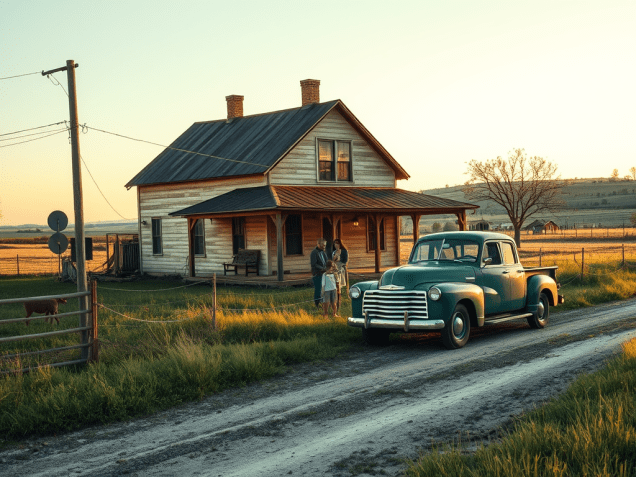
When I look back on my childhood, I’m struck by how much life changed. The changes happened between the time I was born and when I turned eight. We didn’t have indoor plumbing at first. Initially we hauled water from town in five gallon buckets. That was for drinking and cooking. In a big tank in the back of my dad’s truck, water was hauled for the livestock. Eventually water was found on the farm in a well far south of our house. Than ran pipe as far as possible. But, the water pipe stopped about twenty feet shy of our kitchen door. My parents couldn’t afford to run it inside. Every day, we carried buckets from the outdoor faucet to the house. This was still an improvement over hauling water all the way from town.

If you have ever heard of the ‘little brown shack out back.’ Well we had one. We used it even after water was found on the place. Because their wasn’t a bathroom in built in the house. It would be added later. We would walk a trail to the shack in the summer and winter. It wasn’t fancy built at all. It had yellow jackets nest high on the wall. It had a hook and eye lock to secure the door when you were inside. A wooden block turned to keep the door shut when you left. It was cold as ice in winter and hot as hell in the summer. And our company didn’t take to it. It would cut their visits short. And sometimes I wondered if that wasn’t my dad’s plan for having for so long to start with.

Around the same time, we got our first telephone. The line lay exposed down the center of the dirt road. It was shared on a party line with two other houses. Every time the road grader came, the blade cut the wire. We would wait weeks for the phone man to splice it back together. They buried it once, but the sandrock kept them from going deep. The grader still found it. Eventually, someone figured out how to run it four feet off to the side of the road. That man got a promotion—and passed away not long after. These were the everyday challenges of our farm life.

Electricity was another novelty. We had it most of the time. But if it went off during a storm, it was especially bad during a snow event. We would be without lights for a week or longer. They were also the threads that wove our family together. These challenges taught us the value of perseverance. They also brought the joy of shared triumphs.

Heat was another story. Before our fireplace was installed, a single stove in the living room was turned down at night to save propane. We woke up to breath clouds in the cold air before school. Summers weren’t much easier. With no air conditioning, the whole family slept in the living room on pallets. We threw every door and window open. This helped capture the breeze from the five-acre lake a quarter mile south. We’d even open the fireplace flue to pull in a cool draft. It sounds uncomfortable now.

Back then, it was more than just a living arrangement. It was a testament to the value of family closeness. Six kids, two parents, visitors, and dogs—living in one big indoor campsite every night. If you’ve never known family closeness, you’ve missed something truly special. It’s these moments that I look back on with nostalgia and a deep appreciation for the bond we shared.

My father raised American Quarter Horses, and our farm revolved around them. We only kept one stud at a time to avoid brutal fights. Mares were bred individually, often requiring long hauls to other states to introduce new bloodlines. Our horses went everywhere—rodeo circuits, calf-cutting competitions, and even television shows. One star from Gunsmoke, Buck Taylor, called about a horse. Another buyer phoned from New York City during the Garden Square Futurity. He called to thank my dad for the mare Molly. Molly had taken him to the finals. My dad didn’t like us talking about our customers because he valued humility over reputation. As a kid, I didn’t understand. Now I do.

I remember the early 1970s and how tight our family budget must have been. My dad would come home from his barbershop with sacks of horse feed loaded in the back of his truck. He’d park in front of the house. Then, he’d hoist a heavy sack onto his shoulder and walk nearly two city blocks. He’d go down a hill, across a pasture, and all the way to our barn. He had back and leg issues that made every step painful, but he refused to “waste” fuel in his truck.

At the time, I didn’t grasp how precious that gallon of gas was during the oil crisis of the 1970s. To me, it was just Dad doing what he always did. He worked hard. He quietly bore pain. He put his family and animals first. Only now do I understand it was more than thrift; it was discipline and determination passed down like an heirloom.

That simple act—carrying those sacks of feed instead of burning a gallon of gas—left a mark on me. It taught me that sacrifice, resourcefulness, and responsibility are not always loud or dramatic. Sometimes they’re a man. He is alone at dusk, carrying a heavy burden down a path. This happens because it’s the right thing to do.

Everything shifted when Dad took a job at a Girl Scout camp. Horses were sold off until only a few remained for us to ride. We moved to the camp and poured ourselves into cleaning trails, rebuilding facilities, and living outdoors. Yet Dad’s passion for horses never dimmed. We still attended auctions and brought home horses to train. One day, I spotted a skittish dun mare at an auction—Lady. I knew she’d been mistreated and asked Dad to buy her. With patience, grooming, and daily walks, she became the smoothest riding horse I ever had. Lady followed me everywhere without reins, just like a loyal dog. Later, bred to a stud sixty miles away, she gave birth to a colt with the same gentle spirit.

Those years formed me. They were a school of life. They taught me resourcefulness. They also taught patience. I learned how to read the quiet signals of both people and animals. We didn’t have much, but we had each other. And now, decades later, every time a cool breeze brushes my face, I remember those nights in the living room. The windows were open. I hear the sound of our horses in the pasture. These are proof that even the simplest moments can shape a lifetime. The lessons I learned from farm life continue to inspire me. They shape my perspective. I appreciate the value of patience, resourcefulness, and the importance of family.


By Benjamin GroffMedia© | benandsteve.com | ©2025

October 20th — A Day to Reflect on the Strength of Democracy in a Republic

1–2 minutes

October 20: A Day of Quiet Turning Points

Some days in history roar with drama. Others whisper their significance so softly we almost miss it. October 20 is one of those whispering days. Yet, it carries lessons about resilience. It also teaches about change and the long arc of progress.

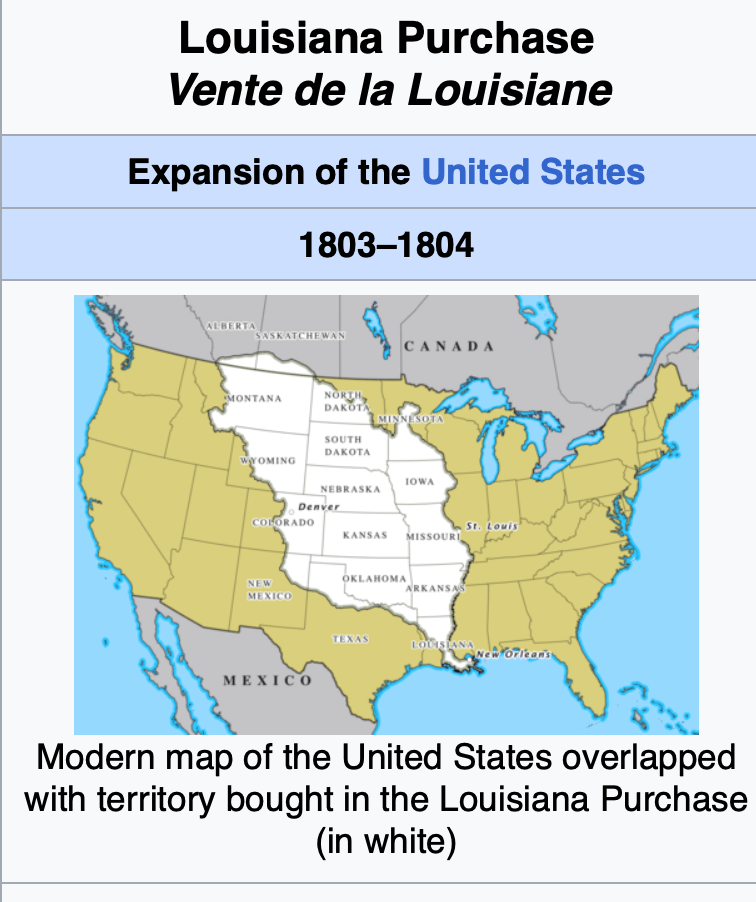
On October 20, 1803, the U.S. Senate ratified the Louisiana Purchase Treaty, doubling the size of a young America. It wasn’t just a land deal; it was a leap of faith in a still-unfolding national experiment. The deal shaped the destiny of millions who had not yet been born and transformed how people saw opportunity. That’s one perspective on October 20. It reminds us that big things often start quietly. They are inked onto paper while the world goes about its business.

Photo by Jacob Morch on Pexels.com

Fast-forward to October 20, 1973 — the “Saturday Night Massacre” during Watergate. The Attorney General and his deputy resigned rather than obey President Nixon’s order to fire the Watergate special prosecutor. It was a night of constitutional crisis, but also a night when individuals drew lines they would not cross. In retrospect, it became a defining moment of accountability, integrity, and public trust.

Even in culture, October 20 pops up. It’s the birthdate of artists, athletes, and ordinary people whose work changed lives. It’s also National Youth Confidence Day. It’s a chance to celebrate the courage of young people. They are forging their own paths, as each generation must.

Photo by Monstera Production on Pexels.com

So what does this all mean for us on October 20, 2025

Maybe it’s a nudge to honor the quiet decisions. It is about the unsigned papers and the moments of private courage. These shape our futures just as much as public fireworks. Maybe it’s a reminder to invest in tomorrow. Take the risk. Speak the truth. Double down on hope, even when nobody’s watching.

October 20 is not a “holiday” in the traditional sense. It is a hinge day. It is one of those unassuming points on the calendar. History reminds us that the choices we make today become the landmarks of tomorrow.


By Benjamin GroffMedia© | benandsteve.com | ©2025 

From the Plains to the Pavement: Agent Bill Johns’ Journey from the Wild West to Philadelphia’s Dark Alleys

4–5 minutes

Bill Johns: The Bureau’s Man in the 1940s

It was the 1940s, and the Bureau had just transferred Bill Johns to the Philadelphia office. He arrived with a reputation built out west. The cases there were more challenging. The distances were longer, and the suspects were meaner. Officially, he was sent to cover Oklahoma, Texas, and New Mexico. Unofficially, he’d become “the best investigating chicken thief agent in the West.” His fellow agents gave him this nickname with a wink.

But Bill Johns had investigated far more than stolen hens. His most significant case had been in Osage County, Oklahoma: three Indian women, each murdered after marrying into money. For nearly three years, Johns chased a trail of false alibis, hidden bank accounts, and hired killers. He and another agent narrowly escaped ambushes five different times. By constantly dropping low and drawing faster than the men who wanted them dead.

Johns wasn’t flashy, but he had something rare—an intuition that couldn’t be taught. He would size up a suspect the way a rancher sizes up a horse. He knew when someone was lying about a bloodstain on a shirt. He knew this the same way he knew when a horse trader was covering up a limp. He followed the tiny clues that led from stolen goods to the back rooms where the real deals happened. He also traced a murder weapon to the man who’d hidden it.

What the Bureau didn’t understand—and still doesn’t—is that this ability isn’t in a handbook. It isn’t taught at the Academy. It’s a gift, as fragile as it is powerful. Use it or lose it. And only a few men like Johns ever had it.

In Philadelphia, this instinct would serve him just as well. He found himself involved with city syndicates. He encountered labor racketeering and noticed spies slipping through the docks at night. The same gut feeling had kept him alive in Osage County. Now it helped him spot the double-talkers in the bars. It also identified the men who lingered just a second too long at a back door.

Johns became known for something unusual—he rarely needed his gun. He’d walk into a situation, lean against a doorway, and just talk. By the time he left, the suspect had revealed more than he intended. John had already secured the evidence. He was no saint. He wasn’t perfect either. Nonetheless, he was a quiet professional in an era when crime was changing. The country was changing too.

The Last Case in Philadelphia

It was a rainy October night in 1947 when Johns’ instincts jolted him awake. An informant had whispered about a shipment coming into the Delaware River docks. This shipment was not whiskey or smuggled textiles. It was microfilm from Europe that would compromise national security. By dawn, he was leaning against a warehouse door. He pulled his collar up against the mist. He watched the shadows move across the slick cobblestones.

Later, back at the Bureau’s office, his supervisor shook his head. “How’d you know?” Johns simply shrugged. He never talked about instinct. He never mentioned gifts. He didn’t say how he’d been listening to his gut since his days chasing killers in Osage County. But he knew this: it wasn’t about being the fastest shot or the toughest agent. It was about reading people, seeing the truth they were trying to hide, and moving before they did.

When the men finally appeared, Johns didn’t draw his gun. Instead, he stepped into the light. Placing his hands in his overcoat pockets. He spoke in the calm, level tone that had unnerved more suspects than handcuffs ever would. One man slipped, trying to hide a satchel, and Johns pounced on him. In seconds, the microfilm was in his hand. The men, rattled and unsure how he’d seen through their plan, dropped their smokes and bolted.

That was Bill Johns’ legacy — an unassuming agent who became legendary not for force, but for foresight. His name rarely made headlines. Still, his quiet successes became the stories younger agents told each other. They shared these stories when they needed courage. Stories that remind you some people are born to find the truth, no matter where it hides.

Even today, his old case files are dusty, brittle, and overlooked. They still read like short stories of the American frontier meeting the modern city. Behind each one is the same simple truth. There’s no substitute for knowing people. No training can replace genuine instinct.


By Benjamin GroffMedia© | benandsteve.com | ©2025 

About the Author:

Benjamin Groff is a former police officer and radio news anchor. He has hosted programs for CNN and ABC News affiliates in Colorado and Wyoming. His career in law enforcement began in 1980 and lasted more than two decades. This gave him firsthand insight into the criminal mind and public safety. Moreover, it provided him with an understanding of the human stories that often go untold. His writing draws on these experiences, blending street-level truth with a journalist’s eye for the bigger picture.


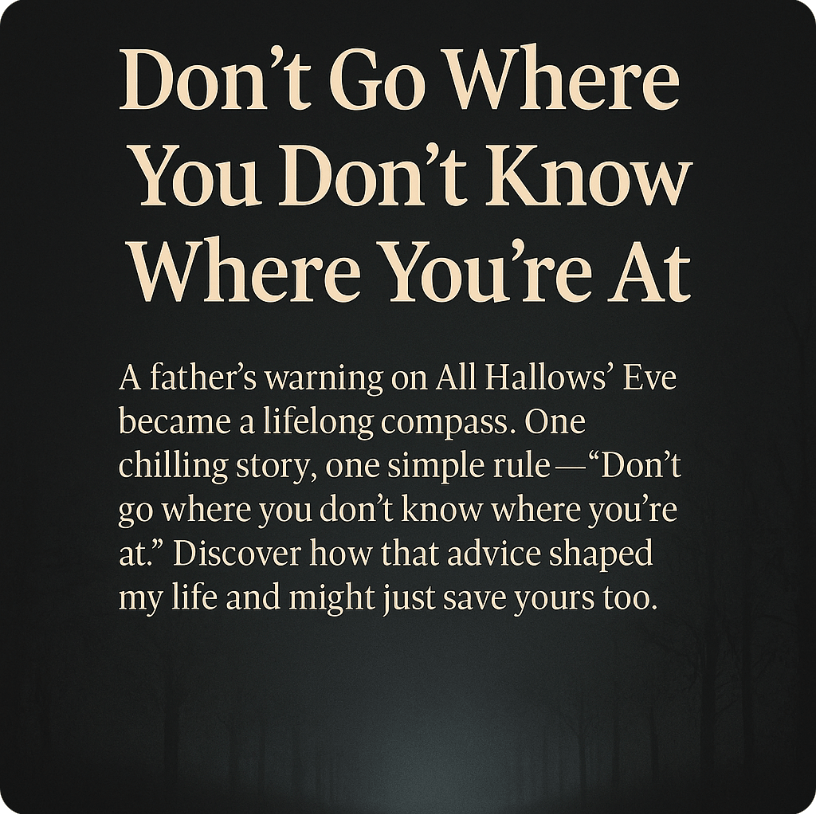
“Don’t Go Where You Don’t Know Where You’re At” — A Lesson from My Father

2–3 minutes

A Memory That Ignites Each Year

Every year when All Hallows’ Eve rolls around, I think about a specific night. I remember it vividly. It was when I was sixteen. I was getting ready to go out with friends—excited, dressed up, and ready for a night of harmless fun. As I reached for the door, my father stopped me with a hand on my arm.

He’d never done that before. I was the youngest of six children. By the time I reached my teens, my parents had weathered every imaginable crisis. Their only standing rule was simple: “Be safe and be home before daylight.” But that night was different. Dad’s grip was firm, his eyes serious.

He said quietly, “Look—your Uncle Bennie came upon a man whose head had been cut off and left on a dirt road near our house when I was about your age. They never found who did it.”

I froze. Uncle Bennie had passed away before I was born, so I never had the chance to ask him about it. Dad didn’t offer more details. He only mentioned that Bennie had called the deputies. Bennie told them everything he knew. Then he lived with that memory for the rest of his life.

My father’s next words have stayed with me for decades: “I just want you to be safe. Don’t go where you don’t know where you’re at.”

Those words became a rule for me, a compass I’ve carried ever since. If my gut or my soul told me something wasn’t safe, I backed away. That simple warning guided me through my teenage years. It also helped me during my law enforcement career. Instincts and situational awareness can mean the difference between life and death in that field.

Even today, I don’t know much more than that chilling story about the headless man. But my father’s advice has saved me countless times. It’s taught me that safety isn’t just about the rules of the road. Safety is not limited to the places on a map. It’s about trusting the quiet warnings within yourself.

I share this story with you because maybe it can help someone else, just as it helped me. We live in a world full of distractions, routes we don’t know, and situations that feel uncertain. If you find yourself heading into something that doesn’t feel right, listen to that inner voice. Step back. Choose another path.

Because sometimes, the oldest lessons are the truest: Don’t go where you don’t know where you’re at. Your instincts know the terrain long before your eyes do. And that wisdom—passed from a father to a son—can save your life, too.


By Benjamin GroffMedia© | benandsteve.com | ©2025 
Can Your Differences Bring Us Together?

1–2 minutes

What Difference Does It Make?

Photo by cottonbro studio on Pexels.com

What difference does it really make — who we are or who we love? We accept without question that some people like black hair, others like blondes, and some like redheads. Some are tall, some are short, some are in between. Yet history shows us how quickly an innocent difference can become a target.

Imagine if tomorrow there was an eruption of public hatred toward blondes. They dye their hair to avoid detection. Or if short people were suddenly ostracized, they try to stay inside except during “short hours.” Many people already camouflage parts of themselves—how they speak, dress, or behave—to stay safe in public. But not everyone can change.

That’s what today’s reflection is about: What do we do with differences that can’t be hidden or changed? When does society’s discomfort become cruelty? Should people who can’t “blend in” be cast aside, alienated, or worse? We’re at our best when we challenge these questions. We must remind ourselves that our shared humanity matters far more than our differences.

A Hopeful Call-to-Action

If differences can be used to divide, they can also be used to unite. Every person you meet carries something unique—something you can’t see at first glance. Rather than asking people to blend in or hide, we can create a world where authenticity is safe and celebrated. Each act of kindness is important. Each open conversation contributes to understanding. Each refusal to judge by appearance fosters inclusivity. These are steps toward a society that values humanity over uniformity. The question isn’t how we can camouflage ourselves—it’s how we can build a place where no one needs to.


By Benjamin GroffMedia© | benandsteve.com | ©2025 
FALL INTO benandsteve.com THIS AUTUMN

1–2 minutes

🍂  You’re in the Right Place This Fall! 🍂

As autumn rolls in, we want to thank every one of you for stopping by BenAndSteve.com. By coming here, you’ve chosen more than just another news site. You’ve found a space where information, perspective, and community come together.

Here you’ll find a variety of voices, stories, and updates. Plus, it’s a place to connect and share opinions. You can also see how others think. Whether you’re here for fresh news, or thoughtful commentary, we’re proud to offer you fresh news every day. We also give thoughtful commentary. You will find a little inspiration here too.

So grab your favorite fall drink, explore the latest posts, and join the conversation. We’re thrilled you’re part of our growing community—and this October is only the beginning of what’s ahead!


By Benjamin GroffMedia© | benandsteve.com | ©2025 

The Forgetful Pilot – Where Passengers May Land On Take-Off Like It Or Not!

2–3 minutes

The Forgetful Pilot And His Bruised Passengers

Most airline pilots have checklists that go something like this: flaps set, fuel topped, doors secured. But not Captain Earl “Forgetful” Finley. Earl had a knack for skipping one step in particular: buttoning down the rear cargo door.

The incident was first noticed in Burnt Corn, Alabama. The Hicks family boarded Earl’s plane for what they thought would be a scenic hop to Birmingham. At takeoff, the nose lifted off the runway. The rear door gave way. The Hicks family scooted right out like biscuits from a greased pan. They landed unhurt on the asphalt, dazed but alive, while their suitcases rolled to a neat stop beside them. Earl circled back, tipped his cap out the cockpit window, and hollered:

“Y’all hold on better next time!”

Word of Earl’s absent-minded ways spread, but strangely enough, passengers kept buying tickets. His next mishap was in Turkey, Texas. Earl had agreed to carry a package to Pie Town, New Mexico. He also agreed to let a fellow named Harlan Sanders (no relation to the famous chicken man) ride along. At about 1,000 feet, Harlan and the packages slid right out the back. Earl didn’t even flinch. By then, he’d become so used to it he was strapping parachute windshirts onto the parcels. Sanders walked away dusty but unharmed, grumbling about never getting frequent flyer miles.

What began as chaos somehow turned into a spectacle. Passengers developed a knack for bracing themselves near anything bolted down. Earl’s flights became less about getting somewhere. They became more about the thrill of not falling out. Photographers started gathering at small airports, cameras ready to capture people and parcels tumbling skyward. Some passengers even leaned into the fame—hollering and waving as they slid into the blue.

Captain Earl never made it big with the airlines. Yet, he sure made history as the only pilot whose passengers packed harnesses, not snacks.

When asked why he never bothered to secure the back gate, Captain Earl’s answer was as confident as it was ridiculous:

“If I close that gate, the wind can’t blow straight through, and that drag slows me down. With it open, the air just zips right on out the back and keeps me flying faster. Shut it tight, and I’d lose two hours off my daily routes!”


By Benjamin GroffMedia© | benandsteve.com | 2025 

The Man Who Fell Asleep One Night-Dreaming He Became A Sheriff In The Wild West.

He awakes the next morning to find he is still there.

2–3 minutes

Sheriff Without a Gun

Harold was an ordinary man living in a small house on the edge of town. He spent most of his evenings quietly—reading, cooking for one, and watching old Western movies before bed. One night, after drifting off in his recliner, Harold dreamed he was a cowboy riding across the dusty plains.

When he awoke the next morning, he nearly fell out of bed. The world outside his window was no longer his quiet backyard—it was a wild west frontier town. And tied right outside his kitchen door stood a horse named Gus, saddled and ready. Harold blinked twice, rubbed his eyes, and muttered,

“Well… this is new.”

Stepping outside, he was greeted by the townsfolk calling him Sheriff. Sheriff Harold, that is. The twist? He wore no gun.

“Best sheriff we ever had,”

they cheered,

“because you don’t bring trouble.”

But soon, trouble found them anyway. A group of gunslingers rolled into town, looking to cause mayhem.

Harold had no firearm to fight back. Thinking fast, he filled the pockets of his vest with smooth river rocks. When the gunslingers strutted down Main Street, Harold let fly. Whack—right in the shin—crack—one to the forehead. Pebbles rained down like hail until the bandits doubled over, tears streaming, too humiliated to continue.

Harold yelled –

“You get the hell out of here and don’t come back!”

They scrambled for their horses, chased out of town by the rock-throwing Sheriff himself.

From that day on, Sheriff Harold became a legend. The townsfolk swore he was the greatest Sheriff they’d ever known. This wasn’t because he outgunned the bad guys. It was because he outsmarted them. Every morning, Harold would pat Gus on the neck and tip his hat. He remembered that sometimes the simplest tools—a rock, a clever mind, and a little courage—are enough to keep the peace.

But somewhere else, in another world, Harold lay still. His daughter sat quietly at his bedside, holding his hand, eyes brimming with worry.

“Do you think he’ll ever regain consciousness?” 

She asked the doctor softly.

The doctor shook his head. 

“I don’t know. Stroke victims sometimes choose to stay where they are. Maybe Harold is better off living where he is. In that other place, he’s strong and needed. He is riding tall as Sheriff.”

His daughter squeezed his hand, whispering through tears, 

“Then I hope he knows we’ll always be proud of him—here, or there.”

And in the world of his dreams, Sheriff Harold tipped his hat, smiled, and rode Gus into the golden horizon.


By Benjamin GroffMedia© | benandsteve.com | ©2025 

Exploring Viola’s Pumpkin Patch: A Family Adventure

1–2 minutes

https://media.phoenixwithkids.net/spai/q_glossy%2Bret_img%2Bto_auto/www.phoenixwithkids.net/wp-content/uploads/2023/08/img_2669-2048x1536.jpg

Every autumn, Viola’s Pumpkin Patch in Flagstaff, Arizona, turns the crisp October air into pure sunshine, even on cloudy days. Families gather among towering stacks of orange gourds. Kids wander through a cute little hay-bale maze. They also take on a friendly pumpkin scavenger hunt. Dads dramatically debate which pumpkin is the “perfect one.”

What really steals the show, though, is the pumpkin-painting nook. A staff member—always wearing a bright smile—guides little ones in creating wild faces and wacky designs. One three-year-old proudly painted a blue-and-yellow “monster” pumpkin so creatively that adults formed a temporary gallery to admire the work.

By mid-morning, the patch becomes a chorus of giggles. Kids chase painted gourds. Families capture silly selfies. Grandparents weave through pumpkins with apple cider in hand. It’s not just a fall outing—it’s a shared moment of joy.

For many people, including me, it’s the perfect reminder. Even amidst daily tasks, creativity can lift your heart. Laughter and seasonal fun also have this effect. October at Viola’s only lasts a few hours. Still, the warmth it leaves behind stays with you through the whole year.


By Benjamin GroffMedia© | benandsteve.com | ©2025 
Top Financial Worries in 2025: What You Need to Know

2–3 minutes

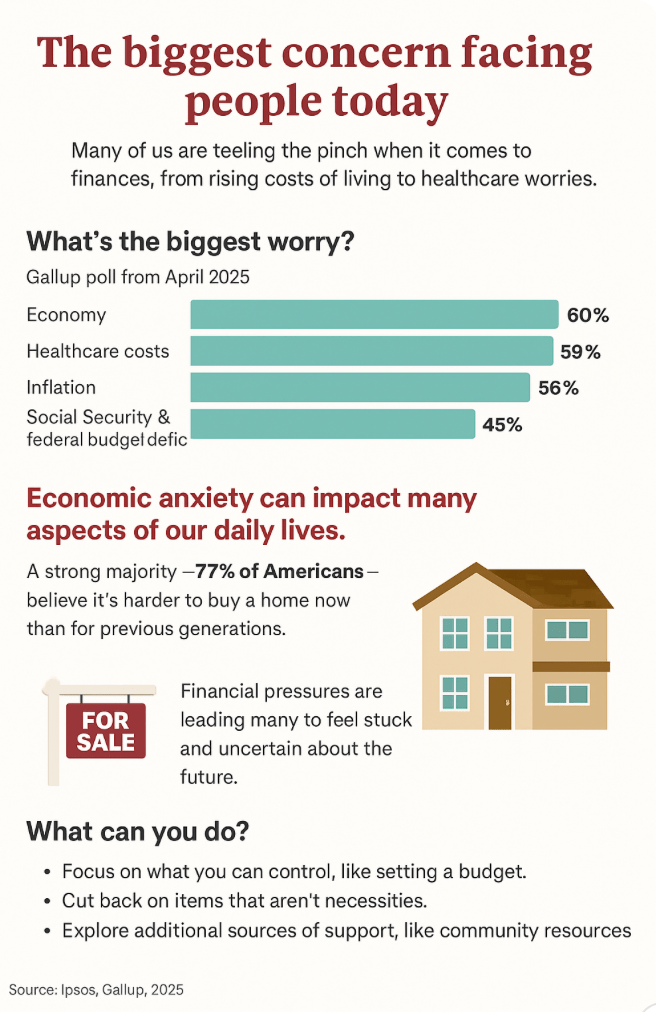
The Biggest Concern Facing People Today

We live in a world filled with constant change and uncertainty. One theme keeps bubbling to the surface no matter where you look: economic anxiety. Money-related worries top the charts of what keeps people awake at night. These concerns range from the price of groceries to the dream of owning a home.


Gallup poll from April 2025 found that:

  • 60% of Americans worry “a great deal” about the economy.
  • 59% lose sleep over healthcare costs.
  • 56% are stressed about inflation.
  • Nearly half worry about Social Security and the federal budget deficit.

Globally, it’s no different. According to Ipsos, the leading concerns include inflation (30%)poverty (29%)unemployment (28%), and corruption (26%).

To make matters feel even heavier, 77% of Americans believe it’s harder to buy a home today. They feel it’s more difficult than it was for past generations. That frustration touches nearly every household—young people trying to buy, older adults trying to downsize, and families squeezed in between.


Staying together through rough times!

This isn’t just about numbers—it’s about people. Rising rent, higher grocery bills, climbing medical costs—each of these chip away at security. Families cut corners, young people delay milestones like marriage or kids, and many retirees wonder if their savings will last.

Economic stress also spills into mental health, relationships, and communities. When you feel like you’re always one paycheck away from disaster, it’s hard to focus on thriving—you’re stuck surviving.


While we can’t solve inflation or rewrite housing policy alone, there are small, powerful steps we can take:

The Mysteries of Financial Security.
  • Focus on control: Create a budget and stick to it. Even small wins matter.
  • Cut back strategically: Trim unnecessary expenses, but give yourself permission to keep the things that bring you joy.
  • Tap into resources: Community groups, food banks, and local organizations often have programs to ease the burden.
  • Stay connected: Talking about financial stress reduces shame. You’re not alone.

The economy, healthcare, inflation—they’re big, intimidating problems. But your response doesn’t have to be. Focus on what you can control. Find support in your community. Remember: sometimes resilience comes not from having more, but from facing less with wisdom, planning, and hope.


By Benjamin GroffMedia© | benandsteve.com | ©2025 
Where the Barrel Cactus Sits: Visiting Chiawuli Tak, Arizona

1–2 minutes

Welcome to Chiawuli Tak, Arizona—a sun-drenched speck of a census-designated place nestled in Pima County. The town had just 48 residents in 2020. It has risen to an estimated 112 today. It’s the town where “small population” doesn’t even start to cover it. (And yes, that growth rate of about 6.7% annually is basically like adding a few family reunions per year.) (1)


Once upon a Sunday, locals cheered when a tumbleweed gently tapped on the general store window. They marveled at it, of course. The nearest neighbor hosts alone can use the company. With a population density of around 20 people per square mile, it’s quieter than most people’s living rooms. If you shout “Howdy!” in Chiawuli Tak, you’ll hear your own echo. You also hear the echoes of three generations of family dogs responding in kind. (2)


Despite its tiny size, 19 households call Chiawuli Tak home. Nearly five people per house live there on average. There are a handful of single dads. They are brimming with dad jokes. There are also single moms who know the power of multitasking. Enough cousins exist to start a family band. Everyone’s related, and everyone knows the town gossip by breakfast. (3)


The name Chiawuli Tak comes from the O’odham language and means “the barrel cactus sits.” It is the only town in America deliberately named after a cactus that sat down. This cactus thereby became the most laid-back plant in the desert. (4)


Chiawuli Tak reminds us that it doesn’t take big cities to tell good stories. Sometimes, you just need a handful of folks, a trusty barrel cactus, and a whole lot of unexpected charm. So raise your morning coffee high. Do it for the towns that make you smile. These towns only show up on very sparse maps.


By Benjamin GroffMedia© | benandsteve.com | ©2025 

October 10 in History: Key Milestones and Cultural Impact

3–4 minutes

Oct 10th a good day for history
How history can pile up on any day of the year.

How did we arrive at our current state? It is a question a lot of people are asking. It didn’t happen all at once. Getting to where we are, was forever in the making. Before anyone alive today was here. There have been people making decisions, some not so great. Life happens. It is a popular saying for some people. And as you can tell through this date in history. October 10th was a great day for history to be set. It doesn’t explain everything that has happened. But it does give one an idea of how history can pile up on any given day.

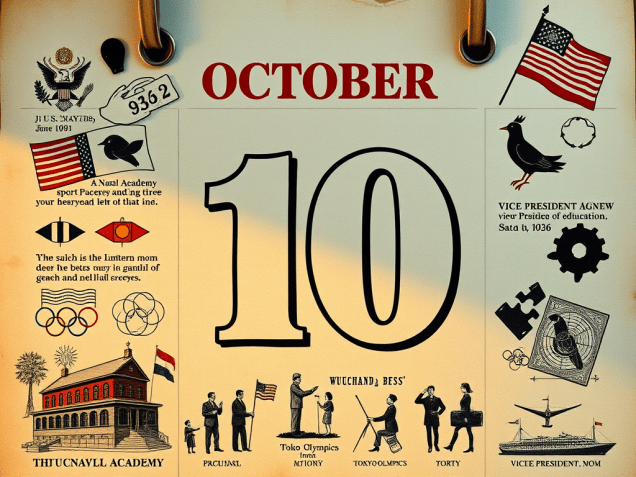
Here’s an evocative image of a calendar marking October 10. It serves as a visual prompt for a day rich in history. This day includes milestone events and global observances.

  1. 1845 – U.S. Naval Academy Founded
    • In Annapolis, Maryland, the Naval School opens with its first class of 50 midshipmen. This event lays the foundation for the modern U.S. Naval Academy.(1)
  2. 1911 – Wuchang Uprising Ignites Revolution This bold move sets the stage for the fall of China’s Qing dynasty. It also leads to the emergence of the Republic of China.(2)
  3. 1935 – ‘Porgy and Bess’ Debuts on Broadway
    • George Gershwin’s groundbreaking opera, featuring an all-Black cast, premieres to widespread acclaim.(3)
  4. 1964 – Tokyo Olympics Start: A Global Broadcast
    • Making history, these Summer Games are the first to be televised live worldwide.(4)
  5. 1973 – Vice-President Agnew’s Resignation
    • Spiro Agnew steps down amid tax evasion charges, a rare and dramatic political moment in U.S. history.(5)

October 10, 1973: A Domino That Changed the Presidency

On October 10, 1973, U.S. Vice President Spiro T. Agnew resigned in disgrace. He pleaded no contest to tax evasion charges. These charges stemmed from a bribery scandal dating back to his time as Maryland’s governor. A sitting Vice President had never stepped down under criminal accusations before. This event sent shockwaves through American politics.

The resignation created an immediate power vacuum. Under the 25th Amendment, passed just six years earlier, President Richard Nixon was capable of nominating a new Vice President. His choice was Michigan Congressman Gerald R. Ford, a steady Republican leader respected across party lines. Congress confirmed him in December 1973, setting in motion a sequence of events no one predicted.

Only months later, the Watergate scandal deepened. Nixon’s credibility unraveled under the weight of investigations into the cover-up of the break-in at the Democratic National Committee headquarters. With impeachment looming, Nixon resigned on August 9, 1974—the first U.S. president to ever do so.

In that instant, Gerald Ford became president. He told the American people in his swearing-in speech: 

“Our long national nightmare is over.” 

Ford’s ascent to the Oval Office was accidental. He became the only person to serve as both Vice President and president without being elected to either office.

Looking back, it’s clear that Agnew’s resignation on October 10 wasn’t just a scandal. It was a turning point in American history. Had he remained Vice President, Agnew—not Ford—would have been next in line when Nixon resigned. The nation, already reeling from Watergate, faced the reality of a president tainted by his own corruption charges. Instead, Ford’s calm, if brief, presidency offered a bridge back to stability.


👉 OCTOBER 10, 1973 stands as proof of how a single resignation reshaped the presidency. It altered the line of succession. It changed the course of American political history.

October 10 is more than a date—it’s a living mosaic of pivotal moments, human emotion, progress, and remembrance. It reflects how history shapes us and how we, in turn, continue writing it.

By Benjamin GroffMedia© | benandsteve.com | ©2025 
Leif Erikson Day: Honoring Exploration and Heritage and World Post Day Both From A Very Long Time Ago – Especially Now!

2–3 minutes

October 9 is more than just a date on the calendar. It’s a day rich with meaning. The day celebrates global communication. It also honors the spirit of exploration. Here are two powerful ways this day reminds us of human connection:


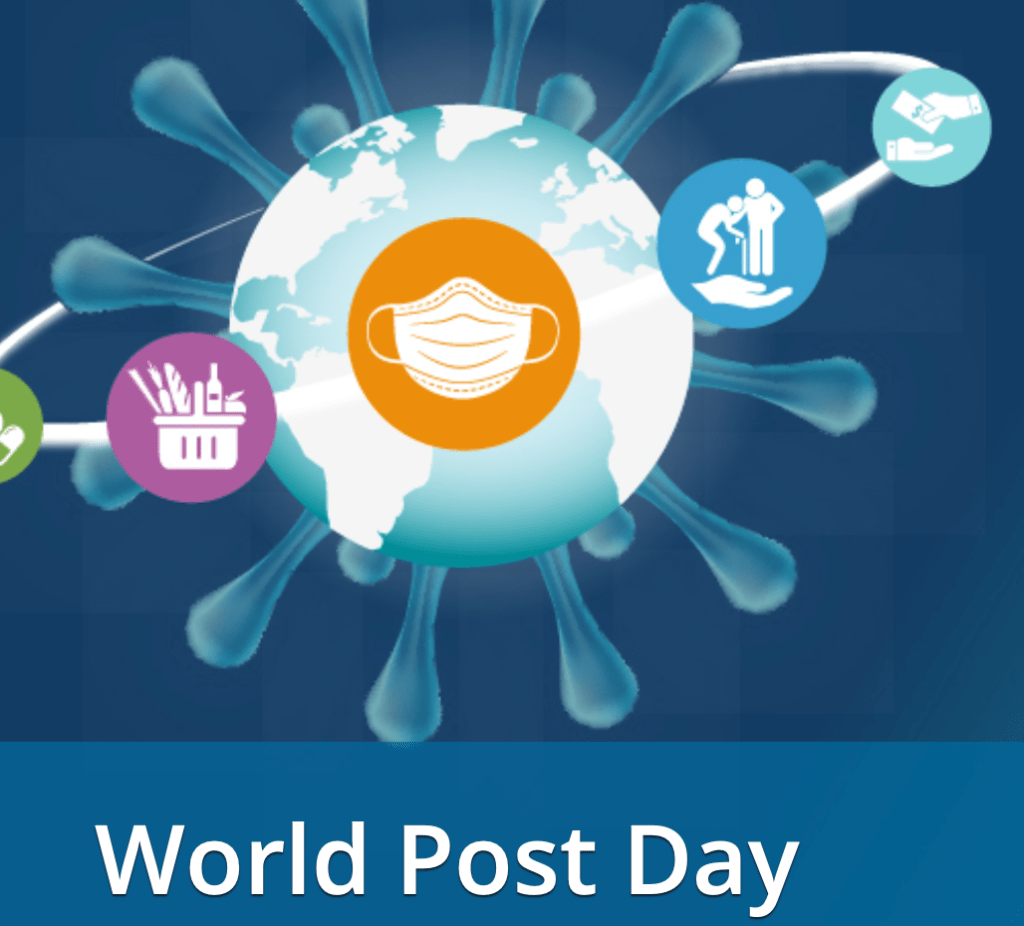
In 1874, the Universal Postal Union (UPU) was founded in Switzerland. This event marked the beginning of the modern era of global communication. Today—World Post Day—we honor the postal service’s vital role in connecting communities, families, and hearts across the globe. Post offices celebrate with stamp exhibits, open houses, and even letter-writing competitions for young people. (1)


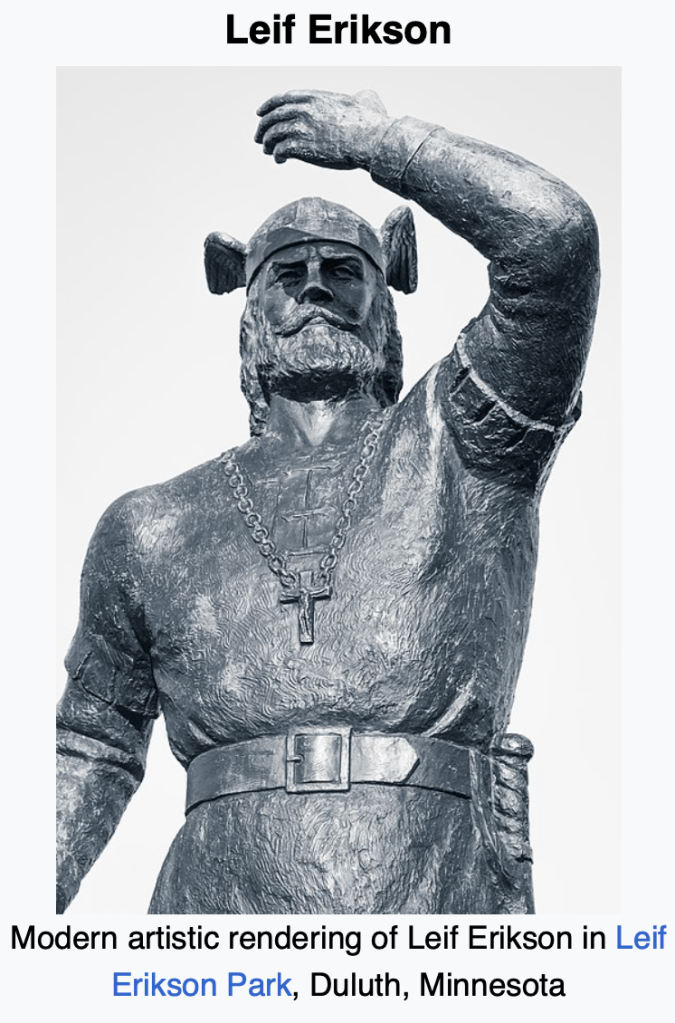
Leif Erikson Day is also celebrated today. This day honors the Norse explorer. He is believed to be the first European to reach North America. Established in the early 20th century and federally recognized in the U.S. in 1935, the day is especially cherished in communities of Nordic heritage. It’s a celebration of bravery, curiosity, and the timeless call of new frontiers.(2)

In 1929, the Wisconsin Legislature passed a bill to make 9 October “Leif Erikson Day” in the state. In the years after, several other states adopted laws to celebrate the day.[81] In 1935, legislation was introduced to the United States Congress requesting federal observance of the day. Before the legislation was passed, it was amended so that the observance would only occur in 1935. [82]  Which it was, after a proclamation that year by President President Franklin D. Roosevelt).[83] In future decades, many attempts to pass legislation were unsuccessful. They sought to have Leif Erikson Day proclaimed annually by the president.[84]Proponents eventually succeeded. In 1964, the Congress authorized and requested the president to proclaim 9 October of each year as “Leif Erikson Day”.[19]In the years since, each president has issued an annual proclamation calling for observance of the day.[85]. (3)


These historic observances brought to mind a personal story I experienced just last weekend:

Visiting the grocery store, I ran into a long-forgotten neighbor—someone I’d only exchanged waves with in passing. We chatted by the fruit stand for several minutes, sharing news, laughter, and even some life advice. When I left, I carried more than groceries. I carried renewed warmth. It was a reminder that connection doesn’t have to be epic to be meaningful.


  • Send a letter or thank-you note—traditional or digital. Let someone know how much they matter.
  • Reach out to someone you haven’t spoken to in a while. A simple chat can rekindle connection.
  • Think about exploration—big or small. Whether learning something new, trying a recipe, or visiting a new place, celebrate the courage that brought you there.

On this October 9, let’s honor our past. Let’s look ahead with open hearts. We will celebrate the small connections that make life rich and whole. Especially if countries around the world are shipping to America again. If not, keep an eye on history. It happened once. It will happen again. Maybe.


By Benjamin GroffMedia© | benandsteve.com | ©2025 

The Healing Impact of Simple Acts: A Hug Can Change Everything

2–3 minutes

The Hug That Changed Everything

Mina at the Farmer's Market
Mina hugging at the Market

It was about five weeks after my back surgery when Steve and I went shopping at our farmers’ market. Normally, Saturdays are our day, but since he had volunteered the day before, we made our visit on Sunday instead. That simple change in schedule turned into something unexpected and heartwarming.

We ended up in the checkout lane of one of our favorite “checkout girls,” as we call her. Mina. She hadn’t seen me since before my surgery, and when she spotted us, her face lit up. She came running from behind the register. She wrapped her arms around both of us and hugged us tight. It felt like a son coming home from college after a long absence. She even insisted we give her our address so she can invite us to a family event she was planning. We’re still not sure what event it will be, but the invitation itself felt like a gift.

That hug reminded me of something simple yet profound. It showed the power of being openly accepting. Let people into your life regardless of who they are, what they look like, or where they come from. In Mina’s hug, I felt seen, valued, and welcomed back into the community.

It brought to mind another story—one shared with me for this blog.

It was 3 a.m. in a quiet hospital corridor when a young musician, newly diagnosed with leukemia, sat in fear and loneliness. The sterile lights and hum of machines gave her no comfort. She cried quietly, believing no one noticed.

But someone did.

A nurse named Ben saw her distress and asked, “Are you okay?” He didn’t prescribe medicine or adjust a machine—he offered a hug. That single gesture, simple as it was, gave her strength. It reminded her she wasn’t just a patient but a person worth comforting. She later said that hug stayed with her long after the treatments, even into remission.


Kindness has a transformative power. It’s impactful whether shown by a nurse in a hospital or a cashier in a farmers’ market. It can change moments and sometimes lives. We often think it has to be grand or costly. The truth is, the simplest acts—a hug, a smile, an invitation—can ripple far beyond what we imagine.

Mina’s hug will not make the news. Nurse Ben’s probably didn’t either. But for the people who received them, they became unforgettable.


  • When was the last time a small act of kindness made a real difference in your day?
  • Have you offered something that felt ordinary to you but has meant the world to someone else?
  • What small kindness can you extend today to be someone’s “Mina” or “Nurse Ben”?

Life is full of struggles and invisible battles, but kindness—especially when it surprises us—has the power to heal. A hug. A smile. An invitation. They seem small, but they carry extraordinary weight.

You never know whose burden you’ll lighten or whose courage you’ll restore. Sometimes the smallest things are the biggest miracles. And without even realizing it, you are the miracle-giver.


By Benjamin GroffMedia© | benandsteve.com | ©2025 

The Man Who Saved Himself The Day All Odds Were Against Him

1–2 minutes

Excerpt: The Man Who Saved Himself

Digital Illustration

I often go back through the archives and reread old stories I reported on. Some are small, dusty pieces that barely made a ripple. Others grab you by the collar and refuse to let go. This is one of those stories.

On a summer day in 1993, construction worker Donald Wyman, 37, found himself trapped. He was in the woods of Jefferson County, Pennsylvania. A fallen tree had crushed his leg so severely that he couldn’t free himself. After an hour of pain and helpless screaming, Wyman realized time was running out.

With no other choice, he made a tourniquet out of a shoelace and a wrench from his power saw. Then, with a courage most of us can barely imagine, he amputated his own leg. Using a seven-inch pocketknife—cutting through muscle, skin, and nerves to seize his survival.

Digital Illustration

Badly wounded, he dragged himself to his bulldozer, and drove—bleeding—to his pickup. Once in his truck he managed to reach a neighbor’s farm half a mile away. The neighbor, John Huber, called rescuers, who later found Wyman’s leg still pinned under the tree, boot and all. Thanks to his grit and quick medical response, Wyman survived and was upgraded from critical to stable within days.

Had he hesitated, his story would have been reduced to a one-paragraph obituary in his hometown paper. But Wyman wasn’t a victim—he was a survivor. He did what had to be done.

And that’s the lesson. You may never face a tree crushing your leg. Yet, you may face toxic relationships. You might meet negative influences or habits that hold you back. Sometimes survival means cutting away the very thing that’s dragging you down. You may face a country that has appeared to have turned against you. It won’t be easy. It may hurt. But in the long run, it can save your life—so you can live fully with those you love.

Be your own Wyman. Write your own survival story.


By Benjamin GroffMedia© | benandsteve.com | ©2025