Speeding Into Mortality – A Story About One Land Speed Crew And It’s Driver’s Impermanence

2–3 minutes

A driver aimed to set a land speed record. He was going 283 mph during a racing event at Utah’s famed Bonneville Salt Flats. He died August 3rd, 2025, after losing control of his rocket-like vehicle called the Speed Demon, organizers said.  The team had got detoured due to traffic lanes being improved. They and others would arrive late to the event.

Driver Chris Raschke

Driver Chris Raschke lost control about two and a half miles into a run. He was treated by medical professionals at the scene, but died from his injuries. The Southern California Timing Association has organized the popular land-speed racing event. This event is known as “Speed Week” and has been organized since the late 1940s. 

For decades, the flat, glasslike white surface has drawn drivers from all over. They seek to set new land speed world records. Motorcycle and car fans come to watch. The salt flats are a remnant of a prehistoric lakebed. They are about 100 miles (160 kilometers) west of Salt Lake City. They have also been a backdrop for movies like “Independence Day” and “The World’s Fastest Indian.”

Read the full story here…

There is a question to be answered; why wasn’t there something soft for the man to land on? Case in point, a bouncy house, there is something soft. It would need to be ten or twenty fold. So, when his car popped off course, it would have bounced around the desert without killing anyone. Which is obvious to anyone looking at the desert.

For decades, people have used the flat, glasslike surface at Bonneville Salt Flats. It is located 100 miles (160 kilometers) west of Salt Lake City. They use it to set speed records, sometimes topping 400 mph (644 kph). Speed Week has long been a draw for motorcycle and car fans.

Raschke, 60, drove a streamliner. This long, narrow, aerodynamic car was made to run at high speeds and was known as the Speed Demon. He had worked in motor sports for more than four decades.

According to the Speed Demon racing team’s site, Raschke worked at the Ventura Raceway in the early 1980s. He raced 3-wheelers and cars in the mini stock division. Raschke learned to fabricate and keep race cars when working with an acclaimed engine builder. He later became a driver for the Speed Demon team. 

Keith Pedersen, the association’s president and Speed Week race director, said Raschke was a respected driver within the racing community. He also worked for a company that makes fasteners for race cars.

“He is one of the big ones. He had done all sorts of racing,” Pedersen said.

The Race Week event began on Saturday and runs through Friday. Are you in The Phoenix metro area and want to see vehicles passing the set speeds. All you have to do is drive on any of its freeways. And be safe!

To read the original report from visit here

The Anatomy of a Shooter – Part Five: What We Can Actually Do About It

“Monsters aren’t born overnight. They’re made—in silence, in shadows, in places we refuse to look.”

By Benjamin GroffMedia© | benandsteve.com | 2025 Truth Endures©

3–5 minutes

Part Five: What We Can Actually Do About It

Let’s get one thing straight:
Mass shootings aren’t random.
They’re predictable.
Not in the “we know when and where” way. It is predictable in the “we’ve seen this play before” way. And we’ve seen it enough to know how it ends.

So the question becomes:
What do we do now—actually do?

If all we’ve got are thoughts, prayers, and hashtags, then outrage will burn out in a news cycle. We’re just spectators in someone else’s tragedy.


Enough With the Helplessness

It’s easy to feel like there’s nothing we can do.
But that’s a lie we’ve been sold to stay comfortable.
The truth is, we can’t stop every shooting—but we can reduce them.
We can spot the signs earlier.
We can intervene before someone crosses that line.
And yes, we can have uncomfortable conversations about guns, mental health, and social breakdown without turning it into political theater.

But first, we have to stop pretending we’re powerless.

Photo by MART PRODUCTION on Pexels.com

Real Things That Actually Help

Here’s a short, imperfect list. Not theory—practice.

🔹 1. Speak up—even when it’s awkward.

That kid, coworker, or neighbor who’s spiraling? Say something. Not on Facebook. Not behind their back. To someone who can act. Don’t wait until it’s too late.

🔹 2. Take threats seriously.

If someone is joking about violence, don’t assume they’re kidding. Shooters often telegraph their intentions—sometimes with neon signs.

🔹 3. Support red flag laws that work.

Yes, they’re controversial. But when implemented carefully, they’ve saved lives by allowing courts to temporarily remove firearms from people in crisis.

🔹 4. Don’t give platforms to the shooters.

No names. No manifestos. No fame. Let them fade into anonymity—don’t let them become anti-heroes.

🔹 5. Build better reporting systems.

We need clear, safe ways to report dangerous behavior—at schools, jobs, online—and a system that doesn’t bury it in bureaucracy.

🔹 6. Reinvest in human connection.

Isolation is gasoline for this fire. People with strong relationships, support systems, and a sense of belonging are less to fall into these dark holes. Community isn’t a luxury—it’s a safeguard.


Not Just a Policy Problem—A Culture Problem

Legislation matters. But culture matters, too.

We live in a society that celebrates violence, glorifies vengeance, and teaches boys that emotions are weakness.
We scroll past pain and reward provocation.
We share stories of destruction more than recovery.
We confuse attention with validation.

We can change laws. But until we change us, the cycle will continue.


Final Thought: The Story Isn’t Over—Unless We Let It Be

Photo by Mikhail Nilov
on Pexels.com

This five-part series wasn’t meant to explain every angle of mass shootings.
It was meant to start a conversation. To take you out of the numbness and into the uncomfortable places where change begins.

We don’t need heroes.
We need people who are willing to pay attention, speak up, and give a damn.

Because we’re not just analyzing shooters here.

We’re deciding what kind of society we want to live in.

Closing Note to My Readers

Thank you for walking with me through this five-part series.
I know it hasn’t been easy to read—hell, it wasn’t easy to write. But maybe that’s the point.

This isn’t just about shooters.
It’s about all of us.
What we tolerate. What we ignore. What we pretend not to see until it’s too late.

My hope is that these words spark more than discomfort.
Maybe they spark reflection. Maybe action. Maybe one conversation that changes something.

We want a world where mass shootings stop becoming headlines. To achieve this, we can’t just sit back and consume the story.

We have to be part of rewriting it.

—Benjamin Groff

About the Author:

Benjamin Groff is a former police officer and radio news anchor. He has hosted programs for CNN and ABC News affiliates in Colorado and Wyoming. His career in law enforcement began in 1980 and lasted more than two decades. This gave him firsthand insight into the criminal mind and public safety. Moreover, it provided him with an understanding of the human stories that often go untold. His writing draws on these experiences, blending street-level truth with a journalist’s eye for the bigger picture.

CELEBRATION OF LIFE ANNOUNCED FOR COUNTRY LEGEND JEANNIE SEELY

Jeannie Seely’s 5,398th Opry Show” Set for August 14 at Grand Ole Opry House

1–2 minutes

A public Celebration of Life will honor Grand Ole Opry star and country music icon Jeannie Seely. It will be held Wednesday, August 14 at 10:00 a.m. CT at the Grand Ole Opry House in Nashville. Fittingly titled “Jeannie Seely’s 5,398th Opry Show,” the service will pay tribute to her unmatched legacy.

The event will be broadcast live on 650 AM WSM. It will also be available via livestream at: VIMEO. You can view it live there. Here.

Jeannie Seely passed away on Friday, August 1 at age 85, after complications from an intestinal infection. She held the record for most Opry appearances in history — 5,397 — a milestone unlikely to ever be surpassed.

Tributes from the Country Music Community

Many stars shared heartfelt words:

  • Ricky Skaggs: “She made nervous newcomers feel at peace. We can all take her lead and encourage the next generation.”
  • Pam Tillis: “She had grit, wit, talent—and she was cool.”
  • Larry Gatlin: “She was my champion and inspiration. I miss her already.”
  • John Anderson, Ray Stevens, Mark Chesnutt, Darryl Worley, Billy Dean, and others echoed similar admiration, love, and deep loss.

Legacy

Nicknamed “Miss Country Soul,” Jeannie Seely broke barriers for women in country music. She was the first woman to regularly host Opry segments. She is also a GRAMMY winner and a BMI-awarded songwriter. Additionally, she has been an Opry member since 1967. Her songs were recorded by legends. These include Merle HaggardDottie West, and Willie Nelson. She also shared the screen with Willie Nelson in Honeysuckle Rose. In 2022, she was honored for her historic number of Opry performances. A stretch of road near the venue was renamed the Jeannie Seely Interchange in 2024.

Instead of Flowers

Donations in Jeannie’s name are encouraged to pet-related charities or the Opry Trust Fundopry.com/about/opry-trust-fund

To start viewing events from Jeannie’s life, visit her website here. You can see the music she shared, events celebrated, and the people she loved.

The Anatomy of a Shooter – Part Four: Red Flags and Shrugged Shoulders

By Benjamin GroffMedia© | benandsteve.com | 2025 Truth Endures©

2–4 minutes

Part Four: Red Flags and Shrugged Shoulders

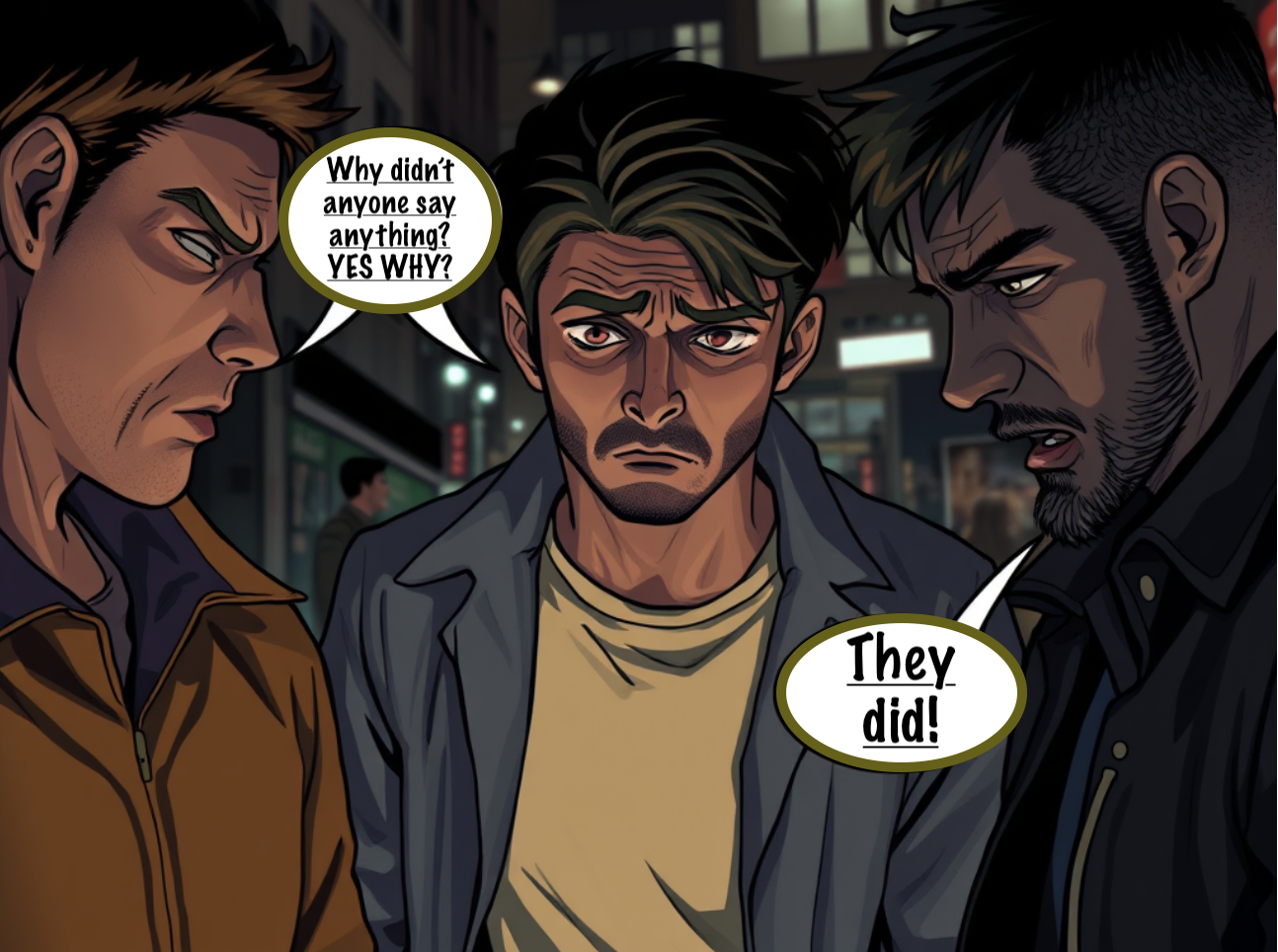
After every mass shooting, the same story unfolds.
News reports reveal the shooter made threats.
He posted disturbing content.
He stockpiled weapons.
He scared people.

And then the world asks, 

“Why didn’t anyone say something?”

Except someone usually did.

They said it quietly to a friend.
They reported it to HR.
They sent up a flare—but it fizzled in a system built to tolerate discomfort until it explodes.


“It Just Felt Off”

Human instinct is powerful.
We know when something doesn’t feel right—when someone is spiraling, simmering, or clinging to rage a little too tightly.
But we’ve been trained to doubt our gut.

Why?
Because:

  • We don’t want to overreact.
  • We don’t want to get someone in trouble.
  • We don’t want to look paranoid or mean or judgmental.

So we say things like:

  • “He’s just blowing off steam.”
  • “He’s always been like that.”
  • “It’s probably nothing.”

Until it’s not.


The Signs Were There. The Action Wasn’t.

Let’s break it down. Red flags can look like:

  • Obsessive talk about violence or past shooters
  • Extreme ideological rants
  • Sudden personality changes or withdrawal
  • Threats—direct or veiled
  • Obsession with weapons or martyrdom
  • Social media posts that scream “notice me”

But here’s the kicker:
Even when these signs are clear, most people don’t act.
And when they do? They’re often ignored, dismissed, or redirected through layers of bureaucracy.

“It’s not our jurisdiction.”
“We can’t do anything unless he acts.”
“He hasn’t broken any laws.”

We treat early warning signs like legal puzzles, not human lives.


Fear of the Awkward Conversation

Red flags aren’t just missed.
They’re avoided—because confronting someone is uncomfortable.

There are times when you have to take the bull by the horns.
  • What if I’m wrong?
  • What if they get mad?
  • What if it ruins my relationship with them?
  • What if it’s not serious?

So instead of leaning in, we back away.

And we let someone else deal with it.
Except, too often, there isn’t someone else.


The Burden of Hindsight

Afterward, the red flags look obvious.
Crystal clear.
Undeniable.

But by then it’s too late.
And we’re left with vigils, flowers, and questions we didn’t ask soon enough.


A Shift in Mindset

We need to stop treating red flags like rumors.
They’re signals. Warnings.
Opportunities to intervene.

That doesn’t mean we accuse people on a hunch.
It means we build systems and cultures that listen.
That act before a weapon is drawn, not after.

Because by the time the police tape goes up, the story’s already been written.


Coming Up in the Series:

Part Five: What We Can Actually Do About It
We’ve identified the patterns. We’ve seen the signs. Now it’s time to talk about real solutions—what works, what doesn’t, and why “thoughts and prayers” aren’t enough.

About the Author:

Benjamin Groff is a former police officer and radio news anchor. He has hosted programs for CNN and ABC News affiliates in Colorado and Wyoming. His career in law enforcement began in 1980 and lasted more than two decades. This gave him firsthand insight into the criminal mind and public safety. Moreover, it provided him with an understanding of the human stories that often go untold. His writing draws on these experiences, blending street-level truth with a journalist’s eye for the bigger picture.

The Anatomy of a Shooter – Part Three: The Myth of the Lone Wolf

“Monsters aren’t born overnight. They’re made—in silence, in shadows, in places we refuse to look.”

By Benjamin GroffMedia© | benandsteve.com | 2025 Truth Endures©

2–4 minutes

Part Three: The Myth of the Lone Wolf

Every time the news breaks, we hear it:
“He acted alone.”
And just like that, the story is framed.
One man. One moment. One monster. Case closed.

But here’s the problem:
It’s not true.
Or at least, it’s not the whole truth.


The Comfortable Lie

Calling someone a “lone wolf” is tidy. It makes the rest of us feel better.
It tells the public:

  • This was a fluke.
  • It couldn’t have been predicted.
  • There’s nothing we could’ve done.

And maybe, if we say it enough, we’ll believe it.

But in reality? Shooters rarely emerge from a vacuum.
They come from families. Communities. Schools. Workplaces. Chatrooms.
They leave trails of clues—behavioral, verbal, digital, emotional.

And more often than not, somebody saw something.


He Was Always Quiet… Until He Wasn’t

We’ve all heard it:

  • “He kept to himself.”
  • “He was a little odd, but polite.”
  • “He never really fit in.”

The thing is, these aren’t descriptions of a mystery. They’re descriptions of a pattern.

Withdrawn doesn’t mean harmless.
Quiet doesn’t mean invisible.

But we’ve trained ourselves to look away.
To shrug off disturbing comments.
To ignore that one guy at work who’s always simmering just below the surface.
Because to speak up feels awkward. And what if we’re wrong?

Well—what if we’re right?


Behind the Shooter Is a System That Failed

Lone wolf? No.
It’s more like a failure of the pack.

The system failed.

  • The family that didn’t ask questions.
  • The school that let him fall through the cracks.
  • The workplace that ignored his meltdown.
  • The internet forums that radicalized him.
  • The society that let him buy a weapon without blinking.

A shooter might pull the trigger alone, yes.
But the road there was crowded.


When “Alone” Is a Strategy

Photo by Danik Prihodko on Pexels.com

Let’s not forget—some shooters want to be seen as lone wolves.
It fits the fantasy: the avenger, the martyr, the misunderstood genius.
They want us to think no one could’ve stopped them.

Because if we believe that, then we stop looking for answers.
And they get to become a headline instead of a warning.


So What Should We Say Instead?

We should say:
“He was one part of a larger failure.”
“This wasn’t random—it was ignored.”
“This wasn’t a mystery—it was a message we didn’t read in time.”


Coming Up in the Series:

Part Four: Red Flags and Shrugged Shoulders
He gave off signs. He said things. He posted warnings. But no one did anything. Why? Because we’re experts at convincing ourselves it’s not our problem—until it is. That is next!


About the Author:

Benjamin Groff is a former police officer and radio news anchor. He has hosted programs for CNN and ABC News affiliates in Colorado and Wyoming. He writes for organizations from his home in Arizona. His career in law enforcement began in 1980 and lasted more than two decades. This gave him firsthand insight into the criminal mind and public safety. Moreover, it provided him with an understanding of the human stories that often go untold. His writing draws on these experiences, blending street-level truth with a journalist’s eye for the bigger picture.

The Anatomy of a Shooter – Part Two: The Internet Never Forgets (or Forgives)

By Benjamin GroffMedia© | benandsteve.com | 2025 Truth Endures©

2–4 minutes

Part Two: The Internet Never Forgets (or Forgives)

The shooter didn’t get here alone.
Not really.

Sure, maybe they sat alone in a bedroom. A basement. A breakroom.
But they weren’t isolated from influence—just the opposite.
They were plugged into a digital bloodstream that fed them exactly what they wanted, and everything they didn’t need.

Welcome to the echo chamber. Population: too many.


Where the Internet Becomes an Incubator

A lonely, angry person finds a tribe. This occurs somewhere between YouTube rabbit holes, toxic forums, and Reddit threads that should’ve been shut down years ago.

Not a real one. Not the kind that helps you move or calls when you’re sick.
But one that says, 

“You’re right to be angry.”
“They are the problem.”
“You don’t need help—you need revenge.”

That validation is addictive.

And the internet is the perfect dealer:

  • Algorithms push increasingly extreme content.
  • “Communities” form around hate, resentment, and fear.
  • Every post, every comment, every manifesto builds a narrative: You are justified.

From Scrolling to Staging

It starts with watching. Then posting. Then commenting.
Then, maybe, fantasizing.
And eventually, planning.

A shooter doesn’t always invent the blueprint.
They download it—literally. From forums that dissect earlier mass shootings like game film. From chat groups where people joke about body counts and praise past killers like fallen heroes.

Some shooters even leave behind digital footprints—manifestos, livestreams, final posts—as if they’re signing off from a sick performance art.

And let’s not pretend it’s rare.
We’ve seen it again and again.
And again.


The Illusion of Community, the Reality of Collapse

Here’s the twisted irony:
Most of these online “connections” are built on mutual isolation.
It’s a virtual group hug from people who hate everything.

They don’t help each other grow—they help each other decay.

Not everyone in these spaces will act violently. Nevertheless, they create an environment where the leap from “I hate them” to “I’ll show them” feels smaller.
More rational.
More inevitable.


We Let the Fire Burn and Call It Free Speech

Let’s be honest:

We’ve been slow—very slow—to acknowledge how much harm can be done behind a keyboard.
We slap “content warning” stickers on hate, shrug off threats as trolling, and hide behind terms like “edgy humor.”

Meanwhile, more lives are lost.

Photo by Bulat Khamitov on Pexels.com

This isn’t about censoring opinions. It’s about recognizing when opinions become weapons.

A shooter adopts a belief before they pick up a gun. They believe that their anger matters more than your life.

And someone, somewhere, probably upvoted that.


Up Next in the Series:

Part Three: The Myth of the Lone Wolf
They always say, “He acted alone.” But did he? Or was he just the only one who pulled the trigger?

About the Author:
Benjamin Groff is a former police officer and radio news anchor. He has hosted programs for CNN and ABC News affiliates in Colorado and Wyoming. His career in law enforcement began in 1980 and lasted more than two decades. This gave him firsthand insight into the criminal mind and public safety. Moreover, it provided him with an understanding of the human stories that often go untold. His writing draws on these experiences, blending street-level truth with a journalist’s eye for the bigger picture.

The Anatomy of a Shooter – Part One: In the Beginning, There Was Silence

“Monsters aren’t born overnight. They’re made—in silence, in shadows, in places we refuse to look.”

By Benjamin GroffMedia© | benandsteve.com | 2025 Truth Endures©

3–4 minutes

Part One: In the Beginning, There Was Silence

Let’s start with a hard truth:
Shooters don’t come out of nowhere. They come out of silence.

Silence from the people around them.
Silence in rooms where pain festered.
And eventually, silence before the gunfire broke it all.

In this series, I’m not asking for sympathy for those who’ve caused unspeakable pain. But I am asking this:

How does a person get to the point where picking up a gun feels like a solution?

If we keep pretending it’s as simple as “they snapped,” we’re not solving a damn thing. If we keep saying “they were crazy,” we’re not solving a damn thing.


The Seed of Isolation

No one wakes up one day and says, “You know what? Today’s the day I destroy lives.”
It begins slowly. Quietly. Almost invisibly.

Maybe they were left out.
Maybe they were bullied.
Maybe they were weird, withdrawn, angry, or awkward.
Maybe they simply felt invisible.

That kind of loneliness doesn’t whisper—it screams. But not everyone knows how to listen to the silence. Some don’t even try.

And so, that person—young or old—starts pulling away from others. Or worse, starts resenting them.


Grievance: The Gateway Drug

Here’s where things shift.

What started as pain turns into blame.
Not just “I’m hurting,” but “They did this to me.”

And they might be:

  • The cool kids at school
  • The coworkers who laughed
  • The family who ignored
  • The ex who left
  • The entire world

Suddenly, it’s not just a personal wound—it’s a mission. A vendetta. A delusion of justice.

And online, there are entire dark corners ready to cheer them on.


When the Weapon Becomes a Microphone

The shooter mindset often merges with a desire to be seen—finally, undeniably.
And that’s what makes these tragedies feel like performances.
Not just an act of violence, but a message broadcast with blood:

“Look at me now.”

That’s not an excuse.
That’s an alarm bell.


What We Rarely Say Out Loud

Yes, mental illness plays a role in some cases. But not always.
Plenty of people struggle with mental health and don’t turn into killers.

What we’re talking about is a toxic cocktail:

  • Isolation
  • Grievance
  • Identity crisis
  • Obsession
  • Ego
  • Easy access to destruction

It’s not one red flag.
It’s a collection of ignored ones.


So, Why Write This?

Because the only thing more dangerous than a shooter is a society that refuses to understand one.

And understanding doesn’t mean excusing.

It means preventing.


Coming Up in the Series:

  • Part Two: The Online Echo Chamber
    How algorithms and angry forums radicalize the already isolated.
  • Part Three: The Myth of the Lone Wolf
    Why shooters aren’t anomalies—they’re symptoms of something bigger.
  • Part Four: Red Flags and Shrugged Shoulders
    What we miss—and why we keep missing it.
  • Part Five: What We Can Actually Do About It
    Solutions that go beyond slogans and shallow politics.

About the Author:
Benjamin Groff is a former police officer. He is also a radio news anchor. He has hosted programs for CNN and ABC News affiliates in Oklahoma, Colorado and Wyoming. His career in law enforcement began in 1980 and spanned more than two decades. This gave him firsthand insight into the criminal mind and public safety. He also learned about the human stories that often go untold. His writing draws on these experiences, blending street-level truth with a journalist’s eye for the bigger picture.

Some Memories Are Best Left Unchanged

By Benjamin GroffMedia© | benandsteve.com | 2025 Truth Endures©

3–4 minutes

Some Memories Are Best Left Unchanged

At 62, I’ve lived through six decades of friendships. Every ten years or so, there’s an evolution. New people come into your life. A few stay, and most eventually move on. In that revolving cycle, we come to appreciate each other’s company, character, talents, and sometimes, our usefulness. Life seems to have been designed this way for me. Over time, I’ve even developed an instinct for craving these transitions. Maybe it’s self-preservation. It’s growth.

Recently, I came across a post that stopped me in my tracks. It said, 

“There’s a heavy emotional toll that comes with holding on to dead relationships. They fill your life with noise—unanswered messages, awkward small talk, the guilt of obligation just because something once meant something.” 

That struck a chord.

Because the truth is—life isn’t a museum of past connections. It’s meant to be lived peering ahead, with people who show who you are now, not who you once were.

Outgrowing someone isn’t betrayal. It’s growth. Letting go doesn’t mean you never loved them. Instead, it means you love yourself enough to protect your peace.

That’s how I feel about many past connections. Some, I miss dearly. Others, I’ve outgrown. And a few? I had to run for my survival.

One thing I’ve learned about long-term relationships—whether with people, places, or versions of ourselves—is the importance of taking regular inventory. What am I still carrying? What deserves to come with me into the future, and what needs to be laid to rest?

For me, I try to leave behind no unfinished business where love, sincerity, or kindness once lived. If you hope to rekindle old ties after a long silence, I offer this gentle caution. Some memories are best left untouched. If you plan to relive the past, go ahead. But please, go without me. We survived it once. I’m not eager to tempt fate with a rerun.

These days, I want to do something different. If there’s something we always talked about doing—some dream we never dared to chase—let’s talk about that. Let’s look ahead, not backward.

Getting older has made me clearer about what I want—and what I refuse to carry. It’s also made me think about my father. I remember him telling stories from the war, from his school days, from the old neighborhoods we lived in. He’d speak fondly of his buddies, show me their photos, and share their shenanigans. But he kept them in their place. He never tried to drag them ahead into the current day. He understood something I now understand: some memories belong to a time and place that can’t—and should not—be reentered.

I still get news from “back home,” as I call it. From the town I left 44 years ago. Many of the people I grew up with never left it. And I can’t return there—not fully—without recalling the world I chose to leave behind.

Of the 25 classmates I graduated with, at least eight are gone now. Some were lost to murder, some to accidents, and others to illness. I came from a small farming town where everyone knew everyone. If the death toll isn’t sobering enough, something even more surprising is how many of us turned out differently. This is more than anyone would’ve guessed. Five of my classmates have since come out as gay. A revelation that would have stunned our small-town sensibilities back then.

Interestingly, it’s not the ones who stayed close to home who thrived—it’s the ones who left. Who dared to change? Who moved ahead?

And maybe that’s the lesson.

Some memories deserve our respect—but not our resurrection.

Some people, our gratitude—but not our return.

Because the past has its place—and so do we.

And some memories…

are best left unchanged.

The Revolving House Of Mystery

By Benjamin GroffMedia© | benandsteve.com | 2025 Truth Endures©

10–15 minutes

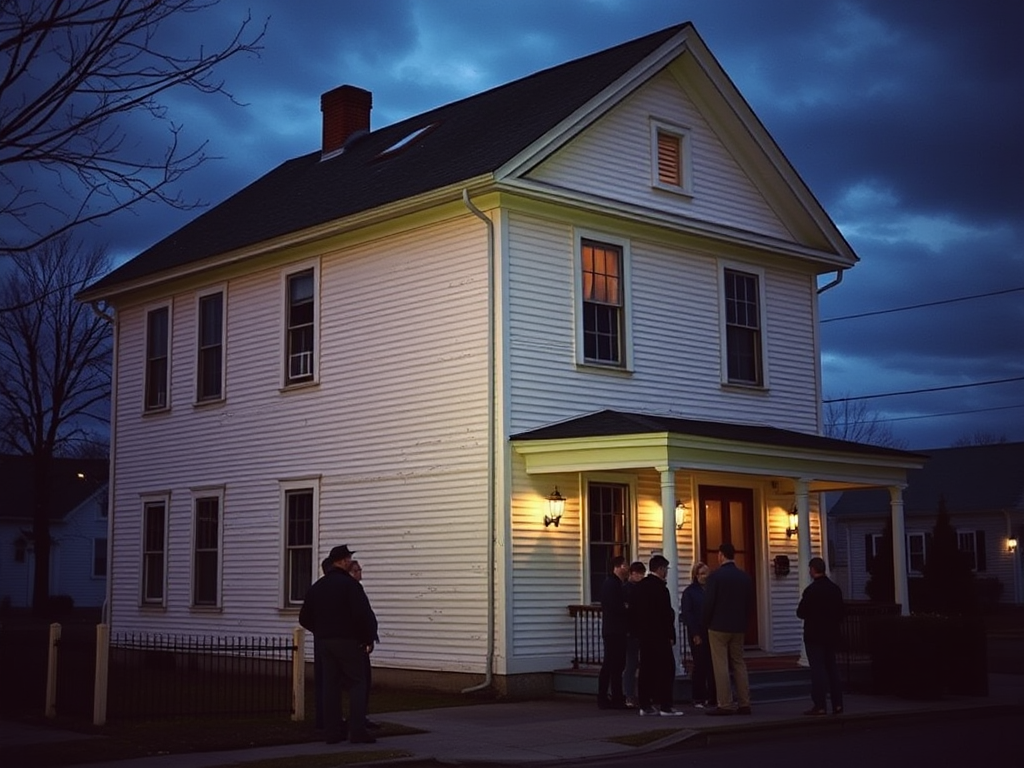
Far from the edges of the town, set an old two-story house. No one ever saw anyone going in or out of the house. The townspeople referred to the old house as the Sims’ place. As far as everyone knew, the last member of the Sims’ family had died years ago. They didn’t know who inherited the ownership of the house. Still, without being seen, the lawn remained manicured and the house was painted and kept up. It looked like the model home for anyone wanting to buy a house. The problem was it wasn’t for sale. As far as anyone knew, they never met anyone who lived there. If anyone lived there at all, nobody knew.

That didn’t stop the stories from spreading.

Children dared each other to run up the front walk and touch the heavy oak door. Teenagers boasted of throwing pebbles at the upstairs windows—until one swore he saw a pale face staring back. No one ever stayed long. The Sims’ place pressed against your skin. It was like a cold hand resting on the back of your neck.

The mail never piled up, though no one ever saw it being collected. No lights came on at night. The porch lantern flickered gently with each dusk. It was like it was welcoming someone home.

One autumn morning, a moving truck pulled into the narrow drive. This was just after the first frost turned the fields silver.

People watched from porches and behind curtains, half-certain the truck would vanish like smoke. But it didn’t. A tall man in a dark coat stepped out. He stood for a long moment at the edge of the walk. Then, he turned the knob and entered without knocking. The door swung open smoothly, like it had been waiting.

By noon, the truck was gone. No one had seen anything carried in or out.

That night, a light glowed faintly in the attic window—the first time anyone had seen one inside in decades.

The next day, the town’s quietest librarian, Mrs. Evelyn Crane, who hadn’t missed a shift in forty years, did not show up for work.

They found Mrs. Crane’s front door wide open, her coat still hanging by the hook, tea cooling on the counter. Nothing was out of place—except for the fact she was gone.

On the floor of her study, neatly laid out, was a photograph no one remembered being taken. It showed the Sims’ house bathed in golden afternoon light. In the top-floor window, a shadowy figure could just barely be made out. A figure with Evelyn Crane’s unmistakable silhouette—bunned hair, long cardigan, glasses catching the light.

The photo was crisp, fresh—too fresh. The paper hadn’t yellowed, and the ink hadn’t aged. Yet, the style, tone, and eerie texture of the photograph made it feel as if it were decades old.

Sheriff McKinley requested a discreet investigation. 

Quiet was always the town’s way. A formal missing person report was filed. It was filed only after a week had passed. The report was done with hushed voices.

The librarian’s house sat untouched after that—no one eager to enter it. On the morning of the seventh day, someone noticed a flicker in the Sims’ attic window. The light now flickered slightly. Like a candle in a room with a draft. Like someone moving just beyond its reach.

Then others began to disappear.

Not suddenly, but subtly. A school janitor didn’t show up for work. The pharmacist’s assistant left for her lunch break and never came back. With each absence, the same pattern followed—no signs of struggle, no witnesses, just something left behind. A photograph, a trinket, a drawing… always showing the Sims’ house. 

Always with a shadow in the attic.

One morning, the mayor ordered a city records search. He wanted to find any deeds, wills, or other documents related to the Sims family’s legal existence.

The file was blank.

No birth certificates. No death records. No property tax history. Just a penciled note in the margins of a 1933 zoning map:

“Leave undisturbed. Occupied.”

By whom, no one knew. But the attic light still burned. And some said if you stood on the sidewalk long enough, you would hear soft music playing. A woman humming. And the sound of someone pacing slowly across wooden floors.

Would you like to explore who—or what—is in the attic next? Or maybe follow a new character brave (or foolish) enough to enter the house?

His name was Jonah Bell. A drifter by most accounts, though some swore he’d grown up just a few towns over. He had that type of face—familiar, yet hard to place—late thirties. Wore an old canvas satchel, carried a notebook bound in cracked leather, and spoke only when spoken to.

Jonah arrived on foot, just before dusk. He stopped outside the Sims’ house. He looked it over for a long minute. He muttered something under his breath that sounded like “Still standing.”

A few townsfolk watched him from a distance, expecting him to keep walking. Instead, he opened the rusted gate, walked straight up the weedless stone path, and knocked once.

No one had ever knocked before.

The door creaked open as if it had been listening.

He stepped inside.

The air in the entry hall was still and dry. It was faintly perfumed with old cedar and beeswax. There was also a hint of something sweeter, like lilacs. The floors gleamed under a thin veil of dust. Every piece of furniture stood precisely placed, as if awaiting a long-anticipated visit.

Jonah took out his notebook and began jotting down notes. He whispered as he walked, like he was reciting some memorized litany to keep his courage close.

He passed through the parlor—walls lined with books, many handwritten, their spines bare. The grandfather clock stood frozen at 3:17. In the mirror above the fireplace, his reflection wavered slightly, a half-second behind his movements.

He didn’t stop.

At the end of the hall, the narrow staircase rose, twisting sharply to the left halfway up. It was there, on the sixth step, that the air grew colder.

He reached the landing, hesitated only briefly, then started the climb to the attic. Each step groaned—not with age, but with reluctance, like the house was reconsidering his welcome.

The attic door was shut. White paint cracked along its edges. Carved into the wood, nearly invisible unless you looked for it, was a single word:

“Stay.”

Jonah opened it anyway.

The attic was warm, despite the chill below. A low, golden light poured from an unseen source, casting no transparent shadows. Dust floated like tiny spirits in the air.

In the center of the attic was a rocking chair. And in it, a woman sat.

She was facing the window, her back to Jonah. Gray hair pinned neatly. A music box was on a small table beside her. It played a lilting tune. This was the same tune Evelyn Crane used to hum at the library desk.

Jonah didn’t speak. He stepped closer, notebook open, pencil ready.

The woman turned her head slowly, not startled—expectant.

She had no eyes.

Just smooth, unbroken skin where they should have been. Still, she looked at him.

And she smiled.

“I was wondering,” 

She said in a voice like leaves scraping on glass, 

“When you’d come back.”

Jonah’s pencil trembled. A page fluttered loose from his notebook.

It was a drawing—sketched in charcoal—of this very attic. The woman in the chair. The music box. The golden light.

Dated: October 13, 1922.

Jonah stared at the sketch, hands trembling, mind racing.

“I don’t remember drawing this.” 

He said aloud, but only to himself.

The woman in the chair—still smiling—nodded slowly. 

“You never do, not at first.”

He took a cautious step closer, boots silent on the attic’s polished wood. 

“Who are you?” 

He asked. 

“What is this place?”

The woman tilted her head. 

“The house remembers.” 

She said. 

“Even when you forget.”

Jonah knelt to retrieve the page. His fingers brushed the corner of the rocking chair. In a sudden rush, something opened in him. It was a flood of memory. It was not like something recalled, but like a dream breaking the surface after years of sinking.

He was ten. Standing in this very attic. A woman—this same woman—was brushing his hair, humming that tune.

Her face was younger, but the eyes—nonexistent yet somehow seeing—were just the same.

“You called me your boy.” 

He whispered, blinking hard. 

“But that can’t be. You’re not… real.”

“Oh, I’m real.” 

She said. 

“As real as anything you forgot.”

He backed away. 

“I’ve never lived here.”

The woman raised one hand and pointed to the rafters. Jonah followed her gaze.

Up near the slanted beams, nailed between two joists, was a faded photograph. A family portrait—sepia-toned. 

A tall man with a mustache. A small boy with serious eyes. And a woman in a white dress, her arms around them both.

Jonah felt his knees weaken.

The boy was him.

Same face, same eyes.

He staggered back.

“No, no, this can’t—”

“You were born here, Jonah.” 

The woman said gently. 

“And you left. They made you leave. But the house… the house never forgot. Neither did I.”

He looked around now with different eyes. Not the attic of a haunted place, but something older. Familiar. As though the walls were whispering lullabies from a life he’d buried.

“I don’t understand,”

He murmured.

“You don’t have to.” 

She said. 

“You only need to remember why you came back.”

He looked down at his notebook again. Page after page of sketches—rooms in the house. A hand-drawn map of the garden. Symbols he didn’t recognize but somehow understood. At the very end, a single phrase repeated over and over:

“The house is waiting. The house is watching. The house wants me home.”

Suddenly, the attic door slammed shut behind him.

He didn’t turn.

The rocking chair creaked gently as the woman leaned forward.

“Now,” 

She said, her voice sharper, colder. 

“Are you ready to take your place?”

Jonah closed the notebook and looked out the attic window again. Down below, on the street, a child stood at the edge of the lawn. Watching the house and watching him.

The way he once had.

The woman’s eyes—those smooth, sightless hollows—seemed to deepen as she leaned closer.

“You were always meant to return.” 

She said. 

“Not as the boy you were, but as the man we need.”

Jonah’s voice caught in his throat. 

“We?”

The rocking chair stopped moving.

Suddenly, the attic air thickened, as if the room had drawn a breath and was holding it. All around him, the golden light faded. It was replaced by a dim, pulsing glow from the floorboards beneath his feet. The wood creaked in rhythm—a heartbeat.

And then the whispering began.

Not from the woman. From the house.

It came from the walls, from the pipes, from behind the bookshelves. Countless voices, layered over one another. Some frantic, some pleading, others calm and patient, like they had waited an eternity.

He was made out the names—EvelynTommyClara—names of the vanished.

“We are here.” 

The voices murmured. 

“Waiting. Watching. Living still.”

Jonah stumbled backward toward the attic window, but the light outside had changed. The sky beyond was no longer dusky violet but deep, ink-black. No stars. No moon. Only the faint shimmer of fog rolling in across the lawn.

The child he had seen moments ago was no longer there.

The woman in the chair stood.

Not slowly. Not creakingly. She rose, as though the gravity in the attic shifted just for her.

“The house keeps what it claims.” 

She said. 

“And it chose you long ago.”

Jonah opened his notebook again, desperately flipping pages. The last one had changed.

Where once the phrase had repeated—The house is waiting. The house is watching.—now there was only one line:

“The house has taken root in me.”

His hands began to tremble. He dropped the notebook.

The floor beneath him rippled slightly, the wooden planks softening beneath his boots. He looked down. He saw the faint outline of veins—not his. They were pressing against his skin from below. The veins snaked up his legs like ivy. His reflection in the attic’s glass window twisted subtly—his eyes darker, his face slackening.

The woman smiled gently now.

“You will remember everything soon.” 

She whispered.

Then her body folded in on itself, collapsing like smoke caught in reverse. She vanished, leaving the rocking chair slowly swaying, empty once more.

Jonah tried to scream but found no sound.

The voices filled the attic.

“Welcome home.”

Outside, the porch lantern flickered brighter.

And in the attic window, a tall man is now be seen standing in the golden glow, perfectly still. Eyes like shadow. Watching.

Jonah Bell had returned.

But he would not be leaving again.

The next morning, a thin layer of fog clung to the outskirts of town, thickest around the old Sims’ place. The porch lantern had burned through the night, casting a low amber halo across the perfectly trimmed lawn.

A small group of townsfolk had gathered again on the sidewalk, just beyond the rusted gate. They stood quietly—arms crossed, coffee cups in hand, pretending they were just out for a walk.

Sheriff McKinley stood among them, jaw tight, his badge catching the early sun.

“Who was he?” 

Asked Mr. Darnell, the barber, adjusting his cap.

“No one local.” 

Said the sheriff.

“Drifter, maybe. Name’s Jonah Bell. Didn’t leave a car. Walked in, like they all do.”

The crowd fell silent again. No birds sang. Even the breeze seemed reluctant to pass through the yard.

And then, from the attic window, the light flickered once.

Mrs. Calloway, who had lived on that block the longest, shook her head slowly and muttered, half to herself:

“Oh dear. It’s starting all over again.”

No one disagreed.

They stood a while longer, staring at the house. They quietly dispersed. Each of them walked away faster than they meant to.

None of them noticed the child standing just beyond the fog, clutching a sketchpad and watching the window.

Waiting for the house to notice him.

Don’t Wait To Die When You Retire – If You Are 55+ The Time To Do It Is Now

By Benjamin GroffMedia© | benandsteve.com | 2025 Truth Endures©

3–4 minutes

Life, Sirens, and a 55+ Sense of Humor

As I write this, I am still in recovery—at least, I hope I am. Truthfully, this post was written before my surgery, so I can’t yet say how it all turned out. By the time you read this, several weeks will have passed since the procedure took place. It was scheduled to publish automatically, so here we are. If the doctors didn’t nick a major artery, I’ll be fine. If they didn’t accidentally close me up with a coffee lid inside, I’ll be okay. I will eventually get back to writing these posts daily. Until then, I’ve got a few stories lined up and ready to go.

The other day, I heard a siren blaring in my right ear. That startled me, since my left ear—damaged years ago in a police shooting—usually just rings nonstop. But this sound was sharp, insistent, and real. It kept getting louder, and I was sure it was headed into our neighborhood. I turned to my better half and said:

“Sounds like a house is about to go up for sale.”

He replied:

“Nope. I’m watching a police pursuit on YouTube.”

And we laughed—and I mean, really laughed. That’s the kind of exchange you’ll hear often in a 55+ community. Especially among those of us in the 55–65 age range, and certainly from our older friends beyond that. Because when sirens echo through the streets here, the conversation usually shifts to:

“Did you hear who it was?”

And yes, sadly, “was” is often the operative word. Sirens and flashing lights tend to signal more than just a medical emergency. They also draw a small parade of concerned neighbors. Curious drive-by observers and the always-early realtor, already imagining the next listing, gather quickly.

Now, don’t mistake this for a lack of respect for the sick or the departed. It’s really about staying informed. In a 55+ community, if you miss a couple of days, you could easily fall behind on who passed away. You might not know when the services are. This could affect your pickleball schedule. You could be waiting to play a doubles match that will never happen. The other team has quite literally checked out.

Even the golf course has its quirks. The back nine may suddenly open up if someone didn’t quite finish the front five. It’s the kind of morbid practicality that comes with age—and a bit of wit.

Social gatherings here often revolve around food, especially the cherished potluck lunch. And trust me, in a 55+ community, when they say potluck, they mean luck. You just hope enough actual pots show up to make it a meal by the time noon rolls around.

But all joking aside, living here has been one of the best choices we’ve ever made. Will Rogers once said, “If you don’t like the weather in Oklahoma, just wait a minute.” Well, in a 55+ community, the same could be said about neighbors.

We love this place. In the twelve years we’ve lived here, we’ve only lost three neighbors. This is a testament to the spirit and vitality of this community. Funny enough, when we first moved in, we were technically too young to qualify. But we were here to care for my then 83-year-old mother. After she moved in with my sister and never came back, we decided to stay. Eventually, we aged into the group ourselves and bought a home right here in the neighborhood.

It’s clean, quiet, and secure. There’s 24-hour security. Many of our needs are covered through a very affordable HOA. Less than $100 a month covers trash service, gym access, swimming and tennis. It also includes pickleball courts, a dog park, clubhouse use, and even a monthly newspaper.

So, if you’re nearing that point in life—my advice? Raise the kids and get them out of the house. Then consider moving to a 55+ community as soon as you can. The sooner you arrive, the more life you’ll have to enjoy it. You don’t have to work yourself into the grave. You can laugh your way there instead—one siren, one potluck, one sunrise at a time.

The Sonoran Desert’s Buck Milford – Chapter 10: Cooler Heads (and Sandwiches) Prevail

Reclaiming Ajo, Arizona!

Dawn broke over a transformed Ajo. The Mexican beagle crickets, now thoroughly stuffed with peanut butter goodness, retreated to the desert brush. The crickets appeared content. It was as if the agreement had fulfilled their mission. A sense of calm, albeit a wry and weary one, settled over the town.

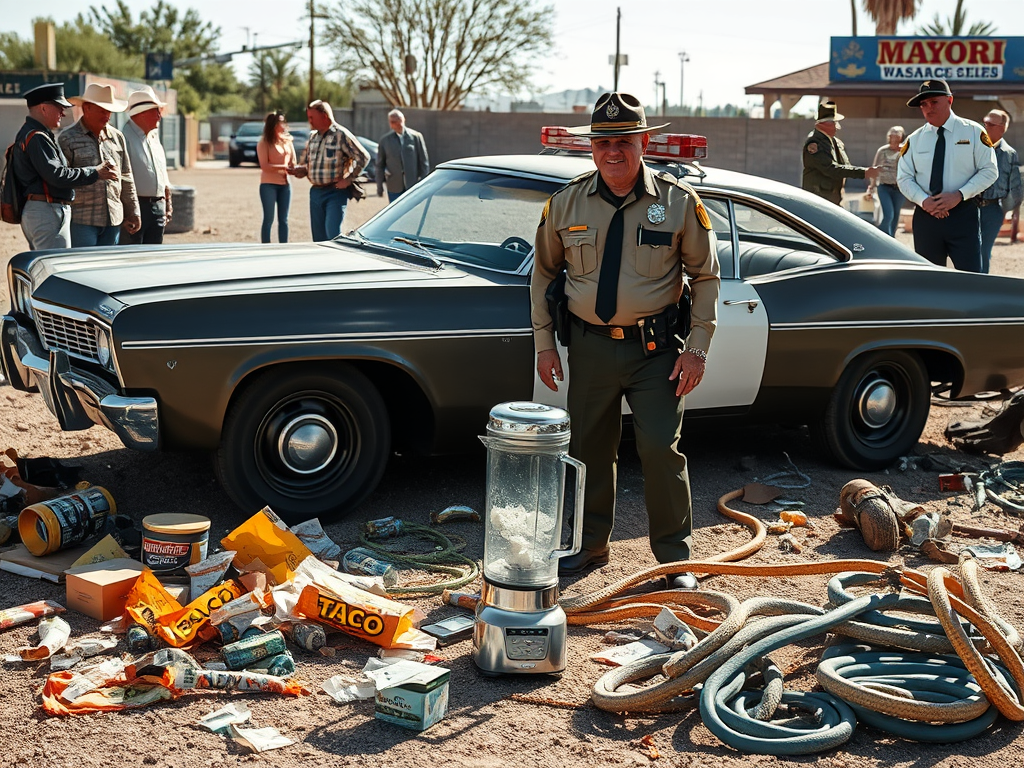
Buck found himself standing amid the remnants of last night’s epic showdown. Discarded taco wrappers were all around. A few broken garden hoses added to the debris. An old margarita blender lay as if a token of an absurd battle. The Mayor, still in full “wartime” regalia, shook hands with retirees. He even gave a slight nod of respect to Carl for his unorthodox diplomacy.

At the gas station, the local newspaper was already printing the headline:

“PEANUT BUTTER PACIFIST: HOW BUCK MILFORD CALMED THE CRICKET STORM”

— Ajo Today, alongside a coupon for “Buy One, Get One Free – Peace of Mind.”

Buck, ever the humble hero, tipped his hat.

“Sometimes, all it takes is cooler heads…and a couple of sandwiches,”

he remarked dryly.

The final act of the evening unfolded with a local radio show, hosted by Marty the janitor. Marty, now reformed, played a slow, soulful tune. The music blended cowboy ballads with cricket chirps in the background. Buck’s patrol car, dusty and battered, stood as a symbol of resilience against absurdity.

As the sun climbed higher in the sky the next morning, Ajo prepared for another day in the desert. Danger and humor mingled that day. There was also the possibility of another bizarre escapade in the shimmering heat. And Buck, always ready, knew that in a town like this, adventure was never too far away.

~THE END~

The Sonoran Desert’s Buck Milford – Chapter 9: Showdown at Sunset

By Benjamin GroffMedia© | benandsteve.com | 2025 Truth Endures©

2–3 minutes

Catching Heat In Ajo, Arizona

The sun dipped low. It cast long shadows over the scorched earth of Ajo. The stage was set for the ultimate confrontation. Every faction had gathered. Mayor Gonzalez stood with her fleet of feisty seniors armed with flyswatters. Carl Sandlin rode his tinfoil-covered dune buggy, banjo in hand. A defiant Barney Fife-lookalike still clutched his oversized ticket book. Buck was caught in the middle, displaying a mixture of resignation and amusement.

Across the dusty open space, the beagle crickets aligned themselves in rows that shimmered in the golden glow. Their usual hum was replaced by a rising, almost militant chorus of chirps. It was a rallying cry that sent a shiver down everyone’s spine (or was it just the cool desert breeze?).

Mayor Gonzalez stepped up, megaphone in hand, and declared,

“Today, we settle this once and for all! You bugs have terrorized our town long enough, and you’re coming to justice!

At the same time, Carl revved his banjo as if it were a trigger. He let out a wild, improvised yodel. This merged into a banjo riff—a challenge thrown down in musical form. The tension was palpable.

Then came the unexpected moment. Buck acted on pure instinct. His genius shone brightly from a half-forgotten lunch order. He pulled out a thermos of peanut butter sandwiches.

“Folks, and… critters,”

he announced, his voice steady.

“Sometimes all you need is a little tad of nourishment. It’s a reminder of simpler days.”

He scattered the sandwiches across the open space. The crickets, baffled by the offering (and even enticed by the rich aroma), paused their chorus. Slowly, as if savoring each bite, they began to nibble at the offerings. One by one, the insects lowered their guard. In that surreal instant, music and mayhem faded into an almost peaceful tableau.

Barney Fife-like hollered,

“This is it—the bug truce is on!”

While Mayor Gonzalez’s frown slowly morphed into a reluctant smile as her deputies put down their flyswatters.

For a heartbeat, the desert held its breath.

How long can everyone hold their breath? Too long, and we’ll have folks fainting in the streets—because that’s what happens when you forget to breathe! We hope the Mayor will remind the crowd to inhale. Barney Fife or Buck himself might do that too. We need this reminder before we move on to Chapter 10—the final installment of this wild ride.

If you’ve been reading since Chapter 1, you already know how it started. It began with unidentified flying toilets. Additionally, there was a full-blown invasion of Mexican Beagle Crickets across Southern Arizona’s Sonoran Desert. But if you just tuned in now… do yourself a favor—go back to the beginning. Otherwise, you’ll be as lost as the lady in the blue ’74 Buick LeSabre. She’s still sitting at the stop sign outside Ajo. She’s waiting for directions that may never come.

The Sonoran Desert’s Buck Milford – Chapter 8: Misting Stations and Mistrust

By Benjamin GroffMedia© | benandsteve.com | 2025 Truth Endures©

2–3 minutes

The Mexican Beagle Crickets Hum “Play Misty For Me?

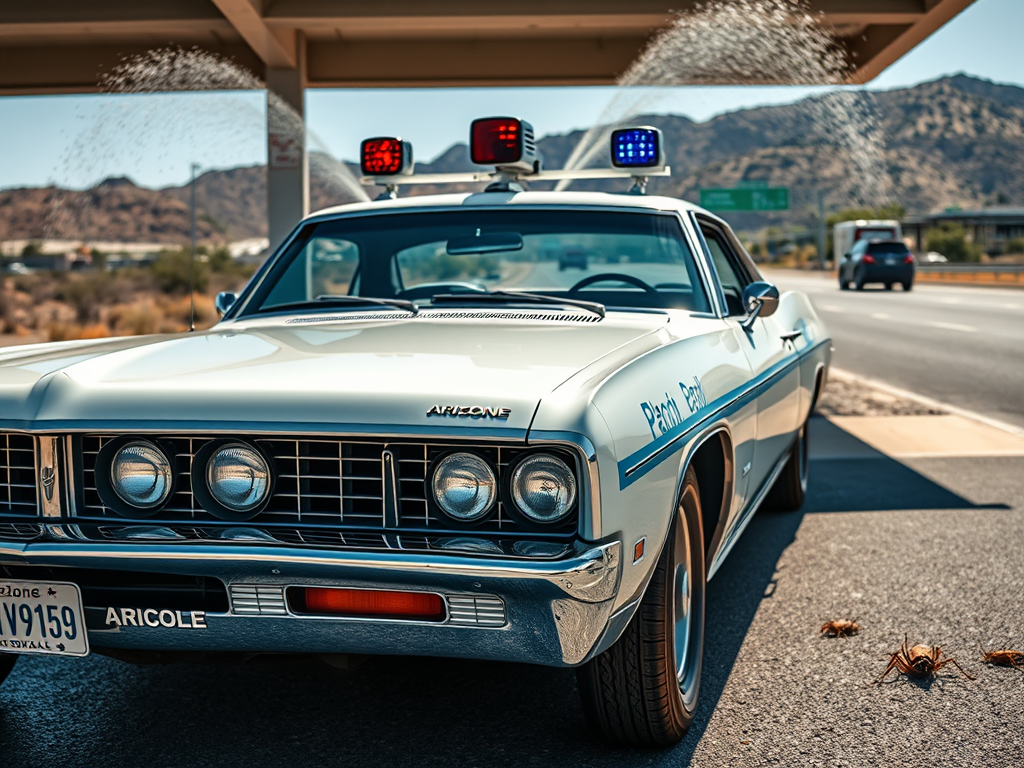
As news of the impromptu peace talks spread, another mystery began simmering like the endless desert heat. The highway crew’s newly installed solar-powered misting stations were intended to cool workers. They were also meant for eager beagle crickets. Nonetheless, they were causing far more problems than anticipated.

While Buck was patrolling near a row of these glistening stations, he noticed something amiss. Where the mist should have provided relief, it instead made the crickets multiply. A bizarre swarm of shiny, water-dappled insects was now marching in almost perfect formation.

Investigating further, Buck discovered that the misting stations weren’t a product of innovative engineering at all. They were part of a shady government contract mixed with local corruption. Additionally, there was a janitor who seemed to know every secret corridor in the county. The janitor was a quiet, stooped fellow known as Marty. He confessed that he had been “tinkering” with the control systems. He did this in exchange for a steady supply of his favorite snack: spicy cactus crisps.

“This here mist is subsidizing a bug bonanza!”

Buck grumbled as he took notes in a dog-eared notebook, the pages fluttering in the arid wind.

Suspicions mounted. Someone is using the misting stations to create a perfect breeding ground for the cricket phenomenon. This move would be designed to turn Ajo into a quirky tourist trap. It also would be a covert experiment in behavioral acoustics. Trust, it seemed, was as scarce as shade in the desert.

Before Buck confronts Marty with a ticket, the misting systems churned out another puff of fog. It sent confused retirees and cricket mediators scattering in every direction. Buck still intended to give Marty a stern talking-to.

Those misting machines didn’t cool things down—they cranked the chaos up a notch! Now, Mexican Beagle Crickets are swarming Ajo and its neighboring towns faster than you can shake a jalapeno-laced stick. Somewhere in the background, the ghostly voice of Karl Malden echoes. It is from a dusty 1978 American Express commercial. “What will you do? What will you do?” That, dear reader, is the burning question for Chapter Nine… and trust us, the heat is just getting started.

Happening Now: Monitor Lizard Not Actually T-Rex in Disguise

Jurassic Farce: When Lizards Go Rogue

By Benjamin GroffMedia© | benandsteve.com | 2025 Truth Endures©

1–2 minutes

A while back, WordPress Community Members discussed a curious topic. They wondered whether it was possible to bring back a dinosaur. If so, they questioned which dinosaur it would be.

An attempt to do so may have been underway recently. This became obvious when a monitor lizard screamed and ran for its life. It crashed out of a second-floor window. It then proceeded to lead authorities through a multi-state chase. People were urged to protect their gardens, poodles, and pus— ugh, cats.

Anyways, it is making National News. And I fear that other lizards, regardless of their variety, will start trying the same thing. Suddenly Boom! There will be someone who succeeds, and their progress will be shared with like-minded individuals. Soon we will have a full-throated invasion of body-snatching giant lizards running around telling everyone they are dinosaurs.

Here is breaking news for when they do! HEADLINE: No, Monitor Lizards Are Not in The Dinosaur Family. They are a type of lizard belonging to the family Varanidae. While both dinosaurs and monitor lizards are reptiles, they diverged from a common ancestor long ago. Dinosaurs are part of the archosaur lineage, which also includes birds and crocodiles. Monitor lizards are part of the squamata lineage, which includes other lizards and snakes. 

The Sonoran Desert’s Buck Milford – Chapter 7: Buck Joins the Bug Peace Talks

By Benjamin GroffMedia© | benandsteve.com | 2025 Truth Endures©

2–3 minutes

Salsa Dancing To A Deal With The Mexican Beagle Crickets

The escalating cricket crisis soon took a bizarre turn. After the Mayor declared martial law, Buck inexplicably found himself roped into a ceasefire negotiation. It was by invitation and circumstance, not entirely by choice.

Under the twilight sky, Buck set up a pair of folding chairs near the old taco stand. It was now decked out as a makeshift negotiation table. He sat alongside Carl Sandlin, who was still sporting his sequined –––

“diplomatic vest.”

An unexpected guest joined them: Gladys “The Negotiator” Ramirez. She is a spry 82-year-old with a background in community organizing and a penchant for peanut butter.

A gentle breeze stirred the desert sand as dozens of beagle crickets gathered in a semicircle. Their chirps and hums intermingled with the soft strumming of Carl’s banjo. It was not a formal diplomatic session at all. Instead, it was a surreal backyard barbecue meeting. Buck found himself as the unintended mediator.

Carl, with a dramatic flourish, announced,

“I propose we work together! You bugs, you stop the invasions, and we guarantee a steady supply of fresh, organic salsa.”

The crickets, of course, did not respond with words, but their synchronized humming seemed to offer a tentative –––

“aye.”

Then, Gladys cleared her throat.

“Now listen here, critters. We are not capable to talk your language, but I do know a thing or two about compromise. How ’bout a trade?”

There was a pause that lasted nearly two seconds in cricket time. A single cricket marched ahead. It tapped an abandoned sombrero with its leg, as if in silent agreement.

Buck, rubbing the bridge of his nose, grinned. He thought,

“I have to admit, this is just the most peculiar peace talk.”

It was indeed the most peculiar peace talk this side of a cactus convention.

The ceasefire was as fragile as the morning dew on the desert floor. For one mystical, humid moment, man and cricket reached an understanding.

Will this agreement hold? The Mexican Beagle Crickets and man—finally in harmony? Or will the crickets grow weary of salsa and develop a taste for avocado dip instead? Will a sudden craving for classic TV jingles like Sanford and Son or The Beverly Hillbillies derail the peace? And what happens when today’s senior citizens pass on—will the next generation need to renegotiate the whole deal? With only a few chapters left, Buck better hustle—answers aren’t going to find themselves!

The Sonoran Desert’s Buck Milford – Chapter 6: The Mayor Declares War

By Benjamin GroffMedia© | benandsteve.com | 2025 Truth Endures©

1–2 minutes

ONE STEP TOO FAR – TAKING OVER OF A TACO STAND

Mayor DeeDee Gonzalez wasn’t one to take a half-measure. Her town’s only claim to fame was a bug outbreak with a penchant for humming and line-dancing. Mexican beagle crickets had commandeered a taco stand once more. They also interrupted a high-stakes karaoke contest at the community center. She had had enough.

The emergency meeting took place in the town hall. Chairs were hastily arranged in a circle. The table was littered with half-eaten enchiladas. The Mayor banged her gavel with a determined clatter.

“Enough is enough!” 

She declared.

“These pests have overstepped their bounds. As of now, martial law is declared on all cricket activity in Ajo!”

In a matter of minutes, local retirees received “bug defense kits.” These kits featured oversized flyswatters and garden hoses. They also included homemade “cricket deterrent” spray (an odd blend of cactus juice and a hint of mint). The newly minted “deputies” marched down Main Street. The Beagle Cricket Brigade paused their evening serenade. It was as if to say, “They brought reinforcements!”

Buck, watching from the window of the Impala, smirked.

“Now that’s what you call bugging out,”

He muttered. He anticipated the chaos. It would ensue when a troop of seniors met a swarm of rhythmic insects.

How dare they! A Taco Stand? Those evil Beagle Crickets! It is only a matter of time before someone is called to main street for a shootout at high noon. But, will Buck’s aim hit something as small as a cricket in a shootout? Would the crime fighter be outmatched by crickets? Or will they challenge him to Karaoke sing off?

The Sonoran Desert’s Buck Milford – Chapter 5: Heatstroke and Hallucinations

By Benjamin GroffMedia© | benandsteve.com | 2025 Truth Endures©

2–4 minutes

Other Strange Sightings In The Desert

Buck Milford wasn’t the type to complain. He’d driven through sandstorms. He had broken up fistfights at quilt raffles. Once, he gave a field sobriety test to a goat wearing sunglasses. That day was different. The Arizona sun scorched the earth like a microwave set on vengeful. Even Buck was close to breaking.

The heat index had hit 127. A road sign melted. Melted. The “SLOW CHILDREN AT PLAY” sign now reads “OW.”

Buck had parked his cruiser under the only tree between Ajo and Yuma. It was a desperate little mesquite. It looked like it had made some poor life choices. He sipped water from his melted ice chest and tilted his hat over his forehead.

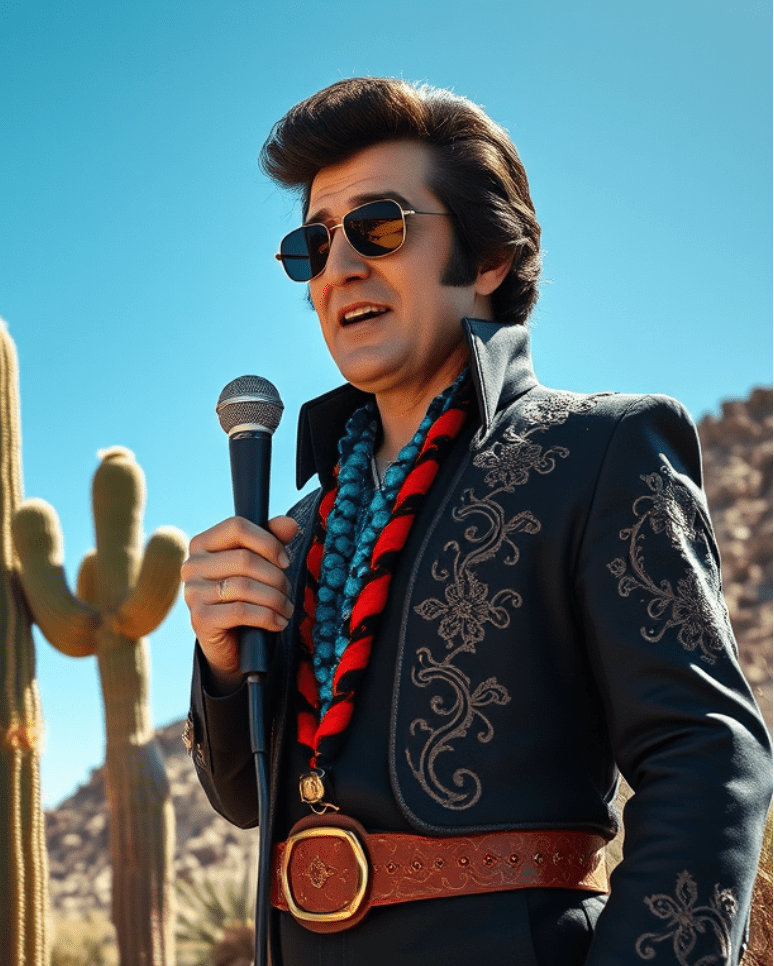
That’s when he saw Elvis.

Plain as day.

Standing next to the patrol car, wearing a powder-blue jumpsuit and holding a chili dog.

“Elvis?”

Buck mumbled.

“That you?”

Elvis gave him a nod. 

“It’s hot out here, hoss.”

Buck blinked. 

“I must’ve been out in the sun too long…”

Suddenly, another figure emerged from behind the tree.

Skinny. Nervous. Clutching a clipboard and a sheriff’s badge held on by Scotch tape.

“Buck! Buck, there’s been a violation!” 

The man squeaked. 

“A code triple-seven! Unlicensed harmonica discharge in a non-musical zone!”

Buck sat up straight. 

“Barney Fife?”

It was indeed Barney Fife. Or instead, it was someone who looked, sounded, and panicked exactly like Don Knotts. This person was holding a ticket book the size of a Bible.

Barney fumbled with his pen. 

“Now, now, Buck, I don’t want any trouble, but this whole desert’s outta code. These crickets! The yodeling! There’s dancing! Dancing, Buck! It’s indecent!”

Buck stood up, swaying slightly. 

“Barney, are you… real?”

Barney narrowed his eyes. 

“As real as a jelly doughnut on a Wednesday morning, Trooper. Now I’m gonna need you to confiscate Carl Sandlin’s banjo and suspend his taco license—right away!”

Behind them, Elvis leaned against the cruiser and took a bite of his chili dog. 

“Let the boy yodel, Barney.”

“I will not!”

Barney barked. 

“This is law and order, not Hee Haw Live!”

At that moment, Carl himself drove by in a dune buggy. It was covered in tinfoil and wind chimes. He waved like a parade marshal.

“I’m playin’ at dawn!”

Carl shouted. 

“Bring earplugs or bring maracas!”

Barney turned purple. 

“I’ll have his badge!”

Buck stared in stunned silence.

A cricket landed on his shoulder and began humming ––

“Love Me Tender.”

The next thing Buck remembered was being propped up in a folding chair outside the Ajo gas station. A bag of frozen peas was on his forehead. He had a bottle of Gatorade in each hand.

“You passed out cold.”

Said Melba, the station clerk, who also claimed to be a licensed Reiki therapist. 

“Said something about Elvis, Barney Fife, and indecent line dancing.”

Buck blinked. 

“I didn’t… wrestle Carl off a unicycle, did I?”

“Not today.”

Buck took a long drink, sighed, and muttered, 

“I’m starting to think this desert has a sense of humor.”

A Desert with a sense of humor? Barney Fife? Elvis? Our Crime Fighter has been out in the nether regions of the Sonoran Desert too long. That, or he sees dead people. Whatever it’s going to lead to, it’s another exciting story of Arizona’s most famous crime fighter, Buck Milford! That Mexican Beagle Cricket is sorta cute, isn’t it?

The Sonoran Desert’s Buck Milford – Chapter 4: Yodels and Yellows

By Benjamin GroffMedia© | benandsteve.com | 2025 Truth Endures©

2–4 minutes

Buck Plays a Tune!

The Mexican beagle crickets arrived five days ago. Already, the Arizona Department of Wildlife had received over 300 complaints. Not about damage, mind you—but about the music.

“They’re too dang punctual,”

one retiree griped.


“They hum like my mother-in-law when she’s judging me,”

wrote another.


One anonymous caller just yelled. MAKE IT STOP!” for forty-two seconds before hanging up.

Buck Milford was used to desert weirdness. He’d once ticketed a man for driving a dune buggy made entirely of rattlesnake skins. But nothing prepared him for Carl Sandlins latest idea: The Great Cricket Peace Yodel.

“I’ve been listenin’ to ‘em closely,”

Carl explained, pacing in front of his yurt-slash-taco-stand.

“And I think they respond to pitch. What we got here is a musical species. They ain’t hostile—they just need harmony!”

Carl wore what he called his “diplomatic vest.” It was a sequined denim jacket with fringe. He also equipped himself with an old harmonica, a rusted washboard, and a five-gallon pickle bucket labeled AMBASSADOR DRUM.

Buck just stared at him.

“You sure you haven’t been drinking your aloe again, Carl?”

But Carl was undeterred. That night at 2:00 a.m., he set up two lawn chairs. Fifteen minutes before the crickets’ usual humming ritual, he arranged a battery-powered spotlight. He also prepared a megaphone duct-taped to a broomstick.

“Alright, fellas,”

he said into the megaphone.

“Let’s talk tunes!”

Buck sat in the cruiser, sipping lukewarm coffee, radio off. “This is going to end with him either arrested, abducted, or somehow elected,” he muttered.

At exactly 2:15 a.m., right on schedule, the desert came alive with humming.

But this time… Carl joined in.

He yodeled.

He drummed.

He played a harmonica solo that sounded like a walrus stepping on bubble wrap.

And for thirty glorious seconds… the crickets paused.

Then, they hummed louder than ever.

They didn’t just hum The Andy Griffith Show this time. They mashed it up with Achy Breaky Heart. It sounded suspiciously like a 1996 Taco Bell jingle.

Carl dropped his bucket.

“They answered me, Buck! I think we’re collaborating!”

Buck opened his door.

“Carl, I think they’re angry.”

Suddenly, thousands of beagle crickets surged toward the yurt, drawn to the sounds of tin, harmonica, and misguided ambition. They swarmed Carl’s taco stand, leapt onto the megaphone, and—somehow—turned on his margarita blender.

It spun wildly. Salsa flew.

The crickets began line-dancing.

Buck had seen a lot, but beagle crickets doing synchronized grapevines under a disco light powered by solar lawn gnomes? That was new.

The next morning, the bugs had gone quiet. Carl stood in the rubble of his salsa bar. He was shirtless and proud.

“We made contact,”

he said, eyes shining.

“They danced, Buck. They danced!”

Buck surveyed the scene: overturned lawn chairs, chewed speaker wire, a cricket still stuck in a jar of queso.

“Well, Carl,”

he said,

“either they liked your music—or they mistook you for a piñata.”

Carl smiled.

“Doesn’t matter. Tonight, I’m bringin’ in the banjo!”

SO! CARL. He is bringing in the Banjo! Will it be on his knee? And will someone named Ole Susanna show up in Chapter Five if Carl swings that Banjo too wildly? That is a story for tomorrow. So be sure to check back and see if the Mexican Beagle Crickets have segued into classical jazz. Also, will the Highway Patrol get Buck a larger fly swatter?

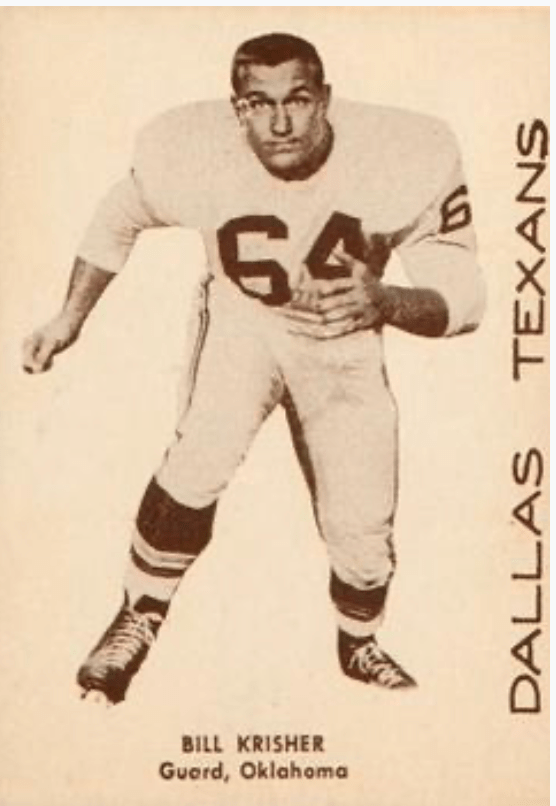
William Irwin “Bill” Krisher (September 18, 1935 – 2025, age 89)

GroffMedia© | benandsteve.com | 2025 Truth Endures©

1–2 minutes

William Irwin “Bill” Krisher (September 18, 1935 – 2025, age 89)

William Irwin Krisher, known to football fans as Bill Krisher, passed away in 2025 at age 89 (1). 

He was born on September 18, 1935, in Perry, Oklahoma. He grew up in Midwest City. He developed into a standout lineman for the University of Oklahoma under coach Bud Wilkinson (2). 

Krisher’s college career was decorated. He earned consensus All-American honors in 1957. He helped the Sooner’s win consecutive national championships in 1955 and 1956 3

Selected in the third round of the 1958 NFL draft, he played for the Pittsburgh Steelers before moving to the AFL’s Dallas Texans (now Kansas City Chiefs), where he was named to the All‑AFL Team in 1960 and honored as a division All‑Star in 1961 4

Off the field, Krisher dedicated himself to faith and mentorship. He was an active member of the Fellowship of Christian Athletes and served as its southwestern regional director by the mid‑1970s 5

Bill Krisher leaves behind a legacy of excellence in collegiate and pro football. He dedicated his life to uplifting others through faith and service. 

He is remembered by family, teammates, and athletes inspired by his example.

The Sonoran Desert’s Buck Milford – Chapter 3: The Great Desert Bacon Fire

By Benjamin GroffMedia© | benandsteve.com | 2025 Truth Endures©

2–3 minutes

The Ring of Fire

If there was one thing Arizona didn’t need more of, it was heat.

But if there was one thing Arizonans couldn’t resist, it was a challenge.

Influencer Lacey Blu—a 24-year-old “solar chef” with 1.2 million followers and zero life experience—announced she’d be filming a bacon-cooking demonstration. Doing so on the hood of her Tesla at high noon. Trooper Buck Milford knew it was going to be a long day. Especially since Teslas were along way off from being invented.

“Cooking with the sun is so sustainable,”

she chirped into her phone.

“And so am I! #SizzleWithLace #SolarSnackQueen”

She parked off Highway 85 near a dead saguaro. She laid out her cookware—an iron skillet, three strips of thick-cut hickory bacon, and a side of emotional entitlement.

Buck arrived just as the bacon began to curl. He was curious about the cell phone since those too were new to this century. They were at least twenty five years from being even a brick phone.

“I’m gonna need you to step away from the car, ma’am,”

he said, tipping his hat.

“It’s 119 degrees, and your bacon grease just started a brush fire the size of a toddler’s birthday party.”

Lacey didn’t look up.

“Sir, this is my content.”

Behind her, a small flame began creeping across the sand toward a long-abandoned outhouse that somehow also caught fire. A confused jackrabbit ran out holding what looked like a burning flyer for a 1997 monster truck rally.

“Content’s one thing,”

Buck said, reaching for his fire extinguisher,

“but that yucca plant’s fixin’ to blow like a Roman candle.”

Just then, Carl Sandlin appeared on an electric scooter with a garden hose coiled like a lasso.

“I saw the smoke!”

he cried.

“Is it aliens again? Or someone makin’ fajitas?”

Buck didn’t answer. He was too busy putting out the bacon blaze while Lacey livestreamed the whole thing.

“Look, everyone!”

she squealed to her followers.

“This is Officer Cowboy. He’s putting out the fire I started! So heroic!”

Carl joined in, spraying more bystanders than actual flames.

“We got trouble, Buck! The beagle crickets are back. They were hummin’ ‘Jailhouse Rock’ this time!”

Buck finished dousing the car. He shook the foam off his arms. He wiped a trail of sweat from his forehead. It had been working its way toward his belt buckle since 10 a.m.

“Well, Carl, if the crickets are Elvis fans now, we’re all in trouble.”

The bacon was ruined. The hood of the Tesla had buckled like a soda can. And the only thing Lacey cared about was that the foam had splattered her ring light.

“You just cost me a brand deal!”

she snapped at Buck.

“I was working with MapleFix! It’s the official bacon of heatwave influencers!”

Buck gave her a long, flat stare.

“You can mail your complaints to the Arizona Department of Common Sense.”

That night, the local paper ran the headline:

INFLUENCER IGNITES BACON BLAZE; TROOPER BUCK SAVES CACTUS AND PRIDE
— Saguaro Sentinel, pg. 3 next to coupon for 2-for-1 tarpaulin boots.

The Mexican beagle crickets showed up that night, as always. This time, they hummed Ring of Fire.