Ifigenia Martínez y Hernández, 99, Mexican politician and diplomat, senator (1988–1991, 2018–2024), president (since 2024) and four-time member of the chamber of deputies

Ifigenia Martha Martínez y Hernández
(16 June 1925 – 5 October 2024)
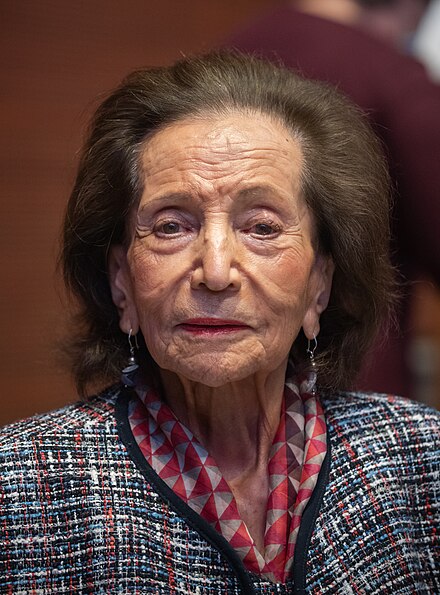
Ifigenia Martha Martínez y Hernández, a distinguished Mexican economist, diplomat, and politician, passed away on 5 October 2024 at the age of 99. Throughout her life, she was a pillar of Mexican political and economic thought, serving her country with dedication and vision.

Born on 16 June 1925, Martínez completed her undergraduate studies in economics at the National Autonomous University of Mexico (UNAM) and pursued further education, earning a master’s degree in economics from Harvard University. Her passion for academia and public service led her to become the head of the Faculty of Economics at UNAM, a position she held from 1966 to 1970. Her influence extended beyond the classroom, shaping the next generation of Mexican economists.

Martínez was not only a scholar but also a trailblazing politician. Over her illustrious career, she was affiliated with several prominent political parties, including the Institutional Revolutionary Party (PRI), the Party of the Democratic Revolution (PRD), which she co-founded with Cuauhtémoc Cárdenas and Porfirio Muñoz Ledo, and the National Regeneration Movement (Morena). Her commitment to Mexico’s development and progress led her to serve multiple terms in the Chamber of Deputies, first elected in 1976, and later in 1994, 2009, and 2024. She also held a seat in the Senate, representing the Federal District in 1988 and serving again in 2018 through proportional representation.

One of the crowning moments of her political career occurred just days before her passing, when she presided over the inauguration of Claudia Sheinbaum as President of Mexico on 1 October 2024. In a historic ceremony, she had the honor of handing Sheinbaum the presidential sash, symbolizing a peaceful and democratic transfer of power.

Ifigenia Martínez’s legacy will live on through her immense contributions to Mexican politics, her advocacy for social justice, and her unwavering commitment to her nation’s well-being. She leaves behind a lasting imprint on Mexico’s political landscape and will be remembered for her intellect, leadership, and grace.

She is survived by a grateful nation, which honors her profound impact on its history.
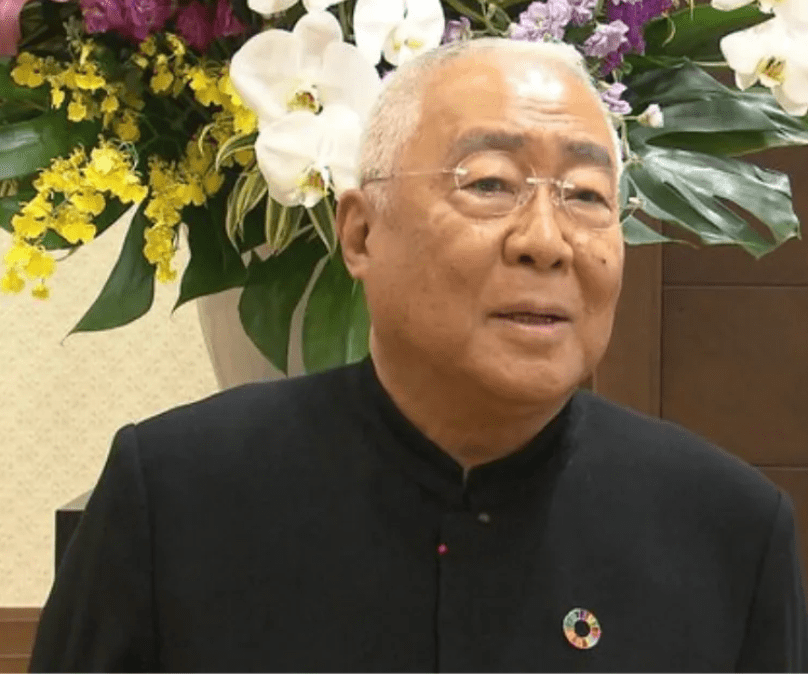
Japan’s Culinary Expert Yukio Hattori Dies 1945 – 2024

This Information Provided By: Benjamin Groff© Groff Media 2024© Truth Endures

Obituary: Yukio Hattori (1945 – 2024)

Yukio Hattori, beloved television personality, culinary expert, and educator, passed away on October 4, 2024, in Tokyo, Japan, at the age of 78. Best known as the insightful commentator on the popular Japanese cooking show Iron Chef, Hattori’s contributions to the world of food, nutrition, and culinary arts left an indelible mark on Japanese culture and beyond.

Born on December 16, 1945, in Tokyo, Hattori grew up in a family deeply rooted in the culinary tradition. He was inspired by his father’s work to pursue his passion for food and nutrition, eventually earning a PhD from Showa University. His profound understanding of both cooking and the science of nutrition shaped his career, which would extend far beyond the kitchen.

Hattori became the fifth president of Hattori Nutrition College, a prestigious institution founded by his father, known for its unique blend of culinary excellence and nutritional education. Under his leadership, the college trained thousands of chefs, nutritionists, and food critics, shaping the next generation of culinary professionals. His commitment to culinary education made him a pivotal figure in elevating the standards of both food preparation and healthy eating habits in Japan.

While his educational work was vital, Hattori was perhaps most recognizable for his television career. As a competitor, judge, and commentator on Iron Chef, Hattori’s sharp palate, deep culinary knowledge, and entertaining commentary endeared him to audiences across Japan and worldwide. His presence on the show not only lent credibility but also helped popularize Japanese cuisine internationally.

In addition to his work on television, Hattori appeared in films such as Aji ichi Monme (2011) and Mibu, and he continued to influence Japanese cuisine and public health through his numerous cookbooks, radio shows, and public health campaigns. He was a firm believer that good food should nourish both body and soul, a philosophy he called “Well Taste,” where flavor and health go hand in hand.

Yukio Hattori’s legacy will continue through his extensive contributions to culinary education, his influence on Japanese cuisine, and the students he mentored at Hattori Nutrition College. He is survived by his family, colleagues, and countless admirers who were inspired by his passion for food and nutrition.

Yukio Hattori’s memory will forever be cherished as one of the most prominent voices in Japan’s culinary world, whose life’s work brought taste and health together for the benefit of all.

A Special Note Of Thanks!

There Once Was A Clown Named Ho Ho!

A True Story By Benjamin Groff© Groff Media 2024© Groff Media 2024© Truth Endures

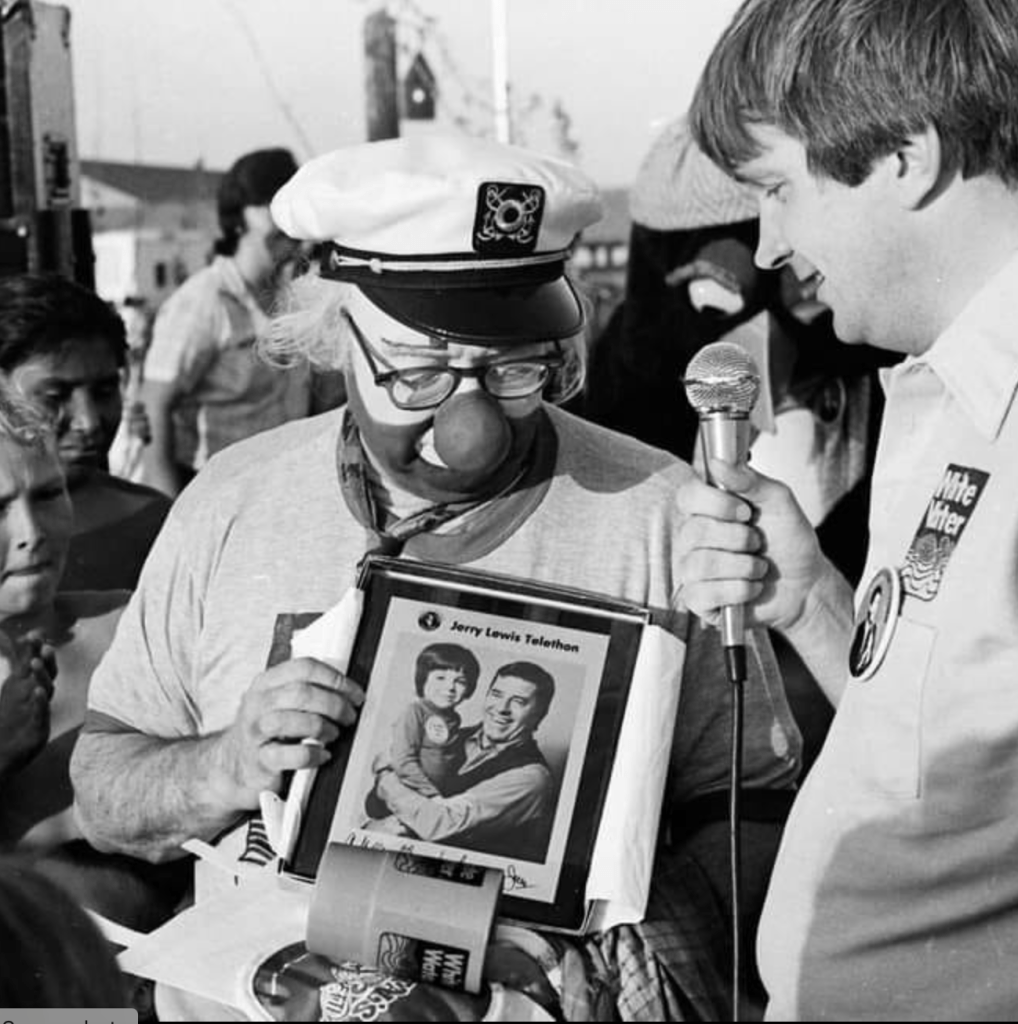
Ho-Ho the Clown, known to Oklahoma City children from the 1960s to the 1980s, was more than a TV character. Born Edward Birchall on July 16, 1923, in Colchester, Connecticut, he carried a heart of gold beneath his red nose and clown makeup. After serving in the Army Air Forces during WWII, Ed pursued his love of entertainment, eventually becoming the beloved Ho-Ho on KOCO-TV.

Behind the character, Ed Birchall was a regular dad raising six kids in Bethany, Oklahoma, with his wife, Beebe. Regina, one of his daughters, recalls him coming home with clown makeup smeared after a long day, trying to balance the unusual demands of being a full-time clown and father. His work often kept him away from family, but they later realized the personal sacrifices he made and how many lives he touched, instilling a deep sense of gratitude and respect.

For 29 years, Ho-Ho brought joy to children with shows like Lunch with Ho-Ho and Ho-Ho’s Showplace. His bright personality and whimsical sidekick, Pokey the Puppet, lit up local TV screens, helping him become a household name. Yet his role as an entertainer extended beyond the studio—Ed frequently visited children’s hospital wards, delighting patients with his warmth and humor. It wasn’t just his clowning that touched people; his kindness, dedication, and how he made every child feel seen.

When Ed passed in 1988, his funeral was a testament to his impact. It took three services to accommodate the thousands of well-wishers, including an honor guard of clowns. Ed Birchall’s legacy, carried on by his children and remembered by the community, continues to bring smiles to those who grew up with Ho-Ho’s charm, fostering a sense of belonging and shared memory among us all.

The Puppeteer Bill Howard Passed away On January 9th, 2013. Bill Howard, who entertained children as “Pokey the Puppet” on the Ho Ho the Clown show on KOCO in Oklahoma City, has died.

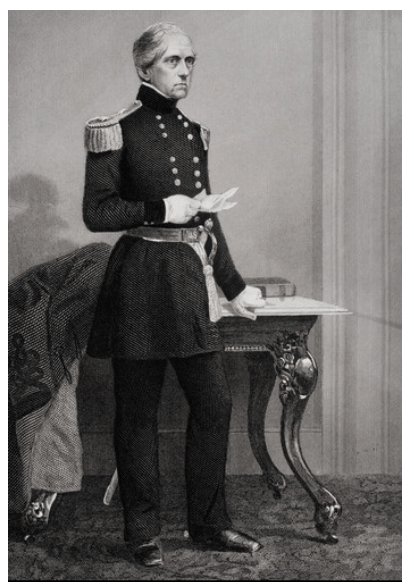
The Intestate Legacy of John Ellis, Esq.

A Glimpsing Report By: Benjamin Groff© Groff Media 2024© Truth Endures

The name John Ellis, Esq. still echoes in the rolling hills and creeks of Deep River, North Carolina. To those who knew him, he was a stern yet fair Justice of the Peace, ruling his township with a measured hand, holding court in his modest home, and settling disputes with the wisdom of a man who had seen both war and peace. However, there was one mystery about John Ellis that no one could quite explain. For all his legal prowess and the order he brought to his community, John Ellis died without leaving a will—a fact unsettled his descendants for years to come and continues to intrigue history enthusiasts and those interested in legal history.

The year was 1812, and a biting winter frost clung to the edges of the Ellis estate, an imposing tract of land the Earl of Granville granted to John fifty years earlier. John’s death cast a long shadow on the west side of Deep River, where his 520 acres stretch over the rugged terrain. His wife, Mary Quinn Ellis, now widowed and frail, remained in their home in Fort Mill, York County, South Carolina, surrounded by memories of their eleven children and the life they had built together. John’spassing was not unexpected—he was 83—but the silence he left behind was.

It wasn’t just his absence that haunted those around him. It was the absence of something else—his final words, his will. John had settled countless estates during his time as Justice of the Peace, ensuring families were provided for, debts were settled, and the land was distributed correctly. And yet, he left no such document for his own family. Eighteen years would pass before his estate got probated in 1831, long after his burial in the family cemetery at Jumping Branch Creek. The delay gnawed at the Ellis children, especially William Quinn, the eldest son, who should have inherited the bulk of the estate. But the land was silent, locked in bureaucratic limbo.

In the years following John’s death, whispers swelled through the small towns of North Carolina and South Carolina, where his family had deep roots. The family cemetery where John and Mary would get buried became a place of whispered tales. Some said that John had left instructions hidden somewhere on his land—perhaps in a letter or beneath a cornerstone in his house. His children, it was said, spent months after his death combing through every inch of the property but found nothing. These rumors and folklore added a layer of fascination to the mystery of John Ellis’s intestate legacy.

The most curious rumor concerned the woods that bordered the Ellis estate. Hunters and travelers passing through Rowan and Tryon Counties spoke of a strange figure—an older man who resembled John Ellis, seen walking among the trees, sometimes at dusk, sometimes at dawn. This figure, they claimed, seemed to be searching for something, bending low to inspect the ground or pausing by the river as if lost in thought. Others said the older man appeared near the family cemetery, wandering among the graves silently.

By 1831, when the estate was finally resolved and divided among the children, most of these tales had faded into local folklore. But there was one final piece of the story that remained unexplained. One autumn afternoon, shortly after the estate gets settled, a group of workers clearing trees from the property stumbled upon a small, hidden clearing by the river. There, beneath a heavy stone, they found a weathered leather-bound book half-buried in the soil. This discovery added a new chapter to the mystery of John Ellis’s intestate legacy, sparking curiosity and speculation.

“To those who come after, let the land be their guide. All answers will be revealed in the river’s flow and the earth’s turning. I leave my legacy to the water, where I once made peace.”

No one knew what John had meant, but the discovery only deepened the mystery surrounding his death. Had John left his will in the elements, knowing it would be lost to time? Or had he chosen, in his final years, to let go of the very legal structures he had spent his life upholding?

The land remained, of course, just as the family stayed. However, the legend of John Ellis, Esq. grew with each passing year. And those who ventured near Deep River, when the mist was thick and the air still, would sometimes swear they heard a voice, carried on the wind, speaking words too faint to be understood.

Perhaps, they said, John Ellis had finally found his will—hidden somewhere between the river and the earth, waiting for those brave enough to listen.
 

The End.

Resilience and Change: The Life of a Depression-Era Farmer

A Story By: Benjamin H Groff II© Groff Media 2024© Truth Endures

Benjamin Harrison Groff stood at the edge of his farmland west of Eakly, on Cobb Creek in Caddo County, Oklahoma, his weathered hands resting on his hips as he surveyed the fields. The sun was setting behind the Oklahoma hills, casting a golden hue over the land he’d come to love and toil. It was 1930, and though the country was heading into hard times, B.H. Groff had built a life here, one of stability and quiet perseverance.

Ben H and Florence Groff

He was 38 years old, married to Florence, and father to three children—Bennie, Dorothy, and JD. His modest but sturdy house had been their home for as long as he could remember. Its value was $3500, and though it wasn’t much compared to the sprawling estates some wealthier landowners had, it was theirs. They had a lodger, Lex Long, a 22-year-old man who had come to stay a while back. The Groffs didn’t need the money, but Lex had been good company with the world the way it was; having an extra hand around never hurt.

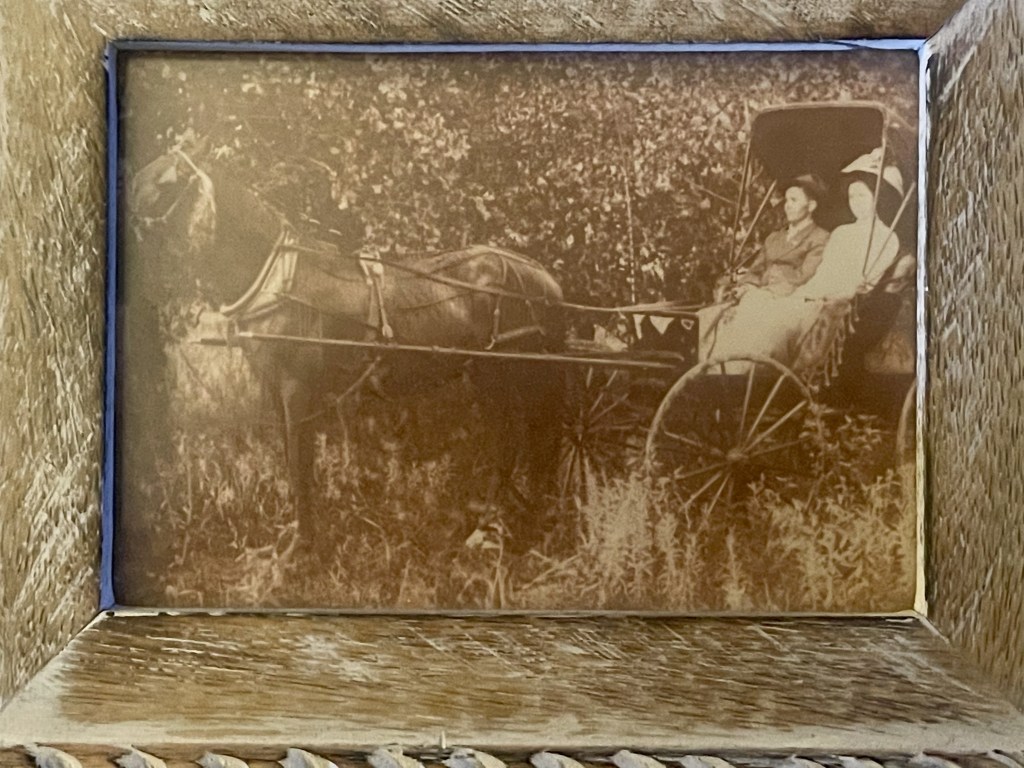
Draught Horses like those kept on Groff’s Farm.

B.H. had been a farmer for most of his life, following in the footsteps of his father, Ulrich Groff, who had immigrated from Switzerland in the late 1800s. B.H. remembered his father well—stubborn, proud, and meticulous about his work. Ulrich had come to America with nothing, finding his way to Illinois, where he built a life with Martha, B.H.’s mother, who hailed from Tennessee. Ulrich had passed a few years ago, but his values and work ethic lived on in his son. Farming had been the family’s lifeblood; Ulrich Groff is a name well known around Olney, Illinois, as the man who, along with his sons, built a barn without any metal, using only wood. It remained a place to see when people visited the town. Through the current day, but lately, B.H. has been reconsidering.

The census taker had come by not too long ago, scribbling down notes as B.H. answered the questions. He had explained that, while still farming, he had recently taken on a new role as an employer, overseeing other farms and workers. The long days of breaking his back were coming to an end. He felt more like a foreman now, guiding others and ensuring the crops were harvested on time. This transition was not just a change in his work but a step towards providing more stability for his family and the families of his workers.

Nearby Binger, Oklahoma 1930s

But still, something was unsettling in the air. The world was shifting—money was tight for many, and the Groffs, while not destitute, were careful with every penny. B.H. looked at their old house, and the absence of a radio set inside was a testament to their simpler lifestyle. He had thought about getting one, but Florence had insisted it wasn’t necessary. “We have each other,” she would say, “What more entertainment do we need?” The lack of a radio, a luxury many families could afford, was a stark reminder of the economic hardships of the time.

At dinner, B.H. would listen to Bennie, Dorothy, and J.D. chatter about school and life on the farm. Bennie, at 13, was getting taller by the day, eager to follow in his father’s footsteps, while Dorothy and J.D. still had a spark of youthful innocence. Florence, ever watchful, would smile softly, her hands always busy with mending or preparing food. The simplicity of their lives didn’t bother her—it was how she preferred it. Their home was a haven of warmth and contentment, a place where the simple joys of life were cherished. The family’s unity and resilience in the face of adversity were a beacon of hope, a testament to the strength of the human spirit during the Great Depression, uplifting those who hear their story.

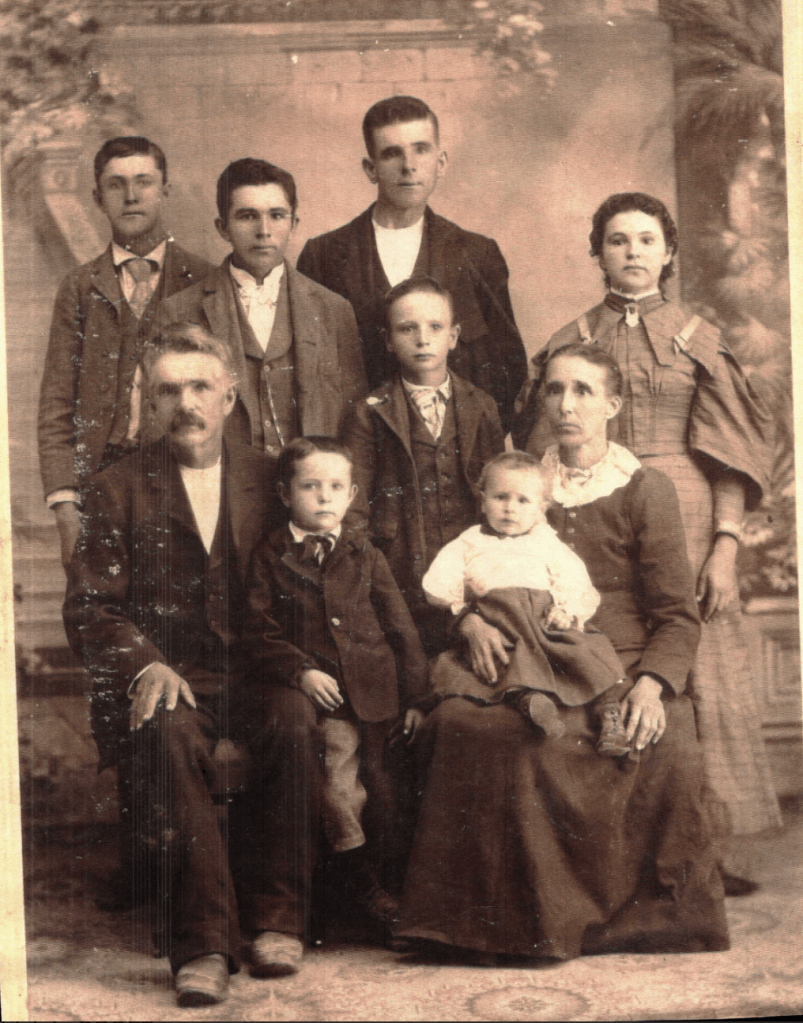
Ulrich Groff & Family

B.H. often wondered what his father would think of the life he’d built. Ulrich had been proud of his roots, reminding B.H. of the Groff family’s journey from Switzerland to America. Now, with Ulrich gone, B.H. felt the weight of his legacy. He wanted to honor it, but times were changing. Ben wasn’t just a farmer anymore but a man responsible for more than his land. He was an employer now, managing men who had their own families. This shift in his role was a sign of progress and a departure from his father’s more straightforward life, reflecting the uncertain and changing dynamics of the farming community during the Great Depression.

The fields stretched out before him, endless and full of promise. As the sun dipped below the horizon, B.H. looked at the land. He knew that whatever the future held, it would be shaped by hard work, perseverance, and the simple joys of family. And perhaps there was room for a bit of change along the way. The future was uncertain, but B.H. was ready to face it with the same determination that had guided him so far.

The Days Of My Youth, When The West Was Really Wild!

A True Story By: Benjamin Groff© Groff Media 2024© Truth Endures

When the West was wild, and I was nine years old. Strapped on my waist were two silver cap guns and a gunslinger belt. My horse was a pony named Little Bit, named so because of the bridal’s bit size for the horse. On Saturday mornings, my youngest sister and I would watch the antics of Roy Rogers and Del Evans on black-and-white television. During the rest of the weekend and after school, we did our best to live out what we had seen in real life.

My sister’s horse was named Sugar and slightly bigger than mine. Still, mine was fast and could run at a lope, making the breeze hitting my face seem as though we were going at the speed of light. On our farm near a hill south of our home, there were miniature bluffs where my sister and I would ground tie our horse, hide behind, and carry out a shootout with the invisible villains we imagined approaching and trying to steal the farm. We lived miles from town, and this would be our entertainment. Our parents were aware of our riding trips, and while our dad would rather be present, he trusted us to be responsible and safe.

As we roamed the hills on those long, dusty afternoons, it felt like we were the only two kids in the world with such grand adventures. The bluffs were our fortress, the sky our ceiling, and the occasional hawk circling overhead became a witness to our endless battles against make-believe outlaws. The smell of fresh earth, mingled with the sweat of our horses, was intoxicating. It was freedom, pure and simple, a feeling that inspired us and now fills us with nostalgia.


Sometimes, when the wind would shift just right, I’d catch the faint scent of Mom’s cooking from the farmhouse and know it was nearly time to head home. But in those moments, I was Roy Rogers, protector of the ranch, with Little Bit galloping beneath me as we chased the bad guys across the plains.


One day, after an especially exciting shootout, our father must have noticed we’d been gone a little too long. We saw him standing on the front porch as we rounded the bend toward the house. Dad crossed his arms, and his face was stern—Dad always believed in knowing where we were, and he didn’t much like the idea of us riding off without him. But as we neared, I saw the corner of his mouth twitch and a glimmer of pride in his eyes. His silent support reassured us and made us feel more connected to him. Maybe he recognized some of the cowboy spirit in us, or perhaps it was the sight of two kids who had spent the day living their version of the Wild West.


He never scolded us that day, though he didn’t have to say much. With a smile, he helped us unsaddle our horses, and as the sun dipped low behind the hills, we knew our adventures would have to wait until the next day.


But deep down, I think Dad knew, just as we did, that the West wasn’t so wild after all—it was just our way of making the world a little bigger, a little braver, and a whole lot more fun. As the sun dipped low behind the hills, we knew our adventures would have to wait until the next day, filling us with excitement and anticipation for the next chapter of our Wild West escapades.

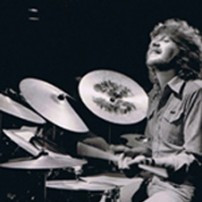
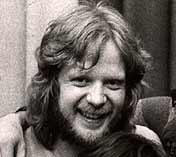
Roger Palm, 75, Swedish Drummer for ABBA, Dies from Complications of Alzheimer’s Disease

By: Benjamin. Groff Media 2024© Truth Endures

Roger Palm, a revered Swedish drummer whose beats helped define some of ABBA’s most iconic hits, passed away on September 21st., 2024 at the age of 75 due to complications from suffering from Alzheimer’s disease.

Born on March 31, 1949, in Kyrktåsjö, Sweden, Palm showed an early passion for music and began his professional drumming career at seventeen. His talent quickly garnered attention, leading him to become a member of the Swedish bands The Gimmicks and later The Beatmakers. By 1970, Palm had cemented himself as a highly sought-after session musician.

Roger Palm’s association with ABBA began in 1971 when he played on a session for a Frida single produced by Benny Andersson. A year later, in 1972, he laid down the drums for “Rock’n’Roll Band,” marking his first contribution to the ABBA sound. Though Ola Brunkert was the primary drummer for the band, Palm’s unmistakable rhythms enriched many of ABBA’s greatest hits, including “Mamma Mia,” “Dancing Queen,” “Take A Chance On Me,” and “Thank You For The Music.”

A studio musician of prodigious skill and vast discography, Palm was instrumental in creating timeless tracks that resonated around the world. His legacy, particularly his contributions to ABBA’s musical tapestry, will live on in the hearts of fans and music lovers worldwide.

He is survived by a loving family, friends galore and fans worldwide. Private services will be held at a later date.

Gone But Not Forgotten: Honoring Everyday Heroes

A Report By: Benjamin Groff© Groff Media 2024© Truth Endures

Gone But Not Forgotten: A Digital Memorial

Click Image to visit site.

In a quiet corner of the internet, there exists a place unlike any other—a virtual tribute to those who had walked this earth, loved, laughed, suffered, and left their mark, only to slip away as the sands of time carried them beyond the reach of the living. It was called Notable Deaths: Gone But Not Forgotten.

The website is more than just a list of names. It is a symphony of lives, a testament to the idea that every life matters, no matter how famous or obscure. Each entry tells the story of a person who has shaped the world in their own way, whether through art, science, politics, or just by touching the lives of those around them. This is a space for reflection, a collection of special memories and achievements.

At first glance, Gone But Not Forgotten appeared like any other tribute site—a photo, a name, a short biography. But for those who ventured deeper, it became clear that this was more than just a collection of obituaries. It was an evolving narrative, with contributors from all walks of life adding details about the departed, piecing together the puzzle of who they were. Some names were well-known household figures like actors, musicians, and leaders. Others were lesser-known heroes—activists, teachers, parents—whose contributions quietly wove into the fabric of society. This is a community of shared experiences, a place where grief is understood and shared.

Among the most moving sections was the Like You, These People Mattered column. Here, visitors could submit stories about people who had passed away. Major fame was not required of them, only a life well-lived. Each submission reminded the world that grief is universal, that love for the departed transcends celebrity, and that the value of a life doesn’t lie in recognition but in the impact it has on others. Every life, no matter how seemingly ordinary, is a treasure and a legacy.

One day, a young woman named Lena found herself on the website. She wasn’t sure how she’d ended up there—maybe it was fate, perhaps the randomness of an internet search—but she was grateful. Lena had lost her grandfather just a few weeks before, and the wound was still fresh. He had been the heart of their family, a kind, strong man who had lived through wars, raised children, and taught Lena everything she knew about compassion. His death had left a void she didn’t know how to fill.

On Gone But Not Forgotten, she found solace. She read stories of others who had felt the same loss, who had watched their loved ones slip away, only to hold onto their memories for comfort. She realized that her grandfather’s story, though deeply personal, was part of a much larger tapestry of human experience. Moved by the thought, Lena submitted a post to the Like You, These People Mattered section, pouring out her heart as she shared the man her grandfather had been—the jokes he told, the lessons he imparted, the quiet dignity with which he had faced his final days.

Days passed, and one afternoon, Lena returned to the site to find her story had been published. Not only that, but others had commented on it—people she didn’t know but who understood her grief. They offered words of sympathy, shared experience, and hope. Lena felt an overwhelming sense of connection. Here, in this virtual space, her grandfather lived on; in some small way, his life had touched others.

The website became a regular stop in her day. She began reading more of the stories, leaving comments for others who were grieving, and sometimes just sitting with the quiet weight of history as she browsed the names and faces of those who had passed. Famous or not, every story mattered. Each life was a thread in the rich, intricate tapestry of humanity.

As time went on, Gone But Not Forgotten grew. More stories were added, and more voices joined the chorus of remembrance. The world kept turning, and people kept living and dying, but this digital sanctuary reminded everyone that no one was truly gone as long as they were remembered. This is a place where the legacy of our loved ones lives, where their stories continue to inspire and comfort us.

Ultimately, the website became more than a place to honor the dead. It became a celebration of life—the connections we make, the people we love, and the way our stories, no matter how small, continue to ripple outward even after we’re gone.