Resilience and Change: The Life of a Depression-Era Farmer

A Story By: Benjamin H Groff II© Groff Media 2024© Truth Endures

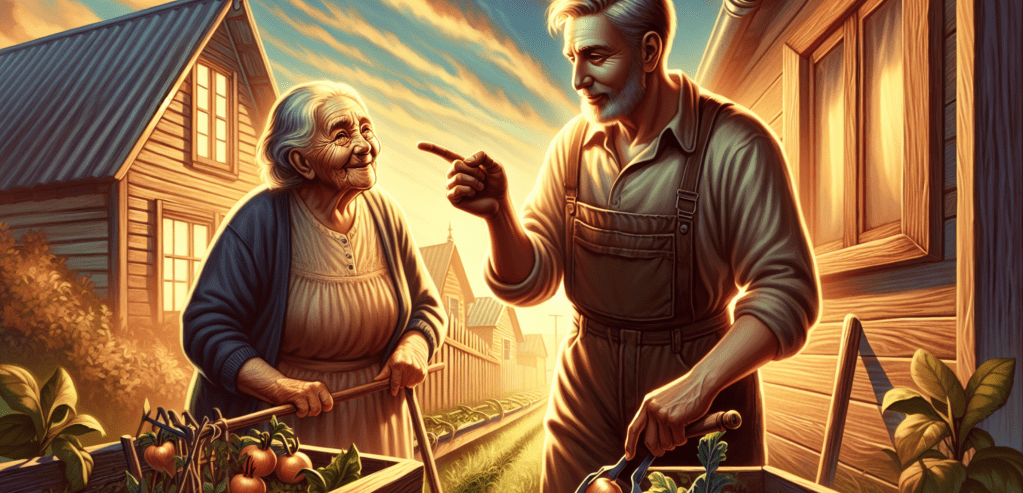
Benjamin Harrison Groff stood at the edge of his farmland west of Eakly, on Cobb Creek in Caddo County, Oklahoma, his weathered hands resting on his hips as he surveyed the fields. The sun was setting behind the Oklahoma hills, casting a golden hue over the land he’d come to love and toil. It was 1930, and though the country was heading into hard times, B.H. Groff had built a life here, one of stability and quiet perseverance.
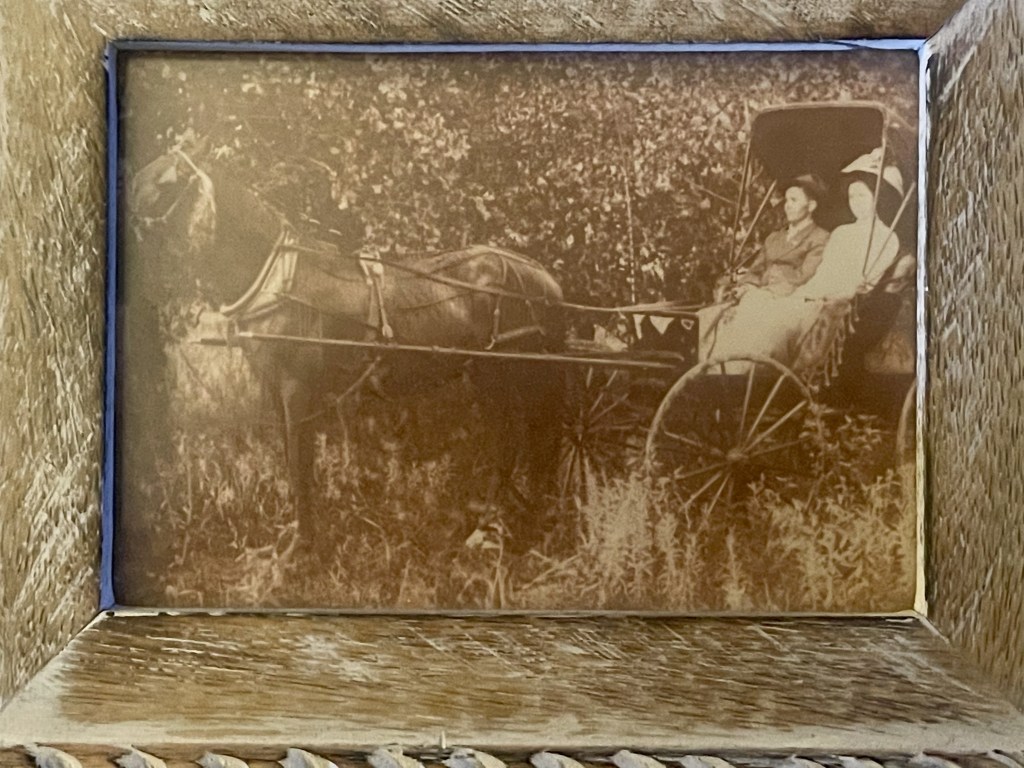
Ben H and Florence Groff

He was 38 years old, married to Florence, and father to three children—Bennie, Dorothy, and JD. His modest but sturdy house had been their home for as long as he could remember. Its value was $3500, and though it wasn’t much compared to the sprawling estates some wealthier landowners had, it was theirs. They had a lodger, Lex Long, a 22-year-old man who had come to stay a while back. The Groffs didn’t need the money, but Lex had been good company with the world the way it was; having an extra hand around never hurt.
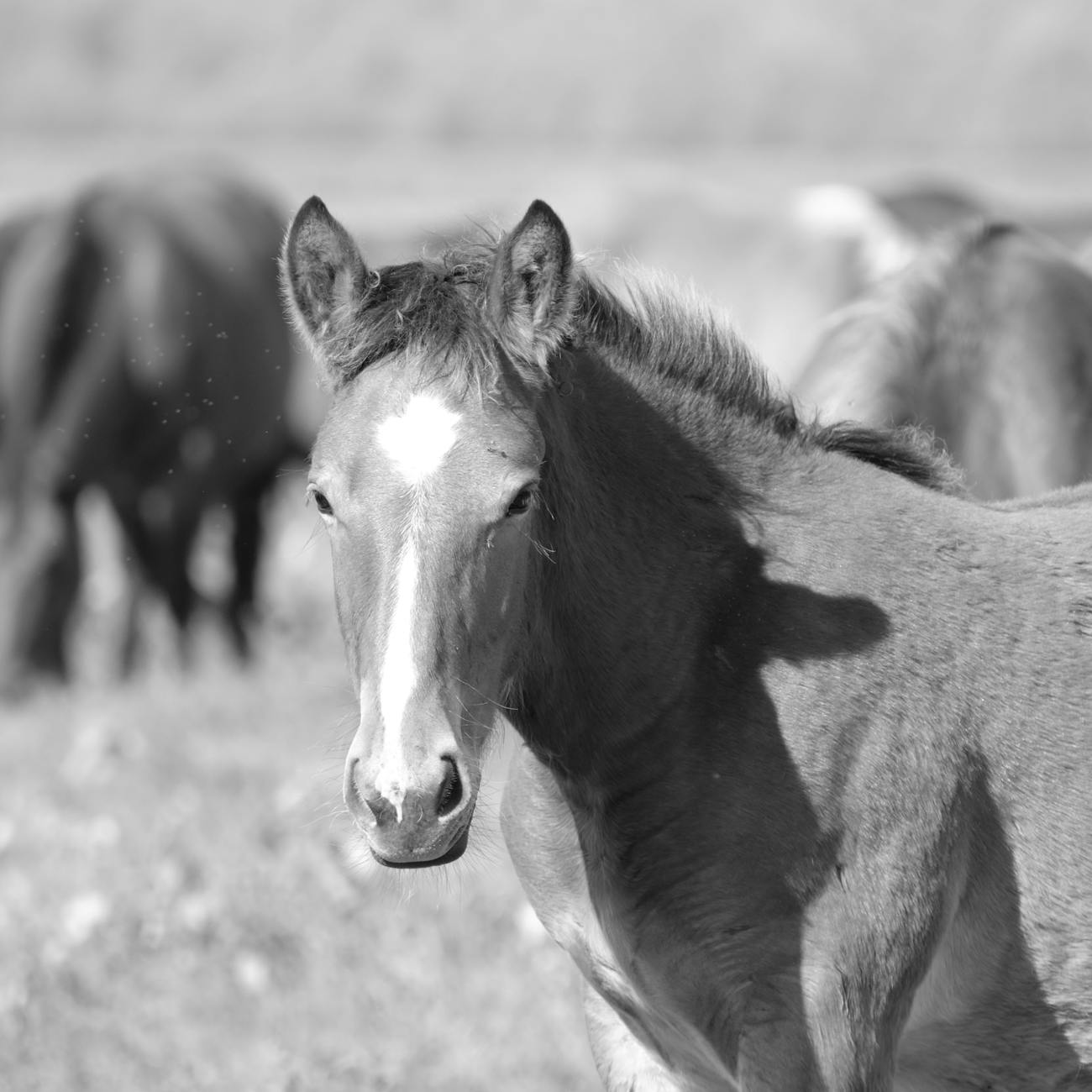
Draught Horses like those kept on Groff’s Farm.

B.H. had been a farmer for most of his life, following in the footsteps of his father, Ulrich Groff, who had immigrated from Switzerland in the late 1800s. B.H. remembered his father well—stubborn, proud, and meticulous about his work. Ulrich had come to America with nothing, finding his way to Illinois, where he built a life with Martha, B.H.’s mother, who hailed from Tennessee. Ulrich had passed a few years ago, but his values and work ethic lived on in his son. Farming had been the family’s lifeblood; Ulrich Groff is a name well known around Olney, Illinois, as the man who, along with his sons, built a barn without any metal, using only wood. It remained a place to see when people visited the town. Through the current day, but lately, B.H. has been reconsidering.

The census taker had come by not too long ago, scribbling down notes as B.H. answered the questions. He had explained that, while still farming, he had recently taken on a new role as an employer, overseeing other farms and workers. The long days of breaking his back were coming to an end. He felt more like a foreman now, guiding others and ensuring the crops were harvested on time. This transition was not just a change in his work but a step towards providing more stability for his family and the families of his workers.

Nearby Binger, Oklahoma 1930s

But still, something was unsettling in the air. The world was shifting—money was tight for many, and the Groffs, while not destitute, were careful with every penny. B.H. looked at their old house, and the absence of a radio set inside was a testament to their simpler lifestyle. He had thought about getting one, but Florence had insisted it wasn’t necessary. “We have each other,” she would say, “What more entertainment do we need?” The lack of a radio, a luxury many families could afford, was a stark reminder of the economic hardships of the time.

At dinner, B.H. would listen to Bennie, Dorothy, and J.D. chatter about school and life on the farm. Bennie, at 13, was getting taller by the day, eager to follow in his father’s footsteps, while Dorothy and J.D. still had a spark of youthful innocence. Florence, ever watchful, would smile softly, her hands always busy with mending or preparing food. The simplicity of their lives didn’t bother her—it was how she preferred it. Their home was a haven of warmth and contentment, a place where the simple joys of life were cherished. The family’s unity and resilience in the face of adversity were a beacon of hope, a testament to the strength of the human spirit during the Great Depression, uplifting those who hear their story.
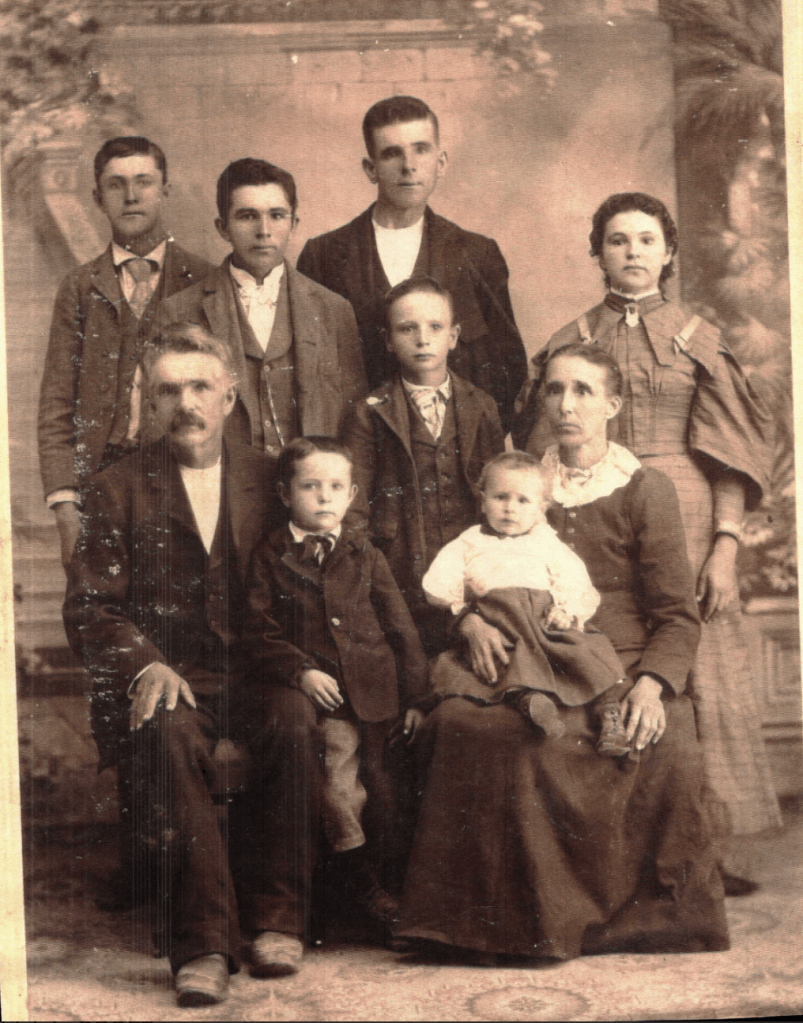
Ulrich Groff & Family

B.H. often wondered what his father would think of the life he’d built. Ulrich had been proud of his roots, reminding B.H. of the Groff family’s journey from Switzerland to America. Now, with Ulrich gone, B.H. felt the weight of his legacy. He wanted to honor it, but times were changing. Ben wasn’t just a farmer anymore but a man responsible for more than his land. He was an employer now, managing men who had their own families. This shift in his role was a sign of progress and a departure from his father’s more straightforward life, reflecting the uncertain and changing dynamics of the farming community during the Great Depression.

The fields stretched out before him, endless and full of promise. As the sun dipped below the horizon, B.H. looked at the land. He knew that whatever the future held, it would be shaped by hard work, perseverance, and the simple joys of family. And perhaps there was room for a bit of change along the way. The future was uncertain, but B.H. was ready to face it with the same determination that had guided him so far.
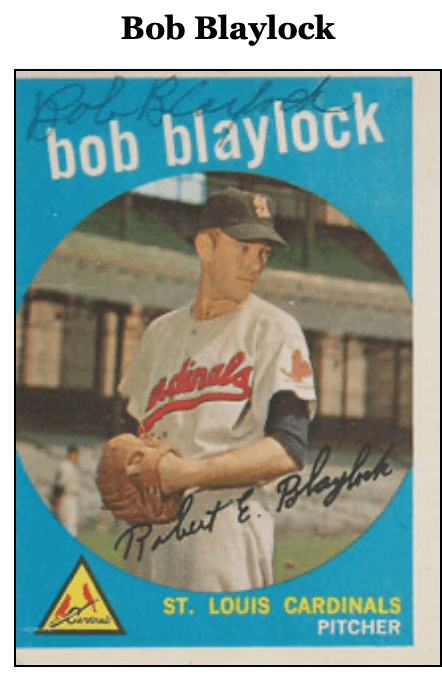
Baseball’s Robert Edward “Bob” Blaylock Has Died. And Few Noticed.

By: Benjamin Groff© Groff Media 2024© Truth Endures

Robert Blaylock Obituary

Obituary published on Legacy.com by Green Hill Funeral Home of Owasso on Sep. 4, 2024.

Obituary of Robert Edward Blaylock
Robert Edward Blaylock, Husband, Father, Grandfather & Great Grandfather went to be with Jesus on September 1st, 2024, at the age of 89. He was born on June 28th, 1935, in Chattanooga, OK to Cecil and Fannie Blaylock.
Bob was a 1953 graduate of Muldrow High School where he excelled in baseball and basketball. After graduation he signed to play baseball with the St. Louis Cardinals organization. Bob’s love for baseball continued throughout his whole life, he was a great coach on and off the field. He was also inducted into the University of Arkansas – Ft. Smith for his basketball achievements in 2012 and he was the 1st Hall of Fame inductee at Muldrow High School in 2014.
He married Barbara Thompson on Oct 3, 1956. They had 3 children, Robyn, Russ and Terri. After his baseball career he raised his family in Tulsa, OK where he Managed the Saratoga Hotel and owned the Saratoga Restaurant until his retirement in 1997. After his retirement he bought a farm in Talala, OK where he raised racehorses and cattle. Bob loved animals of all kinds, he had pot belly pigs, cats, dogs and numerous Martin houses that he monitored hourly with his shotgun to keep the starlings away!
Bob’s Celebration of Life will be at 11:00 AM Friday, September 6th, 2024 at First Baptist Church, Owasso, OK. The visitation will be at Greenhill Funeral Home Thursday, September 5th, 2024, from 5:00 – 7:00 PM.
He was preceded in death by his wife Barbara, Parents Cecil & Fannie Blaylock, Brother & Sister-in-Law Harold & Wanda Blaylock and one infant sister Glenna Fay Blaylock.
He is survived by his sister and brother-in-law, Lois & OC Flanagan.
He is a Proud Papa of 9 Grandchildren and 10 Great Grandchildren who will always love and cherish the memories they have with him.
Pallbearers are his Grandsons John Einhellig, Tyler Lambert, Justin & Josh Beal and Luke & Jake Blaylock.
To send flowers to the family or plant a tree in memory of Robert Blaylock, please visit Tribute Store

EDITORS NOTE: Bob Blaylock’s talent on the mound caught the eye of the St. Louis Cardinals organization, with whom he would spend his entire ten-year professional career.
Bob made his MLB debut on July 22, 1956, pitching for the Cardinals against the Brooklyn Dodgers. Despite a promising start, his time in the majors was marked by challenges, including an injury in his youth that left him with only three fingers on his non-pitching hand. Yet, he was a hard thrower who led the American Association in strikeouts in 1958, a testament to his resilience and determination that should inspire us all.
Over two MLB seasons, in 1956 and 1959, Bob pitched in 17 games, striking out 42 batters. Though his major league career was brief, his impact was felt deeply by those who knew him. He was also part of a unique trio of unrelated Blaylocks who played in the National League during the 1950s, sharing the field with names like Marv and Gary Blaylock.

My Experience With Live Coverage of Severe Weather Events by KKBS 92.7FM: A Crucial Role From The 1990s…

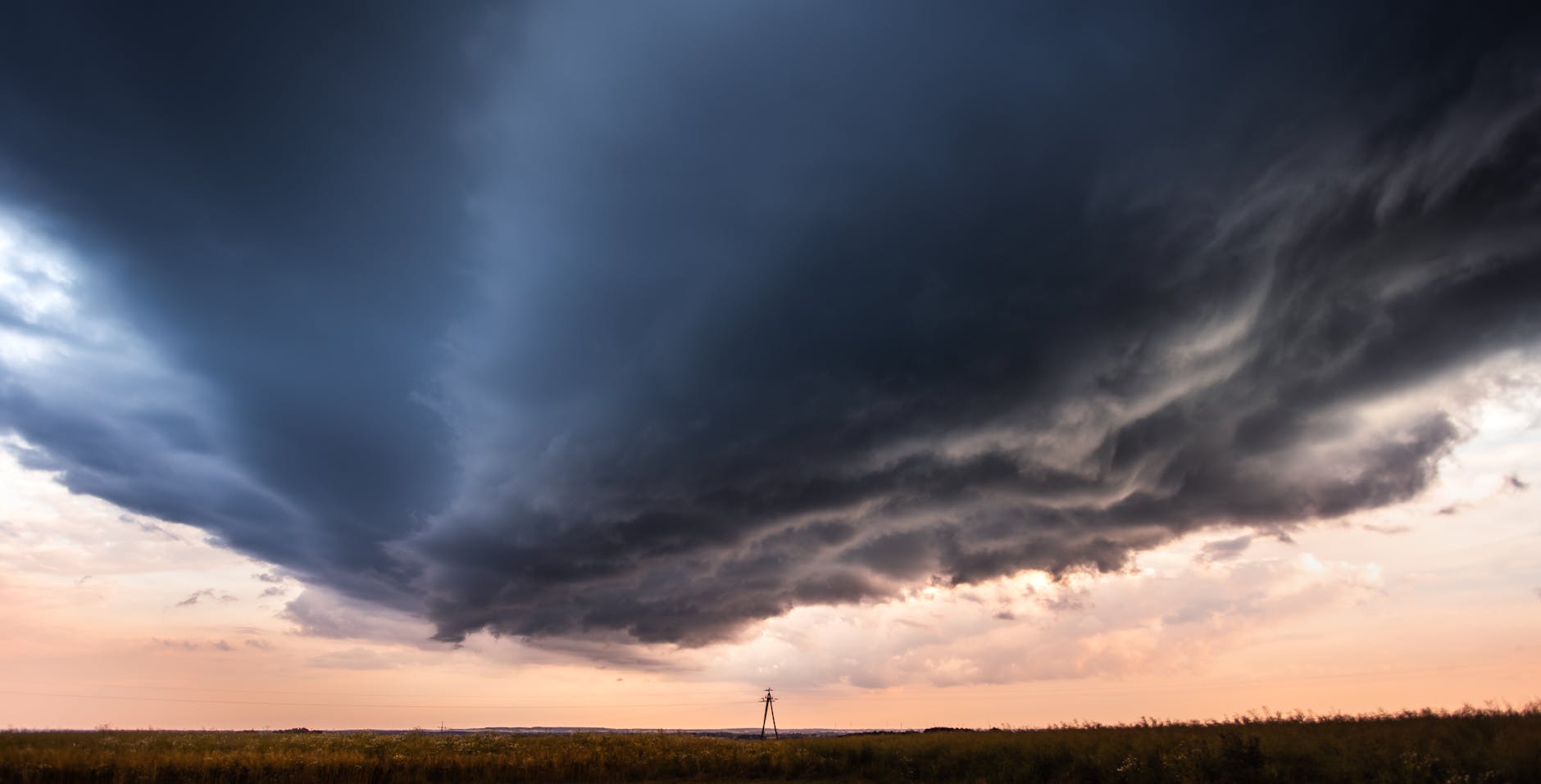
The sky was cloudy to the southwest, and humidity had been building since the morning. Many had yet to pay attention to weather patterns forming in the Oklahoma and Texas Panhandles, particularly dew points that were above average. Everything was out of balance. No one was paying attention except for one News Director at a small community radio station in the Oklahoma Panhandle community of Guymon. That news director was me, Benjamin Groff II (JR), and our role in providing live coverage of severe weather events was crucial.

It had been a busy day for the news department at KKBS 92.7FM. The Oklahoma Secretary of State had been in town attending Civic functions, plus a rape trial at the Texas County Court House was underway, and the suspect had been a topic that brought turmoil in the community for his alleged sexual abuse of a child. There was also an ax murder victim discovered in a dirt cellar in Steven’s County, Kansas, and the Hugoton Court House was buzzing with activity as the sheriff there had a suspect in custody.

The KKBS broadcast signal reached a five-state region, covering the Oklahoma Panhandle, the Northern Texas Panhandle, Southwest Kansas, Southeast counties of Colorado, and Northeast New Mexico. An anomaly in broadcasting also allowed the station’s signal to get received on radios and listened to by residents of Vernal, Utah. Listeners from the area would call the station often with their weather conditions and share local news to be part of the radio station’s mix. Our commitment to serving the community was unwavering, and we valued every listener’s contribution.

In Perryton, Texas, to the southeast of Guymon, a city of less than 7500 souls, the area mainly consisted of farmers and ranchers. KKBS radio station also reached Spearman, Gruver, Stratford, and Dalhart, Texas. In each community, the station, under my direction, established contacts and points of communication to use during news events. The same situation existed in southwest Kansas from Elkhart, Dalhart, Liberal, Hugoton, Johnson City, and Ulysses.

The radio station studio on the north side of Guymon is a one-story building set behind a hill on one side. The broadcast tower is near the city center. It was on the same tower as most emergency services and, thus, on an emergency roster for being tended to promptly during power outages. Our studios were placed on priority through a demand I had made to the power company after I explained that we broadcast to every community in five states and were rebroadcast through each cable carrier of every community. We need to get back on the air to broadcast emergency notices to the people as soon as possible. I did not realize I made such an impact that the power company initiated a person to guarantee our station downtime was as minimal as sixty seconds or less. It was good that it happened.

As the day continued, I stepped outside and felt the air. I had felt the conditions before. It had been in my hometown 12 years earlier when a storm ripped through the area and tore the hell out of the county, killing a lifetime resident of the town and his wife as they were hunkered down in their cellar. Being a retired police officer, I had a sixth sense, which led me to believe we were in store for something more. I felt it. There were times I sit in the newsroom on an afternoon on a slow day and think out loud, saying this feels like a plane crash day, and low and behold, we would be breaking a plane crash somewhere in the valley later. It was the same way this day, and I began planning for it.
I asked our sales team to be on call and ready to return to the station within ten minutes of getting my call, not to ask questions, get in their car, and come. They would answer calls and send me information about storm coverage. They should send their families to storm cellars, and they would be OK with us; the hill protects the station. I asked our evening staff to get ready to rock and roll so that it would be different from business as usual. I was going to be interrupting their shows, and we would be going live with actual news actualities from the field, raw broadcast, and they needed to get prepared for raw emotions to get heard. When it happened, they were not. But maybe they were more than they would have been.

Shortly before 4 PM, I noticed on an antiquated system that there was a massive hail storm in north Texas Panhandle County near Gruver, Texas; I called the Gruver Texas City Manager from the newsroom. I always contacted people in a way that allowed me to quickly air with them regardless of what was happening; in this case, it was gold. I asked him if he was getting hail. He said he was and was trying to drive west out of town; I buzzed the main studio to get ready to go live at any moment with breaking news, and suddenly AJ, the city manager, said

OH MY GOD, BEN, THERE IS A TORNADO ON THE GROUND WEST OF GRUVER, TEXAS, AND IT IS MOVING NORTH…

I flashed the hand signal and said go live; use the weather signal…

Stacy was on the board and broke into music with a particular news weather bulletin where I came on and issued a “KKBS TORNADO WARNING” and had the city manager describe what he was seeing. After the conversation, I returned and said that the National Weather Service has yet to issue a Tornado Warning, and we are in contact with them trying to get them to notice the storm.

A small radio station in the Oklahoma Panhandle doesn’t carry much weight with the National Weather Service, and they should have paid more attention to what we were trying to explain to them or the fact that we had an actual sighting by a city manager. We contacted the Channel4 Meteorologist who used to offer services to our station and explained to him what we were seeing, and he said he would turn his radar toward us and take a look; as he did, he said,

Map-Radar Image is for reference purpose only not actual radar screen used.

Holy Moly! That looks like a hook echo! Has the National Weather Service put out anything on this yet?

I explained to him our frustration with the weather people, and he said look, I am going live and putting my warning out, I told him we had already put ours out. He said

Thank GOD. I hope people are listening!

The Local Civil Defense and the owner of the other radio station in Guymon were listening, and they were severely upset that we were putting out a weather warning without their authorization. They even entered their radio station (one I once worked at KGYN) and denied on air there was any chance of severe weather today, saying the other stations were nuts. The Civil Defense Director went as far as to call our station owner and threaten her with an FCC violation complaint. She called me and asked what type of warning I issued. I explained that I issued a KKBS weather warning and a KKBS tornado warning, confirmed by a city manager talking to us live on the air from Gruver, Texas. She smiled and said issue some more.

I continued broadcasting the weather warnings and hear the disgusting remarks on the police radio frequencies from the civil defense director and his people over our decision to warn people about the threat of undesirable weather moving into the region. What is more, the storm producing the tornado was now moving into an area referred to as Hitchland, an agriculture-based community and ranching area. As we were broadcasting, our friend from the television station called and told me he had confirmation that a tornado was on the ground. We then broke into our programming and broadcast that a tornado had hit the area, and there were casualties. As we did, we began to get phone calls about fatalities in the area. As we tracked this storm, we warned the Beaver County, Oklahoma communities that they would be in the track of the storm-producing tornados.

The dry line producing these storms was like a whiplash effect; it produced storms in front and behind its path. Another line of storms formed twenty miles west of Guymon, stretching from Guymon to Elkhart to Johnson City, Kansas. It was a night of stress and high excitement for those who enjoy broadcasting under pressure.

During one segment of events, the bank that the radio station shared the building with was hosting Claudette Henry, the Oklahoma Secretary of State, at a reception that evening; while I was broadcasting live during one of the live storm updates, I saw Ms. Henry walk past the newsroom. I quickly wrapped up, stretched my headphones cord to the door, and shouted.

“Is that Claudette?”

She responded

“It Sure Is”

In my best Oklahoma demeanor

“I get you to do a live interview with me quickly?”

Claudette said,

“Let’s go for it!”

The interview consisted of talking about how she can’t fly out of Guymon until our radio station gives the all-clear and mentioning how everyone in five states is listening to you guys. She said she was impressed with the quality of coverage we provided; she didn’t expect to see it in Guymon.

My station’s owner was sitting in the basement at her beauty shop, listening to the radio and receiving phone calls on her cell phone. She was one of the few people in town at the time who had a cell phone, and everyone called her on it. On this night, it was to thank her for providing a station with such a spectacular news team.

It have been better news for everyone. The operations manager had called the station manager a bitch during a sporting broadcast, and then failing to join in the weather broadcast appeared to have ended their relationship. The next day, she dismissed him from his duties and placed them upon me and his salary. A few years later, she added the sales manager responsibilities to my duties. A few years later, I accepted a position in Cheyenne, Wyoming.

It was the 1990s and anything goes was a leftover motto from the 80s!

You May Have Heard OF Project 2025 But Have You Heard Of The Rights “Nickle A Prayer Tax?”

A Fictional Writing By: Benjamin Groff© Groff Media 2024© Truth Endures

In a move that could only be described as a blend of boldness and absurdity, the Rights Political Movement unveiled its most audacious plan yet: the Nickel A Prayer Tax. The idea was simple—or so they claimed. Every time someone bowed their head in prayer within the sacred walls of a tax-exempt church, the government will tally a nickel to get paid at the end of the fiscal year. The plan, the movement argues, was a way to finally have churches “pay their fair share” for the many costs they purportedly impose on the taxpayers.

The proposal, though greeted with a mix of shock and hilarity, was rooted in a series of dubious and imaginative calculations that the movement’s leaders claime are grounded in reality.

The Costs Churches Create for Taxpayers

  1. Lost Revenue from Tax Exemptions: The Rights Political Movement claime that churches, by being tax-exempt, were costing the government billions in lost revenue. “Imagine the potholes that could get filled if every stained-glass window paid its share!” exclaimed Senator Hilda Bottomline, one of the movement’s most fervent advocates.
  2. Emergency Services: According to the proposal, every time a church caught fire, needed police protection during a controversial sermon, or hosted a significant event requiring traffic control, taxpayers were on the hook. “Why should my tax dollars go to escorting a parade of choir members?” asked Roger Stingy, a local businessman and supporter of the tax.
  3. Social Services Duplication: Churches often run soup kitchens, shelters, and charity drives. While these services are undeniably helpful, the movement argued they duplicated what the government was already providing without paying their “service fees.” “We’ve got welfare programs for a reason, no need for double-dipping,” said Ernestina Pennypinch, another movement leader.
  4. Real Estate Value Suppression: The movement claimed that large churches, especially those in prime urban locations, suppressed property values. They took up space that could otherwise be used for lucrative, tax-paying businesses like luxury condos or gourmet dog food stores. “Holy land? More like hole-in-the-budget land,”remarked developer Richie Realestate as he eyed a historic cathedral downtown.
  5. Environmental Impact: Every Sunday, cars are packed into church parking lots, creating traffic jams and pollution. The movement argues that if churches paid a Nickel A Prayer Tax, those funds could go directly into green initiatives to offset this “prayer smog.” “Save the planet, tax the pews” became the rallying cry of eco-activists who quickly latched onto the movement.

The Benefits of the Nickel A Prayer Tax

  1. Filling the Budget Gaps: The movement estimated that the tax could raise billions, plugging holes in state and federal budgets. “Forget about cutting school lunches—we’ll be swimming in nickels!” a high-ranking budget official proclaimed.
  2. Funding Secular Charities: The tax revenue could get redirected to secular charities that, according to the movement, were more inclusive and efficient. “Why should a soup kitchen be connected to a sermon?” asked Kaylee Kindly, founder of the Secular Soup for All initiative.
  3. Incentivizing Smaller Congregations: Large megachurches would finally have to pay their way, while more minor, less extravagant congregations might see a decrease in attendance—and, therefore, their tax burden. “Think of it as a spiritual diet plan,” joked Bottomline. “Less congregation, more salvation!”
  4. Reducing Traffic Congestion: With fewer people flocking to Sunday services, roads would be more precise, reducing traffic accidents and wear and tear on infrastructure. “Sunday mornings will become the new blissful commute hour,” promised Max Gridlock, the city’s transportation chief.

The Backlash

Unsurprisingly, religious groups across the nation oppose the plan fiercely. The National Association of Pastors (NAP) organized a “Prayer-a-Thon” to raise funds to fight the tax. Every prayer during the event was meticulously counted, and the movement’s leaders were sent a bill—penned in gold ink—for the “spiritual services rendered.” It was a bill that could only be paid in prayers, of course.

The Final Word

In a twist of irony, the Nickel A Prayer Tax became a subject of intense debate and endless litigation. Lawyers will make a fortune arguing over what constituted a “prayer”—is a simple “Amen” worth a nickel? What about silent prayers? Could churches claim a rebate for prayers said in service to the community?

The Rights Political Movement continue to push the tax, convinced that it is the key to a balanced budget and a fairer society. While the tax itself is mired in legal challenges, its mere proposal left an indelible mark on the political landscape, forcing everyone to rethink the true cost of faith—or at least, the cost of not charging for it.

Caring for Aging Parents: Fears, Responsibilities, and Reflections

A Story By Benjamin Groff© Groff Media 2024© Truth Endures

Fear of Your Parents’ Old Age

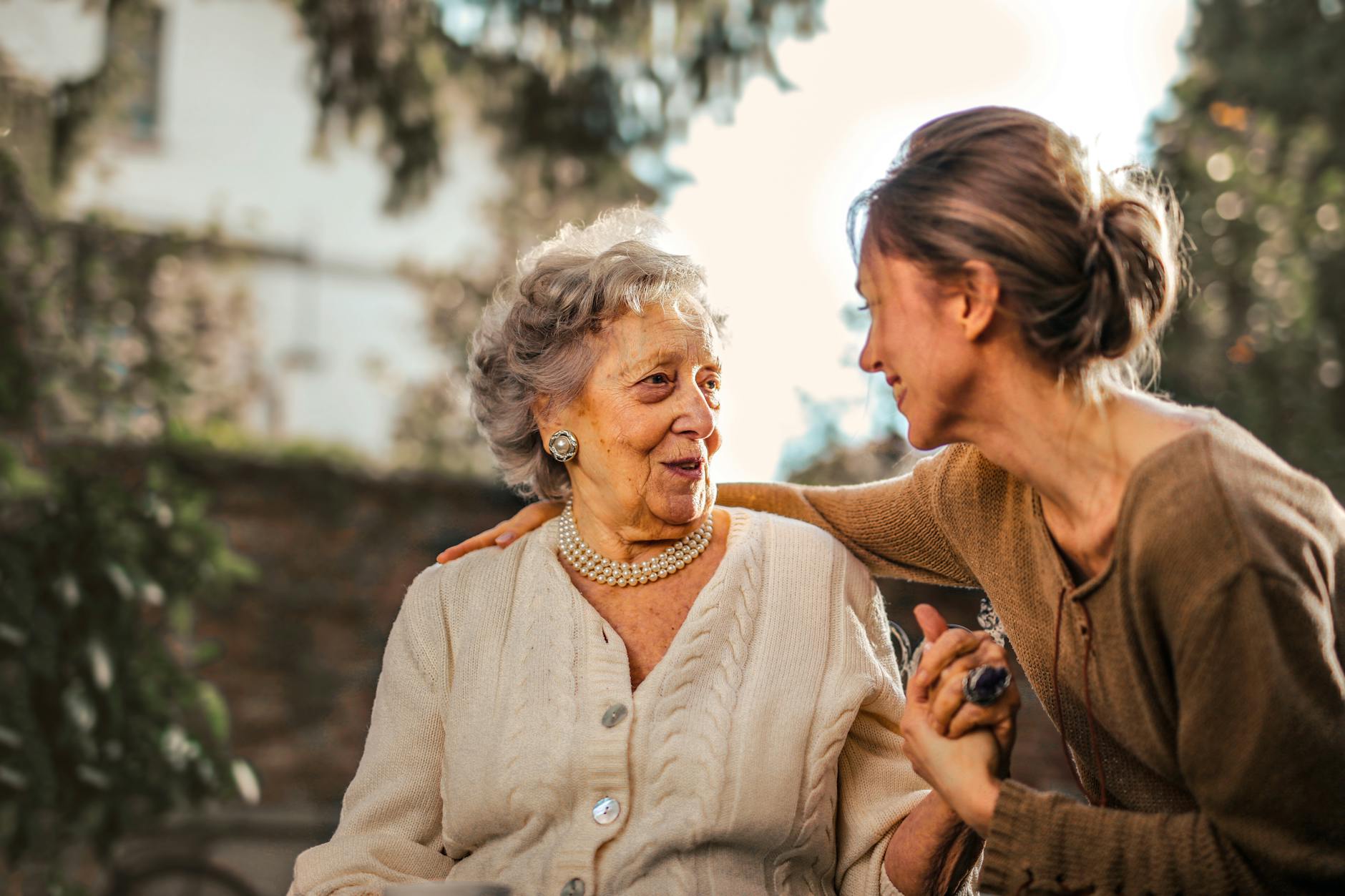
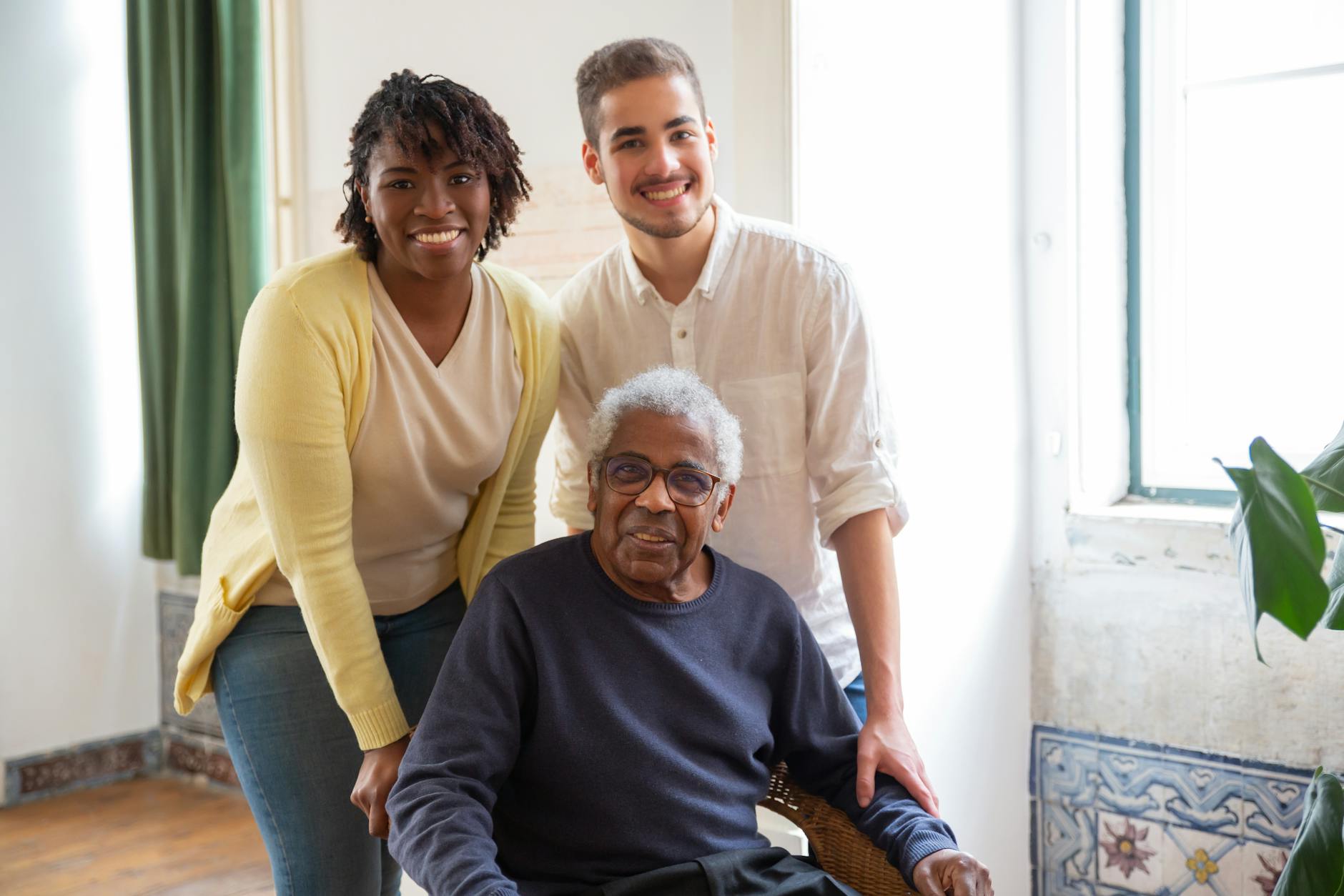
As my mother turned 94 in August 2024, my sister and I took turns caring for her and took time out to celebrate her milestone. I also cared for my mother-in-law until her death in her last years of life in our home and have experienced caring for a parent in their senior and final years. I came across an article that discussed the fears of some individuals in dealing with aging parents. I prepared remarks from it as memory serves and through internet searches on topics debating the subject.

“There is a break in the family history, where the ages accumulate and overlap, and the natural order makes no sense: it’s when the child becomes the parent of their parent.”

It’s when the father grows older and begins to move as if he were walking through fog. Slowly, slowly, imprecisely. It’s when one of the parents who once held your hand firmly when you were little no longer wants to be alone.

I remember when my mother asked me to help her down the stairs. It was a subtle, almost casual request, but its weight sank deep into my chest. She had always been so independent and capable. And yet, there she was, reaching out to me for balance, her hand trembling slightly in mine. It felt like the beginning of a new chapter that neither of us was ready for.

It’s when the father, once strong and unbeatable, weakens and takes two breaths before rising from his seat. My friend Lucy spoke of her father, a man who had always been larger than life, now struggling to remember where he left his glasses. “He used to be so sharp,” she said, her voice thick with the unspoken grief of seeing the man who once seemed invincible begin to fade. 

“Now, it’s like watching a candle burn down.”

It’s when the father, who once commanded and ordered, now only sighs, groans, and searches for the door and window—every hallway now feels distant. And we, as their children, will do nothing but accept that we are responsible for that life.

The life that gave birth to us depends on our life to die in peace. Every child is the parent of their parent’s death. 

Perhaps a father or mother’s old age is, curiously, the final pregnancy—our last lesson—an opportunity to return the care and love they gave us for decades. This sense of duty, though heavy, is a testament to the respect and acknowledgment we have for our parents.

And just as we adapted our homes to care for our babies, blocking power outlets and setting up playpens, we will now rearrange the furniture for our parents. 

The first transformation happens in the bathroom. We will be the parents of our parents, the ones who now install a grab bar in the shower. The grab bar is emblematic and symbolic. 

It inaugurates the “unsteadiness of the waters.” Because the shower, simple and refreshing, now becomes a storm for the old feet of our protectors. We cannot leave them for even a moment.

I once spoke to Sarah, who had installed those grab bars in her mother’s bathroom.

“She used to laugh at the idea of needing help,”

Sarah said, a faint smile on her lips.

“Now, she clings to that bar like a lifeline. And I stand outside the door, listening, ready to rush in if she calls. I never thought I’d have to do that for her.”

The tension in Sarah’s voice was palpable—the love and the frustration, the fear of what was coming, and the bittersweet comfort of being there for her mother.

The home of someone who cares for their parents will have grab bars along the walls. And our arms will extend in the form of railings. Aging is walking while holding onto objects; aging is even climbing stairs without steps. We will be strangers in our own homes. We will observe every detail with fear, unfamiliarity, doubt, and concern.

We will be architects, designers, frustrated engineers. 

How did we not foresee that our parents would get sick and need us? We will regret the sofas, the statues, the spiral staircase, all the obstacles, and the carpet.

But amid this frustration, there are moments of unexpected connection. 

One evening, while helping my father navigate his way to bed, he looked at me with a softness I hadn’t seen before. 

“I’m glad it’s you,” he whispered. You were always the one I could count on.”

At that moment, the roles reversed entirely—no longer just my father, he was now also my child, someone who needed and trusted me. The sweetness of that connection, of being needed in that way, mingled with the deep sadness of seeing him so diminished. 

These moments of connection, however brief, are a source of hope and upliftment amid the challenges of caring for aging parents.

Happy is the child who becomes the parent of their parent before their death, and unfortunate is the child who only appears at the funeral and doesn’t say goodbye a little each day. Being present for our parents in their final years is a duty and a privilege. It’s a chance to repay the love and care they’ve given us and to create lasting memories.

My friend Joseph Klein accompanied his father until his final moments. In the hospital, the nurse was maneuvering to move him from the bed to the stretcher and trying to change the sheets when Joe shouted from his seat:    

“Let me help you.”

He gathered his strength and, for the first time, took his father into his arms, placing his father’s face against his chest.

He cradled his father, consumed by cancer: small, wrinkled, fragile, trembling. He held him for a long time, the time equivalent to his childhood, the time comparable to his adolescence, a long time, an endless time.

By Your Side, Nothing Hurts. He was rocking his father back and forth and caressing his father. Calming his father. And he said softly:

“I’m here, I’m here, Dad!”

At the end of his life, a father wants to hear that his child is there.

There is an inevitable grief in watching our parents age, but also a strange sense of fulfillment in being there for them as they were for us. It is a role we never asked for, yet one we take on with reluctance and a fierce sense of duty. Despite the challenges, there is a deep sense of satisfaction in knowing that we are doing everything possible to make our parents’ final years comfortable and dignified. 

The road is difficult, filled with moments of frustration and exhaustion, but also with love and tenderness—those fleeting instances when the gap between child and parent narrows, and we are simply there for each other, as we always have been.

Some parts of this story have been adapted from an original tale of unknown origin.

Echoes of Laughter: Nights at the Red Barn Café. ~ Cordell, Oklahoma 1968

A Story By: Benjamin Groff© Groff Media 2024© Truth Endures

The sun dipped low over the plains, painting the sky with hues of yellow and burnt orange. As dusk embraced the town, a familiar buzz began to build around the old auction barn. Trucks and trailers, caked in red dirt, lined the gravel lot. The air was thick with the mingling scents of hay, leather, and anticipation. But as the final gavel fell and the last winning bidder of the last horse to sell walked up to the young gelding and led him away, the real excitement shifted just east of the heart of Cordell: The Red Barn Café.

Perched on the corner of Main and Elm, the café’s crimson façade glowed warmly under the neon sign that blinked “Open.” Its rustic wooden doors beckoned the weary and the jubilant alike. A symphony of clinking glasses, spirited chatter, and the occasional burst of laughter filled the room.

Photo is simulated image, it does not represent the actual design of the actual Red Barn in Cordell.

Tonight was no different.

Big Jake JD Groff, a seasoned auction hand with a penchant for tall tales and horse trader, sauntered in, his boots echoing on the worn wooden floor, followed by his son, Benjamin, age 6. Jake tipped his hat to Mary Lou, the ever-smiling waitress who’d been serving slices of pie and pots of coffee since anyone could remember.

“Evenin’, Mary Lou. Got any of that pecan pie left?” Jake drawled.

“For you, Two-Bit? Always,” she winked, scribbling his order.

At the corner booth, a group of cowboys huddled close, their hats resting on the table, revealing sweat-stained brows and sunburned necks. Among them was young Delmer Scott, with a bearded-faced and eager, attending his 100th auction. His eyes sparkled as he recounted his purchase. He was known to everyone as “Scott!”

“Got me a real beauty tonight,” Scott boasted, his voice brimming with pride. “A chestnut mare, strong legs, and a spirit that’d make the wind jealous.” 

Jake, his best friend, said to him,

“‘You SOB, you bought a goddamn jackass, and you know it!”

Scott shot back, Groff,

“you lying bitch, you’re just jealous because you bought a goddamn nearly dead 30-year-old plow horse that is about to keel.”

Old Man Harris, a legend in these parts, chuckled softly, his grey mustache twitching.

“Son, every horse looks like a winner under those auction lights. Wait till you’re trying to saddle her on a cold morning.”

The table erupted in laughter, the kind that warms the soul. This type of banter draws crowds to the Red Barn after auctions every Saturday Night. The food and service are the icing on the cake.

Near the jukebox, which softly crooned Patsy Cline tunes, a group from out of state compared notes. They’d driven from Texas, lured by tales of the Cordell auctions. Amid shared stories and friendly ribbing, they marveled at the community’s camaraderie.

“It’s like we’ve known y’all our whole lives, if we may; it’s the damnest thing we ever saw!” 

One of them mused, raising a mug of steaming coffee.

As the night wore on, tales grew taller. Jake recounted the time he supposedly outbid a millionaire from Tulsa with just “a wink and a handshake,” while Mary Lou swore she saw Elvis pass through town once, stopping by for a slice of her famous pie.

But beneath the banter and jest, there was an unspoken understanding. These nights at the Red Barn Café were more than just post-auction gatherings; they were the threads that wove the community together. In a rapidly changing world, where traditions faded, and new ways emerged, this little café stood as a testament to simpler times.

By 2:00 AM, as the crowd began to thin and the neon sign’s glow dimmed, the stories had been told, deals celebrated, and friendships fortified. Clutching a worn napkin filled with advice scribbled by his newfound mentors, Scott loved the warmth that had little to do with the strong coffee, but be damned if he’d ever say anything about it around Jake!

Benjamin stepped out into the fantastic night with his dad, Jake. He glanced back at the Red Barn Café, its silhouette etched against the starlit sky. Like so many before him, he knew those smoking, cussing, and storytelling friends who gathered had memories forged within their souls that would be cherished for a lifetime.

Decades later, the tales of Saturday nights at the Red Barn Café in Cordell, Oklahoma, would become legends as the world moved on. Stories of laughter, camaraderie, and the indelible spirit of a community bound by shared passions and dreams were only folktales of a time gone by; the Red Barn had been torn down, and its memory erased for generations. The true legends of those days are left to a few who remember Saturday Nights at the Red Barn Cafe in Cordell, Oklahoma!

The Legend of Chuck McCready: The Philly Cheesesteak Incident

A Story By: Benjamin Groff© Groff Media 2024© Truth Endures

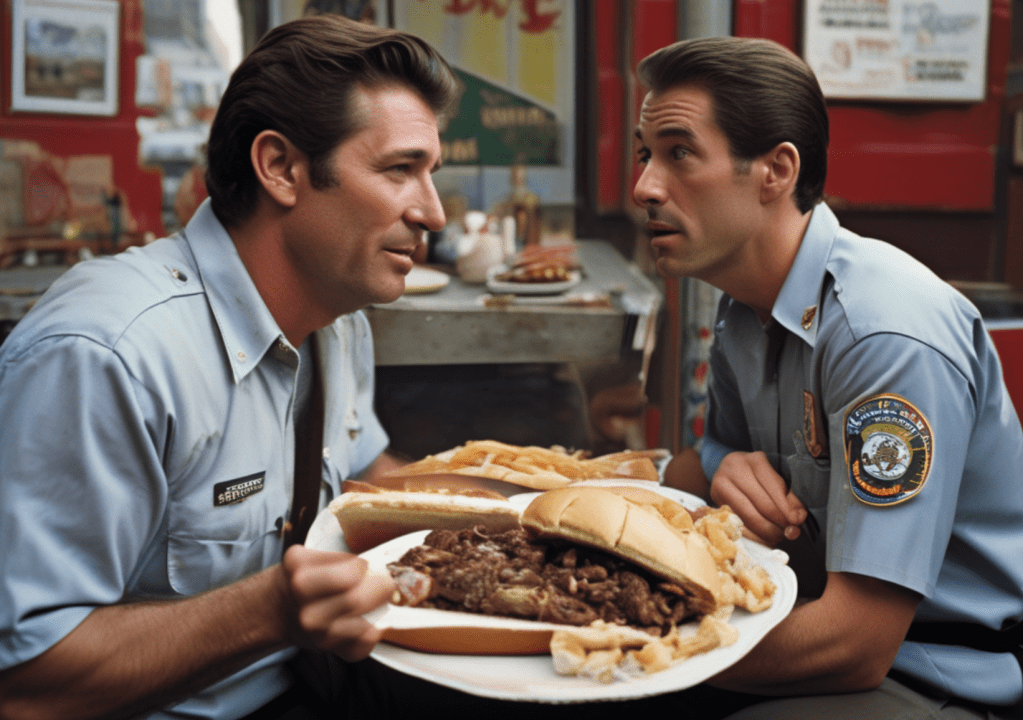
In the late 1980s, in the heart of Philadelphia, there was a small, hole-in-the-wall cheesesteak joint called “Tony’s Grub Hub.” The scent of sizzling beef and onions filled the air, and the line for a classic Philly cheesesteak often wrapped around the block. Among the regulars was a local character named Chuck McCready, a fierce, well-loved figure in the neighborhood known for his larger-than-life personality and his deep, almost spiritual love for Philadelphia’s favorite sandwich.

Chuck was a man of principle and passion who never took kindly to the concept of “rules,” especially those that got in the way of a good meal. One fateful evening, Chuck was seated at his usual spot in Tony’s, about to dig into his third cheesesteak of the night—a massive, dripping monster of a sandwich stuffed with extra meat, onions, and a double helping of cheese whiz.

But as Chuck was about to take his first bite, a group of police officers entered the establishment. They had received reports of someone fitting Chuck’s description causing a disturbance in the area earlier that day. They approached Chuck, asking him to step outside for questioning.

Not one to back down, Chuck looked up from his cheesesteak, his hands still clutching the sandwich, and growled, “What’s the charge? Eating a cheesesteak? A succulent Philly cheesesteak?”

The officers, taken aback by his unexpected response, insisted he come quietly. Now fully immersed in the moment, Chuck stood up, holding his half-eaten cheesesteak high like a wand. “This is America, baby!” he bellowed, “Home of the free, where a man can enjoy his meal in peace!”

What happened next was a chaotic scene of Chuck getting dragged out of the restaurant, still holding his cheesesteak, shouting about his rights, and demanding to know why a man couldn’t enjoy a simple meal without being harassed. As the officers tried to force him into the squad car, Chuck continued his tirade: “Is this how we treat a cheesesteak lover in Philly? America is a democracy! My actions are freedom manifest!”

The incident was caught on camera by a passerby and quickly went viral. With Chuck’s impassioned defense of his right to eat a cheesesteak, the video resonated with people across the country. Memes of Chuck McCready declaring “This is freedom manifest!” while clutching a cheesesteak became an overnight sensation.

Years later, Chuck McCready became a folk hero, a symbol of defiance and the right to enjoy life’s simple pleasures. His story was told and retold, often with embellishments, but always with the same core message: no one comes between a man and his cheesesteak in America. His iconic catchphrase, “What’s the charge? Eating a cheesesteak?” became a rallying cry for those who valued freedom and a good meal.

Chuck McCready, the man who stood up for his right to enjoy a succulent Philly cheesesteak, became a legend in the city of brotherly love and is forever remembered as the Cheesesteak Defender.

The First Man To Buy A Car In Town – The Model T Pioneer of Binger, Oklahoma

A Story by Benjamin Groff©II – Groff Media2024© Truth Endures

He was the first to buy a Model T in a town east of his farm. I am referring to Benjamin Groff I. The guy everyone called “Pop” was my grandfather. He was not a flashy guy. He wasn’t wealthy. He was a farmer on the lower plains who had survived the Dust Bowl and made a living on the scant meager crops that grew in the 1930s; he battled through the shortages of provisions to provide for his family from 1911 to when his wife died in 1975.

Sometime before 1920, he rode a draft (draught) horse to a small town where a horse trader had just opened a Ford dealership. His mission was not to get a car. It was to sell his horse, get items for the farm, and maybe a pony in trade.

My grandfather was a talker just as quick in his elder years. He must have been a whiz when he was young. He could quietly engage you in a conversation and have you change your view on a subject without knowing how or when you did. And he was good at it. He must have done some slick horse trading because he left the Ford dealership with a New Model T, $100, and an unrestricted driver’s lesson.

He was the first to buy a Model-T in Binger, Oklahoma, and drive to a farm West of Eakly, Oklahoma, in Caddo County. His wife, Florence, who everyone affectionately referred to as “Mom,” stepped out of their kitchen door and pouted out,

“Oh Lord, what have you done now, Pop?”

Replying proudly, Pop said –––

“Ma Ma Mom, I went and traded that dead head for us a motorized buggy and a way to get around where we will be warm and dry!”

News of Pop’s new car spread like wildfire in the countryside. Their kids had already dashed out of the house and clambered into the vehicle. The oldest had sprinted down the road to the neighbors, proudly announcing their newfound ‘riches ‘. As the news rippled from home to home, a sense of shared excitement and anticipation filled the air. Everyone wanted Pop to accompany them for horse trading, to help them secure a car. It was the start of a bustling Spring, filled with shared goals and a united sense of purpose.

The request for bartering went on for months, and finally, Pop had to stop people coming over and say look, I have to get my crops in for the summer; if you want to help me plow my fields and get my livestock ready for sales I will be glad to catch your bartering, but I am so far behind I won’t be able to feed my family. So when do you want to come over? The calls stopped except for one.

A lady named Loranne had six children and was single. The oldest child was a boy about 15, then a girl about 13, another boy about 10, a boy about 8, a boy about 6, and a baby girl about 2. Her husband had died in a farming accident two years ago. She lived alone with them and had no means of support except for the work she took in from neighbors, such as ironing, washing, helping with food, watching children for families, etc.

Loranne said –––

“If you can help me get a car, I will plant your fields and care for your animals. You won’t have to do anything.”

Pop said to her –––

“You won’t do no such thing; your two oldest boys and mine and I will get the crops and livestock taken care of; you can help Mom around the house and do whatever you need for your home. You take care of your children!”

Loranne was grateful for the opportunity and agreed to begin working bright and early the following day.
Pop’s farm, once a quiet expanse of land, now buzzed with life and activity. Loranne’s boys, alongside Pop’s children, worked tirelessly in the fields. Their laughter and shared experiences brought a renewed sense of hope and camaraderie to the farm. Under Pop’s wise guidance, the boys learned the intricacies of farming, infusing the farm with fresh energy and determination. The farm had transformed into a vibrant community hub, a testament to the power of collaboration and shared goals.

Mom and Loranne quickly formed a close bond. While the boys were out in the fields, the women would work together in the house, preparing meals, mending clothes, and sharing stories. Mom’s gentle nature complemented Loranne’s resilience; together, they created a warm and welcoming home for all the children.

Days turned into weeks, and the farm began to flourish. Pop and the boys plowed the fields and planted the crops, and the livestock was well cared for. The hard work and cooperation paid off, and the farm soon thrived once again. Pop kept his promise to help Loranne get a car. After a successful summer harvest, he took her to the Ford dealership, and with his keen negotiating skills, he secured a reliable Model T for her and her children.

The day Loranne drove her new car back to her home was a moment of triumph for everyone involved. The children cheered and joy filled Loranne’s eyes as she thanked Pop and Mom for their generosity and support.

Pop smiled and said, ––––
“We’re all in this together, Loranne. That’s what neighbors are for.”

As the years passed, the bond between the two families grew stronger. The children grew up, and the farm continued to prosper. Pop’s act of kindness had a lasting impact, changing the lives of Loranne and her children. It also brought the community closer together. His legacy of compassion, hard work, and generosity lived on through the stories passed down by those who knew him, a beacon of hope and inspiration for future generations.

And so, the tale of Pop, the first man in town to buy a Model T, became more than just a story about a car. It was a testament to the power of community, the strength of the human spirit, and the enduring impact of one man’s kindness.

 A Blinding Prank That Wasn’t FoolProof

A Story By Benjamin H Groff© Groff Media Copyright 2024©

In the small town of Havenbrook, two blind men, Al and Bert, were renowned for their cunning and mischievous antics. Despite their lack of sight, they possessed a sharp wit and an uncanny ability to navigate the world around them. They orchestrated elaborate practical jokes daily, relishing in the townspeople’s reactions.

Yesterday, Al and Bert made an unusual purchase: a driverless car. They had saved up for months, and now their latest scheme was about to unfold. The sleek, shiny vehicle arrived at their doorstep, and the two friends couldn’t contain their excitement.

“This is going to be legendary!” Al exclaimed, his face lighting up.

Bert nodded, grinning from ear to ear. “Let’s give Havenbrook a show they won’t forget.”

That morning, Al and Bert put on a show. They dressed in a deliberately disheveled manner, with their clothes inside out and their hair tousled. They staggered down the street, feigning confusion and disorientation. The townspeople looked on in bewilderment as the two blind men stumbled around, bumping into things and seeking directions.

“Excuse me, can you help us? We seem to have lost our way,” Bert asked a passerby, his voice trembling with fake desperation.

The kind-hearted woman pointed them in the right direction, her face filled with concern. Al and Bert thanked her profusely before stumbling off in the opposite direction, leaving the woman and the other townspeople in a state of amused bewilderment.

Their antics continued throughout the day, with Al and Bert putting on an Oscar-worthy performance. They wandered into shops, interrupted conversations, and generally caused chaos wherever they went. Each time someone offered help, the duo responded with exaggerated confusion, leaving the townspeople scratching their heads and bursting into laughter at the same time.

By midday, they decided it was time to unveil the pièce de résistance. Al and Bert climbed into their driverless car, pretending to argue about who should take the wheel.

“You drive, Al! I can’t see a thing!” Bert insisted, his voice rising in mock panic.

“Neither can I, you fool! We’re both blind!” Al shot back, throwing his hands up in frustration.

The car, programmed to respond to voice commands, smoothly pulled out of the driveway and began its route through town. The sight of two blind men driving a car sent shockwaves through Havenbrook. People gawked, some laughed, and others chased after the vehicle, shouting warnings and pleas for them to stop, adding to the chaotic and humorous scene.

Inside the car, Al and Bert were beside themselves with laughter. They marveled at the chaos unfolding outside, their faces aching from so much smiling.

“Look at them! They think we’re driving!” Al gasped, clutching his sides.

Bert nodded, tears of joy streaming down his cheeks. “Best prank ever!”

The car continued its journey, obediently following its pre-programmed path. Realizing they got duped again, the townspeople couldn’t help but chuckle at the elaborate ruse. Al and Bert’s reputation as the town’s resident tricksters became cemented even further.

As the day drew close, the car returned to their home, and the two friends climbed out, exhausted but exhilarated. They high-fived each other, basking in the success of their latest prank.

“Well, Bert, we’ve done it again,” Al said, a satisfied smile on his face.

Bert nodded in agreement. “Indeed we have, Al. Indeed we have.”

In the days that followed, the story of the blind men and their driverless car became the stuff of legend in Havenbrook. Al and Bert continued their daily pranks, always finding new ways to keep the townspeople on their toes. And though their sightless eyes never saw the results of their efforts, their hearts were full of the joy and laughter they brought to their beloved town.

Solemn Reflections: Memorial Day and the Spirit of Sacrifice

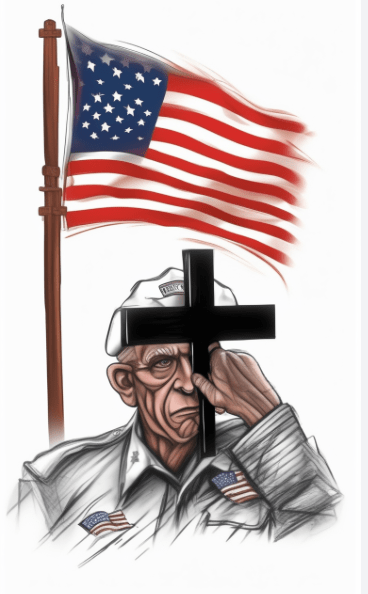
As the sun rose over the small town of Oakwood, its warm rays illuminated the rows of white headstones in the Oakwood Cemetery. The city, steeped in a rich history of honoring fallen soldiers, had always observed Memorial Day with solemn pride. This day, originally known as Decoration Day, was established after the Civil War to commemorate the Union and Confederate soldiers who died in the war. It has since evolved to honor all Americans who have died in military service.

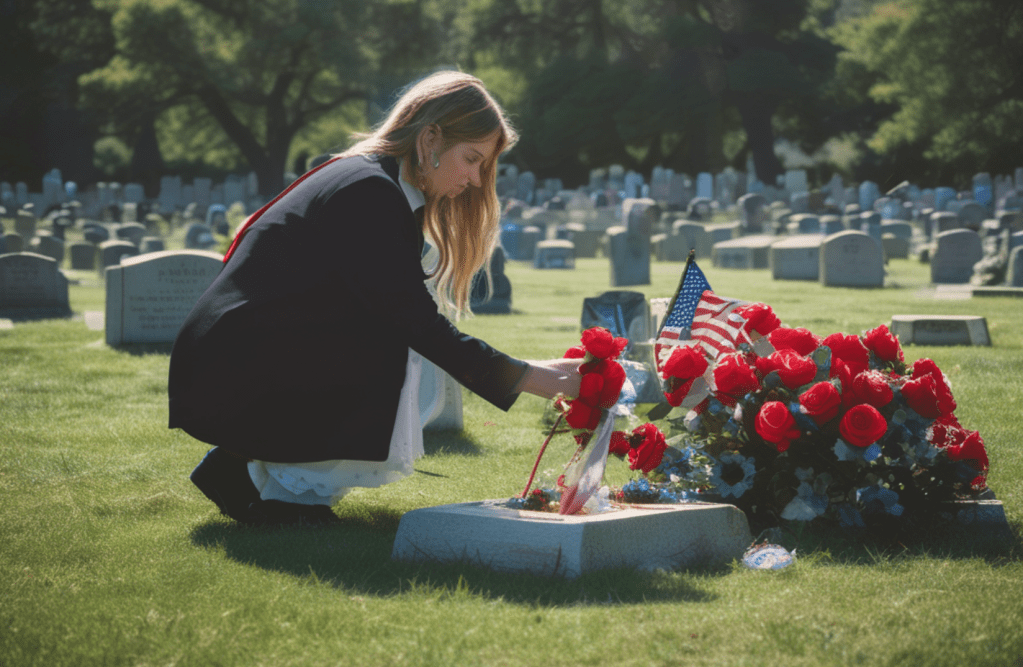
Sarah Thompson stood at the cemetery’s gate, holding a bouquet of red, white, and blue flowers. She was in her late thirties, her eyes reflecting sorrow and strength. Visiting the cemetery was her yearly ritual—a pilgrimage to visit the grave of her brother, Daniel, who had died in Afghanistan a decade ago.

As Sarah walked along the gravel path, she remembered the day they received the news. It had been a bright summer afternoon, much like today. Daniel had always been a source of light and joy in their family, with his infectious laughter and boundless energy. The knock on the door that day had shattered their world.

Sarah reached Daniel’s grave and knelt, gently placing the flowers in front of the headstone. She traced her fingers over his name etched in the cold stone and whispered a prayer. Memories flooded back—playing tag in the backyard, late-night talks about their dreams, and the tearful goodbye when he left for his final deployment.

The cemetery, a place of collective grief and remembrance, began to fill with others who had come to pay their respects. Families, friends, and fellow veterans moved among the graves, their shared sorrow palpable in the air. Some walked in silence, their thoughts a private tribute, while others shared stories, their voices a collective echo of the lives lost.

A familiar voice broke Sarah’s reverie. “Hey, Sarah.”

She turned to see Tom, one of Daniel’s best friends from high school, standing nearby. He held a small American flag, which he placed at the base of the headstone. Tom had served alongside Daniel and had been with him during his last moments.

“It’s good to see you, Tom,” Sarah said, her voice soft.

Tom nodded, his eyes filled with shared grief. “I come here every year. Feels like the least I can do.”

They stood in silence for a moment, their hearts heavy with the weight of their loss. Each lost in their thoughts, memories of Daniel flooding their minds. Then Tom began to speak, his voice steady but emotional, his words a testament to the bravery and selflessness of their fallen friend. ‘Daniel was the bravest person I knew,’ he said, his voice breaking with emotion. ‘He always put others before himself. Even in the end, he worried more about us than his safety.’

Sarah smiled through her tears. “That sounds like him.”

The morning wore on, and more people arrived, each carrying their own memories and gratitude. A group of children from the local school, accompanied by their teachers, placed flags on the graves of all the fallen soldiers, a symbol of their respect and understanding of the sacrifices made. The town’s mayor gave a short speech, his words echoing with the collective gratitude and remembrance of the community. A local choir sang ‘America the Beautiful,’ their voices a poignant reminder of the unity and strength that comes from shared values. The collective remembrance was a powerful testament to the sacrifices made by so many.

As the ceremony ended, Sarah and Tom lingered by Daniel’s grave a little longer. They shared stories, laughed, and cried, finding comfort in each other’s company.

“Thank you for being here,” Sarah said as they prepared to leave.

“Always,” Tom replied. “He was my brother, too.”

They returned to the cemetery gate together, the sun now high in the sky. As Sarah looked back one last time at the sea of white headstones, she felt a sense of peace. Memorial Day was not just about remembering the fallen; it was about celebrating their lives and the values they stood for.

Driving home, Sarah contemplated the significance of this day and how she would pass on its importance to her children. She understood that as long as they remembered, Daniel’s spirit would continue to live on. Every Memorial Day, she would return to this hallowed ground, ensuring that the memory of her brother and all those who had made the ultimate sacrifice for their country would never fade.

In checking references part of this story may include referencese similar to others found on the internet. The simularities are incidential and are not included intentional. You can find more these simularities RE: New York. Memorial Day. Monument. Dead Soldier. Wheelchair. Handicapped Boy. | Didier Ruef | Photography. https://www.didierruef.com/gallery-image/Aura/G0000Is39GN2Av9w/I0000aHlCvWVZLNc/C0000EU0LcXmMzWo/ 

The Heartwarming Story of Jello: From Community Beloved Dog to Honorary Mayor of Millbrook

Jello, a spirited dog with golden fur, floppy ears, and a tail that wagged like a metronome, lived in the quaint town of Millbrook. He was a free spirit, beloved by all, and a fixture of the community, embodying the warmth and unity of Millbrook.

Jello had his routines. Every morning, he would trot to the bakery where Mrs. Thompson would have a fresh scone waiting for him. Then, he’d visit the school playground, where children would shower him with affection and sneak him bits of their lunches. Jello often spent afternoons lounging in the sun outside the library, where Mr. Caldwell would read to him from the latest novels. By evening, he would make his rounds at the town square, greeting everyone with a joyful bark before curling up under the big oak tree for the night. The community’s love for Jello was palpable, creating a sense of unity and togetherness.

The townspeople adored Jello so much that someone humorously suggested nominating Jello for Mayor when the mayoral election came around. The idea quickly gained traction. “Who better to represent our town than Jello?” they said. “He’s loyal, kind, and brings everyone together.” And so, in an unprecedented turn of events, Jello’s name appeared on the ballot.

As the election drew near, excitement buzzed through Millbrook. Posters of Jello, donning a makeshift mayoral sash, adorned shop windows and bulletin boards. The slogan “A Mayor Who Cares” echoed through the streets. But a week before the election, something terrible happened: Jello went missing.

Panic spread like wildfire. Where could he be? The entire town, deeply concerned, rallied to search for him. Kids formed search parties, calling his name through the woods and fields. Shopkeepers closed early to join the search; even the local police were on high alert. There were flyers everywhere: ‘Missing: Jello. Our Town Hero. Please Help!’. The town’s reaction to Jello’s disappearance was a testament to their deep empathy and concern.

As days passed with no sign of Jello, whispers of foul play began to circulate. The thought was too dreadful to bear, but the town’s unity shone through their worry. They held candlelight vigils, their collective hope a beacon in the darkness, a testament to their resilience and unity.

On the eve of the election, a familiar bark echoed through the town square just as hope was waning. It was Jello, looking a bit dirty and tired but otherwise unharmed. The townspeople greeted Jello with cheers and tears of joy. Mr. Caldwell, who had been leading a search party near the old mill, found him trapped in an abandoned shed, likely having chased a squirrel inside and gotten stuck.

The town’s relief was palpable. Shopkeepers cleaned him up, fed him his favorite treats, and gave him more attention. Election day arrived, and with Jello safe and sound, the town celebrated their unusual but heartwarming choice for Mayor. After tallying the votes, it was no surprise that Jello won by a landslide. Although the title of Mayor was symbolic, the gesture embodied the spirit of Millbrook: a community united by love, kindness, and the belief that sometimes the best leaders remind us of the simple, unspoken bonds we share.

Jello, the dog who roamed freely but belonged to everyone, was now the honorary Mayor of Millbrook. His tale became a cherished legend, reminding all who heard it of the power of community and the unexpected ways in which leaders can emerge.

The Paradox of Charlie North

The man whose loving heart brought conflict and rift with unexpected rewards he showered on others.

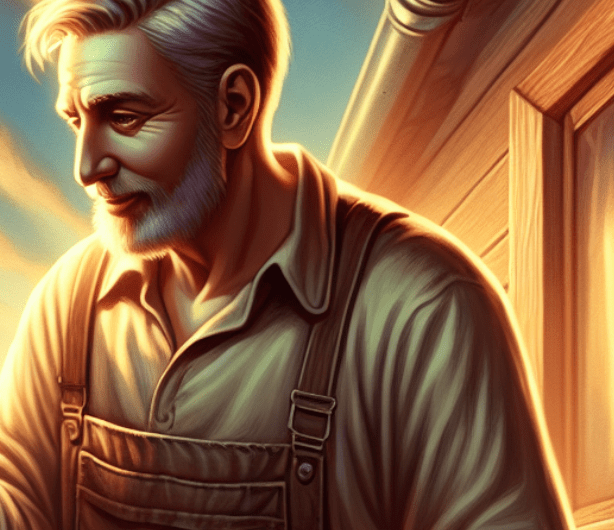
Charlie North was a familiar figure in the small town of Millbrook, known for his heart as expansive as the sky. He would readily abandon his own tasks to assist a neighbor with a leaky roof or chauffeur an elderly friend to a medical appointment. His acts of kindness and warmth were unparalleled, and everyone who crossed paths with Charlie held a special place for him in their hearts.

Yet, Charlie’s well-intentioned nature had a flip side that often led to discord: he was overbearing. His eagerness to assist frequently transformed into a forceful insistence that his approach was superior, and his constant involvement in others’ lives often left them feeling suffocated. This dichotomy of love and overbearingness earned him a mixed reputation.

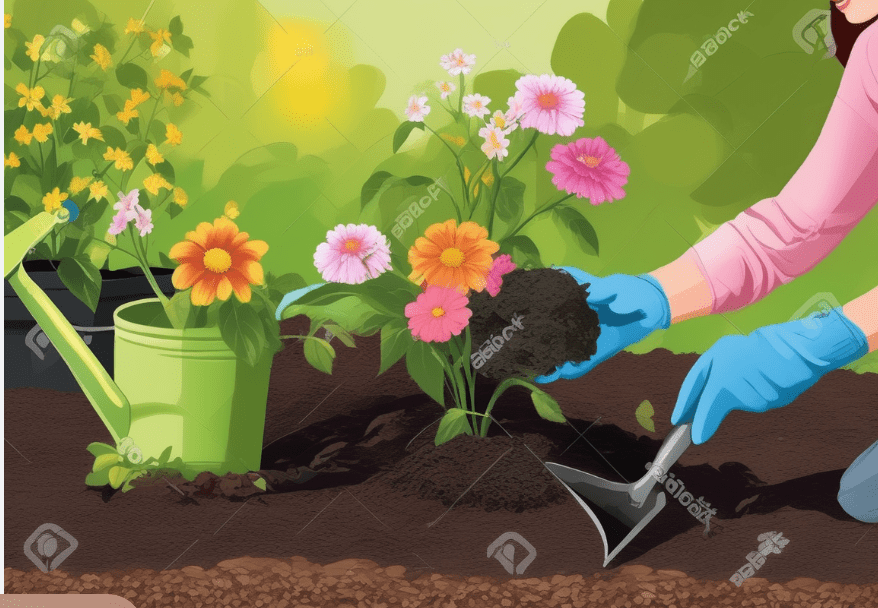
One sunny morning, Charlie decided to help Mrs. Henderson with her garden. The widow was grateful for the help but soon became overwhelmed by Charlie’s detailed plans and strict schedules. He dictated the type of flowers to plant, the precise soil mixture, and the exact watering schedule. Mrs. Henderson, who enjoyed gardening as a leisurely and personal hobby, felt her joy drained by Charlie’s micromanagement.

“I appreciate your help, Charlie, but I think I’d like to do some of this on my own,”

Mrs. Henderson said, trying to sound polite.

Charlie was taken aback. He wanted to help, but he needed help to see how his thorough plans were anything but beneficial.

“But, Mrs. Henderson, if we don’t follow the schedule, the flowers won’t thrive as they should,”

he insisted.

As the weeks went by, similar incidents unfolded. At the community bake sale, Charlie’s meticulous organization turned into a rigid control. Initially, the townsfolk appreciated his dedication, but soon they felt stifled and unappreciated. The once vibrant community events started to lose their charm, replaced by a silent resentment towards Charlie’s overbearing ways.

One evening, as Charlie sat on his porch, his lifelong friend, Tom, joined him. Tom was one of the few people who could speak candidly to Charlie.

“Charlie, I’ve known you forever,” Tom began gently. “You’ve got a heart of gold, but sometimes you don’t realize how you come across to others.”

Charlie frowned, puzzled. “I just want to help, Tom. I want everything to be perfect for everyone.”

“I know you do, and that’s what makes you so special,”

Tom said, choosing his words carefully.

“But people need space to make their own choices, even if things don’t turn out perfectly.”

Determined to change, Charlie began to pull back. He continued to offer his help, but he consciously tried to listen more and dictate less. Charlie volunteered at the next community event but let others take the lead. He bit his tongue when things didn’t go as he would have planned, learning to appreciate the different ways people approached problems.

It was a difficult adjustment for Charlie, and he often felt the urge to step in and take control. But slowly, he noticed a difference. Mrs. Henderson’s garden flourished in its way; it was not perfect, but vibrant and full of life. The bake sale was a chaotic success, filled with laughter and camaraderie. People began to welcome Charlie’s presence again without the undercurrent of tension that had once accompanied his help.

Over time, Charlie found a balance. He channeled his love and generosity in ways that empowered others rather than overshadowing them. He was still the same Charlie North—big-hearted and always ready to lend a hand—but had learned to temper his overbearing nature. This transformation made him not only loved but truly appreciated, a testament to the power of self-awareness and the enduring strength of a loving soul.

That night, Charlie lay awake, wrestling with Tom’s words. He reflected on the times his help had been more of a hindrance, the faces of his friends and neighbors flashing through his mind—grateful at first but then strained and unhappy.

And so, Charlie’s story became one of growth and redemption, a testament to the power of self-awareness and the enduring strength of a loving soul.

Riverton Police: A Night in the Life of Detectives Jake and Sam

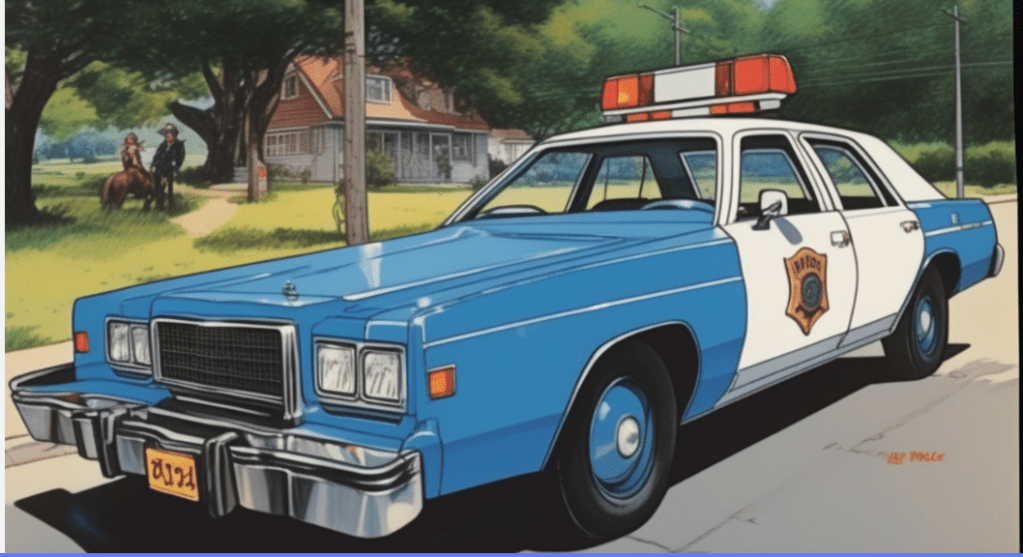
The city of Riverton never slept, nor did Detectives Jake Harris and Sam O’Reilly. Partners for over a decade roamed the nocturnal streets with the kind of synergy only best friends could muster. Their squad car, an unremarkable blue-and-white cruiser, was a beacon of hope for some and a symbol of fear for others.

Jake, with his gruff exterior and piercing blue eyes, was the kind of cop who could read a crime scene like a book. Sam, a lean figure with a quick wit and a knack for defusing tense situations, complemented Jake perfectly. Together, they led the department in felony arrests, arriving at calls faster than anyone else and building relationships with the community that others could only dream of.

One brisk autumn night, their radio crackled to life with a call that made their hearts race: an armed robbery in progress at the 24-hour diner on 5th and Maple. Without a word, Jake hit the lights and sirens, and they sped through the dimly lit streets. They arrived in just under three minutes, a record even for them.

The diner was eerily quiet as they approached, save for the distant hum of neon lights. Inside, a masked man brandished a gun, demanding cash from the terrified cashier. Jake motioned for Sam to flank the back entrance while he took the front.

Jake entered slowly, his voice calm but authoritative. ––––

“Riverton PD, drop the weapon and come out with your hands up.”

The gunman whipped around, eyes wide with panic.

From the rear, Sam’s voice cut through the tension.

“No, you won’t. You don’t want to hurt anyone. Put the gun down, and we can talk.”

The gunman’s grip on the weapon faltered. In that split second, Jake lunged forward, disarming him with a swift, practiced motion. Sam was at his side instantly, cuffing the man and guiding him to the squad car.

As they processed the scene, the cashier, a young woman named Maria, approached them with tears in her eyes.

“Thank you. I don’t know what would’ve happened if you hadn’t come.”

Jake gave her a reassuring nod. “Just doing our job, ma’am.”

The rest of the night was a blur of paperwork and patrols. But their most memorable interaction came just before dawn. While cruising through a quieter part of town, they spotted a boy sitting alone on a bench, clutching a backpack to his chest. They pulled over, and Sam approached him gently.

“Hey there, buddy. Everything alright?”

The boy, who couldn’t have been more than ten, looked up with tear-streaked cheeks.

“I ran away from home. My parents are always fighting.”

Sam sat next to him, listening with the patience of a father and says –––

“I get it, kid. Sometimes, home can be tough. But running away won’t solve anything. Let’s get you back home and see if we can help sort things out.”

Jake contacted the boy’s parents while Sam spoke with him. The sun was peeking over the horizon when they returned the boy home. Now more worried than angry, the parents hugged their son tightly and thanked the officers.

As they drove back to the station, Jake glanced over at Sam, sighs then says –––

“Another night, another set of stories, huh?”

Sam chuckled. “Wouldn’t have it any other way.”

In Riverton, one could become a legend in the shadows, and for Jake and Sam, every night was another chance to protect and serve, forging connections and fighting crime in ways that others could only admire.

Verdantia: The Rainbow City and the Festival of Lumina

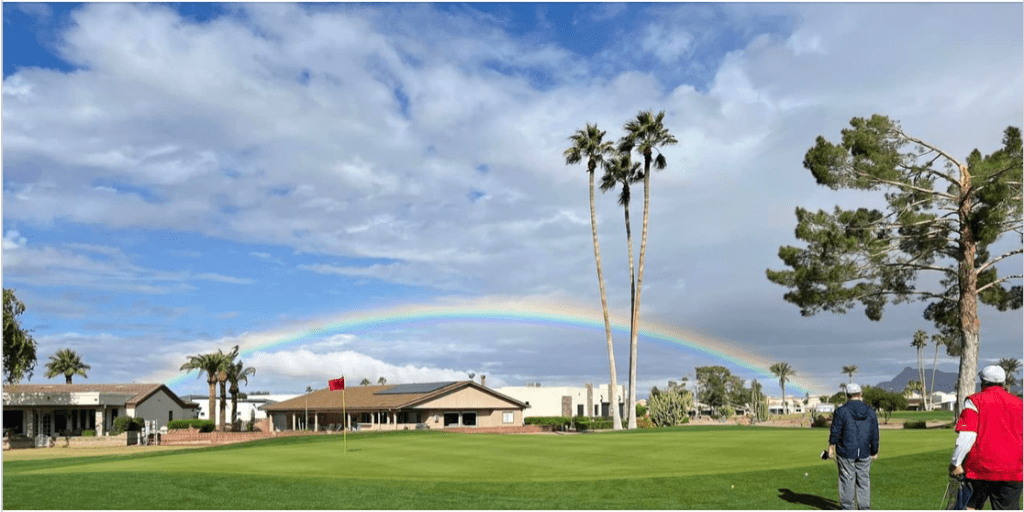
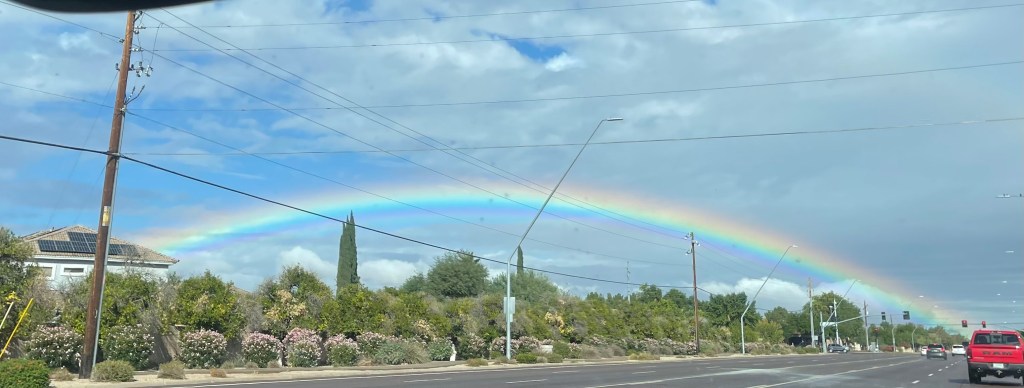
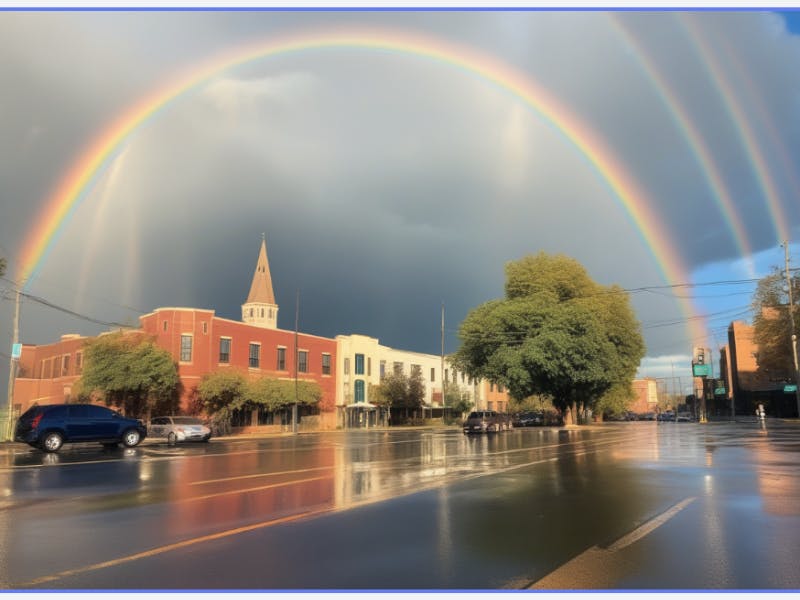
Once upon a time, in a small, unassuming town named Verdantia, an extraordinary phenomenon brought magic to the lives of its residents. Verdantia was known for its picturesque streets lined with red-brick buildings and verdant trees, but what truly set it apart was its ability to produce the most stunning rainbows anyone had ever seen.

One late afternoon, after a sudden downpour, the clouds parted, and the sun cast its golden rays across the wet streets. As the townsfolk went about their business, a magnificent rainbow began to form, arching over the town’s central square. It wasn’t just any rainbow; it was a double rainbow, with vibrant colors so vivid they seemed almost tangible.

The people of Verdantia, who had grown accustomed to the beauty of rainbows, stopped in their tracks, mesmerized by the sight. The rainbow appeared to touch down at two significant landmarks in the town—the spire of the old church and the ancient oak tree standing proudly at the intersection of Main Street and Elm.

As legend had it, Verdantia was a place where rainbows were believed to be portals to realms of wonder and enchantment. The townspeople knew this was no ordinary occurrence. The elders of the town, keepers of its history and secrets, gathered quickly. They had long awaited the appearance of such a rainbow, a sign foretold in their lore that marked the beginning of a special event known as the Festival of Lumina.

The Festival of Lumina was a rare celebration that took place once every hundred years, marked by a rainbow so grand that it stretched across the sky, connecting the past with the future, the ordinary with the extraordinary. This festival was a time when the boundaries between the human world and the world of magic blurred, allowing dreams and reality to intertwine.

As the double rainbow shimmered, a soft, melodic hum filled the air. Children giggled with delight, and adults felt a warm, nostalgic pull at their hearts. The air around the rainbow seemed to sparkle, and for a moment, time itself felt as if it had slowed down. From the base of the rainbow at the church, a figure emerged—a guardian of the ancient lore, known as Seraphina, the Keeper of Light.

Seraphina, with her radiant presence and flowing silver robes, held out a staff that glowed with the colors of the rainbow. She spoke in a voice that resonated like the soft chime of bells, “People of Verdantia, the time has come to celebrate the Festival of Lumina. Today, the veil between worlds is thin, and the magic of the rainbow is at your command.”

The town erupted in joyous celebration. Musicians played enchanting melodies, artisans displayed their finest crafts, and bakers offered sweet treats that seemed to shimmer with a magical glaze. Children ran around, chasing the elusive ends of the rainbow, hoping to find hidden treasures and secret wonders.

As evening fell, the rainbow’s glow intensified, casting a luminous light over Verdantia. The townspeople gathered under the ancient oak tree, where Seraphina led a ritual to honor the rainbow and its magic. She spoke of unity, hope, and the power of dreams, encouraging everyone to embrace the wonder within their hearts.

The Festival of Lumina continued through the night, with stories of old being shared around bonfires, and dances that seemed to weave through the very fabric of the rainbow’s light. As dawn approached, the double rainbow slowly faded, but the magic lingered in the hearts of the people.

Verdantia, forever touched by the beauty and enchantment of the rainbow, became a place where dreams were cherished, and the magic of the Festival of Lumina was remembered and celebrated in smaller ways every day. The rainbow city, as it came to be known, stood as a beacon of hope, joy, and the enduring power of wonder.