Before It Gets Ignored By Governing Bodies – History Should Be Reported Far And Wide – Like the Camp Logan Disgrace In Texas

Sharing the history that some would rather hide, destroy, or deny is important. This truth must be told. It’s the very principle on which these United States were founded.

4–5 minutes

Sixty-three black soldiers were represented by one lawyer in the
largest court martial in U.S. history, the first of three that followed
the Houston riot of 1917. In total, 110 men out of 118 were found
guilty, and nineteen were sentenced to death by hanging.

Red Paint, Red History: Camp Logan’s Vandalized Truth

In the wake of Hurricane Harvey’s devastation in September, Houston crews were still hauling out debris. They were drying soaked walls when they stumbled upon something different. Red paint was smeared in thick defiance across a freshly rededicated historical marker at the former site of Camp Logan.

The vandals knew what they were doing. The paint wasn’t random—it covered the part of the inscription that told the uncomfortable truth:

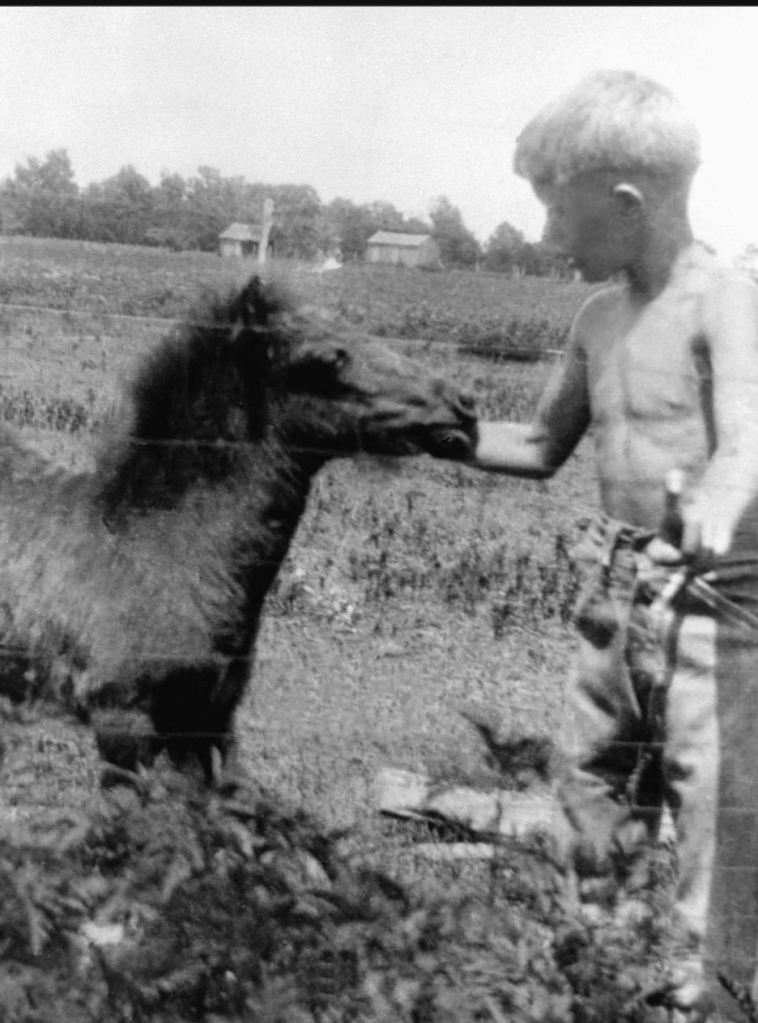
Jesse Moore (right), the
great uncle of Angela Holder

These men were not strangers to segregation; most had grown up in the Jim Crow South. But in uniform, with the eagle on their buttons and rifles in their hands, they expected something closer to equality. Houston didn’t see it that way.

White residents and police officers saw armed Black soldiers as a threat. They were considered a dangerous example. This can inspire local Black citizens to demand the same respect. The insults were constant. Slurs were shouted from sidewalks. “Whites Only” signs were on streetcars. There was harassment for daring to walk where white men didn’t think they should.

Tensions reached a breaking point on August 23, 1917. That is when police arrested a Black soldier for intervening in the arrest of a Black woman. A Black military policeman went to inquire about it. There was an argument, gunfire, and rumors. False ones—that he had been killed and that a white mob was heading for the camp.

In a world already wired with racial hostility, that was enough. Over 100 soldiers grabbed rifles and marched into Houston. Two hours later, sixteen white people were dead—five policemen among them-and four Black soldiers had been killed. It was one of the few riots in U.S. history where more white people died than Black people.

The army’s response was swift and merciless. Martial law. The unit was shipped back to New Mexico. Courts-martial—the first one, the largest in U.S. military history.

Of 118 indicted Black soldiers, 110 were found guilty. Nineteen men were hanged, fifty-three sentenced to life in prison. No white civilians were charged. Two white officers faced trial and were released.

Families have carried the weight for generations. Jason Holt still has a 100-year-old letter from his relative, Private Hawkins. It was written to his mother the night before his execution. In it, he tells her not to grieve. He claims his innocence. He also says he is ready to “take his seat in heaven.”

Charles Anderson spoke bluntly. His relative, Sergeant William Nesbit, was among the hanged. “They sent those soldiers into the most hostile environment imaginable. The riot was a problem that arose from community policing in such hostility.”

Even some descendants of those killed admitted the trial was a travesty. “I have no doubt that the men executed were innocent. They had nothing to do with the deaths,” says Sandra Hajtman, great-granddaughter of a policeman who died that night.

In Houston, the story was buried for decades. Newcomers often know nothing about it. That’s changing—slowly—thanks to historians, museums, and family members pushing for recognition, even pardons. Angela Holder, great-niece of Corporal Jesse Moore, has fought for marked graves and posthumous justice. “We tried during the Obama presidency for a pardon… we can try again.”

And then there’s the final image—December 11, 1917—thirteen ropes swaying from a scaffold. The condemned men were silent, unresisting. Nesbit, moments from death, calling to his men: “Not a word out of any of you men now!”

The red paint on that marker wasn’t just vandalism—it was an effort to silence history. But the truth doesn’t scrub away that easily.

If you strip away the paint, you’ll see the exact words that got buried for decades. It serves as a reminder that justice denied is never fully past. The lessons of 1917 are still waiting to be learned.

The Progressive Magazine originally published a report on this topic and in fact has an extended piece on this incident. You can learn more by visiting Progressive Magazine to read the entire report here.

The Cost Of Doing Away With The Government


How Trump is starting to shape the job market

In recent years, the Trump Administration has made headlines for its policy stances. It has also garnered attention for the sweeping federal cutbacks. These cutbacks have redefined the size and role of the federal government. Thousands of government employees have been laid off. Hundreds of federal offices have been shuttered. A wide range of services — from healthcare to environmental aid — has been reduced or eliminated entirely.

The administration has championed these actions as part of a broader effort to “drain the swamp.” They aim to reduce federal spending and ultimately return power and resources to American taxpayers. The rationale has been clear. A leaner federal government would lead to significant cost savings. It would result in a more efficient use of tax dollars. But many Americans are beginning to ask a critical question: Where are the savings?

Among the most significant cutbacks:

  • Layoffs: Tens of thousands of federal workers across agencies have been laid off or had positions eliminated.
  • Office Closures: Many government-run facilities have been closed. These include Social Security branch offices and rural USDA outreach centers. This closure reduces accessibility for millions of Americans.
  • Social Programs Slashed: Legislation was recently passed. As a result, funding for programs like Medicaid and Medicare has been reduced. Food assistance and global humanitarian aid are also affected. Preventive services and outreach initiatives that once supported millions are being dismantled or left underfunded.

These cutbacks, in theory, should have freed up hundreds of billions of dollars from the federal budget. Many believed this money would reduce personal tax burdens. Others thought it would be used to invest in infrastructure or support domestic economic growth.

Yet, for the average citizen, these savings have not become visible.

If the government is spending less, why aren’t Americans seeing a difference in their tax bills? Why are services harder to access, but costs stay the same — or even rise?

Economists point to several possible explanations:

  • Redistribution of Savings: Much of the money saved through cutbacks has not been returned to taxpayers. Instead, it has been redirected toward defense spending and border enforcement. There are also tax breaks for corporations and high-income earners.
  • One-Time Costs of Downsizing: Severance packages, contract terminations, and administrative restructuring often generate short-term costs that offset early savings.
  • Unseen Long-Term Consequences: Cuts to health and humanitarian programs will result in higher long-term costs. These range from emergency medical care to international instability.

The Trump Administration has often framed these reductions as a necessary reset. They see it as a chance to shrink government. It is also viewed as an opportunity to re-center American values around individual responsibility and self-reliance. Nonetheless, critics argue that the effects are disproportionately felt by the vulnerable. The elderly and rural communities are significantly affected. Those who rely most on public services are also affected.

Meanwhile, for those expecting an immediate drop in taxes, there is little evidence to support those hopes. The same applies to a boost in services funded by savings.

In the end, the administration claims victory in trimming government “fat.” Yet, the benefits of those savings stay largely invisible to the average voter. Instead, Americans are paying the same or more for fewer services. They experience longer wait times and less support.

The promise of efficiency has been delivered, but at a human cost. The American people are still waiting for their return on investment.


1. The Layoff Machine

  • Estimated decline: Over 275,000 federal civil-sector layoffs have been announced under Trump’s second term—roughly 12% of the 2.4 million workforce—comprising 58,000 confirmed cuts, 76,000 buyouts, and 149,000 planned layoffs en.wikipedia.org.
  • Net reductions: As of March, the Office of Personnel Management reported a single-quarter decline of about 23,700 jobs. This signifies a 1% drop. The federal workforce has been reduced to approximately 2.29 million reuters.com.
  • Legal rollback: A federal judge blocked mass layoffs at HHS. The judge deemed them “arbitrary and capricious.” This decision halted over 10,000 planned terminations en.wikipedia.org+3thedailybeast.com+3apnews.com+3.

“The American people deserve a government that is lean. It should be efficient and focused on core priorities,” OPM Acting Director Charles Ezell said. He framed the downsizing as a fiscal win reuters.com+6federalnewsnetwork.com+6foxnews.com+6.

2. Agency-by-Agency Fallout

  • Health & Human Services: Targeted a 25% workforce reduction—about 20,000 jobs eliminated—affecting the CDC, FDA, NIH, and CMS apnews.com.
  • National Science Foundation: Paused or canceled 1,600 grants. It slashed fellowships by 75%. It also dismantled peer-review independence—a move scientists warn will cost U.S. innovation and “a generation of talent” theguardian.com.
  • National Park Service: Permanent staffing fell by 24%. There were only 4,500 seasonal hires, which is far short of the needed 7,700. This resulted in maintenance backlogs and delayed emergency responses staffingindustry.com+3sfgate.com+3govexec.com+3.

3. The Savings That Never Materialized

  • DOGE’s bold claims: The Department of Government Efficiency (DOGE) announced $160 billion in savings. They achieved this via contract cancellations, leases, and workforce cuts en.wikipedia.org+5en.wikipedia.org+5cbsnews.com+5.
  • Reality check: Independent analysts argue that actual cost reductions are closer to $80 billion, and note caveats:
    • ~$135 million lost from disruption.
    • Contract “savings” often overstated—e.g., a $655 million USAID contract cut was restated at just 35 cents reuters.com.
  • Budget context:
    • Federal outlays rose by over $200 billion in Trump’s first 100 days. This amount was more than what was spent in nine of the prior ten years.
    • Debt-service climbed too: $94 billion in interest payments in one month vs. $80 billion a year earlier reuters.com.
    • DOGE’s savings amount to just 2.6% of discretionary spending—effectively negligible overall visualcapitalist.com.

4. Impact on Taxpayers & Services

Despite layoffs:

  • No direct tax relief for average Americans.
  • Essential services have been impaired: reduced access for Medicaid/Medicare beneficiaries, eroded scientific research, delayed park maintenance, weakened emergency response.
  • Budget cuts amount to a drop in the bucket. Mandatory expenditures like Social Security, Medicare, defense, veterans’ benefits, and debt interest consume around two-thirds of the federal budget. sfgate.com+1wsj.com+1.

5. Public Opinion & Potential Fallout

  • Public sentiment: 55% of Americans believe cuts to federal employees and services will harm the economy; only 31% disagree ourpublicservice.org+1cbsnews.com+1.
  • Economist takeaway:“To cut federal spending significantly, focus on Medicare, Medicaid, and Social Security. Interest spending must also be addressed,” notes AEIs Nat Malkus cbsnews.com.
    • Even a 10% workforce cut yields only ~$25 billion per year—less than 1% of total federal outlays investopedia.com.

Cutback TypeScale of ReductionEstimated SavingsCaveats / Impact
Federal layoffs~275,000 announced; ~23k net cut$25–80 B annuallyDisruptive, costly; limited fiscal effect
Agency-specific job cutsHHS (20k), NSF grants (1.6k), NPS (24%)Not fully quantifiedServices degraded: health, science, park management
DOGE-reported cutsClaimed $160 B$80 B real impact?Misdocuments, redistribution to defense/veteran spending
Overall federal spendingUp $200 B first 100 daysOutlays still increasing due to fixed costs and one-off obligations

The Trump Administration’s aggressive federal cutbacks have certainly shrunk parts of government. Yet, they haven’t translated into noticeable savings for average taxpayers. Most reductions target lower-tier programs instead of trimming the core federal budget. Mandatory spending, including defense, healthcare, pensions, and debt interest, continues unchecked. Meanwhile, disruptions to critical services—public health, national parks, scientific research—have been significant.

Bottom line: The headline of a leaner government resonate politically, but the economic reality for taxpayers is murky—and bleak. Unless cuts touch the big-ticket mandatory spending items, true budget relief remains elusive.


Recent coverage on Trump cutbacks

What you will see is the fallout:

  • Higher grocery bills
  • Rising medical costs
  • More expensive fuel

By year’s end, everything you need will cost more, while your paycheck buys less. The framework isn’t built for you to win—it’s built for you to keep paying. And that is the bottom line!

SOURCES:

Recent coverage on Trump cutbacks;

Recent coverage on Trump cutbacks found at;

reuters.com

How Trump is starting to shape the job market

Today

theguardian.com

Scientists warn US will lose a generation of talent because of Trump cuts

Today

sfgate.com

‘Truly devastating’: National Park Service lost nearly a quarter of permanent workforce

Today

vox.com

Does Trump really not understand his huge bill cuts Medicaid?

Today

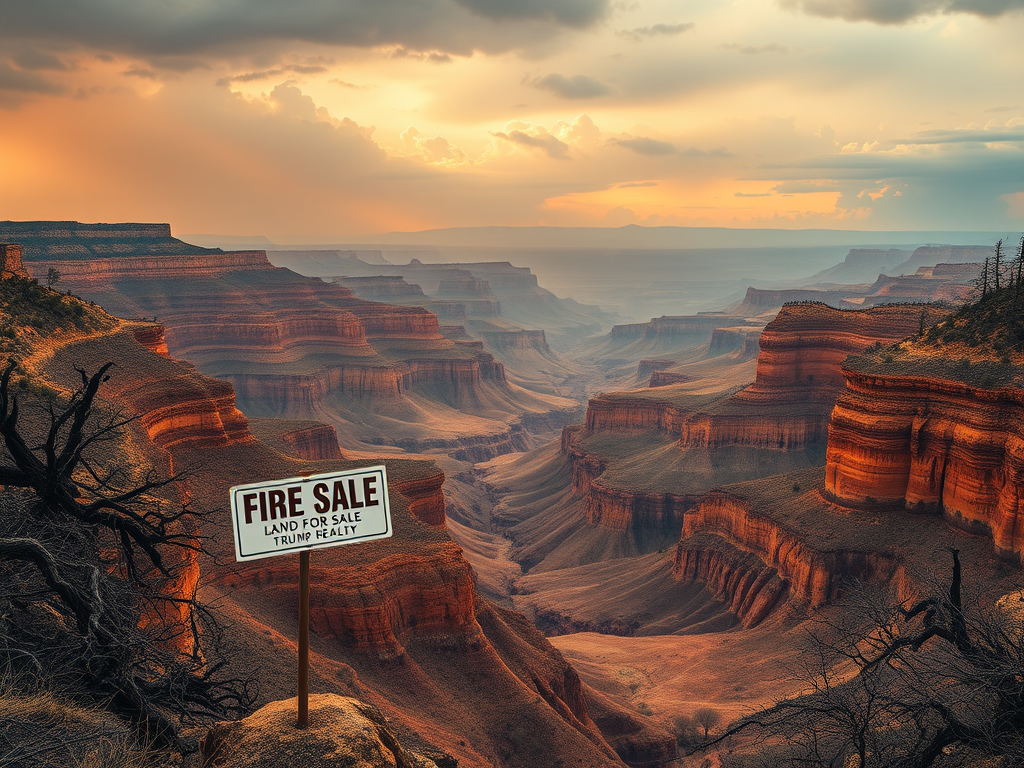
The Grand Canyon Is Not for Sale—Unless Trump Says So 

By Benjamin GroffMedia© | benandsteve.com | 2025 Truth Endures©

6–9 minutes

Developers Eye Grand Canyon’s North Rim

There is a quiet discussion about the concern. People are worried about the destruction of the structures at the Grand Canyon’s North Rim area. Especially if you mention whether Trump will arrange the sale of the property to an investor. Some prospective property companies are considering this, and they have shown interest in the area since it burned last week. The Sale Is –– Not Likely!

It’s doubtful that the U.S. government (i.e., the National Park Service, which manages Grand Canyon National Park) will sell off the burned North Rim properties to private investors. BUT there are always an exception!

“Selling the Canyon: What If the North Rim Was for Sale?”

Private investors will rebuild the lost structures by purchasing the property and assuming control of the North Rim. This would take the burden off the Federal Government. Additionally, it would bring a commercial attraction to the area, increasing yearly traffic compared to the current level. 

Photo by Gizem Gu00f6kce on Pexels.com

We have seen with the Trump Administration that the members of his office do not adhere to general practices. These practices are important to ethical principles. They are not below ignoring court orders, laws, and regulations to do what they please. The Administration can obtain anything it asks for with the current House, Senate, and Supreme Court. If Trump asks for a clear title for the Grand Canyon Properties, he would get one. He wipes it from the National Historical Places Monuments list. He removes select pieces of property from the protections of the National Park System.

Don’t think he would, or should? Try stopping renaming a Military Base after a Civil War figure from the Confederacy. Try stopping a military parade on his birthday. Try stopping him from cutting medical insurance coverage for millions of Americans. Inform him that everyone is entitled to civil liberties and must be permitted due process through a legal hearing.

Then, say selling off property in a National Park will never happen. Many do not believe the House and Senate will support Trump’s actions. They will not give him the papers he needs. This includes doing what he wants with the smoldering remains of the North Rim. It also affects any National Park.

🇺🇸 Enter the Trump Administration

Federal law strictly prohibits the sale of national park lands. Nonetheless, recent administrations—especially under Donald Trump—have shown a willingness to test those boundaries. Presidential influence has set a precedent for reshaping public lands policy. Protections in Bears Ears and Grand Staircase-Escalante have been reduced. Formerly protected lands have been opened to oil and gas leases. The Trustee of the National Land and Parks Service will face a force from the Trump Administration. Survival is uncertain if Trump and Company aim to dismantle it.

Photo by Petr Wolf on Pexels.com

Sources close to high-level real estate firms claim interest has spiked since the North Rim Lodge was destroyed. The timing has raised questions among environmentalists. They wonder if the destruction of federal structures paves the way. An administration unconcerned with precedent or preservation will try a land transfer.

🏛️ Legal Hurdles (and How They Might Be Circumvented)

Legally, the sale of Grand Canyon National Park land is almost impossible under existing statutes. Some fear the standard rules no longer apply. This fear arises from a cooperative Congress. Additionally, an activist Supreme Court and a President with a record of executive overreach contribute to this concern.

There are those close to the Canyon who are saying – “It’s unlikely, but not unimaginable. In 2020, no one thought sacred tribal lands would be opened to mining. Yet it happened. If political winds shift hard enough, even the Grand Canyon is not be safe from the bulldozer.”

Speaking for the Nay side.

Why a sale isn’t feasible:

There are several points to consider. These points explain why the sale of land owned by the Park Service would not transfer to private ownership. This is due to certain reasons and should be considered. Anyone wishing to ought to consider them further.

  1. The North Rim Is Part of a National Park
  2. The North Rim once included the Lodge, cabins, ranger headquarters, and other structures. It is now part of a federally protected unit of the National Park System. That land is held in trust for the public and can’t be sold or transferred to private ownership.
  3. The area is of Historic and Cultural Significance (does it matter?)
  4. The Grand Canyon Lodge was designated a National Historic Landmark in 1982. It was also listed on the National Register of Historic Places (1). Federal law prevents the disposal of such historic properties without a formal and rare delisting process—something that’s practically unheard of.
  5. Park Policy and Public Trust Doctrine now objects to sale or misuse of property.
  6. The NPS mission requires preserving federal land for future generations. Selling land—even after a disaster—is contrary to this mission and the principles of public trust.
  7. Federal Law on Disposal (would have to be changed.)
  8. Federal agencies must prove the land is excess under laws like the Property Act. The Federal Lands & Policy Management Act also requires this. They must prepare environmental assessments. Agencies must also undergo public notice and comment before any disposal occurs. That’s a lengthy, bureaucratic process—and it rarely results in the sale of park lands.

What’s likely to happen instead:

  • Reconstruction & Restoration
  • Park officials and the State of Arizona are more focused on fire investigation. Governor Katie Hobbs is pushing for accountability. There is emphasis on environmental remediation and rebuilding. The North Rim will be closed for the rest of the 2025 season (2).
  • Congressional/Agency Funding
  • Efforts now will center on securing federal and state funding to rebuild the Lodge, cabins, ranger facilities, and other infrastructure.
  • Fire Response Review
  • Investigations are underway into the decision to let the Dragon Bravo Fire burn before it exploded. Arizona’s government has demanded a thorough, independent review (3).
Photo by Kurt Hudspeth on Pexels.com

In short:

The burned structures are integral parts of Grand Canyon National Park—they’re not eligible for sale. Instead, the focus will be on recovery, restoration, and rebuilding what was lost, all within the park’s management framework.

Nevertheless, I reserve this statement. We have observed this with the Trump Administration. The members of his office do not adhere to general practices that are germane to ethical principles. They are not below ignoring court orders, laws, and regulations to do what they please. The current House and Senate, along with the Supreme Court, support the Administration. This means the Administration can obtain anything it asks for. If Trump asks for a clear title for the Grand Canyon Properties, he would get one.

Editor’s Note:

I’ve always had something like a sixth sense—premonitions, you can call them. Strangely, the ones I write about never seem to come true. It’s the ones I keep to myself that have a way of becoming reality. – Peace!

On July 17th, a report came out from an Arizona Television News Outlet. The report identified the location as GRAND CANYON NATIONAL PARK, AZ (AZFamily). Arizona’s Family learned a crucial member of the crew was not called in promptly to help. The Dragon Bravo Fire blew up and burned dozens of buildings over the weekend.

As of Thursday, there is still no containment of the wildfire at the Grand Canyon’s North Rim. Six hundred firefighters are working to put out the flames. The wildfire has grown to more than 11,000 acres.

Meteorologists are key to fire management. The Dragon Bravo Fire didn’t have one on scene until Monday. This was several days after the damage was done.

It adds to concerns about how the fire was handled after being sparked by lightning on the Fourth of July. In this case, aside from the actual flames, the weather played a significant role in the destruction.

Strong winds blew up from within the canyon and fanned the flames. Crews on the ground didn’t have an incident meteorologist with them over the weekend. This expert have been capable of warn them ahead of time.

For days, the National Park Service took a “confine and contain” approach. They allowed flames to consume the underbrush. At the same time, they protected the structures within the national park. Nonetheless, that changed on July 11. Firefighters reported that “strong northwest wind gusts were uncommon to the area. These winds jumped multiple containment features.” 

Ultimately, the result was more than 70 structures destroyed by flames, including the historic lodge.

The entire report can be found by visiting here.

We Shall Come Rejoicing Marrying Only The He’s And The She’s

By Benjamin GroffMedia© | benandsteve.com | 2025 Truth Endures©

1–2 minutes

The Baptists are at it again. They are raising a protest over who should be allowed to marry. It is as though they alone have the final word.
Yet, let us be clear: They are opposing who can walk into a county or state office. They do not want everyone to ask for a marriage license or enter into a legally recognized civil contract. That is not a religious rite. It is a legal agreement—filed, signed, and validated by the state. What the Baptists are trying to do is assert control over who can enter into that civil contract. Moreover, that is where their argument starts to fall apart.


One can understand a church’s wish to define marriage for its faith tradition. For example, it only performs holy matrimony for male-female couples. That is their theological prerogative. Furthermore, the LGBTQI+ community is better served by choosing faith institutions that embrace and affirm their unions. Those places do exist. They conduct beautiful, sacred ceremonies filled with love and meaning.


The Baptists alleged to be upset over same-sex couples marrying are not fighting for “Holy Sanctioned” marriage. Their effort is a thinly veiled effort to legislate bias. They aim to stir up fear and rally support for political agendas. When the current battle over trans rights no longer generates the same heat, they will seek another issue. This will be the next fire they try to stoke. It will be another wedge to deepen divisions. They will build up the offering plate and feed the partisan machine.


Trying to impose a ceremony on a church that fundamentally rejects it leads to resentment. Such an action only reinforces division. It is counterproductive. The real problem arises when religious institutions try to dictate who can access civil marriage through the state. That is not about faith. That is about politics, prejudice, and, frankly, power.

Grassroots Movement Transforms American Politics

GROFF MEDIA 2024© TRUTH ENDURES IMDBPRO

Presented by benandsteve.com By: Benjamin Groff II©s

3–4 minutes

The Grassroots Movement for Economic and Political Justice

Arizona Rally March 2025
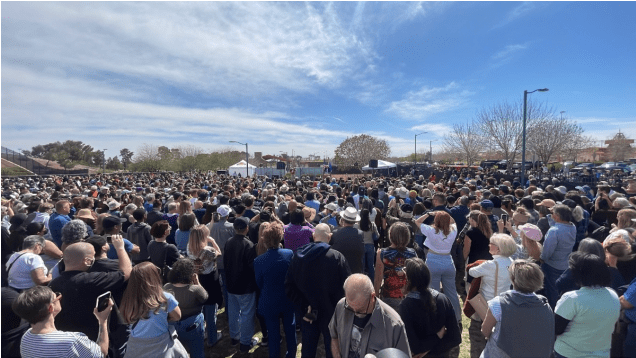
Senator Bernie Sanders and Representative Alexandria Ocasio-Cortez mark a defining moment in American politics. Tempe, Arizona Rally 2025 Groff Media©

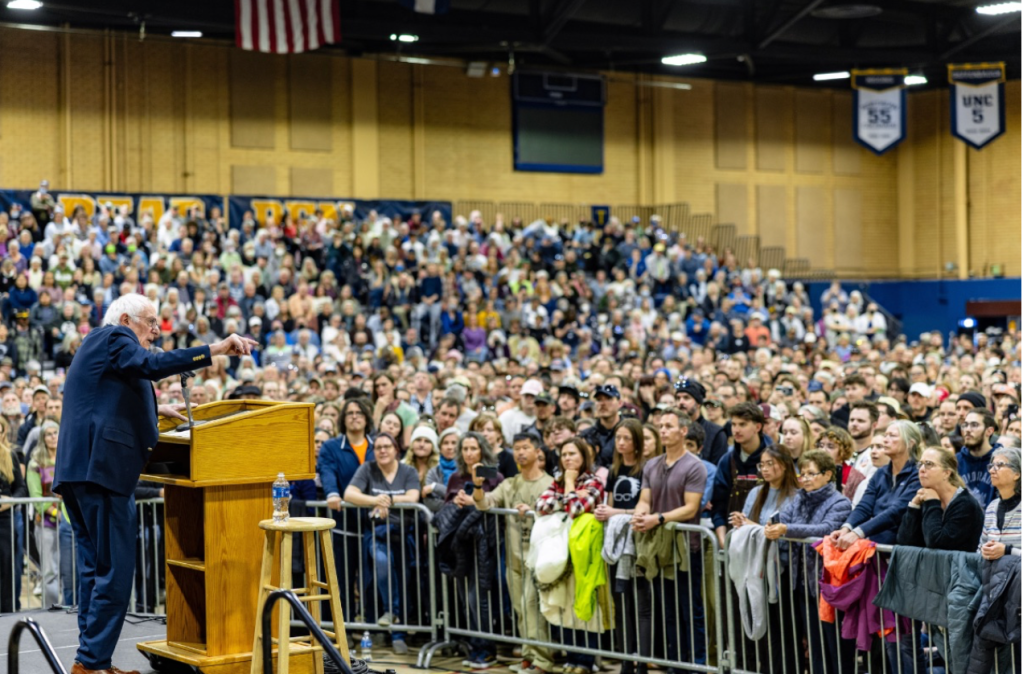
The recent rallies by Senator Bernie Sanders and Representative Alexandria Ocasio-Cortez mark a defining moment in contemporary American politics. Across five rallies in three states, tens of thousands gathered. They made a resounding call for change. This signals widespread dissatisfaction with the current political and economic systems. The overwhelming attendance at these events reveals a deep-rooted movement. It is fueled by a demand for economic fairness. There is also a call for political integrity and grassroots-driven reform.
Greeley Colorado, Groff Media©

One of the key takeaways from these rallies is the rejection of Trumpism, oligarchy, and authoritarianism. The presence of thousands in North Las Vegas, Tempe, Greeley, Denver, and Tucson shows collective opposition to massive income inequality. Wealth inequality has left many working-class Americans behind. This movement directly responds to a political system. In this system, billionaires hold disproportionate power. They use their wealth to influence elections and dictate policy. The rallies were not simply campaign events; they were gatherings of individuals. They were determined to reclaim democracy from corporate interests. They also wanted to challenge political elites.

Tucson, Arizona, Groff Media©

Moreover, the movement echoes historical struggles that have shaped the United States. Sanders draws parallels between this modern fight and past movements that have successfully challenged oppression. These include the abolitionist, labor, civil rights, and women’s rights movements. These historical precedents offer a blueprint for today’s progressive movement. They emphasize that real change arises when ordinary people organize. Real change occurs when they take action against systemic injustice.

A critical part of this movement is grassroots organization. Sanders and Ocasio-Cortez stress the need to mobilize people in all 50 states through consistent engagement. Mobilizing thousands of people means not only attending rallies but also translating that enthusiasm into political action. Encouraging progressives to run for office at all levels is crucial. This includes positions from school boards to state legislatures. It is a core strategy to enact lasting change. Local elections, often overlooked in the national political discourse, hold immense power in shaping policies that affect daily life.

Denver, Colorado, Groff Media©

Additionally, the movement extends beyond electoral politics. It calls for strong communities where people support one another despite economic and social challenges. The emphasis on solidarity reflects the understanding that political change is inseparable from fostering a culture of mutual aid. It also involves building collective strength. The movement creates networks of engaged citizens. The goal is to counteract the feelings of loneliness that many experience in today’s economic landscape. It also addresses feelings of helplessness.

This movement does not overstate the urgency. Sanders highlights the significance of this moment not only for current generations but also for future ones. Climate change, economic disparity, and political corruption are existential issues that need immediate action. The message is clear: now is the time for mobilization, not despair. The fight for a fair and just society depends on ordinary people. They must be willing to challenge entrenched power structures. They must demand a system that works for all.

The rallies led by Senator Bernie Sanders and Representative Alexandria Ocasio-Cortez signify a pivotal moment in U.S. politics, reflecting widespread dissatisfaction with inequality and a demand for economic justice.
Arizona, Nevada, Colorado,

In conclusion, the rallies held across Nevada, Arizona, and Colorado exemplify the strength of a growing progressive movement in America. The record-breaking turnouts illustrate a profound discontent with the status quo and a wish for systemic change. By organizing, running for office, and building community solidarity, this movement can redefine the future of American democracy. The path ahead is not easy. History has shown that when people unite for justice, they can overcome even the most powerful obstacles.

US Aid to Ukraine: A $114 Billion Commitment

GROFF MEDIA 2024© TRUTH ENDURES IMDBPRO

Presented by benandsteve.com By: Benjamin Groff II©s

2–4 minutes

As of February 2025, the United States has committed approximately $114 billion in bilateral aid to Ukraine. This commitment has been made since the onset of Russia’s invasion in February 2022. This figure encompasses military assistance, financial support, and humanitarian aid. 

statista.com

It’s important to note that reported aid amounts have been discrepant. This is due to differing accounting methodologies and the inclusion of various assistance categories. For instance, President Trump claimed that the US provided $350 billion in aid to Ukraine. Yet, official figures do not support this assertion. 

wsj.com

The European Union and its member countries have collectively provided approximately €132 billion in aid to Ukraine. This surpasses the US contribution. 

statista.com

The US aid includes funds allocated for replenishing American weapon stockpiles and supporting defense manufacturing across multiple US cities. 

cfr.org

In summary, estimates vary slightly based on accounting practices. Still, the US has committed approximately $114 billion in aid. This aid supports Ukraine’s defense against Russian aggression.

Since Russia invaded Ukraine in 2022, Ukrainian President Volodymyr Zelenskyy and his representatives have consistently expressed profound gratitude. They are thankful for the United States’ unwavering support. 

Many news media estimate that Zelenskyy made as many as 33 public appearances during wartime. He aimed to show his appreciation for the United States financial and equipment support. 

While it is challenging to enumerate every instance of appreciation, several notable expressions stand out:

  1. December 2022 Speech to the US Congress: President Zelenskyy addressed a joint session of the US Congress. This was his first foreign visit since the war began. He thanked “every American” and highlighted Ukraine’s resilience, stating, “Against all odds, Ukraine still stands.” apnews.com
  2. December 2022 Joint Press Conference with President Biden: Zelenskyy expressed gratitude for a new defense package. He stressed its prompt importance for Ukrainian soldiers during this visit. ua.usembassy.gov
  3. July 2023 NATO Summit in Vilnius: Zelenskyy expressed his appreciation for US and NATO support before meeting with President Biden. He acknowledged the challenges faced by Ukrainians. Zelenskyy thanked Biden for standing “shoulder to shoulder” with Ukraine. bloomingtonian.com
  4. February 2025 Post-Meeting Statement: The meeting with President Trump was contentious. Zelenskyy reaffirmed his gratitude toward the American people and Congress. He also expressed gratitude toward the President. Zelenskyy emphasized Ukraine’s pursuit of a just and lasting peace. en.wikipedia.org
  5. March 2025 London Summit: Zelenskyy expressed “unwavering gratitude” for US military and financial support after a summit with European leaders. He underscored its critical role in Ukraine’s defense. nypost.com

These instances highlight the deep appreciation expressed by Ukrainian leadership. They value the United States’ financial assistance, military aid, and moral support throughout the conflict.

Zelenskyy’s Expressions of Gratitude Midst Diplomatic Tensions

The information stands in contrast to a description made by some. They called it two thugs attacking a robbery victim after he had already been beaten down. It is a sad portrayal. This is a betrayal of the executive office on show in the White House on February 28th, 2025. 

The information referenced here documents that 350 billion dollars were not given to the Ukrainian government, contradicting what was claimed. Sadly, the United States Congress knows this. They approved the funding. They should make sure that factual statements involving tax dollars are presented to the public.

Sources:

nypost.com

Ukraine’s Volodymyr Zelensky says he still wants US minerals deal after explosive Trump talks

Today

people.com

Volodymyr Zelenskyy Cancels D.C. Appearances After He’s Called ‘Disrespectful”‘” by Trump, Expresses Gratitude to Americans

Today

barrons.com

Zelensky Says Ukraine Is Ready to Sign Minerals Deal but Needs ‘Security Guarantees’

Today

Harmony in Chaos: Finding Peace in Urban Sanctuaries

GROFF MEDIA 2024© TRUTH ENDURES IMDBPRO

Presented by benandsteve.com By: Benjamin Groff II©

3–4 minutes

In a bustling city, alive with clashing opinions and hurried lives, everyone respected an unspoken rule. Your space is yours, and in it, you reign supreme. It didn’t matter if it was a sprawling penthouse overlooking the skyline. It is a cozy corner in a crowded apartment. Or it is a patch of pavement under a tattered umbrella. Whatever boundaries you claimed, those were the limits of your kingdom.

Take Mrs. Hargrove, for instance. Behind her red-painted door in a quiet cul-de-sac, the world was a sanctuary of classical music. Fragrant lavender candles filled the air with their scent, and books were piled high in every corner. Her rules were simple: shoes off at the door, cats welcome, and no conversation louder than a murmur. Beyond her door, the city roar with chaos, but inside, her sanctuary hummed with the warmth of gentle living.

A few blocks away, Alejandro held court on a sidewalk square. He was nestled between a lamppost and the entrance of a busy coffee shop. His throne was a battered lawn chair, and his walls were chalk-drawn lines on the pavement. Within those lines, Alejandro was both king and philosopher. Passersby often stopped to chat, offering a coffee or sandwich in exchange for his wisdom. His space, though humble, operated on principles he cherished, like kindness first, stories over silence, and always having respect.

Meanwhile, on the tenth floor of a downtown high-rise, siblings Jordan and Tamara lived in a small two-bedroom apartment. They turned it into a vibrant world of their own making. The walls were covered in murals painted by friends who visited. Their home was a haven of creativity where every night was a celebration of life. “No negativity allowed” was their unspoken law, and those who entered left their worries at the threshold.

Even in the less obvious corners of the city, the principle held firm. Marcy, a young artist, had claimed an unused stretch of wall as her gallery. It was down an alley shaded by fire escapes. She painted over it weekly, layering it with bold, defiant colors. Though the city’s rules forbade graffiti, this was Marcy’s domain, where her voice never gets muted. Locals respected her unwritten sovereignty, even the city workers, who cleaned around her artwork but left it untouched.

The beauty of the unwritten code was not just in the freedom it offered. It was also in the mutual understanding that accompanied it. Disagreements in the public square? Common. Heated debates at the park? Inevitable. But everyone knew that you honored their rules when you stepped into someone else’s space. You argue politics at the corner diner or challenge worldviews in the library. Still, you wouldn’t dare speak out of turn in Alejandro’s chalk-drawn palace or disrespect the tranquility of Mrs. Hargrove’s quiet retreat.

This tacit agreement turned the city into a patchwork quilt of safe havens. Each space was unique. It reflected the ideals and beliefs of its occupant. Together, they wove a sense of unity that was stronger than the chaos beyond their boundaries.

One day, a storm swept through the city, bringing rain that soaked Alejandro’s chalk lines and threatened Marcy’s murals. As the wind howled, neighbors opened their doors to one another. Mrs. Hargrove invited Alejandro into her book-filled retreat. Jordan and Tamara turned their living room into an impromptu art studio for Marcy. Even unlikely alliances formed in those moments. They understood that when someone’s space was threatened, the rest of the city stood ready. They were committed to protect it.

When the skies cleared, the city was quieter, and its people were more thoughtful. The storm had reminded everyone of the fragility of their spaces. It highlighted the strength in preserving them—not just their own but those of their neighbors, too.

And so, the unwritten rule endured. Within your space, you were sovereign. You were free to live, believe, and dream as you saw fit. The city remained a cacophony of voices and lives. Yet, it thrived by quietly revering the small sanctuaries that made it whole.

No More Tomorrow’s Forever

GROFF MEDIA 2024© TRUTH ENDURES IMDBPRO

Presented by benandsteve.com By: Benjamin Groff II©

2–4 minutes

Javier stood at the edge of the city park. Staring out at the bustling streets of his new home in America. The golden autumn leaves danced in the wind, starkly contrasting the memories of his war-torn homeland. Javier had come to the United States to find refuge and hope. Yet, the events unfolding around him now gave him an unsettling sense of déjà vu.

Back in his home country—a place he no longer dared to name aloud—Javier had watched the slow unraveling of society. It had once been a proud nation. Families like his owned small businesses. Children played freely in the streets. Communities were bound together by tradition and trust. Corruption spread throughout the country. Drug lords rose to power. Oligarchs infiltrated and bought influence with cold, hard cash. They sowed fear and discord, and before long, even the police and the government served their interests alone. The people were left with nothing but fear and silence.

He had fled that darkness, believing that America would offer something different. And for a time, it did. He found work, made friends, and even started to dream again. 

But the cracks were showing. The unchecked greed was too familiar. The political maneuvering was too familiar. The way drugs crept into the neighborhoods under the guise of prosperity was too familiar. He watched politicians make promises while corporations tightened their grip on the economy. He saw his neighbors losing faith, their voices drowned out by the same wealth-driven forces he had left behind.

“No more tomorrows forever,” 

Javier muttered under his breath, a phrase his grandfather used to say when hope felt like an illusion. He feared that history was repeating itself, that this land of opportunity was sliding down the same treacherous path.

One evening, Javier visited a local diner. He often met with his friend Michael there. Michael was an old war veteran who deeply loved the country he had served. Javier shared his concerns over cups of bitter coffee, finding solace in Michael’s understanding and wisdom.

“I’ve seen this before, amigo. Back home. The greed, the power, the division. It starts small, but it grows until there’s nothing left.”

Michael nodded, his tired eyes scanning the newspaper headlines. 

“You ain’t wrong, son. This country’s got its problems. But we fight. We speak up. That’s the difference.”

Javier wasn’t so sure. He thought of his own country. There, people had fought and lost. Bullets and bribes had silenced voices for freedom. Yet, deep down, Javier wanted to believe Michael. He tried to think that this place still had a chance, that people could push back against the tide.

Javier left the diner. He looked around at the city skyline. The shining towers and the streets were filled with life. The battle wasn’t over yet, and maybe—just maybe—he could do something to help stop history from repeating itself.

The next day, he enrolled in a local community initiative to support struggling neighborhoods. Passionate individuals like himself led this initiative. They aimed to give resources and support to those most affected by the societal issues he had observed. He would share his story. He shared a warning and his hope. He believed past mistakes didn’t have to define the future. America still had tomorrow’s worth fighting for.

But deep inside, a lingering voice whispered, 

No more tomorrow’s forever!”

The Man’s Journey For Two People Who Agree On Everthing

GROFF MEDIA 2024© TRUTH ENDURES IMDBPRO

Presented by benandsteve.com By: Benjamin Groff II©

2–3 minutes

A man named Walter Henshaw lived in a small town. This town was nestled between rolling hills. Walter was known for his insatiable curiosity, always pondering life’s mysteries. One evening, as he sat on his front porch watching the sunset, he wondered aloud,

“Is it possible to find two people in this world who agree on everything?”

The thought consumed him, and soon, Walter embarked on a journey around the world to find the answer. He packed his belongings, bid farewell to his friends and family, and set off on his quest.

Walter’s first stop was Paris, where he met a pair of artists who were painting by the Seine. They seemed in perfect harmony, laughing and finishing each other’s sentences. But when Walter asked them if they agreed on everything, they chuckled.

“Of course not,”

One replied.

“He thinks Monet is the greatest, but I prefer Van Gogh.”

Undeterred, Walter traveled to India, where he visited a monastery high in the Himalayas. There, he met two monks who had lived in silence for decades. Walter was sure he had found his answer, but when he posed his question, one monk smiled and said,

“I prefer tea; he prefers coffee.”

Walter traveled onward. He visited the bustling streets of New York City. Then he experienced the serene countryside of Japan. Finally, he explored the vast plains of Africa. He encountered lifelong friends. He met devoted couples. He even found identical-twins everywhere he went. Nonetheless, no two people ever claimed to agree on everything.

After years of traveling, Walter found himself in a small village in South America. He met an elderly couple who had been together for over seventy years. Patiently, they listened as Walter told them about his journey.

The older man chuckled and said,

“Young man, love is not about agreeing on everything. It’s about embracing differences and finding common ground.”

Walter sat in silence, absorbing the wisdom. He realized then that his journey had taught him more than he ever imagined. The beauty of human connection lies not in absolute agreement but in understanding, compromise, and the joy of diversity.

It also reminded him of one chap he had met in the United States who said to him –––

“Show me any two people who agree on everything, sir, and I will show you a pair of liars!”

Returning home, Walter shared his experiences with his friends and family. He had not found two people who agreed on everything. Still, he discovered something even more valuable. He gained an appreciation for the uniqueness that made each person unique.

Once a seeker of perfect agreement, Walter Henshaw sought harmony. He became a storyteller. He wove tales of his adventures and the lessons he had learned. He realized that life wasn’t about finding someone who thinks as you do. Instead, it is about learning to cherish the differences. These differences make life enjoyable and meaningful.

In the end, Walter’s journey had been about connection, not conformity. He found peace knowing that the world was more prosperous because of its endless variety.

English Translation Below – TRADUCCIÓN AL INGLÉS A CONTINUACIÓN

GROFF MEDIA 2024© TRUTH ENDURES IMDBPRO

Presented by benandsteve.com By: Benjamin Groff II©

4–6 minutes

English Translation Below –

Today, I am sharing a translation of instructions initially posted on the BenandSteve.com Facebook page. These instructions were originally written in Spanish. I have translated them to the best of my ability. The English translation is just below.

TRADUCCIÓN AL INGLÉS A CONTINUACIÓN:

Hoy comparto una traducción de las instrucciones publicadas originalmente en la página de Facebook de BenandSteve.com. Estas instrucciones, escritas en español, han sido traducidas lo mejor posible para aquellos que no hablan, leen ni escriben el idioma. Por favor, tengan en cuenta que estas instrucciones no están destinadas a servir como asesoramiento legal, sino más bien como una guía útil para quienes puedan interactuar con las autoridades. Este espacio se ofrece con el propósito de brindar claridad y apoyo a quienes puedan beneficiarse de esta información.

El guía S.I.R.E.N., a menudo promovido por organizaciones de defensa para informar a las personas de sus derechos durante encuentros con la Patrulla Fronteriza o autoridades de inmigración, significa:

S – Mantente Calmo (Stay Calm)

• Mantente tranquilo y evita escalar la situación.

• No corras, resistas ni obstruyas a los oficiales de la ley.

I – Insiste en tu Derecho a Guardar Silencio (Insist on Silence)

• Ejercita tu derecho a guardar silencio.

• No respondas preguntas sobre tu estatus migratorio, dónde naciste o cómo entraste al país.

• Declara: “Estoy ejerciendo mi derecho a guardar silencio.”

R – Rechaza Dar Consentimiento (Refuse Consent)

• No des tu consentimiento para que registren tu persona, tus pertenencias o tu vehículo sin una orden judicial.

• Di: “No doy mi consentimiento para un registro.”

E – Exige Hablar con un Abogado (Engage an Attorney)

• Solicita hablar con un abogado de inmediato.

• No firmes nada sin antes consultar a un abogado.

N – Nunca Mientas (Never Lie)

• Siempre proporciona información verdadera si decides hablar (aunque tienes derecho a no responder preguntas).

• Mentir a los oficiales de inmigración puede tener graves consecuencias.

Estos pasos están diseñados para ayudar a las personas a manejar estas interacciones mientras protegen sus derechos y aseguran que se respeten las garantías legales. Si necesitas recursos o una orientación más detallada, ¡házmelo saber!

Asociación Americana de Abogados de Inmigración (AILA)

Una asociación nacional que promueve leyes y políticas de inmigración justas y aboga por el desarrollo profesional de sus miembros.

Red de Defensores de Inmigración

Un esfuerzo colaborativo entre organizaciones líderes en derechos de inmigrantes que busca aumentar el acceso a la justicia para los inmigrantes.

Unión Americana de Libertades Civiles (ACLU)

Una organización que ha estado involucrada en muchas luchas legales importantes por los derechos de los inmigrantes.

Consejo Americano de Inmigración

Una organización que utiliza investigaciones, programas y esfuerzos legales y de defensa para dar forma a las políticas y prácticas de inmigración.

Centro de Políticas para Inmigrantes de California (CIPC)

Una organización estatal de derechos de los inmigrantes con oficinas en Los Ángeles, Sacramento y Oakland.

Centro de Estudios de Inmigración

Una organización que proporciona experiencia legal, capacitación, investigaciones y publicaciones.

https://www.americanbar.org/groups/public_interest/immigration/resources/immigration-resources/#:~:text=Immigration%20Advocates%20Network.%20The%20Immigration%20Advocates%20Network,strengthen%20the%20capacity%20of%20organizations%20serving%20them..

Si eliges deportarte voluntariamente, busca la ruta más segura.


ENGLISH

Today, I am sharing a translation of instructions initially posted on the BenandSteve.com Facebook page. These instructions were originally written in Spanish. I have translated them to the best of my ability. This is for those who do not speak, read, or write the language. Please note that these instructions are not intended to serve as legal advice. They are meant to be a helpful guide for anyone interacting with authorities. This space is being provided for clarity and support for those benefiting from this information.

The S.I.R.E.N. guide, often promoted by defense organizations to inform people of their rights during encounters with Border Patrol or immigration authorities, means:

S – Keep Calm (Stay Calm)

• Stay calm and avoid escalating the situation.

• Do not run, resist, or hinder law officers.

I – Insist on Your Right to Stay Silent

• Exercise your right to stay silent.

• Do not answer questions about your immigration status, where you were born, or how you entered the country.

• Declares: “I am exercising my right to stay silent.

R – Refuse Consent

• Do not consent to register your person, belongings, or vehicle without a court order.

• Say: “I do not give my consent for a record. “

Engage an Attorney

• Ask to speak to a lawyer promptly.

• Don’t sign anything without consulting a lawyer first.

N – Never Lie (Never Lie)

• Always give truthful information if you decide to speak (although you have the right not to answer questions).

• Lying to immigration officials can have serious consequences.

These steps help people manage these interactions while protecting their rights and respecting legal safeguards. If you need resources or more detailed guidance, let me know!

  • American Immigration Lawyers Association A national association that promotes fair immigration laws and policies and advocates for the professional development of its members 
  • Immigration Advocates Network A collaborative effort between leading immigration rights organizations that aims to increase access to justice for immigrants 
  • American Civil Liberties Union (ACLU): An organization that has been involved in many major legal struggles for immigrant rights 
  • American Immigration Council An organization that uses research, programs, and legal and advocacy efforts to shape immigration policies and practices 
  • California Immigrant Policy Center (CIPC)A statewide immigrant rights organization with offices in Los Angeles, Sacramento, and Oakland 
  • Center for Immigration Studies An organization that provides legal expertise, training, research, and publications 
  • You can also help fight for immigrant rights by speaking out to elected officials, attending town hall meetings, and voicing your support for immigrants and refugees. 

https://www.americanbar.org/groups/public_interest/immigration/resources/immigration-resources/#:~:text=Immigration%20Advocates%20Network.%20The%20Immigration%20Advocates%20Network,strengthen%20the%20capacity%20of%20organizations%20serving%20them.

If you choose to self deport find the safest route.

Should You Stay on Facebook? Weighing the Pros and Cons

GROFF MEDIA 2024© TRUTH ENDURES IMDBPRO

Presented by benandsteve.com By: Benjamin Groff II©

3–4 minutes

To Stay or Go: Evaluating the Benefits of Remaining on Facebook in Light of Controversial Changes

Social media platforms have become integral to modern life, offering communication, connection, and community building avenues. Nevertheless, as these platforms evolve, so do their policies and practices, often sparking debate about their social and ethical implications. Facebook, a leading social media giant, has recently faced criticism. This criticism is due to changes in its policies on hate speech, bigotry, and LGBTQI support. For individuals making the decision about staying on or leaving Facebook, they hold the power to be informed. Weighing the benefits of both options is essential for this empowerment.

The Case for Staying on Facebook

  1. Maintaining Connections: Facebook remains a vital tool for staying in touch with family. It also helps keep connections with friends and acquaintances, particularly those spread across different regions or countries. For many, it is a lifeline to relationships that would otherwise be difficult to nurture.
  2. Community and Advocacy Opportunities: Despite policy changes, Facebook still hosts several groups and communities that support marginalized voices. These include LGBTQI organizations, social justice movements, and local advocacy efforts. By staying, individuals can continue amplifying positive messages and supporting important causes.
  3. Access to Events and Local Updates: Facebook excels as a hub for event coordination and news dissemination. Whether it’s discovering community gatherings, charity events, or public discussions, the platform enables users to stay engaged with their surroundings.
  4. Platform for Countering Negativity: Staying active on Facebook allows users to directly challenge hate speech and bigotry. Individuals can use their presence to make a positive impact through reporting mechanisms, creating supportive content, and fostering constructive dialogues.
  5. Professional Networking and Opportunities: Beyond personal connections, Facebook provides professional opportunities through networking, business pages, and advertising. Leaving the platform will limit exposure to these tools, which can be crucial for entrepreneurs, freelancers, or small business owners.

The Case for Leaving Facebook

  1. Moral and Ethical Stance: Users can take a stand by leaving Facebook. They do this against policies they perceive as harmful or contrary to their values. This protest can send a powerful message to the platform and its advertisers, influencing change.
  2. Reducing Exposure to Toxic Content: With the relaxation of hate speech policies, users face more harmful content. They become increasingly exposed to offensive material. Removing oneself from the platform eliminates the mental and emotional toll of encountering such material.
  3. Privacy and Data Concerns: Facebook has faced ongoing scrutiny over its handling of user data. Leaving the platform reduces one’s vulnerability to data misuse, targeted advertising, and potential privacy breaches.
  4. Encouraging Other Platforms: Exiting Facebook can prompt individuals to explore different social media platforms that better align with their values. Platforms like Mastodon, MeWe, or local community forums offer a more supportive environment.
  5. Reclaiming Time and Focus: Many users realize an unexpected advantage when they leave Facebook. They find they have more time for hobbies, personal growth, and face-to-face interactions. The departure can foster a sense of liberation from the constant pull of notifications and algorithm-driven content.

Finding a Middle Ground

For those hesitant to make a definitive choice, there are ways to balance the benefits of staying and leaving. Users can regain a sense of control over their Facebook experience by reducing engagement. They can also limit time spent on the platform. Unfollowing toxic pages or users and curating a positive feed helps as well. Additionally, prioritizing different platforms for personal or professional connections while maintaining a minimal Facebook presence can further enhance this control.

Conclusion

The decision to stay on or leave Facebook is very personal. It depends on one’s values, priorities, and tolerance for the platform’s evolving policies. Staying permits individuals to keep connections. They can use their presence for positive change. Leaving can signify a powerful ethical stance. It can lead to personal growth. Regardless of one’s choice, it is essential to evaluate Facebook’s role in one’s life. People should make a decision that aligns with their values and well-being.

President Carter’s Memorial Service IN D.C.

GROFF MEDIA 2024© TRUTH ENDURES IMDBPRO

Presented by benandsteve.com By: Benjamin Groff II©

2–3 minutes

Former President Jimmy Carter’s state funeral was held today at the Washington National Cathedral in Washington, D.C., honoring his legacy as the 39th President of the United States and his extensive humanitarian work. Carter passed away on December 29, 2024, at the age of 100. He was remembered by dignitaries, family, and friends for his dedication to public service. He also made significant global peace efforts.

President Joe Biden delivered an emotional eulogy, highlighting Carter’s unwavering character and lifelong commitment to improving the lives of others. Biden was one of the first senators to endorse Carter’s presidential candidacy. He reflected on their shared values. Carter had a profound impact on the nation. CBS News

All five living U.S. presidents attended the service, including President-elect Donald Trump, who will be inaugurated on January 20, 2025. Trump engaged in a brief but cordial conversation with former President Barack Obama. This marked a rare moment of civility between the two. Reuters

The ceremony featured heartfelt tributes from Carter’s family. His grandson, Jason Carter, praised him as the nation’s “first Millennial,” acknowledging his progressive-thinking approach and enduring legacy. The Sun

Steven Ford, son of the late President Gerald Ford, read his father’s letter for Carter. This action underscored the deep friendship between the two men despite their political rivalry. New York Post

Musical performances added to the solemnity of the occasion. Phyllis Adams, a longtime Delta flight attendant, had earlier performed for the Carters. She delivered a moving rendition of “Amazing Grace.” This fulfilled a special demand made by the late President. CBS News

Security measures were notably heightened for the event, reflecting concerns over potential threats. Despite this, the service proceeded without incident, allowing attendees to focus on honoring Carter’s life and legacy. The Sun

Carter’s remains will be transported to his hometown of Plains, Georgia, after the national ceremony. There, a private service and burial will be held according to his wishes. The Times

From 1977 to 1981, Carter’s presidency was marked by significant achievements. These included the Camp David Accords between Israel and Egypt. They also involved the establishment of diplomatic relations with China. His post-presidential years were equally impactful. He dedicated himself to human rights and diplomacy. This dedication earned him the Nobel Peace Prize in 2002. The Times

The state funeral poignantly reminded us of Carter’s enduring contributions to the nation and the world. It celebrated a life dedicated to service, peace, and the betterment of humanity.

Highlights from Jimmy Carter’s State Funeral

Sources

People

Trump Doesn’t Stand for Obama but Then Chats with Him as All 5 Living Presidents Reunite at Jimmy Carter’s Funeral

Today

The Sun

Biden gets emotional in Jimmy Carter’s funeral speech as grandson Jason praises 39th prez as nation’s ‘first Millennial’

Today

Reuters

Trump shakes hands with Pence, engages Obama at Carter funeral

Today

Special Air Mission 39: A Tribute to President Carter

Groff Media 2024© Truth Endures IMDbPro

Presented by benandsteve.com By: Benjamin Groff II©

3–4 minutes

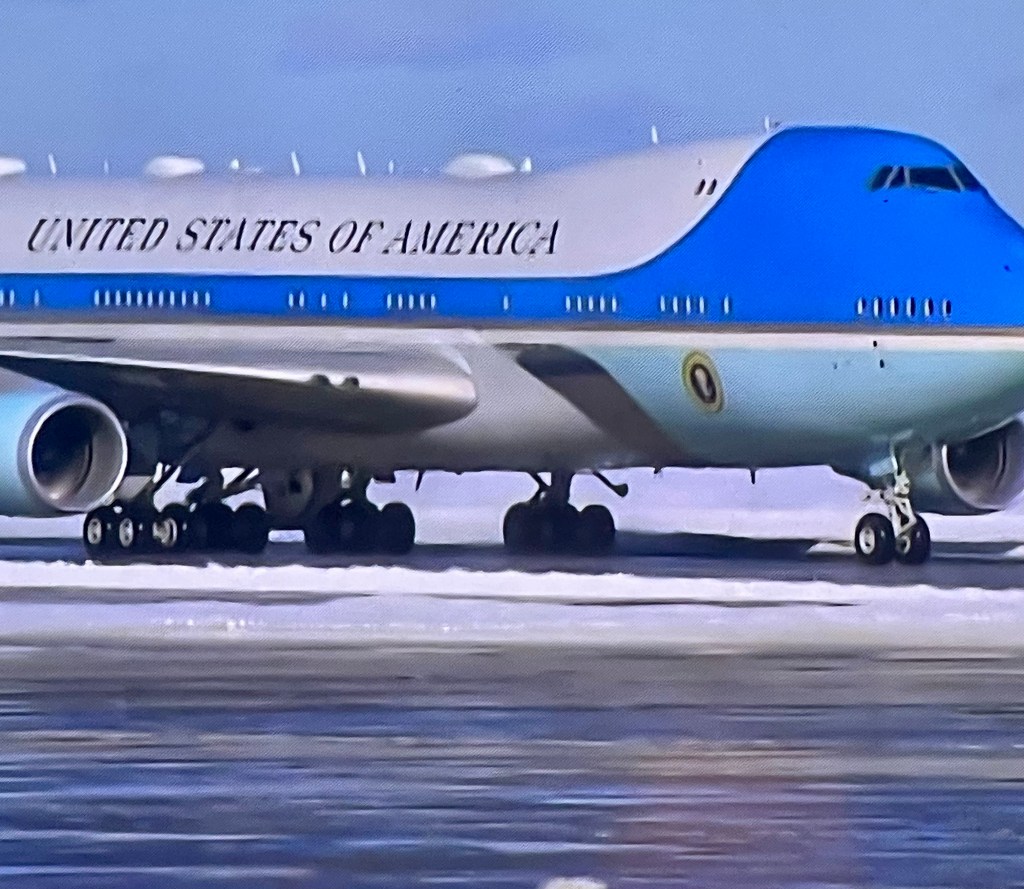
The sun broke over the Air Force Base in Atlanta, Georgia. It cast golden hues across the tarmac as Special Air Mission 39 waited. Its polished surface gleamed in the light. The presidential seal on its side served as a solemn reminder of the journey it was about to undertake. Inside, a reverent hush filled the cabin. The crew prepared for their most crucial passenger. It was a man whose life had been dedicated to service, humility, and unwavering commitment—President Jimmy Carter.

From his earliest days at the Naval Academy, James Earl Carter Jr. was shaped by discipline, honor, and an unrelenting drive to do his best. Those who knew him often remarked on his quiet determination. His former Navy colleagues remember him as a man of integrity, always putting the welfare of his team first. Carter navigated the complexities of submarine systems in the Navy with steady resolve. He also tackled global issues from the Oval Office with the same determination.

The engines roared to life for Special Air Mission 39. This was what President Carter had once known as Air Force One. At that moment, the memory of his long journey sharpened. Memories of his enduring journey came into sharp focus. Here was a man who had never sought power for power’s sake but had wielded it to uplift others. In the years after his presidency, Carter’s service reverberated across communities. He built homes for people experiencing homelessness. He mediated peace in war-torn nations. Additionally, he battled disease through the Carter Center. His legacy was not confined to history books but lived on in the lives he had touched.

The flight crew gathered for a moment of silence before departure. Captain Emily Harrington, a seasoned pilot who had long admired Carter, addressed her team.

“Today, we honor not just a president but a man who believed in the power of service. Let’s give him the journey he deserves.”

As the plane ascended, the passengers—family, close friends, and select members of his administration—reflected on his unwavering faith and commitment. Rosalynn, his beloved late wife, was his partner for more than seven decades. She was waiting for him at their Plains, Georgia home. She also waited in Jimmy’s heart, where their journey had begun. Jimmy would be back. He had business in D.C. to take care of first. President Carter would fly there with the family. He would lay in state at the Capital Rotunda. He would attend a state memorial service. Later in the week, he would return to Plains, Georgia. He would be laid next to Rosalynn at their place of burial.

The flight path traced the arc of his life. It went over the rural farmlands of Georgia. The soil there had nurtured his love for community and the values of hard work and compassion. The Naval Academy in Annapolis, where young Jimmy had set the course for a lifetime of service. Over Washington, D.C., where he had walked into the presidency with a promise to lead with integrity.

As SAM 39 descended, the crowd gathered below to pay their respects. They came not just to honor a president. They came to honor a man who had reminded the world that authentic leadership lies in humility. True leadership also involves an unwavering commitment to doing what is right.

The plane touched down with grace, its engines whispering to a stop. The door opened, and the honor guard stepped ahead to carry Carter to the Rotunda. The air was heavy with gratitude, sorrow, and pride. A man who had given so much of himself had completed the second leg of his journey. There was only one more leg left in the final part of his last journey.

In the quiet stillness of that moment, a quote from Carter’s own words have echoed in the hearts of all there: 

“My faith demands that I do whatever I can, wherever I can, whenever I can, for as long as I can, with whatever I have, to try to make a difference.”

Quote Reference: Congratulations Jimmy Carter – Bryan Strawser. http://bryanstrawser.com/2002/10/congratulations-jimmy-c/

The Guitar from Jimmy Carter’s Grove

Groff Media 2024© Truth Endures IMDbPro

Presented by benandsteve.com By: Benjamin Groff II©

3–4 minutes

Long after leaving the White House, Jimmy Carter found solace in the quiet rhythms of nature. On a sunny morning in Plains, Georgia, Jimmy stood at the edge of a grove. He had planted these trees decades ago. These trees—mahogany, maple, and spruce—weren’t native to the region. Carter had brought their seeds home from his travels. He envisioned them growing tall and strong in the fertile Georgian soil.

Jimmy called what others saw as an unusual hobby his “living legacy.” Each tree had a purpose, and he dreamed of turning their wood into something meaningful. One day, while strumming his old guitar on the porch, the idea struck him: 

What if I made a guitar from the trees I grew with my own hands?

The Craft

Years passed before the time was right. Jimmy carefully chose a mahogany tree for the body. He selected a maple tree for the neck. He also picked spruce for the soundboard. He contacted a local luthier, Sam Wainwright, who had a reputation for crafting instruments with heart and precision.

Sam, skeptical at first, raised an eyebrow when Jimmy proposed the project.

“You’re telling me you’ve been growing trees for years just for this?”

Jimmy chuckled.

“A good guitar starts with good wood. I figured, why not grow my own?”

Sam couldn’t argue with the sentiment. They spent hours examining the wood, carefully cutting it, and shaping it to perfection. Jimmy insisted on being part of every step, from sanding the pieces to carving the intricate rosette around the soundhole.

As they worked, Jimmy shared stories—about his childhood in the rural South, his presidency, and his humanitarian efforts. Sam listened intently, realizing the guitar wasn’t just an instrument but a symbol of patience, purpose, and creativity.

The First Song

Months later, the guitar was finished. Its finish glowed like amber honey. Its tone was warm and resonant. It carried the richness of the wood’s decades-long journey. Jimmy held it in his hands. He marveled at how the trees he had nurtured now sang harmoniously. They created a sound that was not just music. It was a testament to the beauty of nature.

During a warm summer evening, friends and family gathered. Jimmy sat on his porch with the guitar resting comfortably in his lap. He strummed the first chords, their notes floating into the peach-scented air.

The song he played was one he had written himself. It was a simple tune about the roots—both in the ground and in life. It spoke of time, care, and the beauty of watching something grow. The crowd swayed to the music. Their faces lit with admiration for the man who had turned trees into tunes. They felt a sense of nostalgia for the simple, yet profound, message of the song.

A Lasting Legacy

In the years that followed, the guitar became more than an instrument. Jimmy used it to teach music to children, play for visitors, and raise funds for Habitat for Humanity. Each time its strings vibrated, it told a story of persistence and hope.

When asked why he had gone to such lengths to make the guitar, Jimmy would smile and say,

“It reminds us that good things take time. The simplest gifts, like a tree or a song, can bring the most joy.”

The guitar from Jimmy Carter’s Grove wasn’t just a piece of wood strung together. It was a testament to a life rooted in purpose and patience. It symbolized the belief that even the smallest seeds can create something extraordinary.

An original report exists in Guitar World, which you can find here!

“The Peanut Farmer and the Minnesota Senator”

Peering through the Oval Office Window: A Look Back

Groff Media 2024© Truth Endures IMDbPro

Presented by benandsteve.com By: Benjamin Groff II©

2–3 minutes

In the summer of 1977, President Jimmy Carter leaned back in his chair in the Oval Office. A pensive smile tugged at the corners of his mouth. Across from him sat Vice President Walter Mondale, poring over a stack of briefing papers with his trademark focus. One man was a farmer from Georgia. The other man was a lawyer from Minnesota. The two couldn’t have been more different in background. Yet, their partnership was rooted in a shared commitment to serving the American people.

“Fritz,” 

Carter said, using Mondale’s nickname, 

“you ever think we’re trying to do too much at once?”

Mondale looked up, his brow furrowed. 

“Every day, Mr. President. But that doesn’t mean we stop trying.”

The two had agreed early on that their administration would focus on transparency and morality in government. It was a lofty goal, especially after the shadow of Watergate. Carter gave Mondale an unprecedented role as vice president. He granted him full access to meetings and decision-making processes. Mondale had a seat at the table in all major discussions.

That day’s agenda included preparations for the Camp David Accords. Carter knew the stakes were high. Peace in the Middle East was a dream worth pursuing, but the path was challenging.

“I’ve been thinking about how we can get Sadat and Menachem (Begin) to see eye to eye,” 

Carter mused, tapping his pen on his desk. 

“I need you to be my sounding board, as always.”

Mondale nodded, adjusting his glasses. 

“They both trust you, Jimmy. That’s the key. You have a way of connecting with people, even when the odds seem impossible.”

Carter chuckled softly. 

“Must be the peanut farmer in me.”

Over the months, the two worked tirelessly. Mondale often acted as a mediator in Congress, navigating the political complexities Carter sometimes found frustrating. When the energy crisis hit, Mondale suggested convening regional governors to gather diverse perspectives.

One evening, after a particularly grueling day, they found themselves alone in the Rose Garden. The air was warm and scented with magnolias, and the stars above were unusually bright.

“Fritz,” 

Carter said, breaking the silence, 

“I couldn’t do this without you. You keep me grounded.”

Mondale smiled, a rare expression of pride crossing his face. 

“You’d manage, Jimmy. But I’m glad I’m here to help.”

Their friendship, forged in the fire of challenges and the weight of leadership, became a hallmark of their administration. Though history would judge their tenure with mixed opinions, their mutual respect and dedication to principle left a lasting legacy.

As the years passed, Carter and Mondale’s bond endured. At their core, they remained two men dedicated to the idea that leadership meant service, not power. They carried this lesson beyond the White House walls.

A lesson that needs to be passed on increasingly so now!

Jimmy Carter: A President’s Quiet Resolve

Groff Media 2024© Truth Endures IMDbPro

Presented by benandsteve.com By: Benjamin Groff II©

2–3 minutes

Jimmy Carter
The Carter Center Photo

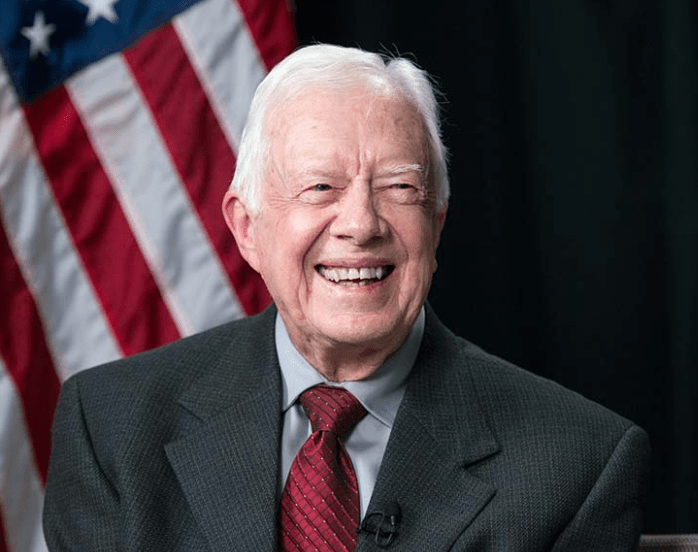
Jimmy Carter served as the 39th President of the United States from 1977 to 1981. He brought a quiet and deliberate resolve to the Oval Office. Carter was a former peanut farmer and Georgia governor. His presidency was shaped by his outsider status. He was known for his Southern charm and deep sense of morality. This quiet resolve was tested by the significant challenges he faced, but it never wavered.

Carter inherited a nation grappling with inflation, an energy crisis, and a faltering trust in government post-Watergate. Undeterred, he tackled the energy crisis head-on. He donned a cardigan during televised addresses to encourage Americans to conserve energy. He also urged Congress to pass legislation for renewable resources and energy independence. His solar panels on the White House symbolized a progressive-thinking approach that would resonate decades later.

On the international stage, Carter championed human rights, placing them at the core of U.S. foreign policy. His leadership during the Camp David Accords remains a hallmark of his presidency. It was a historic peace treaty between Egypt and Israel. This significant achievement demonstrated his commitment to diplomacy and peace. It marked the first time an Arab country formally recognized Israel.

Jimmy Carter
The Carter Center Photo

Yet, Carter’s term was also marred by challenges. The Iranian hostage crisis cast a long shadow as 52 Americans were held captive for 444 days. The crisis tested his patience. It also tested his diplomacy. The eventual release of the hostages coincided with Ronald Reagan’s inauguration. This became a bittersweet moment in his legacy. Carter showed resilience during this crisis. It proved his unwavering commitment to his duties as President.

Jimmy Carter – The Carter Center Photo

Carter served only one term. His presidency reflected his unwavering belief in doing what was right. He did this regardless of political consequences. His tenure laid the groundwork for a post-presidential humanitarian service life, earning him the Nobel Peace Prize decades later. This continued commitment to the greater good is a testament to the lasting impact of his presidency.

Jimmy Carter’s time in office was not marked by soaring rhetoric or overwhelming popularity. Still, it was defined by integrity, resilience, and a steadfast commitment to the greater good.

Jimmy Carter: The Country Music President

Groff Media 2024© Truth Endures IMDbPro

Presented by benandsteve.com By: Benjamin Groff II©

2–3 minutes

The year was 1977, and Jimmy Carter had just taken the oath of office. A peanut farmer from Georgia, he brought a unique sensibility rooted in his Southern upbringing and a deep love for American culture, particularly country music. This unique combination of his Southern roots and his love for country music not only shaped his personal life but also influenced his presidency, allowing him to connect with the struggles and joys of everyday Americans.

Waylon Jennings Family

When he stepped into the White House, Carter made it clear that the arts, especially music, would have a place of honor in his administration. He often reminisced about listening to gospel and country music on the family radio back in Plains, Georgia, where the soulful twang of artists like Hank Williams and the Carter Family resonated with the struggles and joys of everyday Americans, a sentiment he deeply shared.

One evening, during a White House dinner, Carter invited Willie Nelson to perform on the South Lawn. The night was balmy, and as the country star strummed his guitar under a canopy of stars, Carter took the opportunity to speak.

White House Photo – Carter Library

“Country music,” he said, “is the heart and soul of America. It tells the story of our struggles, faith, and hope.”

Carter’s admiration wasn’t just lip service. He actively promoted the genre, ensuring it received the recognition it deserved as an integral part of American culture. He invited artists like Loretta Lynn, Johnny Cash, and Dolly Parton to the White House. He even arranged for country music showcases at international events to share a slice of Americana with the world. His unwavering efforts significantly influenced the genre’s rise to mainstream respectability during the late 20th century.

Bill Anderson with The Carters

But Carter’s legacy extended far beyond his love of country music. He brokered the Camp David Accords, a landmark peace agreement between Egypt and Israel that demonstrated his diplomacy skills and commitment to global peace. He championed human rights globally, making them a cornerstone of U.S. foreign policy. He also pushed for energy conservation, installing solar panels on the White House roof long before climate change became a widely recognized issue.

After leaving office, Carter’s achievements only grew. He founded The Carter Center, dedicated to promoting democracy, fighting disease, and mediating conflicts worldwide. His work eradicating diseases like Guinea worm, even in his post-presidential years, demonstrated his enduring compassion and determination to make the world better.

As for country music, Carter’s genre promotion left a lasting legacy. Many country artists credited him with helping to elevate their art to a global stage. Even decades later, when asked about his presidency, Carter would smile and say,

“If I could broker peace and get people to tap their feet to country music, then I’ve done my job.”

Jimmy Carter’s presidency may not have been perfect. Still, his love for the arts, his commitment to peace, and his tireless work for humanity made him a leader whose legacy resonates far beyond the Oval Office.

Jimmy Carter and the Little Peanut Stand

Groff Media 2024© Truth Endures IMDbPro

Presented by benandsteve.com By: Benjamin Groff II©

2–3 minutes

Earl Carter and Children

The summer in Plains, Georgia, was hot and humid. Young Jimmy Carter, no more than ten years old, sat under the shade of an old pecan tree. Beside him stood a makeshift wooden stand crafted from spare planks his father had discarded. A hand-painted sign read, “Peanuts 5¢ a Bag.”

Jimmy’s father, Earl, suggested selling peanuts after the latest harvest.

“You’ll learn the value of hard work,”

Earl had said, his weathered hand resting on Jimmy’s shoulder.

“And how to talk to people. That’s important.”

Jimmy Carter

Jimmy took the advice seriously. He woke early each morning to bag the peanuts. He carefully measured each part to guarantee every customer got their money’s worth. Then he’d march down the dirt road to the little stand. He would sit there until the sun dipped low in the sky.

On this particular day, business was slow. The air was thick with the buzz of cicadas, and Jimmy’s mind wandered as he stared down the empty road. He thought about the world beyond Plains. It was a world he’d only glimpsed in books. Travelers passing through town also told him stories about it.

As he mused, a car sputtered to a stop nearby. It was an old Ford, its green paint faded and dust-caked. A man stepped out, dressed in overalls and a straw hat. He approached the stand with a friendly smile.

“Afternoon, young man,”

the stranger said, his voice tinged with a twang.

“How much for a bag of those peanuts?”

“Five cents, sir,”

Jimmy replied, standing up straight.

The man chuckled.

“You drive a hard bargain, but I reckon it’s worth it.”

He handed Jimmy a shiny nickel, and Jimmy passed him a bag of peanuts in return.

The man lingered, munching on the peanuts as he leaned against the car.

“You’re Earl Carter’s boy, ain’t ya?”

“Yes, sir.”

“Well, you got his knack for business. Ever think about what you wanna do when you’re older?”

Jimmy hesitated, then spoke with quiet determination.

“I think I’d like to help people. Maybe be a farmer like my dad, or –– maybe even something bigger. Like a teacher or someone who solves problems.”

The man nodded thoughtfully.

Jimmy Carter was a teenager then. He was number 10 in a group portrait of the Plains High School basketball team. The photo was taken in Plains, Georgia, around 1940.

“That’s a fine ambition. Keep that kindness in your heart, boy. The world can use more folks like you.”

Jimmy smiled, his youthful confidence bolstered by the stranger’s words.

Years later, as President of the United States, Jimmy Carter often recalled that summer by the peanut stand. There, under the pecan tree, he first learned the value of hard work. He also learned humility and the simple power of connecting with others. These were lessons that would guide him throughout his life.

The stand was long gone. But, the spirit of that little boy with big dreams remained. It was forever rooted in the red soil of Plains.

Learn more about Jimmy Carter in photos. Got to the source for photos used in this writing by clicking here.

Parallels Between the Chinese Exclusion Act and Modern Immigration Concerns: Lessons from History –– The Danger Of Losing Immigrants

Groff Media 2024© Truth Endures IMDbPro

Presented by benandsteve.com By: Benjamin Groff II©

You can also refer to the NPR Story America’s first major immigration crackdown and the making and breaking of the West  for additional insights and related material that complement this story, offering a deeper exploration of the subject.


3–5 minutes

The Chinese Exclusion Act of 1882 marked a pivotal moment in U.S. immigration history, becoming the first significant federal law restricting immigration. It targeted a specific ethnic group driven by economic fears, racial prejudice, and political populism. A review of this historic legislation, alongside the context of its enactment, reveals striking parallels to modern immigration debates. Both historical and contemporary issues illustrate how economic anxieties, cultural misunderstandings, and political opportunism can drive restrictive immigration policies that may ultimately prove disastrous for society.

The Role of Immigrant Labor in Economic Development

In the mid-19th century, Chinese immigrants, despite facing systemic discrimination and being blamed for economic problems, played a crucial role in building the American West. Their resilience and determination were evident in their instrumental role in constructing the transcontinental railroad, tackling some of the most dangerous and demanding jobs in brutal conditions. However, when the Panic of 1873 led to widespread unemployment, populist sentiment scapegoated Chinese immigrants, claiming they were stealing jobs from white workers.

A similar narrative exists today. Immigrant labor is fundamental to the agriculture, construction, and technology industries. Despite this, immigrants are often vilified during economic downturns, accused of taking jobs or lowering wages. This cyclical pattern of scapegoating undermines the reality that immigrants frequently perform jobs that native-born workers are unwilling or unable to do, driving economic growth and innovation. Restrictive immigration policies, such as deportations or bans, risk damaging these essential industries and the broader economy, much like the exclusion of Chinese workers stunted specific sectors in the late 19th century.

Cultural Backlash and Populist Politics

The transcontinental railroad’s completion in 1869 symbolized a remarkable technological achievement but also marked a turning point for Chinese immigrants. Their presence sparked a cultural backlash as they settled in communities like Truckee, California. Fueled by racial prejudice and populist rhetoric, white workers and politicians pushed for their exclusion, culminating in the Chinese Exclusion Act. This act institutionalized xenophobia and created a precedent for racially biased immigration policies.

Today, cultural anxieties continue to shape immigration debates. Concerns about preserving cultural identity and fears of “otherness” fuel resistance to immigrants. Particularly from Latin America, the Middle East, and Asia. Politicians often exploit these fears to rally support, pushing for restrictive measures such as border walls, travel bans, or mass deportations. Such actions not only marginalize immigrant communities but also foster division and xenophobia, hindering social cohesion.

Economic Consequences of Restriction

The long-term economic impacts of the Chinese Exclusion Act highlight the dangers of restrictive immigration policies. By limiting a vital workforce, the law hampered industries reliant on immigrant labor. The exclusion of Chinese workers also set a precedent that discouraged innovation and adaptability in labor markets, contributing to stagnation in certain regions.

Policies that limit immigrant contributions to the workforce have modern parallels. For example, restrictive visa programs and deportations threaten industries like agriculture and technology, which rely heavily on immigrant talent. Moreover, these policies can exacerbate labor shortages, driving up consumer costs and reducing the global competitiveness of U.S. industries. History demonstrates that economic growth thrives on diversity and inclusion, not exclusion.

Lessons from the Past

The Chinese Exclusion Act teaches us that targeting immigrants as scapegoats for economic or social challenges is a shortsighted and counterproductive strategy. Immigration is a cornerstone of American prosperity, fostering innovation, cultural richness, and financial resilience. Policies driven by fear and prejudice, rather than informed analysis, risk repeating the mistakes of the past and should be considered.

Today’s immigration debates echo the populist rhetoric and exclusionary measures of the late 19th century. However, we have the benefit of hindsight to recognize that such policies often create more problems than they solve. To avoid a similar disaster, today’s policymakers must approach immigration with a focus on integration, economic opportunity, and respect for human dignity. By learning from history, we can build a more inclusive and prosperous future, where all individuals feel valued and respected.

You can also refer to the NPR Story America’s first major immigration crackdown and the making and breaking of the West  for additional insights and related material that complement this story, offering a deeper exploration of the subject.

America at a Crossroads

Groff Media 2024© Truth Endures IMDbPro

Presented by benandsteve.com By: Benjamin Groff II©

1–2 minutes

America is at a turning point, a moment so profound that many may not see the year’s end without facing life-altering consequences. These changes aren’t their fault. They stem from forces more significant than any single person or group—forces set in motion long ago.

The nation stands on the brink of challenges unseen in living memory. No vote, no leader, no hero can steer us away from what’s coming. The roots of our crisis lie in greed and unchecked ambition, planted by individuals we know and trust—people we’ll sit across from at holiday dinners, unaware they helped build the road to this moment.

As the months unfold, our choices are narrowing. The lives we’ve known, filled with freedom of association, laughter, and uninhibited conversation, are under siege. Soon, those liberties may be reshaped or stripped away entirely, dictated by legislation crafted by those who believe they know better.

Imagine a world where our words must align with an official narrative, where dissent is no longer tolerated. Our daily connections—jokes, debates, and chatter—become whispers of a bygone era. Communication will be monitored, censored, or stifled entirely. Freedom of thought, once a cornerstone of this great land, will be reduced to a memory.

And yet, it is worth remembering:

We let this happen.

Or rather, “they” did.

Those who wielded their votes, believing in promises that veiled agendas, have delivered us to this precipice.

It is “they” who must now reckon with what “they’ve” done to the “Land of the Free and Home of the Brave.”

But reckoning is not enough. As the storm looms, let us not resign ourselves to despair. Let us remember who we are and what we stand for. Even as the path ahead grows darker, there remains a flicker of the courage, resilience, and unity that built this nation. We must nurture that spark, which may guide us back to the light.