In emergency services there is a moment most people never see.
It usually happens sometime after midnight, when the world is quiet and the station lights are dim. The calls have slowed down just enough that someone finally drifts off in the Bunkroom.
Then the tones drop.
Within seconds the calm disappears. Boots hit the floor, radios crackle to life, and another emergency begins.
For many first responders, that moment repeats itself again and again over the course of a shift. Sleep comes in fragments—ten minutes here, twenty minutes there—if it comes at all.
Yet the work still has to be done.
Patients still need treatment. Ambulances still need to move quickly and safely through traffic. Decisions still have to be made in seconds.
So how do first responders manage when sleep is scarce?
The answer, in many cases, is a combination of training, teamwork, and habits built over years of long nights.
Coffee: The Unofficial Fuel of Emergency Services
Walk into almost any firehouse, EMS station, or dispatch center. You will find a coffee pot that never truly turns off.
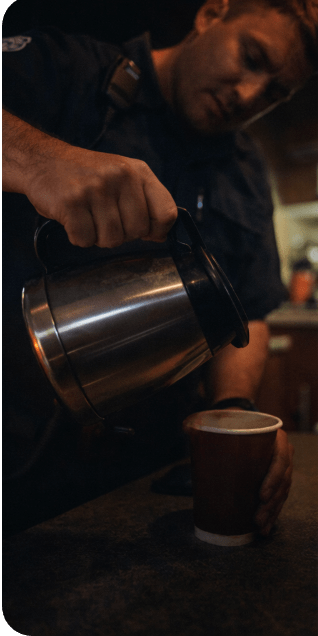
Caffeine has become the unofficial fuel of emergency work. It sharpens focus, pushes back fatigue, and gives providers the extra edge they need when exhaustion begins to creep in.
But caffeine is a temporary solution, not a cure. It can help providers stay alert for short periods, but it cannot replace the restorative effects of real sleep.
Still, for many crews working through the night, that cup of coffee becomes a small but necessary ally.
The Power of the Partner Check
Another important defense against fatigue is something emergency services have relied on for decades—watching out for each other.
In EMS and law enforcement alike, partners often double-check each other’s work when exhaustion sets in.
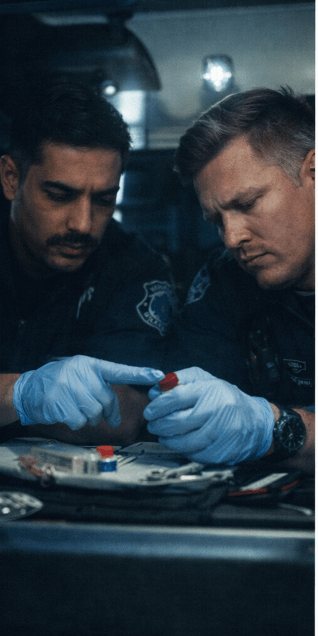
One medic confirms a medication dose while the other prepares it. A partner reviews a treatment decision before it is carried out. A tired driver is reminded to pull over or slow down when fatigue becomes obvious.
These small moments of teamwork are often invisible to the public. Still, they are an important safety net inside the profession.
Experience and Muscle Memory
Years of training also play a role in helping providers function when they are tired.
Many of the most critical skills in emergency medicine are practiced repeatedly until they become almost automatic. Starting an IV, assessing a patient’s airway, or reading a cardiac monitor are actions that experienced providers perform almost instinctively.
That muscle memory helps bridge the gap when fatigue clouds thinking.
But even the most experienced provider is still human. Fatigue eventually catches up with everyone.
Humor in the Middle of the Night
One of the most common coping tools in emergency services may surprise outsiders: humor.
First responders have a long tradition of gallows humor. It’s a way of releasing tension, staying connected with coworkers, and pushing through difficult moments.
A quiet station at three in the morning may suddenly erupt in laughter. It might be over a joke, a story from a previous call, or something completely ridiculous.
That humor isn’t about disrespect. It’s about survival.
Sometimes laughter is the only thing that keeps a tired crew moving through the night.
The Quiet Drive Back to the Station
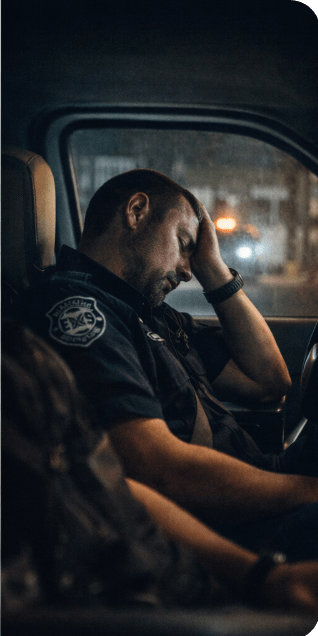
After the sirens fade, the patient is delivered to the hospital. There is often a quiet drive back to the station.
For many providers, that ride is the moment when exhaustion becomes most noticeable.
The adrenaline of the call is gone. The road stretches ahead. The body begins to remember how tired it really is.
Those moments are why conversations about fatigue are becoming more important within emergency services.
First responders have always found ways to push through exhaustion. However, the goal should never be simply to endure it.
The goal should be to manage it.
A Profession Built on Dedication
The reality is that fatigue has always been part of emergency services.
Long shifts and unpredictable calls are part of the job. The responsibility of protecting the public adds to it. This means the job will never fit neatly into a normal sleep schedule.
But despite those challenges, first responders continue to answer the call.
They rely on training, teamwork, and professionalism to carry them through the long nights.
And when the tones drop again—whether it’s midnight, three in the morning, or just before sunrise—they get up and go.
An International Discussion For Police,Fire, EMT’s, Dispatch and You!
WHEN EMERGENCIES ARRISE AND THOSE RESPONDING ARE TOO TIRED TO BE THERE
For paramedics, EMTs, and first responders, sleep often becomes the one thing emergency medicine never seems to deliver. The science is clear—fatigue affects judgment, safety, and patient care. Yet the process still runs on sleepless shifts.
When the Tones Drop at 3 A.M.: Fatigue and the Reality of EMS Life
For EMS providers, fatigue isn’t just an inconvenience or a badge of honor. It’s a real operational risk that affects patient care, provider safety, and the long-term health of the workforce. Research over the past several decades has repeatedly shown that lack of sleep slows reaction time. It interferes with judgment. It also increases the likelihood of mistakes and accidents.
You understand something the general public rarely sees if you’ve ever been jolted awake in a station Bunkroom. This happens when the shrill sound of dispatch tones rings at 2:47 in the morning. In emergency medical services, sleep often feels like something promised but rarely delivered.
Anyone who has worked long shifts in emergency services knows exactly what that looks like in the real world. The medic drives back from a call, fighting heavy eyelids. The paramedic double-checks medication calculations at four in the morning because the numbers won’t quite settle in the brain. The crew member stares at a cardiac screen, trying to push through mental fog.
Before we talk about solutions, it helps to understand how EMS developed this culture of chronic sleep deprivation. It’s also important to know why meaningful rest can be so difficult to find on the job.
Sleep isn’t a luxury. It’s a biological need that allows the brain and body to recover and operate properly. Most adults need somewhere between seven and nine hours of restorative sleep within a 24-hour period.
For EMS providers, reaching even half that amount during a shift can feel like a victory.
Research shows that the effects of sleep deprivation can be dramatic:
• After approximately 17 hours awake, a person’s cognitive performance declines significantly. It begins to resemble someone with a blood alcohol concentration around 0.05%. • After 24 hours without sleep, impairment can resemble a 0.10% BAC, well above the legal driving limit in most states. • Fatigue affects reaction speed, memory, and the ability to make complex decisions—all critical skills in emergency medicine.
Studies examining EMS providers have also revealed troubling patterns. Many report experiencing severe fatigue regularly. A significant number acknowledge that they have fallen asleep behind the wheel after finishing a shift.
For providers in the field, these statistics aren’t abstract numbers. They show up in everyday moments:
• struggling to concentrate on a pediatric medication calculation • catching yourself drifting at a stoplight on the way back to the station • taking longer than usual to interpret patient data during a call
The long-term consequences of chronic sleep deprivation can also be severe. Poor sleep has been linked with higher risks of heart disease, diabetes, obesity, depression, and anxiety. Over time, fatigue contributes to burnout and drives experienced providers away from the profession.
Ironically, other industries that rely on safety-critical decision making—like aviation and commercial trucking—strictly regulate work hours and rest periods. EMS, nonetheless, often operates under schedules that allow providers to stay on duty for 24 hours or longer.
How EMS Ended Up With 24-Hour Shifts
Many EMS scheduling practices trace their roots to the fire service.
When modern EMS systems began developing in the 1960s and 1970s, many ambulance operations were integrated into fire departments. Firefighters traditionally worked 24 hours on duty. They followed this with 48 hours off. This schedule was manageable when fire calls were relatively infrequent.
EMS adopted this structure, even though medical call volumes soon far exceeded those of fire responses.
There were several reasons the schedule remained popular:
Staffing efficiency Long shifts need fewer personnel to keep coverage.
Fewer commutes Working a 24-hour shift means fewer trips to and from work during the week. This is something many providers appreciate, especially those in rural areas.
Overtime opportunities Long shifts make it easier to pick up extra work. This increases income for providers. It also reduces hiring pressure on agencies.
Tradition Like many aspects of emergency services culture, once a system becomes established it tends to stay that way.
Other Scheduling Models
Although the 24-hour shift remains common in many departments, other models are used as well.
12-hour shifts Common in high-volume urban EMS systems. They reduce extreme fatigue but need more staff and more frequent shift changes.
Kelly schedules A modified version of the 24/48 rotation that periodically adds an extra day off for recovery.
48/96 rotations Two days on duty followed by four days off. Some providers enjoy the extended time off, but fatigue can become severe if call volume is high.
Peak-hour staffing Extra crews are scheduled during the busiest times of day to reduce workload during overnight hours.
Each system has advantages and disadvantages. The challenge for agencies is balancing staffing levels, budgets, and provider well-being.
The Reality of Multiple Jobs
Another factor contributing to fatigue is the financial reality of EMS work.
Many providers hold second—or even third—jobs to make ends meet. A medic often finishes a 24-hour shift at one service. Then, they report to another agency for extra hours.
In some cases, providers stay awake and working for 48 hours or longer. While overtime can be financially appealing, the physical and mental toll can be enormous.
Why Sleep Is So Difficult in EMS
Even when schedules theoretically allow for rest, real-world conditions often make sleep difficult.
Unpredictable call volume One shift is quiet, while the next produces a constant stream of calls.
Station environments Bunkrooms are noisy, crowded, or poorly designed for restorative sleep.
Cultural expectations In some departments, daytime naps are still discouraged despite overnight calls.
Stigma surrounding fatigue Many providers hesitate to admit exhaustion for fear of appearing weak.
The result is a workforce that often operates on minimal rest while still being expected to deliver high-level medical care.
What Agencies Are Trying
Across the United States and internationally, EMS organizations have begun experimenting with strategies to tackle fatigue.
Fatigue management programs Training and policies designed to recognize fatigue as a safety hazard.
Improved sleep spaces Some agencies are redesigning stations to create quieter, darker rest areas for crews.
Adjusted shift schedules Shorter shifts or hybrid scheduling models may reduce extreme fatigue.
Data-driven staffing Deploying extra units during peak call hours can reduce workload during overnight periods.
None of these solutions is perfect. Budget constraints, staffing shortages, and operational demands make large changes difficult for many agencies.
Still, awareness of the issue is growing.
Personal Responsibility Matters Too
While system design plays a major role, providers also have some responsibility for managing fatigue.
That means prioritizing sleep on off-days, maintaining healthy routines, and recognizing when exhaustion affect performance.
Emergency services professionals often pride themselves on toughness, but fatigue is not a personal weakness—it’s a biological reality. Recognizing its effects is part of professional responsibility.
When fatigue becomes normalized within a profession, the consequences ripple outward.
Operational efficiency declines. Morale suffers. Experienced providers leave the field.
Most importantly, fatigue can affect the quality of care patients get.
Communities depend on EMS professionals to respond quickly and make critical decisions under pressure. Those responsibilities need clear thinking and alertness—something difficult to keep without adequate rest.
Moving Forward
Fatigue will always be part of emergency services to some degree. The unpredictable nature of the job makes perfect schedules impossible.
But acknowledging the problem is an important first step.
Agencies can explore smarter scheduling, better rest environments, and policies that recognize fatigue as a safety issue. Providers can take steps to manage their own sleep habits and recovery time.
The tones will still drop in the middle of the night. That’s part of the job.
The profession can continue working toward systems. These systems protect both the providers who answer those calls. They also protect the communities they serve.
Tomorrow Part II – Running on Coffee and Commitment: How First Responders Survive Fatigue
References
Williamson AM, Feyer AM. Moderate sleep deprivation produces impairments in cognitive and motor performance equivalent to legally prescribed levels of alcohol intoxication. Occup Environ Med. 2000 Oct;57(10):649-55. doi: 10.1136/oem.57.10.649. PMID: 10984335; PMCID: PMC1739867.
Billings JM. Firefighter sleep: a pilot study of the agreement between actigraphy and self-reported sleep measures. J Clin Sleep Med. 2022 Jan 1;18(1):109-117. doi: 10.5664/jcsm.9566. PMID: 34314350; PMCID: PMC8807900.
Patterson PD, Martin SE, Brassil BN, Hsiao WH, Weaver MD, Okerman TS, Seitz SN, Patterson CG, Robinson K. The Emergency Medical Services Sleep Health Study: A cluster-randomized trial. Sleep Health. 2023 Feb;9(1):64-76. doi: 10.1016/j.sleh.2022.09.013. Epub 2022 Nov 10. PMID: 36372657.
Cox M, Cramm H. Laying the foundation: exploring the family impact of public safety personnel sleep health. FACETS. 2025;10:1-14. doi: 10.1139/facets-2025-0081
Holland-Winkler AM, Greene DR, Oberther TJ. The Cyclical Battle of Insomnia and Mental Health Impairment in Firefighters: A Narrative Review. J Clin Med. 2024 Apr 9;13(8):2169. doi: 10.3390/jcm13082169. PMID: 38673442; PMCID: PMC11050272.
Marvin G, Schram B, Orr R, Canetti EFD. Occupation-Induced Fatigue and Impacts on Emergency First Responders: A Systematic Review. Int J Environ Res Public Health. 2023 Nov 12;20(22):7055. doi: 10.3390/ijerph20227055. PMID: 37998287; PMCID: PMC10671419.
Huang G, Lee TY, Banda KJ, Pien LC, Jen HJ, Chen R, Liu D, Hsiao SS, Chou KR. Prevalence of sleep disorders among first responders for medical emergencies: A meta-analysis. J Glob Health. 2022 Oct 20;12:04092. doi: 10.7189/jogh.12.04092. PMID: 36269052; PMCID: PMC9585923.
Billings JM, Jahnke SA. Effects of a 24/48 to 48/96 Shift Schedule Change on Firefighter Sleep and Health: Short-Term Improvements and Six-Month Stability. Int J Environ Res Public Health. 2025 Nov 5;22(11):1678. doi: 10.3390/ijerph22111678. PMID: 41302624; PMCID: PMC12652382.
Be sure to follow up on emergency news and information at JEMS.
This Story From The Classics. Posted Originally in 2024 it is Reposted this year as part of the best of the best stories benandsteve.com are sharing at years end.
I have driven thousands of miles in my police patrol unit. I have also answered nearly as many calls. I can attest that there are no ‘Good Dog Calls’ a police officer can be assigned to on duty.
Getting sent to a call involving a dog always includes extra concerns that should be more welcome. Dogs can be unfriendly, mean, unruly, and generally not trustworthy.
Case in point: I have responded to dog calls where the dog got reported missing. It was just across the street and refused to return to its owner. It came to my patrol unit and refused to get out. It insisted on staying, growling when we tried to pick it up and carry it back to its home. I can only guess why it didn’t want to go home.
I have been to dog calls where the dog has bitten a neighbor and had to get put in confinement. The owner objected to the dog’s removal, and a brigade of officers confiscated the dog. The animal control officer was not on duty. So the dog went into the police cruiser and made a hairy mess. It took weeks to get all the fuzz out. No pun intended. Then a day later, and while patrolling through the neighborhood, you see the dog getting walked by the owner’s child. Only to discover they have broken it out of doggy jail. You also have to file more serious charges against the dog owner. Something that you wish didn’t have to happen. The dog is confused over the whole back and forth. The Canine would have been home sooner had the owners only cooperated with the city.
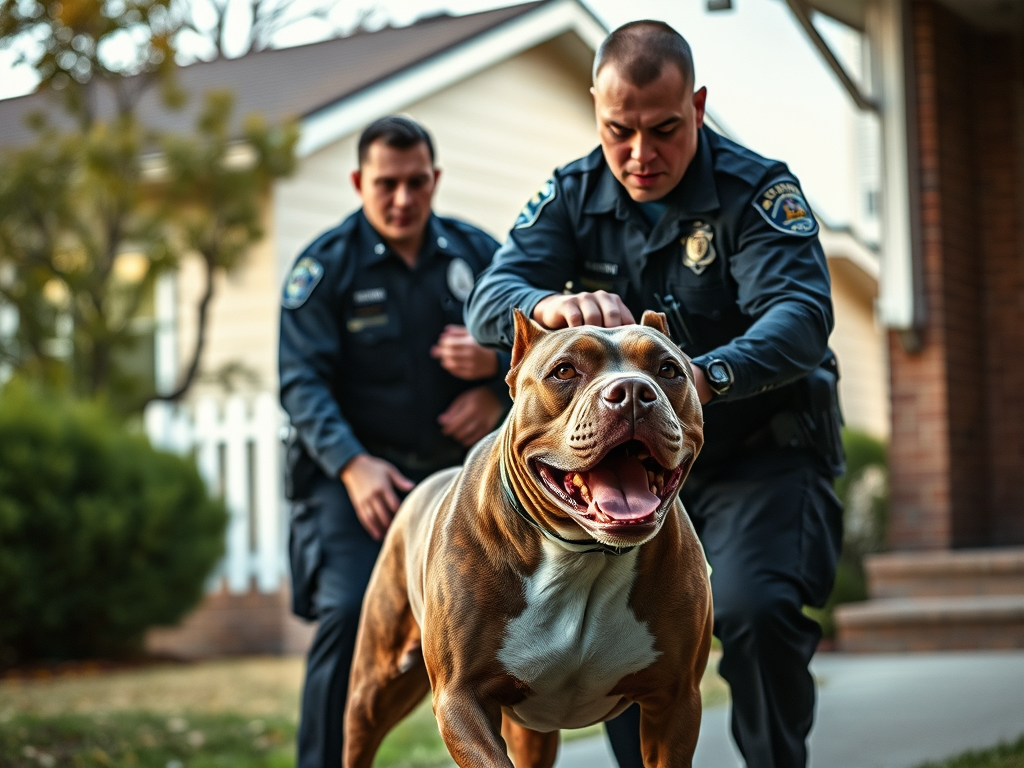
Then, the next step is the crisis intervention, which is your own. It is early in the morning. And dispatch sends you to a home where a pit bull has a family trapped in their home. It will not allow them to get to their cars to leave to go to work or school. You arrive and see this dog running between the front and back doors, preventing the homeowners from exiting the house. You call your backup unit to bring the animal control unit since they are not on duty (as usual).
The backup officer arrives in the Animal Control Unit—the beauty of every small-town police department. You get the dog loop poles when they arrive and devise a plan. The homeowners will call the dog to the backdoor. This will allow an officer to enter the house through the front door. Then your backup partner will go in the house and go to the back door and call the dog. When he rushes to the back door he will use one of the loop poles. Slipping a loop over the dog’s head. As he does, I will come up from behind and slip a loop over the head. And we will have a two loop pole control of the dog. Then together we will be able to control the animal to get it into the animal control vehicle. As we carry out the plan, the dog fights with all it has. Trying feverishly to bite and attack us. We get it to the truck, lift it in, and slide it into a carrier. Loosening the pole loops, we leave them intact so we can use them when we get out to the shelter. So to place the animal in a pen. We close the gate and say farewell to the family that had got trapped inside their home. Waving to us, they are grateful for our service. The dog is fighting like crazy inside the truck. It sounds like we have the Tasmanian Devil inside.
We drove six miles to the shelter, and our anxiety peaked. We were ready to take on this beast we had struggled with earlier. It is now eerily quiet. We cracked open the gate and took hold of the poles. We tightened the slack in the loops. To make sure the dog had tension around its neck so we can control it. We flipped open the gate, and ––––– NOTHING. The dog was dead. DEAD! IT WAS LIMP.
We are dumbfounded at what the hell happened. We had put it in the back of the truck and drove six miles. An investigation indicated that the dog continued fighting even inside the truck’s cage. And either had a heart attack or choked itself while fighting within the closure. We had no choice but to take the dog to the shelter. Had we left it at large we would have had to fight the dog. And even got put in a position to shoot the animal due to its violence. We intended to try and avoid that scenario, but sadly, it ended the dog’s life anyway.
This Story From The Classics. Posted Originally in 2024 it is Reposted this year as part of the best of the best stories benandsteve.com are sharing at years end.
The last three days of the year often get overlooked. During this time, services go unnoticed around the average town or city. This well can be the case where you live.Police, Fire, Ambulance, and 911 Operators all do an incredible job. They work tirelessly in the build up to the New Year Eve Celebration and all the socializing involved. All the socializing is not celebratory, and the people they deal with are not all friendly.
As the year drew close, the city was abuzz with anticipation for the New Year’s celebrations. But for the fire, police, and ambulance services, the last three days of the year were anything but quiet. These dedicated men and women often worked long shifts. They sacrificed their own celebrations. They were on the front lines, ensuring the community’s safety and well-being.
Day One: December 29th
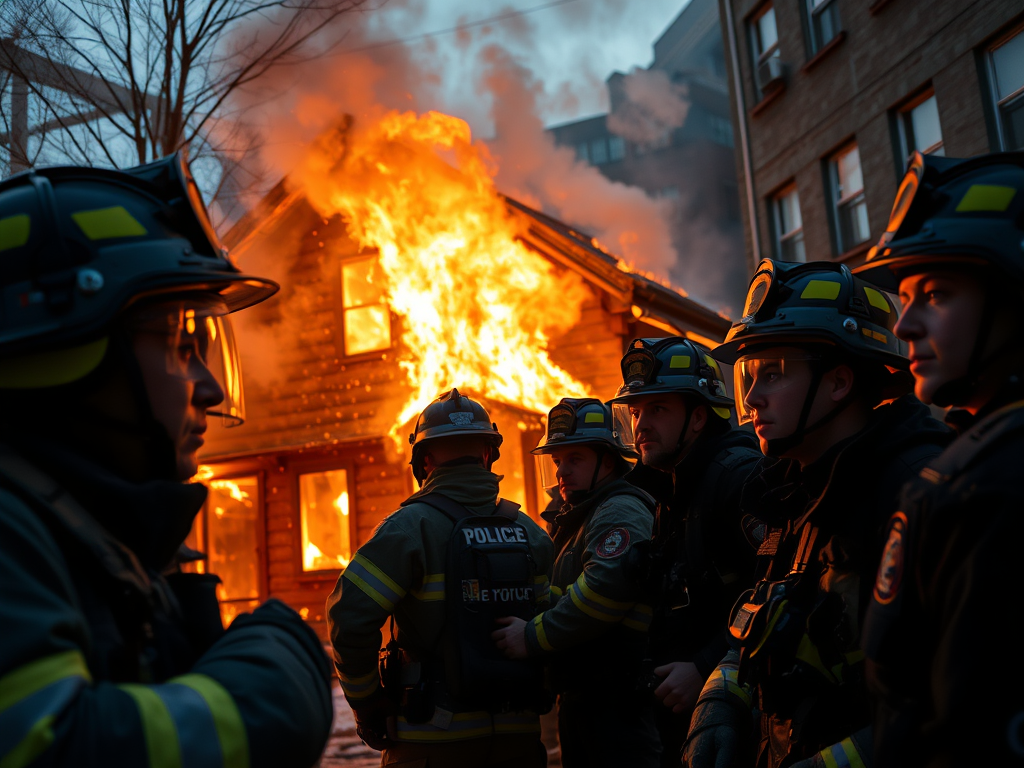
The fire department received a call about a house fire in the early morning hours. Flames engulfed the old wooden structure, and the firefighters worked tirelessly to control the blaze. They managed to rescue a family trapped inside, their faces covered in soot but grateful to be alive. Investigators later determined that a faulty space heater caused the fire. This serves as a stark reminder of the dangers of winter.
Meanwhile, the police were called to a domestic disturbance in a quiet suburban neighborhood. A heated argument escalated. Officers arrived with their professional demeanor and calm approach. They managed to defuse the situation. This ensured that both parties were safe and had a chance to cool down.
The ambulance service was dispatched to a car accident on the icy roads. A young driver had lost control of his vehicle and skidded into a tree. Paramedics worked quickly to stabilize him and transport him to the hospital. Despite the crash’s seriousness, the driver was expected to fully recover.
Day Two: December 30th
The fire department responded to a call about a gas leak in an apartment building. Residents were evacuated as firefighters located the source of the leak and shut it off. Their quick response and decisive action prevented a potential explosion. This reassured the residents. They were allowed to return to their homes once it was deemed safe.
The police were called to a robbery at a local convenience store. The suspect had fled the scene, but officers gathered evidence and track him down. The thief was apprehended and taken into custody, and the stolen goods were returned to the relieved store owner.
The ambulance service received a call about an elderly woman who had fallen in her home. Paramedics arrived to find her in pain and incapable of moving. They carefully lifted her onto a stretcher. They transported her to the hospital. At the hospital, she was treated for a broken hip. Her family was grateful for the swift and compassionate care she received.
Day Three: December 31st
On New Year’s Eve, the fire department was on high alert as fireworks lit up the night sky. They responded to several small fires caused by stray sparks, but thankfully, none resulted in severe damage. Firefighters patrolled the city, ensuring that everyone enjoyed the celebrations safely despite the potential dangers they faced.
The police were busy with calls about noise complaints and public intoxication. Officers maintained a visible presence in the city center, where crowds had gathered to watch the fireworks show. They worked to keep the peace and make sure everyone rang in the new year without incident.
The ambulance service was called to help a young woman who had collapsed at a New Year’s party. Paramedics quickly assessed her condition and determined that she had consumed too much alcohol. They provided her with the necessary care and transported her to the hospital for further observation.
When the clock struck midnight, the city erupted in cheers and celebrations. The fire, police, and ambulance services continued their vigilant watch, ready to respond to emergencies. For them, the end of the year was just another day. They served and protected their community. This often came at the cost of their own family celebrations.
Remember this New Year’s Eve and throughout the Holiday Season, Do Not Drink And Drive. Party Responsibly. Stay Alive For 2025!
First responders are trained to notice patterns long before studies are commissioned or policies are rewritten. Sometimes danger announces itself not with a single catastrophic event, but with repetition—quiet, unsettling repetition. Over a single 24-hour period, I recorded eight separate headlines. Each headline involved police officers being struck by vehicles while working crashes or traffic stops. Eight. Different states. Different agencies. Same outcome. This situation raises a controversial and long overdue question. Are modern LED strobe lights unintentionally putting first responders in greater danger?
There was a time when emergency lights rotated. They swept. They moved with rhythm. The old beacons gave drivers something important—a visual break. A moment for the brain to process direction, distance, and motion. Today’s LED systems don’t rotate; they pulse. Rapidly.
Aggressively. Relentlessly. High-intensity strobes which floods the visual field, especially at night. Instead of guiding a driver away from danger, it overwhelms the brain’s ability to react. The result, in theory, is not panic—but fixation. The eyes lock on. The vehicle drifts toward the brightest point. Not out of intent, but neurological confusion.
Some call it “target fixation,” a phenomenon well known to pilots, motorcyclists, and tactical drivers. Under stress, humans often steer toward what they’re staring at—even when that object shows danger. Combine that instinct with modern LED strobes. These strobes flash faster than the brain comfortably processes. The warning light becomes a lure. A hypnotic point of focus. A tragic beacon.
Eight Officers Were Struck In 24 Hours. Different States. Same Strobe Style Lighting.
Is it time to ask whether modern emergency strobes are warning drivers—or pulling them in?
Within just one day, these were the headlines recorded:
• 1 arrested for allegedly driving while intoxicated after rear-ending a police cruiser on I-465
• Las Vegas police officer injured after vehicle hit while investigating a separate crash
• Effingham County deputy hospitalized after being struck by a vehicle, authorities confirm
• Police cruiser struck by car, officer injured in Naugatuck
• State trooper vehicle damaged after being hit during a traffic stop
• Norman police officer critically injured after being struck by a car on State Highway 9
• Winston-Salem police officer injured after impaired driver crashed into three patrol cars
• Waterbury man injured Naugatuck officer in hit-and-run crash
Eight incidents. One recurring element: emergency lighting designed to protect, now contributing to harm.
This is not an indictment of technology, nor a dismissal of impaired or reckless driving. Accountability still matters. But safety demands that we ask difficult questions—even when the answers challenge long-standing assumptions. If the very lights meant to warn motorists are instead disorienting them, then tradition, training, and procurement policies deserve re-examination.
Officers and firefighters shouldn’t have to stand in the road. They shouldn’t be wondering whether the light behind them is helping. They shouldn’t wonder if it’s painting a target on their back.
Sometimes progress requires us to look backward. Sometimes the old way worked better. And sometimes, the most dangerous thing on the roadside isn’t the driver who fails to slow down. Instead, it’s the light that never lets them look away.
This isn’t meant to be the final word — it’s meant to start a conversation.
If you’re a first responder, dispatcher, firefighter, EMT, tow operator, or a motorist, your experience matters. If you have ever felt disoriented by modern emergency lighting, your experience matters.
Have you noticed drivers drifting toward scenes instead of away from them? Do today’s LED strobes feel different than the rotating lights of the past? Or do you believe visibility has improved safety overall?
Share your thoughts, experiences, or observations in the comments. Respectful discussion is encouraged. If patterns are being noticed on the roadside long before they’re studied in boardrooms, it’s worth listening. Lives depend on it.
Benjamin Groff is a former police officer and radio news anchor. He has hosted programs for CNN and ABC News affiliates in Oklahoma, Colorado, and Wyoming. His career in law enforcement began in 1980 and lasted more than two decades. This gave him first hand insight into the criminal mind and public safety. Moreover, it provided him with an understanding of the human stories that often go untold. His writing draws on these experiences, blending street-level truth with a journalist’s eye for the bigger picture.
In the heart of the bustling city, the frigid December air carried the soft hum of holiday cheer. Festive lights adorned streetlamps, casting warm glows onto the snow-dusted streets. For the officers of the 8th Precinct, Christmas Eve was far from quiet. Calls came in relentlessly: domestic disputes, stranded travelers, and even a wayward reindeer reported near the city park. These dedicated officers were on duty, ready to serve and protect.
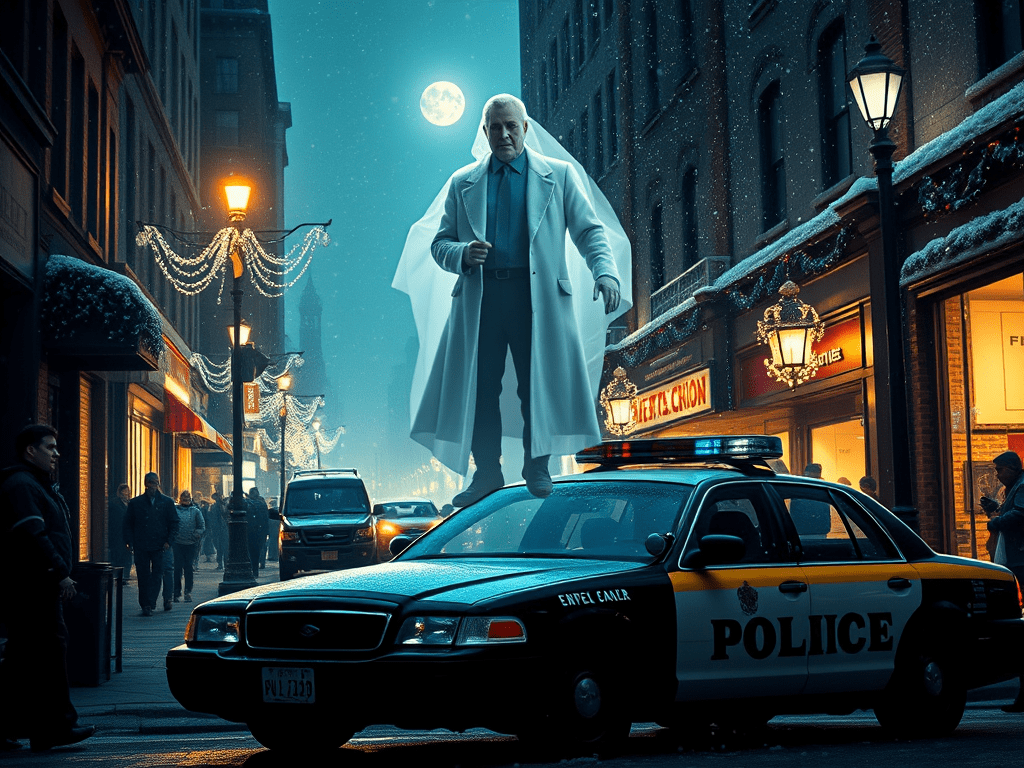
What the officers didn’t know was that they had three spectral protectors watching over them—The Guardians of Christmas Eve.
Each of these ghostly policemen had once served the city. They were bound by duty. A deep sense of loyalty held their spirits. They lingered to make sure that no harm would come to those who now walked the beat.
Inspector Miles Hanley
Miles Hanley was a tall and imposing figure. He had been the precinct’s first chief when the station was founded in the late 1800s. Known for his wisdom, he fiercely protected his officers. He carried his ghostly silver pocket watch. He used it to guide the others through the city. On this night, Hanley floated above a lone patrol car. It was parked at the edge of a dark alley. His translucent form shimmered in the moonlight.
“Johnson’s heading into a bad spot,”
Hanley muttered, watching the young officer approach a shadowy figure rummaging through garbage bins. With a flick of his watch, he whispered through the veil of time, nudging Johnson’s instincts. The officer hesitated, then called for backup—averting a potential ambush. Hanley grinned.
“Still got it.”
Officer Rosie McKinney
Rosie, affectionately called “Mama Mac” by her peers, had patrolled the city during the 1940s. She had an uncanny knack for reading people, even in death. Tonight, she hovered near a busy intersection where Officer Emily Torres was directing traffic midst a chaotic pile-up.
“Stay sharp, Emily,”
Rosie murmured, spotting a distracted driver barreling toward the scene. With a wave of her ethereal baton, she sent a gust of icy wind straight into the driver’s face. The man slammed on his brakes just in time, his car skidding to a halt inches from the officer. Rosie chuckled, tipping her ghostly hat. “That’s one less hospital visit tonight.”
Detective Lou Vargas
Lou had been a beloved detective in the 1970s, known for his quick wit and unshakable resolve. He now roamed the precinct’s cold case archives, whispering clues to frustrated officers. But tonight, Lou focused on Officer Brandon Lee. Officer Lee had just been called to investigate a suspicious package left near a crowded shopping district.
As Brandon approached the package, Lou materialized briefly behind him, a shadowy whisper in the winter night. “Check the wires, kid. Look left before you kneel.” Obeying the faint warning in his gut, Brandon discovered the package was harmless—a forgotten Christmas gift. Still, he felt the hairs on his neck stand like someone had been there with him.
A Christmas Morning Promise
As dawn broke over the city, the officers returned to the precinct, exhausted but safe. Unseen by human eyes, Miles, Rosie, and Lou gathered on the station’s rooftop, gazing at the snow-covered streets below.
“We did good,”
Lou said, leaning on his ghostly cane.
“Not a single officer lost,” Rosie added softly.
Miles held up his pocket watch, the spectral clock hands freezing as the sun rose. “Until next year,” he said, and the three faded into the morning mist.
Below, Officer Torres rubbed her arms against the chill. “Did you feel that?” she asked Officer Lee.
“Yeah,” he replied, staring at the horizon. “Like someone was watching over us.”
Police work operated on instinct, humor, and gritty common sense before body cameras. Every arrest didn’t turn into a viral upload back then. This approach belonged to another era. Officers learned from veterans who passed down unwritten rules — some practical, some questionable, and some downright hilarious. These stories aren’t a manual. They’re memories from a world that helped shape the officers we later became.
Don’s Lessons for Rookie Officers
Don was a seasoned officer whose wisdom mixed patience with a dry, knowing humor. He often told rookies about the prisoners who would scream for an entire transport ride. These are the same kind you see in fifteen-minute viral videos today.
He’d tell the infamous alum-powder story with a wink.
“Keep a plastic bag of it in your shirt pocket.
If you get a screamer, take a pinch and flick it – they will shut up!”
This always left rookies unsure whether he was pulling their leg. Or, was he sharing some relic from an era with fewer rules and more noise? His message was never about techniques. It was about the mindset: don’t let chaos set the tone. And always keep your humor intact.
The “Dog!” Brake Test
Another bit of old-school folklore involved the rowdy back-seat prisoner who wouldn’t stop cussing or kicking. Officers had a classic trick:
Get the patrol car up to about forty-five miles an hour.
Slam on the brakes.
Yell,
“Dog!”
The prisoner would slam into the cage divider and go silent. This silence would last until the second dog ran across the road. By the time they arrived at the jail, the only thing left in them was concern for the imaginary dogs.
It wasn’t policy. It wasn’t pretty. It was one of those stories officers shared over coffee. They shook their heads at “the way things used to be.”
The Gilligan’s Island Sobriety Test
DUI stops had their own brand of comedy. When you already knew the drunk driver was going to jail, the roadside field tests became… creative.
The “Gilligan’s Island Test” was a favorite:
Place your left hand over your head. Hold your right ear with your right hand. Balance on one foot. Sing the theme to Gilligan’s Island.
Most never made it past “a three-hour tour.”
It broke the tension. And after a long, cold night, sometimes everyone needed that.
Jurisdiction and the Art of Paperwork Avoidance
Jurisdiction lines used to shift like sand depending on who wanted — or didn’t want — the call. If the incident required endless paperwork, officers suddenly cared very deeply about city-limit boundaries, council-meeting notes, and outdated maps.
Veterans avoided calls they weren’t dispatched to, knowing the penalty: days off lost to court subpoenas. Midnight-shift officers often clocked out at dawn. They then sat in a courtroom until midafternoon. They did this while waiting for cases where they never said a word.
It was exhausting, but it was part of the rhythm of old-school policing.
A Time Before Cameras — And a Time With More Witnesses
These stories sound wild today, but much of policing back then was driven by common sense and community trust. People knew officers, and officers knew their people.
Citizens were often the first to speak up if an officer crossed a line. This happened long before social media or body cams existed. Even without technology, accountability came from individuals who believed in keeping standards high.
Most officers didn’t stop someone without a genuine reason. Those who abused that privilege rarely lasted. It was an unwritten rule — understood, enforced, and expected.
Closing Reflection
Old-school policing wasn’t perfect — not by a long shot. But it existed in a different world with different expectations. Humor softened harder edges. Community relationships carried more weight. And the job, for better or worse, relied on improvisation.
Today’s policing is built on transparency and technology, and that’s a good evolution. But these stories stay important. They are reminders of the human side of the badge, the long nights, and the strange solutions. These stories also recall the characters who trained us and the moments that shaped us along the way.
One persistent problem is untruths. Misinformation continues to mislead the public. These actions make the police look unfavorable.
Benjamin Groff is a former police officer and radio news anchor. He has hosted programs for CNN and ABC News affiliates in Colorado and Wyoming. His career in law enforcement began in 1980 and lasted more than two decades. This gave him firsthand insight into the criminal mind and public safety. Moreover, it provided him with an understanding of the human stories that often go untold. His writing draws on these experiences, blending street-level truth with a journalist’s eye for the bigger picture.
Henry had been laying low for months. He wasn’t exactly on the best terms with the brass at his small police department. He’d been on the midnight shift so long, most people in town barely remembered he worked there. To entertain himself, he left funny notes about the place signed “John Henry.” The detective division took six months to figure out who was behind the jokes. They learned the truth only by accident.
Henry confessed to one of the detectives during a neighborly beer session. The young detective was desperate for some action. He had gone a year without a single arrest. He thought maybe Henry can teach him a thing or two. Henry didn’t hold back: “For starters, I’m not sitting on my ass in the office for eight hours.” It stung. The detective had only one unit in his division. His wet-hen supervisor kept him glued to a desk. Henry, on the other hand, led the department in felony arrests for two years straight. His bluntness was legendary, especially among supervisors who loved to hate him.
But it was what happened at 3:00 a.m. one night that sealed Henry’s reputation. He pulled his black-and-white patrol unit up to the north entry door of the station. He wanted to check his oil. He also wanted to check his transmission fluid. Both were low. As he topped the transmission, some spilled onto the exhaust pipes and burst into flames. In seconds, the underside of the cruiser was lit up like a bonfire. Henry shouted, “Shit! Shit! Shit!” sprinted inside, grabbed the fire extinguisher, and went to work.
The flames went out. A massive cloud of extinguisher powder billowed everywhere—under the car, across the pavement, and straight into the police department itself. The breathalyzer, computers, and half the office equipment were dusted in a fine white film. To anyone walking in, it looked like a cocaine snowstorm had blown through the station.
Henry realized it would take 18 hours to clean, and he wasn’t about to spend his shift playing janitor. He called to a cat he saw over in a alley way. It came to him. He picked it up and threw it into the station. Then he rolled the extinguisher across the floor causing it to seem that it had knocked over. He dusted off his hands and thought: “Shit happens. Things happen. And I’ll be in the far south district when they find this mess.” shut and locked the door and headed south. And that is where he was at 0800. Day shift radioed saying they were 10-8. Henry replied, good I am Ten Dash Seven!
To this day, no one ever heard the story—until now. The Cat? No one ever mentioned it again!
Walking the White Line: From Hymns to Highway Patrols
If you’ve ever been told to “walk a straight white line,” the meaning depends a lot on where you’re standing. It also depends on who’s watching. In the Welsh valleys of How Green Was My Valley, the “white line” was a poetic path. It symbolized memory and loss. In American trucker slang, it’s the hypnotic blur of endless road miles. But to a police officer at 1 a.m. on the shoulder of a highway, that white line is all about one thing: sobriety.
A Path in Song and Story
In How Green Was My Valley, the final scene drifts to Alfred Newman’s Finale. It is woven with the Welsh hymn Pen Calfaria. Its the “white line” was a poetic path of memory and loss. “This shall never leave my memory”, feels like a pledge. This pledge is to never forget where you’ve walked. The “white line” here is a metaphorical road. It signifies a way home, a journey of life. It is the one path you try to stay true to.
Road Paint and Real Lines
Outside of metaphor, the first real white lines appeared on American roads in the early 20th century. Two names claim credit:
A leaking milk wagon inspired Edward Hines in 1911.
Dr. June McCarroll, who proposed painted center lines after a close call in 1917.
Whichever story you buy, the point is safety—keeping drivers in their lane and avoiding head-on collisions. And from there, the idea of “walking the line” naturally started meaning “stay where you’re supposed to.”
Law and Order: The Walk-and-Turn
The “walk the white line” sobriety test isn’t ancient Irish pub lore or a circus stunt. It’s a product of late 1970s American law enforcement. The U.S. National Highway Traffic Safety Administration (NHTSA) funded research to standardize roadside sobriety tests. Out of those studies came the now-famous “Walk and Turn” test:
Nine heel-to-toe steps along a straight line.
Turn in a prescribed way.
Nine steps back.
It’s part of the Standardized Field Sobriety Tests (SFSTs), along with the horizontal gaze test and the one-leg stand. The idea is to challenge both balance and divided attention—two abilities alcohol loves to mess with.
Officers used informal techniques before the SFSTs. They asked suspects to touch their nose. Suspects were also asked to recite the alphabet or, yes, walk a straight line. These early “white line” walks have been inspired by the painted road markings. They also have been inspired by circus balance acts. Alternatively, the practical idea of watching someone try to move in a perfectly straight path have been the inspiration.
Beyond the Pavement
Hymns about life’s journey include the image of a narrow path you must follow. Truckers experience “white line fever.” Country music promises fidelity with songs like Johnny Cash’s“I Walk the Line.” This imagery runs deep in human storytelling. The white line is painted down the middle of a highway, showing control and direction. It can also be imagined across the green hills of Wales. It shows the consequences of straying.
The modern police test feel clinical—clipboards, flashlights, and a yellow legal pad. Nevertheless, the symbolism is the same. Can you keep your feet steady? Is your head clear, and can you stay on the line?
Sometimes, the answer to “where did it come from?” is that it came from everywhere. It came from roads, songs, and courtrooms. It also originated from the human habit of evaluating a person’s worth. This is done by observing how well they adhere to the path.
A driver aimed to set a land speed record. He was going 283 mph during a racing event at Utah’s famed Bonneville Salt Flats. He died August 3rd, 2025, after losing control of his rocket-like vehicle called the Speed Demon, organizers said. The team had got detoured due to traffic lanes being improved. They and others would arrive late to the event.
Driver Chris Raschke
Driver Chris Raschke lost control about two and a half miles into a run. He was treated by medical professionals at the scene, but died from his injuries. The Southern California Timing Association has organized the popular land-speed racing event. This event is known as “Speed Week” and has been organized since the late 1940s.
For decades, the flat, glasslike white surface has drawn drivers from all over. They seek to set new land speed world records. Motorcycle and car fans come to watch. The salt flats are a remnant of a prehistoric lakebed. They are about 100 miles (160 kilometers) west of Salt Lake City. They have also been a backdrop for movies like “Independence Day” and “The World’s Fastest Indian.”
There is a question to be answered; why wasn’t there something soft for the man to land on? Case in point, a bouncy house, there is something soft. It would need to be ten or twenty fold. So, when his car popped off course, it would have bounced around the desert without killing anyone. Which is obvious to anyone looking at the desert.
For decades, people have used the flat, glasslike surface at Bonneville Salt Flats. It is located 100 miles (160 kilometers) west of Salt Lake City. They use it to set speed records, sometimes topping 400 mph (644 kph). Speed Week has long been a draw for motorcycle and car fans.
Raschke, 60, drove a streamliner. This long, narrow, aerodynamic car was made to run at high speeds and was known as the Speed Demon. He had worked in motor sports for more than four decades.
According to the Speed Demon racing team’s site, Raschke worked at the Ventura Raceway in the early 1980s. He raced 3-wheelers and cars in the mini stock division. Raschke learned to fabricate and keep race cars when working with an acclaimed engine builder. He later became a driver for the Speed Demon team.
Keith Pedersen, the association’s president and Speed Week race director, said Raschke was a respected driver within the racing community. He also worked for a company that makes fasteners for race cars.
“He is one of the big ones. He had done all sorts of racing,” Pedersen said.
The Race Week event began on Saturday and runs through Friday. Are you in The Phoenix metro area and want to see vehicles passing the set speeds. All you have to do is drive on any of its freeways. And be safe!
Dawn broke over a transformed Ajo. The Mexican beagle crickets, now thoroughly stuffed with peanut butter goodness, retreated to the desert brush. The crickets appeared content. It was as if the agreement had fulfilled their mission. A sense of calm, albeit a wry and weary one, settled over the town.
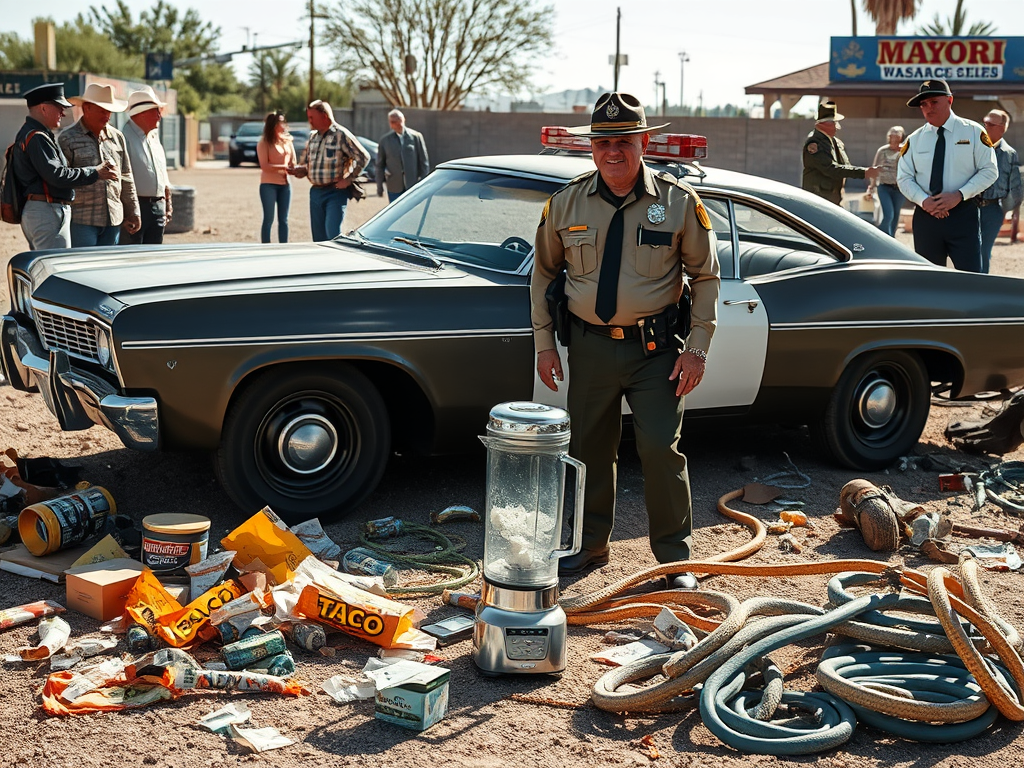
Buck found himself standing amid the remnants of last night’s epic showdown. Discarded taco wrappers were all around. A few broken garden hoses added to the debris. An old margarita blender lay as if a token of an absurd battle. The Mayor, still in full “wartime” regalia, shook hands with retirees. He even gave a slight nod of respect to Carl for his unorthodox diplomacy.
At the gas station, the local newspaper was already printing the headline:
“PEANUT BUTTER PACIFIST: HOW BUCK MILFORD CALMED THE CRICKET STORM”
— Ajo Today, alongside a coupon for “Buy One, Get One Free – Peace of Mind.”
Buck, ever the humble hero, tipped his hat.
“Sometimes, all it takes is cooler heads…and a couple of sandwiches,”
he remarked dryly.
The final act of the evening unfolded with a local radio show, hosted by Marty the janitor. Marty, now reformed, played a slow, soulful tune. The music blended cowboy ballads with cricket chirps in the background. Buck’s patrol car, dusty and battered, stood as a symbol of resilience against absurdity.
As the sun climbed higher in the sky the next morning, Ajo prepared for another day in the desert. Danger and humor mingled that day. There was also the possibility of another bizarre escapade in the shimmering heat. And Buck, always ready, knew that in a town like this, adventure was never too far away.
The sun dipped low. It cast long shadows over the scorched earth of Ajo. The stage was set for the ultimate confrontation. Every faction had gathered. Mayor Gonzalez stood with her fleet of feisty seniors armed with flyswatters. Carl Sandlin rode his tinfoil-covered dune buggy, banjo in hand. A defiant Barney Fife-lookalike still clutched his oversized ticket book. Buck was caught in the middle, displaying a mixture of resignation and amusement.
Across the dusty open space, the beagle crickets aligned themselves in rows that shimmered in the golden glow. Their usual hum was replaced by a rising, almost militant chorus of chirps. It was a rallying cry that sent a shiver down everyone’s spine (or was it just the cool desert breeze?).
Mayor Gonzalez stepped up, megaphone in hand, and declared,
“Today, we settle this once and for all! You bugs have terrorized our town long enough, and you’re coming to justice!“
At the same time, Carl revved his banjo as if it were a trigger. He let out a wild, improvised yodel. This merged into a banjo riff—a challenge thrown down in musical form. The tension was palpable.
Then came the unexpected moment. Buck acted on pure instinct. His genius shone brightly from a half-forgotten lunch order. He pulled out a thermos of peanut butter sandwiches.
“Folks, and… critters,”
he announced, his voice steady.
“Sometimes all you need is a little tad of nourishment. It’s a reminder of simpler days.”
He scattered the sandwiches across the open space. The crickets, baffled by the offering (and even enticed by the rich aroma), paused their chorus. Slowly, as if savoring each bite, they began to nibble at the offerings. One by one, the insects lowered their guard. In that surreal instant, music and mayhem faded into an almost peaceful tableau.
Barney Fife-like hollered,
“This is it—the bug truce is on!”
While Mayor Gonzalez’s frown slowly morphed into a reluctant smile as her deputies put down their flyswatters.
For a heartbeat, the desert held its breath.
How long can everyone hold their breath? Too long, and we’ll have folks fainting in the streets—because that’s what happens when you forget to breathe! We hope the Mayor will remind the crowd to inhale. Barney Fife or Buck himself might do that too. We need this reminder before we move on to Chapter 10—the final installment of this wild ride.
If you’ve been reading since Chapter 1, you already know how it started. It began with unidentified flying toilets. Additionally, there was a full-blown invasion of Mexican Beagle Crickets across Southern Arizona’s Sonoran Desert. But if you just tuned in now… do yourself a favor—go back to the beginning. Otherwise, you’ll be as lost as the lady in the blue ’74 Buick LeSabre. She’s still sitting at the stop sign outside Ajo. She’s waiting for directions that may never come.
The Mexican Beagle Crickets Hum “Play Misty For Me?
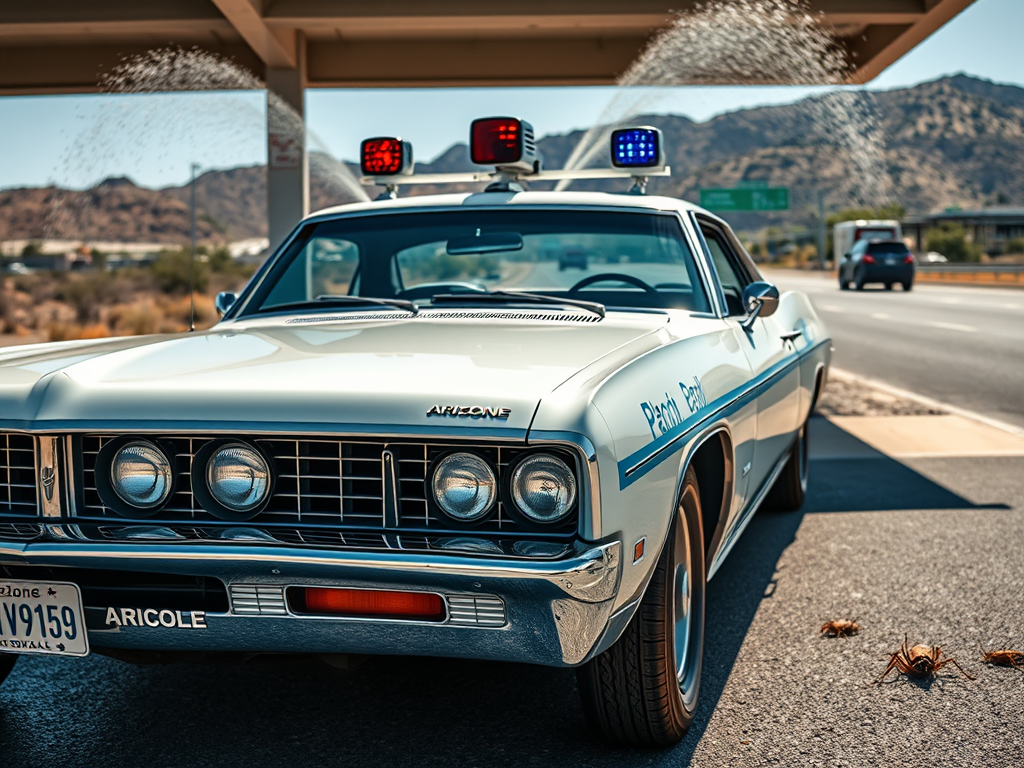
As news of the impromptu peace talks spread, another mystery began simmering like the endless desert heat. The highway crew’s newly installed solar-powered misting stations were intended to cool workers. They were also meant for eager beagle crickets. Nonetheless, they were causing far more problems than anticipated.
While Buck was patrolling near a row of these glistening stations, he noticed something amiss. Where the mist should have provided relief, it instead made the crickets multiply. A bizarre swarm of shiny, water-dappled insects was now marching in almost perfect formation.
Investigating further, Buck discovered that the misting stations weren’t a product of innovative engineering at all. They were part of a shady government contract mixed with local corruption. Additionally, there was a janitor who seemed to know every secret corridor in the county. The janitor was a quiet, stooped fellow known as Marty. He confessed that he had been “tinkering” with the control systems. He did this in exchange for a steady supply of his favorite snack: spicy cactus crisps.
“This here mist is subsidizing a bug bonanza!”
Buck grumbled as he took notes in a dog-eared notebook, the pages fluttering in the arid wind.
Suspicions mounted. Someone is using the misting stations to create a perfect breeding ground for the cricket phenomenon. This move would be designed to turn Ajo into a quirky tourist trap. It also would be a covert experiment in behavioral acoustics. Trust, it seemed, was as scarce as shade in the desert.
Before Buck confronts Marty with a ticket, the misting systems churned out another puff of fog. It sent confused retirees and cricket mediators scattering in every direction. Buck still intended to give Marty a stern talking-to.
Those misting machines didn’t cool things down—they cranked the chaos up a notch! Now, Mexican Beagle Crickets are swarming Ajo and its neighboring towns faster than you can shake a jalapeno-laced stick. Somewhere in the background, the ghostly voice of Karl Malden echoes. It is from a dusty 1978 American Express commercial. “What will you do? What will you do?” That, dear reader, is the burning question for Chapter Nine… and trust us, the heat is just getting started.
Salsa Dancing To A Deal With The Mexican Beagle Crickets
The escalating cricket crisis soon took a bizarre turn. After the Mayor declared martial law, Buck inexplicably found himself roped into a ceasefire negotiation. It was by invitation and circumstance, not entirely by choice.
Under the twilight sky, Buck set up a pair of folding chairs near the old taco stand. It was now decked out as a makeshift negotiation table. He sat alongside Carl Sandlin, who was still sporting his sequined –––
“diplomatic vest.”
An unexpected guest joined them: Gladys “The Negotiator” Ramirez. She is a spry 82-year-old with a background in community organizing and a penchant for peanut butter.
A gentle breeze stirred the desert sand as dozens of beagle crickets gathered in a semicircle. Their chirps and hums intermingled with the soft strumming of Carl’s banjo. It was not a formal diplomatic session at all. Instead, it was a surreal backyard barbecue meeting. Buck found himself as the unintended mediator.
Carl, with a dramatic flourish, announced,
“I propose we work together! You bugs, you stop the invasions, and we guarantee a steady supply of fresh, organic salsa.”
The crickets, of course, did not respond with words, but their synchronized humming seemed to offer a tentative –––
“aye.”
Then, Gladys cleared her throat.
“Now listen here, critters. We are not capable to talk your language, but I do know a thing or two about compromise. How ’bout a trade?”
There was a pause that lasted nearly two seconds in cricket time. A single cricket marched ahead. It tapped an abandoned sombrero with its leg, as if in silent agreement.
Buck, rubbing the bridge of his nose, grinned. He thought,
“I have to admit, this is just the most peculiar peace talk.”
It was indeed the most peculiar peace talk this side of a cactus convention.
The ceasefire was as fragile as the morning dew on the desert floor. For one mystical, humid moment, man and cricket reached an understanding.
Will this agreement hold? The Mexican Beagle Crickets and man—finally in harmony? Or will the crickets grow weary of salsa and develop a taste for avocado dip instead? Will a sudden craving for classic TV jingles like Sanford and Son or The Beverly Hillbillies derail the peace? And what happens when today’s senior citizens pass on—will the next generation need to renegotiate the whole deal? With only a few chapters left, Buck better hustle—answers aren’t going to find themselves!
Mayor DeeDee Gonzalez wasn’t one to take a half-measure. Her town’s only claim to fame was a bug outbreak with a penchant for humming and line-dancing. Mexican beagle crickets had commandeered a taco stand once more. They also interrupted a high-stakes karaoke contest at the community center. She had had enough.
The emergency meeting took place in the town hall. Chairs were hastily arranged in a circle. The table was littered with half-eaten enchiladas. The Mayor banged her gavel with a determined clatter.
“Enough is enough!”
She declared.
“These pests have overstepped their bounds. As of now, martial law is declared on all cricket activity in Ajo!”
In a matter of minutes, local retirees received “bug defense kits.” These kits featured oversized flyswatters and garden hoses. They also included homemade “cricket deterrent” spray (an odd blend of cactus juice and a hint of mint). The newly minted “deputies” marched down Main Street. The Beagle Cricket Brigade paused their evening serenade. It was as if to say, “They brought reinforcements!”
Buck, watching from the window of the Impala, smirked.
“Now that’s what you call bugging out,”
He muttered. He anticipated the chaos. It would ensue when a troop of seniors met a swarm of rhythmic insects.
How dare they! A Taco Stand? Those evil Beagle Crickets! It is only a matter of time before someone is called to main street for a shootout at high noon. But, will Buck’s aim hit something as small as a cricket in a shootout? Would the crime fighter be outmatched by crickets?Or will they challenge him to Karaoke sing off?
Buck Milford wasn’t the type to complain. He’d driven through sandstorms. He had broken up fistfights at quilt raffles. Once, he gave a field sobriety test to a goat wearing sunglasses. That day was different. The Arizona sun scorched the earth like a microwave set on vengeful. Even Buck was close to breaking.
The heat index had hit 127. A road sign melted. Melted. The “SLOW CHILDREN AT PLAY” sign now reads “OW.”
Buck had parked his cruiser under the only tree between Ajo and Yuma. It was a desperate little mesquite. It looked like it had made some poor life choices. He sipped water from his melted ice chest and tilted his hat over his forehead.
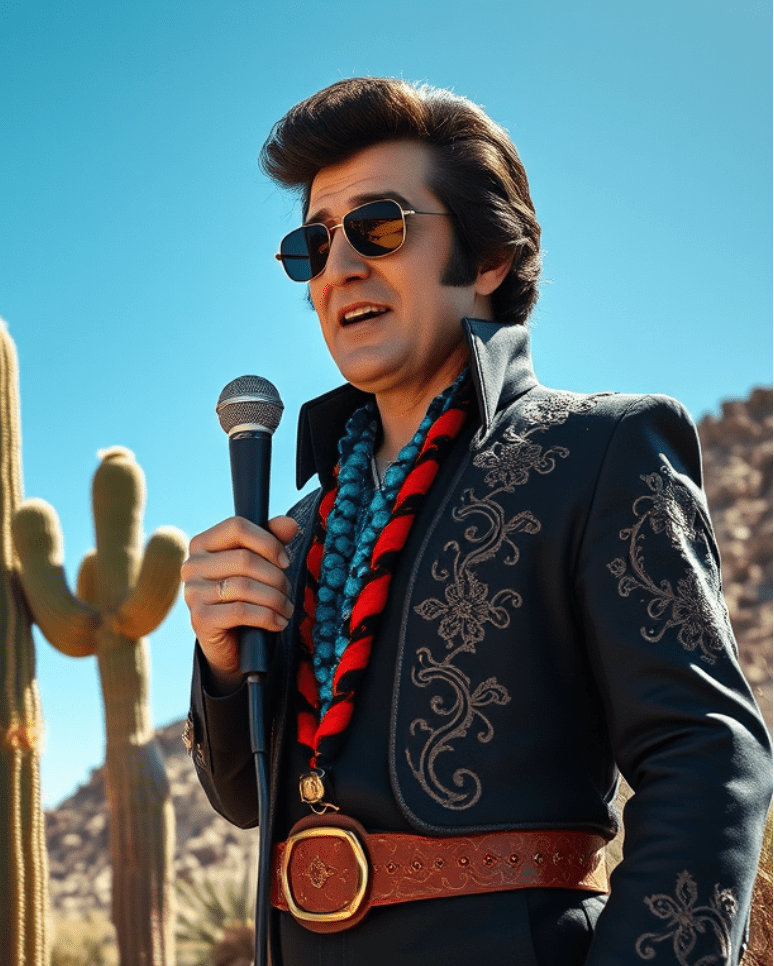
That’s when he saw Elvis.
Plain as day.
Standing next to the patrol car, wearing a powder-blue jumpsuit and holding a chili dog.
“Elvis?”
Buck mumbled.
“That you?”
Elvis gave him a nod.
“It’s hot out here, hoss.”
Buck blinked.
“I must’ve been out in the sun too long…”
Suddenly, another figure emerged from behind the tree.
Skinny. Nervous. Clutching a clipboard and a sheriff’s badge held on by Scotch tape.
“Buck! Buck, there’s been a violation!”
The man squeaked.
“A code triple-seven! Unlicensed harmonica discharge in a non-musical zone!”
Buck sat up straight.
“Barney Fife?”
It was indeed Barney Fife. Or instead, it was someone who looked, sounded, and panicked exactly like Don Knotts. This person was holding a ticket book the size of a Bible.
Barney fumbled with his pen.
“Now, now, Buck, I don’t want any trouble, but this whole desert’s outta code. These crickets! The yodeling! There’s dancing! Dancing, Buck! It’s indecent!”
Buck stood up, swaying slightly.
“Barney, are you… real?”
Barney narrowed his eyes.
“As real as a jelly doughnut on a Wednesday morning, Trooper. Now I’m gonna need you to confiscate Carl Sandlin’s banjo and suspend his taco license—right away!”
Behind them, Elvis leaned against the cruiser and took a bite of his chili dog.
“Let the boy yodel, Barney.”
“I will not!”
Barney barked.
“This is law and order, not Hee Haw Live!”
At that moment, Carl himself drove by in a dune buggy. It was covered in tinfoil and wind chimes. He waved like a parade marshal.
“I’m playin’ at dawn!”
Carl shouted.
“Bring earplugs or bring maracas!”
Barney turned purple.
“I’ll have his badge!”
Buck stared in stunned silence.
A cricket landed on his shoulder and began humming ––
“Love Me Tender.”
The next thing Buck remembered was being propped up in a folding chair outside the Ajo gas station. A bag of frozen peas was on his forehead. He had a bottle of Gatorade in each hand.
“You passed out cold.”
Said Melba, the station clerk, who also claimed to be a licensed Reiki therapist.
“Said something about Elvis, Barney Fife, and indecent line dancing.”
Buck blinked.
“I didn’t… wrestle Carl off a unicycle, did I?”
“Not today.”
Buck took a long drink, sighed, and muttered,
“I’m starting to think this desert has a sense of humor.”
A Desert with a sense of humor? Barney Fife? Elvis? Our Crime Fighter has been out in the nether regions of the Sonoran Desert too long. That, or he sees dead people. Whatever it’s going to lead to, it’s another exciting story of Arizona’s most famous crime fighter, Buck Milford!That Mexican Beagle Cricket is sorta cute, isn’t it?
The Mexican beagle crickets arrived five days ago. Already, the Arizona Department of Wildlife had received over 300 complaints. Not about damage, mind you—but about the music.
“They’re too dang punctual,”
one retiree griped.
“They hum like my mother-in-law when she’s judging me,”
wrote another.
One anonymous caller just yelled. “MAKE IT STOP!” for forty-two seconds before hanging up.
Buck Milford was used to desert weirdness. He’d once ticketed a man for driving a dune buggy made entirely of rattlesnake skins. But nothing prepared him for Carl Sandlins latest idea: The Great Cricket Peace Yodel.
“I’ve been listenin’ to ‘em closely,”
Carl explained, pacing in front of his yurt-slash-taco-stand.
“And I think they respond to pitch. What we got here is a musical species. They ain’t hostile—they just need harmony!”
Carl wore what he called his “diplomatic vest.” It was a sequined denim jacket with fringe. He also equipped himself with an old harmonica, a rusted washboard, and a five-gallon pickle bucket labeledAMBASSADOR DRUM.
Buck just stared at him.
“You sure you haven’t been drinking your aloe again, Carl?”
But Carl was undeterred. That night at 2:00 a.m., he set up two lawn chairs. Fifteen minutes before the crickets’ usual humming ritual, he arranged a battery-powered spotlight. He also prepared a megaphone duct-taped to a broomstick.
“Alright, fellas,”
he said into the megaphone.
“Let’s talk tunes!”
Buck sat in the cruiser, sipping lukewarm coffee, radio off. “This is going to end with him either arrested, abducted, or somehow elected,” he muttered.
At exactly 2:15 a.m., right on schedule, the desert came alive with humming.
But this time… Carl joined in.
He yodeled.
He drummed.
He played a harmonica solo that sounded like a walrus stepping on bubble wrap.
And for thirty glorious seconds… the crickets paused.
Then, they hummed louder than ever.
They didn’t just hum The Andy Griffith Show this time. They mashed it up with Achy Breaky Heart. It sounded suspiciously like a 1996 Taco Bell jingle.
Carl dropped his bucket.
“They answered me, Buck! I think we’re collaborating!”
Buck opened his door.
“Carl, I think they’re angry.”
Suddenly, thousands of beagle crickets surged toward the yurt, drawn to the sounds of tin, harmonica, and misguided ambition. They swarmed Carl’s taco stand, leapt onto the megaphone, and—somehow—turned on his margarita blender.
It spun wildly. Salsa flew.
The crickets began line-dancing.
Buck had seen a lot, but beagle crickets doing synchronized grapevines under a disco light powered by solar lawn gnomes? That was new.
The next morning, the bugs had gone quiet. Carl stood in the rubble of his salsa bar. He was shirtless and proud.
“We made contact,”
he said, eyes shining.
“They danced, Buck. They danced!”
Buck surveyed the scene: overturned lawn chairs, chewed speaker wire, a cricket still stuck in a jar of queso.
“Well, Carl,”
he said,
“either they liked your music—or they mistook you for a piñata.”
Carl smiled.
“Doesn’t matter. Tonight, I’m bringin’ in the banjo!”
SO! CARL. He is bringing in the Banjo! Will it be on his knee? And will someone named Ole Susanna show up in Chapter Five if Carl swings that Banjo too wildly? That is a story for tomorrow. So be sure to check back and see if the Mexican Beagle Crickets have segued into classical jazz. Also, will the Highway Patrol get Buck a larger fly swatter?
If there was one thing Arizona didn’t need more of, it was heat.
But if there was one thing Arizonans couldn’t resist, it was a challenge.
Influencer Lacey Blu—a 24-year-old “solar chef” with 1.2 million followers and zero life experience—announced she’d be filming a bacon-cooking demonstration. Doing so on the hood of her Tesla at high noon. Trooper Buck Milford knew it was going to be a long day. Especially since Teslas were along way off from being invented.
“Cooking with the sun is so sustainable,”
she chirped into her phone.
“And so am I! #SizzleWithLace #SolarSnackQueen”
She parked off Highway 85 near a dead saguaro. She laid out her cookware—an iron skillet, three strips of thick-cut hickory bacon, and a side of emotional entitlement.
Buck arrived just as the bacon began to curl. He was curious about the cell phone since those too were new to this century. They were at least twenty five years from being even a brick phone.
“I’m gonna need you to step away from the car, ma’am,”
he said, tipping his hat.
“It’s 119 degrees, and your bacon grease just started a brush fire the size of a toddler’s birthday party.”
Lacey didn’t look up.
“Sir, this is my content.”
Behind her, a small flame began creeping across the sand toward a long-abandoned outhouse that somehow also caught fire. A confused jackrabbit ran out holding what looked like a burning flyer for a 1997 monster truck rally.
“Content’s one thing,”
Buck said, reaching for his fire extinguisher,
“but that yucca plant’s fixin’ to blow like a Roman candle.”
Just then, Carl Sandlin appeared on an electric scooter with a garden hose coiled like a lasso.
“I saw the smoke!”
he cried.
“Is it aliens again? Or someone makin’ fajitas?”
Buck didn’t answer. He was too busy putting out the bacon blaze while Lacey livestreamed the whole thing.
“Look, everyone!”
she squealed to her followers.
“This is Officer Cowboy. He’s putting out the fire I started! So heroic!”
Carl joined in, spraying more bystanders than actual flames.
“We got trouble, Buck! The beagle crickets are back. They were hummin’ ‘Jailhouse Rock’ this time!”
Buck finished dousing the car. He shook the foam off his arms. He wiped a trail of sweat from his forehead. It had been working its way toward his belt buckle since 10 a.m.
“Well, Carl, if the crickets are Elvis fans now, we’re all in trouble.”
The bacon was ruined. The hood of the Tesla had buckled like a soda can. And the only thing Lacey cared about was that the foam had splattered her ring light.
“You just cost me a brand deal!”
she snapped at Buck.
“I was working with MapleFix! It’s the official bacon of heatwave influencers!”
Buck gave her a long, flat stare.
“You can mail your complaints to the Arizona Department of Common Sense.”
That night, the local paper ran the headline:
INFLUENCER IGNITES BACON BLAZE; TROOPER BUCK SAVES CACTUS AND PRIDE — Saguaro Sentinel, pg. 3 next to coupon for 2-for-1 tarpaulin boots.
The Mexican beagle crickets showed up that night, as always. This time, they hummedRing of Fire.
Buck had just finished adjusting the old police scanner. It had been playing reruns of Hee Haw for the last hour. Suddenly, his radio crackled to life.
“Unit 12, please respond. Caller at mile marker 88 reports a suspicious hovering object. Caller believes it is extraterrestrial. Or a reflective commode. Please advise.”
Buck sighed and reached for his hat, which had molded to the dashboard like a forgotten tortilla.
“Lord help us,”
he muttered.
“If this is Carl again, I’m asking for hazard pay.”
Carl Sandlin, local yodeler and self-certified UFOlogist, had a unique reputation. It’s one you earn from a lifetime of heatstroke. Add to that expired beef jerky. Lastly, he had a mother who named him after her favorite brand of tooth powder.
Buck shifted the Impala into drive and pulled away from the shade of a sagging mesquite tree. The tires made a sound like frying bacon as they peeled off the scorched asphalt.
When he reached mile marker 88, Carl stood there. He was shirtless, shoeless, and sunburned. Carl was waving a fishing net wrapped in tin foil like a broken butterfly catcher.
“There it is, Buck!”
Carl bellowed.
“Hoverin’ just above my taco stand for forty-five minutes. Scared off my lunchtime crowd. Even the iguanas cleared out!”
Buck squinted toward the horizon. Sure enough, something metallic shimmered in the distance. It wobbled slightly in the heatwaves, casting a strange, shiny glow.
“You mean that thing?”
Buck asked, pointing.
Carl nodded so hard his hat flew off.
“Absolutely. That’s either an alien escape pod or a deluxe Porta-John.”
Buck pulled binoculars from his glove compartment, which were so fogged up with heat condensation they doubled as kaleidoscopes. After rubbing them on his sleeve, he focused in.
“…That’s a new solar-powered PortaCooler,”
he said finally.
“The highway crew’s been installing them for the road workers. It’s got misting fans, Bluetooth, and a cactus-scented air freshener.”
Carl squinted, unimpressed.
“You sure it ain’t Martian technology? Smells like sassafras and bad decisions over there.”
Buck stepped out of his patrol car, the soles of his boots sticking to the pavement with every step.
“Carl, unless the Martians are unionized and drive state-issued work trucks, I’m pretty sure they’re not putting in restrooms. Those restrooms aren’t off Route 85.”
Just then, as if to punctuate the point, a group of Mexican beagle crickets marched across the road. All in unison. All humming the Andy Griffith Show theme at exactly 2:15 p.m.
Carl froze.
Buck froze.
Even the misting PortaCooler froze up and made a high-pitched wheeze like it, too, was creeped out.
Carl whispered,
“You reckon they’re trying to send a message?”
Buck tipped his hat back and said,
“Only message I’m gettin’ is that we need stronger bug spray… and fewer heat hallucinations.”
The crickets finished their tune, executed a perfect pivot, and disappeared into the desert brush.
Carl crossed his arms.
“I still say that cooler’s alien.”
Buck opened the door to his cruiser and called over his shoulder.
“Well, if they are aliens, they’re better at plumbing than our city council.”
He chuckled as he pulled away, leaving Carl saluting the shimmering cooler like it was the mother ship.
It had been a hot day in the Arizona Desert. The sun had sizzled the sands in the Sonoran Desert for the last month. High temperatures reached over 115 degrees for each day during the past seven days. The weather forecast warned of night temperatures reaching 120°F or higher in the days ahead. Arizona State Trooper Wayne Milford had his 1968 Chevrolet Impala Patrol car parked outside Ajo. He had filled the fuel tank with fuel. An ice chest was filled with water. This was in case motorists or hikers needed rescue in the barren desert regions. Buck was known for his mishaps.
Trooper Milford was widely appreciated for his sense of humor. He would show community members safety tips during public meetings when he had spare time. He also attended public events during his off-duty time. He was respected by those even that received traffic tickets from and who had been arrested by the state trooper. Because he was known as a fair individual.
That summer was challenging. The extreme heat and the invasion of the Mexican beagle cricket placed the whole state under stress. Trooper Milford became essential because there would be more surprises than one could shake a stick at. And Buck had ton’s of sticks!
The Mexican beagle cricket wasn’t actually from Mexico. It didn’t bark like a beagle. Yet, it did hum the theme song to The Andy Griffith Show at exactly 2:15 a.m., every night, in unison. No one knew why. Some said it was a mating call. Others blamed radiation. Buck didn’t care. He kept a fly swatter in the glove box and an old harmonica to confuse them.
On this particular Thursday, Buck had just finished explaining the dangers of cooking bacon on your car hood. This activity was a popular desert pastime. He was speaking to a group of overheated tourists from Connecticut when his police radio crackled.
“Unit 12, we’ve got a report of a suspicious object at mile marker 88. The caller says it might be a UFO or possibly a very shiny porta-potty. Please respond.”
Buck took a sip from his melted water bottle, sighed, and muttered,
“Well, that’s probably just Carl again.”
Carl Sandlin is a local conspiracy theorist and professional yodeler. He had been filing UFO reports ever since a silver taco truck passed him on I-10 doing 95.
Still, the procedure was the procedure. Buck fired up the Impala. He turned on the siren, which sounded more like a kazoo than a siren thanks to a duct-tape repair. Then, he rumbled down the dusty road.
When he reached mile marker 88, he saw Carl. Carl was shirtless and shoeless. He was holding up what appeared to be a fishing net wrapped in aluminum foil.
“There it is, Buck!”
Carl shouted, pointing to a shimmering metal shape in the distance.
“That thing’s been hovering over my taco stand for an hour. My queso is boiling itself!”
Buck squinted. The heatwaves shimmered, giving everything a wobbly, dreamlike quality.
“Carl… that’s a new solar-powered PortaCooler. The highway crew just installed it yesterday. It’s got a misting feature and Wi-Fi.”
Carl blinked.
“You mean I can update my blog from out here now?”
“Yes, Carl.”
“Well, dang.”
Just then, a convoy of beagle crickets marched across the road in front of them, humming their nightly tune.
Buck and Carl watched in silence.
Carl finally said,
“You reckon they take requests?”
Well! You Reckon? They Take Request? We’ll have to wait until tomorrow. We need to find out if Buck will have to drive across the Grand Canyon State. He might be swatting at those Mexican Beagle Crickets. Or will the state hook a sprayer up to his unit? Check back tomorrow for another very exciting story, from the Valley of The Sun, where this story is being written!


























 benandsteve.com