The Day He Lost The Ability To Speak English

By Benjamin GroffMedia© | benandsteve.com | ©2025 

3–4 minutes

Arthur P. Calloway had built a reputation for saying exactly what he thought — and what he thought was rarely kind. He had campaigned against “outsiders.” He railed at city council meetings. He spoke with a confidence born not of wisdom, but volume. English, he often boasted, was the only language this country should ever need.

Arthur opened his mouth one Tuesday morning. He heard flawless Portuguese spill into the quiet of his kitchen. He thought it must be a joke. He assumed it was a trick of the television. It was a dream he had not yet shaken. He tried again. Perfect Mandarin. Then French. Then something that sounded like Arabic, rolling and melodic and utterly foreign to his ears.

“Stop this nonsense,” he commanded himself — only it came out in rapid German, sharp and precise. His heartbeat climbed into his throat.

“Hört auf mit diesem Unsinn!”

Arthur spent the day marching through town in bewilderment, attempting to explain his crisis to clerks, police officers, and neighbors. Every word that escaped him was eloquent and unfamiliar. Some laughed. Some filmed him. A few shook their heads and muttered that he was finally “losing it.”

By afternoon, humiliated and exhausted, he wandered into the small international grocery store he had once tried to shut down. A young woman stood behind the counter. He recognized her instantly. It was Marisol Reyes. She was one of the very people he had publicly accused of “changing the town.” She watched him carefully as he stammered in perfect Spanish.

Her eyes widened. “You never spoke to us before,” she said quietly. “Now you talk like you were born somewhere else.”

“Nunca antes nos habías hablado, ahora hablas como si hubieras nacido en otro lugar.”

Arthur understood.

Arthur’s face burned, but for the first time in years, something softer stirred beneath his anger. Through a strange miracle or curse, he explained everything. He shared his confusion and his fear. He talked about his inability to produce even a single English syllable.

Marisol listened. Not because she owed him kindness, but because she chose it.

Word spread quickly. People from other communities began visiting Arthur, testing his strange gift. He spoke Tagalog with nurses, Swahili with truck drivers, Italian with the old baker whose accent now made perfect sense. Each conversation chipped quietly at the fortress he had built around himself.

Weeks later, as suddenly as it had come, the spell broke. Arthur awoke to find English restored, sitting comfortably on his tongue like an old coat.

But something within him no longer fit.

He returned to Marisol’s store, this time with a hesitant smile and a humility unfamiliar even to himself.

I don’t deserve it,” he said, at last understanding the weight and privilege of those simple words. “But I want to learn. Not just the words. The people.”

Marisol nodded once. Then she gestured to a small bulletin board near the door. It displayed community language classes, cultural nights, and shared meals.

Arthur signed up for every one of them.

The town never quite knew what had caused his transformation. Some called it divine intervention. Others laughed it off as a nervous breakdown. Arthur never explained. He listened more. He spoke less. He walked daily past a world he once hated. Now he heard it. He truly heard it. He listened in every language he had once refused to respect.

And for the first time in his life, he found peace not in being understood… but in understanding.


By Benjamin GroffMedia© | benandsteve.com | ©2025 

Marketing to Change Minds

1–2 minutes

By Benjamin GroffMedia© | benandsteve.com | ©2025 


Marketing to change people’s views isn’t a new concept—it’s one of the oldest tools of persuasion known to humankind. It begins quietly, almost imperceptibly, with the notion that a particular group or sect isn’t “right” for the community. That whisper grows into a chorus, spreading suspicion from one group to the next. Before long, it becomes an orchestrated campaign designed to win favor with the majority.

Sometimes the purpose is simple—boosting sales or swaying public opinion. Other times it’s darker. It aims to destroy a movement or to silence dissent. It can also trample a people beneath the weight of manipulated perception.

The pattern always begins the same way. A subtle warning disguised as concern. A headline. A slogan. A talking point. Then, as the message gains traction, it becomes sharper, more divisive. The targets shift—left or right, religious or secular, it makes no difference. The goal is control.

In the coming months and years, we will see more of this calculated persuasion. This is marketing that doesn’t sell products but ideas. It spreads fear and hate. It will portray immigrants as criminals, minorities as threats, and neighbors as enemies. The tactic is old, but the technology behind it is new—and more potent than ever.

This isn’t confined to one nation. It crosses oceans and borders, infecting democracies and dictatorships alike. It’s a sickness of the mind and spirit, a global contagion that thrives on division.

To resist it, those who are often isolated in their struggles must unite. Civil rights advocates, faith groups, workers, and artists need to see they are part of the same story. Each citizen must realize their cause is connected. Survival now depends on solidarity. Only by coming together can we create a message stronger than the one designed to tear us apart.


By Benjamin GroffMedia© | benandsteve.com | ©2025 

No Virginia, “Immigrants Can’t Get Foodstamps, Welfare Or Free Healthcare”

© Benjamin H. Groff II — Truth Endures / benandsteve.com

4–7 minutes

With the 2026 U.S. election season soon underway, you’ll hear a significant amount of disinformation. One major strand targets immigrants in a wholly prejudicial way. It treats them as one homogenous group of “illegal” residents. It claims they all take “welfare benefits,” “food stamps,” or “public assistance programs.” These terms are used as triggers to motivate a particular set of voters. This is a tactic well understood by the most bigoted of candidates.

In reality, U.S. federal law places strict limits on non-citizens’ access to most benefit programs. Among the relevant statutes is the Personal Responsibility and Work Opportunity Reconciliation Act (PRWORA) of 1996. This act sets the baseline framework that governs immigrant eligibility for federal means-tested benefits. (1)


Key Facts

Undocumented immigrants — those who entered without inspection or overstayed visas — are generally ineligible for most federal public benefits. According to the National Conference of State Legislatures (NCSL), people without authorization in the United States can’t access federal public benefits. People who lack authorization in the United States are unable to access federal public benefits. People without authorization in the United States cannot access federal public benefits. Exceptions exist for certain emergency assistance, disaster relief, and non-cash community-level services. (2)

These benefits include major programs. Examples are the Supplemental Nutrition Assistance Program (SNAP, or “food stamps”). Another example is the Temporary Assistance for Needy Families (TANF) cash-assistance program. They also include non-emergency Medicaid. (3)


Lawfully present immigrants, including lawful permanent residents (green-card holders), face further restrictions. Most must wait five years after achieving “qualified immigrant” status before becoming eligible for many federally funded means-tested benefit programs. (4)

Criminal convictions may further affect eligibility. Individuals convicted of a drug–related felony after August 22, 1996 may be barred from receiving SNAP benefits. This is the case in many states. (5)

State-level variation: Federal law sets the baseline. However, individual states may use state funds to extend certain benefits. These benefits are for immigrants who are otherwise ineligible under federal rules. (6)

Quick Facts:
📌 Law: Personal Responsibility and Work Opportunity Reconciliation Act (PRWORA) of 1996
📌 Undocumented Immigrants: Ineligible for SNAP, TANF, and non-emergency Medicaid
📌 Legal Immigrants: Usually face a 5-year waiting period
📌 State Variations: Some states fund limited local programs
📌 Citizen Children: Eligible for benefits if they meet program rules
📌 Exceptions: Refugees, asylees, trafficking victims are exempt from waiting periods

Benefits for U.S. citizen children: A key exception ensures that children born in the U.S. can receive federal benefits, such as SNAP and Medicaid. This is true regardless of their parents’ immigration status, provided they meet all other eligibility requirements. The parents’ immigration status does not disqualify the U.S. citizen child. (7)

Specific exempt categories: Some immigrants are exempt from certain waiting periods or restrictions. These include refugees, asylees, victims of human trafficking, and certain others. (8)


In Summary

The U.S. benefit system places tight limitations on which non-citizens can receive publicly funded assistance. Eligibility depends heavily on:

  • the individual’s immigration status (unauthorized vs. qualified)
  • how long they’ve been residing legally
  • the particular rules of the specific assistance program.

In short: undocumented immigrants have virtually no access to standard federal welfare programs. They also lack access to food-assistance programs, especially if they have a criminal record. Many legal permanent residents must wait years. There are state-funded alternatives and exceptions. However, the broad public claim that “immigrants all use welfare/food stamps” is factually false. This claim serves as a misleading narrative.


Why this matters

When you hear a politician or political advertisement claim that immigrants are draining public benefits, you’re hearing a distorted narrative. It’s a message crafted to provoke emotional responses. It appeals to anxieties. It does not truthfully engage with the specifics of immigration law and benefit eligibility.

Bookmark this post for future reference—especially in the coming campaign months, when such claims will be ramped up. Having the facts on hand helps you call out hyperbole. It separates rhetoric from reality. This keeps the public conversation grounded in truth.

Constitutional Rights of Immigrants

Despite differences in citizenship status, the U.S. Constitution guarantees core rights to all persons within its jurisdiction — including immigrants, regardless of legal status. The Fifth and Fourteenth Amendments protect every “person” (not merely “citizens”) from deprivation of life, liberty, or property. Due process of law is required. They also protect from denial of equal protection under the law. The First Amendment also ensures freedom of speech, religion, and peaceful assembly for all. These guarantees extend to everyone on U.S. soil, whether they are citizens, lawful residents, or undocumented immigrants.

The Supreme Court has repeatedly affirmed these principles — most notably in Plyler v. Doe (1982). It held that undocumented children are entitled to the same public education rights as others. This is echoed in Zadvydas v. Davis (2001), which found that indefinite detention of immigrants violated constitutional due process. While immigration status can affect eligibility for government benefits, it does not erase the fundamental rights guaranteed by the Constitution.


References

  • U.S. Constitution, Fifth Amendment – Protects all persons from deprivation of life, liberty, or property without due process of law.
  • U.S. Constitution, Fourteenth Amendment, Section 1 – Ensures equal protection and due process for “any person” within the United States.
  • U.S. Constitution, First Amendment – Guarantees freedom of religion, speech, press, and peaceful assembly to all persons.
  • Plyler v. Doe, 457 U.S. 202 (1982) – Supreme Court ruled that denying public education to undocumented children violates the Equal Protection Clause.
  • Zadvydas v. Davis, 533 U.S. 678 (2001) – Affirmed that immigrants, even undocumented, are protected by the Due Process Clause against indefinite detention.
  • Yick Wo v. Hopkins, 118 U.S. 356 (1886) – Early Supreme Court case establishing that equal protection applies to non-citizens as well as citizens.

🗳️ Call to Action: Truth Over Talk

In the months ahead, political noise will grow louder, and facts will often take a back seat to fear. Before sharing or believing any claim about immigrants, take a moment to fact-check it. Look for verifiable data. Check reputable sources and legal references. Misinformation thrives when good people stay silent.

Share true information. Challenge falsehoods when you see them.
By doing so, you defend the truth. You also uphold the American promise of fairness and equality under the law.


By Benjamin GroffMedia© | benandsteve.com | ©2025 

The Man Who Saved Himself The Day All Odds Were Against Him

1–2 minutes

Excerpt: The Man Who Saved Himself

Digital Illustration

I often go back through the archives and reread old stories I reported on. Some are small, dusty pieces that barely made a ripple. Others grab you by the collar and refuse to let go. This is one of those stories.

On a summer day in 1993, construction worker Donald Wyman, 37, found himself trapped. He was in the woods of Jefferson County, Pennsylvania. A fallen tree had crushed his leg so severely that he couldn’t free himself. After an hour of pain and helpless screaming, Wyman realized time was running out.

With no other choice, he made a tourniquet out of a shoelace and a wrench from his power saw. Then, with a courage most of us can barely imagine, he amputated his own leg. Using a seven-inch pocketknife—cutting through muscle, skin, and nerves to seize his survival.

Digital Illustration

Badly wounded, he dragged himself to his bulldozer, and drove—bleeding—to his pickup. Once in his truck he managed to reach a neighbor’s farm half a mile away. The neighbor, John Huber, called rescuers, who later found Wyman’s leg still pinned under the tree, boot and all. Thanks to his grit and quick medical response, Wyman survived and was upgraded from critical to stable within days.

Had he hesitated, his story would have been reduced to a one-paragraph obituary in his hometown paper. But Wyman wasn’t a victim—he was a survivor. He did what had to be done.

And that’s the lesson. You may never face a tree crushing your leg. Yet, you may face toxic relationships. You might meet negative influences or habits that hold you back. Sometimes survival means cutting away the very thing that’s dragging you down. You may face a country that has appeared to have turned against you. It won’t be easy. It may hurt. But in the long run, it can save your life—so you can live fully with those you love.

Be your own Wyman. Write your own survival story.


By Benjamin GroffMedia© | benandsteve.com | ©2025 

GARY INDIANA CRIME RATES HIGHER THAN CHICAGO

4–5 minutes

Indiana Governor Michael Braun

Why Isn’t Indiana Governor Mike Braun

Being Given National Guard Help?

Chicago is often spotlighted for its crime statistics. Yet, Gary, Indiana consistently ranks higher in many key crime metrics. This is true even when compared on a per-capita basis.

Chicago often dominates headlines for crime. Yet, FBI data and neighborhood crime indexes reveal a different story. Residents in Gary, Indiana, face significantly higher per-capita risks of violent and property crimes. According to NeighborhoodScout, Gary’s violent crime rate stands at roughly 1,180 per 100,000 residents—nearly double Chicago’s rate of 673.5.

President Trump reportedly plans to send National Guard troops to Chicago to tackle crime. If crime is really the concern, those service members should go just across the border to Gary. Decades of statistics show even higher rates staring them in the face. This report includes the data and sources to prove it. So the real question is: why isn’t the Guard going to Indiana? Maybe they know they can’t go back there.


  • Violent crime in Gary is approximately 11.8 per 1,000 residents, or 1,180 per 100,000, significantly above national averages and surpassing Chicago’s violent crime rate of 673.5 per 100,000.ReolinkNiche
  • Your odds of being a victim of violent crime in Gary are about 1 in 112. This is compared to Chicago’s overall violent crime rate.NeighborhoodScout
  • Property crimes are also markedly higher: a 1 in 35 chance in Gary versus substantially lower in Chicago.NeighborhoodScout

Gary’s elevated crime levels have been well-documented over the years. These range from a ‘1993 Murder Capital’ billboard warning to recent statistics. Recent data shows some of the highest violence and theft rates in the nation.The TraceMacrotrends
Despite improvements in some categories, Gary remains one of Indiana’s most dangerous cities. It often exceeds Chicago in both violent and property crime rates.


CityViolent Crime (per 100,000)Property Crime Odds
Gary, IN~1,1801 in 35 victims
Chicago, IL673.5Lower than Gary’s rate

Yes—Gary, Indiana, a smaller city just southeast of Chicago, has higher crime rates than Chicago on a per-capita level. Though Chicago may grab more headlines, Gary’s challenges with both violent and property crime are even more severe.

  • Violent Crime Rate: Gary records approximately 11.8 incidents per 1,000 residents, making it the highest violent crime rate in the state Reolink+1.
  • Property Crime Chance: On an individual level, the chance of being a victim in Gary is 1 in 112 for violent crime. The odds are 1 in 35 for property crime. NeighborhoodScout.
  • Daily Crime Risk: Overall, you face a 1 in 27 chance per year of becoming a crime victim in Gary. Check more on Areavibes.
  • Safety Map Insights: Neighborhood safety varies widely. In central areas, residents face up to a 1 in 67 chance of violent crime. In safer southwestern zones, that drops to 1 in 137 Reddit.
  • Citywide Crime Index: Gary’s total crime rate runs at about 59.75 incidents per 1,000 residents, compared to roughly 33.37 nationally nextdoor.com.
  • Recent Trends: Encouragingly, Gary’s Police Department reported a notable drop in violent crime and fatal traffic accidents in 2024. They also noted increased proactive patrols in Gary, Indiana.

  • Comparative Crime Index (Gary vs. Chicago):
    • Violent Crime: Chicago reports about 21% more violent crime overall. Still, because of its much higher population, the individual risk remains lower than in Gary BestPlaces.
    • Property Crime: Chicago’s rate is approximately 30% lower than Gary’s  BestPlaces.
  • Detailed Numbers (NeighborhoodScout): The chance of being a victim of violent crime in Chicago is about 1 in 167. In Gary, it is 1 in 112. Property crime risk in Chicago is about 1 in 29, slightly better than Gary’s 1 in 35 NeighborhoodScoutAreavibes.

  • Lake County averages around 395 violent crimes per 100,000 residents. This figure is slightly higher than national averages near 360 per 100,000. Axios+1Wikipedia+1.
  • Economic Impact: Crime-related costs, including emotional and tangible losses, are significant across the county.

Quick Comparison Table

LocationViolent Crime RiskProperty Crime RiskNotes
Gary, IN1 in 112 (high risk)1 in 35 (high risk)Among “most dangerous” cities in Indiana
Chicago, ILLower individual riskSlightly lower than GaryLarger scale but safer per capita
Lake County, INSlightly above averageMixedCrime concentrated in urban pockets like Gary

  • Gary, Indiana, has significantly higher violent and property crime rates—both per-capita—than Chicago. Despite Chicago’s national notoriety, individuals face greater personal risk in Gary.
  • Lake County overall carries elevated crime levels, but the burden is not uniform—it’s concentrated in areas like Gary.
  • Positive note: There are signs of progress, especially in Gary. Proactive policing has reduced violent crime. It has also improved safety initiatives.

By Benjamin GroffMedia© | benandsteve.com | ©2025 

About the Author:

Benjamin Groff is a former police officer and radio news anchor. He has hosted programs for CNN and ABC News affiliates in Colorado and Wyoming. His career in law enforcement began in 1980 and lasted more than two decades. This gave him firsthand insight into the criminal mind and public safety. Moreover, it provided him with an understanding of the human stories that often go untold. His writing draws on these experiences, blending street-level truth with a journalist’s eye for the bigger picture.

How Western Movies Perpetuate Harmful Stereotypes of Indigenous Peoples

By Benjamin GroffMedia© | benandsteve.com | 2025 Truth Endures©

3–4 minutes

I was watching an old Western on television this past weekend. You know, the kind—cowboys and Indians. Or, as we might say today, American Ranchers and Indigenous Peoples.

The film, likely made in the 1950s, had the signature gloss of that era’s post-war cinema. Still, something about it suggested it was possibly shot even earlier, maybe in the 1940s. It was only later spliced, refitted, and packaged for the screen. The costumes, dialogue, and scenery all hinted at a time when the stereotypes were deeply ingrained in the script. They weren’t even questioned.

I probably watched that movie as a kid. I was sitting next to my father, not giving it a second thought. Back then, it was just another Western. But this time around, with a different set of eyes, what I saw was jarring.

It followed the predictable narrative: the cavalry riding in to tame the West and keep the “Indians” under control. Two delicately dressed white heroines were caught in the middle of a brewing conflict. A white doctor stood out as the lone character who dared to see Native people as human beings. He was mocked and ostracized for his compassion. This was especially true when a malaria outbreak swept through the tribe. He insisted they deserved treatment.

At one point, he stood in a room full of fellow whites. He asked,

“Do you think Indians are not human beings? Human beings like you and me, who deserve to live and be healthy?”

And one of the prim ladies, her hair perfect and her face untouched by empathy replied:

“I don’t know… how could they be?”

To which others in the room nodded and added, 

“That’s right.”

“Of course, they’re not!”

“No way, in God’s name.”

I sat there stunned, wondering:

“How did a line like that ever make it into a movie script?”

Even more troubling:

“How did it get past editors, producers, censors—only to be broadcast, repeated, and absorbed by generations?”

It wasn’t just offensive. It was abusive. And it made me sad.

Is there a historical context to such language? Possibly. But what would a young Native American child feel sitting in front of that screen? Would they see their life reflected as something lesser—something not worthy of protection or dignity? Listening to the white characters, it certainly felt that way.

And it took me back to where I grew up.

I’m from the Kiowa and Comanche Counties area in Oklahoma—Caddo County, specifically. I was raised alongside Native American children, many of whom I called friends.

Later in life, I worked in law enforcement and came to know tribal members through both personal and professional relationships. I learned a great deal from them—about their culture, their pride, their pain.

When I started in law enforcement, the department had an initiation ritual. It involved arresting a man nicknamed Fifteen Thousand. He was a Native man, around 50 years old, who’d been detained countless times—hence the name. His real name was Thomas Kamaulty Sr.

He was the first person I ever arrested as an officer. 

And, in time, Thomas became the first person I ever saw get sober. That meant something.

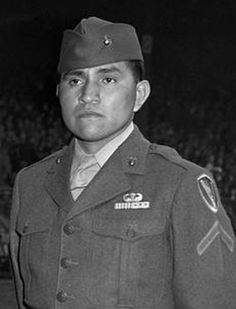
Ira Hayes

I also think about people like Ira Hayes. He was a Pima Indian from Arizona. Ira helped raise the flag at Iwo Jima during World War II. A hero by every standard. And yet, like Thomas, Ira suffered. Both carried the scars of discrimination and trauma. Both turned to alcohol as a way to numb the soul-deep wounds this country handed them.

We often ask why these cycles exist—but we rarely admit the truth: it’s because we’ve designed them to. We’ve placed people like Thomas, like Ira, into roles and systems. Their suffering can be managed. Their voices are diminished. Their lives are controlled. That was always the plan. And until we stop pretending it wasn’t, the script will keep playing—over and over again.

Understanding U.S. Immigration Raids: Obama vs. Trump

By Benjamin GroffMedia© | benandsteve.com | 2025 Truth Endures©

2–4 minutes

I received a question yesterday about the United States. They asked why so many people are up in arms over the current immigration raids taking place across the country. Especially after President Obama, during his term in office, removed over 3 million undocumented individuals. Many of whom they claimed never had a hearing. 

I wanted to conduct some research to learn more about it for myself. 

Understanding Immigration Enforcement: Obama vs. Trump

During his eight years in office (2009–2017), President Barack Obama led an administration that deported over 3 million noncitizens. These deportations were conducted through formal removal proceedings. A formal removal involves a legal process. This process results in a court order for deportation from the United States.

If we include “returns”, the total number of departures exceeds 5 million under the Obama administration. These returns are cases where individuals either voluntarily left the country or were denied entry at the border. They agreed to withdraw their application to enter. Many of those individuals were turned away at the border before ever entering the U.S. Because they were not formally admitted into the country, they were not entitled to a court hearing. These actions, while recorded as enforcement events, differ significantly from deportations after internal apprehensions.

It’s important to note that Obama’s enforcement focused heavily on border security. It prioritized the removal of individuals with serious criminal records. Despite this, he faced criticism from immigrant rights advocates for the high number of deportations. At the same time, Republicans attacked him for not doing enough to secure the border.

In contrast, the Trump administration adopted a far more aggressive and indiscriminate approach. Immigration and Customs Enforcement (ICE) agents under Trump routinely apprehended individuals from homes. They were also taken from workplaces, schools, churches, or even while walking with family. Many were detained without prompt access to legal counsel. They were transferred long distances from their communities. In some cases, they were deported without ever appearing before a judge. This represented a sharp departure from the enforcement priorities of earlier administrations.

It’s worth remembering that President Obama did not pursue mass interior deportations without due process. He implemented programs like DACA (Deferred Action for Childhood Arrivals). These programs offer relief to specific undocumented individuals who were brought to the U.S. as children.

Obama never had to use the military. He deported nearly 8 million non-documented individuals. This includes those he sent back and others never allowed in through customs at airports, ports of entry and borders. He used the border patrol and immigration officials on a budget provided by Congress. Trump has spent more on advertising. He talks about what he is going to do or what he has done. This spending is more than any earlier administration spent deporting a person. He has had to send in the National Guard and Marines. As of this report, 118 immigrants have been apprehended in Los Angeles. It is true they will not get a hearing if their incarceration follows the path of others.

I want to thank the person who asked to stay anonymous for bringing this issue to our attention. It’s vital to understand the differences in immigration enforcement approaches. While no administration is perfect, how a President handles immigration reflects not just policy but a nation’s values.

There has to be a better way!

Omar Vasquez: An American Veteran’s Deportation Nightmare

GROFF MEDIA 2024© TRUTH ENDURES IMDBPRO

Presented by benandsteve.com By: Benjamin Groff II©s

2–4 minutes

SENT BACK – OMAR’S STORY

(Fictional)

Omar Vasquez had never questioned his place in the United States. He was born in El Paso, Texas, to parents who traced their lineage back generations. His grandfather had fought in World War II. His father served in Vietnam. Omar himself had completed two tours in Iraq as a U.S. Marine. He had a college degree, a steady job, and a home he had just finished paying off.

But none of that mattered the day he was taken.

It happened suddenly, in the middle of an ordinary afternoon. Omar had just stepped out of a coffee shop when unmarked black SUVs screeched to a stop around him. Before he reacted, he was surrounded by men in tactical gear barking orders. Confused, he reached for his wallet to show his ID, but they were already on him. They forced his hands behind his back, zip-tied his wrists, and shoved him into a waiting vehicle. People on the sidewalk froze, watching in stunned silence.

“You got the wrong guy!”

He shouted.

“I’m a U.S. citizen! I was born here!”

His words went unheard.

Inside the detention center, the reality of his situation set in. The holding cells were packed with others—some looking just as confused as he was, others resigned to their fate. He saw fear in their eyes, exhaustion from what must have been days or weeks of uncertainty.

Guards ignored his questions, his demands for a phone call, and his requests to see an attorney. When he finally managed to speak with someone, they told him flatly:

“You’re undocumented. You are being processed for deportation.”

Omar laughed in disbelief.

“You’re joking, right? Check my records. My Social Security number. My military service. Call my family.”

The officer barely looked at him.

“If your family wants to go with you, they can do so. Otherwise, you’ll be deported alone.”

He was handed a packet of papers to sign. The papers were written in Spanish, a language he barely understood beyond a few pleasantries.

“I don’t speak Spanish. I only speak English,”

He said.

The officer raised an eyebrow.

“Sure you do.”

His family arrived with documents. They brought his birth certificate, his passport, his military discharge papers, and even photos of him in uniform. They pleaded, demanded, and argued, but every official they encountered dismissed them, saying the decision had been made.

“Mistakes happen,”

One agent told his mother.

“And mistakes can be corrected. But in this case, the process has already started. You can contest it from the other side.”

“The other side?”

His mother gasped.

“He has no other side. This is his home!”

His father, a quiet man who had seen combat and never flinched, broke down in helpless tears.

Despite everything, Omar was put on a plane.

Destination: Guatemala. It was a country he had never set foot in. He knew no one there. He didn’t speak the language. As the plane lifted, he looked out the window at the land he had fought for. This was the country he had called home his entire life. He wondered how many others had disappeared into this system. They were erased by the stroke of a bureaucratic pen. Their American identity was stripped away by nothing more than suspicion.

How many would ever make it back?