Special Air Mission 39: A Tribute to President Carter

Groff Media 2024© Truth Endures IMDbPro

Presented by benandsteve.com By: Benjamin Groff II©

3–4 minutes

The sun broke over the Air Force Base in Atlanta, Georgia. It cast golden hues across the tarmac as Special Air Mission 39 waited. Its polished surface gleamed in the light. The presidential seal on its side served as a solemn reminder of the journey it was about to undertake. Inside, a reverent hush filled the cabin. The crew prepared for their most crucial passenger. It was a man whose life had been dedicated to service, humility, and unwavering commitment—President Jimmy Carter.

From his earliest days at the Naval Academy, James Earl Carter Jr. was shaped by discipline, honor, and an unrelenting drive to do his best. Those who knew him often remarked on his quiet determination. His former Navy colleagues remember him as a man of integrity, always putting the welfare of his team first. Carter navigated the complexities of submarine systems in the Navy with steady resolve. He also tackled global issues from the Oval Office with the same determination.

The engines roared to life for Special Air Mission 39. This was what President Carter had once known as Air Force One. At that moment, the memory of his long journey sharpened. Memories of his enduring journey came into sharp focus. Here was a man who had never sought power for power’s sake but had wielded it to uplift others. In the years after his presidency, Carter’s service reverberated across communities. He built homes for people experiencing homelessness. He mediated peace in war-torn nations. Additionally, he battled disease through the Carter Center. His legacy was not confined to history books but lived on in the lives he had touched.

The flight crew gathered for a moment of silence before departure. Captain Emily Harrington, a seasoned pilot who had long admired Carter, addressed her team.

“Today, we honor not just a president but a man who believed in the power of service. Let’s give him the journey he deserves.”

As the plane ascended, the passengers—family, close friends, and select members of his administration—reflected on his unwavering faith and commitment. Rosalynn, his beloved late wife, was his partner for more than seven decades. She was waiting for him at their Plains, Georgia home. She also waited in Jimmy’s heart, where their journey had begun. Jimmy would be back. He had business in D.C. to take care of first. President Carter would fly there with the family. He would lay in state at the Capital Rotunda. He would attend a state memorial service. Later in the week, he would return to Plains, Georgia. He would be laid next to Rosalynn at their place of burial.
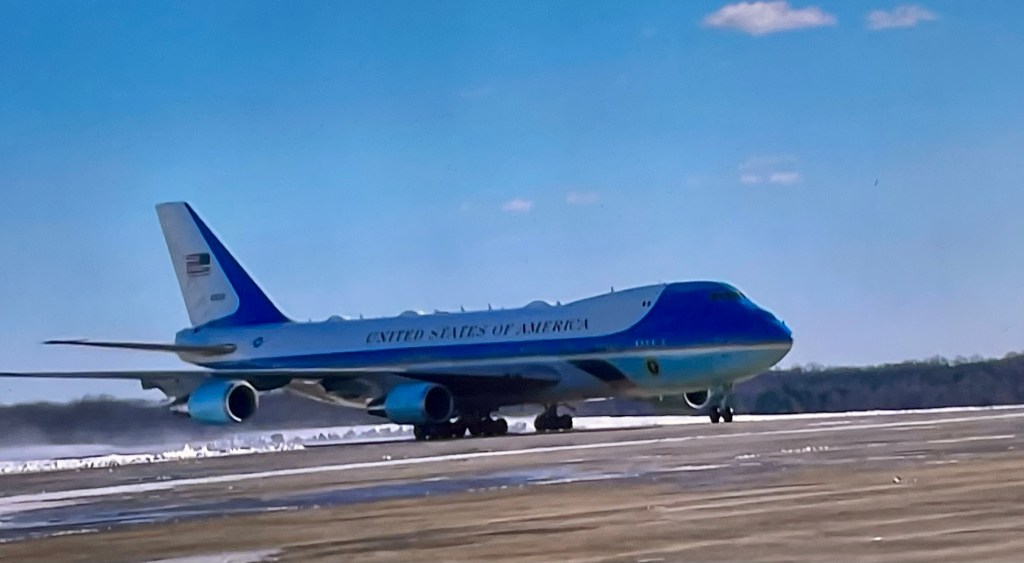
The flight path traced the arc of his life. It went over the rural farmlands of Georgia. The soil there had nurtured his love for community and the values of hard work and compassion. The Naval Academy in Annapolis, where young Jimmy had set the course for a lifetime of service. Over Washington, D.C., where he had walked into the presidency with a promise to lead with integrity.

As SAM 39 descended, the crowd gathered below to pay their respects. They came not just to honor a president. They came to honor a man who had reminded the world that authentic leadership lies in humility. True leadership also involves an unwavering commitment to doing what is right.
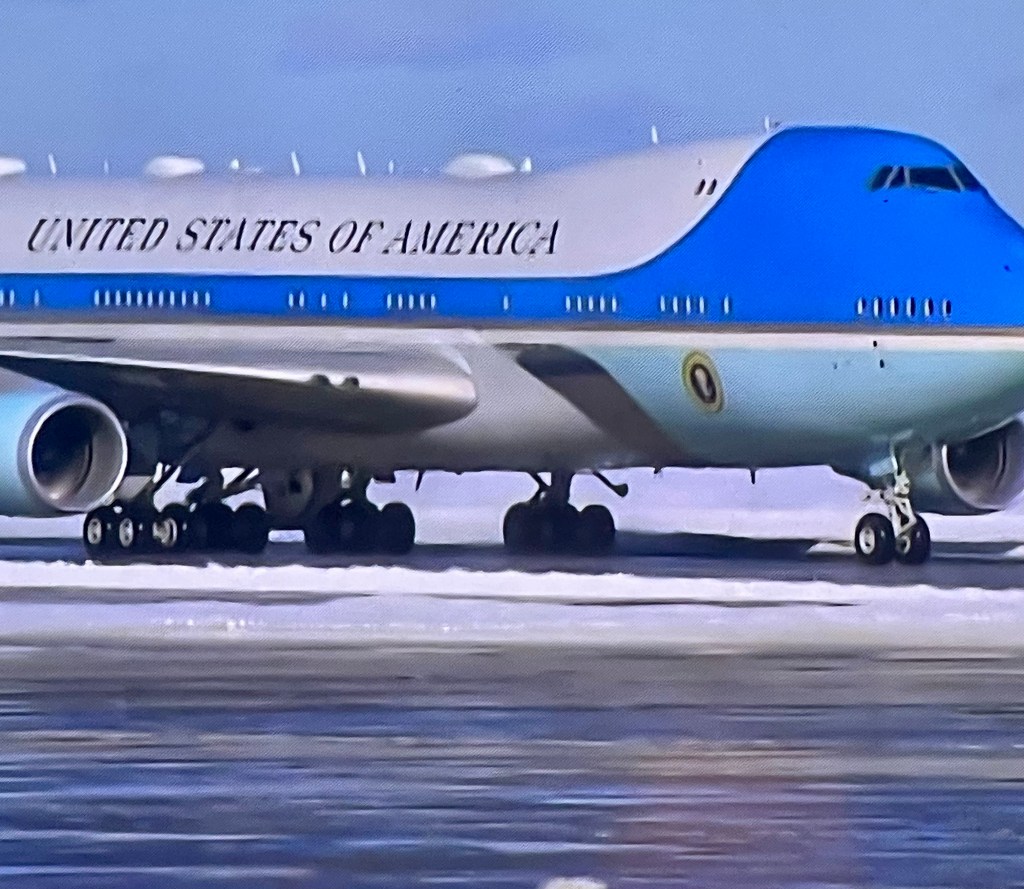
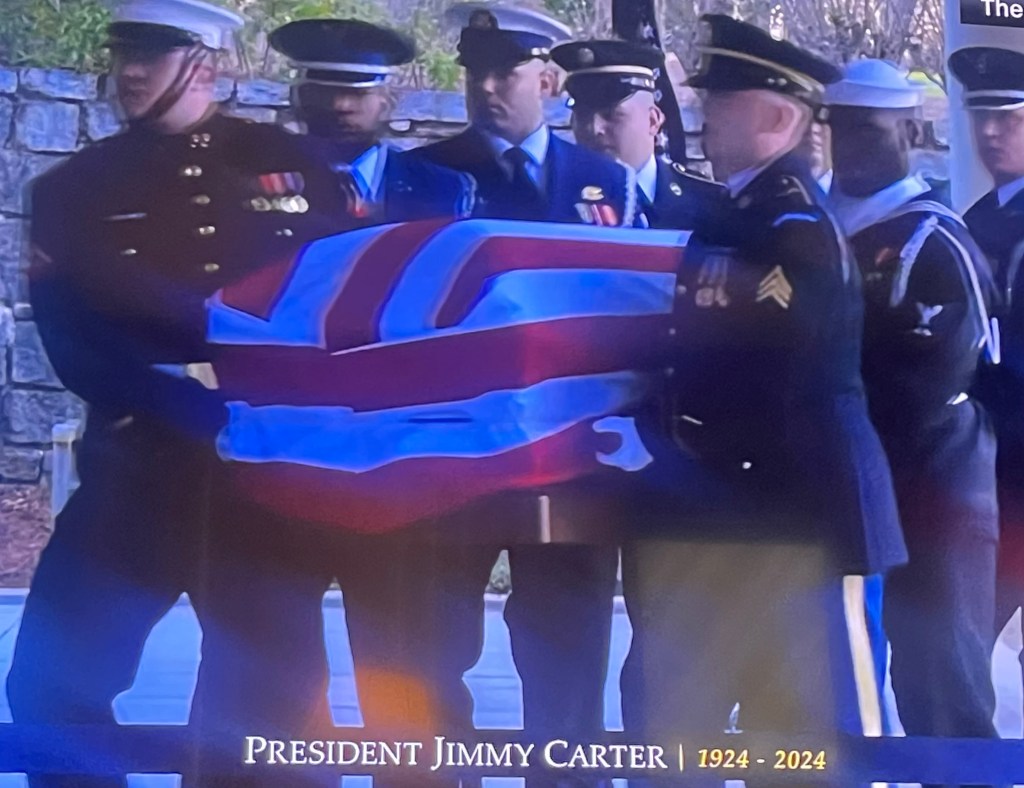
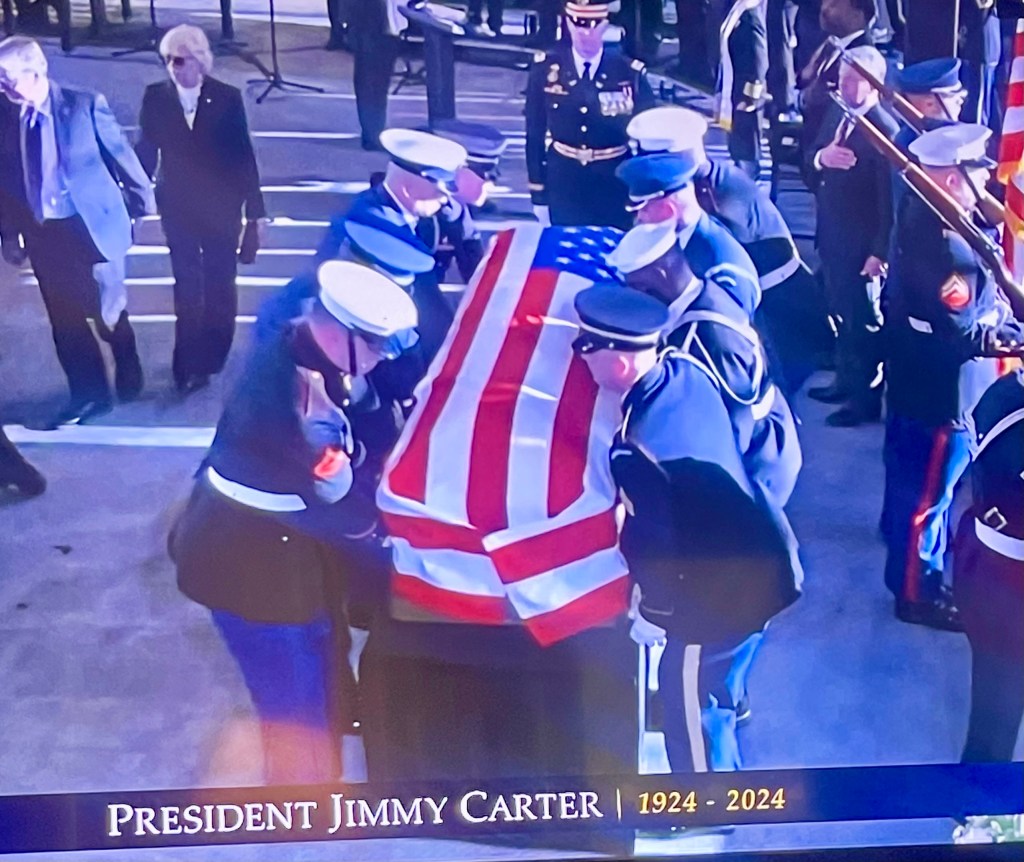
The plane touched down with grace, its engines whispering to a stop. The door opened, and the honor guard stepped ahead to carry Carter to the Rotunda. The air was heavy with gratitude, sorrow, and pride. A man who had given so much of himself had completed the second leg of his journey. There was only one more leg left in the final part of his last journey.

In the quiet stillness of that moment, a quote from Carter’s own words have echoed in the hearts of all there: 

“My faith demands that I do whatever I can, wherever I can, whenever I can, for as long as I can, with whatever I have, to try to make a difference.”

Quote Reference: Congratulations Jimmy Carter – Bryan Strawser. http://bryanstrawser.com/2002/10/congratulations-jimmy-c/

The Guitar from Jimmy Carter’s Grove

Groff Media 2024© Truth Endures IMDbPro

Presented by benandsteve.com By: Benjamin Groff II©

3–4 minutes

Long after leaving the White House, Jimmy Carter found solace in the quiet rhythms of nature. On a sunny morning in Plains, Georgia, Jimmy stood at the edge of a grove. He had planted these trees decades ago. These trees—mahogany, maple, and spruce—weren’t native to the region. Carter had brought their seeds home from his travels. He envisioned them growing tall and strong in the fertile Georgian soil.

Jimmy called what others saw as an unusual hobby his “living legacy.” Each tree had a purpose, and he dreamed of turning their wood into something meaningful. One day, while strumming his old guitar on the porch, the idea struck him: 

What if I made a guitar from the trees I grew with my own hands?

The Craft

Years passed before the time was right. Jimmy carefully chose a mahogany tree for the body. He selected a maple tree for the neck. He also picked spruce for the soundboard. He contacted a local luthier, Sam Wainwright, who had a reputation for crafting instruments with heart and precision.

Sam, skeptical at first, raised an eyebrow when Jimmy proposed the project.

“You’re telling me you’ve been growing trees for years just for this?”

Jimmy chuckled.

“A good guitar starts with good wood. I figured, why not grow my own?”

Sam couldn’t argue with the sentiment. They spent hours examining the wood, carefully cutting it, and shaping it to perfection. Jimmy insisted on being part of every step, from sanding the pieces to carving the intricate rosette around the soundhole.

As they worked, Jimmy shared stories—about his childhood in the rural South, his presidency, and his humanitarian efforts. Sam listened intently, realizing the guitar wasn’t just an instrument but a symbol of patience, purpose, and creativity.

The First Song

Months later, the guitar was finished. Its finish glowed like amber honey. Its tone was warm and resonant. It carried the richness of the wood’s decades-long journey. Jimmy held it in his hands. He marveled at how the trees he had nurtured now sang harmoniously. They created a sound that was not just music. It was a testament to the beauty of nature.

During a warm summer evening, friends and family gathered. Jimmy sat on his porch with the guitar resting comfortably in his lap. He strummed the first chords, their notes floating into the peach-scented air.

The song he played was one he had written himself. It was a simple tune about the roots—both in the ground and in life. It spoke of time, care, and the beauty of watching something grow. The crowd swayed to the music. Their faces lit with admiration for the man who had turned trees into tunes. They felt a sense of nostalgia for the simple, yet profound, message of the song.

A Lasting Legacy

In the years that followed, the guitar became more than an instrument. Jimmy used it to teach music to children, play for visitors, and raise funds for Habitat for Humanity. Each time its strings vibrated, it told a story of persistence and hope.

When asked why he had gone to such lengths to make the guitar, Jimmy would smile and say,

“It reminds us that good things take time. The simplest gifts, like a tree or a song, can bring the most joy.”

The guitar from Jimmy Carter’s Grove wasn’t just a piece of wood strung together. It was a testament to a life rooted in purpose and patience. It symbolized the belief that even the smallest seeds can create something extraordinary.

An original report exists in Guitar World, which you can find here!

The Sunday School President – THAT THE RELIGIOUS RIGHT WASTED AND IGNORED.

Groff Media 2024© Truth Endures IMDbPro

Presented by benandsteve.com By: Benjamin Groff II©

2–3 minutes

A warm Sunday morning in Plains, Georgia seemed tailor-made for reflection. At the Maranatha Baptist Church, a small congregation gathered in quiet anticipation. This wasn’t an ordinary Sunday service—it was one led by Jimmy Carter, the 39th President of the United States.

Even decades after leaving the White House, Carter stayed true to the values that shaped his life. These values were faith, humility, and service. Carter taught Sunday School to anyone who wanted to listen every Sunday that he was capable. Visitors from all over the world made the pilgrimage to Plains. Some traveled thousands of miles to hear wisdom. This wisdom was not shared in a grand hall. Instead, it was delivered in a modest church that held no more than a couple hundred people.

Jimmy Carter, then in his 90s, shuffled to the front of the sanctuary, a quiet determination in his step. He greeted the crowd with a humble smile, his voice steady and welcoming. His lesson was simple yet profound: loving your neighbor, no matter their background or beliefs.

“When Jesus said to love your neighbor,”

Carter explained, his blue eyes twinkling,

“He didn’t put any conditions on it. He didn’t say only if they look like you or vote like you. He meant everyone.”

The audience was a mix of locals and travelers. They hung on his every word. Their hearts and minds were stirred by the profound simplicity of his message. The room was filled with a palpable sense of awe. This was not due to the titles Carter once held. Instead, it was because of his unwavering commitment to living the values he taught.

When the lesson ended, Carter didn’t rush off. Instead, he stayed to shake hands, take photos, and share stories. These personal moments hold the most significant importance for him. He listened as much as he spoke. This is especially meaningful for a man who had once navigated the complexities of global politics.

One visitor, a young man from Chicago, nervously approached.

“President Carter, what made you keep teaching Sunday School after everything you’ve accomplished?”

Carter smiled warmly.

“I’ve been a farmer, a naval officer, a governor, and a president. But teaching Sunday School reminds me of who I truly am—a servant of God. Titles come and go, but the love we share with others lasts forever.”

That was Jimmy Carter. He believed that service didn’t end with a term in office. He thought that humility wasn’t weakness. Even the simplest acts of kindness can ripple through the world. For Carter, life’s most outstanding achievement wasn’t in power or prestige. It was in the quiet and steady work of lifting others up. He demonstrated this belief through his work with Habitat for Humanity. He also promoted peace and human rights. Additionally, he was committed to public service long after his presidency.

As the church emptied, a sense of peace lingered in the air. This was a testament to the legacy of a man who lived his faith with every breath.

THE LAST RIDE FOR THE MAN FROM PLAINS GEORGIA

Groff Media 2024© Truth Endures IMDbPro

Presented by benandsteve.com By: Benjamin Groff II©

2–3 minutes

In the early hours of January 4, 2025, a somber hush fell over the rolling plains of Georgia. The sun shone gently over the landscape. A motorcade departed from Phoebe Sumter Medical Center in Americus. It bore the flag-draped casket of the 39th President of the United States, Jimmy Carter. The journey marked the start of a six-day tribute. It honored a man who dedicated his life to service, peace, and humanity.

The procession moved through Carter’s hometown of Plains, passing by his boyhood home in Archery. Here, the old farm bell tolled 39 times. Each chime resonated with the years he had served as the nation’s leader. It symbolized each year of his presidency. Family members, including his children, grandchildren, and great-grandchildren, accompanied the casket, their faces reflecting both sorrow and pride. Former Secret Service agents had once protected him. They now served as pallbearers. They honored their final duty to the man they had revered.

Along the route, admirers gathered. Some held flowers. Others wore commemorative pins. They were all united in their wish to pay homage to a beloved figure. The motorcade continued to Atlanta. There, Carter’s body would lie in repose at the Carter Presidential Center. This arrangement provided the public with the opportunity to offer their respects. 

On January 7, the casket will be transported to Washington, D.C., where President Carter will lie in state at the U.S. Capitol. A state funeral is scheduled for January 9 at the Washington National Cathedral. Dignitaries will honor his legacy there, including President Joe Biden. The funeral will be a solemn event. There will be a military honor guard. A close family member will deliver a eulogy.

Carter’s journey will reach its conclusion after the national ceremonies. He will return to Plains, Georgia, for a private funeral service at Maranatha Baptist Church. He will be laid to rest beside his beloved wife, Rosalynn. This is the place where his remarkable journey began. It would now conclude there.  

As the week unfolds, the nation will ponder on the life of a president who remained a humble servant. Jimmy Carter’s final ride is not just a passage from life to death. It is a testament to a legacy that will endure in the hearts of the people he has touched. This marks the end of a remarkable journey.

The Nation Honors Former President and man Jimmy Carter!

References:

New York Post

Former President Jimmy Carter’s funeral procession begins in Georgia

Today

Politico

Jimmy Carter’s 6-day state funeral begins with a motorcade through south Georgia

Today

AP News

Jimmy Carter’s flag-draped casket is on its way to Atlanta as the 39th president’s state funeral begins

Today

“The Peanut Farmer and the Minnesota Senator”

Peering through the Oval Office Window: A Look Back

Groff Media 2024© Truth Endures IMDbPro

Presented by benandsteve.com By: Benjamin Groff II©

2–3 minutes

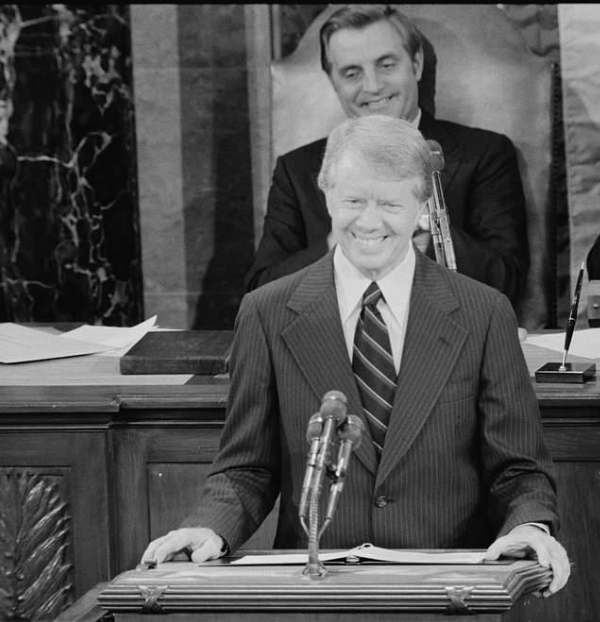
In the summer of 1977, President Jimmy Carter leaned back in his chair in the Oval Office. A pensive smile tugged at the corners of his mouth. Across from him sat Vice President Walter Mondale, poring over a stack of briefing papers with his trademark focus. One man was a farmer from Georgia. The other man was a lawyer from Minnesota. The two couldn’t have been more different in background. Yet, their partnership was rooted in a shared commitment to serving the American people.

“Fritz,” 

Carter said, using Mondale’s nickname, 

“you ever think we’re trying to do too much at once?”

Mondale looked up, his brow furrowed. 

“Every day, Mr. President. But that doesn’t mean we stop trying.”

The two had agreed early on that their administration would focus on transparency and morality in government. It was a lofty goal, especially after the shadow of Watergate. Carter gave Mondale an unprecedented role as vice president. He granted him full access to meetings and decision-making processes. Mondale had a seat at the table in all major discussions.

That day’s agenda included preparations for the Camp David Accords. Carter knew the stakes were high. Peace in the Middle East was a dream worth pursuing, but the path was challenging.

“I’ve been thinking about how we can get Sadat and Menachem (Begin) to see eye to eye,” 

Carter mused, tapping his pen on his desk. 

“I need you to be my sounding board, as always.”

Mondale nodded, adjusting his glasses. 

“They both trust you, Jimmy. That’s the key. You have a way of connecting with people, even when the odds seem impossible.”

Carter chuckled softly. 

“Must be the peanut farmer in me.”

Over the months, the two worked tirelessly. Mondale often acted as a mediator in Congress, navigating the political complexities Carter sometimes found frustrating. When the energy crisis hit, Mondale suggested convening regional governors to gather diverse perspectives.

One evening, after a particularly grueling day, they found themselves alone in the Rose Garden. The air was warm and scented with magnolias, and the stars above were unusually bright.

“Fritz,” 

Carter said, breaking the silence, 

“I couldn’t do this without you. You keep me grounded.”

Mondale smiled, a rare expression of pride crossing his face. 

“You’d manage, Jimmy. But I’m glad I’m here to help.”

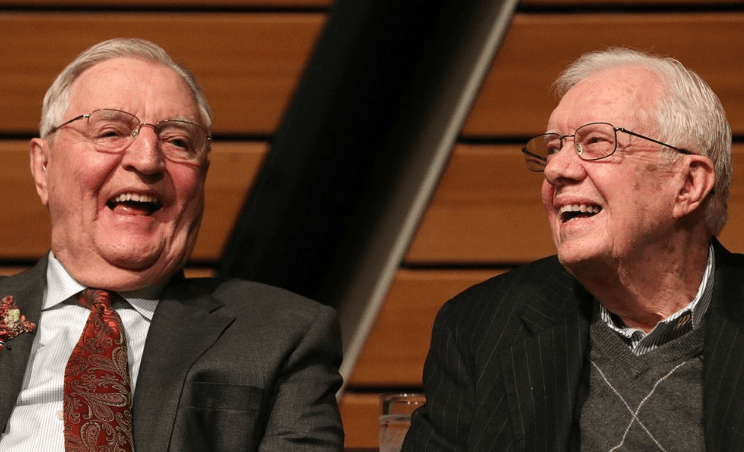
Their friendship, forged in the fire of challenges and the weight of leadership, became a hallmark of their administration. Though history would judge their tenure with mixed opinions, their mutual respect and dedication to principle left a lasting legacy.

As the years passed, Carter and Mondale’s bond endured. At their core, they remained two men dedicated to the idea that leadership meant service, not power. They carried this lesson beyond the White House walls.

A lesson that needs to be passed on increasingly so now!