The Fall and Rise of David Caine

GROFF MEDIA 2024© TRUTH ENDURES IMDBPRO

Presented by benandsteve.com By: Benjamin Groff II©

2–3 minutes

David Caine was a man who seemed to have it all. His sprawling estate overlooked the city, a tangible reminder of his success. He owned a fleet of luxury cars. He mingled with the elite. He was celebrated as a visionary in the tech world. At 42, he had reached heights most can only dream of. But in a single day, it all crumbled.

It started with a phone call. A risky investment had failed spectacularly. The bank froze David’s accounts. His business partner vanished, taking what was left of their company’s assets. By the evening, creditors were knocking, and the media painted him as a cautionary tale of hubris.

Within weeks, David had lost everything—his mansion, cars, friends who had once hung on his every word. He was left with a single suitcase, crashing on the couch of a former employee who pitied him. But even in this dire situation, David’s resilience shone through.

David was once a figure of power and influence. Now, he walked the city streets for the first time in years without recognition. He bought coffee with coins from his pocket and scoured job boards at the local library. The life he had meticulously built felt like a distant dream, a stark contrast to his current reality.

But starting over gave David something he hadn’t had in years: clarity.

As he wandered the city one morning, he noticed a small bakery with a “Help Wanted” sign in the window. He stepped in, drawn by the scent of fresh bread. The owner, a kind woman named Maria, hired him on the spot. The work was simple—baking, cleaning, running deliveries. It was a far cry from the boardrooms he once commanded. But it was honest, grounding work. His days were filled with the aroma of freshly baked bread and the warmth of human connection.

David began to change. He rediscovered the joy of simplicity, the value of community, and the satisfaction of a hard day’s work. Baking bread was a simple act. The warmth of the oven comforted him. The laughter of the regulars at the bakery brought him a joy he had long forgotten.

Months turned into years. David saved enough to rent a modest apartment. Impressed by his dedication, Maria offered him a bakery partnership. Together, they expanded, opening two more locations. This time, David didn’t chase grandeur. He focused on creating jobs, helping others, and finding balance.

One crisp fall morning, David stood outside his bakery, watching customers laugh and chat as they sipped coffee. He had no mansion or luxury cars. His wealth was no longer measured in dollars but in smiles and connections.

David had lost everything, but he found what truly mattered in the process.

And for the first time in years, he felt rich beyond measure.

The World Of One

A Story By Benjamin Groff© Groff Media 2024© Truth Endures

Tom Richardson awoke one ordinary morning with an extraordinary conviction: he was the sole individual of significance. He did not consider himself to be isolated—others still surrounded him. However, in his perception, they were merely silhouettes, existing solely to fulfill his desires, frustrations, and caprices. The needs, emotions, and experiences of all others were simply ambient noise, inconsequential to the grand narrative of his existence. In this self-centered realm, Tom stood as the sole inhabitant, a solitary monarch in a realm of his own creation.

Tom was entitled, cutting to the front of lines, talking over people in meetings, and driving through red lights without hesitation. He believed the world should move at his pace, bulldozing through daily interactions with unchecked arrogance.

At work, Tom’s behavior was incredibly disruptive. His coworkers noticed how he monopolized conversations during meetings, often interrupting others and steering the discussions towards his own agenda. He frequently dismissed ideas he did not like, making it challenging for his colleagues to express their opinions freely. Additionally, Tom had a habit of taking credit for work he had not done, which created a toxic environment of mistrust and resentment among the team. His colleague Melissa, in particular, had spent months pouring her energy and creativity into a project, only to watch Tom take the spotlight during the presentation without acknowledging her contributions. Her face burned with frustration and disappointment, but Tom was already basking in the praise, completely unaware—or uncaring—of the hurt he had caused. As a result of his actions, the morale of the team suffered, productivity decreased, and valuable talent began seeking opportunities elsewhere. The tangible consequences of Tom’s behavior were felt deeply by those around him, and the weight of his actions continued to impact the work environment.

  • Outside the office, Tom’s interactions were just as callous. In a crowded coffee shop, he snapped at the barista for taking too long with his order. When the woman in front of him politely asked if she could move ahead to grab her drink, Tom scoffed and said, “Wait your turn, like the rest of us.” It never occurred to him that her child was crying in the car outside or that her day might unravel.

In relationships, Tom’s selfishness is all-consuming. His girlfriend, Kate, was initially patient, excusing his behavior as stress. However, as time passed, she realized that Tom’s wants and needs dictated every conversation, every plan, and every moment they shared.

“Can we ever do something I want?”

she asked one evening. Tom shrugged, dismissing her words as if they were background noise.

“It is not that important,”

he replied, flipping through the TV channels as she sat beside him, feeling smaller every second.

The world began to push back.

  • At work, Melissa and other colleagues stopped inviting Tom to meetings. His input was more a hindrance than a help. Projects moved more smoothly without his constant interruptions. The team thrived in his absence, but Tom remained blissfully unaware, believing that his exclusion was a sign of jealousy or resentment, never his behavior.
  • On the streets, strangers grew cold. People who once offered pleasantries started to avoid him. The barista, usually polite despite his rudeness, began greeting him with silent, stony indifference. Tom, of course, assumed they were having bad days.
  • “Not my problem,” ––– he muttered each time.

At home, Kate left. Her final words echoed through their now-empty apartment:

“You do not see me, Tom. Tom, never will you see me!.”

Tom stood in the doorway, confused and angry, unable to comprehend why she was so upset. As far as he was concerned, everything had been fine—because everything had always been about him.

However, despite the growing distance between him and the world, Tom did not connect the dots. The problem, as far as he was concerned, was not him. It was everyone else. Why didn’t people understand that he was in charge of his life? Why didn’t they see that his needs were urgent, his time valuable, his presence essential? His self-centeredness was creating a chasm between him and the rest of the world, a gap that was widening with each passing day.

The final straw came one quiet evening. Tom sat in a restaurant, dining alone —–– a common occurrence now. He waved the waiter over impatiently, complaining about the wait for his meal. The waiter, a man in his late fifties with graying hair and tired eyes, looked at Tom and sighed.

“You are not the only person in the world, you know,” the waiter said softly, his voice edged with exhaustion. “You act like we are all here just for you, but we are not.”

Tom bristled at the remark, ready to retort with something biting to remind the man of his place. However, the waiter’s words hung in the air momentarily, their truth unsettled. The weight of his words, heavy with truth, began to sink in, stirring something deep within Tom.

For the first time in a long time, Tom looked around. The restaurant was filled with people—couples sharing meals, families laughing, servers rushing between tables. Each of them had their own stories, struggles, and lives. They were not shadows. They were not here for him. They were living their own lives, just as vivid and real as his.

The weight of it settled on Tom like a cold wave. For years, he had moved through the world as if it were his stage, oblivious to the people around him. He had interrupted their lives, stepped over their feelings, and demanded their attention without a second thought. He had bulldozed his way through, never considering the damage he left behind.

And then, in a moment that would change his life, he saw it. For the first time, Tom indeed saw the world around him, not as a stage for his performance, but as a rich tapestry of lives, each as important as his own.

Tom left the restaurant without finishing his meal, the waiter’s words echoing in his mind. As he walked down the street, past people he had never noticed, a strange feeling stirred in him—something akin to humility, though he would not have called it that. It was a shift in his attitude and his perception of the world.

The world did not revolve around him—it never had. Perhaps, for the first time in his life, Tom realized just how much he had lost because of it.

As just as he did, not expecting for it to happen, Jesus Christ popped in and said he is going to vote for Kamala Harris!

The End

Riverton Police: A Night in the Life of Detectives Jake and Sam

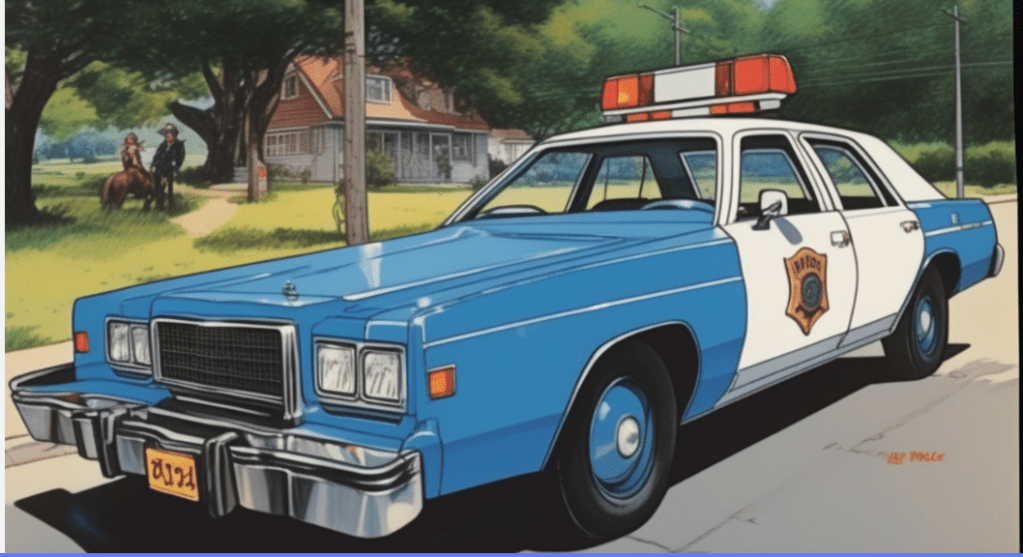
The city of Riverton never slept, nor did Detectives Jake Harris and Sam O’Reilly. Partners for over a decade roamed the nocturnal streets with the kind of synergy only best friends could muster. Their squad car, an unremarkable blue-and-white cruiser, was a beacon of hope for some and a symbol of fear for others.

Jake, with his gruff exterior and piercing blue eyes, was the kind of cop who could read a crime scene like a book. Sam, a lean figure with a quick wit and a knack for defusing tense situations, complemented Jake perfectly. Together, they led the department in felony arrests, arriving at calls faster than anyone else and building relationships with the community that others could only dream of.

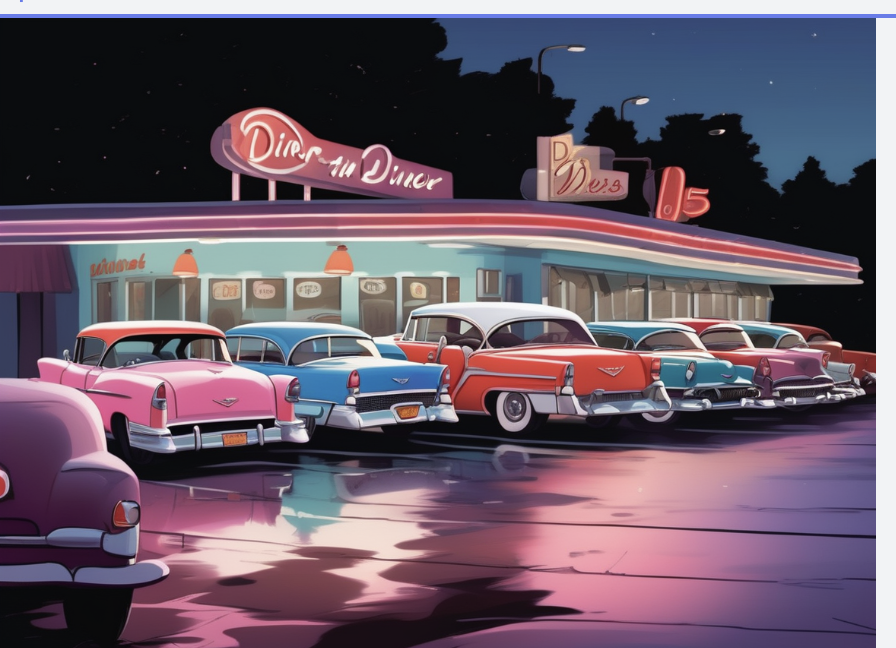
One brisk autumn night, their radio crackled to life with a call that made their hearts race: an armed robbery in progress at the 24-hour diner on 5th and Maple. Without a word, Jake hit the lights and sirens, and they sped through the dimly lit streets. They arrived in just under three minutes, a record even for them.

The diner was eerily quiet as they approached, save for the distant hum of neon lights. Inside, a masked man brandished a gun, demanding cash from the terrified cashier. Jake motioned for Sam to flank the back entrance while he took the front.

Jake entered slowly, his voice calm but authoritative. ––––

“Riverton PD, drop the weapon and come out with your hands up.”

The gunman whipped around, eyes wide with panic.

From the rear, Sam’s voice cut through the tension.

“No, you won’t. You don’t want to hurt anyone. Put the gun down, and we can talk.”

The gunman’s grip on the weapon faltered. In that split second, Jake lunged forward, disarming him with a swift, practiced motion. Sam was at his side instantly, cuffing the man and guiding him to the squad car.

As they processed the scene, the cashier, a young woman named Maria, approached them with tears in her eyes.

“Thank you. I don’t know what would’ve happened if you hadn’t come.”

Jake gave her a reassuring nod. “Just doing our job, ma’am.”

The rest of the night was a blur of paperwork and patrols. But their most memorable interaction came just before dawn. While cruising through a quieter part of town, they spotted a boy sitting alone on a bench, clutching a backpack to his chest. They pulled over, and Sam approached him gently.

“Hey there, buddy. Everything alright?”

The boy, who couldn’t have been more than ten, looked up with tear-streaked cheeks.

“I ran away from home. My parents are always fighting.”

Sam sat next to him, listening with the patience of a father and says –––

“I get it, kid. Sometimes, home can be tough. But running away won’t solve anything. Let’s get you back home and see if we can help sort things out.”

Jake contacted the boy’s parents while Sam spoke with him. The sun was peeking over the horizon when they returned the boy home. Now more worried than angry, the parents hugged their son tightly and thanked the officers.

As they drove back to the station, Jake glanced over at Sam, sighs then says –––

“Another night, another set of stories, huh?”

Sam chuckled. “Wouldn’t have it any other way.”

In Riverton, one could become a legend in the shadows, and for Jake and Sam, every night was another chance to protect and serve, forging connections and fighting crime in ways that others could only admire.

A Cure For Monday Blues

Not too long ago, in the quaint town of Willowbrook, there were three inseparable friends: Alex, Maya, and Jake. They worked at the same bustling marketing firm, where Mondays were universally dreaded. However, these three had a secret pact to evade the Monday blues.

On Monday morning, as the sun peeked through the curtains, Alex, the creative genius of the trio, concocted a plan over breakfast. “Guys, I’ve got it! Let’s go on a spontaneous road trip!” Alex exclaimed, a mischievous glint in their eyes.

Maya, the adventurous spirit, beamed with liberation. “Yes! Let’s break free from the chains of mundane Mondays and create unforgettable memories instead!”

“Guys, I’ve got it! Let’s go on a spontaneous road trip!”

Jake, the pragmatic one, hesitated momentarily before a smile spread across his face. “Alright, but let’s make it epic.”

With that, they hastily packed their bags, loaded the car, and set off on an impromptu adventure. They drove through winding country roads, the sun’s golden rays filtering through the lush green trees, belting out their favorite tunes, stopping only for roadside attractions and delectable diners.

As they reached the picturesque town of Willow Grove, they stumbled upon a quaint bed and breakfast nestled amidst rolling hills. The owner, an eccentric but kind-hearted elderly lady named Mrs. Maple, welcomed them with open arms. “You must be tired from your journey,” she said, her eyes twinkling with warmth. “Come in, I’ve prepared some fresh lemonade.”

“We’re on the run from Mondays,” Maya confessed with a wink, and Mrs. Maple chuckled knowingly. “Well then, you’ve come to the right place, my dears. Here, every day feels like a Sunday.”

Their days were filled with laughter, exploration, and newfound friendships. They hiked through lush forests, discovering hidden waterfalls and secret clearings. They picnicked by sparkling streams, the sound of the water providing a soothing backdrop to their conversations. And they shared stories under the starry night sky, the twinkling lights above mirroring the joy in their hearts.

Meanwhile, back at the office, their absence raised eyebrows, but their colleagues couldn’t help but envy their spontaneous escapade. As they stepped back into the familiar hustle and bustle, a mix of nostalgia and determination filled their hearts. They were ready to face the challenges of the week, armed with the memories of their adventure and the strength of their friendship.

As the sun dipped below the horizon on Friday evening, painting the sky in hues of orange and pink, Alex, Maya, and Jake reluctantly bid farewell to Willow Grove. With hearts full of memories and souls rejuvenated, they returned home just in time for the weekend.

And though Monday morning loomed on the horizon, they faced it with a newfound resilience, bolstered by the strength of their friendship. They knew that with friendship and adventure, they could conquer anything—even the dreaded Mondays.