What If My Candidate Doesn’t Win? What Do I Do on Election Day?

A Report By: Benjamin Groff© Groff Media 2024© Truth Endures

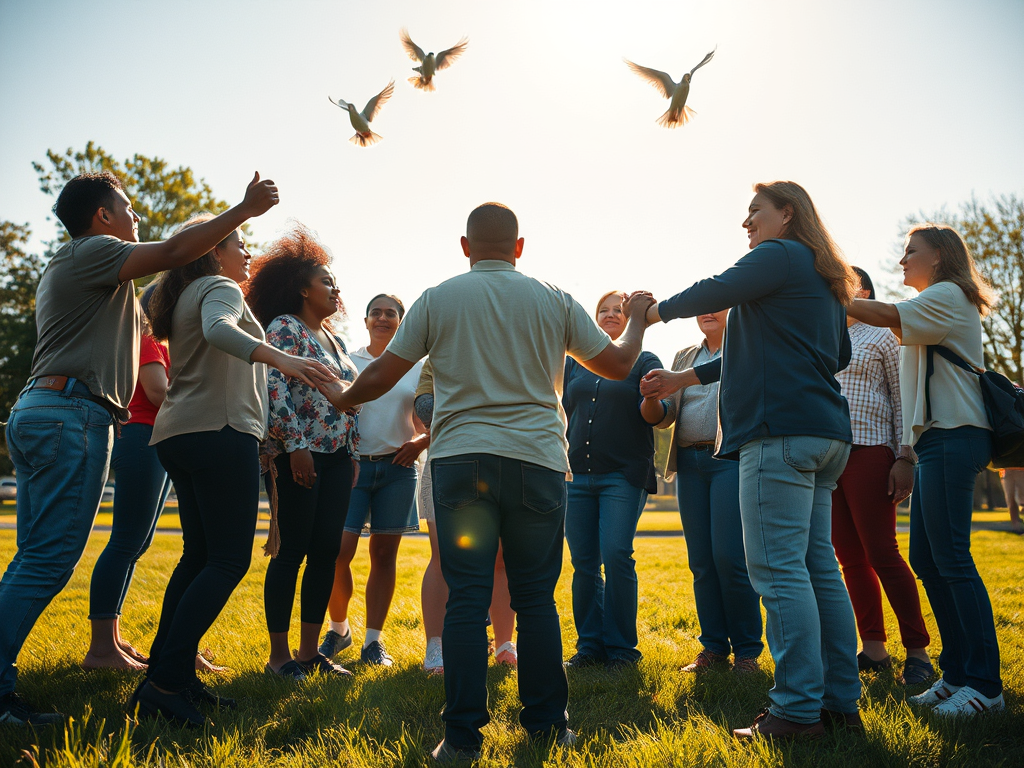
Election Day is a moment filled with hope, anticipation, and often anxiety as we vote for the candidates we believe in. However, there’s always the possibility that the candidate we support won’t win. So, what should you do if that happens? Here are a few constructive actions to consider when facing such an outcome.

  • Remember That Democracy Is About Participation, Not Just Winning

Democracy thrives on diverse opinions; your vote is a meaningful contribution to that system. Even if your candidate doesn’t win, participating in the democratic process is vital. It sends a message about your values, priorities, and what you believe is best for your community or country.

Instead of viewing the result as a failure, consider it a reflection of the broader political landscape and the desires of your fellow citizens. Democracy works because people are free to express differing opinions, and your vote, win or lose, plays a vital role in configuring the future.

  • Engage in Positive Civic Action

Remember, politics doesn’t end on Election Day. There are numerous ways to stay involved in the causes you care about. Even if your candidate doesn’t win, the issues they represent remain crucial. Consider joining advocacy groups, volunteering for community organizations, or attending city council meetings. Your civic engagement at the local level can directly impact your community more than national politics. By continuing to advocate for the issues that matter most to you, you’re helping to shape policy and public opinion, regardless of the election result.

By continuing to advocate for the issues that matter most to you, you’re helping to shape policy and public opinion, regardless of the election result.

  • Be Respectful of Others’ Views

Election outcomes can feel deeply personal, especially when we are passionate about a candidate or cause. However, it’s important to remember that democracy requires respect for differing viewpoints. Avoid lashing out at those who supported the opposition if your candidate doesn’t win. Instead, engage in respectful dialogue and understand why others voted differently.

Remember, productive conversations can lead to greater understanding and help build coalitions for future elections. Your ability to listen and engage constructively can influence future political outcomes. By continuing to advocate for the issues that matter most to you, you’re helping to shape policy and public opinion, regardless of the election result.

  • Prepare for the Next Election

The results of one election are not the end of the story. Candidates and policies evolve, and new elections will always come. Take this time to reflect on why your candidate didn’t win. Were their policies too out of step with the electorate? Was the campaign messaging weak? Understanding these factors can help you become a more informed voter and activist in the next election cycle.

Consider getting involved in the early stages of the next campaign. Whether you work on voter registration drives, participate in debates, or even consider running for local office yourself, the future is always open to those who stay engaged.

  • Stay Informed and Hold Leaders Accountable

Regardless of who wins, it’s crucial to stay informed about what elected leaders are doing once they are in office. Please pay attention to their decisions and promises they keep or fail to keep. Even if your preferred candidate loses, your role as a constituent remains critical. You can hold elected officials accountable by writing letters, making phone calls, or organizing petitions. Democracy doesn’t end at the ballot box. Citizens’ ongoing scrutiny and engagement ensure that leaders remain responsive to the people’s needs.

Democracy doesn’t end at the ballot box. Citizens’ ongoing scrutiny and engagement ensure that leaders remain responsive to the people’s needs.

  • Take Care of Your Emotional Well-Being

Elections can be emotionally taxing if you heavily invest in a particular candidate or outcome. If the result doesn’t go your way, it’s natural to feel disappointed or frustrated. Take some time to process your emotions healthily. Talk to friends or family members about your feelings, participate in activities that bring you joy and distract you from disappointment, or take a break from politics altogether for a few days to give yourself a mental reset. Remember, it’s okay to feel disappointed, but it’s important to take care of yourself during these times.

Maintaining your emotional well-being is essential for yourself and your ability to continue contributing positively to political discussions and future elections.

Conclusion

If your candidate doesn’t win on Election Day, don’t despair. Democracy is a long and evolving process, and every election provides new opportunities for learning and growth. By staying engaged, respecting others’ views, and preparing for future elections, you can continue to be a positive force for the issues you care about. Your participation matters, win or lose, and it’s through this continued involvement that meaningful change happens over time.

The Upcoming Election: A Matter of Urgency

Plainly Speaking By: Benjamin Groff© Groff Media 2024© Truth Endures (resharing encouraged)

As the next election looms, it’s vital to pause and consider the potential fallout of inaction. This isn’t about personal feelings towards candidates; it’s about the future course of the United States. A conservative takeover, especially by the far-right factions of the Republican party, presents a grave threat to the core freedoms and values we’ve steadfastly defended for decades. The consequences of inaction could be dire.

If we allow figures like Trump and those who share his extreme ideologies to ascend to power in local, state, and federal offices, we risk a regression of fundamental rights. Women’s rights to make decisions about their bodies, LGBTQ+ rights, voting rights, environmental protections, and access to fair education are all in jeopardy. These rights were hard-fought and could be easily dismissed if we do not act now.

Think about the simple freedoms we take for granted:

  • the freedom to access accurate information
  • the freedom to speak up when something is wrong without fear of government retaliation
  • the freedom to gather with others and protest 

In an era where misinformation, conspiracy theories, and autocratic tendencies dominate the discourse, these fundamental liberties hang in the balance.

If you’re reading this, you already grasp the importance of participation. But now, we must move beyond just casting our own votes. We must empower everyone we know—family, friends, colleagues—to vote and, more importantly, vote for candidates who will uphold democracy. Your vote is not just a choice but a powerful tool for shaping the future. 

The threat is not about a single issue but about ensuring that the United States remains a nation that upholds all rights, including freedoms, equality, and justice for all.

We have seen glimpses of what a conservative grip on power looks like in recent years—attempts to undermine the electoral process, rollbacks of protections for minority communities, and the emboldening of hate groups. Imagine what that would look like unchecked.

Voting Blue in the next election is not just a partisan decision—it is a vote to preserve the essence of what makes America a place where freedom still means something. 

Let us not take that for granted. Let us make sure our voices get heard and our values protected.

What Happens When the Country is Closed for Average Americans?

A Report By: Benjamin Groff© Groff Media 2024© Truth Endures

A Shift in the Landscape of Freedom

Amid political upheaval, the everyday American—who works a regular job, pays taxes, and seeks a life of routine and stability—may question their future in an increasingly polarized society. As extreme political movements push for agendas that center around ideas of “Project 25” or the return of Trump, advocating for a strict interpretation of Christianity, suppression of women’s rights, and an aggressive nationalistic framework, the real impact may be felt most by the “regular Joe”—the one who wants to live a quiet, predictable life.

For the average person, life may close in on them in such a scenario. The country may become unrecognizable, not in a dystopian fantasy, but in subtle, pervasive ways. It might start with the suppression of individual freedoms—targeting what people can say, wear, or how they worship. Religious dogma could permeate public life, not as a choice but as a mandate, affecting schools, workplaces, and government institutions. The Bible in every building might become symbolic and a requirement, with legal frameworks promoting a particular religious view while leaving others on the margins.

Erosion of Women’s Rights

Regular Americans might witness fundamental changes in the status of women while going about their daily lives. With growing pressure from ultra-conservative elements, efforts to curtail women’s autonomy could accelerate. The reversal of women’s rights, particularly reproductive rights, is already in motion. In this new political order, women might have even fewer choices about their bodies, careers, and participation in public life. For many, this will mark a turning point when personal freedom can no longer be taken for granted.

The Fear of the Unknown

Fear might become customary for those not part of this hard-right movement. The “regular Joe” will likely feel caught between competing narratives. On one side, there is the quiet desperation of wanting to hold on to their everyday life, and on the other, the nagging sense that the world is changing in ways that might soon render them powerless. Whether one is bisexual, straight, or simply someone with no interest in pushing their identity into the political arena, they might start feeling stalked by the system—monitored, judged, and left wondering if their way of life is still valid.

A New “American Dream?”

In this environment, the American Dream could become narrow. No longer about opportunity for all, it may become a dream only accessible to those who fit the suitable mold—racially, religiously, and socially. If one does not align with the ideals of whiteness or conservative sexuality, they could find themselves increasingly ostracized, with opportunities drying up. The path to success might depend less on hard work and more on conformity to ideals driven by far-right ideologues.

The reality could become darker for the person who comes home daily, pats their dog on the head, and watches the news. The content of that evening television might change, with media outlets pushing extreme viewpoints or censorship becoming the norm. Growing anxieties about what tomorrow holds could interrupt quiet moments of relaxation.

Where Do They Go?

If the country starts closing itself to all but those who align with this rigid agenda, the regular Joe may ask, “Where do I go?” It is hard to imagine a physical place for escape in a country that feels increasingly closed off to dissent. For many, the answer might not be in leaving the country but in finding a way to resist quietly—by forming communities with others who feel left behind, advocating for empathy and open-mindedness, and holding on to the idea that the heart of America lies not in exclusion but inclusion.

The danger is not just in the policies themselves but in the erosion of what makes America a place where people of all walks of life can live freely, with differences embraced rather than punished. When that idea is under attack, the question of “Where will you go?” takes on a much deeper meaning because the honest answer is about preserving a sense of home, not just for oneself but for everyone.

In this potential future, where does the regular Joe go? Perhaps they remain right where they are, standing in quiet defiance, continuing to pay their taxes, pat their dog, and live with the hope that balance will one day return to a nation at risk of losing itself.

Meeting Mendez

A Story By: Benjamin Groff© Groff Media 2024© Truth Endures

Ralph and Kevin had been friends for over twenty years, sharing a modest two-bedroom apartment in a cozy part of the city. Both were in their fifties and lived parallel lives, working different jobs—Ralph as a graphic designer and Kevin as a financial advisor—but always finding time for each other. They joked about finding “the one” someday, but their hope had always been tinged with sarcasm. At their age, they felt the ideal guy might never show up.

But then something shifted.

It started on an ordinary Monday morning. They sat at the kitchen table, sipping their coffees, when Kevin casually mentioned he had met someone the night before. “His name is Mendez,” he said, a sly smile across his face. “And Ralph, he’s… everything.”

Ralph’s stomach did a somersault. He had indeed met someone, too. Just last night, after his art gallery event, he found himself in a dimly lit bar, the kind that seemed to exist in a world of its own. And there, perched at the corner of the bar, was Mendez—a man who could only be described as strikingly handsome, with dark eyes that seemed to hold a universe of secrets, a soft-spoken charm that was as disarming as it was alluring, and a smile that could light up the darkest of rooms.

“Funny you say that,” Ralph replied. “I met someone, too. His name’s also Mendez. We hit it off.”

Kevin chuckled, taking a long sip from his coffee. “What are the odds?”

Their conversations in the following days were filled with similar stories of their encounters with Mendez. Kevin would describe how they had shared a romantic evening stroll by the river, and Ralph would excitedly mention how they had gone dancing the same night. Their descriptions of this enigmatic Mendez were eerily similar—his chiseled jawline, his gentle laugh, the way he seemed to know exactly what to say to make them feel like the only person in the room. Yet neither of them suspected anything was off. After all, Mendez was a common enough last name, right?

But as the weeks passed, their mutual friends noticed something strange. At morning coffee with their usual crowd, Ralph and Kevin would each gush about their dates from the night before. They discussed romantic dinners, late-night jazz clubs, and private rooftop moments. Their stories mirrored one another so closely that their friends couldn’t help but wonder—were they seeing the same man?

“Wait a minute,” said Lisa, a close friend, during one of their coffee meetups. “You both met this guy named Mendez? And you’re telling me he took you both to the same jazz club on different nights?”

The group laughed, but the tension between Ralph and Kevin grew. Were they falling for the same guy? They started to second-guess every detail—his favorite wine, his weekend plans, the way he called them “his secret muse.”

Still, neither wanted to believe it. Kevin would ask, “Did your Mendez talk about his job?”

Ralph would reply, “Yeah, he mentioned something about being in real estate.”

“Same here. But, come on, we’re seeing different guys. That’s impossible.”

Finally, the tension reached a breaking point. One Saturday night, the two friends finally agreed to go out together to introduce themselves to their respective Mendez. They picked a lively nightclub known for its cool vibe and easy conversation. Ralph’s heart raced as he considered the possibility of confronting the truth.

When they arrived, they scanned the crowd, both eager and nervous. And then, there he was—Mendez, standing by the bar, smiling warmly at them.

Only to their utter surprise, there were two of them.

Ralph and Kevin exchanged bewildered glances as the two men, identical except for subtle differences, made their way over. The Mendez brothers—Marco and Luis—stood side by side, charming as ever.

Kevin burst into laughter. “You’ve got to be kidding me!” he exclaimed, his amusement contagious.

Ralph shook his head, grinning in disbelief. “Twins? Really?”

The four sat down, exchanging stories and laughing about the coincidence. As it turned out, Marco had met Kevin at one bar, and Luis had met Ralph at another. They had no idea their new romantic interests were roommates.

It wasn’t the love triangle they had feared—it was something far better, a delightful twist that brought them closer.

And just like that, Ralph and Kevin realized that sometimes, the universe works in mysterious—and surprisingly humorous—ways, leaving them and their friends in fits of laughter.

Fight Today For A Better Tomorrow – Saving America – Coming Home

A Report By: Benjamin Groff© Groff Media 2024© Truth Endures

A Nation’s Call

It was the fall of 2024, and the country had never seemed more divided. Political upheaval had peaked, with protests echoing through city streets, harsh words hurled in homes, and debates erupting at family dinner tables. The election season had become more than just a contest of policies; it had morphed into a battle over the nation’s soul, pitting neighbor against neighbor.

At the heart of this turmoil was a young senator named Jacob Randall. A man of few words but deep conviction, he had saw firsthand the devastating effects of division. Randall had grown up in a small town where his mother and father, though from opposite sides of the political spectrum, had found common ground in their love for family, faith, and community. That shared foundation had always given him hope that unity was possible.

However, as he stood before Congress, he wondered if that hope had been misplaced. The chamber was restless, with representatives glaring at one another across the aisle, the tension palpable. Randall chose to speak at what many called a last-ditch effort—a desperate attempt to heal the nation before it tore apart.

Taking a deep breath, he began.

“Fellow citizens, colleagues, I stand before you not as a Democrat or a Republican but as an American. Our great nation is facing a challenge unlike any other. We have become so entrenched in our political camps that we no longer see each other as fellow countrymen. We see enemies where once we saw neighbors. And that division is killing the very fabric of our society.

“My parents did not always agree on politics. Mother was a staunch conservative, Father a proud progressive. But they understood something we have forgotten: that compromise is not a weakness but the cornerstone of democracy. They believed that every person, no matter how much they disagreed, had something valuable to contribute to the conversation.”

Randall’s words caught the attention of some. A few heads began to nod slowly. He pressed on, feeling the weight of the moment.

“Our founders, too, were divided. They had different visions for this country and ideas about what liberty and justice should look. Nevertheless, they knew that to create something lasting, they had to pull together to find common ground. And they did. That is the spirit that created America. Moreover, that is the spirit we need to rediscover today.”

As Randall continued, he saw a shift in the faces before him. Some were hard, unmoving, but others softened, listening with new ears. He was not offering easy solutions but calling for something more complicated: humility.

“When we look across the aisle, we must not see enemies but partners in this great American experiment. We have different ideas about achieving a better future, but we all want a better one. And if we cannot even agree on that, we have already lost.”

He paused, letting the gravity of his words settle in the room.

“In every crisis, there is opportunity, an opportunity to rise above the noise, the hatred, and the division. It is an opportunity to remember that we are bound together not just by the laws of this land but by the ideals it represents. Life, liberty, and the pursuit of happiness—for everyone. Not just for those who agree with us.”

Randall stepped away from the podium and glanced up at the gallery above. It was filled with citizens from across the country, watching with anxious eyes, waiting for anyone to bring clarity to the chaos. He saw young activists clutching signs, older veterans with tears in their eyes, and families holding hands.

“I am not asking you to abandon your beliefs. Listen to those who see the world differently. Not to argue but to understand a call for uniformity, but for unity because we cannot get found without uniting.”

The silence in the chamber was deafening. No one was shouting for the first time in what seemed like years. No one was trying to outdo the other with statistics or soundbites. They were listening.

Randall’s speech ended with a simple message: “America is not a perfect nation, but it is a nation built on the belief that we can pursue perfection together. Let us, as a people, return to that pursuit—not as adversaries, but as Americans.”

As he stepped away from the podium, the room erupted—not in protest, but in applause. Representatives stood on both sides of the aisle, clapping not just for Randall’s words but for what those words represented: a glimmer of hope that maybe, just maybe, the country could pull itself back from the brink.

It would take work. It would not happen overnight. But in that moment, something had shifted. For the first time in a long time, there was a shared sense of purpose— a belief that even in the darkest of times, unity was possible—and that together, the nation could find its way back to the light.

The Concept of a ‘Chosen People’ and Modern Political Dominance

By: Benjamin Groff© Groff Media 2024© Truth Endures

When Did God Decide to Have ‘A Chosen People’?

The concept of a “chosen people” has sparked debates throughout history, especially when tied to moral, societal, and political questions. In modern times, the idea of being “chosen” is often reimagined or repurposed to justify decisions that affect minority groups.

Recently, the U.S. House Committee on Education and the Workforce advanced a controversial bill, H.R. 736, that aims to force schools to out transgender students to their guardians. The bill, titled the “PROTECT Kids Act,” requires schools receiving federal funding to notify guardians if a student wishes to change their gender markers, pronouns, or preferred names. The legislation also seeks to dictate which school facilities these students can use, including bathrooms and locker rooms.

This legislative action raises an important question: who gets to decide the fate of vulnerable groups, and under whose authority do they claim this right? Much like the ancient notion of being “chosen” by God, this modern political move asserts dominance over others, deciding for them what is best based on a rigid set of beliefs.

The bill passed the House in 2023 as part of the “Parents Bill of Rights Act” (H.R. 5) but faced bipartisan solid opposition. Every Democrat and five Republicans voted against it, while most supported it. Despite the potential for this bill to move through the House, it is unlikely to pass the Senate or gain approval from President Joe Biden.

Opponents of the legislation, including the Congressional Equality Caucus, condemned it as an attack on transgender students’ safety. Chair Mark Pocan highlighted how, in the wake of a tragic school shooting, Republicans chose to focus on targeting vulnerable students instead of addressing genuine safety concerns.

The question of who is “chosen” can be expanded beyond ancient religious contexts to current identity, rights, and protection issues. The targeting of trans students under the guise of protecting children raises more profound philosophical questions about power, authority, and the consequences of imposing one’s beliefs on others.

The biblical idea of a “chosen people” once symbolized favor and responsibility, but that label often becomes a tool to exclude and control in modern times. This recent bill serves as a reminder that decisions made in the name of protection or moral righteousness can have far-reaching, often damaging, effects on those they claim to protect.

In the end, it is crucial to ask when the power to choose the fate of others—whether through divine claim or political force—became justified. And who truly benefits from these decisions?

The World Of One

A Story By Benjamin Groff© Groff Media 2024© Truth Endures

Tom Richardson awoke one ordinary morning with an extraordinary conviction: he was the sole individual of significance. He did not consider himself to be isolated—others still surrounded him. However, in his perception, they were merely silhouettes, existing solely to fulfill his desires, frustrations, and caprices. The needs, emotions, and experiences of all others were simply ambient noise, inconsequential to the grand narrative of his existence. In this self-centered realm, Tom stood as the sole inhabitant, a solitary monarch in a realm of his own creation.

Tom was entitled, cutting to the front of lines, talking over people in meetings, and driving through red lights without hesitation. He believed the world should move at his pace, bulldozing through daily interactions with unchecked arrogance.

At work, Tom’s behavior was incredibly disruptive. His coworkers noticed how he monopolized conversations during meetings, often interrupting others and steering the discussions towards his own agenda. He frequently dismissed ideas he did not like, making it challenging for his colleagues to express their opinions freely. Additionally, Tom had a habit of taking credit for work he had not done, which created a toxic environment of mistrust and resentment among the team. His colleague Melissa, in particular, had spent months pouring her energy and creativity into a project, only to watch Tom take the spotlight during the presentation without acknowledging her contributions. Her face burned with frustration and disappointment, but Tom was already basking in the praise, completely unaware—or uncaring—of the hurt he had caused. As a result of his actions, the morale of the team suffered, productivity decreased, and valuable talent began seeking opportunities elsewhere. The tangible consequences of Tom’s behavior were felt deeply by those around him, and the weight of his actions continued to impact the work environment.

  • Outside the office, Tom’s interactions were just as callous. In a crowded coffee shop, he snapped at the barista for taking too long with his order. When the woman in front of him politely asked if she could move ahead to grab her drink, Tom scoffed and said, “Wait your turn, like the rest of us.” It never occurred to him that her child was crying in the car outside or that her day might unravel.

In relationships, Tom’s selfishness is all-consuming. His girlfriend, Kate, was initially patient, excusing his behavior as stress. However, as time passed, she realized that Tom’s wants and needs dictated every conversation, every plan, and every moment they shared.

“Can we ever do something I want?”

she asked one evening. Tom shrugged, dismissing her words as if they were background noise.

“It is not that important,”

he replied, flipping through the TV channels as she sat beside him, feeling smaller every second.

The world began to push back.

  • At work, Melissa and other colleagues stopped inviting Tom to meetings. His input was more a hindrance than a help. Projects moved more smoothly without his constant interruptions. The team thrived in his absence, but Tom remained blissfully unaware, believing that his exclusion was a sign of jealousy or resentment, never his behavior.
  • On the streets, strangers grew cold. People who once offered pleasantries started to avoid him. The barista, usually polite despite his rudeness, began greeting him with silent, stony indifference. Tom, of course, assumed they were having bad days.
  • “Not my problem,” ––– he muttered each time.
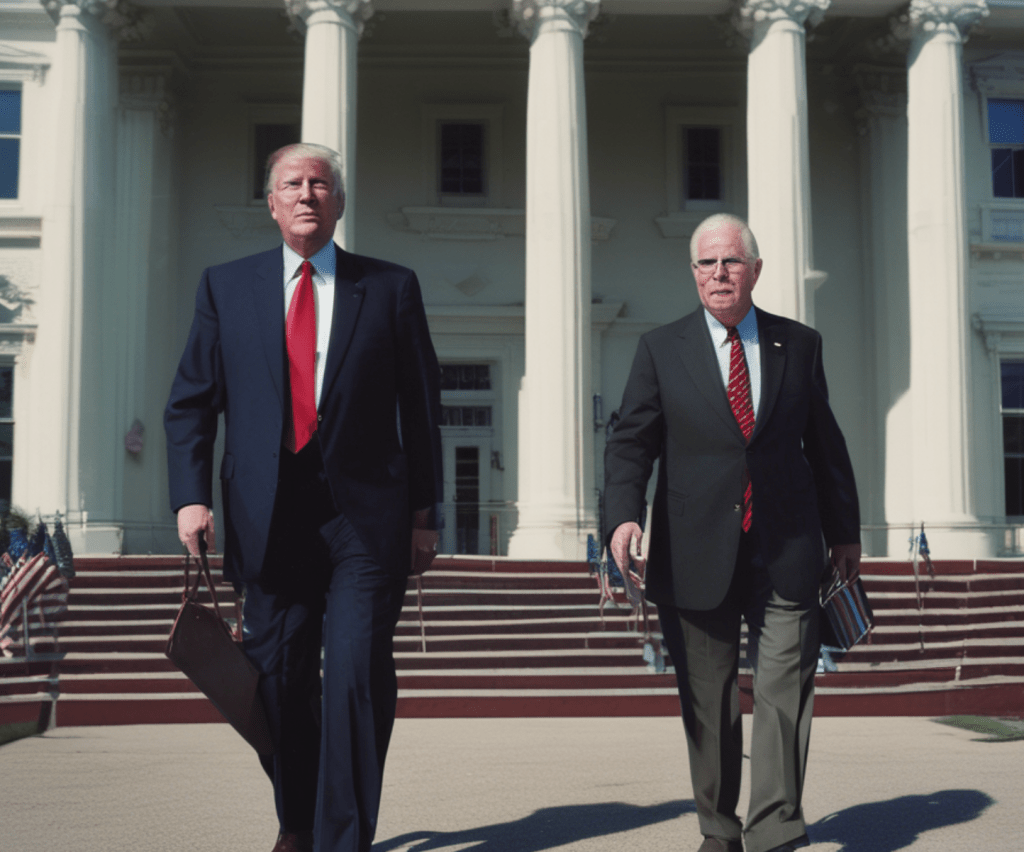
At home, Kate left. Her final words echoed through their now-empty apartment:

“You do not see me, Tom. Tom, never will you see me!.”

Tom stood in the doorway, confused and angry, unable to comprehend why she was so upset. As far as he was concerned, everything had been fine—because everything had always been about him.

However, despite the growing distance between him and the world, Tom did not connect the dots. The problem, as far as he was concerned, was not him. It was everyone else. Why didn’t people understand that he was in charge of his life? Why didn’t they see that his needs were urgent, his time valuable, his presence essential? His self-centeredness was creating a chasm between him and the rest of the world, a gap that was widening with each passing day.

The final straw came one quiet evening. Tom sat in a restaurant, dining alone —–– a common occurrence now. He waved the waiter over impatiently, complaining about the wait for his meal. The waiter, a man in his late fifties with graying hair and tired eyes, looked at Tom and sighed.

“You are not the only person in the world, you know,” the waiter said softly, his voice edged with exhaustion. “You act like we are all here just for you, but we are not.”

Tom bristled at the remark, ready to retort with something biting to remind the man of his place. However, the waiter’s words hung in the air momentarily, their truth unsettled. The weight of his words, heavy with truth, began to sink in, stirring something deep within Tom.

For the first time in a long time, Tom looked around. The restaurant was filled with people—couples sharing meals, families laughing, servers rushing between tables. Each of them had their own stories, struggles, and lives. They were not shadows. They were not here for him. They were living their own lives, just as vivid and real as his.

The weight of it settled on Tom like a cold wave. For years, he had moved through the world as if it were his stage, oblivious to the people around him. He had interrupted their lives, stepped over their feelings, and demanded their attention without a second thought. He had bulldozed his way through, never considering the damage he left behind.

And then, in a moment that would change his life, he saw it. For the first time, Tom indeed saw the world around him, not as a stage for his performance, but as a rich tapestry of lives, each as important as his own.

Tom left the restaurant without finishing his meal, the waiter’s words echoing in his mind. As he walked down the street, past people he had never noticed, a strange feeling stirred in him—something akin to humility, though he would not have called it that. It was a shift in his attitude and his perception of the world.

The world did not revolve around him—it never had. Perhaps, for the first time in his life, Tom realized just how much he had lost because of it.

As just as he did, not expecting for it to happen, Jesus Christ popped in and said he is going to vote for Kamala Harris!

The End

Elmer’s Forgotten Ending

A Story By: Benjamin Groff© Groff Media 2024© Truth Endures

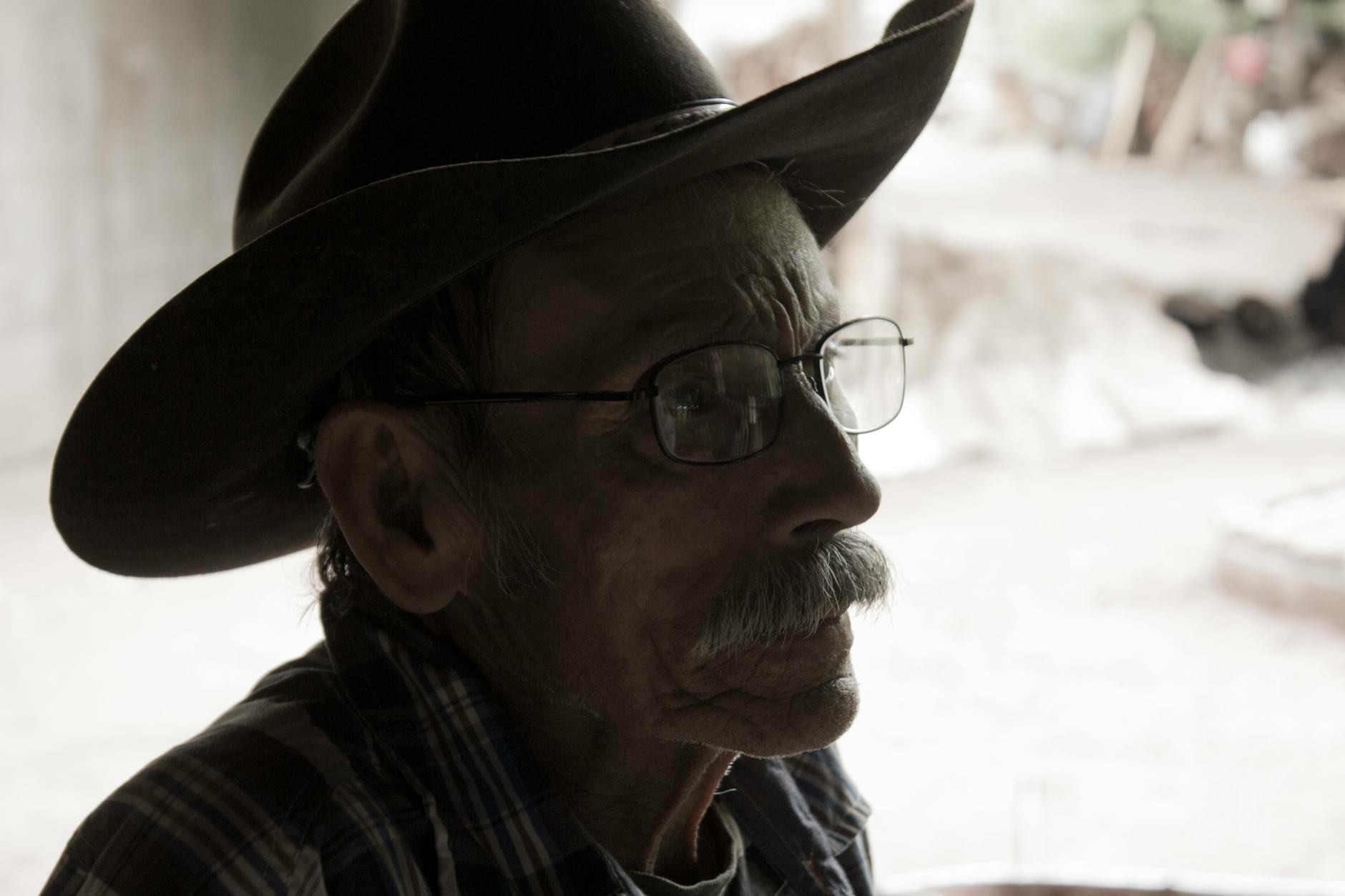
At 85, Elmer had circled the globe twice, a testament to his adventurous spirit. He was known as a reliable friend to his neighbors, colleagues, and family, earning their trust and respect. His life was a rich tapestry of experiences woven from the people he met and the challenges he overcame.

No one knew that since 80, Elmer had been slowly forgetting things. Elmer lived alone, having never had children. The love of his life, Bill, had been his husband. Together, they built a home and a life they had fought for since the 1960s. But Bill had died in the 1990s of AIDS, leaving Elmer to quietly close himself off from the world, no longer inviting people into his home.

In the last five years, Elmer had taken to raising quarter horses, finding solace in their company. But as time passed, he needed help to keep up with them. Elmer would leave gates open and have to chase the horses down or forget to feed them on time. Once, after a late ride, he left a horse saddled overnight. The guilt he felt was overwhelming, and he knew something was wrong. 
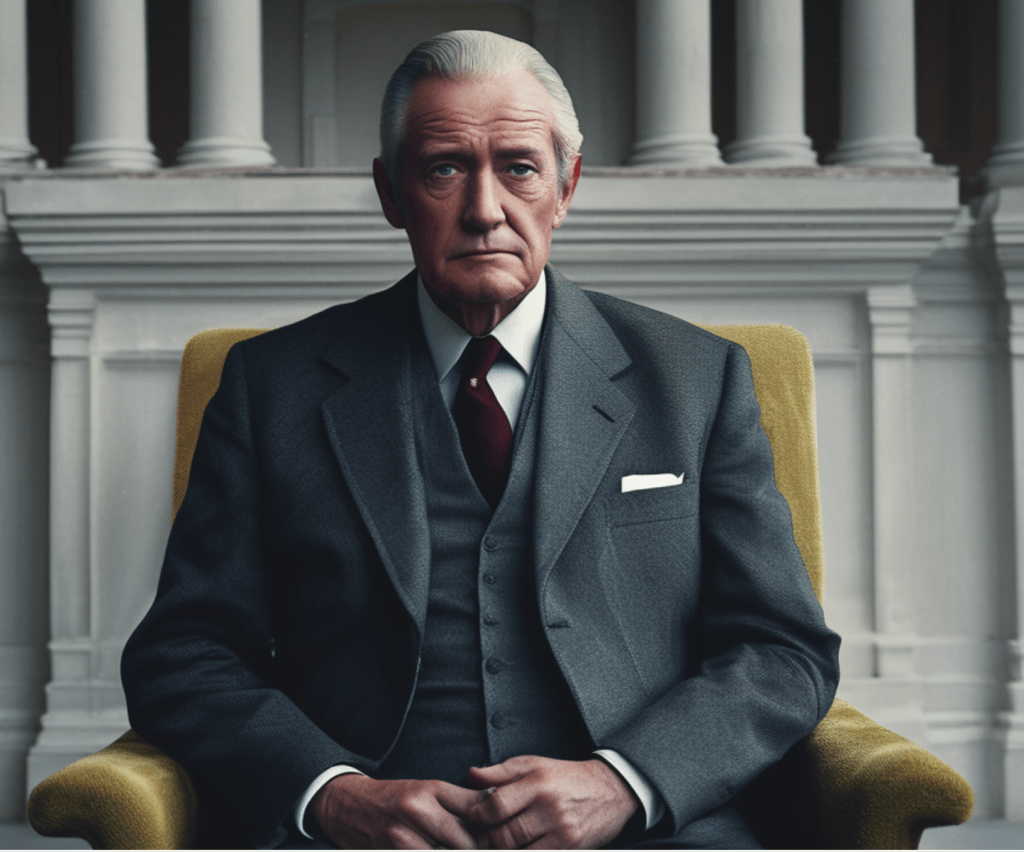
A visit to the doctor revealed a possible explanation: lack of sleep and depression, likely linked to his grief over Bill’s passing.

Determined to regain control, Elmer began taking medication to lift his spirits and help him sleep. He convinced himself he could manage. On Wednesday, Elmer had an appointment with a buyer interested in purchasing two of his horses. He thought selling them might relieve some of the pressure, leaving him with only one horse to tend to.

But Elmer had other concerns. He now shared his home with a group of stray cats that seemed to have appeared out of nowhere, along with his faithful companion, Roger, a golden-eyed Saint Bernard. Roger was more than just a pet; he was Elmer’s protector, especially when the owner began drinking whiskey.

Elmer tried to manage his responsibilities—his horses, cats, dog, and the home he had shared with Bill—but his mind kept slipping. He believed that Bill might still come home, even calling Bill’s sister, Matilda, to ask if she’d seen him. Matilda gently reminded him that Bill had passed away years ago.

Realizing he had let his secret slip, Elmer quickly covered by asking if she had seen a particular picture of Bill. 

Matilda, sensing something was wrong, insisted on visiting.

“Elmer, damn it, I need to see you. I haven’t been over in two years, and it’s time we have dinner!” 

Matilda demanded.

Caught off guard, Elmer couldn’t refuse.

“In the morning would be fine,”

He replied, resigned to the visit.

After hanging up, Elmer sorted through his mail and found a late notice from the electric company. He had forgotten to pay his bill, and the power got scheduled to be disconnected the next day. Frustrated, Elmer called the company, only to learn he had missed several payments. He assured them he would take care of it first thing in the morning.

Elmer hung up the phone, the weight of the day pressing down on him. His forgetfulness had become more frequent and more troubling. Once, he ended up in a faraway town, wondering how he got there. He had forgotten the names of his horses, even his dog Roger, and once needed help figuring out what his car keys were for.

That evening, Elmer and Roger settled into the family room to watch a news program, a series on Alzheimer’s. The more Elmer watched, the more convinced he became that he was suffering from the disease. The thought terrified him. He looked at Roger and grumbled, 

“I’ll be damned if I’m going out like that! I’m going out on top, not lingering around aloof and half-quacking!”

Determined to end his life on his terms, Elmer went to the liquor cabinet, packed five large bottles of whiskey into a box, grabbed some water, and called for Roger to get into the truck. He was visiting their favorite spot to watch the sunset—his and Bill’s particular spot. There, he planned to drink himself into oblivion and end his life.

As they arrived at the overlook, Elmer realized with a bitter laugh that he had forgotten the gun he intended to use. 

“Shit! I forgot the gun to shoot myself with!”

He muttered. Searching for an alternative, he looked for a rope to hang himself, but that too was missing. 

“Well, shit, Roger! I don’t have a rope.”

Roger, ever loyal, had been trained by a local bartender to remove the keys from Elmer’s truck whenever the pet’s master started drinking heavily. As Elmer continued drinking, Roger did just that, hiding the keys.

Now thoroughly drunk, Elmer looked at Roger and slurred, 

“What the hell did we come out here for?” 

He was confused, unable to remember his grim plan. By 

2:00 AM, the sky was pitch dark, and both man and dog were asleep in the truck.

Back at Elmer’s home, the morning brought concern. 

Matilda arrived, along with the horse buyer and the electric company. But Elmer was nowhere to be found. Sensing something was wrong, Matilda called out to the others, 

“Elmer would never allow a cat inside his house; something is wrong here!”

The electric company worker radioed his office to report a possible missing person, while Matilda assured them she would cover the bill to keep the power on. Their primary concern was finding Elmer.

The horse buyer suggested, 

“I figure Elmer’s out at the overlook like he is every year at this time. He and Bill went there every year on the 15th of this month for their anniversary.”

Meanwhile, Elmer was waking up at the overlook, groggy and disoriented. Roger, ever the guardian, brought him the truck keys. 

Elmer looked at the dog, 

“Roger, ‘ole boy, why in the hell are we out here? And who brought all these damn whiskey bottles?”

With no recollection of his plan, Elmer drove home, where a flurry of activity awaited him. 

As he approached the gathering, he overheard someone say, 

“A homeowner has gone missing, and everyone’s looking for him.”

Elmer, confused, asked, “Why are they doing it here?”

“They think this is where it happened,” came the reply.

“They think he went missing here? 

I was here until 10 PM last night and didn’t see anything,” Elmer responded.

The man shouted to the Sheriff, “This man says he was here until 10 PM last night and didn’t see anything!”

The Sheriff called back, “What’s his name?”

Elmer, finally realizing the situation, shouted,

“ELMER!”

You’re on my damn land, damn it!”

Matilda reached Elmer, talked to him, and promised he would never be alone. She would ensure he did not get treated like others he had witnessed on television. 

Matilda said, 

“Elmer, you are 85. Other parts of you are more likely to take you out before the mind takes you!”

Elmer, looking around, remarked, 

Matilda, you have a way of comforting the soul. Are you the one who brought all these damn cats out here and turned them loose in my house?

Matilda asked Elmer where he had been and what he had been doing.

Elmer said,

Truthfully, I don’t know. Roger and I just woke up at the overlook, and it was yesterday, today, and the 15th all coming together. I didn’t realize it. 

Matilda confronted Elmer, saying, “Well, Roger had more to say about. In fact, a lot more. You see, he gave me this note you gave him. It is a goodbye note you put on his collar last night.” 

Elmer’s face brightens as if a light bulb had gone on, responds,

Now I remember what I went out there for, but I just remembered that I need to bring—ugh, ice.

Matilda snaps back

Nice try, old man. I know what you are thinking, and it can’t happen. You still have a reason. And you can’t die until you no longer have a reason, like it or not. Your reason is not up yet! So get used to it. You still have a Reason

For more information on Alzheimers and Dementia Illnesses visit https://www.alz.org Also check when you can participate in the walk to prevent Alzheimers 2024!

Why Hasn’t Kamala Harris Delivered on Her Promises? It Is Simple -A Pip Squeak!

By: Benjamin Groff© Groff Media 2024© Truth Endures

The GOP, particularly their latest pick as Trump’s potential successor, keeps asking why Kamala Harris hasn’t accomplished everything she claims she’ll do if elected.

As Vice President, Harris’s role isn’t to set policy but to support the President’s mission. Over the past four years, that mission has centered on recovering from Trump’s administration’s chaos. Trump’s mishandling of the COVID-19 pandemic blindsided the nation, but despite these challenges, the Biden-Harris administration has worked tirelessly to put Americans back to work and rebuild neglected institutions.

It’s important to understand that any proposed initiatives by the President or Vice President require funding and legislation, which starts in the GOP-controlled House. Bipartisan cooperation is crucial, but the current House struggles to agree on leadership, let alone budgeting and legislation. The GOP’s track record in these areas is questionable at best. Blaming someone and then withholding their ability is classic GOP.

It is why many of Harris’s proposed measures are likely to gain traction during the first two years of her potential administration when a Democratic majority in both the Senate and House is more likely.

If critics want to question what Harris should have already accomplished, they should first focus on sponsoring and passing the necessary legislation. Only then can Harris take the steps needed to fulfill her promises.

The Hidden Trails ~ The Silent Path To Danny’s Peace Of Mind

A Story By: Benjamin Groff© Groff Media 2024© Truth Endures

Every day after school, the weight of the small, tightly-knit town in the heart of the Oklahoma hills seemed to press harder on Danny’s shoulders. The rumors, the whispers behind his back, and the constant need to mask who he was took a toll on him. 

At sixteen, he was already an expert at blending in, concealing his true self beneath layers of false smiles and careful words. But the act drained him. In stark contrast, the woods were the only place where he could breathe and feel free, a sanctuary that beckoned him from behind his family’s modest home.

The woods were the only place where he could breathe and feel free. Nestled behind his family’s farmstyle home, the sprawling expanse of forest beckoned him like a sanctuary. It was his escape, a world where no one judged him or cared who he loved and where he could be.

Every day, as soon as the final school bell rang, Danny would hurry home, change out of his school clothes, and grab his two loyal companions—Scout, an energetic Border Collie, and Rusty, a golden retriever with a heart as big as the sky. The moment he stepped into the woods, the weight on his chest began to lift, with the dogs by his side, their presence adding to the sense of freedom.

He knew every trail like the back of his hand, each winding path, every hidden meadow, and the secret spots that felt like they belonged to him alone. He would venture deep into the canyons, where the towering cliffs seemed to embrace him, sheltering him from the outside world. The sound of the wind whispering through the trees and the rustling leaves underfoot became his symphony.

The lake, with its glassy surface reflecting the changing colors of the sky, was his favorite spot. Here, he could sit for hours, watching Scout and Rusty chase each other along the shore, their barks echoing off the canyon walls. The beauty and tranquility of the place calmed his restless heart. It was here, in the stillness, that he could let his thoughts wander freely.

He often imagined what it would be like to live without fear, to love whomever he chose openly. But such thoughts were dangerous in a town like his. The smallness of the place meant that everyone knew everyone, and secrets were as rare as rain in the summer. So, he kept his dreams tucked away, only allowing them to surface in these moments of solitude.

As the sun set in the western sky, casting long shadows across the landscape, Danny would reluctantly begin the journey home. Sensing his mood, the dogs would walk quietly beside him, their once energetic bounces replaced by a calm understanding. The return to reality was always bittersweet, but their silent support made it bearable.

But each day, the promise of the woods and the solace they offered kept him going. The hidden trails became his refuge, where he could escape the daily blues of school and the oppressive weight of his secret identity. In the forest, Danny was free, even if only for a few precious hours.

And so, the days passed, with each walk bringing him closer to understanding himself and finding the courage he needed. The woods were patient, waiting for the day Danny would no longer need to hide when he could step out from the shadows and into the light of his truth.

Until then, the hidden trails remained his sanctuary, where he could find peace and strength, one step at a time.

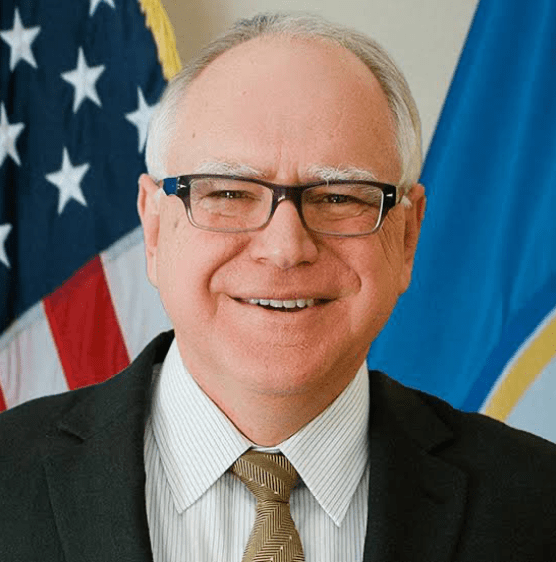
Who Is Tim Walz?

By: Heather Cox Richardson From Substack – Reposted By: Benjamin Groff© Groff Media 2024© Truth Endures

On August 6, 2024 Heather Cox Richardson wrote on Substack the following entry, it was to the point and told exactly what people should know about Tim Walz. He is a decent human being. Who has done a number of things in life. Some of those things came at making human decisions. Fallible to a point, he may be. Who isn’t? Heather’s writing begins next –––

Today Vice President Kamala Harris named her choice for her vice presidential running mate: Governor Tim Walz of Minnesota. Walz grew up in rural Nebraska. He enlisted in the Army National Guard when he was 17 and served for 24 years, retiring in 2005 as a command sergeant major, making him the highest-ranking enlisted soldier ever to serve in Congress, according to the House Committee on Veterans’ Affairs.  

He went to college with the educational benefits afforded him thanks to his service in the Army, and graduated from Chadron (Nebraska) State College. From 1989 to 1990, he taught at a high school in China, then became a social studies teacher in Alliance, Nebraska, where he met fellow teacher Gwen Whipple, who became his wife. They moved to Minnesota, where they both continued teaching and had two children, Hope and Gus, through IVF. 

Walz became the faculty advisor for the school’s gay-straight alliance organization at the same time that he coached the high-school football team from a 0–27 record to a state championship. The advisor “really needed to be the football coach, who was the soldier and was straight and was married,” Walz said in 2018. 

Walz ran for Congress in 2005 after some of his students were asked to leave a rally for George W. Bush because one of them had a sticker for Democratic presidential nominee John Kerry. Walz won and served in Congress for twelve years, sitting on the House Agriculture Committee, the Transportation and Infrastructure Committee, and the Committee on Veterans’ Affairs.

Voters elected Walz to the Minnesota state house in 2018, and in his second term they gave him a slim majority in the state legislature. With that support, Walz signed into law protections for abortion rights, supported gender-affirming care, and legalized the recreational use of marijuana. He signed into law gun safety legislation and protections for voting rights, and pushed for action to combat climate change and to promote renewable energy. 

Strong tax revenues and spending cuts gave the state a $17.6 billion surplus, and the Democrats under Walz used the money not to cut taxes, as Republicans wanted, but to invest in education, fund free breakfast and lunch for schoolchildren, make tuition free at the state’s public colleges for students whose families earned less than $80,000 a year, and invest in paid family and medical leave and health insurance coverage regardless of immigration status. 

While MAGA Republicans are already trying to define Walz as “far left,” his votes in Congress put him pretty squarely in the middle.  His work with Lieutenant Governor Peggy Flanagan to expand technology production and infrastructure funding in the state was rewarded in 2023, when Minnesota knocked Texas out of the top five states for business. The CNBC rating looked at 86 indicators in 10 categories, including the workforce, infrastructure, health, and business friendliness. 

Walz checks a number of boxes for the 2024 election, most notably that he hails from near the battleground states of Wisconsin, Michigan, and Pennsylvania and comes across as a normal, nice guy. He favors unions, workers’ rights, and a $15 minimum wage. He is also the person who coined the phrase that took away the dangerous overtones of today’s MAGA Republicans by dubbing them “weird.” As a student of his said: “In politics he’s good at calling out B.S. without getting nasty or too down in the dirt…. It’s the kind of common sense he showed as a coach: practical and kinda goofy.”

Walz is also a symbol of an important resetting of the Democratic Party. He has been unapologetic about his popular programs. On Sunday, July 28, when CNN’s Jake Tapper listed some of Walz’s policies and asked if they made Walz vulnerable to Trump calling him a “big government liberal,” Walz joked that he was, indeed, a “monster.” 

“Kids are eating and having full bellies so they can go learn, and women are making their own health care decisions, and we’re a top five business state, and we also rank in the top three of happiness…. The fact of the matter is,” where Democratic policies are implemented, “quality of life is higher, the economies are better…educational attainment is better. So yeah, my kids are going to eat here, and you’re going to have a chance to go to college, and you’re going to have an opportunity to live where we’re working on reducing carbon emissions. Oh, and by the way, you’re going to have personal incomes that are higher, and you’re going to have health insurance. So if that’s where they want to label me, I’m more than happy to take the label.” 

Right-wing reactionary politicians have claimed to represent ordinary Americans since the time of the passage of the Voting Rights Act—on August 6, 1965, exactly 59 years ago today—by insisting that a government that works for communities is a “socialist” plan to elevate undeserving women and racial, ethnic, and gender minorities at the expense of hardworking white men. 

Historically, though, rural America has quite often been the heart of the country’s progressive politics, and the Midwest has had a central place in that progressivism. Walz reintegrates that history with today’s Democratic Party. 

That reintegration has left the Republicans flatfooted. Trump and J.D. Vance expected to continue their posturing as champions of the common man, but on that front the credentials of a New York real estate developer who inherited millions of dollars and of a Yale-educated venture capitalist pale next to a Nebraska-born schoolteacher. Bryan Metzger, politics reporter at Business Insider, pointed out that J.D. Vance tried to hit Walz as a “San Francisco-style liberal,” but while Vance lived in San Francisco as a venture capitalist between 2013 and 2017, Walz went to San Francisco for the first time just last month. 

Head writer and producer of A Closer Look at Late Night with Seth Meyers Sal Gentile summed up Walz’s progressive politics and community vibe when he wrote on social media: “Tim Walz will expand free school lunches, raise the minimum wage, make it easier to unionize, fix your [carburetor], replace the old wiring in your basement, spray that wasp’s nest under the deck, install a new spring for your garage door and put a new chain on your lawnmower.” 

Vice President Harris had a very deep bench from which to choose a running mate, but her choice of Walz seems to have been widely popular. Representatives Alexandria Ocasio-Cortez of New York and Joe Manchin of West Virginia, who are usually on opposite sides of the party, both praised the choice, prompting Ocasio-Cortez to post: “Dems in disconcerting levels of array.” 

Harris and Walz held their first rally together tonight in Philadelphia, where Pennsylvania governor Josh Shapiro, who had been a top contender for the vice presidential slot, fired up the crowd. “Each of us has a responsibility to get off the sidelines, to get in the game, and to do our part,” he said. “Are you ready to do your part? Are you ready to form a more perfect union? Are you ready to build an America where no matter what you look like, where you come from, who you love, or who you pray to, that this will be a place for you? And are you ready to look the next president of the United States in the eye and say, ‘Hello, Madam President?’ I am too, so let’s get to work!”

Pennsylvania is a crucial state, and Shapiro issued a statement offering his “enthusiastic support” to the ticket. He pledged “to work to unite Pennsylvanians behind my friends Kamala Harris and Tim Walz and defeat Donald Trump.”

The Constant Battle For Change And Remaining The Same: The Revolving Door To Maintain Equality

A Story By: Benjamin Groff© Groff Media 2024© Truth Endures

Reasoning: This story underscores the resilience of individuals and communities in the face of societal and political challenges. By reflecting on the journey of an older gay couple who have navigated the tumultuous landscape of LGBTQ+ rights over decades, the narrative aims to emphasize both progress and ongoing struggles. The juxtaposition of their personal history with a contemporary political event draws attention to society’s persistent absurdities and injustices, ultimately advocating for continued vigilance and activism.

The older man gazed into the mirror, his eyes reflecting the many memories that spanned decades. They reminded him of his first visit to the Valley of the Sun. Back then, he was a young man, brimming with energy and a deep yearning to be outdoors. He spent every afternoon splashing in the swimming pool with his husband.

Like many others, they had moved to Arizona shortly after 9/11, whose lives had been upended by the crisis and the subsequent changes in their employers’ operations. The man and his husband had been together for nearly forty-three years, marked by immense change. They witnessed their rights get granted, taken away, increased, and reduced. They experienced the joy of gaining the Right to marry, only to face the threat of that Right being stripped away again by those who sought to erase it from the Constitution.

Today, the couple sat together, watching television. On the screen, a man was pouting about the low attendance at his campaign rally, blaming weather forecasters for giving poor weather reports. He suggested that the forecasts were intentionally misleading to hurt attendance at his event. Ironically, his opponent held a rally in the same city, and the venue overflowed with supporters.

The man’s complaint didn’t hold water but was a familiar narrative. The couple faced countless absurd accusations and unfounded criticisms throughout their lives. Yet, these baseless claims often gained traction, much like the current political spectacle on TV. Despite the challenges, the couple remained steadfast, their love and commitment enduring through each wave of societal change.

Their story was one of resilience. It was a testament to the progress and a reminder of the ongoing struggles. They stood together in the face of adversity, embodying the strength and determination to navigate an unjust and unpredictable world. Their journey was far from over, and they knew the fight for equality and acceptance was ongoing. But they found solace in each other, drawing strength from their shared history and the promise of a better future.

The spectacle they saw from the orange blob smearing the screen was nothing to fear. They had been dealing with such bleak freaks ever since Anita Bryant’s stint selling orange juice in Florida. The two had overcome the attempts to destroy their beings then, and they knew, along with allies, it could be done again. It was just sad that there were still people in 2024 so set on destroying others because they were so small-minded.

Together, they will make it –– regardless of how life challenges the two!

The Night Everything Changed ~ Neighbors became inseparable Putting Aside Their Sexuality.

A Story By: Benjamin Groff© Groff Media 2024© Truth Endures

In the quiet town of Maplewood, where everyone knew each other’s business, Frank Henderson was known for his stern opinions and narrow views. A man set in his ways often muttered under his breath about the changing world, particularly about his new neighbor, Adam. Adam was young, openly gay, and unashamedly himself, much to Frank’s chagrin.

Frank had lived in Maplewood his whole life, where traditions ran deep. Frank’s meeting new people within the community gets resisted. He prided himself on his neat lawn, spotless car, and strict adherence to the values he had grown up with. He watched behind his curtains as Adam moved in, noting the rainbow flag that fluttered proudly from the porch. Frank scoffed, shaking his head. “Not in my neighborhood,” he muttered to himself.

Days turned into weeks, and Frank’s irritation only grew. He avoided Adam, never engaging in more than a curt nod if their paths crossed. He dismissed his wife, Martha, whenever she suggested they invite Adam over for dinner, insisting they didn’t need to associate with “those kinds of people.”

But everything changed one fateful night.

It was a typical summer evening when the sound of shattering glass pierced the stillness. Frank bolted upright from his recliner, his heart racing. He rushed to the window and saw flames licking the side of his garage. His car! Panic surged as he stumbled outside, yelling for Martha to call 911.

A voice called out from the darkness as he struggled with the garden hose, trying in vain to douse the growing flames. “Frank! Frank, let me help!” It was Adam, running toward him with a fire extinguisher in hand.

For a moment, Frank hesitated, pride and prejudice warring within him. But as the fire roared louder, he swallowed his pride. “Alright, over here!” he shouted, pointing to the source of the fire.

Together, they fought the flames, Adam’s quick thinking and calm demeanor providing the guidance Frank desperately needed. Within minutes, the fire was under control, and the garage and car were saved from destruction. As the fire trucks pulled up, Frank found himself leaning against the charred wall, breathing heavily.

“Thank you,” he said, turning to Adam. The words felt foreign on his tongue, but he meant them. “I… I don’t know what I would have done without you.”

“Thank you,” he said, turning to Adam. The words felt foreign on his tongue, but he meant them. “I… I don’t know what I would have done without you.”

Adam smiled, brushing ash from his hands.

“No problem, Frank. I’m just glad I can help.”

In the days that followed, Frank found himself reevaluating his views. He watched as Adam continued to go about his life, kind and friendly to everyone he met. Frank began to notice the little things—how Adam helped Mrs. Johnson with her groceries or how he always waved to the children playing in the street.

As the sun dipped below the horizon one evening, Frank made his way next door. He knocked hesitantly, feeling out of place. Adam opened the door, surprise flickering across his face.

“Frank, hi! What can I do for you?”

Frank shifted uncomfortably.

“I wanted to say thanks again for the other night. And ––– I was wondering if you’d like to come over for dinner. Martha makes a mean pot roast.”

Adam’s smile widened.

“I’d love to. Thank you, Frank.”

Over pot roast and mashed potatoes, a tentative friendship began forming that night. They talked about everything—life, love, and the struggles each had faced. Frank truly listened, and for the first time, he saw Adam as more than just his gay neighbor. He saw him as a person, someone who had shown him kindness when he needed it most.

As the months passed, Frank’s views continued to soften. He began to understand that love and kindness knew no boundaries and that people were more than the labels society placed on them. He found himself defending Adam when others in the town gossiped, challenging the bigotry he once held so dear.

In the end, it was a simple act of bravery and compassion that changed Frank’s heart. He learned that neighbors were more than just the people who lived next door; they were the ones who stood by you in times of need and who showed you the power of acceptance and love. And in that quiet town of Maplewood, Frank Henderson became a testament to the idea that it’s never too late to change, grow, and embrace the world with an open heart.

Riding For Their Lives, Two Cowboys Find One Another On The Way Home

A Story By Benjamin Groff© Groff Media2024©. Truth Endures

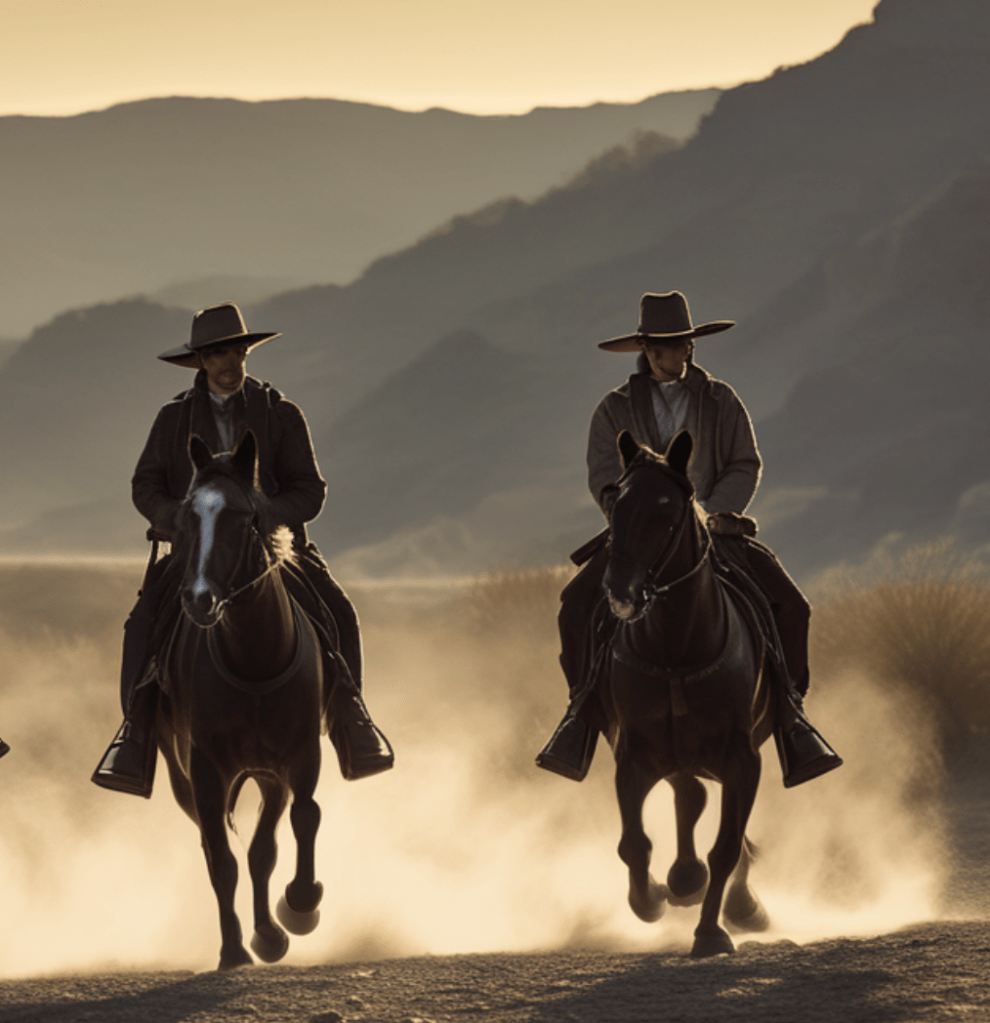
In the rugged expanse of the 1870s, the badlands of old Mexico were no place for the faint of heart. The sun beat down relentlessly on the arid landscape, casting long shadows as two figures galloped toward the distant border of the United States. Dust rose in their wake, marking their desperate flight from a fate they did not deserve.


Thomas “Tommy” Bellamy and Javier “Javi” Morales were not hardened outlaws, but the cards got dealt against them. In a dimly lit cantina, they had accused two desperados of cheating at poker—a claim that sparked a barfight and ended in gunfire. The local sheriff, a man of questionable integrity, saw an opportunity to pin the shootout on Tommy and Javi, branding them as evil men. With the threat of hard labor or the horrors of Mexican prisons looming, their only hope lay in reaching the safety of the U.S. border.


The journey was fraught with challenges. The badlands were an unforgiving terrain with little water and less mercy. Their horses, Midnight and Sol, were their only companions in the vast, empty wilderness. Days blended into nights as they pushed on, driven by the fear of capture and the promise of freedom.


As the miles stretched on, so did Tommy and Javi’s bond. In the quiet moments between the relentless pursuit, they found solace in each other’s company. Around the campfire, under a canopy of stars, they shared stories of their pasts—Tommy, the son of a Tennessee farmer, and Javi, the orphaned child of a Mexican peasant. Their differences faded in the face of their shared struggle, and a deep, unspoken connection began to blossom.


One night, as the embers of their fire glowed softly, Tommy glanced over at Javi. The flickering light cast shadows across Javi’s face, highlighting the weariness and determination etched into his features. Tommy felt a pang of emotion he could not quite place—a mix of admiration, respect, and more.


“Javi,” Tommy began hesitantly, “I don’t know what I’d do without you out here.”
Javi looked up, his dark eyes reflecting the flames. “We’re in this together, Tommy. Always have been, always will be.”


Their eyes locked, and the world around them seemed to fade away at that moment. Tommy reached out, his hand trembling slightly, and Javi met his touch with a quiet intensity. It was a tentative gesture, a bridge between fear and hope, and it spoke volumes more than words ever could.


As the days turned into weeks, their bond grew more pungent, transcending the physical hardships they faced. They encountered hostile landscapes, battled exhaustion, and evaded pursuers while drawing strength from each other. In a land where trust was scarce and betrayal familiar, they had found something rare and precious—unwavering loyalty and love.
One evening, as they neared the border, they found a small, abandoned shack. Exhausted and hungry, they decided to take shelter for the night. Inside, the air was cool, and the silence was broken only by the distant howls of coyotes. They sat close, their shoulders touching, as they shared a meager meal.


“Tommy,” Javi said softly, “do you ever think about what we’ll do once we cross the border?”
Tommy nodded, his gaze fixed on the horizon. “Yeah, I do. We’ll find a place to start fresh. Somewhere we can be free.”


Javi smiled, a rare sight that lit up his face. “As long as we’re together, we’ll make it.”
The border was within reach, but the journey was far from over. The two men knew the dangers that awaited them on the other side, but they faced them with a newfound determination. They were not just running from a past they did not deserve but running toward a future they could build together.


As dawn broke, they saddled their horses and got ready for the final leg of their ride. Tommy glanced at Javi, his heart swelling with pride and affection. They were outlaws by circumstance, but they had found something true and pure in each other.


With a shared nod, they spurred their horses forward, leaving behind the badlands of old Mexico and riding toward the promise of a new life. Their path was uncertain, but their bond was unbreakable, forged in the fires of adversity and tempered by the strength of their love.

TAKING A STAND. PROVIDING A VOICE FOR THOSE WHO MIGHT OTHERWISE GO UNHEARD!

A Story By Benjamin H Groff© Groff Media Copyright 2024©

At Groff Media, we dedicate our efforts to making a statement and standing up for those less fortunate. Our mission is to provide a powerful voice for those who might otherwise go unheard, championing their stories and advocating for their rights. Through compassionate storytelling, fearless journalism, and an unwavering commitment to social justice, we strive to amplify marginalized voices, foster empathy, and drive meaningful change. We are optimistic about our goal to create a more inclusive and equitable society, and we appreciate your support in valuing and hearing everyone’s story.

Recent legislative actions in Congress have raised significant concerns among proponents of LGBTQ equality. Extreme opponents of LGBTQ rights are using federal government funding bills to introduce harmful provisions, commonly referred to as “poison pills,” which specifically target the civil liberties of LGBTQ individuals, with a particular focus on the transgender community. These measures threaten to undermine the rights and dignity of LGBTQ people and restrict access to essential, life-saving care for trans individuals.

Current Legislative Landscape: In recent months, several bills that fund various federal government operations have included provisions that:

  • Ban access to gender-affirming healthcare for transgender individuals, which is recognized by major medical associations as life-saving and essential.
  • Introduce measures that broadly attack the rights and dignity of LGBTQ individuals, potentially reversing decades of progress in the fight for equality and civil rights.

Impact on Transgender People: The inclusion of these poison pills in government funding bills is particularly alarming for the transgender community. Gender-affirming care, which includes hormone therapy, mental health services, and surgical interventions, is critical for the well-being and survival of many transgender individuals. Banning access to this care not only jeopardizes the health of trans people but also exacerbates mental health issues, leading to higher rates of depression, anxiety, and suicidal ideation.

Broader Implications for LGBTQ Rights: Beyond the transgender community, these legislative measures threaten the broader LGBTQ population by:

  • Reinforcing stigma and discrimination, which can lead to increased rates of hate crimes and societal exclusion.
  • Undermining legal protections that have been established to ensure equal treatment and prevent discrimination based on sexual orientation and gender identity.
  • Sending a message that the rights and dignity of LGBTQ individuals are negotiable and can be sacrificed for political gain.

Call to Action: It is imperative that we, as concerned citizens, take a stand against these harmful legislative tactics. We must let our leaders in Congress know that we do not support efforts to undermine the civil liberties of LGBTQ individuals. Specifically, we urge members of Congress to:

  • Oppose any government funding bill that includes provisions attacking the rights and dignity of LGBTQ people.
  • Reject any measures that ban access to life-saving gender-affirming care for transgender individuals.
  • Stand firm in the commitment to equality and justice for all, ensuring that the rights of LGBTQ individuals are protected and upheld.

Conclusion: The fight for LGBTQ equality is far from over, and current legislative actions pose a serious threat to the progress that has been made. It is crucial for advocates, allies, and concerned citizens to remain vigilant and vocal in opposing these regressive measures. By urging our representatives to reject any government funding bills containing poison pills, we can help safeguard the rights and dignity of LGBTQ individuals and continue the march toward a more just and inclusive society.

Political Mission Set In Fictional future Yet Sparks Of Reality Shines Through!

A Story By Benjamin H Groff© Groff Media Copyright 2024©

The tides of change swept through every street, home, and heart in the nation’s heart. It was an era marked by uncertainty and tension as a rising conservative movement began to reshape the very fabric of society. The once-balanced scales of politics now tipped heavily in favor of those who believed in tradition, order, and a return to what they called “the good old days.”

~
Emma Caldwell, a liberal activist and journalist, sat in her small apartment, the glow of her laptop illuminating her worried face. She had spent years fighting for progress—campaigning for equal rights, environmental protection, and social justice. But now, every headline seemed to bring another blow to the causes she held dear, intensifying the urgency of her mission.

~


The latest news was the most disturbing yet: a proposed amendment to the constitution that would severely restrict freedom of speech and assembly, effectively silencing dissent and opposition. Emma’s fingers flew across the keyboard as she typed out an article, her words mixing passion and desperation. She knew that getting the truth out was more important than ever.


Across town, in a grand office overlooking the city, Senator Marcus Reid, a leading figure in the conservative movement, reviewed the day’s agenda. He believed sincerely in his cause, convinced the country had lost its way in a maze of liberal policies and needed to return to its core values. To him, the changes were necessary, even if they were painful.


As the days passed, protests erupted across the nation. Streets filled with a sea of faces—young and old, united by a shared fear of losing their rights. Emma was among them, her camera capturing the raw emotions of the crowd. She interviewed people from all walks of life: the single mother worried about her children’s future, the college student anxious about the loss of academic freedom, the elderly couple who had fought for civil rights decades ago and now saw history repeating itself.


Despite the growing unrest, the conservative agenda pushed forward relentlessly. The lawmakers passed laws at a dizzying pace, each chipping away at the freedoms many had taken for granted. These laws included [specific laws], which directly affected [specific groups of people]. The country seemed to be spiraling into a new era of authoritarianism, and the hope that once burned brightly in the hearts of liberals began to dim.


Emma found herself at a crossroads. Her work was censored, and her voice was stifled by the very government she had once trusted to protect her freedoms. But she refused to give up. Gathering a small group of like-minded individuals, she formed an underground network dedicated to preserving and disseminating information. Their determination was a silent but powerful force, inspiring others with their unwavering resolve.


Senator Reid, now one of the most powerful men in the country, began to sense the growing resistance. He dismissed it at first, confident that his vision was the right path. However, as the underground movement gained momentum, Senator Reid realized that silencing dissent was more complex than passing laws. The human spirit, he discovered, was not so quickly subdued.
One evening, Emma received a message from an anonymous source—a high-ranking government official who had grown disillusioned with the conservative regime. The source provided her with classified documents detailing the administration’s plans to tighten their grip on power further.

These documents revealed [specific details], a dangerous revelation, but Emma knew it was the spark needed to ignite a more significant movement.


She leaked the documents to the public with the help of her network. The revelations shook the country, and the streets again filled with protesters. This time, their numbers were more significant, and their resolve was more robust, demonstrating the potential impact of collective action. The conservative government, facing unprecedented pressure, began to falter.


Senator Reid watched as the country he had tried to reshape slipped from his grasp. He had underestimated the people’s power and ability to unite and fight for their rights. As the conservative movement began to crumble, a new era of political awakening dawned.


Emma stood on the capitol’s steps, her camera in hand, capturing the momentous events unfolding before her. She knew the battle was far from over, but she felt a glimmer of hope for the first time in a long while. The changing times had tested the nation’s spirit, but in the end, its people’s resilience and determination prevailed.

Coming Out After Basic Training: John’s Journey to Authenticity

A Story By Benjamin H Groff© Groff Media Copyright 2024©

Returning home from basic training, John returned to a place he no longer knew. It was the same one he had left before going ‘to basic,’ but he was different. Between leaving and coming back, John had changed. Or had he accepted something about himself? He didn’t know.

From his perspective, his life was one in which he would have to live in double time: in his time for himself and when he was with his family in a perspective that fit their permissions. He had dated a girl before he left but had broken up with her before he returned. By letter. A ‘Dear Jane’ type of letter, letting her know she could date other guys and that he didn’t expect her to wait for him.

John wrote he would be in no condition as a datable companion if and when he returned. He included a few other words about how training had changed him, getting him ready for the fight, hoping it would get the message across and cause her to continue her life. He had been ranked and assigned to maintenance crews stateside for two years, which was the reality of his assignment.

When John arrived back in his hometown, he stepped off the bus, duffel bag slung over his shoulder, and the familiar streets of his hometown unfolded before him. It was a hot summer afternoon, and the cicadas droned loudly, filling the heavy air with their constant hum. It should have felt like home, but it didn’t. Everything seemed smaller, almost claustrophobic. The neat houses, the familiar storefronts, even the people who waved at him with a mix of pride and curiosity—none of it felt right.

He adjusted the strap on his shoulder and started walking, the soles of his boots crunching on the gravel. Memories of his time in basic training flooded his mind. The relentless drills, the camaraderie with his fellow soldiers, and the quiet introspection late at night had been a time of transformation, of pushing his limits and discovering parts of himself he had never confronted.

One of those parts was realizing he couldn’t keep living a lie. He’d broken up with Emily in a letter, the words blunt and final. He’d told her that basic training had changed him, but he hadn’t told her how. He hadn’t told her the real reason was that he couldn’t keep pretending to be someone he wasn’t. He’d signed the letter with a shaky hand, hoping she’d understand and move on.

Standing on his childhood street, John felt the weight of his double life pressing down on him. He had come to terms with his identity, but he knew that acceptance came with a price. His family had certain expectations and beliefs, and he didn’t fit into their neat, tidy picture.
The contrast between his inner truth and their external expectations was stark, and it weighed heavily on him.

As he approached his house, he saw his mother standing on the porch, her face lighting up as she saw him. She hurried down the steps, arms outstretched, and he found himself enveloped in her warm embrace.

“Oh, it’s so good to have you home!” – she exclaimed, looking back at him.

“You’ve grown, and you look so strong!”

He forced a smile, nodding.

“It’s good to be home, Mom.”

Inside, the house smelled freshly baked bread and flowers from the garden. His father was in his usual chair, reading the newspaper. When he saw his son, he stood and nodded in approval.

“Welcome back, son,”

The dad said gruffly.

“You did us proud.”

“Thanks, Dad,”

John replied, ignoring the tight knot in his stomach.

The next few days went by in a blur of family gatherings and catching up with old friends. Everyone wanted to hear about his experiences, basic training, and future in the maintenance crew. John told them what they wanted to hear, leaving out the parts that didn’t fit into their narrative.

One evening, he found himself alone in his room, which felt more like a museum of his past than a place of comfort. He sat on the edge of the bed, looking at the photos on the wall and the trophies on the shelf. It all felt so distant, so disconnected from who he had become.

He pulled out his phone and stared at Emily’s number. He had rehearsed what he wanted to say a hundred times, but now that the moment was here, he felt paralyzed.

Finally, he typed out a message:

“Hey Emily, I’m back in town. Would you like to meet up sometime? There’s something I need to talk to you about.”

He hit send before he could second-guess himself, and the response came quickly.

“Sure, I’d like that. When and where?”

They agreed to meet at the local coffee shop they used to go to in high school. As John walked there, he felt a mixture of dread and relief. He knew this conversation was necessary, but he also feared the consequences.

Emily was already there when he arrived, sitting at a corner table. She looked up and smiled when she saw him, but there was a hint of uncertainty in her eyes.

“Hi,” she said as he sat down. “It’s good to see you.”
“You too,” he replied, taking a deep breath. “Emily, I need to tell you something, and it’s not easy for me.”

She looked at him, her expression softening.


“Whatever it is, you can tell me.”


He looked down at his hands, then back up at her.

“I broke up with you because I couldn’t keep lying. And I couldn’t keep lying to you. I’m gay, Emily. That’s why I ended things. I didn’t want to hurt you, but I couldn’t keep pretending.”

There was a long silence, and he felt his heart pounding. Finally, Emily reached across the table and took his hand.

“Thank you for telling me,” she said quietly.
“I wish you had told me sooner, but I understand. I’m glad you’re being true to yourself.”

As they parted ways, John felt a sense of relief wash over him. The weight of his secret had been lifted, and he felt lighter, as if their visit had released a burden from his shoulders. He was grateful for Emily’s understanding and acceptance, and he felt a renewed sense of freedom and authenticity.

Returning home, John knew there were still challenges ahead—his family, community, and the double life he would have to navigate. But he also knew that he had taken the first step towards living authentically. For the first time in a long time, he felt a glimmer of hope.

The Last Journey

A Story By Benjamin H Groff© Groff Media Copyright 2024©

At 94, Mabel Johnson had seen her share of life’s trials and tribulations. From the Great Depression to the advent of the internet, she had weathered it all with resilience and grace. But now, in 2024, Mabel faced a new and unprecedented challenge. She knew what to do as she stood in her late husband’s workshop, surrounded by his carefully curated collection of firearms.


Her son, David, lived 1100 miles away with his husband, Alex. They had built a life together filled with love and laughter. But the political climate was changing, and the radical policies of the so-called 2025 Plan, championed by a rising wave of extremists, threatened everything they held dear. The hate-mongers on the Right had made their intentions clear: to eradicate the freedoms and rights of the LGBTQ+ community.


Mabel’s husband, George, had been an avid collector of firearms. His collection was extensive, ranging from vintage rifles to state-of-the-art automatic weapons. Though Mabel had never been a fan of guns, she understood their power and the protection they could offer. Looking over the arsenal, she felt George’s presence and strength guiding her.


Determined to protect her son and his husband, Mabel loaded the weapons into the back of her old station wagon. It was a journey she had to make alone. Mabel left a note for her neighbors, letting them know she was visiting family and might be gone for a while. With a deep breath, she set off on the long drive.


The miles rolled by as Mabel drove through vast countryside, bustling cities, and quiet towns. Memories of David’s childhood filled her thoughts, from his first steps to his high school graduation. She remembered the day he came out to her and George, the fear in his eyes, and the relief when they embraced him with unconditional love. They had always supported him, and now, more than ever, he needed their strength. The road was long and lonely, but Mabel’s determination and love for her son kept her going.


As she crossed state lines, Mabel listened to the news on the radio. Reports of violent clashes and hate-filled rallies filled the airwaves. The world seemed unraveling, and she feared for David’s safety. But she pressed on, determined to reach him in time.


After three days of relentless driving, Mabel finally arrived at David and Alex’s home. The two men rushed out to greet her, their faces etched with worry and relief. David enveloped his mother tightly, tears streaming down his face. The relief was palpable, and Mabel knew she had made the right decision.


“Mama, what are you doing here?” he asked, his voice choked with emotion.
“I came to protect you,” Mabel replied, her voice steady despite her exhaustion. “I brought your father’s collection. You’ll need it.”


David and Alex helped her unload the weapons, their faces a mix of shock and gratitude. They knew the gravity of the situation and the lengths Mabel had gone to ensure their safety.
Mabel shared her plan as the three sat around the kitchen table that night. They would train, learn to defend themselves and stand united against the impending threats. It wasn’t just about the weapons but also about resilience, love, and the unbreakable family bond.


Mabel became a fixture in David and Alex’s home in the following weeks. She taught them everything George had taught her about firearms, and they spent countless hours preparing for whatever might come their way. Inspired by Mabel’s bravery, the community began to rally together, forming a network of support and defense. Neighbors who had never spoken before now stood side by side, united in their determination to protect their loved ones and their rights.


David and Alex knew they were not alone as the political climate grew more hostile. With Mabel, they faced the future with unwavering determination and hope. The journey had been long and arduous, but it was a testament to the power of love and the lengths a mother would go to protect her son.


They stood firm in the face of hate, ready to defend their rights and home. And Mabel, at 94, proved that courage and love knew no age limits.

They stood firm in the face of hate, ready to defend their rights and home. Mabel, at 94, proved that courage and love knew no age limits. The couple then gathered other LGBTQI+ couples and members of the community and built teams like possies in the tens of thousands in cities and counties around the country, saving the land and freedom from extremists.

The Last President: A Tale of Democracy’s Demise

The Last President

It was the end of October, and the nation seemed to be in a state of distraction, unaware of the critical choice before them. Two men were vying for the highest office in the land, each bringing with him a starkly different vision for the future. The contrast between their characters and intentions was as clear as day, yet the people’s attention was elsewhere. The urgency of the situation was palpable, but the people were yet to realize the gravity of their decision.

The first candidate was an elder statesman, a man whose career in public service spanned decades. He had held nearly every elected position imaginable, from local government to the halls of Congress. His dedication to the country was unwavering, a testament to his deep-seated patriotism. His life’s work, a reflection of his commitment to protecting the essence of the country he loved, was a beacon of trust and reliability for the nation.

In stark contrast stood the second candidate, a man whose motives were as transparent as they were troubling. Self-serving and careless, he made no secret of his intentions. He openly declared that, if elected, he would rule with an iron fist, punishing his enemies and consolidating power from day one. His rhetoric was filled with hate, yet the people, weary of the same old political games, dismissed his threats as mere bluster. This transparency, however, should have been a warning sign, a call for vigilance in the face of such extremism.

The campaign’s intensity grew as the days turned into weeks, yet the nation’s focus remained elsewhere. Perhaps it was the fatigue of constant political turmoil or the distractions of everyday life, but the electorate seemed indifferent, almost numb. They laughed off the second candidate’s tirades, convinced that such extremism could never take root in their democracy.

Election day arrived, and with it, a shocking outcome. The self-serving, hateful man had won. The people who had laughed at his threats now watched in stunned silence as he took the oath of office. His promises of dictatorship were not idle threats; they were his blueprint for governance, a reality that had suddenly come to pass. This was not just the result of one man’s ambition, but a collective decision made by the electorate.

From the very first day, the new President began to reshape the government to suit his whims. He targeted his opponents with a vengeance, using the full power of his office to silence dissent. Civil liberties and democratic institutions were eroded and undermined. The press, once the people’s watchdog, was muzzled. The judiciary, a bulwark against tyranny, was co-opted. His actions, such as [specific actions], tightened his authoritarian grip and spread fear like wildfire.

The oldest-ever President, now retired, watched in horror as the nation he had served so faithfully became dismantled piece by piece. His warnings had gone unheeded, his life’s work seemingly undone in months. Once so dismissive of the threat, the people found themselves powerless to stop the descent into chaos. The retired President, too, felt the weight of his powerlessness, a stark contrast to his years of service and influence.

It was the end of the nation, an Ending which the country could have avoided.nation. An Ending that could have been avoided.