The snow fell gently outside Tom Whitaker’s cabin, blanketing the woods in a serene hush. Inside, the fireplace cast a warm glow, flickering and dancing, casting long shadows on the walls. The smell of pine from the small, undecorated tree in the corner filled the room with a comforting aroma. It was Christmas Eve. Tom, a retired schoolteacher, sat in his favorite armchair. He had a mug of cocoa in hand and a book he couldn’t quite focus on. For the first time in decades, he was spending Christmas alone.
His wife, Evelyn, had passed away three years ago. His grown children were scattered across the country. They were tied up with their own families and commitments. Tom didn’t blame them, but the ache of solitude was undeniable. He declined their offers to join them, insisting he’d be fine alone. He wasn’t.
A knock at the door startled him as he gazed into the fire. Who would visit on a night like this? He opened the door. He found a boy no older than ten. The boy was bundled up in a red coat. He was holding a scraggly puppy with floppy ears.
“Hi, mister,”
the boy said, shivering uncontrollably.
“I found this puppy in the snow. My mom said we can’t keep him, but maybe you can.”
Tom stared at the boy and the trembling pup.
“Come inside before you freeze,”
he said, taking the puppy in his arms.
The boy declined, pointing to a car waiting at the edge of Tom’s driveway.
“Merry Christmas!”
he called as he dashed off.
Tom closed the door, holding the puppy close. The little dog’s brown eyes looked up at him with fear and hope.
“Well, you’re an unexpected guest,”
Tom murmured. He fetched a blanket and some leftover chicken for the pup, who wagged its tail furiously.
Later that evening, as Tom felt less lonely, another knock came. This time, it was Mrs. Abernathy, his elderly neighbor. She held a tin of cookies and a thermos of cider.
“I noticed your lights on,”
she said.
“Thought you like some company.”
She handed him the thermos, and the warm, comforting scent of cider filled the air.
They shared the cookies and cider, laughing about old times and neighbors long gone. Mrs. Abernathy left after an hour, but only after gifting Tom a hand-knitted scarf she had made.
As the clock struck midnight, Tom prepared for bed, his heart a little warmer. The puppy, now curled up in an old basket, barked softly. Another knock came.
“Who now?”
Tom muttered, opening the door.
A group of carolers stood outside, bundled against the cold, their voices harmonizing in “Silent Night.” Behind them was a man from a local grocery store holding a box.
“We’ve got extra holiday meals,”
the man explained after the carolers finished.
“Thought you might enjoy one.”
Tom accepted the box, his throat tight with emotion. Inside were a roast chicken, mashed potatoes, cranberry sauce, and a pie.
As the night wore on, Tom marveled at the change. A Christmas he had dreaded became one filled with unexpected kindness. He sat by the fire with the puppy on his lap. The scarf was around his neck. He held a plate of warm food.
“Merry Christmas,”
he whispered to the little dog, who wagged its tail in agreement. Tom no longer felt alone. His cabin became filled with the spirit of the season through strangers, neighbors, and a small, scruffy pup. The pup found him when he needed it most.
🎬 MEMORIES FROM MEMORY LANE — “ON WITH THE SHOW!” STRIKES A NEW NOTE 🎶 From Our Entertainment Desk — May 29, 1929
Ladies and gentlemen, the talkies have gone and done it again! Moving pictures with sound became a reality on August 6th, 1926. Just three short years later, Warner Bros. has given the public something new to hum about—literally.
This week, cinema-goers were treated to On with the Show!—a Technicolor extravaganza. It boasted the peerless pipes of Miss Ethel Waters. She delivered the lilting tune Am I Blue with such warmth that even the ushers were swooning. But here’s the rub: for the first time in motion picture history, audiences were invited to sing along!
That’s right, folks—words flashed upon the screen as Miss Waters crooned, urging patrons to join in from their seats. And join they did! Voices rang out from the front row to the peanut gallery. Some were as sweet as a songbird. Others were a touch off-key. All were in the spirit of merriment.
Picture it—gentlemen in their finest straw boaters. Ladies fanning themselves in the glow of the projector. Everyone is swept up in the chorus together. Why, one might call it the first karaoke moment in show business history. We’ve yet to invent such a word!
If this is the future of the pictures, we say—bring on the music! After all, the best part of a song is not just hearing it… it’s singing it together.
From The Greater County Backroads Dictionary, 3rd Edition (self-published, available only at Gus’s Feed & Seed):
Digshin(noun) — /ˈdig-shin/
A lively social gathering resembles a shindig. It features more spirited dancing. It has more questionable music combinations. There is a higher probability of meeting your future ex-spouse.
Any event where the crowd can dance on the floor. They will also dance on the tables.
A party that starts like a potluck. It ends like a family reunion if your family includes a traveling accordion player. Imagine two cousins who know the cha-cha, and a guy named Larry who’s never without his washboard.
Origin: Exact origin unknown. The phrase was first recorded in County gossip circa 1974. Edna Lou Perkins was overheard saying, “That wasn’t no shindig, that was a full-blown digshin.”
Usage:
“We went to the barn dance. We thought it was a shindig, but they had an accordion. There was a conga line and three flavors of moonshine. It was definitely a digshin.”
How I Learned the Difference the Hard Way
Around here, folks talk about a shindig and a digshin like they’re just cousins. They are close enough to be in the same family photo. But, they are different enough to fight over who gets the last piece of pie.
A shindig, you probably already know. That’s your wholesome Saturday-night community gathering. Picnic tables sag under the weight of potato salad and baked beans. Music is played by somebody’s cousin on an acoustic guitar. The dancing doesn’t need a permission slip or a chiropractor afterward. Kids run wild between the hay bales. The mayor dances with the school librarian. There’s always that one guy who insists his chili is “just a little spicy.” It makes half the crowd break into a sweat.
A digshin, though? That’s a different animal. I didn’t know that until one fateful summer evening when I mixed the two up.
It started with an invitation. I’d heard the Johnson family was organizing “a big shindig out at the old barn.” Because the Johnson’s know how to cook, I didn’t ask too many questions. I shined up my boots. I wore my good hat. I brought along a peach cobbler. I was hoping it would make me a local legend.
When I got there, I noticed a few things were… different
First off, the music wasn’t just country and bluegrass. There was a fiddle in there. It was tangled up with a bass line. The rhythm made my boots twitch without asking permission. Someone had added a washboard player who looked like he’d just wandered in from a Mardi Gras parade. Halfway through the first song, a guy with an accordion joined in. It was as if he’d been waiting all year for this moment.
Second, the crowd was livelier than your average shindig bunch. At a normal shindig, folks will dance — polite, steady, maybe a do-si-do if the caller is feeling bossy. But here? People were spinning, stomping, and swinging their partners until their hats flew off. The mechanic from three towns over was leading a line dance. It kept changing every eight beats. Meanwhile, the feed store clerk had somehow ended up dancing with three partners at once.
Then came the moment I knew I wasn’t at a shindig at all — I was at my first digshin.
See, at a shindig, you can leave anytime you want. Folks will wave, hand you a slice of pie for the road, and tell you to drive safe. At a digshin, you can’t leave without getting pulled into at least one dance. There will be one toast. And there is always one questionable story told by somebody who swears it happened “back in ’78.”
By the time I made it out, my boots were dusty. My cobbler dish was empty. My cheeks hurt from smiling. I still couldn’t tell you exactly what a digshin is, but I know this:
If you’re at a shindig, you’ll go home with a full belly. If you’re at a digshin, you’ll go home with a full belly. You’ll also have a story you probably shouldn’t tell your grandmother.
If you are ever invited to a Shindig – Digshin crossover event, don’t pass up the chance to go. You will have the time of your life. Especially if you stay for the whole Digshin! (And remember it.)
On August 16, 1977, the world stopped spinning — at least in Memphis, Tennessee. That was the day Elvis Presley, the King of Rock and Roll, was found unresponsive in the bathroom of Graceland. The global headlines mourned music’s greatest icon. Meanwhile, things were spinning out of control behind the scenes in the world of law enforcement. And not just in Memphis.
Most people don’t know that Elvis’s death caused a minor frenzy. It affected not just fans, but also federal and local law enforcement. This had everything to do with his name, his guns, and his bizarre honorary narcotics badge.
In 1970, Elvis famously met with President Richard Nixon and requested a federal narcotics badge. He did not intend to arrest drug dealers, well, maybe a few. He believed it would grant him special privileges at airports. It would allow him to carry firearms across state lines without hassle. Nixon, eager to impress a celebrity during a slump in his popularity, gave him the badge. Elvis then began collecting honorary police badges from departments across the U.S., often in exchange for autographs, memorabilia, or a simple smile.
By the time of his death, Elvis had amassed over 100 badges. Some were real, others purely decorative, and a few were questionably obtained. The King had a well-known obsession with guns. He owned dozens of pistols and rifles. He even had a few military-grade toys. When the news of his death broke, more than one law enforcement agency quietly wondered. They asked themselves, ‘What did we give that man?’ And can we please get it back?
According to insiders at the time, several local departments began calling Graceland discreetly. They were hoping to retrieve various “loaned” badges and sidearms. One small-town sheriff reportedly said,
“We didn’t think he’d actually keep the darn thing. It was supposed to be a photo op!”
Even the DEA got involved. They did not act out of malice. Elvis’s collection included a few federal items. These should have never technically left Washington. A flurry of quiet internal memos from late August 1977 hints at an almost comical scramble. They describe recovering government property from the estate of a man. This man had once offered to go undercover as a federal agent “to stop the hippie drug culture.”
This man had once offered to go undercover as a federal agent “to stop the hippie drug culture.”
Meanwhile, fans held candlelight vigils and bought up every Elvis album in sight. Law enforcement agents were busy inventorying his arsenal of firearms and badges. His collection would put most mid-size police departments to shame.
A deputy who had once met Elvis described the moment. They realized the full extent of the collection:
“I walked into that room. I saw enough shiny shields to start a police academy.”
I half expected them to start talking.
Most of the badges were eventually returned. Some were documented as honorary. Yet, a few were mysteriously “lost to history.” They are reportedly still missing to this day. One turned up on eBay years later. This sparked a brief online turf war between Elvis fans and collectors of obscure police paraphernalia.
August 16, 1977, then, marks not just the day the King left the building. It was also the day law enforcement agencies across the country had a new challenge. They found themselves unexpectedly cleaning up behind him. They tried, with straight faces, to explain to their bosses. Why did Elvis Presley have more police gear than some SWAT teams?
Helen Cornelius (December 6, 1941 – July 18, 2025) was the deeply cherished voice of classic country. She was the beloved duet partner to Jim Ed Brown. She passed away on July 18, at the age of 83 FacebookThe Sun Set TV. She was born as Helen Lorene Johnson in Monroe City, Missouri. She was raised on a farm where music flowed naturally in her family. She joined her sisters Judy and Sharon in a local singing trio before forming her own band, The Crossroads.
Cornelius’s early career blossomed in the late 1960s. She worked as a songwriter signed to Screen Gems Music. She penned songs recorded by artists like Barbara Fairchild and Connie Smith Wikipedia+3Wikipedia+3The Sun Set TV+3. After a brief stint with Columbia and MCA Records, her life’s defining moment arrived in 1976. Teaming up with Jim Ed Brown, she recorded “I Don’t Want to Have to Marry You.” It was a No. 1 country smash. This success launched a string of hit duets. These include “Saying Hello, Saying I Love You, Saying Goodbye.” They also include “Lying in Love with You” and “Fools.” There are more HistoryForSale+7Wikipedia+7Country Music Hall of Fame and Museum+7. Their chemistry was undeniable. It earned them the Country Music Association’s Vocal Duo of the Year award. This accolade came in 1977 Country Music Hall of Fame and Museum.
Cornelius also enjoyed solo success. This includes her charting single “Whatcha Doin’ After Midnight Baby.” She toured with iconic acts like The Statler Brothers. She later brought her signature warmth to stage shows. This included a stint in the musical Annie Get Your Gun. She also opened the Nashville South venue in Gatlinburg HistoryForSale+3Wikipedia+3The Sun Set TV+3. In the 2000s, she became a Branson favorite at the Jim Stafford Theater. She made frequent appearances on RFD‑TV’s Country’s Family Reunion series Facebook+5Wikipedia+5The Sun Set TV+5.
Helen was recognized not just for her pure, heartfelt voice. She was also acknowledged for her humility and graciousness. Moreover, the undeniable bond she shared with Jim Ed Brown on stage and in life was noteworthy. Even after their professional split in 1981, she remained a steadfast presence in country music. They reunited for a 1988 tour. She continued to be a steadfast presence in country music 98.1 – Minnesota’s New Country+4Wikipedia+4The Sun Set TV+4.
She is survived by her loving family and legions of fans who still cherish those golden harmonies. Helen Cornelius’s legacy lives on in every record, performance, and the countless artists she inspired. She will be remembered as one of country music’s finest voices. She was a true steward of its heart.
Continued Connection: Remained active in the community through Country’s Family Reunion and Branson theater gigs YouTube+4Wikipedia+4Wikipedia+4.
Her passing marks the end of a storied chapter in country music. Her voice—filled with warmth, purity, and grace—will continue to echo for generations. Rest in harmony, Helen Cornelius.
Buddy Holly was just 22 years old. He had chartered a small Beechcraft Bonanza plane. His goal was to avoid the grueling winter tour bus ride. This bus ride plagued the “Winter Dance Party” tour across the Midwest. Along with him were Ritchie Valens, just 17, and J.P. “The Big Bopper” Richardson, 28. All three had become major figures in the rapidly evolving American music scene.
The tour itself was chaos. It was poorly routed and underfunded. Bitter temperatures pushed both buses and artists to the limit. Holly was tired. She was freezing and sick. She made a decision: skip the bus and fly ahead to the next stop in Moorhead, Minnesota.
The plane took off around 12:55 a.m. from Clear Lake, Iowa. Minutes later, it crashed into a frozen cornfield, killing everyone onboard. The pilot, Roger Peterson, was just 21.
The news shocked the country. Three of rock and roll’s brightest stars were gone in an instant. Don McLean would later memorialize the event in his 1971 hit, “American Pie,” calling it “the day the music died.”
But in the silence that followed, the music didn’t die. It grew louder. The tragedy marked a turning point—the moment rock and roll lost its innocence and began to grow up. It was the high cost of youthful rebellion, forever frozen in that snow-covered field.
One member of Holley’s band was supposed to ride on the plane. He gave his seat to Ritchie Valens. Instead, he rode on the band’s bus to the next location. That member was Waylon Jennings. He would deal with that decision for many years before making peace with himself. Jennings would become a legend in his own right. He became a country music singer, having hit after hit. He was known as an outlaw in the industry.
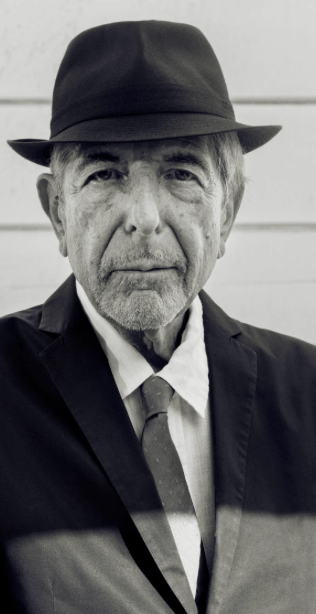
Leonard Cohen’s Hallelujah has become one of the most widely recognized and performed songs in modern music history. It’s played at weddings, funerals, church services, and talent shows. But in all the repetition and repurposing, something essential has been lost.
Cohen never intended Hallelujah to be simply beautiful. He intended it to be raw. Complex. Human.
The song is not a hymn of praise in the traditional sense. Instead, it’s a poem set to music, a confession wrapped in biblical language and erotic undertones. It’s about a man watching a woman undress from a rooftop. He watches not in an act of love, but of longing and helpless craving. He stands in his kitchen, overwhelmed and isolated. The “hallelujah” he utters is not holy—at least not in the religious sense. It is a broken hallelujah. It is born from the ache of wanting and not having. It is the result of touching something divine through deeply human hunger.
Cohen interweaves the sacred and the sensual because, for him, they were never far apart. Verses reference King David, Bathsheba, Samson and Delilah—figures whose passions brought them into both ecstatic heights and tragic ruin. Cohen wanted to explore this contradiction. He wanted to understand how love, lust, faith, betrayal, and surrender all live side by side in the human soul.
“There’s a blaze of light in every word. It doesn’t matter which you heard. It could be the holy or the broken hallelujah.”
The tension in Hallelujah is not just between sacred and profane, but between understanding and mystery. Why do we feel what we feel? Why do we cry out “hallelujah” even when we are lost or ashamed?
Later in life, Cohen was said to feel some regret. He was unhappy over how the song had been turned into a feel-good anthem. It was stripped of its edge and stripped of its truth. Many of the popular covers—Jeff Buckley’s, John Cale’s, even k.d. lang’s—choose only a few of the verses, removing the darker or more explicitly sexual lines. What’s left is haunting, but incomplete.
Cohen reportedly wrote over 80 verses for Hallelujah. The versions we know today are fragments—reflections of reflections. But they carry within them that strange, shimmering truth: that pain and praise can live in the same breath.
In one interview, Cohen said:
“This world is full of conflicts and full of things that can’t be reconciled. But there are moments when we can… and the song ‘Hallelujah’ is about those moments.”
Those moments—the mingling of joy and sorrow, flesh and spirit, light and shadow—are what make Hallelujah more than a song. They make it a mirror.
We don’t all shout our hallelujahs from rooftops. Some of us whisper them from the corners of our kitchens, alone, longing, and unsure. But that doesn’t make them any less true.
André Thomas Halyards, known artistically as Dre Love, was a central and pioneering figure in Italian hip hop. He has passed away in Florence at the age of 55.
Dre Love was born in the Queens borough of New York City. He became a Florentine by adoption in the 1990s. Dre Love was a versatile artist: DJ, rapper, beatmaker, songwriter, and tireless collaborator. He had a gritty voice and unmistakable style. He brought the groove and soul of African American funk into the sounds of Italian hip hop. This helped to write some of its most authentic and vital chapters.
Dre Love arrived in Italy in the early 1990s. He made his home in Florence. This city would shape both his artistic and personal journey. There, he joined Radical Stuff, one of Italy’s very first hip hop groups. He became a living bridge between American street culture and the emerging urban scenes taking shape across the country. He was also a member of the collective Messaggeri della Dopa. He helped to redefine Italian rap with a style that blended social consciousness. His approach also incorporated sophisticated musicality and spirituality.
His Collaboration with Neffa
Dre Love’s name is often linked with Neffa, with whom he collaborated on the Campanian rapper’s first two albums. He worked with a wide array of Italian and international artists. These include Irene Grandi, Alex Britti, Almamegretta, DJ Gruff, DJ Enzo, Gopher D, Reggae National Tickets. His collaborations even touched on the soul-funk sound of Jamiroquai.
Dre Love was never just a guest artist. He was a true collaborator in the deepest sense. He was an artist who opened doors. He created connections between musical worlds that seemed far apart. A messenger who made every beat, every bar, a statement of purpose. His music was a captivating blend of rap, funk, soul, and electronic experimentation. It was deeply rooted in a visceral respect for African American culture. His work always pushed toward innovation.
With his band, Dre Love delivered live performances. The band featured talented Italian musicians like Diego Leporatti (drums), Gianni Pantaleo (keyboards), and Niccolò Malcontenti (bass). It also included Tiziano Carfora (percussion), Andrea Rubino (guitar), Leandro Giordani (saxophone), and Emanuele Campigli (trumpet). Each performance was a true sonic journey through the past, current, and future of Black music.
Unlike the other famous “Dre” in hip hop history, Dr. Dre, Dre Love built his legend in a different way. He did not do it through the spotlight of the music industry. Instead, he made a direct impact with audiences, scenes, and people. He didn’t seek confrontation, but dialogue. Not profit, but connection. Where Dr. Dre of Compton made significant changes in hip hop with The Chronic, he further transformed the music industry with Beats. In contrast, Dre Love revolutionized hearts and stages, leaving an indelible mark on the history of Italian rap.
(By Paolo Martini)
A Tribute from Casino Royale
“Just a little while ago, a ‘great’ one made the big leap. This was a soul who gave so much. He contributed both humanly and in terms of sound and attitude to the Italian scene. Casino Royale was never a hip hop project. Still, we had the privilege of crossing paths with many figures. These figures made history in this country’s hip hop culture. Dre Love was one of those. He will always stay in our Olympus of demigods. We had the honor of meeting such people.
Every time we crossed paths, there were genuine hugs. They were full of mutual respect. We always promised that one day, we’d play that game together. It’s the game that becomes a mission for those who feel the responsibility. They also experience the joy of doing things a certain way.
ROCK ON!!! That was his goodbye. ‘The sky is the limit’—fly light, Dre Love. See you on the other side.”
(From a post published by Casino Royale on Facebook)
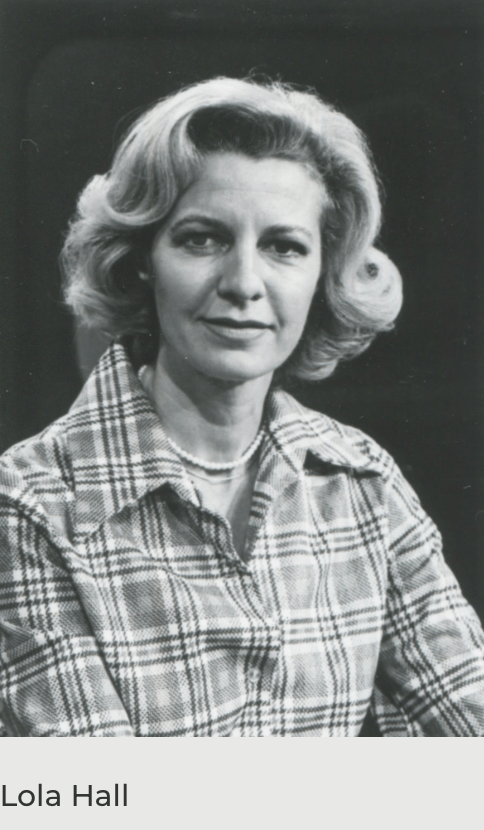
Lola Hall: Oklahoma’s Weather Girl Who Became a Legend
In the heart of America, television was becoming the central storyteller of the modern household. During this time, one woman in Oklahoma City quietly became a beloved figure. She was cherished across living rooms, farms, and small-town diners alike. Her name was Lola Hall, the poised and personable weather girl for KWTV Channel 9. Through the 1960s and 1970s, Lola transitioned from forecasting the weather. She began anchoring the morning news. She carved out a legacy of warmth, professionalism, and unexpected celebrity.
A Humble Start on Channel 9
Lola Hall wasn’t born into the limelight. She was raised in Oklahoma. She considered herself an ordinary woman. “I’m just a plain girl with a good work ethic,” she once said. She never imagined she would become a fixture in households across the state. She also didn’t foresee that her name would one day be immortalized in a hit country song.
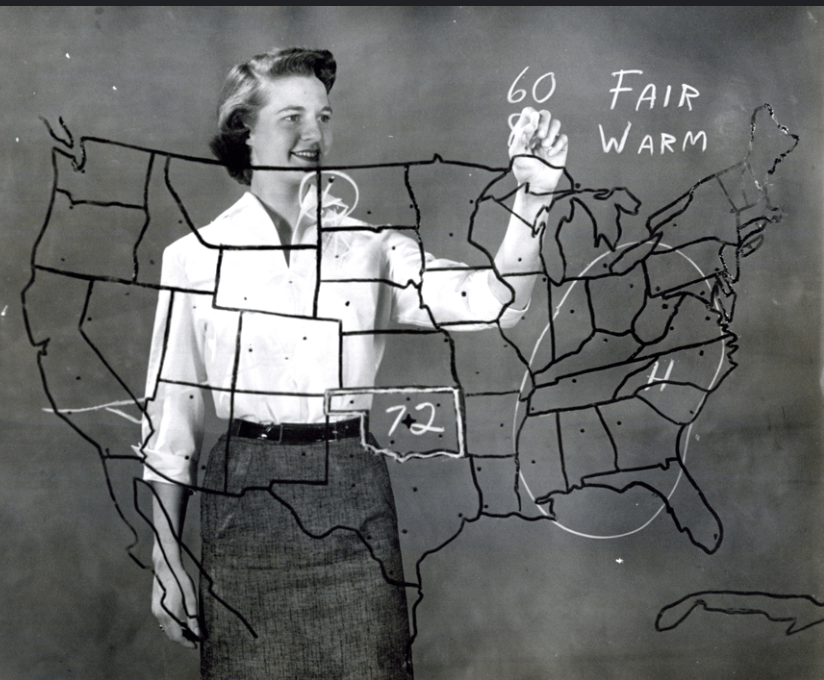
She started at KWTV in the early 1960s. Television was still finding its footing then. Local personalities were becoming stars in their own right. Initially billed as a “weather girl,” a common term at the time, Lola did more. She did more than point at cloud symbols and smile at the camera. She brought a genuine understanding of weather patterns. Her calm demeanor during storms was notable. She had a natural charisma that made viewers trust her.
The Weather Girl also known as the Weather Lady, and Lola Hall
Lola quickly stood out not only for her delivery but for her grounded, approachable nature. She didn’t talk down to viewers or play a character. She was simply Lola — smart, steady, and relatable.
Rising to Anchor the Morning News
As her popularity grew, so did her responsibilities. By the early 1970s, Lola earned a promotion to co-anchor the morning news. This was a significant achievement for a woman in broadcasting. In that early morning slot, she became the face viewers saw as they sipped coffee. People watched her while packing school lunches. They prepared for long days on the farm or at work.
Her calm voice and natural empathy helped set the tone for the day. But it wasn’t a solo act.
Near the end of her career, she welcomed two of Oklahoma’s most trusted newsmen. Bill Haire and Wayne Lyle joined her on the morning show. Both were widely respected for their skill in agricultural reporting — essential content for Oklahoma’s large farming population. The trio became a necessary part of daily life for rural viewers. Farmers tuned in for weather and headlines. They also relied on Bill and Wayne for dependable reports on crop forecasts. Their reports covered market conditions and farming trends.
Lola, Bill, and Wayne worked together to form an Oklahoma morning news trifecta. They delivered information with clarity, sincerity, and a deep respect for their audience. They weren’t just broadcasters; they were neighbors.
A Country Music Cameo
But, Lola’s story wouldn’t be finished without an interesting twist. One of her career’s most surprising moments was an unexpected brush with country music fame.
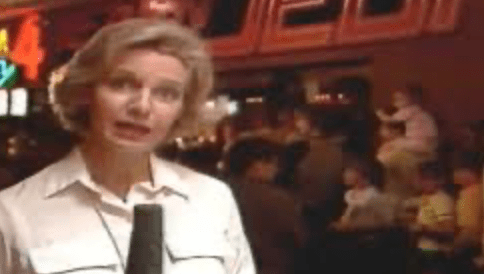
Lola Hall, KWTV Channel 9′s beloved weather girl and morning news anchor, pictured during a 1970s broadcast. Her calm presence and signature charm made her a household name across Oklahoma.
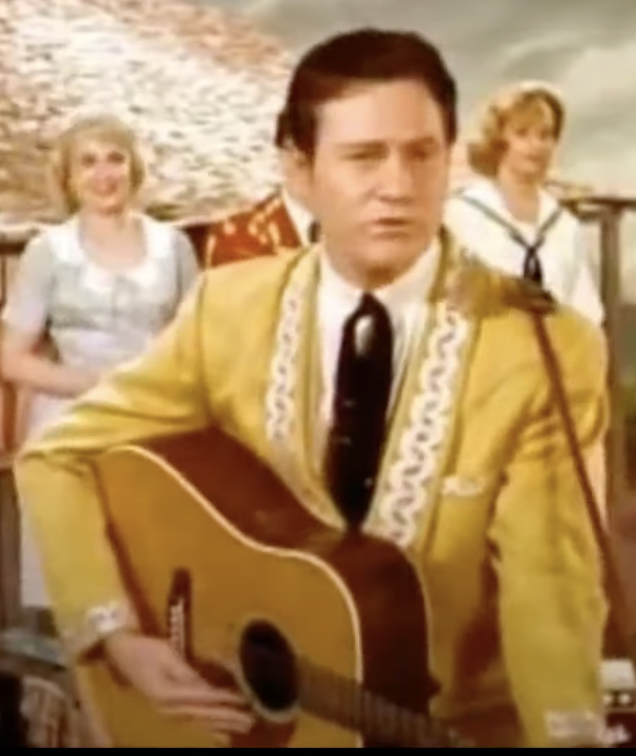
During an interview with country star Mickey Gilley, Lola found herself momentarily flustered. Gilley, known for chart-topping hits and honky-tonk swagger, was in Oklahoma City promoting his music when he confessed on air.
He told Lola that back in his younger days, he grew up in rural east Texas. KWTV Channel 9 was one of the few stations they could pick up. And Lola Hall, with her grace and good looks, was a celebrity to the local boys.
“You were the hottest thing we’d ever seen,”
Gilley smiled, adding that Lola had made such an impression that he mentioned her by name in his song.
“The Girls All Get Prettier at Closing Time.”
For a brief moment, Lola lost her composure — laughing, blushing, and turning to the crew off-camera. It was a rare crack in her usually calm exterior, and viewers loved it. She quickly recovered, continuing the interview with her usual charm, but later admitted she was shocked.
“I thought I was just the girl telling them to grab an umbrella,”
She joked.
A Lasting Legacy
Lola Hall stepped away from the news desk eventually. She left behind a legacy built not on flash or fame. Instead, it was built on trust, relatability, and professionalism. During an era when women in broadcasting often had to work twice as hard, Lola rose through the ranks. Her long-lasting connection with viewers stood as a quiet revolution.
She may never have considered herself glamorous. She may not have thought of herself as remarkable. But, to thousands of Oklahomans—and at least one country legend—she was both.
You know it each time you hear the song and Gilley sings the line,
“I know Robert Redford even Lola Hall!”
Lola Hall wasn’t just the weather girl. She was part of the fabric of Oklahoma life. Her name, her voice, and her smile are still remembered by those who welcomed her into their homes each morning.
To truly dive into the story of Lola Hall and other trailblazing women of the 1950s and ’60s, prepare yourself. They were often known then as “weather girls.” Grab your favorite refreshment and settle in. This captivating podcast offers a rich glimpse into their rise to popularity. Back in the day, we just called it a recording—but whatever the name, you’re in for something special.
In the summer of 1950, a determined young singer named Lefty Frizzell stood outside Jim Beck’s recording studio. He was in Dallas, Texas. He was ready to make his mark. At just 22, he had already weathered a storm of heartbreak, barroom gigs, and run-ins with the law. Lefty had slicked-back hair and a crooked grin. A battered guitar was slung over his shoulder. He aimed for more than just a break. He was pursuing his destiny.
William Orville Frizzell was born in Corsicana, Texas, in 1928. He earned the nickname “Lefty” as a boy. Stories about how he got the nickname vary, from a boxing match to being left-handed. What was undeniable, though, was his voice. Smooth, elastic, and full of feeling, it wrapped around words in a way that captivated everyone who heard it.
That day in Dallas, Lefty recorded a few songs. He included one he had penned during his time in jail, ‘If You’ve Got the Money (I’ve Got the Time).‘ Within a few weeks, Columbia Records released it, and just like that, Lefty was catapulted into stardom.
By the end of 1950, he had four songs in the country Top Ten—a feat unheard of at the time. His singing style was marked by stretched syllables and graceful phrasing. It would later profoundly influence legends like Merle Haggard, George Jones, and Willie Nelson. We are forever appreciative for this influence.
Yet fame came with a cost. Lefty struggled with alcohol and the pressures of the spotlight. Though his career saw ups and downs, his voice never lost its magic. Even before he died in 1975 at the age of 47, he would sing for country artists. They would still gather around to hear him. They wanted to remember the man who changed the sound of country music forever.
Merle Haggard once said,
“I can’t think of anyone who has influenced me more.”
Lefty Frizzell didn’t just sing songs—he bent time with his voice and taught a generation how to feel every word.
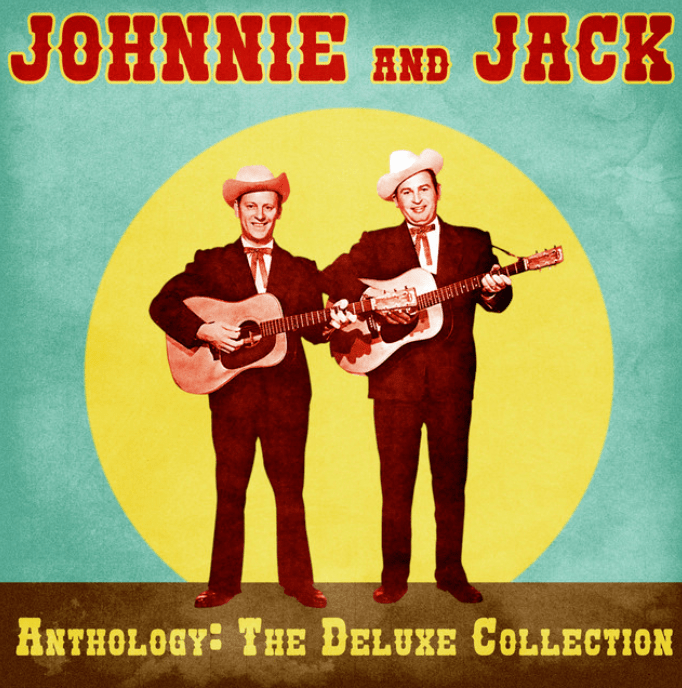
They say Friday the 13th brings bad luck. But, for Jack Anglin and Johnnie Wright, it brought something entirely different. It brought love, brotherhood, and the country music that carves its way into the soul.
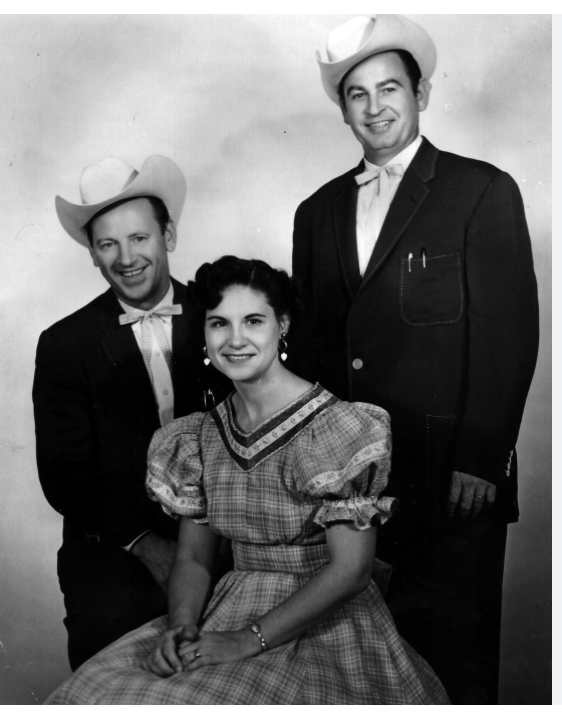
Jack and Johnnie were destined to sing. Their childhoods were steeped in gospel, church choirs, and the rhythm of the land. They met as they met most things in life—through music. And they married as they did everything else—on a Friday the 13th. Jack wed Louise, and Johnnie took her sister, Muriel, as his bride. This made them brothers-in-law, but their voices had already made them brothers in spirit, their bond unbreakable.
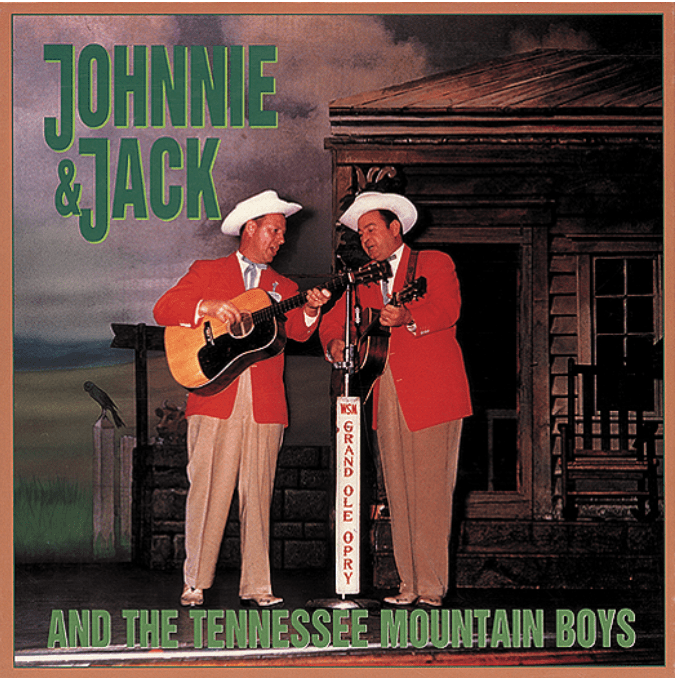
They began touring as Johnnie & Jack, their harmonies tight as barbed wire and twice as sharp. They sang of sorrow and salvation, of trains leaving and lovers staying. And behind them, always, stood the sisters.
Johnnie’s wife, Muriel, had a soft voice. It could’ve gone unnoticed if not for a quiet evening at home. She hummed along to a song Johnnie was working on. He stopped strumming, looked at her, and knew.
“You need a stage name,”
He said.
“Something people will remember.”
He thought a moment, then grinned.
“Kitty Wells.”
She laughed at the name, but it stuck. Kitty Wells soon became the Queen of Country Music. Her voice turned the tide with It Wasn’t God Who Made Honky Tonk Angels. The song gave women in the country their place in the spotlight.
In a later interview, Johnny recalled that the name “Kitty Wells” came from an old spiritual recording. He used to play it during his early days working at a radio station. The name stuck with him. When it came time to give Muriel a stage name, it felt like the perfect fit. It was familiar, timeless, and filled with meaning.
Life moved fast. Fame came. Tours blurred together. But Jack and Johnnie were always together—on stage, on the road, in life.
Then came March 1963.
Patsy Cline, Cowboy Copas, and Hawkshaw Hawkins—all killed in a plane crash returning after a charity concert. The country music world was shattered. A memorial service was planned, and Jack insisted on going.
“Gotta pay respects,”
He said.
“We’ve all come up together.”
But he never made it.
On the fateful morning of March 8, 1963, Jack Anglin was en route to the service. Tragically, he lost control of his car and crashed. His life was taken in an instant. The news reached the church before Johnnie’s arrival. They say the moment he heard, Johnnie was overcome with grief, falling to his knees. The man who had been his constant companion on every stage, in every storm, was no more.
It was a heartbreak no harmony can fix.
Johnnie went on as best he could. Kitty sang. The spotlight stayed, but something had shifted. There was a silence beside him now where Jack’s voice used to be.
Still, the music lived on.
Two men, two sisters, two voices joined by fate, and a wedding date no one forgets. Friday the 13th had given them everything—and, somehow, had taken it all back.
Yet, their songs endure, a testament to their enduring legacy. In every old record and radio play, their voices still resonate. Jack and Johnnie were brothers in music and marriage. Their harmonies echo through the years. It is a timeless tribute to their bond and art.
In Memory of Wayne Jackson, Handy ––– The Unlikely Rock and Roller
Wayne Handy
Wayne Jackson Handy was a man whose velvet voice once crooned over the airwaves of American Bandstand. His voice later soothed those navigating the mortgage banking world. He passed away peacefully on April 1, 2025, at 89. Wayne started from humble beginnings on a farm in Eden, North Carolina. He then moved on to the dazzling lights of 1950s television. Later, he found the quiet steadiness of a career in finance. Wayne lived an entire and remarkable life. It was defined not by fame or fortune but by kindness, creativity, and unwavering devotion to his family.
Wayne’s love and commitment to his family were unwavering. The youngest of five children, Wayne was born in Eden and raised helping his parents in the fields. He graduated from Reidsville High School in 1953. Two years later, he married the love of his life, Marjorie Louise Smith of Cassville. He charmed her at a local baseball game. This was a story he told with a twinkle in his eye. His smile hinted at the hopeless romantic within. Their marriage endured over six decades. It was a bond marked by deep affection and laughter. Their steadfast partnership lasted until Marjorie’s passing in 2018.
Wayne’s musical talent was a source of inspiration for many. His velvet-smooth voice and playful way with melody, often accompanied by his ukulele, were a joy to behold. In 1957, his passion for music led him to a national stage. He performed on American Bandstand. He shared the screen with some of rock and roll’s earliest stars there. His brush with fame was brief. Yet, it left a glimmer of rockabilly stardust. This touch of stardust was on a life otherwise grounded in humility and grace.
After enlisting in the U.S. Army in 1958, Wayne served two years in Alaska as a field radio operator. Upon returning home, he pursued higher education. He studied business at North Carolina State University and the University of North Carolina at Chapel Hill. He graduated in 1962. His career in mortgage banking took him and his family across the Southeast. They even moved to Utah. His career eventually culminated in his time with Carolina Bank in Greensboro. He worked there until his retirement in the mid-2000s.
In every chapter of his life, Wayne’s character remained consistent: humble, gracious, patient, meticulous, and quietly dignified. He gave generously of himself, donating blood regularly and ringing the Salvation Army bell during the holidays. He was profoundly artistic and playfully inventive. His children celebrated him for his affectionate nicknames. Adults also appreciated his funny songs, silly voices, and irrepressible sense of the absurd.
Despite his many accomplishments, Wayne’s humility was a defining trait. He was never one to boast. He preferred to show love through small, steady acts. This included a freshly repaired item. It was a perfectly stacked rock wall, a gentle word, or a slow walk in the evening light. He was a natural storyteller. He was a dapper dresser. His gentle Southern accent and kind eyes conveyed a rare and genuine warmth.
He is remembered with love and admiration. His children include Christopher Handy, Jeff Handy, and Meredith Brunel (Richard). His grandchildren include Louise, Henri, Carlene, Charlotte, Erendira, and Matthew. He is also remembered by his great-grandchildren. Wayne was predeceased by his beloved wife, Marjorie, with whom he now reunites in eternal peace.
A graveside gathering and inurnment of ashes will occur at Bethesda Presbyterian Church in Ruffin. The date is yet to be announced.
Wayne Handy lived with a quiet brilliance. He was a rock and roller by surprise, a banker by choice, and a gentleman by nature. His life reminds us that grace, humor, love, and a good melody can carry us further than fame ever could.
Rest well, Wayne. You sang your song, walked your path, and left the world a gentler place.
The First Time I Ever Saw Your Face, It Was Killing Me Softly
I was between six and eight years old. That was the first time I heard The First Time I Saw Your Face. I also heard Killing Me Softly with His Song for the first time then. My oldest sister, Julie, adored those songs. She was taking piano lessons at that time. She often attempted to play them. Her fingers hesitantly found their way across the keys.
I still remember the old upright piano my parents got for her from a family friend. It was massive and heavy as a full-grown ox. My brothers struggled to carry it to the front wall of our living room. That’s where it stayed for years. Some of the keys stuck, while others refused to make a sound. But a piano tuner visited us. Afterward, the old instrument came to life. It was ready to echo through the house with Julie’s music.
Those long summer days when school was out were filled with Roberta Flack’s voice drifting through our home. Julie played her albums endlessly, the lyrics weaving into my young mind. I remember watching Play Misty for Me. It was my first real brush with suspense. I was more worried about Roberta Flack than I was about Clint Eastwood’s character. My parents had to reassure me that it was just a movie and that no one was in danger.
The First Time I Saw Your Face became inseparable from that film in my memory. In the same way, Killing Me Softly with His Song later found its way into About a Boy. I saw that one at the old Caddo Theater on Main Street in Binger, Oklahoma. My parents never let Julie go to the movies alone, so I was always sent as her reluctant chaperon. At the time, I was too small to protect her from anything. Still, I suppose my presence was enough to keep her out of trouble. At least that’s what my parents hoped.
All these years later, those songs still surface in my mind, uninvited but always welcome. They sneak in when I try to fall asleep while studying and when I need to concentrate. They echo my childhood memories. They replay in the corners of my mind. They are tethered to the days when Julie sat at that old upright piano. She tried to master the melodies.
And for that, I owe it all to Roberta Flack. Shall she rest in peace.
Harry had worn many hats in his life. One of his most memorable roles was as a news director. He also served as an operations manager at a radio station in the lower Great Plains. His job included ensuring that touring musicians arrived at their venues without issue. He also ensured that their shows went off without a hitch.
Artists like Dan Seals, Davis Daniel, and Vern Gosdin have passed through the area over the years. They brought country music to fans eager to taste Nashville. But one night in particular stood out—the night Vern Gosdin played for twenty.
Gosdin, known as “The Voice,” was a country music legend. His pedigree included stints with the Golden State Boys, The Byrds, and collaborations with George Jones. He had a rich, smooth baritone. It gave life to timeless hits like Set’ Em Up Joe. He also brought If You’re Gonna Do Me Wrong, Do It Right to life. Another classic was Chiseled in Stone. Fans were eager to see him live. He was scheduled to sing at a local college auditorium and field house. This event was set for one Saturday night in January.
On Friday, Harry arrived at the venue to oversee the setup. Everything was in place—sound, lighting, seating—and aligned with the band’s requirements. The only concern was the weather. Forecasts hinted at snow, but the storm was expected to stay north of the region. Gosdin’s tour bus had pulled in behind the venue by noon on Saturday. The final checks were made, and everything looked good to go.
Then, the storm took a turn.
By late afternoon, the sky darkened, and the wind began howling. Within hours, blizzard-like conditions descended on the area, dumping nearly a foot of snow. Whiteout conditions made travel treacherous. The state highway department issued warnings urging motorists to stay off the roads unless it was an emergency.
By showtime, only twenty dedicated souls had managed to reach the venue. The sold-out crowd was nowhere to be seen, trapped by the snow. Their decision to be there showed strong dedication. They braved treacherous conditions as a testament to their love for Vern Gosdin and his music.
Despite the dismal turnout, Vern Gosdin and his band took the stage as if playing to a packed house. Gosdin stepped to the microphone, wore a warm smile, and said, –––
“We made it. For those of you here, we will play!”
The Voice filled the nearly empty hall with his opening number. He sang “I’m Gonna Be Moving,” a gospel tune. It resonated with many of his fans. He followed with “I Can Tell By the Way You Dance.” The concert became extraordinary from that moment on.
The crew saw rows of empty seats. They decided to clear a space near the stage, which was turned into a dance floor. The twenty die-hard fans swayed, twirled, and laughed as Gosdin played every song from his setlist. It was no longer just a concert but an intimate, once-in-a-lifetime experience, a privilege they can claim. Between songs, Gosdin and the band chatted with the audience, taking requests and sharing stories.
The small but mighty crowd erupted into cheers when he played his final song and left the stage. Their enthusiasm filled the hall, and they refused to let the night end.
A minute later, Gosdin and his band returned.
He picked up his guitar for his encore and grinned at his audience. He broke into I’m Moving On. Then, he followed with That Just About Does It. The twenty lucky souls in attendance soaked up every note, knowing they were part of something special.
Outside, more than fifteen inches of snow had blanketed the town. The roads were treacherous, but Gosdin’s bus driver was determined to push ahead. He asked Harry to lead them to the highway, where they would inch their way north. Harry agreed, and with the radio station’s car guiding the way, the tour bus crept through the snow-covered streets.
After twenty miles, the highway finally began to clear. As the bus picked up speed, the driver gave a long honk. It was a final thanks to Harry for helping them through the storm. It was also for an unforgettable night on the Great Plains.
The twenty who braved the blizzard that night in Goodwell, Oklahoma, gained more than a concert experience. They had seen a legend up close. It was a personal meeting in a performance that would be talked about for years to come. The memories of that night, the laughter, and the music will stay with them forever. The sense of community was also unforgettable. This is a testament to the enduring power of live music.
For many, the good times meant youth spent without barriers. Kids rode bicycles freely around town or through the countryside. They explored wherever curiosity led. They just had to be home before dark or by 10 p.m. It was when running to a friend’s house, unannounced was safe. It felt just as natural for them to show up at yours. We all cherish that time of freedom and spontaneity.
Your version of the good times began when you got first place as a young adult. You also got hooked up to cable television. Gone were the days of only three channels. Now, there were forty or more. Channels like MTV, HBO, and SHOWTIME offered endless entertainment. Some kept their televisions locked on MTV 24/7, not wanting to miss the latest music video premiere. The phrase “I want my MTV” wasn’t just a slogan; it was a way of life.
Icons like Downtown Julie Brown, Max Headroom, Randy of the Redwoods, and JJ Jackson became daily companions. They guided audiences through interviews and music video countdowns. These shows entertained us and shaped our memories, creating connection and nostalgia.
Yet, while MTV rocked for many, others fondly recall Saturday mornings. They spent time with classic cartoon characters. They watched Bugs Bunny, Elmer Fudd, Daffy Duck, and Yosemite Sam. Or they enjoyed Speedy Gonzales, the Flintstones, or the Jetsons. These beloved characters live on today, often appearing in rebranded forms and often in commercials that spark nostalgia.
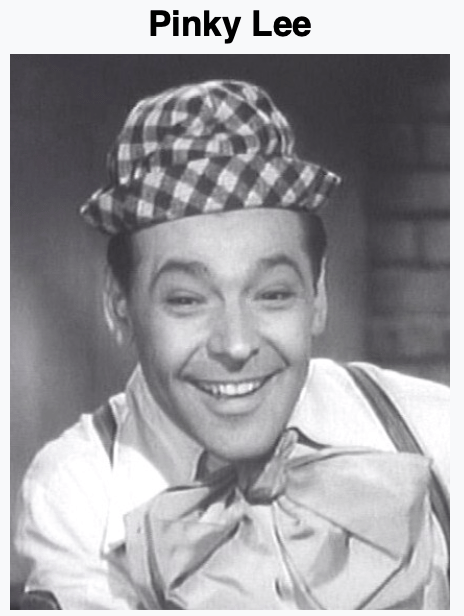
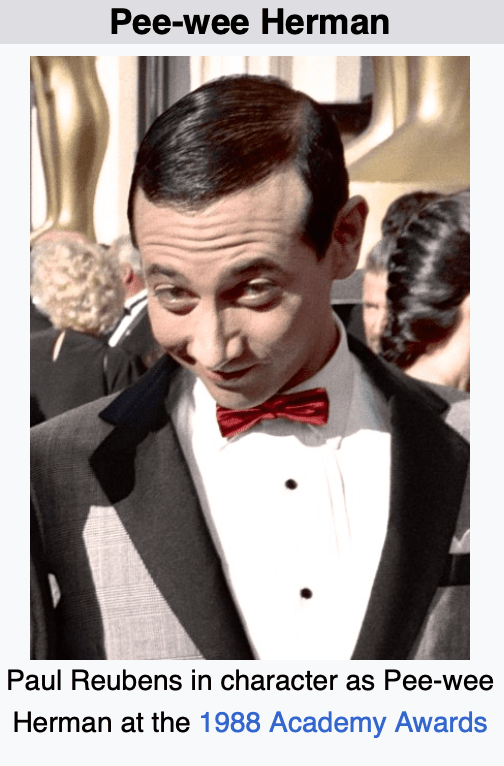
For earlier and later generations, laughter came from entertainers like Pinky Lee or Pee-wee Herman. In the 1950s, Pinky Lee brought his lively antics to television. He appeared first in a primetime variety show. Later, he starred in a children’s program sponsored by Tootsie Roll. His Emmy-nominated show paved the way for future quirky entertainers. Pee-wee Herman was one of them. His distinctive gray Glen plaid suit, red bow tie, and eccentric persona owed much to Lee’s energetic style.
Beyond television, the good times existed in life’s simple pleasures. One was the crackle of a baseball game on the radio during a warm summer evening. Another was the scent of fresh popcorn at a drive-in theater. The excitement of getting that first car was thrilling. Sheer will and a little duct tape held it together.
For some, the best times were spent playing Pac-Man and Donkey Kong in arcade halls. They also glided across the roller rink beneath spinning disco lights. Others made mixtapes from the radio. They hoped the DJ wouldn’t talk over the intro of a favorite song. Others remember cruising on a Saturday night, windows down, music blasting, with no destination—just the pure joy of freedom. The good times were about more than the entertainment we consumed. They were about the people we shared them with. Families gathered around holiday meals. Friends packed into a car for a spur-of-the-moment road trip. Conversations under a star-filled sky became treasured late-night memories.
Each generation has its version of the good times. These moments shape us and leave lasting impressions. They bring smiles long after they’ve passed. No matter what era you look back on, one thing is sure. The good times do not last forever. But they always roll on in our hearts. They create a sense of continuity and belonging.
Long after leaving the White House, Jimmy Carter found solace in the quiet rhythms of nature. On a sunny morning in Plains, Georgia, Jimmy stood at the edge of a grove. He had planted these trees decades ago. These trees—mahogany, maple, and spruce—weren’t native to the region. Carter had brought their seeds home from his travels. He envisioned them growing tall and strong in the fertile Georgian soil.
Jimmy called what others saw as an unusual hobby his “living legacy.” Each tree had a purpose, and he dreamed of turning their wood into something meaningful. One day, while strumming his old guitar on the porch, the idea struck him:
What if I made a guitar from the trees I grew with my own hands?
The Craft
Years passed before the time was right. Jimmy carefully chose a mahogany tree for the body. He selected a maple tree for the neck. He also picked spruce for the soundboard. He contacted a local luthier, Sam Wainwright, who had a reputation for crafting instruments with heart and precision.
Sam, skeptical at first, raised an eyebrow when Jimmy proposed the project.
“You’re telling me you’ve been growing trees for years just for this?”
Jimmy chuckled.
“A good guitar starts with good wood. I figured, why not grow my own?”
Sam couldn’t argue with the sentiment. They spent hours examining the wood, carefully cutting it, and shaping it to perfection. Jimmy insisted on being part of every step, from sanding the pieces to carving the intricate rosette around the soundhole.
As they worked, Jimmy shared stories—about his childhood in the rural South, his presidency, and his humanitarian efforts. Sam listened intently, realizing the guitar wasn’t just an instrument but a symbol of patience, purpose, and creativity.
The First Song
Months later, the guitar was finished. Its finish glowed like amber honey. Its tone was warm and resonant. It carried the richness of the wood’s decades-long journey. Jimmy held it in his hands. He marveled at how the trees he had nurtured now sang harmoniously. They created a sound that was not just music. It was a testament to the beauty of nature.
During a warm summer evening, friends and family gathered. Jimmy sat on his porch with the guitar resting comfortably in his lap. He strummed the first chords, their notes floating into the peach-scented air.
The song he played was one he had written himself. It was a simple tune about the roots—both in the ground and in life. It spoke of time, care, and the beauty of watching something grow. The crowd swayed to the music. Their faces lit with admiration for the man who had turned trees into tunes. They felt a sense of nostalgia for the simple, yet profound, message of the song.
A Lasting Legacy
In the years that followed, the guitar became more than an instrument. Jimmy used it to teach music to children, play for visitors, and raise funds for Habitat for Humanity. Each time its strings vibrated, it told a story of persistence and hope.
When asked why he had gone to such lengths to make the guitar, Jimmy would smile and say,
“It reminds us that good things take time. The simplest gifts, like a tree or a song, can bring the most joy.”
The guitar from Jimmy Carter’s Grove wasn’t just a piece of wood strung together. It was a testament to a life rooted in purpose and patience. It symbolized the belief that even the smallest seeds can create something extraordinary.
An original report exists in Guitar World, which you can find here!
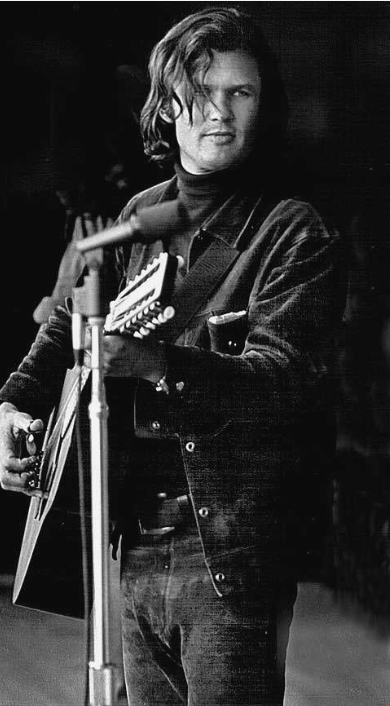
A Tribute to Kris Kristofferson by Marion Toehay Jr., Friend and Former Chief of Police
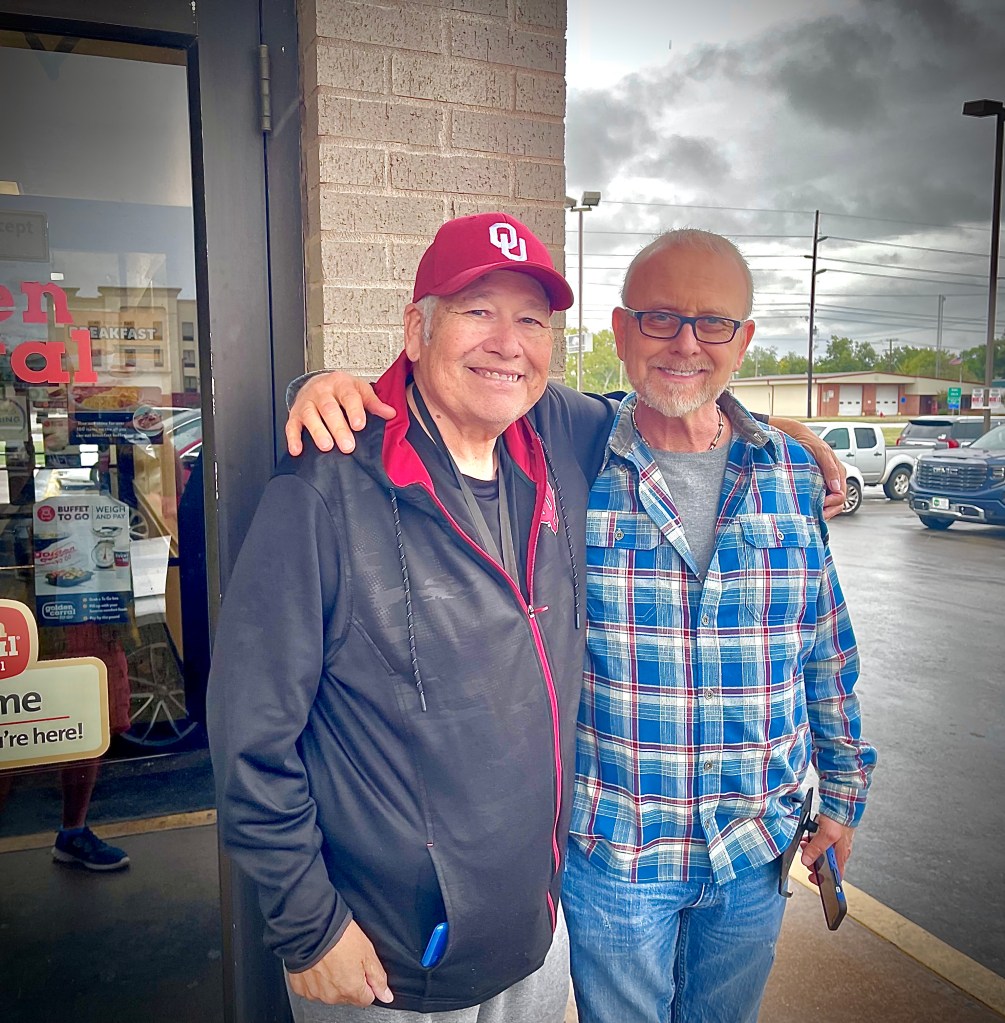
Marion Toehay JR. (Left) Benjamin Groff (Right)
Marion Toehay Jr., a close friend of Benjamin Groff II, who typically authors this page, shares his heartfelt memories today as the world mourns the passing of Kris Kristofferson. The legendary singer-songwriter passed away on Saturday at age 88 in Hawaii. Marion met Kris in the summer of 1968, during the early days of Kristofferson’s career, at the Silver Dollar Saloon in Phoenix, Arizona.
In 1980, Marion became Benjamin’s first Chief of Police in Oklahoma, and today, he reflects on the unforgettable encounter he had with Kris all those years ago:
Kris Kristofferson was one of a kind. I had the chance to meet him when I was just 13 years old, working with my stepdad during the summer of 1968. We were selling produce to bars around Phoenix, Tucson, and the mining towns in the White Mountains. On our last stop in Phoenix, at a place called the Silver Dollar Saloon in what was known as Cowtown, we went inside—and there he was.
I remember seeing Kris Kristofferson stand up from a table and walk right over to us. He greeted my stepdad like an old friend, saying, “Y’all come sit down and have a beer.” At the table with him were none other than Johnny Cash and Waylon Jennings.
My stepdad had always told me he knew Kristofferson, Cash, and Jennings, but up until then, I hadn’t met them myself. Every time we passed through, they just weren’t there. I was starting to think I’d never get the chance to meet them. But that evening, out of nowhere, they were larger than life. It was like a dream come true for me—a 14-year-old kid with a love for country life.
We spent the evening laughing, sharing stories, and, yes, drinking some beer. When we finally headed home, my mom awaited us, wondering why it had taken so long. I told her about meeting Kris, Johnny, and Waylon, and she just smiled and said, “Oh, okay,” as if it was no big deal. She’d met them before, too, thanks to my stepdad. But for me, it was the highlight of the summer—and a memory I’ll never forget.
Hearing about Kris Kristofferson’s passing is sad for everyone who admires him. My family and I send our deepest condolences and hope he rests in peace.
David Davis, leader of the Warrior River Boys since 1984. David tragically lost his life due to injuries sustained in an automobile accident yesterday near Snead, AL, close to his home in Cullman. He was 63 years old.
David’s musical journey was a lifelong testament to his unwavering devotion to bluegrass, a genre that shaped his life from a young age. Born into a family steeped in musical tradition, David became influenced by his father, Leddell, a mandolin player and singer, and his uncle, Cleo, an early member of Bill Monroe’s iconic Blue Grass Boys. His maternal grandfather, J.H. Bailey, an old-time fiddler and banjo player, also played a significant role in his upbringing, filling their home with the rich sounds of traditional music.
David’s love for bluegrass deepened as a child, learning harmony in church and attending a life-changing performance by Bill Monroe at the age of 12. Which set him on a path of musical dedication, mastering the mandolin in Monroe’s style. In his early twenties, David began working with guitarist Gary Thurmond’s Warrior River Boys, eventually taking over the band in 1984 when Gary could no longer tour due to health issues.
Under David’s leadership, the Warrior River Boys toured extensively across the U.S. and signed with Rounder Records in 1989. Over the years, they recorded for Wango and Rebel Records, and in 2018, David returned to Rounder for a tribute album to Charlie Poole, Didn’t He Ramble. His contributions to bluegrass left an indelible mark on the genre, and his music, a source of inspiration for many, will continue to shape and influence future generations.
Our thoughts and prayers are with David’s wife, Cindy, who was also injured in the accident and is currently receiving treatment at a local hospital. We wish her a speedy recovery.
The loss of David Davis is a profound blow to the bluegrass community in Alabama and beyond. His absence, felt deeply, leaves a void that cannot be filled. His presence, leadership, and friendship touched countless lives, and family, friends, and fans will remember Davis not only as a brilliant musician and bandleader but also as a kind and generous spirit. In addition to his musical achievements, David also served his community by driving a school bus for Brewer High School, further exemplifying his commitment to those around him.
The passing of David Davis leaves a void in the hearts of all who knew him. His legacy, however, will continue to resonate through the music he loved and the many lives he touched. He will be deeply missed by the bluegrass community and beyond.
One has undoubtedly heard the story about the great voodoo queen Marie Laveau from down in Louisiana. Bobby Bare sang about her in his hit song from 1973. The Lyrics were –––
The most famous of the voodoo queens that ever existed
Is Marie Laveau, down in Louisiana
There’s a lot of weird ungodly tales about Marie
She’s supposed to have a lot of magic potions, spells and curses
Down in Louisiana, where the black trees grow
Lives a voodoo lady named Marie Laveau
She got a black cat’s tooth and a Mojo bone
And anyone who wouldn’t leave her alone
She’d go-, another man done gone
She lives in a swamp in a hollow log
With a one-eyed snake and a three-legged dog
She’s got a bent, bony body and stringy hair
And if she ever seen why y’all messing ’round there
She’d go-, another man done gone
And then one night when the moon was black
Into the swamp come handsome Jack
A no good man like you all know
He was looking around for Marie Laveau
He said, “Marie Laveau, you handsome witch
Give me a little a little charm that’ll make me rich
Give me a million dollars and I tell you what I’ll do
This very night, I’m gonna marry you”
Then it’ll be, hmm, another man done gone
So Marie done some magic, and she shook a little sand
Made a million dollars and she put it in his hand
Then she giggled and she wiggled, and she said, “Hey, Hey
I’m getting ready for my wedding day”
But old handsome Jack, he said, “Goodbye Marie
You’re too damned ugly for a rich man like me”
Then Marie started mumbling, her fangs started gnashing
Her body started trembling and her eyes started flashing
And she went-, another man done gone
Oh, if you ever get down where the black trees grow
And meet a voodoo lady named Marie Laveau
If she ever asks you to make her your wife. Man, you better stay with her for the rest of your life
Alternatively, it will be another man done and gone.
Hell! Bobby Bare is taking off on his 1973 Hit Marie Laveau, courtesy of a YouTube posting. Following this sing-a-long, learn the factual story about the real Marie Laveau. As close as what people have been able to trace.
THE STORY ABOUT THE SONG ORIGINS – Supposedly…
On September 10, 2024, her 240th birthday is recognized, and while this will get published the day after it is getting done, so with the notion that it will get a presented avoiding any voo doo spells that could be associated with the partaking of celebrating a late witches birthday. There is more to the story than the song. The lyrics had a backstory that contained information about a man who was about to go on trial in New Orleans for murder. He was a wealthy business owner and had the means to buy the best attorney. However, the case appeared airtight, and his life looked to be going to the gallow. He visited a witch named Marie Laveau, who was known to cast spells on people and could control them. He told her he would give her his earnings for a year and even agreed to marry her if she could sway the jury to find him innocent. She collected items like a black cat’s tooth, a Mojo bone, and other questionable items from around the woods, placed them into a tobacco pouch, buried them beneath a tree for three nights, and then dug them up and gave them to the man. She told them not to go to court without them, and he would be found innocent. Sure enough, when the trial was over, despite the eyewitness’s murder weapon and even the man’s confession, the jury returned an innocent verdict. The man refused to pay Marie Laveau and refused to marry her and laughed at her when she told him he would die by the end of the week if he did not change his mind. It was Monday. On Friday, the man had not returned to pay Marie and was in a local tavern, bragging about his innocent verdict and how he got away with not paying the old lady. As he left his table to go to the bar for a drink, a chandelier fell from the ceiling and hit him, killing him instantly. Whether or not that story is true is still being determined. However, history has recorded Marie Laveau in other areas, has a lengthy record, and she appears to have had a healthy marital life. Bobby Bare has told a similar story during interviews. There have been similar accounts from people in New Orleans. However, fact-finders looked for records, and this is what they found for Ms. Laveau.
Marie Laveau
An Articleby Frank Schneider
The enigmatic Marie Laveau (September 10, 1794 – June 15, 1881), the most famous voodoo queen in the South, has a background that still seems to be vastly under-researched. Her story of resilience begins with her grandmother, Catherine Henry, who, after a long procession of different owners, was finally emancipated by her last one, a free woman of color. Catherine’s original master was the white Creole Henry Roche Belaire, whom Catherine later took his name as her surname. Catherine’s daughter and Marie’s mother, Marguerite, remained with Roche until his death and was sold to another owner who then gave her freedom. After gaining independence, Marguerite became the placéeof the Frenchman Henri D’Arcantel. The exact date that marks Marguerite’s relationship with Charles Laveaux is unknown, but the result of this couple was the birth of a daughter, Marie. On September 10, 1801, Marie was born as a ‘free mulatto.’ Her father, Charles Laveaux, is sometimes referred to as a wealthy white planter, but leaders had discovered he was a free person of color (gen de couleur libre) whose mother’s name was also Marie Laveaux. Nothing is certain of Marie’s childhood, but she may have lived in the St. Ann Street cottage with her maternal grandmother, Catherine Henry.
Marie was a striking figure dressed like a gypsy with a bandana on her head, flashy rings on her fingers and ear, and gold bracelets on her wrists. Her dress was always dark, long, and complete, hanging gracefully from her shoulders. Her eyes, which were large and hazel, sparked like emeralds against her dark skin. This unique appearance, along with her charming personality, contributed to her mystique and influence in New Orleans.
Archival records show that Marie Laveau entered into a marriage contract with Jacques Paris on July 27, 1819. They were married on August 4, 1819. It is widely believed and affirmed that no children came to the marriage. However, some discoveries suggest that two daughters were born of this union; these claims lack concrete verification. The fate of Jacques Paris remains unknown, and his death was never documented. Whatever truly happened to her husband, Marie was still officially known as the “widow Paris.” The marriage mass was performed by Father Antonio De Sadella, the Capuchin priest known as Pere Antonio. After becoming a widow, Laveau became a hairdresser who catered to wealthy white families.
After Jacques Paris, Marie began a relationship with Louis Christophe Dominic Duminy de Glapion that lasted until he died in 1885. All credible records indicate that he was born in Louisiana as the legitimate son of white parents and the descendant of an aristocratic French family. Christophe Glapion was a veteran of the Battle of New Orleans, which occurred below the city at Chalmette on January 8, 1815. It is unclear when or how these two met. Christophe Glapion died on June 26, 1855, and the cause of his death is unknown. Marie Laveau and Christophe Glapion were a together for nearly thirty years. Marie lived for another twenty-six years and is not known to have taken another partner. It is widely thought that fifteen children came from this union, but there is only records to confirm that there were seven. Marie and Christophe’s first child, Marie Heloise, was born on February 2, 1827. She is the daughter who became known as Marie II. At a young age, Marie II entered a relationship with Pierre Crokere, a free man of color. Pierre was a commission broker, builder, and architect. Pierre was twenty-four years older than Marie and died in 1857 at fifty-six.
Voodoo thrived in Haiti and Louisiana, and over the years, it absorbed influences from French and Spanish Catholicism, American Indian spiritual practices, and even Masonic tradition. Voodoo is not just a religion. It is about finding ways to survive conflict and has yet to be verified. Voodoo involved singing, dancing, chanting, and drumming. Voodoo comes from enslaved people who brought it to the Americas from West Africa. Marie began her Voodoo (sometimes spelled Voudou) career sometime in the 1820s, and she is sometimes said to be a descendant of a long line of Voodoo priestesses, all named Marie Laveau. Marie is said to have given private consultations and made and sold gris-gris. Later in life, Marie turned away from her Voodoo practices to dedicate her life to the Church and charitable works, a decision that commands respect. However, it is affirmed by the scholarly community that Marie Laveau was a devout Catholic her entire life.
Marie continued her charitable work during her final years and surrounded herself with her family. One was her youngest daughter, Marie Philomene Glapion, and her children. Philomene entered a relationship with a white man, Emile Alexandre Legendre, who was thirty-two years older than her and married. Philomene and Emile had seven children together, all classified as “colored,” they remained a couple until he died in 1872. Marie died at home in her sleep on June 15, 1881, in her cottage on St. Ann Street, where she had spent more than half a century. Marie’s daughter Philomene made funeral arrangements for the following evening. Her funeral performance provided guidelines to the dignified structure of the Catholic Church without sign of any voodooist demonstration.