Small Acts of Kindness: A Legacy of Compassion

By Benjamin GroffMedia© | benandsteve.com | 2025 Truth Endures©

3–4 minutes

Francis
Pope Francis

Today, the world said goodbye to Pope Francis. I was reminded of the man who called for compassion among the masses. He urged us to find understanding and acceptance in whatever ways we can. He believed that small steps lead to greater paths. Simple, quiet acts of goodness build a better world.

Altruism was instilled in me from an early age. Through my personal experiences, I’ve come to understand its true meaning. I instinctively understood the Pope’s message and often wished more people worldwide would embrace it as profoundly as I had.

For me, kindness has always been second nature, a lesson I learned from my father. I knew from childhood that even the smallest gestures mattered. It is holding a door open for someone. It is offering a word of acknowledgment or helping a stranger in need. My father, a man of few words but profound actions, taught me this.

Each Sunday morning, the sun rose. He and I would then load our truck with fresh produce from our farm. This was done before the first car appeared on Main Street. We would quietly deliver baskets of food to low-income families across town. It was a ritual performed with no expectation of thanks, no wish for recognition. My father made it clear: this was our shared mission, something sacred, something we did simply because it was right. The smiles on the faces of those families showed the impact of our small acts of kindness. The relief in their eyes was a testament to the difference we made.

Altruism can take on many faces—kindness, decency, a willingness to see others’ needs. Years ago, we visited Las Vegas with my better half and two fellow law enforcement officers. We stopped for a quick meal at a small pizza shop. I noticed an older man lying beneath a tree across the parking lot as we ate. He looked frail and vulnerable—homeless, clearly unwell.

Throughout the meal, I couldn’t shake the image of him. When we finished, I gathered our untouched slices into a to-go box. I told the others I would offer it to him. It didn’t feel right to leave that food behind, not when someone nearby desperately needs it.

As I approached, I saw fear and uncertainty in his eyes. But when I gently asked how he was doing and whether he had eaten, his expression softened. I handed him the pizza and a bottle of water. His hands trembled as he accepted them, tears welling in his eyes.

We spoke briefly. He told me it had been days since he last ate. He had been surviving on whatever water he found. He hadn’t asked for anything—but his gratitude was overwhelming.

Then, quietly, we went our separate ways.
That moment has stayed with me, just as those early Sunday mornings with my father have stayed with me. Compassion doesn’t have to be loud. Kindness doesn’t always wait to be invited. Sometimes, it’s simply about noticing—and acting.

I never saw that man again. I like to believe that the small act of kindness I showed him helped him feel seen and valued. It made him feel stronger for the journey ahead. It’s a testament to the power of small acts of kindness. It gives me hope for a more compassionate world.

As Pope Francis often reminded us, the world doesn’t change through grand gestures alone. It changes one small act of love at a time. And so, in his memory, I urge you, the reader. Please continue noticing. Keep caring and acting—quietly, humbly, and with open hearts. Each of us has the power to make a difference.

The Heartfelt Impact of Loss in Law Enforcement

By Benjamin GroffMedia© | benandsteve.com | 2025 Truth Endures©

3–4 minutes

JOHN BLAZEK

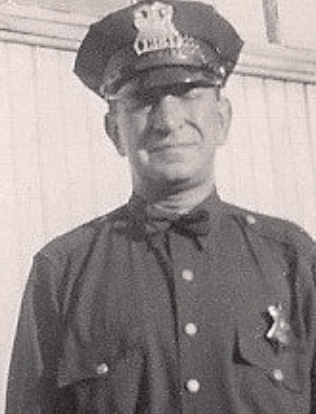
My grandfather had a host of brothers. Their father, Ulrich Groff Jr., had been married twice—the second time after his first wife died. Among my grandfather’s many brothers was one named Frank. In the family, he was known as Grand Uncle Frank or Great Uncle Frank, depending on who was telling. Frank lived a colorful, hard-worn life. He was the one who taught me how to ride a bike and always had a funny story to tell. He was raised on a farm. He worked odd jobs in his youth. Eventually, he found a steady calling with the Chicago Police Department.

Frank’s career on the force was mostly uneventful, at least by police standards. He would occasionally talk about the small-time crooks. He mentioned the drunks and the desperate people. He and his partner had to haul these people off to jail. But there was one story he told with a quiet solemnity—one that never left him. It was a time when being a police officer was a tough job, especially in a city like Chicago. The streets were rough, and the criminals should not be taken lightly.

Frank Groff

It was the night his partner died.

According to Frank, it had been a typical shift. He and his partner had picked up a couple of rowdy men, causing trouble. One of them shoved Frank’s partner during the scuffle. The man was quickly subdued and locked up. As far as Frank knew, it was nothing out of the ordinary. They had handled far worse and walked away without a scratch.

But the next morning, a knock at Frank’s door brought grim news. Fellow officers informed him that his partner, John Blazek, had passed away during the night.

John had hit his head during the scuffle—no one thought much of it at the time, including John himself. Like many men of his era, he brushed it off, finished his shift, and went home. Officer Blazek called a fellow officer to give him a ride. He didn’t feel quite right. Still, no one suspected anything serious. He went to bed and never woke up. The suddenness of his passing left everyone in shock and disbelief.

The official record read:

John Blazek

Patrolman John Blazek died after suffering a head injury. He fell or was pushed to the floor inside the 22nd District’s cell room. This incident occurred at 943 West Maxwell Street the prior night. He did not realize he had suffered a skull fracture. He attempted to go home at the end of his shift at 8:00 am. Blazek did not walk home and called another officer to pick him up. Once he got home, his condition worsened. He passed away the next day from the head injury.

Patrolman Blazek was a U.S. Army veteran of World War I who had served with the Chicago Police Department for 26 years. His sudden and unexpected death left a void in the community. His wife and two sons survive him.

Frank never quite recovered from that night. Though he stayed on the force, something in him changed. He stopped talking about the job as much. When he did, it was with a heavier voice. He had arrested many criminals and survived several street scuffles. Yet, the quiet death of his partner haunted him the most. They didn’t see it coming. He retired a few years later, and we see that the incident had taken a toll on him. He spent his days quietly, often lost in thought.

Years later, after Frank’s retirement, we found a worn copy of the police report. It was on John Blazek’s death and among his things. It was folded carefully into the pages of his Bible. Eventually, Frank passed on. On the back, in his handwriting, were the words:

“We don’t always know the moment something changes us. But we carry it. Always.”

Lloyd Bickerstaff: The Steady Voice of Elk City Police

By Benjamin GroffMedia© | benandsteve.com | 2025 Truth Endures©

3–4 minutes

The Quiet Backbone

Lt. Lloyd J. ‘Bick’ Bickerstaff E.C.P.D.

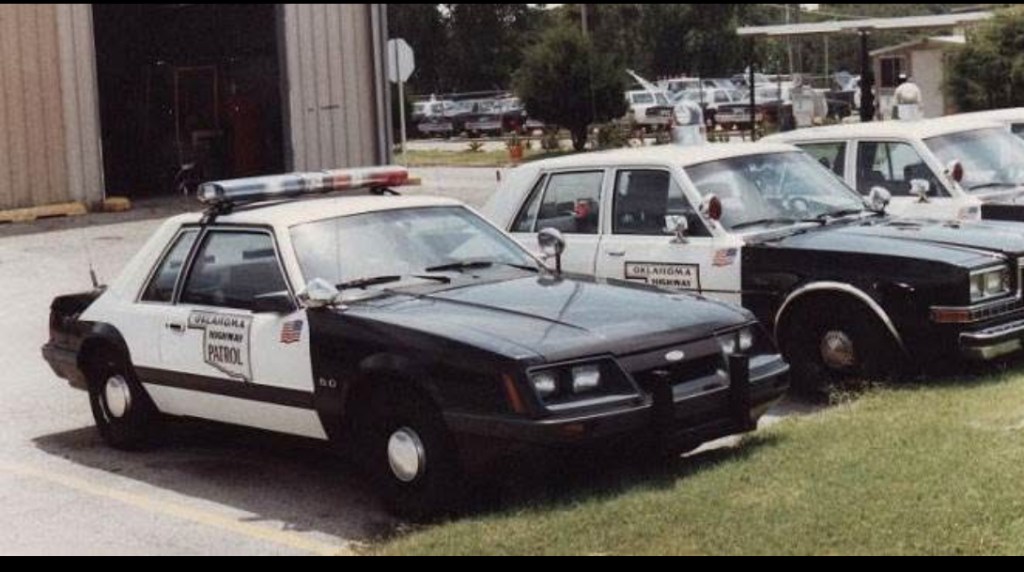
I keep a photo in a drawer in my desk. It is tucked beneath an old leather-bound notebook and a yellowing map of Beckham County. It’s a photo of Lloyd Joe “Bick” Bickerstaff. The image was taken about a month before his promotion to Captain with the Elk City, Oklahoma Police Department.

In the picture, Bick sits in his unit, his uniform crisp in the late autumn light. The shadows are long. The wind has just started to turn cold. That unmistakable Oklahoma sky behind him stretches flat and wide. It is quiet, open, and full of secrets. He wears a half-smile that says, 

“I’ve seen things, but I’ll carry them quietly.”

Bick and his brother were born in Sentinel, Oklahoma. I only heard his brother’s name once in passing. Sentinel is a patch of land barely big enough to hold the stories it carries. They began their careers as State Troopers with the Oklahoma Highway Patrol. The two brothers wore matching uniforms and chased something bigger than themselves.

But by the time I knew Bick, he rarely mentioned his siblings. I assumed time had done what it often does to families. Maybe there was a falling out—just distance. I never asked, and he never offered.

I knew he had a wife who baked cinnamon rolls on Sundays. He also had two children. One child was off in Sayre, chasing classes at a junior college. The other was a veterinarian who had graduated from Oklahoma State University. His life beyond the badge was quiet but rich. He even operated a small answering service—its operators worked right from his living room. You knew that life grounded him.

Nevertheless, Bick was more than just a veteran officer inside the department. He was the compass.

When rookies came in shaken from their first domestic call, Bick was the one who handed them a cup of bad coffee and said,

“It gets better if you let it.”

He never lectured. He just listened. And when he spoke, it was always worth hearing.

I remember the weeks leading up to his promotion. The department was shifting—a new Chief was being promoted, and a Major was moving up from Captain. Everyone felt the tremors of change. But Bick? He was steady and unmoved. I asked if he was nervous about entering a bigger role during such a turbulent time.

He just smiled that same quiet smile.

“Storms pass,” 

He said.

“Someone’s gotta keep the porch light on.”

He did more than that.

He held the whole house together.

Years passed. And then, like storms do, time took Bick from us. When the news came, I expected many familiar faces at the service. Officers from every corner of the state would be paying their respects. But they didn’t come. Time had moved on, and so had they. Somehow, the news of Bickerstaff’s passing hadn’t brought them back.

Elk City Police Chief Bill Putman did what mattered. He escorted Bick’s casket from Elk City to the Old Soldiers Cemetery in Oklahoma City. That quiet, deliberate ride said more than any ceremony. It was loyalty. It was respect. It was love.

I was there, too, standing back in the shadows as the service ended. I didn’t speak. Didn’t approach the family. I just paused long enough to leave a final tribute at the edge of his resting place. It was a farewell from someone who had seen firsthand what quiet strength looks like.

Maybe Bickerstaff would’ve preferred it this way. No fanfare. There is no parade of names—just those who mattered most.

I like to think I was one of them.

Bick was never the loudest voice in the room. He didn’t need to be.

But when he spoke, the room listened.

And when he left, the silence he left behind was deafening.

The echo he once carried over the radio has gone quiet. And somewhere out in Western Oklahoma, no one will ever hear that calm, steady voice call out again—

“Attention, all stations and units; stand by for a broadcast.”

The Real Badge 714: Jack Webb’s Impact on Police Representation

Benjamin GroffMedia© | benandsteve.com | 2025 Truth Endures©

1–2 minutes

Earning the Badge: How Jack Webb Won the Respect of the L.A.P.D.

Gaining the gratitude of the Los Angeles Police Department is no small accomplishment, especially for a television creator. Yet, after nearly two decades of portraying law enforcement with integrity and realism, Jack Webb did just that.

Best known as the mind behind groundbreaking crime dramas Dragnet and Adam-12. Webb distinguished himself from other producers and directors. He excelled in an industry often criticized for sensationalism. 

Rather than relying on over-the-top drama to capture ratings, he took a different approach: authenticity. Webb regularly consulted real-life officers, ensuring his shows reflected the true spirit and procedures of police work.

That commitment to realism earned him more than high ratings—it won him the deep admiration of the L.A.P.D. itself.

In 1968, the department honored Webb with a unique and heartfelt gesture. They presented him with the original Badge 714, famously worn by Sgt. Joe Friday in Dragnet. It was a symbolic gift that carried the full weight of the department’s appreciation.

“This is only a small token of our appreciation to you, Jack, and for all the things you have done for our department dating back to when Dragnet first went on the radio in 1949,” 

Said then-L.A.P.D. Chief Thomas Reddin during the presentation. 

“This badge has never been issued to anyone else; the entire force feels it belongs to you.”

The moment left Webb deeply moved.

“For one of the very few times in my life,” he said, “I’m at a loss for words. I can’t express my feelings.”

According to The Cumberland News, the L.A.P.D. viewed the gift as more than just a gesture of thanks. It was also a tribute to Webb’s enduring impact on the public image of police officers. This image is not defined by glamour or exaggeration. Instead, it is characterized by honesty and respect.

Reruns of the Dragnet Show can still be watched on television channels like MeTV.

Gallows Humor: Essential for First Responders’ Survival

Benjamin GroffMedia© | benandsteve.com | 2025 Truth Endures©

3–5 minutes

We had to invest a lot of time making each other laugh. Honestly, the truth behind what we dealt with every day was so damn depressing. I’m talking about my days in law enforcement. There were long shifts, chaos, and tragedies. We pulled practical jokes to stay sane.

We had an incredibly well-liked lieutenant. I admired him immensely. He was competent, dedicated, and a strong leader. Yet somehow, he always found himself in absurd situations. He was often under fire from the chief. I’ll admit, on more than one occasion, I have played a small role in those misadventures.

One day, we were in the breakroom. It never failed. Just as you were halfway through a cup of coffee, a call would come down. You’d have to bolt. Out of habit, everyone would set their half-filled cups on the vending machine on the way out. When we returned from a call, the lieutenant came in, frustrated. He began to reprimand everyone for making the breakroom look like a pigsty. This was ironic, given the usual state of his desk.

The Coffee Cup Incident
The Coffee Cup Case

He stomped to the vending machine and picked up the abandoned cups. The first few were empty, which he confirmed by holding them up to the light, right over his face. Then he grabbed one that still had coffee and did the same. It spilled directly onto his uniform. He stood there stunned, dripping. The rest of us just sat, silently watching like it was a movie scene.

I walked over, grabbed his tie, and wrung it out. A drip of coffee came out and landed on his boot. The whole shift erupted in laughter. The lieutenant stormed out, fired up his patrol car, and squealed the tires, leaving the station.

Unluckily for him, the chief had parked just down the street to watch the night shift in action. He saw the whole thing and chewed the lieutenant for over an hour.

Despite the pranks, the lieutenant and I had a solid bond. One time, he made a big announcement at shift change in front of everyone. He said he’d be riding with me to assess my patrolling skills. I just looked at him and said, “That’s fine, but you’re gonna have to sit over there and be quiet.” The room burst into laughter. He chuckled and said,

“Only you could get away with saying something like that.”

That was our partnership. He knew I’d undoubtedly have his back, no matter what. Off-duty, we were good friends. We went fishing together. We also vacationed with each other’s families. I had his back more than once when things got real in the field.

There were other moments, too. One traffic officer had a bad habit of leaving his patrol unit running and unlocked outside the station. It was just begging for a prank. One night, another officer and I gave in to temptation. My buddy hopped in the driver’s seat; I took the passenger side. He threw it into drive, and off we went—sirens blaring.

Inside, the officer was digging through his briefcase, organizing reports. When we took off, he jumped so high that he spilled the contents everywhere. Another officer watching couldn’t stop laughing long enough to explain that it was just us. The guy never left his car running again.

Someone had a bright idea once. They sprinkled paper punch-outs and glitter on the ceiling fan blades above the chief’s desk. The switch was right next to where he sat. We all gathered casually in the hallway outside his office the next day as he walked in and sat down. He flipped the fan on, and poof—a cloud of glitter and confetti rained down. He was not amused, but the image of him sitting there covered in sparkles was priceless.

It sounds like a waste of time to outsiders, but these pranks were how we coped. We had seen some of the worst humanity had to offer—child abuse cases, fatal car crashes, suicides. These moments of humor were survival mechanisms. It’s not unique to us; veterans, ER nurses, and paramedics do it. It’s often called gallows humor, and studies have shown it serves a psychological role. A 2022 article in Police1 explains the benefits of using dark humor in traumatic fields. It helps create emotional distance and encourages bonding. It also prevents burnout.

To the public, the jokes sound crude or inappropriate. But behind closed doors, it was how we held onto our sanity. This was true among those who carried the weight of human suffering daily. It was how we kept the darkness from winning.

Unraveling Family Ties: A Crime Scene Journey

Benjamin GroffMedia© | benandsteve.com | 2025 Truth Endures©

4–6 minutes

“The Andersons”

Tim Roff Meets The Andersons
Tim Roff The Andersons Assignment

It was supposed to be a quick assignment.

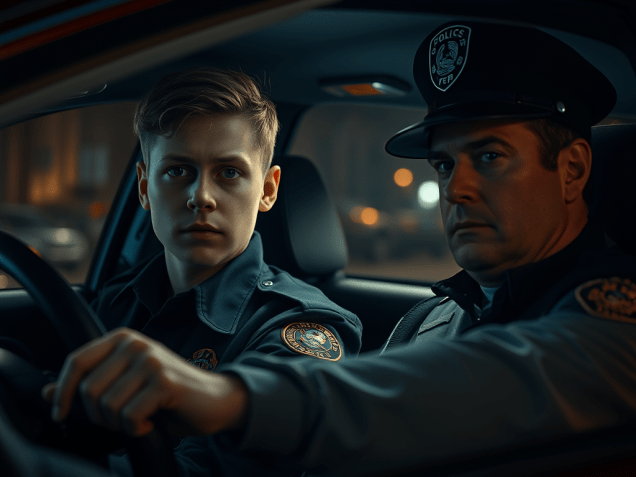
Officer Tim Roff was headed to a remote corner of the county to interview a key witness. This witness was a young girl named Cissy, the only eyewitness to a serious crime.

Nothing about it sounded very difficult. It was a straightforward drive, with a few questions, and Tim wanted to return for lunch.

He fueled his cruiser and pulled out of Delk View, heading west on the highway. The farther he drove, the thinner the traffic got. Eventually, it was just him and the radio. A long ribbon of blacktop stretched toward the horizon.

Forty miles later, he turned off at a row of faded, leaning mailboxes. They looked like they’d been abandoned decades ago.

A dirt road led up a shallow ridge, ending at a rusted metal gate with a handmade sign nailed to it:

“IF U R HEar TO C the Anderson Folks, U-will walk up here.”

Tim squinted at it.

“Charming.”

He parked the cruiser on the shoulder and climbed the gate, boots crunching dry gravel as he started the walk. It was unusually quiet—no dogs barking, livestock, or even a bird in the trees. That struck him as odd for a farm.

The shack was sagging. It stood at the end of the trail, leaning slightly. It looked like it had given up on fighting gravity. Tim knocked. After a few moments, the door creaked open, revealing a woman standing in shadow.

“Ma’am,” Tim said, flashing his badge. “Officer Roff, Delk View PD. I’m here to speak with Cissy.”

The woman gave him a long, assessing look before replying, 

“I’m her mother. But Cissy ain’t here. She’s up at my great-grandparents’ place.”

Of course, she was.

The woman stepped outside and pointed behind the shack.

“You’ll wanna follow the trail goin’ north. Not northeast, not northwest—north. Climb the hill. When you hit the first house, keep going. That ain’t it. Go around back and find the east trail. That’ll get you to Great-Grand Pap’s.”

Tim nodded, trying to chart the path mentally. 

“Appreciate it,”

He said. 

“Wish I’d worn jeans.”

The trail was steep and rocky, winding uphill through thickets and trees. After nearly an hour of hiking, sweat soaking through Tim’s dress shirt, he reached a cabin. An elderly couple sat out front on mismatched chairs, sipping something cold.

“You lost?”

The old man called out.

Tim waved.

“Looking for Great-Grand Pap’s place. Cissy’s supposed to be there.”

The woman laughed. 

“You’re close. Just head east from here. And watch out for bees—they’ve been feisty.”

Tim scratched his neck, thinking out loud ––

“Bees? Terrific.”

Tim trudged on and eventually reached a much nicer house between two ridgelines. Two cars were parked out back.

“You’ve got to be kidding me,” 

He muttered.

“They have a driveway.”

A white-haired man and woman sat on the stoop, smiling like they’d been expecting him.

“Howdy!”

They chimed in unison.

“Howdy,”

Tim replied, a little breathless.

“I’m Officer Roff. I need to speak with Cissy.”

The couple exchanged a look.

“She’s over at Grand-Uncle Maxwell’s place.”

The old man said.

Tim sighed. 

“Grand-Uncle?”

“Yup. Her grandfather’s brother. She’s watchin’ him today while his wife’s out shoppin’.”

Tim, peeking through his sunglasses, looks up –

“Watching him?”

The great-grandfather nodded. 

“Ain’t much to it. Maxwell’s tied to a tree out front. Forty-foot chain. Keeps him from wanderin’ off.”

Tim blinked. 

“I—what?

“Yeah,”

The old man said. 

“See, Maxwell was showin’ his boy how to clean a rifle last year—told him you never clean a loaded gun. The boy asked why. So Maxwell loaded it up, held the barrel to his head like he was cleanin’ it. And said, ‘Because if you pull the trigger, this could hap—’ And bam. Shot himself right through the nose and out the top of his skull.”

The woman nodded solemnly. 

“He ain’t been the same since. I can’t trust him to stay put. We lost three family members to gun cleanin’ accidents.”

“And y’all still own guns?”

Tim asked.

“Well, of course,”

The old man said. 

“But we’re real careful now.”

Tim rubbed the back of his neck. 

“So… why is he her Grand-Uncle and not a Great-Uncle?”

The old man sat up a little straighter. 

“Well, see, Cissy’s mama’s brothers are her uncles. Her mama’s parents are her grandparents. You followin’? But Maxwell’s her grandfather’s brother—so he’s a grand-uncle—different branch. You followin’? My brothers are Great uncles, just like I am a Great Grandpa.You followin’?

“I think so,”

Tim said. 

“But I’m pretty sure Ancestry.com would call him a great-uncle.”

“City folks,”

The old man muttered, shaking his head.

Eventually, they led Tim to Cissy. She was a wide-eyed girl with a thick accent. Her vocabulary included terms Tim had never heard. She explained what she saw, pointing to where it happened, who was there, and what she heard. Tim took meticulous notes. He jotted down not just the events but also the phrases she used. Some of these need translating in court.

He chuckled softly in the cruiser as he rewound his way to civilization. He thought about the chains and the bees. The hand-drawn family tree in his mind intrigued him. He pondered the odd logic of backwoods kinship.

And he couldn’t help but remember what the old man had told him as he left:

“Cousins are once or twice removed, then after that, well… you can marry ’em.”

Tim hoped the DA had a good sense of humor—and a good translator.

The Legend of Bick Bickerstaff: Ticketing Liberace in Oklahoma

Benjamin GroffMedia© | benandsteve.com | 2025 Truth Endures©

3–4 minutes

The Man Who Wrote Liberace a Speeding Ticket

Lloyd Joe “BICK” Bickerstaff

When I was young, I had the privilege of working alongside some genuinely seasoned police officers. These were men who had been in the profession for decades. They carried with them a wealth of stories and experience. One of the most unforgettable among them was my Captain, Loyd “Bick” Bickerstaff.

Captain Bickerstaff was the first person I met when I interviewed for the job. He pulled for me to get hired, though I never quite knew why. Maybe he saw himself in me. He was around sixty when we met. At the time, I didn’t know much about his background. I quickly learned through stories from others that he was a legend in Oklahoma law enforcement.

Officers came from various places. If they stopped by our agency, they either knew Bickerstaff or had heard of him. He had that reputation. And if he happened to be off-duty during their visit, they left visibly disappointed.

I remember one particular day when I was on desk duty. A reporter from Time-Life came in. He said he was working on a piece about Route 66. He asked if he could interview Captain Bickerstaff. I told him to wait while I went to get the Captain.

Now, Bick wasn’t the type to jump at the chance to talk to the press—unless he had something to say. But when I mentioned a Time-Life reporter was here to see him, he promptly came out into the booking lobby and, in classic Bick fashion, boomed:

“I bet you want to ask me about that son of a bitch I wrote a ticket to back in the 1950s!”

At that moment, I thought, Well, this will be a PR nightmare. But to my surprise, he and the reporter hit it off. They wandered around the station talking and laughing. They even went outside. The photographer snapped pictures of Bick behind the wheel of a patrol car.

Maybe this won’t turn out so bad after all, I thought.

Still, I couldn’t help but wonder. What kind of ticket did someone get back in the ’50s? It still had reporters chasing the story.

When Bick returned, he shook the reporter’s hand, sent him off, and then strolled back to where I was working.

“I can tell your brain’s buzzing,” he said with a grin. “You want to know what that was all about?”

I nodded.

“Yeah, I’d say so. Stuff like this doesn’t happen every day.”

And so he told me.

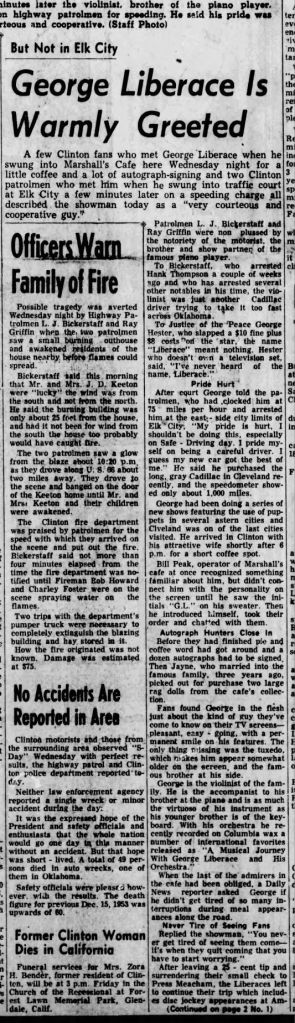
In the 1950s, Bick was a trooper with the Oklahoma Highway Patrol. In those early days, he patrolled on a motorcycle. One night, near Elk City, Oklahoma, a flashy car with California plates sped by him on Old 66. It was doing over 75 miles per hour or more.

He took off after it and got the car pulled over. It was late, and as he walked up to the driver’s window, the man inside said:

“Surely, you’re not going to write me a ticket. Don’t you know who I am?”

To which Bick famously replied:

“I don’t care if you’re Liberace—you’re driving like a bat out of hell. Yes, I’m writing you a ticket!”

And as it turned out, it was a Liberace. Liberace’s Brother George!

Bick wrote the ticket anyway. George Liberace followed Bick to the courthouse, paid it on the spot, and went on his way.

A few weeks later, Bick’s supervisor got a call from one of Liberace’s agents. They wanted to fly Bick to Hollywood to be on The Liberace Show. They thought it would be significant: the highway patrolman who dared to ticket a star. Bick said he couldn’t say no. The department thought it was good publicity, and it was.

Years later, people still talk about it. Unknowingly, I worked with the man who once wrote Liberace’s brother a speeding ticket. Bick told me –––


“Liberace brought me out on stage. He announced that I was the highway patrolman who wrote his Brother George a speeding ticket!”

Confronting Darkness: Stories from the Beat

Benjamin GroffMedia© | benandsteve.com | 2025 Truth Endures©

2–3 minutes

In The Dark Of Night

When I began my career in law enforcement, I experienced many “firsts.” One of the earliest was being assigned to a beat. I patrolled the alleys and streets of downtown, checking businesses and parks at night. The darkness was deep and constant. If fear crept in, the silence can feel almost haunting at times.

But I never let the shadows spook me. Not the sudden dash of a stray cat nor the wind rattling loose tin from an awning overhead. For a long time, I found nothing out of the ordinary. That is, until one night.

It happened in the park, beneath a pavilion by the river’s edge. I noticed someone lying across a picnic table. At nearly 2 a.m., the park was supposed to be empty. I stayed alert as I approached. I was constantly aware that people didn’t always travel alone. I didn’t want to be caught off guard.

As I approached, I spotted a can of spray paint beside her. A streak of glossy red paint coated her nose and mouth, dripping down her chin. She was a woman, and visibly pregnant, nearly full-term by the look of her.


I tried to wake her, but she didn’t respond. Her pulse was faint. Luckily, I had just been issued a portable radio—until recently, we’d relied on call boxes for communication. The radio gave me direct access to headquarters.

I keyed the mic and said,

“I need an ambulance under the pavilion at the river’s edge entrance. I have an unconscious female subject who appears to have been huffing paint. She’s approximately nine months pregnant.”

Headquarters confirmed and dispatched an ambulance promptly. Once it arrived, I assisted the paramedics. The woman was transported to a local hospital and then transferred to a larger facility for specialized care.


While searching the area, I found someone nearby who had passed out by the riverbank. I managed to rouse him. He was a man, around 32 years old, clearly intoxicated and unsteady. I placed him under arrest for public intoxication.

As I helped him up to the road, he turned to me and asked quietly,

“Is she going to be okay? I told her not to do that–– but she wouldn’t listen. That’s my baby, you know? I hope she’s alright.”

“Yes,”

I said.

I said,

“I hope the baby is okay, too. I’ve arranged a ride and a safe place for you to sleep tonight.”

The transport unit pulled up. As he climbed in, he paused, looked at me, and said,

“I’m glad you found us. It has saved both of us. Thank you!”

I nodded and replied,

“You’re welcome, try to get some sleep.”

It was one of the few times someone going to jail thanked me for stepping into their life. There would be other moments like this, but not many involving an unborn child.

I later learned the mother’s actions had not affected the baby. She had been admitted for addiction treatment, and hopefully, she stayed through the delivery and beyond. I never saw her again. I often think of that night. I think of how close things came to ending differently. Sometimes, just showing up can change everything.

Witnessing Tragedy: Lessons from a Highway Accident

Benjamin GroffMedia© | benandsteve.com | 2025 Truth Endures©

3–4 minutes

A Winter Night on the Highway

It was evening, and heavy traffic moved steadily along the narrow two-lane highway connecting small towns in the region. The road served as a lifeline, carrying motorists and buses through these quiet Oklahoma communities.

Law enforcement has fascinated me for as long as I can remember. My dad worked night shifts, patrolling the eastern region near the oil fields. In the summers, he served as a ranger at a nearby campsite. Winters drew him to different assignments, often more demanding and remote.

One of the state vehicles always remained parked at the ranger’s residence—our home—while my dad took the other on duty. That night felt like any other.

My bedroom was tucked into the back corner of the house. Even during winter, I often left the window cracked to let in the crisp night air. From there, I heard the distant hum of traffic about a mile to the south. 

As I lay on my bed studying for a test the next day, a sound split the quiet—a crash. Loud. Tires screeched. Then came the unmistakable bang of an impact.

It wasn’t the first time I’d heard it. A stretch of highway nearby had a reputation for accidents. Without hesitation, I grabbed my flashlight, told my mom there’d been a wreck, and jumped into the ranger truck. I had just earned my driver’s license, and the weight of responsibility was fresh on my shoulders.

Once on the road, I grabbed the radio and called it into the local police.

“It sounds bad—there have to be at least two vehicles involved.”

The Chief of Police from the nearest town confirmed he was en route. I pushed down the gas pedal and sped toward the highway. I noticed no cars coming eastbound as I turned onto it—an ominous sign. About two miles west, I saw the wreck.

A Greyhound bus had collided with a pickup truck. Both vehicles were mangled, partially in the ditch and partially blocking the road. The bus’s windshield was gone, and passengers were scattered everywhere—some dazed, others crying out.

The bus driver was lying in a yard 100 feet away. He was still strapped into his seat. The seat had been ejected from the bus. A man lay next to him. Both were dead. The bus had come to rest on the pickup truck, crushing its cab. 

Flames licked at the wreckage. There was no chance anyone inside the pickup had survived.

Before officers arrived, I radioed again:

“Get every ambulance in the county out here. This is bad.”

A bread truck delivery driver had just finished his route and stumbled upon the crash. Without hesitation, he unloaded his remaining bread onto the roadside. He began helping by filling his truck with victims to shuttle them to the hospital.

There had been thirty-two people on board. Survivors said a passenger had been drinking and became increasingly aggressive. The driver warned him to settle down, but the man charged ahead and grappled with the driver. That man now lay dead beside him in the yard.

The response was massive—five police agencies, three fire departments, and four ambulance services. That same night, a basketball tournament had drawn spectators to a nearby town. Many who had been on their way became unexpected witnesses to a horrific scene.

Inside the crushed pickup were two passengers—the aunt and uncle of a local fire chief. The tragedy hit close to home.

Years later, as a police officer, I would respond to countless serious accidents. But none would ever match that cold winter night’s scale. None equaled its raw emotion. It was the first crash I saw with my own eyes.

Sgt. Steve Mahan: A Line of Duty Sacrifice

Benjamin GroffMedia© | benandsteve.com | 2025 Truth Endures©

4–6 minutes

The Sgt. Steve Mahan StoryElk City, Oklahoma

Sgt. Steven L Mahan

Steve Mahan was a laid-back guy — the sleepy type. He rarely overreacted, and getting him excited about anything was hard. One day, Sgt. Mahan responded to a bomb threat at a local school. When he found the suspicious device, he calmly picked it up. He put it in the trunk of his patrol car. Then he drove it back to the police station.

He carried it inside without much fuss and placed it on the booking counter.

I had never seen the top brass lose it all at the same time. The Chief, the Major, and the Captain were all upset at once. They cussed and yelled in perfect unison, ordering Mahan to promptly take the device back outside. Then they called the fire department, which, ironically, was located right next door.

The fire department’s first response? 

“Have him bring it over.”

The Chief shut that idea down on the spot.

If I remember right, Mahan took it to the shooting range. The three top brass joined him there with rifles in hand. They tried to get it to explode.

It turned out to be a dummy.

Thankfully, it was because I was working on the other side of that booking counter the whole time.

Sgt. Steven Mahan was killed in the line of duty on January 5, 1983. That night, his girlfriend was working at the police department. Another female dispatcher was also there. He drove upon an armed robbery in progress at a local hotel. Unbeknownst to him, he was moving into an ambush.

After handing over the cash, the hotel clerk ducked behind the counter and observed the unfolding scene. She promptly called the police, reporting that an officer had been shot in the head. She couldn’t recognize the unit number but noted the word “Supervisor” on the vehicle’s front panel.

Upon realizing it was him, Sgt. Mahan’s girlfriend became understandably distraught. The other dispatcher maintained composure under extreme pressure. She coordinated response units. She relayed critical information from the hotel clerk to surrounding agencies. The suspects were taken into custody within the hour thanks to swift action and coordination.

Sgt. Mahan had been overpowered and shot in the head with a .25 caliber pistol, then fatally shot again in the back of the head with his service weapon. The officers rushed him to the local hospital in the back of a patrol unit. Dense fog made air transport impossible. An ambulance was then dispatched for the nearly three-hour drive to the nearest trauma center. It traveled through whiteout conditions with visibility near zero.

I arrived at the station about an hour after the shooting. I was designated as the point of contact for media outlets. They were calling nonstop. I remained in contact with the ambulance, his girlfriend, and a fellow officer riding alongside Sgt. Mahan. The driver reported struggling to reach even 35 mph on the fog-covered interstate.

Steven L. Mahan
Killed In The Line Of Duty – Elk City, Oklahoma

Roughly thirty miles from the trauma hospital, I heard the ambulance driver radio for local police assistance. They needed help to reach the nearest hospital. The ambulance had to exit the highway. I knew what that meant. I called the Chief’s office. I delivered the news. We had just lost our first officer in the line of duty.

  • Official Summary –

Bobby Lynn Ross was convicted of the 1983 murder of Elk City Police Sgt. Steve Mahan, who was 30 years old at the time. Two co-defendants were also convicted of second-degree murder in connection with the case.

On January 5, 1983, Sgt. Mahan was conducting a routine check when he drove up to the Los Quartos Inn in Elk City, Oklahoma. Unbeknownst to him, an armed robbery was already in progress. Mahan interrupted the robbery, during which Bobby Lynn Ross had already threatened to kill the motel clerk.

Ross disarmed Sgt. Mahan and ordered him to lie on the ground. Although the officer complied, Ross shot him multiple times at close range with a .25-caliber pistol—then took Mahan’s service weapon and shot him again.

Ross was convicted of first-degree murder and robbery with firearms on October 21, 1983.

During a failed clemency hearing before the Oklahoma Pardon and Parole Board on November 19, Ross asked for forgiveness. He addressed Mahan’s family. He claimed he had changed. Sgt. Mahan’s daughter, who was only 18 months old when her father was killed, submitted a heartfelt letter to the board:

“I missed out on all the opportunities that most children had. My father was stolen from me before I even had a chance to know him. My father was doing his job, not out trying to disrupt people’s lives. All I ask for is justice to be served.”

That night, Elk City police detective Jim LaFarlette sped through the darkness. His dying colleague was in the back of a patrol car. A family lost a son. A child lost her father. A community lost a hero.

“We all under the badge were deprived of a brother,”

LaFarlette said of the murder of Elk City police Sgt. Steven Mahan on Jan. 5, 1983. Ross was put to death by lethal injection on December 9th, 1999. Ross had lived 11 years longer than Mahan was allowed.

It was the day of Bobby Lynn Ross’s execution. I called Elk City Police Chief Bill Putman to confirm that the execution was moving ahead. He assured me that it was. He informed me that he and Officer Jim LaFarlette would attend to witness it themselves. Indeed, they did.

Midnight Mission: A Cop’s Fight Against Child Abuse

Benjamin GroffMedia© | benandsteve.com | 2025 Truth Endures©

4–6 minutes

New Year’s Eve 1986: Officer Tim Roff’s Midnight Mission

A True Story

New Year’s Eve 1986: Officer Tim Roff’s Midnight Mission

Officer Roff New Year's Eve Call

It was New Year’s Eve, 1986. Officer Tim Roff had just received a dispatch call. It sent him to the farthest point in the southern district of his patrol area. The report was grim, suspecting abuse of a newborn child.

In Oklahoma during the 1980s, police officers had significant authority in child abuse cases. If they believed a child was in danger, they would promptly remove the child from a home. They did this without a court order. No approval from higher authorities was needed.

As Officer Roff pulled up to 22735 SE 30th, Lot #14, he found himself in a trailer park. The location led him to a white single-wide mobile home with yellow trim. The porch light was on, illuminating a screaming woman on the front steps.

As he exited his patrol car, a backup unit from the traffic division arrived. Officer Wynn Peters stepped out and surveyed the scene.

Roff turned to him and said, 

“Take care of the screaming lady. I need to check on the child.”

“Got it,” 

Peters responded, moving toward the woman, who was now slurring her words. It didn’t take long to find she was intoxicated.

Inside the trailer, Roff found the baby. The infant, barely a few months old, lay bundled in a thin sheet—no diaper, no proper clothing. His tiny body bore the unmistakable signs of abuse: cigarette burns and raised welts from a cord.

Roff’s calm professionalism evaporated in an instant, replaced by controlled fury. Gently, he lifted the baby, cradling him close. The child whimpered, and Roff whispered, 

“You’re safe now.”

As he carried the infant outside, the mother, now identified, spat out her excuse. 

“I couldn’t get the little bastard to hush. It got to me! His father won’t come around because of it. I had to do something to shut it up!”

Roff’s jaw tightened. He turned to her.

 “Well, you got your wish. The baby is quiet. And you? You’re going to jail.”

Before the woman reacted, Officer Peters had her in cuffs and secured in the back of his patrol car.

Roff gently placed the baby in his cruiser’s car seat and radioed dispatch. He needed someone to hold the baby since he didn’t have a child seat in his unit.

“I need Child Services at my location ASAP. I have an infant who needs immediate placement before transport to the county shelter.”

After locking the trailer and securing the scene, Roff returned to the patrol cars. He informed the suspect that detectives would issue a search warrant before she was even out of jail. The charges? Felony child abuse. Her chance of bonding out before seeing a judge? Slim.

As Roff spoke, a man approached from the shadows. 

“I was sent by Child Protective Services to hold the baby.” 

He said.

Roff sized him up quickly, then gestured toward his patrol car. 

“Get in the front seat.” 

As the CPS worker did, Roff handed him the baby, who was still wrapped in the sheet. 

“Hold him close and buckle up.”

Now, it was time to move.

Roff flipped on his headlights and pulled out onto the darkened road. The county seat was twenty-five miles away, and the streets were dangerous on New Year’s Eve. Drunks, criminals, and gang activity all made for unpredictable hazards.

When it happened, they had nearly reached their destination—just five miles from the shelter.

Gunfire.

Bullets cracked through the night air. The unmistakable pop-pop-pop of semi-automatic fire echoed as Roff’s black-and-white patrol unit came under attack.

“DOWN! GET DOWN!” 

He barked, shoving the CPS worker onto the floorboard.

More shots rang out, shattering the tension of the night. Roff slammed his emergency lights on, flipped the siren, and grabbed his radio.

“Unit 852 to Headquarters—I’m under fire near NE 23rd and Blackwell! I have a baby and a Child Services worker in the vehicle. I can’t stop! Send units!”

Every muscle in his body tensed as he navigated the streets. He weaved through traffic and pushed the car to its limits. The next five miles felt like an eternity, but Roff never let up. The patrol car screamed through the city at full speed, sirens blaring.

Then, finally, the shelter’s lights appeared ahead.

As Roff pulled in, he exhaled sharply and keyed his radio. 

“We’re safe. We made it.”

Moments later, Headquarters responded. 

“Copy that, 852. Three suspects are in custody. They were shooting at vehicles in your last known area.”

Roff stepped out, his pulse still hammering. He unwrapped the baby, handing it over to the shelter staff.

The CPS worker stood frozen.

Roff raised an eyebrow. 

“You need a ride back to your car?”

The man swallowed hard. 

“If it’s all the same to you, Officer, I think I’ll catch a ride from someone here. Or maybe –– get a taxi.”

Roff nodded, the ghost of a smirk touching his lips. 

“Good call.”

And with that, he turned and walked back to his cruiser. Another night. Another battle. But at least, on this night, one child would see a safer tomorrow.

This is a true story! Names and locations have been changed to protect the privacy of those concerned.

Three Impacts of a Collision Explained

GROFF MEDIA 2024© TRUTH ENDURES IMDBPRO

Presented by benandsteve.com By: Benjamin Groff II©s

2–3 minutes

Understanding the Three Impacts in a Collision

Photo by Pixabay on Pexels.com

We often think there is just one impact when imagining an accident. Be this is a fall, a bicycle crash, or a car collision. Yet, physics and medical studies, based on rigorous research and analysis, show that every crash has three distinct impacts. Each one contributes to potential injury.

Let’s use a crash as an example, though the same principles apply to other accidents.

Impact #1: Vehicle Collision

This is the first crash. The moving vehicle collides with another object. Whether it is a wall or a stationary object. The force of this impact determines the severity of the accident.

Impact #2: Body Impact

Even after the vehicle stops or slows down, the occupants continue moving ahead due to inertia. This often causes a secondary impact. The person collides with the car’s interior, like the dashboard, windshield, airbag, or seatbelt. It’s important to note that seatbelts and airbags play a crucial role. They reduce injuries and make us feel safer on the road.

Impact #3: Internal Organ Impact

The most overlooked but critical impact happens within the body itself. Even after a person stops moving, their internal organs shift and collide with bones and other structures. This can lead to serious injuries like concussions, internal bleeding, and organ damage.

Delayed Symptoms and the Body’s 

Response Of The Body instantly after an accident, many people don’t feel the extent of their injuries. Adrenaline and shock mask the pain. The body naturally responds by triggering inflammation and swelling to protect damaged areas. Yet, once this response subsides—sometimes hours or even days later—the true severity of injuries becomes obvious.

The Delay Between Sight and Sound in a Crash

If you witness an accident from a distance, you notice another phenomenon. There is a delay between what you see and hear.

Because light travels faster than sound (186,000 miles per second vs. 1,125 feet per second), you will see a crash before you hear it. This creates a lag, where the sequence of events seems different from what happened.

Photo by Pixabay on Pexels.com

For example, if a plane crashes and explodes, a witness will report hearing multiple booms and assume three separate explosions. In reality, they are hearing the first impact, secondary collisions, and final resting impact—all of which happened quickly. The delay in sound reaching the observer can create confusion, especially during traumatic or high-stress situations.

Key Takeaways

  • Accidents involve three distinct impacts: vehicle collision, body impact, and internal organ impact.
  • Injuries are not always instantly clear, as the body’s natural mechanisms can mask symptoms.
  • Witnesses misinterpret the sequence of events because of the delay between light and sound. Hence, investigators must analyze physical evidence carefully.

Understanding these factors can help individuals recognize the risks involved in crashes. They can then make informed decisions about safety and medical attention.

Understanding Loss: A Decade of Reflections

GROFF MEDIA 2024© TRUTH ENDURES IMDBPRO

Presented by benandsteve.com By: Benjamin Groff II©s

6–9 minutes

Reflections
Reflections On Every Ten Years

It started when I was around ten years old—I began seeing life in ten-year intervals. Every decade, I would take stock of where I was. I would think about where I am going. I would consider who was still with me and who was no longer there. Sometimes, life separates us through distance, sometimes through death.

In my first ten years, I had already experienced both. Friends I met in school came and went, their families moving away before we had time to build anything lasting. Loss was something my grandparents had gently prepared me for, though it didn’t soften the blow when it happened.

One of the first deaths I remember was a neighbor of theirs, a man named Tom. I often visited his house with my grandfather, sitting and listening as they talked. When he passed, I already knew before anyone told me. That morning, the hearse pulled up to his house after passing my grandparents’ place. I also knew my grandfather had spent the night with him, sitting in quiet vigil. Tom’s funeral was the first I ever attended.

Then there was Maynord, a clumsy old farmer with an Okie drawl and a stride to match. He was my dad’s friend, but I saw him as my best friend. His death hit me harder than I ever expected. One moment, he was there. He was laughing and rambling on as he always did. The next moment—gone—a heart attack took him suddenly and finally. I was only eight. I carried that weight for years, incapable of understanding how life takes people without warning.

By the time I turned ten, I thought I had braced myself for loss. I believed that nothing would catch me off guard again. But life has a way of proving us wrong.

At eleven, I came home from school one afternoon. I found my mother already there. This was unusual enough to make my stomach tighten. She called me outside. We stood together on the ledge in front of our house. She then broke the news. My grandmother had died suddenly that day. No warning. No time to prepare. Just gone.

I didn’t cry right away. Instead, my mind turned inward, searching for meaning in something so senseless. Was this some punishment? Had I done something wrong? Was God teaching me a lesson? And if so—what was it? It took years for me to understand that life doesn’t work that way. It happens and keeps happening, regardless of what we think or how ready we believe we are.

Over the next decade, I watched more family members slip away—some suddenly, others with the slow certainty of time. Friends moved and lives shifted. By the time I reached twenty, I had seen the past ten years as a lesson in endurance. I had learned what to hold onto and what to let go of.

But life doesn’t follow our plans. It unfolds in its way, teaching us not through intention but experience. And the next ten years would drive that lesson home in ways I never expected.

As a law enforcement officer, I would be called to homes where deaths had occurred. I had attended so many of these that the coroner trusted me. He allowed me to make the death declaration over the phone. Then, he signed the death certificate. I sat with family members until the body was removed from the home. I held grieving loved ones the best I was able. 

The hardest of these instances included the death of a 15-year-old disabled child. She depended on her parents for every facet of life. Feeding, being on a respirator, medications, cleaning, and moving about the home. They had been the life inside her, literally. She passed one morning as the mother was feeding her and couldn’t get the respirator back on quickly enough. The parents were wrecks when I arrived on the scene. It was the most emotional death scene I ever had to deal with. I called a police Chaplain to the scene because, quite frankly, it was beyond what I was equipped to handle. 

I discovered he was speechless and powerless to be of much use either. I sat with the parents and promised them it wasn’t their fault. That life goes when we don’t want it to. I couldn’t tell them about all my experiences, but I wanted them to know they were not alone. I left my calling card and asked them to call if they needed anything. I checked back in on them days later. It was no easier then. 

During my time as a police officer, I experienced the ultimate sacrifice twice. Two fellow officers were killed in the line of duty.

The first happened late one night during a robbery at a hotel on the city’s edge. The officer interrupted the thieves, but they overpowered him. One of the assailants shot him, and then—adding to the horror—they used his weapon to finish the job. The hotel clerk, hidden in an ideal location, saw their getaway and critically described the vehicle. Thanks to that information, the suspects were arrested soon after. The gunman was convicted and sentenced to death. He was executed in 2000.

I was on radio duty. An ambulance was transporting the officer. It tried to navigate through thick fog on its way to a larger hospital. When the driver suddenly exited the highway, I knew what that meant—the officer was gone. I promptly called the chief’s office. But by then, news outlets, always tuned into police transmissions, had already picked up on the situation. The department’s phone lines were jammed with calls. I took on the role of spokesperson. I did my best to clear the lines quickly. This was so they can be used for local needs. That was January 1983.

Less than two years later, in October 1984, I had been transferred to patrol. One night, we were responding to a vehicle accident outside our jurisdiction. My unit’s radio picked up an urgent transmission. A state trooper was down.

We were en route to the accident. Then, the assigned ambulance reported it was just a car in a ditch. We weren’t needed. But by then, we were already far outside the city, and no other units were nearby. I radioed the county sheriff’s office, advising them of our location and availability. They authorized us to continue north on State Highway 6.

As we traveled, more details about the suspect’s vehicle came through. Then, we spotted it. My partner and I intercepted the car and pulled it over. The driver’s license was expired, but we knew little else at the time. Only later did we learn a chilling detail. He had left his valid driver’s license with the trooper he had shot.

We were transferring the suspect to a deputy’s vehicle. Then, word came through that the ambulance transporting the trooper was lost. They were struggling to find the hospital. We raced to intercept them.

We arrived at the emergency room. A First Lieutenant with the highway patrol and I broke the safety keepers on the stretcher. We pulled the trooper out of the ambulance ourselves. The paramedics were in shock, frozen by the weight of what had happened. We pushed the stretcher down the corridor. As we rounded a corner into the ER, the trooper’s arm fell from the cot. It knocked pens and pencils everywhere. That’s when I knew.

He was gone.

Still, I refused to leave him. I stood at the head of the stretcher, unwilling to let him be alone. Finally, the doctors and nurses forced me away. I didn’t want to go.

Out in the hallway, my own Lieutenant stood waiting. 

“We’ve got reports to write,” 

He said. 

“While it’s fresh in your mind.”

I looked him straight in the eye. 

“This night will forever be fresh in my mind.”

Every ten years, I look back on the events of the earlier decade. I wonder what will be in store for the next ten years! My mother is pushing 95 years-of-age and I doubt she is in my next ten years. I am just hoping that I am in my next ten years.

Real-Life Drama: Officer Finds Missing Dialysis Patient

GROFF MEDIA 2024© TRUTH ENDURES IMDBPRO

Presented by benandsteve.com By: Benjamin Groff II©s

4–6 minutes

The Missing Man Case 1986

It had been a relatively slow night. There were the usual calls—nothing out of the ordinary. A lady reported a prowler near her home in the North Division. Tim was assigned there for the night due to staffing shortages. Usually, he worked in the South Division, but tonight, he was covering unfamiliar ground. He had made several traffic stops—broken taillights, expired tags, and speeding violations—but nothing major.

Tim was known for his relentless patrol work, stopping burglaries in progress, nabbing car thieves, and making felony arrests. He led his department in felony arrests. But just after midnight, he got a call from dispatch that promised to be something different.

“Unit 852, report of a missing man. Dialysis patient. Suicidal. See the reporting party at 515 North Main Street.”

515 North Main was in the oldest part of town. The houses date back to when the city was just a settlement. It wasn’t a known trouble location—not one of the repeat offenders officers constantly got sent to.

As Tim pulled up, he saw a porch light glowing. The house was a white A-frame with an overhang, modest but well-kept. Before he knocked, the door swung open. Inside, several people stood around, dressed as if they were about to go out for the evening.

Tim identified himself.

“Hello, I’m Officer Roff. I understand someone is missing?”

A woman stepped ahead. 

“I’m Kathy Gifford. Yes, my husband is missing. I don’t know how, but he’s gone!”

Tim raised an eyebrow.

“You don’t know how?”

Mrs. Gifford wrung her hands. 

“He’s skin and bones. He can barely walk. He’s on dialysis, and he probably doesn’t have long to live.” 

She took a deep breath. 

“He didn’t want me to go dancing with my friends tonight. He begged me to stay. He said it would be the last time I saw him if I walked out that door. But I thought he was just being dramatic.”

Tim had been a cop long enough to know that people sometimes exaggerated. He took her words with caution. 

“Did you search the house?”

Everyone nodded. 

“We did. He is not here.”

“What’s his name?”

“James Gifford, but he goes by Jimmy.”

Tim instructed everyone to stay put as he searched the house. He checked every room, corner, under sheets, and inside closets, calling out Jimmy’s name at every turn.

Ten minutes into the search, he entered the couple’s bedroom.

Mrs. Gifford sighed. 

“There’s no use looking in here. I’ve already searched everywhere.”

Tim wasn’t about to take her word for it.

“I have to be thorough before filing a missing persons report.”

He called out again. 

“Jimmy, this is Officer Roff with the Police Department. If you’re in here, tell me now! I’m about to search your room, and anything unlawful I find will result in criminal charges.”

Silence. Then, whispers from the people behind him.

Tim checked under the bed. Nothing was there. He turned to scan the room when Mrs. Gifford suddenly gasped.

“Oh my God, he has the gun!”

Tim spun around. 

“A gun? Don’t you think that’s something you should’ve mentioned earlier?”

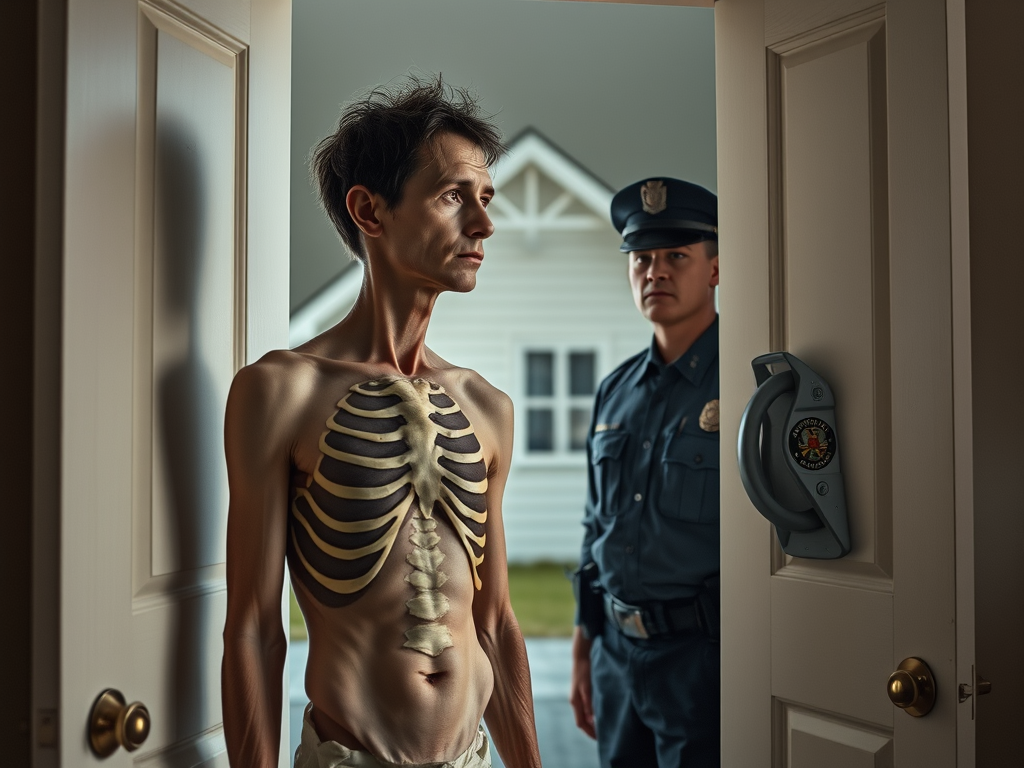
His hand instinctively went to his sidearm, unsnapping the holster. He stepped to the closet door and pulled it open. It was dark inside. He clicked on his flashlight and swept the beam across the space. Nothing. Then, near the front of the closet, he saw a pile of laundry.

Beneath it, Jimmy lay motionless, staring straight up at the ceiling. A .25 Automatic rested on his bony chest.

Tim’s breath caught. 

“Jesus!” 

His outburst sent the people behind him scattering, running out of the house.

His training took over. Tim drew his weapon and leveled it at Jimmy.

 “Don’t move! Don’t reach for the gun!”

But Jimmy never flinched. He just looked up at Tim, his expression empty.

Tim quickly reached down, grabbed the pistol off Jimmy’s chest, and took a step back. 

“Get up. Get out of the closet.”

Jimmy slowly sat up, his frail body trembling.

Tim exhaled, his adrenaline still surging. 

“What the hell was this all about?”

Jimmy sighed. 

“I just wanted to scare her. Make her feel bad for leaving me. Make her think twice next time. That’s all.”

Tim shook his head. 

“You know, there are better ways to ask for attention.”

Jimmy just looked at him, defeated.

Tim crossed his arms. 

“Look, you have two choices. Either you voluntarily go to a mental health unit tonight, or you surrender this gun until Monday.”

Jimmy hesitated.

Tim pressed on. 

“You can come pick it up at the police department after you cool down. But I’m not walking out of here knowing I am back in two hours for a murder-suicide.”

After a long pause, Jimmy sighed. 

“Fine. Take the gun.”

Tim secured the weapon and turned back toward the doorway, where Mrs. Gifford and her friends had cautiously gathered again. He shook his head and muttered, 

“This is the Ruby Don’t Take Your Love to Town call to beat all others.”

One of the men raised an eyebrow. 

“What?”

Tim smirked. 

“You know, the song. The guy’s disabled, and his woman goes out dancing anyway. I never thought I’d see it play out in real life.”

The room fell silent.

Tim exhaled, holstered his weapon, and radioed in. 

“Unit 852, situation under control. Subject located. No further assistance needed.”

As he walked out, he couldn’t help but shake his head. 

“Damn country songs. They’re always right.”

Cyclops in the Freezer: A Police Investigation Unfolds

GROFF MEDIA 2024© TRUTH ENDURES IMDBPRO

Presented by benandsteve.com By: Benjamin Groff II©s

4–6 minutes

Officer Christopher Cain and Officer William Fife had only been with the department briefly. Max Hinkle and Loyd Mavis’s senior officers often supported them on calls. They ensured the rookies didn’t get in over their heads.


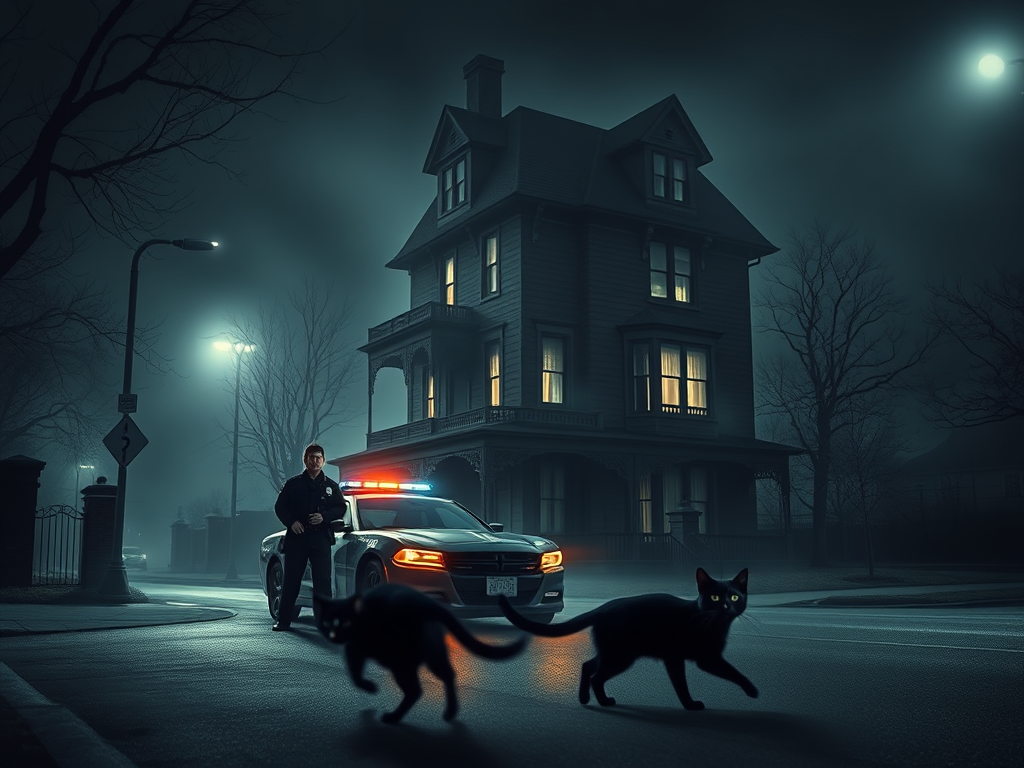
That night, the fog was thicker than the young officers had ever seen. It clung to the streets like a dense blanket, reducing visibility to barely a few feet before their patrol unit. The radio crackled to life, and their dispatcher’s voice cut through the eerie stillness.

“Unit 17 and Unit 23 respond to 809 South Beaver Street. Caller reports strange occurrences and possible screaming.”

The call came in, and without hesitation, the officers prepared to face the unknown.

The mention of strange occurrences and possible screaming on Beaver Street sent a shiver down their spines. The street was lined with old, looming houses, most of which had seen better days. This location stood out as a towering two-story relic. It bore an uncanny resemblance to the Addams Family home from television.

The officers pulled up, the house’s silhouette barely visible through the fog. A black cat let out a piercing yowl as they exited the patrol car and bolted past them. Both officers jumped, reaching instinctively for their sidearms. Their senior partners, standing beside them, chuckled.

“Calm down, boys,”

Sgt. Mavis said, shaking his head.

“You watch too many TV shows.”

Still feeling their hearts pound, Cain and Fife took a deep breath. Mavis folded his arms.

“Did either of you catch what the call was about?”

“Uh, something about strange occurrences,”

Fife answered, regaining his composure.

“And screaming.”


Mavis raised an eyebrow.

“Screaming, huh? Alright, let’s do this by the book. You two take the front. Hinkle and I will check around back. Keep your radios on.”

Cain and Fife stepped onto the warped wooden porch and rapped the door. A moment later, the door creaked open, revealing a frail-looking older woman with white curls piled atop her head. She smiled sweetly, her blue eyes twinkling.

“Oh my, what a surprise! I didn’t expect officers at this hour,” she said in a thin, airy voice. “Please, do come in.”


The officers hesitated but, after protocol, stepped inside. The house smelled of mothballs and something faintly metallic. Antique lamps dimly lit the interior, their glow barely pushing back the shadows.

Cain glanced around, feeling a chill prickle his skin.

“Ma’am, we received a call about disturbing noises from this house. Have you heard anything unusual?”


The older woman chuckled softly.

“Oh, I suppose you mean the screaming?”

Fife shifted uneasily.

“Yes, ma’am. Can you tell us about that?”

Fife asked, his voice betraying his unease. The older woman chuckled softly, her response sending a chill down their spines.

The woman clasped her hands together, her expression turning solemn.

“Oh dear, I’m afraid it’s quite the story. You see, it’s my late husband. He doesn’t always know when to keep quiet.”

Cain frowned.

“Your late husband?”

“Yes, yes,”

She said, waving a frail hand.

“Come with me. I’ll show you.”

She turned and shuffled toward the kitchen. Cain and Fife exchanged a glance before trailing. As they entered the room, the smell of something foul hit them—a sickly, sweet, decaying odor. The woman pointed toward an old, industrial-sized freezer in the corner.
Fife hesitated.

“Ma’am, what exactly are we about to see?”

The older woman gave a thin smile.

“Oh, just an old guest who overstayed his welcome.”

Cain swallowed and slowly stepped ahead. He gripped the handle, feeling the frostbite at his fingertips, and lifted the lid.

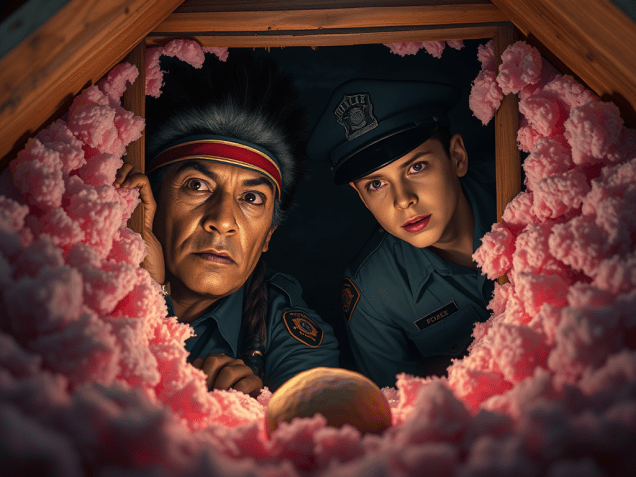
A massive humanoid form lay frozen inside the ice and frost-covered meat. Its single, lidless eye remained open in an eternal stare.

Cain recoiled.

Cain recoiled in shock, his mind struggling to process what he saw.

“Jesus H. Christ!”

He exclaimed, his voice trembling with disbelief.

Fife staggered back, radioing for backup.

The older woman let out a sigh.

“Oh dear. I’ll have to explain.”

Mavis and Hinkle burst through the back door, weapons drawn.

“What the hell’s going on?”

Mavis demanded.

Fife pointed at the freezer, his face pale.

“There’s a goddamn cyclops in there.”

Hinkle blinked.

“A what?”

Cain barely found his voice.

“A real, honest-to-God cyclops. Dead. Frozen solid.”

Mavis exhaled sharply and turned to the older woman.

“Ma’am, you’d better start talking. Now.”

She folded her hands.

“Oh, it’s time someone knew. Freezer Boy wasn’t from around here, you see. He came looking for refuge long ago. Poor thing couldn’t adapt. He started getting ––– hungry. My husband and I did what we had to.”

Cain felt his blood run cold.

“And what exactly did you have to do?”

She looked at him with a knowing smile.

“We fed him. Until we couldn’t anymore.”

The room fell into silence. The fog outside thickened, swirling like ghosts against the windows.

And somewhere, deep within the house, another scream echoed.

And it wasn’t human.

“What was that?

Sgt. Davis yelled.

“Who? Who was that, Sergeant? Barry, That was Barry.”

She said,

Sargent Davis asked 

“What is up with Barry?”

“He keeps falling out of his crib.”

As the five people went up to the room to look at Barry, the little old lady warned them –

“you were startled at what you saw in the freezer. I don’t know how you will react when you see Barry!”

The Officers asked the old lady whatever became of her late husband. She explained that he died of natural causes. Barry and Freezer Boy fought over who got to eat him. That is how Freezer Boy ended up frozen.

“Poor Freezer Boy never saw it coming, but those two saved me thousands in funeral expenses!”

The Mayor Who Helped Kill Women

GROFF MEDIA 2024© TRUTH ENDURES IMDBPRO

Presented by benandsteve.com By: Benjamin Groff II©s

6–8 minutes

Jethro’s patrol car rounded the corner in the middle of the night. He had been around the block once before. His patrol practices always involved retracing where he had been. Burglars would often wait for a police car to pass and then start their craft. This practice by Jethro helped him lead the department in felony arrests for two years. 

Half-dressed a week earlier, he had come across the Town’s Mayor. The Mayor, Tim Awning, was running across the front lawn of a residence. Jethro had to calm him down. He then heard a story that the Mayor had been a victim of a holdup. Reportedly, a group of thugs had taken his car. The Mayor’s story was in bits and disoriented. Oddly, Mayor Awning said he only wanted to go home. He didn’t want to file a report. 

While driving the Mayor to his home, they came upon his car less than a block away, and Mayor Awning said –

“Stop here; I have an extra set of keys; I will drive it home myself.”

Jethro thought it odd that the Mayor didn’t want to file a report. Even more suspicious, the Mayor insisted that looking inside was useless. He said whatever the hooligans may have done was not an issue. Mayor Awning went even further, insisting Officer Jethro not look into his vehicle. The Mayor claimed his right to privacy through search and seizure rights. 

Now, Jethro was patrolling the same area. He cruised slowly. His patrol car’s lights were turned off, and the windows were rolled down so he hear. Near where Jethro had come upon the Mayor a week earlier, he went to a near stop. The hair on his neck started to rise; his sixth instinct was telling him something, but what? He crept his patrol unit further when he heard a lady screaming. He stopped and tried to find where the screams were coming from.

He looked over his right shoulder. He saw a lady in night clothes running across the front lawn of a home. The same home he had come across the Mayor. He radioed his headquarters his location and told the operator he was out with a distressed resident. The operator sent an extra unit as a precautionary measure. As Jethro exited his unit, he turned on his overhead red and blues, and the lady ran to him screaming –––

“Officer, it isn’t good. I can’t believe it. I just got home and changed for the night. I went in to say goodnight to my roommates. They are all dead. Blood is everywhere!”

Officer Jethro wasn’t sure what to make of the hysterics. But he asked her to catch her breath. And told her another unit was responding. Understanding that whatever she sees is in the house was dramatic he told her they are safe outside. He made sure she had a seat in his unit. Then, he waited for the backup officer to go into the home to see what she had reported. 

The backup arrived. Her name was Officer Jilly. Jethro and she worked together in the South Division for over a year. As they entered the home with their weapons drawn, they went from room to room, securing it. Finally, in the back of the house, they came to the bedroom where the carnage was found. Three women were found slashed to death.

Jethro’s gut twisted at the sight before him. Blood filled the room with a metallic stench. The dim light from the bedside lamp cast eerie shadows over the bodies. The women sprawled across the bed and floor, their nightclothes soaked in deep crimson. Jilly covered her mouth, swallowing the bile rising in her throat.

Jethro took a deep breath and turned to Jilly. 

“Call it in. We need the homicide unit and CSU here now.”

Jilly nodded and stepped into the hallway to radio for assistance. Jethro scanned the room, taking in every detail. There were no signs of forced entry. The door had been unlocked, and there was no shattered glass or overturned furniture. This wasn’t a robbery gone wrong. This was something else—something far more sinister.

Then, he noticed it: A single business card on the nightstand, smeared with blood. He pulled out a glove from his belt, careful not to contaminate any evidence, and picked it up. 

The card read:

Timothy Awning – Mayor

Jethro’s jaw tightened. His mind flashed back to the Mayor’s bizarre behavior a week earlier. He remembered the frantic running across the lawn. There was also the refusal to report the car theft. The Mayor insisted that Jethro does not look inside.

Jethro was a thorough officer. He made notes of everything, time-stamped his reports, and carried a voice-activated tape recorder in his patrol unit. Anything said inside the vehicle was considered public, and Officer Jethro had recorded the entire meeting with Mayor Awning. Now, he had a reason to review it.

“Jilly!” 

He called.

She reentered the room, her face pale. 

“What is it?”

Jethro held up the card. 

“We need to talk to the Mayor. Now.”

——

Mayor Tim Awning sat in his lavish den when Jethro and Jilly arrived. He held a tumbler of whiskey in his hand. 

His eyes flicked toward them, momentarily startled, before he forced a grin.

“Well, Officers, this is a surprise,” he said, shifting in his chair. “What brings you to my home at this hour?”

Jethro stepped ahead, tossing the bloodied business card onto the coffee table. 

“We just left a crime scene. Three women were murdered in the same house where we found you last week.”

Awning’s face paled, but he quickly regained his composure. 

“That’s—terrible. But I don’t see what that has to do with me.”

Jilly folded her arms. 

“Your business card was found at the scene.”

Awning scoffed. 

“I’ve given out thousands of those over the years. That proves nothing.”

Jethro leaned in.

“Your behavior last week was unusual. You were running half-dressed across the lawn. You claimed your car was stolen but refused to file a report. What happened that night, Mayor?”

Awning’s grip on the tumbler tightened. 

“I told you what happened.”

Jethro’s voice dropped. 

“No, you told me a story. But the real story is that you were at that house that night. You saw or did something that made you run. And I think whatever happened, it’s connected to what we found tonight.”

Awning’s jaw clenched. Beads of sweat formed at the Mayor Awning’s temples. Jilly took a step closer. 

“Where were you tonight, Mayor?”

Awning exhaled sharply and downed the rest of his whiskey. He set the glass down with a sharp clink. 

“At home. Alone.”

Jethro exchanged a glance with Jilly. They had him.

——

The crime scene investigators recovered more evidence. Fibers from the Mayor’s vehicle matched traces found in the victims’ home. Security footage showed his car in the vicinity the night of the murders. And then there was the most damning piece of evidence—blood found in the trunk of his car.

Faced with overwhelming proof, Mayor Awning finally broke. He confessed that he had been involved in a secret arrangement with influential figures in town. The house was where illegal dealings occurred—deals that had gone wrong. That night a week ago, he had seen a gruesome execution. He panicked and fled, leaving behind his car. The killers, nonetheless, had unfinished business.

By the time Jethro and Jilly had put the pieces together, it was too late for the three women. But it wasn’t too late for justice.

Tim Awning was arrested, and his political career ended in disgrace. As he got led out of his mansion in handcuffs, the weight of his crimes hung heavy in the air. Jethro knew this case would haunt him. Nonetheless, at least now, the Mayor would finally pay for his sins. This Mayor had helped kill women.

The Power of Storytelling: My Journey Through Words

GROFF MEDIA 2024© TRUTH ENDURES IMDBPRO

Presented by benandsteve.com By: Benjamin Groff II©

3–5 minutes

A Journey Through Words: For Everyone Who Has Liked My Stories Over Time!

Each day, I search the depths of memory for details that can shape a story. Sometimes, I draw inspiration from current events or pressing concerns that resonate with my readers. Usually, the stories I share come from personal experiences; they are events I lived through firsthand or about those close to me. Or, I was involved enough with a concern to know the details intimately.  

As a child, I had a speech defect. It kept me from speaking up in crowds, around strangers, or in public settings. What seemed like a limitation at the time was a gift—it taught me to listen. I became an observer, absorbing conversations, secrets, and moments others have overlooked. I often teased my older relatives that I held onto some of the family’s best-kept secrets. Over time, those secrets became stories—carefully crafted to preserve history while protecting the people behind them. It also helped me to learn how to be invisible, in a sense. When you stay still and always stay quiet, people overlook the kid in the corner. Conversations happen, and they let their guard down. That was a gift of sorts I brought in my adult life.

There’s a line I often use when people ask what I’ve done in life. I tell them, half-jokingly:  

“I’ve done damn near everything.”

And it’s true.  

I started working on our farm at eight, feeding horses, cleaning barns, and doing chores. Later, I rode fences, helped my dad with his duties as a ranger, and ran errands. As a teenager, I worked at the camp he oversaw, mowing lawns and clearing brush. Once I got my driver’s license, I started hauling hay and peanuts with three friends. It was some of the most challenging work I’ve ever done.  

I became a police officer and served in that role until retirement, after which I transitioned into radio broadcasting. I anchored newscasts for a five-state radio network before moving to a larger market as a news director. Eventually, I returned to law enforcement, working for the Department of Corrections, where I tracked down escaped prisoners. Tracking sometimes required undercover jobs—working at bakeries, hardware stores, magazine suppliers, or grocery stores—blending into communities to locate fugitives. I blend into the scenes, always becoming invisible, just as I did when I was younger. I was always successful, though I often found it hard to leave the undercover roles behind.  The people I had met always became colleagues.

After the September 11th attacks, my spouse’s employer offered a transfer from Kansas to Phoenix, Arizona. The decision was easy. I left law enforcement behind. I found work with Ford-Volvo of North America. I became a vehicle test driver at the Arizona Proving Grounds. I assisted the Ford assembly group in the winter. In the summer, I tested the endurance of Volvo cars and SUVs in the Arizona heat.  

In 2008, medical issues forced me to stop driving. That’s when I turned to writing—first with news articles and then by building news sites for small communities. The site you’re reading now was born from that transition. I created this space when I realized traditional employment was no longer a choice.  

When I started using WordPress, it differed from the platforms I had worked with. I learned through trial and error, studying the work of others, adapting, and refining my skills. Over time, I explored your sites. I saw your creativity, dedication, and unique voices. I better understood how to navigate and thrive in this space.  

I’ve always believed that you get back what you put into something. That’s why I make it a point to read the work of others—it broadens my perspective beyond my world. And for that, I’m grateful.  

To all our followers, subscribers, and readers—thank you. Yesterday, I received a message from WordPress announcing that our site has reached **500 likes!** That’s an incredible milestone, especially since I don’t commercially promote these stories or actively drive traffic to them. This achievement is entirely because of your support, shares, and encouragement.  

I truly appreciate every one of you for being part of this journey. It seems trivial to some. But, for someone who overcame a speech defect, getting 500 likes is a big deal. Thank you, indeed!

The Last to Fall

Groff Media 2024© Truth Endures IMDbPro

Presented by benandsteve.com By: Benjamin Groff II©

3–5 minutes

The stories of “The Magnificent Seven” were told with reverence in the small, aging town of Canadian. It nestles in the shadow of a mountain range near the Comanche Indian Reservations. They were not just police officers. They were beacons of bravery. Each one was a sentinel of justice. They had shaped the history of law enforcement in the area. Their tales of courage, integrity, and unyielding commitment to the badge echoed in the walls of the old precinct. Black-and-white photos of the seven adorned the main hallway.

Now, only one of them remained.

Thomas “Tommy” Wade was the last to fall. At 82, he still carried himself with the dignity that had defined his career. Time had dulled the sharpness of his features. Nonetheless, his piercing blue eyes—eyes that had stared down criminals and shielded victims—had not lost their fire. Tommy had outlived his brothers-in-arms. It was not because he was the strongest or the fastest. It was because, as he often quipped, –––

“I was just lucky.”

Yet, his legacy, his unwavering commitment to service, and his enduring impact on the community, was far from luck.

It was more than luck, though. Tommy had survived gunfights, ambushes, and even a close call with a car bomb planted by a vengeful felon. But his survival wasn’t the story. The story was about how he and his six comrades had redefined serving and protecting.

The Legends

Each member of the Magnificent Seven had a chapter in the book of Canadian history.

  • James “Big Jim” Hawthorne was the largest and strongest of the group. He was known for breaking up a bar brawl single-handedly. He tossed men around like rag dolls without ever drawing his weapon. He always said –––
    • “Strength is knowing when not to use it.”
  • Eddie Diaz, the marksman, had ended a three-day hostage standoff with a single, precise shot that saved a child’s life. He was quiet and almost shy, but his calm precision made him a hero when danger arose.
  • “Doc” Peterson, the team medic, was a genius at keeping people alive in harrowing circumstances. A former Army medic, he carried his battlefield skills into the streets of Canadian.

Walter “Walt” Grayson, the thinker, used his sharp intellect to outwit criminal masterminds. He often ended conflicts before they began by anticipating a felon’s next move.

Frankie “Spitfire” McNeil, the youngest, was impulsive but had a heart as big as the town. He chased down burglars on foot and once shielded a family from gunfire with his own body.

Samuel “Sam” Colton, the leader, brought them all together. Sam’s vision for law enforcement was rooted in community service and compassion. He was a mentor, a father figure, and a friend.

And then there was Tommy Wade, the glue that held them together. He was the everyman who listened, mediated disputes, and ensured the team had each other’s backs.

A Legacy Remembered

On the day of Tommy’s memorial, the whole town gathered. The mayor spoke, recounting the officers’ countless acts of heroism. Citizens shared personal stories. They spoke of how one of the Seven had saved their lives. Others talked about how the Seven brought justice to their families.

But Tommy’s granddaughter, Emily, delivered the most poignant eulogy. She stood before the crowd, holding the silver badge her grandfather had carried for over thirty years.

“My grandfather used to tell me stories of these men,”

she began, her voice trembling.

“He told me that each carried a burden—of duty, danger, and sacrifice. They didn’t wear capes or fly through the air. They walked the streets, often alone, and faced fear head-on so the rest of us didn’t have to.”

Emily paused, holding the badge close to her chest.

“He also told me that they weren’t perfect. They made mistakes and carried regrets. But what set them apart was their unwavering moral compass. They believed in justice, fairness, and the value of every life.”

As the crowd listened, she added,

“They were the best of us. My grandfather was the last to fall. He always said it wasn’t about the badge or the recognition. It was about the people they served.”

The Eternal Flame

A statue now stands in the Canadian central park: seven figures, shoulder to shoulder, their badges gleaming in the sunlight. Inscribed at the base are the words: “To serve and protect—the legacy lives on.”

The Magnificent Seven are gone, but their stories endure. These tales are whispered in classrooms and retold at family dinners. They are honored in the lives of the officers who came after them. Tommy Wade have been the last to fall, but the spirit of his team will never fade.

Uncovering Crime: The Relentless Pursuit of Justice

It was a typical summer night in western Oklahoma, and Officer Ben Groff enjoyed a rare night off. He planned to eat at a restaurant on the city’s west side. He drove there in his newly purchased 1985 Dodge Ram. Gaming gold and black under the streetlights, the pickup was his pride and joy. As he cruised along old Route 66, he rolled down the window to enjoy the cool evening breeze.

At an intersection, a red Jeep pulled up beside him. Its driver, a man about Groff’s age, turned down his radio and hollered over the traffic.

“I like your truck; that is slick, man!

Groff grinned.

“Thanks! Your Jeep’s pretty nice too!”

The man motioned toward the Sonic drive-in up ahead.

“Pull over. Let’s talk!”

Curious and lacking close friends outside the police department, Groff agreed. They parked at Sonic, grabbed burgers, and swapped stories about their vehicles and work. The man introduced himself as Lenny and said he had a knack for making fast friends. Groff, still, couldn’t ignore the possibility that this chance meeting lead to more than small talk. Lenny’s interest in trucks worried Groff. His easy charm also raised Groff’s suspicion.

That night, over beers at Groff’s house, a tentative friendship began to form. But Groff had a strategy. He suspected Lenny was his way into a group linked to a string of thefts plaguing the city. The Chief of Police gave a cautious blessing. Groff embedded himself in this new circle of acquaintances. He balanced camaraderie with the thin line of professional detachment.

Walking the Tightrope


The deeper Groff immersed himself, the more skeptical his fellow officers became. Some resented his approach, accusing him of consorting with known criminals. Others were envious of how the community responded positively to Groff’s efforts. For Groff, the criticism was a necessary price. He knew abandoning the operation would make months of effort meaningless.

By late November 1985, Groff’s relentless work—juggling undercover meetings, regular patrol shifts, and state-mandated training—was starting to pay off. A critical breakthrough came unexpectedly when one of Lenny’s associates sold Groff a set of truck railings. The thrill of the chase was palpable as Groff made the buy and then cross-referenced recent police reports. Sure enough, a burglary at Bill’s Auto listed truck railings among the stolen items.

It was the break he’d been waiting for.

Closing the Net


The next day, Groff burst into the Chief’s office, his excitement barely contained.

“I’ve got them, Chief! One of them sold me stolen property. If I press him, I can flip him and take down the whole operation!”

The Chief, weary but intrigued, leaned ahead.

“Are you serious? You’re sure this will work?”

Groff nodded.

“I’m sure. But I need to move fast before they catch wind of it.”

“Not alone,”

the Chief said firmly.

“We’ll grab a detective. Let’s do this right.”

The weight of responsibility was heavy on Groff’s shoulders. He agreed but insisted on leading the first confrontation alone. He wanted to avoid spooking the suspect. The Chief and the detective parked discreetly down the street as Groff pulled into the suspect’s driveway.

Groff agreed but insisted on leading the first confrontation alone to avoid spooking the suspect. The Chief and the detective parked discreetly down the street as Groff pulled into the suspect’s driveway.

The suspect, Joey, took his time answering the door. His surprise was clear when he saw Groff in uniform.

“Joey,”

Groff began, his voice steely,

“I know everything—the railings, the bumpers, all of it. This is your one shot to come clean before this place gets torn apart. Don’t blow it.”

Joey’s defiance crumbled.

“How’d you find out?”

he stammered.

Groff played it cool.

“You sold me stolen property. It wasn’t hard to figure out.”

Joey hesitated, then blurted,

“There’s more—way more.”

The Haul


Inside Joey’s attic, Groff and the suspect found a treasure trove of stolen goods. They discovered jewelry, electronics, vehicle accessories, and a firearm. Over $40,000 in items were recovered from Joey’s residence alone. Joey’s confession led to six extra arrests, dismantling a theft ring that had operated for three years.

But the investigation didn’t end there. Interviews with the subjects hinted at more profound corruption, implicating former high-ranking officers in a grocery robbery scheme. Groff pressed for a deeper probe, but political resistance and departmental politics hampered his efforts.

Despite these setbacks, Groff’s work earned him a reputation as a relentless investigator. He was willing to make personal sacrifices to serve justice. The satisfaction of justice served was palpable. Groff’s relentless pursuit of the truth led to the dismantling of a major theft ring. That summer night on Route 66 started a chain of events. It led to one of the most significant cases of his career.

The Day Communications Sent the Cavalry to My Rescue ––– Thanks To Chester

Groff Media 2024© Truth Endures IMDbPro

Presented by benandsteve.com By: Benjamin Groff II©

3–5 minutes

It was one of those perfect spring days in April when everything felt right. The sun warmed the air to a comfortable 70 degrees. I rolled down my cruiser’s windows for the first time in months. I patrolled the streets of Elk City. That morning, the west side was my focus, a quiet stretch where anything unusual instantly stood out. That’s where I spotted Chester Hessman.

Ah, Chester Hessman. Everyone in Elk City knew him. Born and raised here, Chester was as much a part of the town as its aging brick buildings. He shared the unofficial title of “town drunk.” Another character held this title, too, whose story fills its chapter. Chester, though, was unique. He had a charm akin to Otis Campbell from The Andy Griffith Show. Otis was a regular at the jail with a presence so familiar that he also had his key.

Chester was skinny and of medium height. He was always disheveled. If he was out in public, he was most certainly drunk. Today, he was directing traffic in the middle of a bustling four-lane intersection, completely ignoring the functioning traffic light overhead.

I flipped on my red-and-blue lights and eased my cruiser into the intersection, pulling up beside him. Stepping out, I called him ––––

“Chester, you’re going to put me out of a job! How about I give you a ride home instead?”

Chester turned toward me, swaying on unsteady legs. He gave me a gummy smile—he hadn’t had teeth for years—and replied, –––

“I’d love ya for it!”

I chuckled, helped him into the passenger seat, and gave him a friendly warning. –––

“Now listen, Chester. I need you to sit tight and behave. Don’t think about jumping out or causing trouble, or it’s straight to jail. Got it?”

“I plomise!”

he slurred, laughing and babbling as I buckled him in.

Pulling away, I turned off the lights and debated whether to radio in the meeting. Chester had just been released from jail that morning. I hoped he would stay out of trouble if I got him home—at least for the day. I decided to keep it off the books. What would go wrong?

Well, a lot, as it turned out.


We were only a few blocks from Chester’s house when a priority call came over the radio.

Unit 3, Unit 4, Unit 2, and Unit 6: Report of six individuals behind Braum’s on 3rd Street. They are shooting at each other with a gun.

I was the closest unit, just a block away. Chester looked at me, confused as I explained the situation. –––

“Chester, you’ve ridden along before. You know the drill—stay in the car, keep your head down, and don’t touch anything for the love of God. Got it?”

He nodded solemnly, briefly giving the impression he was sober.

“I’ll watch out for ya, Officer Ben. Don’t worry.”

As I pulled up to Braum’s, I spotted six figures loitering near the back of the building. I radioed in,

“Unit 3: Headquarters, I’m 10-97 with six 10-12s. I’ll be out with them.”

Communication was acknowledged, and I stepped out to approach the group. But as I got closer, my portable radio began emitting a garbled, high-pitched noise. Annoyed, I assumed it was interference and turned the volume down.

The six “suspects” were kids playing with a toy air gun. We had a brief chat about how their game looked to the public. I suggested they move their play to a less conspicuous location. They nodded, embarrassed but cooperative.


As I headed back to my cruiser, I heard sirens approaching from all directions. Confused, I quickened my pace and opened the car door to find Chester holding my radio mic.

“Chester,”

I said, trying to process the scene.

“What are you doing?”

He grinned at me like a naughty child caught red-handed. –––

“Just makin’ some sounds, Officer Ben. Ain’t it funny?”

It wasn’t. The “interference” I’d heard earlier was Chester making garbled noises on my radio. When I turned my portable’s volume down, Communications assumed the worst. They thought I was injured. Worse, they thought I was trying to signal for help. They’d dispatched every available unit, fire, and ambulance to my location.

Chester’s laughter echoed as the reality of the situation sank in. What was supposed to be a quiet favor for Chester had turned into a full-blown emergency response.


I drove Chester straight to jail. He laughed the entire ride, still holding the microphone like his toy. I went to radio headquarters. I needed to explain to my supervisor how Elk City’s most infamous drunk had hijacked my radio, sparking chaos.

As I left the station that day, I still heard Chester laughing from his cell. I didn’t find it nearly as amusing.