Celebrating Connection: World Post Day & Leif Erikson Day
October 9 is more than just a date on the calendar. It’s a day rich with meaning. The day celebrates global communication. It also honors the spirit of exploration. Here are two powerful ways this day reminds us of human connection:
1. World Post Day
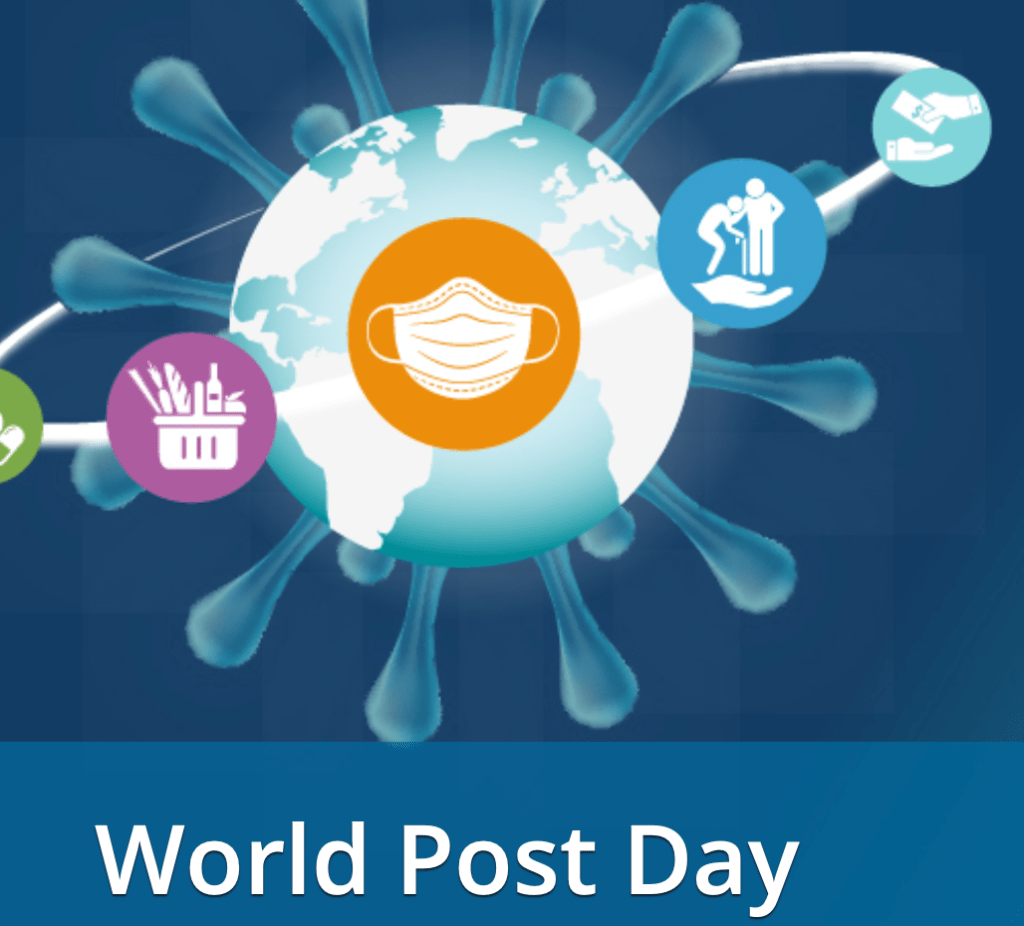
In 1874, the Universal Postal Union (UPU) was founded in Switzerland. This event marked the beginning of the modern era of global communication. Today—World Post Day—we honor the postal service’s vital role in connecting communities, families, and hearts across the globe. Post offices celebrate with stamp exhibits, open houses, and even letter-writing competitions for young people. (1)
2. Leif Erikson Day
Leif Erikson Day is also celebrated today. This day honors the Norse explorer. He is believed to be the first European to reach North America. Established in the early 20th century and federally recognized in the U.S. in 1935, the day is especially cherished in communities of Nordic heritage. It’s a celebration of bravery, curiosity, and the timeless call of new frontiers.(2)
In 1929, the Wisconsin Legislature passed a bill to make 9 October “Leif Erikson Day” in the state. In the years after, several other states adopted laws to celebrate the day.[81] In 1935, legislation was introduced to the United States Congress requesting federal observance of the day. Before the legislation was passed, it was amended so that the observance would only occur in 1935. [82] Which it was, after a proclamation that year by President President Franklin D. Roosevelt).[83] In future decades, many attempts to pass legislation were unsuccessful. They sought to have Leif Erikson Day proclaimed annually by the president.[84]Proponents eventually succeeded. In 1964, the Congress authorized and requested the president to proclaim 9 October of each year as “Leif Erikson Day”.[19]In the years since, each president has issued an annual proclamation calling for observance of the day.[85].(3)
A Real-Life Reminder: The Power of Connecting
These historic observances brought to mind a personal story I experienced just last weekend:
Visiting the grocery store, I ran into a long-forgotten neighbor—someone I’d only exchanged waves with in passing. We chatted by the fruit stand for several minutes, sharing news, laughter, and even some life advice. When I left, I carried more than groceries. I carried renewed warmth. It was a reminder that connection doesn’t have to be epic to be meaningful.
Takeaway for Today
Send a letter or thank-you note—traditional or digital. Let someone know how much they matter.
Reach out to someone you haven’t spoken to in a while. A simple chat can rekindle connection.
Think about exploration—big or small. Whether learning something new, trying a recipe, or visiting a new place, celebrate the courage that brought you there.
On this October 9, let’s honor our past. Let’s look ahead with open hearts. We will celebrate the small connections that make life rich and whole. Especially if countries around the world are shipping to America again. If not, keep an eye on history. It happened once. It will happen again. Maybe.
For Jake, the best time of his life wasn’t marked by grand achievements or milestones. It wasn’t a wedding, a promotion, or a once-in-a-lifetime trip. It was far more straightforward—something that came in the quiet hours when the rest of the world seemed to sleep.
He lived for those midnight drives. The highways stretched out before him like ribbons of endless possibility, empty and open beneath the glow of streetlights. There was something sacred in those moments. He would roll the windows down and let the wind rush in. It carried away the day’s weight. The music was always loud—classic rock, country, sometimes blues—whatever fit the night’s mood.
With no destination in mind, Jake would drive. Sometimes, it was the backroads, where the stars shone brighter than the city’s glow. Other times, it was the interstate. The hum of his tires and the engine rhythm became part of the melody.
Those drives were freedom and escape. There were also the rare moments when Jake’s thoughts never became tangled in the past or anxious for the future. He wasn’t Jake, the overworked employee, or the guy who never quite figured things out. He was just a man, a car, the night, and the music.
One night, he pulled onto a deserted stretch of highway. The wind whipped through his hair. Tom Petty’s Runnin’ Down a Dream poured from the speakers. He pressed the gas just a little harder. He felt the weightlessness of it all. He experienced a unique peace. No one was around to remind him of the world’s expectations.
He wished he had bottled that feeling—the weightlessness and possibility. The night seemed to whisper that everything would be okay, even if it wasn’t.
But maybe that was the beauty of it. It wasn’t meant to last forever—just long enough to remind Jake of what it felt like to be alive.
Subway train passing the Golden Horn Metro Bridge over the Golden Horn in Istanbul [Photo: Getty Images]
The most spectacular way to cross the Bosphorus is by boat, but the most impressive way is by subway. Istanbul’s Marmaray Line, completed in 2013, links Asia and Europe by way of an eight-and-a-half-mile undersea tunnel. The ride is so fast and so smooth, it feels like a hovercraft.
“It’s like a sci-fi movie,” my dad remarked as we rolled above the waters of the Golden Horn on the M2, another relatively new transit line that crosses another iconic body of water in Istanbul. (His take on robotaxis: “It’s like The Invisible Man!”) Even Istanbul’s light rail lines are completely different from their American counterparts. The T1 tram arrives every two or three minutes, and enjoys seamless signal priority that keeps the train moving at all times, except when it’s picking up passengers. The view, once again, is awesome.
When my dad and I traveled to Istanbul last year, we were prepared to witness the city’s beauty and stand in awe of its history. But what really blew us away was the city’s transit system.
For Americans, state-of-the art transit systems like the one in Istanbul are about as familiar as the transporter on Star Trek. As the U.S. lavishes billions on highway expansions and subsidizes tricked-out SUVs, other countries are investing in transit systems that are setting new standards for speed, convenience, and technology. Increasingly, transportation is looking like another area of American exceptionalism.
Earlier this month, I wrote a piece in CityLab about the rise of “rapid regional rail.” New transit lines in London, Seoul, Delhi, Guangzhou, and numerous other global cities, straddle the line between suburban commuter rail and urban metros. They cover long distances at very high speeds—as fast as 100 miles per hour—but with frequencies as good as every three minutes. These systems make big cities feel smaller, allowing riders to effectively teleport across busy neighborhoods to the other side of the metropolis. But rapid regional rail is just one flavor of transit innovation that’s spreading across the world. Spain and France are automating more and more of their existing subway lines, allowing for increased frequency and lower operating costs. Transit lines in Vienna are being upgraded with platform screen doors, improving rider safety and comfort while people wait for their trains. Three-quarters of global metro systems, from Sapporo to Santiago, operate “endless” open gangway trains that increase capacity onboard and allow passengers to spread out.
Name a global city, and it’s probably building miles of new rail transit, oftentimes with much more impressive technical specs than Americans are used to. Rome, Athens, Montreal, Moscow, Mumbai, Sao Paolo, Lagos, Cairo, Tel Aviv, Doha, Shanghai, Bangkok—these diverse cities are unified in their bet that transit is theway of the future.
It’s a smart bet. High-quality transit is the only way to facilitate upward growth without causing unbearable amounts of congestion. It’s the only way to speed up trips through crowded neighborhoods. And it’s by far the most efficient and straightforward way to reduce pollution and carbon emissions from transportation. As an added bonus, a transit-oriented model of urban growth allows for much more pleasant surface-level streetscapes, with more space for walking, biking, and communing. PRESENTED BY ING Where does US investment go from here?The investment conundrum that reveals why businesses are reluctant to put money to work
On a more philosophical level, these once-in-a lifetime transportation investments signal faith in a better future; that transforming the way people get around cities will pay dividends for generations to come. This faith is lacking in the U.S.—and so is the transit construction.
The opening lines of a 2023 article, “Once a Leader in Urban Rail Investment, the United States Now Trails” by transportation researcher Yonah Freemark sums up the situation:
As late as 1980, the United States had more kilometers of metro lines per capita than all large developed countries but the United Kingdom—thanks in part to large public investments in projects like Washington’s Metro and San Francisco’s BART. In the decades since, both the United States and the United Kingdom have stagnated, falling behind even as other countries, particularly China, but also India and many in Europe and South America, have invested in massive new construction campaigns. Much of the world’s urban areas are rapidly becoming dominated by metro service.
This graph in Freemark’s article tells the same story even more starkly. See the U.S. flatlining in transit miles per capita, while other countries embark on steep growth curves:
These are the statistics underlying the reality that in San Francisco; Washington, D.C.; Boston; Atlanta; and many other major cities in the U.S., not a single mile of rail transit is currently under construction.
New York City currently has fewer miles of rail transit than it did in 1940. The city’s exceedingly modest transit expansion plans—a one-mile extension of the Second Avenue Subway and a light rail line connecting Brooklyn and Queens—are effectively on hold following Governor Kathy Hochul’s cancellation of congestion pricing.
Los Angeles and Seattle are the only cities in the U.S. whose transit development plans come remotely close to those seen in other global cities. And while their future transit maps are impressive, all of those colorful lines don’t mean the same things as the ones on Istanbul’s transit map. LA and Seattle’s light rail lines are not nearly as fast, frequent, or high-capacity as the heavy rail metros being built in other countries.
Nor are they as high-tech. Honolulu is the only city in the U.S. currently building an automated metro line, and it’s doing so at a snail’s pace. New York City just debuted a handful of open gangway trains—a first in the U.S. And platform screen doors only exist on airport people movers.
Why is it so hard for the U.S. to build quality transit?
This is one of the central questions underpinning this newsletter and my book. It’s also something that several other researchers and journalists, such as Eric Goldwyn and Jerusalem Demsas, are looking into. There’s no easy answer, though there is a growing consensus around certain factors that are holding America’s transit systems back.
But pointing out the degree of the discrepancy between the U.S. and other countries is an important place to start. Otherwise, there’s a risk of normalizing the nation’s dismal transit status quo.
Apply to the Most Innovative Companies Awards and be recognized as an organization driving the world forward through innovation. Early-rate deadline: Friday, August 23.
ABOUT THE AUTHOR
Benjamin Schneider is a freelance journalist who covers cities, public policy, and occasionally, arts and culture. He has worked as a staff writer at the San Francisco Examiner, SF Weekly, and CityLab, helping create the CityLab




 benandsteve.com