The Great Dog Escape: A Story of Resourcefulness

GROFF MEDIA 2024© TRUTH ENDURES IMDBPRO

Presented by benandsteve.com By: Benjamin Groff II©s

2–3 minutes

Huey sat in the corner of the kennel, ears perked, eyes darting toward the metal gate between them and freedom. Max, his trusted partner, paced back and forth, tail flicking with nervous energy. Around them, the others—Spike, Bella, and Rufus—pretended to be sleeping, but they were all listening, waiting for the signal.


“Tonight’s the night,”

Huey whispered.

“The screws turn in at nine. We give ’em an hour, then we move.”

Max nodded.

“Bella, you’re on distraction. Get that yapper down the row to start barking. When the guard checks on him, we make our move.”


Bella wagged her tail.

“Piece of kibble.”


Spike chimed in,

“I got the latch covered. I’ve been watching the humans do it for weeks. I think I can pop it.”


“Good,”

Huey said.

“Once we’re out, we head for the back gate. Rufus, you still got that big brute act down?”


Rufus grinned, his jowls flopping.

“One good growl and the yard mutt will scatter.”


The plan was perfect. They had worked out every detail. The humans thought they were dumb dogs, but they’d prove them wrong tonight.


The lights went out, and the night settled over the pound. A low growl rumbled from the cage at the far end. Right on cue, the little yapper started up. Bella joined in, then Spike, then the whole row. Sure enough, heavy boots clomped down the hall. The guard muttered something about “dumb mutts” and stomped off to quiet them down.


“Go time,”

Huey whispered.


Spike reached through the bars, jiggling the latch—a click. The gate swung open. One by one, they slipped out, moving fast and low, paws silent on the concrete. They were almost to the back gate when Max skidded to a stop.


“What is it?”

Huey hissed.


Max’s eyes gleamed in the dark. His tail quivered.

“Bone.”


Huey sighed.

“Forget it, we gotta—”


“Bone,”

Max repeated, but the others saw it, too. A big, juicy, perfectly gnawed bone, lying right there, almost like fate had placed it in their path.


Rufus whined.

“It’s beautiful.”


“No time!”

Huey barked.

“We gotta go!”


Max, still, had already lunged for it. Spike growled, trying to shove him aside. Bella snapped at them both. Chaos erupted. Snarls and yips filled the air.


Lights flicked on. A door slammed. The humans were coming.


“Run!”

Huey yelled, but it was too late.


A net came down over Rufus. Bella yelped as a leash snapped around her neck. Huey dodged left, but a firm hand grabbed his collar.


Max? He was still chewing.


The next day, they sat in their cages, tucked tails, watching the humans talk about “bad dogs” and “extra security.”


Max sighed, staring at the bone still sitting outside the fence.

“Worth it.”


Huey groaned.

“Next time, we leave you behind.”


But they all knew there would be a next time. Because a good dog never quits, and a great dog always has another plan.

Real-Life Drama: Officer Finds Missing Dialysis Patient

GROFF MEDIA 2024© TRUTH ENDURES IMDBPRO

Presented by benandsteve.com By: Benjamin Groff II©s

4–6 minutes

The Missing Man Case 1986

It had been a relatively slow night. There were the usual calls—nothing out of the ordinary. A lady reported a prowler near her home in the North Division. Tim was assigned there for the night due to staffing shortages. Usually, he worked in the South Division, but tonight, he was covering unfamiliar ground. He had made several traffic stops—broken taillights, expired tags, and speeding violations—but nothing major.

Tim was known for his relentless patrol work, stopping burglaries in progress, nabbing car thieves, and making felony arrests. He led his department in felony arrests. But just after midnight, he got a call from dispatch that promised to be something different.

“Unit 852, report of a missing man. Dialysis patient. Suicidal. See the reporting party at 515 North Main Street.”

515 North Main was in the oldest part of town. The houses date back to when the city was just a settlement. It wasn’t a known trouble location—not one of the repeat offenders officers constantly got sent to.

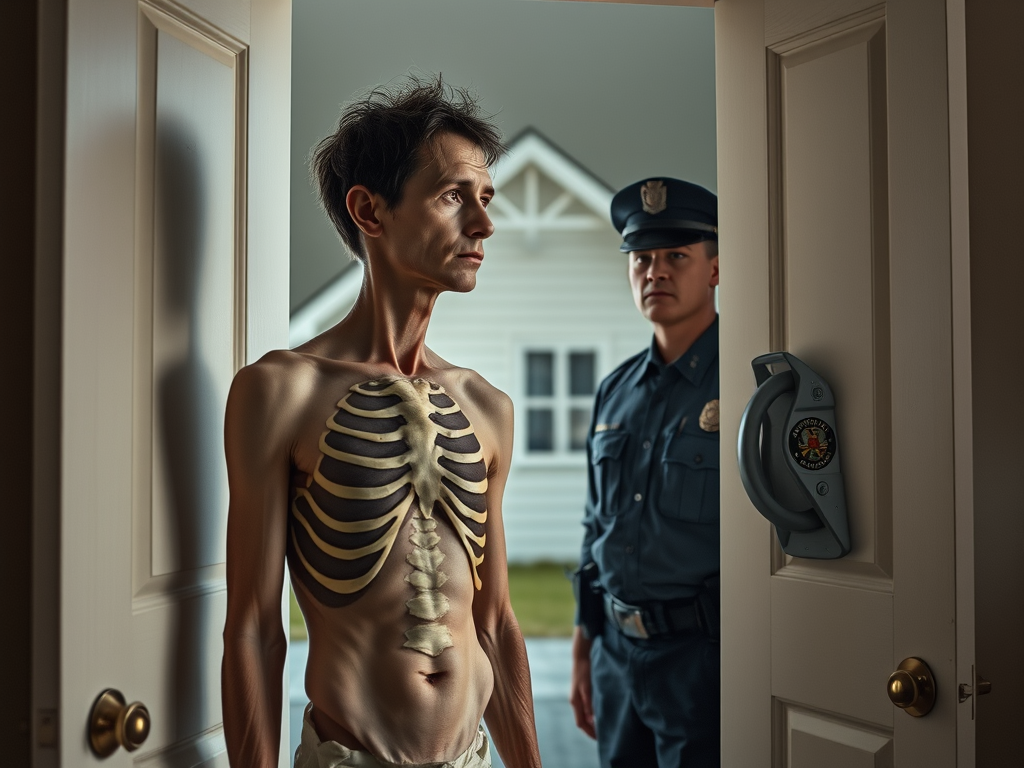
As Tim pulled up, he saw a porch light glowing. The house was a white A-frame with an overhang, modest but well-kept. Before he knocked, the door swung open. Inside, several people stood around, dressed as if they were about to go out for the evening.

Tim identified himself.

“Hello, I’m Officer Roff. I understand someone is missing?”

A woman stepped ahead. 

“I’m Kathy Gifford. Yes, my husband is missing. I don’t know how, but he’s gone!”

Tim raised an eyebrow.

“You don’t know how?”

Mrs. Gifford wrung her hands. 

“He’s skin and bones. He can barely walk. He’s on dialysis, and he probably doesn’t have long to live.” 

She took a deep breath. 

“He didn’t want me to go dancing with my friends tonight. He begged me to stay. He said it would be the last time I saw him if I walked out that door. But I thought he was just being dramatic.”

Tim had been a cop long enough to know that people sometimes exaggerated. He took her words with caution. 

“Did you search the house?”

Everyone nodded. 

“We did. He is not here.”

“What’s his name?”

“James Gifford, but he goes by Jimmy.”

Tim instructed everyone to stay put as he searched the house. He checked every room, corner, under sheets, and inside closets, calling out Jimmy’s name at every turn.

Ten minutes into the search, he entered the couple’s bedroom.

Mrs. Gifford sighed. 

“There’s no use looking in here. I’ve already searched everywhere.”

Tim wasn’t about to take her word for it.

“I have to be thorough before filing a missing persons report.”

He called out again. 

“Jimmy, this is Officer Roff with the Police Department. If you’re in here, tell me now! I’m about to search your room, and anything unlawful I find will result in criminal charges.”

Silence. Then, whispers from the people behind him.

Tim checked under the bed. Nothing was there. He turned to scan the room when Mrs. Gifford suddenly gasped.

“Oh my God, he has the gun!”

Tim spun around. 

“A gun? Don’t you think that’s something you should’ve mentioned earlier?”

His hand instinctively went to his sidearm, unsnapping the holster. He stepped to the closet door and pulled it open. It was dark inside. He clicked on his flashlight and swept the beam across the space. Nothing. Then, near the front of the closet, he saw a pile of laundry.

Beneath it, Jimmy lay motionless, staring straight up at the ceiling. A .25 Automatic rested on his bony chest.

Tim’s breath caught. 

“Jesus!” 

His outburst sent the people behind him scattering, running out of the house.

His training took over. Tim drew his weapon and leveled it at Jimmy.

 “Don’t move! Don’t reach for the gun!”

But Jimmy never flinched. He just looked up at Tim, his expression empty.

Tim quickly reached down, grabbed the pistol off Jimmy’s chest, and took a step back. 

“Get up. Get out of the closet.”

Jimmy slowly sat up, his frail body trembling.

Tim exhaled, his adrenaline still surging. 

“What the hell was this all about?”

Jimmy sighed. 

“I just wanted to scare her. Make her feel bad for leaving me. Make her think twice next time. That’s all.”

Tim shook his head. 

“You know, there are better ways to ask for attention.”

Jimmy just looked at him, defeated.

Tim crossed his arms. 

“Look, you have two choices. Either you voluntarily go to a mental health unit tonight, or you surrender this gun until Monday.”

Jimmy hesitated.

Tim pressed on. 

“You can come pick it up at the police department after you cool down. But I’m not walking out of here knowing I am back in two hours for a murder-suicide.”

After a long pause, Jimmy sighed. 

“Fine. Take the gun.”

Tim secured the weapon and turned back toward the doorway, where Mrs. Gifford and her friends had cautiously gathered again. He shook his head and muttered, 

“This is the Ruby Don’t Take Your Love to Town call to beat all others.”

One of the men raised an eyebrow. 

“What?”

Tim smirked. 

“You know, the song. The guy’s disabled, and his woman goes out dancing anyway. I never thought I’d see it play out in real life.”

The room fell silent.

Tim exhaled, holstered his weapon, and radioed in. 

“Unit 852, situation under control. Subject located. No further assistance needed.”

As he walked out, he couldn’t help but shake his head. 

“Damn country songs. They’re always right.”

The Long Holiday Journey: Family Moments on the Road

GROFF MEDIA 2024© TRUTH ENDURES IMDBPRO

Presented by benandsteve.com By: Benjamin Groff II©s

3–4 minutes

The Long Holiday Ride

Going Home
The Miller Family Going Home For the Holidays,

The old pickup truck rattled down the highway, packed tight with the Miller family. The father, Dale, gripped the steering wheel, his sharp eyes scanning the road ahead. Beside him, their mother, Janice, balanced a warm dish of sweet potatoes wrapped in a towel on her lap. Every thirty seconds she would let out a ‘hiss,’ and reach for the dash, her only comment to Dale’s driving. In the same seat, the children jostled for space. Clayton, the eldest at twenty-two, leaned against the window with his arms crossed. His younger sisters, Maggie and Rachel, squeezed in beside him. Then there was little Jack. He was the baby of the family, barely eight, and sat between his sisters. His feet barely touched the floor.


It was the same every year. They drove forty miles on bumpy roads. Gravel spat against the undercarriage. The chilly air sneaked in through cracks in the old truck’s frame. The family’s first stop was Janice’s side, the sprawling Henderson clan, where a sea of cousins, aunts, and uncles waited. The noon meal would be loud, laughter filling the air along with the scent of roasted turkey and homemade pies.

Clayton was ever the quiet one. He watched the open fields pass by. Meanwhile, Maggie chattered about the games she’d play with her cousins. Rachel checked the food in the back. She made sure nothing had tipped over. Meanwhile, Jack, restless, kicked his feet. He asked every ten minutes, “How much longer?”

When they finally pulled into the driveway of Janice’s childhood home, they heard the noise instantly. It hit them before they even got out of the truck. Kids ran around the yard. Adults stood in clusters laughing. The kitchen was an organized chaos of steaming dishes and busy hands. The family squeezed through the door, greeted by warm hugs, as coats were peeled off and plates were filled.

After lunch, games and stories took up the afternoon. Clayton found himself talking with an uncle about work on the ranch, while Maggie and Rachel gossiped with their cousins. Jack, after an impressive three plates of food, ran outside to join a game of tag. Dale was talking to his favorite brother-in-law, about a horse he was bringing along.

But there was no time to linger too long. As the sun began to sink, Dale gave the usual call: “Time to load up! We still got another stop!” They groaned and said their farewells. Everyone piled back into the truck with full stomachs. Hands waved through the window.

The second stop was Dale’s side, a quieter gathering with just his sister’s family. Fewer cousins, a calmer atmosphere, and jokes cracking from Bus and Virgil. Aunt Sis served coffee and pie, and the talk was slower, nostalgic—old family stories, memories of Christmases past.

Rachel curled up in a chair with a book while Maggie helped Aunt Sis in the kitchen. Jack, fighting off sleep, leaned against his mother, his eyes drooping. Clayton sat with his dad and uncle, talking about the year’s crops and the price of cattle.

By the time they left, the truck was much quieter. The ride home was filled with drowsy murmurs, Jack fast asleep against his mother’s side. Rachel and Maggie leaned on each other, the warmth of the long day still lingering. Dale, was dreaming of all the memories he had been reminded of while seeing his folks and kin.

As the headlights cut through the darkness, Dale glanced in the rear view mirror at his family. It was a long trip every year. Yet, as he looked at his wife and children—fed, happy, and together—he knew it was always worth it.

The holidays weren’t about the miles traveled, but the moments shared. He never had a million dollars, but he sure felt like it.

The Enduring Power of Love and Memory

GROFF MEDIA 2024© TRUTH ENDURES IMDBPRO

Presented by benandsteve.com By: Benjamin Groff II©s

2–3 minutes

A Bridge Beyond Time

The old oak tree, a silent witness to Sarah's life.
The old oak tree is a silent witness to Sarah’s life.

The old oak tree was a silent witness to Sarah’s life. It stood tall at the top of the hill, its branches stretching toward the heavens. Sarah sat on a wooden bench beneath its shade. She stared at the horizon, where the sun-drenched the sky in shades of gold and crimson. This was where she had always met her grandfather, who taught her about life, love, and faith. The oak tree, a symbol of strength and endurance, had always been a part of their meetings.

She can still hear his voice—soft yet firm, filled with wisdom. “Death takes the body, sweetheart, but never let it take your love. Love stays here.” He had placed his hand over her heart when he said it.

It had been a year since he passed. She still felt his presence in the whisper of the wind, even in the rustling leaves. The loss had been unbearable, but time had taught her something—her grandfather was not truly gone.

Her mind held the memories. They were like precious gems, each a testament to his life and their bond. She remembered sitting on his lap as a child, listening to stories of his youth. She recalled the scent of his old leather chair. He hummed an old hymn while tending his garden. She remembered the warmth of his calloused hand in hers during Sunday walks. Like a living tapestry, these memories kept him alive in her heart.

Her heart kept the love. Love did not disappear with death. It remained, placed safely within her, growing stronger each day.

And then there was faith. Faith whispered that this was not the end. It reassured her that she would see him again one day in a place beyond time and sorrow. This promise filled her with hope and anticipation.

Sarah reached into her pocket and pulled out a small wooden cross he had carved for her long ago. Clutching it tightly, she closed her eyes. “I miss you, Grandpa,” she whispered.

A gentle breeze brushed against her cheek. For a brief moment, she almost felt his hand on her shoulder. The sensation was so real that she almost felt the roughness of his palm and the warmth of his touch.

She smiled. Love remained. Memories endured. And faith promised—one day, they would meet again.

Remembering Slick Watts: NBA Star and Community Hero

GROFF MEDIA 2024© TRUTH ENDURES IMDBPRO

Presented by benandsteve.com By: Benjamin Groff II©s

Where you do not have to pay to read a person’s obituary.

2–3 minutes

https://www.theelinetwork.com/wp-content/uploads/2021/04/slick-watts.jpg

Donald Earl “Slick” Watts (July 22, 1951 – March 15, 2025)

Donald Earl “Slick” Watts was a beloved figure in basketball. He was also a cherished member of the Seattle community. He passed away on March 15, 2025, at 73. Slick was born on July 22, 1951, in Rolling Fork, Mississippi. His journey from humble beginnings to NBA stardom is a testament to his dedication. It also highlights his charisma and enduring spirit.

Slick’s basketball career began at Grand View Junior College, after which he transferred to Xavier University of Louisiana in 1970. There, he played under coach Bob Hopkins and alongside future ABA and NBA star Bruce Seals. He was a leader on the court. His leadership guided the Xavier Gold Rush to consecutive NAIA District 30 Championships in 1972 and 1973.

https://data2.nssmag.com/images/galleries/12643/slick-watts-headband-3.jpg

Undrafted in 1973, Slick’s relentless determination earned him a spot with the Seattle SuperSonics. Known for his signature bald head and headband, he quickly became a fan favorite. In the 1975–76 season, Slick led the NBA in assists and steals, the first player to achieve this remarkable feat. His tenure in the NBA also included stints with the New Orleans Jazz and the Houston Rockets.

Beyond his professional career, Slick’s contributions to the Seattle community were profound. He dedicated many years to education. Slick Watts shared his skills and gifts as a physical education teacher at several elementary schools. Slick also served as a basketball coach at Franklin High School. His commitment to nurturing young talent and promoting physical fitness left an indelible mark on countless students.

In 2001, Slick faced a serious health challenge with sarcoidosis but demonstrated resilience and strength in his recovery. In April 2021, he suffered a significant stroke. He faced rehabilitation with the same determination that characterized his life on and off the court.

Slick Watts is survived by his son, Donald Watts. Donald followed in his father’s footsteps. He played basketball at the University of Washington and later contributed to the sport as a coach and mentor. Slick’s legacy is etched in basketball history. It also lives in the hearts of those he inspired through community engagement and unwavering spirit.

https://www.si.com/.image/c_fill%2Cw_1440%2Car_16%3A9%2Cf_auto%2Cq_auto%2Cg_auto/MTgwMjkzMDE5OTIzMTMwMjIw/slick-watts.jpg

A public memorial service will be held in Seattle to honor Slick’s life and legacy. Details will be announced in the coming days. Instead of flowers, the family asks for donations to The Watts Foundation. This supports youth basketball programs and continues Slick’s lifelong commitment to empowering the next generation.

Slick Watts will be remembered for his exceptional basketball court skills. He profoundly affected the community and was dedicated to education. His resilience in the face of adversity inspired him.

A Personal Journey Through America’s Must-See Cities

GROFF MEDIA 2024© TRUTH ENDURES IMDBPRO

Presented by benandsteve.com By: Benjamin Groff II©s

3–4 minutes

A Few Of The Places I’ve Been

Photo by Rajiv Krishnan on Pexels.com

A few places I’ve been are not just locations on a map. They are experiences, sensations, and moments that can’t be conveyed simply through words or photographs. You would have to have been there to understand.

Take the Grand Canyon, for example. No photo can capture its overwhelming vastness. Standing on its rim, you stare into the depths of time carved into the earth. The wind carries whispers from a million years ago, and the sun paints ever-changing shadows along the canyon walls. To see a picture is to miss how the air smells. You miss how the silence hums. Your perspective on life shifts when faced with something so immense, leaving you in awe of nature’s grandeur.

Groff Media

Washington, D.C., is another place to experience and be understood. Walking among its monuments and institutions is like stepping into a living history book. The weight of past decisions and the ongoing creation of history are tangible. You stand where the nation’s most influential figures have walked. It fills you with a profound connection to the past. It also connects you to the current time. It makes you feel like a part of history.

Groff Media

Then resort cities like Palm Springs, California, Tampa, Florida, and Las Vegas, Nevada. Each city offers a unique atmosphere that cannot be fully captured without being there.

Palm Springs feels like a cinematic escape. It is where you can brush shoulders with a movie star. You will find yourself surrounded by towering mountains on one side. There is an endless sea of wind turbines on the other. It’s all swimming pools, sunshine, and Hollywood glamour between the two. It makes you feel like you’ve stepped into the pages of a luxury magazine.

Tampa, Florida, has its distinct charm. The old cigar district, Ybor City, takes you back in time with its historic brick streets and family-owned restaurants. It offers an eclectic mix of tattoo parlors, jewelry shops, and late-night clubs. Just a short drive away, the sun-drenched beaches of St. Pete offer the perfect contrast—soft sand, rolling waves, and the scent of saltwater in the air.

Fremont Street
Groff Media “A Night On The Town”

Las Vegas is a city of dual identities. The Strip dazzles with its colossal casinos, neon lights, and grand-scale entertainment, a modern marvel of excess and spectacle. But downtown, the Fremont Street Experience transports you to old Vegas. Here, the first hotels still stand beneath a digital canopy of flashing lights synchronized to music. Street performers, quirky shops, and hidden gems make it an adventure.

Salt Lake City, Utah, left an impression on me not just for its skyline but for its architecture. The intricate designs of its buildings make the city itself a work of art. The influence of the Mormon faith is woven into nearly every aspect of its layout and culture. This influence gives the town a sense of unity and purpose. It is both fascinating and humbling.

Oklahoma
Oklahoma’s Last House Standing Groff Media

And then, there’s Oklahoma and Kansas—where the wind is an ever-constant force, shaping the land and the people. A 40-mph breeze is just another Tuesday, with gusts often reaching 70 mph. Tornadoes and earthquakes occur sometimes at the same time. Many people think Interstate 40 and Interstate 35 are the most significant things to come out of those states. These highways offer an escape route from the relentless winds sweeping across the plains.

Each of these places has left an imprint on me. It’s not just because of what they look like. It’s also because of what they feel like. And no matter how well I describe them, you’ll never truly know unless you’ve been there yourself.

The Man Who Belonged: A Dark Psychological Mystery

GROFF MEDIA 2024© TRUTH ENDURES IMDBPRO

Presented by benandsteve.com By: Benjamin Groff II©s

4–6 minutes

The Man Who Belonged

Ethan Caldwell woke up every morning with the certainty that he was where he was supposed to be. His town, Dunridge, was a place people left but rarely arrived at. It was a quiet, tree-lined community. The roads curved in familiar ways. The seasons changed precisely when expected. The faces at the local diner never seemed to age.

He belonged here. He had always belonged here.

And yet, something was wrong.

It wasn’t how he looked—Ethan was an ordinary man with an ordinary life. He had ten fingers, ten toes, and a name that didn’t feel borrowed. Ethan had memories of childhood scraped knees. He remembered teenage love. His father taught him how to drive down the old county road. He worked at the hardware store. He knew which coffee shop made the best brew. He navigate the town with his eyes closed.

But deep within him, something itched. It wasn’t a feeling of displacement—it was the opposite.

He fit in too well.

There were no awkward silences when he spoke to strangers. No one ever misheard his name or mistook him for someone else. When he ordered at the diner, the waitress nodded as if she had already known his choice. His keys never went missing. The mail always arrived right when he expected.

He tried to shake the feeling, but it settled deeper.

One night, he walked the streets of Dunridge in search of something—he didn’t know what. The town was calm, quiet, and lit by the amber glow of streetlamps. As he passed the shops, he caught his reflection in the glass.

He looked at himself. Normal.

But the reflection wasn’t watching him.

It was waiting.

A chill ran down his spine, and Ethan took a step back. 

The moment he did, the feeling disappeared. He was himself again, the same Ethan Caldwell who had lived here his whole life.

But the thought lingered: Had he lived here his whole life?

The next day, he tried to recall his first memory of Dunridge. It was not just any memory. It was his first one, the earliest thing he remembered.

But there was nothing before the age of twenty-seven.

That wasn’t right.

He had childhood memories. He had school pictures. He had friends who swore they’d known him since grade school.

Hadn’t they?

He asked his neighbor, Mrs. Wallace, how long she had lived in Dunridge. She smiled, hands on her porch railing.

“Oh, all my life.”

“And me?” 

He asked.

She blinked, her smile unwavering. 

“Why, Ethan, you’ve always been here.”

He swallowed. 

“Right. Always.”

Mrs. Wallace nodded as if the question itself was odd. 

“You belong here, Ethan. Always have.”

His stomach twisted.

Somewhere in the distance, a clock tower chimed. Ethan had never noticed it before.

And suddenly, he was sure—something was wrong with this place.

Or maybe something was wrong with him.

That night, incapable of shaking the feeling, Ethan wandered the streets again. The town was as still as ever, its perfection unnerving. He passed the grocery store, the barbershop, and the town hall. Then he found himself in front of the library—its doors unlocked, though he had never seen anyone inside past closing.

He stepped in.

Dust motes filtered in the air, interrupted by his presence. The smell of old paper filled his nostrils. He ran his fingers along the spines of books until he reached the town records. He pulled one down and flipped through its pages.

And his blood ran cold.

There were no births recorded in Dunridge. No deaths. Only arrivals.

A new book, bound in leather, sat on a lower shelf. Inside, Ethan found the names of the people he’d known all his life next to brief descriptions. Scanning the pages, his hands trembled as he read:

Ernest Thatcher – Arrived: October 12, 1956 – Deformed hands, two thumbs on the left hand.

Lillian Monroe – Born without eyes

Samuel Dwyer – three-legged, five-arms, ousted by family at age 1

Patricia Thorne – Hairless, extra digits on each hand

The list went on. Each name was followed by a peculiarity—some mild, others grotesque, all rejected from wherever they came.

Ethan hesitated before flipping to the last page, where his name should have been. And when he found it, he almost dropped the book.

Ethan Calloway – 27 years old. No known origin. No memories before arrival. There is no past to recall. No home before Dunridge.

His breath hitched. His hands shook.

The town knew. All the townsfolk knew.

They were all misfits. They were cast out, discarded, and abandoned. They were left to disappear into a world where their abnormalities were masked. No one asked questions in this world. No one looked out of place because everyone had become perfect.

Even Ethan himself.

But why was he here? Why was he the only one who looked –– normal?

He turned to the mirror again, staring at his reflection under the streetlight.

And then, for the first time, he indeed saw himself.

He saw what he had been blind to all along.

And that’s when the horror set in.

Ethan had ears where his nose should be. There was a mouth where his ears should go. A nose sat on top of his head. His eyes looked back at him from his throat. Then, Ethan wished that he had never questioned his being. 

Sometimes, it is best to not change memories.

Memories and Mischief: The Summer of 1980

GROFF MEDIA 2024© TRUTH ENDURES IMDBPRO

Presented by benandsteve.com By: Benjamin Groff II©s

2–4 minutes

The Summer of 1980

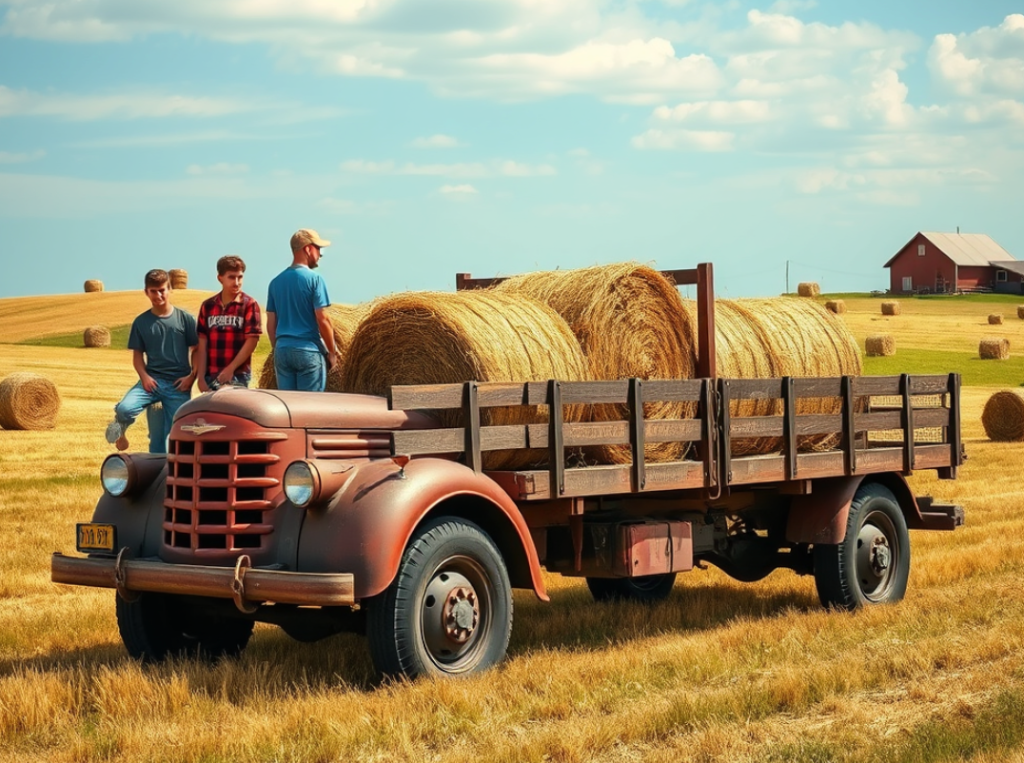
The summer of 1980 would be remembered forever. It was the year three friends—Bub, Johnny, and Clem—took to the hayfields, hauling bales for farmers across the county.

They set out to help the local farmers with two old flatbed farm trucks. The farmers struggled to find enough hands to get their hay cuttings into the barn. What started as a way to earn cash quickly became much more significant.

The boys took turns driving. Two worked at the back of the truck, stacking and securing the bales. They did this while bumping along dirt roads. When they reached a barn, all three pitched in to unload. It was grueling work. It was hot, dusty, and backbreaking. They made a decent sum at fifteen cents per bale when split three ways. More importantly, they earned something money couldn’t buy: the respect of an entire community. Their work ethic, reliability, and bargain rates made them invaluable, and grateful farmers often sweetened the deal with generous tips.

Word spread fast. Soon, the boys had more work than they handled. They got their hands on a third truck and fixed it up. Each took charge of their own rig. They hired extra help to keep up with demand. By summer’s end, the three had hauled an unprecedented amount of hay. No one remembered seeing so much in the valley.

But it wasn’t all work.

The boys had a playful streak, and the town delighted in their antics. One night, Clem slept soundly in their makeshift bunkhouse. Bub got the idea to spread hair remover gel over Clem’s hairy legs. Hours later, Clem woke to a strange smell. He wrinkled his nose. He assumed one of the others had eaten something bad. He groggily rolled over and went back to sleep, unaware of the smooth patches forming on his legs. The next day, Clem discovered the damage in the shower. He saw the damage and heard Bub and Johnny howling with laughter outside the bathroom door.

Clem didn’t get mad. He got even.

At noon, he played the perfect gentleman. He told Bub and Johnny that he held no grudges. He wanted to treat them to lunch. They stayed behind at the barn. He ran to the burger joint and ordered the most enormous double cheeseburgers. There was also a mountain of fries and chocolate malts. For himself, he ordered vanilla. Before returning, he slipped some laxatives into the chocolate malts.

The unsuspecting pair devoured their meal, thanking Clem for his generosity, utterly unaware of the payback coming their way. Four hours later, they were running to the bathroom non-stop, clutching their stomachs, confused and miserable. Clem stood back, arms crossed, grinning. Their “cleaning out” lasted for days. When the town caught wind of the prank, it only added to the growing legend of the hay-hauling boys.

The mischief didn’t stop there.

There were ambushes, booby traps, and endless laughter. Even with their busy schedule, they found time to fish. They caught some of the biggest catfish the town had ever seen.

By summer’s end, they had built more than a successful hay-hauling business—they had created memories that would last a lifetime. Long after the last bale was stacked, folks in town would still talk about the summer of 1980. During that summer, three hardworking boys became the heart and humor of the valley.

Echoes of War: A Bond Forged in Nightmares

GROFF MEDIA 2024© TRUTH ENDURES IMDBPRO

Presented by benandsteve.com By: Benjamin Groff II©s

2–3 minutes

Echoes of War

Chad Branson woke in a cold sweat, heart hammering against his ribs. The dream had come again—flashes of burning villages, the thunder of distant explosions, the acrid stench of smoke. He had never been to war. He had never even held a gun. Yet, the memories felt real, like echoes of a life he hadn’t lived.

It had started five years ago, these violent dreams that left him breathless and shaken. He had tried therapy, meditation, and even medication, but nothing dulled the visions. He had no explanation—until the day he met him.

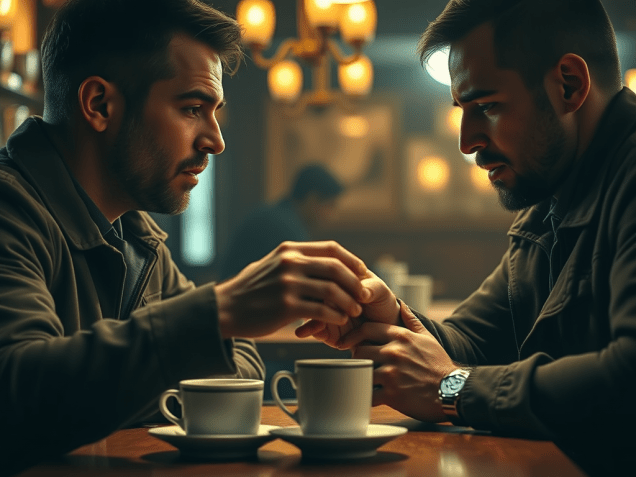
The chance meeting happened in a quiet café, a place Chad often escaped to in hopes of finding solace. That morning, as he reached for his coffee, his hand bumped into another.

“Sorry,” 

He murmured, glancing up—and froze.

The man before him had eyes that mirrored his own exhaustion. His jawline was sharp, and faint scars traced his brow. When he spoke, his voice carried a weight. 

Chad recognized it but couldn’t place it.

“Chad Branson,” 

The man said, extending a hand.

Chad hesitated. 

“That’s… my name.”

The other man chuckled. 

“I know. That’s why I introduced myself.”

A strange silence stretched between them before Chad spoke again. 

“Do I know you?”

The other Chad was an ex-soldier and a survivor of two deployments. He was also the bearer of the nightmares Chad had somehow inherited. Chad watched him closely.

“No,” 

He said at last. 

“But I think we’ve been living the same war.”

Over the next weeks, they talked, comparing details.

Every dream Chad had lived, the other had experienced firsthand. The battlefield in his mind had once been real. The pain, the horror—it belonged to this man, but somehow, it had become part of Chad, too.

Neither explained it, but they didn’t need to. In their shared pain, something else took root: understanding and affection. A bond neither expected nor deny.

One night, as they sat in the dim glow of Chad’s apartment, he reached for the soldier’s hand. 

“Maybe the universe gave me your memories for a reason,”

He murmured. 

“Maybe I was always meant to find you.”

Echoes of War
Echoes of War

The other Chad squeezed his fingers gently, a small, weary smile forming. 

“And maybe,” 

He whispered, 

“We can finally find peace together.”

The nightmares didn’t seem so heavy for the first time in years.

For the first time, neither of them was alone.

The Last Drop: A Cowboy’s Journey of Sacrifice

GROFF MEDIA 2024© TRUTH ENDURES IMDBPRO

Presented by benandsteve.com By: Benjamin Groff II©s

2–4 minutes

The Last Drop

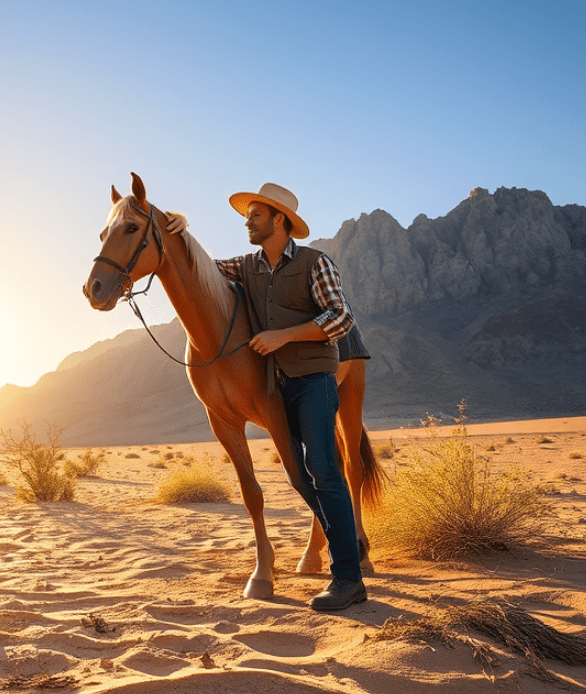
The desert stretched endlessly before him. A sea of golden sand and jagged rock shimmering under the merciless sun. Nathan Calloway, a weathered cowboy, pulled his bandanna higher over his nose. He squinted against the glare. Nathan’s loyal companion, Dusty, plodded steadily ahead, hooves sinking into the loose sand. It had been days since they left the last water hole. The journey across this godforsaken land felt like it would never end.

Nathan had one canteen slung across his saddle. He’d filled it to the brim at the last watering hole, which seemed a hundred miles behind them now. Each time Nathan drank, he made sure Dusty drank, too. He’d pour water into his old, sweat-stained hat, holding it steady while the horse lapped it.

Miles passed, the sun crawling toward the horizon without relief. Nathan should’ve run dry by now. His canteen weighted it, sloshing like he had just filled it. He didn’t question it—just kept pouring for Dusty, letting the horse drink before taking a sip himself.

By the time they reached the halfway mark, the world felt different. The heat played tricks on Nathan’s mind, distorting the horizon and bending the sky. The rhythmic clopping of Dusty’s hooves became a heartbeat against the silence.

Then, Dusty spoke.

“Thanks, partner,” 

The horse said, his voice deep and smooth as rolling thunder.

Nathan blinked hard, his throat tightening. 

“What was that?”

“For the water,”

Dusty said, shaking his mane. 

“I appreciate it.”

Nathan swallowed. He knew heat can make a man see things and hear things that weren’t real. But this felt different. He’d spent years with Dusty—maybe it just took this long to finally listen to him.

“You’re welcome, old boy,”

Nathan murmured, tipping the canteen over his hat again. Dusty drank, his dark eyes filled with something knowing, something grateful. The horse seemed to understand the sacrifice Nathan was making for him. Nathan, in turn, felt a deep sense of responsibility and care for his companion.

The two trudged on, man and horse, surviving together. The sun burned down. Their shadows stretched thin. The canteen never emptied as long as Nathan gave to Dusty first.

Then, just as the town rooftops shimmered into view, something changed.

Nathan stopped. His body ached, exhaustion weighing him down. The canteen felt lighter now. The end was so close—only a half-mile to go. He took a long, deep drink, the first he hadn’t shared. The water was warm but pure, sliding down his throat. Nathan’s hands trembled as he lowered the canteen.

Dusty faltered. The horse’s breath came shallow, his steps unsteady.

Nathan hesitated. He looked at the canteen, now feeling light as air. Nathan shook it—nothing.

The world spun. The last stretch of desert blurred. Nathan swayed in the saddle.

A mile outside town, they found him. The townsfolk rushed ahead, lifting the man from his horse, but Nathan Calloway was gone. Dusty stood by, head bowed, his sides heaving. The canteen dangled empty from the saddle, not a drop left inside.

“You almost made it,”

Someone whispered.

No one noticed Dusty raise his head slightly, his dark eyes glistening with something almost human. He looked toward where his rider lay, then toward the empty horizon.

Deep in the desert’s silence, a voice like rolling thunder whispered,

“We made it.”

The Lost Shopper: A Remarkable Time-Travel Mystery

GROFF MEDIA 2024© TRUTH ENDURES IMDBPRO

Presented by benandsteve.com By: Benjamin Groff II©s

3–4 minutes

The Lost Shopper

Harold Wexley left his house on a crisp October morning in 1977. He carried a shopping list, which his wife, Martha, had scribbled on the back of an old envelope. The list read bread, milk, eggs, and a pound of ground beef. That was all he needed. The sun was high, and the air smelled like damp earth. He had a pocket full of change jingling as he walked toward Miller’s Grocery, just six blocks away.

Harold never returned home.

Martha waited—first hours, then days. The police took her report, shook their heads, and assured her that most missing persons had turned up. Neighbors speculated wildly. Some thought maybe Harold had amnesia. Others guessed he’d run off with some floozy. He had just vanished into thin air.

The years passed, and Martha grew old. The town changed. Miller’s Grocery shut down in the ’90s, replaced by a chain supermarket. The world moved on.

Then, in 2024, something impossible happened.

Found Where He Was Lost

At precisely 9:17 a.m. on a Saturday, an employee at the local SaveMore supermarket screamed, sending a ripple of confusion through the store.

Harold Wexley stood in aisle seven, between the cereal and baking goods. He wore the same corduroy jacket. He also wore brown slacks and scuffed loafers. These were the clothes he wore when he left home 47 years earlier. Harold was still clutching the shopping list in his hand. His hair had not grown. His skin had not aged.

When the police arrived, Harold blinked at them in utter confusion.

“What’s all the fuss about?”

He asked, his voice scratchy from disuse.

“I just came in to pick up a few things.”

The officer, utterly dumbfounded, asked,

“Sir, do you know what year it is?”

Harold laughed.

“What question is that? It’s 1977.”

The grocery store manager rushed ahead.

“Sir, this place wasn’t even here back then. This store opened in 1999!”

Harold frowned, rubbing his temple. He looked down at the list in his hand. The ink had not faded. The paper wasn’t brittle. His clothes smelled faintly of Martha’s lavender detergent.

But Martha was gone. His house was gone. His entire world had disappeared. He had been standing in this store, this spot. It was as if no time had passed.

The Mystery Remains

Scientists, journalists, and conspiracy theorists all descended upon Harold. Tests revealed that he was, biologically, still 42 years old. He remembered nothing beyond walking into Miller’s Grocery on that fateful day. He hadn’t eaten in 47 years. He hadn’t aged.

Some claimed he had slipped into a time loop. They believed the store had somehow preserved him in a pocket of frozen time. Others whispered about aliens, government experiments, or divine intervention.

Harold, meanwhile, was only concerned with one thing.

“Can someone tell me where my wife is?”

No one had the heart to answer him.

Epilogue

Harold never adjusted to the modern world. He refused to believe that the year was 2024, even when he saw flat-screen TVs and self-checkout kiosks. He spent his days wandering the grocery store, staring at shelves full of strange new products. He was looking for the familiar brands of his youth.

One night, after closing, a janitor was working late. He swore he saw Harold standing in aisle seven. Then he blinked, and Harold was gone.

The next day, an old yellow envelope with a shopping list was found on the floor. It was written in Martha’s neat handwriting. It seemed to have fallen from Harold’s hand in confusion.

No one ever saw Harold again. Sometimes, in the stillness of the grocery store, employees swore they heard the faint jingle of coins. The coins seemed to come from a pocket that wasn’t there, as if Harold’s spirit still wandered the aisles.

And sometimes, in the stillness of the grocery store, shoppers would listen closely. Even they swore they heard the faint jingle of coins. The sound came from a pocket of a man’s pants. It was from Harold, who had disappeared again.

The Legend of the Wishing Tree: A Magical Tale

GROFF MEDIA 2024© TRUTH ENDURES IMDBPRO

Presented by benandsteve.com By: Benjamin Groff II©s

1–2 minutes

Deep in the heart of the Whispering Wood stood an ancient oak known as the Wishing Tree. Its gnarled branches stretched toward the heavens. The tree’s roots twisted deep into the earth. The soil received whispering secrets from it.

The legend passed from generation to generation. It told of the tree’s magic. The tree would grant a single wish to those who truly believed.

Many travelers sought the Wishing Tree. Only a rare few with pure hearts and sincere desires ever found it. The forest guided them. The wind carried soft murmurs. These murmurs led them down winding paths until they stood before the towering oak. Beneath its emerald canopy, the air shimmered with an almost otherworldly glow.

One such seeker was a young girl named Elara. She had heard the tales from her grandmother, who had once made a wish upon the tree as a child. With hope in her heart, Elara ventured into the forest. She followed the rustling leaves and the whispering wind. Soon, she stood before the grand tree.

Kneeling upon the moss-covered roots, she closed her eyes, her heart beating with anticipation, and whispered her wish.

“I wish for our village never to go hungry again.”

Elara’s voice carried the hope. It also carried the love of her people.

The tree remained silent, its leaves barely stirring. But then, a single golden acorn dropped into Elara’s hands. She gasped as warmth spread through her fingers.

Understanding the tree’s silent message, she carried the acorn home and planted it in the center of her village.

Days turned to weeks, and soon, a miraculous tree sprouted. Its branches bore fruits of all kinds—apples, pears, oranges, and even wheat grains. The villagers rejoiced, their hearts filled with joy and relief, never knowing famine again. Elara knew, in her heart. Now a guardian of the magical grove, she understood that belief and kindness were the magic behind the Wishing Tree.

And so, the legend continued, whispered among the trees, waiting for the next believer to find their way.

A Life-Changing Dilemma at Midnight

GROFF MEDIA 2024© TRUTH ENDURES IMDBPRO

Presented by benandsteve.com By: Benjamin Groff II©s

4–6 minutes

The letter arrived on a Wednesday, sealed with a wax insignia that Alex didn’t recognize. There was no return address, just his name scrawled in an elegant, old-fashioned script. The envelope itself was thick, the parchment that felt out of place in the modern world.

He hesitated before opening it, but curiosity won out. The letter inside was written in the same exquisite handwriting:

Mr. Alex Carter,

Your presence is requested at Blackwood Manor at precisely midnight this Friday. Do not be late. Bring only your wits, and tell no one of this invitation. All will be explained upon your arrival.

This is not a request.

There was no signature.

Alex stared at the letter, his pulse quickening. He had never heard of Blackwood Manor and wasn’t in the habit of receiving cryptic invitations. A prank? Or a mistake? But something about the paper’s texture, the commanding tone, and the archaic penmanship made him doubt that. He felt he had just been drawn into something far more significant than himself.

He spent the next two days researching. There was no official record of Blackwood Manor. Late one night, he found a reference buried in an obscure historical forum. It mentioned an estate on the outskirts of town, abandoned for nearly a century. There were no photographs, no listed owners, just a footnote about a once-prominent family that had vanished without explanation.

At midnight on Friday, Alex stood before the imposing iron gates of the manor. His heart pounded in his chest. The estate, a grand structure that seemed to defy the laws of time, loomed in the darkness. Its ivy-covered walls and Gothic architecture were barely illuminated by the sliver of moonlight breaking through the clouds. Despite their rusted appearance, the gates creaked open at his touch as though they had been waiting for him.

He stepped ahead, the gravel crunching beneath his feet. The air was thick with something replaceable, a tension that made his skin prickle. The massive wooden doors at the entrance groaned open before he knocked.

From a source unknown to Alex, a smooth and knowing voice called from within the manor, echoing through the night.

“Welcome, Mr. Carter. We’ve been expecting you.”

And with that, the door shut behind him, sealing his fate. The candles along the grand hallway flickered to life, casting eerie shadows on the walls. A sudden whisper echoed through the chamber, though no one was visible. Then, the voice returned, this time closer.

“There are three doors to which you must pass through to find what you have lost. If you can’t find your way through all three doors, you will not survive.”

Alex’s breath caught in his throat. He turned, expecting to see the speaker, but the hallway was empty. As he took another step ahead, the world around him seemed to flicker—like a light struggling to stay on. His head pounded, and suddenly, the floor beneath him dissolved. He was falling into a void of darkness, his senses overwhelmed by the absence of light and sound.

Then, a distant beeping noise. Faint voices. A feeling of weightlessness.

Somewhere far away, Alex lay in a hospital bed, his body unmoving. The monitors beeped steadily, measuring a life that hung in the balance. He didn’t know it yet, but the letter, manor, and voice were all part of something more profound. It seemed as though something was urging him to fight his way back.

The first door loomed before him, its frame flickering like a mirage. His hands trembled as he reached for the handle, knowing that whatever lay beyond was the key to his survival.

He entered and found he had to walk across a tightrope to reach the second door. Alex only saw blackness below. He was afraid of heights and not very well-balanced. Alex attempted to steady himself on the rope and inch across, but he couldn’t stay balanced. He returned to the first door and decided to belly crawl across the rope to the second door. It took longer, but he eventually got there. 

At the second door, he found it locked by a combination. Only two numbers would open it. Alex tried combinations endlessly, his heart pounding in his chest, until finally pushing in 00, and the door opened. Inside was a spinning floor with different sections that would align with the third door. If he chose the right section, the third door would open. If not, the floor would continue spinning. Alex attempted six different sections before choosing the straightway section that led him to the third door. At the door, he can push or pull. Depending on which way he opened the third door would decide if he lived or died.

Standing at the third door, Alex contemplated which way to open it. His life flashed before him from when he was a baby to his current age. He saw friends and relatives who had passed and noticed things he had forgotten. It would be a gamble. He knew he couldn’t go back. All the doors behind had disappeared once he went through them. His situation hit him with immense gravity. He realized that his decision would decide his fate. 

This was it. Would Alex pull or push? He decided to push. As he went through the door, a bright light appeared. Voices loudly chattered. It was as if Alex was opening his eyes for the first time. Then he heard his mother’s voice, 

“My God, his eyes are open; Alex, can you hear me?”

Alex, looking around at a sterile room trying to figure out where he had ended up, replied –––

“Yes, Ma, I chose to push through the door.”

Boise City: The Unusual WWII Bombing Incident

GROFF MEDIA 2024© TRUTH ENDURES IMDBPRO

Presented by benandsteve.com By: Benjamin Groff II©s

2–3 minutes

You have heard the news. South Korean forces mistakenly bombed a civilian area, thinking it was a training site. You ask how such a mistake happened? But did you know it isn’t the first time it has happened?

It happened in the United States when the U.S. Army accidentally bombed Boise City, Oklahoma, on July 5, 1943, during World War II. The attack on the homeland wasn’t the only time the Army bombed the continental United States during the war. It was a friendly fire incident. There have been other cities bombed in the United States by mistake, in Texas and Nebraska. The United States has even accidentally bombed Switzerland during World War II, killing over 80 people. But this story is the one I have heard described with color and moments of community involvement.

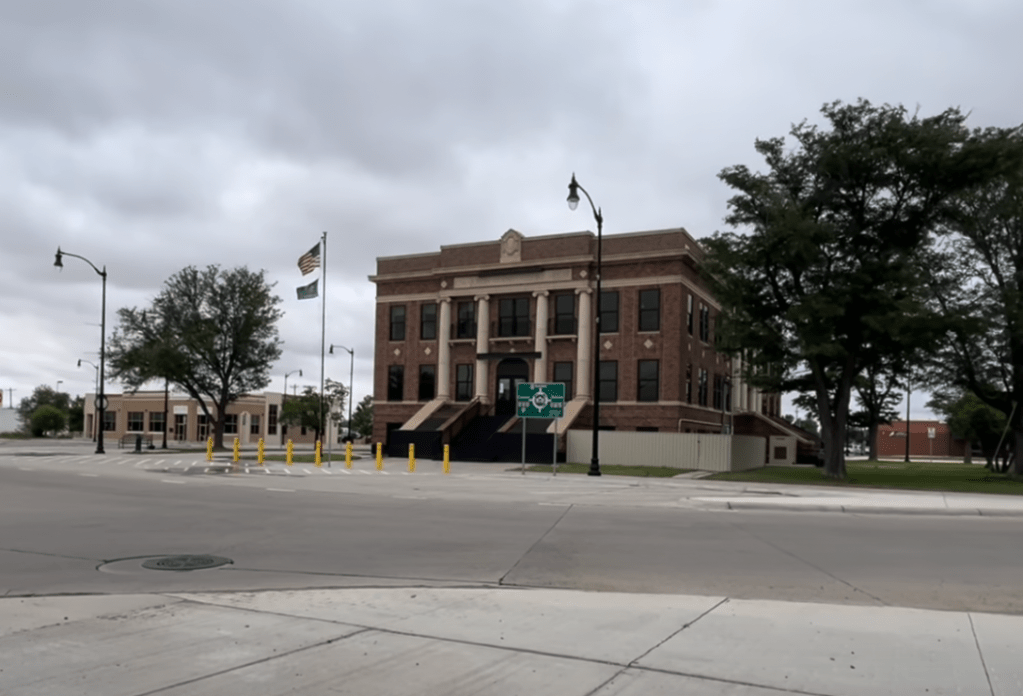
Cimarron County Court House
Cimarron County, Oklahoma

I have visited Boise City, and locals will tell you the pronunciation is, as you would say, “Boys City.” The town is small. You arrive at the courthouse circle as you enter from the east or north. A highway leads west into New Mexico. A trail takes you south toward Texas. The better highway is east of the town. Colorado is just up the road to the north. Kansas is just a jog to the Northeast. More of Oklahoma awaits out to the east. The community hasn’t grown much since it first sprung up.

Hearing locals tell of what happened in Boise City, Oklahoma, is somewhat comical. Nonetheless, it would not have been so funny to those who lived through the experience.

It happened on July 5, 1943.

A B-17 Flying Fortress bomber was on a nighttime training mission from Dalhart Army Air Base in Texas. It mistakenly dropped six practice bombs on Boise City’s town square. These bombs were mostly filled with sand and small charges.

What Happened?

  • The bomber crew was supposed to hit a designated target outside Conlen, Texas. They got lost and mistook Boise City’s well-lit downtown for their practice site.
  • At around 12:30 AM, the first bomb landed near a garage, shaking the town awake.
  • Five more bombs followed, hitting areas near businesses, a church, and a residential district.
  • Miraculously, no one was injured, and the damage was minimal.

Aftermath

  • The Army quickly apologized for the mistake.
  • The town embraced the incident as a quirky part of its history.
  • Today, Boise City proudly commemorates the event with a replica bomb displayed in the town square.

It remains one of the most unusual incidents in U.S. military training history! Would you like any more details?

If you ever go through Boise City, Oklahoma, stop and have a meal. As you travel west, you will hear more stories. These stories are about people living in what many consider the last town worth stopping in. Then, you move on to your next stop.

Ramone’s Lonely Adventure: A Tale of Discovery

GROFF MEDIA 2024© TRUTH ENDURES IMDBPRO

Presented by benandsteve.com By: Benjamin Groff II©s

4–6 minutes

Ramone was not supposed to go to town without his older siblings. Nonetheless, he felt he had to on this day. He had awoken without finding anyone in his home. The house was empty. The animals had disappeared. Even the dogs were not there. They typically stayed at home when everyone had to go to work. 

Ramone was alone. There was no reason he knew of for this. The boy had woken up in a strange place. He was stuffed under a bed and pushed between a bed and the wall. He thought he must’ve had a dream and wandered there. Why else would he be in such a place? Ramone was never left alone and was beginning to worry something terrible had happened.

Ramone crawled out from under the bed, his heart thumping in his tiny chest. He rubbed his sleepy eyes, trying to make sense of the eerie silence around him. The morning light poured through the cracked window. Yet, the house felt different. It was empty and hollow as if no one had been there for a long time.

He ran to the kitchen. He expected to see his mother at the stove. He also thought his older sister would scold him for being late for breakfast. Instead, the table was bare. There was no food, no dishes, nothing. He called out, his voice small against the stillness.

“Mamá?”

No answer.

He hurried outside, stepping onto the dusty ground with bare feet. The corral was empty. The goats, the chickens—gone. Even the dogs that always lounged in the shade were missing—a lump formed in his throat. Something was wrong.

Ramone had often been told not to go to town alone, but fear overpowered any thoughts of disobedience. If his family wasn’t home, maybe they had gone to town for help. He had to find them.

He slipped on his too-big sandals and started down the narrow dirt path that led to town. The sun was climbing higher, and the heat pressed against his small frame. The closer he got to town, the more his stomach twisted.

Something felt –– off.

When he reached the outskirts, he stopped. The usual chatter of morning markets and passing cars was missing. The streets were strangely quiet. Shops stood open, but no one was inside. Tables were set with half-eaten meals as if people had left in the middle of breakfast.

His breath came in quick gasps. His family wasn’t there.

No one was.

Ramone was alone in an empty town.

And then, a sound broke the silence from somewhere down the street—soft, slow footsteps echoing against the abandoned buildings.

Someone was coming. The footsteps became louder. It became clear that a cart being pulled by a donkey was coming around the corner. But there wasn’t a person with it.

Ramone’s heart pounded in his chest. The cart rattled onward, its wooden wheels creaking against the empty street. The donkey plodded ahead, its ears flicking as if listening for a command that would never come.

But there was no driver.

Ramone took a step back, his tiny hands trembling. His words from the day before echoed in his mind. He yelled words after getting into trouble for mischief that had found its way into his life.

“I wish I was the only person in the world!”

Had he wished for this? Had his anger somehow made it real?

His legs felt heavy as if the ground itself wanted to pull him down. He turned in circles, hoping—praying—to see someone step out of a doorway or call his name. But no one did.

Tears welled in his eyes. He hadn’t meant it. He didn’t want to be alone.

The cart rolled past him, and the donkey’s slow, steady steps were the only sound in the world.

Ramone squeezed his eyes shut, shaking his head.

“Wake up, wake up!” 

He whispered, pressing his fists against his temples. 

“This has to be a dream.”

He forced his eyes open.

The town was still empty.

He ran, his sandals slapping against the dusty road. He ran past the silent market. He ran past the still houses. He passed the church where the bells should have been ringing. But they weren’t ringing.

And then—he saw his home.

It looked just as he had left it. The door was slightly open, swaying in the wind.

He rushed inside, desperate. 

“Mamá!”

he cried.

“Papá! Anybody!”

Silence.

Ramone stumbled into his room, his breath coming in sharp gasps. The bed was there. The blankets were rumpled as if someone had pushed them aside in the middle of the night.

His knees buckled, and he collapsed onto the mattress. He curled up, his tiny body shaking.

“I take it back,” 

He whispered into the fabric. 

“I don’t want to be alone. I want my mamá. My papá. My sisters. Please…”

The weight of exhaustion pressed down on him, his eyelids growing heavy. The room began to spin, the world around him fading into darkness.

Then—

A voice.

Soft. Familiar.

“Ramone? Mijo, wake up.”

His eyes fluttered open.

The morning light streamed in. Ramone’s mamá stood over him, her warm hand brushing his forehead. From the kitchen, he heard his sisters laughing, the clatter of dishes, and the barking of the dogs outside.

His heart leaped.

It was just a dream.

It was a terrible, lonely dream.

Ramone threw his arms around his mamá, holding onto her tightly.

She chuckled, stroking his hair. 

“What’s gotten into you, mi niño?”

Ramone didn’t answer. He just held on, knowing that, no matter what, he would never wish to be alone again.

When Time Stopped: A Tale from Briar Hollow

GROFF MEDIA 2024© TRUTH ENDURES IMDBPRO

Presented by benandsteve.com By: Benjamin Groff II©s

2–3 minutes

It happened at precisely 3:17 p.m. on a warm autumn afternoon. The town of Briar Hollow had always been a quiet place. The most exciting event of the week was the arrival of fresh pies at Millie’s Diner. But on this particular day, something changed. Time stopped.


No one saw it happen. There was no flash of light, and there was no tremor in the ground. One moment, the clock on the courthouse tower was ticking as usual, and the next, its hands were frozen. Birds hung motionless in the sky, leaves hovered mid-fall, and the wind seemed trapped.


At first, the townsfolk didn’t notice. Old Mr. Grady blinks in confusion halfway through handing change to a customer, as the coins refuse to drop from his fingers. Sarah Porter had been driving to the grocery store. She finds her car inexplicably locked in place. The engine still hums. Children at the playground hang in mid-swing, their laughter caught in their throats.


And then, they noticed each other. Wide eyes met, tentative steps were taken, and panicked voices rose into the still air. The world had paused, yet they remained unstuck, the only things moving in a town frozen in time.


The local librarian, Maggie Holcomb, was the first to suggest that something bigger was at play.

“This isn’t just a power outage,”

she murmured, staring at the unmoving second hand of her wristwatch.

“This is…impossible.”


Hours passed, though the sky did not change. The sun remained where it was, suspended in golden radiance. Some tried to leave town, only to find that the roads looped them back to the center. Others attempted to wake those frozen, but their efforts were in vain. The townsfolk, once filled with panic, began to feel a creeping sense of fear. Fear turned to despair, and then—acceptance. Their emotional journey mirrored the strange stillness that had befallen their town.


The people of Briar Hollow, despite the unchanging world around them, learned to adapt. They still spoke, ate, laughed, and cried. Days passed, though they had no real way to count them. And just when they resigned to this strange eternity, the clocks began to tick again. Their resilience in the face of the unknown was a testament to the human spirit.


It was as sudden as it had started. The coins fell from Mr. Grady’s hand, Sarah’s car lurched ahead, and the children’s laughter resumed mid-breath. The world snapped back into motion, unaware that it had ever paused.


Yet, the people of Briar Hollow knew. They would never forget that strange day when time stopped. It was an even stranger feeling that just, it had been watching them.

Juniper and Luma: A Tale of Unlikely Friendship

GROFF MEDIA 2024© TRUTH ENDURES IMDBPRO

Presented by benandsteve.com By: Benjamin Groff II©s

1–2 minutes

The Fox and the Firefly

The trees hummed with the wind in the Whispering Woods’s heart. The moon painted silver on the forest floor. There lived a fox named Juniper. She was sleek, clever, and always alone. Other animals whispered about her, calling her a trickster, a thief. She had learned that being alone was more manageable than fighting their expectations.

One evening, a tiny glow flickered near her nose as she padded along the riverbank. A firefly, tiny and trembling, hovered in the air.

“You’re in my way,”

Juniper said, flicking her tail.

“I’m lost,”

The firefly admitted its light dimming.

Juniper sighed.

“Lost? How do you lose your way when you can fly?”

The firefly hesitated.

“I followed my friends, but the wind carried me away.”

Juniper should have walked on. She wasn’t the type to help. She had grown used to being alone, and companionship was foreign to her. But something about the firefly’s quivering glow made her pause.

“Fine,”

She said,

“I’ll help you, but only because I know these woods better than anyone.”

The firefly buzzed with gratitude.

“Thank you! I’m called Luma.”

For the first time in a long while, Juniper felt a glimmer of companionship. As they traveled together, Luma lit the dark paths. She guided Juniper through the thickest parts of the forest. Juniper used her sharp nose to avoid danger.

They spent the night talking. Luma didn’t fear or expect her to be anything other than what she was.

By dawn, they reached a clearing filled with twinkling lights—Luma’s family.

“Stay,”

Luma said.

Juniper almost did. But she was a fox, a creature of the earth, and Luma belonged to the sky.

Still, as she turned to leave, Luma promised,

“Whenever you walk the woods at night, look for my light. You’ll never be alone.”

And so, every night, as Juniper wandered, a tiny flickering glow followed her—an unlikely friendship that lit the darkness forever.

Haunted Memories: The Ghosts of Groff House

GROFF MEDIA 2024© TRUTH ENDURES IMDBPRO

Presented by benandsteve.com By: Benjamin Groff II©s

5–7 minutes

The Old Groff House
The Groff House first moved to Binger from Anadarko, Ok

The old farmhouse was to be our new home. Moving from the city to the farm felt like an adventure, but the others didn’t share my enthusiasm. They struggled with giving up indoor plumbing, a telephone, and dependable electricity.


For my father, though, this was the beginning of a dream—a quarter-horse ranch of his own. The house had been moved from another town and placed onto a block foundation. Uneven concrete blocks, haphazardly arranged, served as makeshift steps leading up to the front door. The door was old, with a large square glass pane in the upper half and weathered wood below. Layers of peeling white paint flaked away inside and out, revealing the scars of time.


But what stood out most was the screen door. It had a single spring that pulled it shut with a sharp clap. This sound still echoes in my memory. Above it, a simple porch overhang provided some protection from the rain. It offered slightly less protection from the sun. The overhang always seemed too small for its purpose.


I was the youngest of six children—or seven, depending on how you counted. My mother’s youngest brother, Uncle Ricky, practically lived with us. He had been raised alongside my older brothers, and I always considered him one of us. These memories of our close-knit family bring a sense of nostalgia and warmth.


My sisters and I stayed close to the house initially. Our parents were wary of hidden dangers lurking in the fields and pastures. Rusted cans, barbed wire, and remnants of years gone by littered the property. My brothers were tasked with clearing the land, ensuring no horse would stumble upon a forgotten hazard. But even without the safety excuse, the grown-ups didn’t need us underfoot as they worked to build barns and fences.


The house felt enormous to my sisters and me. It had only four rooms downstairs. There was one large room upstairs. The ground floor had interconnected doorways. These doorways allowed us to run in endless circles around the stairwell. The kitchen, with its worn linoleum floor and a large propane stove, was the heart of the home. The living room had threadbare furniture. Its windows had seen better days. It was where we gathered in the evenings. We were expected to behave when our parents were home, but the house became our playground when they weren’t.


One evening, my oldest sister shared a story she had heard at school. A man, unknown to us, had been found dead in the upstairs room. Hung himself, they said. His wife had passed away downstairs, and he had followed soon after. My younger sister and I absorbed the tale. We were unsure whether it was truth or fiction. Nonetheless, it rooted itself in our minds.


My parents’ conversations surfaced bits and pieces of the house’s history. They assured us no one had died there—at least, not to their knowledge. But then came the phrase that stuck with us:

“But if they did, there’s nothing to worry about.”

It was as if they had confirmed it without confirming it. They planted just enough doubt to keep our imaginations running wild.


And then, one night, something happened that we would never forget.


It had been an unbearably hot day, the humidity clinging to us like a second skin. We had no air conditioning. We relied on a single box fan upstairs for the boys at night. During the day, we moved it downstairs. As evening fell, a storm rolled in. The sky darkened, thunder rumbled, and the first lightning strike knocked out our power.


We huddled by the screen door, watching the storm unfold. Rain poured down in sheets, lightning flashing every few seconds. We saw him in one brilliant burst of light—a rider on a white horse just beyond our fence.


My oldest sister called for our mother.

“There’s a man out on the road! Should we call him in?”


The lightning illuminated him again. The horse and rider are stark white, motionless against the downpour. They turned into our driveway and stopped at the yard gate. The rider tilted his head, water spilling off the brim of his hat, but he did not move.


We yelled for our parents, urging them to look. The rain intensified, drumming against the roof. And then, in the next flash of lightning—he was gone. No retreating figure, no horse galloping away. Just empty, rain-slicked ground where he had stood.


That wasn’t the last strange occurrence. The memory of the white horse and its rider haunted us, lingering in the corners of our minds. We couldn’t shake the feeling that we were not alone in the house. We felt that unseen presences were walking the same halls.


The dirt roads in Oklahoma turn sandy in the summer. They capture every footprint—deer, bobcat, rabbit, and occasional lost traveler. One morning, waiting for the school bus, we saw her.
A tiny older woman walked at a steady pace past our house. We called out a greeting, but she didn’t acknowledge us. The school bus approached from behind, and I considered asking the driver to stop and offer her a ride.


But when we reached the road, she was gone.


What we didn’t see was more unsettling than her disappearance—tracks. There were no prints in the soft sand, no sign that anyone had walked there.


I looked at my sisters. One of them whispered,

“Don’t say anything. They’ll think we’re crazy.”


Later, an old-timer visited us often. He told us about a train depot standing across the road long before we arrived. He suspected that some soldiers returning from World War I, whose bodies were unclaimed, never left that station. He spoke of ghostly figures wandering the fields at night. Strange sounds echoed from the direction of the old depot. His stories added another layer of mystery to our already haunted farmhouse.


Over the years, my father and I rode our horses through the backcountry. We found old graves. Some were Indian graves, others belonged to settlers, and some were marked only by time-worn stones. One day, I asked my father if it was sad that they had been forgotten.


He looked at me thoughtfully.

“They’re remembered the way they’re meant to be. You don’t need a grave to be remembered. It’s what you do while you’re alive that matters.”


I understood what he meant, but some of me still felt sorrow for those lost souls. Maybe they weren’t as alone as I thought. They still walked in the rain, strolled along dirt roads, or found another way to be remembered. The mystery of their existence lingers, leaving us with more questions than answers.

The Great Bison Incident: A True Survival Story

GROFF MEDIA 2024© TRUTH ENDURES IMDBPRO

Presented by benandsteve.com By: Benjamin Groff II©s

3–4 minutes

The Great Bison Incident (A True Story)

Carney had no idea what his neighbor, Ted Ortiz, had done. Ted had recently purchased what everyone around here called a buffalo—though, technically, they were bison. His grand idea? Cross-breeding the massive bull with his cattle. What is there to go wrong?

That morning, Carney had spent hours plowing one of his fields. When he finally finished, he hopped down from his tractor. He stretched his back and pulled out his packed lunch—a simple sandwich and a thermos of water. After a few quick gulps, he was ready to tackle the next field.

He set off across the pasture, taking his usual shortcut. Halfway across, he heard a deep, rumbling snort behind him. At first, he figured it was just one of Ted’s cows and kept walking. But then he noticed something—the snorting sound was moving with him.

Carney turned around and froze.

A massive, very annoyed bull bison stood just a few yards away. And Carney had unknowingly interrupted the beast’s afternoon of affection.

The bison pawed the ground, snorted louder, and locked eyes with Carney. He had seconds to decide—fall, play dead, or run like hell. He chose the latter.

Now, Carney was in his fifties. He was not exactly a sprinter, but he moved like an Olympic athlete when faced with a furious bison. His only hope was a nearby tree. He scrambled up, arms and legs flailing, barely reaching a branch as the bull slammed into the trunk below.

Unfortunately, Carney had picked the wrong tree.

It was dead.

The bison rammed it again. The whole thing groaned and wobbled. Carney had two choices—jump and run or ride the tree down like a doomed cowboy in a slow-motion disaster.

So he jumped. And ran.

And here’s where things took an unexpected turn.

Carney swears he made it to the fence, jumped over, and escaped without a scratch. But according to the newspaper, the story went a little differently.

The article claimed that the bison knocked the tree over after Carney hit the ground. Then it turned its fury back on him. Carney had no other options. He did the only thing he thought possible. He dropped to the ground. His face was down in the dirt, and he played dead.

The bison approached, snorting, its heavy breath huffing across Carney’s back. It sniffed his head. His shoulders. His boots. Then, it reached his backside—and suddenly, something changed.

The bull gagged.

Its eyes watered, and its massive body trembled. The mighty beast gave a final snort of disgust. It turned its tail and bolted. The beast ran away as fast as its hooves carried it.

Carney, shaking but victorious, got to his feet and went to the other field. Before plowing, he had to detour into the nearest creek. He needed to scrub off whatever offended that bison so severely.

The newspaper never revealed its source for this version of events, but everyone had their suspicions. Most believed the town barber had something to do with it. After all, most of the town’s best stories started in his shop.

To this day, the Great Bison Incident resurfaces whenever the local men need a good laugh. It is a legendary reminder that sometimes survival comes down to sheer luck, including an unfortunate choice in lunch. It’s a tale that never fails to entertain.

This is a true story. The names have been changed to protect the privacy of those in real life.