COYOTES CAUSING TROUBLE IN METRO AREAS

Groff Media 2024© Truth Endures IMDbPro

Presented by benandsteve.com By: Benjamin Groff II© 


The overpopulation of coyotes in many metropolitan areas, including Arizona, California, and Nevada, is a severe issue. This poses a threat to our pets and disrupts the balance of the local ecosystem, leading to potential conflicts with humans and other wildlife.

  • Bring Pets Indoors: When a coyote is spotted nearby, the most effective action is immediately bringing pets inside. Never leave small pets, like dogs or cats, unattended outdoors, especially at night, as they are at high risk. This simple step can significantly reduce the chances of a coyote attack, giving you control over your pet’s safety.Make Noise: If you can do so safely, use loud noises to scare the coyote away. Yelling, clapping, or banging objects can be effective, as coyotes tend to be skittish around loud sounds.
  • Use Water or Bright Lights: If accessible, spray water or turn on outdoor lights to deter the coyote from staying near your property. Many coyotes dislike sudden light exposure or water splashes.
    • Secure Food Sources: Coyotes are drawn to food left outdoors, such as pet food, garbage, or bird feeders. Remove these attractants by keeping pet food indoors, securing trash bins, and cleaning up fallen fruit or food from patios.
    • Fence Your Yard: Installing a tall, solid fence (at least 6 feet high) with a roller at the top can prevent coyotes from jumping over. A ‘coyote roller’ is a simple yet effective device that one can add to the top of a fence. It consists of a PVC pipe or metal rod that spins freely, making it difficult for coyotes to gain a foothold. Use Coyote Repellents: Commercial coyote repellents around the yard. These products typically use strong odors to discourage coyotes from venturing too close.
      • Consult Arizona Wildlife Authorities: For ongoing issues, contacting local wildlife or animal control agencies can help address concerns about coyote activity. In Arizona, the Arizona Game and Fish Department offers guidance on wildlife management.

        Organizing neighborhood awareness of wildlife encounters is crucial in building a united approach to preventing conflicts with coyotes. Sharing best practices and staying alert about sightings will benefit other pet owners and encourage community-wide efforts to limit coyote activity. Educating the community can all play a part in keeping our pets and properties safe.

        What to Expect if Authoritarianism Takes Over in 2025

        If you wake up one morning and it gets decided that the far right movement has successfully won up and down the ballot the offices that will allow them control of the Senate, House, and Presidency, what happens on January 21st when the President takes office? The other’s take will have taken office on January 3rd, 2025.

        If a far-right, authoritarian shift happened, imagine daily life feeling tense and disorienting. Freedom of speech and privacy might tighten, and communities could fracture over polarized beliefs.

        Social media would likely be more censored, making it hard to know what’s happening.

        For those in creative fields, such as storytelling and journalism, the potential for self-censorship is a real concern. Themes might be subtly altered, as work reflecting dissent or critique could become risky.

        Public spaces and services would not be immune to the influence of a far-right, authoritarian shift. Schools, healthcare, and public safety could all be shaped by this new ideology, affecting the way history is taught, access to healthcare, and what behavior is punished or protected.

        Law enforcement could face a mix of skepticism and loyalty shifts as priorities change, especially in places that once held them in high esteem.

        Ultimately, a far-right, authoritarian shift could lead to a personal life that feels guarded. People might find themselves either staying under the radar or trying to navigate systems to protect themselves and their values.

        It’s crucial to consider the potential influence of far-right extremism when we vote. Hopefully, there are still enough clear-minded individuals in America who can help prevent such a shift.

        Why Being Different is Special: Spot’s Lesson

        A Story By: Benjamin Groff© Groff Media 2024© Truth Endures

        Once upon a time on Cloverfield Farm, there was a little dog named Spot. Despite his name, he didn’t have a single spot on his smooth, white coat. All the other animals had their own unique markings—some had spots, some had stripes, and even Patch the cat had a patch over one eye. Spot often felt left out, especially when the other animals teased him.

        “Hey, Spot! Where are your spots?”

        the goats would bleat, snickering amongst themselves.

        “Spot doesn’t even look like a Spot,”

        the chickens clucked, pecking around the yard as Spot’s ears drooped in embarrassment.

        Tired of feeling like he didn’t belong, Spot decided he’d make his own spots. One day, he found some mud by the pond and rolled around in it, making little brown splotches all over himself. He trotted proudly into the barn, thinking he looked just like everyone else.

        But the cows mooed with laughter.

        “Those spots don’t look real, Spot,”

        they teased.

        “You’re still plain!”

        Spot tried again the next day, sneaking into the farmer’s house and dipping his paws in paint from an art set left out on the porch. This time, he dotted his fur with black paint, carefully pressing little paw prints all over his coat. Spot thought he looked quite spotty now, but as he strutted around the barnyard, the animals just laughed louder.

        One day, feeling disheartened, Spot wandered to the edge of the pasture and lay down beneath a big shady tree. Just then, a large bull—well, he looked like a bull—ambled over and lay beside him.

        “What’s the matter, Spot?”

        asked the bull.

        “Oh, everyone teases me because I don’t have any spots,”

        Spot sighed.

        “I’ve tried everything to fit in, but they always laugh.”

        The bull nodded thoughtfully.

        “You know, Spot, they laugh because they don’t understand. And by the way, I’m not a bull—I’m a steer.”

        Spot’s eyes widened.

        “A steer?”

        The steer chuckled.

        “Yes. I may look like a bull, but I’m not. And that’s okay. I learned a long time ago that who you are inside doesn’t need to match what everyone thinks they see on the outside. And it doesn’t have to match what they want, either.”

        Spot tilted his head, listening.

        “You see, Spot,”

        continued the steer,

        “everyone has something that makes them different. And sometimes, animals make fun of others because they don’t want their own differences noticed. It’s easier for them to point at you than to face their own insecurities. But those differences are what make each of us unique.”

        Spot thought about this for a moment.

        “So… you think it’s okay that I don’t have spots?”

        “More than okay,”

        said the steer with a warm smile.

        “You don’t need spots to be special. Being you is what matters. When you’re proud of who you are, those who tease you may just stop because they’ll see that you don’t need their approval.”

        Spot felt something warm and happy inside. For the first time, he realized that maybe being himself was enough.

        After that, Spot didn’t roll in mud or try to paint on spots. Instead, he ran and played with the animals, joining in with confidence. He still got a few teasing remarks, but now he just wagged his tail and smiled.

        And little by little, the other animals started to see Spot differently. The cows noticed how fast he could run, the goats admired his cleverness, and even Patch the cat stopped by to share stories with him under the big shady tree. Spot was no longer “the dog without spots”—he was simply Spot, the friend who was comfortable being himself.

        And from then on, Cloverfield Farm was a happier place for everyone.

        The Unlikely Friendship: Lessons in Kindness

        By: Benjamin Groff II© Groff Media 2024© Truth Endures IMDbPro

        It was a quiet Sunday morning. A knock came at the door as the man leafed through the morning paper. He answered it, and there stood a stranger, looking road-worn but determined. ––––

        “Is this where Benjamin Groff lives?”

        the stranger asked.

        “Yes, it is,”

        the man replied, studying the stranger’s face.

        “You must be his father,”

        the stranger ventured his smile kind and knowing.

        “Yes, I am,”

        the man replied, both curious and wary.

        The stranger introduced himself.

        “My name is Samuel Johnson. I’ve driven over seventy miles to meet you, sir. You must have been one remarkable man to raise a son like Benjamin.”

        The father, his heart swelling with pride, felt a mix of emotions.

        “Thank you, Samuel,”

        he said.

        “But, please, how do you know my son?”

        Samuel nodded as though expecting the question.

        “I met Ben at the Oklahoma State Fair last fall. I was just there to do a job—keeping an eye on one of the old buildings. Some local boys had been giving me trouble, but Ben stepped in. Out of all the things he could have done at the fair, he chose to sit down and talk with me. We spoke for hours. Your son has a way of making people feel seen, of looking out for folks. He even asked me if anyone was bothering me, and from that moment on, I felt I wasn’t just working the fair—I was spending time with a friend.”

        The father listened, deeply touched.

        “That sounds like Ben,”

        he said softly, gesturing for Samuel to take a seat.

        “Let me wake him—he’ll want to know you’re here.”

        Ben’s father went to his son’s room and gently shook him awake.

        “Ben, you’ll never guess who’s here to see you,”

        he said.

        Still half-asleep, Ben slowly got up and followed his father into the living room. To his surprise, there sat Samuel, his old buddy from the State Fair. A smile of joy spread across Ben’s face as memories flooded back.

        On that day at the fair, Ben had already taken in the sights, ridden the rides, and wandered through the livestock shows, which, to his surprise, had lost their charm despite his upbringing on a farm. He was winding down, simply walking, when he happened upon Samuel’s post.

        Samuel was friendly, the kind of person who seemed to carry his life’s story in the lines of his face. Ben had sensed the man’s kindness right away, trusting him instinctively. They talked for hours, sharing stories. Samuel had offered him cold water from the employee stash and even let him use the private restroom in the back, which felt like a luxury compared to the crowded ones across the fairgrounds. Ben could still recall their easy camaraderie, even though much of what they’d discussed had faded over time.

        Before parting, Ben had written down his number and directions to their home, saying,

        “If you’re ever in town and need anything, look us up.”

        Now, here was Samuel, having made good on that invitation.

        After they caught up for a while, Ben suggested a tour of the campground where his father worked as a Ranger. The sprawling property had over 350 acres, six cabins, and a large recreation hall. As they rode around, they laughed about old times and marveled at the twists and turns that brought two unlikely friends together again.

        Finally, as the afternoon sun started to wane, Samuel turned to Ben with a smile.

        “I’d better head back to the city,”

        he said, patting Ben on the shoulder.

        “I’m grateful to have met your folks and seen your home—it’s even better than I’d imagined.”

        He climbed into his Lincoln Continental, waved as he pulled away, and drove down the dusty road until he was out of sight. That was the last time Ben saw Samuel. But in the years that followed, he often recalled the kindness they’d shared, proof that a simple act of friendship could reach far beyond the boundaries of a single day.

        Benjamin stood on the porch as Samuel drove off, watching the dust settle behind the Lincoln. He thought about how Samuel’s visit had bridged two worlds—a fact that didn’t escape him in a town where Black residents were often confined to the southwest corner, seen more as a separate community than as neighbors.


        Growing up, Benjamin noticed the prejudices that ran through many families in town but never took root in his heart. His father, a man who saw people for who they were, not where they came from, profoundly influenced him. Samuel’s visit was a powerful reminder of how simple kindness could defy those boundaries, how a shared afternoon at a fair could lead to a journey across miles.

        Though he never saw Samuel again, Benjamin often recalled those two encounters. They left him with a lesson he carried into adulthood and his career—a quiet but powerful truth about compassion. Samuel had come to honor Benjamin’s father. Still, Benjamin always remembered Samuel for showing him how friendship and decency could surpass any divide, leaving an enduring mark on his life.

        In a way, Samuel had gifted him a legacy of his own: the reminder that sometimes, the connections we make in unexpected places leave the most enduring marks on our lives.

        In Memory of Samuel!

        2024 Hand-Counting Election: A Tale of Two Residents counting the nations ballots

        A Story By: Benjamin Groff© Groff Media 2024© Truth Endures

        In the heart of the dusty plains, where tumbleweeds rolled lazily across the horizon, sat the humble town of Booterville. A place so small it didn’t even appear on most maps. Known for little more than its annual chili cook-off and the town’s general store, Booterville got entrusted with one of the most critical tasks in the 2024 election: hand-counting every vote nationwide.

        Rumor had it that some miscommunication at a high level led to Booterville’s selection. The plan had been simple: With all the national turmoil surrounding electronic voting machines, distrust of mail-in ballots, and other voting controversies, someone high up had the idea to return to a “simpler” method—hand counting. Unfortunately, the job landed in the laps of Booterville’s only two permanent residents qualified to take on the task: Earl and Maude Jenkins.

        Earl and Maude, both pushing 80, had stayed in Booterville for decades. Earl was a retired mailman with a sharp eye for sorting, while Maude was known for her days as the town librarian, meticulous in her record-keeping, and famous for knitting scarves with perfect symmetry. Together, they formed what the nation had come to call the “Election Duo.”

        As election night approached, the rest of the country anxiously prepared for the returns. Cable news channels buzzed with frantic energy. Experts spoke confidently about the “return to integrity” with hand-counted ballots. However, they could only explain how it was physically possible for two people to count hundreds of millions of votes promptly. Analysts debated whether the results would come in within hours, days, or—worst case—months.

        Booterville, meanwhile, was calm, as always. Earl and Maude sat on their front porch, sipping sweet tea, staring at the horizon where, in just a few hours, trucks would arrive carrying boxes upon boxes of ballots from all over the country.

        The first truck pulled up right on time—around 9 p.m.—loaded with crates of ballots from California. Earl scratched his head and squinted at the car, which stretched longer than the main street of Booterville itself.

        He muttered.

        As Maude gingerly opened the first crate, the magnitude of the task became apparent. Inside were hundreds of thousands of paper ballots, each needing to be verified, double-checked, and counted by hand. Earl retrieved an abacus from their parlor, confident that the ancient method would sufficiently tally the votes.

        Frustrated news anchors from CNOX and FONN NEWS networks chimed in, saying in general –––

        “Our experts say we should have heard from at least the smaller states by now.”

        Booterville, however, wasn’t so much concerned with the rush. Ever the perfectionist, Earl spent twenty minutes on each ballot, inspecting signatures, verifying dates, and ensuring no Chad hung loosely from the corners.

        Maude cross-referenced each voter’s name with meticulously kept records from her days as a librarian. She spent additional time knitting if any name seemed unfamiliar while contemplating its legitimacy.

        By midnight, the panic had spread. Election officials from every state began ringing Booterville’s single landline, asking for updates. But halfway through her evening tea, Maude had turned off the ringer to avoid distractions. Earl had managed to count precisely 72 ballots.

        By morning, networks were abuzz with speculation. Some suggested Earl and Maude were holding the election hostage, while others theorized a deep conspiracy in which Booterville’s hand-counting was a covert means of election tampering. In truth, Earl and Maude were simply slow workers.

        As the days dragged on, Earl and Maude remained unphased. They didn’t own a television, and Maude had never been a radio fan. They were blissfully unaware that the world was falling apart outside of Booterville. Mass protests erupted in cities, with demands for transparency. Accusations flew between political parties.

        In some corners of the internet, Booterville became a symbol of resilience; in others, it became a meme, representing all that was wrong with the electoral process.

        Two weeks later, the National Guard arrived. They politely knocked on Earl and Maude’s door, requesting an update on the election. Maude, unperturbed, invited them in for tea and showed them the ballots neatly stacked in her living room. The guards, bewildered, nodded and promised to relay their findings back to the capital.

        Finally, in mid-December, a breakthrough occurred. After endless negotiations, Booterville agreed to let nearby towns assist in the counting process. Volunteers, election experts, and even some former contestants from the chili cook-off converged on Booterville to save the election.

        But even with the new help, it took another month before all the votes got tallied.

        As Earl and Maude sat together on New Year’s Eve, looking out at the winter stars, Earl leaned back in his chair and said,

        Maude, knitting a scarf with perfect stitches, smiled and nodded. They never knew their efforts had plunged the nation into one of the most prolonged and chaotic elections in history. But to them, it was just another quiet day in Booterville.

        Earl did ask Maude,

        Maude said,

        Earl replied,

        Maude, rocking back and forth in her rocker, replied ––

        Earl just grumbled.

        The End.

        Remembering Kris Kristofferson: A Personal Tribute

        A Tribute to Kris Kristofferson by Marion Toehay Jr., Friend and Former Chief of Police

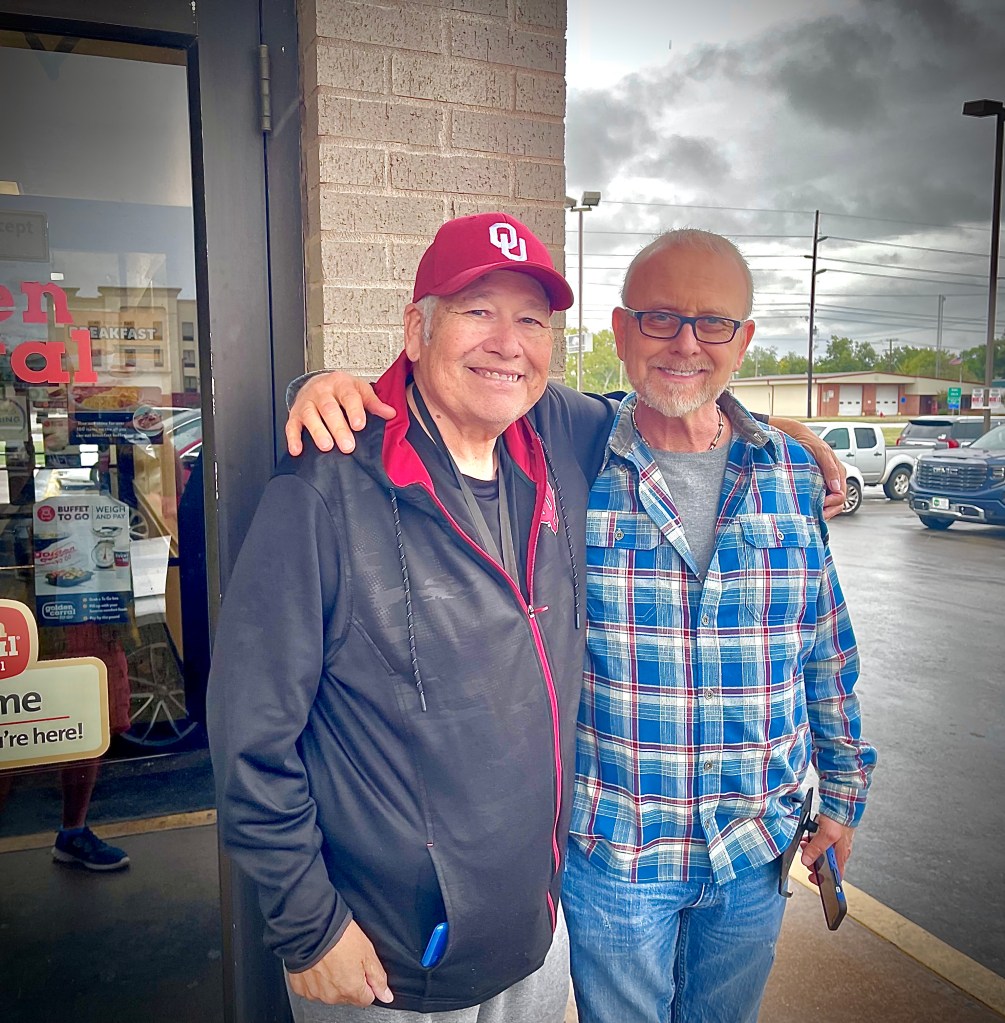
        Marion Toehay JR. (Left)
        Benjamin Groff (Right)

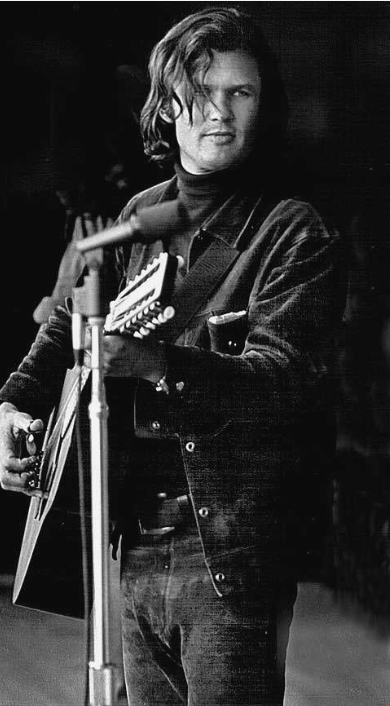
        Marion Toehay Jr., a close friend of Benjamin Groff II, who typically authors this page, shares his heartfelt memories today as the world mourns the passing of Kris Kristofferson. The legendary singer-songwriter passed away on Saturday at age 88 in Hawaii. Marion met Kris in the summer of 1968, during the early days of Kristofferson’s career, at the Silver Dollar Saloon in Phoenix, Arizona.

        In 1980, Marion became Benjamin’s first Chief of Police in Oklahoma, and today, he reflects on the unforgettable encounter he had with Kris all those years ago:


        Kris Kristofferson was one of a kind. I had the chance to meet him when I was just 13 years old, working with my stepdad during the summer of 1968. We were selling produce to bars around Phoenix, Tucson, and the mining towns in the White Mountains. On our last stop in Phoenix, at a place called the Silver Dollar Saloon in what was known as Cowtown, we went inside—and there he was.

        I remember seeing Kris Kristofferson stand up from a table and walk right over to us. He greeted my stepdad like an old friend, saying, “Y’all come sit down and have a beer.” At the table with him were none other than Johnny Cash and Waylon Jennings.

        My stepdad had always told me he knew Kristofferson, Cash, and Jennings, but up until then, I hadn’t met them myself. Every time we passed through, they just weren’t there. I was starting to think I’d never get the chance to meet them. But that evening, out of nowhere, they were larger than life. It was like a dream come true for me—a 14-year-old kid with a love for country life.

        We spent the evening laughing, sharing stories, and, yes, drinking some beer. When we finally headed home, my mom awaited us, wondering why it had taken so long. I told her about meeting Kris, Johnny, and Waylon, and she just smiled and said, “Oh, okay,” as if it was no big deal. She’d met them before, too, thanks to my stepdad. But for me, it was the highlight of the summer—and a memory I’ll never forget.

        Hearing about Kris Kristofferson’s passing is sad for everyone who admires him. My family and I send our deepest condolences and hope he rests in peace.

        The Days Of My Youth, When The West Was Really Wild!

        A True Story By: Benjamin Groff© Groff Media 2024© Truth Endures

        When the West was wild, and I was nine years old. Strapped on my waist were two silver cap guns and a gunslinger belt. My horse was a pony named Little Bit, named so because of the bridal’s bit size for the horse. On Saturday mornings, my youngest sister and I would watch the antics of Roy Rogers and Del Evans on black-and-white television. During the rest of the weekend and after school, we did our best to live out what we had seen in real life.

        My sister’s horse was named Sugar and slightly bigger than mine. Still, mine was fast and could run at a lope, making the breeze hitting my face seem as though we were going at the speed of light. On our farm near a hill south of our home, there were miniature bluffs where my sister and I would ground tie our horse, hide behind, and carry out a shootout with the invisible villains we imagined approaching and trying to steal the farm. We lived miles from town, and this would be our entertainment. Our parents were aware of our riding trips, and while our dad would rather be present, he trusted us to be responsible and safe.

        As we roamed the hills on those long, dusty afternoons, it felt like we were the only two kids in the world with such grand adventures. The bluffs were our fortress, the sky our ceiling, and the occasional hawk circling overhead became a witness to our endless battles against make-believe outlaws. The smell of fresh earth, mingled with the sweat of our horses, was intoxicating. It was freedom, pure and simple, a feeling that inspired us and now fills us with nostalgia.


        Sometimes, when the wind would shift just right, I’d catch the faint scent of Mom’s cooking from the farmhouse and know it was nearly time to head home. But in those moments, I was Roy Rogers, protector of the ranch, with Little Bit galloping beneath me as we chased the bad guys across the plains.


        One day, after an especially exciting shootout, our father must have noticed we’d been gone a little too long. We saw him standing on the front porch as we rounded the bend toward the house. Dad crossed his arms, and his face was stern—Dad always believed in knowing where we were, and he didn’t much like the idea of us riding off without him. But as we neared, I saw the corner of his mouth twitch and a glimmer of pride in his eyes. His silent support reassured us and made us feel more connected to him. Maybe he recognized some of the cowboy spirit in us, or perhaps it was the sight of two kids who had spent the day living their version of the Wild West.


        He never scolded us that day, though he didn’t have to say much. With a smile, he helped us unsaddle our horses, and as the sun dipped low behind the hills, we knew our adventures would have to wait until the next day.


        But deep down, I think Dad knew, just as we did, that the West wasn’t so wild after all—it was just our way of making the world a little bigger, a little braver, and a whole lot more fun. As the sun dipped low behind the hills, we knew our adventures would have to wait until the next day, filling us with excitement and anticipation for the next chapter of our Wild West escapades.

        My Experience With Live Coverage of Severe Weather Events by KKBS 92.7FM: A Crucial Role From The 1990s…

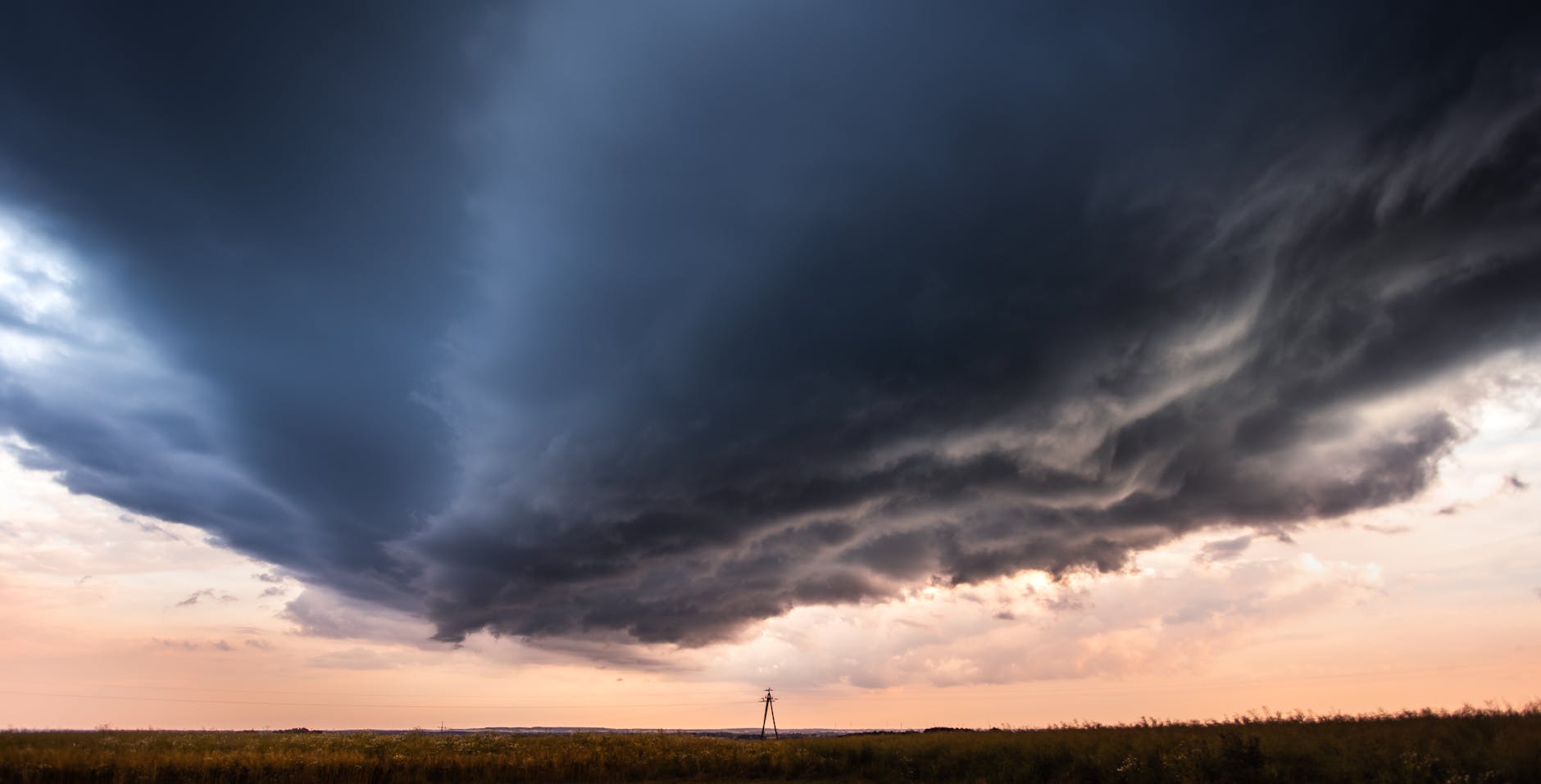
        The sky was cloudy to the southwest, and humidity had been building since the morning. Many had yet to pay attention to weather patterns forming in the Oklahoma and Texas Panhandles, particularly dew points that were above average. Everything was out of balance. No one was paying attention except for one News Director at a small community radio station in the Oklahoma Panhandle community of Guymon. That news director was me, Benjamin Groff II (JR), and our role in providing live coverage of severe weather events was crucial.

        It had been a busy day for the news department at KKBS 92.7FM. The Oklahoma Secretary of State had been in town attending Civic functions, plus a rape trial at the Texas County Court House was underway, and the suspect had been a topic that brought turmoil in the community for his alleged sexual abuse of a child. There was also an ax murder victim discovered in a dirt cellar in Steven’s County, Kansas, and the Hugoton Court House was buzzing with activity as the sheriff there had a suspect in custody.

        The KKBS broadcast signal reached a five-state region, covering the Oklahoma Panhandle, the Northern Texas Panhandle, Southwest Kansas, Southeast counties of Colorado, and Northeast New Mexico. An anomaly in broadcasting also allowed the station’s signal to get received on radios and listened to by residents of Vernal, Utah. Listeners from the area would call the station often with their weather conditions and share local news to be part of the radio station’s mix. Our commitment to serving the community was unwavering, and we valued every listener’s contribution.

        In Perryton, Texas, to the southeast of Guymon, a city of less than 7500 souls, the area mainly consisted of farmers and ranchers. KKBS radio station also reached Spearman, Gruver, Stratford, and Dalhart, Texas. In each community, the station, under my direction, established contacts and points of communication to use during news events. The same situation existed in southwest Kansas from Elkhart, Dalhart, Liberal, Hugoton, Johnson City, and Ulysses.

        The radio station studio on the north side of Guymon is a one-story building set behind a hill on one side. The broadcast tower is near the city center. It was on the same tower as most emergency services and, thus, on an emergency roster for being tended to promptly during power outages. Our studios were placed on priority through a demand I had made to the power company after I explained that we broadcast to every community in five states and were rebroadcast through each cable carrier of every community. We need to get back on the air to broadcast emergency notices to the people as soon as possible. I did not realize I made such an impact that the power company initiated a person to guarantee our station downtime was as minimal as sixty seconds or less. It was good that it happened.

        As the day continued, I stepped outside and felt the air. I had felt the conditions before. It had been in my hometown 12 years earlier when a storm ripped through the area and tore the hell out of the county, killing a lifetime resident of the town and his wife as they were hunkered down in their cellar. Being a retired police officer, I had a sixth sense, which led me to believe we were in store for something more. I felt it. There were times I sit in the newsroom on an afternoon on a slow day and think out loud, saying this feels like a plane crash day, and low and behold, we would be breaking a plane crash somewhere in the valley later. It was the same way this day, and I began planning for it.

        I asked our sales team to be on call and ready to return to the station within ten minutes of getting my call, not to ask questions, get in their car, and come. They would answer calls and send me information about storm coverage. They should send their families to storm cellars, and they would be OK with us; the hill protects the station. I asked our evening staff to get ready to rock and roll so that it would be different from business as usual. I was going to be interrupting their shows, and we would be going live with actual news actualities from the field, raw broadcast, and they needed to get prepared for raw emotions to get heard. When it happened, they were not. But maybe they were more than they would have been.

        Shortly before 4 PM, I noticed on an antiquated system that there was a massive hail storm in north Texas Panhandle County near Gruver, Texas; I called the Gruver Texas City Manager from the newsroom. I always contacted people in a way that allowed me to quickly air with them regardless of what was happening; in this case, it was gold. I asked him if he was getting hail. He said he was and was trying to drive west out of town; I buzzed the main studio to get ready to go live at any moment with breaking news, and suddenly AJ, the city manager, said

        OH MY GOD, BEN, THERE IS A TORNADO ON THE GROUND WEST OF GRUVER, TEXAS, AND IT IS MOVING NORTH…

        I flashed the hand signal and said go live; use the weather signal…

        Stacy was on the board and broke into music with a particular news weather bulletin where I came on and issued a “KKBS TORNADO WARNING” and had the city manager describe what he was seeing. After the conversation, I returned and said that the National Weather Service has yet to issue a Tornado Warning, and we are in contact with them trying to get them to notice the storm.

        A small radio station in the Oklahoma Panhandle doesn’t carry much weight with the National Weather Service, and they should have paid more attention to what we were trying to explain to them or the fact that we had an actual sighting by a city manager. We contacted the Channel4 Meteorologist who used to offer services to our station and explained to him what we were seeing, and he said he would turn his radar toward us and take a look; as he did, he said,

        Map-Radar Image is for reference purpose only not actual radar screen used.

        Holy Moly! That looks like a hook echo! Has the National Weather Service put out anything on this yet?

        I explained to him our frustration with the weather people, and he said look, I am going live and putting my warning out, I told him we had already put ours out. He said

        Thank GOD. I hope people are listening!

        The Local Civil Defense and the owner of the other radio station in Guymon were listening, and they were severely upset that we were putting out a weather warning without their authorization. They even entered their radio station (one I once worked at KGYN) and denied on air there was any chance of severe weather today, saying the other stations were nuts. The Civil Defense Director went as far as to call our station owner and threaten her with an FCC violation complaint. She called me and asked what type of warning I issued. I explained that I issued a KKBS weather warning and a KKBS tornado warning, confirmed by a city manager talking to us live on the air from Gruver, Texas. She smiled and said issue some more.

        I continued broadcasting the weather warnings and hear the disgusting remarks on the police radio frequencies from the civil defense director and his people over our decision to warn people about the threat of undesirable weather moving into the region. What is more, the storm producing the tornado was now moving into an area referred to as Hitchland, an agriculture-based community and ranching area. As we were broadcasting, our friend from the television station called and told me he had confirmation that a tornado was on the ground. We then broke into our programming and broadcast that a tornado had hit the area, and there were casualties. As we did, we began to get phone calls about fatalities in the area. As we tracked this storm, we warned the Beaver County, Oklahoma communities that they would be in the track of the storm-producing tornados.

        The dry line producing these storms was like a whiplash effect; it produced storms in front and behind its path. Another line of storms formed twenty miles west of Guymon, stretching from Guymon to Elkhart to Johnson City, Kansas. It was a night of stress and high excitement for those who enjoy broadcasting under pressure.

        During one segment of events, the bank that the radio station shared the building with was hosting Claudette Henry, the Oklahoma Secretary of State, at a reception that evening; while I was broadcasting live during one of the live storm updates, I saw Ms. Henry walk past the newsroom. I quickly wrapped up, stretched my headphones cord to the door, and shouted.

        “Is that Claudette?”

        She responded

        “It Sure Is”

        In my best Oklahoma demeanor

        “I get you to do a live interview with me quickly?”

        Claudette said,

        “Let’s go for it!”

        The interview consisted of talking about how she can’t fly out of Guymon until our radio station gives the all-clear and mentioning how everyone in five states is listening to you guys. She said she was impressed with the quality of coverage we provided; she didn’t expect to see it in Guymon.

        My station’s owner was sitting in the basement at her beauty shop, listening to the radio and receiving phone calls on her cell phone. She was one of the few people in town at the time who had a cell phone, and everyone called her on it. On this night, it was to thank her for providing a station with such a spectacular news team.

        It have been better news for everyone. The operations manager had called the station manager a bitch during a sporting broadcast, and then failing to join in the weather broadcast appeared to have ended their relationship. The next day, she dismissed him from his duties and placed them upon me and his salary. A few years later, she added the sales manager responsibilities to my duties. A few years later, I accepted a position in Cheyenne, Wyoming.

        It was the 1990s and anything goes was a leftover motto from the 80s!

        Caring for Aging Parents: Fears, Responsibilities, and Reflections

        A Story By Benjamin Groff© Groff Media 2024© Truth Endures

        Fear of Your Parents’ Old Age

        As my mother turned 94 in August 2024, my sister and I took turns caring for her and took time out to celebrate her milestone. I also cared for my mother-in-law until her death in her last years of life in our home and have experienced caring for a parent in their senior and final years. I came across an article that discussed the fears of some individuals in dealing with aging parents. I prepared remarks from it as memory serves and through internet searches on topics debating the subject.

        “There is a break in the family history, where the ages accumulate and overlap, and the natural order makes no sense: it’s when the child becomes the parent of their parent.”

        It’s when the father grows older and begins to move as if he were walking through fog. Slowly, slowly, imprecisely. It’s when one of the parents who once held your hand firmly when you were little no longer wants to be alone.

        I remember when my mother asked me to help her down the stairs. It was a subtle, almost casual request, but its weight sank deep into my chest. She had always been so independent and capable. And yet, there she was, reaching out to me for balance, her hand trembling slightly in mine. It felt like the beginning of a new chapter that neither of us was ready for.

        It’s when the father, once strong and unbeatable, weakens and takes two breaths before rising from his seat. My friend Lucy spoke of her father, a man who had always been larger than life, now struggling to remember where he left his glasses. “He used to be so sharp,” she said, her voice thick with the unspoken grief of seeing the man who once seemed invincible begin to fade. 

        “Now, it’s like watching a candle burn down.”

        It’s when the father, who once commanded and ordered, now only sighs, groans, and searches for the door and window—every hallway now feels distant. And we, as their children, will do nothing but accept that we are responsible for that life.

        The life that gave birth to us depends on our life to die in peace. Every child is the parent of their parent’s death. 

        Perhaps a father or mother’s old age is, curiously, the final pregnancy—our last lesson—an opportunity to return the care and love they gave us for decades. This sense of duty, though heavy, is a testament to the respect and acknowledgment we have for our parents.

        And just as we adapted our homes to care for our babies, blocking power outlets and setting up playpens, we will now rearrange the furniture for our parents. 

        The first transformation happens in the bathroom. We will be the parents of our parents, the ones who now install a grab bar in the shower. The grab bar is emblematic and symbolic. 

        It inaugurates the “unsteadiness of the waters.” Because the shower, simple and refreshing, now becomes a storm for the old feet of our protectors. We cannot leave them for even a moment.

        I once spoke to Sarah, who had installed those grab bars in her mother’s bathroom.

        “She used to laugh at the idea of needing help,”

        Sarah said, a faint smile on her lips.

        “Now, she clings to that bar like a lifeline. And I stand outside the door, listening, ready to rush in if she calls. I never thought I’d have to do that for her.”

        The tension in Sarah’s voice was palpable—the love and the frustration, the fear of what was coming, and the bittersweet comfort of being there for her mother.

        The home of someone who cares for their parents will have grab bars along the walls. And our arms will extend in the form of railings. Aging is walking while holding onto objects; aging is even climbing stairs without steps. We will be strangers in our own homes. We will observe every detail with fear, unfamiliarity, doubt, and concern.

        We will be architects, designers, frustrated engineers. 

        How did we not foresee that our parents would get sick and need us? We will regret the sofas, the statues, the spiral staircase, all the obstacles, and the carpet.

        But amid this frustration, there are moments of unexpected connection. 

        One evening, while helping my father navigate his way to bed, he looked at me with a softness I hadn’t seen before. 

        “I’m glad it’s you,” he whispered. You were always the one I could count on.”

        At that moment, the roles reversed entirely—no longer just my father, he was now also my child, someone who needed and trusted me. The sweetness of that connection, of being needed in that way, mingled with the deep sadness of seeing him so diminished. 

        These moments of connection, however brief, are a source of hope and upliftment amid the challenges of caring for aging parents.

        Happy is the child who becomes the parent of their parent before their death, and unfortunate is the child who only appears at the funeral and doesn’t say goodbye a little each day. Being present for our parents in their final years is a duty and a privilege. It’s a chance to repay the love and care they’ve given us and to create lasting memories.

        My friend Joseph Klein accompanied his father until his final moments. In the hospital, the nurse was maneuvering to move him from the bed to the stretcher and trying to change the sheets when Joe shouted from his seat:    

        “Let me help you.”

        He gathered his strength and, for the first time, took his father into his arms, placing his father’s face against his chest.

        He cradled his father, consumed by cancer: small, wrinkled, fragile, trembling. He held him for a long time, the time equivalent to his childhood, the time comparable to his adolescence, a long time, an endless time.

        By Your Side, Nothing Hurts. He was rocking his father back and forth and caressing his father. Calming his father. And he said softly:

        “I’m here, I’m here, Dad!”

        At the end of his life, a father wants to hear that his child is there.

        There is an inevitable grief in watching our parents age, but also a strange sense of fulfillment in being there for them as they were for us. It is a role we never asked for, yet one we take on with reluctance and a fierce sense of duty. Despite the challenges, there is a deep sense of satisfaction in knowing that we are doing everything possible to make our parents’ final years comfortable and dignified. 

        The road is difficult, filled with moments of frustration and exhaustion, but also with love and tenderness—those fleeting instances when the gap between child and parent narrows, and we are simply there for each other, as we always have been.

        Some parts of this story have been adapted from an original tale of unknown origin.

        Giving Support To Writers Among Us – Yours Could BE Added Next?

        Blogroll – Benjamin Groff© Groff Media 2024© Truth Endures


        Jonathan Pongratz
        Jonathan Pongratz
        Horror, Scifi, & Fantasy Author

        Wicked Witch's Blog
        Wicked Witch's Blog
        My bookish musings and random other things

        Emerging Civil War
        Emerging Civil War
        Providing fresh perspectives on America's defining event

        Swords & Spectres
        Book and audiobook reviewer to the fantastic, the spooky, and the far-out

        GoodeyReads
        GoodeyReads
        reviewing fantasy, romance & more

        — THIS IS A SPECIAL REPORT — Concerning georgia’s Voter Cancelation Portal!

        by Doug Bock Clark Posted by Benjamin Groff© Groff Media 2024© Truth Endures

        “A Terrible Vulnerability”: Cybersecurity Researcher Discovers Yet Another Flaw in Georgia’s Voter Cancellation Portal

        ProPublica is a Pulitzer Prize-winning investigative newsroom. Sign up for The Big Story newsletter to receive stories like this one in your inbox.

        Until Monday, a new online portal run by the Georgia Secretary of State’s Office contained what experts describe as a serious security vulnerability that would have allowed anyone to submit a voter cancellation request for any Georgian. All that was required was a name, date of birth and county of residence — information easily discoverable for many people online.

        The flaw was brought to the attention of ProPublica and Atlanta News First over the weekend by a cybersecurity researcher, Jason Parker. Parker, who uses they/them pronouns, said that after discovering it, they attempted to contact the Georgia Secretary of State’s Office. The office said it had no records of Parker’s attempts to reach out.

        “It’s a terrible vulnerability to leave open, and it’s essential to be fixed,” Parker said.

        The issue Parker exposed was “as bad as any voter cancellation bug could be” and “incredibly sloppy coding,” said Zach Edwards, a senior threat researcher at the cybersecurity firm Silent Push, who reviewed the flaw at the request of ProPublica. “It’s shocking to have one of these bugs occur on a serious website.” Edwards said that even a basic penetration test, in which outside experts vet the security of a website before its launch, “should have picked this up.”

        ProPublica and Atlanta News First jointly alerted the Secretary of State’s Office to the vulnerability and held the publication of their articles until it was fixed.

        “We have updated the process to include an error message letting the individual know their submission is incomplete and will not be processed,” Blake Evans, Georgia’s elections director, said in a statement from the Secretary of State’s Office.

        In the days after the portal launched last Monday, The Associated Press and The Current each reported the existence of separate security vulnerabilities that exposed voters’ sensitive personal information, including the last four digits of their Social Security number and their full driver’s license number. The Secretary of State’s Office told the news organizations that it quickly fixed the portal. Democrats warned that the system could be abused, as right-wing activists have been challenging tens of thousands of voter registrations in a different process that a 2021 state law expanded. Over the weekend, ProPublica reported that users of the portal had unsuccessfully attempted to cancel the voter registrations of two prominent Republican officials, Secretary of State Brad Raffensperger and Rep. Marjorie Taylor Greene.

        The flaw found by Parker was different from the two previously reported ones. This one would allow any user of the portal to bypass the screen that requires a driver’s license number and submit the cancellation request without it.

        The Secretary of State “needs to consider this an all-hands-on-deck” moment “and hire multiple testing and security firms and stop relying on the public’s goodwill and pro bono security researchers to test the quality of their website,” Edwards said. “At this point, we should assume there are other subtle bugs that could have potentially serious impact.” Edwards said that it would have been easy for a malicious actor to automate cancellation requests to get around security measures built into the website and submit thousands of them.

        In a video shared with ProPublica, Parker, who is moving from Georgia to another state, demonstrated how the registration cancellation tool could be exploited in roughly a minute. First, they entered their name, date of birth and county of residence to get past the website’s initial screening page. When the portal asked them for a driver’s license number, Parker right-clicked to inspect the browser’s HTML code — a basic option available to anyone — and deleted a few lines of code requiring them to submit their driver’s license number. Parker then hit submit. A window popped up stating that “Your cancellation request has been successfully submitted” and that county election workers would process the request within a week.

        Parker said it took them less than two hours of poking around the website to find the vulnerability.

        “Incomplete paper and online applications will not be accepted,” Evans said in the statement. (Parker’s cancellation request would have lacked a driver’s license number.) The Secretary of State’s Office did not respond to individual questions about what testing the portal underwent before launch, the system’s security procedures, what happened to Parker’s cancellation request and how the public could be sure of the portal’s security given the recent disclosures of security flaws.

        “The Secretary of State’s Office needs to do better,” said Marisa Pyle, the senior democracy defense manager for Georgia with All Voting is Local, a voting rights advocacy organization. “The state needs to be really intentional about how it rolls out these things. It needs to make sure they’re secure and provide their rationale for making them.”

        Jake Braun, the author of a book on cybersecurity flaws in election systems and lecturer at the University of Chicago, said that there is a long history of elections-related websites suffering from easily exploitable security failures, including Russians hacking election infrastructure during the 2016 election and public-interest competitions in which participants breached replicas of state election websites in minutes. Online elections infrastructure, he said, “needs more standards and better standards.”

        Edwards said that the portal’s vulnerability-plagued rollout showed the necessity of improving the vetting process.

        “Georgia should step up and pass a law saying all new websites in which the public interacts with government documents should have an outside review,” Edwards said. The public “should expect” officials “did some due diligence.”

        Do you have any information about the Georgia voter registration cancellation portal, voter challenges or anything voter-related that we should know? Contact reporter Doug Bock Clark by email at doug.clark@propublica.org and by phone or Signal at 678-243-0784. If you’re concerned about confidentiality, check out our advice on the most secure ways to share tips.

        Remembering Jürgen Ahrend –– The Legendary Organ Builder

        A Story By: Benjamin Groff© Groff Media 2024© Truth Endures

        In the picturesque town of Göttingen, Germany, where the echoes of time vibrated through the cobblestone streets, a young prodigy named Jürgen Ahrend unearthed a profound connection to the world. Born on April 28, 1930, Jürgen was no ordinary child; his fascination with music was a beacon of his identity from a tender age. The harmonies of the local church organ would enrapture his imagination, and he would spend hours in silent contemplation, envisioning the creation of such magnificent sounds himself. This early passion for music and organ building is a testament to his lifelong dedication and can inspire us all.

        At sixteen, Jürgen began his journey into the world of organ building, serving an apprenticeship with the renowned firm of Paul Ott. From 1946 to 1948, he learned the intricate art of crafting and restoring these majestic instruments. His apprenticeship was more than a mere training period; it was a formative time that solidified his passion and honed his skills. After completing his apprenticeship, Jürgen stayed on as an employee, perfecting his craft each day.

        In 1954, Jürgen embarked on a new chapter of his life, forming a partnership with Gerhard Brunzema in Leer–Loga, Lower Saxony. Together, they created a symphony of work, producing 54 new organs and restoring 19. Their collaboration was a harmonious blend of innovation and tradition, each organ they built or restored becoming a testament to their dedication and artistry. However, in 1972, Brunzema left the firm, and Jürgen faced a new challenge. With unyielding determination, he established Jürgen Ahrend Orgelbau, a workshop that would soon become legendary in organ building.

        Jürgen’s reputation grew with each project he undertook. His restoration of the Rysum organ and the Arp Schnitger organ in Hamburg’s Hauptkirche St. Jacobi (St. James’s Church) garnered international acclaim. These restorations were not mere repairs; they were acts of reverence, breathing new life into historical treasures. Jürgen’s meticulous attention to detail, his deep respect for the original craftsmanship, and his unwavering commitment to excellence ensured that each organ retained its unique voice, echoing through the centuries. His commitment to excellence is a testament to his dedication and can be felt in every note that resonates with his organs.

        In 2009, filmmakers documented Jürgen’s remarkable journey in the film Martinikerk Rondeau. Through extensive interviews, he shared his wisdom, passion, and the philosophy that guided his work. The film offered a glimpse into the mind of a master craftsman, revealing the depth of his commitment to preserving the art of organ building.

        As Jürgen approached his later years, he passed the torch to his son, Hendrik, in 2005. Under Hendrik’s leadership, Jürgen Ahrend Orgelbau continued to thrive, carrying forward the legacy of excellence that Jürgen had established. Jürgen’s influence remained palpable, his spirit woven into every pipe, every key, and every note resonating from the organs crafted in their workshop. The continuation of his legacy through his son, Hendrik, ensures that Jürgen’s influence will be felt for generations to come.

        On August 1, 2024, Jürgen Ahrend passed away at 94. His life, marked by dedication, artistry, and an unwavering love for music, left an indelible mark on the world. Jürgen’s legacy lives on in the organs he built and restored, in the workshops where future generations of organ builders draw inspiration, and in the hearts of those touched by the music he so lovingly crafted.

        Jürgen Ahrend was more than an organ builder; he was a maestro whose work transcended time, a guardian of musical heritage, and a beacon of passion and perseverance. His story is a tribute to the power of art, the importance of preserving history, and the enduring impact of one man’s dedication to his craft.

        True Law Enforcement Stories: Unveiling Events of Small Town Policing

        A Story By Benjamin H Groff© Groff Media Copyright 2024©

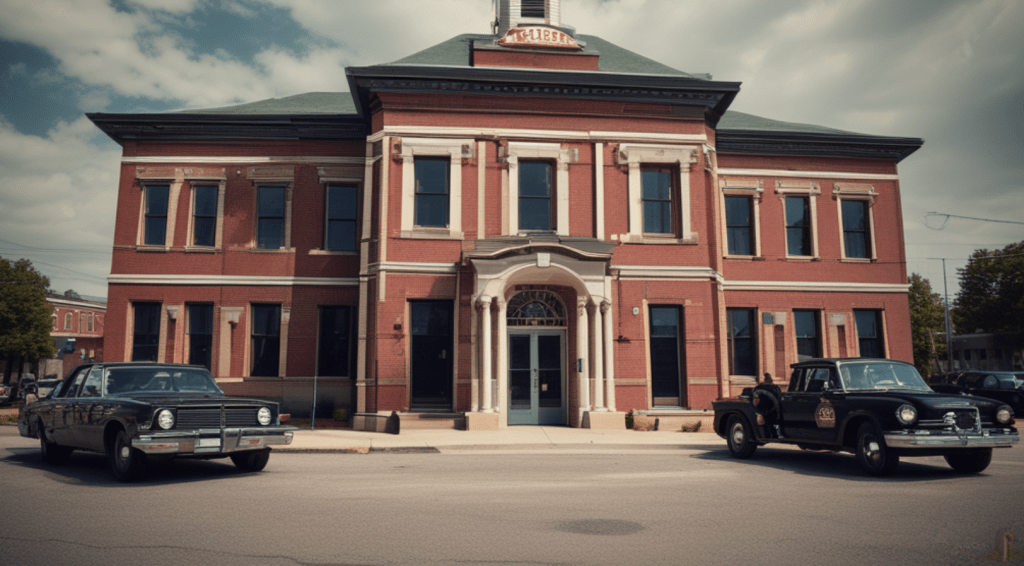
        In a town of fifteen thousand residents, the local police department comprised fifteen police officers and eight communication officers who also served as correctional officers. This team was dedicated to serving their community. The city had constructed the building in the early 1900s, and it shared its space with the fire department, which employed full-time firefighters. The fire crew typically had five to six members on duty during a twenty-four-hour shift. Together, these two services provided the city with around-the-clock emergency care, forming a unique and committed staff.

        Among the day shift employees was Captain Bickerstaff, better known as “Bick,” a forty-year veteran of the department. He oversaw the Communications and Correctional Divisions, which included receiving incoming calls from the community, dispatching calls to units, and managing the intake and monitoring of prisoners. His team of seven staff members, each with their own distinctive character, included Edna, Gail, Pam, Sheila, Patty, and Ben.

        The patrol division had a rotating roster of officers, with frequent personnel changes. As their stories unfold, the names of these officers will emerge. Future narratives will consist of true events from the law enforcement career, with certain details altered to protect privacy.

        Upcoming stories include “The Dead Prisoner,” “Officer Down,” “Suspect in Trooper Killing, In Custody,” “OH SHIT!” and “The Missing Man,” among many others.

        Stay tuned for these captivating and informative stories, and be sure to share them with your friends and family!

        The Gorb Touch: Continuing the Tradition of Personalized Farewells in Elderton

        A Story By Benjamin H Groff© Groff Media Copyright 2024©

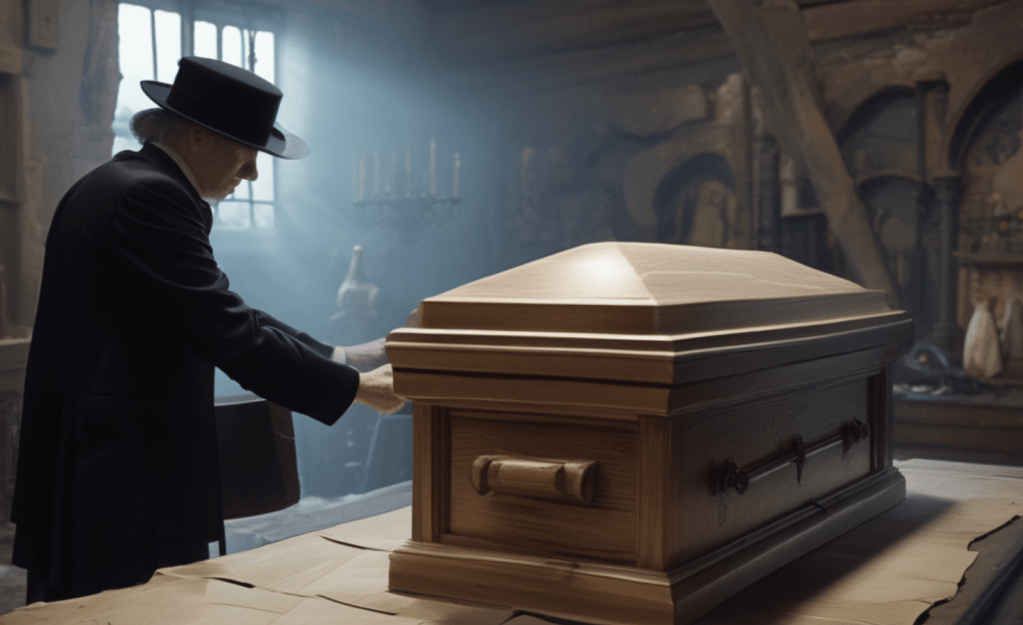
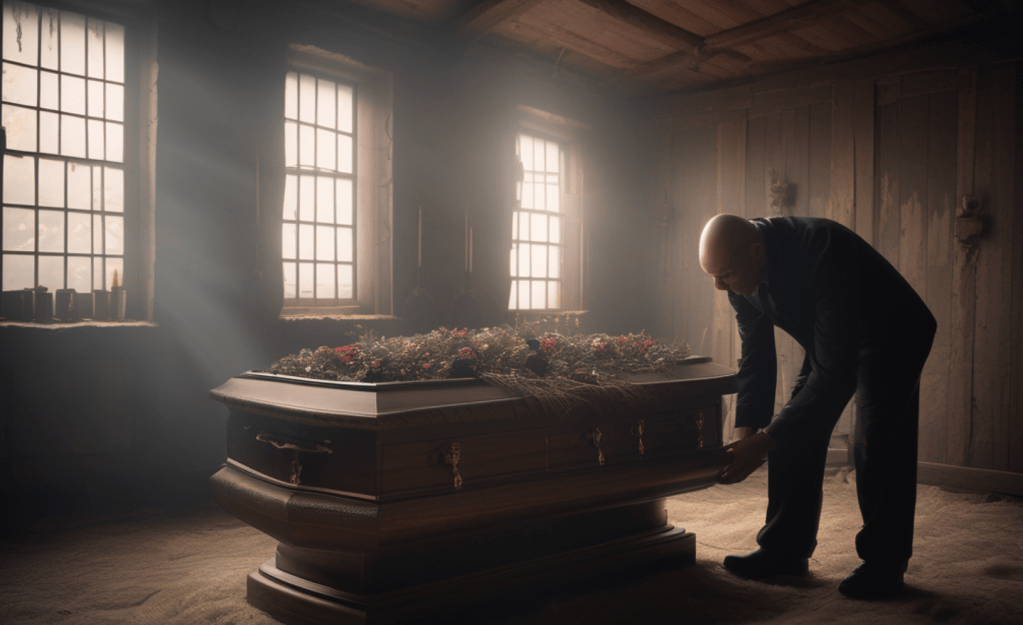
        In the small town of Elderton, nestled between rolling hills and dense forests, there lived a man named Mr. Gorb. Mr. Gorb was a meticulous man, a perfectionist in every sense. His business dealings were unique, for Mr. Gorb was the town’s undertaker. However, unlike others in his profession, Mr. Gorb went above and beyond to ensure each client received a personal touch.


        Although Mr. Gorb’s clients were all deceased, that didn’t mean they deserved any less care. He believed that everyone deserved a final sendoff that reflected who they were. This philosophy became known as the “Gorb Touch,” a term that resonated deeply within the community.


        When someone in Elderton passed away, Mr. Gorb would embark on a journey to recreate their likeness as closely as possible to how they appeared when they last walked down Main Street. He would search the town for the most recent photographs of the deceased, often speaking with family members and friends to gather any images they had. He delved into the history of his clients, learning about their favorite outfits, their unique hairstyles, and any other defining features that made them who they were.

        Mr. Gorb’s dedication was unparalleled. He would spend hours carefully applying makeup, arranging hair, and selecting the perfect attire for each individual. His attention to detail was astounding, and the results were always breathtaking. The people of Elderton loved Mr. Gorb for his personal touch and the comfort it brought them during their loss.


        One crisp autumn morning, the townspeople awoke to shocking news. Mr. Gorb had passed away in his sleep. The entire town was at a loss. Who would now carry on the tradition of the Gorb Touch? Who would prepare Mr. Gorb himself for his final farewell?

        Unbeknownst to the townspeople, Mr. Gorb had been quietly training an apprentice. A young man named Thomas had come to Elderton a few years prior, seeking guidance and a place to belong. Mr. Gorb had seen potential in Thomas and had taken him under his wing, teaching him everything he knew about the delicate art of caring for the deceased.


        Thomas had learned well. He had absorbed every lesson, technique, and philosophy Mr. Gorb shared with him. And now, as the town mourned the loss of their beloved undertaker, Thomas stepped forward to fulfill his mentor’s legacy.


        With a heavy heart, Thomas prepared Mr. Gorb for his final journey. He meticulously followed the same process Mr. Gorb taught, ensuring that every detail was perfect. The townspeople watched in awe and gratitude as Thomas recreated Mr. Gorb’s likeness with the same dedication and care that had become synonymous with the Gorb Touch.


        The funeral was a beautiful tribute to Mr. Gorb’s life and work. As the townspeople gathered to say their final goodbyes, they saw the continuation of a tradition that had brought them so much comfort and peace in Thomas. They knew that Mr. Gorb’s legacy would live on through his apprentice and that the personal touch that had defined their community would never be lost.


        Thomas continued to serve the people of Elderton with the same compassion and attention to detail that Mr. Gorb had instilled in him. As the years passed, the Gorb Touch remained a cherished tradition, a testament to the enduring impact of one man’s dedication to his craft and community.

        Heroic Night in Cedar Hollow: The Legend of Fred Harper

        A Story By Benjamin H Groff© Groff Media Copyright 2024©

        Fred Harper was a man of simple routines. The mild-mannered police officer of Cedar Hollow, a quaint town of 700 nestled between rolling hills and dense forests, had a nightly patrol route that rarely changed. He preferred it that way. Cedar Hollow was a peaceful place where not much happened, and Fred liked it that way.

        His nightly rounds consisted of checking the locked doors of businesses, shining his flashlight into the occasional darkened alley, and waving at the few night owls who might be walking their dogs or taking a late-night stroll.

        But on this particular night, the tranquility of Cedar Hollow was shattered by a series of unexpected events, disrupting Fred’s usual routine.
        It all began with a frantic call from Mary Jenkins, the usually composed wife of the mayor. Her voice was filled with urgency as she relayed the news about Helen’s labor.

        Fred’s heart raced. He’d never delivered a baby before. He rushed to his squad car and sped to Helen’s house. When he arrived, he found Helen in the living room, breathing heavily, with Mary by her side. The tension in the room was palpable, and Fred could feel the weight of the situation on his shoulders.

        Upon Fred’s arrival, Mary’s relief was palpable. “Fred, thank God you’re here,” she exclaimed, her face a picture of relief. “You need to help her. Now.”

        Fred took a deep breath, remembering the emergency childbirth training he’d received years ago. With Mary’s assistance, he coached Helen through the contractions. After what felt like an eternity, but was in reality only a few intense minutes, the cries of a newborn filled the room. Fred cradled the baby in his arms, his uniform shirt now soaked with sweat.

        Just as he handed the baby to a tearfully grateful Helen, his radio crackled to life. “Fred, we need you at the fire station. There’s a fire behind the building, and no one can start the engine.”

        Leaving Helen and the baby in Mary’s capable hands, Fred raced to the fire station. Flames were licking the sky, dangerously close to City Hall. Fred jumped into the fire engine, praying his training would return to him. He managed to start the engine and drove it to the blaze. With no other firefighters in sight, he took hold of the hose and aimed it at the inferno. Neighbors, awakened by the commotion, formed a bucket brigade to help douse the flames. Together, they managed to keep the fire from spreading and saved City Hall.

        As the last embers got extinguished, Fred’s radio buzzed again. “Officer Harper, there’s a break-in at the bank. Thieves are trying to rob the place.”

        Exhausted but determined, Fred headed to the bank. He found a group of masked men attempting to pry open the vault. Drawing his service weapon, he shouted, “Freeze! Cedar Hollow Police!” The thieves, startled by his sudden appearance, attempted to flee. Fred, with unwavering courage, managed to subdue two, but the others escaped into the night. He secured the captured thieves and called for backup from neighboring towns.

        The thieves, startled by his sudden appearance, attempted to flee. Fred managed to subdue two, but the others escaped into the night. He secured the captured thieves and called for backup from neighboring towns.
        Just as he thought the night couldn’t get any worse, the call came in: “Fred, there’s been a four-car accident at the intersection. Significant injuries reported, and the town’s ambulance is thirty miles away.”

        Fred’s mind raced as he arrived at the scene of the collision. Cars were crumpled, and injured people strewn across the road. He did what he could, providing first aid and comforting the victims while calling for an ambulance from a neighboring town. The ambulance, however, got lost on the way, and Fred’s patience became stretched to its limit.

        As the first rays of sunlight lit up the sky, Fred finally saw the flashing lights of the neighboring town’s ambulance. He directed them to the injured, ensuring everyone received their needed care. The lady and her newborn, the fire at the station, the bank heist, and now the accident had been the most eventful night in Cedar Hollow’s history.

        When the town woke up to a new day, Fred was utterly exhausted. His uniform was torn and dirty, and his body ached from the night’s exertions, but he was filled with a sense of accomplishment. He had faced every challenge alone and come through for his community.

        As the townsfolk learned of the night’s events, they became filled with deep admiration and gratitude for Fred. They hailed him as a hero, their voices echoing through the streets of Cedar Hollow. But Fred, the humble officer, just smiled and said, “I was just doing my job.” His modesty only added to the townsfolk’s reverence for him, strengthening the bond of respect and unity within Cedar Hollow.

        And Fred Harper, the humble police officer of Cedar Hollow, became a legend. In a town where life was usually quiet and uneventful, the night of chaos and heroism is a stark contrast, etching Fred’s name into the town’s history and leaving a profound mark on Cedar Hollow’s narrative.

        The Unforgettable Story of Ethan: A Three-Legged Hero’s Courage and Sacrifice in Willowbrook

        A Story By Benjamin H Groff© Groff Media Copyright 2024©

        A man named Ethan lived in the quaint village of Willowbrook, nestled among rolling hills and serene landscapes. Ethan was unlike any other in the town; he was born with a third leg. Though some initially viewed him with curiosity and even pity, he became an integral part of the community, his unusual limb symbolizing resilience and strength.


        The village cherished its traditions, and none was more beloved than the annual Christmas service held in the old stone church at the heart of Willowbrook. On Christmas Eve, every villager would gather for a night of songs, stories, and the sharing of a festive feast.
        However, one fateful Christmas Eve, the peaceful village was disrupted by a band of ruthless hoodlums. Known for their brutal raids, they had been terrorizing nearby towns, leaving a trail of destruction in their wake. The villagers of Willowbrook had heard whispers of their approach but hoped their remoteness would spare them.


        As the service commenced, distant hoofbeats grew louder, echoing ominously through the church. Panic spread among the villagers as the doors burst open, revealing the menacing figures of the hoodlums. They forced everyone into the central aisle, threatening violence and demanding valuables.


        Ethan, seated near the back, watched the chaos unfold. His heart pounded, not out of fear for himself but for his friends and family. He knew he had to act. As the hoodlums corralled the villagers, Ethan stumbled and fell in the narrow central aisle, his third leg jutting out awkwardly.


        Shouts of anger and confusion erupted from the hoodlums as they tripped over Ethan’s leg, one after another. Understanding Ethan’s silent signal, the villagers began to leap over his third leg with practiced ease. The invaders, unfamiliar with the anomaly, continued to fall, rendering themselves unconscious as they hit the stone floor.


        Ethan’s bravery gave the villagers the precious moments they needed. The stronger men and women quickly disarmed the stunned hoodlums, binding them with whatever they could find. The church that had been a place of sanctuary became a fortress of courage and quick thinking.
        In the aftermath, the village celebrated Ethan as a hero. His act of selflessness and his unique third leg had saved them all. Yet, Ethan, who had always been modest and kind-hearted, succumbed to injuries sustained in the struggle. He passed away that night, surrounded by those he had saved.


        Ethan’s story became a legend, and when the townspeople spoke his name, it was done so with reverence and gratitude. A statue was erected in the village square, depicting him with his three legs, a testament to his bravery and the night he saved Willowbrook. Every Christmas Eve, the villagers would gather at the church, now with a plaque dedicated to Ethan, and recount the tale of the man whose unique gift had become their salvation.
        The legend of Ethan, the three-legged savior of Willowbrook, lives on, symbolizing how even the most unexpected traits can be the greatest of blessings.

        The Discovery of Beeping Moon Rocks: Dr. Richard Campbell’s Journey

        A Story By Benjamin H Groff© Groff Media Copyright 2024©

        In the bustling halls of NASA’s Johnson Space Center, where scientific minds collaborated to unlock the mysteries of the universe, there was a man named Dr. Richard Campbell. An experienced geologist, Dr. Campbell spent decades studying lunar samples and meteorites. His colleagues revered him for his meticulous research and unyielding skepticism—a trait that earned him both admiration and exasperation.


        It all began one unassuming Wednesday morning when a rumor started circulating among the younger scientists—whispers of “moon rocks that beep” echoed through the labs, sparking excitement and curiosity. The story was that during a routine analysis, a peculiar sound echoed from one of the lunar samples hauled back to earth the Apollo missions.


        Dr. Campbell dismissed these rumors as sheer nonsense. “Rocks don’t beep,” he asserted firmly whenever the topic arose. His logical mind couldn’t entertain the idea of lunar rocks emitting any sound, let alone beeping. He considered it a prank or, at best, a misinterpretation of data.


        However, the buzz around the beeping moon rocks grew too loud to ignore. A young researcher named Dr. Emily Hayes, fresh out of her post-doc, approached Dr. Campbell with a determined look in her eyes. She respected his skepticism but believed there was something worth investigating.
        “Dr. Campbell, I’d like you to see this for yourself,” she insisted, holding a tiny sample encased in a protective glass container. Reluctantly, he agreed to examine it in the lab.


        Under the laboratory’s sterile white lights, they set up the sample on the analysis table. Dr. Hayes connected it to an array of sensors and amplifiers, the same setup that had reportedly detected the beeping. Dr. Campbell watched with skepticism and curiosity, arms crossed over his chest.


        As the seconds ticked by in the sterile laboratory, a faint, almost imperceptible series of beeps reverberated through the speakers. Dr. Campbell’s eyes widened in disbelief. He leaned closer, adjusted his glasses, and listened again. There it was—a clear, rhythmic beeping sound emanating from the moon rock, a sound that defied his logical understanding of lunar geology.


        “How is this possible?” he muttered, more to himself than to Dr. Hayes. His mind raced with potential explanations: electrical interference, experimental error, or even a practical joke. But, anticipating his doubts, Dr. Hayes showed him the logs of previous tests, all yielding the same results.


        Driven by a newfound curiosity, Dr. Campbell embarked on a meticulous investigation of the phenomenon. He conducted a series of rigorous tests, eliminating every conceivable source of error. Days turned into weeks as he and Dr. Hayes worked tirelessly, scrutinizing every detail, leaving no stone unturned in their pursuit of scientific truth.


        Their breakthrough came when they discovered a minute crystalline structure within the rock that had previously been overlooked. These crystals had piezoelectric properties, meaning they could create an electrical charge in response to mechanical stress. They theorized that the beeping was a result of tiny vibrations within the lunar environment that caused these crystals to emit electrical signals, which were then picked up as sound by their sensors.


        Dr. Campbell’s initial skepticism gave way to a sense of awe and excitement. The discovery of the beeping moon rocks was not just a scientific breakthrough, but a leap toward our understanding of the moon’s geology and unique properties. He and Dr. Hayes co-authored a paper detailing their findings, a paper that was not just published, but widely celebrated in scientific journals worldwide.


        The story of the beeping moon rocks became legendary at NASA, a testament to the importance of curiosity, skepticism, and collaboration in scientific discovery. Dr. Campbell, once the man who didn’t believe in beeping moon rocks, became their most passionate advocate, reminding everyone that the most extraordinary discoveries sometimes come from the most unlikely sources.

        City Mice Max and Lily’s Countryside Picnic Adventure

        In the summer of 2024, two city mice, Max and Lily, took a break from their bustling urban lives. Yearning for fresh air and tranquility, they planned a weekend getaway to the serene countryside. They packed a delightful picnic basket filled with cheese, bread, and a selection of berries and set off for the rolling hills and meadows.be

        After a few hours of travel, they found the perfect spot—a grassy knoll overlooking a gentle river winding through the valley. The beauty of the countryside was breathtaking, with the sun casting a golden glow above the rolling hills. They laid out their blankets, unpacked their baskets, and enjoyed their feast under the warm sun, surrounded by the serene beauty of nature.

        As the day went on, dark clouds began to gather on the horizon. Max, ever the cautious one, suggested they pack up and head back to the cottage they had rented. But Lily, captivated by the beauty of the countryside, convinced him to stay a bit longer. “It’s just a little rain, Max. We’ll be fine,” she said with a reassuring smile.

        However, the little rain quickly turned into a torrential downpour. The river, once calm and serene, began to swell and rage. Realizing the severity of the situation, Max and Lily quickly gathered their belongings and started returning to the cottage. But the water rose faster than they could move, soon turning the meadow into a swirling expanse of water. The danger was palpable, and their hearts raced with fear as they struggled to reach safety.

        They spotted an old, hollow oak tree on a small hill with nowhere to go and the floodwaters rising around them. “There!” shouted Max. “We can take shelter in that tree!” They waded through the water, which was now waist-deep, and climbed into the hollow trunk just as the floodwaters swept over their picnic spot.

        Max and Lily huddled inside the tree, shivering from the cold and damp. The hours dragged on, and the rain showed no sign of letting up. They could hear the river’s roar and the crashing of debris being swept along by the flood.

        Just as they were beginning to lose hope, the rain finally stopped. The relief was palpable, and they felt a surge of hope as the floodwaters started to recede, leaving a landscape transformed by the storm. Cautiously, Max and Lily emerged from their shelter. The meadow was a muddy mess, and their picnic spot was nowhere to be seen. But they were safe.

        Determined to make the best of their situation, Max and Lily set to work. They used their city smarts to fashion a makeshift raft from fallen branches and debris, which they used to navigate the still-swollen river. Eventually, they reached the cottage, which had miraculously remained untouched by the flood.

        Tired but relieved, Max and Lily dried off and warmed themselves by the fire. They reflected on their adventure and the dangers they had faced. “Maybe next time, we’ll check the weather forecast before our picnic,” Max joked, eliciting Lily’s tired but genuine laugh.

        Their countryside picnic had turned into an unexpected adventure, strengthening their bond and reminding them of the importance of being prepared. As they settled in for the night, they were grateful for their safety and each other, ready to face whatever future adventures might bring.

        Jamie: The New Face of Laughter in the Land of Sorrow

        In a land where laughter was the currency of happiness, the funniest person on earth was Charlie, “Buckles” McGuffin –– who reigned supreme. His wit was sharper than the finest blade, and his laughter was contagious enough to cure the deepest sorrows. As everyone fondly called him, Buckles had the uncanny ability to turn the gloomiest days into festivals of joy with just a word or a gesture.


        Then, one fateful day, Buckles was found lifeless in his cozy little cottage. The news spread like wildfire, and an unimaginable hush fell across the country. Once bustling with joy and merriment, the towns and cities became silent, their streets echoing with the void left by his absence. Even the skies seemed to mourn, covered with a blanket of gray clouds that mirrored the people’s collective sorrow.


        The days turned weeks and weeks into years, but the silence persisted. The theaters, once filled with roaring laughter, were now empty. The cafes, where friends gathered to share jokes and stories, were now quiet. The country’s heart had stopped beating, its lifeblood of laughter drained with the passing of Buckles. No one could fill the void he left behind, and the silence was a constant reminder of the irreplaceable loss.


        Years later, a child named Jamie was born in a small, forgotten village on the outskirts of the country. From the moment he could speak, it was clear that Jamie had a gift. His first word wasn’t “Mama” or “Dada,” but a hilarious mispronunciation of “banana” that had his parents in stitches. As he grew, his knack for humor became more evident. He had an innate ability to see the world in a light that others couldn’t, turning mundane situations into comedic gold.


        By the time Jamie was a teenager, his reputation had spread. People would travel from far and wide to hear him speak. His humor was fresh, and his perspective was unique. He didn’t mimic Buckles; he brought something new to the table. His jokes blended innocence and cleverness, and his laughter was a beacon of hope in a land shrouded in sorrow.


        Jamie’s rise to fame was meteoric. His performances began to draw crowds that were more significant than any seen since Buckles’ time. Theaters filled with fans once more, and the streets echoed with laughter. It wasn’t long before Jamie’s influence spread beyond his village, reaching the farthest corners of the country. The silence that had gripped the land for years dissipated, replaced by the joyous sound of laughter and celebration.


        The people, initially hesitant, found themselves embracing this new wave of humor. Jamie’s presence was a breath of fresh air, a reminder that while no one could ever replace Buckles’, the spirit of laughter and joy could live on. The country began to heal. The wounds became soothed by the gift that Jamie brought. He wasn’t a replacement for Buckles but a new chapter in the book of laughter.


        Jamie’s name became synonymous with joy in time, just as Buckles’ had been. Once plunged into darkness, the light of his humor now illuminated the nation. The silence became broken, and in its place, a new era of laughter and happiness began. Buckles’ legacy lived on, not in the form of a shadow but as a foundation upon which Jamie built his own unique brand of comedy, forever changing the land and restoring the laughter that was its lifeblood.