This Is My Country – To Have and To Hold

A reflective story inspired by the timeless patriotic verse

By Benjamin GroffMedia© | benandsteve.com | ©202

3–4 minutes

This Is My Country

There are words that live on paper, and then there are words that settle into the bones of a people. The kind that echo from porch steps and courthouse lawns, from quiet cemeteries and loud parade routes. The kind drift through open windows on warm summer evenings. A flag whispers its slow conversation with the breeze.

“This is my country! Land of my birth!”

The old man had recited it repeatedly. The lines felt stitched into his memory. They were like a family quilt. He first heard the poem as a schoolboy in a one-room classroom. The chalk dust drifted like snow. Old Glory hung slightly worn but always proud above the blackboard. They had stood, hands pressed to hearts, small chests swelling with pride they did not yet fully understand.

And now, decades later, he stood on the same red Oklahoma soil. This was the ground that had raised him. It shaped him and anchored generations before him. He thought of his father plowing under wide skies. He remembered his mother hanging laundry that snapped sharply in the prairie wind. This was the same wind that lifted the flag into slow, flawless motion.

“This is my country! Land of my birth!”The old man had recited it so many times. The lines felt stitched into his memory like a family quilt. He first heard the poem as a schoolboy in a one-room classroom. Chalk dust drifted like snow. Old Glory hung slightly worn but always proud above the blackboard. They had stood, hands pressed to hearts, small chests swelling with pride they did not yet fully understand.And now, decades later, he stood on the same red Oklahoma soil. This ground had raised him and shaped him. It had anchored generations before him. He thought of his father plowing under wide skies. He remembered his mother hanging laundry that snapped sharply in the prairie wind. It was the same wind that lifted the flag into slow, flawless motion.

“What difference if I hail from the North or the South, the East or the West?”

He had traveled. He had met farmers in Iowa. He had met dockworkers in Louisiana. He encountered miners in West Virginia. He also met shopkeepers in Arizona who spoke with accents as varied as the landscape. They all shared an unspoken recognition. There was a quiet understanding that this vast, imperfect, beautiful land belonged to them all. Not in ownership, but in guardianship. In gratitude.

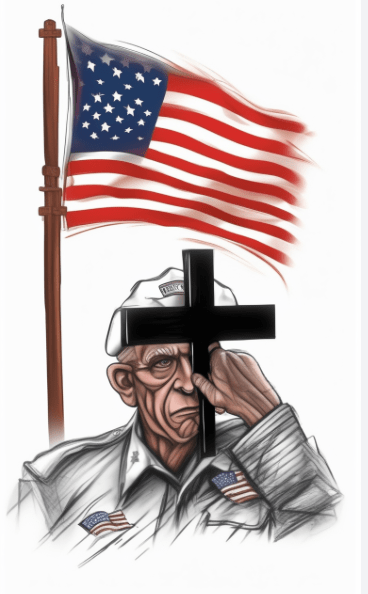
He remembered the first time he truly understood the weight of those words. It wasn’t in a classroom. He was in uniform, standing still beneath a lowering sun. He watched the flag rise slowly as taps echoed across the horizon. In that moment, the poem ceased to be something learned and became something lived.

“With hand upon heart, I thank the Lord for this, my native land…”

He whispered the words now as the breeze carried the scent of freshly cut grass and distant rainfall. His soul, like the poem said, was rooted deeply in the soil on which he stood. Every memory, every loss, every joyful celebration had unfolded beneath the same sky, under the same banner.

This was not blind loyalty. This was love shaped by history — by wars survived, hardships endured, and freedoms fiercely guarded. It was a love that understood flaws. Yet it still swelled with gratitude for the promise, the struggle, and the hope that had always defined America.

As the flag unfurled above him, catching the light in crimson and gold, he spoke the final lines not as a performance, but as a vow, as millions had before him and millions would after:

“This is my country! Land of my choice!
This is my country! Hear my proud voice!
I pledge thee my allegiance, America, the bold —
For this is my country, to have and to hold.”

In that quiet moment, the wind acted as a witness. Time stood briefly still. He knew something certain and unshakable.

This was his country.
Not perfect.
But deeply loved.
Forever his.


Groff Media ©2025 benandsteve.com Truth Endures

What the world needs now? Is Love Sweet Love! It isn’t too late for the United States?

By Benjamin GroffMedia© | benandsteve.com | 2025 Truth Endures©

2–3 minutes

The most significant cultural threat to occur in my lifetime is occurring as I write today. It deals with our nations stability. The threat to our democracy doesn’t come from a single event—it happens every day. It happens when we ignore what’s unfolding in our city councils, our state legislatures, and in the halls of Congress. It happens when we assume that honorable people are safeguarding our federal institutions.

That complacency is how we arrived at the crisis point we face in 2025.


In the early 1970s, President Richard Nixon was implicated in one of the greatest political scandals in U.S. history: Watergate. His aides admitted to orchestrating a break-in at the Democratic National Committee headquarters. They attempted to steal information to sabotage a political opponent. The House of Representatives held impeachment hearings. Nixon was on the brink of being impeached. He resigned before the Senate took up the case. He was never prosecuted—pardoned instead by his successor, Gerald Ford. That decision set a precedent: presidents commit crimes without real consequence.


Had Nixon faced justice, we wouldn’t be watching the unraveling of the United States today. In 2025, we are witnessing a troubling surge of pro-white nationalist influence within our government. Supremacist ideologies are fueling misinformation campaigns and choking the truth that help heal and unite our country. This is one of the most perilous chapters in our nation’s history. It spells the end of the United States as we have known it.

Ulrich Groff I.


Ironically, the Groff family once fled an oppressive regime in the 1850s, seeking liberty and justice in America. Now, in a cruel twist of history, a direct descendant of Ulrich Groff I —faces a difficult consideration. Will he see himself returning to the very region his ancestors left in search of freedom. Or hope for a miracle. We must not allow the hard-won promises of our democracy to slip away through silence and inaction.

What the world—and especially the United States—needs now is love, sweet love. Not the kind that’s fleeting or sentimental. It should be the steady, courageous kind that listens more than it lectures. It seeks understanding over dominance. Our nation was once bound together by a shared belief in the promise of unity. Now, it is splintered by division. Mistrust and fear further divide us. Political rage, social distrust, and cultural isolation have made enemies of neighbors and strangers of friends.

But love, in its truest form, has the power to mend what anger tears apart. It begins with kindness in daily life—treating others with respect, even when they disagree with us. It grows in empathy—stepping into anothers shoes rather than judging them from afar. If we can choose love over fear, we can start to heal this fractured country. Hope must prevail over hate. Connection should be preferred over separation. This healing won’t happen overnight. It will occur heart by heart, one act at a time.

English Translation Below – TRADUCCIÓN AL INGLÉS A CONTINUACIÓN

GROFF MEDIA 2024© TRUTH ENDURES IMDBPRO

Presented by benandsteve.com By: Benjamin Groff II©

4–6 minutes
English Translation Below –

Today, I am sharing a translation of instructions initially posted on the BenandSteve.com Facebook page. These instructions were originally written in Spanish. I have translated them to the best of my ability. The English translation is just below.

TRADUCCIÓN AL INGLÉS A CONTINUACIÓN:

Hoy comparto una traducción de las instrucciones publicadas originalmente en la página de Facebook de BenandSteve.com. Estas instrucciones, escritas en español, han sido traducidas lo mejor posible para aquellos que no hablan, leen ni escriben el idioma. Por favor, tengan en cuenta que estas instrucciones no están destinadas a servir como asesoramiento legal, sino más bien como una guía útil para quienes puedan interactuar con las autoridades. Este espacio se ofrece con el propósito de brindar claridad y apoyo a quienes puedan beneficiarse de esta información.

El guía S.I.R.E.N., a menudo promovido por organizaciones de defensa para informar a las personas de sus derechos durante encuentros con la Patrulla Fronteriza o autoridades de inmigración, significa:

S – Mantente Calmo (Stay Calm)

• Mantente tranquilo y evita escalar la situación.

• No corras, resistas ni obstruyas a los oficiales de la ley.

I – Insiste en tu Derecho a Guardar Silencio (Insist on Silence)

• Ejercita tu derecho a guardar silencio.

• No respondas preguntas sobre tu estatus migratorio, dónde naciste o cómo entraste al país.

• Declara: “Estoy ejerciendo mi derecho a guardar silencio.”

R – Rechaza Dar Consentimiento (Refuse Consent)

• No des tu consentimiento para que registren tu persona, tus pertenencias o tu vehículo sin una orden judicial.

• Di: “No doy mi consentimiento para un registro.”

E – Exige Hablar con un Abogado (Engage an Attorney)

• Solicita hablar con un abogado de inmediato.

• No firmes nada sin antes consultar a un abogado.

N – Nunca Mientas (Never Lie)

• Siempre proporciona información verdadera si decides hablar (aunque tienes derecho a no responder preguntas).

• Mentir a los oficiales de inmigración puede tener graves consecuencias.

Estos pasos están diseñados para ayudar a las personas a manejar estas interacciones mientras protegen sus derechos y aseguran que se respeten las garantías legales. Si necesitas recursos o una orientación más detallada, ¡házmelo saber!

Asociación Americana de Abogados de Inmigración (AILA)

Una asociación nacional que promueve leyes y políticas de inmigración justas y aboga por el desarrollo profesional de sus miembros.

Red de Defensores de Inmigración

Un esfuerzo colaborativo entre organizaciones líderes en derechos de inmigrantes que busca aumentar el acceso a la justicia para los inmigrantes.

Unión Americana de Libertades Civiles (ACLU)

Una organización que ha estado involucrada en muchas luchas legales importantes por los derechos de los inmigrantes.

Consejo Americano de Inmigración

Una organización que utiliza investigaciones, programas y esfuerzos legales y de defensa para dar forma a las políticas y prácticas de inmigración.

Centro de Políticas para Inmigrantes de California (CIPC)

Una organización estatal de derechos de los inmigrantes con oficinas en Los Ángeles, Sacramento y Oakland.

Centro de Estudios de Inmigración

Una organización que proporciona experiencia legal, capacitación, investigaciones y publicaciones.

https://www.americanbar.org/groups/public_interest/immigration/resources/immigration-resources/#:~:text=Immigration%20Advocates%20Network.%20The%20Immigration%20Advocates%20Network,strengthen%20the%20capacity%20of%20organizations%20serving%20them..

Si eliges deportarte voluntariamente, busca la ruta más segura.


ENGLISH

Today, I am sharing a translation of instructions initially posted on the BenandSteve.com Facebook page. These instructions were originally written in Spanish. I have translated them to the best of my ability. This is for those who do not speak, read, or write the language. Please note that these instructions are not intended to serve as legal advice. They are meant to be a helpful guide for anyone interacting with authorities. This space is being provided for clarity and support for those benefiting from this information.

The S.I.R.E.N. guide, often promoted by defense organizations to inform people of their rights during encounters with Border Patrol or immigration authorities, means:

S – Keep Calm (Stay Calm)

• Stay calm and avoid escalating the situation.

• Do not run, resist, or hinder law officers.

I – Insist on Your Right to Stay Silent

• Exercise your right to stay silent.

• Do not answer questions about your immigration status, where you were born, or how you entered the country.

• Declares: “I am exercising my right to stay silent.

R – Refuse Consent

• Do not consent to register your person, belongings, or vehicle without a court order.

• Say: “I do not give my consent for a record. “

Engage an Attorney

• Ask to speak to a lawyer promptly.

• Don’t sign anything without consulting a lawyer first.

N – Never Lie (Never Lie)

• Always give truthful information if you decide to speak (although you have the right not to answer questions).

• Lying to immigration officials can have serious consequences.

These steps help people manage these interactions while protecting their rights and respecting legal safeguards. If you need resources or more detailed guidance, let me know!

  • American Immigration Lawyers Association A national association that promotes fair immigration laws and policies and advocates for the professional development of its members 
  • Immigration Advocates Network A collaborative effort between leading immigration rights organizations that aims to increase access to justice for immigrants 
  • American Civil Liberties Union (ACLU): An organization that has been involved in many major legal struggles for immigrant rights 
  • American Immigration Council An organization that uses research, programs, and legal and advocacy efforts to shape immigration policies and practices 
  • California Immigrant Policy Center (CIPC)A statewide immigrant rights organization with offices in Los Angeles, Sacramento, and Oakland 
  • Center for Immigration Studies An organization that provides legal expertise, training, research, and publications 
  • You can also help fight for immigrant rights by speaking out to elected officials, attending town hall meetings, and voicing your support for immigrants and refugees. 

https://www.americanbar.org/groups/public_interest/immigration/resources/immigration-resources/#:~:text=Immigration%20Advocates%20Network.%20The%20Immigration%20Advocates%20Network,strengthen%20the%20capacity%20of%20organizations%20serving%20them.

If you choose to self deport find the safest route.

Parallels Between the Chinese Exclusion Act and Modern Immigration Concerns: Lessons from History –– The Danger Of Losing Immigrants

Groff Media 2024© Truth Endures IMDbPro

Presented by benandsteve.com By: Benjamin Groff II©

You can also refer to the NPR Story America’s first major immigration crackdown and the making and breaking of the West  for additional insights and related material that complement this story, offering a deeper exploration of the subject.


3–5 minutes

The Chinese Exclusion Act of 1882 marked a pivotal moment in U.S. immigration history, becoming the first significant federal law restricting immigration. It targeted a specific ethnic group driven by economic fears, racial prejudice, and political populism. A review of this historic legislation, alongside the context of its enactment, reveals striking parallels to modern immigration debates. Both historical and contemporary issues illustrate how economic anxieties, cultural misunderstandings, and political opportunism can drive restrictive immigration policies that may ultimately prove disastrous for society.

The Role of Immigrant Labor in Economic Development

In the mid-19th century, Chinese immigrants, despite facing systemic discrimination and being blamed for economic problems, played a crucial role in building the American West. Their resilience and determination were evident in their instrumental role in constructing the transcontinental railroad, tackling some of the most dangerous and demanding jobs in brutal conditions. However, when the Panic of 1873 led to widespread unemployment, populist sentiment scapegoated Chinese immigrants, claiming they were stealing jobs from white workers.

A similar narrative exists today. Immigrant labor is fundamental to the agriculture, construction, and technology industries. Despite this, immigrants are often vilified during economic downturns, accused of taking jobs or lowering wages. This cyclical pattern of scapegoating undermines the reality that immigrants frequently perform jobs that native-born workers are unwilling or unable to do, driving economic growth and innovation. Restrictive immigration policies, such as deportations or bans, risk damaging these essential industries and the broader economy, much like the exclusion of Chinese workers stunted specific sectors in the late 19th century.

Cultural Backlash and Populist Politics

The transcontinental railroad’s completion in 1869 symbolized a remarkable technological achievement but also marked a turning point for Chinese immigrants. Their presence sparked a cultural backlash as they settled in communities like Truckee, California. Fueled by racial prejudice and populist rhetoric, white workers and politicians pushed for their exclusion, culminating in the Chinese Exclusion Act. This act institutionalized xenophobia and created a precedent for racially biased immigration policies.

Today, cultural anxieties continue to shape immigration debates. Concerns about preserving cultural identity and fears of “otherness” fuel resistance to immigrants. Particularly from Latin America, the Middle East, and Asia. Politicians often exploit these fears to rally support, pushing for restrictive measures such as border walls, travel bans, or mass deportations. Such actions not only marginalize immigrant communities but also foster division and xenophobia, hindering social cohesion.

Economic Consequences of Restriction

The long-term economic impacts of the Chinese Exclusion Act highlight the dangers of restrictive immigration policies. By limiting a vital workforce, the law hampered industries reliant on immigrant labor. The exclusion of Chinese workers also set a precedent that discouraged innovation and adaptability in labor markets, contributing to stagnation in certain regions.

Policies that limit immigrant contributions to the workforce have modern parallels. For example, restrictive visa programs and deportations threaten industries like agriculture and technology, which rely heavily on immigrant talent. Moreover, these policies can exacerbate labor shortages, driving up consumer costs and reducing the global competitiveness of U.S. industries. History demonstrates that economic growth thrives on diversity and inclusion, not exclusion.

Lessons from the Past

The Chinese Exclusion Act teaches us that targeting immigrants as scapegoats for economic or social challenges is a shortsighted and counterproductive strategy. Immigration is a cornerstone of American prosperity, fostering innovation, cultural richness, and financial resilience. Policies driven by fear and prejudice, rather than informed analysis, risk repeating the mistakes of the past and should be considered.

Today’s immigration debates echo the populist rhetoric and exclusionary measures of the late 19th century. However, we have the benefit of hindsight to recognize that such policies often create more problems than they solve. To avoid a similar disaster, today’s policymakers must approach immigration with a focus on integration, economic opportunity, and respect for human dignity. By learning from history, we can build a more inclusive and prosperous future, where all individuals feel valued and respected.

You can also refer to the NPR Story America’s first major immigration crackdown and the making and breaking of the West  for additional insights and related material that complement this story, offering a deeper exploration of the subject.

America at a Crossroads

Groff Media 2024© Truth Endures IMDbPro

Presented by benandsteve.com By: Benjamin Groff II©

1–2 minutes

America is at a turning point, a moment so profound that many may not see the year’s end without facing life-altering consequences. These changes aren’t their fault. They stem from forces more significant than any single person or group—forces set in motion long ago.

The nation stands on the brink of challenges unseen in living memory. No vote, no leader, no hero can steer us away from what’s coming. The roots of our crisis lie in greed and unchecked ambition, planted by individuals we know and trust—people we’ll sit across from at holiday dinners, unaware they helped build the road to this moment.

As the months unfold, our choices are narrowing. The lives we’ve known, filled with freedom of association, laughter, and uninhibited conversation, are under siege. Soon, those liberties may be reshaped or stripped away entirely, dictated by legislation crafted by those who believe they know better.

Imagine a world where our words must align with an official narrative, where dissent is no longer tolerated. Our daily connections—jokes, debates, and chatter—become whispers of a bygone era. Communication will be monitored, censored, or stifled entirely. Freedom of thought, once a cornerstone of this great land, will be reduced to a memory.

And yet, it is worth remembering:

We let this happen.

Or rather, “they” did.

Those who wielded their votes, believing in promises that veiled agendas, have delivered us to this precipice.

It is “they” who must now reckon with what “they’ve” done to the “Land of the Free and Home of the Brave.”

But reckoning is not enough. As the storm looms, let us not resign ourselves to despair. Let us remember who we are and what we stand for. Even as the path ahead grows darker, there remains a flicker of the courage, resilience, and unity that built this nation. We must nurture that spark, which may guide us back to the light.

South of The Border Down Mexico Way, There Isn’t What They Say There Are…

Groff Media 2024© Truth Endures IMDbPro

Presented by benandsteve.com By: Benjamin Groff II© 

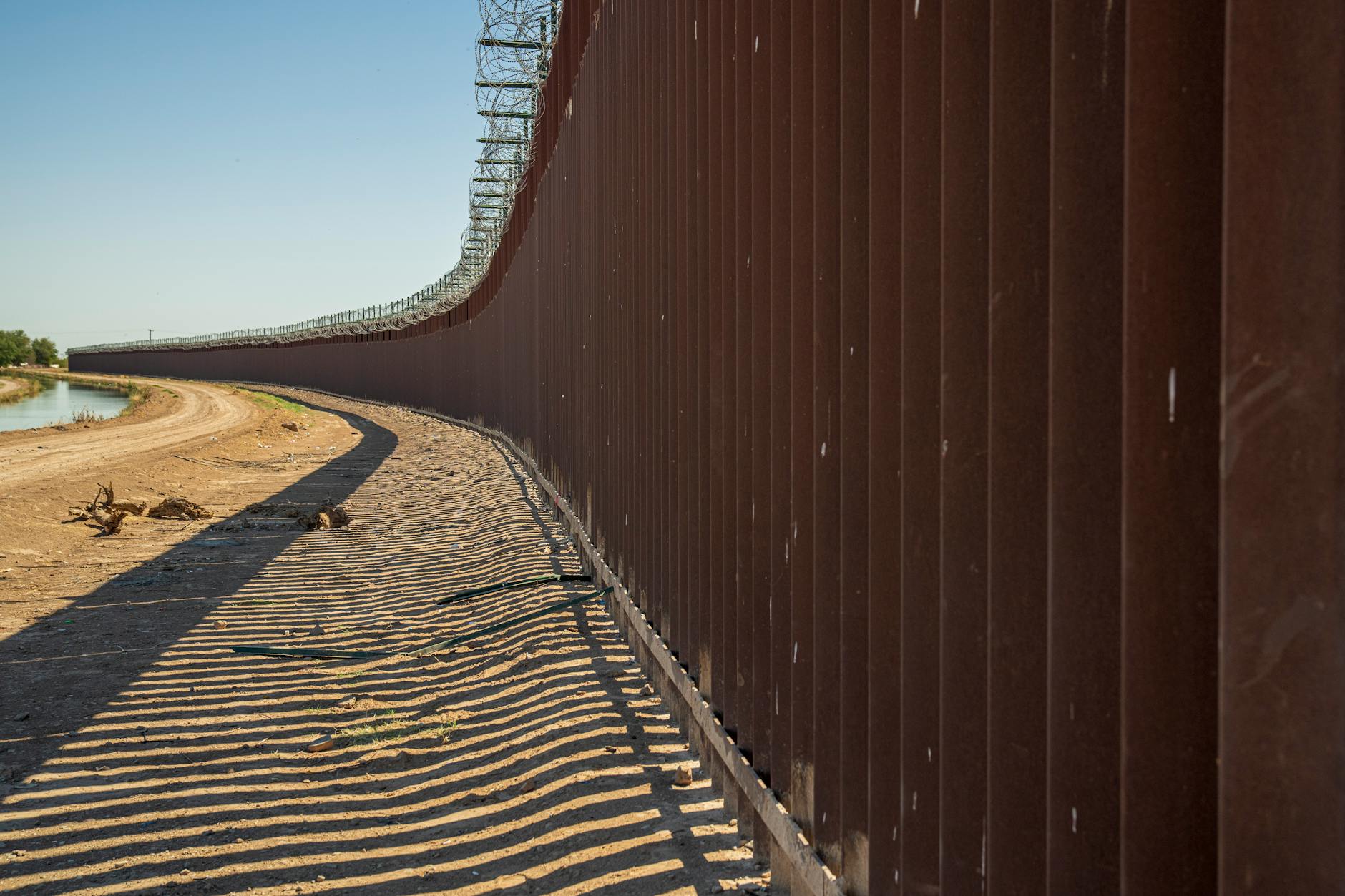
I want to delve into the Border Issue, a topic that often dominates national news and political discussions. As a resident of Mesa, Arizona, and a frequent traveler across the state, I’ve never encountered the dramatic scenes that the media often depicts. There have been no families from Central America camping in my front yard or streams of people crossing into nearby towns. This stark contrast between media portrayals and my personal experiences is a puzzle that I’m eager to explore.

It’s interesting to note that I know individuals who firmly believe in these media portrayals. Some have even ventured to Mexico, confident that the Border Patrol would ensure their safety. Upon their return, I eagerly inquired about their experiences, expecting tales of chaos. To my surprise, they described the areas as eerily quiet—almost like ghost towns. They reported no issues crossing the border and found the most challenging part of the journey to be the drive itself.

Despite these personal accounts, the news continues to show what’s framed as thousands of people crossing the border here in Arizona. While I acknowledge that some may exploit entry points or policies, I struggle to find evidence of this on the ground. It raises questions: where are these images and reports coming from, and are they truly reflective of the situation here?

When 20,000 Americans Held a Pro-Nazi Rally in Madison Square Garden in 1939 – Now It’s Happening Again…

Information Produced and Presented By Organizations Other Than Groff Media 2024


Above, two-time Academy Award nominee Marshall Curry presents A Night at The Garden, a film that revisits a night in February 1939 when “20,000 Americans rallied in New York’s Madison Square Garden to celebrate the rise of Nazism — an event largely forgotten from U.S. history.” As we described it back in 2017, the film documents the following scene:

What you’re looking at is the 1939 “Pro-American Rally” (aka Pro-Nazi Rally) sponsored by the German American Bund at Madison Square Garden on George Washington’s 207th Birthday. Banners emblazoned with such slogans as “Stop Jewish Domination of Christian Americans,” “Wake Up America. Smash Jewish Communism,” and “1,000,000 Bund Members by 1940” decorated the great hall.

New York City Mayor Fiorello LaGuardia—an Episcopalian with a Jewish mother—considered canceling the event, but ultimately he, along with the American Jewish Committee and the American Civil Liberties Committee decreed that the Bund was exercising its right to free speech and free assembly.

A crowd of 20,000 filled the famous sports venue in mid-town Manhattan to capacity. 1,500 police officers were present to render the Garden “a fortress impregnable to anti-Nazis.” An estimated 100,000 counter-demonstrators were gathering outside.…

The most disturbing moment in the short film comes at the 3:50 mark, when another security force—the Bund’s Ordnungsdienst or “Order Service” pile on Isidore Greenbaum, a 26-year-old Jewish worker who rushed the podium where bundesführer Fritz Julius Kuhn was fanning the flames of hatred. Valentine’s men eventually pulled them off, just barely managing to save the “anti-Nazi” from the vicious beating he was undergoing.

Made entirely from archival footage filmed that night, A Night at The Garden “transports audiences to this chilling gathering and shines a light on the power of demagoguery and anti-Semitism in the United States.” You can learn more about the film and the 1939 rally at Marshall Curry’s web site.

Any similarity to actual persons, living or dead, or other xenophobic rallies being held this weekend in Madison Square Garden is purely coincidental, of course.

Related Content 

Yale Professor Jason Stanley Identifies 10 Tactics of Fascism: The “Cult of the Leader,” Law & Order, Victimhood and More

Toni Morrison Lists the 10 Steps That Lead Countries to Fascism (1995)

Fascism!: The US Army Publishes a Pamphlet in 1945 Explaining How to Spot Fascism at Home and Abroad

Over a century ago, the United States grappled with a political movement that closely resembled today’s MAGA (Make America Great Again) movement, a populist uprising spearheaded by former President Donald Trump. Like MAGA, this earlier movement thrived on populist discontent, nativist sentiments, and rejection of the established order. If not kept in check, it could have reshaped American democracy in ways that might have undermined its democratic institutions, a peril we must remain vigilant against.

One of the most significant instances was during Theodore Roosevelt’s presidency, a man with intricate political loyalties. In 1912, Roosevelt’s Bull Moose Party brought populist elements into the political mainstream, appealing to working-class voters who felt marginalized by the two major parties. While Roosevelt was not anti-democratic, his charismatic leadership style and his ability to rally crowds around a strongman image set a precedent for future political movements that would seek to undermine democratic norms.

Simultaneously, the rise of the “America First” movement and the Ku Klux Klan spanning the 1920s showed how easily populist rhetoric could veer into exclusionary nationalism and nativism. The Klan’s widespread influence reached local, state, and federal government levels, promoting an agenda that sought to disenfranchise non-white citizens, immigrants, and anyone considered “un-American.” This movement found an audience among rural and working-class Americans who felt left behind by the rapid industrialization and modernization of the country.

At the heart of these movements was a profound distrust of the government, elites, and institutions—just like the anti-establishment fervor that fueled the rise of MAGA. These movements aimed to “restore” a vision of America rooted in racial and social hierarchies, often using violent rhetoric and intimidation to achieve their goals. Had these populist forces gained more traction, they could have severely damaged the democratic foundation of the country, ushering in a more authoritarian regime.

It took concerted efforts from citizens and political leaders to resist these dangerous movements and restore democratic norms. In some ways, the lessons from over a century ago echo loudly today: unchecked populism, especially when it flirts with nativism and authoritarianism, can bring democracy to the brink of collapse. However, this history also reminds us of our power to shape the future of our democracy, offering hope and inspiration for positive change.

Today, as MAGA remains a force in American politics, it is crucial to remember that the battle to preserve democracy requires vigilance. While populism can express legitimate grievances of people who feel left behind, it must not be allowed to erode the institutions enabling democracy to function. History teaches us that democracy’s survival depends on our ability to balance widespread anger with reasoned leadership and respect for the rule of law. We all have a role to play in this ongoing struggle, and our vigilance is required to maintain a true Republic of the People!

A Letter From An American Adresses Fascism – First Alerting American troops To Avoid It In 1943! Today Americans Are Voting For It!

Today’s Voice Is By Heather Cox Richardson Posted By: Benjamin Groff II© Groff Media 2024© Truth Endures IMDbPro

You can read more by Heather Cox Richardson Letter’s From An American here.

Beginning in 1943, the War Department published a series of pamphlets for U.S. Army personnel in the European theater of World War II. Titled Army Talks, the series was designed “to help [the personnel] become better-informed men and women and therefore better soldiers.”

On March 24, 1945, the topic for the week was “FASCISM!” 

“You are away from home, separated from your families, no longer at a civilian job or at school and many of you are risking your very lives,” the pamphlet explained, “because of a thing called fascism.” But, the publication asked, what is fascism? “Fascism is not the easiest thing to identify and analyze,” it said, “nor, once in power, is it easy to destroy. It is important for our future and that of the world that as many of us as possible understand the causes and practices of fascism, in order to combat it.”

Fascism, the U.S. government document explained, –––

“is government by the few and for the few. The objective is seizure and control of the economic, political, social, and cultural life of the state.” “The people run democratic governments, but fascist governments run the people.” 

“The basic principles of democracy stand in the way of their desires; hence—democracy must go! Anyone who is not a member of their inner gang has to do what he’s told. They permit no civil liberties, no equality before the law.” “Fascism treats women as mere breeders. ‘Children, kitchen, and the church,’ was the Nazi slogan for women,” ––– the pamphlet said. 

Fascists understood that “the fundamental principle of democracy—faith in the common sense of the common people—was the direct opposite of the fascist principle of rule by the elite few,” it explained, “[s]o they fought democracy…. They played political, religious, social, and economic groups against each other and seized power while these groups struggled.”  

Americans should not be fooled into thinking that fascism could not come to America, the pamphlet warned; after all, “[w]e once laughed Hitler off as a harmless little clown with a funny mustache.” And indeed, the U.S. had experienced “sorry instances of mob sadism, lynchings, vigilantism, terror, and suppression of civil liberties. We have had our hooded gangs, Black Legions, Silver Shirts, and racial and religious bigots. All of them, in the name of Americanism, have used undemocratic methods and doctrines which…can be properly identified as ‘fascist.’”

The War Department thought it was important for Americans to understand the tactics fascists would use to take power in the United States. They would try to gain power “under the guise of ‘super-patriotism’ and ‘super-Americanism.’” And they would use three techniques: 

It is “vitally important” to learn to spot native fascists, the government said, “even though they adopt names and slogans with popular appeal, drape themselves with the American flag, and attempt to carry out their program in the name of the democracy they are trying to destroy.” 

The only way to stop the rise of fascism in the United States, the document said, “is by making our democracy work and by actively cooperating to preserve world peace and security.” In the midst of the insecurity of the modern world, the hatred at the root of fascism “fulfills a triple mission.” By dividing people, it weakens democracy. “By getting men to hate rather than to think,” it prevents them “from seeking the real cause and a democratic solution to the problem.” By falsely promising prosperity, it lures people to embrace its security.

Read more from Heather Cox Richardson by clicking here!

Notes:

War Department, “Army Talk 64: FASCISM!” March 24, 1945, at https://archive.org/details/ArmyTalkOrientationFactSheet64-Fascism/mode/2up

Concerning Remarks by Former President Trump Regarding Military Burial and Generals

By: Benjamin Groff II© Groff Media 2024© Truth Endures IMDbPro

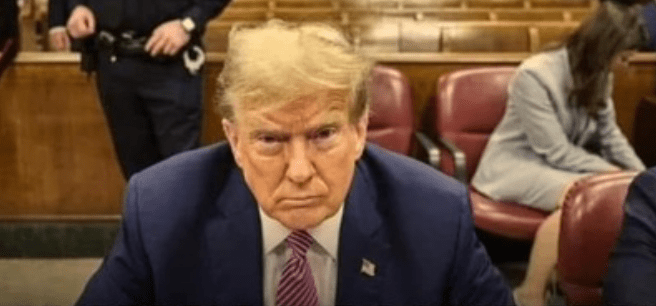
A recent news segment broadcasted by MSNBC-TV News says that former President Donald Trump reportedly made a controversial remark regarding the cost of burying a Hispanic woman he described as a “f–King Mexican” who had been killed and mutilated at a Texas Army base by a fellow soldier. The burial expenses reportedly amounted to approximately $80,000. Trump allegedly expressed frustration, saying it cost “too fucking much money” to provide the soldier with a proper burial.

This statement, if accurate, raises significant concerns about the former president’s attitude toward the treatment of military personnel, particularly those of Mexican heritage, as well as the costs associated with honoring fallen soldiers. The issue transcends one demographic and speaks to broader implications about how different groups—Mexicans, military members, and their families—are treated and respected within the national discourse.

John Kelly says Trump is a Fascist!”

In addition to this disturbing comment, the report also highlighted another alarming remark by Trump, where he expressed a desire for military generals akin to those in Nazi Germany under Adolf Hitler. Given its historical connotations, this remark should be receiving widespread attention in both mainstream and military-focused media, especially during a presidential election cycle.

However, despite their gravity, these statements have not dominated headlines in the way one might expect. The lack of focus on such inflammatory remarks is concerning, particularly given their implications for how a future Trump administration might handle military leadership and diverse communities.

These statements deserve heightened scrutiny from Spanish-speaking news outlets, military programs, and even women’s rights advocates, as they touch on crucial issues of race, leadership, and the treatment of soldiers. The implications of a leader aspiring to emulate Hitler’s generals, combined with dismissive comments about the costs of burying a soldier, suggest dangerous intentions for the future should Trump get re-elected.

The absence of widespread discussion on these matters is troubling, as the importance of holding political leaders accountable for their statements must be balanced, especially when they potentially foreshadow harmful policies.

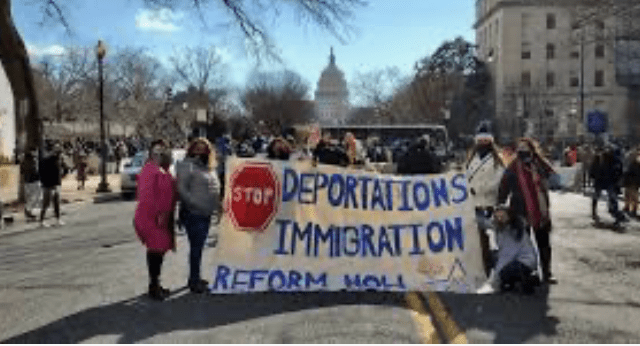
Former President Donald Trump has once again put mass deportations at the forefront of his political agenda, threatening to implement a sweeping policy of deporting millions of undocumented immigrants if he gets re-elected. This proposal raises numerous concerns about the economic, social, and moral ramifications for the United States, with devastating consequences not only for immigrant communities but also for the country as a whole.

Mass deportations would have a profound negative impact on the U.S. economy. Undocumented immigrants contribute significantly to various sectors, including agriculture, construction, hospitality, and healthcare. Removing millions of workers from these industries would lead to severe labor shortages, driving up production costs and potentially creating inflationary pressures that affect all Americans. Businesses would need help filling vacancies, especially in labor-intensive jobs that many Americans are unwilling or unable to take on. The ripple effect would result in reduced productivity, increased costs for products and services, and a contraction in critical industries, including food production and construction.

Additionally, undocumented immigrants contribute billions of dollars to local and federal taxes each year, including sales and property taxes. Their removal would shrink this tax base, creating budgetary shortfalls for essential services like education, healthcare, and infrastructure. The cost of enforcing mass deportations—estimated to be in the hundreds of billions—would burden the federal government and taxpayers.

The human cost of mass deportations cannot be understated. Deportations would tear apart families, many of which include U.S. citizens. An estimated six million U.S.-born children live with at least one undocumented parent, and these children would face traumatic separations that could lead to long-term psychological harm. Communities, particularly those with large immigrant populations, would experience destabilization as families and social networks get disrupted, potentially altering the fabric of our society.

The fear and uncertainty generated by the threat of mass deportations would create a climate of mistrust between migrant communities and law enforcement, causing it to be more challenging for authorities to solve crimes or maintain order in immigrant-dense areas. Many undocumented individuals contribute to the community fabric by volunteering, attending schools, and participating in religious and civic organizations, and their forced removal would erode these social bonds.

Mass deportations also raise profound moral questions about America’s identity as a nation built on immigration. For centuries, the U.S. has stood as a beacon of hope and opportunity for people fleeing persecution, poverty, and violence. Deporting millions of people en masse, many of whom have resided in the U.S. for decades, sends a harsh message that contradicts these ideals. Such a policy risks deepening racial and ethnic divisions, stoking xenophobia, and inciting further polarization in an already divided political landscape, threatening the unity of our nation.

Politically, Trump’s plan for mass deportations is likely to galvanize opposition not just from immigrant rights groups but also from many sectors of society, including businesses, religious organizations, and community leaders who recognize the humanitarian and economic risks of such an approach. The request is likely to face legal challenges as well, potentially sparking a constitutional debate over due process, civil liberties, and the limits of executive power, offering a glimmer of hope for the preservation of our democratic principles.

Mass deportations could also have negative consequences for national security. If immigrants are too afraid to report crimes or cooperate with law enforcement, it could undermine efforts to fight human trafficking, drug smuggling, or other criminal activities. Additionally, the U.S.’s standing in the global community could get tarnished as other nations criticize the harshness of the policy, straining diplomatic relationships with key allies, particularly in Latin America.

Donald Trump’s threat to implement mass deportations would have dire consequences for Americans. It would inflict severe economic damage, cause profound social harm, and challenge the nation’s moral fabric. Rather than solving immigration issues, such a policy would exacerbate existing problems while undermining the values of inclusivity and opportunity that the U.S. has long championed. The broader national and international fallout from this approach would have far-reaching effects on the country’s domestic stability and global reputation.

The Legend of Arizona’s Red Ghost Faris And His Caravan Of Former Calvary

Presented by benandsteve.com By: Benjamin Groff II© Groff Media 2024© Truth Endures IMDbPro

Sailors and an Arab camel herder load
a Bactrian camel aboard the USS Supply
during one of the two expeditions to
procure camels – National Archives

In the sun-scorched deserts of Arizona, the vast emptiness was once filled with the pounding hooves of horses and the steady march of soldiers from the United States Cavalry. But for a brief moment in history, an unlikely companion joined their ranks—the camel. Brought from distant lands, these towering creatures with their humped backs and long legs had intended to be the army’s answer to the challenges of traversing the rugged terrain of the Wild West.

A/I Created Photo

In the mid-1800s, under the guidance of Secretary of War Jefferson Davis, the U.S. government embarked on a truly unique experiment-the ‘Camel Corps’. Camels, renowned for their endurance in desert conditions, were imported to America and tasked with the challenging job of carrying supplies across the barren landscapes where wagons and horses often struggled. The soldiers stationed at the forts in Arizona and New Mexico were initially skeptical. They were baffled by the strange creatures that spit and moaned, their massive feet gliding over the desert sands as if weightless.

Among the camels, one stood out—a massive bull camel named Faris. He had traveled across the seas from the deserts of Egypt, his broad hump towering over his fellow camels. With piercing eyes and a personality as stubborn as the most seasoned cavalrymen, Faris became the pack’s leader, guiding the other camels through endless miles of scorching desert, carrying their loads without complaint.

Library of Congress

But the experiment was short-lived. As the Civil War loomed, funding for the Camel Corps dried up, and the forts in the Arizona desert began to close one by one. With the forts gone and no practical use for the camels, the military made a fateful decision: they turned them loose, setting them free in the vast desert wilderness. The soldiers and settlers who remained watched with mixed emotions as the camels slowly strode off into the horizon, their long necks and humps silhouetted against the setting sun.

Library of Congress

Faris led the herd, now wild, into the vast stretches of land where no human tread. Once tethered and burdened with human supplies, the camels embraced their freedom, roaming the desert, their calls echoing in the canyons and across the mesas.

For years, sightings of the camels became the stuff of legend. Travelers and settlers spoke of giant creatures wandering the wilderness, spooking horses, and disappearing into the dunes as quickly as they were seen. Stories of ‘The Red Ghost’ surfaced, a phantom camel said to be terrorizing ranchers, with strange tracks left in the dust after raids on isolated farms. The mystery deepened with some claiming to see a human skeleton strapped to the back of one rogue camel, but no one knew for sure whether this was fact or fiction.

Library of Congress

Faris, now older but still commanding, led his herd deeper into the desert as the years passed. The camels, with no soldiers to guide them, learned to live off the sparse vegetation, adapting as always. They became masters of the land, surviving where few others could, a testament to their remarkable adaptability.

Generations of Arizonans grew up hearing tales of the camels. Old ranchers would sit by the fire, recounting when they saw a lone camel watching them from the top of a ridge, its eyes gleaming in the moonlight before they vanished into the desert night. Cowboys whispered of Faris, the great camel leader, still roaming the wild, the last of a forgotten army, king of the untamed desert.

So, the camels of the Wild West became more than just a footnote in history—they became legends, ghosts of a time when even the most foreign creatures found a place in the rugged and unforgiving land of the Arizona desert.

A released camel or a descendent of one is believed to have inspired the Arizonan legend of the Red Ghost.

One of the few camel drivers whose name survives was Hi Jolly. He lived out his life in the United States. After his death in 1902, he was buried in Quartzsite, Arizona. His grave is marked by a pyramid-shaped monument topped with a metal profile of a camel.

The Impact of Leadership on American Democracy

Presented by benandsteve.com By: Benjamin Groff II© Groff Media 2024© Truth Endures IMDbPro

As we approach the upcoming elections, it’s crucial to remember that Americans are empowered to shape the nation’s trajectory every four years through their votes. When exercised responsibly and carefully reflecting on our past and present, this powerful right allows us to make decisions that align with our shared values and hopes for the future. Informed voting is not just a privilege—it’s a responsibility that enables us to build a future reflective of our ideals.

It’s sometimes helpful to step back and gain perspective to understand the present. Our current situation may seem overwhelming, but history often shows us that our challenges are more complex than we remember. Reflecting on past leadership and decisions not only reassures us but also guides us toward a more thoughtful approach to what lies ahead, providing a sense of reassurance and guidance.

Under the Trump administration, America experienced a turbulent period domestically and internationally. Families traveling abroad faced significant challenges, particularly when trying to return to the U.S. Students awaiting critical funding for their education found themselves in bureaucratic limbo. The economy saw dramatic fluctuations, with the stock market swinging between highs and lows and housing prices manipulated to benefit the wealthy. Trump’s philosophy favored personal gain over the nation’s welfare, leaving many Americans to navigate an unstable economy.

Trump’s handling of the COVID-19 pandemic was a defining moment of his presidency, marked by widespread criticism. His dismissive attitude toward the virus allowed it to sweep across the country unchecked, leading to hundreds of thousands of preventable deaths. He offered unscientific remedies, such as suggesting the use of disinfectants and promoting unproven drugs, and downplayed the severity of the crisis, causing further confusion and panic. His response to local disasters, for instance, his visit to Puerto Rico, where he threw paper towels into the crowd, reflected a troubling lack of empathy and leadership.

Moreover, during his presidency, Trump distanced himself from the traditions of decency and respect that past leaders upheld. He neglected to offer condolences to families of prominent Americans who passed, such as Barbara and George Bush, choosing instead to focus on personal leisure like golfing. Trump’s lack of emotional support marked a stark departure from the dignified conduct expected of a sitting president.

Domestically, Trump’s immigration policies, which included strict border controls and deportation of undocumented immigrants, led to labor shortages, particularly in the service industry, where businesses struggled to find staff. His administration’s aggressive stance on immigration had unintended consequences, with many sectors unable to recover after being stripped of their workforce.

On the international stage, Trump’s cozy relationships with authoritarian leaders in North Korea and Russia raised alarms about national security. His handling of classified information, especially the top-secret documents stored at Mar-a-Lago, left Americans wondering what was compromised and who had access to it.

By contrast, the Biden administration has worked tirelessly to restore stability and dignity to the president’s office. Under Biden’s leadership, the economy has rebounded, and significant investments have been made in infrastructure, including road repairs, bridge replacements, and expanded internet access. His administration, though not without flaws, has prioritized the well-being of the American people, bringing a sense of civility and optimism back to the White House, highlighting the profound impact of leadership on democracy.

While sometimes criticized for being cautious, Biden’s approach to governance is rooted in diplomacy and careful planning. He brought America back to a position of respect globally, fostering relationships with allies and upholding democratic values. As Vice President, Kamala Harris has quietly supported these efforts, often working behind the scenes but prepared to step into leadership if needed.

While no administration is perfect, it’s essential to recognize the progress made under Biden, especially compared to the chaos that marked Trump’s time in office. Biden inherited a nation with a 12% unemployment rate and shuttered businesses. Yet, within a year, he and Harris turned things around, rebuilding a country on the brink of collapse.

As we move forward, it’s critical to remember where we came from and who has been steering

Take A Ride With Kamala on Air Force 1 – Ridin’ With Biden! Click on Image above!

What Happens When the Country is Closed for Average Americans?

A Report By: Benjamin Groff© Groff Media 2024© Truth Endures

A Shift in the Landscape of Freedom

Amid political upheaval, the everyday American—who works a regular job, pays taxes, and seeks a life of routine and stability—may question their future in an increasingly polarized society. As extreme political movements push for agendas that center around ideas of “Project 25” or the return of Trump, advocating for a strict interpretation of Christianity, suppression of women’s rights, and an aggressive nationalistic framework, the real impact may be felt most by the “regular Joe”—the one who wants to live a quiet, predictable life.

For the average person, life may close in on them in such a scenario. The country may become unrecognizable, not in a dystopian fantasy, but in subtle, pervasive ways. It might start with the suppression of individual freedoms—targeting what people can say, wear, or how they worship. Religious dogma could permeate public life, not as a choice but as a mandate, affecting schools, workplaces, and government institutions. The Bible in every building might become symbolic and a requirement, with legal frameworks promoting a particular religious view while leaving others on the margins.

Erosion of Women’s Rights

Regular Americans might witness fundamental changes in the status of women while going about their daily lives. With growing pressure from ultra-conservative elements, efforts to curtail women’s autonomy could accelerate. The reversal of women’s rights, particularly reproductive rights, is already in motion. In this new political order, women might have even fewer choices about their bodies, careers, and participation in public life. For many, this will mark a turning point when personal freedom can no longer be taken for granted.

The Fear of the Unknown

Fear might become customary for those not part of this hard-right movement. The “regular Joe” will likely feel caught between competing narratives. On one side, there is the quiet desperation of wanting to hold on to their everyday life, and on the other, the nagging sense that the world is changing in ways that might soon render them powerless. Whether one is bisexual, straight, or simply someone with no interest in pushing their identity into the political arena, they might start feeling stalked by the system—monitored, judged, and left wondering if their way of life is still valid.

A New “American Dream?”

In this environment, the American Dream could become narrow. No longer about opportunity for all, it may become a dream only accessible to those who fit the suitable mold—racially, religiously, and socially. If one does not align with the ideals of whiteness or conservative sexuality, they could find themselves increasingly ostracized, with opportunities drying up. The path to success might depend less on hard work and more on conformity to ideals driven by far-right ideologues.

The reality could become darker for the person who comes home daily, pats their dog on the head, and watches the news. The content of that evening television might change, with media outlets pushing extreme viewpoints or censorship becoming the norm. Growing anxieties about what tomorrow holds could interrupt quiet moments of relaxation.

Where Do They Go?

If the country starts closing itself to all but those who align with this rigid agenda, the regular Joe may ask, “Where do I go?” It is hard to imagine a physical place for escape in a country that feels increasingly closed off to dissent. For many, the answer might not be in leaving the country but in finding a way to resist quietly—by forming communities with others who feel left behind, advocating for empathy and open-mindedness, and holding on to the idea that the heart of America lies not in exclusion but inclusion.

The danger is not just in the policies themselves but in the erosion of what makes America a place where people of all walks of life can live freely, with differences embraced rather than punished. When that idea is under attack, the question of “Where will you go?” takes on a much deeper meaning because the honest answer is about preserving a sense of home, not just for oneself but for everyone.

In this potential future, where does the regular Joe go? Perhaps they remain right where they are, standing in quiet defiance, continuing to pay their taxes, pat their dog, and live with the hope that balance will one day return to a nation at risk of losing itself.

Bishop Basil Harry Losten, a revered figure in the Ukrainian Greek Catholic Church

Posted By: Benjamin Groff© Groff Media 2024© Truth Endures

Basil Harry Losten (May 11, 1930 – September 15, 2024)

Bishop Basil Harry Losten, a revered figure in the Ukrainian Greek Catholic Church, passed away peacefully on September 15, 2024, in Stamford, Connecticut, after a brief illness. He was 94 years old. At the time of his passing, he was Bishop Emeritus of the Ukrainian Catholic Diocese of Stamford, a role he held with grace and devotion until his final days. Bishop Paul Patrick Chomnycky succeeds him.

Born in Chesapeake City, Maryland, on May 11, 1930, Basil Losten embarked on a life of faith and service that began with his early education at St. Basil School in Philadelphia. His journey into the priesthood was marked by years of dedicated study, first at the Ukrainian Catholic Seminary in Stamford and later at St. Basil College, where he earned a bachelor of arts in philosophy. His theological education culminated in a graduate degree from the Catholic University of America in 1957.

Basil Losten was ordained to the priesthood on June 10, 1957, by Bishop Constantine Bohachevsky. His initial assignments saw him serve the Philadelphia Archdiocese as chancery secretary and in various parishes across the city. In 1962, his leadership and loyalty were acknowledged when he was appointed personal secretary to Archbishop-Metropolitan Ambrose Senyshyn.

In 1968, Pope Paul VI recognized his contributions by elevating him to the rank of papal chamberlain. On March 23, 1971, he was nominated to the episcopacy, and on May 25 of that year, he was consecrated as auxiliary bishop of the Ukrainian Archdiocese of Philadelphia. He continued to serve with distinction, later being appointed apostolic administrator of the diocese in 1976 during the declining health of Archbishop-Metropolitan Senyshyn.

Bishop Losten was admired throughout his career for his unwavering dedication to his faith, leadership, and tireless service to the Ukrainian Catholic community. Losten’s impact on clergy and laity alike will be remembered for generations.

Bishop Losten is being mourned by his many parishioners, colleagues, and the communities he served. Funeral services will be held at Stamford’s Ukrainian Catholic Cathedral of the Immaculate Conception. May his memory be eternal.

The Nightmare They Escaped Is Part Of The Plan In Project 2025

Click the here for full report!

Two Russian dissidents released in a prisoner swap on Thursday said they refused to sign a petition for mercy to be sent to Russian President Vladimir Putin as requested by prison officials. 

During a news conference in Germany, Vladimir Kara-Murza and Ilya Yashin said they did not admit guilt or give Russian officials their consent to be removed, and vowed to return home one day. 

Mr Kara-Murza said the deal had saved “16 human lives” and that he had been convinced he would die in prison.

He added that many Russians were “opposed to Putin’s war in Ukraine”.

We require to listen to those who on were brought home. The hell they describe is the future Donald Trump and the GOP dream of for the U.S.A.

Political Mission Set In Fictional future Yet Sparks Of Reality Shines Through!

A Story By Benjamin H Groff© Groff Media Copyright 2024©

The tides of change swept through every street, home, and heart in the nation’s heart. It was an era marked by uncertainty and tension as a rising conservative movement began to reshape the very fabric of society. The once-balanced scales of politics now tipped heavily in favor of those who believed in tradition, order, and a return to what they called “the good old days.”

~
Emma Caldwell, a liberal activist and journalist, sat in her small apartment, the glow of her laptop illuminating her worried face. She had spent years fighting for progress—campaigning for equal rights, environmental protection, and social justice. But now, every headline seemed to bring another blow to the causes she held dear, intensifying the urgency of her mission.

~


The latest news was the most disturbing yet: a proposed amendment to the constitution that would severely restrict freedom of speech and assembly, effectively silencing dissent and opposition. Emma’s fingers flew across the keyboard as she typed out an article, her words mixing passion and desperation. She knew that getting the truth out was more important than ever.


Across town, in a grand office overlooking the city, Senator Marcus Reid, a leading figure in the conservative movement, reviewed the day’s agenda. He believed sincerely in his cause, convinced the country had lost its way in a maze of liberal policies and needed to return to its core values. To him, the changes were necessary, even if they were painful.


As the days passed, protests erupted across the nation. Streets filled with a sea of faces—young and old, united by a shared fear of losing their rights. Emma was among them, her camera capturing the raw emotions of the crowd. She interviewed people from all walks of life: the single mother worried about her children’s future, the college student anxious about the loss of academic freedom, the elderly couple who had fought for civil rights decades ago and now saw history repeating itself.


Despite the growing unrest, the conservative agenda pushed forward relentlessly. The lawmakers passed laws at a dizzying pace, each chipping away at the freedoms many had taken for granted. These laws included [specific laws], which directly affected [specific groups of people]. The country seemed to be spiraling into a new era of authoritarianism, and the hope that once burned brightly in the hearts of liberals began to dim.


Emma found herself at a crossroads. Her work was censored, and her voice was stifled by the very government she had once trusted to protect her freedoms. But she refused to give up. Gathering a small group of like-minded individuals, she formed an underground network dedicated to preserving and disseminating information. Their determination was a silent but powerful force, inspiring others with their unwavering resolve.


Senator Reid, now one of the most powerful men in the country, began to sense the growing resistance. He dismissed it at first, confident that his vision was the right path. However, as the underground movement gained momentum, Senator Reid realized that silencing dissent was more complex than passing laws. The human spirit, he discovered, was not so quickly subdued.
One evening, Emma received a message from an anonymous source—a high-ranking government official who had grown disillusioned with the conservative regime. The source provided her with classified documents detailing the administration’s plans to tighten their grip on power further.

These documents revealed [specific details], a dangerous revelation, but Emma knew it was the spark needed to ignite a more significant movement.


She leaked the documents to the public with the help of her network. The revelations shook the country, and the streets again filled with protesters. This time, their numbers were more significant, and their resolve was more robust, demonstrating the potential impact of collective action. The conservative government, facing unprecedented pressure, began to falter.


Senator Reid watched as the country he had tried to reshape slipped from his grasp. He had underestimated the people’s power and ability to unite and fight for their rights. As the conservative movement began to crumble, a new era of political awakening dawned.


Emma stood on the capitol’s steps, her camera in hand, capturing the momentous events unfolding before her. She knew the battle was far from over, but she felt a glimmer of hope for the first time in a long while. The changing times had tested the nation’s spirit, but in the end, its people’s resilience and determination prevailed.

Preventing Heatstroke: Why You Should Never Leave Kids or Pets in a Hot Car

A Story By Benjamin H Groff© Groff Media Copyright 2024©

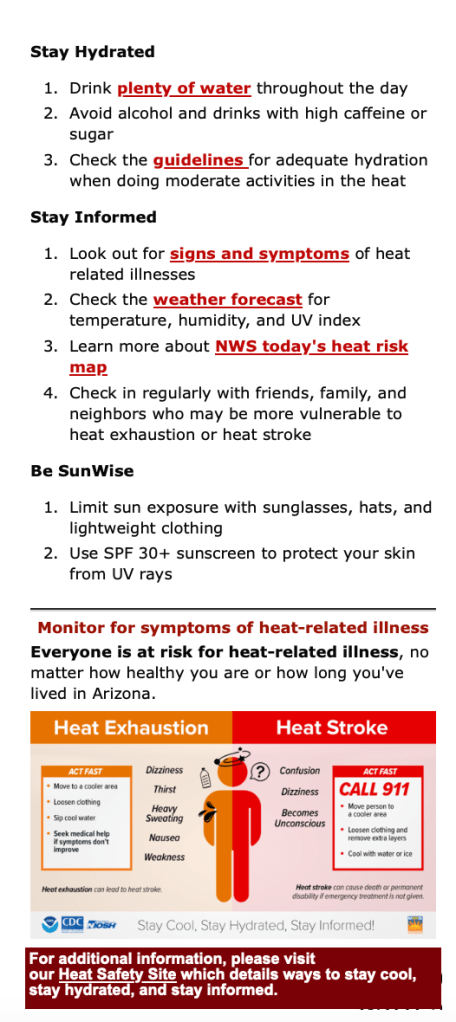
Dangerously high temperatures up to 117°F are expected with the potential to cause life-threatening illnesses or even death.

Your car can turn dangerously hot in just a few minutes.

Temperatures inside your car can skyrocket to life-threatening levels within minutes, posing serious risks even on cooler days. Never leave children or pets unattended in a car. Always double-check to ensure everyone is out of the vehicle before leaving. Arizona is included in nationwide alert for heat warnings that could cause serious health concerns, stroke, or even death!

The Last President: A Tale of Democracy’s Demise

The Last President

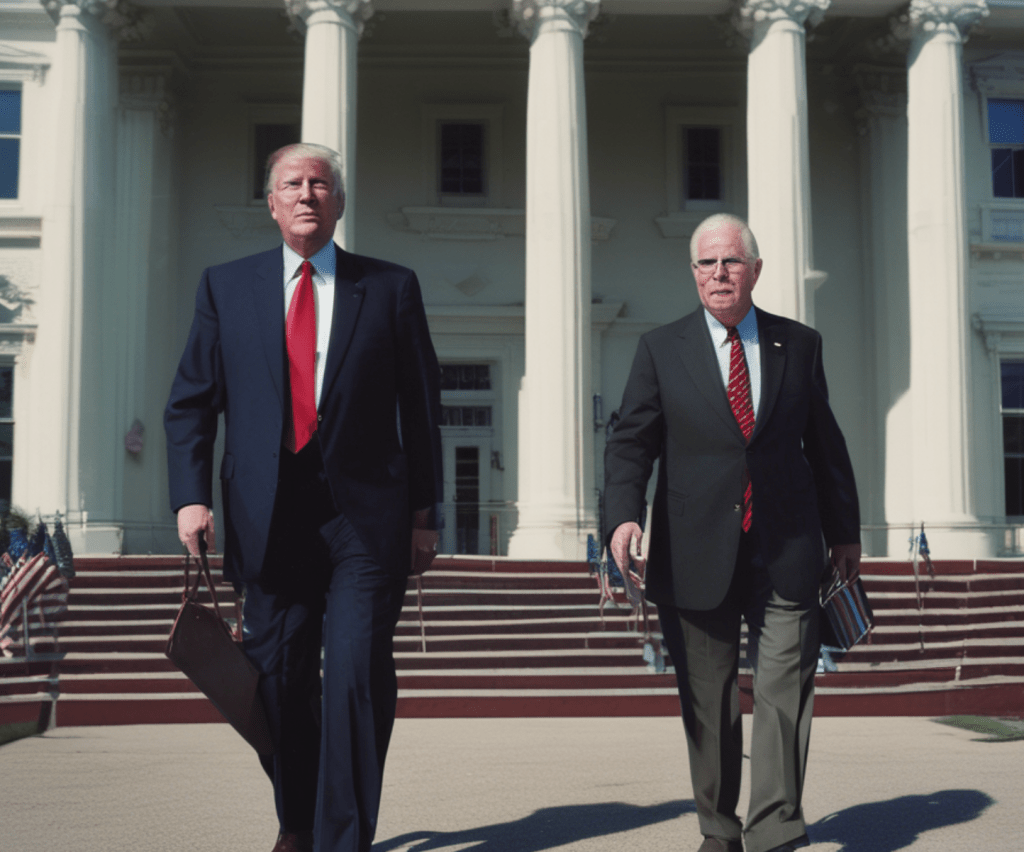
It was the end of October, and the nation seemed to be in a state of distraction, unaware of the critical choice before them. Two men were vying for the highest office in the land, each bringing with him a starkly different vision for the future. The contrast between their characters and intentions was as clear as day, yet the people’s attention was elsewhere. The urgency of the situation was palpable, but the people were yet to realize the gravity of their decision.

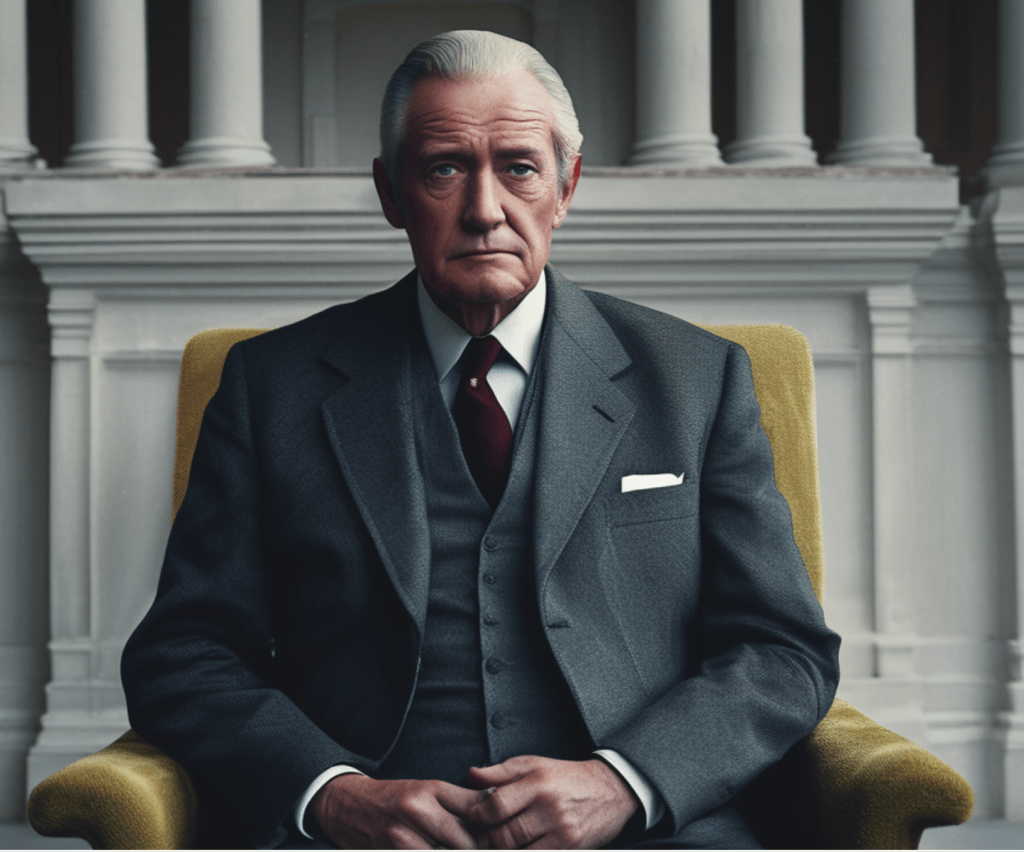
The first candidate was an elder statesman, a man whose career in public service spanned decades. He had held nearly every elected position imaginable, from local government to the halls of Congress. His dedication to the country was unwavering, a testament to his deep-seated patriotism. His life’s work, a reflection of his commitment to protecting the essence of the country he loved, was a beacon of trust and reliability for the nation.

In stark contrast stood the second candidate, a man whose motives were as transparent as they were troubling. Self-serving and careless, he made no secret of his intentions. He openly declared that, if elected, he would rule with an iron fist, punishing his enemies and consolidating power from day one. His rhetoric was filled with hate, yet the people, weary of the same old political games, dismissed his threats as mere bluster. This transparency, however, should have been a warning sign, a call for vigilance in the face of such extremism.

The campaign’s intensity grew as the days turned into weeks, yet the nation’s focus remained elsewhere. Perhaps it was the fatigue of constant political turmoil or the distractions of everyday life, but the electorate seemed indifferent, almost numb. They laughed off the second candidate’s tirades, convinced that such extremism could never take root in their democracy.

Election day arrived, and with it, a shocking outcome. The self-serving, hateful man had won. The people who had laughed at his threats now watched in stunned silence as he took the oath of office. His promises of dictatorship were not idle threats; they were his blueprint for governance, a reality that had suddenly come to pass. This was not just the result of one man’s ambition, but a collective decision made by the electorate.

From the very first day, the new President began to reshape the government to suit his whims. He targeted his opponents with a vengeance, using the full power of his office to silence dissent. Civil liberties and democratic institutions were eroded and undermined. The press, once the people’s watchdog, was muzzled. The judiciary, a bulwark against tyranny, was co-opted. His actions, such as [specific actions], tightened his authoritarian grip and spread fear like wildfire.

The oldest-ever President, now retired, watched in horror as the nation he had served so faithfully became dismantled piece by piece. His warnings had gone unheeded, his life’s work seemingly undone in months. Once so dismissive of the threat, the people found themselves powerless to stop the descent into chaos. The retired President, too, felt the weight of his powerlessness, a stark contrast to his years of service and influence.

It was the end of the nation, an Ending which the country could have avoided.nation. An Ending that could have been avoided.

Biden’s Victory Speech: Uniting America for Progress | Biden Wins

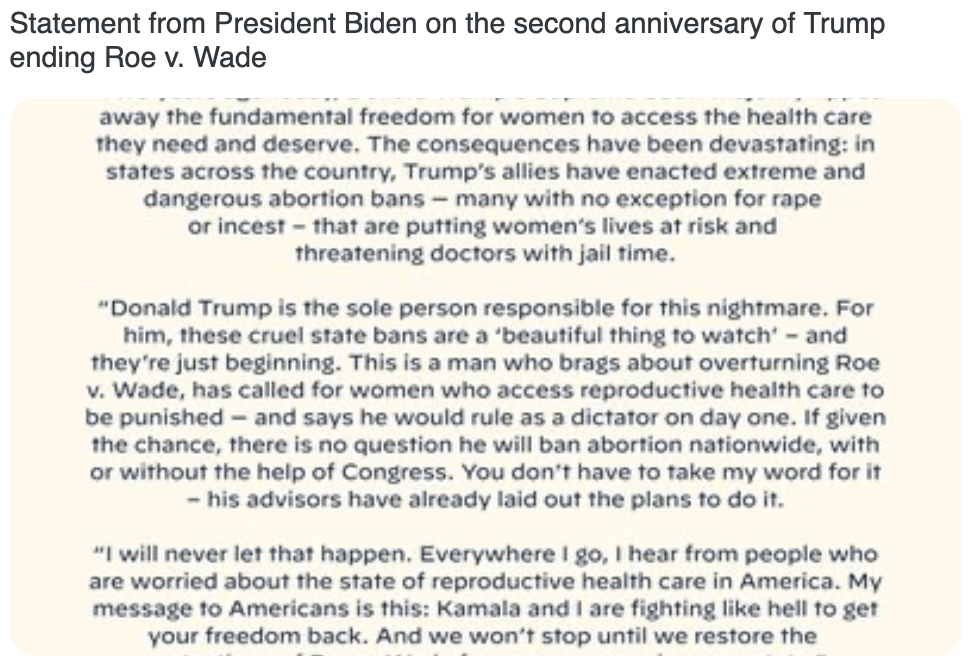
Before the presidential debates on Thursday, posts from supporters of President Biden are getting noticed. President Biden is getting noticed for his comment on the second anniversary of the revocation of ROE vs. Wade, a process that he says is caused by Donald Donald Trump.

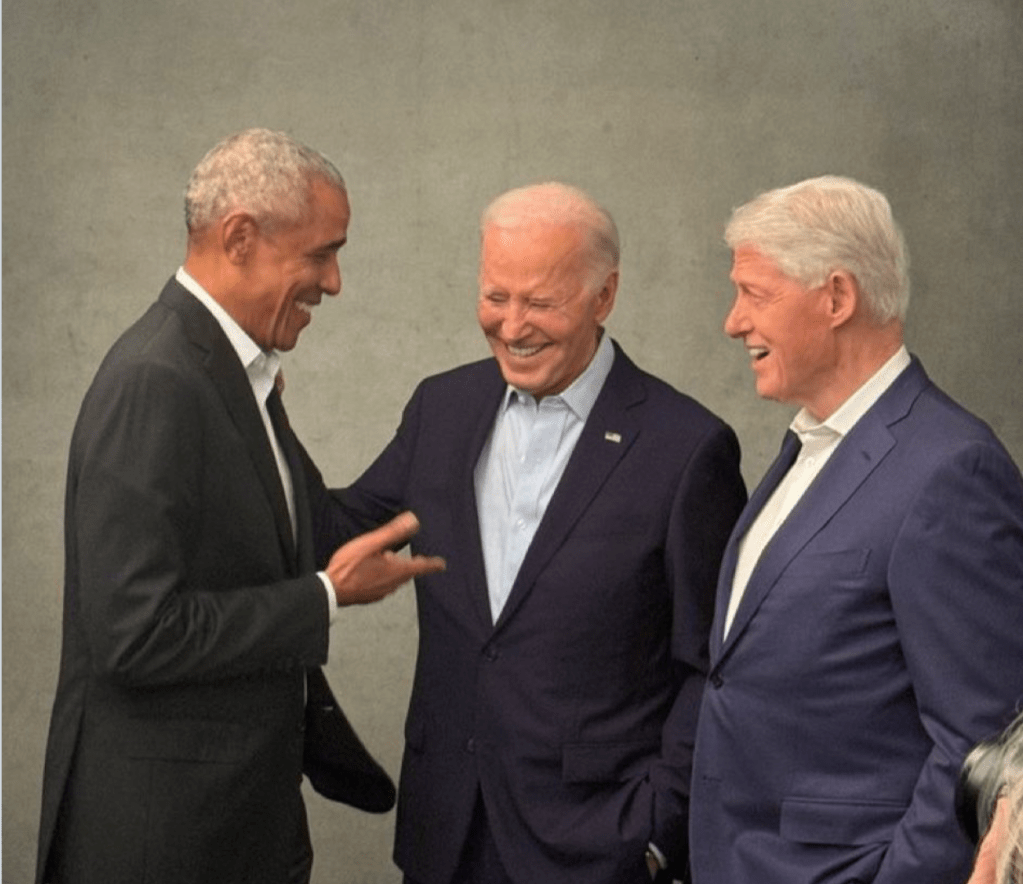
    Three Presidents Who Are Respected Around The World
    There Is A Giant Difference Between The Two. When You Vote – It Is For Freedom!

    Former President Donald Trump was widely mocked after claiming to a crowd of supporters that he has “wounds all over my body” that they could see if he took his shirt off.

    Trump delivered the keynote address at the “Road to Majority” conference in Washington, D.C., organized by the conservative Christian political advocacy group, Faith and Freedom Coalition, on Saturday.

    For example, Presidents Abraham Lincoln, James Garfield, William McKinley, and John F. Kennedy were assassinated while still in office.

    Notably, Ronald Reagan was the victim of an attempted assassination in 1981 when a bullet fired by John Hinckley Jr. shot him in the underarm, broke one of his ribs, and punctured one of his lungs, causing significant internal bleeding. Reagan went on to serve two terms in office.

    In one of the more oddball moments in American history, Andrew Jackson in 1835 was attacked by an unemployed house painter whose pistols misfired—and promptly beat his failed assassin with his walking cane.

    And it is perhaps darkly comic that Theodore Roosevelt survived a 1912 assassination attempt after the assassin’s bullet became lodged in a folded copy of a speech Roosevelt was carrying in his breast pocket at the time.

    By contrast, Trump has never been in a similar position. Nor has he ever served in combat or sustained any wounds whatsoever considering he infamously dodged the Vietnam War draft by claiming he had bone spurs in his foot (a fact he has periodically downplayed).

    See the full report here!

    Solemn Reflections: Memorial Day and the Spirit of Sacrifice

    As the sun rose over the small town of Oakwood, its warm rays illuminated the rows of white headstones in the Oakwood Cemetery. The city, steeped in a rich history of honoring fallen soldiers, had always observed Memorial Day with solemn pride. This day, originally known as Decoration Day, was established after the Civil War to commemorate the Union and Confederate soldiers who died in the war. It has since evolved to honor all Americans who have died in military service.

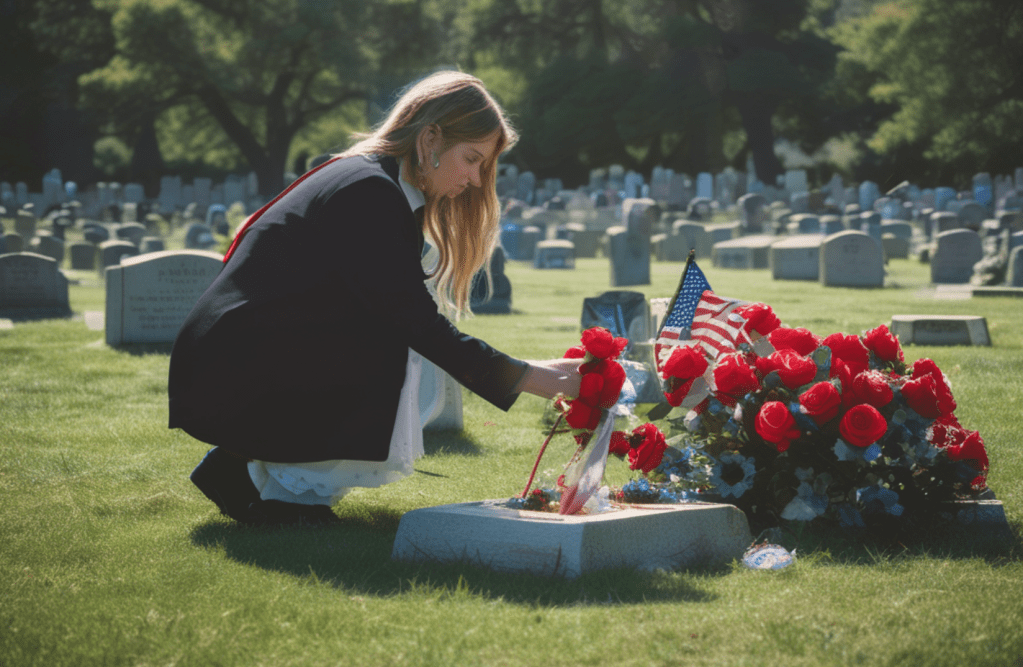
    Sarah Thompson stood at the cemetery’s gate, holding a bouquet of red, white, and blue flowers. She was in her late thirties, her eyes reflecting sorrow and strength. Visiting the cemetery was her yearly ritual—a pilgrimage to visit the grave of her brother, Daniel, who had died in Afghanistan a decade ago.

    As Sarah walked along the gravel path, she remembered the day they received the news. It had been a bright summer afternoon, much like today. Daniel had always been a source of light and joy in their family, with his infectious laughter and boundless energy. The knock on the door that day had shattered their world.

    Sarah reached Daniel’s grave and knelt, gently placing the flowers in front of the headstone. She traced her fingers over his name etched in the cold stone and whispered a prayer. Memories flooded back—playing tag in the backyard, late-night talks about their dreams, and the tearful goodbye when he left for his final deployment.

    The cemetery, a place of collective grief and remembrance, began to fill with others who had come to pay their respects. Families, friends, and fellow veterans moved among the graves, their shared sorrow palpable in the air. Some walked in silence, their thoughts a private tribute, while others shared stories, their voices a collective echo of the lives lost.

    A familiar voice broke Sarah’s reverie. “Hey, Sarah.”

    She turned to see Tom, one of Daniel’s best friends from high school, standing nearby. He held a small American flag, which he placed at the base of the headstone. Tom had served alongside Daniel and had been with him during his last moments.

    “It’s good to see you, Tom,” Sarah said, her voice soft.

    Tom nodded, his eyes filled with shared grief. “I come here every year. Feels like the least I can do.”

    They stood in silence for a moment, their hearts heavy with the weight of their loss. Each lost in their thoughts, memories of Daniel flooding their minds. Then Tom began to speak, his voice steady but emotional, his words a testament to the bravery and selflessness of their fallen friend. ‘Daniel was the bravest person I knew,’ he said, his voice breaking with emotion. ‘He always put others before himself. Even in the end, he worried more about us than his safety.’

    Sarah smiled through her tears. “That sounds like him.”

    The morning wore on, and more people arrived, each carrying their own memories and gratitude. A group of children from the local school, accompanied by their teachers, placed flags on the graves of all the fallen soldiers, a symbol of their respect and understanding of the sacrifices made. The town’s mayor gave a short speech, his words echoing with the collective gratitude and remembrance of the community. A local choir sang ‘America the Beautiful,’ their voices a poignant reminder of the unity and strength that comes from shared values. The collective remembrance was a powerful testament to the sacrifices made by so many.

    As the ceremony ended, Sarah and Tom lingered by Daniel’s grave a little longer. They shared stories, laughed, and cried, finding comfort in each other’s company.

    “Thank you for being here,” Sarah said as they prepared to leave.

    “Always,” Tom replied. “He was my brother, too.”

    They returned to the cemetery gate together, the sun now high in the sky. As Sarah looked back one last time at the sea of white headstones, she felt a sense of peace. Memorial Day was not just about remembering the fallen; it was about celebrating their lives and the values they stood for.

    Driving home, Sarah contemplated the significance of this day and how she would pass on its importance to her children. She understood that as long as they remembered, Daniel’s spirit would continue to live on. Every Memorial Day, she would return to this hallowed ground, ensuring that the memory of her brother and all those who had made the ultimate sacrifice for their country would never fade.

    In checking references part of this story may include referencese similar to others found on the internet. The simularities are incidential and are not included intentional. You can find more these simularities RE: New York. Memorial Day. Monument. Dead Soldier. Wheelchair. Handicapped Boy. | Didier Ruef | Photography. https://www.didierruef.com/gallery-image/Aura/G0000Is39GN2Av9w/I0000aHlCvWVZLNc/C0000EU0LcXmMzWo/