Tribute to Edy Star: The Groundbreaking Brazilian Artist

By Benjamin GroffMedia© | benandsteve.com | 2025 Truth Endures©

1–2 minutes

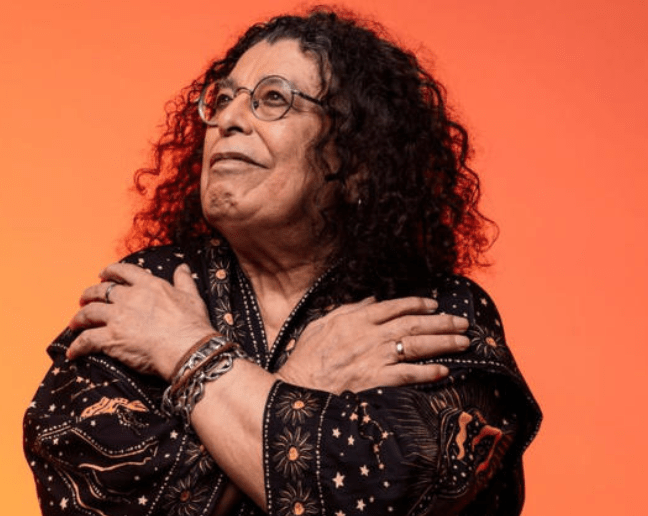
Edy Star

Edy Star, Trailblazing Brazilian Artist and Queer Icon, Dies at 87

April 25, 2025 – São Paulo, Brazil

Edy Star was a flamboyant and fearless Brazilian artist. He was a singer, actor, and visual artist. He broke ground as one of the country’s first openly gay performers. Edy Star died on April 24 in São Paulo. He was 87.


A Singular Life

Born Edy Nunes in Salvador, Bahia, Edy Star became a singular presence in Brazilian culture. His career spanned music, theater, television, and visual arts. He carved a space for himself that defied convention. He also challenged the mainstream.

He is best remembered for his work on the 1971 cult album. Sociedade da Grã-Ordem Kavernista Apresenta Sessão das 10 gained significant attention. It is a psychedelic, satirical collaboration with Raul Seixas, Sérgio Sampaio, and Miriam Batucada. The album blends rock, samba, and theatrical flair. It was initially pulled from circulation. But, it later became a defining artifact of Brazil’s counter cultural movement.


Fearless Expression in Dangerous Times

Edy Star was known for his irreverent stage presence, extravagant costumes, and unapologetic queerness. Brazil was under a military dictatorship. During this time, LGBTQ+ voices were often silenced. His bold performances stood as acts of defiance.

By challenging gender norms and pushing social boundaries, he became a symbol of artistic freedom, resistance, and queer pride.


A Multidisciplinary Force

Moreover to his musical legacy, Edy Star was a visual artist, television presenter, and seasoned stage actor. His multidisciplinary approach made him a beloved figure across Brazil’s creative scenes.

He brought the same vibrant energy and passion to every medium he touched. His work left a lasting impression on audiences and fellow artists alike.


A Peaceful Farewell

Edy Star passed away peacefully in a São Paulo hospital due to complications after a domestic accident. According to a statement from his press office, he died “without pain, while receiving medical treatment.”


An Enduring Legacy

Edy Star’s legacy lives on in the bold, boundary-breaking art he championed. He inspired generations of LGBTQ+ artists to live and create without compromise.

He didn’t just execute. He transformed.

George  Kalinsky A Man Of Pictures 1936-2025

GROFF MEDIA 2024© TRUTH ENDURES IMDBPRO

Presented by benandsteve.com By: Benjamin Groff II©

1–2 minutes

A Man Of Pictures 1936-2025 George Kalinsky Obituary
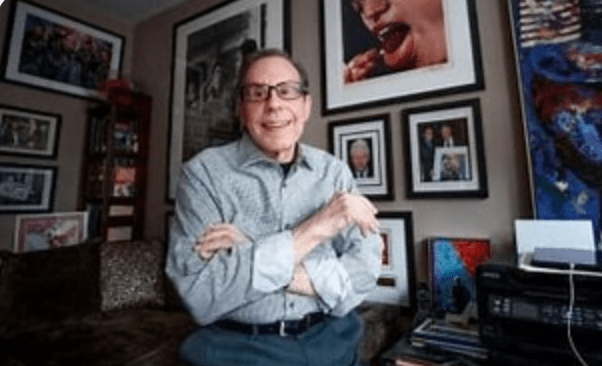
George Kalinsky

George Kalinsky was born in 1936 in Hempstead, New York. He was a renowned American photographer. His work captured some of the most iconic moments in sports and entertainment history. Finding Aids

His photography journey began serendipitously in the mid-1960s. He noticed Muhammad Ali entering the 5th Street Gym while on vacation in Miami. Intrigued, Kalinsky followed and was allowed to photograph Ali after a brief exchange with trainer Angelo Dundee. These images marked the start of his illustrious career. Interview Magazine

In 1966, Kalinsky became the official photographer for Madison Square Garden, a position he held for nearly six decades. He documented over 10,000 events throughout his tenure. He captured legendary figures like Frank Sinatra, Elvis Presley, and Pope John Paul II. His work has been featured in major publications like Sports Illustrated, People, Newsweek, and The New York Times. Kalinsky authored ten books. His photographs were exhibited in esteemed institutions, including the Museum of Modern Art and the Metropolitan Museum of Art. – From The Lens of George Kalinsky

Over the years, Kalinsky has received many accolades for his contributions to photography. In 2001, the PhotoImaging Manufacturers and Distributors Association named him International Photographer of the Year. He was inducted into the New York City Basketball Hall of Fame in 2010. He received the Pratt Institute’s Legends Award in 2017. Wikipedia

George Kalinsky passed away on January 16, 2025, at the age of 88. His legacy endures through the timeless images he captured. These images continue to inspire. They evoke memories of significant moments in sports and entertainment history. Wikipedia

Sources

Favicon
Favicon
Favicon
Favicon

She Choked On A Prune – My First Call!

Groff Media 2024© Truth Endures IMDbPro

Presented by benandsteve.com By: Benjamin Groff II©

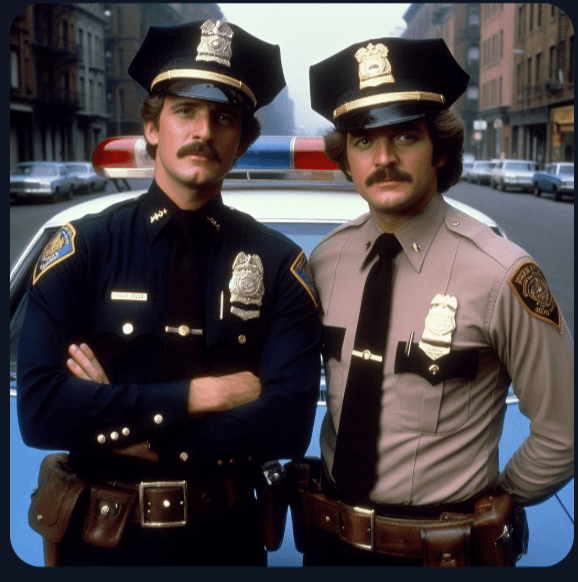
Time seemed to drag, yet it flew by in anticipation of the Chief’s order transferring me from Communications to Patrol. For years, I had taken complaints from the desk, booked prisoners, and processed bail. The routine had become second nature. The prospect of patrolling the streets promised a sense of freedom and a refreshing change of pace.

During my first month in Patrol, I was paired with Lieutenant Wheeler to acclimate to the policies and procedures specific to the division. Although I was already well-versed in most aspects of law enforcement, having spent significant time in the field, I understood the necessity of these transitional steps.

On October 25th, I reported for duty as usual, albeit in a different capacity. Lieutenant Wheeler adopted a methodical approach to the training, ensuring it was as instructive as possible. I kept an open mind, ready to absorb whatever new insights might come my way.

The shift started without delay. As we pulled out of the department gates, our first call came in from dispatch:

“Unit 5, respond to 305 East 1st Street. Signal 30 reported. Ambulance en route.”

Signal 30—a fatality. It was unusual for such a code to be broadcast if paramedics had not yet arrived. The ambiguity piqued our curiosity as we headed to the scene.

The address led us to an older neighborhood in the city’s central section. Upon arrival, we entered a modest single-family home and were met by a home healthcare worker. She explained, visibly shaken, that she had been sitting at the kitchen table with the 94-year-old female resident when the woman began choking on a prune. Despite her efforts to dislodge the obstruction, the victim had succumbed before she could call 911. The paramedics, now on-site, confirmed the death.

I radioed headquarters to notify the medical examiner (ME), who lived nearby and arrived within five minutes to officially pronounce the woman deceased.

Amid the formalities, the victim’s son, a doctor, arrived at the scene. Breaking the news to him was a somber task. I informed him that his mother had choked on a prune during dinner and that, despite all efforts, she had passed away. He asked to see her, and I assured him he could once the ME completed his assessment. The son was visibly displeased with the presence of the ME, which I understood; the clinical nature of such evaluations can be distressing, particularly for grieving family members.

Meanwhile, Lieutenant Wheeler assigned me an unexpected task. Puffing on his pipe, he directed me to document the incident as though it were a homicide investigation.

“For practice,” he said, “for when we have the real thing.”

So, I meticulously diagrammed the house, including the kitchen and living room, and wrote a detailed report as instructed. It was a somber start to my Patrol assignment—a reminder that, in this line of work, even the routine can take on unexpected gravity.

Fight Today For A Better Tomorrow – Saving America – Coming Home

A Report By: Benjamin Groff© Groff Media 2024© Truth Endures

A Nation’s Call

It was the fall of 2024, and the country had never seemed more divided. Political upheaval had peaked, with protests echoing through city streets, harsh words hurled in homes, and debates erupting at family dinner tables. The election season had become more than just a contest of policies; it had morphed into a battle over the nation’s soul, pitting neighbor against neighbor.

At the heart of this turmoil was a young senator named Jacob Randall. A man of few words but deep conviction, he had saw firsthand the devastating effects of division. Randall had grown up in a small town where his mother and father, though from opposite sides of the political spectrum, had found common ground in their love for family, faith, and community. That shared foundation had always given him hope that unity was possible.

However, as he stood before Congress, he wondered if that hope had been misplaced. The chamber was restless, with representatives glaring at one another across the aisle, the tension palpable. Randall chose to speak at what many called a last-ditch effort—a desperate attempt to heal the nation before it tore apart.

Taking a deep breath, he began.

“Fellow citizens, colleagues, I stand before you not as a Democrat or a Republican but as an American. Our great nation is facing a challenge unlike any other. We have become so entrenched in our political camps that we no longer see each other as fellow countrymen. We see enemies where once we saw neighbors. And that division is killing the very fabric of our society.

“My parents did not always agree on politics. Mother was a staunch conservative, Father a proud progressive. But they understood something we have forgotten: that compromise is not a weakness but the cornerstone of democracy. They believed that every person, no matter how much they disagreed, had something valuable to contribute to the conversation.”

Randall’s words caught the attention of some. A few heads began to nod slowly. He pressed on, feeling the weight of the moment.

“Our founders, too, were divided. They had different visions for this country and ideas about what liberty and justice should look. Nevertheless, they knew that to create something lasting, they had to pull together to find common ground. And they did. That is the spirit that created America. Moreover, that is the spirit we need to rediscover today.”

As Randall continued, he saw a shift in the faces before him. Some were hard, unmoving, but others softened, listening with new ears. He was not offering easy solutions but calling for something more complicated: humility.

“When we look across the aisle, we must not see enemies but partners in this great American experiment. We have different ideas about achieving a better future, but we all want a better one. And if we cannot even agree on that, we have already lost.”

He paused, letting the gravity of his words settle in the room.

“In every crisis, there is opportunity, an opportunity to rise above the noise, the hatred, and the division. It is an opportunity to remember that we are bound together not just by the laws of this land but by the ideals it represents. Life, liberty, and the pursuit of happiness—for everyone. Not just for those who agree with us.”

Randall stepped away from the podium and glanced up at the gallery above. It was filled with citizens from across the country, watching with anxious eyes, waiting for anyone to bring clarity to the chaos. He saw young activists clutching signs, older veterans with tears in their eyes, and families holding hands.

“I am not asking you to abandon your beliefs. Listen to those who see the world differently. Not to argue but to understand a call for uniformity, but for unity because we cannot get found without uniting.”

The silence in the chamber was deafening. No one was shouting for the first time in what seemed like years. No one was trying to outdo the other with statistics or soundbites. They were listening.

Randall’s speech ended with a simple message: “America is not a perfect nation, but it is a nation built on the belief that we can pursue perfection together. Let us, as a people, return to that pursuit—not as adversaries, but as Americans.”

As he stepped away from the podium, the room erupted—not in protest, but in applause. Representatives stood on both sides of the aisle, clapping not just for Randall’s words but for what those words represented: a glimmer of hope that maybe, just maybe, the country could pull itself back from the brink.

It would take work. It would not happen overnight. But in that moment, something had shifted. For the first time in a long time, there was a shared sense of purpose— a belief that even in the darkest of times, unity was possible—and that together, the nation could find its way back to the light.