The Christmas Eve Babbs Switch School Fire

This story is pulled from the archives as a celebration for the season edition.

Groff Media 2024© Truth Endures IMDbPro

Presented by benandsteve.com By: Benjamin Groff II©
3–5 minutes

Every year at this time, I am reminded of a harrowing story. It is deeply etched into Oklahoma’s collective memory: the Babbs Switch School Fire of Christmas Eve, 1924. It stands as a tragic lesson in safety, humanity, and resilience.

The Fire

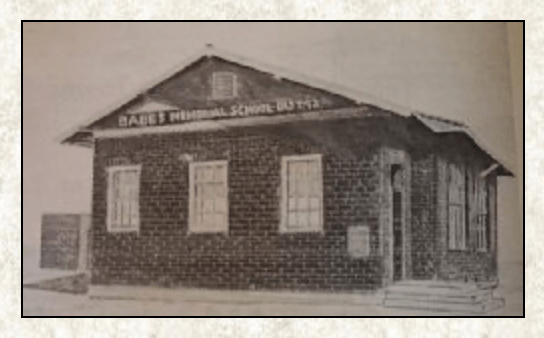
On that bitterly cold night, with heavy snow and sub-zero temperatures, 200 residents gathered. They met in Babbs Switch’s one-room schoolhouse for a Christmas Eve program. The school was tightly packed with engaged couples, grandparents, mothers, fathers, and children. The building’s windows were secured with wire mesh to deter intruders from the nearby railroad tracks. The sole exit—a door that opened inward—would soon become a deadly trap.

The program concluded with a teenage boy dressed as Santa Claus. He handed out toys and candy beneath a cedar Christmas tree. The tree was decorated with paper, tinsel, and lit candles. One of these candles brushed against the tree’s dry needles, igniting it instantly. Mrs. W.G. Boland, whose three children perished that night, later recounted the horror. 

“I tried to beat it out with a paper sack,”

she said, 

“but it did no good.” 

Initially, the crowd laughed, believing the small blaze was being contained. But within moments, the flames engulfed the tree, the ceiling, and the entire structure.

Panic erupted.

The sole exit became a bottleneck as the crowd surged toward the door. Those at the back pushed forward, while the unlucky at the front got crushed in the chaos. Some attempted to pry open the wired windows, but their efforts were futile. Trapped inside, children, parents, and neighbors succumbed to the smoke and flames. Witnesses recalled the horrifying scene of people clawing at the exit. Bodies piled atop one another, and the acrid stench of burning flesh.

The Survivors

Among those who escaped was Lillie Biggers. She crawled out from under a desk clutching a doll she had just received. Her mother, Margaret, managed to get out but suffered severe burns to her hands and arms. Tragically, Lillie’s brothers, William, 9, and Walter, 15, did not survive. The Biggers family’s grief mirrored that of the entire community, where 36 lives were lost—half of them children. The belongings later identified the bodies of William and Walter. They carried a toy gun and a belt buckle.

The injured and deceased were transported to Hobart, the nearest town, where makeshift morgues were set up. The community’s response, known as the “Hobart Spirit,” saw residents drop everything to give aid and comfort. Newspaper accounts likened this effort to the Oklahoma Standard that emerged decades later after the Oklahoma City bombing.

Julie Braun with Mother
Lillie’s Doll That Survived Fire

The Aftermath

The tragedy prompted a wave of reforms. Oklahoma legislators enacted fire safety laws requiring outward-opening doors, multiple exits, and accessible window screens in schools. Open flames were banned, and fire extinguishers became mandatory. The reforms eventually spread nationwide, though it would take more tragedies before they were fully adopted.

The morning after the Babbs Switch School Fire

A Missing Child

The story took a strange twist that turned it into a lingering mystery. Among the victims was three-year-old Mary Edens—or so it was believed. Her aunt, Alice Noah, escaped the building. She died days later. She claimed she had handed Mary to an unknown person outside the burning building. Mary’s body was never recovered, leading her family to hope she had survived.

In 1957, decades after the fire, a woman named Grace Reynolds came forth. She was from Barstow, California. She claimed to be the long-lost Mary. The Edens family reunited with her on Art Linkletter’s House Party television program, believing their prayers had been answered. Reynolds even wrote a book about her experiences. It is titled Mary, Child of Tragedy: The Story of the Lost Child of the 1924 Babbs Switch Fire.

But only some were convinced. A local newspaper editor who investigated the claim questioned its validity. 

Skeptics noted inconsistencies in Reynolds’s story, but no definitive evidence confirmed or debunked her identity. To this day, the truth remains elusive.

Legacy
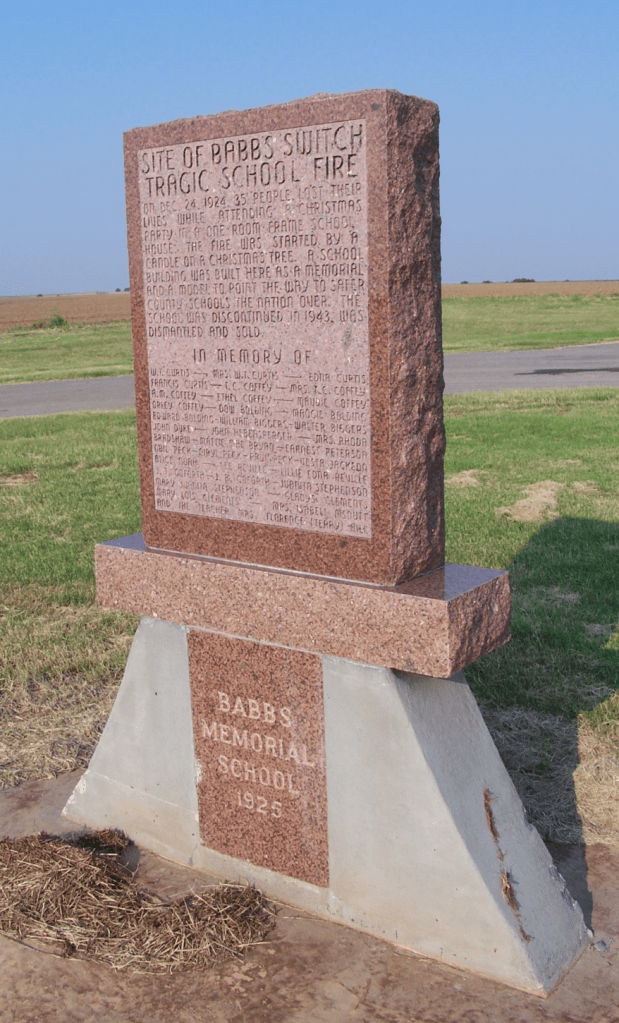
The Babbs Switch School Fire is remembered as one of the deadliest school fires in U.S. history. A stone monument now stands where the schoolhouse once stood, a quiet marker of lives lost and lessons learned. The physical scars of the tragedy have faded. Yet, its memory endures. It serves as a poignant reminder of the fragility of life and our enduring hope for safety and change.

References for this writing can be found at – 

https://blogoklahoma.us/place/394/kiowa/site-of-babbs-switch-tragic-school-fire

https://www.thesirenspodcast.com/post/case-files-babbs-christmas-fire

https://genealogytrails.com/oka/kiowa/babbsfire.html

https://en.wikipedia.org/wiki/Babbs_Switch_fire

Meet Benji and His Canine Companions: A Heartwarming Tale

By Benjamin GroffMedia© | benandsteve.com | 2025 Truth Endures©

2–3 minutes

In the quiet stretch of Oklahoma back-country, the hills roll gently. The wind carries the scent of cedar and earth. A school bus door creaks open every afternoon at 3:35 p.m. Out steps a boy named Benji. He is full of curiosity and grit. He loves the wild places that lie just beyond the fence line. But he’s not alone. Waiting faithfully at the gate are his three loyal companions—Oggy, Bruiser, and Jackie.

To most folks, they’re just dogs. But to Benji—and anyone lucky enough to witness them in action—they’re guardians. Each has a purpose. Each with a soul as big as the land they roam.

Oggy is the scout. He is a lightning-fast border collie. His job is to stay out front. He sniffs out threats and leads the way with sharp instinct. Bruiser, the muscle-bound mastiff mix with a thunderous bark and a heart of gold, never strays from Benji’s side. He is the protector. And Jackie, the wise and steady golden retriever, always takes the rear. She remembers every twist and turn in the woods. She is the quiet navigator. She ensures they always find their way back home.

What begins as a simple after-school tradition—just a boy and his dogs hiking the countryside—becomes something far greater. These four face the untamed wilderness. They discover the secrets of the land. They defend each other against the dangers that lurk in the shadows. These include wild boars, treacherous terrain, and even the unpredictable spirit of nature itself.

But this story isn’t just about survival—it’s about trust and purpose. It’s about the powerful bond that exists between a child and the animals who would give anything to protect him. It’s about finding your place in the world, knowing your role, and honoring it with everything you’ve got. It’s about how the world can feel vast and uncertain. Having the right ones by your side can make all the difference.

The Trail Guardians is a heartwarming, adventurous tale set against the backdrop of rural America. It is perfect for readers who believe in the magic of animals. It also appeals to those who appreciate the courage of kids and the timeless rhythm of life in the country.

Watch for the first of five exciting chapters. Enjoy this engaging short read as we count down to the first day of summer!

Join Benji, Oggy, Bruiser, and Jackie on their journey. They explore wild places where memories are made. Loyalty is tested, and legends are born.

This is only the beginning.

Starting Tuesday June 17th, 2025!

Mabel the Cow: A Unique Weather Oracle

GROFF MEDIA 2024© TRUTH ENDURES IMDBPRO

Presented by benandsteve.com By: Benjamin Groff II©

2–4 minutes

THE COW THAT FACED EAST AND WEST

Mabel The Cow
Mabel The Cow That Stood East and West

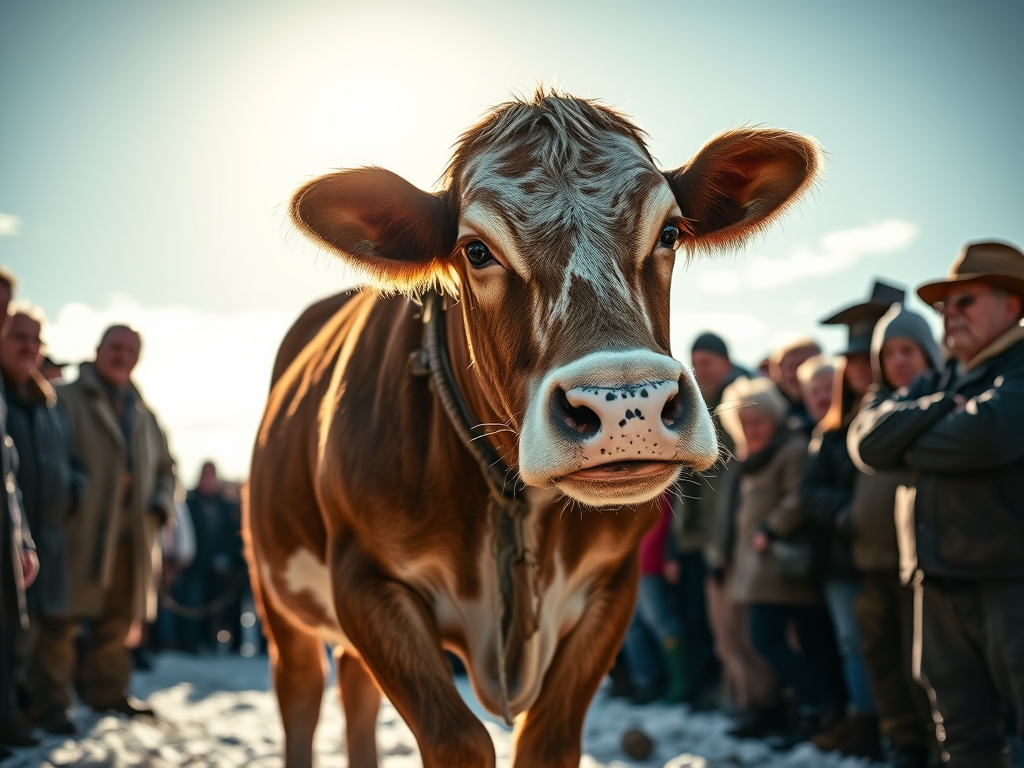
Mabel was no ordinary cow. Unlike her bovine companions, most faced north or south due to the Earth’s magnetic field. She alone possessed the uncanny ability to sense the shifting seasons. Her unique gift made her a figure of fascination and wonder in the town. If she stood facing due west upon stepping from her barn, an early spring was certain. But if she turned east, the town braced itself for six more weeks of winter’s harsh grip.

The people’s trust in Mabel was unwavering. She had consistently met their expectations. She had never let them down. This held true since old Farmer Ed Boyd’s grandfather first noticed her peculiar habit. To them, she was more than just a cow—an oracle of the changing seasons, a symbol of nature’s quiet wisdom. Their collective belief in her was a bond that united the entire community.

On this particular February 2nd, 2025, the excitement was palpable. The air was crisp. The sky was cloudless. The crowd murmured in hushed voices as they watched Farmer Ed lead Mabel from the barn. She had just finished her morning hay and grain, and Ed had completed the daily milking. Now, all eyes were on the old cow.

Mabel stepped into the winter sunlight, surveyed the expectant faces before her, and let out a deep, resonant moo. Then, to everyone’s shock, she did something she had never done before.

She laid down.

Not facing west. Not facing east. But southwest.

A stunned silence fell over the crowd. Uncertainty hung in the air, and people exchanged nervous glances.

“What does it mean?”

whispered Mrs. Thatcher, pulling her shawl tighter around her shoulders.

Farmer Ed scratched his head, bewildered.

“Well, folks, I reckon Mabel’s got somethin’ new to tell us this year.”

Sheriff Dobbs adjusted his hat.

“Maybe it means we’ll have a little of both—some winter, some spring?”

Standing on tiptoe beside his father, Young Tommy Jenkins piped up,

“Or maybe she’s just tired!” 

His innocent humor brought a wave of laughter, momentarily easing the tension.

The laughter helped ease the tension, but the mystery remained. Some of the older farmers nodded knowingly. It was as if they were saying that nature always had its way of keeping folks guessing.

And sure enough, in the next weeks, the weather seemed as indecisive as Mabel had been. One day, warm breezes carried the scent of budding trees. The next day, an icy wind howled through town. It coated the fields with frost. The seasons wrestled for control, neither willing to yield entirely.

By March’s arrival, the town understood—Mabel had been right all along. That year, winter and spring refused to play by the usual rules. It was a season of in-between, cold mornings followed by warm afternoons, snow melting too soon only to return overnight.

From that year onward, the town no longer saw Mabel’s predictions as simple answers. They realized that nature didn’t always give clear signs. It spoke in whispers, patterns, and subtle shifts. Only those who truly paid attention understood these messages.

And so, every February 2nd, the people still gathered at Ed Boyd’s farm. They came not just to see where Mabel would stand. They attended to be reminded of life’s one true certainty—change is always coming.

Mabel, as always, remained the one true expert.

Time-Travel Adventures in a Cozy Home

GROFF MEDIA 2024© TRUTH ENDURES IMDBPRO

Presented by benandsteve.com By: Benjamin Groff II©

3–4 minutes

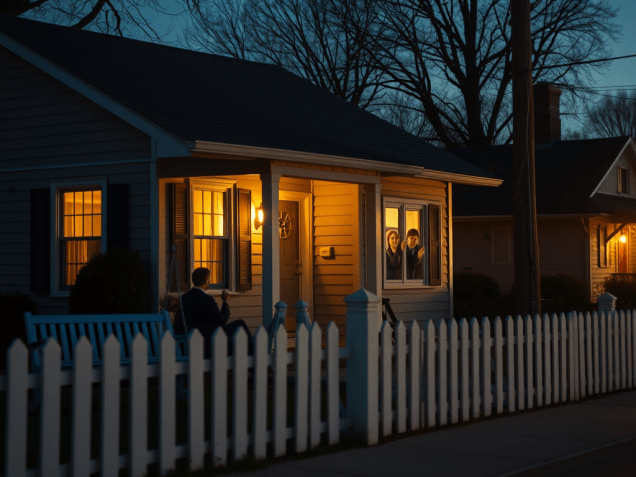
Jane and Mark lived in a cozy little house on a quiet street in nowhere. The house had a white picket fence. A porch swing creaked with every breeze was also part of the house. Life was simple and predictable—until the night the sky split open.

It happened just after dinner. A brilliant ray of golden light shot down from the heavens. It struck the roof of their home with a silent flash. Jane screamed, dropping her fork, while Mark rushed to the window, heart pounding, their minds filled with fear and confusion.

“What was that?” Jane whispered, staring at the glowing beam. It pulsed briefly, then faded away, leaving no trace but a faint shimmer.

They inspected the house, finding no damage, burns, or explanation. But they soon discovered the truth in the strangest way possible.

The next day, Mark walked out to grab the newspaper, and when he stepped back inside, Jane gasped. Jane saw a man in medieval armor standing in the doorway. His eyes were wide with confusion. It wasn’t her husband in his sweatpants and T-shirt.

“Mark?” she stammered.

“Jane! What –– what happened?” Mark looked down at the polished steel covering his chest and arms. “I was outside, and when I came back ––– this happened!”

Jane grabbed his hand and pulled him in. “We need to call someone.”

But before they could dial, their neighbor, Mrs. Clarkson, walked in uninvited, as she often did. When she crossed the threshold, her modern blouse and skirt changed into a flapper dress. Her gray hair was pinned into 1920s finger waves. “My word!” she exclaimed, waving a cigarette holder she didn’t own.

Mark and Jane exchanged terrified glances. Their house was cursed or enchanted or something far beyond their understanding.

Over the next few days, they experimented with the strange phenomenon. Stepping outside and re-entering would send them hurtling through time. Sometimes, they found themselves in ancient Rome. Other times, they landed in the Wild West. Occasionally, they encountered an unsettlingly dystopian future. Even Otis, their golden retriever, came trotting back inside with a Victorian-era bonnet tied to his head.

Jane kept a notebook. “Day three: Entered as myself, exited as a 1970s disco queen. Mark walked in as a cowboy. Not great.”

Eventually, they learned some rules. The effect only lasted while they were inside. Stepping back outside would revert them to their usual selves. But the moment anyone crossed the threshold again, the house chose another era at random.

It wasn’t long before the military took notice. When government agents approached their door, Jane panicked and tried to warn them. “Please, don’t come in!”

Too late. Five suited men instantly transformed into Renaissance courtiers with feathered hats and ruffled collars. “What sorcery is this?” one muttered, spinning in circles.

Mark sighed. “You’re gonna want to take this one up with NASA.”

Despite the chaos, they refused to leave. Strange as it was, the house was still their home. They learned to adapt. They stored era-appropriate clothing in a chest by the door. They prepared themselves for anything from caveman furs to futuristic bodysuits. This showed their resilience and courage in the face of the unknown.

In time, they found unexpected joys in their predicament. They hosted Gatsby-style parties, had tea with Victorian neighbors, and experienced life in eras they never imagined. Their sense of wonder and adventure grew with each new experience.

The little house with the picket fence became legendary. It served as a portal through time. In this house, history was just a step away. Mark and Jane embraced the adventure. After all, who wouldn’t want to live in a place where every day was a different century?

Finding Peace in a Day of Upset

GROFF MEDIA 2024© TRUTH ENDURES IMDBPRO

Presented by benandsteve.com By: Benjamin Groff II©

2–3 minutes

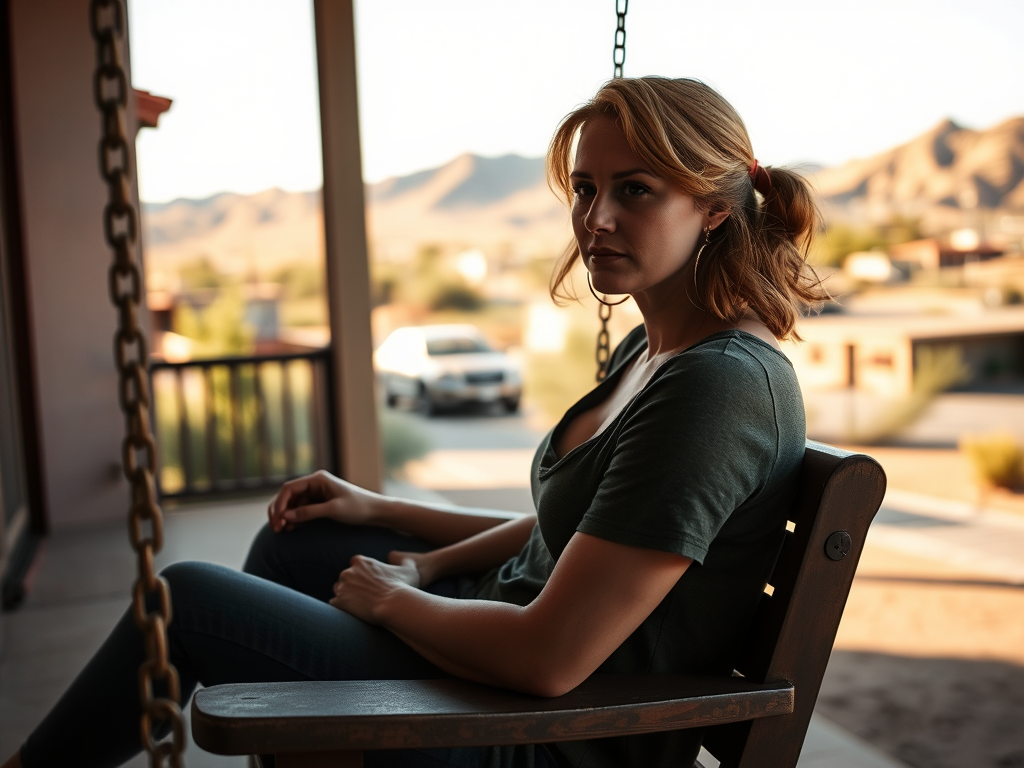
Maggie sat on her porch swing. The soft creak of the old chains was the only sound in the still afternoon air. The sun hung low, casting golden hues across her small Arizona town, but inside her chest, a storm raged. The day had been a whirlwind of mishaps. She missed deadlines at work. She had an argument with her sister. She also nagged worry about her aging father’s health. Each problem was stacked like bricks on her shoulders, weighing her with unresolved concern. She was in the midst of a battle for her Peace.

She sipped her tea. She hoped the warmth would soothe the ache. Yet, peace felt distant, like a mirage on the desert horizon. Her mind churned with “what-ifs” and “should-haves,” a relentless cycle that robbed her of the quiet she desperately craved.

Maggie took a deep breath and closed her eyes. She listened to the distant rustling of mesquite trees. Occasionally, she heard the bark of a neighbor’s dog. The natural sounds around her conveyed a message of resilience and adaptability. Slowly, she exhaled, reminding herself of her grandmother’s words: “You can’t stop the wind, but you can learn to bend.”

She stood and walked to the edge of her yard. Her fingers brushed over the delicate petals of the wildflowers. They had sprung up after last month’s rare rain. Their resilience struck her—fragile yet persistent, thriving even in the harsh desert soil.

Realizing she couldn’t control everything, Maggie focused on the now. She let the day’s stress settle, acknowledging it but not giving it power. She watched the sky darken into twilight. The first stars peeked through. She felt a little lighter with each breath. It was the power of being here, of living in the moment, that brought her Peace.

She realized Peace wasn’t about escaping the chaos but finding a quiet place. And tonight, as the desert cooled and the cicadas began their evening song, she finally let herself rest. The relief was palpable, like a weight lifted from her shoulders, as she surrendered to the tranquility of the night.

The Island of No Return

GROFF MEDIA 2024© TRUTH ENDURES IMDBPRO

Presented by benandsteve.com By: Benjamin Groff II©

3–4 minutes

Three men sat at the edge of a dock. Each was worn down by the ceaseless hum of modern life. Their gazes were fixed on a small, uninhabited island that shimmered in the midday sun. A mile off the coast, the island was lush with palm trees, surrounded by crystal-clear water, and untouched by civilization. It was perfect, a blank canvas for a life free from the chaos they had come to despise.

The trio’s leader, Warren, a former corporate executive, was the mastermind behind the escape. To buy the island, he’d sold everything—his penthouse, yacht, and stock portfolio.

“Gentlemen,”

he said, gesturing at the island,

“we’re about to start over. No emails, no alarms, no societal nonsense. Just us and the land.”

Tom, a rugged carpenter with calloused hands, nodded.

“I’ll build us the finest cabins you’ve ever seen. Give me trees and tools, and we’ll have a paradise.”

The third man, Elliott, a quiet botanist, adjusted his glasses and smiled faintly.

“And I’ll make sure we know which plants are safe to eat. Nature will supply for us if we respect it.”

They packed their small boat with essentials: tools, seeds, books, and fishing gear. They agreed to leave their phones behind, cutting ties with the rest of the world. “Once we’re there,” Warren declared, “there’s no turning back.”

Arrival

The island greeted them with pristine beaches and a dense jungle that hummed with life. They worked tirelessly in the first weeks. Tom constructed three sturdy cabins near the shoreline. Warren rigged up a rudimentary system for collecting rainwater. Elliott explored the interior, cataloging edible plants and marking trails.

At night, they sat by a fire, listening to the waves and reveling in the simplicity of their new existence.

“This is freedom,”

Warren said one evening.

“We’ve escaped the madness.”

But as the weeks turned to months, cracks began to form in their idyllic retreat.

Isolation

Elliott was the first to show signs of unease.

“The flora here is fascinating,”

he said one night, staring at the fire,

“but I miss my research. Sharing discoveries with others… it gave my work purpose.”

Tom, who had poured his energy into the building, grew restless after the cabins were completed. 

“There’s only so much wood to chop, so many things to fix. I feel… stagnant.”

Warren dismissed their concerns.

“We didn’t come here for purpose or projects. We came to live. You’ve forgotten why we left.”

But Warren, too, struggled. He’d envisioned a utopia, a life stripped of complications, but the endless quiet gnawed at him. Without the structure of his old life, he felt adrift.

The Turning Point

One stormy night, a ship appeared on the horizon. Its lights pierced the darkness, a beacon of their forsaken world.

“Do we signal it?”

Tom asked, his voice wavering.

Warren’s face hardened.

“No. We agreed: no contact.”

Elliott hesitated.

“What if they’re in trouble? Or what if… what if we are?”

The men argued for hours as the storm raged. Ultimately, they let the ship pass without making contact. But the moment lingered, a reminder of the life they’d left behind—and the choice they’d made to stay.

Conclusion

In time, the men adapted. They found a rhythm in the island’s isolation, but each carried a quiet longing for the world they’d abandoned. They didn’t regret their choice, but they understood it now for what it was: a trade, not an escape.

Years later, the island was still theirs, but they were no longer the same men who had arrived. They had built a new life, not without struggles or sacrifices, but one that was undeniably theirs.

They never saw another ship. They often looked out at the horizon. They wondered what have been if they’d signaled that one stormy night.

Otis, the Guardian of the Pack

Groff Media 2024© Truth Endures IMDbPro

Presented by benandsteve.com By: Benjamin Groff II©

3–4 minutes

From the moment Ben and Steve walked into the shelter, Otis knew they were his people. It wasn’t just how they crouched down to his level. It was the warmth in their eyes and the promise in their voices.

“You’re coming home with us,”

Steve had said. Otis had wagged his tail so hard he nearly toppled over. He vowed then and there to be the best protector any family ask for.


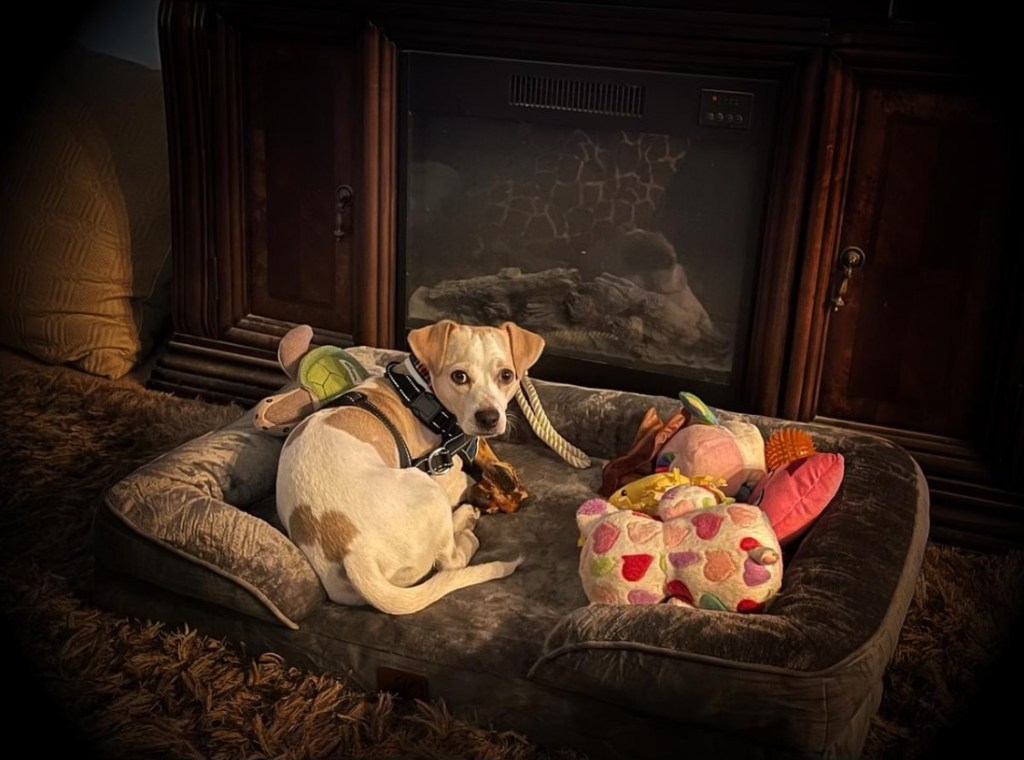
Life in his new home was nothing short of paradise. Otis had a cozy bed by the fireplace, more toys than he can chew, and an endless supply of love. But what truly mattered to him was his duty to keep Ben and Steve safe. He took it upon himself to investigate every rustle in the bushes, every knock at the door. No leaf dared to blow towards his masters without Otis standing his ground.

Otis’s vigilance, nevertheless, had its challenges. After one too many encounters with a growling Otis, the mail carrier learned to toss packages from a distance. Neighborhood passerby’s hoped drop off leaflets and country club newsletters. They were met with a flurry of barks so fierce they often retreated before reaching the door.


Things came to a head one sunny Saturday when their neighbor Marlene, visited. Otis had met her once before and didn’t trust her an inch. She was too loud, animated, and far too close to his people to his liking. When Marlene leaned in to hug Steve, Otis darted between them, barking his warning. Steve scooped him up, carrying him to the laundry room for a “time out.”

“Otis, you need to relax,”

Steve said, his voice equal parts exasperation and affection. Otis stared back, unconvinced. Who would protect them if he wasn’t on duty?


During one memorable stormy night, Otis proved why his protectiveness wasn’t just a quirk—it was his calling. The wind howled, rain lashed against the windows, and the house creaked under the storm’s force. Otis lay at the foot of the bed, his ears perked. Suddenly, a loud crash echoed from the backyard.

Ben and Steve bolted upright. Otis was already off the bed. He growled as he raced to the source of the noise. They found him at the patio door. He barked furiously at a tree branch. The branch had broken off and slammed into the house. While it wasn’t an intruder, Otis’s readiness reassured them that no danger would catch them off guard.


Over time, Ben and Steve learned to appreciate Otis’s protective nature and quirks. They worked with a trainer to help him distinguish between threats and friendly visitors, but his fierce loyalty never wavered. Otis accepted his ‘time outs’ with dignity. He understood that even the most dedicated guardians needed to let their pack relax occasionally.

Otis knew one thing for certain in his heart. Ben and Steve had rescued him from a lonely life. He would spend every day making sure they were loved, protected, and never alone. His love for them was as deep as the ocean, and his loyalty as unyielding as the mountains.

A Dog Will Always Keep You Honest – Truly!

Groff Media 2024© Truth Endures IMDbPro

Presented by benandsteve.com By: Benjamin Groff II©

2–4 minutes

They will always find ways to expose the truth whenever it is necessary. A dog will keep you honest because they are always watching you. They know everything you do. They hear everything you say.

Take, for example, Otis, a Jack Russell Terrier with soulful eyes and a tail that wagged like a metronome. Otis belonged to Ben and Steve, who pride themselves on being organized and composed. But Otis saw through it all. He knew when Steve “accidentally” skipped the morning bike ride. Steve chose instead to lounge in his recliner with a cup of coffee. Steve tried to cover up his lapse in discipline. He mentioned a “hectic morning” to explain his work demands. Otis carried the bike shorts he had abandoned by the door into the middle of the living room. His silent reproach was explicit.

Dogs, after all, have a way of sniffing out the truth—not just with their noses but with their instincts. Otis had a keen sense of timing. He knew when Ben told little white lies to his mother over the phone. Ben claimed his last doctor’s appointment suggested he was healthy. Meanwhile, he was polishing off a bag of chips. Otis would sit by his feet. He stared intently, daring Ben to admit to the salty crunch he tried to hide. Finally, Ben conceded and gave Otis a chip. He did it to keep Otis quiet during the phone conversation.

But Otis’s honesty wasn’t just about catching lies. He had an uncanny ability to bring clarity to the chaos. One summer, Ben and Steve’s neighbor, Mary, argued about a missing garden gnome. Steve assured Mary they hadn’t seen it. Yet, when they let Otis out that evening, he returned with the gnome in his jaws, proudly wagging his tail. Maybe Ben and Steve had borrowed it. Or Otis had “borrowed” it himself. The truth stood on four legs, panting happily.

Otis also kept Steve honest about his emotions. When Steve plastered on a smile for his colleagues after a lousy day, Otis knew better. He’d gently nudge Steve’s arm. Sometimes, he laid his head on Steve’s lap. This grounded Steve with the companionship that didn’t tolerate pretending. Dogs don’t care for masks; they prefer the raw, unfiltered you.

And that’s the magic of a dog’s honesty. They don’t demand perfection—they demand authenticity. They hold you accountable not with judgment but with love. Otis didn’t care if Steve skipped a bike ride. He didn’t care if Ben ate chips or if there had been a misplaced garden gnome. What mattered was that they learned to face the truth. It was messy, but they became a better version of themselves because of it. Otis is a good boy, and he proved it, by helping others be good!

A dog will always keep you honest because they never stop believing in the good in you. They don’t just witness your life—they join in it, gently guiding you toward honesty in ways only a dog can.

If you have room in your heart and home for a pet, consider visiting your local animal shelter. These shelters hold loving animals waiting for a second chance to find their forever family. Adopting a pet changes their life and brings warmth, joy, and companionship to your own. A new furry friend can be the missing piece that turns your house into a proper home.

When You Fight For your Life Any Thing Is Fair! Lt Wheeler’s Advice Of A Lifetime

Groff Media 2024© Truth Endures IMDbPro

Presented by benandsteve.com By: Benjamin Groff II©


3–5 minutes
Officer Steve Mahan
Shot and Killed Jan 5. 1983

As I prepared for work, the memory of Officer Steve Mahan lingered heavily in my thoughts. He had been shot and killed on January 5th, 1983—a day etched in tragedy. That morning, a dense, unrelenting fog blanketed the world as if nature itself mourned the impending loss. I recalled how the rescue helicopter, grounded by the impenetrable fog, couldn’t transport him to a larger hospital equipped to treat his severe head trauma. Desperate, the doctors had no choice but to send him by ambulance over 100 miles away.


The ambulance crawled through the soupy mist, often unable to exceed 30 miles per hour. Time was slipping away, and the slow, arduous journey became a race against death. Despite their best efforts, he passed en route, his life extinguished before the fog could lift.


That day haunted me. As I pulled on my uniform, I reminded myself that tonight, I would be assigned to the very unit he had been using on the night he was executed. A weight settled on my shoulders—not fear but a solemn understanding of the risks we all faced. Yet, I felt a measure of reassurance knowing that Lt. Wheeler would be by my side, his steady guidance serving as both a compass and a shield against the uncertainty of the streets.

On my first day of patrol, the challenges of the job revealed themselves immediately, with a fatality marking my inaugural call. It was a sobering introduction to the weight of my duty. My Lieutenant, a seasoned mentor, shared his wisdom throughout the shift as we navigated the Oklahoma Statutes, Title 21. He precisely explained how every crime must meet specific legal criteria before being classified as such and emphasized the foundational principle that every suspect is presumed innocent until proven guilty. That early understanding of the law, I realized, was not just knowledge—it was a tool for justice and fairness, critical to our line of work.

The second day began differently. I was well-rested but curious about what this shift could bring. What could top the tragic death of the older woman the day before? The night unfolded quietly at first. My Lieutenant and I were patrolling the city’s southern section, with him now shifting the conversation to Title 47 of the Oklahoma Statutes, covering traffic laws and their nuances.

Then, without warning, the calm was shattered. The Lieutenant slammed our unit’s transmission into park and leapt out, his movements fluid and precise. Before I could react, he bolted to my side of the vehicle and tackled a man gripping his wife by the hair on the sidewalk. It had all happened instantly—I hadn’t even registered the altercation out of the corner of my eye. When I opened my door, Lieutenant Wheeler was already cuffing the suspect with practiced efficiency.

I stood momentarily frozen, feeling like I had failed to pull my weight. The Lieutenant’s decisive action was a masterclass in vigilance, and I resolved to sharpen my instincts.

After ensuring the woman was safe and gathering her statement, we booked the man into jail on charges of public intoxication, disorderly conduct, and assault and battery. The routine of patrol resumed, but the night had already taken on a different tone. During this lull, Lieutenant Wheeler imparted what I’ve come to regard as the most crucial lesson of my career.

He also stressed the importance of situational awareness and knowing the city like the back of my hand. While my previous experience in communications had given me a solid understanding of the city from a dispatcher’s perspective, patrolling the streets was entirely different.

He taught me to read the moving pieces of the urban puzzle—to develop a comprehensive view that encompassed the road ahead and the vast expanses on either side. Under his guidance, my observational skills sharpened, leading to accomplishments such as preventing a potential robbery and aiding in a successful arrest, which I could later be proud of.

It felt like I’d absorbed a semester’s criminal justice training in just two nights. But nothing could have prepared me for what was to come on the third night. Neither of us could have anticipated the events that would unfold, including a high-speed escort and a tense high profile traffic stop and truthfully, neither of us would have chosen to.

What happened next would change everything. Yet, in the end, it would pass unnoticed by the world—a fleeting moment in the grand scheme of our duty. This moment, however, was a stark reminder of the unpredictable nature of our work and the need for constant vigilance and resilience. That is the story which unfolded for day three.

Otis The Dog That Trouble Finds

Groff Media 2024© Truth Endures IMDbPro.

Presented by benandsteve.com By: Benjamin Groff II© 


One sunny morning, Otis, a slick Jack Russell Terrier with a gleam in his eyes

and mischief in his heart, woke up. His fur was a brilliant shade of gold, shimmering in the sunlight, and his tail wagged with such enthusiasm that it could power a windmill. The day started innocently enough; we had breakfast at our favorite restaurant and came home. With his wagging tail and big, innocent eyes, Otis welcomed us home and helped us as we tidied up around the house. But Otis is no ordinary dog—trouble seems to find him as a squirrel finds an acorn. He gets these spurts of energy known well as zoomies.

It’s like he’s a magnet for mishaps, a walking comedy show. Wherever he goes, calamity follows. He’s so adorable that it’s impossible not to chuckle when his wrecking ball hits.

It wasn’t long before Otis’s nose led him to the kitchen. The scent of freshly baked bread cooling on the counter was just too tempting. He stood on his hind legs, stretching his neck as far as it would go. Just then, a slight breeze blew through an open window, knocking a paper off the fridge and startling Otis. He yelped and bumped into the counter in a flurry of fur and paws. The bread tumbled down, landing squarely on the floor.

When we walked in, Otis stood over the fallen loaf, his big, brown eyes looking up at us with a mix of innocence and apology. His expression seemed to say, “I didn’t mean to!” It’s hard not to forgive him when he looks at you like that.

We sighed but couldn’t help the tiny smile tugging at your lips. Before picking up the bread, Otis had darted out of the room, ears flapping, tail wagging like a flag, and disappeared into the yard.

As the day went on, Otis’s streak of bad luck continued. While exploring under the porch, he got tangled in a ball of twine that a handyman had left behind. Emerging from the shadows, he looked wide-eyed and confused, like a dog-sized spider web. The neighbors couldn’t help but chuckle when they saw him, tangled and guilty-looking. One even offered to help untangle him, but Otis, being Otis, managed to free himself in a comical fashion.

Capping off his day – Otis’s curiosity got the best of him once more when he found a potted plant by the front door. It only took a nudge from his nose for the pot to tip over, spilling soil all over the welcome mat. He sniffed the dirt, sneezed, and left tiny paw prints leading to his bed, where he flopped down, exhausted.

When found, he looked up with that sweet, guilty face as if saying, I swear, I don’t know how it happened!

Despite the chaos, we knelt and scratched behind his ears. Otis nuzzled into my hand, eyes closing in contentment. As much trouble as he got into, he was ours, and those mishaps only make our days a little more memorable—and a lot more fun. His presence, filled with joy, even amid his mischievous adventures, is a constant reminder of the happiness pets bring into our lives.

The world is going to POT, and we are watching it go!

A view of the world as it is today by: Benjamin Groff II© Groff Media 2024© Truth Endures IMDbPro

My dad and grandfather are gone now, but neither would support a liar, cheat, rapist, insurrectionist, dictator, or someone who supports one, or generally speaking, a creep or ‘weirdo.’ 

There are other reasons you can look at as well. For instance, a candidate such has a sexual offense judgment against him, and he is under indictment for countless federal crimes; in the last year, one of the candidates was in the air, flying, on their way to being arrested, just as much as he was campaigning at one point. 

One or more of those reasons would have been reason enough to consider looking into the person’s background. And three to four, would have been reason enough to reject a person all together. Someone who was strongly running for public office would have been rejected. Now, the GOP considers it a qualification required for all Republican candidates.

The candidates have endorsements from KKK members. They boast about, a presidential politician having endorsements from dictators. They wallow in such markings, and candidates publicly brag about laws they will violate first, if elected. And this makes them the most qualified candidate. Going as far as boasting about becoming a dictator. Going about telling people this is the last election they will have to worry about voting in. 

Why? Does that mean the Constitution is going to get ripped apart, shredded, and there will no longer be a United States where the people choose its leaders? It appears it doesn’t matter to the people who are numb and following this character. They appear to have zoned out of reality. 

My grandfather, father, uncles, aunts, and even a few dogs and horses I’ve had would not have allowed the goings on to persist. The greatest generation has died chiefly off; fewer of them now than ever are living, which sadly shows in our world. They were the ones who knew what happens when the world that falls to fascism. When reality hits and the world dies. It is beginning as America will turn grey; it will become a black-and-white construct of anything anyone remembers of its being, if these destructionists are permitted to have their way with the country. We only hope enough voters come to the polls and and vote, and save our America!

My dad had a favorite saying: the older I got, the wiser he’d get. And he was right; I wish he were here to help us out of this madness!

JD Groff At Rest And Getting Wiser Every Day!

The Quiet Difference

A Story By: Benjamin Groff II© Groff Media 2024© Truth Endures IMDbPro

Levi grew up feeling different from his peers, struggling with his attraction towards boys amidst societal pressures. A formative encounter with Aaron led to a heartfelt kiss that marked a turning point for Levi. As they matured, their bond evolved into a deep friendship, helping Levi embrace his uniqueness throughout adulthood.

From a young age, Levi had always felt like there was something inside him that set him apart from the other boys. In grade school, while his friends chased girls, teased them, and laughed about crushes, Levi felt a quiet unease. He played along, trying to fit in, pretending to share the same interests. But deep down, something felt different, something he couldn’t quite put into words.

As Levi grew older and entered his teenage years, that difference became more defined. His friends would talk excitedly about the girls they liked—their eyes lighting up as they spoke of first dates, dances, and love letters. But Levi never shared in that excitement. He tried to force himself to like girls the way they did, to feel the same way, but no matter how hard he prayed, his feelings never changed. Levi would lie in bed at night, praying, asking God to make him normal. To take away the strange, confusing feelings he didn’t understand. His internal struggle was a constant companion, a silent battle that no one else could see.

But it wasn’t just his lack of attraction to girls that confused him. As Levi matured, he turned to dressing in modern menswear—sharp, tailored clothing, stylish undergarments, and the kinds of outfits no one in his small farming town ever discussed. His friends were indifferent to clothes, such as hand-me-downs or work overalls, but Levi found comfort in dressing differently. The way certain fabrics felt, the sleek designs, appealed to him in a way he couldn’t explain. He was terrified someone would find out about these thoughts, this quiet fascination, and mock him. But more than that, he didn’t know why it would matter so much to others. Why was his difference such a secret? Why did it feel dangerous to admit? The societal pressures to conform to a certain image were always there, lurking in the background, ready to pounce on any sign of deviation.

Deep inside, Levi knew he longed for something more than stylish clothes or acceptance. He yearned for a relationship with another boy—something that mirrored the love and companionship he saw between boys and girls. It wasn’t a desire he could fully explain, nor was it something anyone had ever taught him. It was natural to him, rising from some deep place in his heart. But even that natural feeling terrified him because he knew it wasn’t something people around him would accept.

One summer afternoon, when Levi was sixteen, a boy from a neighboring town came to visit the farm. His name was Aaron, and he was there with his father to discuss some work with Levi’s father. Aaron was taller than Levi, with a quiet confidence about him, and there was something about him that made Levi feel both nervous and excited. The two boys quickly became friendly, and after lunch, they decided to take a walk down to the lake that sat on the edge of Levi’s family’s land.

As they walked, the conversation flowed easily, and soon, they reached the clear, calm waters of the lake. The sun was hot, and Aaron suggested they go for a swim. Levi hesitated initially, feeling unsure, but the warmth of the day and Aaron’s easygoing nature won him over. Before long, they had stripped to nothing and jumped into the water, laughing and splashing like carefree children.

But as they swam and played, something unspoken hung between them. Levi could feel the subtle closeness of their glances at each other. They wrestled and splashed in the water, and then, almost without realizing it, they were close. The playful energy gave way to something more profound. Aaron’s hand lingered on Levi’s arm, and Levi felt his heartbeat quicken. In a moment that felt as natural as breathing, their lips met.

The kiss was soft and hesitant, but it felt right. For the first time in his life, Levi was clear-minded. This—this feeling—was what he had been searching for. It wasn’t wrong. It wasn’t strange. It was safe, it was natural, and it made perfect sense. The emotions welled up inside him, and before he could stop himself, tears began to fall down his cheeks. When he looked over, he saw Aaron was crying, too.

They both knew, in that quiet moment by the lake, that they had found something rare and precious in each other. But they also knew it would be fleeting. Their fathers’ farms were miles apart, and they would only see each other on rare occasions when their fathers met for work. It was a bittersweet realization, but it didn’t matter for the moment. They had found one another, and for the first time, Levi knew he wasn’t alone. As they dried off and dressed, the weight of the world seemed a little lighter on Levi’s shoulders. He felt a sense of peace and acceptance that he had never experienced before. The kiss had changed everything, and yet, it had changed nothing. They were still the same people, but now, they had a shared secret, a bond that transcended words.

As the years passed, Levi and Aaron grew older. They drifted apart romantically as life pulled them in different directions, but their bond remained strong. They stayed great friends, sharing the ups and downs of life and guiding one another through the challenges of adulthood. They never spoke about that summer kiss again, but it remained an unspoken memory that tied them together.

Levi never stopped feeling different, but he learned to embrace his uniqueness as he grew into adulthood. He found that love and connection could take many forms, and though his path wasn’t the same as others, it was his own. And he walked it proudly.

The End.

LGBT History Month is an annual month-long observance of lesbian, gay, bisexual and transgender history, and the history of the gay rights and related civil rights movements. It was founded in 1994 by Missouri high-school history teacher Rodney Wilson!