I recently created a short memorial video honoring my mother, Marjorie Bernice (McWhirter) Groff—centered around the final telephone call I shared with her not long before she passed. In those last moments, there was a quiet understanding, a tenderness in her voice, and a sense of closeness that words can hardly capture. This video reflects that conversation and the emotions carried within it—love, gratitude, and the unspoken bond between a mother and her child. While we will gather at a later time to celebrate her life more fully, this small tribute preserves one of our final connections, a moment I will carry with me always. ––– Benjamin Groff
Marjorie Bernice (McWhirter) Groff passed away on the evening of January 19, 2026, in Burns Flat, Oklahoma. She was nearing her 96th year—a life that spanned some of the most defining chapters in American history. Born in Sentinel, Oklahoma, during the Great Depression, she witnessed firsthand the hardships of the Dust Bowl, the resilience of post-war America, the uncertainty of the gas lines in the 1970s, and the ever-changing world of today. Alongside her husband, JD, she raised six children, building a life grounded in perseverance, faith, and family. In her final moments, she was not alone—two of her children remained faithfully by her side, just as she had so often been there for them throughout their lives.
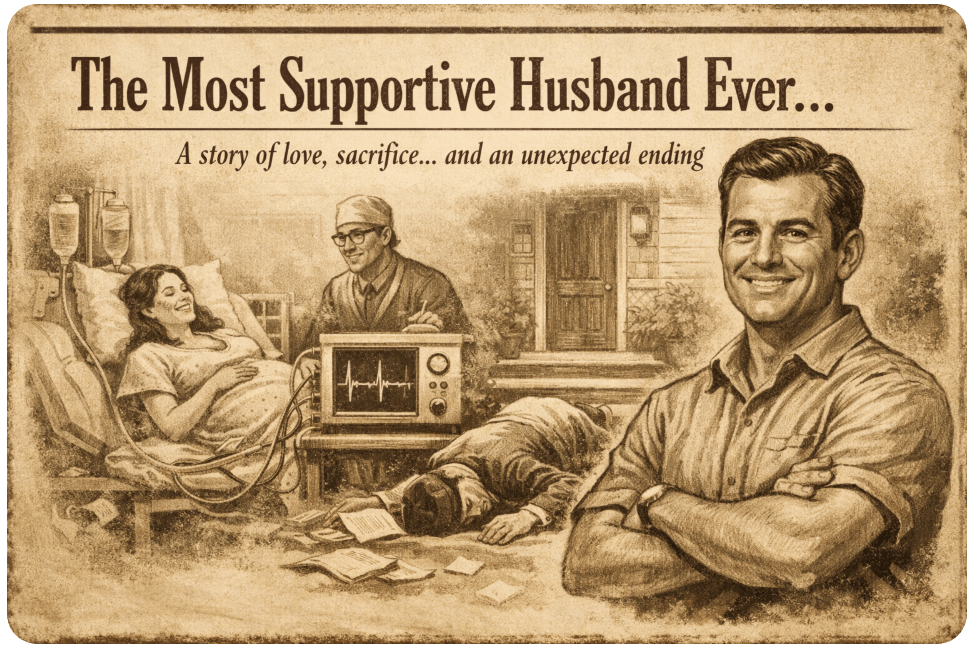
The Most Supportive Husband Ever… Or So He Thought
A man rushed his very pregnant wife to the hospital as her labor pains began.
After examining her, the doctor looked up with a serious expression. “This is going to be a difficult delivery,” he said. “But… there is an experimental choice.”
The couple leaned in.
“There’s a machine,” the doctor explained, “that can transfer a part of the mother’s pain to the father. It would significantly reduce what she feels during labor.”
Without hesitation, the husband said, “Hook me up.”
The doctor raised a cautious finger.
“There’s one small issue… a flaw in the mechanism. The pain transferred to you is amplified—up to ten times stronger than what she experiences. If it becomes too much, you must tell me at once.”
The husband nodded confidently. “I can handle it.”
The machine was connected.
The doctor started at 10%.
“How do you feel?” he asked.
“Honestly?” the husband said. “I don’t feel a thing.”
Curious, the doctor increased it to 30%… then 50%… then 80%.
Still nothing.
The doctor was amazed. He pushed it all the way to 100%. Due to the flaw, this meant the husband was now receiving ten times the full intensity of labor pain.
He stood there calmly.
No grimace. No flinch. Not even a bead of sweat.
Meanwhile, his wife delivered the baby with remarkable ease.
The doctor, stunned, turned to the husband. ““I have never seen anything like this in my entire career.”
Proud, the couple gathered their newborn and headed home, marveling at what had just happened.
But when they arrived…
There, on the front doorstep…
Lay the mailman.
Dead.
I am only retelling this story. I am not responsible for the contents. Just for the ending. Which I had nothing to do with.
The mother of Groff-Media’s Benjamin Groff has passed away at the age of 95. Marjorie Bernice McWhirter Groff died in Burns Flat Oklahoma on the 19th of January 2026. She was raised on her father’s farm in Southwest Oklahoma during the Great Depression.
Marjorie Bernice McWhirter Groff, age 95, of Burns Flat, Oklahoma, passed away on January 19, 2026. She was the beloved mother of Groff-Media’s Benjamin Groff. Her life reflected perseverance. She was devoted to family and demonstrated quiet strength.
Marjorie Bernice (McWhirter) Groff was born on August 21, 1930, to G.W. and Bernice McWhirter on the McWhirter homestead near Sentinel, Oklahoma. She was raised on her father’s farm in southwest Oklahoma during the Great Depression. She learned early the values of hard work. She also developed self-reliance and resilience. She attended school in Sentinel, graduating in 1949. With characteristic humor, she often recalled being held back in first grade by Ms. Thomas. This was an event never fully explained, but she later attributed it to her grit and orneriness. These qualities remained with her throughout life.
She later married JD Groff in Arapaho, Oklahoma. Together, they formed a blended family of “yours, mine, and soon ours.” They raised six children. They built a life rooted in commitment and unconditional love. The family lived in Clinton, Cordell, and Binger, Oklahoma. Wherever they resided, Marjorie ensured her family had food on the table, clean clothes, and a warm home. She faithfully followed JD wherever his work and calling led, embodying the meaning of partnership and devotion.
Marjorie worked for many years in grocery and retail service. She held positions at Puckett’s Grocery in Cordell. She also worked at United Supermarkets in Clinton and Cordell. Additionally, she worked at Loren’s Grocery in Binger. She was employed at the former Humpty Dumpty store in Anadarko as well. In the mid-1970s, she managed a store for the late Dr. Henry Phifer. She assisted her husband in the care of Camp Red Rock. Helping with the operation of the Girl Scout camp from the 1970s through the mid-1980s. Many residents of Caddo, Kiowa, and Washita Counties came to know Marjorie through her work as a census demographic assistant. They relied on her for accuracy and trustworthiness. Later in life, she devoted herself to caring for others in different roles. She worked as a group-home caregiver. She was also a personal care assistant for individuals with developmental challenges.
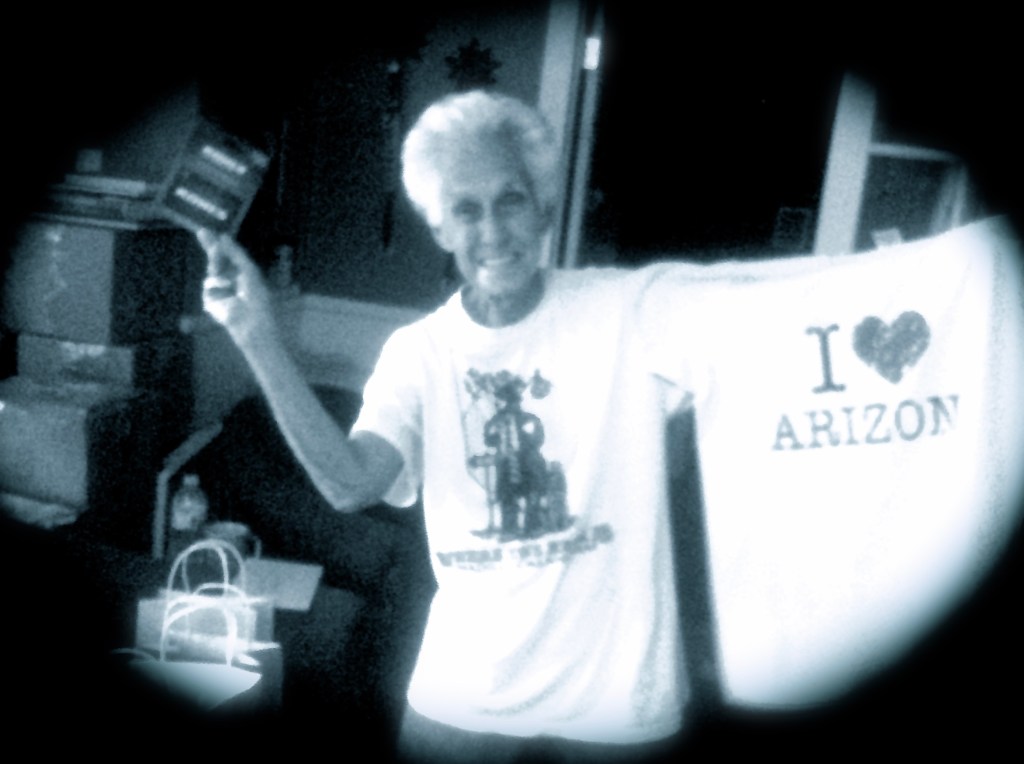
In 2010, Marjorie moved from Binger to her son’s ranch near Phoenix, Arizona. In 2013, she returned to Oklahoma to live with her daughter Twila in Edmond. They later moved to Burns Flat. She resided there until her passing.
Marjorie was preceded in death by her parents. Her husband, JD Groff, also passed before her. She lost two sons, Sheldon Groff and Dennis Groff. She was also preceded in death by her brothers and sisters and their spouses. They were Robert Glen McWhirter, George McWhirter, David McWhirter, Richard McWhirter, Opal Burke, Nancy Dew, and Carolyn Overton. Her sisters-in-law were Mary McWhirter from Wichita Falls, Texas. Another one was Irene McWhirter from Oklahoma City. The third sister-in-law was Dortha Groff Downing from Weatherford, Oklahoma. Her brothers-in-law were Bennie Groff of Oklahoma City and Virgil Downing of Weatherford, Oklahoma. Others included Herb Burke of Mustang, Oklahoma, and Raymond Dew of Guthrie, Oklahoma.
She is survived by her children: Terry L. Groff and his wife, Paula, of Binger, Oklahoma. Juli Hall resides in Fort Cobb, Oklahoma. Twila Bowling lives in Burns Flat, Oklahoma. Benjamin Groff and Steven Swint, are from Mesa, Arizona. She is also survived by her sister, Shirley Lawson of Oklahoma City. She leaves behind many nieces and nephews. Many extended family members, friends, and neighbors remained in contact and offered care and companionship over the years.
Marjorie leaves behind a large and loving family, including thirteen grandchildren, thirteen great-grandchildren, and six great-great-grandchildren. She is also remembered by three adopted grandchildren—Benny, George, and Vojta—and their families in Germany and the Czech Republic.
She is also survived by her grandchildren: Tommy Groff, Robert Groff, Jay Dee Groff, and Raymond Groff. Florence Lynn (Groff), Amanda Bowling, Blake Bowling, and Natasha Garrison. Nathan Smith, Michael Smith, Tracey Groff, Ryan Groff, and Sisney Groff.
The love and support she received from those who stood by her until the end speak volumes. They highlight her husband’s enduring values. This is a testament to his character. These values were instilled by JD Groff. She never lost their dedication, trust, or love. This reflects the respect for family and elders that JD taught his children. Marjorie lived this respect every day.
Private family services will be held at Marjorie’s wish in the Spring Time.
Gregory de Polnay was born on 17 October 1943 in Chelsea, London, England, UK. He was an actor, known for Mansfield Park (1999), Doctor Who (1963) and Dixon of Dock Green (1955). He was married to Candice Caroline White. He died on 1 January 2026 in Poitiers, France.Some reports have listed as 2 January, 2026.
Big Finish Productions confirmed Gregory de Polnay’s death. He was known and respected there for his contributions to audio drama. News of his passing was met with sadness by colleagues, listeners, and admirers of his work.
Gregory de Polnay built a career defined by presence and voice. These qualities served him especially well in the world of recorded performance. Through his work with Big Finish, he became part of a storytelling tradition that values nuance, imagination, and character. He brought scripts to life for audiences. These audiences knew him primarily through sound rather than stage or screen.
De Polnay was not a household name. Yet, his work left a lasting impression within the creative communities he served. Fellow performers and producers remembered him as a dedicated professional. He matched his seriousness of craft with a deep respect for storytelling and collaboration.
Gregory de Polnay is survived by friends, colleagues, and listeners who continue to enjoy the performances he left behind. His voice endures in the stories he helped tell. This ensures that his contribution to the art of audio drama will not be forgotten.
Eddie Sotto, 67, American experiential designer, mixed-media producer and conceptualist
Eddie Sotto, a visionary designer and influential figure in themed entertainment, has died at the age of 67. Sotto earned widespread respect for his creative leadership. He made a lasting impact on the way immersive environments are imagined and experienced. His work with Walt Disney Imagineering was significant during a pivotal era of expansion and innovation.
Eddie Sotto imagined places where stories lived. He shaped immersive worlds at Walt Disney Imagineering. These worlds welcomed millions and forever redefined themed design.
Sotto joined Walt Disney Imagineering in 1986. He rose to become Senior Vice President of Concept Design in 1994. This role placed him at the center of some of Disney’s most ambitious international projects. Among his most notable achievements was overseeing the design of Main Street, U.S.A. at Disneyland Paris. There, his vision helped adapt a classic American concept for a global audience. He managed to preserve its sense of nostalgia, storytelling, and emotional resonance.
One of Sotto’s most enduring contributions was his proposal. He suggested placing the Disneyland Hotel directly at the entrance of Disneyland Paris. This proposal was bold and unprecedented. This was the first time Disney situated a hotel within a theme park. This concept would influence future park planning. It also redefined the relationship between guest experience and themed architecture. Eddie Sotto’s legacy endures in the spaces he helped create and in the imaginative standards he set for immersive design.
An argument disrupted a party at Conan O’Brien’s Christmas Party. Now Conan is reportedly “wracked with guilt” over what happened in his home that night. Guests at the party said the younger Reiner was “freaking out”. Nick was reportedly going from guest to guest asking them “if they were famous?” Which is believed to have started a dispute between he and his father. Conan thinks he should have intervened when he looks back. Instead, he said all three of the Reiners left his party and went home.
On December 14, 2025, the world was shaken by the devastating news. Rob Reiner, one of America’s most beloved artists and civic voices. And his wife photographer Michele Singer Reiner, were found fatally wounded. Murdered in their Brentwood, Los Angeles home. Their their son, Nick Reiner, now charged with their murders. Leaving a profound void in Hollywood and in public life. And stunning the hearts of millions who admired their work and their lives around the world. (1)
A Life in the Arts — From Screen to Story
Rob Reiners rise to prominence was nothing short of extraordinary. Rob was born in the Bronx in 1947. He was born to entertainment royalty — his father was the legendary comedian Carl Reiner. Rob built a career that spanned decades and mediums. He first captured America’s imagination as Michael “Meathead” Stivic on All in the Family. This performance earned him Emmy recognition. It also made him a household name. (2)
But it was behind the camera that Reiner truly reshaped American cinema. As a director and producer, he brought to life some of the most cherished films of the late 20th century:
This Is Spinal Tap — a cult classic that redefined mockumentary comedy. (2)
Stand by Me — a timeless coming-of-age masterpiece. (2)
The Princess Bride — a fairy tale beloved by generations. (2)
When Harry Met Sally… — one of the great romantic comedies in film history. (2)
A Few Good Men — a gripping courtroom drama that became a cultural touchstone. (2)
His storytelling was more than entertainment; it was empathetic, insightful, and deeply human — reflecting the best of American imagination.
A Partner in Life and Purpose
Standing beside Rob was Michele Singer Reiner, his wife of more than three decades. Michele’s talents went beyond her role as a devoted partner and mother. She was a gifted photographer and producer. Michele was celebrated in her own right. Her work included collaborations on various cultural projects. Her creative eye helped shape the visual landscape of many endeavors they pursued together. (2)
Michele was not merely a support to Rob. She was an equal force of creativity, compassion, and conviction. She embodied a deep commitment to both art and advocacy.
Champions of Humanity and Civic Duty
Rob and Michele Reiner were not content to rest solely on artistic laurels. They were passionate advocates for causes that show the best instincts of our nation. Rob’s political engagement spanned early childhood education, civil rights, and marriage equality. His involvement made him a fierce public voice for inclusion, justice, and the dignity of all people. He helped co-found influential organizations and leveraged his platform to support progressive civic causes. (3)
Michele’s activism and advocacy were equally meaningful. She championed marginalized communities through her work with LGBTQ+ organizations and children’s welfare initiatives. She lent her voice to efforts that made tangible differences in people’s lives. (2)
Together, they represented a model of creative achievement married with civic responsibility. This reminds us that success in culture and in conscience are not mutually exclusive. Instead, they are mutually enriching.
A Loss Shared by the Nation
The response to their deaths reflects the breadth of lives they touched. Tributes poured in from Hollywood friends like Billy Crystal, Albert Brooks, and Martin Short. Political figures across the spectrum also honored their legacy and mourned the immense loss. Friends called them a “special force devoted to public betterment,” highlighting their generosity, their creativity, and their tireless spirit. (3)
Why We Should Honor Them
The Reiners lived by the same ethic exemplified by Jimmy and Rosalynn Carter. They shared a commitment to service, compassion, and purpose. Like President Carter, they devoted themselves to doing good whenever they can. They aimed to help for as long as possible and in many ways.
If America needed to memorialize a pair, they would choose Rob and Michele Singer Reiner. Their lives reflected the highest values of artistic brilliance. They showed humanitarian commitment and civic leadership. The Reiners embody artistic brilliance and humanitarian dedication. Civic leadership was a fundamental part of their legacy. They stand at the top of that list. Their tragic end came at the hands of a loved one struggling with personal demons. This only deepens the poignancy of their story. It underscores life’s fragility, even for those who seem larger than it.
To remember them is not only to celebrate iconic films and photographs. It is also to proclaim a narrative about what it means to care for one another. It shows how to invest in the common good. Ultimately, it encourages us to leave the world better than we found it — through art, action, and advocacy.
A highway will probably never bear their name. It is unlikely that a statue will stand in their likeness at the center of a campus. No one will demand that students memorize every detail of what they did — and that is just fine. They would not have sought those honors anyway. The Reiners never worked for recognition; they worked for purpose. And that is precisely why they will forever be remembered as heroes to so many. The Reiners — the truest expression of what an American life can be.
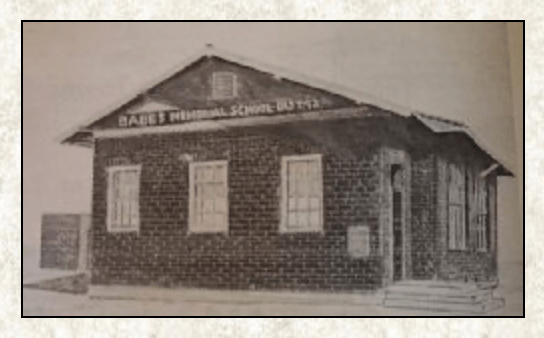
Every year at this time, I am reminded of a harrowing story. It is deeply etched into Oklahoma’s collective memory: the Babbs Switch School Fire of Christmas Eve, 1924. It stands as a tragic lesson in safety, humanity, and resilience.
The Fire
On that bitterly cold night, with heavy snow and sub-zero temperatures, 200 residents gathered. They met in Babbs Switch’s one-room schoolhouse for a Christmas Eve program. The school was tightly packed with engaged couples, grandparents, mothers, fathers, and children. The building’s windows were secured with wire mesh to deter intruders from the nearby railroad tracks. The sole exit—a door that opened inward—would soon become a deadly trap.
The program concluded with a teenage boy dressed as Santa Claus. He handed out toys and candy beneath a cedar Christmas tree. The tree was decorated with paper, tinsel, and lit candles. One of these candles brushed against the tree’s dry needles, igniting it instantly. Mrs. W.G. Boland, whose three children perished that night, later recounted the horror.
“I tried to beat it out with a paper sack,”
she said,
“but it did no good.”
Initially, the crowd laughed, believing the small blaze was being contained. But within moments, the flames engulfed the tree, the ceiling, and the entire structure.
Panic erupted.
The sole exit became a bottleneck as the crowd surged toward the door. Those at the back pushed forward, while the unlucky at the front got crushed in the chaos. Some attempted to pry open the wired windows, but their efforts were futile. Trapped inside, children, parents, and neighbors succumbed to the smoke and flames. Witnesses recalled the horrifying scene of people clawing at the exit. Bodies piled atop one another, and the acrid stench of burning flesh.
The Survivors
Among those who escaped was Lillie Biggers. She crawled out from under a desk clutching a doll she had just received. Her mother, Margaret, managed to get out but suffered severe burns to her hands and arms. Tragically, Lillie’s brothers, William, 9, and Walter, 15, did not survive. The Biggers family’s grief mirrored that of the entire community, where 36 lives were lost—half of them children. The belongings later identified the bodies of William and Walter. They carried a toy gun and a belt buckle.
The injured and deceased were transported to Hobart, the nearest town, where makeshift morgues were set up. The community’s response, known as the “Hobart Spirit,” saw residents drop everything to give aid and comfort. Newspaper accounts likened this effort to the Oklahoma Standard that emerged decades later after the Oklahoma City bombing.
Julie Braun with Mother Lillie’s Doll That Survived Fire
The Aftermath
The tragedy prompted a wave of reforms. Oklahoma legislators enacted fire safety laws requiring outward-opening doors, multiple exits, and accessible window screens in schools. Open flames were banned, and fire extinguishers became mandatory. The reforms eventually spread nationwide, though it would take more tragedies before they were fully adopted.
The morning after the Babbs Switch School Fire
A Missing Child
The story took a strange twist that turned it into a lingering mystery. Among the victims was three-year-old Mary Edens—or so it was believed. Her aunt, Alice Noah, escaped the building. She died days later. She claimed she had handed Mary to an unknown person outside the burning building. Mary’s body was never recovered, leading her family to hope she had survived.
In 1957, decades after the fire, a woman named Grace Reynolds came forth. She was from Barstow, California. She claimed to be the long-lost Mary. The Edens family reunited with her on Art Linkletter’s House Party television program, believing their prayers had been answered. Reynolds even wrote a book about her experiences. It is titled Mary, Child of Tragedy: The Story of the Lost Child of the 1924 Babbs Switch Fire.
But only some were convinced. A local newspaper editor who investigated the claim questioned its validity.
Skeptics noted inconsistencies in Reynolds’s story, but no definitive evidence confirmed or debunked her identity. To this day, the truth remains elusive.
Legacy
The Babbs Switch School Fire is remembered as one of the deadliest school fires in U.S. history. A stone monument now stands where the schoolhouse once stood, a quiet marker of lives lost and lessons learned. The physical scars of the tragedy have faded. Yet, its memory endures. It serves as a poignant reminder of the fragility of life and our enduring hope for safety and change.
In the quiet margins of newspapers, lives flicker out of print. Still, they do not fade out of memory. That is where our magazine steps in. It offers a respectful space for families and community members. They can share and preserve their loved ones’ stories. benandsteve.com believes that every person who mattered deserves more than a line in the obituary section. It doesn’t matter whether they soared in the spotlight or labored in the shadows. They deserve a story that lingers.
In State. Gone But Not Forgotten! ~ The Quiet Roll Call of Memory ~ A Place Where Every Life is Honored!
The local teacher’s kindness rippled through generations. The factory worker’s quiet ingenuity saved jobs. Every story reminds us that all lives matter and deserve recognition. Each of them mattered in a way that defies headline fame, and we honor that truth.
When you turn our pages, you are not just scrolling past a date and a funeral notice. You are stepping into a life lived, an unfinished story, and a memory that still speaks. Through these stories, you can feel connected to those who shaped our world in ways that matter deeply to someone.
Join us. Let this edition of Notable Deaths – @ Galaxy8News, a service of benandsteve.com, stand as a testament that we remember — not only the famous, but the faithful. We honor not only the celebrated, but the steadfast. Through meaningful storytelling, we create a space where every life is acknowledged. Each life is valued and preserved. This nurtures a lasting sense of belonging and purpose.
We assure their contributions, their legacy, and their memory are posted. Visit daily to stay connected and informed on the most recent passing’s of those who have departed this world. Their lives mattered, and their stories deserve to be remembered. Bookmark it here! Just remember Galaxy8News, a service of benandsteve.com and Notable Deaths are two different pages. Hosted by the same entity.
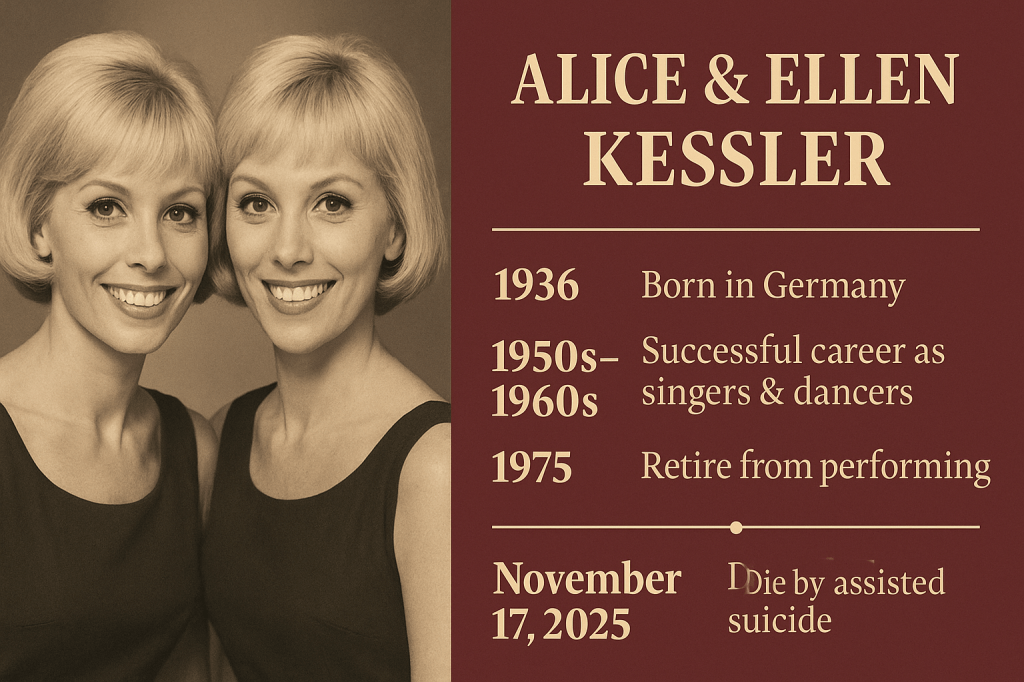
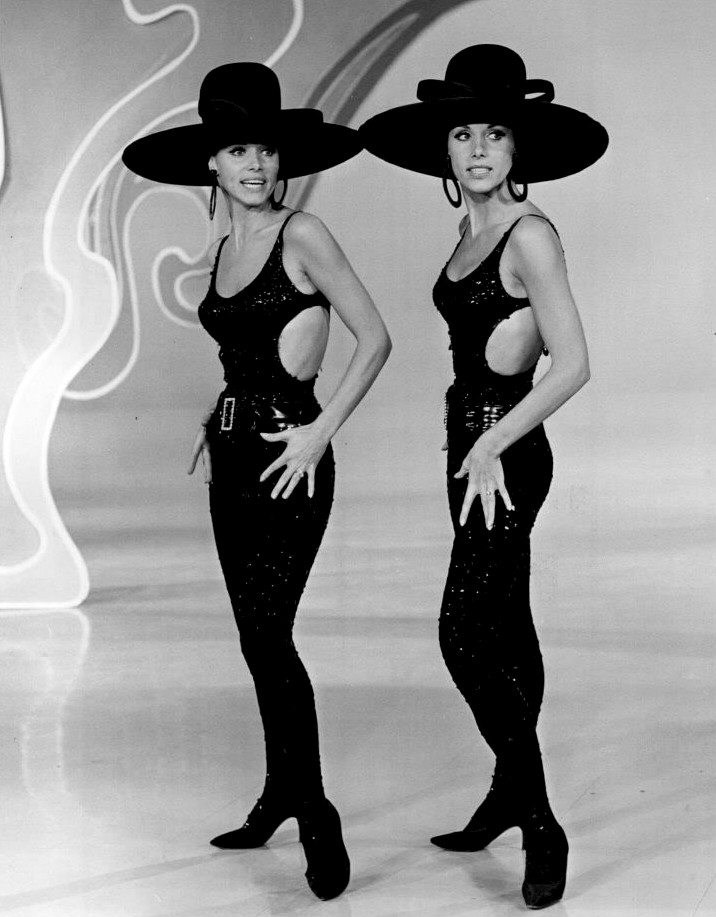
Alice and Ellen Kessler were born on August 20, 1936, in Nerchau, Saxony, Germany. From early childhood, they trained in ballet and performance, eventually emerging as a dazzling twin act in post-war Europe. They became known internationally for their synchronized dancing, singing, and television appearances. They found particular fame in Italy, where they were dubbed “Le gemelle Kessler”.
They appeared in films like Love and the Frenchwoman and Dead Woman from Beverly Hills . Their careers expanded beyond dance into acting.
Shared Career, Shared Life
For decades, they performed as a unit—twins inseparable both on and off stage. Their image of elegance, glamour, and synchronized precision made them icons of entertainment in the 1950s and 1960s. Their bond remained strong even as they stepped away from the spotlight, ultimately returning to Germany and settling near Munich.
Their Final Days & Decision
On November 17, 2025, both Alice and Ellen passed away in Grünwald, Bavaria, Germany, at the age of 89. Their cause of death is reported as assisted suicide. They made this decision together. It reflects how they had lived life: side by side.
The sisters had long ago expressed the wish to be cremated together. They wanted their ashes placed in a single urn, according to reports. They had indicated they no longer wished to continue their current life. They chose to end their lives together.
Why They Made That Choice
While the intimate details of their decision stay personal, the public record suggests the following contributing factors:
Age and quality of life: At 89, they faced the realities of aging. Having lived their whole careers, they wished to face death by choice rather than decline.
Deep bond: Their identity had been formed around always being together—professionally and personally. The decision to depart together echoes the unity they maintained for nearly nine decades.
Autonomy in the final act: In Germany, since 2019, medical aid in dying has been legal under certain conditions. This involves an individual administering prescribed medication themselves. They chose the timing, setting, and manner—affirming their autonomy to the end.
Legacy and Reflection
Alice and Ellen stay symbols of an era of variety-show glamour. They epitomize cross-European entertainment. Their twin synergy is unmatched by few acts. But beyond their performance, their final act raises profound questions about dignity. It also questions companionship and the nature of choice at the end of life.
Their journey is a full-circle narrative for fans, historians, and those intrigued by human stories. They start as childhood ballet students. They become international stars. Finally, they become co-authors of their own end. It shows how life can be lived. It also demonstrates how life can be shared and completed on one’s own terms.
Closing Thoughts Remembering The Kessler Sisters
How many partnerships in life are built to last so long, and so deeply?
The Kessler twins remind us of devotion not only to craft, but to each other. In their final act, they teach us something tender and unsettling. They reveal the power of choice, the weight of togetherness, and the mystery of closure.
Latest on the Kessler Twins’ passing –
NEWS BULLETIN. TUESDAY NOVEMBER 19, 2025
The Kessler Twins have left this world together.
Alice Kessler and Ellen Kessler—German twin sisters who performed as a variety entertainment duo—died by joint assisted suicide at their home in Gruenwald, Germany, on Nov. 17, according to the German Society for Humane Dying (DGHS).
“They had been considering this option for some time,” the association, which advocates for the right to a self-determined death, said in a statement to NBC News. “They had been members of the organization for over a year.”
Explaining that those “who choose this option in Germany must be absolutely clear-headed, meaning free and responsible,” the organization noted that the sisters engaged in thorough discussions with a lawyer and a doctor before setting on this path.
“The decision must be thoughtful and consistent,” the DGHS added, “meaning made over a long period of time and not impulsive.”
Assisted dying is legal in Germany, with the country’s constitutional court ruling in 2020 that an individual has the right to end their life and seek help from a third party under certain circumstances.
Mohamed Sabry, Former Zamalek Midfielder, Dies at 51
The Egyptian football community is deeply saddened to mourn the loss of Mohamed Sabry. He was the former Zamalek and Egypt national team midfielder. He died in a car accident in Cairo’s Fifth Settlement on Thursday. He was 51. Sabry’s untimely passing marks the end of a remarkable life. He dedicated his life to the sport he loved. He helped define it for a generation of fans.
Sabry was a central figure in Zamalek’s golden era throughout the 1990s and early 2000s. This was a decade of triumphs. It cemented the club’s legacy in African football. Between 1993 and 2003, he lifted 15 major titles. These included three CAF Champions League trophies and two Egyptian Premier League championships. Known for his fierce determination, vision, and leadership on the pitch, Sabry was instrumental. He led Zamalek through some of its most celebrated victories. He earned admiration from teammates, opponents, and supporters alike.
Mohamed Sabry
After news of his passing, tributes poured in from across Egypt and beyond. Zamalek icon Mahmoud Abdel-Razek “Shikabala” described Sabry as “a legend of Egyptian football.” He also called him “a symbol of loyalty and devotion to his club and supporters.” His words reflected the views of many who admired Sabry for his exceptional talent. They saw him as a model of dedication and humility. Fans, former teammates, and rival clubs alike joined in remembering a man whose passion for football transcended the game’s rivalries.
Condolences also came from key figures within Egyptian football. Hossam Hassan, the national team coach, offered his sympathy to Sabry’s family. Al Ahly president Mahmoud El Khatib also conveyed his condolences to the wider football community. Tributes continue to flow. Mohamed Sabry will be remembered as one of Zamalek’s most influential midfielders. His achievements, sportsmanship, and loyalty to his club left an indelible mark on Egyptian football history.
Mohamed Sabry (1974–2025): Remembering a Zamalek Legend
You Can Read Learn Daily About Notable People Who Die Around The World Like ~
Former Zamalek midfielder Mohamed Sabry has died in a tragic car accident in Cairo at 51. A defining figure in Zamalek’s golden era, Sabry won 15 major titles, including three CAF Champions League crowns. Tributes from teammates, rivals, and fans recall a man of skill, loyalty, and unmatched devotion to the game.
There was a time when ghosts were not feared, but welcomed. Long before the plastic skeletons and fog machines, the presence of the departed inside a home was seen as sacred. It was viewed as even comforting. Hollywood later turned spirits into screams.
In old America, the line between the living and the dead was not sharply drawn. Much earlier in Europe, this line was also blurred. Families left chairs empty at the table for those who had passed. Candles flickered in windows not to frighten away spirits, but to guide them home. A draft whispered through the house. The hallway creaked, or the boards settled. These sounds were spoken of with gentle reverence: “It’s only Mother checking on us.”
Autumn, of course, was the favored season for such visitations. The harvest was done. The air turned cool and thin. This is a time believed to make the veil between worlds soft as gauze. Many homes, especially in rural places, held small gatherings to honor those who came before. Food was left out overnight. The family Bible was opened to the names of the dead. In some corners, the very hearth hosted a spirit or two. They lingered close to the warmth that once gave them life.
Ghosts were part of the household, not intruders. They were reminders — that life continues, even in unseen ways. The wind brushing the curtains or the rocker swaying gently on its own didn’t make people scream. They didn’t call for help. They smiled. They believed their ancestors had found their way home.
It wasn’t until the age of electricity and industrial noise that ghosts were driven out — or at least, ignored. Modern light replaced candlelight, and superstition was traded for science. Yet, as every October rolls around, the scent of woodsmoke returns to the air. We still sense something ancient moving among us. Maybe that’s why we decorate with skeletons and glowing pumpkins — a way, even now, to say: we remember you.
So the old ways weren’t so strange after all. Maybe ghosts were never meant to be feared. Maybe they were simply waiting to be invited back in.
We are deeply saddened to announce the passing of Carol Jane “Penny” Pence Taylor. She was born on May 11, 1929, and passed away on November 4, 2025. Penny was a pioneering American swimmer, Olympian, mentor, and coach. She was also a beloved figure in the sport of swimming. She died in New Orleans, Louisiana, at the age of 96.
Life & Accomplishments
Penny Pence was born in Indianapolis, Indiana, and as a young woman rose to national prominence as a breaststroke specialist. She represented the United States at the 1948 Summer Olympics in London. She competed in the women’s 200-metre breaststroke at the age of 19.
In that era, women’s competitive swimming was still evolving. Swimsuits were made of cotton. Goggles were not yet in regular use. Lane lines and pool technology were far less advanced than today. As noted in
Beyond the Olympics, she achieved multiple national titles in breaststroke and medley relay events. At the 1951 Pan American Games, she won gold in the 3×100 m medley relay. She also secured bronze in the 200 m breaststroke. Which is noted in Olympedia+1
After her competitive career, Penny turned to coaching and leadership. She spent more than three decades as a swim coach in the St. Louis area. She served in various roles with U.S. Swimming organizations. She was a team leader at the 1984 and 1992 Olympics. She worked as a deck marshal at the 1996 Games. She was also the chef de mission at several FINA World Championships. Her backgrounds are well documented on Wikipedia
Legacy
Penny Pence’s legacy lives on in many ways. She helped lay the groundwork for women’s competitive swimming in the United States. Her efforts bridged the post-war era into the modern age of the sport. Her dedication as an athlete, coach, administrator, and mentor touched countless swimmers. She had the rare perspective of having raced in the era when the butterfly wing-style was emerging in breaststroke events. Later, she guided new generations.
A Life Remembered
Penny was admired for her determination, her attention to detail, and her lifelong commitment to the sport she loved. She stayed involved with swimming well into her later years. She attended major events. She offered counsel and shared stories of an era when competitive swimming was very different from today.
A private celebration of her life is being planned.
Her family requests donations in her name instead of flowers. These can be made to a local swim club. Alternatively, they can be directed to a scholarship fund supporting young swimmers.
Her memory reminds us of the value of perseverance, service, and passion for the sport.
Penny Pence has left the pool. Still, her ripple effect continues in the lanes. It also continues in the lives of all whom she touched. She will be deeply missed and fondly remembered.
The man had lived his life in balance—not a saint, not a sinner, but somewhere in between. He had helped when strong. He erred when he was weak. Now, in his elder years, he carried the weight of both. His body ached. His breath came shorter. One night, he sank into a sleep so deep it felt like stepping into another world.
A ship appeared from the darkness. Its hull was blackened with age. It floated on a sea of whiskey. The whiskey shimmered like molten amber under the moonlight. A cigar extended from the deck like a gangplank, smoke curling in lazy ribbons. Hesitant but curious, the man stepped onto the cigar and walked across, balancing himself as if crossing into another reality.
On board, a captain awaited him—tall, weathered, eyes that had seen too much. “I’m here to take you to your next destination,” the captain said, voice low and certain. The man nodded. The ship cut across the whiskey sea. It came to rest before a towering building of glass and brass. Its entrance was lined with golden elevators, each gleaming like judgment itself.
Inside, a sharply dressed man waited in the lobby. His shoes were polished so bright they caught the reflection of the man’s weary face. He gestured toward a chair. “Tell me your life story,” he said.
And so the man spoke. He told of the good—moments of kindness, loyalty, laughter. He confessed to the bad—times of selfishness, anger, and failure. He left nothing out, for what use was there in lying at the end? The suited man listened, not judging, only nodding as though each word was weighed like coin on a scale.
At the end, silence hung heavy. The suited man pressed a single button. The doors of one elevator slid open, glowing with light the man did not quite see. He stepped ahead, heart pounding. Whether the elevator rose or fell, he did not know. But as the doors closed, he understood something profound. The true measure had never been perfection. It was honesty. It was the courage to walk the bridge, board the ship, and face the truth of who he had been.
When Politics Turns Deadly: What Recent Shootings Reveals About America’s Pressures
Political Violence in the U.S.: A Historical Lens Political Pressure Pots That Are Exploding
On September 10, 2025, conservative activist Charlie Kirk was fatally shot while speaking at Utah Valley University. The attack shocked audiences nationwide and revived a painful question: Is political violence becoming more common in the United States? While the details of this case continue to unfold, history offers context. The Kirk shooting is tragic, but it’s not unprecedented—political assassinations and attacks have occurred before. Understanding that history can help us prevent future violence.
Political Violence in the U.S.: Then and Now
Throughout U.S. history, public figures have been targeted for their beliefs, activism, or positions of power. These events—though rare—often show deep social, political, or cultural tensions. Below is a timeline of key moments, followed by how they compare to today.
Timeline of Notable U.S. Political Murders/Assassinations
Year / Victim / Role / Context / Motive
On April 14, 1865, Abraham Lincoln, the U.S. President, was assassinated by John Wilkes Booth, a Confederate sympathizer.
1901 William McKinley, U.S. President, was killed by anarchist Leon Czolgosz.
1935 Huey Long, U.S. Senator / LA Governor, was shot by Carl Weiss amid political turmoil in Louisiana.
1963 Medgar Evers, a Civil Rights Activist, was shot outside his home for his activism in Mississippi.
In 1963, President John F. Kennedy was assassinated while riding in a motorcade in Dallas, Texas. Lee Harvey Oswald was arrested for the crime. He was shot and killed by Jack Ruby before standing trial. The official record names Oswald as the lone gunman. The motive has remained an issue of widespread debate and speculation for decades.
1965 Malcolm X, a Civil Rights Leader, was killed during a public speech in Harlem.
1968 Robert F. Kennedy, the Presidential Candidate, was shot after a campaign rally in Los Angeles.
On April 4, 1968, Dr. Martin Luther King Jr.—American Baptist minister, civil rights leader, and Nobel Peace Prize laureate—was assassinated. He was standing on the balcony of the Lorraine Motel in Memphis, Tennessee when it happened. James Earl Ray, an escaped convict, was arrested for the murder two months later and later pleaded guilty. Ray claimed he was part of a larger conspiracy. He later tried to recant his confession. Nonetheless, the official record names him as the assassin. The motive remains the topic of debate. King led the civil rights movement. He opposed systemic racism. These actions made him a frequent target of threats and hostility.
1969–70s Various bombings & shootings Political & protest-related Weather Underground, far-right and far-left extremist groups.
2011 Gabrielle Giffords (survived), U.S. Representative, was shot at a constituent event in Arizona; six others were killed.
High profile, targeted instances of political violence
Charlie Kirk shooting*
Killed
Orem, Utah
Kirk was shot and killed while speaking at an event on the campus of Utah Valley University. Kirk was a well-known conservative activist who founded Turning Point USA.
Sept. 2025
*Officials have not confirmed that the shooting was politically motivated.
*Officials have not confirmed that the shooting was politically motivated.
Minnesota lawmaker shootings
2 killed, 2 injured
Minneapolis, Minnesota
A gunman targeted several Minnesota election officials. He killed Minnesota House of Representatives member Melissa Hortman and her husband Mark Hortman in their home. State Sen. John Hoffman and his wife Yvette Hoffman were shot and injured in their home.
June 2025
Minnesota lawmaker shootings
Two killed, two injured
Minneapolis, Minnesota
A gunman targeted several Minnesota election officials. He killed Minnesota House of Representatives member Melissa Hortman and her husband Mark Hortman in their home. State Senator John Hoffman and his wife Yvette Hoffman were shot and injured in their home.
June 2025
Minnesota lawmaker shootings
Two killed, two injured
Minneapolis, Minnesota
A gunman targeted several Minnesota election officials. He killed Minnesota House of Representatives member Melissa Hortman and her husband Mark Hortman in their home. State Senator John Hoffman and his wife Yvette Hoffman were shot and injured in their home.
June 2025
Pennsylvania Gov. Josh Shapiro’s home arson
No injuries
Harrisburg, Pennsylvania
The Pennsylvania Governor’s Residence was set on fire while Shapiro and his family slept inside.
April 2025
Pennsylvania Gov. Josh Shapiro’s home arson
No injuries
Harrisburg, Pennsylvania
The Pennsylvania Governor’s Residence was set on fire while Shapiro and his family slept inside.
2025 Charlie Kirk, Conservative Activist, was shot while speaking at Utah Valley University; investigation ongoing.
Timeline of Notable Political Murders And Attacks In The U.S.(1865-2025)
Patterns and Parallels
Public Rhetoric Matters: In nearly every case, rhetoric and polarization preceded the violence.
Violence Rarely Comes From Nowhere: These events are almost always linked to broader grievances, social tensions, or extremist ideologies.
Modern Amplifiers: Today’s social media, 24/7 news, and intense partisanship can supercharge grievances faster than in past eras.
Lessons for Today
The Kirk shooting reflects how quickly divisions can escalate. This happens when marginalized or politically active groups feel threatened. It also occurs when public discourse frames opponents as existential enemies. Left unchecked, the result can spill over from online posts and protests into public spaces and deadly attacks.
History shows that violence rarely ends the debate—it deepens it. The antidote is not silence but inclusion, dialogue, and guardrails on how we treat one another, even when we disagree.
Closing Thoughts
The U.S. is not doomed to repeat its worst moments, but it does need to recognize them. Political violence grows where alienation and fear fester. The Charlie Kirk tragedy, like earlier assassinations, should not only shock but also instruct. By confronting polarization and reinforcing democratic norms, communities can prevent these cycles from repeating.
About the Author:
Benjamin Groff is a former police officer and radio news anchor. He has hosted programs for CNN and ABC News affiliates in Colorado and Wyoming. His career in law enforcement began in 1980 and lasted more than two decades. This gave him firsthand insight into the criminal mind and public safety. Moreover, it provided him with an understanding of the human stories that often go untold. His writing draws on these experiences, blending street-level truth with a journalist’s eye for the bigger picture.
Joe had been lost in grief ever since Belinda, his wife of fifty years, passed away. Now nearly 80, his health was slipping. His memory faltered. His doctor warned he would soon need full-time care. One day, he might not even remember who he was. Watching Belinda decline into that same fog had torn him apart. Joe swore he wouldn’t let himself linger the way she had.
He made up his mind. Quietly, carefully, he wrote out a plan on paper and kept it folded in his pocket. When the time came, he would go to a scenic overlook, drink a fifth of whiskey, and take his own life as the sun slipped below the horizon. In his truck’s glovebox sat both the bottle and a revolver, waiting.
As the months wore on, Joe’s forgetfulness grew worse. He climbed into the wrong car. He mistook strangers’ houses for his own. He baffled neighbors with his confused blunders. It might have been comical if it weren’t so tragic. Then one morning, Joe woke with rare clarity. Today, he thought, would be the day. He dressed. He tipped his waitress a hundred dollars at breakfast. He filled his truck and signed the title over to the station owner. He stopped by the bank to remind young Betty, the teller, that she would inherit his house someday. He even visited Belinda’s grave, promising to leave a light on so she’d know he was coming home.
It took him five hours to find the overlook—a place barely half a mile from his house. As the sky burned orange, Joe followed the instructions from his pocket: whiskey first, then the gun. Memories came in waves—his youth, his marriage, his place in the community. With a last swig, he cocked the revolver, looked toward the heavens, and whispered, “Honey, I’m on my way.” He pulled the trigger.
Darkness. Then voices. A bright light. He thought he was dead—until he woke the next morning in County General Hospital.
“Good morning, Joe,” a nurse said. “We were wondering when you’d wake up. How was your trip last night?”
Joe frowned. “Trip? What trip?”
“The usual,” she smiled. “Breakfast, gas station, bank, then the overlook. The sheriff’s department was waiting for you. You got lost again, but they helped you find your way.”
Joe’s face hardened. “Dadblast it, that was my plan to do myself in! I’ve got a right to my privacy.”
The doctor walked in, shaking his head. “You do, Joe. But here in Canada, there’s another way. You qualify for MAiD—the Medical Assistance in Dying law. You don’t have to go alone with a bottle and a gun.”
Joe stared at him, confused. “Did I… forget that too?”
In 1921, Thomas and Mary Ellen Souder of Texas proved love doesn’t end at goodbye.
1–2 minutes
A Story of Devotion: Thomas Jefferson Souder & Mary Ellen
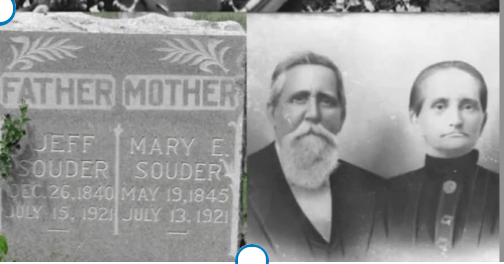
In the gentle stillness of Hurst, Texas, Thomas Jefferson Souder and Mary Ellen East Souder shared a quiet love. It spanned six decades. They were married for 60 years. They raised a family and cultivated a home. They remained inseparable through every upturn and downturn of life.
July 1921 brought a cruel twist. Both fell victim to “the flux.” It was a brutal wave of gastroenteritis. It was so swift that it swept Mary Ellen away first, on July 13. Thomas Jefferson, already weakened, succumbed to grief and illness just two days later on July 15.
The community mourned—especially those who believed no bond was stronger than theirs. So it was decided: they would rest together, side by side, in a unique double coffin. Their shared burial echoed their life—inseparable, even in death.
Newspapers of the day captured the sentiment well. The Fort Worth Star-Telegram, on July 16, headlined their story: “Death fails to Separate Couple Wed 60 Years.” They honored not just the passing of two individuals. It was a love that truly endured it all.
More than a century later, their story endures. It is not a tragedy but a testament. True devotion can span lifetimes. It quietly reminds us that love, in its purest form, touches eternity.
Fact-Checked Details
Thomas Jefferson Souder and Mary Ellen East Souder were married for about 60 years. They passed within a couple of days of one another in July 1921 (1).
Mary Ellen died on July 13, 1921, and Thomas Jefferson followed two days later, on July 15, 1921(2).
Their cause of death was identified as dysentery. It was referred to at the time as “the flux.” This is a severe form of gastroenteritis (3).
Both were well-known pioneers of Hurst in Tarrant County, Texas. They were buried together in a double coffin. It was a striking symbol of their lifelong unity (4).
Their joint burial made front-page news in the Fort Worth Star-Telegram on July 16, 1921, under a headline expressing how “Death fails to Separate Couple Wed 60 Years”
The Dead Has Gone – A Night Call to the Funeral Home
Jake Roff was a man of routine. Up before the sun, station lights on by 4:30, coffee brewed by 4:35. He liked the quiet hours before the town woke up. There was no traffic and no gossip. Just the hum of the soda cooler and the smell of gasoline.
That’s when the hearse pulled in.
The local funeral director appeared. He was a man who had perfected the art of wearing a solemn face. He maintained this expression even when discussing baseball scores. He leaned out the window and said,
“Jake… I can use an extra set of hands unloading a client.”
Jake wasn’t sure “client” was the right word, but he was too polite to argue. He locked the station door and climbed into the passenger seat. The ride was short. It was a ride where the air feels colder than it should. You can’t shake the notion that someone in back is listening.
At the funeral home, the place was dark. A single light illuminated the hallway. It was the light that leaves more shadows than it removes. The two men wheeled their passenger toward the prep room, the floor squeaking under the gurney wheels.
That’s when Jake’s hip clipped something.
The “something” was another gurney, parked just out of sight. The bump sent the sheet sliding to the floor in slow, terrible motion. It was like a curtain rising before a play no one wants to see.
Underneath was a woman. Her hair was a halo of white, frizzed and jutting out like she’d been caught mid-scream in a lightning storm. Her eyes were wide and glassy, locked on Jake as if she’d been waiting for him specifically. Her jaw hung slack. Her teeth were just visible. It was an open-mouthed stare that made him wonder if she was about to say something.
Jake didn’t stick around to find out. He backpedaled so fast he nearly tipped the “client” he’d come to help with. His heart was pounding. He mumbled something about
“forgetting to check the oil at the station.”
Then, he made a break for the door.
The funeral director called after him. By then, Jake was halfway down the block. He vowed never to set foot in that place again. For the rest of his days, he’d open his station early. Yet, if a hearse rolled in before sunrise, Bill always ensured he had a sudden, urgent appointment anywhere else.
This is a true story as told to the author. JD Groff experienced it first-hand. He passed it down through generations. Other family members kept it alive over the years. JD had a flair for telling this tale at family gatherings—something this written piece can only hope to capture. One thing’s certain. After that night, he never again helped unload another “client.” That was the case for as long as he lived in Cordell, Oklahoma.
About the Author:
Benjamin Groff is a former police officer and radio news anchor. He has hosted programs for CNN and ABC News affiliates in Colorado and Wyoming. His career in law enforcement began in 1980 and lasted more than two decades. This gave him firsthand insight into the criminal mind and public safety. Moreover, it provided him with an understanding of the human stories that often go untold. His writing draws on these experiences, blending street-level truth with a journalist’s eye for the bigger picture.
Jeannie Seely’s 5,398th Opry Show” Set for August 14 at Grand Ole Opry House
1–2 minutes
A public Celebration of Life will honor Grand Ole Opry star and country music icon Jeannie Seely. It will be held Wednesday, August 14 at 10:00 a.m. CT at the Grand Ole Opry House in Nashville. Fittingly titled “Jeannie Seely’s 5,398th Opry Show,” the service will pay tribute to her unmatched legacy.
Jeannie Seely passed away on Friday, August 1 at age 85, after complications from an intestinal infection. She held the record for most Opry appearances in history — 5,397 — a milestone unlikely to ever be surpassed.
Tributes from the Country Music Community
Many stars shared heartfelt words:
Ricky Skaggs:“She made nervous newcomers feel at peace. We can all take her lead and encourage the next generation.”
Pam Tillis:“She had grit, wit, talent—and she was cool.”
Larry Gatlin:“She was my champion and inspiration. I miss her already.”
John Anderson, Ray Stevens, Mark Chesnutt, Darryl Worley, Billy Dean, and others echoed similar admiration, love, and deep loss.
Legacy
Nicknamed “Miss Country Soul,” Jeannie Seely broke barriers for women in country music. She was the first woman to regularly host Opry segments. She is also a GRAMMY winner and a BMI-awarded songwriter. Additionally, she has been an Opry member since 1967. Her songs were recorded by legends. These include Merle Haggard, Dottie West, and Willie Nelson. She also shared the screen with Willie Nelson in Honeysuckle Rose. In 2022, she was honored for her historic number of Opry performances. A stretch of road near the venue was renamed the Jeannie Seely Interchange in 2024.
Instead of Flowers
Donations in Jeannie’s name are encouraged to pet-related charities or the Opry Trust Fund: opry.com/about/opry-trust-fund
To start viewing events from Jeannie’s life, visit her website here. You can see the music she shared, events celebrated, and the people she loved.
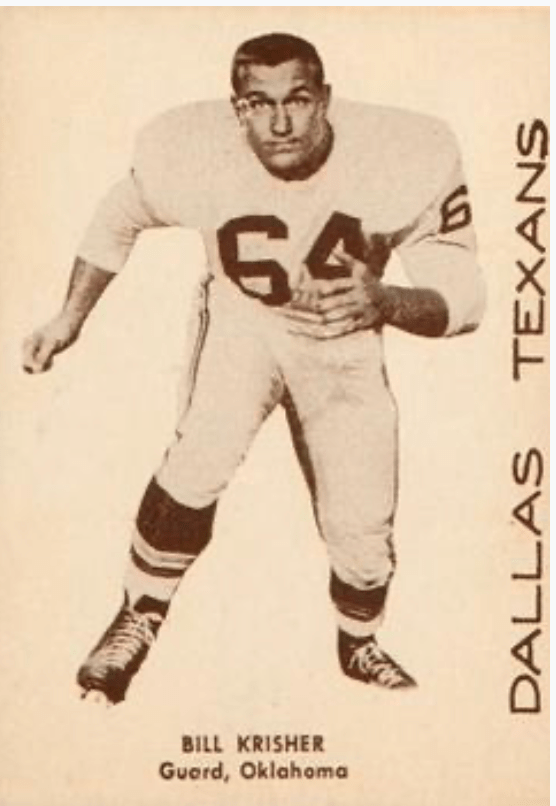
William Irwin “Bill” Krisher (September 18, 1935 – 2025, age 89)
William Irwin Krisher, known to football fans as Bill Krisher, passed away in 2025 at age 89 (1).
He was born on September 18, 1935, in Perry, Oklahoma. He grew up in Midwest City. He developed into a standout lineman for the University of Oklahoma under coach Bud Wilkinson (2).
Krisher’s college career was decorated. He earned consensus All-American honors in 1957. He helped the Sooner’s win consecutive national championships in 1955 and 1956 3.
Selected in the third round of the 1958 NFL draft, he played for the Pittsburgh Steelers before moving to the AFL’s Dallas Texans (now Kansas City Chiefs), where he was named to the All‑AFL Team in 1960 and honored as a division All‑Star in 1961 4
Off the field, Krisher dedicated himself to faith and mentorship. He was an active member of the Fellowship of Christian Athletes and served as its southwestern regional director by the mid‑1970s 5
Bill Krisher leaves behind a legacy of excellence in collegiate and pro football. He dedicated his life to uplifting others through faith and service.
He is remembered by family, teammates, and athletes inspired by his example.
A sad update, the man in a report here a few days ago has died.
61‑year‑old Keith McAllister died after being violently pulled into the MRI scanner at Nassau Open MRI in Westbury, Long Island. He entered the MRI room on Wednesday, July 16, while his wife was undergoing a knee scan. McAllister wore a heavy-weight-training chain (~9–20 lb/4–9 kg) around his neck. Despite prior discussions about the chain with staff, he was allowed in.
When he approached the machine, the strong magnetic field latched onto the chain, yanking him into the scanner. His wife and the technician attempted to free him, but he collapsed in her arms. She recounted shouting, “Turn this damn thing off! Call 911!”.
McAllister was rushed to the hospital, where he suffered multiple heart attacks and was pronounced dead on Thursday, July 17. His wife emotionally described the moment: “He went limp in my arms… I can’t wrap my head around it”.
The Nassau County Police Department is investigating the incident, and experts are emphasizing the critical need for strict MRI safety protocols, especially regarding metal screening. Past tragedies—including a 2001 case involving a child and an oxygen tank—highlight the grave risks of metallic objects around MRI machines.
Summary of key points:
Victim: Keith McAllister, 61
Date of incident: July 16, 2025 (MRI room event)
Date of death: July 17, 2025 (hospital)
Cause: Pulled into MRI by heavy metal chain (~9–20 lb)
Response: Wife and technician tried to assist; police are now investigating
Safety concern: Highlights critical importance of enforcing metal screening protocols






















 benandsteve.com