Santa Christ – Faith, Fantasy, and Tradition: Do Churchgoers Believe in Santa Claus?

Groff Media 2024© Truth Endures IMDbPro

Presented by benandsteve.com By: Benjamin Groff II©

Faith, Fantasy, and Tradition: Do Churchgoers Believe in Santa Claus?

Faith is often regarded as the cornerstone of religious belief, encompassing elements of the unseen, the unknowable, and the divine. Yet, the figure of Santa Claus gets nestled within the realm of modern Christian culture. Most believe Santa Claus is a mythical character who, though secular, occupies a sacred space in many homes during Christmas. This essay examines the relationship between faith and fantasy in a critical manner. It asks a provocative question:

Do churchgoers who actively engage in Christian religious services also believe in Santa Claus?

The Coexistence of Faith and Fantasy

With his roots in the historical St. Nicholas, Santa Claus has evolved into a cultural icon who embodies generosity, joy, and the season’s magic. Churchgoers, particularly those steeped in Christian tradition, often embrace Santa alongside their religious celebrations. But does this blending of faith and fantasy dilute the essence of religious belief, or does it complement it?

For many, Santa symbolizes the wonder and innocence of childhood. He exists not as a deity but as a symbol of kindness and giving, traits consistent with Christian teachings. Yet, the theological implications of believing—or perpetuating belief—in Santa Claus among devout churchgoers raise critical questions. Is it contradictory to teach children to believe in an omniscient God? Is teaching about a jolly figure who rewards good behavior with material gifts also contradictory?

Theological Tensions and Cultural Adaptation

Theologically, the Santa narrative can be seen as problematic. Santa’s omniscience—knowing when children are ‘naughty or nice’—mimics divine qualities attributed to God. For devout Christians, this parallel is viewed as trivializing the sacred attributes of their deity. Additionally, Santa’s rewards depend on behavior. This conditional nature starkly contrasts with the Christian doctrine of grace, which emphasizes unconditional love and forgiveness. These tensions stem from God and the principles of the Christian faith. They raise questions about the compatibility of Santa Claus with religious beliefs.

On the other hand, the inclusion of Santa in Christmas traditions reflects a broader cultural adaptation. Churchgoers, like the wider society, are products of their environment. Santa Claus’s commercial and cultural saturation makes him almost inescapable. For many Christians, incorporating Santa into holiday traditions helps bridge the secular and the sacred. This creates a more inclusive celebration and resonates across different belief systems.

The Role of Myth in Faith Development

Belief in Santa Claus can also be seen as an early form of faith training. Santa embodies the power of belief for children—trusting in something unseen and expecting its fruition. In this way, Santa serves as a precursor to more mature forms of faith. The eventual realization that Santa is a myth does not necessarily undermine belief in God. Instead, it can reinforce the idea of a deeper, more profound belief in the divine. Transitioning from belief in a myth to belief in a higher power can be crucial for a child’s faith. It shapes their understanding of the unseen. It also builds their ability to trust the divine.

Critics argue, nonetheless, that perpetuating the Santa myth risks fostering cynicism. When children discover Santa isn’t real, they question the truth of other intangible beliefs, including God. This potential disillusionment challenges religious parents, raising concerns about the impact on their children’s faith. They must carefully navigate the transition from childhood fantasy to mature faith.

Reclaiming the Meaning of Christmas

The integration of Santa Claus into Christian homes invites churchgoers to consider the true meaning of Christmas. Is it about celebrating the birth of Christ and the message of salvation? Or has it become overshadowed by consumerism and secular traditions? For many churchgoers, the challenge is to reclaim the sacred aspects of the holiday. They also want to allow room for the cultural joy Santa brings.

Balancing these elements requires intentionality. Churchgoers are crucial in emphasizing Santa’s values—generosity, kindness, and joy—while grounding these traits in their faith. By framing Santa as a symbol, Christians can preserve the integrity of their beliefs. They can still enjoy the cultural richness of the holiday. This underscores the importance of their role in this balance.

Conclusion

Whether churchgoers believe in Santa Claus touches on more significant themes of faith, tradition, and cultural adaptation. Santa initially appears to conflict with Christian doctrine. Yet, he also offers an opportunity to engage with the season’s spirit of giving and wonder. Churchgoers need to discover how to integrate this cultural icon into their faith practices. They must achieve this without compromising their beliefs.

The coexistence of Santa Claus and churchgoers shows how people can balance faith and fantasy. Each aspect contributes to our understanding of the world. They also shape our place within it. Santa Claus does not need to diminish the sacredness of Christmas. Instead, he can symbolize the joy and generosity central to the season. Yet, some find it difficult to reconcile a fictional figure with their spiritual beliefs. This tension arises when they apply the same evaluative framework to religious doctrine, revealing a deeper reliance on external authority. For many, this dependence stems from an unwillingness to embrace personal accountability fully. They seek a Santa-like figure year-round—someone or something to guide their choices and confirm their actions. They continue to believe in Santa Claus, though under a different guise.


Building Peace: Steps Toward a Better Tomorrow

By Benjamin GroffMedia© | benandsteve.com | 2025 Truth Endures©

2–4 minutes

A Plan for Peace: One Step at a Time

I’ve been thinking a lot about peace lately.

Not the peace that lives only in headlines or history books—the grand treaties, the ceasefires, the official proclamations. I’m talking about the peace we build in our daily lives. This peace begins around kitchen tables. It is found in community meetings. It happens in the quiet moments when we choose to listen rather than shout.

What would it take to create a more peaceful world? That question sits heavy on my heart.

I don’t pretend to have all the answers, but I believe peace isn’t something we wait for others to deliver. It’s something we shape, step by step, together. And maybe, just maybe, it starts with a plan. Its not a perfect plan, but it’s a real one. It’s something we can reach for and return to, like a compass in uncertain times.

Step One: Start With Listening

Peace begins with the willingness to hear someone else’s story—especially when it challenges our own. We don’t have to agree on everything, but we do have to care enough to listen.

Imagine what would change if we listened without preparing to argue back. If we asked “What is it like to be you?” and waited long enough for a real answer.

Step Two: Make Room for Justice

There can be no true peace where injustice lives unchecked. That means looking closely at the systems around us—schools, courts, hospitals, policing, housing—and asking, “Who is being left behind? Who is being harmed? And what can we do to fix it?”

Justice isn’t about blame. It’s about repair. Peace doesn’t ask us to forget the past. It asks us to heal from it—together.

Step Three: Practice Kindness Like It’s a Skill

We talk about kindness like it’s something we either have or don’t. But I think it’s more like a muscle. You build it every day—with patience, with humility, and with a little humor when things get hard.

Sometimes, peace looks like biting your tongue. Sometimes, it looks like reaching out. And sometimes, it’s just not walking away.

Step Four: Educate for Empathy

To give the next generation a better shot at peace, we must teach them differently. Not just math and reading—but empathy, conflict resolution, critical thinking, and how to talk across differences without losing our humanity.

We should teach history honestly, too—not just the polished parts, but the painful truths that still echo today. Healing begins with honesty.

Step Five: Be Brave Enough to Hope

Hope can be a radical thing. Especially when the news is bleak and the divisions feel endless. But hope is not weakness. It’s strength disguised as belief. It’s faith in what we can build, even if we haven’t seen it yet.

A plan for peace isn’t a single event. It’s not something we sign and file away. It’s a lifelong effort. It’s showing up, over and over, with open hands and an open heart.

We will never achieve a perfect peace. But if we can bring peace into one more conversation, one more neighborhood, one more generation—then it’s worth everything.

So here’s my plan. It starts with me. It starts with you. And it keeps going—as long as we keep walking ahead, one small, hopeful step at a time.

Reflecting on the Oklahoma City Bombing: 30 Years Later

By Benjamin GroffMedia© | benandsteve.com | 2025 Truth Endures©

2–4 minutes

Thirty Years Ago Today

Thirty years ago, today, I was standing in a Federal Building when my pager went off. The screen lit up with all 9s—a code used to signal an emergency assignment. I needed to contact headquarters right away.

I had just stepped out of a federal courtroom in Denver, Colorado. Moments earlier, I had been inside, preparing to testify in a significant case involving a syndicated burglary operation. I’d been working undercover, embedded deep within their ranks. The courtroom was tense, but a recess had been called, and a few of us decided to grab coffee downstairs.

As we stepped into the elevator, my pager buzzed. I glanced around—no one else’s device had gone off. A sinking feeling set in, but I said nothing. When we reached the first floor, I peeled away from the group and went to a pay phone. I called my office.

My supervisor’s voice was grim on the other end of the line. A bombing had just occurred in downtown Oklahoma City. It was devastating—an entire city block destroyed, surrounding buildings heavily damaged. The scope of it was hard to fathom.

My first words were my gut instinct.
If they’re still alive, the person who did this is already on the road, on one of the Interstates. They’re putting as much distance as possible between themselves and the blast. They’ll go until they feel safe, then hunker down and watch.

Shortly after that call, my pager buzzed again—this time from the Federal Prosecutor’s Office. They informed me that all federal court proceedings were being canceled nationwide. I wouldn’t be needed back in court that day.

With nothing more to do, I contacted relatives in Oklahoma to ensure their safety. Then, like so many others, I returned to my room. I sat glued to the television and watched the horror unfold in real time.

The next day, I waited to hear if I’d stay in Denver. I wondered whether I would be reassigned. Another page came in from my office. A state trooper had made a traffic stop north of Oklahoma City. The individual taken into custody matched a profile. My instincts had been right.

In the weeks that followed, the nation learned his name. I choose not to say it now. Some people deserve to be remembered. He is not one of them.

Now, on this Saturday, April 19th, 2025, it’s been thirty years. Half of the people living in Oklahoma City today were either not born or didn’t live there in 1995. The memory of that day is fading, becoming a chapter in history instead of a scar felt daily.

Many survivors have since passed. Families of the victims have grown older, some have gone entirely. Some of those in the building that day were too young to remember it now. The face of that tragedy has changed, but its weight remains.

The Oklahoma City Bombing was the first of two national tragedies I learned about while standing in an elevator. The second came years later, on a crisp September morning—9/11. I remember thinking about stairs a lot after that. Elevators started to feel cursed.

But I never gave in to fear. I always got back in and waited for the doors to close. I figured if I didn’t, they would win.

And I wasn’t about to let that happen.

The Last Ride: A Father’s Legacy of Protection

Benjamin GroffMedia© | benandsteve.com | 2025 Truth Endures©

3–4 minutes

Dad’s Last Ride

Dad (JD Groff) on his horse, My Mollies Reed

My Dad was a man of fierce independence and deep protective instincts. He and my mom practiced defensive maneuvers as the days of aging grew—he had a plan. She would drop to the ground, and he would shoot over her, neutralizing any imagined threat. This was his way of ensuring our safety, a comforting thought for all of us. Of course, during practice, the gun was always unloaded. But as they grew older, my sisters became worried. Dad was on medication. It sometimes clouded his thinking. They feared he might one day forget to remove the bullets.

Years before, he had suffered a devastating injury. While inspecting a swimming pool facility, a large chlorine container malfunctioned, releasing a gas blast into a control room. He inhaled the toxic cloud, severely damaging his lungs. From that day onward, his breathing was labored, his movements slow and painful. The injury gradually robbed him of his strength until, eventually, he became bedridden.

As his physical strength faded, his concern for my mother’s safety grew stronger. He was terrified that they were vulnerable to burglars or intruders. And so, he devised a plan—an extension of the old drills. My mom would guide them to a specific location if someone ever forced their way into the house. He saw this spot clearly. She would drop to the floor just like in the old days, and he would be ready to fire.

That’s when my sisters turned to me. I’m a law enforcement officer, and they hoped I could safely remove the firearm from his possession. But that was easier said than done. When I spoke to him, he saw what I was thinking. Even in his weakened state, he firmly grasped his beliefs and authority. His determination was palpable. He made it clear that this was his home and responsibility. It was his plan to protect his wife.

But he also took the time to explain how seriously he took the safety of it all. His explanation wasn’t reckless or confused; it was thoughtful. He was rational and transparent in his thinking. In the end, I agreed. He was doing what he believed was best for them.

Still, I wanted to do something more—something that would help ease everyone’s minds. That day, I installed a motion detection system in the house. It covered the living and dining rooms, alerting them if anyone approached. Every door was now an alarm. It gave them peace of mind and ended the dramatic drop-and-shoot rehearsals.

Dad & Buck

Eventually, Dad was unable to get out of bed. He was confined to a hospital-style bed in a small office near their bedroom. His gun was out of reach, and it tore at him. One day, he felt sorrow and frustration. He asked for it not to defend the home. He wanted it to end his pain.

Two weeks later, my mother called an ambulance to rush my Dad to the hospital. They sedated Dad as fluid built up in his lungs, and he passed away there. Quietly, heavily, and—if I’m honest—less on his terms than he would have wanted.

I often think of the day he asked for the gun and couldn’t reach it. Part of me believes it would’ve been a more dignified end. He had spent his life in control. He always defended his family and lived by principle. But the law is clear, and so is the burden of those left behind. As much as it hurt, I nor anyone could hand it to him.

Embracing Honesty in Self-Reflection

Benjamin GroffMedia© | benandsteve.com | 2025 Truth Endures©

2–3 minutes

On Writing a Sincere Self-Analysis

To Thy Oneself Be True!
To My Ownself I Must Be True!

Writing the most sincere self-analysis is no small undertaking. It asks something of us that we’re not always ready to give. It demands honesty, and not just the kind we wear on our sleeves when trying to be humble or modest. It demands the raw kind. The kind that doesn’t flatter or soften but still doesn’t condemn. A self-analysis worth anything must go beyond the stories we’ve rehearsed for friends. It must also reach deeper than the traits we like to highlight on good days. It must ask: Am I willing to know myself, truly? And, more difficult still: Am I willing to share that knowledge with others, even if it unsettles or embarrasses me?

There’s always a temptation to curate the truth—to include only what paints us in a light we can tolerate. We must focus on growth, accomplishments, and kind-heartedness. We should downplay the envy, impatience, and regrets that tug at us when we’re alone. But sincerity demands more. It asks for balance. The glad moments don’t mean as much without the unhappiness that gives them context. Our kindness shines brighter when we own the times we’ve neglected to be kind. Our strength becomes more meaningful when we admit we’ve been weak.

A true self-analysis is like holding up a mirror. It’s not the forgiving kind in your hallway that you glance at before heading out. It’s the close-up, unfiltered reflection you find under harsh light. There, we meet the layers. First, there’s the child we were. Then, comes the adult we became. Finally, there’s the person we are still trying to be. We see the love we gave and the love we withheld. We know the courage and the fear, the moments of pride and the nights of doubt. And in that space, there is room for grace—because sincerity isn’t about judgment but clarity.

So when you write your self-analysis, ask yourself: will I tell it all? Or just the things I like? Will I dare trace the lines that run through my contradictions, triumphs, and failures? The work isn’t in choosing between the good and the bad. It’s in holding them together and saying,

This is who I am—flawed and hopeful, broken in places but still reaching toward something better.

That’s when you know it’s sincere—not because it sounds perfect, but because it doesn’t try to be.

Lessons from a Fateful Day at Sayler’s Lake

Benjamin GroffMedia© | benandsteve.com | 2025 Truth Endures©

4–6 minutes

A Day at Sayler’s Lake

Sayler’s Lake, SH152 Binger, OK

Growing up, it often felt like there wasn’t much to do. With six siblings and a life rooted on the farm, family trips or outside adventures seemed few and far between. But looking back now, I see how much my parents did to involve us in meaningful experiences.

They took us to local places of interest. They spent time with each of us in ways many parents couldn’t. At the time, I thought we were the ultimate close-knit family. My dad and I shared rodeos, horse sales, parades, and trail rides. He and my mother supported my sister’s love for basketball, attended games, and nurtured her talent. Another sister was given a piano, music lessons, and encouragement toward college. One of my brothers was allowed to buy into the farm and build a home. The two oldest boys had long since charted their paths. One went into the Marines. The other entered a world that eventually led to affluence. But no matter how far they went, they always came home for the holidays.

My mom’s youngest brother—my uncle—was a bonus sibling. He’d been born late in my grandparents’ lives, and as a teen and young adult, he often lived with us. He’d served in Vietnam. Though he was quiet about it, he carried a weight we all respected—even if we didn’t understand it fully.

One weekend, something unexpected happened. When I was 9, my uncle and brothers convinced my dad to take us to the lake. It was a rare outing, especially with all of us. I’d heard stories of him taking the family boating at lakes years before I was born. Yet, he had stopped going by the time I came along.

This lake trip, still, wasn’t a return to those stories. It was just up the road—Sayler’s Lake. It wasn’t much to look at. An old log cabin marked the entrance. The water looked murky and unsettling—it resembled a scene from a horror movie. Locals whispered that the lake had claimed lives—more than a few. It didn’t seem right, but the place had a reputation.

We arrived around 10 a.m. I was eager to get in the water, but my mother insisted I wear a life vest. I didn’t know how to swim, and she wasn’t taking any chances. I hated the bulky vest, but hated the thought of drowning more. My sisters had taken swimming lessons when we lived in town—those services didn’t exist where we were.

I paddled around, watching others enjoy themselves. 

Across the water, people were diving from a rocky cliff. Some men dove headfirst, then climbed back up and did it again. It looked reckless, almost like a dare to death. Then, one of them dove in—and didn’t come back up.

I’ll never forget the girl on the cliff yelling, 

“Where is he?”

People jumped into action. After five or ten long minutes, someone pulled his body from the water and dragged him to shore. The owner of the lake raced down in a pickup and began CPR. I stood there, stunned. It was the first time I’d ever seen someone dead—or nearly dead—pulled from water.

Then, the town ambulance arrived. It wasn’t like the ones you see on TV—it was a white Buick station wagon. An old man climbed out carrying an oxygen tank. When the victim’s friends saw him, they shook their heads and told him it was too late. 

“You need a body bag.” 

One of them said.

I didn’t know what a body bag was. But I figured it out when the old man pulled a stretcher from the back of the car. With the help of bystanders, he loaded the man’s body. Out of compassion, he turned on the red lights and the siren. Then he drove off.

I returned to where our family had set up a picnic. I don’t remember what I said—maybe something a little too grown-up or too curious—but I remember my father flicking me on the ear and speaking sharply, 

“You aren’t quite that old yet.”

I’ve often wondered what that moment meant to him. Maybe he wasn’t angry—he was just shaken. Perhaps he didn’t want me to see what I had seen. That day made me grow up faster than he wanted. He liked to keep things under control, and this wasn’t one of those things.

Life doesn’t always allow us to choose the lessons we learn. Sometimes, they arrive uninvited on an ordinary day by a haunted lake.

When we arrived home that evening, the television was on in the living room. The news was starting. And there it was—Sayler’s Lake. A reporter stood near the very spot we’d been earlier, microphone in hand, delivering details about the drowning. I sat in disbelief, watching the event replay like it belonged to someone else’s world, not ours.

I remember thinking: How did they find out so fast? How had the news team gotten there? How did they film the scene, return to the station, and prepare the report all before dinner? It made the whole thing feel surreal—too real but somehow distant. The reporter confirmed what we had already feared. The man had died.

That moment glued itself to my memory. The sound of the television stayed with me, and the familiar living room around me lingered in my thoughts. The weight of what we had observed just hours earlier was still there. It layered into a quiet understanding. The world outside our farm can change in an instant. Sometimes, there are no answers—just echoes left behind by events too big to fully grasp.

Omar Vasquez: An American Veteran’s Deportation Nightmare

GROFF MEDIA 2024© TRUTH ENDURES IMDBPRO

Presented by benandsteve.com By: Benjamin Groff II©s

2–4 minutes

SENT BACK – OMAR’S STORY

(Fictional)

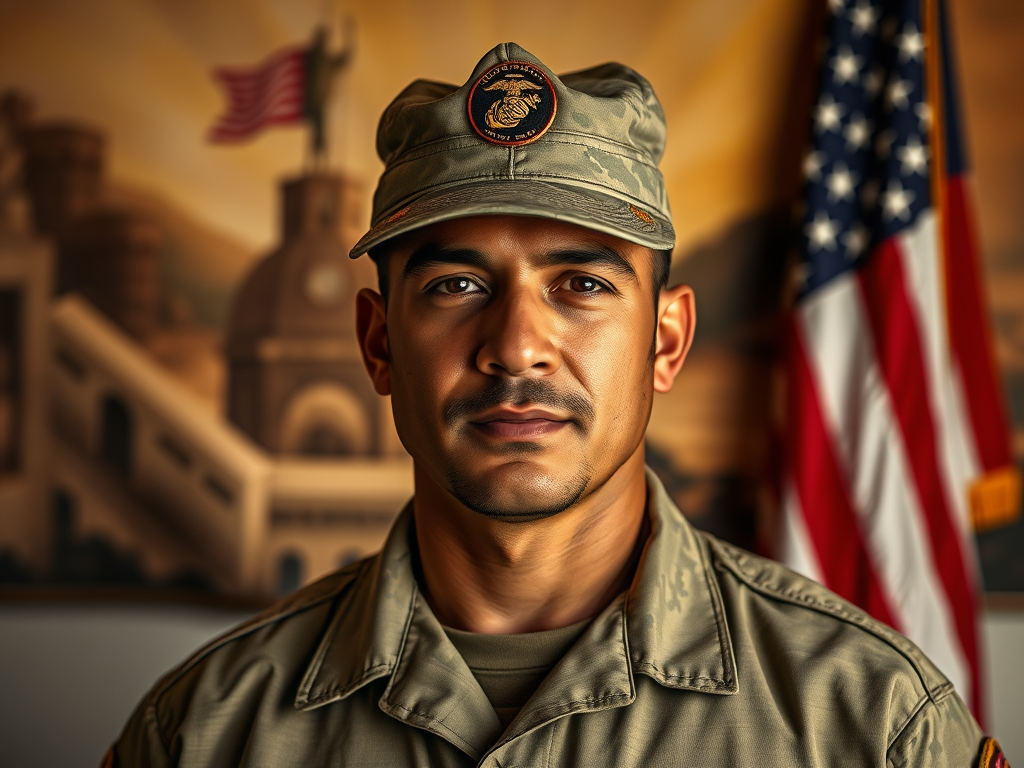
Omar Vasquez had never questioned his place in the United States. He was born in El Paso, Texas, to parents who traced their lineage back generations. His grandfather had fought in World War II. His father served in Vietnam. Omar himself had completed two tours in Iraq as a U.S. Marine. He had a college degree, a steady job, and a home he had just finished paying off.

But none of that mattered the day he was taken.

It happened suddenly, in the middle of an ordinary afternoon. Omar had just stepped out of a coffee shop when unmarked black SUVs screeched to a stop around him. Before he reacted, he was surrounded by men in tactical gear barking orders. Confused, he reached for his wallet to show his ID, but they were already on him. They forced his hands behind his back, zip-tied his wrists, and shoved him into a waiting vehicle. People on the sidewalk froze, watching in stunned silence.

“You got the wrong guy!”

He shouted.

“I’m a U.S. citizen! I was born here!”

His words went unheard.

Inside the detention center, the reality of his situation set in. The holding cells were packed with others—some looking just as confused as he was, others resigned to their fate. He saw fear in their eyes, exhaustion from what must have been days or weeks of uncertainty.

Guards ignored his questions, his demands for a phone call, and his requests to see an attorney. When he finally managed to speak with someone, they told him flatly:

“You’re undocumented. You are being processed for deportation.”

Omar laughed in disbelief.

“You’re joking, right? Check my records. My Social Security number. My military service. Call my family.”

The officer barely looked at him.

“If your family wants to go with you, they can do so. Otherwise, you’ll be deported alone.”

He was handed a packet of papers to sign. The papers were written in Spanish, a language he barely understood beyond a few pleasantries.

“I don’t speak Spanish. I only speak English,”

He said.

The officer raised an eyebrow.

“Sure you do.”

His family arrived with documents. They brought his birth certificate, his passport, his military discharge papers, and even photos of him in uniform. They pleaded, demanded, and argued, but every official they encountered dismissed them, saying the decision had been made.

“Mistakes happen,”

One agent told his mother.

“And mistakes can be corrected. But in this case, the process has already started. You can contest it from the other side.”

“The other side?”

His mother gasped.

“He has no other side. This is his home!”

His father, a quiet man who had seen combat and never flinched, broke down in helpless tears.

Despite everything, Omar was put on a plane.

Destination: Guatemala. It was a country he had never set foot in. He knew no one there. He didn’t speak the language. As the plane lifted, he looked out the window at the land he had fought for. This was the country he had called home his entire life. He wondered how many others had disappeared into this system. They were erased by the stroke of a bureaucratic pen. Their American identity was stripped away by nothing more than suspicion.

How many would ever make it back?

Discovering a Father’s Hidden Letters

GROFF MEDIA 2024© TRUTH ENDURES IMDBPRO

Presented by benandsteve.com By: Benjamin Groff II©s

3–5 minutes

The last of the guests had left. A heavy silence remained, seeming to fill every corner of the house. It had been a long day. Victor placed his hands over his face. He tried to collect himself from everything that had happened in the last few days. His father had passed, and the funeral had brought together friends and family he had not seen in years. Once filled with laughter and conversation, the house now stood eerily silent.

He walked to the refrigerator for a cold glass of water. Something caught his eye—a wooden cigar box atop a cabinet. It was the old kind –– the type that hadn’t been made in years. It was a mystery, a relic from a bygone era. His father must have been holding onto it.

Curious, Victor set his glass on the kitchen table and reached for the box. He found letters bundled with a rubber band as he pried it open. The postmark on the top envelope was dated 1942. He ran his fingers over the stack, noticing the new rubber band. His father had handled these recently.

Victor’s mother, Emily, had passed nearly seven years ago. Since then, his father, Bob, has never been the same. He continued with life, but something had changed—like a light had dimmed.

He carefully removed the band and unfolded the first letter. A small tobacco sack slipped out as he did, landing softly on the table. It felt empty, save for dust. Pushing it aside, Victor began to read.

My Dearest Emily,

Today, we are adrift going “over there.” I don’t know what we will find when or if we wash ashore. Yet, I know one thing—I wish to get back to you more than anything. You are my love, my most faithful and one and only! I promise with all my heart to survive this mission and see you again! I have to make this quick to get to the mail plane before it takes off.

Love, Bob

Letter after letter, Victor saw the same unwavering devotion. His hands trembled as he read the words, feeling the weight of his father’s love and sacrifice. Then, one in particular caught his attention:

My Dearest Emily,

We ran into trouble and had to fight the Japanese in the middle of the ocean. We won. The chiefs say it will be a decisive battle in the war. I certainly hope so. We took losses. Some of my buddies are gone. But I am still here, as I promised you I would be. I love you and can only count the days until this war ends, and I am back home with you. I promise I will never leave your side again once I return!

Love, Bob

Victor looked at the date on the letter and the weight of his father’s words. Could Bob have been in the Battle of Midway? He had never spoken much about his military service. The letters seemed to carry the burden of his unspoken past.

No kid should have to be a killer of another. It is the most horrible thing you can imagine.

Those were the only words his father had ever spoken about the war.

Victor leaned back in his chair, staring at the letters before him. His father had seen horrors he had never spoken of and endured trials he had buried deep. Yet, through it all, the one thing that had kept him going was his profound and unwavering love for Emily.

He suddenly understood why, after her passing, his father had never quite been the same. Bob had kept his promise—he had never left her side. And when Emily was gone, so too, in a way, was Bob.

A lump began to form in Victor’s throat. He had always known his parents’ love was strong, but he had never truly grasped its depth until now. He had a newfound appreciation for the man his father had been. He gently and reverently returned the letters to the cigar box. Each one was a testament to his father’s enduring love.

As he placed the box back on the cabinet, he felt something shift within him. Grief remained, but now it was accompanied by a deep admiration. His father had lived and loved with an intensity few understood.

And finally, after all these years, he was with Emily again.

A Letter From Paul Harvey, To His Grandchildren

GROFF MEDIA 2024© TRUTH ENDURES IMDBPRO

Presented by benandsteve.com By: Benjamin Groff II©

3–4 minutes

I am sharing a writing listed as “Paul Harvey’s Letter To His Grandchildren. It has been tucked away in a drawer. Finally I pulled it out and made use of it.

Paul Harvey was a news commentator for ABC NEWS in the United States and has been heard worldwide. He was known for “The Rest of The Story” and his Noon News Broadcast from the 1960s through the 1990s.. He provided updates well into his elder years, working from home a lot of the time. His son had built a studio in the Harvey Home. This studio allowed him to work as if he were in the News Room. Paul is always dressed in a suit and tie to report the news. Saying he had to look professional to sound professional.

Here is the letter that is attributed to him.

Grandchildren,

We tried so hard to improve our kids’ lives that we made them worse. I’d like better for my grandchildren.

I’d like them to know about hand-me-down clothes, homemade ice cream, and leftover meatloaf sandwiches.

I hope you learn humility by being humiliated and honesty by being cheated.

I hope you learn to make your bed, mow the lawn, and wash the car.

And I hope nobody gives you a brand-new car when you are sixteen.

It will be good if at least one time you can see puppies born. You should also witness your old dog being put to sleep.

I hope you get a black eye fighting for something you believe in.

I hope you have to share a bedroom with your younger brother or sister. It’s all right if you have to draw a line down the middle of the room. But, when he wants to crawl under the covers with you because he’s scared, I hope you let him.

You want to see a movie. If your little brother or sister wants to tag along, I hope you’ll let them.

You must walk uphill to school with your friends and live in a town where you can do it safely.

I hope you don’t ask your driver to drop you two blocks away on rainy days. It would be unfortunate if you didn’t want to be seen riding with someone as uncool as your Mom.

If you want a slingshot, I hope your Dad teaches you how to make one instead of buying one.

I hope you learn to dig in the dirt and read books.

When you learn to use computers, I hope you also learn to add and subtract in your head.

I hope you get teased by your friends when you have your first crush on a boy or girl. When you talk back to your mother, I hope you learn what ivory soap tastes like.

Try to skin your knee climbing a mountain. By accident burn your hand on a stove. Playing around try to you stick your tongue on a frozen flagpole.

I don’t care if you try a beer once. I hope you don’t like it. If a friend offers you dope or a joint, realize they are not your friend.

I sure hope you make time to sit on a porch with your Grandma or grandpa. I also hope you go fishing with your Uncle.

You will feel a mixture of emotions. Sorrow and joy will arise during the holidays at a funeral. You should stop and understand why.

I hope your mother punishes you when you throw a baseball through your neighbor’s window. I also hope she hugs you at Christmas. I hope she kisses you when you give her a plaster mold of your hand.

I wish you tough times and disappointment, hard work, and happiness. To me, these are the only ways to appreciate life!

The End.

Portions of this entry was edited to allow for space and grammar.

Navigating Ethics in Law Enforcement

Groff Media 2024© Truth Endures IMDbPro

Presented by benandsteve.com By: Benjamin Groff II©


4–5 minutes

After completing my training, I got assigned to a two-person unit for part of my shift. Unfortunately, this arrangement led to the exposure of my partner’s extramarital affair with a young woman who worked at a nightclub on the city’s east side. His behavior was hard to ignore. Night after night, he would leave the patrol unit to spend hours inside the club, leaving me alone to monitor radio calls. Each absence grew longer and my frustration deeper.


The city grappled with a surge in burglaries targeting vehicles, garages, homes, and businesses. As crime reports piled up, the department needed to be closer to solving the problem. Sitting in the patrol car logging incidents while my partner dallied at the bar weighed heavily on me. Worse, my delayed response times to calls had begun to draw attention, placing me in a difficult position.

Addressing the issue felt like navigating a minefield. On one hand, I had a duty to uphold the integrity of our patrol duties. On the other, reporting my concerns to a sergeant or lieutenant risked exposing my partner’s personal life, which I preferred to avoid. Going over their heads to the Captain or Major felt equally precarious. However, during my travels to pistol shooting competitions, I established a good rapport with the Chief of Police. I decided to take a chance.


One afternoon, I invited the Chief for coffee to discuss an upcoming qualification event. Once seated, I confessed my more profound concerns. I told him about my partner’s absences, the nightclub, and the woman I suspected was involved. I explained why I had yet to go through the chain of command and emphasized that my primary concern was the integrity of our patrol duties. To my relief, the Chief not only understood but also reassured me that I had made the right choice. His promise to handle the situation discreetly was a weight off my shoulders.


A week later, the schedule was released, and to my disappointment, I again got paired with the same partner. The pattern continued, with him vanishing into the nightclub and leaving me to manage radio calls alone. Frustration mounted, but I stayed focused on my responsibilities.
At the following briefing, Lieutenant Wheeler announced a significant change: I would get assigned to a solo unit. My former partner, now in a solo unit, would no longer work with me. Other patrol officers, except the K9 unit, were paired up. The decision felt like a small but meaningful vindication, a recognition of my commitment to upholding the integrity of our patrol duties.


Working solo was a challenge. Within my first three days, I responded to two fatal calls—more than many officers encounter in a month. However, I was not alone. I appreciated the support of my fellow officers, who often checked in during traffic stops or guided me through the intricacies of field reporting. Their support was a testament to the camaraderie in law enforcement and the importance of teamwork.


One night, around 1:00 AM, I intercepted a burglary alarm call at a sporting goods store. I was close to the location and informed dispatch I would respond. Oddly, my former partner claimed the call, though he was across town. Dispatch redirected him to return to headquarters instead. I only thought of it once I reached the station later.


The pieces fell into place. The Chief observed my partner’s behavior, noting how long his patrol unit lingered at the nightclub each night. The Chief orchestrated a fake alarm call to confirm his suspicions and monitored my partner’s response time. This thorough investigation led to the end of my partner’s career; he resigned the following day.


The aftermath was messy. My former partner left town with the barmaid and her four children, abandoning his wife of many years. She was devastated and began calling the department, requesting me by name to visit her. I got met with her anguish and accusations each time: “Why didn’t you tell me?” At just 21 years old, I struggled to understand why she held me responsible for policing her husband’s fidelity.


While I tried to console her, the experience left a deep impression. It wasn’t just a lesson about personal integrity and the far-reaching consequences of a lack of it. From then on, I made it a point to know my partners better, ensuring they had solid personal ethics or no attachments that could spill into their professional lives.


This early chapter of my career shaped my approach to law enforcement. It reminded me that while we wear a badge to uphold the law, we also carry the weight of trust—not just from the public but from those who depend on us, on and off duty. The importance of personal integrity in law enforcement cannot be overstated. It is not just about following the rules, but about the impact of our actions on the lives of others.

THE GOOD OLE DAYS – When Liquor And Smoking Was Looked Down On In The Church!

A Report By: Benjamin Groff© Groff Media 2024© Truth Endures

Back When It Was Wrong to Drink Alcohol if You Attended Church Regularly**

There was a time in America when attending church wasn’t just a Sunday ritual—it was a statement about your character and standing in the community. The church was not just a place of worship, but a social hub, a moral compass, and a powerful institution that dictated the norms of the society. If you were a regular churchgoer, there were unspoken rules about living outside church walls. Drinking alcohol or smoking cigarettes were two vices that could quickly bring judgment upon you, even if they were as commonplace as breathing for others.

In small towns, everyone knew each other, and word traveled fast. It wasn’t uncommon for whispers to start over something as innocent as being seen at a local diner that served alcohol. If you planned to go out on a Saturday night, you’d carefully choose your venue. Establishments that served soft drinks and burgers were safe zones. But heaven forbid you step into a place with a liquor license, even if you ordered only iced tea. The fear of being seen holding a bottle or sitting too close to someone who did would make you check the room every few minutes, scanning for familiar faces.

If someone from the church spotted you and word got back, there would be consequences. Churchgoers who believed themselves to be the guardians of morality would meet in hushed tones after Sunday service. By the following week, it wasn’t just an isolated incident but a full-blown scandal. Being blackballed from the church community was as much a social exile as a spiritual one. It meant being shunned by your friends, ignored by your neighbors, and excluded from community events. It was a scarlet letter that you wore for all to see.

For many, life revolved around the church. From social gatherings to community support, it was the center of life. If you fell out of favor, you might as well have packed your bags and left town. People would stop coming by your house. Your family would feel isolated, and worse yet, your reputation could be tarnished, so you’d be forever known as “the one who didn’t live right.”

What made it even harder was that many people did drink or smoke, just not publicly. Behind closed doors, whiskey bottles would appear, and cigarettes would be lit, but it was all secret. There was a fine line between private indulgence and public condemnation; walking that line required skill. Even the most upstanding churchgoers knew when to bend the rules to avoid exposure, but there was no forgiveness once caught.

This wasn’t just a rule enforced by the church leaders. It was ingrained in the fabric of the town. Even those who didn’t care much for the church often aligned themselves with its standards because the social costs of defying them were too high. Businesses knew to close down on Sundays, and local events were always planned around the church calendar. People were always watching, and it was the judgment of your peers that carried the actual weight.

But it wasn’t all rigid. A seismic shift was underway. The younger generation, starting in the 1960s and into the ’70s, began to question why the church had such control over their personal lives. They saw the church’s influence as oppressive, and they were determined to break free. Some moved away from the towns, hoping to escape the ever-present watchful eyes. Others rebelled quietly, choosing to live their lives in contrast to the expectations but always careful to avoid getting caught. Those who stayed and fought for change were few and far between, and the weight of tradition bore down on them heavily.

As time went on, the grip loosened, but for those who lived through it, the fear of social disgrace for drinking or smoking stayed with them long after the rules faded.