The Last Five Days

This Story From The Classics. Posted Originally in 2024 it is Reposted this year as part of the best of the best stories benandsteve.com are sharing at years end.
Groff Media 2024© Truth Endures IMDbPro

Presented by benandsteve.com By: Benjamin Groff II©

2–3 minutes

The year was drawing to a close. In the small town of Willow’s End, the final days carried a weight of reflection and anticipation. The air was cold but not bitter. The snow was soft and forgiving. Every storefront on Main Street was adorned with strings of lights that twinkled like tiny stars.

December 27th

Emily wandered through the park, her boots crunching against the frost-bitten ground. She carried a notebook. Its pages brimmed with half-written resolutions. They held sketches of dreams she hoped to realize in the coming year. Her golden retriever, Milo, bounded ahead, his tail wagging like a metronome. 

The park was quiet, save for the sound of distant laughter from the skating rink.

Emily paused by the frozen pond, watching the skaters glide effortlessly across the ice. 

She scribbled in her notebook: 

Be brave enough to try something new.

December 28th

The morning dawned with a vibrant sunrise, streaks of orange and pink painting the horizon. Friends and families gathered for breakfast at the local diner, sharing stories of their year. Old Mr. Harper, the town’s unofficial historian, sat by the window, regaling a group of children with tales of Willow’s End’s founding.

Emily listened from a nearby booth, smiling to herself. Inspired, she jotted another resolution:

 Learn the stories of those who came before me.

December 29th

The storm arrived unexpectedly, blanketing the town with fresh snow. Emily stayed indoors, wrapping herself in a quilt by the fireplace. She reread letters from old friends, rediscovering the warmth in their words.

Milo lay at her feet, snoring softly. The snowstorm felt like a pause, a chance to breathe before the year’s end. In her notebook, she wrote: 

Reconnect with those who matter most.

December 30th

By morning, the storm had passed, leaving the town glistening under the winter sun. Emily joined the townsfolk in clearing sidewalks and helping neighbors dig out their cars. Laughter echoed as children built snowmen and adults exchanged cups of steaming cocoa.

As Emily shoveled, she realized how connected the community felt in such moments. That evening, she added another note to her resolutions: 

Be an active part of something bigger than myself.

December 31st

The year’s final day arrived, bringing a mix of celebration and introspection. The town square rang with energy as the community readied for the annual New Year’s Eve bonfire.

Emily stood among the crowd, her notebook tucked safely in her coat pocket. When the clock struck midnight, fireworks began exploding, painting the sky with bursts of color. Cheers and laughter filled the air. 

Emily closed her eyes and whispered her final resolution: 

Embrace the unknown with hope.

The last five days of the year hadn’t been filled with grand adventures. There weren’t dramatic changes. Yet, they had been quietly transformative. As Emily walked home under the starlit sky, she felt ready for the year ahead. She was also prepared for whatever life had in store.

The Last Seven Days

This Story Is A Reposted Story From The Classics Files For The Best Of The Best As Counted Down in 2024

Groff Media 2024© Truth Endures IMDbPro

Presented by benandsteve.com By: Benjamin Groff II©

2–4 minutes

John’s eyes fluttered open, the sterile white ceiling of the hospital room coming into focus. His head throbbed, and he felt disoriented. He overheard two doctors talking outside his room as he tried to piece together what had happened.

“Only seven days left,” one of them said. “We need to make sure everything is in order.”

John’s heart sank. Seven days left? He must be dying. Panic surged through him as he realized he had only a week to live. But instead of succumbing to fear, a fierce determination took hold. He couldn’t stay in the hospital; he had to escape and make the most of his remaining time.

Ignoring the pain in his head, John began to formulate a plan. He waited until the nurses changed shifts, then quietly slipped out of bed. John found a set of scrubs in a nearby closet and put them on, hoping to blend in. With his heart pounding, he made his way down the hallway, avoiding eye contact with anyone who would recognize him.

As he reached the exit, a nurse called out to him.

“Excuse me, sir, where are you going?”

John’s mind raced.

“I… I need some fresh air,”

he stammered.

The nurse frowned but didn’t pursue him. John pushed open the door and stepped into the cold winter air. He had made it out, but now what? He had no money, phone, or idea where to go.

John was determined to make the most of his final days. He wandered the city and visited places he had always wanted to see. He watched the sunrise from the top of a hill, the sky ablaze with colors. He fed the ducks at the park, their quacks a symphony of nature. And he even ate a fancy dinner by sneaking into a high-end restaurant, savoring every bite.

As the days passed, John felt a strange sense of peace. He had lived more in those few days than he had in years. On the seventh day, he found himself back at the hospital, drawn by a need for closure.

He walked through the doors and was instantly recognized by a nurse. “John! We’ve been looking for you everywhere. You need to be in bed; your head wound is serious.”

John sighed and allowed himself to get led back to his room. As he lay in bed, he overheard the doctors talking again.

“Only one day left,”

one of them said.

“I can’t believe the year is almost over.”

John’s eyes widened in realization. They talked about the end of the year, not his life. Relief, pure and unadulterated, washed over him, followed by a wave of exhaustion. He had been running from a misunderstanding, and now he was free.

As the clock struck midnight, John smiled to himself. He had a new lease on life and a newfound appreciation for every moment. He vowed to live each day with the same passion and urgency he had felt during those seven days. He understood that life was too precious to waste. His experience had transformed him, filling him with hope and a deep appreciation for the gift of life.

The Christmas Bells of Valley Brook

Groff Media 2024© Truth Endures IMDbPro

Presented by benandsteve.com By: Benjamin Groff II©

3–4 minutes

Every Christmas Eve, the quiet village of Valley Brook transformed into a magical tableau. As snow blanketed the streets, an ethereal ringing of bells echoed through the valley. The sound was sweet and haunting, like a melody from another world. The villagers marveled at the phenomenon for decades, yet no one knew where the bells came from.

The mystery was part of Valley Brook’s charm. Some claimed the bells were angels’ gifts, while others swore they were the spirits of Christmases past. But to Ethan, a curious young man with a heart full of wonder, the mystery demanded answers.

Ethan had lived in Valley Brook his entire life. Each Christmas, he stood at the frozen brook’s edge. He strained to hear even the faintest hint of the bells’ origin. Now 19 and filled with determination, Ethan resolved that this year would be different.

On Christmas Eve, armed with a lantern and his father’s old compass, Ethan entered the night. The air was crisp, and the snow crunched beneath his boots. As the bells began their enchanting tune, he paused to listen.

“North,” he whispered to himself, turning toward the sound.

The first stretch of his journey led him to the forest bordering the village. The tall pines were heavy with snow, their branches arching over him like cathedral ceilings. The bells grew louder as he walked deeper into the woods. Then, they seemed to shift direction, drawing him toward the hills.

Ethan climbed steadily, his lantern casting long shadows against the rocks. At the top of the hill, he paused to catch his breath. The bells sounded closer now, but their source still eluded him. His compass needle jittered as if caught in some unseen magnetic pull.

After the sound, Ethan descended into a hidden ravine. At the bottom, he discovered an ancient stone bridge, its surface worn smooth by time. Beneath it, the brook that gave the village its name flowed silently, its surface coated in thin ice. Ethan crouched and pressed his ear to the stones. The bells resonated through the bridge itself.

“This must be it!”

he exclaimed, but as soon as the thought formed, the melody shifted again, beckoning him onward.

Ethan continued his pursuit for hours, weaving through snow-covered meadows and icy trails. Finally, the first light of Christmas morning touched the horizon. He arrived at the mouth of a cavern nestled in the cliffs at the valley’s edge.

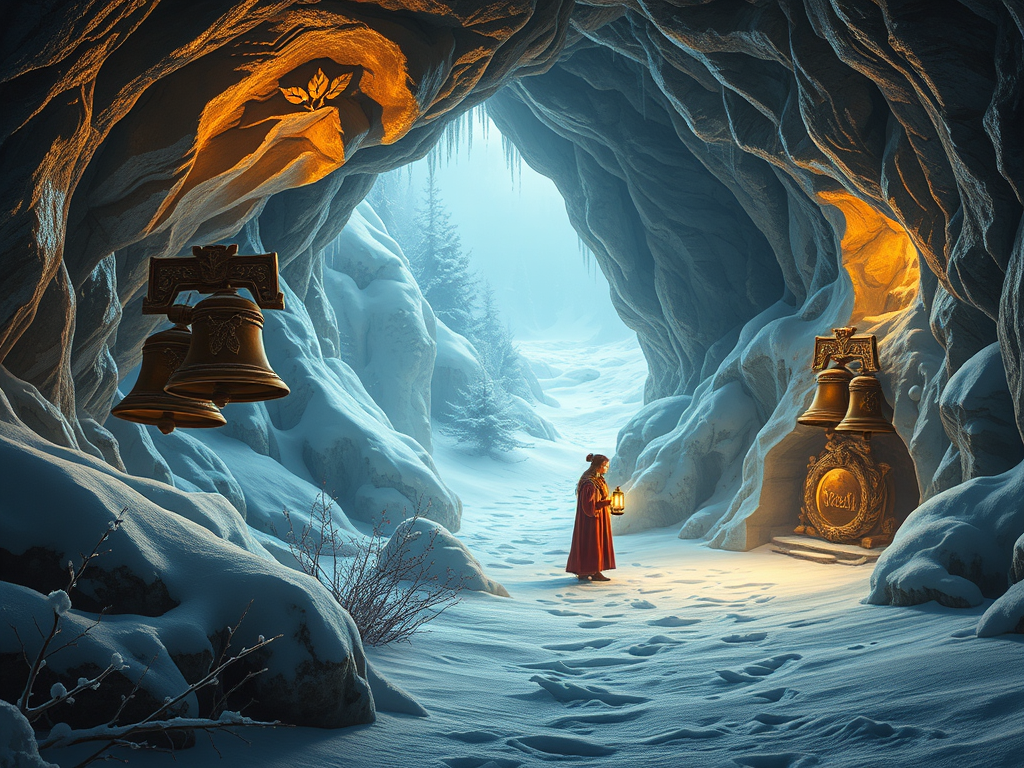
Inside, the bells chimed more clearly than ever. He entered cautiously, the glow of his lantern illuminating crystalline walls that shimmered like diamonds. He found them at the cavern’s heart. Rows of bronze bells were suspended in midair. Their surfaces were adorned with intricate carvings of holly and ivy.

Ethan approached in awe, reaching out to touch one of the bells. When his fingers brushed the metal, a warm light enveloped the cavern. A figure appeared—a woman in flowing robes, her face serene and timeless.

“Who are you?”

Ethan asked, his voice trembling.

“I am the Keeper of the Bells,”

she replied.

“These bells have rung for centuries to remind Valley Brook of the spirit of Christmas—hope, love, and unity. Only those who seek their origin with a pure heart will find them.”

“Why me?” 

Ethan whispered.

“Because you dared to wonder,”

 she said with a smile.

“Now, you must decide: will you keep their secret or share their magic with the world?”

Ethan thought of his village and how the bells brought everyone together each Christmas. Their mystery was part of what made them special. He nodded.

“I’ll keep the secret.”

The Keeper’s smile widened.

“Then the bells will continue to ring, their magic preserved for all who believe.”

When Ethan returned to Valley Brook, the bells still rang as they always had, their melody echoing through the valley. But now, when he stood at the edge of the brook, he smiled. He knew he was part of their timeless magic. He was a secret keeper of the Christmas Bells of Valley Brook.

The Guardians of Christmas Eve

Groff Media 2024© Truth Endures IMDbPro

Presented by benandsteve.com By: Benjamin Groff II©

3–4 minutes

In the heart of the bustling city, the frigid December air carried the soft hum of holiday cheer. Festive lights adorned streetlamps, casting warm glows onto the snow-dusted streets. For the officers of the 8th Precinct, Christmas Eve was far from quiet. Calls came in relentlessly: domestic disputes, stranded travelers, and even a wayward reindeer reported near the city park. These dedicated officers were on duty, ready to serve and protect.

What the officers didn’t know was that they had three spectral protectors watching over them—The Guardians of Christmas Eve.

Each of these ghostly policemen had once served the city. They were bound by duty. A deep sense of loyalty held their spirits. They lingered to make sure that no harm would come to those who now walked the beat.


Inspector Miles Hanley

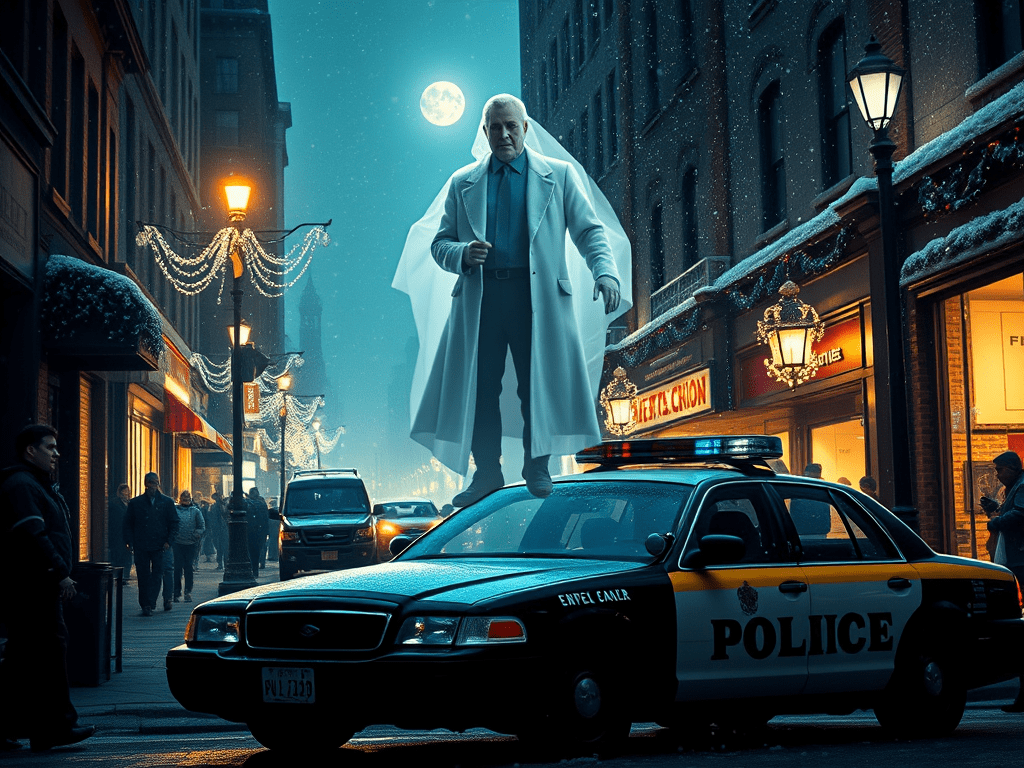
Miles Hanley was a tall and imposing figure. He had been the precinct’s first chief when the station was founded in the late 1800s. Known for his wisdom, he fiercely protected his officers. He carried his ghostly silver pocket watch. He used it to guide the others through the city. On this night, Hanley floated above a lone patrol car. It was parked at the edge of a dark alley. His translucent form shimmered in the moonlight.

“Johnson’s heading into a bad spot,”

Hanley muttered, watching the young officer approach a shadowy figure rummaging through garbage bins. With a flick of his watch, he whispered through the veil of time, nudging Johnson’s instincts. The officer hesitated, then called for backup—averting a potential ambush. Hanley grinned.

“Still got it.”


Officer Rosie McKinney

Rosie, affectionately called “Mama Mac” by her peers, had patrolled the city during the 1940s. She had an uncanny knack for reading people, even in death. Tonight, she hovered near a busy intersection where Officer Emily Torres was directing traffic midst a chaotic pile-up.

“Stay sharp, Emily,”

Rosie murmured, spotting a distracted driver barreling toward the scene. With a wave of her ethereal baton, she sent a gust of icy wind straight into the driver’s face. The man slammed on his brakes just in time, his car skidding to a halt inches from the officer. Rosie chuckled, tipping her ghostly hat. “That’s one less hospital visit tonight.”


Detective Lou Vargas

Lou had been a beloved detective in the 1970s, known for his quick wit and unshakable resolve. He now roamed the precinct’s cold case archives, whispering clues to frustrated officers. But tonight, Lou focused on Officer Brandon Lee. Officer Lee had just been called to investigate a suspicious package left near a crowded shopping district.

As Brandon approached the package, Lou materialized briefly behind him, a shadowy whisper in the winter night. “Check the wires, kid. Look left before you kneel.” Obeying the faint warning in his gut, Brandon discovered the package was harmless—a forgotten Christmas gift. Still, he felt the hairs on his neck stand like someone had been there with him.


A Christmas Morning Promise

As dawn broke over the city, the officers returned to the precinct, exhausted but safe. Unseen by human eyes, Miles, Rosie, and Lou gathered on the station’s rooftop, gazing at the snow-covered streets below.

“We did good,”

Lou said, leaning on his ghostly cane.

“Not a single officer lost,” Rosie added softly.

Miles held up his pocket watch, the spectral clock hands freezing as the sun rose. “Until next year,” he said, and the three faded into the morning mist.

Below, Officer Torres rubbed her arms against the chill. “Did you feel that?” she asked Officer Lee.

“Yeah,” he replied, staring at the horizon. “Like someone was watching over us.”

And so they were.

The Wound That Would Not Heal

By Benjamin GroffMedia© | benandsteve.com | ©2025 

3–5 minutes

In a quiet town where truth was inconvenient and denial came easily, a single gunshot fractured reality itself. A woman vanished, a neighbor unraveled, and time began to twist like a crooked dream. Somewhere between rumor and retribution, between silence and scream, lies a story where justice does not knock… it whispers — and waits.

No one remembers precisely when the truth first slipped away. They only knew it had happened quietly. It occurred somewhere between the gunshot and the bandage.

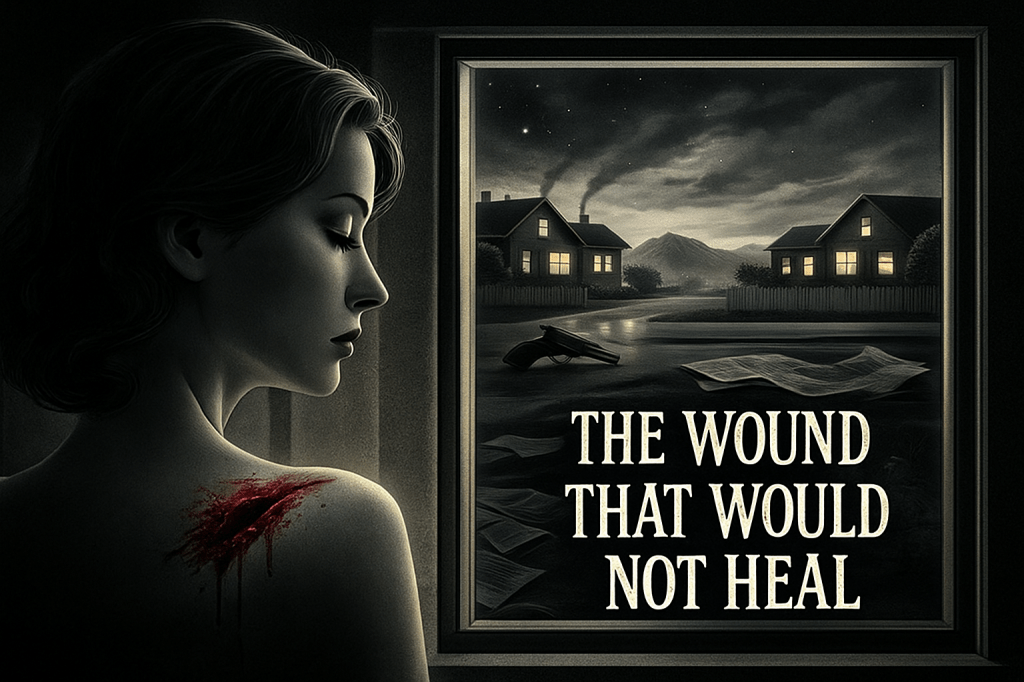
Mara Ellison had lived beside Harold Pike for seven years without incident. They exchanged polite nods, sometimes a forced smile across the narrow strip of gravel separating their properties. So when the bullet tore into her foot one late afternoon — fired inexplicably from Harold’s back porch — she assumed the world would respond with reason.

It did not.

The police arrived within minutes, yet their questions drifted strangely away from the obvious. Why had she been standing there? Had she provoked him? Were there prior disagreements she had neglected to mention? Harold, calm and unsettlingly sincere, claimed the gun had “gone off on its own.” Soon, the incident was reclassified as an unfortunate misunderstanding.

Mara limped through the next weeks on swelling and disbelief. Her foot healed slowly. But the real pain settled elsewhere. It lingered in the way neighbors crossed the street to avoid her. It was noticeable in the whispers that followed her like dust. She was suddenly labeled unstable. Dramatic. A troublemaker.

She filed complaints. She documented every detail.

Each report vanished like breath on cold glass.

Harold began mowing his yard at odd hours, staring straight ahead, humming tunelessly as though nothing had happened. His friends brought casseroles. People clapped him on the back. Someone even hung a banner on his fence that read:

WE STAND WITH HAROLD.

Mara woke one morning to discover a court summons slid beneath her door. Harold claimed she had injured herself deliberately. He said it was to ruin his reputation.

The town agreed.

Reality itself began to warp. The scar on her foot throbbed while local newsletters praised Harold for his patience and “strength of character.” A small feature in the paper framed Mara as a disturbed woman seeking attention. Her own name felt foreign in print, warped by accusation.

Street signs near her home began to shift. Directions pointed nowhere. Familiar shops closed overnight. Conversations dissolved mid-sentence when she approached.

One night, she saw herself on the evening news. She looked laughing, cheerful, and perfectly fine. In reality, she sat alone. She stared at the bandage that never quite came off.

The bullet wound refused to disappear.

Nor did the silence that followed everyone’s denial of it.

On the final day anyone heard from her, Mara stood before the cracked mirror of her hallway. She whispered,

“If the world insists I am wrong, then what am I supposed to become?”

Outside, Harold watered his flowers with careful devotion.

Inside, Mara stepped into a reality no longer willing to recognize her. She vanished into a story written by others. This story never spoke the truth. Yet it was repeated loudly enough to become law.

Some said the house stood empty.

Others swore that if you passed it at dusk, you hear the faint echo of limping footsteps. They claimed to hear a voice pleading, again and again, to simply be believed.

Harold, meanwhile, withdrew mysteriously from society after Mara disappeared. He became a recluse, a shadow of the man the town once defended so fiercely.

Mara, in time, became folklore — “the woman no one believed.” Some claimed she had simply self-immolated. Others said she cried herself into nothing. A few insisted they saw her walking away from her home. She moved slowly toward the setting sun. She never once looked back.

Then, exactly ten years to the day of Mara’s shooting, Harold was found dead.

His body bore the evidence of prolonged torment . — Gunshot wounds in both feet, knees, hips, abdomen, hands, elbows, and upper arms. Each injury, save for the final one, had healed. The coroner confirmed a chilling pattern: Harold had been shot, treated, allowed to recover ––and shot again. Repeatedly, over the span of a decade.

The final bullet entered the right side of his head.

Nearby, written in a trembling hand, were the words:
“I can’t take it anymore.”

Had Harold been punishing himself for the truth he buried?
Had Mara’s spirit delivered a slow and deliberate reckoning?
Or had she never left at all — only waited?

Silence and shadows enveloped the town. It learned a lesson far too late: When truth is denied long enough, it finds other ways to speak.


By Benjamin GroffMedia© | benandsteve.com | ©2025 

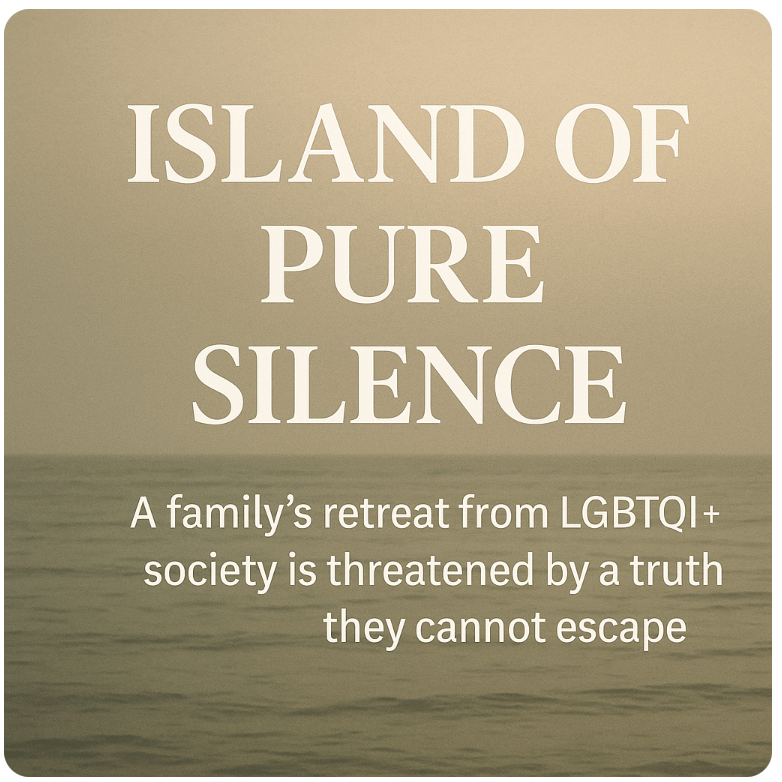
Island of Pure Silence – The Couldn’t Breed It Out

By Benjamin GroffMedia© | benandsteve.com | ©2025 

3–4 minutes

They called it Eden’s Key — though nothing about what came next resembled paradise.

Five families pooled their fortunes to buy a remote private island. They were unrelated and united only by ideology. The island is miles from any shipping lane. Their goal was singular and chilling. They wanted to build a bloodline so ‘pure’ it would never produce what they considered deviation. This included homosexuality, bisexuality, transgender identity, or anything that threatened their narrow vision of human perfection.

These pilgrims to the island had checked and rechecked each other’s families. There had been no known, reported, or openly known LGBTQI+ members in any of the families. There had also been no mental healthcare admissions involving anyone belonging to the family trees going to the island. There would have been seven families in total but two families didn’t pass the bloodline background. The group was made up of a doctor, chemist, preacher, farmer, carpenter, and a dentist. The plan was for each profession and trade to pass these skills to children. Children who were to be born into families on the island.

They constructed homes of pale stone and imported perfect soil for perfect gardens. Children were raised with strict doctrine. They were taught that love came only in prescribed forms. Anything else was seen as a contamination from a broken world.

And for the first generation, it appeared to work.

The island thrived. Crops grew. Marriages were arranged. Babies were born. And the elders congratulated one another on their success, believing they had outwitted nature itself.

But nature is patient.

Subtle fractures began to surface by the time the third generation came of age. There were lingering glances. Forbidden letters were exchanged. Hands brushed too long in passing. Whispers floated through palm-lined walkways. A daughter cried in secret over feelings she did not understand. A son locked himself in his room for hours. He stared at the ocean, hoping it can answer questions no one else can.

The Council called it sickness.

They tightened rules. Curfews sharpened. Surveillance increased. Shame became the island’s true currency.

Each new generation revealed an undeniable truth. The same percentage of LGBTQI+ identities emerged as existed beyond their shores. The very diversity they sought to erase bloomed organically within their controlled experiment.

The elders gathered in panic, pouring over family trees and blood records, searching for a contaminant that did not exist. The realization crept in slowly and bitterly — they had not escaped the world. They had recreated it.

And worse, they had bred it themselves.

Years later, a young woman named Elia stood on the highest ridge of the island. She held the hand of another girl. Both were trembling. Both were defiant. They were not sick. They were not broken. They were simply human. The ocean wind tangled their hair as the sounds of distant arguments echoed below.

“We were never the disease,” Elia whispered. “Fear was.”

When the first boats began to arrive — outsiders, journalists, doctors, activists — the island’s mythology unraveled. The story of Eden’s Key became a caution whispered across the world. It reminds us that identity can’t be engineered out of humanity.

The families who once prized isolation now faced the same reckoning their ancestors had tried so desperately to avoid.

And from the ruins of control rose a new truth, written not in doctrine but in courage:

You can’t uproot what lives in the soul.

Somewhere on that windswept island, between salt air and forgiveness, a generation finally chose love over fear. In doing so, they found a freedom their founders never imagined possible.


By Benjamin GroffMedia© | benandsteve.com | ©2025 

“Buying Warner Bros: The GoFundMe Heard ’Round the World”

2–3 minutes

by Benjamin Groff II – this is a fictional story. It was created by the space in my head. In this space, various ideas loom when I read news articles. This makes them more enjoyable.


A GOFUNDME to buy Warner Brothers?

It started as a joke. It was one of those offhand remarks tossed out online. You’ve had just enough coffee and cable-news frustration to believe you do better than a billion-dollar studio.

“Why don’t we just buy Warner Bros.?” I said. “We’ll start a GoFundMe.”

Within minutes, the idea took on a life of its own. A few shares, a few memes, and by nightfall, the campaign had raised $437.17 — most of it from people who thought they were donating to rescue Bugs Bunny.

Of course, the real Warner Bros. — now a corporate hydra known as Warner Bros. Discovery — is valued somewhere north of $20 billion, give or take a Batman sequel. That means we’d need approximately 500 million people donating $40 each to make an offer. A few folks online said that it was doable “if we all skipped Starbucks for a month.”

I’m not saying I was confident, but I did start designing logos: “People’s Pictures Presents…” and “A Groff–Swint Production.” I figured we’d restore Saturday morning cartoons. We would bring back The Bugs Bunny/Road Runner Show. We should stop rebooting the same superhero franchise every six months.

Within days, the comments on the GoFundMe page turned into a movement. Someone pledged $10 and demanded we greenlight Smokey and the Bandit 2: The Electric Pontiac. Another offered $25 “if y’all promise to fire whoever keeps canceling good shows after one season.”

The campaign hit $3,000. Then I got my first call from a lawyer. Apparently, corporate takeovers by crowdfunding are “not standard procedure.” I told him, “Neither is releasing Space Jam 2, but that didn’t stop you.”

Before long, our story went viral. CNN called it “the most optimistic hostile takeover in entertainment history.” One late-night host joked that Americans had finally united. They did not unite to choose a president. Instead, they united to save Looney Tunes.

We never got close to $20 billion. We didn’t even reach the amount needed for one Warner Bros. parking pass. But something magical happened. Fans from around the world flooded the comments. They shared memories of Saturday morning cereal and cartoons that made them laugh before school. For a moment, it wasn’t about money. It was about taking back a piece of joy that corporations can’t own.

So no, we didn’t buy Warner Bros. But in a way, we did something better. We reminded the world who really owns the stories. They are owned by the people who remember them.

As for me, I left the GoFundMe page up. In case Elon or Oprah feels nostalgic.

Still I have a question. If Fans Owned Hollywood — What Would Change First?


By Benjamin GroffMedia© | benandsteve.com | ©2025 

🩸 The Making of a Nightmare

When Progress Buried the Past Beneath Big Canyon Lake

By Benjamin Groff II | The Story Teller – benandsteve.com.

3–5 minutes

As The Story Goes –––

No one had seriously thought it would be real. They all thought what they were doing would be forgotten in only a few weeks. But what followed would go on, and on, and on. And not even those with the worst of intentions have predicted the outcome.

It was the summer of 1941, and spring had brought heavy rains to the Big Canyon, flooding the valley below. The farmers had not yet seen the completion of the WPA projects. These projects began in the late 1930s across most of the country. With those projects came new schools, highways, bridges, and community centers. The last of the projects here was the shoring up of valleys. This involved building dams to control runoff waters from creeks, rivers, and streams. When the heavy rains came, the floods were tamed through a spillway cut deep into the earth.

Now that summer was upon them, workers from the CCC and WPA joined forces. They were building what would be known as the Big Canyon Watershed Project. They used mules and draft horses. With these animals, they pulled wedges and plows. The team cleared the valley floor that would soon disappear beneath the rising water. Every blow of an axe and every groan of timber was heard in the thick air. These sounds seemed to signify progress—or so they thought.

The men bunked in rough-hewn cabins and ate in a mess hall that smelled of kerosene and sweat. They joked about ghosts that will one day swim through the drowned cottonwoods or the abandoned family homesteads. But there was one homestead no one wanted to talk about—the Miller place.


The Miller Mystery

The Millers had lived at the base of the canyon for as long as anyone remember. Their house sat crooked beside a spring-fed creek that never dried, even in the harshest drought. Locals said the spring was sacred to the Washita people long before white settlers arrived. When the government bought out the land for the dam, every family took the offered payment—except the Millers.

Old Henry Miller refused to leave. “This land don’t belong to the government,” he told the surveyors. “It don’t even belong to me. It belongs to the water, and she’ll take it back when she’s good and ready.”

They said he vanished one night in late October, just before the final clearing began. The official report listed him as relocated. But the men who worked the next week swore. They heard hammering at night. They saw a lantern flickering deep in the canyon where the Miller house had stood.

When the first rains came that winter, the spillway gates were opened. The lake began to rise. Within days, the Miller place—and whatever was left of it—was gone.


The Haunting of Big Canyon Lake

By the next summer, Big Canyon Lake became a local attraction. Families came from nearby towns to picnic along the shore and marvel at the engineering wonder. Fishermen swore the lake was bottomless. Divers who dared to explore near the old creek bed spoke of hearing faint knocking under the water. It sounded as if someone were still hammering boards together.

A maintenance crew was at the spillway in 1947. They were inspecting it by draining part of the spillway. During the inspection, they found something jammed in one of the lower gates. It was a section of cabin timber—weathered, darkened, with three hand-carved letters burned into it: H. M.

The lake was drained once more in the drought of 1954. When it receded far enough, the foundation of the old Miller place appeared, blackened but intact. And at its center, where the spring once bubbled up, was a hole—dark, deep, and breathing.

No one went near it. The Army Corps sealed the area, and within weeks, the water rose again.


The Nightmare Endures

Locals say Big Canyon Lake is cursed. On calm nights, when the moon hangs over the still water, you can see a lantern light. It flickers beneath the surface. Fishermen have reported hearing someone tapping on their boats, like a muffled warning.

The government calls it folklore.
The people who live nearby call it memory.

As for the Miller land, they say the water finally took it back. It also took the man who tried to keep it.


© Benjamin H. Groff II — Truth Endures / benandsteve.com

The Howard Family Intervention: When the All-American Dream Met the Algorithm

By Benjamin GroffMedia© | benandsteve.com | ©2025 

4–5 minutes

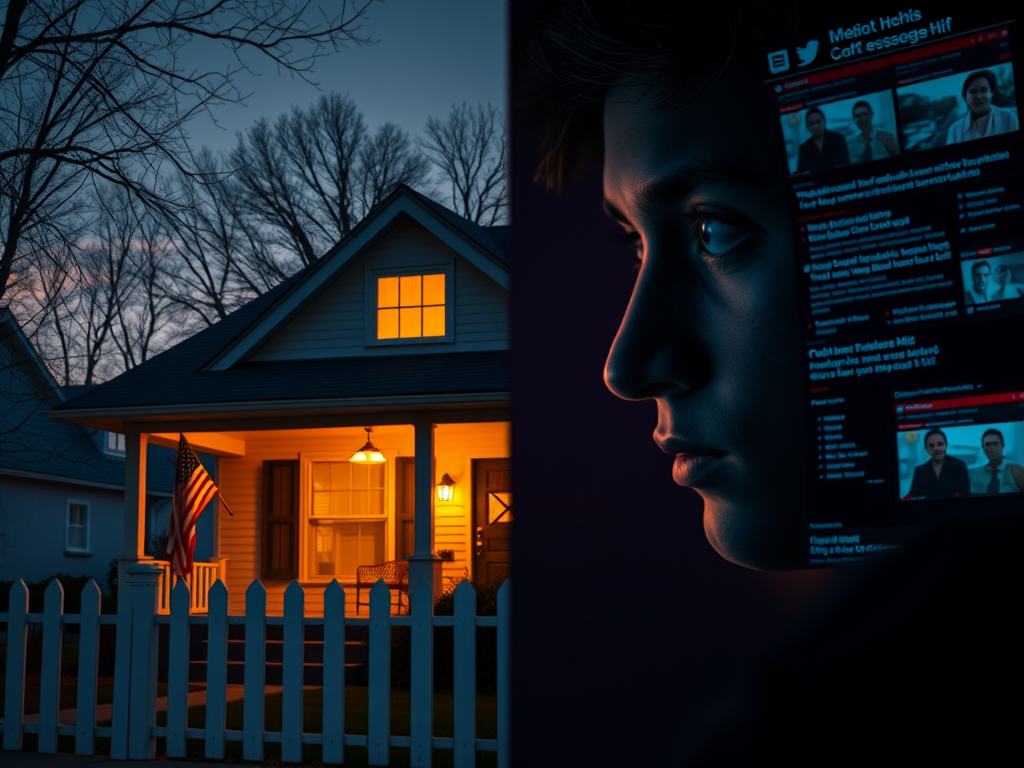
The Howard family always seemed so functional to their neighbors in Bessieville. Their home glowed warmly in the evenings. The paint was always fresh, the hedges trimmed. To the outside world, the Howard’s — Frank, Lois, and their three boys — were the picture of American perfection.

Frank Howard worked as a supervisor at the local airplane plant. Lois split her time between home and the grocery store checkout. Their sons, Mark, Tim, and John, were the type of kids people admired. Others often said, “Now there’s a good family.”

So when Lois stumbled across the box in John’s room, she felt her stomach drop. Inside were pamphlets, flyers, and web printouts — literature no parent ever expects to find.

Frank walked in just as she was holding one, her hand trembling.
“Ann,” he said, “what’s going on?”

“I—I hope this is for a school paper,” she stammered. “I don’t know why he’d have this stuff. There’s so much of it!

Frank thumbed through the stack. “Holy hell. Does he even know what this thing does to people? We raised him better than this.”

Moments later, Mark dropped by to visit. Seeing his parents in his brother’s room, he asked, “What’s up? You two look like you just found a body.”

Ann handed him a pamphlet. Mark’s eyes widened.
“Where’s he get this? Do you think he’s…?”

Both parents answered in unison: “No! God no!”

Before they speculate further, Frank’s phone buzzed. It was their middle son, Tim.
“Hey Pop, I’ve been calling the house — Ma not answering again? Everything okay?”

Frank hesitated. “We just have… a situation. Did you ever notice your brother getting into anything strange lately?”

Tim laughed. “What’d he do, join a cult?”

Ann shouted from across the room: “Yes! That’s exactly what it looks like!”

Within the hour, Tim was racing home. A few fraternity brothers were in tow. He called them his “Frat-Team.”

When they arrived, Frank showed them the contents of the box. One of the frat boys, a computer science major, said, “Let’s check his laptop.” Within minutes, they uncovered a disturbing digital trail. When they turned the screen toward Frank, he muttered, “I need a drink.”

By now, the grandparents had arrived. The house was full. They decided to wait for John’s return, convinced they “save” him from whatever this was.

At 8:30 sharp, the back door creaked open.
“Hey,” John said, stepping inside. “What’s with all the cars? Mom selling Tupperware again?”

“Sit in the yellow chair,” Frank said. His voice left no room for argument. “And don’t say a word.”

John sat, confused.
“Son,” Lois began, “are you… flirting around with extremists?”

John blinked. “What? Ma, I don’t think so.”

Frank held up one of the pamphlets. “Then what’s this?”

Suddenly, John’s tone hardened. His face twisted with anger.
“You people are blind! You sit here preaching love and tolerance while the country rots from the inside out. You call it compassion — I call it weakness!”

The room fell silent.

Grandpa Howard stood, slapped his knee, and gasped.
“My God — he’s a conservative!

Grandma wailed, “Frank! Ann! You’ve got yourselves a Republican!”

Mark leaned back in his wheelchair, groaning. “It’s worse. He’s been indoctrinated. He’s deep into it — the algorithms, the podcasts, the memes…”

Ann sobbed. “How did this happen? We raised him right. We had PBS, not Fox!”

Frank gritted his teeth. “We can fix this. There’s a camp that reverses it. Teaches kids empathy again.”

The frat boys nodded. “Or we can bring him to a few Pride Parades,” one said. “Exposure therapy.”

That’s when John exploded. He cursed his family. He hurled coasters across the room. He shouted about “real patriots” and “fighting the deep state.”

No one noticed the faint red light blinking on one frat boy’s phone. They’d been recording the whole scene.

Moments later, two uniformed officers stepped inside — Toby and Rex. Toby, a family friend, looked bewildered.
“Good Lord, what’s going on here? Is he possessed?

Rex shook his head solemnly. “No. I’ve seen it before. Same thing happened to my parents. They started watching those ‘news’ streams online. By Thanksgiving, they were threatening to burn our pronoun mugs.”

Ann gasped. “Oh sweet Jesus.”

Frank turned toward his son, voice trembling between rage and heartbreak.
“John, listen to me. We can still get you back. But we have to act now. Before it’s too late.”

John sneered. “Too late for what? To stop me from voting?”

And with that, he stormed out the door, leaving the room in stunned silence.

Grandpa finally muttered, “Well, guess the boy’s all grown up now.”

The family sat frozen — the hum of the refrigerator filling the void where laughter used to live.

In the background the local television news reported bloody attacks on black students leaving a GED Class that evening. The suspects identified as young white males. Who used Molotov cocktails yelling white power and God chooses a white America as they escaped on bicycles.

Outside, the streetlight flickered over the Howards’ perfect little home. It was still warm and still well-kept. Now, forever, it is just a little bit haunted.


© Benjamin H. Groff II — Truth Endures / benandsteve.com

Detective Roff’s Unusual Suspect: The Furry Bandit

3–5 minutes

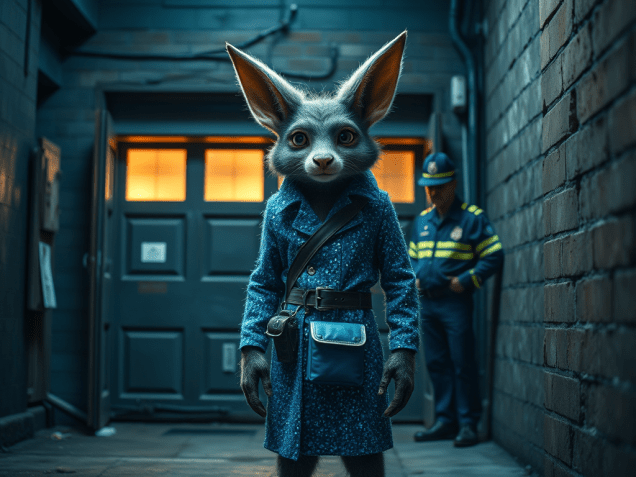
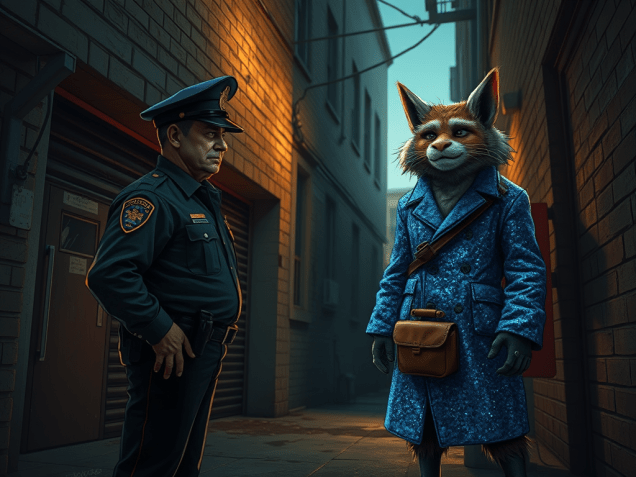
Surveying the town, the Detective realized he was facing a unique challenge. His task was to apprehend the suspect responsible for the laundry mat break-in. Some witnesses described the suspect as an unusual figure. He towered at 6’5 and had distinctive pointy ears. His face was furry.

Wanda, the laundry mat attendant, was first to be interviewed by Detective Jim Roff. She told him the suspect had furry knuckles, too. She had watched through the office’s one-way mirror. He pried open washing machines’ coin boxes. Then, he filled a pouch in his front coat pocket. A coat, she said, was very blue and sparkly.

Merle was standing on the sidewalk outside. He was picking up cigarette butts along the walkway. He said the thief bumped into him while making his getaway. A few of the coins managed to roll down into the parking lot, where Merle had captured them.

“Fifty cents,”

Merle said.

Detective Roff asked Merle if he knew the person who had broken into the machines. Merle told the Detective that the suspect was known on the streets as Carpet Face.

Merle told the Detective,

“The dude used to work for a local carpet layer.” He got right down to his face, stretching the carpet across the floor. They called him Carpet Face. But I don’t think that is why he was named Carpet Face.”

The Detective asked out loud,

“Then why did he have such a furry appearance?”

A doctor who had seen the incident spoke up,

“It’s because of his genes.”

Detective Roff replied,

“His Blue Jeans?”

The Doctor laughed,

“No, his g-e-n-e-s”. “

“Oh,”

Roff said,

My bad.”

“That is ok, he should have been nicknamed Furboy. His real name is Lickery Nickery. He lives on the south side of town. His home is in an alleyway near an old garage. This garage is falling off Hickery Street.”

Doctor Badd, sadly proclaimed, Dr. Badd listed in the phone book as ‘Badd Doctor,’ played a significant role in the case. He informed the Detective that he had been discreetly treating Nickery, attempting to help him achieve a more conventional appearance. Yet, all his efforts with various medications had been in vain.

Detective Roff got into his police car and drove to the area where Nickery was supposed to live. Sure enough, there stood the suspect. Tall, furry, and stirring outside an old garage in an alleyway. Nickery still had a pouch attached to his waist just below a bright blue coat. As the Detective approached, Nickery stood in an offensive position. Detective Ross had brought Dr. Badd with him. This was in case medical attention was required. It would be needed as a result of the pending arrest of either the suspect or the Detective.

Nickery almost instantly stood ready for the capture. He told the Detective he had broken into the machines and taken the coins. It was his only way to get funds to buy food. The Detective asked him about his old carpet-laying job. Nickery told him he was fired after the clients saw him stretching carpet in their home. This frightened them.

The Detective asked Nickery.

“So you thought a life of crime was the answer?”

Nickery -ugh Carpet Face replied in kind,

“Not really, I thought it was a way to get food.”

Dr. Badd chimed in at this point and said,

“I have literally tried everything and can’t get anything to work.”

Detective Roff looked at Nickery, then at Dr. Badd, and finally at the furry blue coat.

The Detective, after a moment of contemplation, shared his insight with the others. He said, “Gentlemen, sometimes the most straightforward solution is the one we fail to see.”

Both stared back at him, puzzled. That’s when Roff pulled a small electric trimmer from his pocket.

“Try this.”

The hum of the clippers filled the alley. Within minutes, Carpet Face began to look less like a legend and more like a man. The crowd that had gathered gasped. Children laughed. Wanda from the laundry mat even clapped.

Nickery blinked at his reflection in a car window and whispered,

“I… I look normal.”

“You look like yourself,”

Roff corrected.

“Now go make something of it.”

And he did. Lickery Nickery was once the scourge of washing machines everywhere. He became a barber’s apprentice. Then he became a shop owner. Finally, he became a beloved mayor. His campaign slogan?

~ Sometimes the simplest solution is the one we overlook. ~


By Benjamin GroffMedia© | benandsteve.com | 2025 

The Island – A Serialized Dystopian Story * Chapter Nine

1–2 minutes

Haven’s Reach: The Crackdown

The Council struck back swiftly. Patrols doubled. Doors were kicked open in the night. Families disappeared. Loudspeakers blared warnings: Dissent is death. The island, once noisy with trade and chatter, fell into a haunted hush.

Harper was taken in for questioning. They asked her about the singers, about the Quiet Ones, about Eli. She said nothing. For hours, they kept her in a windowless cell. When they finally released her, a slip of paper was shoved into her pocket: The tide rises at midnight. Meet us by the eastern cliffs.

At the cliffs, Harper found the Quiet Ones gathered. Torches flickered against determined faces. 

“The Council has shown us who they are.” 

One whispered. 

Now we must show them who we are.” 

It was no longer about survival—it was about reclaiming Haven’s Reach.


By Benjamin GroffMedia© | benandsteve.com | ©2025

The Island – A Serialized Dystopian Story * Chapter Seven

2–3 minutes

Haven’s Reach: The Fracture Extended

By the time autumn winds rolled across Haven’s Reach, something in the air had shifted. The Council’s decrees were no longer whispered with unease. They were shouted from wooden platforms. The decrees were painted on walls and nailed to doors. “Obedience is Freedom,” one sign read. “Order Before All,” declared another. The rules had once been tolerated as minor irritations. Now, they pressed down like a boot on the neck of the people.

It began with curfews. Families were ordered indoors at dusk, lanterns extinguished by the ninth bell. Then came the bans. First, there was one on foreign books. Next, gatherings of more than five were forbidden. Finally, music played in public squares was banned. One by one, pieces of life that had once defined Haven’s Reach fell away. The Council insisted it was “for safety.” But everyone knew better—fear was safer for rulers than for the ruled.

Harper saw it most clearly when her younger brother, Eli, vanished. One evening, he was at the bakery kneading dough by her side. The next morning, his cot was empty. Blankets were folded neatly as though no one had ever lived there. Whispers reached her ears: Eli had spoken too freely about the Council in the market, and someone had reported him. Now he was “detained for questioning.” No one who had been questioned ever came home the same.

Harper’s grief sharpened into something more complex. She began wandering beyond her bakery’s door after curfew, listening at corners, watching shadows. That’s how she stumbled across The Quiet Ones. It was a ragtag circle of neighbors, merchants, and teachers. They took it upon themselves to preserve what the Council feared most: memory. They hid forbidden books in flour sacks. They scribbled children’s rhymes on the backs of ledgers. They whispered songs under their breath in defiance.

When Harper revealed her brother’s name, the Quiet Ones did not look away. An older man with ink-stained hands touched her shoulder and said, 

“You’re one of us now, whether you meant to be or not. The fight isn’t about one boy. It’s about all of us.”

The fracture had come—not just between ruler and ruled, but within the people themselves. Some chose silence and survival. Others, like Harper, chose risk and resistance. Haven’s Reach was no longer simply an island under rule. It was a tinderbox, waiting for a single spark to ignite.


By Benjamin GroffMedia© | benandsteve.com | ©2025

The Island – A Serialized Dystopian Story * Chapter Five 

1–2 minutes

Haven’s Reach: The Vanishing Voices

The island was quieter now. Too quiet.

After the whispers of resistance spread through hidden gatherings, Brant Harrow and his Council acted swiftly. 

One by one, the most outspoken citizens began to disappear. A fisherman dared to complain about rationing. A mother had asked too many questions at the weekly assembly. A teacher was rumored to keep forbidden books. They were gone.

No public trials. No explanations. Only empty chairs at family tables and unlit lanterns where homes once glowed in the night. The Council claimed these people had “chosen exile.” But no one had ever seen the boats return. Children asked where their neighbors had gone, and parents whispered a single warning: 

Don’t ask too loudly.

For those who remained, the silence was deafening. 

Even the ocean seemed to hush its waves against the shore, as if the island itself held its breath. Fear kept voices low. In the dark corners of Haven’s Reach, a few brave souls began to wonder. If the voices of truth were vanishing, who would speak for them when the Council came knocking next?


By Benjamin GroffMedia© | benandsteve.com | ©2025 

The Island – A Serialized Dystopian Story * Chapter Four 

1–2 minutes

Haven’s Reach: Whispers in the Dark

By the time autumn winds swept across the island, Brant Harrow’s “First Rules” had been etched into daily life. They weren’t written on parchment or stone, but repeated so often that they became second nature.

“No theft, no violence, no waste, no words outside the Council.”

At first, the people complied out of respect. Later, they complied out of habit. And slowly, they began to comply out of fear.

It started small. A fisherman’s wife was overheard criticizing the Council for rationing nets unfairly. Days later, her family’s hut was mysteriously stripped of its lantern oil. Her husband’s catch was rejected at the communal market. There was no official punishment or public decree. It was just a quiet reminder of who held sway.

Families learned to whisper in the dark, if they whispered at all. Children were warned not to repeat what their parents said at home. Laughter around the fire grew more careful, guarded, as though shadows themselves carried ears.

Yet not all were cowed. A young teacher named Elara began meeting secretly with her students in the caves near the shoreline. She reminded them of the island’s first days. During those times, the people worked freely together. Voices rang out with no fear of reprisal. She called it 

“The Memory.”

“Don’t let them take The Memory from you,” 

She urged. 

“Because when the memory dies, so do we.”

Above them, in the Council chamber, Brant Harrow and his circle drew lines on a map of the island. They were dividing it into districts. 

“Control the land,”

He muttered, 

“And we control the people.”

Unseen and unspoken, the first embers of resistance flickered in Haven’s Reach.


By Benjamin GroffMedia© | benandsteve.com | ©2025 

The Island – A Serialized Dystopian Story * Chapter Three

1–2 minutes

Haven’s Reach: The First Rules

The island had been buzzing with a quiet energy. Families were settling into huts near the shoreline. Farmers had begun turning fertile soil into gardens. Fishermen reported an abundance of food from the sea. For a brief time, it felt like paradise was within their grasp.

But no paradise, it seemed, live without Order.

The elected leader, Brant Harrow, stood on a makeshift platform in the town square. His voice carried over the crowd like the tide: calm, confident, and commanding.

“We are a community now,”

He declared, “and no community can survive without rules. These rules are not punishment, but protection. They will guide us. They will keep Haven’s Reach strong.”

The first rules were simple enough: no theft, no violence, no waste. At first, the people welcomed them. After all, who can argue against peace, honesty, and thrift? 

Yet Brant added one more: 

“All voices must flow through the Council before being spoken to the community. This ensures unity.”

Some shifted uneasily at that, but most nodded. They wanted peace. They wanted Order. And Brant gave them just that—or so they believed.

That night, lanterns glowed along the shoreline as fishermen mended their nets. Farmers laughed over bowls of stew. Children ran between the huts, playing games under the moonlight. The air was filled with a fragile joy.

But inside his quarters, Brant sat with a small group of men. 

“It begins here,” 

He told them. 

“Control the speech, control the thought. The rest will follow.”

Haven’s Reach was still blissfully unaware. It took its first quiet step toward becoming something far different. It was unlike the dream its people had imagined.


By Benjamin GroffMedia© | benandsteve.com | ©2025 

The Island – A Serialized Dystopian Story * Chapter Two

3–4 minutes

Rules for a Perfect Island

The first year on Haven’s Reach flew by in a haze of construction and cooperation. Houses multiplied along the beaches. Farmers coaxed green shoots from the dark volcanic soil. Randall Crane’s speeches echoed over bamboo loudspeakers in every settlement. His message was always the same: “We are building something the world will envy.”

At first, people agreed. The council meetings were spirited yet polite, with neighbors sharing ideas and coconuts. But as the population grew, so did friction. Disputes over fishing rights, building permits, and clean water began to flare up. Crane’s solution was to create The Harmonies — a set of “guiding rules” posted on hand-painted boards throughout the island.

The Harmonies looked harmless enough:

  • Respect your neighbor.
  • Keep your area clean.
  • No outside media without approval.
  • Dress in community-appropriate attire for public events.

Most residents shrugged off the changes. After all, they had voted for Crane. But a few quietly asked why a paradise needed rules about newspapers or clothing colors. Crane’s answer was reassuring, almost fatherly:

 “Order now means freedom later.”

Meanwhile, Crane’s temporary overseers quietly expanded. What began as a handful of volunteers became a uniformed Steward Force, assigned to “help” with compliance and “resolve” disputes. They wore sky-blue jackets and smiled often, but their presence changed the feel of the markets and beaches.

By the time the first festival arrived, everyone had noticed the difference. The music still played. Torches still flickered under the palms. Yet, eyes darted toward the Stewards. People were checking for disapproval. Without realizing it, Haven’s Reach was slowly stepping from a dream into something else.

There was another problem. Almost all those who relocated there had signed a contract. They were committing to ten years of service on the island. If they left for any reason, they would lose all their investments. This included property, banking accounts, and any holdings invested in the government. The contract included that if illness required them to leave the island. Yes, the contract was unforgiving, even for the survivors of the dead. 

By the second year, Haven’s Reach felt less like a community project and more like a company town. The Harmonies had been revised into a formal code. It was called The Charter of Unity. It is now distributed in little booklets stamped with Randall Crane’s signature and the island’s crest. Most people tucked them into pockets like good-luck charms. Yet, a few began to notice how many pages dealt with “acceptable behavior.”

Crane’s speeches became less about freedom and more about “protecting our way of life.” The Steward Force expanded again, adding patrols to docks and market squares. At first, they were only “checking in.” Then, they began quietly recording names. They noted those who grumbled too loudly about water rations, building zones, or the newly instituted curfew bells.

A subtle yet unmistakable social pressure began to creep in. Neighbors hesitated before speaking. Vendors checked who was listening before discussing shortages. And at community gatherings, some citizens arrived wearing the “approved” island-blue shirts. Those who didn’t wear them were ushered to the back.

It wasn’t only about rules. The island’s media center, once a hub of news and music from around the world, now played only “local” content. The official explanation was that outside broadcasts were “unverified” and “destabilizing.” At first, few noticed. One morning, a popular journalist was no longer at the market. The rumor was they had “relocated to another settlement.” No one really knew.

Yet, on the surface, Haven’s Reach still looked idyllic. Palm trees swayed. Children played along the beaches. Gardens bloomed under the volcano’s shadow. The illusion held — but for how long?


By Benjamin GroffMedia© | benandsteve.com | ©2025 

The Island – A Serialized Dystopian Story * Chapter One

2–4 minutes

Arrival on Haven’s Reach

 Arrival on Haven’s Reach
The Island

It started as a dream, or at least that’s how the people remembered it. Scattered across the globe, 100 million souls were united by frustration with their governments. Yearning for a fresh start, they pooled their resources to find an untouched island deep in the South Pacific. Satellite maps showed a teardrop of lush green, ringed with beaches and hidden coves. They named it Haven’s Reach, because it promised a haven — and it was finally within Reach.

At first, everything felt almost magical. The climate was gentle, the soil fertile, and the air clear in a way few remembered from their crowded cities. People camped near waterfalls, planted vegetables along ridges, and built simple homes from bamboo and volcanic rock. There was no central authority; instead, councils of volunteers coordinated the distribution of food and medical supplies. It was as close to utopia as anyone could imagine.

Soon, the newcomers realized they’d need a leader to coordinate large projects, like roads, water treatment, and electricity. Randall Crane emerged from the chaos. He was a silver-haired businessman with a booming voice. His ability to command a crowd was uncanny. He promised fairness, transparency, and freedom. They applauded, relieved to have someone stepping ahead to organize their new society. Crane appointed “temporary overseers” for security and public Order, but few gave it a second thought. After all, they trusted him. This was their new beginning.

There would be no sprawling bureaucracy watching over their every move—no big government, no visible chains of regulation. People would live as they believed life was always meant to be lived. They would “live and let live,” but only so long as it conformed to the Order. This Order was not just a way of thinking. It was a quiet, unyielding code. It was built on God, guns, and a rigid notion of freedom. 

Any “laws” were drawn from sacred texts. For most American and English residents, that meant the Bible. For others, it is the Torah or the Tripitaka, the ancient Buddhist canon. In their minds, all these scriptures whispered the same universal truths. Yet beneath that illusion of harmony, a single doctrine of control waited. It was patient and absolute.

They had arrived and begun their grand experiment with a country of their own. Self-designed to represent their basic needs and oversee their paramount security. These people, in a new land, had started what few in life had ever dared to hope for. They established their own country and a bill of rights. They elected a leader to oversee their needs. This was achieved quickly. They succeeded without ever firing a single shot in protest or against another nation.

A million people invested in their own lives and invested in one another. Most of all, they invested in an island that is now a country. It is led by a person with full power. He can choose to give anything necessary for those living there. Alternatively, he can decide to use the resources just for himself. 

Representatives from each village were elected to represent those populations. They also elected a senator for each sector of the island. This formed two houses of government. Much like the United States has. Given that all these people share a common ideology, the political slant was, of course, mainly conservative. As a result, the elected leader held enormous power without checks and balances.


By Benjamin GroffMedia© | benandsteve.com | ©2025 

From the Plains to the Pavement: Agent Bill Johns’ Journey from the Wild West to Philadelphia’s Dark Alleys

4–5 minutes

Bill Johns: The Bureau’s Man in the 1940s

It was the 1940s, and the Bureau had just transferred Bill Johns to the Philadelphia office. He arrived with a reputation built out west. The cases there were more challenging. The distances were longer, and the suspects were meaner. Officially, he was sent to cover Oklahoma, Texas, and New Mexico. Unofficially, he’d become “the best investigating chicken thief agent in the West.” His fellow agents gave him this nickname with a wink.

But Bill Johns had investigated far more than stolen hens. His most significant case had been in Osage County, Oklahoma: three Indian women, each murdered after marrying into money. For nearly three years, Johns chased a trail of false alibis, hidden bank accounts, and hired killers. He and another agent narrowly escaped ambushes five different times. By constantly dropping low and drawing faster than the men who wanted them dead.

Johns wasn’t flashy, but he had something rare—an intuition that couldn’t be taught. He would size up a suspect the way a rancher sizes up a horse. He knew when someone was lying about a bloodstain on a shirt. He knew this the same way he knew when a horse trader was covering up a limp. He followed the tiny clues that led from stolen goods to the back rooms where the real deals happened. He also traced a murder weapon to the man who’d hidden it.

What the Bureau didn’t understand—and still doesn’t—is that this ability isn’t in a handbook. It isn’t taught at the Academy. It’s a gift, as fragile as it is powerful. Use it or lose it. And only a few men like Johns ever had it.

In Philadelphia, this instinct would serve him just as well. He found himself involved with city syndicates. He encountered labor racketeering and noticed spies slipping through the docks at night. The same gut feeling had kept him alive in Osage County. Now it helped him spot the double-talkers in the bars. It also identified the men who lingered just a second too long at a back door.

Johns became known for something unusual—he rarely needed his gun. He’d walk into a situation, lean against a doorway, and just talk. By the time he left, the suspect had revealed more than he intended. John had already secured the evidence. He was no saint. He wasn’t perfect either. Nonetheless, he was a quiet professional in an era when crime was changing. The country was changing too.

The Last Case in Philadelphia

It was a rainy October night in 1947 when Johns’ instincts jolted him awake. An informant had whispered about a shipment coming into the Delaware River docks. This shipment was not whiskey or smuggled textiles. It was microfilm from Europe that would compromise national security. By dawn, he was leaning against a warehouse door. He pulled his collar up against the mist. He watched the shadows move across the slick cobblestones.

Later, back at the Bureau’s office, his supervisor shook his head. “How’d you know?” Johns simply shrugged. He never talked about instinct. He never mentioned gifts. He didn’t say how he’d been listening to his gut since his days chasing killers in Osage County. But he knew this: it wasn’t about being the fastest shot or the toughest agent. It was about reading people, seeing the truth they were trying to hide, and moving before they did.

When the men finally appeared, Johns didn’t draw his gun. Instead, he stepped into the light. Placing his hands in his overcoat pockets. He spoke in the calm, level tone that had unnerved more suspects than handcuffs ever would. One man slipped, trying to hide a satchel, and Johns pounced on him. In seconds, the microfilm was in his hand. The men, rattled and unsure how he’d seen through their plan, dropped their smokes and bolted.

That was Bill Johns’ legacy — an unassuming agent who became legendary not for force, but for foresight. His name rarely made headlines. Still, his quiet successes became the stories younger agents told each other. They shared these stories when they needed courage. Stories that remind you some people are born to find the truth, no matter where it hides.

Even today, his old case files are dusty, brittle, and overlooked. They still read like short stories of the American frontier meeting the modern city. Behind each one is the same simple truth. There’s no substitute for knowing people. No training can replace genuine instinct.


By Benjamin GroffMedia© | benandsteve.com | ©2025 

About the Author:

Benjamin Groff is a former police officer and radio news anchor. He has hosted programs for CNN and ABC News affiliates in Colorado and Wyoming. His career in law enforcement began in 1980 and lasted more than two decades. This gave him firsthand insight into the criminal mind and public safety. Moreover, it provided him with an understanding of the human stories that often go untold. His writing draws on these experiences, blending street-level truth with a journalist’s eye for the bigger picture.


Finding Hope in Forgotten Places

2–3 minutes

I Just Came In to See if Someone Still Cares

The neon beer sign buzzed faintly against the cracked window of Earl’s Place, a bar that had seen better years. The wooden floor creaked under the weight of boots that hadn’t walked through in a long time. Jack pushed the door open and paused. He wasn’t sure why he’d come. Maybe it was habit. Maybe it was the song playing faintly from the jukebox in the corner—one he hadn’t heard in years.

“I just came in to see if someone still cares…”

He let out a dry chuckle.

“Well, ain’t that the truth.”

At a corner table, an older man nursed a black coffee, his hat tipped low. Folks just called him “Red,” though his hair had long gone silver. He raised his head, eyes sharp despite the years.

“Jack,

he said, as if the name had been waiting on his tongue.

“Didn’t think I’d see you again.”

Jack shrugged and slid into the booth.

“Figured I’d find out if anybody remembered me.”

Red studied him for a moment.

“You mean if anybody still cares.”

Jack didn’t answer. His face told enough. Years of disappointments, false starts, and self-inflicted wounds weighed heavy on him. Work had dried up, his family had drifted off, and the last of his friends had stopped calling. He wasn’t looking for pity. Just… something.

“You know,”

Red said slowly,

“folks got it wrong. They think it’s a man’s mistakes that define him. But I’ll tell you something—it’s his fight against those mistakes that shows who he really is.”

Jack stared down at his calloused hands.

“What if you get tired of fighting?”

Red leaned in, voice low but steady.

“Then you rest. But you don’t quit. If you quit that is when you hand yourself over to those demons for good. As long as you’ve got breath, you’ve still got a say in how the story ends.”

The jukebox crackled, replaying the song’s chorus, as if to punctuate the thought. Jack felt a sting behind his eyes he hadn’t let out in years. He cleared his throat.

“Guess I just needed to hear it from someone who wasn’t me.”

Red gave a slow nod.

“That’s why you came. Not for the beer. Not for the music. To find out if someone still cared. And I do. Hell, maybe more folks do than you think. You just stopped listening.”

Jack sat back, the weight in his chest easing, just a little. The bar was still dim. The world outside remained hard. For the first time in a long while, he didn’t feel invisible.

That night, as he stepped out into the cool air, Jack realized something. It wasn’t forgiveness from the world he was after—it was the fight inside himself he had to forgive. And maybe, just maybe, that was enough to start over.

By Benjamin GroffMedia© | benandsteve.com | 2025 

From Hauling Oranges to Inspiring a Movement

2–3 minutes

The Brothers and the Orange Truck

Groff Media2025© BrotherTruckers

Eddie and Carl had always been close, but nothing tied them together like their truck. A massive eighteen-wheeler, shining chrome dulled by road dust, it was both their livelihood and their burden. They’d gone deep into debt to buy it. They hoped to build their hauling business around orange deliveries from the groves in California.

But the payments ate away at every mile they drove.

Even with steady work, the numbers never added up. So they tried to get clever. They began running side jobs—hauling crates of produce, lumber, even furniture—between their orange routes. One drove while the other slept. Their heads were propped against the hard cab window. They woke with stiff necks that seemed to worsen each week. 

“Just a few more years,” 

Carl would mutter. 

“We’ll get ahead.” 

Eddie always nodded, though neither believed it completely.

Then the crisis hit. On a rain-slicked highway outside Phoenix, a sudden shudder ran through the truck. Eddie, at the wheel, felt the steering go slack. He fought the wheel, but the trailer jackknifed, scattering oranges across three lanes of traffic. By some miracle, no one was killed—but the damage was catastrophic. Their load was ruined, the rig torn apart, and the trucking company that contracted them pulled their work instantly.

The brothers sat on the shoulder. They were soaked in the rain. They watched cars crunch over the fruit they had worked so hard to deliver. They thought it was the end.

But in the weeks that followed, something unexpected happened. Photos of the accident—highways littered with smashed oranges, drivers climbing out to help clean up—went viral. 

Reporters picked up the story of the brothers who worked around the clock. Their necks were stiff, and their wallets were thin. They were just trying to get ahead. 

Sympathy poured in. A crowdfunding campaign was launched. And soon, Eddie and Carl weren’t just hauling oranges anymore. They were speaking about small-town grit and about persistence. They talked about what it meant to keep pushing ahead when the load was too heavy.

The truck nearly broke them. The crisis almost ruined them. In losing everything, they discovered something bigger. They found a community that believed in them more than they had ever felt in themselves.


By Benjamin GroffMedia© | benandsteve.com | ©2025