“Herbie” ––– The Tiny Christmas Tree Searches For A Family

This story is pulled from the archives as a celebration for the season edition.

Groff Media 2024© Truth Endures IMDbPro

Presented by benandsteve.com By: Benjamin Groff II©

3–4 minutes

In a quiet forest stood a skinny cedar tree, so different from all the others. The tall, majestic cedars around him stretched their lush branches high. In contrast, the little tree looked scrawny. It had sparse needles and a slightly crooked trunk.

People often came to the forest to select the perfect Christmas tree, always passing him by.

The other trees whispered and rustled in the wind, teasing him.

“Look at you, Herbie,”

They said, giving him the nickname that stuck.

“No one’s ever going to want you.”

Herbie tried to stand tall, but he knew they were right. Year after year, Herbie remained as the big, beautiful trees were chosen and taken away. The forest changed around him. He stayed in his lonely spot. He dreamed of what it would feel like to be wanted.

Then, one crisp winter morning, the tree cutters came again, their saws buzzing. Herbie didn’t expect to get noticed, but this time, something different happened. As they cleared their path, one of the workers stopped, scratched his head, and said,

“Well, let’s take this little one, too. Someone might like it.”

Herbie felt the sharp blade cut through his trunk. Before he could fully understand what was happening, he was bundled with the others and taken to the city.

A sea of magnificent Christmas trees surrounded Herbie at the tree lot. Their branches glistened with dew, and they stood tall and proud. Compared to them, Herbie felt even smaller, and his crooked trunk made him look even more awkward.

Shoppers strolled by, admiring the grand trees and taking them home individually. Herbie overheard a nearby pine whisper,

“Face it, Herbie, you’re not cut out for this. No one’s going to pick you.”

The lot grew emptier daily, and Herbie’s hope dwindled. By Christmas Eve, he was the only tree left, standing under the dim glow of a street lamp. The wind whistled through his sparse branches, and Herbie prepared for the inevitable—being tossed away, unloved.

But just as Herbie’s spirits hit their lowest, a tiny voice broke through the cold night air.

“Mama, look! That one’s perfect!”

Herbie lifted his branches slightly in surprise. A little boy with messy hair and bright, eager eyes was pointing at him.

“Are you sure, Tommy?”

His mother asked, crouching beside him,

“This tree is so small. And, well, it’s not exactly full.”

––––

“Exactly!”

Tommy said with a grin.

“It’s different, just like me. We’ll make it the best Christmas tree ever!”

Herbie’s heart soared as Tommy and his mother carefully carried him home. Tommy got to work in their cozy living room, stringing popcorn and cranberries across Herbie’s branches. His mother tucked shiny ornaments into every gap, and finally, they placed a glowing star on top.

Herbie couldn’t believe it. For the first time, he felt truly beautiful. He wasn’t just a funny-looking tree anymore—a Christmas tree.

On Christmas morning, Herbie watched with joy as Tommy tore through his presents, his laughter filling the room. The warmth of the fire danced on Herbie’s branches, and he realized he had never felt so happy.

When the holiday ended, Herbie feared getting thrown out like many trees before him. But instead, Tommy’s family carried him to their backyard.

Tommy said, patting his trunk as they planted him firmly in the soil.

“You’re part of our family now, Herbie,”

Year after year, as Herbie grew taller and fuller, Tommy would decorate him anew, even in the coldest winters.

Herbie learned that it wasn’t about how perfect he looked or how he compared to the other trees. The love and care he received—and gave—made him truly special.

And so, Herbie stood proudly, knowing he would always be part of something wonderful: a family.

Some Memories Are Best Left Unchanged

By Benjamin GroffMedia© | benandsteve.com | 2025 Truth Endures©

3–4 minutes

Some Memories Are Best Left Unchanged

At 62, I’ve lived through six decades of friendships. Every ten years or so, there’s an evolution. New people come into your life. A few stay, and most eventually move on. In that revolving cycle, we come to appreciate each other’s company, character, talents, and sometimes, our usefulness. Life seems to have been designed this way for me. Over time, I’ve even developed an instinct for craving these transitions. Maybe it’s self-preservation. It’s growth.

Recently, I came across a post that stopped me in my tracks. It said, 

“There’s a heavy emotional toll that comes with holding on to dead relationships. They fill your life with noise—unanswered messages, awkward small talk, the guilt of obligation just because something once meant something.” 

That struck a chord.

Because the truth is—life isn’t a museum of past connections. It’s meant to be lived peering ahead, with people who show who you are now, not who you once were.

Outgrowing someone isn’t betrayal. It’s growth. Letting go doesn’t mean you never loved them. Instead, it means you love yourself enough to protect your peace.

That’s how I feel about many past connections. Some, I miss dearly. Others, I’ve outgrown. And a few? I had to run for my survival.

One thing I’ve learned about long-term relationships—whether with people, places, or versions of ourselves—is the importance of taking regular inventory. What am I still carrying? What deserves to come with me into the future, and what needs to be laid to rest?

For me, I try to leave behind no unfinished business where love, sincerity, or kindness once lived. If you hope to rekindle old ties after a long silence, I offer this gentle caution. Some memories are best left untouched. If you plan to relive the past, go ahead. But please, go without me. We survived it once. I’m not eager to tempt fate with a rerun.

These days, I want to do something different. If there’s something we always talked about doing—some dream we never dared to chase—let’s talk about that. Let’s look ahead, not backward.

Getting older has made me clearer about what I want—and what I refuse to carry. It’s also made me think about my father. I remember him telling stories from the war, from his school days, from the old neighborhoods we lived in. He’d speak fondly of his buddies, show me their photos, and share their shenanigans. But he kept them in their place. He never tried to drag them ahead into the current day. He understood something I now understand: some memories belong to a time and place that can’t—and should not—be reentered.

I still get news from “back home,” as I call it. From the town I left 44 years ago. Many of the people I grew up with never left it. And I can’t return there—not fully—without recalling the world I chose to leave behind.

Of the 25 classmates I graduated with, at least eight are gone now. Some were lost to murder, some to accidents, and others to illness. I came from a small farming town where everyone knew everyone. If the death toll isn’t sobering enough, something even more surprising is how many of us turned out differently. This is more than anyone would’ve guessed. Five of my classmates have since come out as gay. A revelation that would have stunned our small-town sensibilities back then.

Interestingly, it’s not the ones who stayed close to home who thrived—it’s the ones who left. Who dared to change? Who moved ahead?

And maybe that’s the lesson.

Some memories deserve our respect—but not our resurrection.

Some people, our gratitude—but not our return.

Because the past has its place—and so do we.

And some memories…

are best left unchanged.

The Last Chair: A Story of Loss and Recovery

By Benjamin GroffMedia© | benandsteve.com | 2025 Truth Endures©

1–2 minutes

“The Last Chair at the Table”

There used to be four chairs at the table.
Every Sunday, without fail, they were filled.

Anna always brought the rolls.
George never remembered the salad.
And Michael, the youngest, made them laugh so hard someone usually spilled something.
Then there was Claire. The one who set the table. Who kept the tradition.

But life doesn’t ask for permission when it starts rearranging things.

Anna moved three states away for a job that offered better pay and less time.
George passed unexpectedly—just one late afternoon in September, gone with no goodbyes.
Michael, grief-stricken and incapable of facing the silence, stopped coming.

And Claire… she kept setting the table. All four chairs. Every Sunday.

It felt foolish at first—preparing a meal for no one. But over time, the quiet stopped being so loud. She began to remember George’s voice not as an echo of absence, but as a smile in her thoughts. She started writing letters to Anna and cooking Michael’s favorite dish, just in case he came.

And one Sunday, he did.

He didn’t say much—just sat in his chair like it had never been empty.
They ate. They laughed. No one mentioned the salad.

Recovery isn’t about replacing what’s lost.
It’s about honoring it enough to keep living.

Even if all you do is keep setting the table.

The Friendship of Happy and Sorrow: A Heartwarming Tale

By Benjamin GroffMedia© | benandsteve.com | 2025 Truth Endures©

2–4 minutes

“The Curious Friendship of Happy Goines and Sorrow Downs”

Happy Goines and Sorrow Downs

There once was a boy named Happy Goines. Not a soul could understand why he was always so terribly sad. His name sparkled like sunshine, but his face wore clouds. He dragged his feet to school. He sighed during recess. He stared out windows like he was watching for something that never came.

No one knew what made Happy so downcast. His parents loved him. His teachers were kind. But he always seemed to carry some invisible weight.

That is, until the day he met Sorrow Downs.

Sorrow was a new kid, just moved to town from a place no one could pronounce. He had the kind of grin that made your face smile back before you even realized it. His laugh was sudden and contagious. Even his freckles looked cheerful.

The teacher introduced him to the class. She said his name aloud—“Class, this is Sorrow Downs”. Everyone waited for a gloomy face or quiet voice. But instead, Sorrow waved both hands and said, “Nice to meet you! I love your shoes!” even though he hadn’t looked at anyone’s feet.

The kids chuckled. Except for Happy, who simply blinked.

At lunch, Sorrow sat across from Happy. Sorrow plopped a jelly sandwich on the table. It looked like a gold trophy.

“You look sad,” Sorrow said matter-of-factly.

“I am,” Happy replied.

Sorrow tilted his head. “But your name’s Happy.”

“I didn’t choose it,” Happy said with a shrug.

Sorrow grinned. “Well, I didn’t choose mine either. Imagine being named Sorrow and feeling like I do! Every day feels like a birthday to me!”

Happy cracked the tiniest smile.

“Tell you what,” Sorrow said, pulling a folded paper from his pocket. “Wanna try trading names for a day?”

Happy blinked. “We can’t just—”

“Why not? Who’s stopping us?” Sorrow stood on his chair and declared, “I am Happy Goines today! And this,” he said pointing down, “is Sorrow Downs!”

Some kids giggled. One clapped.

From that moment, something began to shift.

All day long, “Happy” Sorrow told jokes, made up songs, and danced down the hall. And “Sorrow” Happy, for the first time in ages, felt joy in laughing with someone. It was a different experience from laughing at something.

The two became inseparable.

They swapped shoes, lunches, and names whenever they felt like it. One day they were “Joy and Misery.” Another day, “Up and Down.” They learned that feelings didn’t always have to match what people expected.

One day Happy asked, “Aren’t you ever sad, Sorrow?”

Sorrow thought for a moment. “Sometimes. But I don’t stay there. I just let the sad walk beside me until it’s ready to go.”

And Happy nodded like it was the truest thing he’d ever heard.

As the months passed, Happy wasn’t always happy, and Sorrow wasn’t always cheerful. But together they built a friendship where feelings were safe. Names didn’t define you. A good laugh could turn an ordinary Tuesday into something extraordinary.

You might hear two boys shouting new names if you walk past the old schoolyard now. They could be called Sunshine and Thunder, or Giggles and Grumps. They laugh like the whole world belongs to them.

And maybe, in a way, it does.

Meet Benji and His Canine Companions: A Heartwarming Tale

By Benjamin GroffMedia© | benandsteve.com | 2025 Truth Endures©

2–3 minutes

In the quiet stretch of Oklahoma back-country, the hills roll gently. The wind carries the scent of cedar and earth. A school bus door creaks open every afternoon at 3:35 p.m. Out steps a boy named Benji. He is full of curiosity and grit. He loves the wild places that lie just beyond the fence line. But he’s not alone. Waiting faithfully at the gate are his three loyal companions—Oggy, Bruiser, and Jackie.

To most folks, they’re just dogs. But to Benji—and anyone lucky enough to witness them in action—they’re guardians. Each has a purpose. Each with a soul as big as the land they roam.

Oggy is the scout. He is a lightning-fast border collie. His job is to stay out front. He sniffs out threats and leads the way with sharp instinct. Bruiser, the muscle-bound mastiff mix with a thunderous bark and a heart of gold, never strays from Benji’s side. He is the protector. And Jackie, the wise and steady golden retriever, always takes the rear. She remembers every twist and turn in the woods. She is the quiet navigator. She ensures they always find their way back home.

What begins as a simple after-school tradition—just a boy and his dogs hiking the countryside—becomes something far greater. These four face the untamed wilderness. They discover the secrets of the land. They defend each other against the dangers that lurk in the shadows. These include wild boars, treacherous terrain, and even the unpredictable spirit of nature itself.

But this story isn’t just about survival—it’s about trust and purpose. It’s about the powerful bond that exists between a child and the animals who would give anything to protect him. It’s about finding your place in the world, knowing your role, and honoring it with everything you’ve got. It’s about how the world can feel vast and uncertain. Having the right ones by your side can make all the difference.

The Trail Guardians is a heartwarming, adventurous tale set against the backdrop of rural America. It is perfect for readers who believe in the magic of animals. It also appeals to those who appreciate the courage of kids and the timeless rhythm of life in the country.

Watch for the first of five exciting chapters. Enjoy this engaging short read as we count down to the first day of summer!

Join Benji, Oggy, Bruiser, and Jackie on their journey. They explore wild places where memories are made. Loyalty is tested, and legends are born.

This is only the beginning.

Starting Tuesday June 17th, 2025!

Secrets of The Back Side Fishing Spot

By Benjamin GroffMedia© | benandsteve.com | 2025 Truth Endures©

2–3 minutes

The Back Side
Fishing The Back Side

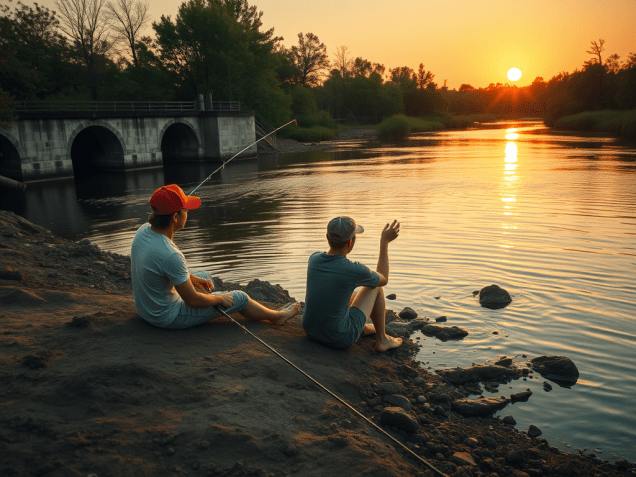
It was a humid summer evening. The air clung to your skin. The world glowed gold in the last light of day. My friend Bub and I stood at the edge of the old creek, just downstream from the dam. The concrete wall loomed behind us. Its spillway trickled like a broken faucet, feeding the deep pool below. The water turned slow and murky there. This was our favorite spot, a secret place we called “The Backside.”

Bub handed me a bank pole he’d rigged himself. It was a sturdy sapling shaved smooth. A heavy line was tied at the end. A fat hook was baited with a chunk of cut shad. We drove it into the muddy bank. We angled it over the swirling water. We tied it off with an extra rope to a thick root jutting out of the ground. Across the creek, Bub set another pole, whistling as he worked, his boots sinking deep into the silt.

We settled onto the bank, backs against the grass, watching the poles bend and sway with the current. The sounds of the night crept in: frogs croaking, cicadas humming, the occasional splash of a carp rolling. Somewhere distant, a train rumbled across the trestle.

“Think they’ll bite tonight?”

Bub asked, tossing a pebble into the water.

“They always do back here,”

I said, grinning.

“Big ones like the deep pool. They come up from the river, get trapped behind the dam.”

We waited in comfortable silence. Just as the moon began to rise, one of the poles gave a sudden, violent lurch.

“There!”

Bub shouted, scrambling to his feet.

I grabbed the pole, feeling the weight and fight of something strong on the other end. The bank pole bent double, creaking against the strain. Bub rushed over to steady the base. I worked the line by hand. I pulled and gave slack as the fish surged beneath the surface. The water boiled and flashed, silver scales catching the moonlight.

“It’s a big one!”

I gasped.

Together we fought it, step by muddy step. At last, Bub plunged his hand into the water. He grabbed the fish just behind the gills, hauling it onto the bank. It was a channel cat, fat and whiskered, easily ten pounds. We stood over it, grinning like fools, watching it thrash in the mud.

“Told you they always bite back here,”

I said.

Bub laughed and clapped me on the back.

“Best pole fishing spot in the county.”

We reset the pole. We rinsed our hands in the creek. Then, we sat back down under the stars. The dam hummed softly behind us. We didn’t talk much after that. We didn’t need to. The night surrounded us. The water flowed gently. The old dam spoke for us. They weaved our friendship into the quiet rhythm of the creek, one fish at a time.

Juniper and Luma: A Tale of Unlikely Friendship

GROFF MEDIA 2024© TRUTH ENDURES IMDBPRO

Presented by benandsteve.com By: Benjamin Groff II©s

1–2 minutes

The Fox and the Firefly

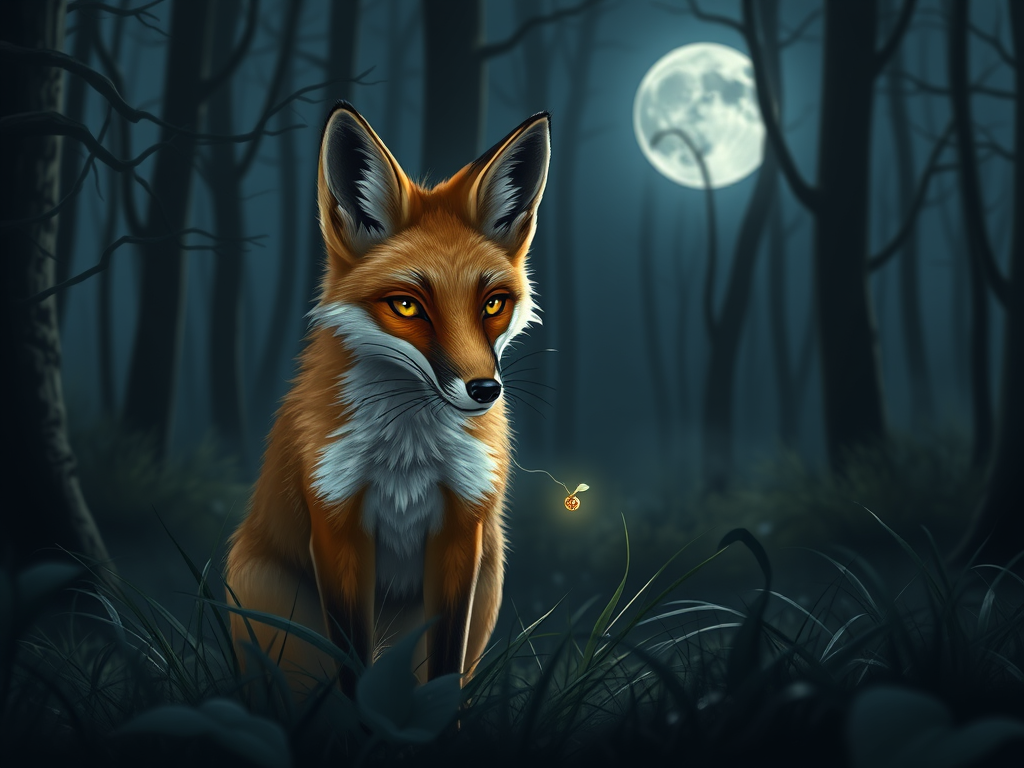
The trees hummed with the wind in the Whispering Woods’s heart. The moon painted silver on the forest floor. There lived a fox named Juniper. She was sleek, clever, and always alone. Other animals whispered about her, calling her a trickster, a thief. She had learned that being alone was more manageable than fighting their expectations.

One evening, a tiny glow flickered near her nose as she padded along the riverbank. A firefly, tiny and trembling, hovered in the air.

“You’re in my way,”

Juniper said, flicking her tail.

“I’m lost,”

The firefly admitted its light dimming.

Juniper sighed.

“Lost? How do you lose your way when you can fly?”

The firefly hesitated.

“I followed my friends, but the wind carried me away.”

Juniper should have walked on. She wasn’t the type to help. She had grown used to being alone, and companionship was foreign to her. But something about the firefly’s quivering glow made her pause.

“Fine,”

She said,

“I’ll help you, but only because I know these woods better than anyone.”

The firefly buzzed with gratitude.

“Thank you! I’m called Luma.”

For the first time in a long while, Juniper felt a glimmer of companionship. As they traveled together, Luma lit the dark paths. She guided Juniper through the thickest parts of the forest. Juniper used her sharp nose to avoid danger.

They spent the night talking. Luma didn’t fear or expect her to be anything other than what she was.

By dawn, they reached a clearing filled with twinkling lights—Luma’s family.

“Stay,”

Luma said.

Juniper almost did. But she was a fox, a creature of the earth, and Luma belonged to the sky.

Still, as she turned to leave, Luma promised,

“Whenever you walk the woods at night, look for my light. You’ll never be alone.”

And so, every night, as Juniper wandered, a tiny flickering glow followed her—an unlikely friendship that lit the darkness forever.

Loneliness and Connection: The Maple and the Crow

GROFF MEDIA 2024© TRUTH ENDURES IMDBPRO

Presented by benandsteve.com By: Benjamin Groff II©

2–3 minutes

The Maple and the Crow

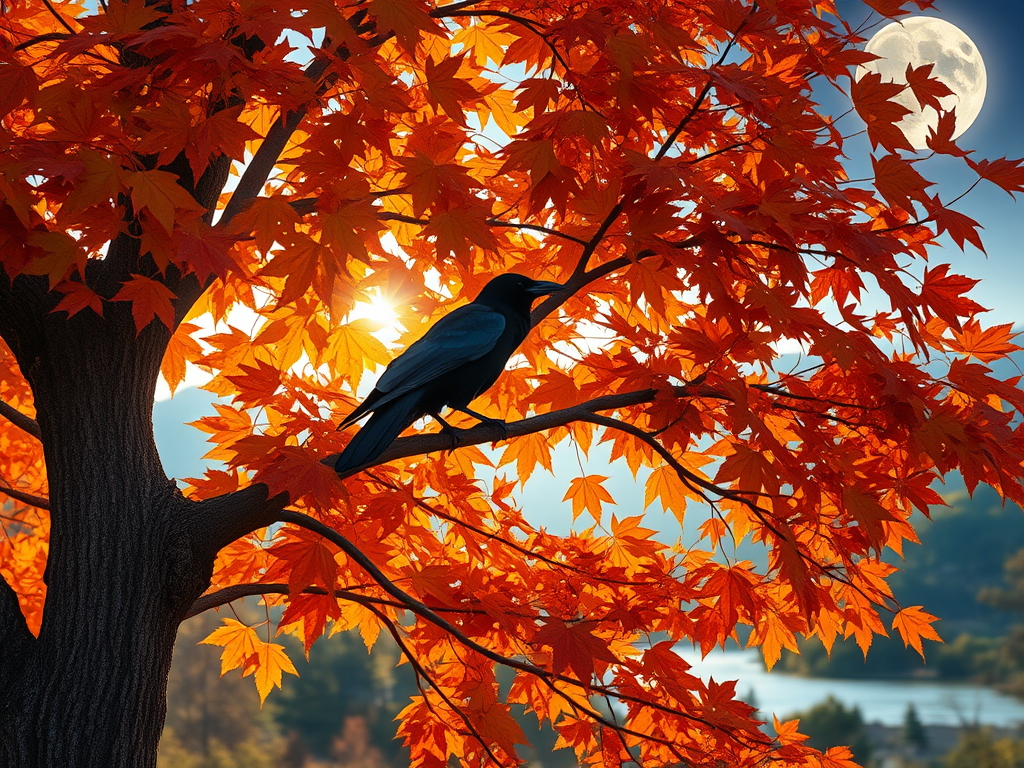
In the quiet corner of Oakridge Park stood an old maple tree. Its branches stretched wide, offering shade to picnickers in the summer and a golden glow in the fall. 

It had seen many seasons pass and many creatures come and go, yet it always felt lonely. It never had a friend to share its days with.

Then came the crow.

The bird arrived one blustery afternoon, perching on the maple’s lowest branch with a ruffled look. Its wing drooped slightly, and its usual subdued sharp claws.

“Shoo!” 

The tree whispered as the wind rustled through its leaves. It was not quite ready to accept this new presence in its life.

But the crow did not move.

Day after day, the crow lingered. 

Caw Caw!

It hopped from branch to branch, picking at the bark, watching the world below. It cawed at passing dogs and tilted its head at children chasing kites.

“Why are you still here?” 

The maple finally asked.

“Nowhere else to go,” the crow replied. Its voice carried a hint of resilience. The tree had never heard this before.

The crow replied.

For the first time, the tree understood what it meant to be lonely. The Maple had never considered this feeling before. The sun rose, the rain fell, and its roots dug deep. But watching the crow, it felt something new—a quiet companionship.

The maple began to enjoy the crow’s presence. It let its leaves shiver in the wind to make music for the bird. When the crow felt strong enough to fly, it still returned, perching in the same spot.

Seasons passed. The maple grew older, and its branches were not as strong as they once were. But the crow remained. It brought stories of faraway places. These places had mountains that touched the sky and rivers that sang in the moonlight.

And when winter came, and the tree stood bare, the crow nestled close against its trunk.

“I will stay,”

 The crow promised.

“I know,”

The maple replied.

And so they remained, an old tree and a watchful crow, an unlikely friendship rooted in time.

The Island of No Return

GROFF MEDIA 2024© TRUTH ENDURES IMDBPRO

Presented by benandsteve.com By: Benjamin Groff II©

3–4 minutes

Three men sat at the edge of a dock. Each was worn down by the ceaseless hum of modern life. Their gazes were fixed on a small, uninhabited island that shimmered in the midday sun. A mile off the coast, the island was lush with palm trees, surrounded by crystal-clear water, and untouched by civilization. It was perfect, a blank canvas for a life free from the chaos they had come to despise.

The trio’s leader, Warren, a former corporate executive, was the mastermind behind the escape. To buy the island, he’d sold everything—his penthouse, yacht, and stock portfolio.

“Gentlemen,”

he said, gesturing at the island,

“we’re about to start over. No emails, no alarms, no societal nonsense. Just us and the land.”

Tom, a rugged carpenter with calloused hands, nodded.

“I’ll build us the finest cabins you’ve ever seen. Give me trees and tools, and we’ll have a paradise.”

The third man, Elliott, a quiet botanist, adjusted his glasses and smiled faintly.

“And I’ll make sure we know which plants are safe to eat. Nature will supply for us if we respect it.”

They packed their small boat with essentials: tools, seeds, books, and fishing gear. They agreed to leave their phones behind, cutting ties with the rest of the world. “Once we’re there,” Warren declared, “there’s no turning back.”

Arrival

The island greeted them with pristine beaches and a dense jungle that hummed with life. They worked tirelessly in the first weeks. Tom constructed three sturdy cabins near the shoreline. Warren rigged up a rudimentary system for collecting rainwater. Elliott explored the interior, cataloging edible plants and marking trails.

At night, they sat by a fire, listening to the waves and reveling in the simplicity of their new existence.

“This is freedom,”

Warren said one evening.

“We’ve escaped the madness.”

But as the weeks turned to months, cracks began to form in their idyllic retreat.

Isolation

Elliott was the first to show signs of unease.

“The flora here is fascinating,”

he said one night, staring at the fire,

“but I miss my research. Sharing discoveries with others… it gave my work purpose.”

Tom, who had poured his energy into the building, grew restless after the cabins were completed. 

“There’s only so much wood to chop, so many things to fix. I feel… stagnant.”

Warren dismissed their concerns.

“We didn’t come here for purpose or projects. We came to live. You’ve forgotten why we left.”

But Warren, too, struggled. He’d envisioned a utopia, a life stripped of complications, but the endless quiet gnawed at him. Without the structure of his old life, he felt adrift.

The Turning Point

One stormy night, a ship appeared on the horizon. Its lights pierced the darkness, a beacon of their forsaken world.

“Do we signal it?”

Tom asked, his voice wavering.

Warren’s face hardened.

“No. We agreed: no contact.”

Elliott hesitated.

“What if they’re in trouble? Or what if… what if we are?”

The men argued for hours as the storm raged. Ultimately, they let the ship pass without making contact. But the moment lingered, a reminder of the life they’d left behind—and the choice they’d made to stay.

Conclusion

In time, the men adapted. They found a rhythm in the island’s isolation, but each carried a quiet longing for the world they’d abandoned. They didn’t regret their choice, but they understood it now for what it was: a trade, not an escape.

Years later, the island was still theirs, but they were no longer the same men who had arrived. They had built a new life, not without struggles or sacrifices, but one that was undeniably theirs.

They never saw another ship. They often looked out at the horizon. They wondered what have been if they’d signaled that one stormy night.

“The Peanut Farmer and the Minnesota Senator”

Peering through the Oval Office Window: A Look Back

Groff Media 2024© Truth Endures IMDbPro

Presented by benandsteve.com By: Benjamin Groff II©

2–3 minutes

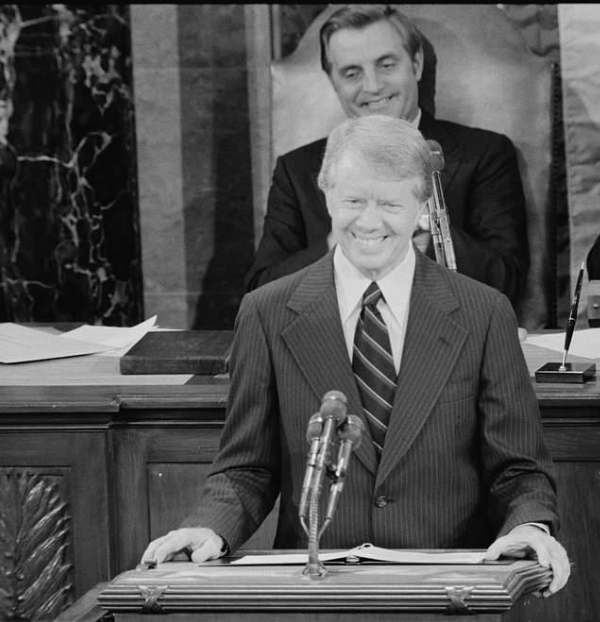
In the summer of 1977, President Jimmy Carter leaned back in his chair in the Oval Office. A pensive smile tugged at the corners of his mouth. Across from him sat Vice President Walter Mondale, poring over a stack of briefing papers with his trademark focus. One man was a farmer from Georgia. The other man was a lawyer from Minnesota. The two couldn’t have been more different in background. Yet, their partnership was rooted in a shared commitment to serving the American people.

“Fritz,” 

Carter said, using Mondale’s nickname, 

“you ever think we’re trying to do too much at once?”

Mondale looked up, his brow furrowed. 

“Every day, Mr. President. But that doesn’t mean we stop trying.”

The two had agreed early on that their administration would focus on transparency and morality in government. It was a lofty goal, especially after the shadow of Watergate. Carter gave Mondale an unprecedented role as vice president. He granted him full access to meetings and decision-making processes. Mondale had a seat at the table in all major discussions.

That day’s agenda included preparations for the Camp David Accords. Carter knew the stakes were high. Peace in the Middle East was a dream worth pursuing, but the path was challenging.

“I’ve been thinking about how we can get Sadat and Menachem (Begin) to see eye to eye,” 

Carter mused, tapping his pen on his desk. 

“I need you to be my sounding board, as always.”

Mondale nodded, adjusting his glasses. 

“They both trust you, Jimmy. That’s the key. You have a way of connecting with people, even when the odds seem impossible.”

Carter chuckled softly. 

“Must be the peanut farmer in me.”

Over the months, the two worked tirelessly. Mondale often acted as a mediator in Congress, navigating the political complexities Carter sometimes found frustrating. When the energy crisis hit, Mondale suggested convening regional governors to gather diverse perspectives.

One evening, after a particularly grueling day, they found themselves alone in the Rose Garden. The air was warm and scented with magnolias, and the stars above were unusually bright.

“Fritz,” 

Carter said, breaking the silence, 

“I couldn’t do this without you. You keep me grounded.”

Mondale smiled, a rare expression of pride crossing his face. 

“You’d manage, Jimmy. But I’m glad I’m here to help.”

Their friendship, forged in the fire of challenges and the weight of leadership, became a hallmark of their administration. Though history would judge their tenure with mixed opinions, their mutual respect and dedication to principle left a lasting legacy.

As the years passed, Carter and Mondale’s bond endured. At their core, they remained two men dedicated to the idea that leadership meant service, not power. They carried this lesson beyond the White House walls.

A lesson that needs to be passed on increasingly so now!

The Unlikely Friendship: Lessons in Kindness

By: Benjamin Groff II© Groff Media 2024© Truth Endures IMDbPro

It was a quiet Sunday morning. A knock came at the door as the man leafed through the morning paper. He answered it, and there stood a stranger, looking road-worn but determined. ––––

“Is this where Benjamin Groff lives?”

the stranger asked.

“Yes, it is,”

the man replied, studying the stranger’s face.

“You must be his father,”

the stranger ventured his smile kind and knowing.

“Yes, I am,”

the man replied, both curious and wary.

The stranger introduced himself.

“My name is Samuel Johnson. I’ve driven over seventy miles to meet you, sir. You must have been one remarkable man to raise a son like Benjamin.”

The father, his heart swelling with pride, felt a mix of emotions.

“Thank you, Samuel,”

he said.

“But, please, how do you know my son?”

Samuel nodded as though expecting the question.

“I met Ben at the Oklahoma State Fair last fall. I was just there to do a job—keeping an eye on one of the old buildings. Some local boys had been giving me trouble, but Ben stepped in. Out of all the things he could have done at the fair, he chose to sit down and talk with me. We spoke for hours. Your son has a way of making people feel seen, of looking out for folks. He even asked me if anyone was bothering me, and from that moment on, I felt I wasn’t just working the fair—I was spending time with a friend.”

The father listened, deeply touched.

“That sounds like Ben,”

he said softly, gesturing for Samuel to take a seat.

“Let me wake him—he’ll want to know you’re here.”

Ben’s father went to his son’s room and gently shook him awake.

“Ben, you’ll never guess who’s here to see you,”

he said.

Still half-asleep, Ben slowly got up and followed his father into the living room. To his surprise, there sat Samuel, his old buddy from the State Fair. A smile of joy spread across Ben’s face as memories flooded back.

On that day at the fair, Ben had already taken in the sights, ridden the rides, and wandered through the livestock shows, which, to his surprise, had lost their charm despite his upbringing on a farm. He was winding down, simply walking, when he happened upon Samuel’s post.

Samuel was friendly, the kind of person who seemed to carry his life’s story in the lines of his face. Ben had sensed the man’s kindness right away, trusting him instinctively. They talked for hours, sharing stories. Samuel had offered him cold water from the employee stash and even let him use the private restroom in the back, which felt like a luxury compared to the crowded ones across the fairgrounds. Ben could still recall their easy camaraderie, even though much of what they’d discussed had faded over time.

Before parting, Ben had written down his number and directions to their home, saying,

“If you’re ever in town and need anything, look us up.”

Now, here was Samuel, having made good on that invitation.

After they caught up for a while, Ben suggested a tour of the campground where his father worked as a Ranger. The sprawling property had over 350 acres, six cabins, and a large recreation hall. As they rode around, they laughed about old times and marveled at the twists and turns that brought two unlikely friends together again.

Finally, as the afternoon sun started to wane, Samuel turned to Ben with a smile.

“I’d better head back to the city,”

he said, patting Ben on the shoulder.

“I’m grateful to have met your folks and seen your home—it’s even better than I’d imagined.”

He climbed into his Lincoln Continental, waved as he pulled away, and drove down the dusty road until he was out of sight. That was the last time Ben saw Samuel. But in the years that followed, he often recalled the kindness they’d shared, proof that a simple act of friendship could reach far beyond the boundaries of a single day.

Benjamin stood on the porch as Samuel drove off, watching the dust settle behind the Lincoln. He thought about how Samuel’s visit had bridged two worlds—a fact that didn’t escape him in a town where Black residents were often confined to the southwest corner, seen more as a separate community than as neighbors.


Growing up, Benjamin noticed the prejudices that ran through many families in town but never took root in his heart. His father, a man who saw people for who they were, not where they came from, profoundly influenced him. Samuel’s visit was a powerful reminder of how simple kindness could defy those boundaries, how a shared afternoon at a fair could lead to a journey across miles.

Though he never saw Samuel again, Benjamin often recalled those two encounters. They left him with a lesson he carried into adulthood and his career—a quiet but powerful truth about compassion. Samuel had come to honor Benjamin’s father. Still, Benjamin always remembered Samuel for showing him how friendship and decency could surpass any divide, leaving an enduring mark on his life.

In a way, Samuel had gifted him a legacy of his own: the reminder that sometimes, the connections we make in unexpected places leave the most enduring marks on our lives.

In Memory of Samuel!

Echoes of Laughter: Nights at the Red Barn Café. ~ Cordell, Oklahoma 1968

A Story By: Benjamin Groff© Groff Media 2024© Truth Endures

The sun dipped low over the plains, painting the sky with hues of yellow and burnt orange. As dusk embraced the town, a familiar buzz began to build around the old auction barn. Trucks and trailers, caked in red dirt, lined the gravel lot. The air was thick with the mingling scents of hay, leather, and anticipation. But as the final gavel fell and the last winning bidder of the last horse to sell walked up to the young gelding and led him away, the real excitement shifted just east of the heart of Cordell: The Red Barn Café.

Perched on the corner of Main and Elm, the café’s crimson façade glowed warmly under the neon sign that blinked “Open.” Its rustic wooden doors beckoned the weary and the jubilant alike. A symphony of clinking glasses, spirited chatter, and the occasional burst of laughter filled the room.

Photo is simulated image, it does not represent the actual design of the actual Red Barn in Cordell.

Tonight was no different.

Big Jake JD Groff, a seasoned auction hand with a penchant for tall tales and horse trader, sauntered in, his boots echoing on the worn wooden floor, followed by his son, Benjamin, age 6. Jake tipped his hat to Mary Lou, the ever-smiling waitress who’d been serving slices of pie and pots of coffee since anyone could remember.

“Evenin’, Mary Lou. Got any of that pecan pie left?” Jake drawled.

“For you, Two-Bit? Always,” she winked, scribbling his order.

At the corner booth, a group of cowboys huddled close, their hats resting on the table, revealing sweat-stained brows and sunburned necks. Among them was young Delmer Scott, with a bearded-faced and eager, attending his 100th auction. His eyes sparkled as he recounted his purchase. He was known to everyone as “Scott!”

“Got me a real beauty tonight,” Scott boasted, his voice brimming with pride. “A chestnut mare, strong legs, and a spirit that’d make the wind jealous.” 

Jake, his best friend, said to him,

“‘You SOB, you bought a goddamn jackass, and you know it!”

Scott shot back, Groff,

“you lying bitch, you’re just jealous because you bought a goddamn nearly dead 30-year-old plow horse that is about to keel.”

Old Man Harris, a legend in these parts, chuckled softly, his grey mustache twitching.

“Son, every horse looks like a winner under those auction lights. Wait till you’re trying to saddle her on a cold morning.”

The table erupted in laughter, the kind that warms the soul. This type of banter draws crowds to the Red Barn after auctions every Saturday Night. The food and service are the icing on the cake.

Near the jukebox, which softly crooned Patsy Cline tunes, a group from out of state compared notes. They’d driven from Texas, lured by tales of the Cordell auctions. Amid shared stories and friendly ribbing, they marveled at the community’s camaraderie.

“It’s like we’ve known y’all our whole lives, if we may; it’s the damnest thing we ever saw!” 

One of them mused, raising a mug of steaming coffee.

As the night wore on, tales grew taller. Jake recounted the time he supposedly outbid a millionaire from Tulsa with just “a wink and a handshake,” while Mary Lou swore she saw Elvis pass through town once, stopping by for a slice of her famous pie.

But beneath the banter and jest, there was an unspoken understanding. These nights at the Red Barn Café were more than just post-auction gatherings; they were the threads that wove the community together. In a rapidly changing world, where traditions faded, and new ways emerged, this little café stood as a testament to simpler times.

By 2:00 AM, as the crowd began to thin and the neon sign’s glow dimmed, the stories had been told, deals celebrated, and friendships fortified. Clutching a worn napkin filled with advice scribbled by his newfound mentors, Scott loved the warmth that had little to do with the strong coffee, but be damned if he’d ever say anything about it around Jake!

Benjamin stepped out into the fantastic night with his dad, Jake. He glanced back at the Red Barn Café, its silhouette etched against the starlit sky. Like so many before him, he knew those smoking, cussing, and storytelling friends who gathered had memories forged within their souls that would be cherished for a lifetime.

Decades later, the tales of Saturday nights at the Red Barn Café in Cordell, Oklahoma, would become legends as the world moved on. Stories of laughter, camaraderie, and the indelible spirit of a community bound by shared passions and dreams were only folktales of a time gone by; the Red Barn had been torn down, and its memory erased for generations. The true legends of those days are left to a few who remember Saturday Nights at the Red Barn Cafe in Cordell, Oklahoma!