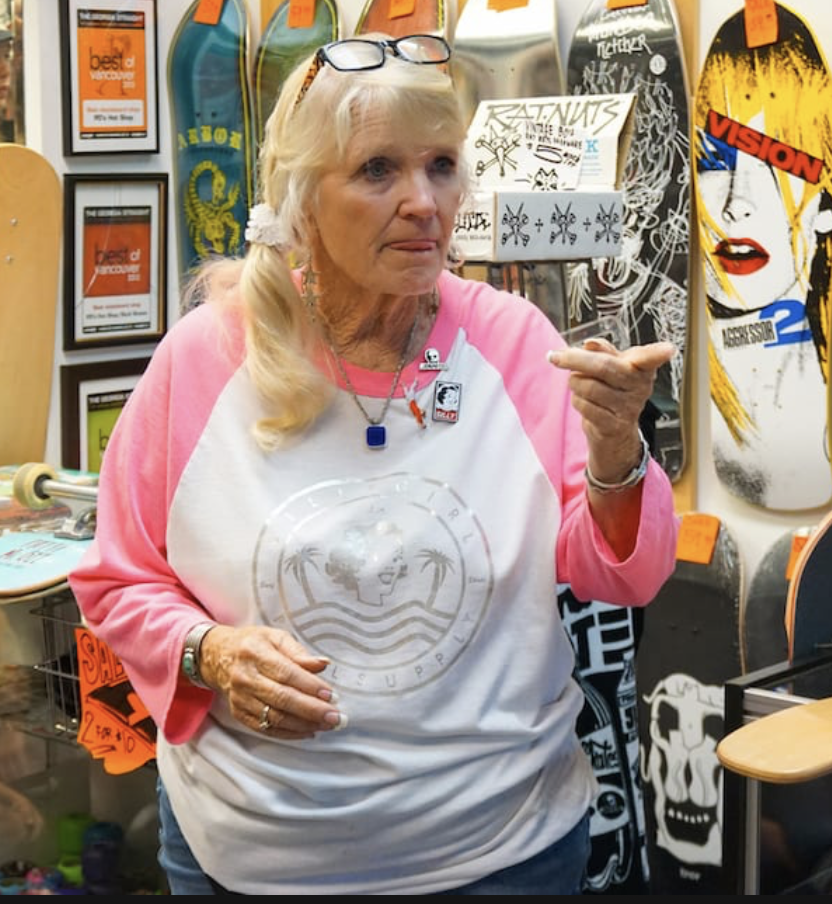
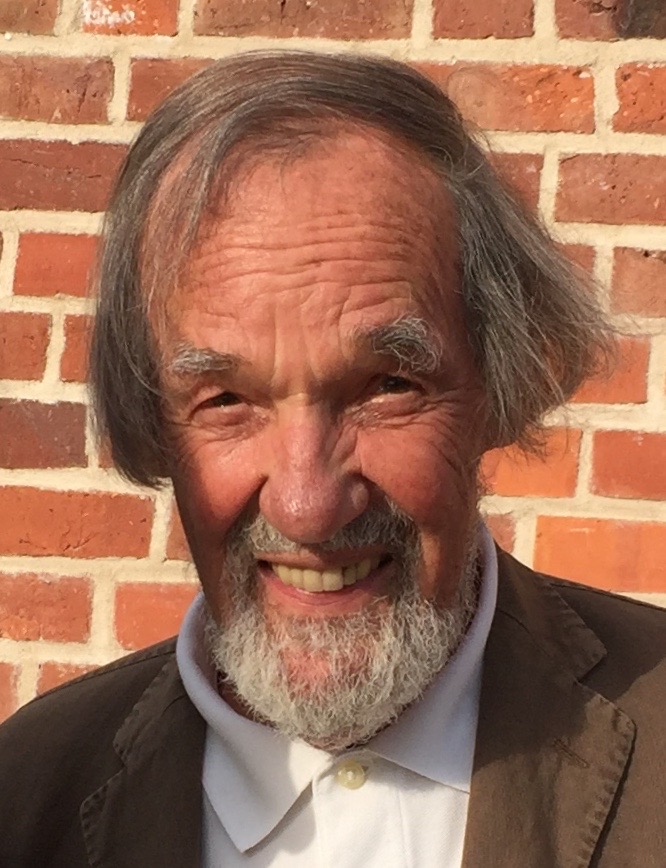
There Goes Patti McGee! Skateboardings First Lady! (1945-2024)

There Goes Patti McGee – An Essay

Presented by benandsteve.com By: Benjamin Groff II© Groff Media 2024© Truth Endures IMDbPro

Patti McGee was not just a skateboarder; she was a trailblazer, a pioneer, and a symbol of inclusivity in a sport rapidly emerging in the 1960s. Her journey, which began with a skateboard built by her brother, evolved into a legendary career that broke barriers for women in skateboarding and cemented her place in history as one of the most iconic figures in the sport. She was not just a name in the history books but a person with a passion for skateboarding that was infectious to all who knew her.

Despite the challenges and the sport’s male-dominated nature, Patti’s resilience and determination shone through. Her first skateboard, a humble creation from her brother’s wood shop project, began a journey that would see her rise to national prominence.

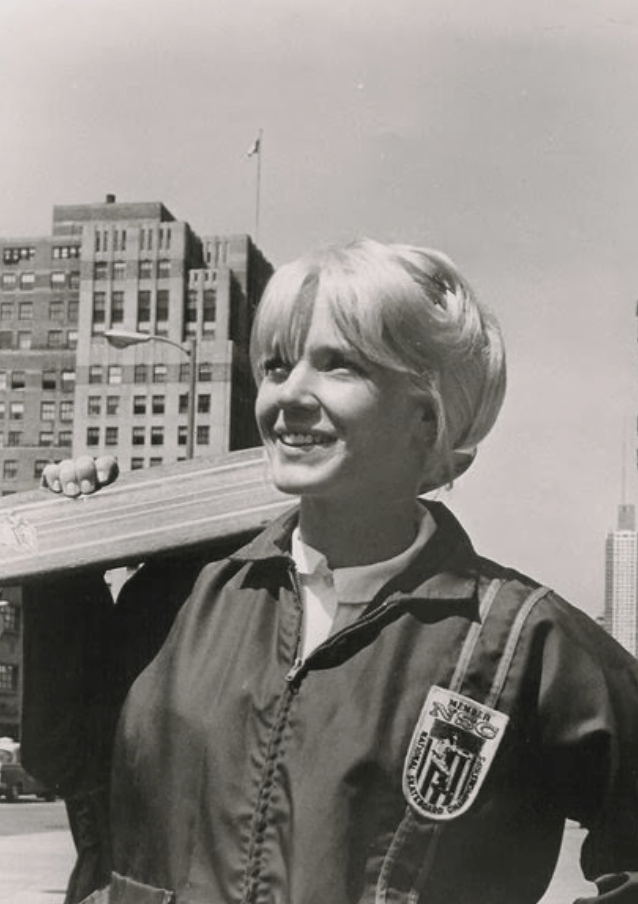
In 1964, Patti won the Women’s National Skateboard Championship in Santa Monica, California. Her smooth style, grace, and technical ability on the board distinguished her as a force in the early skateboarding community. Her victory was a breakthrough moment for women in the sport, demonstrating that skateboarding was not just a boys’ game but one where women could excel and lead.

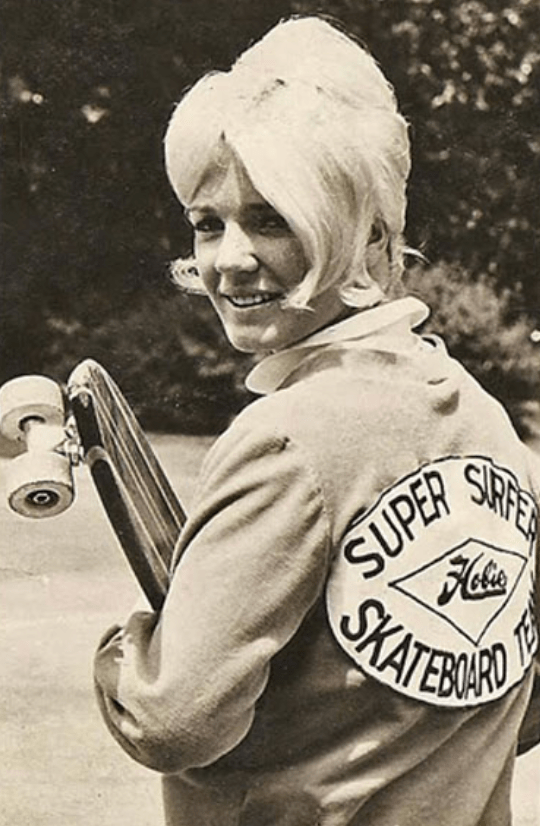
Patti’s career reached heights when she became the first professional female skateboarder, sponsored by Hobie Skateboards and Vita Pak. She traveled the country, performing skateboarding demonstrations, showcasing her talent, and spreading the love of the sport to a broader audience. Her influence was undeniable, helping to popularize skateboarding during its first wave of mainstream attention between 1959 and 1965. As a spokesperson and ambassador, she promoted the sport with passion and determination, ensuring that girls and women also saw skateboarding as a place for them.

In 1965, Patti made history again, becoming the first female skateboarder to appear on the cover of Life magazine. Her iconic photo, smiling while riding a skateboard in mid-air, is still considered one of the most memorable images of early skateboarding culture. Patti’s presence in the media helped legitimize skateboarding as a serious sport, and her charm and skill made her a role model for countless young skaters.

Patti’s contributions to the sport were officially recognized in 2010 when she became the first woman inducted into the Skateboarding Hall of Fame. Her induction was a celebration of her achievements and a reminder of her lasting impact on the sport and the many skaters who followed in her footsteps. Patti’s legacy is a testament to the importance of inclusivity, showing that skateboarding is for everyone, regardless of gender.

Beyond her professional accomplishments, Patti’s impact on the skateboarding community was profound. She continued to inspire new generations of skaters, sharing her love for the sport and advocating for the inclusion of women. Her spirit, determination, and dedication to her craft left an indelible mark on the skateboarding world, connecting her to skaters of all ages and backgrounds.

Patti McGee passed away on October 16, 2024, after suffering a stroke and subsequent complications. Her death marked the end of a remarkable life that helped shape the skateboarding world. As a champion, a role model, and a pioneer, she will be remembered as the matriarch of skateboarding, someone who paved the way for women in the sport and left an enduring legacy of passion and inclusivity. Her absence leaves a void in the skateboarding community that will be felt for years.

Obituary: Patti McGee (1945-2024)

Patti McGee, the world’s first professional female skateboarder and an iconic figure in skateboarding history, passed away on October 16, 2024, following complications from a stroke. She was 79 years old.

Born on August 23, 1945, Patti grew up in the United States, where she developed a love for skateboarding early in life. She first gained national recognition in 1964 when she won the Women’s National Skateboard Championship. Her victory established her as a pioneer in the sport and a role model for future generations of female skaters.

In 1965, Patti became the first woman to appear on the cover of Life magazine, an iconic moment that showcased her talent and helped popularize skateboarding. That same year, she became the first professional female skateboarder, sponsored by Hobie Skateboards and Vita Pak, traveling the country to perform and promote the sport.

Her contributions to skateboarding were formally recognized in 2010 when she became the first woman inducted into the Skateboarding Hall of Fame. Patti’s induction was a crowning achievement in a career filled with groundbreaking moments, solidifying her status as a trailblazer in the sport.

Throughout her life, Patti remained a beloved figure in the skateboarding community. She inspired skaters of all ages and advocated for women’s participation in the sport. Her passion, talent, and dedication left an enduring legacy that will continue to influence the skateboarding world for years.

Patti goes on before her daughter, Hailey, and countless friends and admirers in the skateboarding community. Her life is a remembering of her exceptional achievements, vibrant spirit, and commitment to promoting inclusivity in the sport she loves.

We are grateful for Patti McGee’s life and legacy. She was a true pioneer, a legend, and an inspiration to all who followed in her footsteps. Missing her presence in the world will continue forever, but her legacy will continue to roll on, just like the wheels of the skateboards she rode so gracefully.

May she rest in peace.

What Happens When the Country is Closed for Average Americans?

A Report By: Benjamin Groff© Groff Media 2024© Truth Endures

A Shift in the Landscape of Freedom

Amid political upheaval, the everyday American—who works a regular job, pays taxes, and seeks a life of routine and stability—may question their future in an increasingly polarized society. As extreme political movements push for agendas that center around ideas of “Project 25” or the return of Trump, advocating for a strict interpretation of Christianity, suppression of women’s rights, and an aggressive nationalistic framework, the real impact may be felt most by the “regular Joe”—the one who wants to live a quiet, predictable life.

For the average person, life may close in on them in such a scenario. The country may become unrecognizable, not in a dystopian fantasy, but in subtle, pervasive ways. It might start with the suppression of individual freedoms—targeting what people can say, wear, or how they worship. Religious dogma could permeate public life, not as a choice but as a mandate, affecting schools, workplaces, and government institutions. The Bible in every building might become symbolic and a requirement, with legal frameworks promoting a particular religious view while leaving others on the margins.

Erosion of Women’s Rights

Regular Americans might witness fundamental changes in the status of women while going about their daily lives. With growing pressure from ultra-conservative elements, efforts to curtail women’s autonomy could accelerate. The reversal of women’s rights, particularly reproductive rights, is already in motion. In this new political order, women might have even fewer choices about their bodies, careers, and participation in public life. For many, this will mark a turning point when personal freedom can no longer be taken for granted.

The Fear of the Unknown

Fear might become customary for those not part of this hard-right movement. The “regular Joe” will likely feel caught between competing narratives. On one side, there is the quiet desperation of wanting to hold on to their everyday life, and on the other, the nagging sense that the world is changing in ways that might soon render them powerless. Whether one is bisexual, straight, or simply someone with no interest in pushing their identity into the political arena, they might start feeling stalked by the system—monitored, judged, and left wondering if their way of life is still valid.

A New “American Dream?”

In this environment, the American Dream could become narrow. No longer about opportunity for all, it may become a dream only accessible to those who fit the suitable mold—racially, religiously, and socially. If one does not align with the ideals of whiteness or conservative sexuality, they could find themselves increasingly ostracized, with opportunities drying up. The path to success might depend less on hard work and more on conformity to ideals driven by far-right ideologues.

The reality could become darker for the person who comes home daily, pats their dog on the head, and watches the news. The content of that evening television might change, with media outlets pushing extreme viewpoints or censorship becoming the norm. Growing anxieties about what tomorrow holds could interrupt quiet moments of relaxation.

Where Do They Go?

If the country starts closing itself to all but those who align with this rigid agenda, the regular Joe may ask, “Where do I go?” It is hard to imagine a physical place for escape in a country that feels increasingly closed off to dissent. For many, the answer might not be in leaving the country but in finding a way to resist quietly—by forming communities with others who feel left behind, advocating for empathy and open-mindedness, and holding on to the idea that the heart of America lies not in exclusion but inclusion.

The danger is not just in the policies themselves but in the erosion of what makes America a place where people of all walks of life can live freely, with differences embraced rather than punished. When that idea is under attack, the question of “Where will you go?” takes on a much deeper meaning because the honest answer is about preserving a sense of home, not just for oneself but for everyone.

In this potential future, where does the regular Joe go? Perhaps they remain right where they are, standing in quiet defiance, continuing to pay their taxes, pat their dog, and live with the hope that balance will one day return to a nation at risk of losing itself.

2024 Hand-Counting Election: A Tale of Two Residents counting the nations ballots

A Story By: Benjamin Groff© Groff Media 2024© Truth Endures

In the heart of the dusty plains, where tumbleweeds rolled lazily across the horizon, sat the humble town of Booterville. A place so small it didn’t even appear on most maps. Known for little more than its annual chili cook-off and the town’s general store, Booterville got entrusted with one of the most critical tasks in the 2024 election: hand-counting every vote nationwide.

Rumor had it that some miscommunication at a high level led to Booterville’s selection. The plan had been simple: With all the national turmoil surrounding electronic voting machines, distrust of mail-in ballots, and other voting controversies, someone high up had the idea to return to a “simpler” method—hand counting. Unfortunately, the job landed in the laps of Booterville’s only two permanent residents qualified to take on the task: Earl and Maude Jenkins.

Earl and Maude, both pushing 80, had stayed in Booterville for decades. Earl was a retired mailman with a sharp eye for sorting, while Maude was known for her days as the town librarian, meticulous in her record-keeping, and famous for knitting scarves with perfect symmetry. Together, they formed what the nation had come to call the “Election Duo.”

As election night approached, the rest of the country anxiously prepared for the returns. Cable news channels buzzed with frantic energy. Experts spoke confidently about the “return to integrity” with hand-counted ballots. However, they could only explain how it was physically possible for two people to count hundreds of millions of votes promptly. Analysts debated whether the results would come in within hours, days, or—worst case—months.

Booterville, meanwhile, was calm, as always. Earl and Maude sat on their front porch, sipping sweet tea, staring at the horizon where, in just a few hours, trucks would arrive carrying boxes upon boxes of ballots from all over the country.

The first truck pulled up right on time—around 9 p.m.—loaded with crates of ballots from California. Earl scratched his head and squinted at the car, which stretched longer than the main street of Booterville itself.

He muttered.

As Maude gingerly opened the first crate, the magnitude of the task became apparent. Inside were hundreds of thousands of paper ballots, each needing to be verified, double-checked, and counted by hand. Earl retrieved an abacus from their parlor, confident that the ancient method would sufficiently tally the votes.

Frustrated news anchors from CNOX and FONN NEWS networks chimed in, saying in general –––

“Our experts say we should have heard from at least the smaller states by now.”

Booterville, however, wasn’t so much concerned with the rush. Ever the perfectionist, Earl spent twenty minutes on each ballot, inspecting signatures, verifying dates, and ensuring no Chad hung loosely from the corners.

Maude cross-referenced each voter’s name with meticulously kept records from her days as a librarian. She spent additional time knitting if any name seemed unfamiliar while contemplating its legitimacy.

By midnight, the panic had spread. Election officials from every state began ringing Booterville’s single landline, asking for updates. But halfway through her evening tea, Maude had turned off the ringer to avoid distractions. Earl had managed to count precisely 72 ballots.

By morning, networks were abuzz with speculation. Some suggested Earl and Maude were holding the election hostage, while others theorized a deep conspiracy in which Booterville’s hand-counting was a covert means of election tampering. In truth, Earl and Maude were simply slow workers.

As the days dragged on, Earl and Maude remained unphased. They didn’t own a television, and Maude had never been a radio fan. They were blissfully unaware that the world was falling apart outside of Booterville. Mass protests erupted in cities, with demands for transparency. Accusations flew between political parties.

In some corners of the internet, Booterville became a symbol of resilience; in others, it became a meme, representing all that was wrong with the electoral process.

Two weeks later, the National Guard arrived. They politely knocked on Earl and Maude’s door, requesting an update on the election. Maude, unperturbed, invited them in for tea and showed them the ballots neatly stacked in her living room. The guards, bewildered, nodded and promised to relay their findings back to the capital.

Finally, in mid-December, a breakthrough occurred. After endless negotiations, Booterville agreed to let nearby towns assist in the counting process. Volunteers, election experts, and even some former contestants from the chili cook-off converged on Booterville to save the election.

But even with the new help, it took another month before all the votes got tallied.

As Earl and Maude sat together on New Year’s Eve, looking out at the winter stars, Earl leaned back in his chair and said,

Maude, knitting a scarf with perfect stitches, smiled and nodded. They never knew their efforts had plunged the nation into one of the most prolonged and chaotic elections in history. But to them, it was just another quiet day in Booterville.

Earl did ask Maude,

Maude said,

Earl replied,

Maude, rocking back and forth in her rocker, replied ––

Earl just grumbled.

The End.

The Intestate Legacy of John Ellis, Esq.

A Glimpsing Report By: Benjamin Groff© Groff Media 2024© Truth Endures

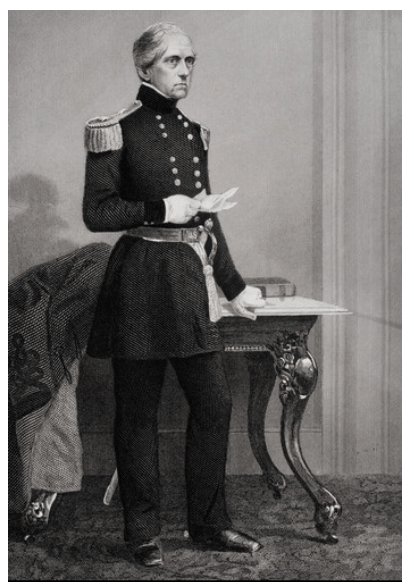
The name John Ellis, Esq. still echoes in the rolling hills and creeks of Deep River, North Carolina. To those who knew him, he was a stern yet fair Justice of the Peace, ruling his township with a measured hand, holding court in his modest home, and settling disputes with the wisdom of a man who had seen both war and peace. However, there was one mystery about John Ellis that no one could quite explain. For all his legal prowess and the order he brought to his community, John Ellis died without leaving a will—a fact unsettled his descendants for years to come and continues to intrigue history enthusiasts and those interested in legal history.

The year was 1812, and a biting winter frost clung to the edges of the Ellis estate, an imposing tract of land the Earl of Granville granted to John fifty years earlier. John’s death cast a long shadow on the west side of Deep River, where his 520 acres stretch over the rugged terrain. His wife, Mary Quinn Ellis, now widowed and frail, remained in their home in Fort Mill, York County, South Carolina, surrounded by memories of their eleven children and the life they had built together. John’spassing was not unexpected—he was 83—but the silence he left behind was.

It wasn’t just his absence that haunted those around him. It was the absence of something else—his final words, his will. John had settled countless estates during his time as Justice of the Peace, ensuring families were provided for, debts were settled, and the land was distributed correctly. And yet, he left no such document for his own family. Eighteen years would pass before his estate got probated in 1831, long after his burial in the family cemetery at Jumping Branch Creek. The delay gnawed at the Ellis children, especially William Quinn, the eldest son, who should have inherited the bulk of the estate. But the land was silent, locked in bureaucratic limbo.

In the years following John’s death, whispers swelled through the small towns of North Carolina and South Carolina, where his family had deep roots. The family cemetery where John and Mary would get buried became a place of whispered tales. Some said that John had left instructions hidden somewhere on his land—perhaps in a letter or beneath a cornerstone in his house. His children, it was said, spent months after his death combing through every inch of the property but found nothing. These rumors and folklore added a layer of fascination to the mystery of John Ellis’s intestate legacy.

The most curious rumor concerned the woods that bordered the Ellis estate. Hunters and travelers passing through Rowan and Tryon Counties spoke of a strange figure—an older man who resembled John Ellis, seen walking among the trees, sometimes at dusk, sometimes at dawn. This figure, they claimed, seemed to be searching for something, bending low to inspect the ground or pausing by the river as if lost in thought. Others said the older man appeared near the family cemetery, wandering among the graves silently.

By 1831, when the estate was finally resolved and divided among the children, most of these tales had faded into local folklore. But there was one final piece of the story that remained unexplained. One autumn afternoon, shortly after the estate gets settled, a group of workers clearing trees from the property stumbled upon a small, hidden clearing by the river. There, beneath a heavy stone, they found a weathered leather-bound book half-buried in the soil. This discovery added a new chapter to the mystery of John Ellis’s intestate legacy, sparking curiosity and speculation.

“To those who come after, let the land be their guide. All answers will be revealed in the river’s flow and the earth’s turning. I leave my legacy to the water, where I once made peace.”

No one knew what John had meant, but the discovery only deepened the mystery surrounding his death. Had John left his will in the elements, knowing it would be lost to time? Or had he chosen, in his final years, to let go of the very legal structures he had spent his life upholding?

The land remained, of course, just as the family stayed. However, the legend of John Ellis, Esq. grew with each passing year. And those who ventured near Deep River, when the mist was thick and the air still, would sometimes swear they heard a voice, carried on the wind, speaking words too faint to be understood.

Perhaps, they said, John Ellis had finally found his will—hidden somewhere between the river and the earth, waiting for those brave enough to listen.
 

The End.

Fight Today For A Better Tomorrow – Saving America – Coming Home

A Report By: Benjamin Groff© Groff Media 2024© Truth Endures

A Nation’s Call

It was the fall of 2024, and the country had never seemed more divided. Political upheaval had peaked, with protests echoing through city streets, harsh words hurled in homes, and debates erupting at family dinner tables. The election season had become more than just a contest of policies; it had morphed into a battle over the nation’s soul, pitting neighbor against neighbor.

At the heart of this turmoil was a young senator named Jacob Randall. A man of few words but deep conviction, he had saw firsthand the devastating effects of division. Randall had grown up in a small town where his mother and father, though from opposite sides of the political spectrum, had found common ground in their love for family, faith, and community. That shared foundation had always given him hope that unity was possible.

However, as he stood before Congress, he wondered if that hope had been misplaced. The chamber was restless, with representatives glaring at one another across the aisle, the tension palpable. Randall chose to speak at what many called a last-ditch effort—a desperate attempt to heal the nation before it tore apart.

Taking a deep breath, he began.

“Fellow citizens, colleagues, I stand before you not as a Democrat or a Republican but as an American. Our great nation is facing a challenge unlike any other. We have become so entrenched in our political camps that we no longer see each other as fellow countrymen. We see enemies where once we saw neighbors. And that division is killing the very fabric of our society.

“My parents did not always agree on politics. Mother was a staunch conservative, Father a proud progressive. But they understood something we have forgotten: that compromise is not a weakness but the cornerstone of democracy. They believed that every person, no matter how much they disagreed, had something valuable to contribute to the conversation.”

Randall’s words caught the attention of some. A few heads began to nod slowly. He pressed on, feeling the weight of the moment.

“Our founders, too, were divided. They had different visions for this country and ideas about what liberty and justice should look. Nevertheless, they knew that to create something lasting, they had to pull together to find common ground. And they did. That is the spirit that created America. Moreover, that is the spirit we need to rediscover today.”

As Randall continued, he saw a shift in the faces before him. Some were hard, unmoving, but others softened, listening with new ears. He was not offering easy solutions but calling for something more complicated: humility.

“When we look across the aisle, we must not see enemies but partners in this great American experiment. We have different ideas about achieving a better future, but we all want a better one. And if we cannot even agree on that, we have already lost.”

He paused, letting the gravity of his words settle in the room.

“In every crisis, there is opportunity, an opportunity to rise above the noise, the hatred, and the division. It is an opportunity to remember that we are bound together not just by the laws of this land but by the ideals it represents. Life, liberty, and the pursuit of happiness—for everyone. Not just for those who agree with us.”

Randall stepped away from the podium and glanced up at the gallery above. It was filled with citizens from across the country, watching with anxious eyes, waiting for anyone to bring clarity to the chaos. He saw young activists clutching signs, older veterans with tears in their eyes, and families holding hands.

“I am not asking you to abandon your beliefs. Listen to those who see the world differently. Not to argue but to understand a call for uniformity, but for unity because we cannot get found without uniting.”

The silence in the chamber was deafening. No one was shouting for the first time in what seemed like years. No one was trying to outdo the other with statistics or soundbites. They were listening.

Randall’s speech ended with a simple message: “America is not a perfect nation, but it is a nation built on the belief that we can pursue perfection together. Let us, as a people, return to that pursuit—not as adversaries, but as Americans.”

As he stepped away from the podium, the room erupted—not in protest, but in applause. Representatives stood on both sides of the aisle, clapping not just for Randall’s words but for what those words represented: a glimmer of hope that maybe, just maybe, the country could pull itself back from the brink.

It would take work. It would not happen overnight. But in that moment, something had shifted. For the first time in a long time, there was a shared sense of purpose— a belief that even in the darkest of times, unity was possible—and that together, the nation could find its way back to the light.

Resilience and Change: The Life of a Depression-Era Farmer

A Story By: Benjamin H Groff II© Groff Media 2024© Truth Endures

Benjamin Harrison Groff stood at the edge of his farmland west of Eakly, on Cobb Creek in Caddo County, Oklahoma, his weathered hands resting on his hips as he surveyed the fields. The sun was setting behind the Oklahoma hills, casting a golden hue over the land he’d come to love and toil. It was 1930, and though the country was heading into hard times, B.H. Groff had built a life here, one of stability and quiet perseverance.

Ben H and Florence Groff

He was 38 years old, married to Florence, and father to three children—Bennie, Dorothy, and JD. His modest but sturdy house had been their home for as long as he could remember. Its value was $3500, and though it wasn’t much compared to the sprawling estates some wealthier landowners had, it was theirs. They had a lodger, Lex Long, a 22-year-old man who had come to stay a while back. The Groffs didn’t need the money, but Lex had been good company with the world the way it was; having an extra hand around never hurt.

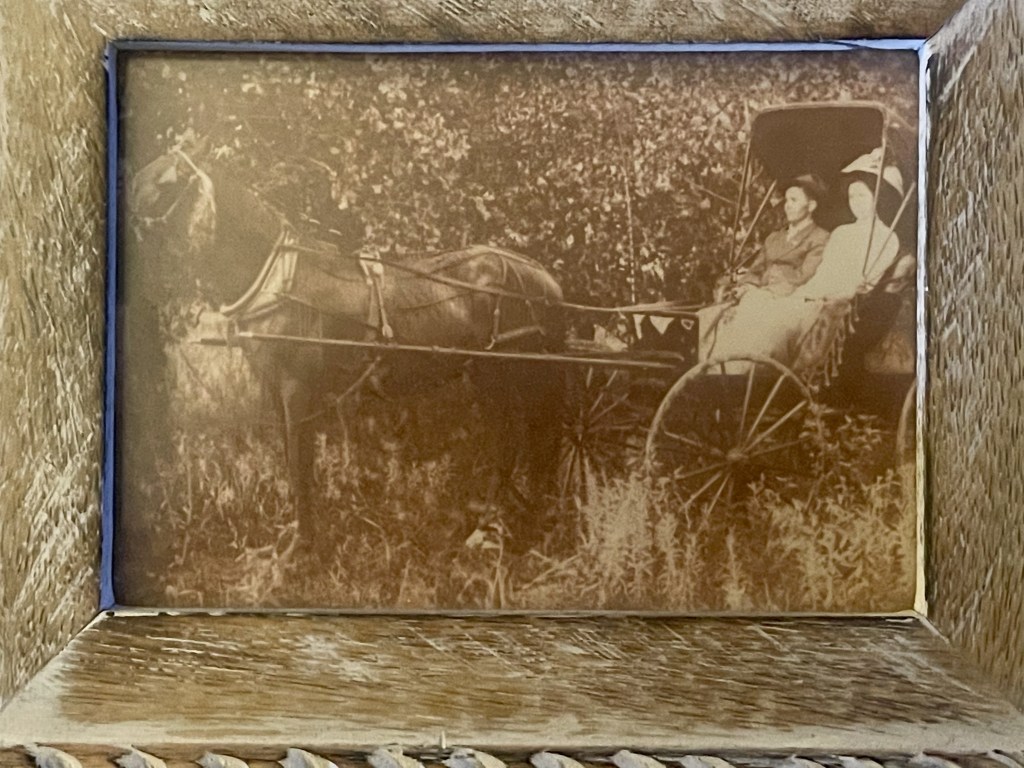
Draught Horses like those kept on Groff’s Farm.

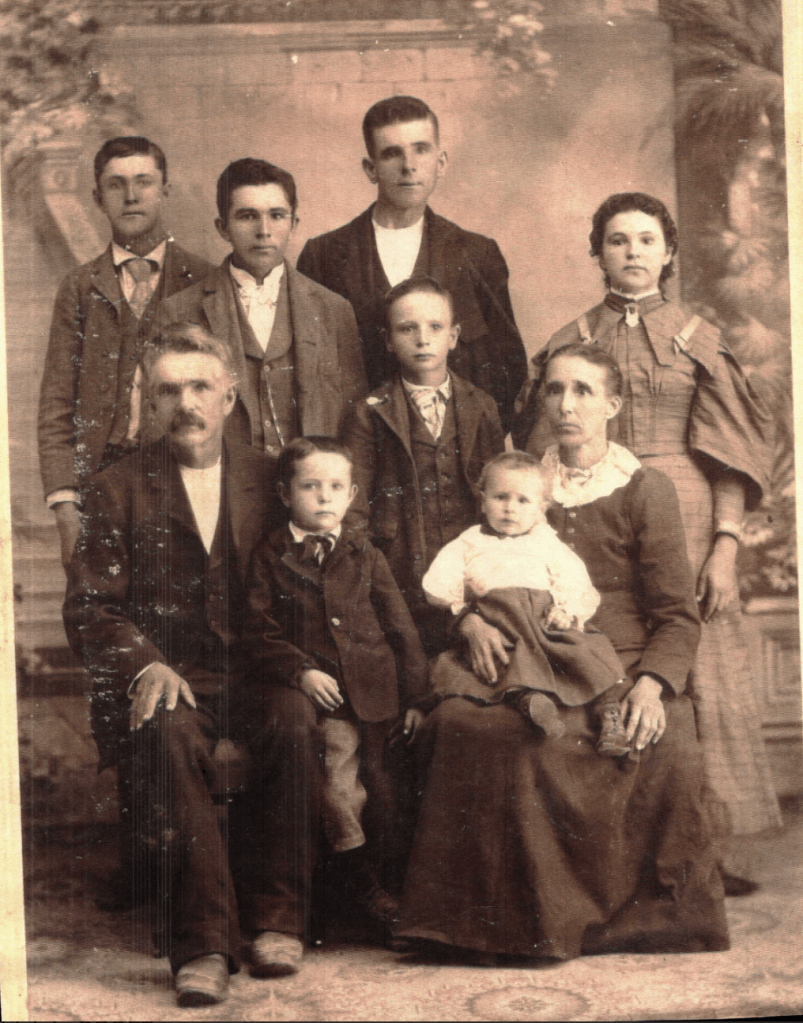
B.H. had been a farmer for most of his life, following in the footsteps of his father, Ulrich Groff, who had immigrated from Switzerland in the late 1800s. B.H. remembered his father well—stubborn, proud, and meticulous about his work. Ulrich had come to America with nothing, finding his way to Illinois, where he built a life with Martha, B.H.’s mother, who hailed from Tennessee. Ulrich had passed a few years ago, but his values and work ethic lived on in his son. Farming had been the family’s lifeblood; Ulrich Groff is a name well known around Olney, Illinois, as the man who, along with his sons, built a barn without any metal, using only wood. It remained a place to see when people visited the town. Through the current day, but lately, B.H. has been reconsidering.

The census taker had come by not too long ago, scribbling down notes as B.H. answered the questions. He had explained that, while still farming, he had recently taken on a new role as an employer, overseeing other farms and workers. The long days of breaking his back were coming to an end. He felt more like a foreman now, guiding others and ensuring the crops were harvested on time. This transition was not just a change in his work but a step towards providing more stability for his family and the families of his workers.

Nearby Binger, Oklahoma 1930s

But still, something was unsettling in the air. The world was shifting—money was tight for many, and the Groffs, while not destitute, were careful with every penny. B.H. looked at their old house, and the absence of a radio set inside was a testament to their simpler lifestyle. He had thought about getting one, but Florence had insisted it wasn’t necessary. “We have each other,” she would say, “What more entertainment do we need?” The lack of a radio, a luxury many families could afford, was a stark reminder of the economic hardships of the time.

At dinner, B.H. would listen to Bennie, Dorothy, and J.D. chatter about school and life on the farm. Bennie, at 13, was getting taller by the day, eager to follow in his father’s footsteps, while Dorothy and J.D. still had a spark of youthful innocence. Florence, ever watchful, would smile softly, her hands always busy with mending or preparing food. The simplicity of their lives didn’t bother her—it was how she preferred it. Their home was a haven of warmth and contentment, a place where the simple joys of life were cherished. The family’s unity and resilience in the face of adversity were a beacon of hope, a testament to the strength of the human spirit during the Great Depression, uplifting those who hear their story.

Ulrich Groff & Family

B.H. often wondered what his father would think of the life he’d built. Ulrich had been proud of his roots, reminding B.H. of the Groff family’s journey from Switzerland to America. Now, with Ulrich gone, B.H. felt the weight of his legacy. He wanted to honor it, but times were changing. Ben wasn’t just a farmer anymore but a man responsible for more than his land. He was an employer now, managing men who had their own families. This shift in his role was a sign of progress and a departure from his father’s more straightforward life, reflecting the uncertain and changing dynamics of the farming community during the Great Depression.

The fields stretched out before him, endless and full of promise. As the sun dipped below the horizon, B.H. looked at the land. He knew that whatever the future held, it would be shaped by hard work, perseverance, and the simple joys of family. And perhaps there was room for a bit of change along the way. The future was uncertain, but B.H. was ready to face it with the same determination that had guided him so far.

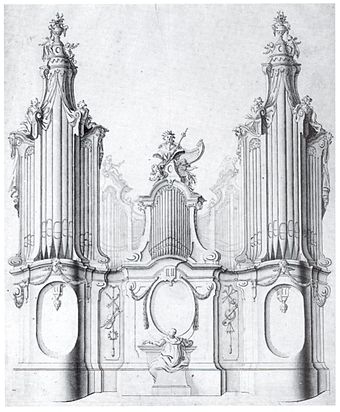
Remembering Jürgen Ahrend –– The Legendary Organ Builder

A Story By: Benjamin Groff© Groff Media 2024© Truth Endures

In the picturesque town of Göttingen, Germany, where the echoes of time vibrated through the cobblestone streets, a young prodigy named Jürgen Ahrend unearthed a profound connection to the world. Born on April 28, 1930, Jürgen was no ordinary child; his fascination with music was a beacon of his identity from a tender age. The harmonies of the local church organ would enrapture his imagination, and he would spend hours in silent contemplation, envisioning the creation of such magnificent sounds himself. This early passion for music and organ building is a testament to his lifelong dedication and can inspire us all.

At sixteen, Jürgen began his journey into the world of organ building, serving an apprenticeship with the renowned firm of Paul Ott. From 1946 to 1948, he learned the intricate art of crafting and restoring these majestic instruments. His apprenticeship was more than a mere training period; it was a formative time that solidified his passion and honed his skills. After completing his apprenticeship, Jürgen stayed on as an employee, perfecting his craft each day.

In 1954, Jürgen embarked on a new chapter of his life, forming a partnership with Gerhard Brunzema in Leer–Loga, Lower Saxony. Together, they created a symphony of work, producing 54 new organs and restoring 19. Their collaboration was a harmonious blend of innovation and tradition, each organ they built or restored becoming a testament to their dedication and artistry. However, in 1972, Brunzema left the firm, and Jürgen faced a new challenge. With unyielding determination, he established Jürgen Ahrend Orgelbau, a workshop that would soon become legendary in organ building.

Jürgen’s reputation grew with each project he undertook. His restoration of the Rysum organ and the Arp Schnitger organ in Hamburg’s Hauptkirche St. Jacobi (St. James’s Church) garnered international acclaim. These restorations were not mere repairs; they were acts of reverence, breathing new life into historical treasures. Jürgen’s meticulous attention to detail, his deep respect for the original craftsmanship, and his unwavering commitment to excellence ensured that each organ retained its unique voice, echoing through the centuries. His commitment to excellence is a testament to his dedication and can be felt in every note that resonates with his organs.

In 2009, filmmakers documented Jürgen’s remarkable journey in the film Martinikerk Rondeau. Through extensive interviews, he shared his wisdom, passion, and the philosophy that guided his work. The film offered a glimpse into the mind of a master craftsman, revealing the depth of his commitment to preserving the art of organ building.

As Jürgen approached his later years, he passed the torch to his son, Hendrik, in 2005. Under Hendrik’s leadership, Jürgen Ahrend Orgelbau continued to thrive, carrying forward the legacy of excellence that Jürgen had established. Jürgen’s influence remained palpable, his spirit woven into every pipe, every key, and every note resonating from the organs crafted in their workshop. The continuation of his legacy through his son, Hendrik, ensures that Jürgen’s influence will be felt for generations to come.

On August 1, 2024, Jürgen Ahrend passed away at 94. His life, marked by dedication, artistry, and an unwavering love for music, left an indelible mark on the world. Jürgen’s legacy lives on in the organs he built and restored, in the workshops where future generations of organ builders draw inspiration, and in the hearts of those touched by the music he so lovingly crafted.

Jürgen Ahrend was more than an organ builder; he was a maestro whose work transcended time, a guardian of musical heritage, and a beacon of passion and perseverance. His story is a tribute to the power of art, the importance of preserving history, and the enduring impact of one man’s dedication to his craft.