The Legend of Bick Bickerstaff: Ticketing Liberace in Oklahoma

Benjamin GroffMedia© | benandsteve.com | 2025 Truth Endures©

3–4 minutes

The Man Who Wrote Liberace a Speeding Ticket

Lloyd Joe “BICK” Bickerstaff

When I was young, I had the privilege of working alongside some genuinely seasoned police officers. These were men who had been in the profession for decades. They carried with them a wealth of stories and experience. One of the most unforgettable among them was my Captain, Loyd “Bick” Bickerstaff.

Captain Bickerstaff was the first person I met when I interviewed for the job. He pulled for me to get hired, though I never quite knew why. Maybe he saw himself in me. He was around sixty when we met. At the time, I didn’t know much about his background. I quickly learned through stories from others that he was a legend in Oklahoma law enforcement.

Officers came from various places. If they stopped by our agency, they either knew Bickerstaff or had heard of him. He had that reputation. And if he happened to be off-duty during their visit, they left visibly disappointed.

I remember one particular day when I was on desk duty. A reporter from Time-Life came in. He said he was working on a piece about Route 66. He asked if he could interview Captain Bickerstaff. I told him to wait while I went to get the Captain.

Now, Bick wasn’t the type to jump at the chance to talk to the press—unless he had something to say. But when I mentioned a Time-Life reporter was here to see him, he promptly came out into the booking lobby and, in classic Bick fashion, boomed:

“I bet you want to ask me about that son of a bitch I wrote a ticket to back in the 1950s!”

At that moment, I thought, Well, this will be a PR nightmare. But to my surprise, he and the reporter hit it off. They wandered around the station talking and laughing. They even went outside. The photographer snapped pictures of Bick behind the wheel of a patrol car.

Maybe this won’t turn out so bad after all, I thought.

Still, I couldn’t help but wonder. What kind of ticket did someone get back in the ’50s? It still had reporters chasing the story.

When Bick returned, he shook the reporter’s hand, sent him off, and then strolled back to where I was working.

“I can tell your brain’s buzzing,” he said with a grin. “You want to know what that was all about?”

I nodded.

“Yeah, I’d say so. Stuff like this doesn’t happen every day.”

And so he told me.

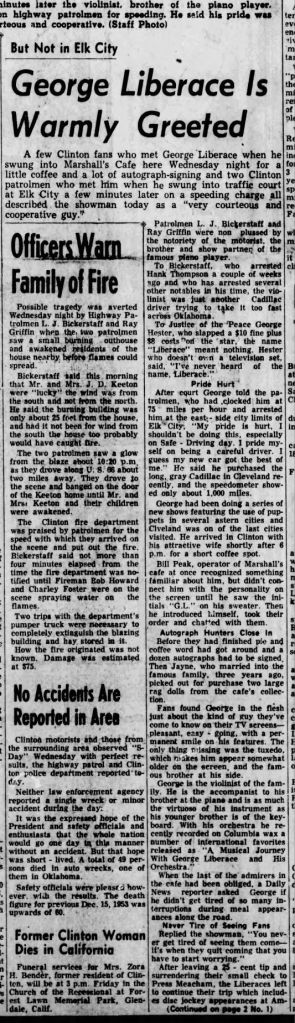
In the 1950s, Bick was a trooper with the Oklahoma Highway Patrol. In those early days, he patrolled on a motorcycle. One night, near Elk City, Oklahoma, a flashy car with California plates sped by him on Old 66. It was doing over 75 miles per hour or more.

He took off after it and got the car pulled over. It was late, and as he walked up to the driver’s window, the man inside said:

“Surely, you’re not going to write me a ticket. Don’t you know who I am?”

To which Bick famously replied:

“I don’t care if you’re Liberace—you’re driving like a bat out of hell. Yes, I’m writing you a ticket!”

And as it turned out, it was a Liberace. Liberace’s Brother George!

Bick wrote the ticket anyway. George Liberace followed Bick to the courthouse, paid it on the spot, and went on his way.

A few weeks later, Bick’s supervisor got a call from one of Liberace’s agents. They wanted to fly Bick to Hollywood to be on The Liberace Show. They thought it would be significant: the highway patrolman who dared to ticket a star. Bick said he couldn’t say no. The department thought it was good publicity, and it was.

Years later, people still talk about it. Unknowingly, I worked with the man who once wrote Liberace’s brother a speeding ticket. Bick told me –––


“Liberace brought me out on stage. He announced that I was the highway patrolman who wrote his Brother George a speeding ticket!”

Witnessing Tragedy: Lessons from a Highway Accident

Benjamin GroffMedia© | benandsteve.com | 2025 Truth Endures©

3–4 minutes

A Winter Night on the Highway

It was evening, and heavy traffic moved steadily along the narrow two-lane highway connecting small towns in the region. The road served as a lifeline, carrying motorists and buses through these quiet Oklahoma communities.

Law enforcement has fascinated me for as long as I can remember. My dad worked night shifts, patrolling the eastern region near the oil fields. In the summers, he served as a ranger at a nearby campsite. Winters drew him to different assignments, often more demanding and remote.

One of the state vehicles always remained parked at the ranger’s residence—our home—while my dad took the other on duty. That night felt like any other.

My bedroom was tucked into the back corner of the house. Even during winter, I often left the window cracked to let in the crisp night air. From there, I heard the distant hum of traffic about a mile to the south. 

As I lay on my bed studying for a test the next day, a sound split the quiet—a crash. Loud. Tires screeched. Then came the unmistakable bang of an impact.

It wasn’t the first time I’d heard it. A stretch of highway nearby had a reputation for accidents. Without hesitation, I grabbed my flashlight, told my mom there’d been a wreck, and jumped into the ranger truck. I had just earned my driver’s license, and the weight of responsibility was fresh on my shoulders.

Once on the road, I grabbed the radio and called it into the local police.

“It sounds bad—there have to be at least two vehicles involved.”

The Chief of Police from the nearest town confirmed he was en route. I pushed down the gas pedal and sped toward the highway. I noticed no cars coming eastbound as I turned onto it—an ominous sign. About two miles west, I saw the wreck.

A Greyhound bus had collided with a pickup truck. Both vehicles were mangled, partially in the ditch and partially blocking the road. The bus’s windshield was gone, and passengers were scattered everywhere—some dazed, others crying out.

The bus driver was lying in a yard 100 feet away. He was still strapped into his seat. The seat had been ejected from the bus. A man lay next to him. Both were dead. The bus had come to rest on the pickup truck, crushing its cab. 

Flames licked at the wreckage. There was no chance anyone inside the pickup had survived.

Before officers arrived, I radioed again:

“Get every ambulance in the county out here. This is bad.”

A bread truck delivery driver had just finished his route and stumbled upon the crash. Without hesitation, he unloaded his remaining bread onto the roadside. He began helping by filling his truck with victims to shuttle them to the hospital.

There had been thirty-two people on board. Survivors said a passenger had been drinking and became increasingly aggressive. The driver warned him to settle down, but the man charged ahead and grappled with the driver. That man now lay dead beside him in the yard.

The response was massive—five police agencies, three fire departments, and four ambulance services. That same night, a basketball tournament had drawn spectators to a nearby town. Many who had been on their way became unexpected witnesses to a horrific scene.

Inside the crushed pickup were two passengers—the aunt and uncle of a local fire chief. The tragedy hit close to home.

Years later, as a police officer, I would respond to countless serious accidents. But none would ever match that cold winter night’s scale. None equaled its raw emotion. It was the first crash I saw with my own eyes.

Embracing Honesty in Self-Reflection

Benjamin GroffMedia© | benandsteve.com | 2025 Truth Endures©

2–3 minutes

On Writing a Sincere Self-Analysis

To Thy Oneself Be True!
To My Ownself I Must Be True!

Writing the most sincere self-analysis is no small undertaking. It asks something of us that we’re not always ready to give. It demands honesty, and not just the kind we wear on our sleeves when trying to be humble or modest. It demands the raw kind. The kind that doesn’t flatter or soften but still doesn’t condemn. A self-analysis worth anything must go beyond the stories we’ve rehearsed for friends. It must also reach deeper than the traits we like to highlight on good days. It must ask: Am I willing to know myself, truly? And, more difficult still: Am I willing to share that knowledge with others, even if it unsettles or embarrasses me?

There’s always a temptation to curate the truth—to include only what paints us in a light we can tolerate. We must focus on growth, accomplishments, and kind-heartedness. We should downplay the envy, impatience, and regrets that tug at us when we’re alone. But sincerity demands more. It asks for balance. The glad moments don’t mean as much without the unhappiness that gives them context. Our kindness shines brighter when we own the times we’ve neglected to be kind. Our strength becomes more meaningful when we admit we’ve been weak.

A true self-analysis is like holding up a mirror. It’s not the forgiving kind in your hallway that you glance at before heading out. It’s the close-up, unfiltered reflection you find under harsh light. There, we meet the layers. First, there’s the child we were. Then, comes the adult we became. Finally, there’s the person we are still trying to be. We see the love we gave and the love we withheld. We know the courage and the fear, the moments of pride and the nights of doubt. And in that space, there is room for grace—because sincerity isn’t about judgment but clarity.

So when you write your self-analysis, ask yourself: will I tell it all? Or just the things I like? Will I dare trace the lines that run through my contradictions, triumphs, and failures? The work isn’t in choosing between the good and the bad. It’s in holding them together and saying,

This is who I am—flawed and hopeful, broken in places but still reaching toward something better.

That’s when you know it’s sincere—not because it sounds perfect, but because it doesn’t try to be.

Memorable Family Moments During a Storm

Benjamin GroffMedia© | benandsteve.com | 2025 Truth Endures©

4–5 minutes

My parents rarely attended celebrations, so seeing them at a party in our old town was a significant change. This meant that my two sisters and I would need to stay with my grandparents while they were “in town.” By then, my three older brothers had grown up and left home, marking a shift in our family dynamics.

It was unusual for my sisters to join me and my grandparents in their den. We affectionately referred to them as Mom and Pop. They usually came to the house for a celebration. This could be Christmas, Thanksgiving, or a birthday. We would all gather in the front living room. But we nestled with Mom and Pop this night in their cozy den.

Mom and Pop were old-timey. Mom had a rocking chair. She would rock endlessly in it. Pop sat stoically in his oversized comfort chair. He puffed on his pipe. They habitually glanced out the front door, tracking how often their neighbors left their homes. One neighbor, in particular, drove them crazy by leaving every thirty minutes. They never figured out why.

As evening settled in, the steady ticking of the mantle clock lulled us children into a calming trance. It was a good thing, too, because what was about to unfold would test our nerves.

A thunderstorm at night!

It roared in just as the clock struck seven—thunder, lightning, and a barrage of heavy rain. Mom and Pop had lived through the Dust Bowl. They had seen the Great Woodward, Oklahoma, Tornado. The tornado wiped out the town and claimed many lives in the black of night. Because of that, they had a deep respect for storms. They headed straight for the cellar at the first sign of a tornado threat.

Like an air raid siren, the storm siren was the town’s lifeline. In the early 1970s, we didn’t have the advanced weather alerts we do today. The local police alerted the residents. The fire departments would sound the alarm if a tornado was spotted. This gave residents only minutes to take cover.
My grandmother hushed us, straining to listen for the whistle. Just as she did, a lightning strike took out the electricity—

NO LIGHTS!

Without hesitation, she calmly instructed,

“Pop, go in the bedroom and get the flashlight.”


Pop stood, walked to their bedroom, retrieved the flashlight, and handed it to her.

She scolded him.

“Pop, you could have turned it on, for heaven’s sake. Why didn’t you turn it on?”

Pop replied innocently,

“Well, Mom, you just said go get it—you didn’t tell me to turn it on.”

We sat in the dark, stifling laughter. Then it got worse.
Mom attempted to turn on the flashlight, but nothing happened. She sighed.

“Pop, I thought we got new batteries for this last week?”

“We did, and I put them in,”

He answered confidently.

Confused, she asked,

“Pop, you left the new batteries on top of the chest of drawers, and I had to put them in. You never changed them.”

Pop puffed up.

“Mom, those were the old batteries I put up there after I changed them out.”

Mom groaned.

“Pop, why would you keep the old batteries? Why didn’t you throw them away?”

Pop’s reply ––

“If you saw them there, you’d know I’d already changed the batteries.”

Then Mom ––

“Pop, why would I assume that?”

She took a breath, trying to stay calm.

“Well, I put the old batteries in. So, what happened to the new ones?”

Pop hesitated.

“I thought they were the old batteries… so I threw them away.”

Mom clenched her jaw.

“So now we have no batteries and no flashlight. Wonderful.”

Determined, she announced,

“I’ll go upstairs and get the oil lantern.”

Pop offered to go, but she waved him off.

“No, you’ll mess it up. I’ll take care of it.”

While she was gone, it gave Pop time for improvisation. 

He asked us kids,

“You know where Moses was when the light’s when out?

We all answered,

“No!”

Pop humorously responded,

“He was in the dark!”

He got such a chuckle out of telling it and we of coursed laughed.

Mom carefully navigated the stairs in the dark. Within minutes, she returned with the glowing lantern. The lantern finally illuminated the room.

All the while, my sisters and I sat on the den floor. We were petting Mom and Pop’s chihuahua. We tried to contain our laughter over the events of the evening. We were laughing so hard that, had the siren blown, we couldn’t even hear it. Still, we attempted to keep some composure out of respect for Mom and Pop.

Pop lit up his pipe, turned to Mom, and said

“You ought to put it on your list for when we go shopping to get batteries.”

Our parents didn’t return until nearly ten, when the lights came on. I don’t know how fun their party had been, but ours couldn’t have been any better. Mom and Pop swore us to silence. They didn’t want our dad to think they were becoming forgetful. Until this day, that story has never been privately or publicly shared.

The Secrets We Keep From Our Parents

Benjamin GroffMedia© | benandsteve.com | 2025 Truth Endures©

3–4 minutes

Things I didn’t tell my Father.

JD GROFF

I think about my life and often find myself lost in daydreams. I think about what I have done, what I have left undone, and what I have never said. Among those lingering thoughts, my Father stands at the center of many. There is a growing list of moments I wish I had shared with him. Time always held me back. Fear held me back, too. Sometimes, stubbornness was also to blame.

Every child keeps secrets from their parents. It’s an unspoken rule of growing up, a silent understanding that some things are best left unsaid. Some secrets were harmless. Others were reckless. I believed a few were withheld to protect us from disappointment, confrontation, or painful truths.

I never told my dad I put frogs in my sister’s bed. They were scattered all over her room. He didn’t need to be a detective to know who the culprit was, but I never admitted it. It was a childish prank, one of many that shaped my mischievous youth.

I never told my dad I took his prized pickup truck for a drag race down the state highway. I was old enough to drive but not wise enough to make good decisions. By the time I got home that night, I had already faced my punishment. I felt humiliated for losing the race. There was also the quiet shame of knowing I had betrayed his trust. He never confronted me about it, but I suspect he knew. Fathers often do.

I never told my dad this story. One afternoon after school, I thought I had the rare gift of a chore-free evening. Then I opened the refrigerator and found a note beside the cola cans. His handwriting instructed me to bring the tractor to the meadow to help him build a fence.

Frustrated, I stomped outside, my young temper flaring. In my haste, I spun around and dented the fender of his truck. Later, he assumed someone had hit it with a car door while he was in town. I let him believe that. I convinced myself I’d tell him we’d laugh–– when the time was right. That moment never came. And until now, I’ve never told another soul.

But the most significant thing I never told my Father was how much he meant to me. He was my hero. His wisdom shaped me in ways I never fully understood until adulthood. I always thought there would be time to say those words. Yet, life has a cruel way of taking time away before we realize its worth.

I never told my dad that. As I stood before his casket, I saw not just the man who raised me. He was the embodiment of dignity, integrity, and strength. I wanted to tell him then, but it was too late.

But I can tell you.

“I’ll be dead, but the older you get, the wiser I’ll be!” – JD Groff.

JD Groff was the epitome of a great father. He had his flaws, as all men do. Nevertheless, his presence and character were a foundation. His unwavering values were something I always relied on. And though I never spoke the words to him, I hope Dad knew. I hope he felt it in the way I listened. I hope he recognized it in the way I followed his example. I hope he saw it in the life I have tried to live in his honor.

Some things stay unspoken, but they are never forgotten.

Memories of My Grandmother and the Whippoorwill

GROFF MEDIA 2024© TRUTH ENDURES IMDBPRO

Presented by benandsteve.com By: Benjamin Groff II©s

2–3 minutes

My grandmother, whom I affectionately called Mom, often shared childhood memories filled with the enchanting call of the whippoorwill. She spoke of its song with reverence, describing it as a sound of pure beauty that she dearly missed. Her stories wove a special bond between us. They spanned the miles that separated our homes in Northeast Texas, Southwest Arkansas, and Southeast Oklahoma.


Nowhere else, she insisted, did the whippoorwill’s call sound as sweet.


I lived nearly forty miles east of her. It was on a farm where the evenings were alive with the calls of night birds. When Mom visited, I would take her on walks to the barns. We listened to the quail and other birds stirring in the brush.


“Mom, are those the whippoorwills you were talking about?”

I’d ask eagerly.


She would shake her head, smiling softly.

“No, that’s not them.”


Her answer certainly puzzled me. I knew the birds in our region. What I heard matched the description of a whippoorwill. At least, it did to my ears. Yet she remained firm. The sound she longed for existed only in the woods of her childhood, some two hundred miles away.


Mom passed away in April 1975, and with her, I thought, went the mystery of the whippoorwill. But fate had other plans.


Not long after, my parents decided we would take a trip. We went to visit my great-uncle Sam and great-aunt Dora. They lived in the very place where Mom had been born. I expected only a family visit. Yet, something remarkable happened as we settled onto my great-uncle’s front porch.


The evening air cooled as the sun dipped below the horizon. Towering trees stood like silent guardians, their leaves rustling in the gentle breeze. The Ouachita Mountains stretched beyond us, their shadows deepening as dusk settled in. And then, clear as a bell, I heard it.


“Whip-poor-will! Whip-poor-will!”


The call rang through the crisp and melodic trees, carried by the mountains and forest floor acoustics. It was so rich and hauntingly beautiful, unlike anything I had ever heard.

At that moment, I understood.


I knew why Mom had never heard it quite the same anywhere else. Here, and only here, the whippoorwill’s call possessed a magic she had never been capable of finding again.
I have never heard it since.


But in that fleeting moment, I was surrounded by nature’s beauty. I heard the echoes of the whippoorwill’s song. I found peace. It was as if I had brought her wish full circle. I was hearing the sound she longed for. I was honoring her memory in a way that words never could.


And in that sound, I found her again.

Hear the sound in the video below.

Learn about the Whippoorwill here!

Three Impacts of a Collision Explained

GROFF MEDIA 2024© TRUTH ENDURES IMDBPRO

Presented by benandsteve.com By: Benjamin Groff II©s

2–3 minutes

Understanding the Three Impacts in a Collision

Photo by Pixabay on Pexels.com

We often think there is just one impact when imagining an accident. Be this is a fall, a bicycle crash, or a car collision. Yet, physics and medical studies, based on rigorous research and analysis, show that every crash has three distinct impacts. Each one contributes to potential injury.

Let’s use a crash as an example, though the same principles apply to other accidents.

Impact #1: Vehicle Collision

This is the first crash. The moving vehicle collides with another object. Whether it is a wall or a stationary object. The force of this impact determines the severity of the accident.

Impact #2: Body Impact

Even after the vehicle stops or slows down, the occupants continue moving ahead due to inertia. This often causes a secondary impact. The person collides with the car’s interior, like the dashboard, windshield, airbag, or seatbelt. It’s important to note that seatbelts and airbags play a crucial role. They reduce injuries and make us feel safer on the road.

Impact #3: Internal Organ Impact

The most overlooked but critical impact happens within the body itself. Even after a person stops moving, their internal organs shift and collide with bones and other structures. This can lead to serious injuries like concussions, internal bleeding, and organ damage.

Delayed Symptoms and the Body’s 

Response Of The Body instantly after an accident, many people don’t feel the extent of their injuries. Adrenaline and shock mask the pain. The body naturally responds by triggering inflammation and swelling to protect damaged areas. Yet, once this response subsides—sometimes hours or even days later—the true severity of injuries becomes obvious.

The Delay Between Sight and Sound in a Crash

If you witness an accident from a distance, you notice another phenomenon. There is a delay between what you see and hear.

Because light travels faster than sound (186,000 miles per second vs. 1,125 feet per second), you will see a crash before you hear it. This creates a lag, where the sequence of events seems different from what happened.

Photo by Pixabay on Pexels.com

For example, if a plane crashes and explodes, a witness will report hearing multiple booms and assume three separate explosions. In reality, they are hearing the first impact, secondary collisions, and final resting impact—all of which happened quickly. The delay in sound reaching the observer can create confusion, especially during traumatic or high-stress situations.

Key Takeaways

  • Accidents involve three distinct impacts: vehicle collision, body impact, and internal organ impact.
  • Injuries are not always instantly clear, as the body’s natural mechanisms can mask symptoms.
  • Witnesses misinterpret the sequence of events because of the delay between light and sound. Hence, investigators must analyze physical evidence carefully.

Understanding these factors can help individuals recognize the risks involved in crashes. They can then make informed decisions about safety and medical attention.

Understanding Loss: A Decade of Reflections

GROFF MEDIA 2024© TRUTH ENDURES IMDBPRO

Presented by benandsteve.com By: Benjamin Groff II©s

6–9 minutes

Reflections
Reflections On Every Ten Years

It started when I was around ten years old—I began seeing life in ten-year intervals. Every decade, I would take stock of where I was. I would think about where I am going. I would consider who was still with me and who was no longer there. Sometimes, life separates us through distance, sometimes through death.

In my first ten years, I had already experienced both. Friends I met in school came and went, their families moving away before we had time to build anything lasting. Loss was something my grandparents had gently prepared me for, though it didn’t soften the blow when it happened.

One of the first deaths I remember was a neighbor of theirs, a man named Tom. I often visited his house with my grandfather, sitting and listening as they talked. When he passed, I already knew before anyone told me. That morning, the hearse pulled up to his house after passing my grandparents’ place. I also knew my grandfather had spent the night with him, sitting in quiet vigil. Tom’s funeral was the first I ever attended.

Then there was Maynord, a clumsy old farmer with an Okie drawl and a stride to match. He was my dad’s friend, but I saw him as my best friend. His death hit me harder than I ever expected. One moment, he was there. He was laughing and rambling on as he always did. The next moment—gone—a heart attack took him suddenly and finally. I was only eight. I carried that weight for years, incapable of understanding how life takes people without warning.

By the time I turned ten, I thought I had braced myself for loss. I believed that nothing would catch me off guard again. But life has a way of proving us wrong.

At eleven, I came home from school one afternoon. I found my mother already there. This was unusual enough to make my stomach tighten. She called me outside. We stood together on the ledge in front of our house. She then broke the news. My grandmother had died suddenly that day. No warning. No time to prepare. Just gone.

I didn’t cry right away. Instead, my mind turned inward, searching for meaning in something so senseless. Was this some punishment? Had I done something wrong? Was God teaching me a lesson? And if so—what was it? It took years for me to understand that life doesn’t work that way. It happens and keeps happening, regardless of what we think or how ready we believe we are.

Over the next decade, I watched more family members slip away—some suddenly, others with the slow certainty of time. Friends moved and lives shifted. By the time I reached twenty, I had seen the past ten years as a lesson in endurance. I had learned what to hold onto and what to let go of.

But life doesn’t follow our plans. It unfolds in its way, teaching us not through intention but experience. And the next ten years would drive that lesson home in ways I never expected.

As a law enforcement officer, I would be called to homes where deaths had occurred. I had attended so many of these that the coroner trusted me. He allowed me to make the death declaration over the phone. Then, he signed the death certificate. I sat with family members until the body was removed from the home. I held grieving loved ones the best I was able. 

The hardest of these instances included the death of a 15-year-old disabled child. She depended on her parents for every facet of life. Feeding, being on a respirator, medications, cleaning, and moving about the home. They had been the life inside her, literally. She passed one morning as the mother was feeding her and couldn’t get the respirator back on quickly enough. The parents were wrecks when I arrived on the scene. It was the most emotional death scene I ever had to deal with. I called a police Chaplain to the scene because, quite frankly, it was beyond what I was equipped to handle. 

I discovered he was speechless and powerless to be of much use either. I sat with the parents and promised them it wasn’t their fault. That life goes when we don’t want it to. I couldn’t tell them about all my experiences, but I wanted them to know they were not alone. I left my calling card and asked them to call if they needed anything. I checked back in on them days later. It was no easier then. 

During my time as a police officer, I experienced the ultimate sacrifice twice. Two fellow officers were killed in the line of duty.

The first happened late one night during a robbery at a hotel on the city’s edge. The officer interrupted the thieves, but they overpowered him. One of the assailants shot him, and then—adding to the horror—they used his weapon to finish the job. The hotel clerk, hidden in an ideal location, saw their getaway and critically described the vehicle. Thanks to that information, the suspects were arrested soon after. The gunman was convicted and sentenced to death. He was executed in 2000.

I was on radio duty. An ambulance was transporting the officer. It tried to navigate through thick fog on its way to a larger hospital. When the driver suddenly exited the highway, I knew what that meant—the officer was gone. I promptly called the chief’s office. But by then, news outlets, always tuned into police transmissions, had already picked up on the situation. The department’s phone lines were jammed with calls. I took on the role of spokesperson. I did my best to clear the lines quickly. This was so they can be used for local needs. That was January 1983.

Less than two years later, in October 1984, I had been transferred to patrol. One night, we were responding to a vehicle accident outside our jurisdiction. My unit’s radio picked up an urgent transmission. A state trooper was down.

We were en route to the accident. Then, the assigned ambulance reported it was just a car in a ditch. We weren’t needed. But by then, we were already far outside the city, and no other units were nearby. I radioed the county sheriff’s office, advising them of our location and availability. They authorized us to continue north on State Highway 6.

As we traveled, more details about the suspect’s vehicle came through. Then, we spotted it. My partner and I intercepted the car and pulled it over. The driver’s license was expired, but we knew little else at the time. Only later did we learn a chilling detail. He had left his valid driver’s license with the trooper he had shot.

We were transferring the suspect to a deputy’s vehicle. Then, word came through that the ambulance transporting the trooper was lost. They were struggling to find the hospital. We raced to intercept them.

We arrived at the emergency room. A First Lieutenant with the highway patrol and I broke the safety keepers on the stretcher. We pulled the trooper out of the ambulance ourselves. The paramedics were in shock, frozen by the weight of what had happened. We pushed the stretcher down the corridor. As we rounded a corner into the ER, the trooper’s arm fell from the cot. It knocked pens and pencils everywhere. That’s when I knew.

He was gone.

Still, I refused to leave him. I stood at the head of the stretcher, unwilling to let him be alone. Finally, the doctors and nurses forced me away. I didn’t want to go.

Out in the hallway, my own Lieutenant stood waiting. 

“We’ve got reports to write,” 

He said. 

“While it’s fresh in your mind.”

I looked him straight in the eye. 

“This night will forever be fresh in my mind.”

Every ten years, I look back on the events of the earlier decade. I wonder what will be in store for the next ten years! My mother is pushing 95 years-of-age and I doubt she is in my next ten years. I am just hoping that I am in my next ten years.

Lessons from Pa Pa J: The Joy of Simple Traditions

GROFF MEDIA 2024© TRUTH ENDURES IMDBPRO

Presented by benandsteve.com By: Benjamin Groff II©s

1–2 minutes

Pa Pa J.
Pa Pa J., Dad,

We never took a trip or spent a day alone without resorting to Vienna sausages. It was a ritual. Sometimes we’d have crackers with them. Sometimes not. But one thing was sure: the lid of that little can popped open when hunger struck.


I’m talking about my dad, JD. He refused to stop at roadside cafés or even at convenience stores. If we needed gas, we’d pull into a filling station. But for food, we used whatever we brought from home. As a child, I never minded. Sitting there, sharing those sausages with my dad, I saw they tasted better than anything we bought.


Years passed, and I eventually moved out. But my dad’s traditions didn’t stop with me. His grandkids soon got to experience his simple pleasures, though I didn’t realize it then.
Recently, while visiting with my nephew, he shared a memory that made me smile.

“Pa Pa,”

he said,

“always had a can of Vienna sausages when he visited. We’d sit together and share them like he used to do with you.”

But then he added something even more telling about my dad’s practical ways.


One day, they were out on the back patio. When the last sausage was gone, my nephew picked up the empty can. He was ready to throw it away. But Pa Pa stopped him.

“No, give it to me,”

Pa Pa J. said.

He walked to a pipe with an open end. This pipe was leading into the house. He placed the can over it. It fit perfectly, sealing the opening. My nephew chuckled as he realized the simple genius behind it—Pa Pa’s foolproof way of keeping wasps from nesting inside.


And so, somewhere in that old homeplace, if someone tinkering around. They find a pipe with a can stuck inside. They should leave it be. Because if Pa Pa put it there, you can bet it was for a good reason. Unless, of course, they want a house full of Yellow Jackets.

The Long Holiday Journey: Family Moments on the Road

GROFF MEDIA 2024© TRUTH ENDURES IMDBPRO

Presented by benandsteve.com By: Benjamin Groff II©s

3–4 minutes

The Long Holiday Ride

Going Home
The Miller Family Going Home For the Holidays,

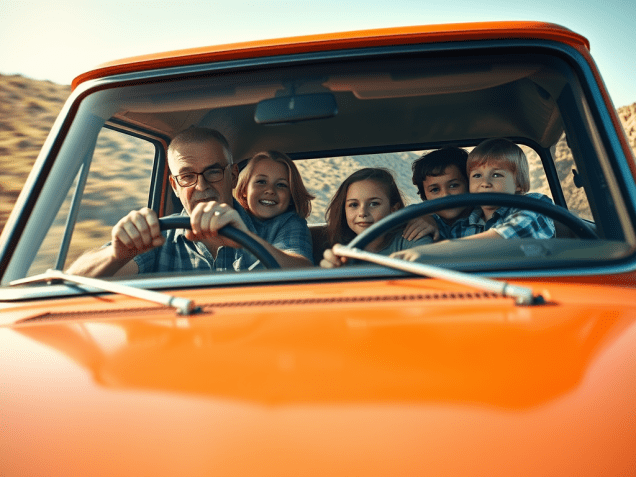
The old pickup truck rattled down the highway, packed tight with the Miller family. The father, Dale, gripped the steering wheel, his sharp eyes scanning the road ahead. Beside him, their mother, Janice, balanced a warm dish of sweet potatoes wrapped in a towel on her lap. Every thirty seconds she would let out a ‘hiss,’ and reach for the dash, her only comment to Dale’s driving. In the same seat, the children jostled for space. Clayton, the eldest at twenty-two, leaned against the window with his arms crossed. His younger sisters, Maggie and Rachel, squeezed in beside him. Then there was little Jack. He was the baby of the family, barely eight, and sat between his sisters. His feet barely touched the floor.


It was the same every year. They drove forty miles on bumpy roads. Gravel spat against the undercarriage. The chilly air sneaked in through cracks in the old truck’s frame. The family’s first stop was Janice’s side, the sprawling Henderson clan, where a sea of cousins, aunts, and uncles waited. The noon meal would be loud, laughter filling the air along with the scent of roasted turkey and homemade pies.

Clayton was ever the quiet one. He watched the open fields pass by. Meanwhile, Maggie chattered about the games she’d play with her cousins. Rachel checked the food in the back. She made sure nothing had tipped over. Meanwhile, Jack, restless, kicked his feet. He asked every ten minutes, “How much longer?”

When they finally pulled into the driveway of Janice’s childhood home, they heard the noise instantly. It hit them before they even got out of the truck. Kids ran around the yard. Adults stood in clusters laughing. The kitchen was an organized chaos of steaming dishes and busy hands. The family squeezed through the door, greeted by warm hugs, as coats were peeled off and plates were filled.

After lunch, games and stories took up the afternoon. Clayton found himself talking with an uncle about work on the ranch, while Maggie and Rachel gossiped with their cousins. Jack, after an impressive three plates of food, ran outside to join a game of tag. Dale was talking to his favorite brother-in-law, about a horse he was bringing along.

But there was no time to linger too long. As the sun began to sink, Dale gave the usual call: “Time to load up! We still got another stop!” They groaned and said their farewells. Everyone piled back into the truck with full stomachs. Hands waved through the window.

The second stop was Dale’s side, a quieter gathering with just his sister’s family. Fewer cousins, a calmer atmosphere, and jokes cracking from Bus and Virgil. Aunt Sis served coffee and pie, and the talk was slower, nostalgic—old family stories, memories of Christmases past.

Rachel curled up in a chair with a book while Maggie helped Aunt Sis in the kitchen. Jack, fighting off sleep, leaned against his mother, his eyes drooping. Clayton sat with his dad and uncle, talking about the year’s crops and the price of cattle.

By the time they left, the truck was much quieter. The ride home was filled with drowsy murmurs, Jack fast asleep against his mother’s side. Rachel and Maggie leaned on each other, the warmth of the long day still lingering. Dale, was dreaming of all the memories he had been reminded of while seeing his folks and kin.

As the headlights cut through the darkness, Dale glanced in the rear view mirror at his family. It was a long trip every year. Yet, as he looked at his wife and children—fed, happy, and together—he knew it was always worth it.

The holidays weren’t about the miles traveled, but the moments shared. He never had a million dollars, but he sure felt like it.

Echoes of War: A Bond Forged in Nightmares

GROFF MEDIA 2024© TRUTH ENDURES IMDBPRO

Presented by benandsteve.com By: Benjamin Groff II©s

2–3 minutes

Echoes of War

Chad Branson woke in a cold sweat, heart hammering against his ribs. The dream had come again—flashes of burning villages, the thunder of distant explosions, the acrid stench of smoke. He had never been to war. He had never even held a gun. Yet, the memories felt real, like echoes of a life he hadn’t lived.

It had started five years ago, these violent dreams that left him breathless and shaken. He had tried therapy, meditation, and even medication, but nothing dulled the visions. He had no explanation—until the day he met him.

The chance meeting happened in a quiet café, a place Chad often escaped to in hopes of finding solace. That morning, as he reached for his coffee, his hand bumped into another.

“Sorry,” 

He murmured, glancing up—and froze.

The man before him had eyes that mirrored his own exhaustion. His jawline was sharp, and faint scars traced his brow. When he spoke, his voice carried a weight. 

Chad recognized it but couldn’t place it.

“Chad Branson,” 

The man said, extending a hand.

Chad hesitated. 

“That’s… my name.”

The other man chuckled. 

“I know. That’s why I introduced myself.”

A strange silence stretched between them before Chad spoke again. 

“Do I know you?”

The other Chad was an ex-soldier and a survivor of two deployments. He was also the bearer of the nightmares Chad had somehow inherited. Chad watched him closely.

“No,” 

He said at last. 

“But I think we’ve been living the same war.”

Over the next weeks, they talked, comparing details.

Every dream Chad had lived, the other had experienced firsthand. The battlefield in his mind had once been real. The pain, the horror—it belonged to this man, but somehow, it had become part of Chad, too.

Neither explained it, but they didn’t need to. In their shared pain, something else took root: understanding and affection. A bond neither expected nor deny.

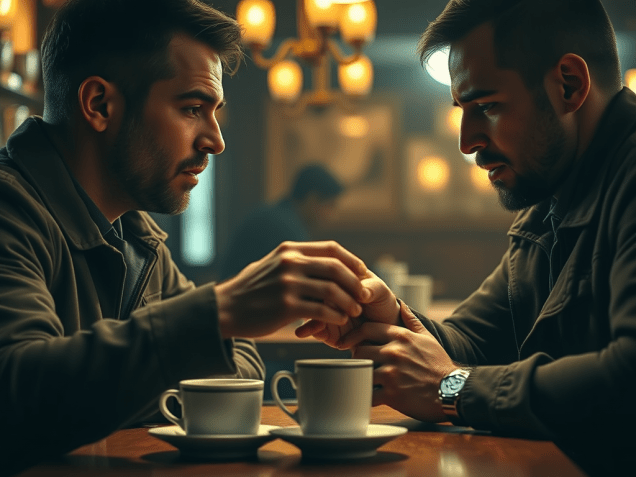
One night, as they sat in the dim glow of Chad’s apartment, he reached for the soldier’s hand. 

“Maybe the universe gave me your memories for a reason,”

He murmured. 

“Maybe I was always meant to find you.”

Echoes of War
Echoes of War

The other Chad squeezed his fingers gently, a small, weary smile forming. 

“And maybe,” 

He whispered, 

“We can finally find peace together.”

The nightmares didn’t seem so heavy for the first time in years.

For the first time, neither of them was alone.

A Life-Changing Dilemma at Midnight

GROFF MEDIA 2024© TRUTH ENDURES IMDBPRO

Presented by benandsteve.com By: Benjamin Groff II©s

4–6 minutes

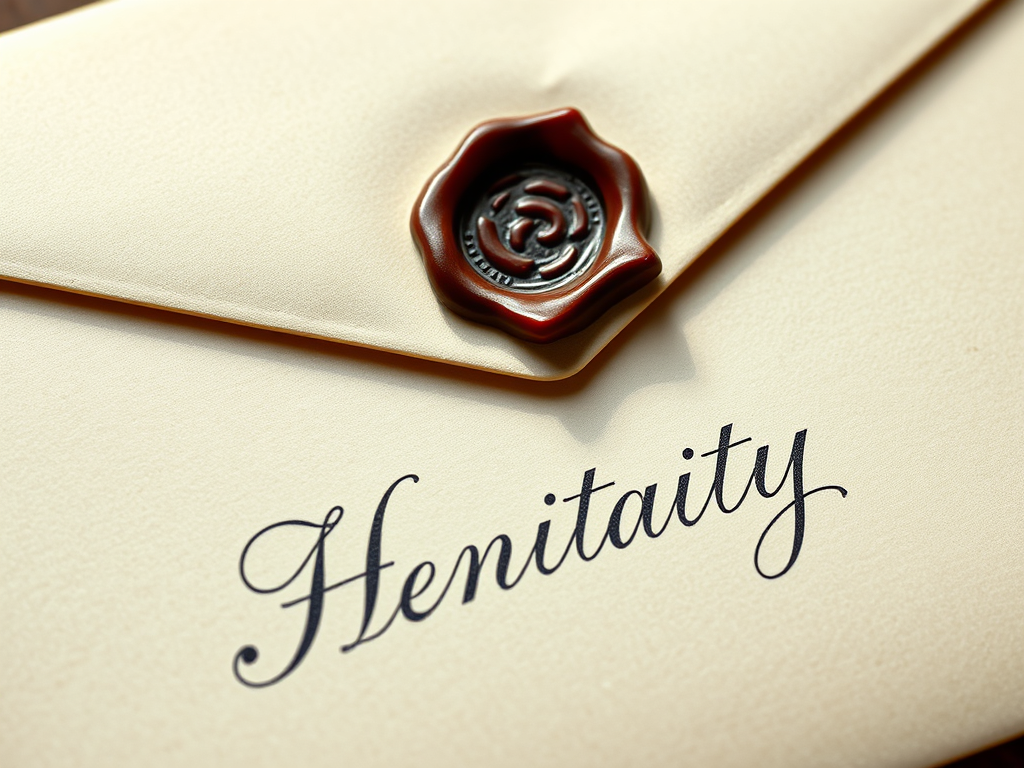
The letter arrived on a Wednesday, sealed with a wax insignia that Alex didn’t recognize. There was no return address, just his name scrawled in an elegant, old-fashioned script. The envelope itself was thick, the parchment that felt out of place in the modern world.

He hesitated before opening it, but curiosity won out. The letter inside was written in the same exquisite handwriting:

Mr. Alex Carter,

Your presence is requested at Blackwood Manor at precisely midnight this Friday. Do not be late. Bring only your wits, and tell no one of this invitation. All will be explained upon your arrival.

This is not a request.

There was no signature.

Alex stared at the letter, his pulse quickening. He had never heard of Blackwood Manor and wasn’t in the habit of receiving cryptic invitations. A prank? Or a mistake? But something about the paper’s texture, the commanding tone, and the archaic penmanship made him doubt that. He felt he had just been drawn into something far more significant than himself.

He spent the next two days researching. There was no official record of Blackwood Manor. Late one night, he found a reference buried in an obscure historical forum. It mentioned an estate on the outskirts of town, abandoned for nearly a century. There were no photographs, no listed owners, just a footnote about a once-prominent family that had vanished without explanation.

At midnight on Friday, Alex stood before the imposing iron gates of the manor. His heart pounded in his chest. The estate, a grand structure that seemed to defy the laws of time, loomed in the darkness. Its ivy-covered walls and Gothic architecture were barely illuminated by the sliver of moonlight breaking through the clouds. Despite their rusted appearance, the gates creaked open at his touch as though they had been waiting for him.

He stepped ahead, the gravel crunching beneath his feet. The air was thick with something replaceable, a tension that made his skin prickle. The massive wooden doors at the entrance groaned open before he knocked.

From a source unknown to Alex, a smooth and knowing voice called from within the manor, echoing through the night.

“Welcome, Mr. Carter. We’ve been expecting you.”

And with that, the door shut behind him, sealing his fate. The candles along the grand hallway flickered to life, casting eerie shadows on the walls. A sudden whisper echoed through the chamber, though no one was visible. Then, the voice returned, this time closer.

“There are three doors to which you must pass through to find what you have lost. If you can’t find your way through all three doors, you will not survive.”

Alex’s breath caught in his throat. He turned, expecting to see the speaker, but the hallway was empty. As he took another step ahead, the world around him seemed to flicker—like a light struggling to stay on. His head pounded, and suddenly, the floor beneath him dissolved. He was falling into a void of darkness, his senses overwhelmed by the absence of light and sound.

Then, a distant beeping noise. Faint voices. A feeling of weightlessness.

Somewhere far away, Alex lay in a hospital bed, his body unmoving. The monitors beeped steadily, measuring a life that hung in the balance. He didn’t know it yet, but the letter, manor, and voice were all part of something more profound. It seemed as though something was urging him to fight his way back.

The first door loomed before him, its frame flickering like a mirage. His hands trembled as he reached for the handle, knowing that whatever lay beyond was the key to his survival.

He entered and found he had to walk across a tightrope to reach the second door. Alex only saw blackness below. He was afraid of heights and not very well-balanced. Alex attempted to steady himself on the rope and inch across, but he couldn’t stay balanced. He returned to the first door and decided to belly crawl across the rope to the second door. It took longer, but he eventually got there. 

At the second door, he found it locked by a combination. Only two numbers would open it. Alex tried combinations endlessly, his heart pounding in his chest, until finally pushing in 00, and the door opened. Inside was a spinning floor with different sections that would align with the third door. If he chose the right section, the third door would open. If not, the floor would continue spinning. Alex attempted six different sections before choosing the straightway section that led him to the third door. At the door, he can push or pull. Depending on which way he opened the third door would decide if he lived or died.

Standing at the third door, Alex contemplated which way to open it. His life flashed before him from when he was a baby to his current age. He saw friends and relatives who had passed and noticed things he had forgotten. It would be a gamble. He knew he couldn’t go back. All the doors behind had disappeared once he went through them. His situation hit him with immense gravity. He realized that his decision would decide his fate. 

This was it. Would Alex pull or push? He decided to push. As he went through the door, a bright light appeared. Voices loudly chattered. It was as if Alex was opening his eyes for the first time. Then he heard his mother’s voice, 

“My God, his eyes are open; Alex, can you hear me?”

Alex, looking around at a sterile room trying to figure out where he had ended up, replied –––

“Yes, Ma, I chose to push through the door.”

When Time Stopped: A Tale from Briar Hollow

GROFF MEDIA 2024© TRUTH ENDURES IMDBPRO

Presented by benandsteve.com By: Benjamin Groff II©s

2–3 minutes

It happened at precisely 3:17 p.m. on a warm autumn afternoon. The town of Briar Hollow had always been a quiet place. The most exciting event of the week was the arrival of fresh pies at Millie’s Diner. But on this particular day, something changed. Time stopped.


No one saw it happen. There was no flash of light, and there was no tremor in the ground. One moment, the clock on the courthouse tower was ticking as usual, and the next, its hands were frozen. Birds hung motionless in the sky, leaves hovered mid-fall, and the wind seemed trapped.


At first, the townsfolk didn’t notice. Old Mr. Grady blinks in confusion halfway through handing change to a customer, as the coins refuse to drop from his fingers. Sarah Porter had been driving to the grocery store. She finds her car inexplicably locked in place. The engine still hums. Children at the playground hang in mid-swing, their laughter caught in their throats.


And then, they noticed each other. Wide eyes met, tentative steps were taken, and panicked voices rose into the still air. The world had paused, yet they remained unstuck, the only things moving in a town frozen in time.


The local librarian, Maggie Holcomb, was the first to suggest that something bigger was at play.

“This isn’t just a power outage,”

she murmured, staring at the unmoving second hand of her wristwatch.

“This is…impossible.”


Hours passed, though the sky did not change. The sun remained where it was, suspended in golden radiance. Some tried to leave town, only to find that the roads looped them back to the center. Others attempted to wake those frozen, but their efforts were in vain. The townsfolk, once filled with panic, began to feel a creeping sense of fear. Fear turned to despair, and then—acceptance. Their emotional journey mirrored the strange stillness that had befallen their town.


The people of Briar Hollow, despite the unchanging world around them, learned to adapt. They still spoke, ate, laughed, and cried. Days passed, though they had no real way to count them. And just when they resigned to this strange eternity, the clocks began to tick again. Their resilience in the face of the unknown was a testament to the human spirit.


It was as sudden as it had started. The coins fell from Mr. Grady’s hand, Sarah’s car lurched ahead, and the children’s laughter resumed mid-breath. The world snapped back into motion, unaware that it had ever paused.


Yet, the people of Briar Hollow knew. They would never forget that strange day when time stopped. It was an even stranger feeling that just, it had been watching them.

Haunted Memories: The Ghosts of Groff House

GROFF MEDIA 2024© TRUTH ENDURES IMDBPRO

Presented by benandsteve.com By: Benjamin Groff II©s

5–7 minutes

The Old Groff House
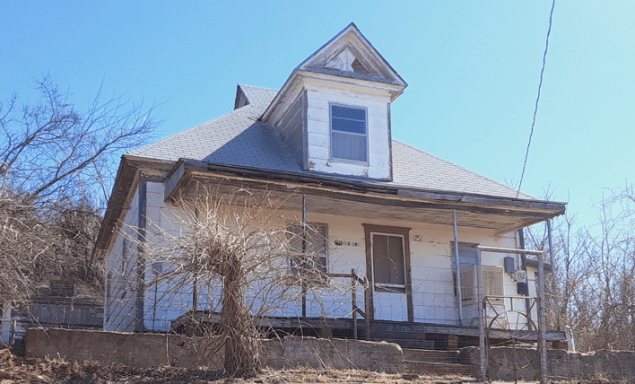
The Groff House first moved to Binger from Anadarko, Ok

The old farmhouse was to be our new home. Moving from the city to the farm felt like an adventure, but the others didn’t share my enthusiasm. They struggled with giving up indoor plumbing, a telephone, and dependable electricity.


For my father, though, this was the beginning of a dream—a quarter-horse ranch of his own. The house had been moved from another town and placed onto a block foundation. Uneven concrete blocks, haphazardly arranged, served as makeshift steps leading up to the front door. The door was old, with a large square glass pane in the upper half and weathered wood below. Layers of peeling white paint flaked away inside and out, revealing the scars of time.


But what stood out most was the screen door. It had a single spring that pulled it shut with a sharp clap. This sound still echoes in my memory. Above it, a simple porch overhang provided some protection from the rain. It offered slightly less protection from the sun. The overhang always seemed too small for its purpose.


I was the youngest of six children—or seven, depending on how you counted. My mother’s youngest brother, Uncle Ricky, practically lived with us. He had been raised alongside my older brothers, and I always considered him one of us. These memories of our close-knit family bring a sense of nostalgia and warmth.


My sisters and I stayed close to the house initially. Our parents were wary of hidden dangers lurking in the fields and pastures. Rusted cans, barbed wire, and remnants of years gone by littered the property. My brothers were tasked with clearing the land, ensuring no horse would stumble upon a forgotten hazard. But even without the safety excuse, the grown-ups didn’t need us underfoot as they worked to build barns and fences.


The house felt enormous to my sisters and me. It had only four rooms downstairs. There was one large room upstairs. The ground floor had interconnected doorways. These doorways allowed us to run in endless circles around the stairwell. The kitchen, with its worn linoleum floor and a large propane stove, was the heart of the home. The living room had threadbare furniture. Its windows had seen better days. It was where we gathered in the evenings. We were expected to behave when our parents were home, but the house became our playground when they weren’t.


One evening, my oldest sister shared a story she had heard at school. A man, unknown to us, had been found dead in the upstairs room. Hung himself, they said. His wife had passed away downstairs, and he had followed soon after. My younger sister and I absorbed the tale. We were unsure whether it was truth or fiction. Nonetheless, it rooted itself in our minds.


My parents’ conversations surfaced bits and pieces of the house’s history. They assured us no one had died there—at least, not to their knowledge. But then came the phrase that stuck with us:

“But if they did, there’s nothing to worry about.”

It was as if they had confirmed it without confirming it. They planted just enough doubt to keep our imaginations running wild.


And then, one night, something happened that we would never forget.


It had been an unbearably hot day, the humidity clinging to us like a second skin. We had no air conditioning. We relied on a single box fan upstairs for the boys at night. During the day, we moved it downstairs. As evening fell, a storm rolled in. The sky darkened, thunder rumbled, and the first lightning strike knocked out our power.


We huddled by the screen door, watching the storm unfold. Rain poured down in sheets, lightning flashing every few seconds. We saw him in one brilliant burst of light—a rider on a white horse just beyond our fence.


My oldest sister called for our mother.

“There’s a man out on the road! Should we call him in?”


The lightning illuminated him again. The horse and rider are stark white, motionless against the downpour. They turned into our driveway and stopped at the yard gate. The rider tilted his head, water spilling off the brim of his hat, but he did not move.


We yelled for our parents, urging them to look. The rain intensified, drumming against the roof. And then, in the next flash of lightning—he was gone. No retreating figure, no horse galloping away. Just empty, rain-slicked ground where he had stood.


That wasn’t the last strange occurrence. The memory of the white horse and its rider haunted us, lingering in the corners of our minds. We couldn’t shake the feeling that we were not alone in the house. We felt that unseen presences were walking the same halls.


The dirt roads in Oklahoma turn sandy in the summer. They capture every footprint—deer, bobcat, rabbit, and occasional lost traveler. One morning, waiting for the school bus, we saw her.
A tiny older woman walked at a steady pace past our house. We called out a greeting, but she didn’t acknowledge us. The school bus approached from behind, and I considered asking the driver to stop and offer her a ride.


But when we reached the road, she was gone.


What we didn’t see was more unsettling than her disappearance—tracks. There were no prints in the soft sand, no sign that anyone had walked there.


I looked at my sisters. One of them whispered,

“Don’t say anything. They’ll think we’re crazy.”


Later, an old-timer visited us often. He told us about a train depot standing across the road long before we arrived. He suspected that some soldiers returning from World War I, whose bodies were unclaimed, never left that station. He spoke of ghostly figures wandering the fields at night. Strange sounds echoed from the direction of the old depot. His stories added another layer of mystery to our already haunted farmhouse.


Over the years, my father and I rode our horses through the backcountry. We found old graves. Some were Indian graves, others belonged to settlers, and some were marked only by time-worn stones. One day, I asked my father if it was sad that they had been forgotten.


He looked at me thoughtfully.

“They’re remembered the way they’re meant to be. You don’t need a grave to be remembered. It’s what you do while you’re alive that matters.”


I understood what he meant, but some of me still felt sorrow for those lost souls. Maybe they weren’t as alone as I thought. They still walked in the rain, strolled along dirt roads, or found another way to be remembered. The mystery of their existence lingers, leaving us with more questions than answers.

A Fellow Post To Share With You!

Groff Media is sharing this piece unedited from Foxes Den. The next is the introduction to the piece. The link to the writers’ pages is posted near the end so you can go to the original site’s writing.

FROM THE FOXES DEN – (unedited)

If you could un-invent something, what would it be? 

I’ve browsed around some of the replies to this prompt and I must say I’m quite surprised. Surprised to see so many people wishing that social media could be un-invented. Now I am with these people 100%, I agree it’s a breeding ground for hatred and vitriol, however as so many are already mentioning social media I feel I should suggest something else because to not do so would make this post quite repetitive and boring. 

Well it will probably still be boring but here goes. 

Addiction. If only there wasn’t such a thing. Again it’s one of those things that is good to have in certain scenarios but an absolute nightmare to have in others. Let’s talk about the nightmare scenarios.

Click here to read the entire piece.

Quiet Reflections: Harold Whitman’s Final Moments

GROFF MEDIA 2024© TRUTH ENDURES IMDBPRO

Presented by benandsteve.com By: Benjamin Groff II©

2–3 minutes

The Last Day

Harold Whitman woke before dawn, just as he had done for countless mornings. He stretched his aching limbs, feeling the stiffness permanently occupying his bones. The old house was quiet. Only the refrigerator’s soft hum and the occasional creak of settling wood were heard. This familiar symphony accompanied his every awakening.

He shuffled to the kitchen, brewed a pot of coffee, and sat at the window. He watched the sunrise paint the morning sky in shades of orange and pink. He savored the moment. The cup’s warmth was in his hands, and the faint aroma of the beans filled the air. His late wife had always loved those beans.

Today, he decided, would be a good day.

After breakfast, Harold walked to the park, as he had done for decades. He fed the ducks at the pond. He nodded to the joggers and dog walkers. They had become familiar faces over the years. These interactions, though brief, were like tiny rays of sunshine in his otherwise solitary life. A young boy, no older than six, waved at him from the swings. Harold smiled and waved back.

At the corner store, he bought a piece of his favorite caramel candy and an extra for the cashier. Marisol, a sweet girl, constantly reminded him of his granddaughter.

“You spoil me, Mr. Whitman,”

she said, laughing as she unwrapped the treat.

“Someone’s got to,”

he replied with a wink.

In the afternoon, he visited the cemetery. He sat on the bench beside his wife’s headstone, tracing her name with his fingers. The silence of the place soothed his soul. He felt a strange comfort thinking about joining his wife.

“I think I’ll be seeing you soon,”

he murmured.

“Maybe later tonight.”

There was no fear in him—just a quiet knowing.

Before heading home, he stopped by the diner, ordering a slice of apple pie and a cup of black coffee. The waitress, Lucy, patted his shoulder.

“You always get the same thing,”

she teased.

“Because I know what’s good,”

he said with a grin.

That evening, Harold sat in his favorite chair by the window, where the sunset bathed the room in golden light. He opened a book, though he barely read the words and content to hold it.

When sleep came, it was gentle, like slipping into a warm embrace.

Harold’s heart gave its final beat, and he sighed with quiet satisfaction. His last day had been good, a testament to the peace and acceptance that filled his heart.

Harold Fenton: The Salesman Who Won Hearts

GROFF MEDIA 2024© TRUTH ENDURES IMDBPRO

Presented by benandsteve.com By: Benjamin Groff II©

3–4 minutes

Harold Fenton was not the world’s most excellent salesman. If there were an award for persistence without progress, Harold would have won it year after year. His thick glasses always slid down his nose. He carried a briefcase that had seen better days. An ever-lasting mustard stain marked his tie. He wandered the same neighborhoods week after week. He sold an assortment of household knickknacks that nobody needed, but they bought them anyway.

“Good afternoon, Mrs. Jenkins!” 

Harold greeted cheerfully as he stepped onto the well-trodden path to her front door. 

“I have a brand-new shipment of vegetable peelers today! They’re sharper, sleeker, and—”

Mrs. Jenkins, a kindly woman in her sixties, smiled warmly. 

“Why, Harold, I still have the five you sold me last month. But you know, one can never have too many peelers. Come on in.”

Harold beamed and entered, opening his battered case to show an array of matching peelers. Mrs. Jenkins sighed as she handed him a few bills. She tucked the latest addition into her kitchen drawer. The drawer now resembled a peeler museum.

Down the street, Mr. Thompson, a retired mechanic, nodded at Harold as he approached. 

“Harold, my boy, back again? What do you have today?”

–––

“A fantastic deal on rubber jar openers!”

Harold declared with gusto. 

“These bad boys can grip the tightest lids with ease.”

Mr. Thompson scratched his head. 

“Well, I reckon I have about twenty of those in my drawer already, but why not?” 

He chuckled, handing Harold a crumpled bill. 

“You’re a persistent fella, I’ll give you that.”

Each household in the neighborhood had its own Harold collection. The Henderson’s had a mountain of Harold’s lint rollers stacked neatly in their laundry room. The Patel family had so many of his never-fail can openers that their entire garage shelf was dedicated to them. And the Cranstons? They jokingly called their basement “Harold’s Home Shopping Network.” It was filled with enough potato mashers to start a catering business.

But no one ever turned Harold away.

“He’s got such heart,”

Mrs. Jenkins often said over tea with the neighbors. 

“Bless him. He tries so hard.”

One day, Harold arrived with a new product—a miracle mop he couldn’t figure out how to show. 

“This mop… uh… well, you see, it swivels… I think. Or it wrings itself. Hold on, I had a pamphlet here somewhere…” 

He fumbled with his case, papers spilling onto the sidewalk.

Mrs. Jenkins and Mr. Thompson exchanged a glance and quickly stepped in. 

“We’ll take a few!” 

They chimed in unison.

Harold left the neighborhood beaming, waving to everyone as he wheeled his suitcase down the block. He whistled a tune with the satisfaction of a man who believed in his mission.

And so the cycle continued. Week after week, Harold brought the same products with the same pitches. The residents kept buying. They did this not out of necessity but of fondness for the bumbling salesman. He brought a little charm and harmless chaos to their otherwise predictable days.

One day, as Harold left Mrs. Jenkins’ house, she whispered to Mr. Thompson, 

“I sure hope he never realizes we’ve got enough peelers to last a lifetime.”

“He won’t,”

Mr. Thompson grinned. 

“And even if he did, I’d still buy another one next week.”

With that, Harold walked down the road. He was ready to bring his boundless enthusiasm. He also carried a suitcase full of peelers to the next unsuspecting yet ever-welcoming home.

Everyone needs to meet a Harold in life.

“The Cattle Crossing”

Groff Media 2024© Truth Endures IMDbPro

Presented by benandsteve.com By: Benjamin Groff II©


2–3 minutes

The radio crackled with urgency.

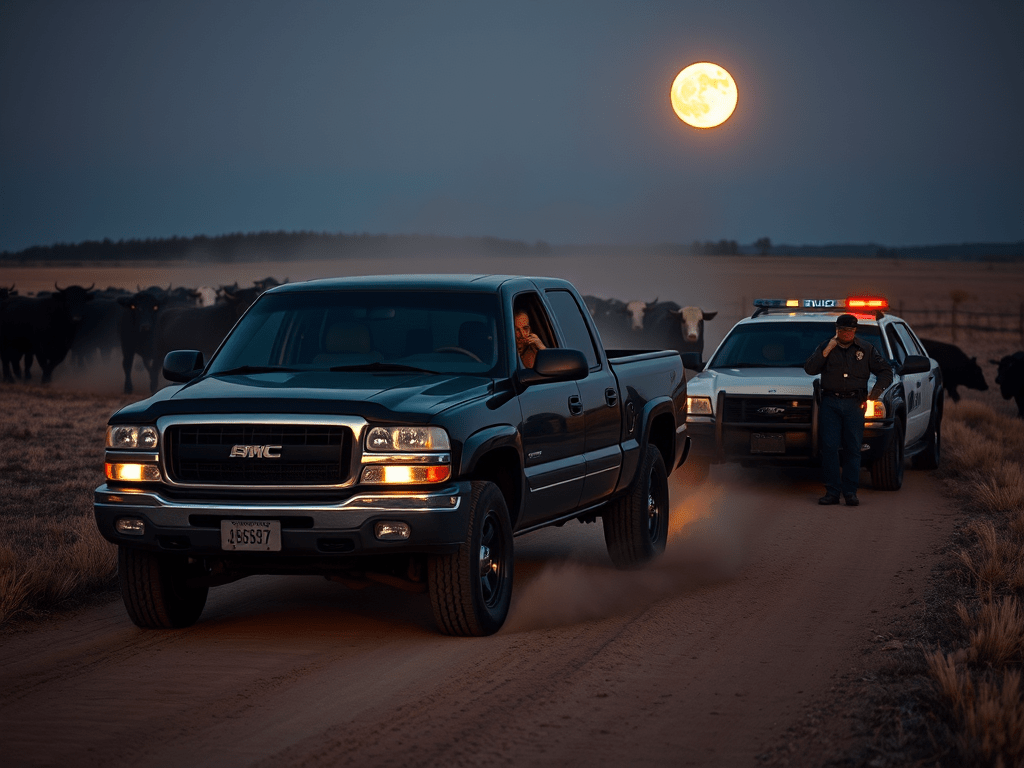
“All Units Be On The Lookout – suspect fleeing northbound on Highway 34 in a black pickup. Speed exceeding 90 miles an hour. Be advised; driver is armed and dangerous.”

Officer Ben Groff tightened his grip on the steering wheel of his cruiser, eyes scanning the road ahead and radioing his headquarters as he spotted the vehicle from the broadcast.

“Headquarters, Unit 3, I see the suspect vehicle Northbound on Highway 34 from the Love’s Travel Stop!”

The highway stretched endlessly, bordered by barbed wire, open pastures, and woodrail fencing for the local ranches. A faint plume of dust in the distance marked the suspect’s location.

“Unit 3 in pursuit,”

Ben confirmed, activating his siren.

The pickup swerved erratically, weaving around slower vehicles as the chase intensified. Ben could see a rifle strapped to the back window of the truck and a pile of what looked like stolen tools in the bed.

“Suspect heading into open ranch country,” 

The dispatcher warned. 

“Roadwork ahead near Hammon. Proceed with caution.”

Ben knew the area well. It was dotted with cattle crossings—gates sometimes left open by careless ranchers. He pressed the accelerator, narrowing the distance between him and the fleeing truck.

Ahead, the suspect veered sharply onto a dirt road, kicking up a cloud of grit. Ben followed, his cruiser skidding slightly on the loose gravel. The air was thick with dust, obscuring his view, but he kept his focus sharp.

Suddenly, the truck skidded to a halt in the middle of the road. Ben braked hard, stopping a safe distance away. Before he could exit his vehicle, he heard the lowing of cattle.

A herd of cows, dozens strong, unexpectedly strolled across the road. The nightlight, reflecting the full moon’s setting, backlit their black and brown, and their movement was leisurely, indifferent to the chaos.

The suspect jumped out of the truck, shouting and waving his arms to clear a path through the herd. The cows, unimpressed, continued their slow march, blocking any escape.

Ben saw his opportunity. He exited his cruiser, drawing his weapon.

“Hands up, don’t move! You’re surrounded!”

The suspect froze, looking back and forth between the officer and the unyielding wall of cattle. A few other units arrived, their sirens wailing as they boxed him in. The man dropped to his knees, his hands raised in surrender.

Ben moved forward cautiously, cuffs in hand, as the cows watched the scene unfold with mild curiosity.

One of the arriving officers couldn’t help but joke, 

“Looks like the cows did our job for us.”

Ben chuckled as he secured the suspect.

“Sometimes justice moves at its own pace. You should have seen his face when I told him –– he was surrounded!”

As the sun dipped below the horizon, the herd finally cleared the road, leaving behind a trail of hoofprints and a story for Ben to tell at the station.

The Unlikely Friendship: Lessons in Kindness

By: Benjamin Groff II© Groff Media 2024© Truth Endures IMDbPro

It was a quiet Sunday morning. A knock came at the door as the man leafed through the morning paper. He answered it, and there stood a stranger, looking road-worn but determined. ––––

“Is this where Benjamin Groff lives?”

the stranger asked.

“Yes, it is,”

the man replied, studying the stranger’s face.

“You must be his father,”

the stranger ventured his smile kind and knowing.

“Yes, I am,”

the man replied, both curious and wary.

The stranger introduced himself.

“My name is Samuel Johnson. I’ve driven over seventy miles to meet you, sir. You must have been one remarkable man to raise a son like Benjamin.”

The father, his heart swelling with pride, felt a mix of emotions.

“Thank you, Samuel,”

he said.

“But, please, how do you know my son?”

Samuel nodded as though expecting the question.

“I met Ben at the Oklahoma State Fair last fall. I was just there to do a job—keeping an eye on one of the old buildings. Some local boys had been giving me trouble, but Ben stepped in. Out of all the things he could have done at the fair, he chose to sit down and talk with me. We spoke for hours. Your son has a way of making people feel seen, of looking out for folks. He even asked me if anyone was bothering me, and from that moment on, I felt I wasn’t just working the fair—I was spending time with a friend.”

The father listened, deeply touched.

“That sounds like Ben,”

he said softly, gesturing for Samuel to take a seat.

“Let me wake him—he’ll want to know you’re here.”

Ben’s father went to his son’s room and gently shook him awake.

“Ben, you’ll never guess who’s here to see you,”

he said.

Still half-asleep, Ben slowly got up and followed his father into the living room. To his surprise, there sat Samuel, his old buddy from the State Fair. A smile of joy spread across Ben’s face as memories flooded back.

On that day at the fair, Ben had already taken in the sights, ridden the rides, and wandered through the livestock shows, which, to his surprise, had lost their charm despite his upbringing on a farm. He was winding down, simply walking, when he happened upon Samuel’s post.

Samuel was friendly, the kind of person who seemed to carry his life’s story in the lines of his face. Ben had sensed the man’s kindness right away, trusting him instinctively. They talked for hours, sharing stories. Samuel had offered him cold water from the employee stash and even let him use the private restroom in the back, which felt like a luxury compared to the crowded ones across the fairgrounds. Ben could still recall their easy camaraderie, even though much of what they’d discussed had faded over time.

Before parting, Ben had written down his number and directions to their home, saying,

“If you’re ever in town and need anything, look us up.”

Now, here was Samuel, having made good on that invitation.

After they caught up for a while, Ben suggested a tour of the campground where his father worked as a Ranger. The sprawling property had over 350 acres, six cabins, and a large recreation hall. As they rode around, they laughed about old times and marveled at the twists and turns that brought two unlikely friends together again.

Finally, as the afternoon sun started to wane, Samuel turned to Ben with a smile.

“I’d better head back to the city,”

he said, patting Ben on the shoulder.

“I’m grateful to have met your folks and seen your home—it’s even better than I’d imagined.”

He climbed into his Lincoln Continental, waved as he pulled away, and drove down the dusty road until he was out of sight. That was the last time Ben saw Samuel. But in the years that followed, he often recalled the kindness they’d shared, proof that a simple act of friendship could reach far beyond the boundaries of a single day.

Benjamin stood on the porch as Samuel drove off, watching the dust settle behind the Lincoln. He thought about how Samuel’s visit had bridged two worlds—a fact that didn’t escape him in a town where Black residents were often confined to the southwest corner, seen more as a separate community than as neighbors.


Growing up, Benjamin noticed the prejudices that ran through many families in town but never took root in his heart. His father, a man who saw people for who they were, not where they came from, profoundly influenced him. Samuel’s visit was a powerful reminder of how simple kindness could defy those boundaries, how a shared afternoon at a fair could lead to a journey across miles.

Though he never saw Samuel again, Benjamin often recalled those two encounters. They left him with a lesson he carried into adulthood and his career—a quiet but powerful truth about compassion. Samuel had come to honor Benjamin’s father. Still, Benjamin always remembered Samuel for showing him how friendship and decency could surpass any divide, leaving an enduring mark on his life.

In a way, Samuel had gifted him a legacy of his own: the reminder that sometimes, the connections we make in unexpected places leave the most enduring marks on our lives.

In Memory of Samuel!

It Was A BedTime Story My Grandmother Would Tell Me, But It Was The Weekend That I Loved To Spend!

By: Benjamin Groff II© Groff Media 2024© Truth Endures IMDbPro

It was a bedtime story my grandmother used to tell me when I visited their home on weekends. They lived about forty miles west of the farm we had bought, but they had been farmers in the same area. As they grew older, they sold their place and moved to a larger town, closer to conveniences like supermarkets, doctors, hospitals, and stores. I visited them at least one weekend a month, sometimes more, either hopping a westbound Trailways bus or catching a ride with one of my dad’s friends heading out to Texas. On travel days, I dressed to the nines, careful not to show up looking like a bum, especially since people back then still took pride in looking sharp for such things. Times were changing, though. In the sixties, you started seeing folks on the bus with beads, bell bottoms, and cut-off t-shirts, their hair long, male or female.

I was five years old when I first started traveling with my grandparents, and it became a cherished tradition until my grandmother passed when I was eleven. Even as times changed, my routine remained the same. My grandfather would always park in front of the local drugstore that served as the bus stop in their town. A large courthouse sat in the center of the square, and the bus had to make a loop around it before stopping. The airbrakes would hiss, and I was always be the first one off. The bus driver ensured it, especially since I sat beside him on my suitcase for the whole ride.

My grandfather, whom I called Pop, would be waiting by the trunk of his 1952 Chevrolet Coupe. As I stepped down those bus steps, the driver would already have handed my suitcase to Pop, who would smile and say, ––––

“Let’s scoot. Mom’s got dinner about ready at home!”

And it was home. My home away from home. I often dreamed of moving there, living with them, and even telling them so. I wanted my dad and our horses to come too because, in my child’s mind, my grandparents loved me so much that they’d love my dad and our horses too.

Pop had a habit of smoking a pipe—or rather, puffing on one. I could spend hours watching him puff smoke into the air in their cozy den. He liked to mix cherrywood tobacco with Prince Albert, and the sweet scent lingered long after he finished, complementing the smells of my grandmother’s cooking, making you want to eat whatever she was making. There was no television after dinner on most evenings. Instead, we’d listen to the ticking of the clock and talk. It was simple, but those talks meant more to me than the grandest concerts I’ve ever attended.

There were exceptions, though. Saturday evenings, we’d watch the news, then Lawrence Welk and Porter Wagoner, followed by a local music show hosted by a furniture store owner. But the TV was always off once Pop went to bed. That’s when my grandmother and I would click it back on for our secret ritual—watching championship wrestling from Oklahoma City. She loved it, getting so worked up that she’d tear tissues to pieces while her favorite wrestlers fought. I’d hand her a new tissue each time she shredded the last one. No one knew about this passion of hers except me, and she confided that she only got to watch wrestling when I visited. It made me feel needed by these two people I loved so much.

At night, I slept on a cot in their bedroom. It was as comfortable as any five-star hotel bed. But before I bedded down, my grandmother would let me crawl between her and Pop in their bed while she told me stories. One of my favorites was when she grew up in East Texas. She’d laugh so hard telling it, tears streaming down her face. It always made me laugh, too.

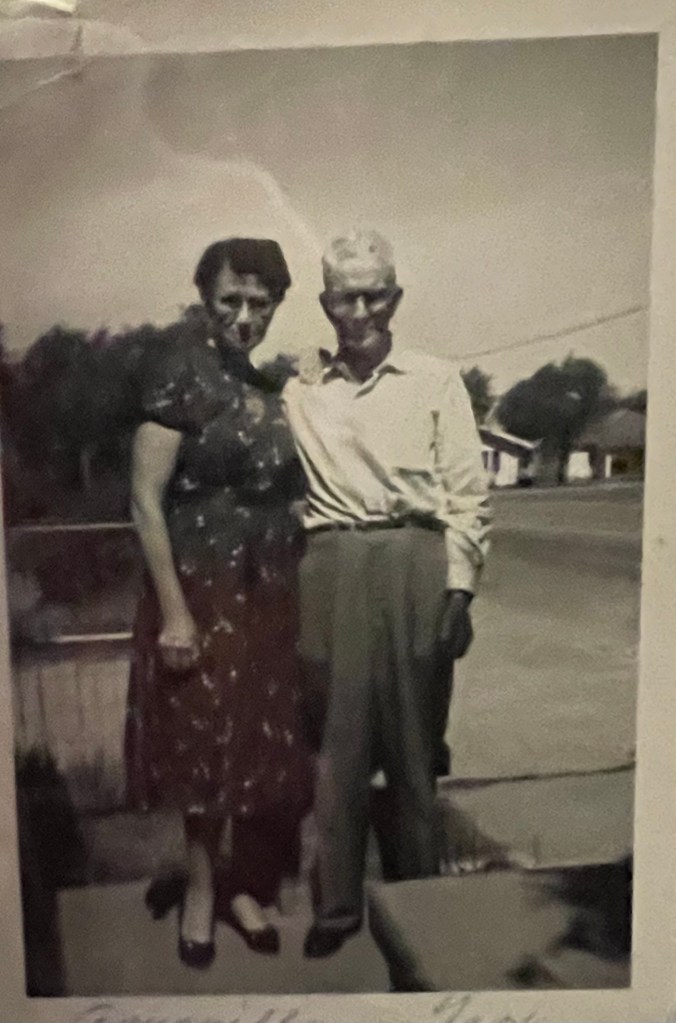
Mom, Florence Lula McElroy, Groff1914

She and her sister Ethyl were watching their little brother, Sam, who had just turned four. The rest of the family worked in the fields when the weather worsened. A funnel cloud was forming in the west, and the sisters, frightened, grabbed Sam and rushed into the farmhouse. Back then, there was no electricity, phones, or fundamental utilities, let alone cars. The girls did the only thing they could think of: they got under the heavy kitchen table, crying as the storm approached.

Not understanding what was happening, Little Sam asked, ––– “What should I do?”

My grandmother told him, ––– “Sam, you should pray!”

But the only prayer the boy knew was the table grace, so he began, ––– “Dear Lord, we thank you for what we are about to receive…”

That’s where the story always stopped because my grandmother would laugh so hard she couldn’t go on. I never knew if the house got hit or the storm blew the farm apart. All I remember is her laughter and how I’d move to the cot, hugging her and giving her a sloppy kiss goodnight.

Years later, I asked my Uncle Sam about that storm. He chuckled and said, ––– “Pots and pans were flying everywhere, and the two sisters were laughing like tea parties. We didn’t lose the house, but it scared me.”

Uncle Sam became my favorite great uncle after that.

I loved hanging out with Aunt Ethyl at family reunions. She dipped snuff—real tobacco, not the stuff you see now. She’d sniff it and tuck some into her upper lip. I could never keep up with her, and my grandmother would have been after me if she ever caught me trying.

On Sunday afternoons, my dad drove to pick me up from the farm. I was always happy to see him but hated leaving my grandparents. I didn’t want to return to the town near our farm—it was never as pleasant as the time spent with Mom and Pop. When I was five, I never imagined that they’d leave this world or that I’d grow up. Life takes the airplane, and time takes the train.