A Great American Life Cut Tragically Short: Remembering Rob Reiner & Michele Singer Reiner

© Benjamin H. Groff II — Truth Endures / benandsteve.com

4–6 minutes

It Began At A Friends Christmas Party.

An argument disrupted a party at Conan O’Brien’s Christmas Party. Now Conan is reportedly “wracked with guilt” over what happened in his home that night. Guests at the party said the younger Reiner was “freaking out”. Nick was reportedly going from guest to guest asking them “if they were famous?” Which is believed to have started a dispute between he and his father. Conan thinks he should have intervened when he looks back. Instead, he said all three of the Reiners left his party and went home.

On December 14, 2025, the world was shaken by the devastating news. Rob Reiner, one of America’s most beloved artists and civic voices. And his wife photographer Michele Singer Reiner, were found fatally wounded. Murdered in their Brentwood, Los Angeles home. Their their son, Nick Reiner, now charged with their murders. Leaving a profound void in Hollywood and in public life. And stunning the hearts of millions who admired their work and their lives around the world. (1)

A Life in the Arts — From Screen to Story

Rob Reiners rise to prominence was nothing short of extraordinary. Rob was born in the Bronx in 1947. He was born to entertainment royalty — his father was the legendary comedian Carl Reiner. Rob built a career that spanned decades and mediums. He first captured America’s imagination as Michael “Meathead” Stivic on All in the Family. This performance earned him Emmy recognition. It also made him a household name. (2)

But it was behind the camera that Reiner truly reshaped American cinema. As a director and producer, he brought to life some of the most cherished films of the late 20th century:

  • This Is Spinal Tap — a cult classic that redefined mockumentary comedy. (2)
  • Stand by Me — a timeless coming-of-age masterpiece. (2)
  • The Princess Bride — a fairy tale beloved by generations. (2)
  • When Harry Met Sally… — one of the great romantic comedies in film history. (2)
  • A Few Good Men — a gripping courtroom drama that became a cultural touchstone. (2)

His storytelling was more than entertainment; it was empathetic, insightful, and deeply human — reflecting the best of American imagination.

A Partner in Life and Purpose

Standing beside Rob was Michele Singer Reiner, his wife of more than three decades. Michele’s talents went beyond her role as a devoted partner and mother. She was a gifted photographer and producer. Michele was celebrated in her own right. Her work included collaborations on various cultural projects. Her creative eye helped shape the visual landscape of many endeavors they pursued together. (2)

Michele was not merely a support to Rob. She was an equal force of creativity, compassion, and conviction. She embodied a deep commitment to both art and advocacy.

Champions of Humanity and Civic Duty

Rob and Michele Reiner were not content to rest solely on artistic laurels. They were passionate advocates for causes that show the best instincts of our nation. Rob’s political engagement spanned early childhood education, civil rights, and marriage equality. His involvement made him a fierce public voice for inclusion, justice, and the dignity of all people. He helped co-found influential organizations and leveraged his platform to support progressive civic causes. (3)

Michele’s activism and advocacy were equally meaningful. She championed marginalized communities through her work with LGBTQ+ organizations and children’s welfare initiatives. She lent her voice to efforts that made tangible differences in people’s lives. (2)

Together, they represented a model of creative achievement married with civic responsibility. This reminds us that success in culture and in conscience are not mutually exclusive. Instead, they are mutually enriching.

A Loss Shared by the Nation

The response to their deaths reflects the breadth of lives they touched. Tributes poured in from Hollywood friends like Billy Crystal, Albert Brooks, and Martin Short. Political figures across the spectrum also honored their legacy and mourned the immense loss. Friends called them a “special force devoted to public betterment,” highlighting their generosity, their creativity, and their tireless spirit. (3)

Why We Should Honor Them

The Reiners lived by the same ethic exemplified by Jimmy and Rosalynn Carter. They shared a commitment to service, compassion, and purpose. Like President Carter, they devoted themselves to doing good whenever they can. They aimed to help for as long as possible and in many ways.

If America needed to memorialize a pair, they would choose Rob and Michele Singer Reiner. Their lives reflected the highest values of artistic brilliance. They showed humanitarian commitment and civic leadership. The Reiners embody artistic brilliance and humanitarian dedication. Civic leadership was a fundamental part of their legacy. They stand at the top of that list. Their tragic end came at the hands of a loved one struggling with personal demons. This only deepens the poignancy of their story. It underscores life’s fragility, even for those who seem larger than it.

To remember them is not only to celebrate iconic films and photographs. It is also to proclaim a narrative about what it means to care for one another. It shows how to invest in the common good. Ultimately, it encourages us to leave the world better than we found it — through art, action, and advocacy.

A highway will probably never bear their name. It is unlikely that a statue will stand in their likeness at the center of a campus. No one will demand that students memorize every detail of what they did — and that is just fine. They would not have sought those honors anyway. The Reiners never worked for recognition; they worked for purpose. And that is precisely why they will forever be remembered as heroes to so many. The Reiners — the truest expression of what an American life can be.


© Benjamin H. Groff II — Truth Endures / benandsteve.com

Because They Mattered ~ Legacy Lives On

Their Final Chapter Is Not the End

Groff Media ©2025 benandsteve.com Truth Endures

2–3 minutes

In the quiet margins of newspapers, lives flicker out of print. Still, they do not fade out of memory. That is where our magazine steps in. It offers a respectful space for families and community members. They can share and preserve their loved ones’ stories. benandsteve.com believes that every person who mattered deserves more than a line in the obituary section. It doesn’t matter whether they soared in the spotlight or labored in the shadows. They deserve a story that lingers.

At Galaxy8News, a Service of benandsteve.com, we curate the collection Notable Deaths—Gone But Not Forgotten. Our aim is to shine a light on the lives behind the names. We ask the questions no standard notice ever does: What did they believe? What seeds did they plant? Who still carries their echo?

Remembering those who have gone on before.
In State. Gone But Not Forgotten! ~ The Quiet Roll Call of Memory ~ A Place Where Every Life is Honored!

The local teacher’s kindness rippled through generations. The factory worker’s quiet ingenuity saved jobs. Every story reminds us that all lives matter and deserve recognition. Each of them mattered in a way that defies headline fame, and we honor that truth.

When you turn our pages, you are not just scrolling past a date and a funeral notice. You are stepping into a life lived, an unfinished story, and a memory that still speaks. Through these stories, you can feel connected to those who shaped our world in ways that matter deeply to someone.

Join us. Let this edition of Notable Deaths – @ Galaxy8News, a service of benandsteve.com, stand as a testament that we remember — not only the famous, but the faithful. We honor not only the celebrated, but the steadfast. Through meaningful storytelling, we create a space where every life is acknowledged. Each life is valued and preserved. This nurtures a lasting sense of belonging and purpose.

We assure their contributions, their legacy, and their memory are posted. Visit daily to stay connected and informed on the most recent passing’s of those who have departed this world. Their lives mattered, and their stories deserve to be remembered. Bookmark it here! Just remember Galaxy8News, a service of benandsteve.com and Notable Deaths are two different pages. Hosted by the same entity.


By Benjamin GroffMedia© | benandsteve.com | ©2025 

Photo by ASHISH SHARMA on Pexels.com
Don’t Be A Turkey!

Former Zamalek Midfielder Dies in Car Accident at 51

Groff Media ©2025 benandsteve.com Truth Endures

2–3 minutes

🕊️ Mohamed Sabry (1974–2025)

Mohamed Sabry, Former Zamalek Midfielder, Dies at 51

Mohamed Sabry Former Zamelek Midfielder, Dead at Age 51.

The Egyptian football community is deeply saddened to mourn the loss of Mohamed Sabry. He was the former Zamalek and Egypt national team midfielder. He died in a car accident in Cairo’s Fifth Settlement on Thursday. He was 51. Sabry’s untimely passing marks the end of a remarkable life. He dedicated his life to the sport he loved. He helped define it for a generation of fans.

Sabry was a central figure in Zamalek’s golden era throughout the 1990s and early 2000s. This was a decade of triumphs. It cemented the club’s legacy in African football. Between 1993 and 2003, he lifted 15 major titles. These included three CAF Champions League trophies and two Egyptian Premier League championships. Known for his fierce determination, vision, and leadership on the pitch, Sabry was instrumental. He led Zamalek through some of its most celebrated victories. He earned admiration from teammates, opponents, and supporters alike.

Mohamed Sabry

After news of his passing, tributes poured in from across Egypt and beyond. Zamalek icon Mahmoud Abdel-Razek “Shikabala” described Sabry as “a legend of Egyptian football.” He also called him “a symbol of loyalty and devotion to his club and supporters.” His words reflected the views of many who admired Sabry for his exceptional talent. They saw him as a model of dedication and humility. Fans, former teammates, and rival clubs alike joined in remembering a man whose passion for football transcended the game’s rivalries.

Condolences also came from key figures within Egyptian football. Hossam Hassan, the national team coach, offered his sympathy to Sabry’s family. Al Ahly president Mahmoud El Khatib also conveyed his condolences to the wider football community. Tributes continue to flow. Mohamed Sabry will be remembered as one of Zamalek’s most influential midfielders. His achievements, sportsmanship, and loyalty to his club left an indelible mark on Egyptian football history.


Groff Media ©2025 benandsteve.com Truth Endures

Mohamed Sabry (1974–2025): Remembering a Zamalek Legend

CELEBRATION OF LIFE ANNOUNCED FOR COUNTRY LEGEND JEANNIE SEELY

Jeannie Seely’s 5,398th Opry Show” Set for August 14 at Grand Ole Opry House

1–2 minutes

A public Celebration of Life will honor Grand Ole Opry star and country music icon Jeannie Seely. It will be held Wednesday, August 14 at 10:00 a.m. CT at the Grand Ole Opry House in Nashville. Fittingly titled “Jeannie Seely’s 5,398th Opry Show,” the service will pay tribute to her unmatched legacy.

The event will be broadcast live on 650 AM WSM. It will also be available via livestream at: VIMEO. You can view it live there. Here.

Jeannie Seely passed away on Friday, August 1 at age 85, after complications from an intestinal infection. She held the record for most Opry appearances in history — 5,397 — a milestone unlikely to ever be surpassed.

Tributes from the Country Music Community

Many stars shared heartfelt words:

  • Ricky Skaggs: “She made nervous newcomers feel at peace. We can all take her lead and encourage the next generation.”
  • Pam Tillis: “She had grit, wit, talent—and she was cool.”
  • Larry Gatlin: “She was my champion and inspiration. I miss her already.”
  • John Anderson, Ray Stevens, Mark Chesnutt, Darryl Worley, Billy Dean, and others echoed similar admiration, love, and deep loss.

Legacy

Nicknamed “Miss Country Soul,” Jeannie Seely broke barriers for women in country music. She was the first woman to regularly host Opry segments. She is also a GRAMMY winner and a BMI-awarded songwriter. Additionally, she has been an Opry member since 1967. Her songs were recorded by legends. These include Merle HaggardDottie West, and Willie Nelson. She also shared the screen with Willie Nelson in Honeysuckle Rose. In 2022, she was honored for her historic number of Opry performances. A stretch of road near the venue was renamed the Jeannie Seely Interchange in 2024.

Instead of Flowers

Donations in Jeannie’s name are encouraged to pet-related charities or the Opry Trust Fundopry.com/about/opry-trust-fund

To start viewing events from Jeannie’s life, visit her website here. You can see the music she shared, events celebrated, and the people she loved.

William Irwin “Bill” Krisher (September 18, 1935 – 2025, age 89)

GroffMedia© | benandsteve.com | 2025 Truth Endures©

1–2 minutes

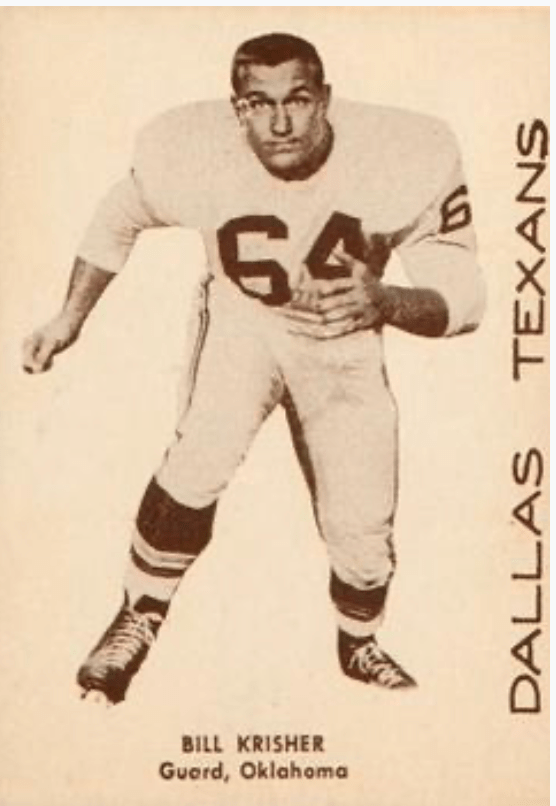
William Irwin “Bill” Krisher (September 18, 1935 – 2025, age 89)

William Irwin Krisher, known to football fans as Bill Krisher, passed away in 2025 at age 89 (1). 

He was born on September 18, 1935, in Perry, Oklahoma. He grew up in Midwest City. He developed into a standout lineman for the University of Oklahoma under coach Bud Wilkinson (2). 

Krisher’s college career was decorated. He earned consensus All-American honors in 1957. He helped the Sooner’s win consecutive national championships in 1955 and 1956 3

Selected in the third round of the 1958 NFL draft, he played for the Pittsburgh Steelers before moving to the AFL’s Dallas Texans (now Kansas City Chiefs), where he was named to the All‑AFL Team in 1960 and honored as a division All‑Star in 1961 4

Off the field, Krisher dedicated himself to faith and mentorship. He was an active member of the Fellowship of Christian Athletes and served as its southwestern regional director by the mid‑1970s 5

Bill Krisher leaves behind a legacy of excellence in collegiate and pro football. He dedicated his life to uplifting others through faith and service. 

He is remembered by family, teammates, and athletes inspired by his example.

Remembering Horace Speed: A MLB Player’s Legacy

By Benjamin GroffMedia© | benandsteve.com | 2025 Truth Endures©

By Benjamin GroffMedia© | benandsteve.com | 2025 Truth Endures©

1–2 minutes

Horace Speed (1951–2025): Former Major League Outfielder Remembered for His Speed and Perseverance

Horace Speed

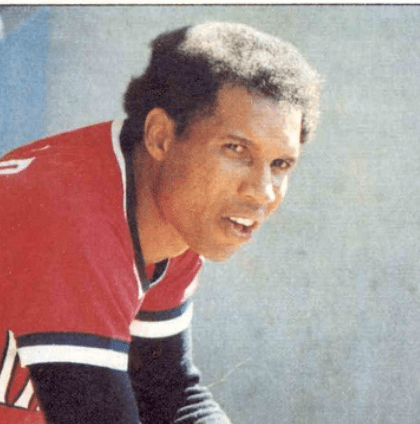
Horace Solomon Speed was a former Major League Baseball player. He was known for his blazing speed and quiet determination. He passed away on May 26, 2025, at the age of 73.

Born on January 22, 1951, in Pasadena, California, Speed was a standout athlete from an early age. The San Francisco Giants drafted him out of Pasadena High School. This was during the Major League Baseball’s round of the 1969 June Amateur Draft. Speed spent most of his professional career in the minor leagues. Nonetheless, his dedication to the game paid off. He finally broke into the majors with the Cleveland Indians.

Speed made his MLB debut on September 14, 1975, and played parts of three seasons with the Indians. Throughout 62 games, he was often utilized as a pinch runner and reserve outfielder, capitalizing on his hallmark speed. While his offensive stats — a .140 batting average, seven stolen bases, and eight runs scored — show limited playing time, his presence was valuable. He made significant contributions in late-game situations, particularly on the bases.

Speed’s journey through professional baseball was a testament to resilience. He spent nearly a decade in the minors. Before reaching the major leagues, he served as a model of perseverance for countless aspiring athletes. His career was modest in statistical output. Nevertheless, it remains a testament to hard work and patience. It inspires all who hear his story.

After retiring from baseball, Speed largely stayed out of the public eye, living a private life away from the spotlight. His modesty stands out. He has made significant contributions to the sport. This modesty is a reminder of the humility that can be found in even the most accomplished individuals.

Horace Speed’s passing marks the loss of a quiet but determined competitor. His journey inspired those who watched him run, hustle, and chase his dreams. He is remembered for his achievements on the field. More importantly, he is remembered for the character he displayed in getting there.

The Life and Career of Erik Ruus: An Estonian Icon

By Benjamin GroffMedia© | benandsteve.com | 2025 Truth Endures©

1–2 minutes

Eric Ruus -The Movie Database Groff Media©

Erik Ruus, a prominent Estonian theater and film figure, passed away on April 22, 2025. He was 62, just one day before his 63rd birthday. Born on April 23, 1962, in Elva, Estonia, Ruus had a distinguished career spanning over four decades. 

SOURCE researched for material (WikipediaIMDb+1xwhos.com+1)

A Life on Stage and Screen

Ruus graduated from the Viljandi Culture Academy in 1982 and began his professional acting career shortly thereafter. He was a longstanding member of the Rakvere Theater from 1985 to 1995 and from 1996 to 2009. Between 1995 and 1996, he performed at the Endla Theater in Pärnu. Since 2009, Ruus has worked as a freelance actor, contributing to various stage productions, films, and television series.​ (1)

Notable Film and Television Roles

Ruus’s film career included roles in several significant Estonian films. He played Peeter in Vaatleja (The Birdwatcher, 1987). This film received international acclaim. It won awards from the Karlovy Vary International Film Festival, the Torino Film Festival, and the Rouen Nordic Film Festival. In Tulivesi (Firewater, 1994), he portrayed Eerik, a position that left a forever impression on audiences. Notable appearances include Minu Leninid (1997) and Ferdinand (2002). He also appeared in Stiilipidu (2005) and Päeva lõpus (2009). His roles continued with Kutsar koputab kolm korda (2010) and Johannes Pääsukese tõeline elu (2019).​ (2)

On television, Ruus appeared in series like Ohtlik lend (2006), Kelgukoerad (2006–2007), Klass: Elu pärast (2010), and Õnne 13 (1997–1999) (3)

Personal Struggles and Resilience

Throughout his life, Ruus faced personal challenges, including struggles with alcohol, which affected his tenure at the Rakvere Theater. His unwavering commitment to his craft is remarkable and a testament to his cause. He continues to inspire many.​ (4)

Erik Ruus’s contributions to Estonian theater and film have left an indelible mark on the country’s cultural landscape. His performances resonated with audiences. His legacy will influence future groups of actors and artists. It is a testament to the impact of his work.

References:

(1) (Wikipedia+1xwhos.com+1xwhos.com+1Wikipedia+1)

(2) Wikipedia+1Wikipedia+1IMDb+4Wikipedia+4TheTVDB+4TheTVDB+4Wikipedia+4EFIS+4

(3) IMDbPro+1TheTVDB+1

(4) Wikipedia

A Life of Humility: The Story of Wayne Handy

Benjamin GroffMedia© | benandsteve.com | 2025 Truth Endures©

3–4 minutes

In Memory of Wayne Jackson, Handy ––– The Unlikely Rock and Roller

Wayne Handy

Wayne Jackson Handy was a man whose velvet voice once crooned over the airwaves of American Bandstand. His voice later soothed those navigating the mortgage banking world. He passed away peacefully on April 1, 2025, at 89. Wayne started from humble beginnings on a farm in Eden, North Carolina. He then moved on to the dazzling lights of 1950s television. Later, he found the quiet steadiness of a career in finance. Wayne lived an entire and remarkable life. It was defined not by fame or fortune but by kindness, creativity, and unwavering devotion to his family.

Wayne’s love and commitment to his family were unwavering. The youngest of five children, Wayne was born in Eden and raised helping his parents in the fields. He graduated from Reidsville High School in 1953. Two years later, he married the love of his life, Marjorie Louise Smith of Cassville. He charmed her at a local baseball game. This was a story he told with a twinkle in his eye. His smile hinted at the hopeless romantic within. Their marriage endured over six decades. It was a bond marked by deep affection and laughter. Their steadfast partnership lasted until Marjorie’s passing in 2018.

Wayne’s musical talent was a source of inspiration for many. His velvet-smooth voice and playful way with melody, often accompanied by his ukulele, were a joy to behold. In 1957, his passion for music led him to a national stage. He performed on American Bandstand. He shared the screen with some of rock and roll’s earliest stars there. His brush with fame was brief. Yet, it left a glimmer of rockabilly stardust. This touch of stardust was on a life otherwise grounded in humility and grace.

After enlisting in the U.S. Army in 1958, Wayne served two years in Alaska as a field radio operator. Upon returning home, he pursued higher education. He studied business at North Carolina State University and the University of North Carolina at Chapel Hill. He graduated in 1962. His career in mortgage banking took him and his family across the Southeast. They even moved to Utah. His career eventually culminated in his time with Carolina Bank in Greensboro. He worked there until his retirement in the mid-2000s.

In every chapter of his life, Wayne’s character remained consistent: humble, gracious, patient, meticulous, and quietly dignified. He gave generously of himself, donating blood regularly and ringing the Salvation Army bell during the holidays. He was profoundly artistic and playfully inventive. His children celebrated him for his affectionate nicknames. Adults also appreciated his funny songs, silly voices, and irrepressible sense of the absurd.

Despite his many accomplishments, Wayne’s humility was a defining trait. He was never one to boast. He preferred to show love through small, steady acts. This included a freshly repaired item. It was a perfectly stacked rock wall, a gentle word, or a slow walk in the evening light. He was a natural storyteller. He was a dapper dresser. His gentle Southern accent and kind eyes conveyed a rare and genuine warmth.

He is remembered with love and admiration. His children include Christopher Handy, Jeff Handy, and Meredith Brunel (Richard). His grandchildren include Louise, Henri, Carlene, Charlotte, Erendira, and Matthew. He is also remembered by his great-grandchildren. Wayne was predeceased by his beloved wife, Marjorie, with whom he now reunites in eternal peace.

A graveside gathering and inurnment of ashes will occur at Bethesda Presbyterian Church in Ruffin. The date is yet to be announced.

Wayne Handy lived with a quiet brilliance. He was a rock and roller by surprise, a banker by choice, and a gentleman by nature. His life reminds us that grace, humor, love, and a good melody can carry us further than fame ever could.

Rest well, Wayne. You sang your song, walked your path, and left the world a gentler place.

THE LAST RIDE FOR THE MAN FROM PLAINS GEORGIA

Groff Media 2024© Truth Endures IMDbPro

Presented by benandsteve.com By: Benjamin Groff II©

2–3 minutes

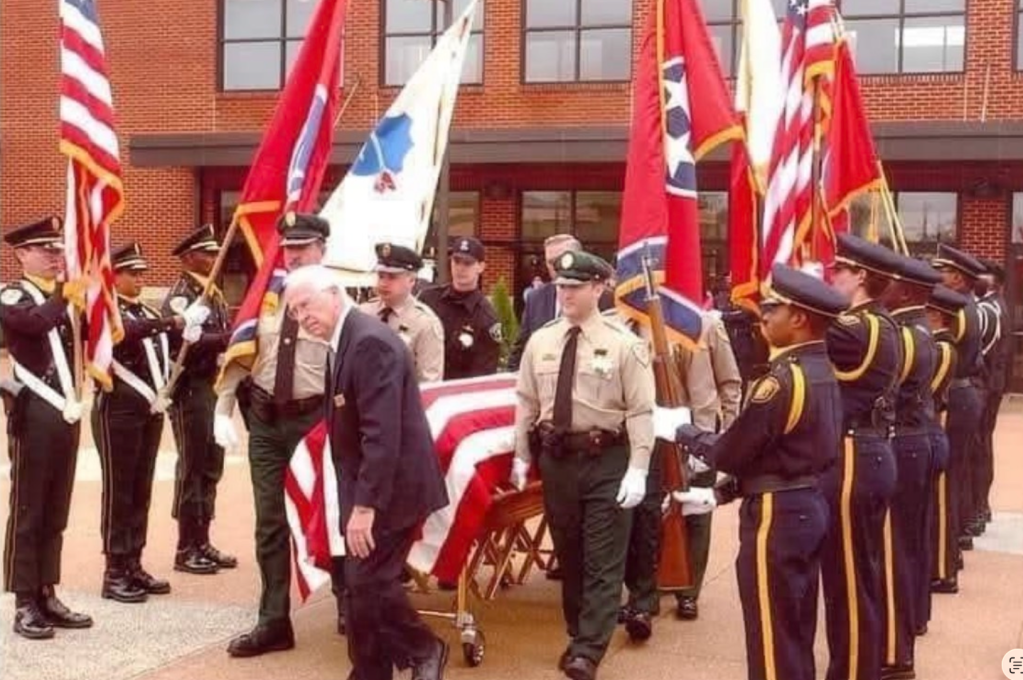
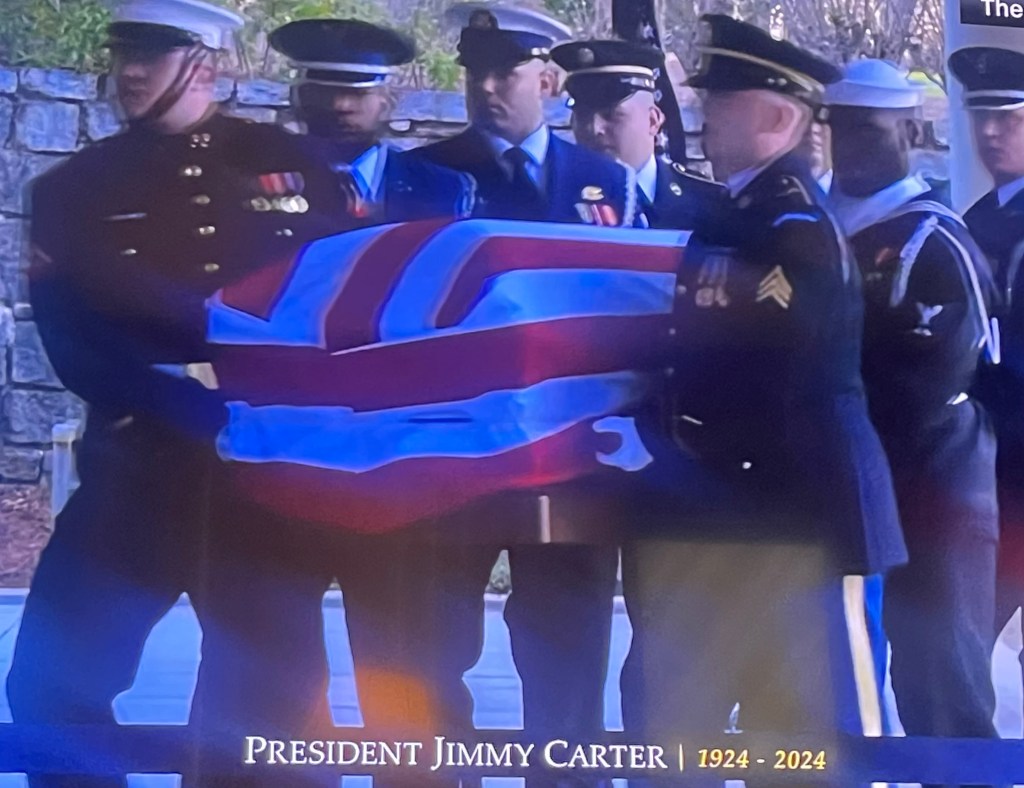
In the early hours of January 4, 2025, a somber hush fell over the rolling plains of Georgia. The sun shone gently over the landscape. A motorcade departed from Phoebe Sumter Medical Center in Americus. It bore the flag-draped casket of the 39th President of the United States, Jimmy Carter. The journey marked the start of a six-day tribute. It honored a man who dedicated his life to service, peace, and humanity.

The procession moved through Carter’s hometown of Plains, passing by his boyhood home in Archery. Here, the old farm bell tolled 39 times. Each chime resonated with the years he had served as the nation’s leader. It symbolized each year of his presidency. Family members, including his children, grandchildren, and great-grandchildren, accompanied the casket, their faces reflecting both sorrow and pride. Former Secret Service agents had once protected him. They now served as pallbearers. They honored their final duty to the man they had revered.

Along the route, admirers gathered. Some held flowers. Others wore commemorative pins. They were all united in their wish to pay homage to a beloved figure. The motorcade continued to Atlanta. There, Carter’s body would lie in repose at the Carter Presidential Center. This arrangement provided the public with the opportunity to offer their respects. 

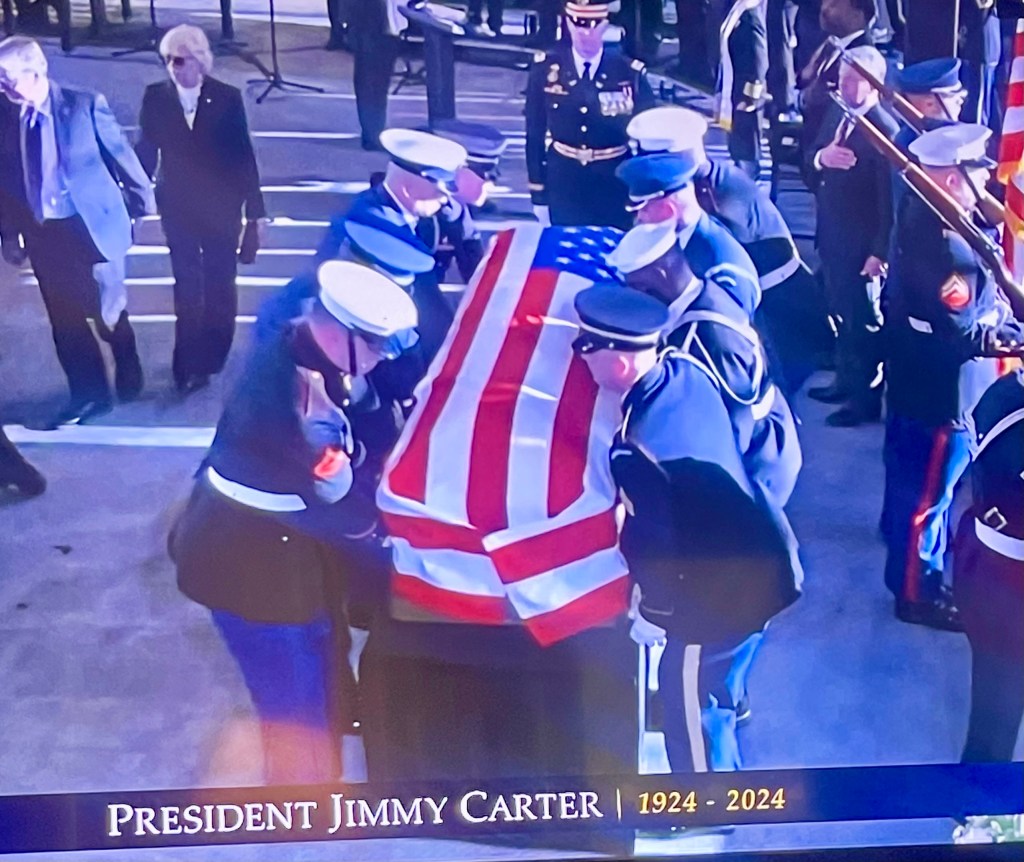
On January 7, the casket will be transported to Washington, D.C., where President Carter will lie in state at the U.S. Capitol. A state funeral is scheduled for January 9 at the Washington National Cathedral. Dignitaries will honor his legacy there, including President Joe Biden. The funeral will be a solemn event. There will be a military honor guard. A close family member will deliver a eulogy.

Carter’s journey will reach its conclusion after the national ceremonies. He will return to Plains, Georgia, for a private funeral service at Maranatha Baptist Church. He will be laid to rest beside his beloved wife, Rosalynn. This is the place where his remarkable journey began. It would now conclude there.  

As the week unfolds, the nation will ponder on the life of a president who remained a humble servant. Jimmy Carter’s final ride is not just a passage from life to death. It is a testament to a legacy that will endure in the hearts of the people he has touched. This marks the end of a remarkable journey.

The Nation Honors Former President and man Jimmy Carter!

References:

New York Post

Former President Jimmy Carter’s funeral procession begins in Georgia

Today

Politico

Jimmy Carter’s 6-day state funeral begins with a motorcade through south Georgia

Today

AP News

Jimmy Carter’s flag-draped casket is on its way to Atlanta as the 39th president’s state funeral begins

Today

The Impact Of Loss: Remembering A Childhood Best Friend For Life

A True Story By: Benjamin Groff II© Groff Media 2024© Truth Endures

When I was just eight years old, death was a concept that I hadn’t fully grasped. The only time it touched my life was when my grandparents’ neighbor, a gentleman named Tom, passed away. I was only seven then, and it happened so quickly that it didn’t leave a deep mark. My grandfather had sat up with Tom the night before he passed, a tradition people followed back then—sitting with the dying. It was a tradition, and my dad would continue the practice as I grew up, sitting with many men in our small town of 750 souls. I always wondered why he was asked to do that.

That night, when Pop, my name for my grandfather, went to sit with Tom, it was just my grandmother and me alone in their big, quiet house. It felt different without him there. Early the following day, around 6:00 AM, my grandmother and I were preparing breakfast when Pop came in through the backdoor. He quietly spoke to her, and I suspected what had happened. Mom, my grandmother, suggested I open the dining room door to let the morning light in. As I did, I overheard their conversation growing louder, and when I looked outside, I saw a hearse slowly pulling up to Tom’s house. I knew Tom had passed.

A few days later, my grandmother took me to his funeral, and Pop was one of the pallbearers. It was the first time I ever saw a person in a casket, and Tom still looked like Tom. After the service, my grandmother praised me to my father, saying I behaved so well—sitting quietly and respectfully. I thought I was just being myself. In those days, grandparents didn’t need to ask permission to take their grandchildren anywhere—funerals, courthouses, doctors’ offices, or even jails. The places they took me were some of the most fascinating.

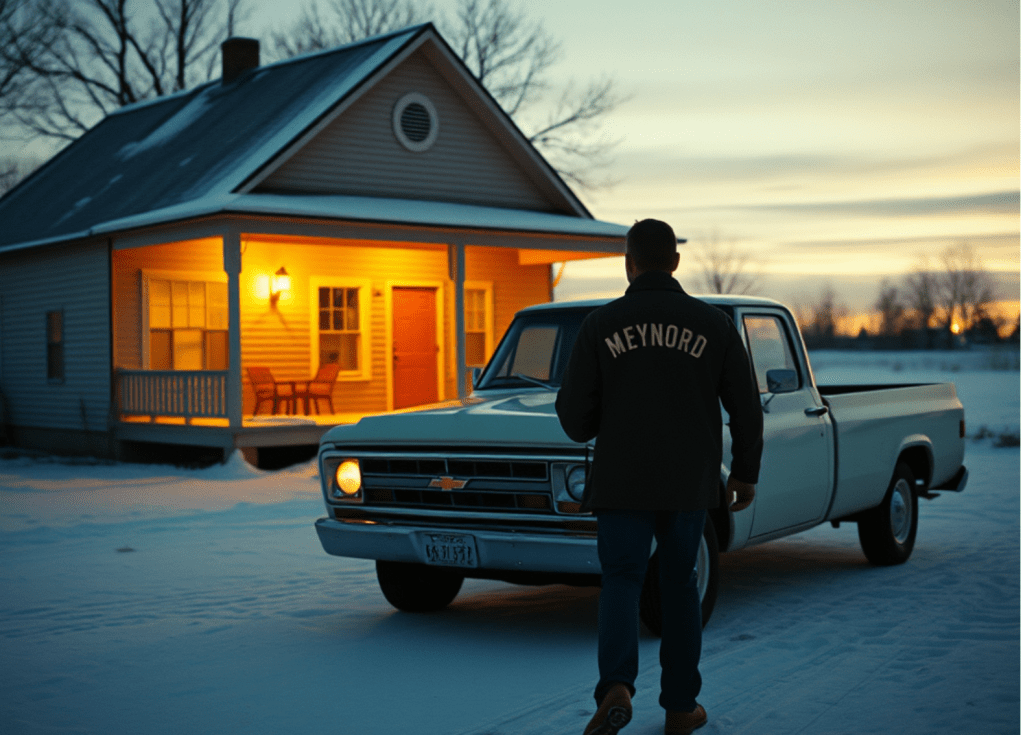
But this story isn’t about Tom. It’s about someone much closer to my heart, a man named Maynord Rider, one of my dad’s dearest friends. Maynord often accompanied us to horse sales on Friday and Saturday nights, and I thought the world of him. He lived two miles south of our farm, a farmer like many others in our area. One cold winter night, our water well froze, and my dad had to drive out over the pasture to fix it. When his headlights passed over Maynord’s bedroom windows, Maynord, instinctively knowing we were in trouble, got out of bed, climbed into his old white Chevrolet pickup, and drove to our house. He pulled up with a five-gallon water thermos and asked if our well had frozen. My mother was surprised—how could he have known? When my dad returned, he asked,

“Maynord, what are you doing here?”

They talked, and it turned out Maynord had guessed right. My dad told him there was no use in fixing it in the dark, and they’d work on it the next day. My dad promised to let Maynord help him the following morning to get him to leave.

There were many stories about Maynord, but they all ended one Thursday in September 1971.

It was the start of a four-day weekend from school due to a statewide teachers’ meeting. The day was beautiful for September in Oklahoma—warm with the usual breeze. I had been pestering my oldest sister, who was tasked with watching me and my other sister. It was just after noon, and the day felt perfect—no school, no bus to catch, just freedom. Then the phone rang. My oldest sister answered, and I could hear her voice change as she said,

“Oh no!” followed by, “I’m not telling him. You should.”

A moment later, she said,

“Mother wants to talk to you.”

I ran to the phone, stretched the cord as far as it would go, and answered.

“Yes, Mother!”

I said, but I could hear a siren approaching in the background. My mother’s voice was calm but direct,

“Benji, Maynord Rider just dropped dead.”

The words hit me like a punch, and I dropped the phone, screaming.

The news hit me like a physical blow, and I dropped the phone, screaming. The rest of the day is a blur, but I remember Ryder, the dog Maynord had given me, howling at the front door, leaning against it as if he, too, understood what had happened. None of the other dogs made a sound—just Ryder, the one I had named after Maynord’s last name.

I wouldn’t see my dad for hours, but I learned the whole story when I did. Maynord had come in from working on the farm for lunch. He ate, felt a bit of indigestion, and decided to lie down for a nap. While his wife, Bonnie, worked in the kitchen, she heard a moan, and when she went to check on him, she found him unresponsive. Panicked, she called my dad at the barbershop, where he cut hair. When he got the call, he told her to call the ambulance and that he’d be there immediately. He told the customers in his shop what had happened, leaving the man in his chair and the shop open as he rushed out.

Driving his Buick Le Sabre station wagon, my dad said the speedometer hit 120 miles per hour as he raced to Maynord’s farm, hoping to get there in time. Hearing this story comforted me, knowing that my dad did everything he could, even though we had lost one of the best men I had ever known.

That Friday night, my parents took me to see Maynord at the funeral home. It was more complicated than when I had seen Tom in his casket. The grief was overwhelming, and I couldn’t contain my tears. It felt like the worst day of my life. For years after Maynord’s death, I would look up at the sky, hoping for some way to talk to him again, but that day never came.

Eventually, I learned that, in life, there would be days harder than that one—the loss of my grandparents and my dad—, but somehow, we keep going, hoping that one day, someone will see our headlights coming over the hill and come to help us, just like Maynord did for us.

Gone But Not Forgotten: Honoring Everyday Heroes

A Report By: Benjamin Groff© Groff Media 2024© Truth Endures

Gone But Not Forgotten: A Digital Memorial

Click Image to visit site.

In a quiet corner of the internet, there exists a place unlike any other—a virtual tribute to those who had walked this earth, loved, laughed, suffered, and left their mark, only to slip away as the sands of time carried them beyond the reach of the living. It was called Notable Deaths: Gone But Not Forgotten.

The website is more than just a list of names. It is a symphony of lives, a testament to the idea that every life matters, no matter how famous or obscure. Each entry tells the story of a person who has shaped the world in their own way, whether through art, science, politics, or just by touching the lives of those around them. This is a space for reflection, a collection of special memories and achievements.

At first glance, Gone But Not Forgotten appeared like any other tribute site—a photo, a name, a short biography. But for those who ventured deeper, it became clear that this was more than just a collection of obituaries. It was an evolving narrative, with contributors from all walks of life adding details about the departed, piecing together the puzzle of who they were. Some names were well-known household figures like actors, musicians, and leaders. Others were lesser-known heroes—activists, teachers, parents—whose contributions quietly wove into the fabric of society. This is a community of shared experiences, a place where grief is understood and shared.

Among the most moving sections was the Like You, These People Mattered column. Here, visitors could submit stories about people who had passed away. Major fame was not required of them, only a life well-lived. Each submission reminded the world that grief is universal, that love for the departed transcends celebrity, and that the value of a life doesn’t lie in recognition but in the impact it has on others. Every life, no matter how seemingly ordinary, is a treasure and a legacy.

One day, a young woman named Lena found herself on the website. She wasn’t sure how she’d ended up there—maybe it was fate, perhaps the randomness of an internet search—but she was grateful. Lena had lost her grandfather just a few weeks before, and the wound was still fresh. He had been the heart of their family, a kind, strong man who had lived through wars, raised children, and taught Lena everything she knew about compassion. His death had left a void she didn’t know how to fill.

On Gone But Not Forgotten, she found solace. She read stories of others who had felt the same loss, who had watched their loved ones slip away, only to hold onto their memories for comfort. She realized that her grandfather’s story, though deeply personal, was part of a much larger tapestry of human experience. Moved by the thought, Lena submitted a post to the Like You, These People Mattered section, pouring out her heart as she shared the man her grandfather had been—the jokes he told, the lessons he imparted, the quiet dignity with which he had faced his final days.

Days passed, and one afternoon, Lena returned to the site to find her story had been published. Not only that, but others had commented on it—people she didn’t know but who understood her grief. They offered words of sympathy, shared experience, and hope. Lena felt an overwhelming sense of connection. Here, in this virtual space, her grandfather lived on; in some small way, his life had touched others.

The website became a regular stop in her day. She began reading more of the stories, leaving comments for others who were grieving, and sometimes just sitting with the quiet weight of history as she browsed the names and faces of those who had passed. Famous or not, every story mattered. Each life was a thread in the rich, intricate tapestry of humanity.

As time went on, Gone But Not Forgotten grew. More stories were added, and more voices joined the chorus of remembrance. The world kept turning, and people kept living and dying, but this digital sanctuary reminded everyone that no one was truly gone as long as they were remembered. This is a place where the legacy of our loved ones lives, where their stories continue to inspire and comfort us.

Ultimately, the website became more than a place to honor the dead. It became a celebration of life—the connections we make, the people we love, and the way our stories, no matter how small, continue to ripple outward even after we’re gone.