THE LAST RIDE FOR THE MAN FROM PLAINS GEORGIA

Groff Media 2024© Truth Endures IMDbPro

Presented by benandsteve.com By: Benjamin Groff II©

2–3 minutes

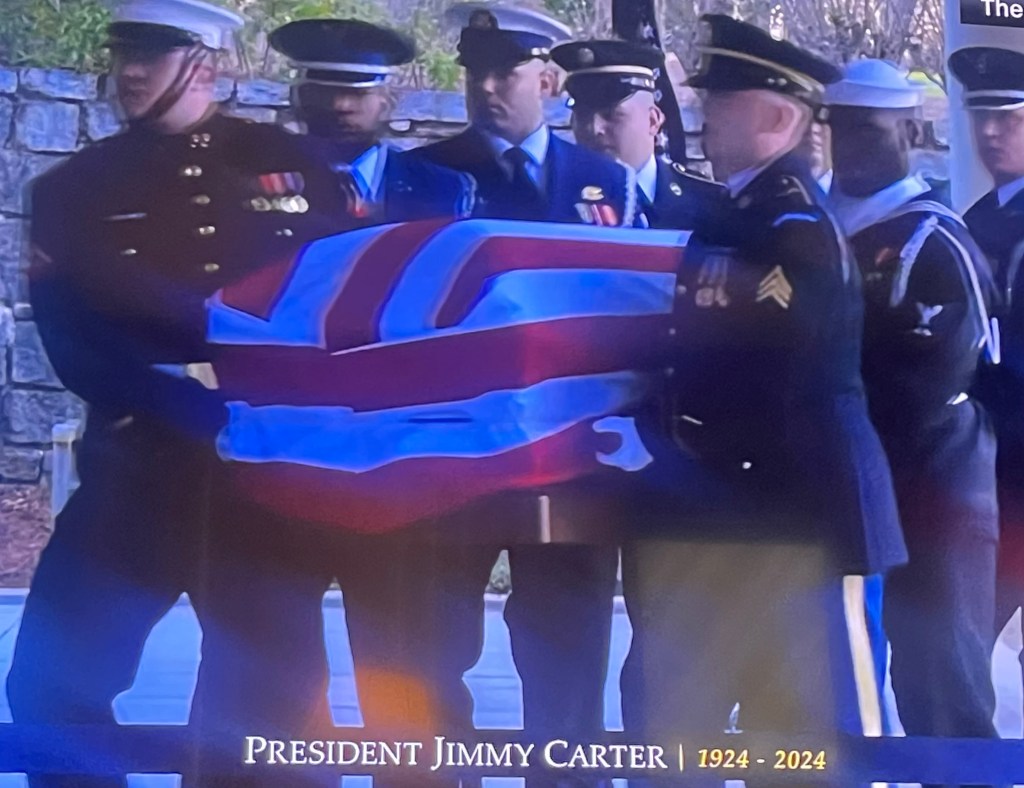
In the early hours of January 4, 2025, a somber hush fell over the rolling plains of Georgia. The sun shone gently over the landscape. A motorcade departed from Phoebe Sumter Medical Center in Americus. It bore the flag-draped casket of the 39th President of the United States, Jimmy Carter. The journey marked the start of a six-day tribute. It honored a man who dedicated his life to service, peace, and humanity.

The procession moved through Carter’s hometown of Plains, passing by his boyhood home in Archery. Here, the old farm bell tolled 39 times. Each chime resonated with the years he had served as the nation’s leader. It symbolized each year of his presidency. Family members, including his children, grandchildren, and great-grandchildren, accompanied the casket, their faces reflecting both sorrow and pride. Former Secret Service agents had once protected him. They now served as pallbearers. They honored their final duty to the man they had revered.

Along the route, admirers gathered. Some held flowers. Others wore commemorative pins. They were all united in their wish to pay homage to a beloved figure. The motorcade continued to Atlanta. There, Carter’s body would lie in repose at the Carter Presidential Center. This arrangement provided the public with the opportunity to offer their respects. 

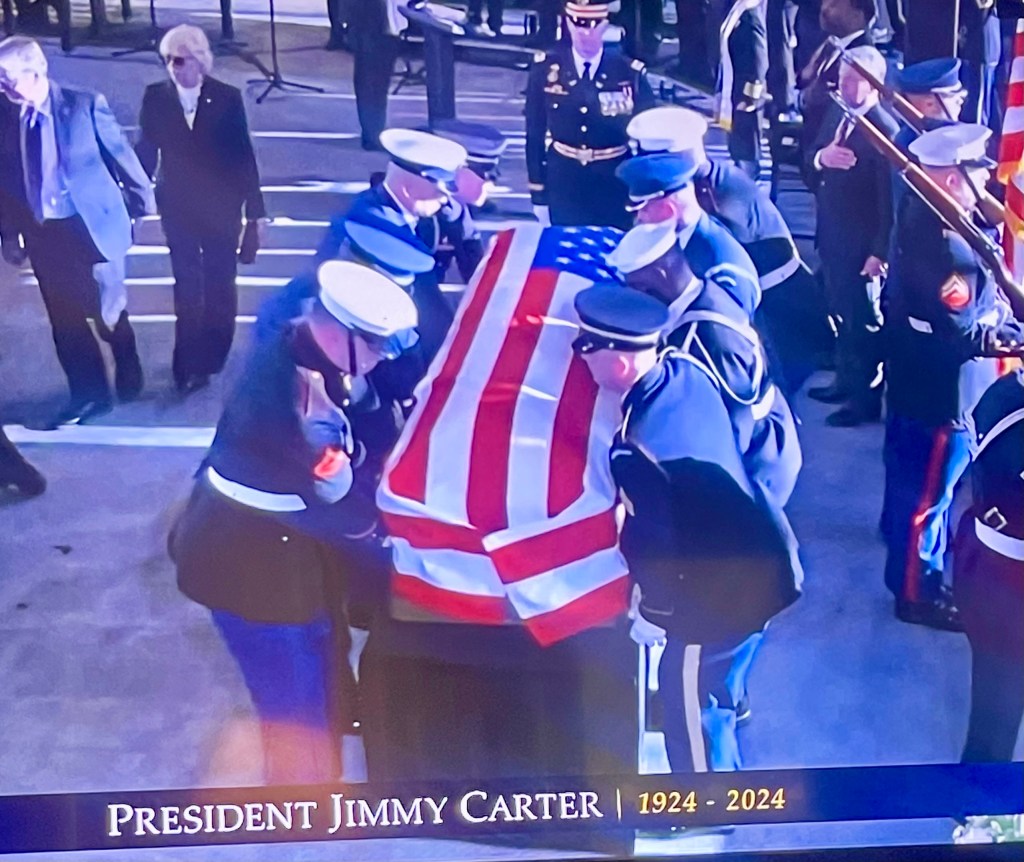
On January 7, the casket will be transported to Washington, D.C., where President Carter will lie in state at the U.S. Capitol. A state funeral is scheduled for January 9 at the Washington National Cathedral. Dignitaries will honor his legacy there, including President Joe Biden. The funeral will be a solemn event. There will be a military honor guard. A close family member will deliver a eulogy.

Carter’s journey will reach its conclusion after the national ceremonies. He will return to Plains, Georgia, for a private funeral service at Maranatha Baptist Church. He will be laid to rest beside his beloved wife, Rosalynn. This is the place where his remarkable journey began. It would now conclude there.  

As the week unfolds, the nation will ponder on the life of a president who remained a humble servant. Jimmy Carter’s final ride is not just a passage from life to death. It is a testament to a legacy that will endure in the hearts of the people he has touched. This marks the end of a remarkable journey.

The Nation Honors Former President and man Jimmy Carter!

References:

New York Post

Former President Jimmy Carter’s funeral procession begins in Georgia

Today

Politico

Jimmy Carter’s 6-day state funeral begins with a motorcade through south Georgia

Today

AP News

Jimmy Carter’s flag-draped casket is on its way to Atlanta as the 39th president’s state funeral begins

Today

“The Peanut Farmer and the Minnesota Senator”

Peering through the Oval Office Window: A Look Back

Groff Media 2024© Truth Endures IMDbPro

Presented by benandsteve.com By: Benjamin Groff II©

2–3 minutes

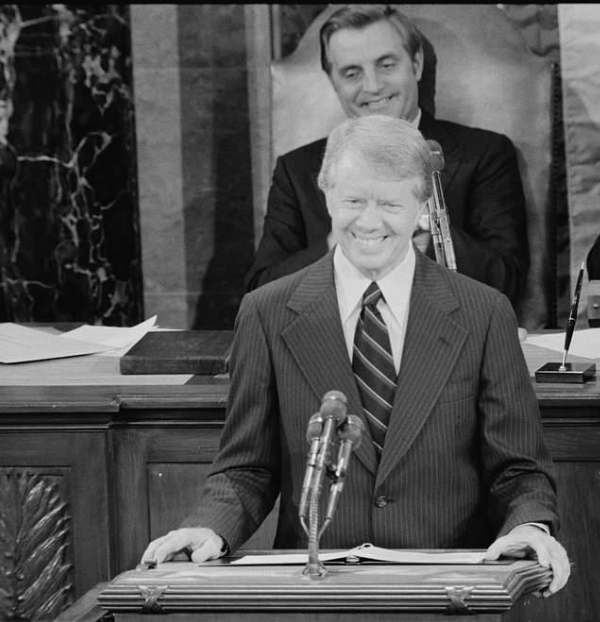
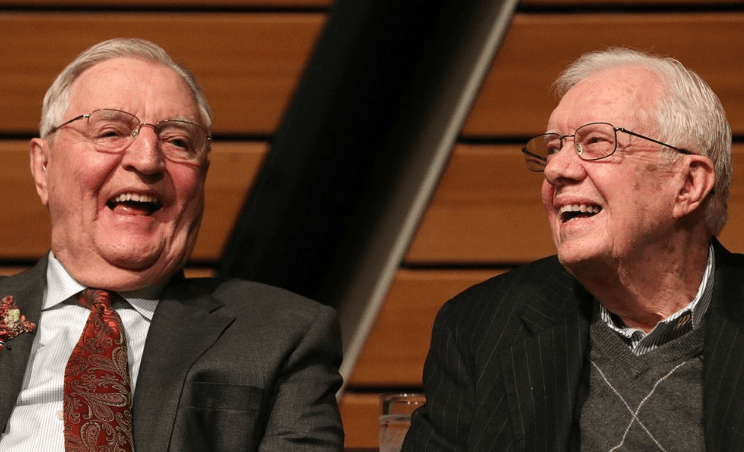
In the summer of 1977, President Jimmy Carter leaned back in his chair in the Oval Office. A pensive smile tugged at the corners of his mouth. Across from him sat Vice President Walter Mondale, poring over a stack of briefing papers with his trademark focus. One man was a farmer from Georgia. The other man was a lawyer from Minnesota. The two couldn’t have been more different in background. Yet, their partnership was rooted in a shared commitment to serving the American people.

“Fritz,” 

Carter said, using Mondale’s nickname, 

“you ever think we’re trying to do too much at once?”

Mondale looked up, his brow furrowed. 

“Every day, Mr. President. But that doesn’t mean we stop trying.”

The two had agreed early on that their administration would focus on transparency and morality in government. It was a lofty goal, especially after the shadow of Watergate. Carter gave Mondale an unprecedented role as vice president. He granted him full access to meetings and decision-making processes. Mondale had a seat at the table in all major discussions.

That day’s agenda included preparations for the Camp David Accords. Carter knew the stakes were high. Peace in the Middle East was a dream worth pursuing, but the path was challenging.

“I’ve been thinking about how we can get Sadat and Menachem (Begin) to see eye to eye,” 

Carter mused, tapping his pen on his desk. 

“I need you to be my sounding board, as always.”

Mondale nodded, adjusting his glasses. 

“They both trust you, Jimmy. That’s the key. You have a way of connecting with people, even when the odds seem impossible.”

Carter chuckled softly. 

“Must be the peanut farmer in me.”

Over the months, the two worked tirelessly. Mondale often acted as a mediator in Congress, navigating the political complexities Carter sometimes found frustrating. When the energy crisis hit, Mondale suggested convening regional governors to gather diverse perspectives.

One evening, after a particularly grueling day, they found themselves alone in the Rose Garden. The air was warm and scented with magnolias, and the stars above were unusually bright.

“Fritz,” 

Carter said, breaking the silence, 

“I couldn’t do this without you. You keep me grounded.”

Mondale smiled, a rare expression of pride crossing his face. 

“You’d manage, Jimmy. But I’m glad I’m here to help.”

Their friendship, forged in the fire of challenges and the weight of leadership, became a hallmark of their administration. Though history would judge their tenure with mixed opinions, their mutual respect and dedication to principle left a lasting legacy.

As the years passed, Carter and Mondale’s bond endured. At their core, they remained two men dedicated to the idea that leadership meant service, not power. They carried this lesson beyond the White House walls.

A lesson that needs to be passed on increasingly so now!

Jimmy Carter: A President’s Quiet Resolve

Groff Media 2024© Truth Endures IMDbPro

Presented by benandsteve.com By: Benjamin Groff II©

2–3 minutes

Jimmy Carter
The Carter Center Photo

Jimmy Carter served as the 39th President of the United States from 1977 to 1981. He brought a quiet and deliberate resolve to the Oval Office. Carter was a former peanut farmer and Georgia governor. His presidency was shaped by his outsider status. He was known for his Southern charm and deep sense of morality. This quiet resolve was tested by the significant challenges he faced, but it never wavered.

Carter inherited a nation grappling with inflation, an energy crisis, and a faltering trust in government post-Watergate. Undeterred, he tackled the energy crisis head-on. He donned a cardigan during televised addresses to encourage Americans to conserve energy. He also urged Congress to pass legislation for renewable resources and energy independence. His solar panels on the White House symbolized a progressive-thinking approach that would resonate decades later.

On the international stage, Carter championed human rights, placing them at the core of U.S. foreign policy. His leadership during the Camp David Accords remains a hallmark of his presidency. It was a historic peace treaty between Egypt and Israel. This significant achievement demonstrated his commitment to diplomacy and peace. It marked the first time an Arab country formally recognized Israel.

Jimmy Carter
The Carter Center Photo

Yet, Carter’s term was also marred by challenges. The Iranian hostage crisis cast a long shadow as 52 Americans were held captive for 444 days. The crisis tested his patience. It also tested his diplomacy. The eventual release of the hostages coincided with Ronald Reagan’s inauguration. This became a bittersweet moment in his legacy. Carter showed resilience during this crisis. It proved his unwavering commitment to his duties as President.

Jimmy Carter – The Carter Center Photo

Carter served only one term. His presidency reflected his unwavering belief in doing what was right. He did this regardless of political consequences. His tenure laid the groundwork for a post-presidential humanitarian service life, earning him the Nobel Peace Prize decades later. This continued commitment to the greater good is a testament to the lasting impact of his presidency.

Jimmy Carter’s time in office was not marked by soaring rhetoric or overwhelming popularity. Still, it was defined by integrity, resilience, and a steadfast commitment to the greater good.

Jimmy Carter: The Country Music President

Groff Media 2024© Truth Endures IMDbPro

Presented by benandsteve.com By: Benjamin Groff II©

2–3 minutes

The year was 1977, and Jimmy Carter had just taken the oath of office. A peanut farmer from Georgia, he brought a unique sensibility rooted in his Southern upbringing and a deep love for American culture, particularly country music. This unique combination of his Southern roots and his love for country music not only shaped his personal life but also influenced his presidency, allowing him to connect with the struggles and joys of everyday Americans.

Waylon Jennings Family

When he stepped into the White House, Carter made it clear that the arts, especially music, would have a place of honor in his administration. He often reminisced about listening to gospel and country music on the family radio back in Plains, Georgia, where the soulful twang of artists like Hank Williams and the Carter Family resonated with the struggles and joys of everyday Americans, a sentiment he deeply shared.

One evening, during a White House dinner, Carter invited Willie Nelson to perform on the South Lawn. The night was balmy, and as the country star strummed his guitar under a canopy of stars, Carter took the opportunity to speak.

White House Photo – Carter Library

“Country music,” he said, “is the heart and soul of America. It tells the story of our struggles, faith, and hope.”

Carter’s admiration wasn’t just lip service. He actively promoted the genre, ensuring it received the recognition it deserved as an integral part of American culture. He invited artists like Loretta Lynn, Johnny Cash, and Dolly Parton to the White House. He even arranged for country music showcases at international events to share a slice of Americana with the world. His unwavering efforts significantly influenced the genre’s rise to mainstream respectability during the late 20th century.

Bill Anderson with The Carters

But Carter’s legacy extended far beyond his love of country music. He brokered the Camp David Accords, a landmark peace agreement between Egypt and Israel that demonstrated his diplomacy skills and commitment to global peace. He championed human rights globally, making them a cornerstone of U.S. foreign policy. He also pushed for energy conservation, installing solar panels on the White House roof long before climate change became a widely recognized issue.

After leaving office, Carter’s achievements only grew. He founded The Carter Center, dedicated to promoting democracy, fighting disease, and mediating conflicts worldwide. His work eradicating diseases like Guinea worm, even in his post-presidential years, demonstrated his enduring compassion and determination to make the world better.

As for country music, Carter’s genre promotion left a lasting legacy. Many country artists credited him with helping to elevate their art to a global stage. Even decades later, when asked about his presidency, Carter would smile and say,

“If I could broker peace and get people to tap their feet to country music, then I’ve done my job.”

Jimmy Carter’s presidency may not have been perfect. Still, his love for the arts, his commitment to peace, and his tireless work for humanity made him a leader whose legacy resonates far beyond the Oval Office.

Jimmy Carter and the Little Peanut Stand

Groff Media 2024© Truth Endures IMDbPro

Presented by benandsteve.com By: Benjamin Groff II©

2–3 minutes

Earl Carter and Children

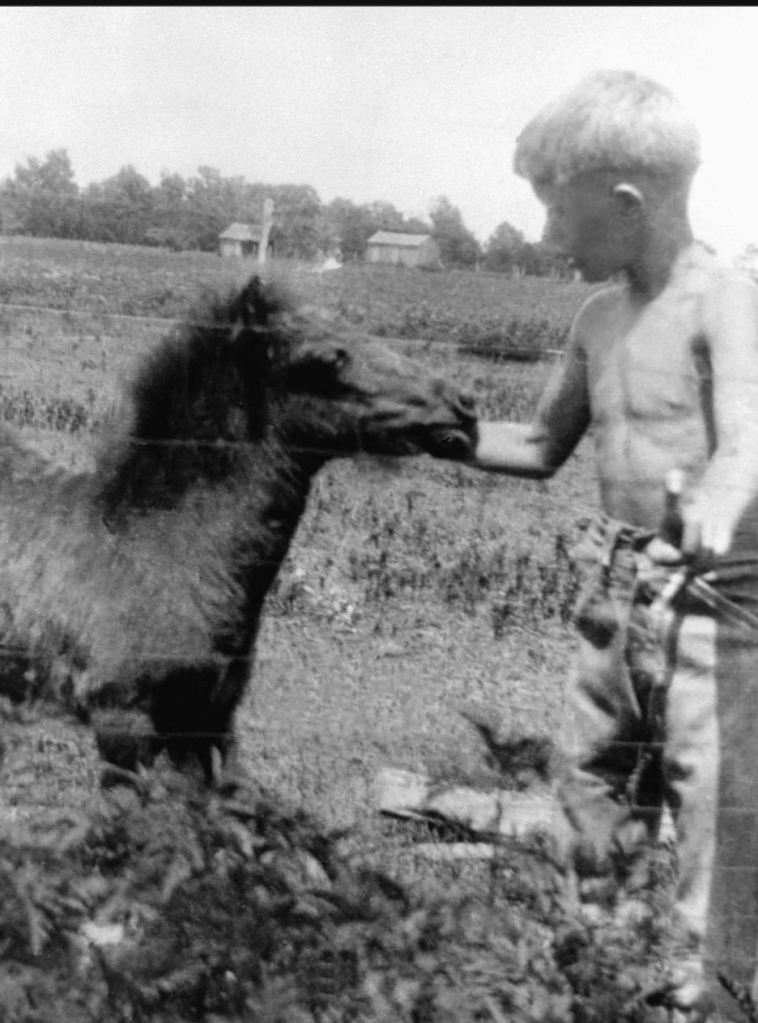
The summer in Plains, Georgia, was hot and humid. Young Jimmy Carter, no more than ten years old, sat under the shade of an old pecan tree. Beside him stood a makeshift wooden stand crafted from spare planks his father had discarded. A hand-painted sign read, “Peanuts 5¢ a Bag.”

Jimmy’s father, Earl, suggested selling peanuts after the latest harvest.

“You’ll learn the value of hard work,”

Earl had said, his weathered hand resting on Jimmy’s shoulder.

“And how to talk to people. That’s important.”

Jimmy Carter

Jimmy took the advice seriously. He woke early each morning to bag the peanuts. He carefully measured each part to guarantee every customer got their money’s worth. Then he’d march down the dirt road to the little stand. He would sit there until the sun dipped low in the sky.

On this particular day, business was slow. The air was thick with the buzz of cicadas, and Jimmy’s mind wandered as he stared down the empty road. He thought about the world beyond Plains. It was a world he’d only glimpsed in books. Travelers passing through town also told him stories about it.

As he mused, a car sputtered to a stop nearby. It was an old Ford, its green paint faded and dust-caked. A man stepped out, dressed in overalls and a straw hat. He approached the stand with a friendly smile.

“Afternoon, young man,”

the stranger said, his voice tinged with a twang.

“How much for a bag of those peanuts?”

“Five cents, sir,”

Jimmy replied, standing up straight.

The man chuckled.

“You drive a hard bargain, but I reckon it’s worth it.”

He handed Jimmy a shiny nickel, and Jimmy passed him a bag of peanuts in return.

The man lingered, munching on the peanuts as he leaned against the car.

“You’re Earl Carter’s boy, ain’t ya?”

“Yes, sir.”

“Well, you got his knack for business. Ever think about what you wanna do when you’re older?”

Jimmy hesitated, then spoke with quiet determination.

“I think I’d like to help people. Maybe be a farmer like my dad, or –– maybe even something bigger. Like a teacher or someone who solves problems.”

The man nodded thoughtfully.

Jimmy Carter was a teenager then. He was number 10 in a group portrait of the Plains High School basketball team. The photo was taken in Plains, Georgia, around 1940.

“That’s a fine ambition. Keep that kindness in your heart, boy. The world can use more folks like you.”

Jimmy smiled, his youthful confidence bolstered by the stranger’s words.

Years later, as President of the United States, Jimmy Carter often recalled that summer by the peanut stand. There, under the pecan tree, he first learned the value of hard work. He also learned humility and the simple power of connecting with others. These were lessons that would guide him throughout his life.

The stand was long gone. But, the spirit of that little boy with big dreams remained. It was forever rooted in the red soil of Plains.

Learn more about Jimmy Carter in photos. Got to the source for photos used in this writing by clicking here.

Dan the Electrician Saves Boone

Groff Media 2024© Truth Endures IMDbPro

Presented by benandsteve.com By: Benjamin Groff II©

3–4 minutes

The small town of Boone, nestled in the valley of snow-capped peaks, was no stranger to winter storms. But this one was different. The storm rolled in with icy winds that seemed to pierce every wall and seep through every seam. It coated the town in a thick, glittering layer of ice. The power lines sagged and snapped under the weight. This plunged Boone into darkness. The town’s survival hung in the balance, with temperatures plummeting to subzero.

The urgency of the situation was palpable. Dan Hayes, a seasoned electrician and father of two, was preparing for a quiet evening with his family. His phone buzzed incessantly. Calls came in from neighbors, then from Boone’s mayor himself. The town’s substation, already overwhelmed by the demand for heat, had succumbed to the relentless freeze. Ice had formed on critical equipment, blowing fuses and wiring, leaving the entire town powerless.

“Jimmy, grab my tool bag!”

Dan hollered to his teenage son, who quickly obeyed, bundling up in layers against the cold.

“We’re heading to the substation.”

Driving through the storm in his old but reliable truck, Dan and Jimmy barely see beyond the hood. Fallen branches and icy roads made the journey treacherous. When they finally reached the substation, the sight was worse than Dan expected. The entire structure got encased in ice. Its wires snapped like brittle twigs.

“Jimmy, this is going to take everything we’ve got,”

Dan said, his breath forming clouds in the freezing air.

“I’ll need your help every step of the way.”

Dan quickly assessed the situation, identifying the most critical damage. The main transformer was overloaded, and its fuses were blown. Wires leading to key circuits were severed, and ice threatened to collapse a vital power relay. Dan began carefully thawing the most delicate components using a portable heater from the truck. Meanwhile, Jimmy set up emergency lights and handed his dad tools as he worked.

Word spread that Dan was at the substation. Soon, a small group of townsfolk arrived. This group included the fire chief and a few volunteers. They formed a chain to bring sandbags and materials to reinforce the ice-laden structure. This was a testament to the resilience and unity of the community. One by one, Dan replaced the fried fuses and spliced wires, his fingers numb but his determination unshaken.

Hours passed, and the storm showed no mercy. Dan finished repairing the transformer. Then, the wind knocked a massive branch onto the newly restored lines. This snapped them again.

Dan didn’t flinch.

“We’ve got one shot to do this right,”

He muttered. Calling on his years of experience, he rigged a temporary bypass, rerouting power from a less-affected part of the grid. The fix have been made better, but it would hold until morning.

Finally, as dawn broke and the first rays of sunlight pierced the storm clouds, the lights flickered across Boone. Cheers erupted from the gathered crowd, but Dan was yet to finish. He double-checked every connection, ensuring no one would lose power again that day.

Jimmy looked at his dad with newfound admiration.

“You saved the whole town, Dad.”

Dan smiled, his face weary but proud.

“We did it together, son. Boone’s got a lot of heart, and so do its people. That’s what keeps us warm.”

Back home, Dan and Jimmy were comforted with hot cocoa and blankets from a grateful Mrs. Hayes. Outside, the storm subsided. It left behind a town that had endured the worst. This was thanks to the quiet heroics of a father who wouldn’t let the cold win.

Uncovering Crime: The Relentless Pursuit of Justice

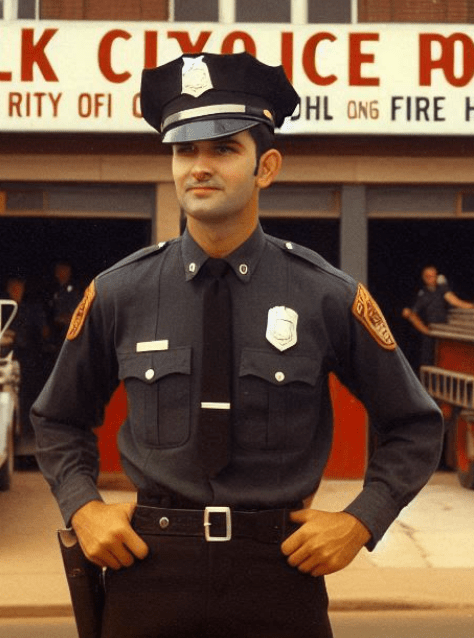
It was a typical summer night in western Oklahoma, and Officer Ben Groff enjoyed a rare night off. He planned to eat at a restaurant on the city’s west side. He drove there in his newly purchased 1985 Dodge Ram. Gaming gold and black under the streetlights, the pickup was his pride and joy. As he cruised along old Route 66, he rolled down the window to enjoy the cool evening breeze.

At an intersection, a red Jeep pulled up beside him. Its driver, a man about Groff’s age, turned down his radio and hollered over the traffic.

“I like your truck; that is slick, man!

Groff grinned.

“Thanks! Your Jeep’s pretty nice too!”

The man motioned toward the Sonic drive-in up ahead.

“Pull over. Let’s talk!”

Curious and lacking close friends outside the police department, Groff agreed. They parked at Sonic, grabbed burgers, and swapped stories about their vehicles and work. The man introduced himself as Lenny and said he had a knack for making fast friends. Groff, still, couldn’t ignore the possibility that this chance meeting lead to more than small talk. Lenny’s interest in trucks worried Groff. His easy charm also raised Groff’s suspicion.

That night, over beers at Groff’s house, a tentative friendship began to form. But Groff had a strategy. He suspected Lenny was his way into a group linked to a string of thefts plaguing the city. The Chief of Police gave a cautious blessing. Groff embedded himself in this new circle of acquaintances. He balanced camaraderie with the thin line of professional detachment.

Walking the Tightrope


The deeper Groff immersed himself, the more skeptical his fellow officers became. Some resented his approach, accusing him of consorting with known criminals. Others were envious of how the community responded positively to Groff’s efforts. For Groff, the criticism was a necessary price. He knew abandoning the operation would make months of effort meaningless.

By late November 1985, Groff’s relentless work—juggling undercover meetings, regular patrol shifts, and state-mandated training—was starting to pay off. A critical breakthrough came unexpectedly when one of Lenny’s associates sold Groff a set of truck railings. The thrill of the chase was palpable as Groff made the buy and then cross-referenced recent police reports. Sure enough, a burglary at Bill’s Auto listed truck railings among the stolen items.

It was the break he’d been waiting for.

Closing the Net


The next day, Groff burst into the Chief’s office, his excitement barely contained.

“I’ve got them, Chief! One of them sold me stolen property. If I press him, I can flip him and take down the whole operation!”

The Chief, weary but intrigued, leaned ahead.

“Are you serious? You’re sure this will work?”

Groff nodded.

“I’m sure. But I need to move fast before they catch wind of it.”

“Not alone,”

the Chief said firmly.

“We’ll grab a detective. Let’s do this right.”

The weight of responsibility was heavy on Groff’s shoulders. He agreed but insisted on leading the first confrontation alone. He wanted to avoid spooking the suspect. The Chief and the detective parked discreetly down the street as Groff pulled into the suspect’s driveway.

Groff agreed but insisted on leading the first confrontation alone to avoid spooking the suspect. The Chief and the detective parked discreetly down the street as Groff pulled into the suspect’s driveway.

The suspect, Joey, took his time answering the door. His surprise was clear when he saw Groff in uniform.

“Joey,”

Groff began, his voice steely,

“I know everything—the railings, the bumpers, all of it. This is your one shot to come clean before this place gets torn apart. Don’t blow it.”

Joey’s defiance crumbled.

“How’d you find out?”

he stammered.

Groff played it cool.

“You sold me stolen property. It wasn’t hard to figure out.”

Joey hesitated, then blurted,

“There’s more—way more.”

The Haul


Inside Joey’s attic, Groff and the suspect found a treasure trove of stolen goods. They discovered jewelry, electronics, vehicle accessories, and a firearm. Over $40,000 in items were recovered from Joey’s residence alone. Joey’s confession led to six extra arrests, dismantling a theft ring that had operated for three years.

But the investigation didn’t end there. Interviews with the subjects hinted at more profound corruption, implicating former high-ranking officers in a grocery robbery scheme. Groff pressed for a deeper probe, but political resistance and departmental politics hampered his efforts.

Despite these setbacks, Groff’s work earned him a reputation as a relentless investigator. He was willing to make personal sacrifices to serve justice. The satisfaction of justice served was palpable. Groff’s relentless pursuit of the truth led to the dismantling of a major theft ring. That summer night on Route 66 started a chain of events. It led to one of the most significant cases of his career.

Exciting News! benandsteve.com and our media links are thrilled to be featured on Medioq – Happy Thanksgiving…

Groff Media 2024© Truth Endures IMDbPro

Presented by benandsteve.com By: Benjamin Groff II©

1–2 minutes

benandsteve.com is going places—online and in life. We are proud to announce that we are being listed by Medioq, which connects news and information sites and exchanges information with you online.

“Exciting News! We are thrilled to be featured on Medioq, a premier platform connecting individuals with top-notch media, news, and broadcasting companies worldwide. Explore our profile to stay informed, entertained, and associated with the latest news and updates: https://www.medioq.com/XX/Unknown/1582006558765140/Galaxy8News

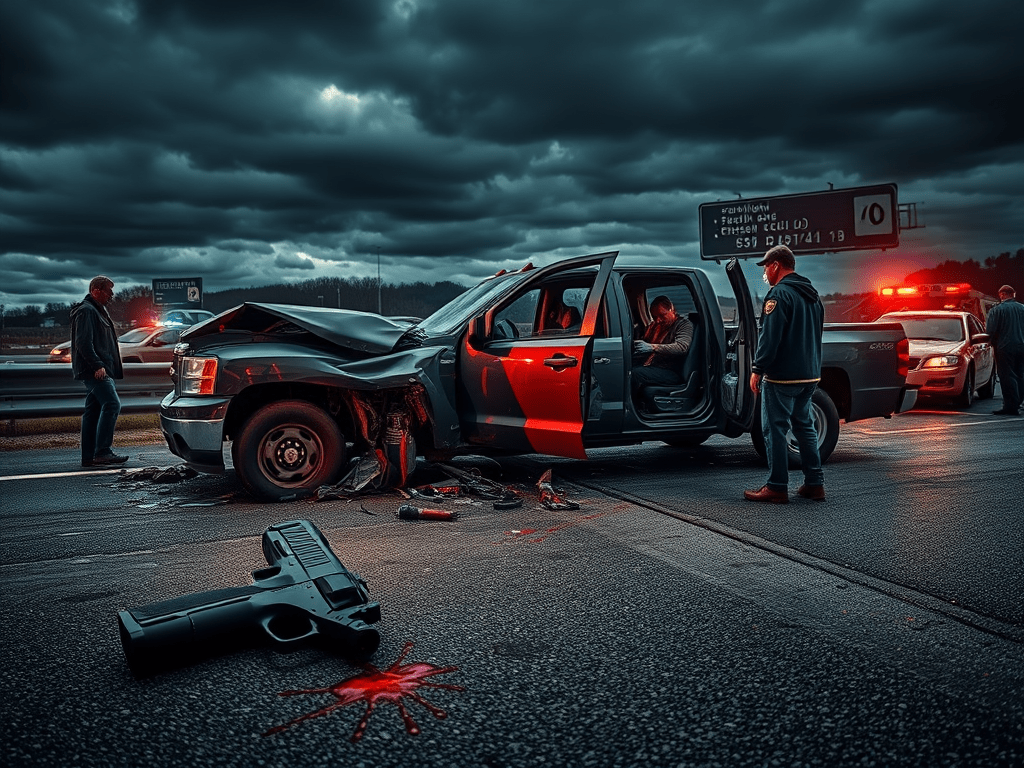
Highway Reckoning – When There Is Real Blood On The Highway ––– “He said we were both going to die!”

Groff Media 2024© Truth Endures IMDbPro

Presented by benandsteve.com By: Benjamin Groff II©

3–5 minutes

Officer Ben Groff had been juggling back-to-back court appearances at the Beckham County courthouse all morning. The docket was full of traffic violations and a few petty crimes, each case chewing away precious hours he would rather spend patrolling Elk City streets. 

The courtroom’s musty air and the monotony of testimonies felt like a prison until his radio crackled to life with a voice that cut through the monotony like a razor.

“Priority call for Elk City PD. Possible domestic disturbance turned vehicle crash at Interstate 40 and State Highway 6. Ambulances en route. Officers needed to secure the scene. Witnesses report shots fired. Groff and Wheeler, you’re closest.”

Groff glanced at his fellow officer, Lieutenant Wheeler, seated across the room as a witness for a separate case. Wheeler’s eyes mirrored the same urgency. Without needing words, both men left the courthouse, striding quickly to their cruisers.

Moments later, Groff sped East on Interstate 40 toward the reported scene, the shrill wail of his siren slicing through the rural quiet. The chaos became evident as he neared the overpass where Interstate 40 crossed Old Highway 66.

A mangled pickup truck rested askew across the interstate median, its engine smoking and horn blaring. A crushed sedan lay twenty yards away, its front end obliterated. Skid marks and shattered glass littered the asphalt like jagged scars. Traffic had stopped, and several drivers had exited their vehicles to rubberneck or assist.

Groff slowed only enough to navigate the melee before parking behind Wheeler’s cruiser. As Groff exited his vehicle, he took in the scene—a woman, visibly distraught, sat against the guardrail, holding a bloodied handgun. Paramedics surrounded her, carefully taking the weapon from her trembling hands.

“Groff, over here!” 

Wheeler shouted, pointing toward the pickup.

Inside, a man slumped lifelessly in the driver’s seat, a gunshot wound to his head. His hands still gripped the steering wheel, frozen in what seemed to be the final moment of his fatal decision. He had experienced the syndrome known in police work as having a Cadaveric Spasm or Instantaneous Rigor. 

“She shot him, Ben,” 

Wheeler said grimly. 

“Witnesses say he tried to crash the truck into the underpass while she fought him off.”

Groff nodded, taking in Wheeler’s words while scanning for immediate threats. 

“What caused the head-on with the sedan?”

“When she shot him, the truck swerved across the median into oncoming traffic,”

Wheeler explained. 

“A family of three was in that car. Paramedics say they’re alive, but it’s bad.”

“He said we were both going to die!”

Groff approached the woman at the guardrail, her tear-streaked face contorted in anguish. 

“Ma’am, I’m Officer Groff. I need you to tell me what happened.”

Through sobs, she explained the escalating argument at a gas station on Old Highway 66. Her husband, enraged over perceived slights, had driven recklessly onto the interstate, swerving wildly. When she tried to grab the wheel to prevent him from crashing into the underpass, he attacked her. In desperation, she retrieved the handgun from the glovebox and fired.

“He said we were both going to die!”

She whispered, her voice quaking. 

“I didn’t want to hurt him, but I couldn’t let him kill us.”

Groff nodded solemnly, trying to balance empathy with the need for clarity. 

“You did what you thought was necessary to survive. Right now, our focus is ensuring you’re safe and getting everyone the help they need.”

As he spoke, highway patrol officers arrived to assist with traffic control. Paramedics transported the injured family to the hospital, and the medical examiner began their grim work on the deceased husband.

Groff and Wheeler pieced together the scene as investigators. The domestic dispute was the tragic catalyst but also underscored the unpredictable volatility of police and emergency calls.

Hours later, Groff sat on the hood of his cruiser, staring at the fading sunlight over Interstate 40. Wheeler joined him, his expression weary. 

“Another senseless tragedy,” 

Wheeler said.

“Yeah,”

Groff replied, the day’s weight pressing down. 

“But at least she survived.”

The call would haunt them both for a long time, a stark reminder of the thin line officers walk between preserving life and untangling the wreckage of human conflict. For Groff, it was just another chapter in a small-town officer’s unpredictable, often harrowing life.

Justice Served: Stolen Vehicle Chase in Elk City

Groff Media 2024© Truth Endures IMDbPro

Presented by benandsteve.com By: Benjamin Groff II©


3–4 minutes

Officer Ben Groff had just started his shift at the Elk City Police Department when the call came through dispatch:

“Units should be advised of a report of a stolen vehicle spotted heading north on Main Street. It collided with several vehicles in front of the theater and continued. The suspect is a white Dodge Charger. All units respond.”

Ben’s patrol car roared to life as he drove through Third and Madison Avenue to intercept the vehicle on Main Street. Ben hit the lights and siren, merging into the city’s bustling evening traffic. Main Street was alive with its usual commotion—families grabbing dinner, teens cruising, and trucks rumbling through on their way to the interstate. The Charger weaved recklessly through it all, its driver seemingly unfazed by the chaos.

Ben’s adrenaline surged as he radioed in.

“Unit 3 in pursuit. The suspect vehicle appears to be trying to head towards Washington Street through alleyways.”

As the stolen vehicle blew past a red light, narrowly missing a minivan, Ben deftly maneuvered around other cars, keeping his pursuit controlled but relentless. He’d chased suspects before, but this one felt different—the driver was audacious and desperate, taking wild risks that jeopardized everyone on the road. The danger was palpable, the stakes high, and the adrenaline was pumping.

When the Charger made a sharp turn onto a quieter side street, Ben followed, his tires screeching on the asphalt. For a moment, the streetlights flickered off the Charger’s rear window, and Ben caught a glimpse of the driver—a young woman, her face twisted with determination.

Finally, the suspect tried to cut through an alley too narrow for her car’s speed. The Charger clipped a dumpster and spun out, slamming into a utility pole. Smoke billowed from the crumpled hood.

Ben skidded to a stop, jumping out with his weapon drawn.

“Show me your hands! Out of the car, now!”

The woman hesitated before stepping out, her hands trembling but raised. She was strikingly familiar—Lisa Rhodes, the girlfriend of the auto magnate and social media influencer John DeLorean. The revelation sent a shockwave through the scene, a twist in the narrative that no one, not even Ben, saw coming.

“You’ve got to be kidding me,”

Ben muttered under his breath.

Lisa tried to talk her way – out of it, her voice honeyed but shaky.

“Officer, I didn’t steal this car. It’s one I borrowed. A man, let me borrow it—this is just a misunderstanding!”

Ben wasn’t buying it. As he cuffed her, he noticed her purse on the passenger seat. When he peeked inside, his suspicions were confirmed—a substantial stash of drugs, including pills and small baggies of powder.

Backup arrived moments later, securing the scene. Lila’s protests grew louder as the reality of her arrest sank in.

“You don’t know who you’re messing with! John will have his attorneys save me and get your badge for this!”

Ben smirked as he read her rights.

“Maybe he will, but not before I make sure you face the consequences of tonight’s little joyride.”

Ben’s determination was unwavering, and his commitment to upholding the law was resolute, making it clear that justice would prevail.

Back at the station, the news spread like wildfire. Lila Rhodes, the woman frequently seen on John DeLorean’s arm at high-profile events, was booked for possession and vehicle theft. Reporters swarmed the station, eager for a statement. As she promised, high-profile attorneys showed up the following day to post bail and escort her back to California.

Later, as Ben completed his report, his sergeant clapped him on the shoulder.

“Hell of a job tonight, Ben. You nabbed someone who thought she was untouchable.”

Ben nodded, exhausted but satisfied. In Elk City, justice didn’t care about status or connections—it only cared about the law. This matter would become evident as Ben brought in well-known individuals on burglary, auto theft, and other felony charges. That is a story coming soon.

NOTE: Some names, locations, and information are changed or edited to contain alternate identifications for privacy reasons.

“The Cattle Crossing”

Groff Media 2024© Truth Endures IMDbPro

Presented by benandsteve.com By: Benjamin Groff II©


2–3 minutes

The radio crackled with urgency.

“All Units Be On The Lookout – suspect fleeing northbound on Highway 34 in a black pickup. Speed exceeding 90 miles an hour. Be advised; driver is armed and dangerous.”

Officer Ben Groff tightened his grip on the steering wheel of his cruiser, eyes scanning the road ahead and radioing his headquarters as he spotted the vehicle from the broadcast.

“Headquarters, Unit 3, I see the suspect vehicle Northbound on Highway 34 from the Love’s Travel Stop!”

The highway stretched endlessly, bordered by barbed wire, open pastures, and woodrail fencing for the local ranches. A faint plume of dust in the distance marked the suspect’s location.

“Unit 3 in pursuit,”

Ben confirmed, activating his siren.

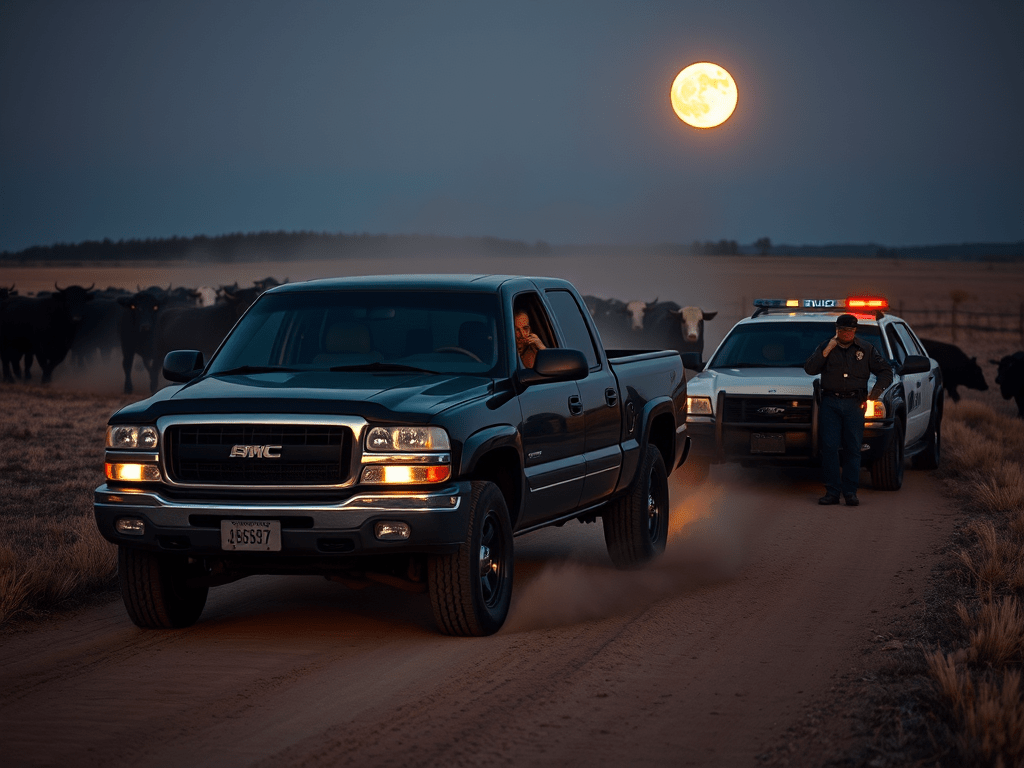
The pickup swerved erratically, weaving around slower vehicles as the chase intensified. Ben could see a rifle strapped to the back window of the truck and a pile of what looked like stolen tools in the bed.

“Suspect heading into open ranch country,” 

The dispatcher warned. 

“Roadwork ahead near Hammon. Proceed with caution.”

Ben knew the area well. It was dotted with cattle crossings—gates sometimes left open by careless ranchers. He pressed the accelerator, narrowing the distance between him and the fleeing truck.

Ahead, the suspect veered sharply onto a dirt road, kicking up a cloud of grit. Ben followed, his cruiser skidding slightly on the loose gravel. The air was thick with dust, obscuring his view, but he kept his focus sharp.

Suddenly, the truck skidded to a halt in the middle of the road. Ben braked hard, stopping a safe distance away. Before he could exit his vehicle, he heard the lowing of cattle.

A herd of cows, dozens strong, unexpectedly strolled across the road. The nightlight, reflecting the full moon’s setting, backlit their black and brown, and their movement was leisurely, indifferent to the chaos.

The suspect jumped out of the truck, shouting and waving his arms to clear a path through the herd. The cows, unimpressed, continued their slow march, blocking any escape.

Ben saw his opportunity. He exited his cruiser, drawing his weapon.

“Hands up, don’t move! You’re surrounded!”

The suspect froze, looking back and forth between the officer and the unyielding wall of cattle. A few other units arrived, their sirens wailing as they boxed him in. The man dropped to his knees, his hands raised in surrender.

Ben moved forward cautiously, cuffs in hand, as the cows watched the scene unfold with mild curiosity.

One of the arriving officers couldn’t help but joke, 

“Looks like the cows did our job for us.”

Ben chuckled as he secured the suspect.

“Sometimes justice moves at its own pace. You should have seen his face when I told him –– he was surrounded!”

As the sun dipped below the horizon, the herd finally cleared the road, leaving behind a trail of hoofprints and a story for Ben to tell at the station.

Navigating Ethics in Law Enforcement

Groff Media 2024© Truth Endures IMDbPro

Presented by benandsteve.com By: Benjamin Groff II©


4–5 minutes

After completing my training, I got assigned to a two-person unit for part of my shift. Unfortunately, this arrangement led to the exposure of my partner’s extramarital affair with a young woman who worked at a nightclub on the city’s east side. His behavior was hard to ignore. Night after night, he would leave the patrol unit to spend hours inside the club, leaving me alone to monitor radio calls. Each absence grew longer and my frustration deeper.


The city grappled with a surge in burglaries targeting vehicles, garages, homes, and businesses. As crime reports piled up, the department needed to be closer to solving the problem. Sitting in the patrol car logging incidents while my partner dallied at the bar weighed heavily on me. Worse, my delayed response times to calls had begun to draw attention, placing me in a difficult position.

Addressing the issue felt like navigating a minefield. On one hand, I had a duty to uphold the integrity of our patrol duties. On the other, reporting my concerns to a sergeant or lieutenant risked exposing my partner’s personal life, which I preferred to avoid. Going over their heads to the Captain or Major felt equally precarious. However, during my travels to pistol shooting competitions, I established a good rapport with the Chief of Police. I decided to take a chance.


One afternoon, I invited the Chief for coffee to discuss an upcoming qualification event. Once seated, I confessed my more profound concerns. I told him about my partner’s absences, the nightclub, and the woman I suspected was involved. I explained why I had yet to go through the chain of command and emphasized that my primary concern was the integrity of our patrol duties. To my relief, the Chief not only understood but also reassured me that I had made the right choice. His promise to handle the situation discreetly was a weight off my shoulders.


A week later, the schedule was released, and to my disappointment, I again got paired with the same partner. The pattern continued, with him vanishing into the nightclub and leaving me to manage radio calls alone. Frustration mounted, but I stayed focused on my responsibilities.
At the following briefing, Lieutenant Wheeler announced a significant change: I would get assigned to a solo unit. My former partner, now in a solo unit, would no longer work with me. Other patrol officers, except the K9 unit, were paired up. The decision felt like a small but meaningful vindication, a recognition of my commitment to upholding the integrity of our patrol duties.


Working solo was a challenge. Within my first three days, I responded to two fatal calls—more than many officers encounter in a month. However, I was not alone. I appreciated the support of my fellow officers, who often checked in during traffic stops or guided me through the intricacies of field reporting. Their support was a testament to the camaraderie in law enforcement and the importance of teamwork.


One night, around 1:00 AM, I intercepted a burglary alarm call at a sporting goods store. I was close to the location and informed dispatch I would respond. Oddly, my former partner claimed the call, though he was across town. Dispatch redirected him to return to headquarters instead. I only thought of it once I reached the station later.


The pieces fell into place. The Chief observed my partner’s behavior, noting how long his patrol unit lingered at the nightclub each night. The Chief orchestrated a fake alarm call to confirm his suspicions and monitored my partner’s response time. This thorough investigation led to the end of my partner’s career; he resigned the following day.


The aftermath was messy. My former partner left town with the barmaid and her four children, abandoning his wife of many years. She was devastated and began calling the department, requesting me by name to visit her. I got met with her anguish and accusations each time: “Why didn’t you tell me?” At just 21 years old, I struggled to understand why she held me responsible for policing her husband’s fidelity.


While I tried to console her, the experience left a deep impression. It wasn’t just a lesson about personal integrity and the far-reaching consequences of a lack of it. From then on, I made it a point to know my partners better, ensuring they had solid personal ethics or no attachments that could spill into their professional lives.


This early chapter of my career shaped my approach to law enforcement. It reminded me that while we wear a badge to uphold the law, we also carry the weight of trust—not just from the public but from those who depend on us, on and off duty. The importance of personal integrity in law enforcement cannot be overstated. It is not just about following the rules, but about the impact of our actions on the lives of others.

Pehr Gustaf Gyllenhammar, Former CEO and Chairman of VOLVO –––– ––– April 28, 1935 – November 2024 ––– 

Groff Media 2024© Truth Endures IMDbPro

Presented by benandsteve.com By: Benjamin Groff II©


2–3 minutes

Pehr Gustaf Gyllenhammar, a visionary Swedish businessman whose leadership and influence extended across industries and continents, passed away in November 2024 at 89. Born in Gothenburg, Sweden, on April 28, 1935, to Pehr Gyllenhammar Sr. and Aina (née Kaplan), Pehr G. Gyllenhammar was a man of profound intellect, ambition, and a global vision that inspired many. 

Gyllenhammar is best remembered for his transformative tenure as CEO and chairman of Volvo from 1970 to 1994, during which time he led the company through a period of dynamic growth and innovation, leaving an indelible mark on the automotive and industrial sectors. His bold attempt to merge Volvo with Renault in the 1990s exemplified his forward-thinking, even as it marked the end of his career with the company.  

Beyond Volvo, Gyllenhammar’s career spanned various leadership roles, including Aviva’s chairman and Rothschild Europe’s vice chairman. A fervent advocate for European industrial collaboration, he co-founded the European Round Table of Industrialists, promoting cooperation among the continent’s leading companies.  

His contributions were recognized with numerous accolades, including France’s *Ordre National du Mérite* in 1980 and the *Legion of Honour* in 1987. In 2001, he was named an Honorary Master of the Bench of the Inner Temple in London.  

Gyllenhammar’s intellectual curiosity and political engagement made him a public figure beyond the boardroom. An early proponent of social liberalism, he championed the Scandinavian model of governance and was a vocal advocate for European unity. His political views and engagement with social issues often influenced his business decisions, making him a unique and influential figure in both the political and business spheres. At one point, he was even considered a potential leader of Sweden’s Liberal People’s Party.  

He balanced his professional endeavors with a rich personal life. He married Christina Engellau, the daughter of Volvo’s former CEO, in 1959 and shared nearly five decades with her until her passing in 2008. Together, they raised four children—Cecilia, Charlotte, Sophie, and Oscar—each of whom carved out successful paths in the arts, business, and design. Later in life, Gyllenhammar found love again, marrying Lee Welton Croll in 2013, with whom he welcomed a child in 2016.  

A man of deep conviction, Gyllenhammar exemplified leadership and resilience, leaving an indelible mark on the business world and the communities he served. His resilience in the face of challenges is a testament to his character and the impact of his legacy. He is survived by his wife, Lee, his five children, and a legacy that will inspire future generations.  

A private family service will honor his memory. The service, which will be held at a private memorial, and will be a time for family and close friends to share their memories of Gyllenhammar and celebrate his life. In place of flowers, the family requests donations to causes reflecting Gyllenhammar’s dedication to innovation, education, and European unity.

Parallels Between the Chinese Exclusion Act and Modern Immigration Concerns: Lessons from History –– The Danger Of Losing Immigrants

Groff Media 2024© Truth Endures IMDbPro

Presented by benandsteve.com By: Benjamin Groff II©

You can also refer to the NPR Story America’s first major immigration crackdown and the making and breaking of the West  for additional insights and related material that complement this story, offering a deeper exploration of the subject.


3–5 minutes

The Chinese Exclusion Act of 1882 marked a pivotal moment in U.S. immigration history, becoming the first significant federal law restricting immigration. It targeted a specific ethnic group driven by economic fears, racial prejudice, and political populism. A review of this historic legislation, alongside the context of its enactment, reveals striking parallels to modern immigration debates. Both historical and contemporary issues illustrate how economic anxieties, cultural misunderstandings, and political opportunism can drive restrictive immigration policies that may ultimately prove disastrous for society.

The Role of Immigrant Labor in Economic Development

In the mid-19th century, Chinese immigrants, despite facing systemic discrimination and being blamed for economic problems, played a crucial role in building the American West. Their resilience and determination were evident in their instrumental role in constructing the transcontinental railroad, tackling some of the most dangerous and demanding jobs in brutal conditions. However, when the Panic of 1873 led to widespread unemployment, populist sentiment scapegoated Chinese immigrants, claiming they were stealing jobs from white workers.

A similar narrative exists today. Immigrant labor is fundamental to the agriculture, construction, and technology industries. Despite this, immigrants are often vilified during economic downturns, accused of taking jobs or lowering wages. This cyclical pattern of scapegoating undermines the reality that immigrants frequently perform jobs that native-born workers are unwilling or unable to do, driving economic growth and innovation. Restrictive immigration policies, such as deportations or bans, risk damaging these essential industries and the broader economy, much like the exclusion of Chinese workers stunted specific sectors in the late 19th century.

Cultural Backlash and Populist Politics

The transcontinental railroad’s completion in 1869 symbolized a remarkable technological achievement but also marked a turning point for Chinese immigrants. Their presence sparked a cultural backlash as they settled in communities like Truckee, California. Fueled by racial prejudice and populist rhetoric, white workers and politicians pushed for their exclusion, culminating in the Chinese Exclusion Act. This act institutionalized xenophobia and created a precedent for racially biased immigration policies.

Today, cultural anxieties continue to shape immigration debates. Concerns about preserving cultural identity and fears of “otherness” fuel resistance to immigrants. Particularly from Latin America, the Middle East, and Asia. Politicians often exploit these fears to rally support, pushing for restrictive measures such as border walls, travel bans, or mass deportations. Such actions not only marginalize immigrant communities but also foster division and xenophobia, hindering social cohesion.

Economic Consequences of Restriction

The long-term economic impacts of the Chinese Exclusion Act highlight the dangers of restrictive immigration policies. By limiting a vital workforce, the law hampered industries reliant on immigrant labor. The exclusion of Chinese workers also set a precedent that discouraged innovation and adaptability in labor markets, contributing to stagnation in certain regions.

Policies that limit immigrant contributions to the workforce have modern parallels. For example, restrictive visa programs and deportations threaten industries like agriculture and technology, which rely heavily on immigrant talent. Moreover, these policies can exacerbate labor shortages, driving up consumer costs and reducing the global competitiveness of U.S. industries. History demonstrates that economic growth thrives on diversity and inclusion, not exclusion.

Lessons from the Past

The Chinese Exclusion Act teaches us that targeting immigrants as scapegoats for economic or social challenges is a shortsighted and counterproductive strategy. Immigration is a cornerstone of American prosperity, fostering innovation, cultural richness, and financial resilience. Policies driven by fear and prejudice, rather than informed analysis, risk repeating the mistakes of the past and should be considered.

Today’s immigration debates echo the populist rhetoric and exclusionary measures of the late 19th century. However, we have the benefit of hindsight to recognize that such policies often create more problems than they solve. To avoid a similar disaster, today’s policymakers must approach immigration with a focus on integration, economic opportunity, and respect for human dignity. By learning from history, we can build a more inclusive and prosperous future, where all individuals feel valued and respected.

You can also refer to the NPR Story America’s first major immigration crackdown and the making and breaking of the West  for additional insights and related material that complement this story, offering a deeper exploration of the subject.

America at a Crossroads

Groff Media 2024© Truth Endures IMDbPro

Presented by benandsteve.com By: Benjamin Groff II©

1–2 minutes

America is at a turning point, a moment so profound that many may not see the year’s end without facing life-altering consequences. These changes aren’t their fault. They stem from forces more significant than any single person or group—forces set in motion long ago.

The nation stands on the brink of challenges unseen in living memory. No vote, no leader, no hero can steer us away from what’s coming. The roots of our crisis lie in greed and unchecked ambition, planted by individuals we know and trust—people we’ll sit across from at holiday dinners, unaware they helped build the road to this moment.

As the months unfold, our choices are narrowing. The lives we’ve known, filled with freedom of association, laughter, and uninhibited conversation, are under siege. Soon, those liberties may be reshaped or stripped away entirely, dictated by legislation crafted by those who believe they know better.

Imagine a world where our words must align with an official narrative, where dissent is no longer tolerated. Our daily connections—jokes, debates, and chatter—become whispers of a bygone era. Communication will be monitored, censored, or stifled entirely. Freedom of thought, once a cornerstone of this great land, will be reduced to a memory.

And yet, it is worth remembering:

We let this happen.

Or rather, “they” did.

Those who wielded their votes, believing in promises that veiled agendas, have delivered us to this precipice.

It is “they” who must now reckon with what “they’ve” done to the “Land of the Free and Home of the Brave.”

But reckoning is not enough. As the storm looms, let us not resign ourselves to despair. Let us remember who we are and what we stand for. Even as the path ahead grows darker, there remains a flicker of the courage, resilience, and unity that built this nation. We must nurture that spark, which may guide us back to the light.

The Third Night. “That’s The SOB!”

Groff Media 2024© Truth Endures IMDbPro

Presented by benandsteve.com By: Benjamin Groff II©

3–5 minutes

On my third night in the patrol division, a sense of foreboding hung over me. I couldn’t explain it. Maybe it was the intensity of the past two nights or the instincts honed over years in other divisions. Something felt off. I kept this unease to myself—I didn’t want Lt. Wheeler thinking I was jittery about the job. I wasn’t. It was just that sixth sense I’d learned to trust, the one that sometimes whispered when trouble was brewing.

At 2000 hours, we rolled out of headquarters, heading west along Old Route 66, now Third Street in our city. Before we made it far, dispatch radioed in: the Oklahoma Highway Patrol needed us to respond to a Signal 82—an injury accident—since their units were tied up. The details were scarce, but we learned an Elk City ambulance was already en route.

We reached the outskirts about three miles from town when the ambulance reported on-scene: a single-car slide-off with no injuries needing investigation. Routine stuff. Then, the airwaves exploded with an alert: Officer Down. The call came from ten miles further west. A semi-truck pulling a lowboy trailer was reported fleeing the scene.

Adrenaline surged. I radioed the sheriff’s department, letting them know our position and offering to assist. They authorized us to operate in their jurisdiction—a necessary formality. We sped west, scanning every shadow and turn.

Minutes later, a semi barreled out of Berlin Road, ignoring the stop sign as it merged onto Highway 6. I didn’t need to think twice.

“That’s the son of a bitch!”

I yelled, heart pounding.

Lt. Wheeler swung our Ford Crown Victoria into a hard U-turn, tires screaming. The truck’s hydraulic hoses flapped loose, whipping in the wind, as though the trailer had been hastily unhooked. Wheeler hit the lights and siren. The truck swerved to the shoulder but didn’t stop. I grabbed the shotgun as Wheeler directed the spotlight, illuminating the truck’s cab and surrounding darkness. I slipped into the bar ditch, invisible in the shadows, covering Wheeler as he approached.

The driver finally exited and handed over an expired license. Something felt off—more than just the expired ID. Radio chatter hinted at potential damage to the truck’s undercarriage, but we still didn’t know what had happened to the downed officer. Wheeler told the driver to stay put while he inspected the vehicle.

Then it happened.

The driver propped his foot on our patrol unit’s bumper and reached toward his pants leg. My instincts screamed.

“Hands on the hood! Feet on the ground!”

I ordered, the shotgun steady at his head. He froze, and Wheeler shot me a look—half surprise, half reproach—but patted the man down and cuffed him.

By now, a Beckham County deputy arrived. As the suspect squirmed in our back seat, I kept a close watch, retrieving his details for the report. His movements grew erratic, twisting and jerking. I yanked the door open.

“Knock it off!” I barked.

It felt like hours had passed, though it had been only minutes. Finally, the chilling news crackled over the radio: Trooper Guy David Nalley had been shot in the back of the head during a traffic stop. The suspect’s valid driver’s license had been found in Nalley’s hand.

The gravity of the situation hit like a gut punch.

As we transferred the suspect to the deputy’s vehicle, he managed to slip a gun from his boot, kicking it beneath the seat—a grim reminder of the Supreme Court ruling restricting how far we could search without probable cause. Had we known his connection to Nalley, we could have searched him thoroughly.

Soon after, an ambulance carrying Nalley approached, and we provided an emergency escort to the hospital twenty miles away. Inside the ER, chaos reigned. I found myself at the head of Nalley’s stretcher, squeezing an airway bag while nurses and doctors scrambled to save him. Despite their frantic efforts, I knew it was too late.

Outside, the air was heavy with sorrow. Trooper Nalley was gone—a devoted husband, a proud family man, and a true giant in every sense. He was the kind of man you thought of when hearing Jimmy Dean’s “Big John.”

The suspect’s story ended in tragedy too. During a mental evaluation, he took hostages with a gun smuggled in by his wife. He was killed during the standoff. His name isn’t worth remembering.

But Nalley’s is. He served with honor and left a legacy of kindness and courage. That night, I realized something: no amount of training or preparation can truly prepare you for moments like these.

Saying Goodbye to The Old Station – And Hello to A New Destination 16

Groff Media 2024© Truth Endures IMDbPro

Presented by benandsteve.com By: Benjamin Groff II

The days felt strange for those of us who worked nights. As the darkness stretched on, one night blending into the next, daylight seemed more a memory than reality. Law enforcement is more than just a job; it’s a close-knit community, a world. There’s a deep-rooted fellowship among officers and an unbreakable chain of command that’s everything. Yet, that structure was sometimes a challenge for me to accept.

In a large family—four older brothers, two older sisters, a strict father, and a devoted mother—order was part of life. In a rural setting, the school was the only place outside the home where I experienced a different structure. Dad was the highest authority in our household, followed by Mom, then the eldest sibling present, down to the youngest. Dad’s words held firm even in his absence; his authority was an invisible force that needed no reinforcement.

Adjusting to the chain of command in law enforcement took me time, especially after starting in small departments with more relaxed structures. But at Elk City Police Department, things were different. There was a formal hierarchy: chief, assistant chief, major, captain, lieutenant, sergeant, patrolman, and communications officer. Here, I quickly learned that approaching the chief directly with questions or concerns was a breach of protocol, often met with a firm reminder to follow the ranks.

Simple tasks became lessons in patience. Whether I needed a lightbulb replaced or advice on a report, the chain of command required me to go through several levels before reaching a solution; I would have to wait days to get a minor answer. Frustrated, I eventually bit my lip and followed the structure, even if I didn’t like it. My captain called me out over the most minor lapses, like failing to change a burnt lightbulb on time, and I’d swallow my frustration, understanding that order was paramount.

As the community passed a tax to fund a new police station, we began to outgrow the quirks of our aging headquarters at 303 West Fifth Street. The old building, despite its shortcomings, was more than just a structure. It was a part of us, a place where we shared stories, laughed, and supported each other. Built in the 1930s, it had weathered time and neglect. Prisoners on the second floor could flood toilets, causing wastewater to seep into the dispatch and booking area below. But it was our home, filled with memories and camaraderie.

The new station was completed in 1984. Moving was bittersweet, not just for the community, who’d grown used to stopping by the old station for a friendly chat, but for us, too. The new facility was a symbol of progress, outfitted with state-of-the-art security, bulletproof glass, and advanced communication systems. The dispatch had better lighting, new mirrors, and high-tech computers; the National Law Enforcement Telecommunications System and National Crime Information Center computers were side-by-side. Every call was recorded and could be retrieved at any moment.

The jail had electronically controlled gates, holding cells, a kitchen, and a secure emergency exit. Security cameras covered the entire facility, displaying activity on monitors in the booking area. There were dedicated offices for records, evidence, detectives, and the command staff. In every way, it was an upgrade.

On the day of the move, I was instructed by ‘Captain Bick’ to stay home and prepare for the night shift. Despite my eagerness to be part of the transition, I respected his orders. Later that evening, I found myself driving to the old station out of habit. As I parked and entered, I was struck by the emptiness of the dispatch office. This was where I had sent officers out, received urgent calls, and coordinated responses. Now, it was a mere shell of its former self. Assistant Fire Chief Bob, who was also present, chuckled, ‘You’re at the wrong place—no cops here anymore!’

I smiled, feeling a wave of nostalgia, and pointed to the old wall that separated our side from the fire department. ‘Did you know President Carter’s original ‘Beast’ limousine was parked right on the other side of that wall one night? All the fire trucks were cleared out, and our officers watched to ensure no one touched it.’

Bob laughed, “Yeah, I remember that night. I was here too.”

It was hard to let go of stories like that—stories that had lifted people’s spirits and given them a break from their own troubles. With a sigh, I left the old building, heading to the new station, marveling at the thought of a facility so high-tech that even the door lock had a security code… which someone had promptly taped over because officers kept forgetting it.

After settling in, I was tasked with a significant assignment: entering city burglary data into the new computer system. I approached this task with the same dedication I gave every task, and it quickly provided me with valuable insights into the patterns of theft in the city. Over the next two years, this groundwork would prove instrumental in helping us dismantle a significant theft ring. But that’s a story for another time—this one is about the journey to a new place and the adjustments, big and small, that shaped us along the way.

Responding To The Last Call ––– The Last Of The Calls As They Were Reported 16

Groff Media 2024© Truth Endures IMDbPro

Presented by benandsteve.com By: Benjamin Groff II©

It had been a long year. On January 5th, 1983, we lost an officer in the line of duty. That spring, three officers were arrested for stealing from a business they’d responded to on an alarm call. By summer, automobile burglaries and thefts were on the rise. The suspects were careful, leaving no evidence. Their modus operandi was smooth and untraceable—no one ever heard, saw, or interrupted these thieves. Most stolen items ranged in value from around $200, making each theft a felony under Oklahoma law.

The city was facing yet another wave of crime. Typically, it had about 10,000 residents, but the recent oil boom brought an influx, swelling the population to around 25,000. The sudden increase in population put a strain on the city’s resources, leading to a rise in crime. Jobs attracted people from all over, but housing needed to catch up. Tent cities sprang up in the southern sector, and parks filled with tents when vacant lots overflowed. Expecting thousands of oil jobs, many newcomers broke and scraped by.

Among the job seekers were newly released inmates from Cook County Detention in Chicago. Judges offered a stark choice: a one-way bus ticket to Elk City, Oklahoma, or a lengthy jail sentence. Most took the bus ticket. Upon arrival, they had to call the detention center from Elk City’s bus depot to check-in. Ducks in the city park began disappearing as desperate people scavenged for food. In response, the city council enacted a law prohibiting the molestation of ducks, with fines and jail time for violations. Signs reading “DO NOT MOLEST THE DUCKS” popped up, adding a hint of levity to an otherwise grim situation.

But ducks were far from the town’s biggest problem. It wasn’t the bars, the transient hotels renting beds by the shift, or even the “ladies of the night.” The real threat seemed to be the string of broad daylight robberies plaguing the community’s three leading grocery stores, and each hit at least once. One robbery even happened just a block from the police station, with the suspects abandoning their getaway vehicle behind the station in a post office lot.

The police department’s image was suffering. Officers worked 12-hour shifts, often doubling up due to the flood of calls, sometimes stacked five to ten deep. I reported at 5 p.m. for a 6 p.m. start to my 12-hour shift one day, noticing a huddle of high-ranking officers and county deputies outside an office. Figuring I’d get briefed later, I didn’t poke around—I had enough court subpoenas already without getting involved in another incident. And this was one situation I was glad to avoid.

“You have got to be kidding me,”

When my Captain came over, he told me they’d just brought in an officer for raping his daughter. This shocking revelation not only shamed the individual officer’s reputation but cast a shadow on the entire department; as police officers failed, the public’s trust in law enforcement was further eroded.

“You have got to be kidding me,” was all I could say.

This scandal was nearly the final blow for our department, already reeling from the recent departure of a chief struggling with personal issues. Within hours, newspapers and television stations caught wind of the arrest, and the phone lines lit up. Callers unleashed waves of abuse, condemning every officer affiliated with the department. The calls went on for days, creating a hostile environment for all officers and making their jobs even more difficult.

The officers arrested earlier in the year were convicted, further damaging the department’s reputation.

Amid this turmoil, my law enforcement career truly began. Although I had worked in various positions and departments, it was in this community that I found my calling. This city is where I started my adult life and career earnestly. I remained loyal to this place, forming memories with people in the booking area, the jail, and the streets. A shift in the workforce followed, which opened doors for me—an unexpected opportunity in a turbulent time. Could it get any worse? The heat was about to get turned up. In coming stories!

(You’ve been reading the back story for the big news over the next forty years involving several lives and lifetimes.)

be advised—a signal-82 subject is trapped in a burning vehicle –– The Call I Remember

Groff Media 2024© Truth Endures IMDbPro

Presented by benandsteve.com By: Benjamin Groff II©

In law enforcement, some memories haunt you, especially the ones from the most harrowing nights on the job. I was an emergency dispatcher for a police department in southwest Oklahoma, responsible for dispatching fire, police, and ambulance services across five communities. Nights could get overwhelming, but one Saturday evening stands out.

Calls had been constant. Officers were busy responding to domestic disturbances, prowler sightings, burglaries, and other emergencies. In the 1980s, our department monitored Channel 9 on a citizen’s band radio, the go-to emergency frequency.

After 1:00 AM, a call cut through the static:

“Please help—we have an EMERGENCY!”

The voice was frantic. I picked up the station radio and replied, “This is Carnegie Police Department. Go ahead with your emergency traffic.”

The caller explained that a car had veered off the highway east of town, hit a ditch, and burst into flames. The driver was trapped inside. There was no time to lose. I quickly alerted the local police unit, activated the volunteer fire and ambulance lines, and relayed the details.

“Carnegie, Unit 2, be advised—a signal-82 subject is trapped in a burning vehicle near Carlin Lawrence Airport, east of Carnegie on Highway 9.”

The unit acknowledged and responded immediately. Meanwhile, I could hear the fire chief coordinating firefighters over the phone, and the ambulance confirmed they were en route.

Since the crash was outside city limits, I switched to the state’s point-to-point frequency to contact the Oklahoma Highway Patrol.

“Carnegie Police Department to Lawton OHP—rush traffic.”

The “rush traffic” designation signaled an urgent, life-or-death call. The OHP dispatcher responded immediately, and I relayed the details. Within seconds, they were alerting highway patrol units. Nearby sheriff’s deputies also began converging on the scene.

From the initial call, the first responders arrived in just over two minutes. The fire department reached the scene in under seven minutes, and the ambulance arrived by minute eight. The Highway Patrol, coming from the county seat 25 miles away, arrived about 30 minutes later.

Tragically, there was a home nearby, less than half a block from where the car crashed. The residents had slept through the commotion, unaware of the horror unfolding so close. Later, we discovered that the vehicle was registered to someone living in that house— their son. Breaking the news was a gut-wrenching moment for all of us.

The medical examiner arrived around 4:00 AM. Once the flames had subsided, investigators could finally assess the scene. The examiner determined that the driver had died on impact; the fire had not been the cause. If the driver had died from the flames, he would have shown signs of struggling for breath, but there were none. After sending the body for a complete analysis and identification through dental records, investigators believed that he’d likely fallen asleep at the wheel on his way home from a party. There was no indication of intoxication.

The smell of a burning body lingers. For days, sometimes weeks, it haunts those who encounter it. It’s one of the harshest experiences for civilians to witness, let alone the emergency responders who encounter it repeatedly. Nothing truly prepares you for a night like that, even for the most seasoned law enforcement and fire personnel.

Killed Walking Along The Highway – How A Killer Is Captured –– By Two Keen Deputies!

Groff Media 2024© Truth Endures IMDbPro

Presented by benandsteve.com By: Benjamin Groff II©

On a dark, silent night in 1980, the highways through Caddo County near the rural communities of Gracemont and Binger, Oklahoma, were deserted. Residents had long settled in their homes, leaving the quiet stretches of U.S. Highway 281 nearly void of movement. It was a time when law enforcement in rural Oklahoma had limited resources and technology, making cases like this all the more challenging to solve.

That night, an Indigenous man, Jasper Williams, had set out on foot from his home, heading south along a dirt road that eventually led to the pavement of Highway 281. It was common for community members to walk from one home to another, no matter the distance, and Jasper was going to a friend’s house. The night was pitch black, with no moonlight or streetlights to guide him, save for the faint outline of the highway stretching before him.

As Jasper walked, visibility was almost nonexistent. The road was shrouded in darkness, with no nearby lights to help him stay clear of the highway’s center. At some point, as he walked around six miles north of Gracemont—almost midway between there and Binger—tragedy struck. Jasper was hit by a passing vehicle, which left him severely injured on the side of the road. By daylight, he was found deceased, having bled to death, with no car in sight and no immediate reports of an accident.

Upon closer inspection, deputies discovered fragments of evidence scattered on Jasper’s clothing and body: broken glass, bits of chrome, a hubcap, and remnants of a car’s signal light and headlight assembly, as well as traces of paint. With these clues, investigators determined the incident might not be an ordinary accident but potentially a case of vehicular homicide.

Deputy Hamilton drove a
Ford Ranchero

The case was assigned as a homicide due to the absence of witnesses, the lack of any report from the driver, and the fact that the vehicle fled the scene. Caddo County Deputies Hamilton and Ware—both of whom have since passed—took on the painstaking task of finding the person responsible. Armed with the physical evidence, they began an exhaustive search of autobody shops across the county and surrounding areas, hoping to find a vehicle with damage matching the debris at the scene.

After several weeks, their search finally paid off. The deputies located a damaged vehicle that matched the evidence they’d collected. The owner was identified and subsequently interviewed, leading to the arrest of a man named Larry Johnson.

During questioning, Johnson admitted he had left a bar in Binger around 2 a.m. on the night Jasper was killed. On his drive home, he confessed to drifting in and out of sleep, initially thinking he had hit an animal, possibly a dog. However, he chose not to stop. Later, after hearing news of the fatal accident, he realized he was likely the driver involved but continued to hope he was wrong.

Binger Main St. There Were
Bars On Both Sides of Street.

Johnson was later tried in Caddo County, where a jury found him guilty of manslaughter. He was sentenced to serve 15 years at Oklahoma’s Granite Reformatory.

Note: Some names, dates, and details have been altered to protect individuals’ privacy.