The most significant cultural threat to occur in my lifetime is occurring as I write today. It deals with our nations stability. The threat to our democracy doesn’t come from a single event—it happens every day. It happens when we ignore what’s unfolding in our city councils, our state legislatures, and in the halls of Congress. It happens when we assume that honorable people are safeguarding our federal institutions.
That complacency is how we arrived at the crisis point we face in 2025.
In the early 1970s, President Richard Nixon was implicated in one of the greatest political scandals in U.S. history: Watergate. His aides admitted to orchestrating a break-in at the Democratic National Committee headquarters. They attempted to steal information to sabotage a political opponent. The House of Representatives held impeachment hearings. Nixon was on the brink of being impeached. He resigned before the Senate took up the case. He was never prosecuted—pardoned instead by his successor, Gerald Ford. That decision set a precedent: presidents commit crimes without real consequence.
Had Nixon faced justice, we wouldn’t be watching the unraveling of the United States today. In 2025, we are witnessing a troubling surge of pro-white nationalist influence within our government. Supremacist ideologies are fueling misinformation campaigns and choking the truth that help heal and unite our country. This is one of the most perilous chapters in our nation’s history. It spells the end of the United States as we have known it.
Ulrich Groff I.
Ironically, the Groff family once fled an oppressive regime in the 1850s, seeking liberty and justice in America. Now, in a cruel twist of history, a direct descendant of Ulrich Groff I —faces a difficult consideration. Will he see himself returning to the very region his ancestors left in search of freedom. Or hope for a miracle. We must not allow the hard-won promises of our democracy to slip away through silence and inaction.
What the world—and especially the United States—needs now is love, sweet love. Not the kind that’s fleeting or sentimental. It should be the steady, courageous kind that listens more than it lectures. It seeks understanding over dominance. Our nation was once bound together by a shared belief in the promise of unity. Now, it is splintered by division. Mistrust and fear further divide us. Political rage, social distrust, and cultural isolation have made enemies of neighbors and strangers of friends.
But love, in its truest form, has the power to mend what anger tears apart. It begins with kindness in daily life—treating others with respect, even when they disagree with us. It grows in empathy—stepping into anothers shoes rather than judging them from afar. If we can choose love over fear, we can start to heal this fractured country. Hope must prevail over hate. Connection should be preferred over separation. This healing won’t happen overnight. It will occur heart by heart, one act at a time.
I received a question yesterday about the United States. They asked why so many people are up in arms over the current immigration raids taking place across the country. Especially after President Obama, during his term in office, removed over 3 million undocumented individuals. Many of whom they claimed never had a hearing.
I wanted to conduct some research to learn more about it for myself.
Understanding Immigration Enforcement: Obama vs. Trump
During his eight years in office (2009–2017), President Barack Obama led an administration that deported over 3 million noncitizens. These deportations were conducted through formal removal proceedings. A formal removal involves a legal process. This process results in a court order for deportation from the United States.
If we include “returns”, the total number of departures exceeds 5 million under the Obama administration. These returns are cases where individuals either voluntarily left the country or were denied entry at the border. They agreed to withdraw their application to enter. Many of those individuals were turned away at the border before ever entering the U.S. Because they were not formally admitted into the country, they were not entitled to a court hearing. These actions, while recorded as enforcement events, differ significantly from deportations after internal apprehensions.
It’s important to note that Obama’s enforcement focused heavily on border security. It prioritized the removal of individuals with serious criminal records. Despite this, he faced criticism from immigrant rights advocates for the high number of deportations. At the same time, Republicans attacked him for not doing enough to secure the border.
In contrast, the Trump administration adopted a far more aggressive and indiscriminate approach. Immigration and Customs Enforcement (ICE) agents under Trump routinely apprehended individuals from homes. They were also taken from workplaces, schools, churches, or even while walking with family. Many were detained without prompt access to legal counsel. They were transferred long distances from their communities. In some cases, they were deported without ever appearing before a judge. This represented a sharp departure from the enforcement priorities of earlier administrations.
It’s worth remembering that President Obama did not pursue mass interior deportations without due process. He implemented programs like DACA (Deferred Action for Childhood Arrivals). These programs offer relief to specific undocumented individuals who were brought to the U.S. as children.
Obama never had to use the military. He deported nearly 8 million non-documented individuals. This includes those he sent back and others never allowed in through customs at airports, ports of entry and borders. He used the border patrol and immigration officials on a budget provided by Congress. Trump has spent more on advertising. He talks about what he is going to do or what he has done. This spending is more than any earlier administration spent deporting a person. He has had to send in the National Guard and Marines. As of this report, 118 immigrants have been apprehended in Los Angeles. It is true they will not get a hearing if their incarceration follows the path of others.
I want to thank the person who asked to stay anonymous for bringing this issue to our attention. It’s vital to understand the differences in immigration enforcement approaches. While no administration is perfect, how a President handles immigration reflects not just policy but a nation’s values.
Navigating the Crossroads: Challenges and Resilience in the LGBTQI+ Community
In recent years, the LGBTQI+ community has observed both significant strides toward equality and alarming setbacks that threaten these advancements. As societal acceptance grows in some areas, legislative and social challenges persist, underscoring the need for continued advocacy and awareness.
Mental health disparities continue to be a critical issue within the LGBTQI+ community. According to The Trevor Project’s 2024 National Survey, 39% of LGBTQ+ youth seriously considered attempting suicide in the past year. The rates rise to 46% among transgender and nonbinary youth. Factors contributing to this crisis include discrimination, lack of access to affirming care, and societal stigma. (1)
Intersex youth face even more pronounced challenges. A study highlighted troubling findings about intersex respondents. It showed that 77% had someone try to change their sexuality or gender identity. Over 10% had undergone conversion therapy. (2)
Access to quality healthcare is a fundamental right, yet many LGBTQI+ individuals face significant obstacles. The Center for American Progress reported that in 2024, 45% of transgender adults postponed medical care due to affordability issues. Additionally, 60% of intersex adults faced the same issue. Additionally, 37% of transgender adults avoided seeking care out of fear of discrimination. (3)
The political landscape further complicates access to necessary care. A survey by FOLX Health revealed that 90% of trans and nonbinary Americans feared the 2024 presidential election. They were concerned it would negatively impact their healthcare access. Notably, 20% had already lost access due to anti-LGBTQ policies. (4)
Legislation plays a pivotal role in shaping the experiences of LGBTQI+ individuals. In 2024, nearly 500 anti-LGBTQ+ bills were proposed across the United States, with 46 enacted into law. These laws have had profound effects, with over 70% of LGBTQ+ adults reporting negative impacts on their mental health.
Conversely, there have been positive legislative developments. Thirty-seven pro-equality bills were signed into law, focusing on areas like parenting rights and health and safety. (5)
Amid these challenges, community-led initiatives have emerged as beacons of hope. In Connecticut, drag performances educate on health and suicide prevention. They create inclusive spaces for dialogue and support. (6)
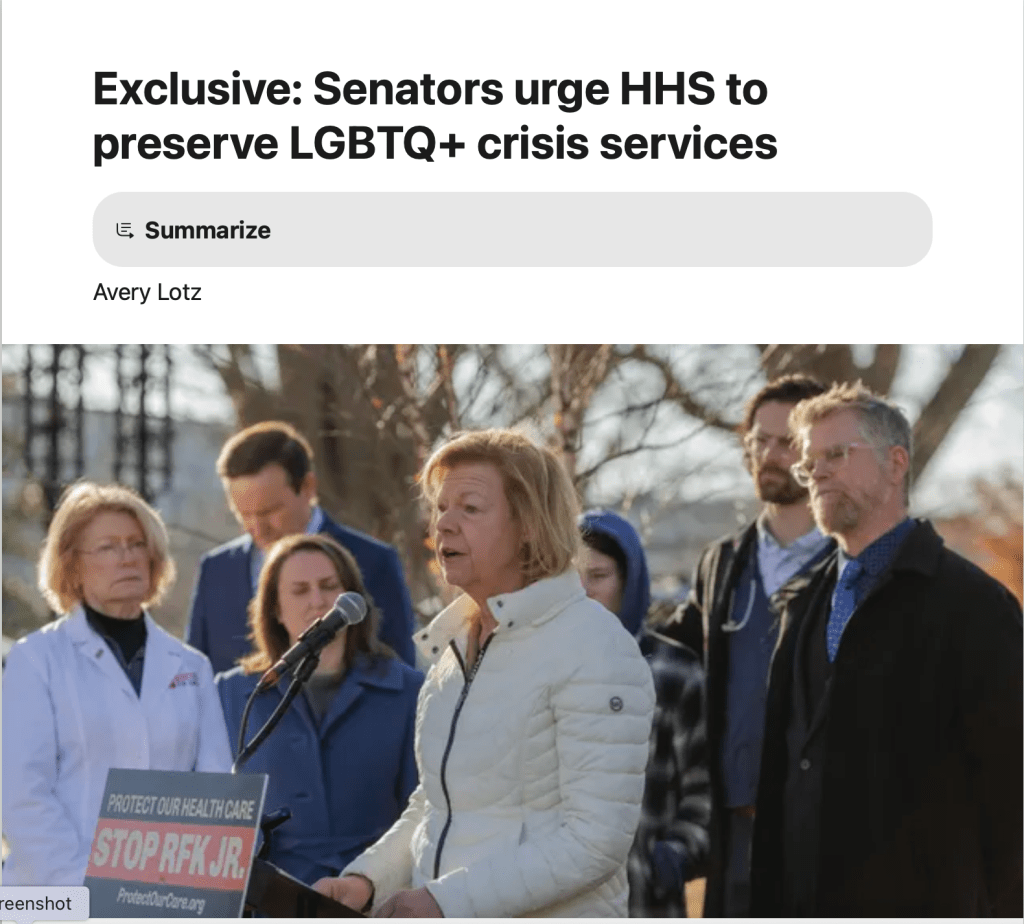
The introduction of the Pride in Mental Health Act aims to bolster mental health resources for LGBTQ+ youth. It recognizes the unique challenges they face. The act highlights the importance of affirming care. (7)
The LGBTQI+ community continues to navigate a complex landscape of progress and adversity. While strides have been made in visibility and rights, significant work remains. We need to guarantee fair access to healthcare. Protection under the law is also necessary. Furthermore, societal acceptance must be achieved.
Allies, policymakers, and community members must advocate for inclusive policies. They should support mental health initiatives. It’s essential to foster environments where LGBTQI+ individuals can thrive without fear of discrimination or harm.
Recent Developments Impacting the LGBTQI+ Community
Posted by Movie and Television Show Writer and Actor Del Shores on Facebook –
LGBTQ+ Rights Under Attack in 2025 — And the Fight Continues! But we, as a community, stand firm and resilient.
I posted it many years ago before we could legally marry someone we loved. Before United States v. Windsor struck down DOMA in 2013, and before Obergefell v. Hodges in 2015, we finally gave our love full legal recognition nationwide.
And it became one of the most shared things I’ve ever posted.
WHERE WE ARE NOW, 2025!
2025 has seen an alarming surge in anti-LGBTQ+ bills, with over 500 introduced in the U.S. alone.
Over 774 are specifically anti-trans, and 700 of those are still active.
Texas leads the charge with 127 of these hate-fueled bills.
Many of these bills are pushed by the GOP, wrapped in the Bible, and weaponized with false righteousness. It’s the same tactic — just a different year with more hateful rhetoric than ever.
When I wrote “Southern Baptist Sissies” in 2000. I dreamed it would one day feel like a period piece — a snapshot of a fight we’d won. And yet, in 2025, my character Mark’s words still guide me as I fight for and with my LGBTQ+ family and our beautiful allies:
“Sometimes I close my eyes, and I create a perfect world. A world of acceptance and understanding and love. A world where there’s hope. Even if the hope is just whispered, I hear it.”
To the trans community: we see you, love you, and stand with you in unwavering solidarity.
To the so-called Christians using the Bible to harm: you’re using it wrong.
Romans 13:10 — “Love does not harm its neighbor; therefore, love is the fulfillment of the law.”
Let’s love louder, let’s love more, and let’s love without boundaries.
Let’s keep whispering — and shouting — that hope.
“Dear friends, let us love one another, for love comes from God. Everyone who loves has been born of God and knows God. Whoever does not love does not know God because. God is love.” 1 John 4: 7-8.
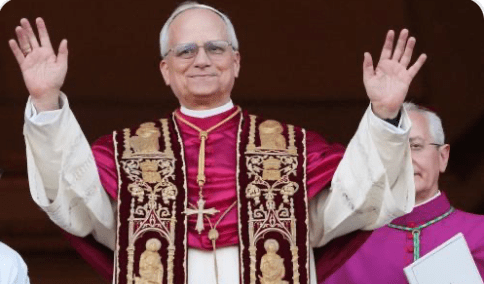
The election of Pope Leo XIV—formerly Cardinal Robert Francis Prevost—marks a historic moment. He becomes the first American to lead the Catholic Church. His choice follows the death of Pope Francis. Pope Francis was noted for his progressive stances on social issues. These included LGBTQ+ inclusion .(1)
Implications for the LGBTQI Community
Pope Leo XIV’s past statements suggest a more conservative approach to LGBTQ+ issues compared to his predecessor. In 2012, he expressed concern about popular culture. He believed it was fostering “sympathy for beliefs and practices that are at odds with the Gospel.” He specifically cited the “homosexual lifestyle” and “alternative families comprised of same-sex partners and their adopted children.” He has opposed the inclusion of teachings on gender in schools. He describes the promotion of gender ideology as confusing. (2)
Pope Leo XIV has not publicly addressed LGBTQ+ issues since his election. His earlier positions show a potential shift from the more inclusive tone set by Pope Francis. Pope Francis had endorsed civil unions for same-sex couples. He also allowed blessings for same-sex unions. This signaled a more welcoming approach. (3)
Awaiting Future Developments
As Pope Leo XIV begins his papacy, the global Catholic community will be observing his leadership closely. This includes LGBTQ+ members. They will watch how it will shape the Church’s stance on inclusion and diversity. His actions in the coming months will offer clearer insights. His statements will reveal the direction he intends to take on these critical issues.
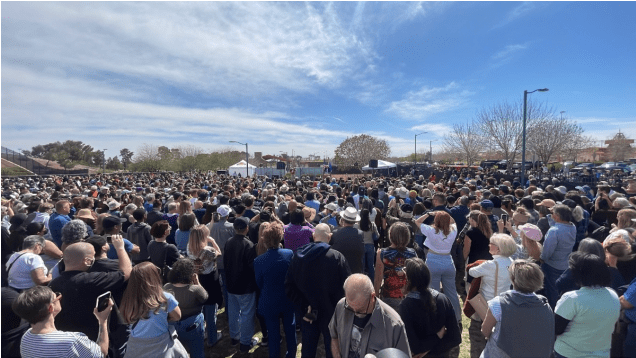
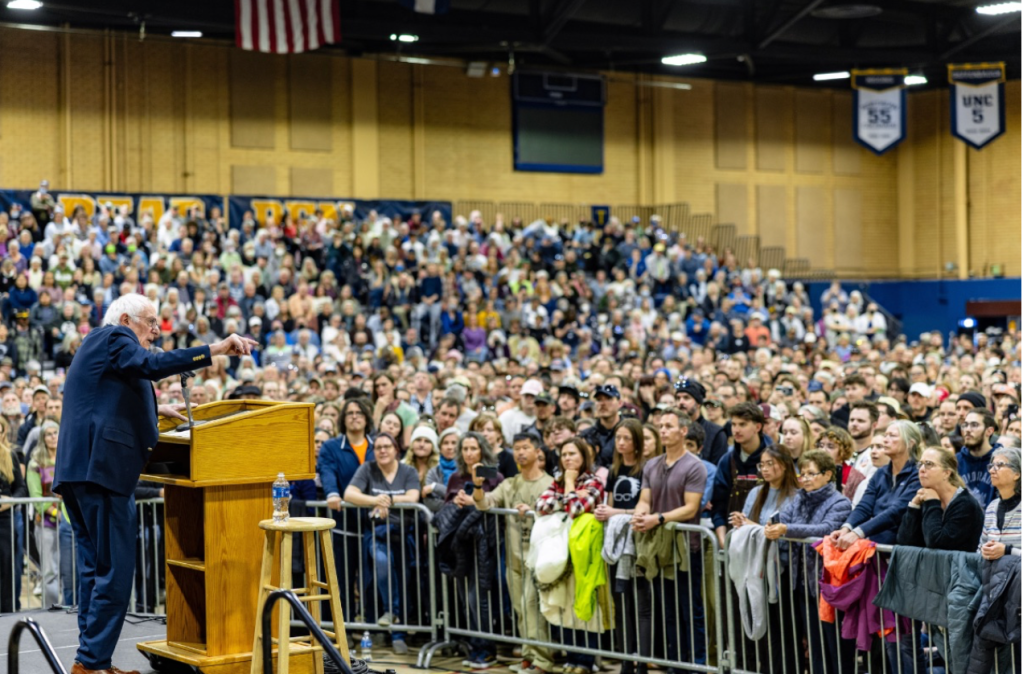
The recent rallies by Senator Bernie Sanders and Representative Alexandria Ocasio-Cortez mark a defining moment in contemporary American politics. Across five rallies in three states, tens of thousands gathered. They made a resounding call for change. This signals widespread dissatisfaction with the current political and economic systems. The overwhelming attendance at these events reveals a deep-rooted movement. It is fueled by a demand for economic fairness. There is also a call for political integrity and grassroots-driven reform.
One of the key takeaways from these rallies is the rejection of Trumpism, oligarchy, and authoritarianism. The presence of thousands in North Las Vegas, Tempe, Greeley, Denver, and Tucson shows collective opposition to massive income inequality. Wealth inequality has left many working-class Americans behind. This movement directly responds to a political system. In this system, billionaires hold disproportionate power. They use their wealth to influence elections and dictate policy. The rallies were not simply campaign events; they were gatherings of individuals. They were determined to reclaim democracy from corporate interests. They also wanted to challenge political elites.
Moreover, the movement echoes historical struggles that have shaped the United States. Sanders draws parallels between this modern fight and past movements that have successfully challenged oppression. These include the abolitionist, labor, civil rights, and women’s rights movements. These historical precedents offer a blueprint for today’s progressive movement. They emphasize that real change arises when ordinary people organize. Real change occurs when they take action against systemic injustice.
A critical part of this movement is grassroots organization. Sanders and Ocasio-Cortez stress the need to mobilize people in all 50 states through consistent engagement. Mobilizing thousands of people means not only attending rallies but also translating that enthusiasm into political action. Encouraging progressives to run for office at all levels is crucial. This includes positions from school boards to state legislatures. It is a core strategy to enact lasting change. Local elections, often overlooked in the national political discourse, hold immense power in shaping policies that affect daily life.
Additionally, the movement extends beyond electoral politics. It calls for strong communities where people support one another despite economic and social challenges. The emphasis on solidarity reflects the understanding that political change is inseparable from fostering a culture of mutual aid. It also involves building collective strength. The movement creates networks of engaged citizens. The goal is to counteract the feelings of loneliness that many experience in today’s economic landscape. It also addresses feelings of helplessness.
This movement does not overstate the urgency. Sanders highlights the significance of this moment not only for current generations but also for future ones. Climate change, economic disparity, and political corruption are existential issues that need immediate action. The message is clear: now is the time for mobilization, not despair. The fight for a fair and just society depends on ordinary people. They must be willing to challenge entrenched power structures. They must demand a system that works for all.
Arizona, Nevada, Colorado,
In conclusion, the rallies held across Nevada, Arizona, and Colorado exemplify the strength of a growing progressive movement in America. The record-breaking turnouts illustrate a profound discontent with the status quo and a wish for systemic change. By organizing, running for office, and building community solidarity, this movement can redefine the future of American democracy. The path ahead is not easy. History has shown that when people unite for justice, they can overcome even the most powerful obstacles.
As of February 2025, the United States has committed approximately $114 billion in bilateral aid to Ukraine. This commitment has been made since the onset of Russia’s invasion in February 2022. This figure encompasses military assistance, financial support, and humanitarian aid.
It’s important to note that reported aid amounts have been discrepant. This is due to differing accounting methodologies and the inclusion of various assistance categories. For instance, President Trump claimed that the US provided $350 billion in aid to Ukraine. Yet, official figures do not support this assertion.
The European Union and its member countries have collectively provided approximately €132 billion in aid to Ukraine. This surpasses the US contribution.
In summary, estimates vary slightly based on accounting practices. Still, the US has committed approximately $114 billion in aid. This aid supports Ukraine’s defense against Russian aggression.
Since Russia invaded Ukraine in 2022, Ukrainian President Volodymyr Zelenskyy and his representatives have consistently expressed profound gratitude. They are thankful for the United States’ unwavering support.
Many news media estimate that Zelenskyy made as many as 33 public appearances during wartime. He aimed to show his appreciation for the United States financial and equipment support.
While it is challenging to enumerate every instance of appreciation, several notable expressions stand out:
December 2022 Speech to the US Congress: President Zelenskyy addressed a joint session of the US Congress. This was his first foreign visit since the war began. He thanked “every American” and highlighted Ukraine’s resilience, stating, “Against all odds, Ukraine still stands.” apnews.com
December 2022 Joint Press Conference with President Biden: Zelenskyy expressed gratitude for a new defense package. He stressed its prompt importance for Ukrainian soldiers during this visit. ua.usembassy.gov
July 2023 NATO Summit in Vilnius: Zelenskyy expressed his appreciation for US and NATO support before meeting with President Biden. He acknowledged the challenges faced by Ukrainians. Zelenskyy thanked Biden for standing “shoulder to shoulder” with Ukraine. bloomingtonian.com
February 2025 Post-Meeting Statement: The meeting with President Trump was contentious. Zelenskyy reaffirmed his gratitude toward the American people and Congress. He also expressed gratitude toward the President. Zelenskyy emphasized Ukraine’s pursuit of a just and lasting peace. en.wikipedia.org
March 2025 London Summit: Zelenskyy expressed “unwavering gratitude” for US military and financial support after a summit with European leaders. He underscored its critical role in Ukraine’s defense. nypost.com
These instances highlight the deep appreciation expressed by Ukrainian leadership. They value the United States’ financial assistance, military aid, and moral support throughout the conflict.
Zelenskyy’s Expressions of Gratitude Midst Diplomatic Tensions
The information stands in contrast to a description made by some. They called it two thugs attacking a robbery victim after he had already been beaten down. It is a sad portrayal. This is a betrayal of the executive office on show in the White House on February 28th, 2025.
The information referenced here documents that 350 billion dollars were not given to the Ukrainian government, contradicting what was claimed. Sadly, the United States Congress knows this. They approved the funding. They should make sure that factual statements involving tax dollars are presented to the public.
Discrimination Vs Inclusion. The difference between darkness and light
Discrimination is an act rooted in fear, ignorance, and an unwillingness to accept the fundamental dignity of all people. It has profound consequences for society. Wanting to deny others housing, clothing, and respect shows a belief that some lives hold less value. Such a stance reveals a deep-seated lack of empathy. It shows an indifference to the struggles of fellow human beings and a troubling inclination toward social division. It speaks volumes about moral values. It reflects the character of those who wish to wield power to diminish the lives of others.
The wish to remove protections that have given minority groups equal footing within society shows a disregard for historical injustices. These injustices have shaped the need for these safeguards. These protections exist not to give anyone an unfair advantage. They guarantee everyone has equal rights, opportunities, and access to resources without prejudice. Seeking to dismantle these safeguards implies a refusal to acknowledge historical injustices. It also shows a disregard for the ongoing struggles faced by marginalized communities. It shows a yearning for a past where exclusion was the norm. It rejects embracing a future that strives for fairness and justice.
Moreover, those who advocate for policies that exacerbate the hardships already endured by vulnerable populations are not merely indifferent. They are complicit in their suffering. If making life more difficult for those struggling is acceptable, what does that say about one’s character? It signals a lack of compassion, an absence of moral responsibility, and a failure to grasp the interconnectedness of humanity. A society that pays no heed to suffering undermines its stability, for one group’s oppression ultimately harms the whole. This is not just a moral issue but a societal one that demands immediate attention and action.
Most revealing is the wish to control who can join legal institutions like marriage. Love and family are not exclusive to a select few but are among the most fundamental aspects of human existence. To decide who can share in these joys is to place oneself in a position of unjust power. It denies them to others. It stems from a belief in personal superiority. It also involves a willingness to impose one’s values on others. This approach restricts their freedoms. It suggests an inability to recognize that love is universal. Love is deserving of legal and social acknowledgment. This is true regardless of the individuals involved.
Ultimately, seeking to discriminate, exclude, and strip away rights reveals one’s insecurity, fear, and wish for control. A society is judged by how it treats its most vulnerable members. Those who work to undermine equality and fairness reveal far more about themselves. They show more about their nature than they do about those they seek to oppress. True strength is found in embracing diversity. Morality involves protecting the rights of all. Decency ensures that everyone has the dignity and respect they deserve.
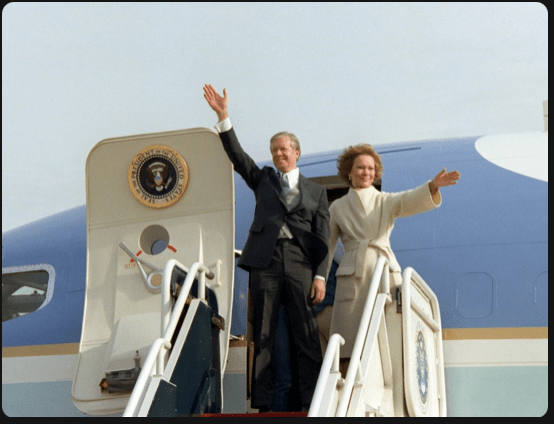
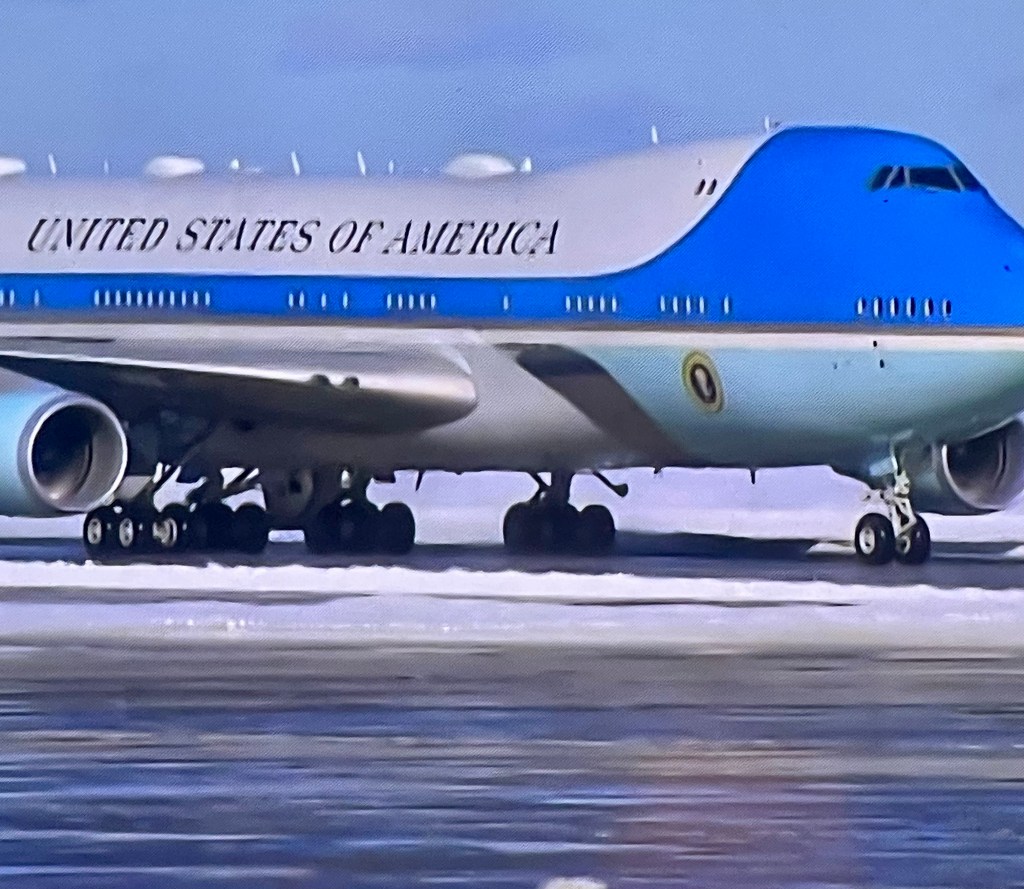
The sun broke over the Air Force Base in Atlanta, Georgia. It cast golden hues across the tarmac as Special Air Mission 39 waited. Its polished surface gleamed in the light. The presidential seal on its side served as a solemn reminder of the journey it was about to undertake. Inside, a reverent hush filled the cabin. The crew prepared for their most crucial passenger. It was a man whose life had been dedicated to service, humility, and unwavering commitment—President Jimmy Carter.
From his earliest days at the Naval Academy, James Earl Carter Jr. was shaped by discipline, honor, and an unrelenting drive to do his best. Those who knew him often remarked on his quiet determination. His former Navy colleagues remember him as a man of integrity, always putting the welfare of his team first. Carter navigated the complexities of submarine systems in the Navy with steady resolve. He also tackled global issues from the Oval Office with the same determination.
The engines roared to life for Special Air Mission 39. This was what President Carter had once known as Air Force One. At that moment, the memory of his long journey sharpened. Memories of his enduring journey came into sharp focus. Here was a man who had never sought power for power’s sake but had wielded it to uplift others. In the years after his presidency, Carter’s service reverberated across communities. He built homes for people experiencing homelessness. He mediated peace in war-torn nations. Additionally, he battled disease through the Carter Center. His legacy was not confined to history books but lived on in the lives he had touched.
The flight crew gathered for a moment of silence before departure. Captain Emily Harrington, a seasoned pilot who had long admired Carter, addressed her team.
“Today, we honor not just a president but a man who believed in the power of service. Let’s give him the journey he deserves.”
As the plane ascended, the passengers—family, close friends, and select members of his administration—reflected on his unwavering faith and commitment. Rosalynn, his beloved late wife, was his partner for more than seven decades. She was waiting for him at their Plains, Georgia home. She also waited in Jimmy’s heart, where their journey had begun. Jimmy would be back. He had business in D.C. to take care of first. President Carter would fly there with the family. He would lay in state at the Capital Rotunda. He would attend a state memorial service. Later in the week, he would return to Plains, Georgia. He would be laid next to Rosalynn at their place of burial.
The flight path traced the arc of his life. It went over the rural farmlands of Georgia. The soil there had nurtured his love for community and the values of hard work and compassion. The Naval Academy in Annapolis, where young Jimmy had set the course for a lifetime of service. Over Washington, D.C., where he had walked into the presidency with a promise to lead with integrity.
As SAM 39 descended, the crowd gathered below to pay their respects. They came not just to honor a president. They came to honor a man who had reminded the world that authentic leadership lies in humility. True leadership also involves an unwavering commitment to doing what is right.
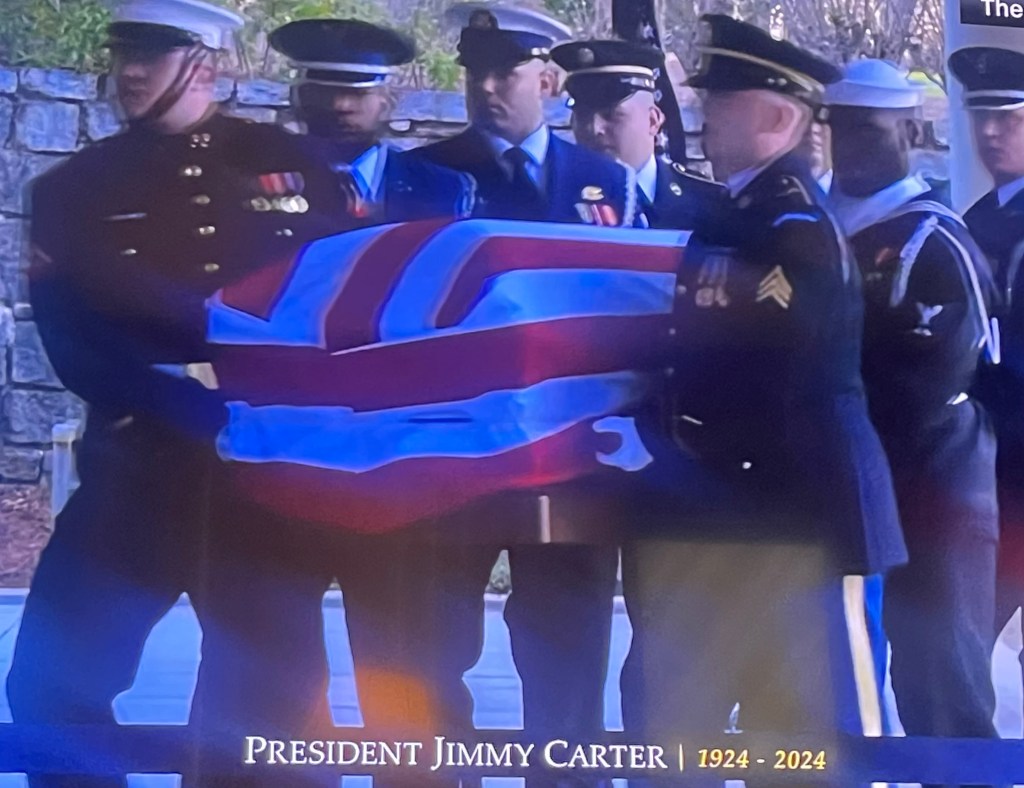
The plane touched down with grace, its engines whispering to a stop. The door opened, and the honor guard stepped ahead to carry Carter to the Rotunda. The air was heavy with gratitude, sorrow, and pride. A man who had given so much of himself had completed the second leg of his journey. There was only one more leg left in the final part of his last journey.
In the quiet stillness of that moment, a quote from Carter’s own words have echoed in the hearts of all there:
“My faith demands that I do whatever I can, wherever I can, whenever I can, for as long as I can, with whatever I have, to try to make a difference.”
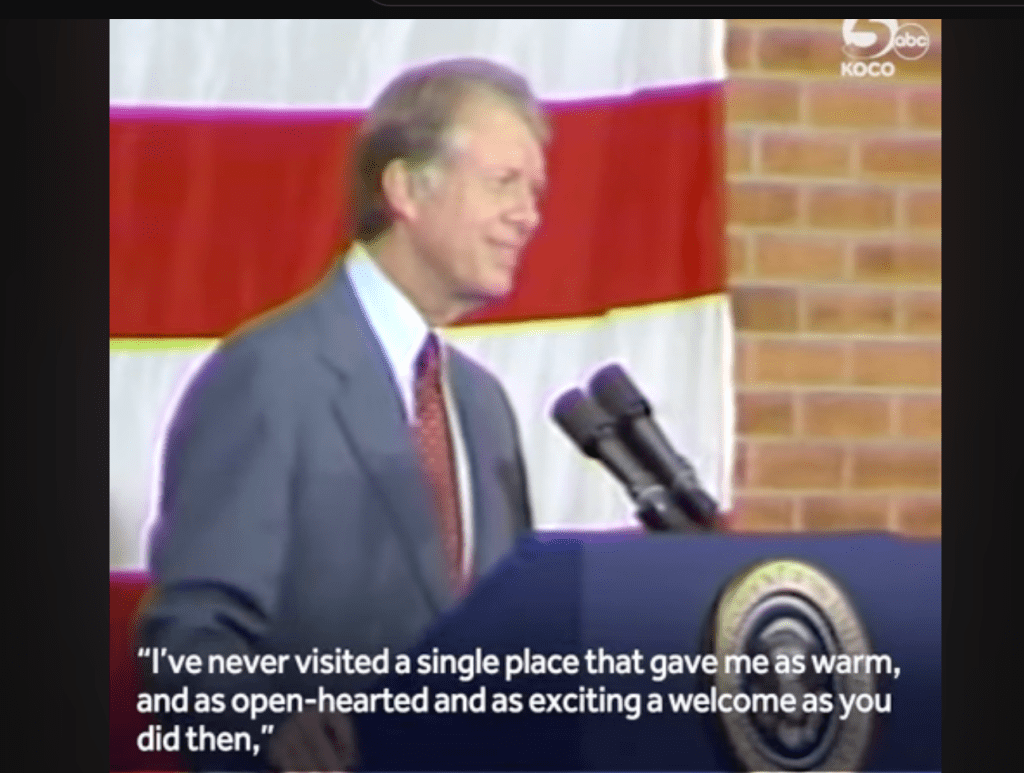
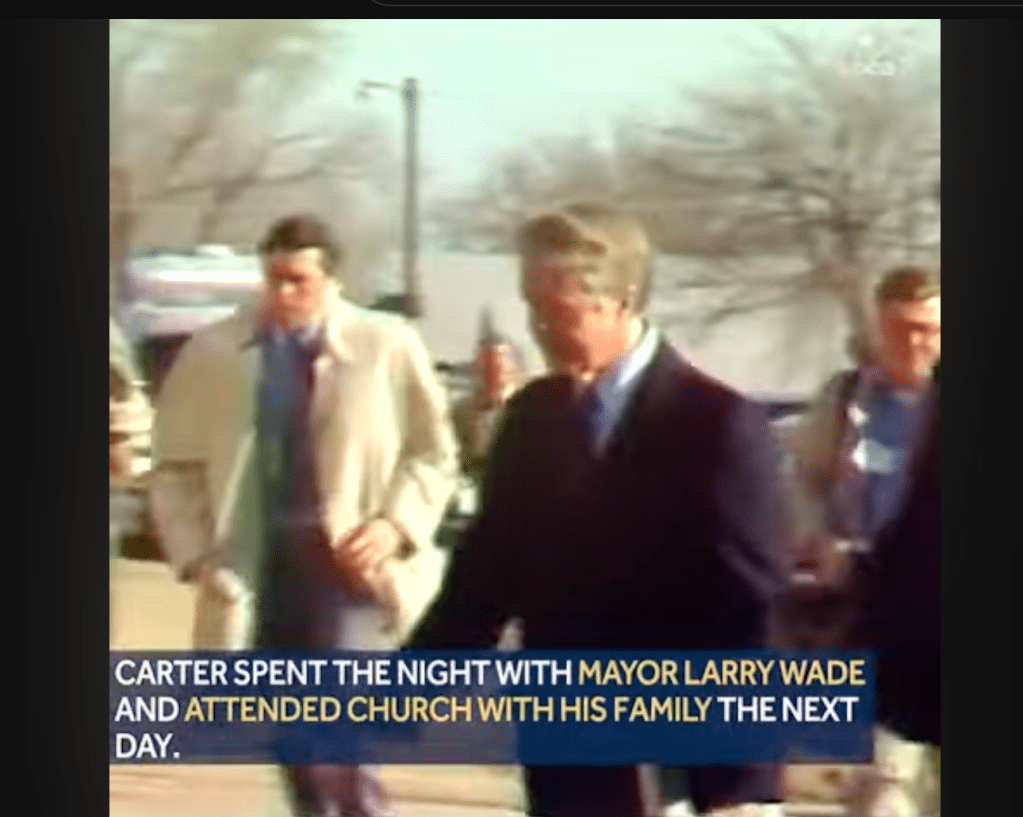
A warm Sunday morning in Plains, Georgia seemed tailor-made for reflection. At the Maranatha Baptist Church, a small congregation gathered in quiet anticipation. This wasn’t an ordinary Sunday service—it was one led by Jimmy Carter, the 39th President of the United States.
Even decades after leaving the White House, Carter stayed true to the values that shaped his life. These values were faith, humility, and service. Carter taught Sunday School to anyone who wanted to listen every Sunday that he was capable. Visitors from all over the world made the pilgrimage to Plains. Some traveled thousands of miles to hear wisdom. This wisdom was not shared in a grand hall. Instead, it was delivered in a modest church that held no more than a couple hundred people.
Jimmy Carter, then in his 90s, shuffled to the front of the sanctuary, a quiet determination in his step. He greeted the crowd with a humble smile, his voice steady and welcoming. His lesson was simple yet profound: loving your neighbor, no matter their background or beliefs.
“When Jesus said to love your neighbor,”
Carter explained, his blue eyes twinkling,
“He didn’t put any conditions on it. He didn’t say only if they look like you or vote like you. He meant everyone.”
The audience was a mix of locals and travelers. They hung on his every word. Their hearts and minds were stirred by the profound simplicity of his message. The room was filled with a palpable sense of awe. This was not due to the titles Carter once held. Instead, it was because of his unwavering commitment to living the values he taught.
When the lesson ended, Carter didn’t rush off. Instead, he stayed to shake hands, take photos, and share stories. These personal moments hold the most significant importance for him. He listened as much as he spoke. This is especially meaningful for a man who had once navigated the complexities of global politics.
One visitor, a young man from Chicago, nervously approached.
“President Carter, what made you keep teaching Sunday School after everything you’ve accomplished?”
Carter smiled warmly.
“I’ve been a farmer, a naval officer, a governor, and a president. But teaching Sunday School reminds me of who I truly am—a servant of God. Titles come and go, but the love we share with others lasts forever.”
That was Jimmy Carter. He believed that service didn’t end with a term in office. He thought that humility wasn’t weakness. Even the simplest acts of kindness can ripple through the world. For Carter, life’s most outstanding achievement wasn’t in power or prestige. It was in the quiet and steady work of lifting others up. He demonstrated this belief through his work with Habitat for Humanity. He also promoted peace and human rights. Additionally, he was committed to public service long after his presidency.
As the church emptied, a sense of peace lingered in the air. This was a testament to the legacy of a man who lived his faith with every breath.
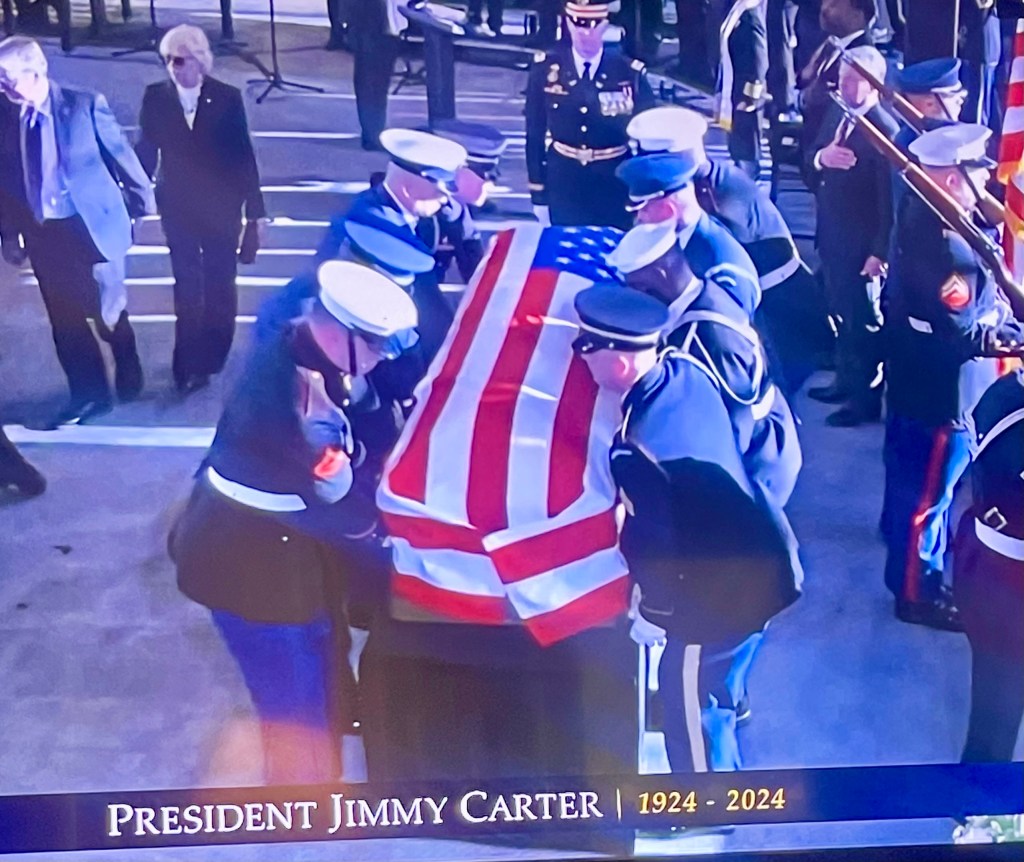
In the early hours of January 4, 2025, a somber hush fell over the rolling plains of Georgia. The sun shone gently over the landscape. A motorcade departed from Phoebe Sumter Medical Center in Americus. It bore the flag-draped casket of the 39th President of the United States, Jimmy Carter. The journey marked the start of a six-day tribute. It honored a man who dedicated his life to service, peace, and humanity.
The procession moved through Carter’s hometown of Plains, passing by his boyhood home in Archery. Here, the old farm bell tolled 39 times. Each chime resonated with the years he had served as the nation’s leader. It symbolized each year of his presidency. Family members, including his children, grandchildren, and great-grandchildren, accompanied the casket, their faces reflecting both sorrow and pride. Former Secret Service agents had once protected him. They now served as pallbearers. They honored their final duty to the man they had revered.

Along the route, admirers gathered. Some held flowers. Others wore commemorative pins. They were all united in their wish to pay homage to a beloved figure. The motorcade continued to Atlanta. There, Carter’s body would lie in repose at the Carter Presidential Center. This arrangement provided the public with the opportunity to offer their respects.
On January 7, the casket will be transported to Washington, D.C., where President Carter will lie in state at the U.S. Capitol. A state funeral is scheduled for January 9 at the Washington National Cathedral. Dignitaries will honor his legacy there, including President Joe Biden. The funeral will be a solemn event. There will be a military honor guard. A close family member will deliver a eulogy.
Carter’s journey will reach its conclusion after the national ceremonies. He will return to Plains, Georgia, for a private funeral service at Maranatha Baptist Church. He will be laid to rest beside his beloved wife, Rosalynn. This is the place where his remarkable journey began. It would now conclude there.
As the week unfolds, the nation will ponder on the life of a president who remained a humble servant. Jimmy Carter’s final ride is not just a passage from life to death. It is a testament to a legacy that will endure in the hearts of the people he has touched. This marks the end of a remarkable journey.
The Nation Honors Former President and man Jimmy Carter!
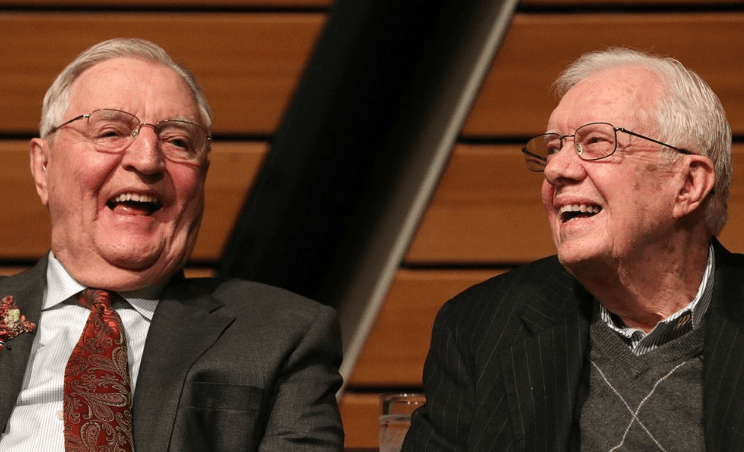
In the summer of 1977, President Jimmy Carter leaned back in his chair in the Oval Office. A pensive smile tugged at the corners of his mouth. Across from him sat Vice President Walter Mondale, poring over a stack of briefing papers with his trademark focus. One man was a farmer from Georgia. The other man was a lawyer from Minnesota. The two couldn’t have been more different in background. Yet, their partnership was rooted in a shared commitment to serving the American people.
“Fritz,”
Carter said, using Mondale’s nickname,
“you ever think we’re trying to do too much at once?”
Mondale looked up, his brow furrowed.
“Every day, Mr. President. But that doesn’t mean we stop trying.”
The two had agreed early on that their administration would focus on transparency and morality in government. It was a lofty goal, especially after the shadow of Watergate. Carter gave Mondale an unprecedented role as vice president. He granted him full access to meetings and decision-making processes. Mondale had a seat at the table in all major discussions.
That day’s agenda included preparations for the Camp David Accords. Carter knew the stakes were high. Peace in the Middle East was a dream worth pursuing, but the path was challenging.
“I’ve been thinking about how we can get Sadat and Menachem (Begin) to see eye to eye,”
Carter mused, tapping his pen on his desk.
“I need you to be my sounding board, as always.”
Mondale nodded, adjusting his glasses.
“They both trust you, Jimmy. That’s the key. You have a way of connecting with people, even when the odds seem impossible.”
Carter chuckled softly.
“Must be the peanut farmer in me.”
Over the months, the two worked tirelessly. Mondale often acted as a mediator in Congress, navigating the political complexities Carter sometimes found frustrating. When the energy crisis hit, Mondale suggested convening regional governors to gather diverse perspectives.
One evening, after a particularly grueling day, they found themselves alone in the Rose Garden. The air was warm and scented with magnolias, and the stars above were unusually bright.
“Fritz,”
Carter said, breaking the silence,
“I couldn’t do this without you. You keep me grounded.”
Mondale smiled, a rare expression of pride crossing his face.
“You’d manage, Jimmy. But I’m glad I’m here to help.”
Their friendship, forged in the fire of challenges and the weight of leadership, became a hallmark of their administration. Though history would judge their tenure with mixed opinions, their mutual respect and dedication to principle left a lasting legacy.
As the years passed, Carter and Mondale’s bond endured. At their core, they remained two men dedicated to the idea that leadership meant service, not power. They carried this lesson beyond the White House walls.
A lesson that needs to be passed on increasingly so now!
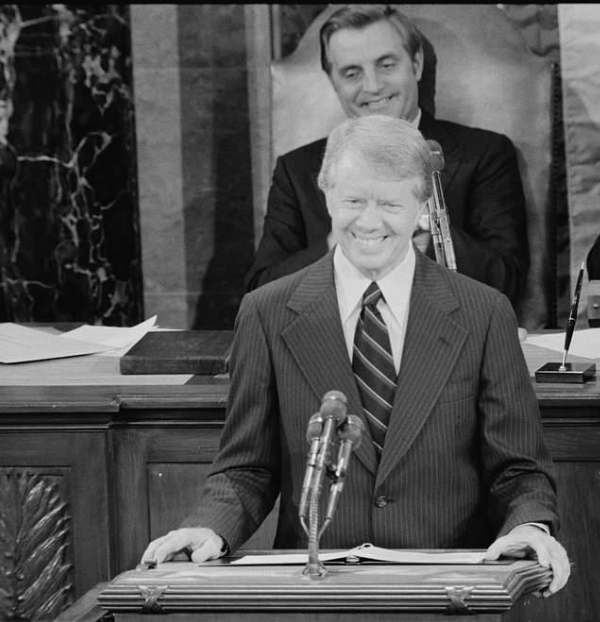
Jimmy Carter served as the 39th President of the United States from 1977 to 1981. He brought a quiet and deliberate resolve to the Oval Office. Carter was a former peanut farmer and Georgia governor. His presidency was shaped by his outsider status. He was known for his Southern charm and deep sense of morality. This quiet resolve was tested by the significant challenges he faced, but it never wavered.
Carter inherited a nation grappling with inflation, an energy crisis, and a faltering trust in government post-Watergate. Undeterred, he tackled the energy crisis head-on. He donned a cardigan during televised addresses to encourage Americans to conserve energy. He also urged Congress to pass legislation for renewable resources and energy independence. His solar panels on the White House symbolized a progressive-thinking approach that would resonate decades later.
On the international stage, Carter championed human rights, placing them at the core of U.S. foreign policy. His leadership during the Camp David Accords remains a hallmark of his presidency. It was a historic peace treaty between Egypt and Israel. This significant achievement demonstrated his commitment to diplomacy and peace. It marked the first time an Arab country formally recognized Israel.
Jimmy Carter – TheCarter Center Photo
Yet, Carter’s term was also marred by challenges. The Iranian hostage crisis cast a long shadow as 52 Americans were held captive for 444 days. The crisis tested his patience. It also tested his diplomacy. The eventual release of the hostages coincided with Ronald Reagan’s inauguration. This became a bittersweet moment in his legacy. Carter showed resilience during this crisis. It proved his unwavering commitment to his duties as President.
Jimmy Carter – The Carter Center Photo
Carter served only one term. His presidency reflected his unwavering belief in doing what was right. He did this regardless of political consequences. His tenure laid the groundwork for a post-presidential humanitarian service life, earning him the Nobel Peace Prize decades later. This continued commitment to the greater good is a testament to the lasting impact of his presidency.
Jimmy Carter’s time in office was not marked by soaring rhetoric or overwhelming popularity. Still, it was defined by integrity, resilience, and a steadfast commitment to the greater good.
The year was 1977, and Jimmy Carter had just taken the oath of office. A peanut farmer from Georgia, he brought a unique sensibility rooted in his Southern upbringing and a deep love for American culture, particularly country music. This unique combination of his Southern roots and his love for country music not only shaped his personal life but also influenced his presidency, allowing him to connect with the struggles and joys of everyday Americans.
Waylon Jennings Family
When he stepped into the White House, Carter made it clear that the arts, especially music, would have a place of honor in his administration. He often reminisced about listening to gospel and country music on the family radio back in Plains, Georgia, where the soulful twang of artists like Hank Williams and the Carter Family resonated with the struggles and joys of everyday Americans, a sentiment he deeply shared.
One evening, during a White House dinner, Carter invited Willie Nelson to perform on the South Lawn. The night was balmy, and as the country star strummed his guitar under a canopy of stars, Carter took the opportunity to speak.
White House Photo – Carter Library
“Country music,” he said, “is the heart and soul of America. It tells the story of our struggles, faith, and hope.”
Carter’s admiration wasn’t just lip service. He actively promoted the genre, ensuring it received the recognition it deserved as an integral part of American culture. He invited artists like Loretta Lynn, Johnny Cash, and Dolly Parton to the White House. He even arranged for country music showcases at international events to share a slice of Americana with the world. His unwavering efforts significantly influenced the genre’s rise to mainstream respectability during the late 20th century.
Bill Anderson with The Carters
But Carter’s legacy extended far beyond his love of country music. He brokered the Camp David Accords, a landmark peace agreement between Egypt and Israel that demonstrated his diplomacy skills and commitment to global peace. He championed human rights globally, making them a cornerstone of U.S. foreign policy. He also pushed for energy conservation, installing solar panels on the White House roof long before climate change became a widely recognized issue.
After leaving office, Carter’s achievements only grew. He founded The Carter Center, dedicated to promoting democracy, fighting disease, and mediating conflicts worldwide. His work eradicating diseases like Guinea worm, even in his post-presidential years, demonstrated his enduring compassion and determination to make the world better.
As for country music, Carter’s genre promotion left a lasting legacy. Many country artists credited him with helping to elevate their art to a global stage. Even decades later, when asked about his presidency, Carter would smile and say,
“If I could broker peace and get people to tap their feet to country music, then I’ve done my job.”
Jimmy Carter’s presidency may not have been perfect. Still, his love for the arts, his commitment to peace, and his tireless work for humanity made him a leader whose legacy resonates far beyond the Oval Office.
The summer in Plains, Georgia, was hot and humid. Young Jimmy Carter, no more than ten years old, sat under the shade of an old pecan tree. Beside him stood a makeshift wooden stand crafted from spare planks his father had discarded. A hand-painted sign read, “Peanuts 5¢ a Bag.”
Jimmy’s father, Earl, suggested selling peanuts after the latest harvest.
“You’ll learn the value of hard work,”
Earl had said, his weathered hand resting on Jimmy’s shoulder.
“And how to talk to people. That’s important.”
Jimmy Carter
Jimmy took the advice seriously. He woke early each morning to bag the peanuts. He carefully measured each part to guarantee every customer got their money’s worth. Then he’d march down the dirt road to the little stand. He would sit there until the sun dipped low in the sky.
On this particular day, business was slow. The air was thick with the buzz of cicadas, and Jimmy’s mind wandered as he stared down the empty road. He thought about the world beyond Plains. It was a world he’d only glimpsed in books. Travelers passing through town also told him stories about it.
As he mused, a car sputtered to a stop nearby. It was an old Ford, its green paint faded and dust-caked. A man stepped out, dressed in overalls and a straw hat. He approached the stand with a friendly smile.
“Afternoon, young man,”
the stranger said, his voice tinged with a twang.
“How much for a bag of those peanuts?”
“Five cents, sir,”
Jimmy replied, standing up straight.
The man chuckled.
“You drive a hard bargain, but I reckon it’s worth it.”
He handed Jimmy a shiny nickel, and Jimmy passed him a bag of peanuts in return.
The man lingered, munching on the peanuts as he leaned against the car.
“You’re Earl Carter’s boy, ain’t ya?”
“Yes, sir.”
“Well, you got his knack for business. Ever think about what you wanna do when you’re older?”
Jimmy hesitated, then spoke with quiet determination.
“I think I’d like to help people. Maybe be a farmer like my dad, or –– maybe even something bigger. Like a teacher or someone who solves problems.”
The man nodded thoughtfully.
Jimmy Carter was a teenager then. He was number 10 in a group portrait of the Plains High School basketball team. The photo was taken in Plains, Georgia, around 1940.
“That’s a fine ambition. Keep that kindness in your heart, boy. The world can use more folks like you.”
Jimmy smiled, his youthful confidence bolstered by the stranger’s words.
Years later, as President of the United States, Jimmy Carter often recalled that summer by the peanut stand. There, under the pecan tree, he first learned the value of hard work. He also learned humility and the simple power of connecting with others. These were lessons that would guide him throughout his life.
The stand was long gone. But, the spirit of that little boy with big dreams remained. It was forever rooted in the red soil of Plains.
After completing my training, I got assigned to a two-person unit for part of my shift. Unfortunately, this arrangement led to the exposure of my partner’s extramarital affair with a young woman who worked at a nightclub on the city’s east side. His behavior was hard to ignore. Night after night, he would leave the patrol unit to spend hours inside the club, leaving me alone to monitor radio calls. Each absence grew longer and my frustration deeper.
The city grappled with a surge in burglaries targeting vehicles, garages, homes, and businesses. As crime reports piled up, the department needed to be closer to solving the problem. Sitting in the patrol car logging incidents while my partner dallied at the bar weighed heavily on me. Worse, my delayed response times to calls had begun to draw attention, placing me in a difficult position.
Addressing the issue felt like navigating a minefield. On one hand, I had a duty to uphold the integrity of our patrol duties. On the other, reporting my concerns to a sergeant or lieutenant risked exposing my partner’s personal life, which I preferred to avoid. Going over their heads to the Captain or Major felt equally precarious. However, during my travels to pistol shooting competitions, I established a good rapport with the Chief of Police. I decided to take a chance.
One afternoon, I invited the Chief for coffee to discuss an upcoming qualification event. Once seated, I confessed my more profound concerns. I told him about my partner’s absences, the nightclub, and the woman I suspected was involved. I explained why I had yet to go through the chain of command and emphasized that my primary concern was the integrity of our patrol duties. To my relief, the Chief not only understood but also reassured me that I had made the right choice. His promise to handle the situation discreetly was a weight off my shoulders.
A week later, the schedule was released, and to my disappointment, I again got paired with the same partner. The pattern continued, with him vanishing into the nightclub and leaving me to manage radio calls alone. Frustration mounted, but I stayed focused on my responsibilities. At the following briefing, Lieutenant Wheeler announced a significant change: I would get assigned to a solo unit. My former partner, now in a solo unit, would no longer work with me. Other patrol officers, except the K9 unit, were paired up. The decision felt like a small but meaningful vindication, a recognition of my commitment to upholding the integrity of our patrol duties.
Working solo was a challenge. Within my first three days, I responded to two fatal calls—more than many officers encounter in a month. However, I was not alone. I appreciated the support of my fellow officers, who often checked in during traffic stops or guided me through the intricacies of field reporting. Their support was a testament to the camaraderie in law enforcement and the importance of teamwork.
One night, around 1:00 AM, I intercepted a burglary alarm call at a sporting goods store. I was close to the location and informed dispatch I would respond. Oddly, my former partner claimed the call, though he was across town. Dispatch redirected him to return to headquarters instead. I only thought of it once I reached the station later.
The pieces fell into place. The Chief observed my partner’s behavior, noting how long his patrol unit lingered at the nightclub each night. The Chief orchestrated a fake alarm call to confirm his suspicions and monitored my partner’s response time. This thorough investigation led to the end of my partner’s career; he resigned the following day.
The aftermath was messy. My former partner left town with the barmaid and her four children, abandoning his wife of many years. She was devastated and began calling the department, requesting me by name to visit her. I got met with her anguish and accusations each time: “Why didn’t you tell me?” At just 21 years old, I struggled to understand why she held me responsible for policing her husband’s fidelity.
While I tried to console her, the experience left a deep impression. It wasn’t just a lesson about personal integrity and the far-reaching consequences of a lack of it. From then on, I made it a point to know my partners better, ensuring they had solid personal ethics or no attachments that could spill into their professional lives.
This early chapter of my career shaped my approach to law enforcement. It reminded me that while we wear a badge to uphold the law, we also carry the weight of trust—not just from the public but from those who depend on us, on and off duty. The importance of personal integrity in law enforcement cannot be overstated. It is not just about following the rules, but about the impact of our actions on the lives of others.
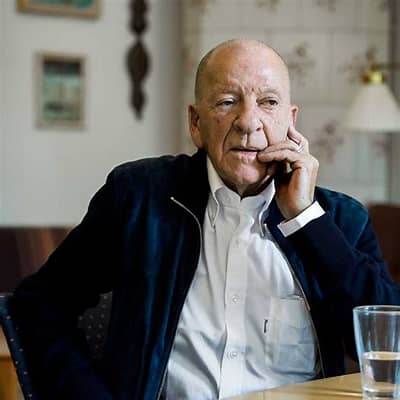
Pehr Gustaf Gyllenhammar, a visionary Swedish businessman whose leadership and influence extended across industries and continents, passed away in November 2024 at 89. Born in Gothenburg, Sweden, on April 28, 1935, to Pehr Gyllenhammar Sr. and Aina (née Kaplan), Pehr G. Gyllenhammar was a man of profound intellect, ambition, and a global vision that inspired many.
Gyllenhammar is best remembered for his transformative tenure as CEO and chairman of Volvo from 1970 to 1994, during which time he led the company through a period of dynamic growth and innovation, leaving an indelible mark on the automotive and industrial sectors. His bold attempt to merge Volvo with Renault in the 1990s exemplified his forward-thinking, even as it marked the end of his career with the company.
Beyond Volvo, Gyllenhammar’s career spanned various leadership roles, including Aviva’s chairman and Rothschild Europe’s vice chairman. A fervent advocate for European industrial collaboration, he co-founded the European Round Table of Industrialists, promoting cooperation among the continent’s leading companies.
His contributions were recognized with numerous accolades, including France’s *Ordre National du Mérite* in 1980 and the *Legion of Honour* in 1987. In 2001, he was named an Honorary Master of the Bench of the Inner Temple in London.
Gyllenhammar’s intellectual curiosity and political engagement made him a public figure beyond the boardroom. An early proponent of social liberalism, he championed the Scandinavian model of governance and was a vocal advocate for European unity. His political views and engagement with social issues often influenced his business decisions, making him a unique and influential figure in both the political and business spheres. At one point, he was even considered a potential leader of Sweden’s Liberal People’s Party.
He balanced his professional endeavors with a rich personal life. He married Christina Engellau, the daughter of Volvo’s former CEO, in 1959 and shared nearly five decades with her until her passing in 2008. Together, they raised four children—Cecilia, Charlotte, Sophie, and Oscar—each of whom carved out successful paths in the arts, business, and design. Later in life, Gyllenhammar found love again, marrying Lee Welton Croll in 2013, with whom he welcomed a child in 2016.
A man of deep conviction, Gyllenhammar exemplified leadership and resilience, leaving an indelible mark on the business world and the communities he served. His resilience in the face of challenges is a testament to his character and the impact of his legacy. He is survived by his wife, Lee, his five children, and a legacy that will inspire future generations.
A private family service will honor his memory. The service, which will be held at a private memorial, and will be a time for family and close friends to share their memories of Gyllenhammar and celebrate his life. In place of flowers, the family requests donations to causes reflecting Gyllenhammar’s dedication to innovation, education, and European unity.
The Chinese Exclusion Act of 1882 marked a pivotal moment in U.S. immigration history, becoming the first significant federal law restricting immigration. It targeted a specific ethnic group driven by economic fears, racial prejudice, and political populism. A review of this historic legislation, alongside the context of its enactment, reveals striking parallels to modern immigration debates. Both historical and contemporary issues illustrate how economic anxieties, cultural misunderstandings, and political opportunism can drive restrictive immigration policies that may ultimately prove disastrous for society.
The Role of Immigrant Labor in Economic Development
In the mid-19th century, Chinese immigrants, despite facing systemic discrimination and being blamed for economic problems, played a crucial role in building the American West. Their resilience and determination were evident in their instrumental role in constructing the transcontinental railroad, tackling some of the most dangerous and demanding jobs in brutal conditions. However, when the Panic of 1873 led to widespread unemployment, populist sentiment scapegoated Chinese immigrants, claiming they were stealing jobs from white workers.
A similar narrative exists today. Immigrant labor is fundamental to the agriculture, construction, and technology industries. Despite this, immigrants are often vilified during economic downturns, accused of taking jobs or lowering wages. This cyclical pattern of scapegoating undermines the reality that immigrants frequently perform jobs that native-born workers are unwilling or unable to do, driving economic growth and innovation. Restrictive immigration policies, such as deportations or bans, risk damaging these essential industries and the broader economy, much like the exclusion of Chinese workers stunted specific sectors in the late 19th century.
Cultural Backlash and Populist Politics
The transcontinental railroad’s completion in 1869 symbolized a remarkable technological achievement but also marked a turning point for Chinese immigrants. Their presence sparked a cultural backlash as they settled in communities like Truckee, California. Fueled by racial prejudice and populist rhetoric, white workers and politicians pushed for their exclusion, culminating in the Chinese Exclusion Act. This act institutionalized xenophobia and created a precedent for racially biased immigration policies.
Today, cultural anxieties continue to shape immigration debates. Concerns about preserving cultural identity and fears of “otherness” fuel resistance to immigrants. Particularly from Latin America, the Middle East, and Asia. Politicians often exploit these fears to rally support, pushing for restrictive measures such as border walls, travel bans, or mass deportations. Such actions not only marginalize immigrant communities but also foster division and xenophobia, hindering social cohesion.
Economic Consequences of Restriction
The long-term economic impacts of the Chinese Exclusion Act highlight the dangers of restrictive immigration policies. By limiting a vital workforce, the law hampered industries reliant on immigrant labor. The exclusion of Chinese workers also set a precedent that discouraged innovation and adaptability in labor markets, contributing to stagnation in certain regions.
Policies that limit immigrant contributions to the workforce have modern parallels. For example, restrictive visa programs and deportations threaten industries like agriculture and technology, which rely heavily on immigrant talent. Moreover, these policies can exacerbate labor shortages, driving up consumer costs and reducing the global competitiveness of U.S. industries. History demonstrates that economic growth thrives on diversity and inclusion, not exclusion.
Lessons from the Past
The Chinese Exclusion Act teaches us that targeting immigrants as scapegoats for economic or social challenges is a shortsighted and counterproductive strategy. Immigration is a cornerstone of American prosperity, fostering innovation, cultural richness, and financial resilience. Policies driven by fear and prejudice, rather than informed analysis, risk repeating the mistakes of the past and should be considered.
Today’s immigration debates echo the populist rhetoric and exclusionary measures of the late 19th century. However, we have the benefit of hindsight to recognize that such policies often create more problems than they solve. To avoid a similar disaster, today’s policymakers must approach immigration with a focus on integration, economic opportunity, and respect for human dignity. By learning from history, we can build a more inclusive and prosperous future, where all individuals feel valued and respected.
Presented by benandsteve.com By: Benjamin Groff II
The days felt strange for those of us who worked nights. As the darkness stretched on, one night blending into the next, daylight seemed more a memory than reality. Law enforcement is more than just a job; it’s a close-knit community, a world. There’s a deep-rooted fellowship among officers and an unbreakable chain of command that’s everything. Yet, that structure was sometimes a challenge for me to accept.
In a large family—four older brothers, two older sisters, a strict father, and a devoted mother—order was part of life. In a rural setting, the school was the only place outside the home where I experienced a different structure. Dad was the highest authority in our household, followed by Mom, then the eldest sibling present, down to the youngest. Dad’s words held firm even in his absence; his authority was an invisible force that needed no reinforcement.
Adjusting to the chain of command in law enforcement took me time, especially after starting in small departments with more relaxed structures. But at Elk City Police Department, things were different. There was a formal hierarchy: chief, assistant chief, major, captain, lieutenant, sergeant, patrolman, and communications officer. Here, I quickly learned that approaching the chief directly with questions or concerns was a breach of protocol, often met with a firm reminder to follow the ranks.
Simple tasks became lessons in patience. Whether I needed a lightbulb replaced or advice on a report, the chain of command required me to go through several levels before reaching a solution; I would have to wait days to get a minor answer. Frustrated, I eventually bit my lip and followed the structure, even if I didn’t like it. My captain called me out over the most minor lapses, like failing to change a burnt lightbulb on time, and I’d swallow my frustration, understanding that order was paramount.
As the community passed a tax to fund a new police station, we began to outgrow the quirks of our aging headquarters at 303 West Fifth Street. The old building, despite its shortcomings, was more than just a structure. It was a part of us, a place where we shared stories, laughed, and supported each other. Built in the 1930s, it had weathered time and neglect. Prisoners on the second floor could flood toilets, causing wastewater to seep into the dispatch and booking area below. But it was our home, filled with memories and camaraderie.
The new station was completed in 1984. Moving was bittersweet, not just for the community, who’d grown used to stopping by the old station for a friendly chat, but for us, too. The new facility was a symbol of progress, outfitted with state-of-the-art security, bulletproof glass, and advanced communication systems. The dispatch had better lighting, new mirrors, and high-tech computers; the National Law Enforcement Telecommunications System and National Crime Information Center computers were side-by-side. Every call was recorded and could be retrieved at any moment.
The jail had electronically controlled gates, holding cells, a kitchen, and a secure emergency exit. Security cameras covered the entire facility, displaying activity on monitors in the booking area. There were dedicated offices for records, evidence, detectives, and the command staff. In every way, it was an upgrade.
On the day of the move, I was instructed by ‘Captain Bick’ to stay home and prepare for the night shift. Despite my eagerness to be part of the transition, I respected his orders. Later that evening, I found myself driving to the old station out of habit. As I parked and entered, I was struck by the emptiness of the dispatch office. This was where I had sent officers out, received urgent calls, and coordinated responses. Now, it was a mere shell of its former self. Assistant Fire Chief Bob, who was also present, chuckled, ‘You’re at the wrong place—no cops here anymore!’
I smiled, feeling a wave of nostalgia, and pointed to the old wall that separated our side from the fire department. ‘Did you know President Carter’s original ‘Beast’ limousine was parked right on the other side of that wall one night? All the fire trucks were cleared out, and our officers watched to ensure no one touched it.’
Bob laughed, “Yeah, I remember that night. I was here too.”
It was hard to let go of stories like that—stories that had lifted people’s spirits and given them a break from their own troubles. With a sigh, I left the old building, heading to the new station, marveling at the thought of a facility so high-tech that even the door lock had a security code… which someone had promptly taped over because officers kept forgetting it.
After settling in, I was tasked with a significant assignment: entering city burglary data into the new computer system. I approached this task with the same dedication I gave every task, and it quickly provided me with valuable insights into the patterns of theft in the city. Over the next two years, this groundwork would prove instrumental in helping us dismantle a significant theft ring. But that’s a story for another time—this one is about the journey to a new place and the adjustments, big and small, that shaped us along the way.
It had been a long year. On January 5th, 1983, we lost an officer in the line of duty. That spring, three officers were arrested for stealing from a business they’d responded to on an alarm call. By summer, automobile burglaries and thefts were on the rise. The suspects were careful, leaving no evidence. Their modus operandi was smooth and untraceable—no one ever heard, saw, or interrupted these thieves. Most stolen items ranged in value from around $200, making each theft a felony under Oklahoma law.
The city was facing yet another wave of crime. Typically, it had about 10,000 residents, but the recent oil boom brought an influx, swelling the population to around 25,000. The sudden increase in population put a strain on the city’s resources, leading to a rise in crime. Jobs attracted people from all over, but housing needed to catch up. Tent cities sprang up in the southern sector, and parks filled with tents when vacant lots overflowed. Expecting thousands of oil jobs, many newcomers broke and scraped by.
Among the job seekers were newly released inmates from Cook County Detention in Chicago. Judges offered a stark choice: a one-way bus ticket to Elk City, Oklahoma, or a lengthy jail sentence. Most took the bus ticket. Upon arrival, they had to call the detention center from Elk City’s bus depot to check-in. Ducks in the city park began disappearing as desperate people scavenged for food. In response, the city council enacted a law prohibiting the molestation of ducks, with fines and jail time for violations. Signs reading “DO NOT MOLEST THE DUCKS” popped up, adding a hint of levity to an otherwise grim situation.
But ducks were far from the town’s biggest problem. It wasn’t the bars, the transient hotels renting beds by the shift, or even the “ladies of the night.” The real threat seemed to be the string of broad daylight robberies plaguing the community’s three leading grocery stores, and each hit at least once. One robbery even happened just a block from the police station, with the suspects abandoning their getaway vehicle behind the station in a post office lot.
The police department’s image was suffering. Officers worked 12-hour shifts, often doubling up due to the flood of calls, sometimes stacked five to ten deep. I reported at 5 p.m. for a 6 p.m. start to my 12-hour shift one day, noticing a huddle of high-ranking officers and county deputies outside an office. Figuring I’d get briefed later, I didn’t poke around—I had enough court subpoenas already without getting involved in another incident. And this was one situation I was glad to avoid.
“You have got to be kidding me,”
When my Captain came over, he told me they’d just brought in an officer for raping his daughter. This shocking revelation not only shamed the individual officer’s reputation but cast a shadow on the entire department; as police officers failed, the public’s trust in law enforcement was further eroded.
“You have got to be kidding me,” was all I could say.
This scandal was nearly the final blow for our department, already reeling from the recent departure of a chief struggling with personal issues. Within hours, newspapers and television stations caught wind of the arrest, and the phone lines lit up. Callers unleashed waves of abuse, condemning every officer affiliated with the department. The calls went on for days, creating a hostile environment for all officers and making their jobs even more difficult.
The officers arrested earlier in the year were convicted, further damaging the department’s reputation.
Amid this turmoil, my law enforcement career truly began. Although I had worked in various positions and departments, it was in this community that I found my calling. This city is where I started my adult life and career earnestly. I remained loyal to this place, forming memories with people in the booking area, the jail, and the streets. A shift in the workforce followed, which opened doors for me—an unexpected opportunity in a turbulent time. Could it get any worse? The heat was about to get turned up. In coming stories!
(You’ve been reading the back story for the big news over the next forty years involving several lives and lifetimes.)
In a small city, one man’s election as Mayor marked a drastic turning point. Traditionally, city decisions required approval from a council of six members, with a majority vote ensuring every person wielded only a little power. But soon after taking office, the Mayor and his political allies on the council pushed through changes that redefined his role. They granted him unprecedented authority to make sweeping decisions for the city and its residents, bypassing the usual oversight.
But that initial optimism soon eroded, giving way to a profound sense of disappointment and betrayal. The Mayor began filling oversight boards and committees with his chosen people—none of whom had relevant experience. They promised to “clean house” and end wasteful spending, but their true motives quickly surfaced.
The Commissioner of Streets and Lights, handpicked by the Mayor, promptly fired the street crew and supervisors, many of whom had worked for the city for over fifteen years and were approaching retirement. The Commissioner hired the Mayor’s son’s paving company in their place, and he also contracted two out-of-town electricians for lighting maintenance. These new hires lacked the skills to handle the city’s infrastructure needs, but the Mayor’s orders were clear. The supposed “savings” were diverted into three hidden accounts linked to companies the Mayor quietly operated on the side.
The Mayor restructured Water and Trash Services similarly. Water management was outsourced to a neighboring town with little regard for the community’s best interests. Trash collection was reduced to once a week, and a company from two towns away was hired, offering only minimal service. The Mayor’s promised savings got funneled into an account controlled solely by the Mayor.
Every city department followed the same grim trajectory. Once-dedicated employees were let go and replaced by disinterested newcomers complaining about their low wages and minimal benefits. City services deteriorated rapidly, with potholes on the streets, frequent power outages, and overflowing trash bins, leaving residents dismayed as their quality of life declined.
The townspeople soon noticed their bills creeping upward—first by ten dollars, then by thirty, with no explanation or improvement in service. This financial strain, coupled with crumbling city infrastructure, directly resulted from the Mayor’s unchecked power and self-serving decisions, placing a heavy burden and stress on the residents.
Residents registered with the opposing political party received letters citing dubious code violations and demanding fines. Those who contested were slapped with even more violations, driving many to leave the city altogether. Once most of his opposition had been driven out, the Mayor enacted a new ordinance requiring his remaining supporters to pay a “privilege to live here” fee. When citizens objected, he sent his security force to arrest vocal dissenters, warning others of eviction if they did not comply.
The Mayor’s reign of intimidation didn’t stop there. He established a “Mayor’s Court,” where anyone accused of a crime—even minor infractions—was jailed indefinitely. Their families could “buy” their release, but only at exorbitant prices, often reaching hundreds of thousands of dollars. The city had become a prison, and its leader was a dictator.
Many residents clung to the hope that this nightmare would end with the Mayor’s death. But when he passed away, the townspeople were horrified to learn that city law now dictated his son would inherit his office.
This tale serves as a stark warning: when voting, beware of who you trust with power. Sometimes, that choice can cost more than you ever imagined.
Nearly half of Americans who cast ballots in the November 5, 2024, Presidential Election voted for Kamala Harris; the other half for Donald Trump.
At this stage, it’s less about who supported whom and more about what lies ahead. If Trump follows through on his campaign promises, there could be significant changes in government agencies, which might affect the benefits that many Americans depend on. He has openly vowed to bring retribution against those he views as adversaries—potentially including the half of the nation that didn’t vote for him. However, it’s also important to note that not all of his promises may come to fruition, and the political system has checks and balances to prevent extreme actions.
Federal law enforcement agencies involved in national security and other branches focused on homeland security could be dissolved. Trump has publicly stated his intent to dismantle these institutions.
Social programs for adults, older people, and those with disabilities—such as food assistance, school aid, healthcare, and Social Security—are likely to face drastic cuts, potentially leaving them virtually ineffective for those in need. He has said as much.
LGBTQI+ rights and protections are also under threat, as outlined in Project 2025, a policy initiative he supports. If you think this won’t materialize, consider the promises already laid out. The next four years will show us the reality.
If Trump appoints Robert Kennedy Jr. to oversee public health, as he has suggested, food and drug safety regulations could be gutted. Protections that ensure safe food, medications, and clean drinking water could be stripped away, leading to significant health risks.
Trump is likely to have the backing of a Republican-controlled House and Senate. New laws and repeals may come as swiftly and forcefully as debris in a tornado. The U.S. could change drastically, and not only non-supporters would feel the impact—Trump supporters, too, could face serious, unforeseen consequences.
Expect an economic downturn as average Americans encounter hardships unprecedented in recent history. As with the COVID-19 crisis, another wave of upheaval may follow. Trump’s track record shows a tendency for crises, particularly in ventures he leads. The economic future under his leadership looks bleak.
What You Can Do
HOARD – Stock up on canned goods and cash reserves outside traditional banking institutions. Prepare for potential utility outages and find ways to stay connected without reliance on cell phones or computers. Secure a supply of both drinking and non-drinking water to meet various needs.
PROTECT – Prioritize security measures for yourself, your home, and your property, particularly those independent of electricity. Stock up on self-defense tools like bear spray or mace. Ensure that your home’s locks are strong both inside and out. In the event of an intruder, remember: in a fight for survival, any measure is justifiable. There are no rules when fighting for your life. Anything is fair!
These are just a few preparations to consider. With the current political landscape in both Houses and the Supreme Court tilted in Trump’s favor, our democratic processes could be at risk. This election may mark our last chance to elect our President—and our future as a democracy. It’s critical to stay informed, engage in the political process, and support organizations that defend democratic values. Together, we can make a difference.