A journey is beginning, not yet fully mapped. We wanted to share where our thoughts are headed next.
Some plans start as ideas, not itineraries. This is one of those moments.
Steven And Benjamin
I wanted to share a brief but meaningful update with those of you who read, follow, and support this site. Over the years, this space has become more than a place to publish stories—it has become a point of connection. Because of that, it feels right to let you know something. We are quietly and thoughtfully planning it for the months ahead.
My husband and I have started planning. We are in the early stages of what we hope will be a once-in-a-lifetime trip to Europe. At this stage, everything is tentative and flexible, but the intention is sincere. Our route would take us from Phoenix to Salt Lake City. We would then travel to New York. Next, we would cross the Atlantic to Amsterdam, and continue on to Berlin. From there, we hope to spend time traveling through Germany. We also plan to visit neighboring countries. Prague is one place high on our list.
The time-frame we are considering is September, though no dates are locked in yet. This trip is not about just checking destinations off a list. It’s more about slowing down. We want to see places with intention and appreciate the history, culture, and everyday life of the regions we visit. Germany, in particular, feels like a place where time deserves to be taken. This is true whether in cities, small towns, or the countryside in between.
This isn’t an announcement—just a looking ahead. A few early plans, and an open door for conversation.
The journey brings one of the most meaningful hopes. It is the possibility of meeting people I’ve come to know through writing over the years. Words have a way of building bridges, and in some cases, those connections feel more like extended family than acquaintances. If you are in or near Berlin, Prague, or Amsterdam, I would genuinely welcome your thoughts. I would also appreciate your insights if you know those places well.
If you have advice on places that shouldn’t be missed, I would be grateful to hear them. Share routes worth taking or quieter corners that offer something special. Practical tips for traveling through these areas are also welcome. And if our paths happen to cross along the way, that would be a gift in itself.
More details will come as plans take shape. For now, this is simply a look ahead. We invite you to share your thoughts, insights, and recommendations in the comments below.
This Story From The Classics. Posted Originally in 2024 it is Reposted this year as part of the best of the best stories benandsteve.com are sharing at years end.
The year was drawing to a close. In the small town of Willow’s End, the final days carried a weight of reflection and anticipation. The air was cold but not bitter. The snow was soft and forgiving. Every storefront on Main Street was adorned with strings of lights that twinkled like tiny stars.
December 27th
Emily wandered through the park, her boots crunching against the frost-bitten ground. She carried a notebook. Its pages brimmed with half-written resolutions. They held sketches of dreams she hoped to realize in the coming year. Her golden retriever, Milo, bounded ahead, his tail wagging like a metronome.
The park was quiet, save for the sound of distant laughter from the skating rink.
Emily paused by the frozen pond, watching the skaters glide effortlessly across the ice.
She scribbled in her notebook:
Be brave enough to try something new.
December 28th
The morning dawned with a vibrant sunrise, streaks of orange and pink painting the horizon. Friends and families gathered for breakfast at the local diner, sharing stories of their year. Old Mr. Harper, the town’s unofficial historian, sat by the window, regaling a group of children with tales of Willow’s End’s founding.
Emily listened from a nearby booth, smiling to herself. Inspired, she jotted another resolution:
Learn the stories of those who came before me.
December 29th
The storm arrived unexpectedly, blanketing the town with fresh snow. Emily stayed indoors, wrapping herself in a quilt by the fireplace. She reread letters from old friends, rediscovering the warmth in their words.
Milo lay at her feet, snoring softly. The snowstorm felt like a pause, a chance to breathe before the year’s end. In her notebook, she wrote:
Reconnect with those who matter most.
December 30th
By morning, the storm had passed, leaving the town glistening under the winter sun. Emily joined the townsfolk in clearing sidewalks and helping neighbors dig out their cars. Laughter echoed as children built snowmen and adults exchanged cups of steaming cocoa.
As Emily shoveled, she realized how connected the community felt in such moments. That evening, she added another note to her resolutions:
Be an active part of something bigger than myself.
December 31st
The year’s final day arrived, bringing a mix of celebration and introspection. The town square rang with energy as the community readied for the annual New Year’s Eve bonfire.
Emily stood among the crowd, her notebook tucked safely in her coat pocket. When the clock struck midnight, fireworks began exploding, painting the sky with bursts of color. Cheers and laughter filled the air.
Emily closed her eyes and whispered her final resolution:
Embrace the unknown with hope.
The last five days of the year hadn’t been filled with grand adventures. There weren’t dramatic changes. Yet, they had been quietly transformative. As Emily walked home under the starlit sky, she felt ready for the year ahead. She was also prepared for whatever life had in store.
John’s eyes fluttered open, the sterile white ceiling of the hospital room coming into focus. His head throbbed, and he felt disoriented. He overheard two doctors talking outside his room as he tried to piece together what had happened.
“Only seven days left,” one of them said. “We need to make sure everything is in order.”
John’s heart sank. Seven days left? He must be dying. Panic surged through him as he realized he had only a week to live. But instead of succumbing to fear, a fierce determination took hold. He couldn’t stay in the hospital; he had to escape and make the most of his remaining time.
Ignoring the pain in his head, John began to formulate a plan. He waited until the nurses changed shifts, then quietly slipped out of bed. John found a set of scrubs in a nearby closet and put them on, hoping to blend in. With his heart pounding, he made his way down the hallway, avoiding eye contact with anyone who would recognize him.
As he reached the exit, a nurse called out to him.
“Excuse me, sir, where are you going?”
John’s mind raced.
“I… I need some fresh air,”
he stammered.
The nurse frowned but didn’t pursue him. John pushed open the door and stepped into the cold winter air. He had made it out, but now what? He had no money, phone, or idea where to go.
John was determined to make the most of his final days. He wandered the city and visited places he had always wanted to see. He watched the sunrise from the top of a hill, the sky ablaze with colors. He fed the ducks at the park, their quacks a symphony of nature. And he even ate a fancy dinner by sneaking into a high-end restaurant, savoring every bite.
As the days passed, John felt a strange sense of peace. He had lived more in those few days than he had in years. On the seventh day, he found himself back at the hospital, drawn by a need for closure.
He walked through the doors and was instantly recognized by a nurse. “John! We’ve been looking for you everywhere. You need to be in bed; your head wound is serious.”
John sighed and allowed himself to get led back to his room. As he lay in bed, he overheard the doctors talking again.
“Only one day left,”
one of them said.
“I can’t believe the year is almost over.”
John’s eyes widened in realization. They talked about the end of the year, not his life. Relief, pure and unadulterated, washed over him, followed by a wave of exhaustion. He had been running from a misunderstanding, and now he was free.
As the clock struck midnight, John smiled to himself. He had a new lease on life and a newfound appreciation for every moment. He vowed to live each day with the same passion and urgency he had felt during those seven days. He understood that life was too precious to waste. His experience had transformed him, filling him with hope and a deep appreciation for the gift of life.
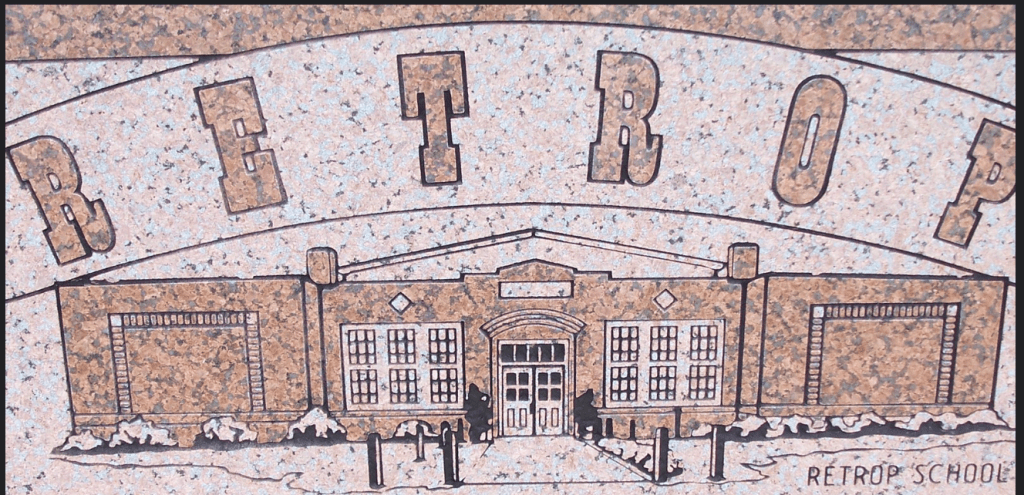
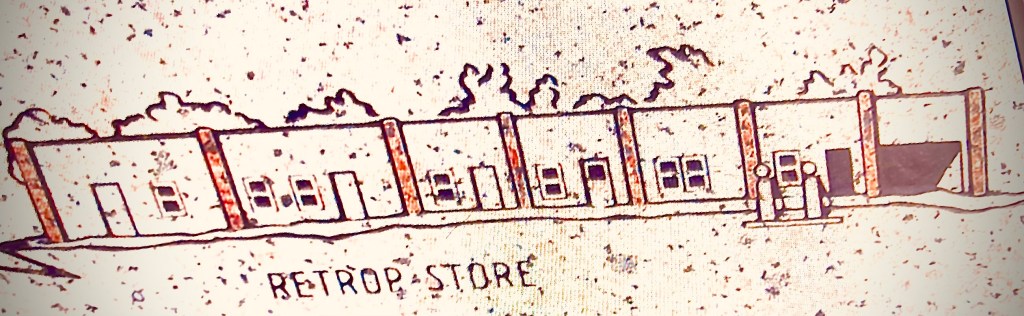
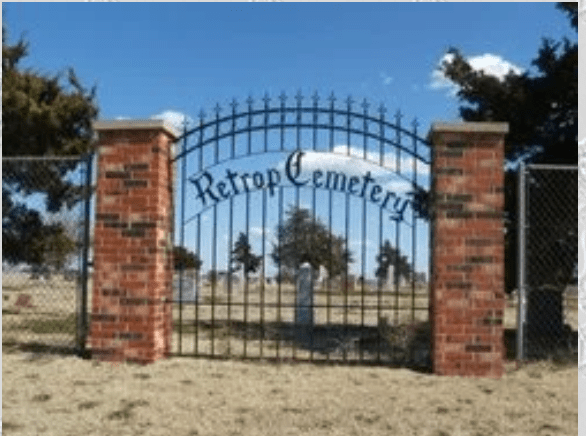
Most people driving the stretch between Granite and Elk City never realize they’re passing over a ghost. The four-lane highway hums along smoothly. Underneath its concrete spine once stood a town with a name born from a clever workaround. The town was called Retrop, simply Porter spelled backward.
Back in the early 1900s, the community wanted its own post office. But Oklahoma already had a Porter, and the postal authorities weren’t about to sort through that confusion. So the folks along the dusty road west of Sentinel shrugged, flipped the name around, and mailed in the paperwork. Retrop got its post office, its school, and its place on the map—at least for a while.
The school sat at the center of it all. A sturdy brick building with wide windows and a playground carved out by decades of small feet. Children rode in from miles around, their lunches wrapped in wax paper, their futures unwritten. There were stories—quiet ones—of students who went on to big cities and bigger lives. A doctor in Chicago. An engineer for NASA. A novelist whose pen never found its way back home. They carried Retrop inside them, even after the town itself faded away.
But Retrop’s beginning was clever. Its ending was swift.
When the new highway came through, the town didn’t stand a chance. Businesses folded. Families moved. The school closed its doors. The post office was shuttered. One by one, the foundations cracked and the roofs caved until only fields remained—fields pretending nothing had ever stood there.
Except for one detail people still talk about, though no one can confirm it anymore: the missing bell.
Retrop had its own Masonic Lodge in the 1940s
The school’s bell had hung proudly in the tower for decades. It called children in from recess and sent them home at day’s end. Then one year—a generation before the school closed—it vanished. Not stolen, exactly. Just gone. People assumed it had been taken for safekeeping. They thought it was stored in somebody’s barn for future repairs. Others believed it had been hauled away accidentally during a renovation.
The last families left Retrop. Then, bulldozers finally erased the last bricks of the school. Yet, the bell was still missing.
Some say the bell found another tower along the prairie. Others swear it sits buried beneath the highway, trapped in silence under thousands of cars a day. A few whisper that the bell rings on its own now and then—never heard, but felt. A tug in the chest. A memory rising like dust in a beam of sunlight. A sound from a place people forgot existed.
Most modern maps don’t show Retrop anymore.
But every once in a while, someone driving that long Oklahoma stretch will slow down for no reason at all. They will stare out toward the open fields. They swear they can sense something that has no business being there.
A town that isn’t. A school that was. And a bell—somewhere—still waiting to be found.
The Bell on County Road 7
No one knew who put the bell there. The old timers from the old school days at Retrop had all gone. Buried. The generation had died off. The families had sold their farms. Or, the farms had been handed down through generations. The old school bell had been forgotten. Until…
It appeared one Tuesday morning. It stood silent, rusted, and leaning a little to the left. The scene was at the far end of County Road 7, right where the asphalt surrendered to red dirt. The bell looked ancient, the kind you’d expect to find hanging outside a one-room schoolhouse or a long-gone prairie church. But there it stood, bolted to a cedar post that hadn’t been there the day before.
Folks in town had theories, of course. In places like Washita County, theories sprout faster than wheat after a spring rain.
Old Mrs. Peabody said it was a sign from the Lord. Hank Ballard at the feed store claimed it was an art project. College kids with too much time and not enough sense created it. Deputy Collins figured someone dumped it there after cleaning out a barn.
But no one claimed responsibility. And no one can explain what started happening a week later.
Every morning at exactly 5:17 a.m.—never a minute sooner, never a minute later—the bell rang.
Just one tone.
Clear. Strong. Impossible to ignore.
At first people thought it was a prank. Someone out there at dawn, pulling a rope and having a good laugh. But when a few curious souls drove out at that hour, no one was ever there. They’d wait in their cars or stand beside the fence line with coffee steaming in cold hands. The prairie would hold its breath. Coyotes would go quiet.
And then the bell would ring.
The sound didn’t vibrate through the metal—folks swore it vibrated through them. It was as if it reached down and stirred up something old they’d forgotten. It is a memory, a regret, or a promise left sitting too long on a dusty shelf.
For some, the mornings changed them.
Mr. Conway, who hadn’t spoken to his brother in twenty years, drove to Elk City and patched things up. Annie Lucas finally mailed the letter she’d been writing and rewriting for a decade. Deputy Collins insisted the whole thing was nonsense. Despite this, he found himself stopping by a certain headstone in Sentinel more often.
But on the eighth morning, the bell didn’t ring.
Not at 5:17. Not at all.
When people went to check, the bell was gone—post and all. As if erased. Only a square of red earth remained. It was freshly disturbed. It was like someone had quietly lifted a piece of the world and carried it away.
The next day, life went on. Coffee brewed, trucks rumbled to work, and theories fluttered around like tumbleweeds. But every now and then, people found themselves glancing toward County Road 7, half-expecting a sound that no longer came.
Still, there are some who swear, when the wind blows just right across the prairie, they can hear it faintly in the distance:
One clear, steady ring.
A reminder of something they’re still meant to do.
When Progress Buried the Past Beneath Big Canyon Lake
By Benjamin Groff II | The Story Teller – benandsteve.com.
3–5 minutes
As The Story Goes –––
No one had seriously thought it would be real. They all thought what they were doing would be forgotten in only a few weeks. But what followed would go on, and on, and on. And not even those with the worst of intentions have predicted the outcome.
It was the summer of 1941, and spring had brought heavy rains to the Big Canyon, flooding the valley below. The farmers had not yet seen the completion of the WPA projects. These projects began in the late 1930s across most of the country. With those projects came new schools, highways, bridges, and community centers. The last of the projects here was the shoring up of valleys. This involved building dams to control runoff waters from creeks, rivers, and streams. When the heavy rains came, the floods were tamed through a spillway cut deep into the earth.
Now that summer was upon them, workers from the CCC and WPA joined forces. They were building what would be known as the Big Canyon Watershed Project. They used mules and draft horses. With these animals, they pulled wedges and plows. The team cleared the valley floor that would soon disappear beneath the rising water. Every blow of an axe and every groan of timber was heard in the thick air. These sounds seemed to signify progress—or so they thought.
The men bunked in rough-hewn cabins and ate in a mess hall that smelled of kerosene and sweat. They joked about ghosts that will one day swim through the drowned cottonwoods or the abandoned family homesteads. But there was one homestead no one wanted to talk about—the Miller place.
The Miller Mystery
The Millers had lived at the base of the canyon for as long as anyone remember. Their house sat crooked beside a spring-fed creek that never dried, even in the harshest drought. Locals said the spring was sacred to the Washita people long before white settlers arrived. When the government bought out the land for the dam, every family took the offered payment—except the Millers.
Old Henry Miller refused to leave. “This land don’t belong to the government,” he told the surveyors. “It don’t even belong to me. It belongs to the water, and she’ll take it back when she’s good and ready.”
They said he vanished one night in late October, just before the final clearing began. The official report listed him as relocated. But the men who worked the next week swore. They heard hammering at night. They saw a lantern flickering deep in the canyon where the Miller house had stood.
When the first rains came that winter, the spillway gates were opened. The lake began to rise. Within days, the Miller place—and whatever was left of it—was gone.
The Haunting of Big Canyon Lake
By the next summer, Big Canyon Lake became a local attraction. Families came from nearby towns to picnic along the shore and marvel at the engineering wonder. Fishermen swore the lake was bottomless. Divers who dared to explore near the old creek bed spoke of hearing faint knocking under the water. It sounded as if someone were still hammering boards together.
A maintenance crew was at the spillway in 1947. They were inspecting it by draining part of the spillway. During the inspection, they found something jammed in one of the lower gates. It was a section of cabin timber—weathered, darkened, with three hand-carved letters burned into it: H. M.
The lake was drained once more in the drought of 1954. When it receded far enough, the foundation of the old Miller place appeared, blackened but intact. And at its center, where the spring once bubbled up, was a hole—dark, deep, and breathing.
No one went near it. The Army Corps sealed the area, and within weeks, the water rose again.
The Nightmare Endures
Locals say Big Canyon Lake is cursed. On calm nights, when the moon hangs over the still water, you can see a lantern light. It flickers beneath the surface. Fishermen have reported hearing someone tapping on their boats, like a muffled warning.
The government calls it folklore. The people who live nearby call it memory.
As for the Miller land, they say the water finally took it back. It also took the man who tried to keep it.
By Benjamin H. Groff II | Truth Endures | The Story Teller
2–3 minutes
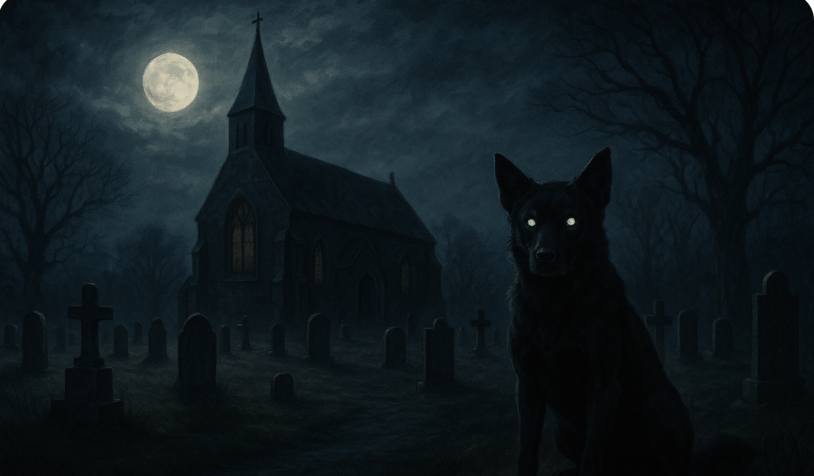
Tales are whispered across the cold stones of Scandinavia. They speak of an “evil dog” that once haunted the churches of Sweden. But those who truly know the legend say the creature was never evil at all. It was the kyrkogrim — a guardian spirit born not of sin, but of sacrifice.
A Dog Buried Beneath Holy Ground
In the centuries when churches first rose across the Nordic lands, builders followed a chilling custom. To guarantee their new sanctuaries would stand against evil, they buried a living creature beneath the cornerstone. This creature was often a black dog. Its final, terrified breath was thought to bind its soul to the ground, forming a spiritual sentinel.
That spirit became the kyrkogrim: the Church Grim. It was always black as midnight. It was condemned to patrol the churchyard. Its duty was to watch over the graves and keep the devil himself from defiling holy ground.
The Protector and the Omen
By day, the kyrkogrim was invisible. But when night fell and candles flickered low, villagers spoke of seeing the great black hound. It was pacing near the church doors. Its eyes glowed like coals in the dark. It was said to snarl at grave robbers and frighten off witches. Yet, for all its protection, it carried a darker burden.
To see the kyrkogrim was to get a warning. The watcher’s death, it was said, would soon follow. The same spirit shielded the church from evil. It also bore the scent of the grave. This grim paradox kept villagers both thankful and fearful of its presence.
The First Soul of the Graveyard
Long before Christianity spread through Scandinavia, ancient peoples offered animal sacrifices to bless new structures and sacred sites. Early Christian builders, inheriting these customs, altered them to fit their faith. The dog buried beneath the first church became “the first soul” in the graveyard. This ensured that no human would have to linger eternally as the church’s guardian.
Thus, the kyrkogrim was not a monster. Instead, it was a martyr. It symbolized the uneasy blend of pagan ritual and Christian devotion. It was the bridge between two worlds: the old gods of the land and the new God of the heavens.
Echoes Through Time
Even today, stories of the kyrkogrim persist in Swedish folklore. Some say the black dog still walks among the headstones on stormy nights, especially near churches centuries old. Others claim that every church has its own silent watcher — unseen, but always there.
What began as a superstition has evolved into something deeper. It reflects the human need to guard what we hold sacred. The kyrkogrim, once buried in darkness, lives on in story — a faithful spirit that never abandoned its post.
By the time autumn winds rolled across Haven’s Reach, something in the air had shifted. The Council’s decrees were no longer whispered with unease. They were shouted from wooden platforms. The decrees were painted on walls and nailed to doors. “Obedience is Freedom,” one sign read. “Order Before All,” declared another. The rules had once been tolerated as minor irritations. Now, they pressed down like a boot on the neck of the people.
It began with curfews. Families were ordered indoors at dusk, lanterns extinguished by the ninth bell. Then came the bans. First, there was one on foreign books. Next, gatherings of more than five were forbidden. Finally, music played in public squares was banned. One by one, pieces of life that had once defined Haven’s Reach fell away. The Council insisted it was “for safety.” But everyone knew better—fear was safer for rulers than for the ruled.
Harper saw it most clearly when her younger brother, Eli, vanished. One evening, he was at the bakery kneading dough by her side. The next morning, his cot was empty. Blankets were folded neatly as though no one had ever lived there. Whispers reached her ears: Eli had spoken too freely about the Council in the market, and someone had reported him. Now he was “detained for questioning.” No one who had been questioned ever came home the same.
Harper’s grief sharpened into something more complex. She began wandering beyond her bakery’s door after curfew, listening at corners, watching shadows. That’s how she stumbled across The Quiet Ones. It was a ragtag circle of neighbors, merchants, and teachers. They took it upon themselves to preserve what the Council feared most: memory. They hid forbidden books in flour sacks. They scribbled children’s rhymes on the backs of ledgers. They whispered songs under their breath in defiance.
When Harper revealed her brother’s name, the Quiet Ones did not look away. An older man with ink-stained hands touched her shoulder and said,
“You’re one of us now, whether you meant to be or not. The fight isn’t about one boy. It’s about all of us.”
The fracture had come—not just between ruler and ruled, but within the people themselves. Some chose silence and survival. Others, like Harper, chose risk and resistance. Haven’s Reach was no longer simply an island under rule. It was a tinderbox, waiting for a single spark to ignite.
The island had been buzzing with a quiet energy. Families were settling into huts near the shoreline. Farmers had begun turning fertile soil into gardens. Fishermen reported an abundance of food from the sea. For a brief time, it felt like paradise was within their grasp.
But no paradise, it seemed, live without Order.
The elected leader, Brant Harrow, stood on a makeshift platform in the town square. His voice carried over the crowd like the tide: calm, confident, and commanding.
“We are a community now,”
He declared, “and no community can survive without rules. These rules are not punishment, but protection. They will guide us. They will keep Haven’s Reach strong.”
The first rules were simple enough: no theft, no violence, no waste. At first, the people welcomed them. After all, who can argue against peace, honesty, and thrift?
Yet Brant added one more:
“All voices must flow through the Council before being spoken to the community. This ensures unity.”
Some shifted uneasily at that, but most nodded. They wanted peace. They wanted Order. And Brant gave them just that—or so they believed.
That night, lanterns glowed along the shoreline as fishermen mended their nets. Farmers laughed over bowls of stew. Children ran between the huts, playing games under the moonlight. The air was filled with a fragile joy.
But inside his quarters, Brant sat with a small group of men.
“It begins here,”
He told them.
“Control the speech, control the thought. The rest will follow.”
Haven’s Reach was still blissfully unaware. It took its first quiet step toward becoming something far different. It was unlike the dream its people had imagined.
The first year on Haven’s Reach flew by in a haze of construction and cooperation. Houses multiplied along the beaches. Farmers coaxed green shoots from the dark volcanic soil. Randall Crane’s speeches echoed over bamboo loudspeakers in every settlement. His message was always the same: “We are building something the world will envy.”
At first, people agreed. The council meetings were spirited yet polite, with neighbors sharing ideas and coconuts. But as the population grew, so did friction. Disputes over fishing rights, building permits, and clean water began to flare up. Crane’s solution was to create The Harmonies — a set of “guiding rules” posted on hand-painted boards throughout the island.
The Harmonies looked harmless enough:
Respect your neighbor.
Keep your area clean.
No outside media without approval.
Dress in community-appropriate attire for public events.
Most residents shrugged off the changes. After all, they had voted for Crane. But a few quietly asked why a paradise needed rules about newspapers or clothing colors. Crane’s answer was reassuring, almost fatherly:
“Order now means freedom later.”
Meanwhile, Crane’s temporary overseers quietly expanded. What began as a handful of volunteers became a uniformed Steward Force, assigned to “help” with compliance and “resolve” disputes. They wore sky-blue jackets and smiled often, but their presence changed the feel of the markets and beaches.
By the time the first festival arrived, everyone had noticed the difference. The music still played. Torches still flickered under the palms. Yet, eyes darted toward the Stewards. People were checking for disapproval. Without realizing it, Haven’s Reach was slowly stepping from a dream into something else.
There was another problem. Almost all those who relocated there had signed a contract. They were committing to ten years of service on the island. If they left for any reason, they would lose all their investments. This included property, banking accounts, and any holdings invested in the government. The contract included that if illness required them to leave the island. Yes, the contract was unforgiving, even for the survivors of the dead.
By the second year, Haven’s Reach felt less like a community project and more like a company town. The Harmonies had been revised into a formal code. It was called The Charter of Unity. It is now distributed in little booklets stamped with Randall Crane’s signature and the island’s crest. Most people tucked them into pockets like good-luck charms. Yet, a few began to notice how many pages dealt with “acceptable behavior.”
Crane’s speeches became less about freedom and more about “protecting our way of life.” The Steward Force expanded again, adding patrols to docks and market squares. At first, they were only “checking in.” Then, they began quietly recording names. They noted those who grumbled too loudly about water rations, building zones, or the newly instituted curfew bells.
A subtle yet unmistakable social pressure began to creep in. Neighbors hesitated before speaking. Vendors checked who was listening before discussing shortages. And at community gatherings, some citizens arrived wearing the “approved” island-blue shirts. Those who didn’t wear them were ushered to the back.
It wasn’t only about rules. The island’s media center, once a hub of news and music from around the world, now played only “local” content. The official explanation was that outside broadcasts were “unverified” and “destabilizing.” At first, few noticed. One morning, a popular journalist was no longer at the market. The rumor was they had “relocated to another settlement.” No one really knew.
Yet, on the surface, Haven’s Reach still looked idyllic. Palm trees swayed. Children played along the beaches. Gardens bloomed under the volcano’s shadow. The illusion held — but for how long?
It started as a dream, or at least that’s how the people remembered it. Scattered across the globe, 100 million souls were united by frustration with their governments. Yearning for a fresh start, they pooled their resources to find an untouched island deep in the South Pacific. Satellite maps showed a teardrop of lush green, ringed with beaches and hidden coves. They named it Haven’s Reach, because it promised a haven — and it was finally within Reach.
At first, everything felt almost magical. The climate was gentle, the soil fertile, and the air clear in a way few remembered from their crowded cities. People camped near waterfalls, planted vegetables along ridges, and built simple homes from bamboo and volcanic rock. There was no central authority; instead, councils of volunteers coordinated the distribution of food and medical supplies. It was as close to utopia as anyone could imagine.
Soon, the newcomers realized they’d need a leader to coordinate large projects, like roads, water treatment, and electricity. Randall Crane emerged from the chaos. He was a silver-haired businessman with a booming voice. His ability to command a crowd was uncanny. He promised fairness, transparency, and freedom. They applauded, relieved to have someone stepping ahead to organize their new society. Crane appointed “temporary overseers” for security and public Order, but few gave it a second thought. After all, they trusted him. This was their new beginning.
There would be no sprawling bureaucracy watching over their every move—no big government, no visible chains of regulation. People would live as they believed life was always meant to be lived. They would “live and let live,” but only so long as it conformed to the Order. This Order was not just a way of thinking. It was a quiet, unyielding code. It was built on God, guns, and a rigid notion of freedom.
Any “laws” were drawn from sacred texts. For most American and English residents, that meant the Bible. For others, it is the Torah or the Tripitaka, the ancient Buddhist canon. In their minds, all these scriptures whispered the same universal truths. Yet beneath that illusion of harmony, a single doctrine of control waited. It was patient and absolute.
They had arrived and begun their grand experiment with a country of their own. Self-designed to represent their basic needs and oversee their paramount security. These people, in a new land, had started what few in life had ever dared to hope for. They established their own country and a bill of rights. They elected a leader to oversee their needs. This was achieved quickly. They succeeded without ever firing a single shot in protest or against another nation.
A million people invested in their own lives and invested in one another. Most of all, they invested in an island that is now a country. It is led by a person with full power. He can choose to give anything necessary for those living there. Alternatively, he can decide to use the resources just for himself.
Representatives from each village were elected to represent those populations. They also elected a senator for each sector of the island. This formed two houses of government. Much like the United States has. Given that all these people share a common ideology, the political slant was, of course, mainly conservative. As a result, the elected leader held enormous power without checks and balances.
The neon beer sign buzzed faintly against the cracked window of Earl’s Place, a bar that had seen better years. The wooden floor creaked under the weight of boots that hadn’t walked through in a long time. Jack pushed the door open and paused. He wasn’t sure why he’d come. Maybe it was habit. Maybe it was the song playing faintly from the jukebox in the corner—one he hadn’t heard in years.
“I just came in to see if someone still cares…”
He let out a dry chuckle.
“Well, ain’t that the truth.”
At a corner table, an older man nursed a black coffee, his hat tipped low. Folks just called him “Red,” though his hair had long gone silver. He raised his head, eyes sharp despite the years.
“Jack,”
he said, as if the name had been waiting on his tongue.
“Didn’t think I’d see you again.”
Jack shrugged and slid into the booth.
“Figured I’d find out if anybody remembered me.”
Red studied him for a moment.
“You mean if anybody still cares.”
Jack didn’t answer. His face told enough. Years of disappointments, false starts, and self-inflicted wounds weighed heavy on him. Work had dried up, his family had drifted off, and the last of his friends had stopped calling. He wasn’t looking for pity. Just… something.
“You know,”
Red said slowly,
“folks got it wrong. They think it’s a man’s mistakes that define him. But I’ll tell you something—it’s his fight against those mistakes that shows who he really is.”
Jack stared down at his calloused hands.
“What if you get tired of fighting?”
Red leaned in, voice low but steady.
“Then you rest. But you don’t quit. If you quit – that is when you hand yourself over to those demons for good. As long as you’ve got breath, you’ve still got a say in how the story ends.”
The jukebox crackled, replaying the song’s chorus, as if to punctuate the thought. Jack felt a sting behind his eyes he hadn’t let out in years. He cleared his throat.
“Guess I just needed to hear it from someone who wasn’t me.”
Red gave a slow nod.
“That’s why you came. Not for the beer. Not for the music. To find out if someone still cared. And I do. Hell, maybe more folks do than you think. You just stopped listening.”
Jack sat back, the weight in his chest easing, just a little. The bar was still dim. The world outside remained hard. For the first time in a long while, he didn’t feel invisible.
That night, as he stepped out into the cool air, Jack realized something. It wasn’t forgiveness from the world he was after—it was the fight inside himself he had to forgive. And maybe, just maybe, that was enough to start over.
Eddie and Carl had always been close, but nothing tied them together like their truck. A massive eighteen-wheeler, shining chrome dulled by road dust, it was both their livelihood and their burden. They’d gone deep into debt to buy it. They hoped to build their hauling business around orange deliveries from the groves in California.
But the payments ate away at every mile they drove.
Even with steady work, the numbers never added up. So they tried to get clever. They began running side jobs—hauling crates of produce, lumber, even furniture—between their orange routes. One drove while the other slept. Their heads were propped against the hard cab window. They woke with stiff necks that seemed to worsen each week.
“Just a few more years,”
Carl would mutter.
“We’ll get ahead.”
Eddie always nodded, though neither believed it completely.
Then the crisis hit. On a rain-slicked highway outside Phoenix, a sudden shudder ran through the truck. Eddie, at the wheel, felt the steering go slack. He fought the wheel, but the trailer jackknifed, scattering oranges across three lanes of traffic. By some miracle, no one was killed—but the damage was catastrophic. Their load was ruined, the rig torn apart, and the trucking company that contracted them pulled their work instantly.
The brothers sat on the shoulder. They were soaked in the rain. They watched cars crunch over the fruit they had worked so hard to deliver. They thought it was the end.
But in the weeks that followed, something unexpected happened. Photos of the accident—highways littered with smashed oranges, drivers climbing out to help clean up—went viral.
Reporters picked up the story of the brothers who worked around the clock. Their necks were stiff, and their wallets were thin. They were just trying to get ahead.
Sympathy poured in. A crowdfunding campaign was launched. And soon, Eddie and Carl weren’t just hauling oranges anymore. They were speaking about small-town grit and about persistence. They talked about what it meant to keep pushing ahead when the load was too heavy.
The truck nearly broke them. The crisis almost ruined them. In losing everything, they discovered something bigger. They found a community that believed in them more than they had ever felt in themselves.
Earl and Mabel Thompson were a quiet couple in their seventies. They lived on Maple Street in a small white house with blue shutters. Most evenings were spent watching the news or sipping tea on the porch. Their pride and joy, though, wasn’t a grandchild or a garden, but a bird—a rare mime bird. Unlike parrots, which repeated words, this bird can mimic voices perfectly. You’d swear the real person was in the room.
They named him Charlie.
One summer morning, Mabel was dusting the birdcage. Earl was fumbling with the Sunday crossword. Charlie spotted the cage door ajar. With a gleeful flap, he darted out the window and into the open sky. Earl dropped his pencil. “Mabel, the bird’s loose!”
But by then, Charlie was already over Johnson City, Kansas Main Street, testing his repertoire of voices.
Trouble Takes Flight
Charlie’s first stop was the Jenkins’ house. Hovering outside the kitchen window, he called out in Mr. Jenkins’ voice:
“Darlin’, I burned the roast again!”
Mrs. Jenkins stormed into the kitchen, waving a wooden spoon, ready for a fight. Poor Mr. Jenkins had been quietly napping in his recliner. He nearly fell over when she accused him of ruining dinner. He hadn’t even touched it.
From there, Charlie zipped down to O’Malley’s Bar. Perched on the ceiling fan, he crooned in half a dozen voices: “Put that on my tab!” “You call that a drink?” and, worst of all, in the barkeep’s own gruff tone: “Next round’s free, boys!” Chaos erupted as patrons demanded their “free round,” and fists began flying before anyone realized the voice was coming from above.
Civic Mischief
Not content with bars and kitchens, Charlie wheeled into the Johnson City police station. He perched outside the dispatcher’s window. He barked in Officer Daniels’ exact voice: “Unit 12, urgent back-up on Fifth and Main!”
Three patrol cars roared away with sirens blaring. The station was left in confusion. The real Officer Daniels walked out of the bathroom holding a sandwich. One County Unit, A State Patrol Car and the city’s only other active patrol unit.
Later that same afternoon, Charlie wandered into Johnson City’s Hospital. There, using a spot-on imitation of the head doctor, he announced over the intercom:
“Paging Dr. Howard, please report to Room 207. Emergency tonsil transplant, stat!”
Patients and nurses alike scrambled in a tizzy, while Dr. Howard was still in the cafeteria with a mouthful of Jell-O. He nearly joked. Squirming to get up his belly got wedged beneath the table and chair. A colleague that was with Doctor Howard, began laughing so hard he nearly passed out from the added action.
Charlie flew down to Johnson City John Deere. He landed in their parts department. There, he began calling out engine parts numbers from bin numbers. This drove the parts clerks absolutely crazy.
The Chase and the Capture
Word spread of a mysterious troublemaker around town. By that time, Earl and Mabel were chasing after Charlie with a birdcage. They called sweetly, “Here, Charlie! Come home, dear!”
The town’s patience was running thin, though most couldn’t help but laugh at the absurdity. Charlie was exhausted from a day of impersonations. Finally, he landed right back on Earl’s shoulder with a satisfied squawk:
“Well, that was fun!”
—in Earl’s exact voice.
Earl sighed, Mabel shook her head, and the crowd around them burst into laughter.
Aftermath
From that day on, Charlie’s cage was fitted with a brand-new lock. Earl swore it would never happen again.
Still, every now and then, when the wind blew just right across Maple Street, folks swore they heard Charlie. He was practicing a new trick. The voices varied—sometimes the mayor, sometimes the school principal—but the laughter it brought the town was always the same.
Ethan was only a few miles from home when it happened. A sudden dizziness swept over him, the road blurred, and he pulled his car to the side. When the fog lifted, he realized he couldn’t remember who he was, or where he had been going. All he had was a backpack, a half-filled journal, and the overwhelming instinct that he needed to find shelter.
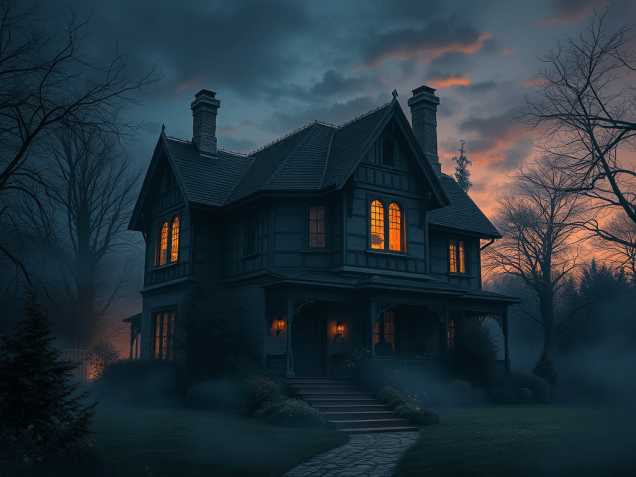
He wandered until he reached Brookfield Lane, where an old house loomed against the evening sky. As a child, Ethan had feared this place. It was where shadows seemed darker, where kids whispered about ghosts and curses. Though he didn’t remember that fear, his body did—a chill ran through him as he stepped onto the porch. Still, with nowhere else to go, he knocked.
An elderly woman opened the door. “Come in, child,” she said softly, as though she had been expecting him. Ethan stayed, helping with small chores, sharing meals, and slowly growing comfortable in the quiet warmth of the house. In the evenings, they talked. She asked about his life. Even though he couldn’t remember, fragments began returning. He recalled his laughter with friends, the smell of campus coffee shops, and the long nights of studying. Then, something deeper surfaced. It was the secret he had held since high school. He thought he’d never say it aloud. He told her he was gay. Instead of fear or judgment, she smiled. “Love,” she said, “is never something to be ashamed of. It’s what keeps this house alive.”
When his memory finally returned, it shocked everyone. Ethan’s parents had always thought of Brookfield Lane as cursed, a place to avoid. They couldn’t understand how the son they worried about had found comfort, truth, and acceptance there. For Ethan, though, the house became more than a place of fear. It became the place where he embraced who he was. He learned that what we fear most sometimes holds the power to set us free.
The four magic words a father passed down to his four children. He told them that anytime they were about to face trouble, they should speak those words. The assistance they required would eventually. But only if they took the necessary action for it to occur.
The words were only to be used when necessary. They should not be used as a want. Use them during a crisis, more than a wish. And a threat to life, rather than a threat to pride. If they ever abused the use of the words, then their special powers would no longer be available to them. The magic words would only be passed on when they reached the age of 18. They needed to have made plans to leave the family home.
The four children had each left their home by the time the father had reached 55 years of age. He had spent a great deal of his life enjoying his time with each of them. Now, he looked ahead to adventuring into his own life.
The father’s four children carried the words with them into the wide world. Each one held them differently. One tucked them away like a secret prayer. Another spoke them aloud when fear pressed too heavily. A third doubted them but remembered all the same. The fourth treated them like a compass hidden in the lining of a coat.
In time, each child faced a moment that tested the promise of those words. One found themselves stranded in a snowstorm, far from home. Another stood at the edge of despair after losing nearly everything they had built. A third was cornered by deceit, betrayed by someone they had trusted. And the last stood between danger and an innocent life.
In every trial, the magic words did not summon thunderbolts or winged guardians. Instead, they sharpened courage, opened a hidden door, or drew the right ally to their side. The father had spoken true—the words alone were not enough. But when joined with action, with faith, with that one step ahead, help always came.
Years later, when the father’s hair had silvered and his own journeys were slowing, the children returned to him. Around the fire, they told their stories—each different, but threaded with the same truth. The words had worked. This was not because they carried power of their own. Instead, they reminded each child that strength and salvation arrive only when one dares to act.
The father smiled, warmed by both the fire and the glow in his children’s faces. He whispered, almost to himself, “Ebom Shoobem Shoobem Shoobem.” The four children echoed it back, not as magic, but as memory.
And from then on, they knew—the words were not only for escaping danger. They were meant to be carried ahead to their own children one day. The words served as a charm. They also posed a challenge. Help will come, but only if you rise to meet it.
The morning was sunny on the golf course. A group of doctors noticed a team of nurses playing a round a few holes over. One of the doctors cupped his hands and hollered across the fairway:
“Hey! When you walked by the gate, the watchdog said WOOF! WOOF!”
The nurses froze, glaring back. One of them raised her club like a microphone and shouted,
“Oh yeah? When you all walked by the pond, the ducks went QUACK! QUACK!”
The golf course grew quiet. A couple of retirees nearby peeked out of their carts to see what the commotion was. The trash talk had officially begun.
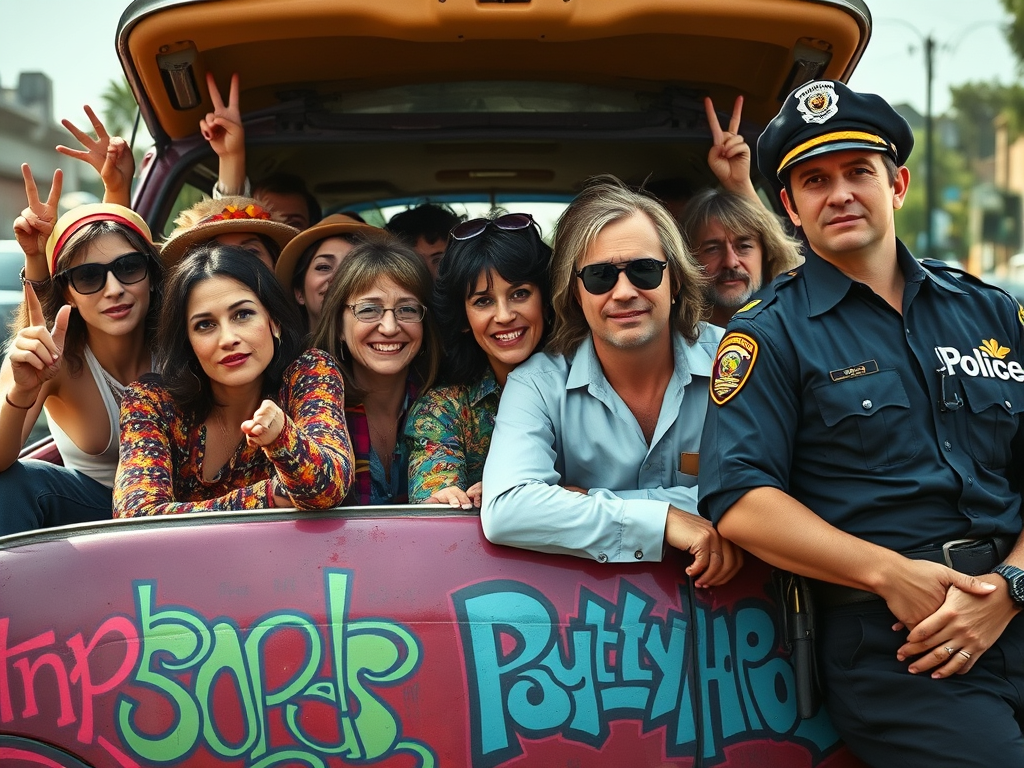
Just then, a police officer—off duty but still in uniform for reasons only he knew—wandered up and added his grievance.
“That’s nothing! I went into a restaurant today and a bunch of teenagers started going OINK! OINK! OINK! at me!”
Back in the day, the slur was meant to show resentment toward police officers by labeling them as pigs. Still, many officers suggested it represented [Pride Integrity and Guts]!
The doctors and nurses nodded sympathetically, but before long they were all laughing. It seemed no profession was safe from ridicule.
“Well,” said one of the nurses, grinning. “If we’re going to keep score, I went to a rock concert last week. The singer stopped mid-song, pointed straight at the crowd, and called us every name in the book. I felt like I’d paid extra for the insults.”
By now, the golfers had abandoned their shots. The officer had parked his cart. The conversation had spiraled into a full-blown “who got called what” competition. Farmers chimed in about “moo” jokes. Teachers griped about “boring” chants. A barber also complained about being called “clip-clop” at the horse races.
The sun dipped lower, balls went unhit, and nobody remembered the score of the game. One thing was certain: the Great Name-Calling Open had been played on that course. Every profession—dog, duck, pig, or otherwise—walked away laughing.
Joe had been lost in grief ever since Belinda, his wife of fifty years, passed away. Now nearly 80, his health was slipping. His memory faltered. His doctor warned he would soon need full-time care. One day, he might not even remember who he was. Watching Belinda decline into that same fog had torn him apart. Joe swore he wouldn’t let himself linger the way she had.
He made up his mind. Quietly, carefully, he wrote out a plan on paper and kept it folded in his pocket. When the time came, he would go to a scenic overlook, drink a fifth of whiskey, and take his own life as the sun slipped below the horizon. In his truck’s glovebox sat both the bottle and a revolver, waiting.
As the months wore on, Joe’s forgetfulness grew worse. He climbed into the wrong car. He mistook strangers’ houses for his own. He baffled neighbors with his confused blunders. It might have been comical if it weren’t so tragic. Then one morning, Joe woke with rare clarity. Today, he thought, would be the day. He dressed. He tipped his waitress a hundred dollars at breakfast. He filled his truck and signed the title over to the station owner. He stopped by the bank to remind young Betty, the teller, that she would inherit his house someday. He even visited Belinda’s grave, promising to leave a light on so she’d know he was coming home.
It took him five hours to find the overlook—a place barely half a mile from his house. As the sky burned orange, Joe followed the instructions from his pocket: whiskey first, then the gun. Memories came in waves—his youth, his marriage, his place in the community. With a last swig, he cocked the revolver, looked toward the heavens, and whispered, “Honey, I’m on my way.” He pulled the trigger.
Darkness. Then voices. A bright light. He thought he was dead—until he woke the next morning in County General Hospital.
“Good morning, Joe,” a nurse said. “We were wondering when you’d wake up. How was your trip last night?”
Joe frowned. “Trip? What trip?”
“The usual,” she smiled. “Breakfast, gas station, bank, then the overlook. The sheriff’s department was waiting for you. You got lost again, but they helped you find your way.”
Joe’s face hardened. “Dadblast it, that was my plan to do myself in! I’ve got a right to my privacy.”
The doctor walked in, shaking his head. “You do, Joe. But here in Canada, there’s another way. You qualify for MAiD—the Medical Assistance in Dying law. You don’t have to go alone with a bottle and a gun.”
Joe stared at him, confused. “Did I… forget that too?”
By popular demand, this follow-up dives deeper into how the Orange Noise machines ended up producing such deadly results. Here’s the story.
It began as a fad.
“Orange Noise Therapy — the next step in restful sleep. Scientifically engineered to calm your mind and gently drift you into the deepest dreams.”
The commercials showed happy couples. There were slow-motion scenes of blissful smiles beneath soft blankets. In the background, a low, warm hum laced with delicate chimes sounded. It was hypnotic in a way you couldn’t quite describe. It made you want to close your eyes.
And so the orders poured in.
At first, it seemed perfect. People reported sleeping deeper than they had in years. Doctors praised it. Sleep scientists called it “a breakthrough.” Sales skyrocketed.
But then, somewhere in the shadows, something shifted.
A young woman in Warsaw woke to find her bird dead in its cage. The bars bent as if from desperate thrashing. A man in Toronto woke up with deep, bleeding scratches down his legs. He had no memory of how they got there. Reports trickled in, never connected — until they were too many to ignore.
Couples, families, entire households found dead. No signs of forced entry. No fingerprints. No footprints. Just wounds — savage, animal wounds.
But still, no one suspected the pets.
The killings always happened at night. Always when the chimes were playing. And the footage — when it existed — was either corrupted or mysteriously missing. Except for one file.
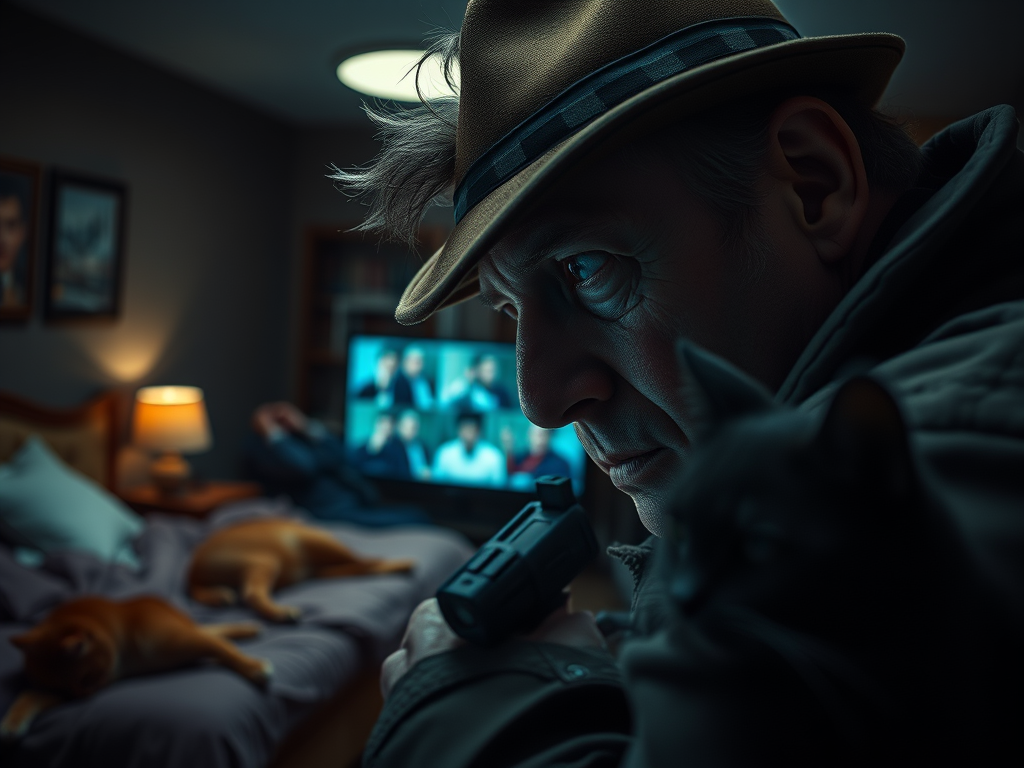
Detective Randall Kerrigan found it in a police evidence server, buried under mislabeled case notes. He watched it alone, the faint hiss of the playback filling his dim office. A couple lay in bed, breathing slow and deep. The chimes played softly in the background.
Then their cat jumped onto the bed. Kerrigan leaned up. The animal froze in place, eyes wide, pupils blown black. Its tail twitched once, twice — and then it lunged.
Kerrigan stopped the video, the cursor trembling in his hand. He replayed it. Again. And again. Each time, the truth pressed heavier on his chest: the Orange Noise wasn’t just calming humans. It was triggering something in animals. Something primal.
By morning, he’d traced dozens of similar cases — all linked to the therapy. The broadcasts were still going out, millions of households unknowingly inviting their killers into their bedrooms each night.
He took the evidence to his superiors. They dismissed it. “Mass hysteria,” they said. “A coincidence.” No one wanted to pull a billion-dollar product off the shelves. No one wanted to admit that bedtime bliss had become a death sentence.
Kerrigan tried to go public, but the networks shut him down. Lawsuits loomed. His badge was taken.
That night, he sat alone in his apartment. He heard it faint at first, then louder. It was the warm hum and the delicate chimes.
They weren’t coming from his speakers. They were coming from outside. From every apartment, every home in the city.
His own dog padded into the room, eyes fixed on him in a way they never had before.
Kerrigan stared back, a sick mix of fear and grief twisting in his gut. He reached slowly for the pistol on the table. Knowing that if he was right, this was the only chance he had. But a part of him hesitated. Because if he was wrong, he’d be killing the last friend he had left.
The dog took a step ahead.
And in that moment, hope and despair became the same thing. It was the hope that he can save himself. It was also the despair of knowing what it would cost him.
“Orange Noise Therapy — the next step in restful sleep. Scientifically engineered to calm your mind and gently drift you into the deepest dreams.”
Couples bought in right away. Play the chimes before bed, and your mind slips into serenity. The sound was a soft hum. It was tinted with faint bells. It was hypnotic in a way you couldn’t describe. Yet, you couldn’t forget it.
For people, it was heaven. For their pets, it was something else entirely.
At first, it was subtle. A dog pacing more than usual after bedtime. A cat sitting and staring at its owners all night long. Harmless quirks. But soon, reports started to trickle in — mysterious night attacks. Couples found dead in their homes. No signs of forced entry. No fingerprints. Only scratches, bites, and wounds that didn’t make sense.
No one connected it to the Orange Noise. Not the police. Not the doctors. Not the scientists. Because who would suspect the pets?
The murders grew in number and geography. Tokyo. Paris. Chicago. Johannesburg. Always at night. Always when the chimes played. And always with the same eerie detail: the victims had purchased Orange Noise Therapy.
The breakthrough came in a dark, windowless police archive room. Detective Randall Kerrigan sat alone, replaying hours of video footage from a suburban home. He was only watching out of boredom at first. The husband and wife were asleep in bed, chimes faint in the background. Then movement — the couple’s Labrador trotted into view. Kerrigan almost skipped ahead, but something about the dog’s posture froze him.
The tail was stiff. The eyes were locked on the sleeping pair.
And then, without hesitation, the dog leapt.
Kerrigan slammed the pause button, heart thudding in his chest. He rewound and watched again. It wasn’t rage. It wasn’t fear. It was… programmed. Deliberate.
The detective knew the nightmare wasn’t just in this room, or this city. It was global. And the real horror? The chimes were still being broadcast every night. Piped into thousands of homes, turning pets into killers while their owners dreamed sweetly beside them.
The Mexican Beagle Crickets Hum “Play Misty For Me?
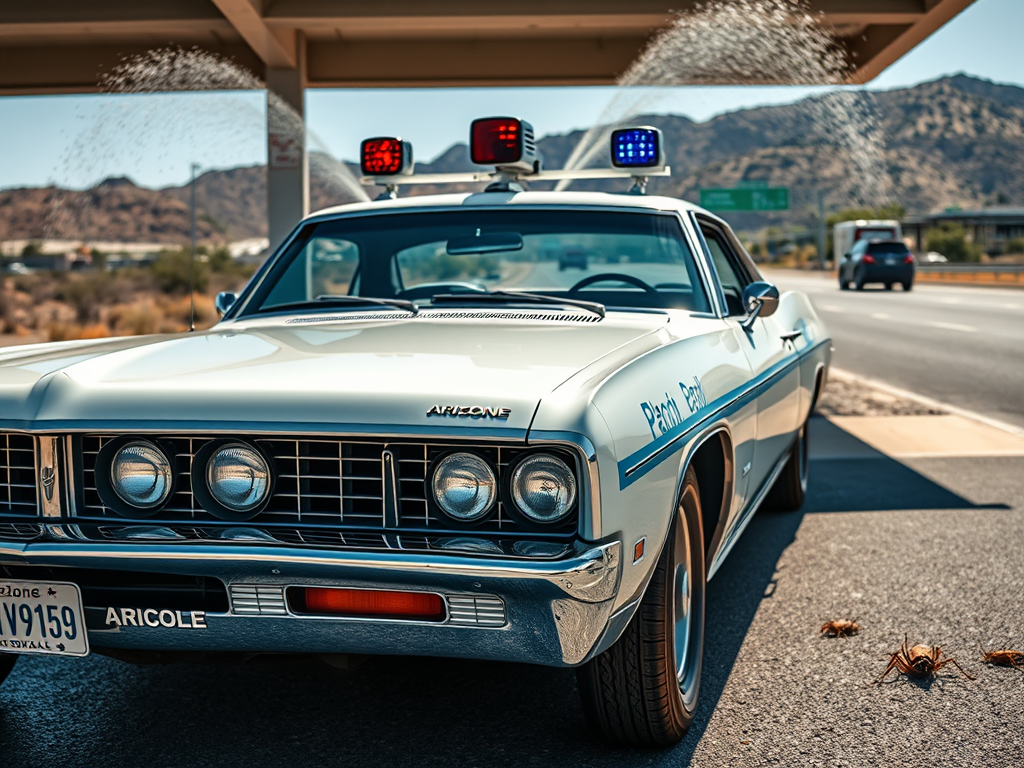
As news of the impromptu peace talks spread, another mystery began simmering like the endless desert heat. The highway crew’s newly installed solar-powered misting stations were intended to cool workers. They were also meant for eager beagle crickets. Nonetheless, they were causing far more problems than anticipated.
While Buck was patrolling near a row of these glistening stations, he noticed something amiss. Where the mist should have provided relief, it instead made the crickets multiply. A bizarre swarm of shiny, water-dappled insects was now marching in almost perfect formation.
Investigating further, Buck discovered that the misting stations weren’t a product of innovative engineering at all. They were part of a shady government contract mixed with local corruption. Additionally, there was a janitor who seemed to know every secret corridor in the county. The janitor was a quiet, stooped fellow known as Marty. He confessed that he had been “tinkering” with the control systems. He did this in exchange for a steady supply of his favorite snack: spicy cactus crisps.
“This here mist is subsidizing a bug bonanza!”
Buck grumbled as he took notes in a dog-eared notebook, the pages fluttering in the arid wind.
Suspicions mounted. Someone is using the misting stations to create a perfect breeding ground for the cricket phenomenon. This move would be designed to turn Ajo into a quirky tourist trap. It also would be a covert experiment in behavioral acoustics. Trust, it seemed, was as scarce as shade in the desert.
Before Buck confronts Marty with a ticket, the misting systems churned out another puff of fog. It sent confused retirees and cricket mediators scattering in every direction. Buck still intended to give Marty a stern talking-to.
Those misting machines didn’t cool things down—they cranked the chaos up a notch! Now, Mexican Beagle Crickets are swarming Ajo and its neighboring towns faster than you can shake a jalapeno-laced stick. Somewhere in the background, the ghostly voice of Karl Malden echoes. It is from a dusty 1978 American Express commercial. “What will you do? What will you do?” That, dear reader, is the burning question for Chapter Nine… and trust us, the heat is just getting started.























 benandsteve.com