97-Year-Old Country Doctor Delivers 14 Miracle Babies in Small Town Meadowview

A Golden Story Repost From 2024

5–8 minutes

A Story By: Benjamin Groff© Groff Media 2024© Truth Endures
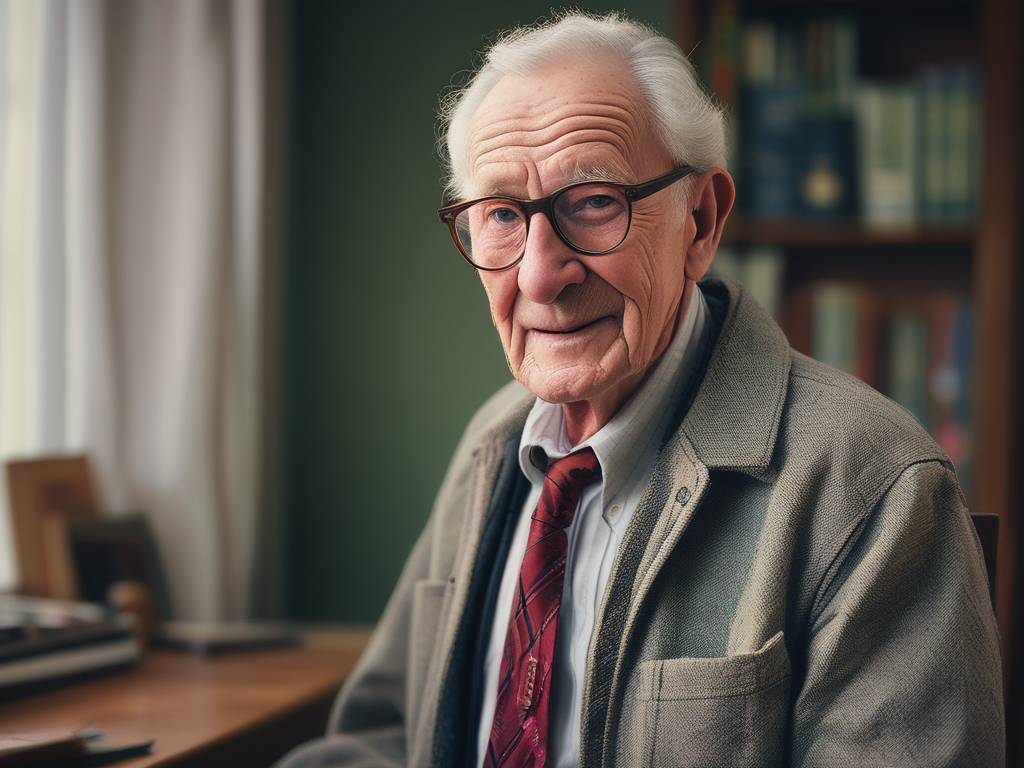

The town coroner was also the same man who delivered most of the people’s babies in town. He was nearly 97 years old and still doing business. His name was Dr. Doodley. Dr. Doodley began working as a doctor when he graduated from Medical School at age thirty in 1957. He made his home in Meadowview. He had a significant other. He was a gentleman Dr. Doodley had met in college. Together, they raised Dr Doodley’s two nephews. They were the sons of Dr. Doodley’s brother, who got killed in an auto accident along with his wife. The community never questioned the couple’s union. They never questioned the children raised by the two men. Everyone welcomed the couple as they joined in events.

Dr. Doodley was the only doctor in the county. He was on call twenty-four hours a day. He would be available seven days a week. With such a schedule, it was common for the family only to see the older family member on the go. He was known for delivering nearly every child in the county for over 70 years. In as much, he declared dead nearly everyone who passed away in the county. This spanned the past 71 years. He had brought into the world and seen many of the same people leave it. He was known to many as an indirect member of their family for his declarations.

On a foggy Tuesday morning, Dr. Doodley received a call for his services. It was from a lady twelve miles from town. At the home, there was also a man. His wife was gravely ill too. It wasn’t until Dr. Doodley arrived that he discovered two other expecting mothers were present. There was also an older man who appeared about to die.

Dr. Doodley was 97 years old and thought to himself, ––

“I hope I am up to this chore. If all these people require my services, I will have my hands complete.”

A young lady at the home received Dr. Doodley, took his hat, and directed him to the kitchen. She had prepared several pans of hot water, clean towels, and sticks there. Dr. Doodley always required those three things to be available. He liked to have hot water for cleaning. Towels for drying and sticks for placing in people’s mouths to bite down on and grit through pain.

The doctor was known to use the sticks himself on occasion to avoid using curse words when he was stressed.

Mildred was a big lady. She was also Dr. Doodley’s first patient and was expecting twins. Her water had broken, and she was about to deliver. The conditions at the home were not ideal for privacy; there was only one room, and everyone was in it.

Mildred yelled ––

It is happening. They’re coming!

Dr. Doodley crunched his 97-year-old body down while Mildred sisters held her hands, trying to do breathing exercises.

Dr Doodley said to Mildred ––

Honey, you have to push, push like there is no tomorrow.

Mildred yelled ––

I’m trying. They’re fighting.

Dr. Doodley trying to soothe Mildred replied ––

They’re not fighting. They’re just taking their time.

Dr. Doodley smiled and, with a cough, shouted.

Looky here, they are here. Mildred! You did it! You got three! Boy, Girl, Boy!

Mildred, exhausted and sweating, shocked stewed back

What’s that, doc? Did you say Three? I was expecting two. Where is the third one from?

Dr. Doodley smiled and laughed,

Mildred, the third one is from you. You had a little hider in you—what a surprise!

The doctor went to announce the new arrivals to the rest of the family. Upon hearing that Mildred had triplets, two of the older family members dropped dead.

The triplets were the first ever born into the family since the 1800s. It was a blessing of riches for the family to get them. An old Irish family tale had always suggested such. The doctor tried to revive the two family members, but their aged bodies were nonrevivable. So he put on his Coroner hat, declared them dead, and called for the funeral home.

Dr. Doodley turned to the family. He told them their two older family members, Elmer and Magnolia, had passed away. He offered his condolences. As he explained the situation, Mildred’s sister, Ethel, entered labor.

Ethel was bigger than Mildred and only slightly smaller than Minnie, her twin sister, who was also expecting. Neither sister knew what they were expecting. They wanted to keep it a surprise for their families. It was also a surprise for the doctor.

Dr. Doodley barely had time to catch his breath before Ethel’s cries filled the room. With a weary but determined look, he wiped his brow and prepared for the next round. He had seen many things in his 97 years. Yet, he had a feeling that today would be one for the books.

Ethel’s contractions came fast and fierce. Dr. Doodley quickly realized that this delivery would be anything but ordinary. He moved swiftly, calling for more towels and hot water, his voice steady despite the chaos around him.

Ethel, gripping her sister Mildred’s hand, screamed out as the first baby appeared.

“Push, Ethel, just a little more,”

Dr. Doodley encouraged. To his astonishment, another head was crowned instantly after the first.

“Twins!”

He announced, but as he cradled the two newborns, he felt another tiny foot.

“Wait—triplets!”

The room buzzed with excitement and disbelief. But Ethel’s labor still needed to be done. With one final push, a fourth baby emerged, making history in the small town of Meadowview.

“Quadruplets!”

Dr. Doodley gasped, his voice cracking with the thrill of the moment. The room erupted in cheers, even as Minnie, the third sister, began to feel the unmistakable pangs of labor herself.

Dr. Doodley was now running on pure adrenaline. He had delivered quadruplets in his nearly seven decades of practice, but never had he faced such a succession. As Minnie’s labor intensified, he steeled himself for what was to come.

Minnie, the largest of the three sisters, began laboring with a determination that matched her size. The room grew quiet, anticipation thick in the air. The first baby arrived, the second, then the third, and when a fourth followed, the room collectively held its breath.

But Minnie wasn’t done. To the astonishment of all, a fifth baby emerged, followed by a sixth. Dr. Doodley, his hands trembling, delivered each child with care, his heart pounding with the sheer impossibility of it all.

“Six babies!”

He declared, his voice a mix of awe and exhaustion. Minnie lay back, breathless but smiling, as the room buzzed with the excitement of the extraordinary event.

Then in the back of the room a cousin named Sissy screamed ––

Doc I think I need you!

As the doctor walked back to her, he could see she had given partial birth to a child, and he said ––

Oh dear, lets get this corrected, and cleaned up. Lay back and hold your aunts hand while we help you!

And that is when the last baby of the night entered the world.

By the end of that foggy Tuesday, Meadowview had welcomed fourteen new babies. It made history in the sleepy little town.

Dr. Doodley, despite his age, had once again proven why he was the most revered doctor in the county. As he looked at the fourteen newborns swaddled and cooing, he couldn’t help but smile. It was a significant day in the history of Meadowview. An elderly man, nearly a century-old, delivered a miracle. No one would ever forget this event.


By Benjamin GroffMedia© | benandsteve.com | ©2025 

The Consequences of Women Losing Voting Rights

2–3 minutes

What If Women Lost the Right to Vote Today?

Imagine waking up one day and discovering that half the population no longer has a voice in governance. It seems unimaginable. But, by exploring this dystopian scenario, we gain a clearer understanding. Women’s full participation is vital to a healthy democracy.


1. Democracy at Risk: Representation Crumbles

Eliminating women’s voting rights would erode democratic legitimacy. According to Pew Research, no nation has fully rescinded women’s suffrage after granting it. Afghanistan is a rare case. Instability there led to temporary rollbacks of voting rights for women (1).

Political representation would skew drastically without the inclusion of women. This would undermine policies related to education, healthcare, family leave, and equity. These are issues where women often drive progress (2). Removing half the electorate opens the door to unbalanced, unaccountable leadership that ignores countless lived experiences.


2. Social and Economic Inequities Would Widen

The ripple effect of eliminating women’s voting rights would be immediate and profound:

  • Policy Backslides: In response to women’s demands, early 20th-century legislation emerged. Acts like the Sheppard-Towner Act (maternity care), the Women’s Bureau, and the Cable Act were major milestones. They were built on women’s political influence (3). Lose voting rights, and such gains evaporate.
  • Stalled Progress for Women of Color: Even after the Nineteenth Amendment in 1920, women of color still faced systemic barriers. Voting was made difficult for them. These barriers persisted in many forms. This was especially true for Black, Native, Latinx, and Asian Americans. These barriers weren’t fully lifted until the Voting Rights Act of 1965 (4). Removing voting rights today would re-introduce even greater marginalization.

3. The 19th Amendment Is Not a Safety Net

The 19th Amendment constitutionally affirms women’s right to vote. Changing that would need another amendment. This presents an extraordinarily high legal and political hurdle. Legal scholars and court precedents affirm its permanence (5).

Still, we must stay vigilant. Recent developments remind us that the spirit of equality is always at risk. These include potential threats to voting access via legislation like the SAVE Act. There is also rhetoric from political figures undermining democratic foundations.  (6).


Final Thought

Losing the right to vote wouldn’t be just a policy shift—it’d be a moral and societal unraveling. Not only would women’s voices vanish from ballots, but the very foundations of inclusive democracy would start to crumble. That’s why protecting voting rights isn’t optional—it’s essential.


By Benjamin GroffMedia© | benandsteve.com | 2025 

Learn About The Lady In Mickey Gilley’s Song – The Girls All Get Better At Closing Time.

‘I know Robert Redford, even Lola Hall…’

By Benjamin GroffMedia© | benandsteve.com | 2025 Truth Endures©

4–6 minutes

Lola Hall: Oklahoma’s Weather Girl Who Became a Legend

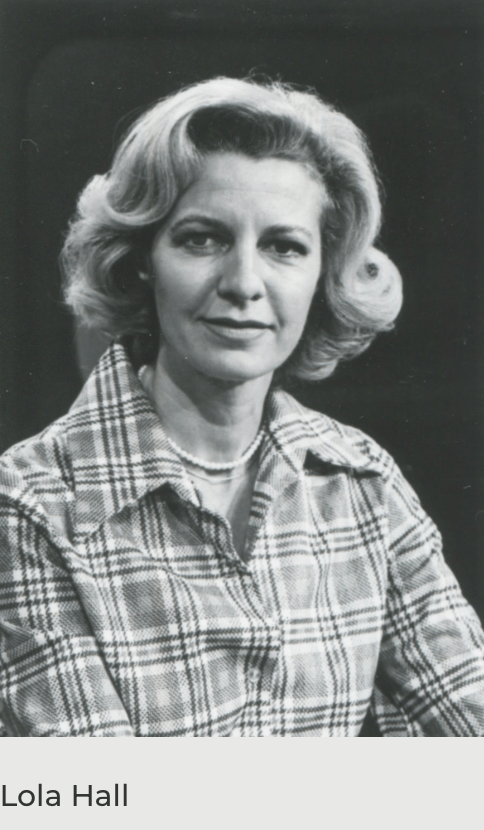
In the heart of America, television was becoming the central storyteller of the modern household. During this time, one woman in Oklahoma City quietly became a beloved figure. She was cherished across living rooms, farms, and small-town diners alike. Her name was Lola Hall, the poised and personable weather girl for KWTV Channel 9. Through the 1960s and 1970s, Lola transitioned from forecasting the weather. She began anchoring the morning news. She carved out a legacy of warmth, professionalism, and unexpected celebrity.

A Humble Start on Channel 9

Lola Hall wasn’t born into the limelight. She was raised in Oklahoma. She considered herself an ordinary woman. “I’m just a plain girl with a good work ethic,” she once said. She never imagined she would become a fixture in households across the state. She also didn’t foresee that her name would one day be immortalized in a hit country song.

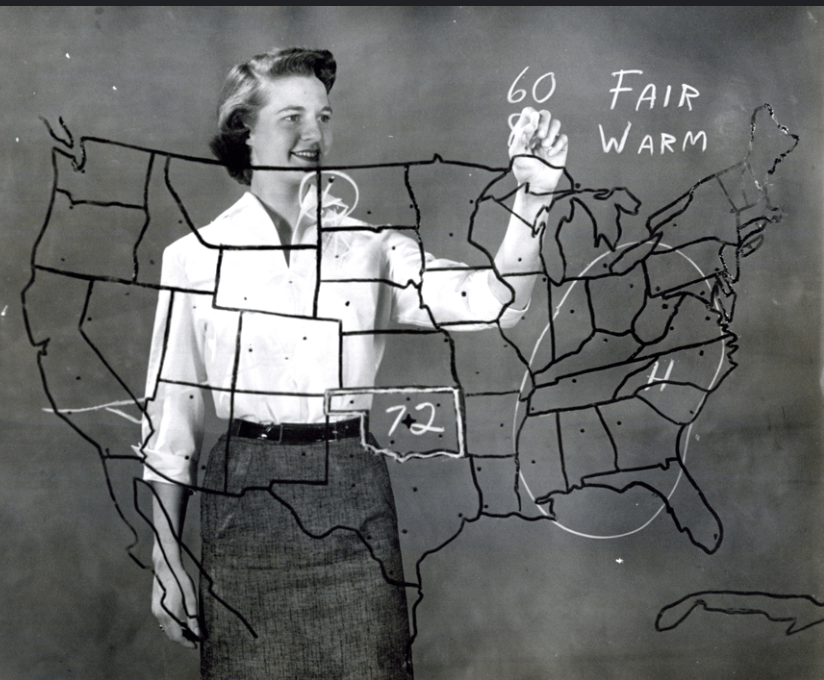
She started at KWTV in the early 1960s. Television was still finding its footing then. Local personalities were becoming stars in their own right. Initially billed as a “weather girl,” a common term at the time, Lola did more. She did more than point at cloud symbols and smile at the camera. She brought a genuine understanding of weather patterns. Her calm demeanor during storms was notable. She had a natural charisma that made viewers trust her.

The Weather Girl also known as the Weather Lady, and Lola Hall

Lola quickly stood out not only for her delivery but for her grounded, approachable nature. She didn’t talk down to viewers or play a character. She was simply Lola — smart, steady, and relatable.

Rising to Anchor the Morning News

As her popularity grew, so did her responsibilities. By the early 1970s, Lola earned a promotion to co-anchor the morning news. This was a significant achievement for a woman in broadcasting. In that early morning slot, she became the face viewers saw as they sipped coffee. People watched her while packing school lunches. They prepared for long days on the farm or at work.

Her calm voice and natural empathy helped set the tone for the day. But it wasn’t a solo act.

Near the end of her career, she welcomed two of Oklahoma’s most trusted newsmen. Bill Haire and Wayne Lyle joined her on the morning show. Both were widely respected for their skill in agricultural reporting — essential content for Oklahoma’s large farming population. The trio became a necessary part of daily life for rural viewers. Farmers tuned in for weather and headlines. They also relied on Bill and Wayne for dependable reports on crop forecasts. Their reports covered market conditions and farming trends.

Lola, Bill, and Wayne worked together to form an Oklahoma morning news trifecta. They delivered information with clarity, sincerity, and a deep respect for their audience. They weren’t just broadcasters; they were neighbors.

A Country Music Cameo

But, Lola’s story wouldn’t be finished without an interesting twist. One of her career’s most surprising moments was an unexpected brush with country music fame.

Lola Hall, KWTV Channel 9′s beloved weather girl and morning news anchor, pictured during a 1970s broadcast. Her calm presence and signature charm made her a household name across Oklahoma.

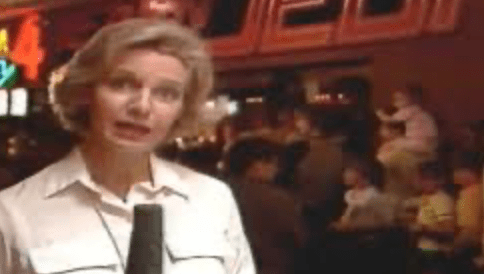
During an interview with country star Mickey Gilley, Lola found herself momentarily flustered. Gilley, known for chart-topping hits and honky-tonk swagger, was in Oklahoma City promoting his music when he confessed on air.

He told Lola that back in his younger days, he grew up in rural east Texas. KWTV Channel 9 was one of the few stations they could pick up. And Lola Hall, with her grace and good looks, was a celebrity to the local boys.

“You were the hottest thing we’d ever seen,” 

Gilley smiled, adding that Lola had made such an impression that he mentioned her by name in his song.

 “The Girls All Get Prettier at Closing Time.”

For a brief moment, Lola lost her composure — laughing, blushing, and turning to the crew off-camera. It was a rare crack in her usually calm exterior, and viewers loved it. She quickly recovered, continuing the interview with her usual charm, but later admitted she was shocked.

“I thought I was just the girl telling them to grab an umbrella,” 

She joked.

A Lasting Legacy

Lola Hall stepped away from the news desk eventually. She left behind a legacy built not on flash or fame. Instead, it was built on trust, relatability, and professionalism. During an era when women in broadcasting often had to work twice as hard, Lola rose through the ranks. Her long-lasting connection with viewers stood as a quiet revolution.

She may never have considered herself glamorous. She may not have thought of herself as remarkable. But, to thousands of Oklahomans—and at least one country legend—she was both.

You know it each time you hear the song and Gilley sings the line,

“I know Robert Redford even Lola Hall!”

Lola Hall wasn’t just the weather girl. She was part of the fabric of Oklahoma life. Her name, her voice, and her smile are still remembered by those who welcomed her into their homes each morning.

For a personal take on her career click here and be taken to an interview with Lola Hall!

To truly dive into the story of Lola Hall and other trailblazing women of the 1950s and ’60s, prepare yourself. They were often known then as “weather girls.” Grab your favorite refreshment and settle in. This captivating podcast offers a rich glimpse into their rise to popularity. Back in the day, we just called it a recording—but whatever the name, you’re in for something special.