The Impact Of Loss: Remembering A Childhood Best Friend For Life

A True Story By: Benjamin Groff II© Groff Media 2024© Truth Endures
When I was just eight years old, death was a concept that I hadn’t fully grasped. The only time it touched my life was when my grandparents’ neighbor, a gentleman named Tom, passed away. I was only seven then, and it happened so quickly that it didn’t leave a deep mark. My grandfather had sat up with Tom the night before he passed, a tradition people followed back then—sitting with the dying. It was a tradition, and my dad would continue the practice as I grew up, sitting with many men in our small town of 750 souls. I always wondered why he was asked to do that.

That night, when Pop, my name for my grandfather, went to sit with Tom, it was just my grandmother and me alone in their big, quiet house. It felt different without him there. Early the following day, around 6:00 AM, my grandmother and I were preparing breakfast when Pop came in through the backdoor. He quietly spoke to her, and I suspected what had happened. Mom, my grandmother, suggested I open the dining room door to let the morning light in. As I did, I overheard their conversation growing louder, and when I looked outside, I saw a hearse slowly pulling up to Tom’s house. I knew Tom had passed.

A few days later, my grandmother took me to his funeral, and Pop was one of the pallbearers. It was the first time I ever saw a person in a casket, and Tom still looked like Tom. After the service, my grandmother praised me to my father, saying I behaved so well—sitting quietly and respectfully. I thought I was just being myself. In those days, grandparents didn’t need to ask permission to take their grandchildren anywhere—funerals, courthouses, doctors’ offices, or even jails. The places they took me were some of the most fascinating.

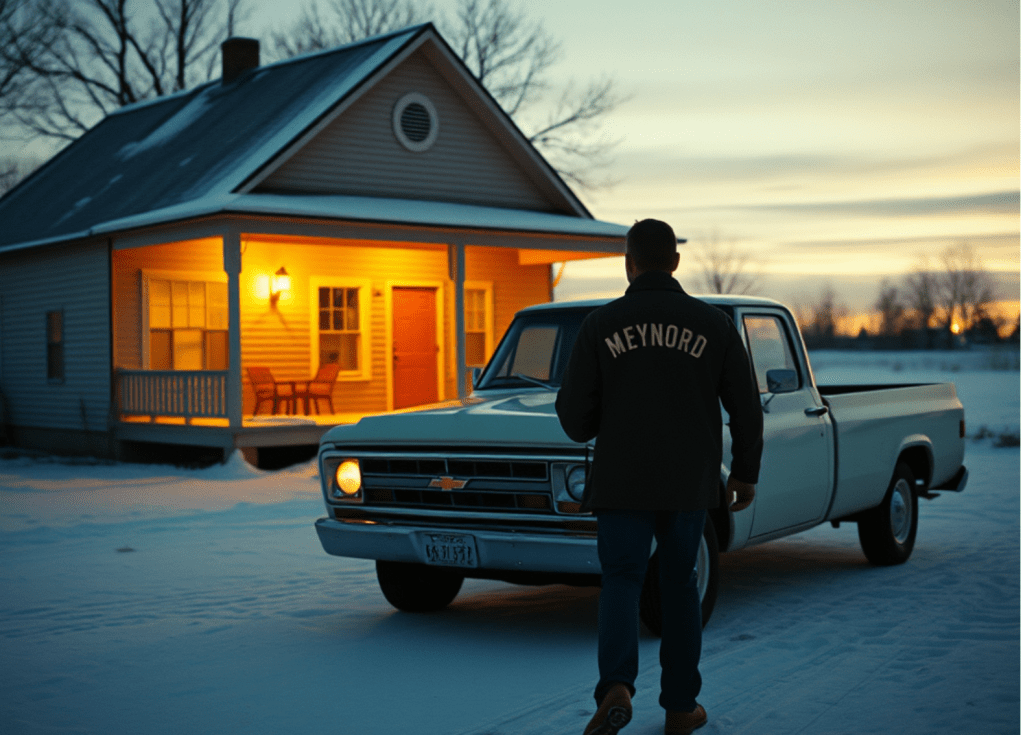
But this story isn’t about Tom. It’s about someone much closer to my heart, a man named Maynord Rider, one of my dad’s dearest friends. Maynord often accompanied us to horse sales on Friday and Saturday nights, and I thought the world of him. He lived two miles south of our farm, a farmer like many others in our area. One cold winter night, our water well froze, and my dad had to drive out over the pasture to fix it. When his headlights passed over Maynord’s bedroom windows, Maynord, instinctively knowing we were in trouble, got out of bed, climbed into his old white Chevrolet pickup, and drove to our house. He pulled up with a five-gallon water thermos and asked if our well had frozen. My mother was surprised—how could he have known? When my dad returned, he asked,

“Maynord, what are you doing here?”

They talked, and it turned out Maynord had guessed right. My dad told him there was no use in fixing it in the dark, and they’d work on it the next day. My dad promised to let Maynord help him the following morning to get him to leave.

There were many stories about Maynord, but they all ended one Thursday in September 1971.

It was the start of a four-day weekend from school due to a statewide teachers’ meeting. The day was beautiful for September in Oklahoma—warm with the usual breeze. I had been pestering my oldest sister, who was tasked with watching me and my other sister. It was just after noon, and the day felt perfect—no school, no bus to catch, just freedom. Then the phone rang. My oldest sister answered, and I could hear her voice change as she said,

“Oh no!” followed by, “I’m not telling him. You should.”

A moment later, she said,

“Mother wants to talk to you.”

I ran to the phone, stretched the cord as far as it would go, and answered.

“Yes, Mother!”

I said, but I could hear a siren approaching in the background. My mother’s voice was calm but direct,

“Benji, Maynord Rider just dropped dead.”

The words hit me like a punch, and I dropped the phone, screaming.

The news hit me like a physical blow, and I dropped the phone, screaming. The rest of the day is a blur, but I remember Ryder, the dog Maynord had given me, howling at the front door, leaning against it as if he, too, understood what had happened. None of the other dogs made a sound—just Ryder, the one I had named after Maynord’s last name.

I wouldn’t see my dad for hours, but I learned the whole story when I did. Maynord had come in from working on the farm for lunch. He ate, felt a bit of indigestion, and decided to lie down for a nap. While his wife, Bonnie, worked in the kitchen, she heard a moan, and when she went to check on him, she found him unresponsive. Panicked, she called my dad at the barbershop, where he cut hair. When he got the call, he told her to call the ambulance and that he’d be there immediately. He told the customers in his shop what had happened, leaving the man in his chair and the shop open as he rushed out.

Driving his Buick Le Sabre station wagon, my dad said the speedometer hit 120 miles per hour as he raced to Maynord’s farm, hoping to get there in time. Hearing this story comforted me, knowing that my dad did everything he could, even though we had lost one of the best men I had ever known.

That Friday night, my parents took me to see Maynord at the funeral home. It was more complicated than when I had seen Tom in his casket. The grief was overwhelming, and I couldn’t contain my tears. It felt like the worst day of my life. For years after Maynord’s death, I would look up at the sky, hoping for some way to talk to him again, but that day never came.

Eventually, I learned that, in life, there would be days harder than that one—the loss of my grandparents and my dad—, but somehow, we keep going, hoping that one day, someone will see our headlights coming over the hill and come to help us, just like Maynord did for us.

Meeting Mendez

A Story By: Benjamin Groff© Groff Media 2024© Truth Endures

Ralph and Kevin had been friends for over twenty years, sharing a modest two-bedroom apartment in a cozy part of the city. Both were in their fifties and lived parallel lives, working different jobs—Ralph as a graphic designer and Kevin as a financial advisor—but always finding time for each other. They joked about finding “the one” someday, but their hope had always been tinged with sarcasm. At their age, they felt the ideal guy might never show up.

But then something shifted.

It started on an ordinary Monday morning. They sat at the kitchen table, sipping their coffees, when Kevin casually mentioned he had met someone the night before. “His name is Mendez,” he said, a sly smile across his face. “And Ralph, he’s… everything.”

Ralph’s stomach did a somersault. He had indeed met someone, too. Just last night, after his art gallery event, he found himself in a dimly lit bar, the kind that seemed to exist in a world of its own. And there, perched at the corner of the bar, was Mendez—a man who could only be described as strikingly handsome, with dark eyes that seemed to hold a universe of secrets, a soft-spoken charm that was as disarming as it was alluring, and a smile that could light up the darkest of rooms.

“Funny you say that,” Ralph replied. “I met someone, too. His name’s also Mendez. We hit it off.”

Kevin chuckled, taking a long sip from his coffee. “What are the odds?”

Their conversations in the following days were filled with similar stories of their encounters with Mendez. Kevin would describe how they had shared a romantic evening stroll by the river, and Ralph would excitedly mention how they had gone dancing the same night. Their descriptions of this enigmatic Mendez were eerily similar—his chiseled jawline, his gentle laugh, the way he seemed to know exactly what to say to make them feel like the only person in the room. Yet neither of them suspected anything was off. After all, Mendez was a common enough last name, right?

But as the weeks passed, their mutual friends noticed something strange. At morning coffee with their usual crowd, Ralph and Kevin would each gush about their dates from the night before. They discussed romantic dinners, late-night jazz clubs, and private rooftop moments. Their stories mirrored one another so closely that their friends couldn’t help but wonder—were they seeing the same man?

“Wait a minute,” said Lisa, a close friend, during one of their coffee meetups. “You both met this guy named Mendez? And you’re telling me he took you both to the same jazz club on different nights?”

The group laughed, but the tension between Ralph and Kevin grew. Were they falling for the same guy? They started to second-guess every detail—his favorite wine, his weekend plans, the way he called them “his secret muse.”

Still, neither wanted to believe it. Kevin would ask, “Did your Mendez talk about his job?”

Ralph would reply, “Yeah, he mentioned something about being in real estate.”

“Same here. But, come on, we’re seeing different guys. That’s impossible.”

Finally, the tension reached a breaking point. One Saturday night, the two friends finally agreed to go out together to introduce themselves to their respective Mendez. They picked a lively nightclub known for its cool vibe and easy conversation. Ralph’s heart raced as he considered the possibility of confronting the truth.

When they arrived, they scanned the crowd, both eager and nervous. And then, there he was—Mendez, standing by the bar, smiling warmly at them.

Only to their utter surprise, there were two of them.

Ralph and Kevin exchanged bewildered glances as the two men, identical except for subtle differences, made their way over. The Mendez brothers—Marco and Luis—stood side by side, charming as ever.

Kevin burst into laughter. “You’ve got to be kidding me!” he exclaimed, his amusement contagious.

Ralph shook his head, grinning in disbelief. “Twins? Really?”

The four sat down, exchanging stories and laughing about the coincidence. As it turned out, Marco had met Kevin at one bar, and Luis had met Ralph at another. They had no idea their new romantic interests were roommates.

It wasn’t the love triangle they had feared—it was something far better, a delightful twist that brought them closer.

And just like that, Ralph and Kevin realized that sometimes, the universe works in mysterious—and surprisingly humorous—ways, leaving them and their friends in fits of laughter.

There Once Was A Clown Named Ho Ho!

A True Story By Benjamin Groff© Groff Media 2024© Groff Media 2024© Truth Endures

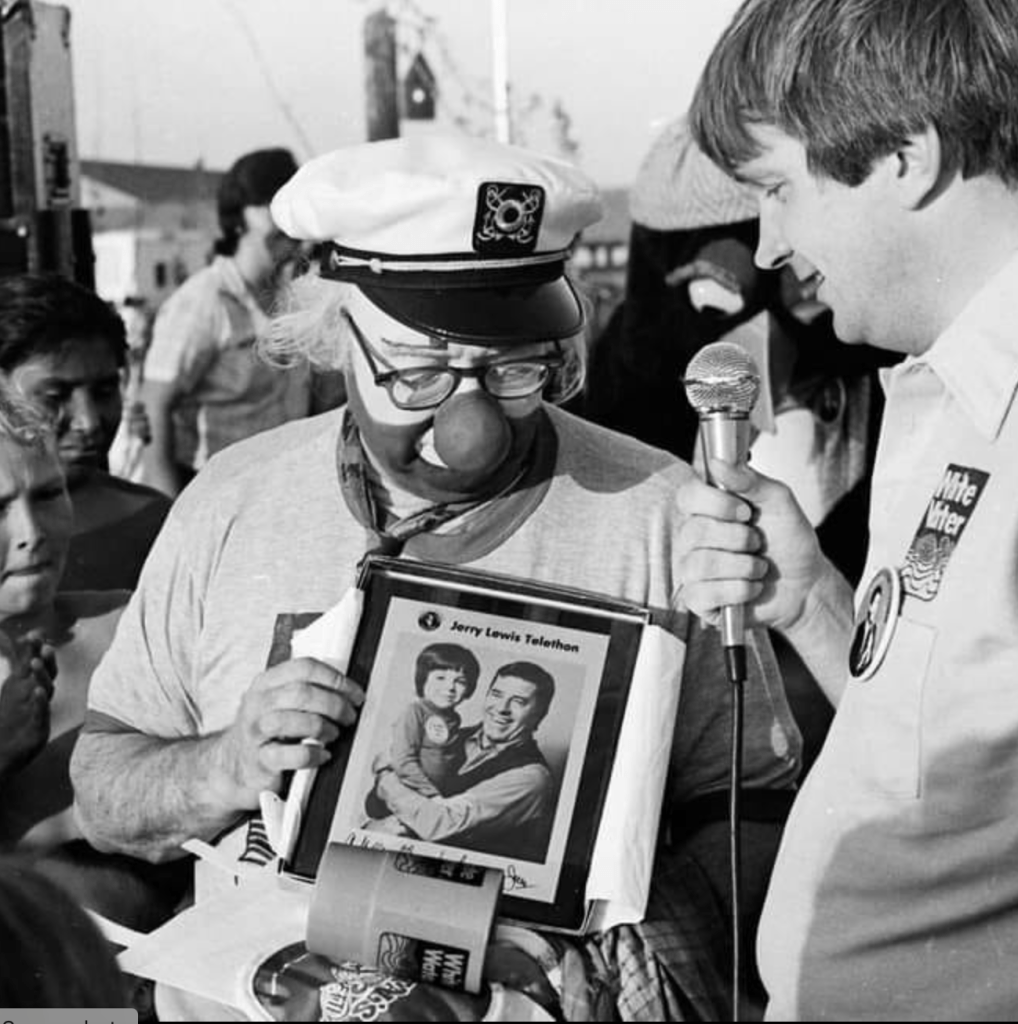
Ho-Ho the Clown, known to Oklahoma City children from the 1960s to the 1980s, was more than a TV character. Born Edward Birchall on July 16, 1923, in Colchester, Connecticut, he carried a heart of gold beneath his red nose and clown makeup. After serving in the Army Air Forces during WWII, Ed pursued his love of entertainment, eventually becoming the beloved Ho-Ho on KOCO-TV.

Behind the character, Ed Birchall was a regular dad raising six kids in Bethany, Oklahoma, with his wife, Beebe. Regina, one of his daughters, recalls him coming home with clown makeup smeared after a long day, trying to balance the unusual demands of being a full-time clown and father. His work often kept him away from family, but they later realized the personal sacrifices he made and how many lives he touched, instilling a deep sense of gratitude and respect.

For 29 years, Ho-Ho brought joy to children with shows like Lunch with Ho-Ho and Ho-Ho’s Showplace. His bright personality and whimsical sidekick, Pokey the Puppet, lit up local TV screens, helping him become a household name. Yet his role as an entertainer extended beyond the studio—Ed frequently visited children’s hospital wards, delighting patients with his warmth and humor. It wasn’t just his clowning that touched people; his kindness, dedication, and how he made every child feel seen.

When Ed passed in 1988, his funeral was a testament to his impact. It took three services to accommodate the thousands of well-wishers, including an honor guard of clowns. Ed Birchall’s legacy, carried on by his children and remembered by the community, continues to bring smiles to those who grew up with Ho-Ho’s charm, fostering a sense of belonging and shared memory among us all.

The Puppeteer Bill Howard Passed away On January 9th, 2013. Bill Howard, who entertained children as “Pokey the Puppet” on the Ho Ho the Clown show on KOCO in Oklahoma City, has died.

The Legend Of Earl and Maynard And Boy Scout Troop 159 – High Atop Mount Sopris!

A Story By: Benjamin Groff II© Groff Media 2024© Truth Endures

The wind howled through the pines as Boy Scout Troop 159 huddled together, trying to keep warm. Their campfire flickered weakly in the clearing, barely enough to fight the growing cold. The storm was coming, the first winter blast of the season. It had crept in on them like an ambush, driven by the low-pressure system spinning in from California’s Baja Peninsula.

Scoutmaster Pearson sat by the fire, pale and shivering. He’d confidently led them into the wilds of Mount Sopris, but now he looked lost, his breaths shallow. His assistant, Mr. Haines, leaned against a tree, coughing into a handkerchief. The boys had whispered that it could be Covid-19, but no one wanted to say it aloud.

“We sleep here,” Pearson rasped, his voice barely louder than the crackling fire. The boys exchanged worried glances, unsure of what to do.

“Shouldn’t we move, sir?” asked Danny, the oldest scout, his voice steady despite the fear in his eyes. “Get lower before the snow hits?”

Pearson shook his head weakly. “Too far… it’s… it’s better to stay.”

They had marched for hours, though the cold terrain made it feel like days. Each step felt heavier as they passed by the marker where it was said John Denver had written “Rocky Mountain High.” The mountains loomed like sentinels in the fading light, watching the troops struggle.

But it wasn’t the storm that haunted their thoughts. It was the legend.

As they had set out that morning, Mr. Haines had told stories of Earl and Maynard, the two mysterious backwoodsmen who supposedly lived on the mountain. Most people thought they were fictional characters, spun from the drunken memories of old-timers in Carbondale’s pubs, but the boys had listened with wide eyes as Haines spoke, their imaginations running wild with the possibilities.

“No one ever sees ’em,” Haines had said, his voice low and conspiratorial. “But those who’ve been lost on this mountain and lived to tell the tale always say they felt… something. It’s like someone was watching. Some even claim Earl and Maynard saved them.”

With the snow already beginning to fall, Danny thought back to that tale. His gut twisted with uncertainty. Was there any truth to it?

“Come on, guys, get your sleeping bags out,” Danny urged, trying to sound calm despite his racing heart. The sky had darkened, and the storm clouds were heavy with snow. The wind snapped through the clearing like the mountain was breathing down on them. Fear and uncertainty hung in the air, thick and palpable.

Something rustled in the trees as the boys settled in for the night. Danny jerked his head up, his eyes scanning the darkness beyond the fire. He strained to listen, but the wind masked everything.

“Did you hear that?” one of the younger boys, Jacob, whispered.

Danny shook his head, not wanting to frighten the others, but deep down, he had heard it too. Something—or someone—was out there.

Hours passed, and the storm hit hard. Snow piled up quickly, covering their small camp in a thick, white blanket. The fire had gone out, and the temperature dropped below freezing. Danny shivered uncontrollably in his sleeping bag, his mind racing through every possible scenario. They were lost. They had sick leaders. And the storm was only getting worse.

Then, something changed.

In the middle of the night, Danny sat up when the wind howled loudest. The air felt different—calmer, almost still. He blinked in the dim light and noticed something strange. Just beyond the edge of their clearing, the snow had been disturbed. Large footprints—deep, wide, and unmistakable—led from the forest to the edge of their camp.

His heart pounded as he nudged Jacob awake. “Look at that,” Danny whispered, pointing to the unmistakable footprints. Jacob’s eyes widened in shock and disbelief. “Who-what is that? No one’s been out here!” he exclaimed, his voice a mix of fear and wonder.

Jacob’s eyes widened. “Who—what is that? No one’s been out here!”

Suddenly, the sound of snapping branches filled the air. The boys froze, their breath catching in their throats. The smell of wood smoke drifted through the clearing from the shadows, though their own fire had long since died out.

“Come on,” Danny said, his voice shaky but determined. He grabbed a flashlight and motioned for Jacob to follow. “We’ve got to see where this leads.” Their fear was palpable, but they refused to let it paralyze them.

They followed the tracks, their boots crunching in the snow. The prints led them deeper into the woods, winding through the trees. The further they walked, the more a strange warmth surrounded them—almost unnatural, given the biting cold of the storm.

Then, they saw it.

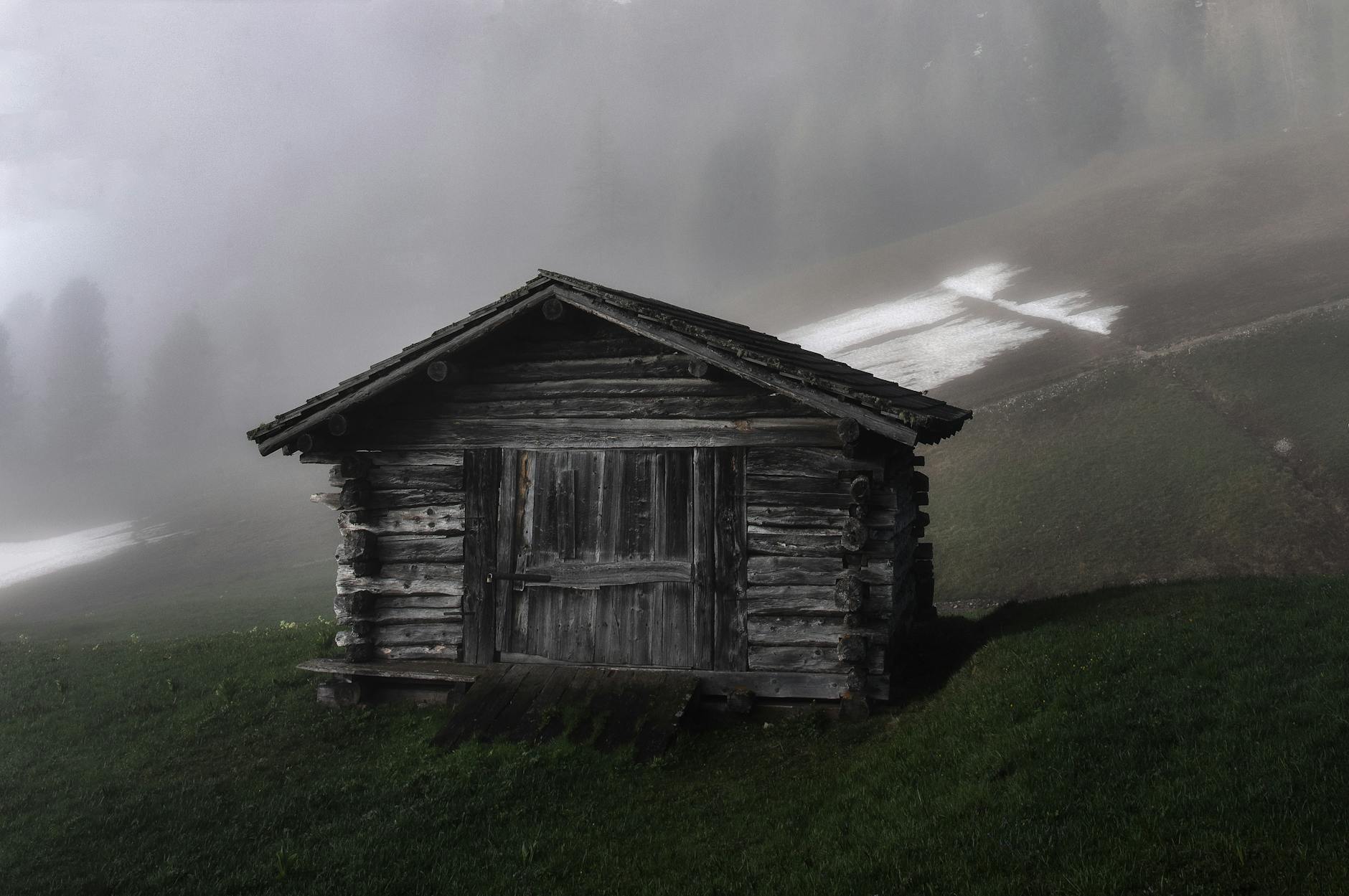
An old cabin stood nestled between the trees, its roof sagging under the weight of the snow, but smoke curled from its chimney. The door creaked open slightly as if someone had left in a hurry.

Without thinking, Danny pushed the door wider. Inside, there was no one. But there was warmth. A fire roared in the stone hearth, and two tin mugs of coffee steamed on the table. More importantly, there were blankets, canned food, and an old map tacked to the wall with a safe path marked in pencil that led directly back to the mountain’s base.

The boys exchanged wide-eyed glances. “Who… who do you think was here?” Jacob whispered.

Danny shook his head slowly. His eyes drifted to the wall, where a small, yellowed note was pinned next to the map. Scrawled in faded ink were the initials, E&M.

“Do you think…?” Jacob began, but Danny cut him off with a glance. He didn’t know what to think.

The boys gathered supplies and hurried back to camp, guiding the others to the cabin. By dawn, the storm had eased, and they began their descent down the mountain, safe and warm.

No one spoke of the tracks, the fire, the cabin, or the initials on the wall.

But as they reached the base of the mountain, the legend of Earl and Maynard lived on—alive, as ever, in the back of their minds.

Weiner: The Bravest Piglet of Maplewood Farm

Once upon a time, in a picturesque countryside, set between rolling hills and verdant fields, there was a farm known as Maplewood. This farm was home to various animals, each with unique charm, but none were as spirited and curious as a little piglet named Weiner. The air was always filled with the sweet scent of hay, and the sound of chirping birds and rustling leaves was a constant backdrop to their lives.


Weiner was a tiny, rosy piglet with a button nose and twinkling eyes that sparkled with mischief and curiosity. He lived in a cozy style with his mother and siblings, who were a mix of different farm animals. The farm was a bustling place, with chickens clucking, cows mooing, and sheep baaing. Unlike his siblings, who were content with their daily routine, Weiner always dreamt of adventure. He would often sneak out to explore the farm, befriending every animal he met, from the clucking chickens to the gentle cows.
One sunny morning, while Weiner was innocently frolicking near the edge of the farm, he noticed something unusual. The air felt different, and there was a faint smell of smoke. His tiny heart began to race as he trotted closer to the source. To his horror, he saw a small fire spreading near the barn, where all the hay was stored. The entire farm, his home, could be in grave danger if it reached the barn.


Weiner knew he had to act fast. He dashed back towards the farmhouse, his tiny hooves kicking up dust as he ran. Reaching the farmhouse, he found Farmer Brown sitting on the porch, sipping his morning coffee.


“Oink! Oink!” Weiner squealed frantically, tugging at Farmer Brown’s pant leg. His eyes were wide with fear, and his little body was trembling.


Farmer Brown looked down, puzzled. “What’s the matter, little Weiner?”
Weiner kept squealing and pulled harder, trying to convey the urgency. He was scared, but he knew he had to do something. Sensing something was wrong, Farmer Brown set down his coffee and followed the piglet. As they neared the barn, the smell of smoke became unmistakable.

“Oh no! The barn’s on fire!”

Farmer Brown exclaimed.

He quickly ran to the water pump and started filling buckets. Weiner, thinking swiftly, dashed off again, this time towards the duck pond. There, he found his friend, Daisy, the duck, a wise and gentle creature, and explained the situation in frantic oinks and quacks.


Daisy, understanding the urgency, rallied her duck friends. Together, they formed a line from the pond to the barn, each duck passing water in their beaks. Weiner joined the line, using his snout to help splash water on the flames. The ducks’ feathers glistened in the sunlight as they worked, and Weiner’s tiny hooves splashed in the water, creating a rhythmic sound.


The commotion attracted the attention of the other animals. The cows used their strength to push heavy water troughs closer while the chickens flapped their wings to fan the flames away from the barn. The sheep, not wanting to be left out, used their woolly bodies to smother smaller fire patches. It was a true display of teamwork and unity.


The farm was a flurry of activity. Thanks to Weiner’s quick thinking and the cooperation of all the animals, the fire was soon under control. The flames were extinguished before they could reach the barn, saving the precious hay and the farm itself from disaster. It was a moment of triumph and relief for everyone.


Farmer Brown, covered in soot but immensely grateful, gathered all the animals around. “Thank you, everyone, for your help. But especially you, Weiner. If it wasn’t for your bravery and quick thinking, we could have lost everything.”


Weiner blushed under his pink fur, happy to have helped save his home. From that day on, Weiner was known as the hero of Maplewood Farm. The other animals looked up to him, and he became a symbol of courage and teamwork. Though he still loved to explore, Weiner did so with a new purpose, knowing that sometimes, even the smallest piglet could make the most significant difference.


Maplewood Farm continued to thrive, with Weiner’s tale of heroism becoming a cherished story passed down through the generations. The little piglet who saved the farm had shown everyone that anything was possible with bravery and a little teamwork.

THE END!

Verdantia: The Rainbow City and the Festival of Lumina

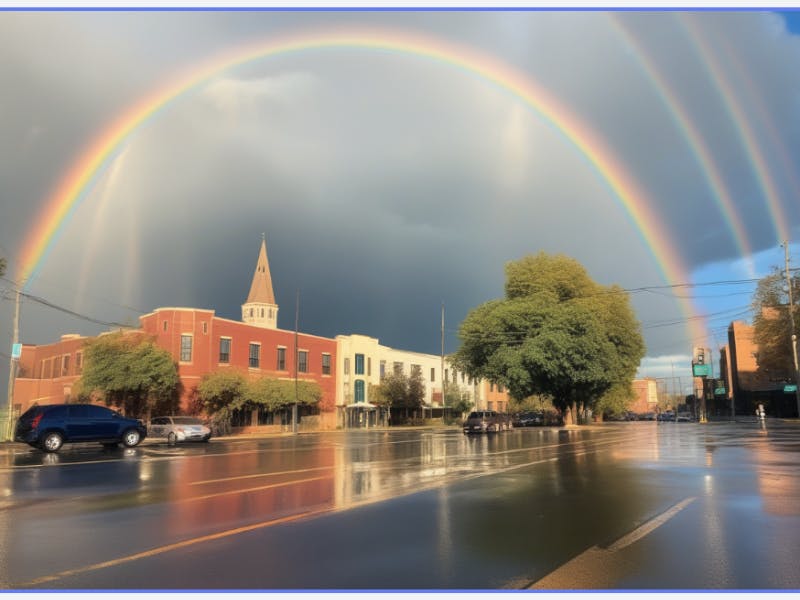
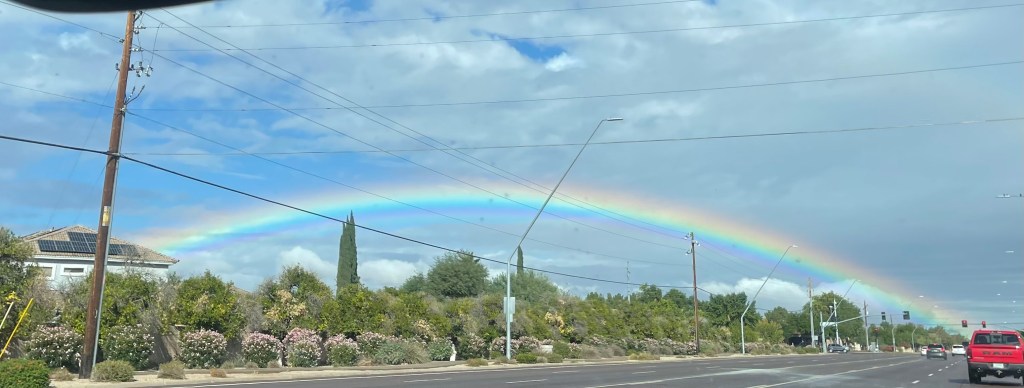
Once upon a time, in a small, unassuming town named Verdantia, an extraordinary phenomenon brought magic to the lives of its residents. Verdantia was known for its picturesque streets lined with red-brick buildings and verdant trees, but what truly set it apart was its ability to produce the most stunning rainbows anyone had ever seen.

One late afternoon, after a sudden downpour, the clouds parted, and the sun cast its golden rays across the wet streets. As the townsfolk went about their business, a magnificent rainbow began to form, arching over the town’s central square. It wasn’t just any rainbow; it was a double rainbow, with vibrant colors so vivid they seemed almost tangible.

The people of Verdantia, who had grown accustomed to the beauty of rainbows, stopped in their tracks, mesmerized by the sight. The rainbow appeared to touch down at two significant landmarks in the town—the spire of the old church and the ancient oak tree standing proudly at the intersection of Main Street and Elm.

As legend had it, Verdantia was a place where rainbows were believed to be portals to realms of wonder and enchantment. The townspeople knew this was no ordinary occurrence. The elders of the town, keepers of its history and secrets, gathered quickly. They had long awaited the appearance of such a rainbow, a sign foretold in their lore that marked the beginning of a special event known as the Festival of Lumina.

The Festival of Lumina was a rare celebration that took place once every hundred years, marked by a rainbow so grand that it stretched across the sky, connecting the past with the future, the ordinary with the extraordinary. This festival was a time when the boundaries between the human world and the world of magic blurred, allowing dreams and reality to intertwine.

As the double rainbow shimmered, a soft, melodic hum filled the air. Children giggled with delight, and adults felt a warm, nostalgic pull at their hearts. The air around the rainbow seemed to sparkle, and for a moment, time itself felt as if it had slowed down. From the base of the rainbow at the church, a figure emerged—a guardian of the ancient lore, known as Seraphina, the Keeper of Light.

Seraphina, with her radiant presence and flowing silver robes, held out a staff that glowed with the colors of the rainbow. She spoke in a voice that resonated like the soft chime of bells, “People of Verdantia, the time has come to celebrate the Festival of Lumina. Today, the veil between worlds is thin, and the magic of the rainbow is at your command.”

The town erupted in joyous celebration. Musicians played enchanting melodies, artisans displayed their finest crafts, and bakers offered sweet treats that seemed to shimmer with a magical glaze. Children ran around, chasing the elusive ends of the rainbow, hoping to find hidden treasures and secret wonders.

As evening fell, the rainbow’s glow intensified, casting a luminous light over Verdantia. The townspeople gathered under the ancient oak tree, where Seraphina led a ritual to honor the rainbow and its magic. She spoke of unity, hope, and the power of dreams, encouraging everyone to embrace the wonder within their hearts.

The Festival of Lumina continued through the night, with stories of old being shared around bonfires, and dances that seemed to weave through the very fabric of the rainbow’s light. As dawn approached, the double rainbow slowly faded, but the magic lingered in the hearts of the people.

Verdantia, forever touched by the beauty and enchantment of the rainbow, became a place where dreams were cherished, and the magic of the Festival of Lumina was remembered and celebrated in smaller ways every day. The rainbow city, as it came to be known, stood as a beacon of hope, joy, and the enduring power of wonder.

Tidbits, Snippets, & Flips!

flip.it/mMtmfy

A newspaper in 1924 predicted what life would be like in 2024 – we’re impressed

Hiyah ZaidiPublished Jan 23, 2024, 12:42pm|Updated Jan 24, 2024, 4:01pmComment

2024 predictions made in 1924 have been revealed
From horses going extinct to swapping engagement rings for sugar, 2024 could be interesting (Picture: Getty/Twitter)

Way back in 1924, a popular trend in newspapers was to predict what life would be like in 100 years’ time – i.e. today. 

And surprisingly, some are not too far from the truth. 

The sometimes accurate, sometimes outlandish clippings were shared on X by Paul Fairie, a researcher at the University of Calgary.

One that’s very recognisable is the city of the future.

‘Automobiles travelling on speedways through the centre of town’, ‘ever-moving sidewalks’ and ‘motorcars increasing and multiplying indefinitely’ all definitely came true.

Less so is the idea that those multiplying cars would bring about the extinction of the horse.

Newspaper clipping
This prediction is no where near true (Picture: X/ @paulisci)

Last year, a YouGov poll found that more than a quarter of people in the UK have tattoos. We reckon this one has come true, as it was anticipated that ‘debutantes will dye their skin all the colours of the rainbow’, with an expectation that hair would follow suit, much like a ‘Victorian debutante concealed her personality under voluminous hoops and draperies’. 

And pity those listening to the radio in 1924, when it was pretty dull apparently, because in another prediction, it was said ‘Americans will laugh at radios’. For 2024, it’s not just radio that bringing the LOLs, but also podcasts, which continue to soar in popularity. 

Newspaper clipping
Many Americans do laugh at something like a radio (Picture: X/@paulisci)

One that’s pretty much there is a longer life expectancy, where we would live to be 100 years old, and 75 years would be considered as young. 

zone post image for post 20153714

Major Gmail update sees millions of users get new function we’ve all been asking for

J. Rod the alien is one of the best Area 51 conspiracies out there. And it’s out there

Urgent warning for all iPhone owners: update now or risk attack

Dozens of new planets spark major breakthrough in search for alien lifeRead More Stories

Two that definitely came true are blocks of flats that are 100 stories tall, and family albums made of videos instead of photographs. 

A prediction that sadly hasn’t hit the mark – ‘movies will bring about world peace’ as people will establish a brotherhood but Hollywood has not yet accomplished a universal language or eliminated conflict from the civilised world. 

And while adorably optimistic, that is far from the most outlandish.

Newspaper clipping
Hollywood has not yet created a movie that brings world peace (Picture: X/@paulisci)

Some of the stranger predictions involve beds flinging children out of bed in the morning, people hopping from planet to planet as easily as we soar through the sky now (we wish), flying clothes and men’s legs withering away from underuse, Wall-E style. 

Newspaper clipping
Men do not live Wall-E style (Picture: X/@paulisci)

Oh, and diamond engagement rings should have lost their allure by now, being replaced with hundreds of pounds of sugar.

  1. A newspaper in 1924 predicted what life would be like in 2024 – we’re impressed
    1. MORE TRENDING
  1. A newspaper in 1924 predicted what life would be like in 2024 – we’re impressed
    1. MORE TRENDING