In September 2024, Missouri executed Marcellus Williams despite significant evidence casting doubt on his guilt. Williams was convicted for the 1998 murder of Lisha Gayle, a former St. Louis Post-Dispatch reporter, but recent DNA tests excluded him as the source of evidence found on the murder weapon. While Williams’ legal team sought a stay of execution, and even the prosecution expressed doubts, Missouri proceeded with the lethal injection after Governor Mike Parson dissolved a previous inquiry. His execution sparked widespread outrage, igniting debates on the reliability and ethics of the death penalty.
Williams’ final words were, “All praise be to Allah in every situation,” reflecting his unwavering faith. His attorneys argued that the DNA evidence should have been sufficient to overturn his conviction, but the courts dismissed this claim. In 2017, then-Governor Eric Greitens halted his execution and established a board to review the case, but this effort was reversed by Governor Parson, sealing Williams’ fate.
Even Gayle’s family had called for clemency, asking for Williams’ sentence to be commuted to life without parole. Despite their pleas, the state moved forward with the execution, leading to questions about whether justice had truly been served. The case has raised concerns about rushing death penalty cases and highlighted the dangers of executing potentially innocent individuals.
Williams’ case continues to fuel national debates over capital punishment and the failures of the justice system, particularly when substantial evidence suggests wrongful conviction. His death has become a rallying point for advocates pushing for reforms in the death penalty process, as critics argue that his execution may have been a tragic mistake. Was this mistake a murder carried out by the state of Missouri, and those who had the responsibility to stop it ––– the killers?
When the West was wild, and I was nine years old. Strapped on my waist were two silver cap guns and a gunslinger belt. My horse was a pony named Little Bit, named so because of the bridal’s bit size for the horse. On Saturday mornings, my youngest sister and I would watch the antics of Roy Rogers and Del Evans on black-and-white television. During the rest of the weekend and after school, we did our best to live out what we had seen in real life.
My sister’s horse was named Sugar and slightly bigger than mine. Still, mine was fast and could run at a lope, making the breeze hitting my face seem as though we were going at the speed of light. On our farm near a hill south of our home, there were miniature bluffs where my sister and I would ground tie our horse, hide behind, and carry out a shootout with the invisible villains we imagined approaching and trying to steal the farm. We lived miles from town, and this would be our entertainment. Our parents were aware of our riding trips, and while our dad would rather be present, he trusted us to be responsible and safe.
As we roamed the hills on those long, dusty afternoons, it felt like we were the only two kids in the world with such grand adventures. The bluffs were our fortress, the sky our ceiling, and the occasional hawk circling overhead became a witness to our endless battles against make-believe outlaws. The smell of fresh earth, mingled with the sweat of our horses, was intoxicating. It was freedom, pure and simple, a feeling that inspired us and now fills us with nostalgia.
Sometimes, when the wind would shift just right, I’d catch the faint scent of Mom’s cooking from the farmhouse and know it was nearly time to head home. But in those moments, I was Roy Rogers, protector of the ranch, with Little Bit galloping beneath me as we chased the bad guys across the plains.
One day, after an especially exciting shootout, our father must have noticed we’d been gone a little too long. We saw him standing on the front porch as we rounded the bend toward the house. Dad crossed his arms, and his face was stern—Dad always believed in knowing where we were, and he didn’t much like the idea of us riding off without him. But as we neared, I saw the corner of his mouth twitch and a glimmer of pride in his eyes. His silent support reassured us and made us feel more connected to him. Maybe he recognized some of the cowboy spirit in us, or perhaps it was the sight of two kids who had spent the day living their version of the Wild West.
He never scolded us that day, though he didn’t have to say much. With a smile, he helped us unsaddle our horses, and as the sun dipped low behind the hills, we knew our adventures would have to wait until the next day.
But deep down, I think Dad knew, just as we did, that the West wasn’t so wild after all—it was just our way of making the world a little bigger, a little braver, and a whole lot more fun. As the sun dipped low behind the hills, we knew our adventures would have to wait until the next day, filling us with excitement and anticipation for the next chapter of our Wild West escapades.
Roger Palm, a revered Swedish drummer whose beats helped define some of ABBA’s most iconic hits, passed away on September 21st., 2024 at the age of 75 due to complications from suffering from Alzheimer’s disease.
Born on March 31, 1949, in Kyrktåsjö, Sweden, Palm showed an early passion for music and began his professional drumming career at seventeen. His talent quickly garnered attention, leading him to become a member of the Swedish bands The Gimmicks and later The Beatmakers. By 1970, Palm had cemented himself as a highly sought-after session musician.
Roger Palm’s association with ABBA began in 1971 when he played on a session for a Frida single produced by Benny Andersson. A year later, in 1972, he laid down the drums for “Rock’n’Roll Band,” marking his first contribution to the ABBA sound. Though Ola Brunkert was the primary drummer for the band, Palm’s unmistakable rhythms enriched many of ABBA’s greatest hits, including “Mamma Mia,” “Dancing Queen,” “Take A Chance On Me,” and “Thank You For The Music.”
A studio musician of prodigious skill and vast discography, Palm was instrumental in creating timeless tracks that resonated around the world. His legacy, particularly his contributions to ABBA’s musical tapestry, will live on in the hearts of fans and music lovers worldwide.
He is survived by a loving family, friends galore and fans worldwide. Private services will be held at a later date.
On September 16, CNN senior data reporter Harry Enten wrote that while it’s “[p]retty clear that [Democratic candidate Vice President Kamala] Harris is ahead nationally right now… [h]er advantage in the battlegrounds is basically nil. Average it all, Harris’[s] chance of winning the popular vote is 70%. Her chance of winning the electoral college is 50%.” Two days later, on September 18, Senator Lindsey Graham (R-SC) skipped votes in the Senate to travel to Nebraska, where he tried to convince state legislators to switch the state’s system of allotting electoral votes by district to a winner-take-all system. That effort so far appears unsuccessful.
In a country of 50 states and Washington, D.C.—a country of more than 330 million people—presidential elections are decided in just a handful of states, and it is possible for someone who loses the popular vote to become president. We got to this place thanks to the Electoral College, and to two major changes made to it since the ratification of the Constitution.
The men who debated how to elect a president in 1787 worried terribly about making sure there were hedges around the strong executive they were creating so that he could not become a king.
Some of the delegates to the Constitutional Convention wanted Congress to choose the president, but this horrified others who believed that a leader and Congress would collude to take over the government permanently. Others liked the idea of direct election of the president, but this worried delegates from smaller states, who thought that big states would simply be able to name their own favorite sons. It also worried those who pointed out that most voters would have no idea which were the leading men in other states, leaving a national institution, like the organization of Revolutionary War officers called the Society of the Cincinnati, the power to get its members to support their own leader, thus finding a different way to create a dictator.
Ultimately, the framers came up with the election of a president by a group of men well known in their states but not currently office-holders, who would meet somewhere other than the seat of government and would disband as soon as the election was over. Each elector in this so-called Electoral College would cast two votes for president. The man with the most votes would be president, and the man with the second number of votes would be vice president (a system that the Twelfth Amendment ended in 1804). The number of electors would be equal to the number of senators and representatives allotted to each state in Congress. If no candidate earned a majority, the House of Representatives would choose the president, with each state delegation casting a single vote.
In the first two presidential elections—in 1788–1789 and 1792—none of this mattered very much, since the electors cast their ballots unanimously for George Washington. But when Washington stepped down, leaders of the newly formed political parties contended for the presidency. In the election of 1796, Federalist John Adams won, but Thomas Jefferson, who led the Democratic-Republicans (which were not the same as today’s Democrats or Republicans) was keenly aware that had Virginia given him all its electoral votes, rather than splitting them between him and Adams, he would have been president.
On January 12, 1800, Jefferson wrote to the governor of Virginia, James Monroe, urging him to back a winner-take-all system that awarded all Virginia’s electoral votes to the person who won the majority of the vote in the state. He admitted that dividing electoral votes by district “would be more likely to be an exact representation of [voters’] diversified sentiments” but, defending his belief that he was the true popular choice in the country in 1796, said voting by districts “would give a result very different from what would be the sentiment of the whole people of the US. were they assembled together.”
Virginia made the switch. Alarmed, the Federalists in Massachusetts followed suit to make sure Adams got all their votes, and by 1836, every state but South Carolina, where the legislature continued to choose electors until 1860, had switched to winner-take-all.
This change horrified the so-called Father of the Constitution, James Madison, who worried that the new system would divide the nation geographically and encourage sectional tensions. He wrote in 1823 that voting by district, rather than winner-take-all, “was mostly, if not exclusively in view when the Constitution was framed and adopted.” He proposed a constitutional amendment to end winner-take-all.
But almost immediately, the Electoral College caused a different crisis. In 1824, electors split their votes among four candidates—Andrew Jackson, John Quincy Adams, Henry Clay and William Crawford—and none won a majority in the Electoral College. Although Jackson won the most popular votes and the most electoral votes, when the election went to the House, the state delegations chose Adams, the son of former president John Adams.
Furious Jackson supporters thought a developing elite had stolen the election, and after they elected Jackson outright in 1828, the new president on December 8, 1829, implored Congress to amend the Constitution to elect presidents by popular vote. “To the people belongs the right of electing their Chief Magistrate,” he wrote; “it was never designed that their choice should in any case be defeated, either by the intervention of electoral colleges or…the House of Representatives.”
Jackson warned that an election in the House could be corrupted by money or power or ignorance. He also warned that “under the present mode of election a minority may…elect a President,” and such a president could not claim legitimacy. He urged Congress “to amend our system that the office of Chief Magistrate may not be conferred upon any citizen but in pursuance of a fair expression of the will of the majority.”
But by the 1830s, the population of the North was exploding while the South’s was falling behind. The Constitution counted enslaved Americans as three fifths of a person for the purposes of representation, and direct election of the president would erase that advantage slave states had in the Electoral College. Their leaders were not about to throw that advantage away.
In 1865 the Thirteenth Amendment ended slavery (except as punishment for a crime) and scratched out the three-fifths clause, meaning that after the 1870 census the southern states would have more power in the Electoral College than they did before the war. In 1876, Republicans lost the popular vote by about 250,000 votes out of 8.3 million cast, but kept control of the White House through the Electoral College. As Jackson had warned, furious Democrats threatened rebellion. They never considered Republican Rutherford B. Hayes, whom they called “Rutherfraud,” a legitimate president.
In 1888 it happened again. Incumbent Democratic president Grover Cleveland won the popular vote by about 100,000 votes out of 11 million cast, but Republican candidate Benjamin Harrison took the White House thanks to the 36 electoral votes from New York, a state Harrison won by fewer than 15,000 votes out of more than 1.3 million cast. Once in office, he and his team set out to skew the Electoral College permanently in their favor. Over twelve months in 1889–1890, they added six new, sparsely populated states to the Union, splitting the territory of Dakota in two and adding North Dakota, South Dakota, Montana, Washington, Idaho, and Wyoming while cutting out New Mexico and Arizona, whose inhabitants they expected would vote for Democrats.
The twentieth century brought another wrench to the Electoral College. The growth of cities, made possible thanks to modern industry—including the steel that supported skyscrapers—and transportation and sanitation, created increasing population differences among the different states.
The Constitution’s framers worried that individual states might try to grab too much power in the House by creating dozens and dozens of congressional districts, so they specified that a district could not be smaller than 30,000 people. But they put no upper limit on district sizes. After the 1920 census revealed that urban Americans outnumbered rural Americans, the House in 1929 capped its numbers at 435 to keep power away from those urban dwellers, including immigrants, that lawmakers considered dangerous, thus skewing the Electoral College in favor of rural America. Today the average congressional district includes 761,169 individuals—more than the entire population of Wyoming, Vermont, or Alaska—which weakens the power of larger states.
In the twenty-first century the earlier problems with the Electoral College have grown until they threaten to establish permanent minority rule. A Republican president hasn’t won the popular vote since voters reelected George W. Bush in 2004, when his popularity was high in the midst of a war. The last Republican who won the popular vote in a normal election cycle was Bush’s father, George H.W. Bush, in 1988, 36 years and nine cycles ago. And yet, Republicans who lost the popular vote won in the Electoral College in 2000—George W. Bush over Democrat Al Gore, who won the popular vote by about a half a million votes—and in 2016, when Democrat Hillary Clinton won the popular vote by about 3 million votes but lost in the Electoral College to Donald Trump.
In our history, four presidents—all Republicans—have lost the popular vote and won the White House through the Electoral College. Trump’s 2024 campaign strategy appears to be to do it again (or to create such chaos that the election goes to the House of Representatives, where there will likely be more Republican-dominated delegations than Democratic ones).
In the 2024 election, Trump has shown little interest in courting voters. Instead, the campaign has thrown its efforts into legal challenges to voting and, apparently, into eking out a win in the Electoral College. The number of electoral votes equals the number of senators and representatives to which each state is entitled (100 + 435) plus three electoral votes for Washington, D.C., for a total of 538. A winning candidate must get a majority of those votes: 270.
Winner-take-all means that presidential elections are won in so-called swing or battleground states. Those are states with election margins of less than 3 points, so close they could be won by either party. The patterns of 2020 suggest that the states most likely to be in contention in 2024 are Arizona, Georgia, Michigan, Nevada, North Carolina, Pennsylvania, and Wisconsin, although the Harris-Walz campaign has opened up the map, suggesting its internal numbers show that states like Florida might also be in contention. Candidates and their political action committees focus on those few swing states—touring, giving speeches and rallies, and pouring money into advertising and ground operations.
But in 2024 there is a new wrinkle. The Constitution’s framers agreed on a census every ten years so that representation in Congress could be reapportioned according to demographic changes. As usual, the 2020 census shifted representation, and so the pathway to 270 electoral votes shifted slightly. Those shifts mean that it is possible the election will come down to one electoral vote. Awarding Trump the one electoral vote Nebraska is expected to deliver to Harris could be enough to keep her from becoming president.
Rather than trying to win a majority of voters, just 49 days before the presidential election, Trump supporters—including Senator Graham—are making a desperate effort to use the Electoral College to keep Harris from reaching the requisite 270 electoral votes to win. It is unusual for a senator from one state to interfere in the election processes in another state, but Graham similarly pressured officials in Georgia to swing the vote there toward Trump in 2020.
In a quiet corner of the internet, there exists a place unlike any other—a virtual tribute to those who had walked this earth, loved, laughed, suffered, and left their mark, only to slip away as the sands of time carried them beyond the reach of the living. It was calledNotable Deaths: Gone But Not Forgotten.
The website is more than just a list of names. It is a symphony of lives, a testament to the idea that every life matters, no matter how famous or obscure. Each entry tells the story of a person who has shaped the world in their own way, whether through art, science, politics, or just by touching the lives of those around them. This is a space for reflection, a collection of special memories and achievements.
At first glance, Gone But Not Forgotten appeared like any other tribute site—a photo, a name, a short biography. But for those who ventured deeper, it became clear that this was more than just a collection of obituaries. It was an evolving narrative, with contributors from all walks of life adding details about the departed, piecing together the puzzle of who they were. Some names were well-known household figures like actors, musicians, and leaders. Others were lesser-known heroes—activists, teachers, parents—whose contributions quietly wove into the fabric of society. This is a community of shared experiences, a place where grief is understood and shared.
Among the most moving sections was the Like You, These People Mattered column. Here, visitors could submit stories about people who had passed away. Major fame was not required of them, only a life well-lived. Each submission reminded the world that grief is universal, that love for the departed transcends celebrity, and that the value of a life doesn’t lie in recognition but in the impact it has on others. Every life, no matter how seemingly ordinary, is a treasure and a legacy.
One day, a young woman named Lena found herself on the website. She wasn’t sure how she’d ended up there—maybe it was fate, perhaps the randomness of an internet search—but she was grateful. Lena had lost her grandfather just a few weeks before, and the wound was still fresh. He had been the heart of their family, a kind, strong man who had lived through wars, raised children, and taught Lena everything she knew about compassion. His death had left a void she didn’t know how to fill.
On Gone But Not Forgotten, she found solace. She read stories of others who had felt the same loss, who had watched their loved ones slip away, only to hold onto their memories for comfort. She realized that her grandfather’s story, though deeply personal, was part of a much larger tapestry of human experience. Moved by the thought, Lena submitted a post to the Like You, These People Matteredsection, pouring out her heart as she shared the man her grandfather had been—the jokes he told, the lessons he imparted, the quiet dignity with which he had faced his final days.
Days passed, and one afternoon, Lena returned to the site to find her story had been published. Not only that, but others had commented on it—people she didn’t know but who understood her grief. They offered words of sympathy, shared experience, and hope. Lena felt an overwhelming sense of connection. Here, in this virtual space, her grandfather lived on; in some small way, his life had touched others.
The website became a regular stop in her day. She began reading more of the stories, leaving comments for others who were grieving, and sometimes just sitting with the quiet weight of history as she browsed the names and faces of those who had passed. Famous or not, every story mattered. Each life was a thread in the rich, intricate tapestry of humanity.
As time went on, Gone But Not Forgotten grew. More stories were added, and more voices joined the chorus of remembrance. The world kept turning, and people kept living and dying, but this digital sanctuary reminded everyone that no one was truly gone as long as they were remembered. This is a place where the legacy of our loved ones lives, where their stories continue to inspire and comfort us.
Ultimately, the website became more than a place to honor the dead. It became a celebration of life—the connections we make, the people we love, and the way our stories, no matter how small, continue to ripple outward even after we’re gone.
Despite the unbearable desert heat, Otis, a small white and tan dog with soft, sad eyes, bravely limped along the cracked streets of Mesa, Arizona. The sun beat down on him relentlessly, but he refused to give up. Abandoned on the outskirts of town, with nothing but the scorching pavement under his paws, every breath he took felt heavy, every step harder than the last.
He didn’t understand why he’d been left. One minute, he was curling up in the backseat of a car, and the next, the door swung open, and he was pushed out, and the car was speeding away. Otis had waited by the side of the road, panting and confused, hoping they’d come back. But they never did.
Days passed, and Otis grew weaker; the desert offered no relief, just endless heat. But fate wasn’t done with him yet.
At a local rescue center, George and Henry, an older couple known for their kindness to animals, were sitting at home when they got a call. They hadn’t owned a dog since Shooter, their beloved companion, had passed away three years ago. Shooter had been their family, filling their lives with joy and unconditional love. But when they lost him, the grief was so deep they couldn’t imagine having another dog.
Yet, the call they received from the rescue center had them thinking. Animal Control officers found the dog, who would be named Otis, wandering the streets, desperately needing a home. Could they come and see him?
When George and Henry arrived at the shelter, they saw Otis—thin and weary but with a glimmer of hope in his eyes. It reminded them of Shooter, of how he looked at them when he needed comfort. Without a word, George knelt beside the dog, his hand gently resting on Otis’ head. Henry stood beside him, his heart swelling at the sight.
Despite his weakness, Otis leaned into George’s touch, a silent acknowledgment that he was safe. In that moment, a bond was formed, strong and unbreakable. It was as if they had known each other for years, not just a few minutes.
The decision to bring Otis home was not a difficult one. George and Henry knew Otis needed them, but they hadn’t realized how much they needed him. Losing Shooter had left a hole in their hearts, and while Otis could never replace him, he had a way of healing parts of them they hadn’t realized were still broken.
Back at their home, Otis quickly settled in. George would joke that Otis had chosen them just as much as they had chosen him. The dog followed them everywhere, always by their side, as if he couldn’t believe his luck—he had found a family, a real home, where he would never get abandoned again.
As the weeks went by, Otis grew stronger. His coat filled out, his energy returned, and he thrived under the love and care George and Henry gave him. They’d take him on long walks, though always in the early mornings or evenings to avoid the brutal Arizona sun. Otis loved their little garden, where he’d chase butterflies and curl up under the shade of a tree, a far cry from the harsh desert streets where his journey had started.
For George and Henry, Otis brought life back into their home. The house felt warm again, filled with the sounds of paws on the floor and the happy panting of a dog that finally knew he was safe. They talked about Shooter often, his memory always present, but now there was a new energy and chapter that Otis had helped them begin. His joyous presence filled their home with warmth and happiness.
Otis may have started his life alone, abandoned, and lost, but in George and Henry, he found something special—a family who had also been waiting for a second chance at love.
In the cool evenings, as they sat on their porch with Otis at their feet, George would smile at Henry and say,
Harrison J. Goldin, Longtime New York City Comptroller, Dies at 90
Harrison J. Goldin, Longtime New York City Comptroller, Dies at 90
Harrison J. Goldin, who served as New York City’s comptroller for 16 years and was pivotal in steering the city through its near-bankruptcy in the 1970s, his death was reported on September 16th, 2024. He was 90.
A Harvard Law School graduate, Goldin was a driving force in New York politics from the late 1960s through the 1980s. Goldin, who won the election to become New York City’s comptroller in 1973, and his tenure coincided with one of the city’s most challenging financial crises. Goldin, then-Mayor Abraham Beame, and others worked tirelessly to restructure the city’s finances, helping to avert fiscal collapse. He was instrumental in negotiating critical deals with creditors and introducing reforms that put the city on a path toward financial recovery.
Goldin’s unwavering commitment to public finance and his no-nonsense approach earned him a reputation as a watchdog for the public purse. He initiated audits of city agencies and pushed for greater transparency and efficiency in government spending, leaving an indelible mark on the comptroller’s office. Even amid New York’s darkest financial days, Goldin remained steady, advocating for long-term solutions over short-term fixes, inspiring all with his steadfast commitment.
Harrison Golden
Before his time as comptroller, Goldin was a New York State Senator, championing civil rights, education reform, and fair housing policies. His political career reflected his deep commitment to social justice, a value he carried throughout his public service and one that we can all appreciate.
Following his departure from public office in 1989, Goldin transitioned to private law practice, consulting on financial matters and representing high-profile clients. He remained a respected voice in financial and legal circles despite stepping back from the political spotlight.
Goldin leaves behind many family and friends who remember him as a dedicated public servant, a passionate advocate for New Yorkers, and a loving father and grandfather.
His contributions to the city’s financial recovery will long stand, as New York owes much of its financial resilience to the groundwork he helped lay during its most difficult times. We are grateful for his service and dedication.
David Davis, leader of the Warrior River Boys since 1984. David tragically lost his life due to injuries sustained in an automobile accident yesterday near Snead, AL, close to his home in Cullman. He was 63 years old.
David’s musical journey was a lifelong testament to his unwavering devotion to bluegrass, a genre that shaped his life from a young age. Born into a family steeped in musical tradition, David became influenced by his father, Leddell, a mandolin player and singer, and his uncle, Cleo, an early member of Bill Monroe’s iconic Blue Grass Boys. His maternal grandfather, J.H. Bailey, an old-time fiddler and banjo player, also played a significant role in his upbringing, filling their home with the rich sounds of traditional music.
David’s love for bluegrass deepened as a child, learning harmony in church and attending a life-changing performance by Bill Monroe at the age of 12. Which set him on a path of musical dedication, mastering the mandolin in Monroe’s style. In his early twenties, David began working with guitarist Gary Thurmond’s Warrior River Boys, eventually taking over the band in 1984 when Gary could no longer tour due to health issues.
Under David’s leadership, the Warrior River Boys toured extensively across the U.S. and signed with Rounder Records in 1989. Over the years, they recorded for Wango and Rebel Records, and in 2018, David returned to Rounder for a tribute album to Charlie Poole, Didn’t He Ramble. His contributions to bluegrass left an indelible mark on the genre, and his music, a source of inspiration for many, will continue to shape and influence future generations.
Our thoughts and prayers are with David’s wife, Cindy, who was also injured in the accident and is currently receiving treatment at a local hospital. We wish her a speedy recovery.
The loss of David Davis is a profound blow to the bluegrass community in Alabama and beyond. His absence, felt deeply, leaves a void that cannot be filled. His presence, leadership, and friendship touched countless lives, and family, friends, and fans will remember Davis not only as a brilliant musician and bandleader but also as a kind and generous spirit. In addition to his musical achievements, David also served his community by driving a school bus for Brewer High School, further exemplifying his commitment to those around him.
The passing of David Davis leaves a void in the hearts of all who knew him. His legacy, however, will continue to resonate through the music he loved and the many lives he touched. He will be deeply missed by the bluegrass community and beyond.
Basil Harry Losten (May 11, 1930 – September 15, 2024)
Bishop Basil Harry Losten, a revered figure in the Ukrainian Greek Catholic Church, passed away peacefully on September 15, 2024, in Stamford, Connecticut, after a brief illness. He was 94 years old. At the time of his passing, he was Bishop Emeritus of the Ukrainian Catholic Diocese of Stamford, a role he held with grace and devotion until his final days. Bishop Paul Patrick Chomnycky succeeds him.
Born in Chesapeake City, Maryland, on May 11, 1930, Basil Losten embarked on a life of faith and service that began with his early education at St. Basil School in Philadelphia. His journey into the priesthood was marked by years of dedicated study, first at the Ukrainian Catholic Seminary in Stamford and later at St. Basil College, where he earned a bachelor of arts in philosophy. His theological education culminated in a graduate degree from the Catholic University of America in 1957.
Basil Losten was ordained to the priesthood on June 10, 1957, by Bishop Constantine Bohachevsky. His initial assignments saw him serve the Philadelphia Archdiocese as chancery secretary and in various parishes across the city. In 1962, his leadership and loyalty were acknowledged when he was appointed personal secretary to Archbishop-Metropolitan Ambrose Senyshyn.
In 1968, Pope Paul VI recognized his contributions by elevating him to the rank of papal chamberlain. On March 23, 1971, he was nominated to the episcopacy, and on May 25 of that year, he was consecrated as auxiliary bishop of the Ukrainian Archdiocese of Philadelphia. He continued to serve with distinction, later being appointed apostolic administrator of the diocese in 1976 during the declining health of Archbishop-Metropolitan Senyshyn.
Bishop Losten was admired throughout his career for his unwavering dedication to his faith, leadership, and tireless service to the Ukrainian Catholic community. Losten’s impact on clergy and laity alike will be remembered for generations.
Bishop Losten is being mourned by his many parishioners, colleagues, and the communities he served. Funeral services will be held at Stamford’s Ukrainian Catholic Cathedral of the Immaculate Conception. May his memory be eternal.
Five years ago, on September 15, 2019, after about a six-week hiatus during the summer, I wrote a Facebook post that started:
“Many thanks to all of you who have reached out to see if I’m okay. I am, indeed (aside from having been on the losing end of an encounter with a yellow jacket this afternoon!). I’ve been moving, setting up house, and finishing the new book. Am back and ready to write, but now everything seems like such a dumpster fire it’s very hard to know where to start. So how about a general overview of how things at the White House look to me, today….”
I wrote a review of Trump’s apparent mental decline amidst his faltering presidency, stonewalling of investigations of potential criminal activity by him or his associates, stacking of the courts, and attempting to use the power of the government to help his 2020 reelection.
Then I noted that the chair of the House Intelligence Committee, Representative Adam Schiff (D-CA), had written a letter to the acting director of national intelligence, Joseph Maguire, on Friday, September 13, telling Maguire he knew that a whistleblower had filed a complaint with the inspector general of the intelligence community, who had deemed the complaint “credible” and “urgent.” This meant that the complaint was supposed to be sent on to the House Intelligence Committee. But, rather than sending it to the House as the law required, Maguire had withheld it. Schiff’s letter told Maguire that he’d better hand it over. Schiff speculated that Maguire was covering up evidence of crimes by the president or his closest advisors.
And I added: “None of this would fly in America if the Senate, controlled by Majority Leader Mitch McConnell of Kentucky, were not aiding and abetting him.”
“This is the story of a dictator on the rise,” I wrote, “taking control of formerly independent branches of government, and using the power of his office to amass power.”
Readers swamped me with questions. So I wrote another post answering them and trying to explain the news, which began breaking at a breathtaking pace.
And so these Letters from an American were born.
In the five years since then, the details of the Ukraine scandal—the secret behind the whistleblower complaint in Schiff’s letter—revealed that then-president Trump was running his own private foreign policy to strong-arm Ukraine into helping his reelection campaign. That effort brought to light more of the story of Russian support for Trump’s 2016 campaign, which until Russia’s February 2022 invasion of Ukraine seemed to be in exchange for lifting sanctions the Obama administration imposed against Russia after Russia invaded Ukraine in 2014.
The February 2022 invasion brought renewed attention to the Mariupol Plan, confirmed by Trump’s 2016 campaign advisor Paul Manafort, that Russia expected a Trump administration to permit Russian president Vladimir Putin to take over eastern Ukraine.
The Ukraine scandal of 2019 led to Trump’s first impeachment trial for abuse of power and obstruction of Congress, then his acquittal on those charges and his subsequent purge of career government officials, whom he replaced with Trump loyalists.
Then, on February 7, just two days after Senate Republicans acquitted him, Trump picked up the phone and called veteran journalist Bob Woodward to tell him there was a deadly new virus spreading around the world. It was airborne, he explained, and was five times “more deadly than even your strenuous flus.” “This is deadly stuff,” he said. He would not share that information with other Americans, though, continuing to play down the virus in hopes of protecting the economy.
More than a million of us did not live through the ensuing pandemic.
We have, though, lived through the attempts of the former president to rig the 2020 election, the determination of American voters to make their voices heard, the Black Lives Matter protests after the murder of George Floyd, the election of Democrat Joe Biden and Vice President Kamala Harris, and the subsequent refusal of Trump and his loyalists to accept Biden’s win.
And we have lived through the unthinkable: an attack on the U.S. Capitol by a mob determined to overrule the results of an election and install their own candidate in the White House. For the first time in our history, the peaceful transfer of power was broken. Republican senators saved Trump again in his second impeachment trial, and rather than disappearing after the inauguration of President Biden, Trump doubled down on the Big Lie that he had been the true winner of the 2020 presidential election.
We have seen the attempts of Biden and the Democratic-controlled Congress to move America past this dark moment by making coronavirus vaccines widely available and passing landmark legislation to rebuild the economy. The American Rescue Plan, the Bipartisan Infrastructure Law, the CHIPS and Science Act, and the Inflation Reduction Act spurred the economy to become the strongest in the world, proving that the tested policy of investing in ordinary Americans worked far better than post-1980 neoliberalism ever did. After Republicans took control of the House in 2023, we saw them paralyze Congress with infighting that led them, for the first time in history, to throw out their own speaker, Kevin McCarthy (R-CA).
We have watched as the Supreme Court, stacked by Trump with religious extremists, has worked to undermine the proven system in place before 1981. It took away the doctrine that required courts to defer to government agencies’ reasonable regulations and opened the way for big business to challenge those regulations before right-wing judges. It ended affirmative action in colleges and universities, and it overturned the 1973 Roe v. Wade decision recognizing the constitutional right to abortion.
And then we watched the Supreme Court hand down the stunning decision of July 1, 2024, that overturned the fundamental principle of the United States of America that no one is above the law. In Donald J. Trump v. U.S., the Supreme Court ruled that a president could not be prosecuted for crimes committed as part of his official duties.
We saw the reactionary authoritarianism of the former president’s supporters grow stronger. In Republican-dominated states across the country, legislatures passed laws to suppress Democratic voting and to put the counting of votes into partisan hands. Trump solidified control over the Republican Party and tightened his ties to far-right authoritarians and white supremacists. Republicans nominated him to be their presidential candidate in 2024 to advance policies outlined in Project 2025 that would concentrate power in the president and impose religious nationalism on the country. Trump chose as his running mate religious extremist Ohio senator J.D. Vance, putting in line for the presidency a man whose entire career in elected office consisted of the eighteen months he had served in the Senate.
In that first letter five years ago, I wrote: “So what do those of us who love American democracy do? Make noise. Take up oxygen…. Defend what is great about this nation: its people, and their willingness to innovate, work, and protect each other. Making America great has never been about hatred or destruction or the aggregation of wealth at the very top; it has always been about building good lives for everyone on the principle of self-determination. While we have never been perfect, our democracy is a far better option than the autocratic oligarchy Trump is imposing on us.”
And we have made noise, and we have taken up oxygen. All across the country, people have stepped up to defend our democracy from those who are open about their plans to destroy it and install a dictator. Democrats and Republicans as well as people previously unaligned, we have reiterated why democracy matters, and in this election where the issue is not policy differences but the very survival of our democracy, we are working to elect Democratic presidential nominee Kamala Harris and her running mate, Minnesota governor Tim Walz.
If you are tired from the last five years, you have earned the right to be.
And yet, you are still here, reading.
I write these letters because I love America. I am staunchly committed to the principle of human self-determination for people of all races, genders, abilities, and ethnicities, and I believe that American democracy could be the form of government that comes closest to bringing that principle to reality. And I know that achieving that equality depends on a government shaped by fact-based debate rather than by extremist ideology and false narratives.
And so I write.
But I have come to understand that I am simply the translator for the sentiments shared by millions of people who are finding each other and giving voice to the principles of democracy. Your steadfast interest, curiosity, critical thinking, and especially your kindness—to me and to one another—illustrate that we have not only the power, but also the passion, to reinvent our nation.
To those who read these letters, send tips, proofread, criticize, comment, argue, worry, cheer, award medals (!), and support me and one another: I thank you for bringing me along on this wild, unexpected, exhausting, and exhilarating journey.
Richardson has authored seven books on history and politics. In 2019, Richardson started publishing Letters from an American, a nightly newsletter that chronicles current events in the larger context of American history.[3] The newsletter accrued over one million subscribers, making her, as of December 2020, the most successful individual author of a paid publication on Substack.[4 (see more click here)
In the small, dusty town of Lost Animals Farms, nestled in the Arizona desert, Sheriff Leroy trotted proudly along, his hefty belly swaying side to side as he made his rounds. With a shiny badge on his chest, a snout that could sniff out trouble from miles away, and a well-worn cop hat resting above his beady eyes, Leroy was the heart of this farm town. The Sheriff’s trusty tool? A yellow Club Cadet golf cart that purred across the dusty paths, a squeaky siren perched on top. At the wheel sat Peppy, a scrappy border collie with a knack for precision driving.
Leroy and Peppy patrolled Lost Animals, a sprawling farm with over five hundred animal residents. From the cows in the meadow to the chickens in the coop, Leroy knew every critter by name, and they all knew Leroy.
“Leroy! Good mornin’!”
A sheep called out as the cart hummed past.
“Howdy, Shirley!”
Leroy tipped his hat, his deep voice carrying through the air like a calm breeze.
“Everything good on your end?”
“Couldn’t be better, Sheriff!”
Shirley baaahed back with a cheerful nod.
Lost Animals Farms had been a peaceful place under Leroy’s watch for years. Every day, he visited homes, ensured the animals were doing fine, and dealt with the occasional squabble over whose turn it was to drink from the watering hole. But today felt different. As Peppy skillfully maneuvered the golf cart down Main Trail, a sense of unease hung in the warm Arizona air.
The call came just after noon.
“Sheriff! Sheriff Leroy!”
Rufus, a frantic rooster, flapped his way to the station, feathers flying everywhere.
Leroy raised his snout from his snack, eyeing Rufus beneath his hat.
“What’s the ruckus, Rufus?”
“Crimewave! Crime wave!”
Rufus crowed, jumping in circles.
“Some animals’s been breaking into homes! First, it was the chicken coop, then the rabbit hole, and now someone’s in the barn!”
Leroy’s small eyes narrowed, his mind racing. Break-ins? CRIME! It wasn’t the kind of thing Lost Animals was known for. Peppy jumped into the cart and started the engine with a low growl. “Let’s roll, Sheriff.”
The cart zipped off, dust kicking up as they sped to the barn. Leroy adjusted his gun belt, making sure his handcuffs jingled in place. Peppy barked at the animals scattering in the path, the word “crime” spreading like wildfire.
When they arrived, the barn doors were wide open. Inside, chaos ruled. Hay bales were scattered, feed buckets overturned, and a shadowy figure rifled through Farmer Brown’s old toolbox in the corner.
“Freeze!”
Leroy hollered, his voice booming.
“You’re under arrest!”
The figure spun around, revealing none other than Slick Ricky, the sly raccoon known for his sticky paws. He’d been caught in minor mischief before, but this was bigger.
Ricky smirked, raising his little hands as he slowly backed toward the barn door.
“Well, well, Sheriff. Looks like you’ve caught me red-pawed.”
Leroy wasn’t about to let Ricky get away this time.
“Peppy, block the exit!”
With a sharp bark, Peppy sped the golf cart in front of the barn doors, trapping Ricky inside.
Ricky darted left, then right, his beady eyes darting for an escape, but it was useless. Leroy lumbered forward, his massive frame intimidating despite his plump size. He pulled out his handcuffs with a snouty snort.
“Ricky, you’re done here. You’ve caused enough trouble in this town.”
Just as Leroy was about to slap the cuffs on, Ricky dropped a bag of stolen goods and – out spilled carrots, apples, and even some shiny trinkets from the horse stalls.
“It was just a little fun, Sheriff,”
Ricky sneered.
“No harm in swipin’ a few things here and there, right?”
“Wrong,”
Leroy said firmly.
“Lost Animals is a peaceful place, and we won’t tolerate thievin’ here.”
With one quick motion, Leroy cuffed Ricky’s tiny paws.
As Peppy wagged his tail in approval, the animals gathered outside the barn, murmuring. Word of the break-ins had spread fast, and now they watched as Leroy marched the criminal out of the barn and toward the golf cart.
“Good riddance, Ricky!”
a horse neighed from the crowd.
“About time!” – squawked a chicken.
Leroy loaded Ricky into the back of the golf cart, keeping a firm eye on him. As they drove back to the station, Peppy turned and winked at Leroy.
“Another job well done, Sheriff.”
Leroy chuckled, his potbelly bouncing as they cruised down the trail.
“Yep, another day, another collar.”
With peace restored once more, Leroy, the potbellied pig sheriff, continued his patrol, knowing that as long as he was around, Lost Animals Farms would stay safe for everyone who called it home.
Once upon a time, a frog named Freddy lived in a quiet woodland pond nestled at the edge of a neighborhood. Freddy’s life was simple and peaceful. His favorite spot was a cozy little lily pad shaded by tall reeds. Each morning, Freddy would wake to birds chirping, the soft rustle of leaves, and the shimmering sunlight dancing on the water.
That all changed one day when loud machines rolled in, and men in hard hats began building a new home next to the pond. Freddy watched in horror as the construction grew closer and closer until, one day, his beloved lily pad was torn from the water, and the pond shrunk into a muddy puddle.
With his home destroyed, Freddy had no choice but to leave. He hopped through the woods, searching for a new place to live. Days passed, and Freddy grew tired and hungry. Then, just as he was about to give up, he stumbled upon a lush, green golf course. In the middle of a pond sat a large and perfect lily pad, just waiting for a frog like him. Freddy couldn’t believe his luck.
Excitedly, he leaped onto the lily pad and settled in. The pond was clear, the grass was trimmed, and the sun shone warmly on his new home. Freddy thought he had found paradise—until the first golf ball landed in the water with a loud plop.
Startled, Freddy dove underwater, only to resurface to see a man with a long club fishing the ball out. “Hmm, must’ve sliced it,” the golfer muttered as he walked away.
Freddy shrugged it off and continued his day, but the peace didn’t last long. Soon, more golf balls began raining down from the sky, thudding into the water and onto his lily pad. Some would bounce off with a dull thud, while others would send ripples through the pond, unsettling everything around him.
Every day, Freddy’s new lily pad became a target. No matter how much he tried to ignore the golf balls, they kept coming. He would sit quietly, only to be startled by a ball splashing into the water inches away. Some days, the barrage was so constant that Freddy could hardly rest, his nerves frazzled from dodging incoming projectiles.
At first, Freddy thought about leaving again, but where would he go? The golf course pond was the only place he could find, and despite the constant bombardment, it was still a safe place to sleep. So, Freddy decided to adapt, showing a determination that inspired all who witnessed his struggle.
One evening, after narrowly avoiding yet another ball, Freddy had an idea. He gathered twigs, leaves, and small stones, building a tiny fortress around his lily pad. With each piece he added, the pad grew sturdier, able to withstand the impact of the golf balls.
Days turned into weeks, and Freddy became a master at navigating his chaotic new world. He could now sense a golf ball before it hit, leaping into the water just in time or taking cover behind his makeshift shield. Strangely, he began to enjoy the challenge. The golf balls that once terrorized him now felt like a game—a test of his agility and wit. His transformation from fear to enjoyment was a powerful testament to the resilience of the mind.
One afternoon, a young boy approached the pond as Freddy sat on his pad, watching the golfers. He had lost his ball, and as he peered into the water, he noticed Freddy sitting calmly on his lily pad fortress. “Hey, look!” the boy called to his dad. “A frog is living here!”
The boy and his father stood by the pond, smiling at Freddy. The father chuckled, “Seems like he’s figured out how to deal with all the golf balls, huh?” His admiration for Freddy’s resilience was evident in his tone.
Freddy, proud of his resilience, croaked contentedly. His new home wasn’t perfect, but he had made it his own. No matter how many golf balls came his way, Freddy the Frog would always find a way to bounce back.
And so, Freddy lived on his golf course lily pad, a small but mighty frog who turned adversity into adventure, embracing his unpredictable new life with grace and grit. His story serves as a reminder that no matter what life throws at us, with resilience and adaptability, we can always find a way to bounce back.
(WTAQ-WLUK) — Hank the Dog, a stray who showed up at the Milwaukee Brewers’ spring training facility a decade ago and quickly became the team’s unofficial mascot, has reportedly died.
Social media posts Wednesday point to a Facebook post announcing Hank’s death. It reads, in part:
Today we had to say goodbye to a phenomenal dog: Hank the Ballpark Pup.
Many outside of Wisconsin do not know who he is, but every Brewers fan and Wisconsinite that has been paying attention — do. He was OUR little celebrity — and he NEVER failed to bring it and represent.
He was/is my favorite Brewer and he will be truly missed!
In February 2014, the stray pooch wandered onto the Brewers’ Arizona complex looking roughed up. He was taken to a veterinarian, who spotted a tail injury and some gray markings around his right hind leg — a sign that it may have been run over by a vehicle. The vet believed the dog to be around two years old.
The Brewers took the dog in and named him “Hank” after baseball legend Hank Aaron, who began his career in Milwaukee.
When the team could not find Hank’s previous owner, he was adopted by Marti Wronski and her family. Wronski, a Neenah native and 1994 graduate of St. Norbert College, served as the Brewers’ vice president and general counsel at the time. She is now the organization’s chief operating officer.
Hank’s story is one of rags to riches. He became a canine sensation, with the Brewers selling Hank-themed clothes and a stuffed toy version of the dog at their team store. The Brewers also gave away Hank bobblehead dolls at a game.
With his celebrity status, Hank also helped raise funds for the Make-A-Wish Foundation and the Wisconsin Humane Society. He even paid a visit to Fox Cities Stadium in Grand Chute.
The concept of a “chosen people” has sparked debates throughout history, especially when tied to moral, societal, and political questions. In modern times, the idea of being “chosen” is often reimagined or repurposed to justify decisions that affect minority groups.
Recently, the U.S. House Committee on Education and the Workforce advanced a controversial bill, H.R. 736, that aims to force schools to out transgender students to their guardians. The bill, titled the “PROTECT Kids Act,” requires schools receiving federal funding to notify guardians if a student wishes to change their gender markers, pronouns, or preferred names. The legislation also seeks to dictate which school facilities these students can use, including bathrooms and locker rooms.
This legislative action raises an important question: who gets to decide the fate of vulnerable groups, and under whose authority do they claim this right? Much like the ancient notion of being “chosen” by God, this modern political move asserts dominance over others, deciding for them what is best based on a rigid set of beliefs.
The bill passed the House in 2023 as part of the “Parents Bill of Rights Act” (H.R. 5) but faced bipartisan solid opposition. Every Democrat and five Republicans voted against it, while most supported it. Despite the potential for this bill to move through the House, it is unlikely to pass the Senate or gain approval from President Joe Biden.
Opponents of the legislation, including the Congressional Equality Caucus, condemned it as an attack on transgender students’ safety. Chair Mark Pocan highlighted how, in the wake of a tragic school shooting, Republicans chose to focus on targeting vulnerable students instead of addressing genuine safety concerns.
The question of who is “chosen” can be expanded beyond ancient religious contexts to current identity, rights, and protection issues. The targeting of trans students under the guise of protecting children raises more profound philosophical questions about power, authority, and the consequences of imposing one’s beliefs on others.
The biblical idea of a “chosen people” once symbolized favor and responsibility, but that label often becomes a tool to exclude and control in modern times. This recent bill serves as a reminder that decisions made in the name of protection or moral righteousness can have far-reaching, often damaging, effects on those they claim to protect.
In the end, it is crucial to ask when the power to choose the fate of others—whether through divine claim or political force—became justified. And who truly benefits from these decisions?
One has undoubtedly heard the story about the great voodoo queen Marie Laveau from down in Louisiana. Bobby Bare sang about her in his hit song from 1973. The Lyrics were –––
The most famous of the voodoo queens that ever existed
Is Marie Laveau, down in Louisiana
There’s a lot of weird ungodly tales about Marie
She’s supposed to have a lot of magic potions, spells and curses
Down in Louisiana, where the black trees grow
Lives a voodoo lady named Marie Laveau
She got a black cat’s tooth and a Mojo bone
And anyone who wouldn’t leave her alone
She’d go-, another man done gone
She lives in a swamp in a hollow log
With a one-eyed snake and a three-legged dog
She’s got a bent, bony body and stringy hair
And if she ever seen why y’all messing ’round there
She’d go-, another man done gone
And then one night when the moon was black
Into the swamp come handsome Jack
A no good man like you all know
He was looking around for Marie Laveau
He said, “Marie Laveau, you handsome witch
Give me a little a little charm that’ll make me rich
Give me a million dollars and I tell you what I’ll do
This very night, I’m gonna marry you”
Then it’ll be, hmm, another man done gone
So Marie done some magic, and she shook a little sand
Made a million dollars and she put it in his hand
Then she giggled and she wiggled, and she said, “Hey, Hey
I’m getting ready for my wedding day”
But old handsome Jack, he said, “Goodbye Marie
You’re too damned ugly for a rich man like me”
Then Marie started mumbling, her fangs started gnashing
Her body started trembling and her eyes started flashing
And she went-, another man done gone
Oh, if you ever get down where the black trees grow
And meet a voodoo lady named Marie Laveau
If she ever asks you to make her your wife. Man, you better stay with her for the rest of your life
Alternatively, it will be another man done and gone.
Hell! Bobby Bare is taking off on his 1973 Hit Marie Laveau, courtesy of a YouTube posting. Following this sing-a-long, learn the factual story about the real Marie Laveau. As close as what people have been able to trace.
THE STORY ABOUT THE SONG ORIGINS – Supposedly…
On September 10, 2024, her 240th birthday is recognized, and while this will get published the day after it is getting done, so with the notion that it will get a presented avoiding any voo doo spells that could be associated with the partaking of celebrating a late witches birthday. There is more to the story than the song. The lyrics had a backstory that contained information about a man who was about to go on trial in New Orleans for murder. He was a wealthy business owner and had the means to buy the best attorney. However, the case appeared airtight, and his life looked to be going to the gallow. He visited a witch named Marie Laveau, who was known to cast spells on people and could control them. He told her he would give her his earnings for a year and even agreed to marry her if she could sway the jury to find him innocent. She collected items like a black cat’s tooth, a Mojo bone, and other questionable items from around the woods, placed them into a tobacco pouch, buried them beneath a tree for three nights, and then dug them up and gave them to the man. She told them not to go to court without them, and he would be found innocent. Sure enough, when the trial was over, despite the eyewitness’s murder weapon and even the man’s confession, the jury returned an innocent verdict. The man refused to pay Marie Laveau and refused to marry her and laughed at her when she told him he would die by the end of the week if he did not change his mind. It was Monday. On Friday, the man had not returned to pay Marie and was in a local tavern, bragging about his innocent verdict and how he got away with not paying the old lady. As he left his table to go to the bar for a drink, a chandelier fell from the ceiling and hit him, killing him instantly. Whether or not that story is true is still being determined. However, history has recorded Marie Laveau in other areas, has a lengthy record, and she appears to have had a healthy marital life. Bobby Bare has told a similar story during interviews. There have been similar accounts from people in New Orleans. However, fact-finders looked for records, and this is what they found for Ms. Laveau.
Marie Laveau
An Articleby Frank Schneider
The enigmatic Marie Laveau (September 10, 1794 – June 15, 1881), the most famous voodoo queen in the South, has a background that still seems to be vastly under-researched. Her story of resilience begins with her grandmother, Catherine Henry, who, after a long procession of different owners, was finally emancipated by her last one, a free woman of color. Catherine’s original master was the white Creole Henry Roche Belaire, whom Catherine later took his name as her surname. Catherine’s daughter and Marie’s mother, Marguerite, remained with Roche until his death and was sold to another owner who then gave her freedom. After gaining independence, Marguerite became the placéeof the Frenchman Henri D’Arcantel. The exact date that marks Marguerite’s relationship with Charles Laveaux is unknown, but the result of this couple was the birth of a daughter, Marie. On September 10, 1801, Marie was born as a ‘free mulatto.’ Her father, Charles Laveaux, is sometimes referred to as a wealthy white planter, but leaders had discovered he was a free person of color (gen de couleur libre) whose mother’s name was also Marie Laveaux. Nothing is certain of Marie’s childhood, but she may have lived in the St. Ann Street cottage with her maternal grandmother, Catherine Henry.
Marie was a striking figure dressed like a gypsy with a bandana on her head, flashy rings on her fingers and ear, and gold bracelets on her wrists. Her dress was always dark, long, and complete, hanging gracefully from her shoulders. Her eyes, which were large and hazel, sparked like emeralds against her dark skin. This unique appearance, along with her charming personality, contributed to her mystique and influence in New Orleans.
Archival records show that Marie Laveau entered into a marriage contract with Jacques Paris on July 27, 1819. They were married on August 4, 1819. It is widely believed and affirmed that no children came to the marriage. However, some discoveries suggest that two daughters were born of this union; these claims lack concrete verification. The fate of Jacques Paris remains unknown, and his death was never documented. Whatever truly happened to her husband, Marie was still officially known as the “widow Paris.” The marriage mass was performed by Father Antonio De Sadella, the Capuchin priest known as Pere Antonio. After becoming a widow, Laveau became a hairdresser who catered to wealthy white families.
After Jacques Paris, Marie began a relationship with Louis Christophe Dominic Duminy de Glapion that lasted until he died in 1885. All credible records indicate that he was born in Louisiana as the legitimate son of white parents and the descendant of an aristocratic French family. Christophe Glapion was a veteran of the Battle of New Orleans, which occurred below the city at Chalmette on January 8, 1815. It is unclear when or how these two met. Christophe Glapion died on June 26, 1855, and the cause of his death is unknown. Marie Laveau and Christophe Glapion were a together for nearly thirty years. Marie lived for another twenty-six years and is not known to have taken another partner. It is widely thought that fifteen children came from this union, but there is only records to confirm that there were seven. Marie and Christophe’s first child, Marie Heloise, was born on February 2, 1827. She is the daughter who became known as Marie II. At a young age, Marie II entered a relationship with Pierre Crokere, a free man of color. Pierre was a commission broker, builder, and architect. Pierre was twenty-four years older than Marie and died in 1857 at fifty-six.
Voodoo thrived in Haiti and Louisiana, and over the years, it absorbed influences from French and Spanish Catholicism, American Indian spiritual practices, and even Masonic tradition. Voodoo is not just a religion. It is about finding ways to survive conflict and has yet to be verified. Voodoo involved singing, dancing, chanting, and drumming. Voodoo comes from enslaved people who brought it to the Americas from West Africa. Marie began her Voodoo (sometimes spelled Voudou) career sometime in the 1820s, and she is sometimes said to be a descendant of a long line of Voodoo priestesses, all named Marie Laveau. Marie is said to have given private consultations and made and sold gris-gris. Later in life, Marie turned away from her Voodoo practices to dedicate her life to the Church and charitable works, a decision that commands respect. However, it is affirmed by the scholarly community that Marie Laveau was a devout Catholic her entire life.
Marie continued her charitable work during her final years and surrounded herself with her family. One was her youngest daughter, Marie Philomene Glapion, and her children. Philomene entered a relationship with a white man, Emile Alexandre Legendre, who was thirty-two years older than her and married. Philomene and Emile had seven children together, all classified as “colored,” they remained a couple until he died in 1872. Marie died at home in her sleep on June 15, 1881, in her cottage on St. Ann Street, where she had spent more than half a century. Marie’s daughter Philomene made funeral arrangements for the following evening. Her funeral performance provided guidelines to the dignified structure of the Catholic Church without sign of any voodooist demonstration.
In the storied annals of the Star Trek universe, what began as a television series in the 1960s blossomed into a cultural phenomenon, giving birth to a vision of a harmonious future that fans continue to embrace. Behind the scenes, however, the camaraderie portrayed on screen did not always extend to real life. The tensions between certain cast members, notably William Shatner (Captain Kirk) and George Takei (Hikaru Sulu), became a topic of public interest, casting a shadow over the show’s legacy.
Though these actors became involved in personal feuds for decades, their occasional joint appearances remain momentous for fans. Alongside Walter Koenig, who portrayed Pavel Chekov, these three actors are the last surviving members of the original cast, each representing a connection to the show’s storied past. Koenig, notably, has managed to stay above the fray, providing a calm contrast to his costars’ more public disagreements.
A particularly memorable gathering took place at the 2016 Destination: Star Trek Convention in Birmingham, England. Here, a faithful recreation of the Enterprise Bridge set the stage for a rare photo featuring Shatner, Takei, and Koenig. Unlike what some may have assumed, this gathering was going to be a gathering of friends celebrating their accomplished successes, which created such longevity. Instead, it was a simple yet significant moment—a testament to the enduring bond, however complicated, between them.
For fans, this image was a bittersweet reminder of a time when the entire cast of the original series still walked among us. With Nichelle Nichols (Uhura) still alive at the time, the photo symbolized the resilience of these iconic figures and the passage of time. It was a moment captured not as an epitaph but as a celebration of survival, legacy, and the stories that continue to bring joy to generations.
As the years pass and opportunities for such reunions grow less likely, this photograph—and the event it commemorates—becomes even more meaningful. While the on-screen unity may not always have reflected real-life relationships, the lasting impact of Star Trek remains undeniable. Even with its complexities, the shared history of these actors continues to evoke nostalgia and appreciation for the universe they helped to create.
Gregory Halloway, a man who had spent much of his life navigating a world filled with expectations and routines, found himself unable to shake a persistent question: “Do you know where you will be when you get to where you are going?” This question, seemingly simple at first, grew more complex and intriguing the more he pondered it.
One morning, he decided to take this question to the streets. He asked his co-workers, neighbors, and even strangers passing by in the park. Everyone offered a different answer, often shaped by their immediate concerns—a promotion, a dream home, or retirement. However, to Gregory, none of their answers captured the depth of what he sought.
As days went by, the question began to evolve. It was not about a physical location or a milestone. Gregory realized he was asking about something more profound: the essence of one’s journey in life. Did societal pressures predetermine it, or was there a self-will that guided each step? Were people truly aware of where their decisions were taking them, or were they drifting from one event to another on autopilot?
Gregory sat down with an old mentor, Mrs. Callahan, who had always seemed to possess a quiet wisdom. Over tea, he asked her the question. She looked at him thoughtfully and replied,
“Where I am going is not a place on a map but a state of mind. It is peace, it is fulfillment, it is the discovery of who they are beyond the roles I play. The ‘where’ is fluid and shaped by what they are willing to confront within themselves.”
Her answer struck Gregory deeply. Was this the missing piece? Realizing where they are going is not just external but internal—a product of understanding themselves, their desires, their fears, and their drive.
For the next few weeks, Gregory delved deep into his own life, questioning his motivations. Were they truly his, or were they borrowed from the expectations of others? He noticed how often he pursued goals without considering their significance, and how fear and insecurity often dictated his path, steering him away from uncomfortable but necessary choices.
And then, the revelation dawned on him: self-will. The ultimate destination was not just about achieving a tangible goal but about aligning with one’s inner purpose. Gregory’s understanding of life’s journey shifted. It was less about a final destination and more about the transformative process of becoming who one was meant to be.
Gregory returned to his question, but this time, he asked himself:
“Do I know where I will be when I get to where I am going?”
Gregory smiled, realizing he did not need an answer. The beauty of the question was that it forced him to confront the process, not the end. It was a way of understanding that wherever Gregory ended up, it would be shaped by how consciously he lived each moment, how much of his true self Gregory brought into each decision, and how deeply he understood his drive.
The ultimate journey was not about getting to a place but about who Gregory would become.
Today, ultra-processed foods dominate the American food supply, making up over half of an American adult’s diet and two-thirds of an American child’s diet despite links to poor health.
Even as those numbers are likely to increase, and food technology develops at lightning speed, U.S. agencies have seemed to lag behind in updating the rules that regulate these foods compared to other countries.
CBS Reports examines why ultra-processed foods have become so pervasive in the American diet – and what filling the gaps in federal regulation can do to ensure Americans are fed and healthy.
Watch Ultra Processed: How Food Tech Consumed the American Diet on CBS News, Paramount+ or by downloading the free CBS News App.
Earline S. Rogers, a distinguished American politician and lifelong education and civil rights advocate, passed away on September 5, 2024, at 89. Rogers dedicatedly served the people of Indiana for over thirty years, first in the Indiana House of Representatives from 1982 to 1990 and then in the Indiana State Senate, representing District 3 from 1990 through 2016.
As a proud member of the Democratic Party and the Indiana Black Legislative Caucus, she championed legislative efforts to support education, working families, and her beloved community of Gary, Indiana.
Born on December 20, 1934, Earline Rogers was a trailblazer from an early age. She earned her Bachelor’s (1957) and Master’s (1971) degrees from Indiana University, Bloomington.
Her career began as an educator in the Gary Community School Corporation, where Earline made a lasting impact by [specific impact]. Her passion for public service led her to the Gary City Council, where she served as a member and President from 1980 to 1982.
Rogers made history with her election to the Indiana House of Representatives in 1982. During her tenure, she spearheaded [specific achievements] and continued to rise, later serving as Minority Whip during her tenure in the Indiana Senate. She was a strong and tireless voice on numerous committees, including Appropriations, Homeland Security, and Transportation, and as the Ranking Minority Member on the Education and Career Development and Family and Children Services committees.
Throughout her career, she was known for improving education and advocating for students, always believing in the power of knowledge to empower and transform lives.
2016, after more than 30 years of public service, Rogers retired from political life, choosing not to seek re-election. Earline’s dedication and influence will continue to shape and inspire future generations through the laws she helped shape and the generations of students she inspired.
Earline Rogers leaves a legacy of courage, compassion, and commitment to public service. Her unwavering dedication to her community, particularly her profound belief in the importance of education as the key to progress and equality, will continue to inspire and connect us all.
She leaves behind a legacy of strength, integrity, and kindness that earned her the respect and admiration of her family, friends, and countless colleagues. Her memory will shine brightly forever in the hearts of those who knew her and the lives she touched throughout her incredible life.
Tom Richardson awoke one ordinary morning with an extraordinary conviction: he was the sole individual of significance. He did not consider himself to be isolated—others still surrounded him. However, in his perception, they were merely silhouettes, existing solely to fulfill his desires, frustrations, and caprices. The needs, emotions, and experiences of all others were simply ambient noise, inconsequential to the grand narrative of his existence. In this self-centered realm, Tom stood as the sole inhabitant, a solitary monarch in a realm of his own creation.
Tom was entitled, cutting to the front of lines, talking over people in meetings, and driving through red lights without hesitation. He believed the world should move at his pace, bulldozing through daily interactions with unchecked arrogance.
At work, Tom’s behavior was incredibly disruptive. His coworkers noticed how he monopolized conversations during meetings, often interrupting others and steering the discussions towards his own agenda. He frequently dismissed ideas he did not like, making it challenging for his colleagues to express their opinions freely. Additionally, Tom had a habit of taking credit for work he had not done, which created a toxic environment of mistrust and resentment among the team. His colleague Melissa, in particular, had spent months pouring her energy and creativity into a project, only to watch Tom take the spotlight during the presentation without acknowledging her contributions. Her face burned with frustration and disappointment, but Tom was already basking in the praise, completely unaware—or uncaring—of the hurt he had caused. As a result of his actions, the morale of the team suffered, productivity decreased, and valuable talent began seeking opportunities elsewhere. The tangible consequences of Tom’s behavior were felt deeply by those around him, and the weight of his actions continued to impact the work environment.
Outside the office, Tom’s interactions were just as callous. In a crowded coffee shop, he snapped at the barista for taking too long with his order. When the woman in front of him politely asked if she could move ahead to grab her drink, Tom scoffed and said, “Wait your turn, like the rest of us.” It never occurred to him that her child was crying in the car outside or that her day might unravel.
In relationships, Tom’s selfishness is all-consuming. His girlfriend, Kate, was initially patient, excusing his behavior as stress. However, as time passed, she realized that Tom’s wants and needs dictated every conversation, every plan, and every moment they shared.
“Can we ever do something I want?”
she asked one evening. Tom shrugged, dismissing her words as if they were background noise.
“It is not that important,”
he replied, flipping through the TV channels as she sat beside him, feeling smaller every second.
The world began to push back.
At work, Melissa and other colleagues stopped inviting Tom to meetings. His input was more a hindrance than a help. Projects moved more smoothly without his constant interruptions. The team thrived in his absence, but Tom remained blissfully unaware, believing that his exclusion was a sign of jealousy or resentment, never his behavior.
On the streets, strangers grew cold. People who once offered pleasantries started to avoid him. The barista, usually polite despite his rudeness, began greeting him with silent, stony indifference. Tom, of course, assumed they were having bad days.
“Not my problem,” ––– he muttered each time.
At home, Kate left. Her final words echoed through their now-empty apartment:
“You do not see me, Tom. Tom, never will you see me!.”
Tom stood in the doorway, confused and angry, unable to comprehend why she was so upset. As far as he was concerned, everything had been fine—because everything had always been about him.
However, despite the growing distance between him and the world, Tom did not connect the dots. The problem, as far as he was concerned, was not him. It was everyone else. Why didn’t people understand that he was in charge of his life? Why didn’t they see that his needs were urgent, his time valuable, his presence essential? His self-centeredness was creating a chasm between him and the rest of the world, a gap that was widening with each passing day.
The final straw came one quiet evening. Tom sat in a restaurant, dining alone —–– a common occurrence now. He waved the waiter over impatiently, complaining about the wait for his meal. The waiter, a man in his late fifties with graying hair and tired eyes, looked at Tom and sighed.
“You are not the only person in the world, you know,” the waiter said softly, his voice edged with exhaustion. “You act like we are all here just for you, but we are not.”
Tom bristled at the remark, ready to retort with something biting to remind the man of his place. However, the waiter’s words hung in the air momentarily, their truth unsettled. The weight of his words, heavy with truth, began to sink in, stirring something deep within Tom.
For the first time in a long time, Tom looked around. The restaurant was filled with people—couples sharing meals, families laughing, servers rushing between tables. Each of them had their own stories, struggles, and lives. They were not shadows. They were not here for him. They were living their own lives, just as vivid and real as his.
The weight of it settled on Tom like a cold wave. For years, he had moved through the world as if it were his stage, oblivious to the people around him. He had interrupted their lives, stepped over their feelings, and demanded their attention without a second thought. He had bulldozed his way through, never considering the damage he left behind.
And then, in a moment that would change his life, he saw it. For the first time, Tom indeed saw the world around him, not as a stage for his performance, but as a rich tapestry of lives, each as important as his own.
Tom left the restaurant without finishing his meal, the waiter’s words echoing in his mind. As he walked down the street, past people he had never noticed, a strange feeling stirred in him—something akin to humility, though he would not have called it that. It was a shift in his attitude and his perception of the world.
The world did not revolve around him—it never had. Perhaps, for the first time in his life, Tom realized just how much he had lost because of it.
As just as he did, not expecting for it to happen, Jesus Christ popped in and said he is going to vote for Kamala Harris!

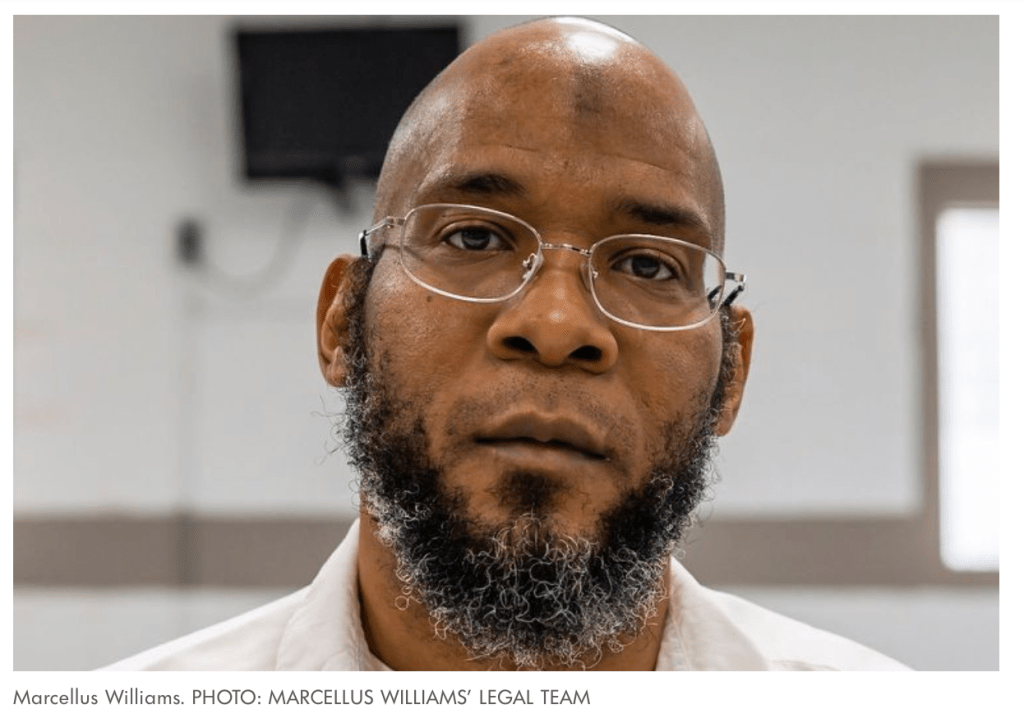





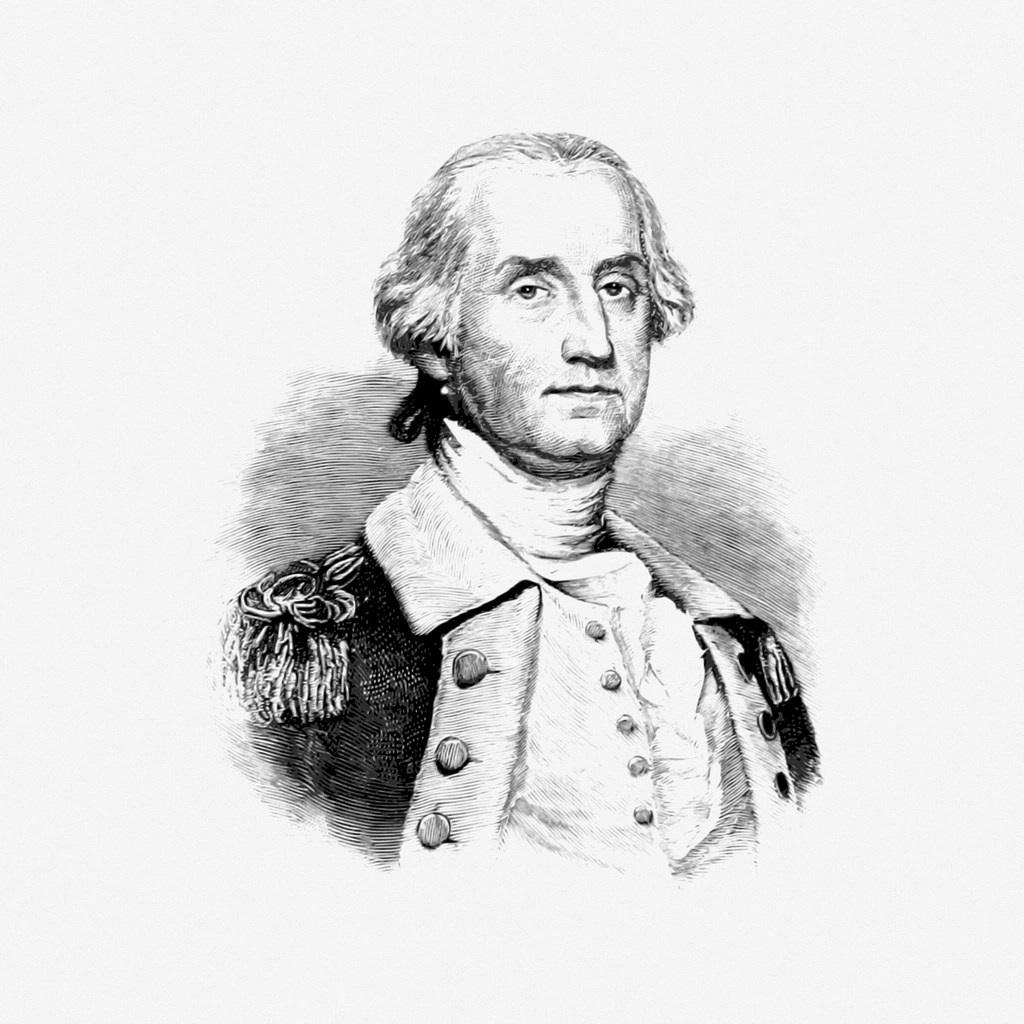
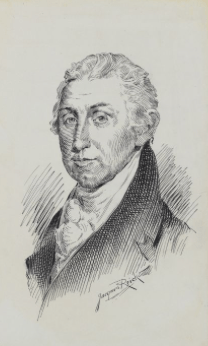



















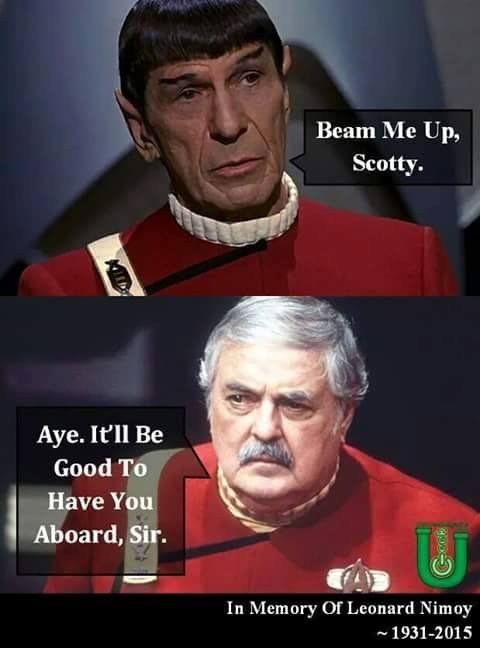



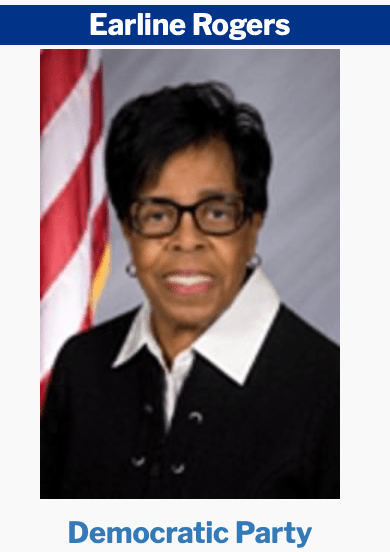

 benandsteve.com