This Story From The Classics. Posted Originally in 2024 it is Reposted this year as part of the best of the best stories benandsteve.com are sharing at years end.
I have driven thousands of miles in my police patrol unit. I have also answered nearly as many calls. I can attest that there are no ‘Good Dog Calls’ a police officer can be assigned to on duty.
Getting sent to a call involving a dog always includes extra concerns that should be more welcome. Dogs can be unfriendly, mean, unruly, and generally not trustworthy.
Case in point: I have responded to dog calls where the dog got reported missing. It was just across the street and refused to return to its owner. It came to my patrol unit and refused to get out. It insisted on staying, growling when we tried to pick it up and carry it back to its home. I can only guess why it didn’t want to go home.
I have been to dog calls where the dog has bitten a neighbor and had to get put in confinement. The owner objected to the dog’s removal, and a brigade of officers confiscated the dog. The animal control officer was not on duty. So the dog went into the police cruiser and made a hairy mess. It took weeks to get all the fuzz out. No pun intended. Then a day later, and while patrolling through the neighborhood, you see the dog getting walked by the owner’s child. Only to discover they have broken it out of doggy jail. You also have to file more serious charges against the dog owner. Something that you wish didn’t have to happen. The dog is confused over the whole back and forth. The Canine would have been home sooner had the owners only cooperated with the city.
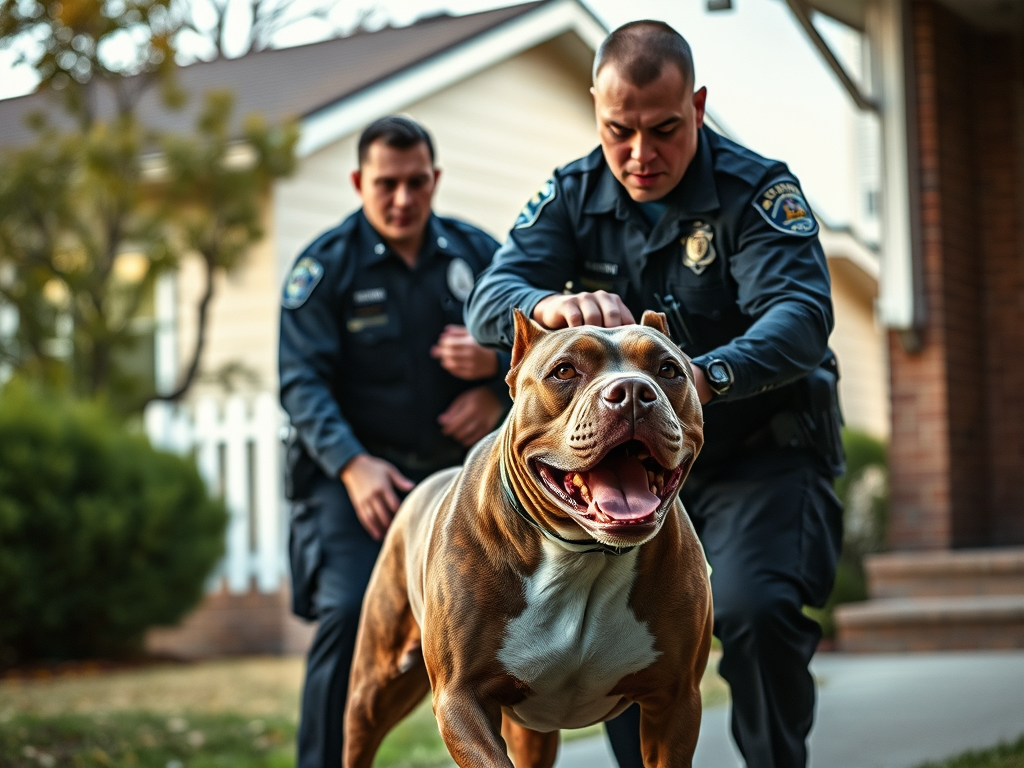
Then, the next step is the crisis intervention, which is your own. It is early in the morning. And dispatch sends you to a home where a pit bull has a family trapped in their home. It will not allow them to get to their cars to leave to go to work or school. You arrive and see this dog running between the front and back doors, preventing the homeowners from exiting the house. You call your backup unit to bring the animal control unit since they are not on duty (as usual).
The backup officer arrives in the Animal Control Unit—the beauty of every small-town police department. You get the dog loop poles when they arrive and devise a plan. The homeowners will call the dog to the backdoor. This will allow an officer to enter the house through the front door. Then your backup partner will go in the house and go to the back door and call the dog. When he rushes to the back door he will use one of the loop poles. Slipping a loop over the dog’s head. As he does, I will come up from behind and slip a loop over the head. And we will have a two loop pole control of the dog. Then together we will be able to control the animal to get it into the animal control vehicle. As we carry out the plan, the dog fights with all it has. Trying feverishly to bite and attack us. We get it to the truck, lift it in, and slide it into a carrier. Loosening the pole loops, we leave them intact so we can use them when we get out to the shelter. So to place the animal in a pen. We close the gate and say farewell to the family that had got trapped inside their home. Waving to us, they are grateful for our service. The dog is fighting like crazy inside the truck. It sounds like we have the Tasmanian Devil inside.
We drove six miles to the shelter, and our anxiety peaked. We were ready to take on this beast we had struggled with earlier. It is now eerily quiet. We cracked open the gate and took hold of the poles. We tightened the slack in the loops. To make sure the dog had tension around its neck so we can control it. We flipped open the gate, and ––––– NOTHING. The dog was dead. DEAD! IT WAS LIMP.
We are dumbfounded at what the hell happened. We had put it in the back of the truck and drove six miles. An investigation indicated that the dog continued fighting even inside the truck’s cage. And either had a heart attack or choked itself while fighting within the closure. We had no choice but to take the dog to the shelter. Had we left it at large we would have had to fight the dog. And even got put in a position to shoot the animal due to its violence. We intended to try and avoid that scenario, but sadly, it ended the dog’s life anyway.
This story first appeared some time ago, but it felt right to bring it back — with a little update. It’s about the dogs who’ve shared our lives over the years. Each one has left paw prints on our hearts that never fade. We’ve laughed with them, cared for them through their golden years, and mourned them when they left us. Those memories still tug at the heart, but they also remind us how lucky we were to have them.
And now, there’s Otis. The latest addition to our little family. Otis is, without question, a show all on his own. He is full of personality and quirks that can fill a book. He’s mostly happy, sometimes possessive, and always fiercely protective. His love is big, messy, and unconditional — and we smother him right back with ours. He keeps us laughing with his antics and over-the-top expressions. But one word of advice: don’t ever try to take his food away. Let’s just say you will walk away a finger short.
So to start –
It was a lazy Sunday. We had been at the desert retreat. We had bought it and happily named it the Roads End Ranch. It is west of Phoenix, Arizona. The location was so remote. Cattle still stirred throughout the desert region. They crossed the roadways undeterred by speeding cars. These cars carried new homeowners to neighborhoods built further out of the city. Occasionally, you would see a dead cow with all fours extending straight up. It had fallen victim to a collision with someone from the big town. They were speeding over a hill at night. When we first moved to the Roads End, we brought our fearless terrier, “Buddie.” We built him a castle of a doghouse. It had access to an airconditioned tool building. He was all of ten pounds and fattened on hotdogs. He loved them and would fight the biggest opponent before him and win to get his. Earlier in the summer, Buddy appeared sluggish and started drooping.
We thought he had been caught out in the heat. He had refused to take shelter in the tool shed. Instead, he wanted to fight with a ground squirrel that terrorized him daily. But the more we checked on him, the worse he got. We rushed him to a veterinarian, and testing began. They were baffled for two days. They not conclude what was wrong with this terror of the UPS driver. The little black attack dog would hide behind his favorite bush. He watched the driver unload the truck. Then he would rush up to the fence. He raised Cain with a bark so fierce. It startled the driver every time. Buddie was in trouble. Finally, a phone call came. The Vet’s office tech informed us about Buddie’s test results.
The results confirmed what we had feared — Buddie had advanced Valley Fever. The vet told us it can be deadly if not caught early, and they were deeply sorry. The delay in getting his test results back had cost us precious time. We met later that afternoon at the veterinary office to hear the full diagnosis.
Valley Fever, technically known as coccidioidomycosis, is a fungal infection caused by Coccidioides (pronounced kok-sid-ee-oh-OI-deez). Sometimes called “San Joaquin Valley Fever,” it can cause fever, coughing, fatigue, and other flu-like symptoms. There are two species of the Coccidioides fungus, both commonly found in dry, dusty soil throughout the Southwest. Farming, construction, strong winds—anything that stirs up the earth—can send their spores into the air.
When inhaled, those spores can infect the lungs. In humans, Valley Fever can range from mild to severe. Some cases resolve on their own. Others need antifungal medication. But unlike people, pets can’t tell us when something feels wrong. They rely on us to notice.
Buddie was always digging. He often chased ground squirrels. He buried his nose deep into the dirt. His head was below ground as often as it was above. By the time we recognized the signs, the infection had already taken hold. The fungus had consumed his lungs, leaving no hope for recovery. We had lost our boy — and with him, a piece of our hearts.
We said our goodbyes to Buddie. He slowly went to sleep. We brought him home to the Roads End Ranch. We buried him in his favorite corner. This was the one he liked to catch the UPS man. After his passing, we were finished with the idea of having more pals. Losing him had just been too hard. Besides, we were taking care of Steve’s mother, and she was entering hospice and taking up all of our time. It was all we do to her.
We took the best care of Steve’s mother, keeping her in our home through many ups and downs. Then, in June, she passed early one Sunday morning. It was quiet. Nothing was moving, not even our cat. It had been over a year since losing Buddie. And, now we were experiencing loss again. A month of memorials seemed to take place. We remembered her in Arizona. Then, we returned to Oklahoma to lay her to rest.
Then, we came home. The house was empty. It was just the two of us and the cat, Blanche, a spade female, Siamese. We had brought her with us from the move when we left Wichita, Kansas after 9/11, nearly six years earlier. She only became vocal when something got on her nerves or when I talked to her. She would talk back to Steve if he yelled at her, they had a relationship like that.
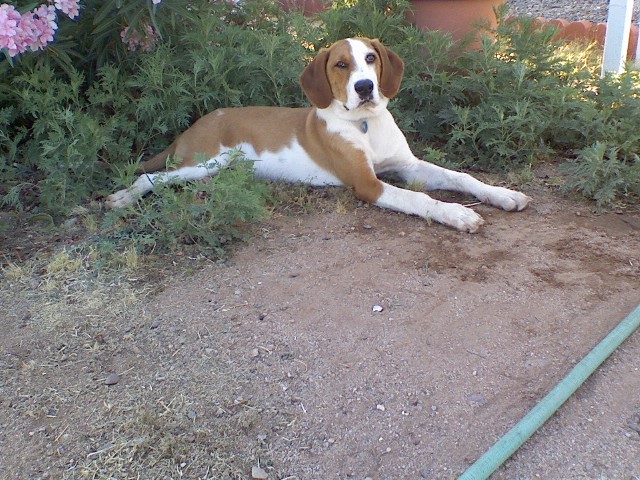
A few months passed, and Steve suggested we drive to the South Phoenix animal shelter and look at dogs. He said we didn’t want to get one—just look to get out of the house. So we left. When arriving, we walked through the outdoor kennel area. There were so many dogs, all barking for attention—except for one. He was a hound dog. He looked pitiful. It was like he had lost his last best friend. He was moping over in a corner of his kennel. He was not excited to see anyone. Yet, he came to us. Steve asked to take him for a walk, and the attendants provided a lead. The hound strolled around with us for ten minutes. He did not seem more excited than Eeyore from Winnie The Pooh.
During our walk with this dog, we decide to adopt an 80-pound, six-month-old American Fox Hound. We get him to our car and load him into the backseat. As both of us sit down up front, his head appears between the seats. He looks at the two of us. I asked Steve what are we calling him? We were listening to a song by an artist named Shooter Jennings, whom we both enjoyed. So, our dog found himself named Shooter at that point. We only put a little thought into it.
Buddie our first dog saved Shooter’s life!
Valley Fever can show up in dogs in many ways. One of the most common signs is unexplained joint pain, often in a front leg. We learned that too late with Buddie. By the time we understood what was happening, the infection had already taken hold. But when Shooter came limping in one afternoon, crying out at even the lightest touch, we didn’t hesitate. We rushed him to the vet, and the diagnosis was clear — Valley Fever again. This time, though, we were ready. Medication was started right away, and Shooter recovered. In a way, Buddie had taught us how to save Shooter. Our first pal had given his life to save our second — a lesson in love we’ll never forget.
Shooter grew into a 120-pound dog, the most loyal hound a person ever asked for. He never made a mistake or mess in the house. He always strives to please us. His life was one of loyalty. He was a big scaredy-cat but the most excellent protector. He hated thunderstorms. He would only go out in the rain if you went with him. You had to hold an umbrella over him while he did his business. He’d keep it and refuse to go outside if you didn’t offer to take the umbrella. If you had a big juicy bone, you lay a towel down on the floor. Tell him to keep it on the towel. Not a piece of the bone would hit any other part of the floor. He stayed put. He was the perfect boy. He loved other people. Too much sometimes. Steve often accidentally tripped our home alarm. The local police department would arrive. That is when you realize naming your dog Shooter was not the best choice. The first time they were here, we yelled, “Shooter, get down!” The look on the officer’s face was priceless. We were using the wrong tone. It wasn’t how we should have been saying it. The officer asked if we were alone and if we were okay. Are you being threatened?
We had to explain that was the dog’s name. We had to go through the whole dog licensing explanation. Fortunately, I had photo identifications made of ‘Shooter’. I offer them, which brought fun to the moment. After that incident, I took action to make sure the 911 center had a note. It stated that a dog named Shooter lived at our location. They should expect to hear us yelling commands at him because he loves everybody. “Shooter” lived until the age of 14. One summer, a micro-burst struck and tore the roof off our home. During the process, we were reduced to living out of one room of our home while it was under repair. “Shooter” had been showing signs of slowing down. We had been concerned we would find him gone some morning, but he was always there to greet us.
While the house was under construction, “Shooter” seemed worse. We called a veterinarian to come to our home. He not be there until the next day because of the damage. That evening, his breathing became labored, and we cuddled with him, holding our pal. He raised his head, let out two last whines, and died. Our “Shooter-boy” was gone. He had been our best friend and closest family member many times. He was filling in for the loss of others who passed. He taught us how to love and be brave during thunderstorms. In the end, I believe he showed us how even to die.
“Shooter”
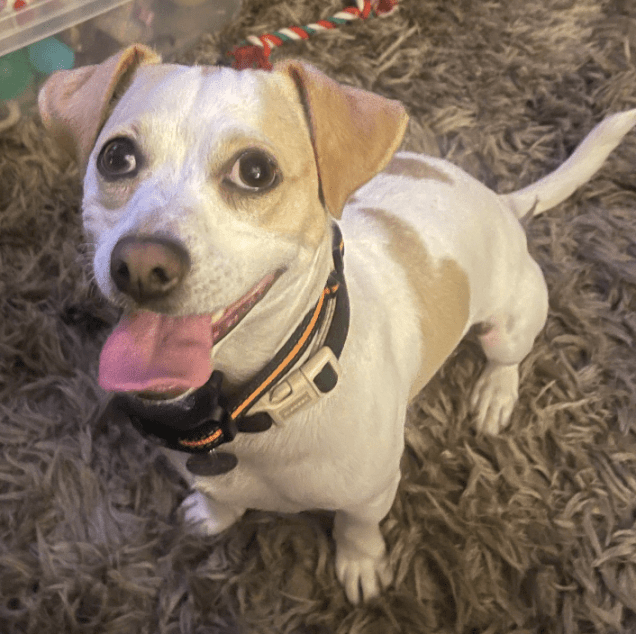
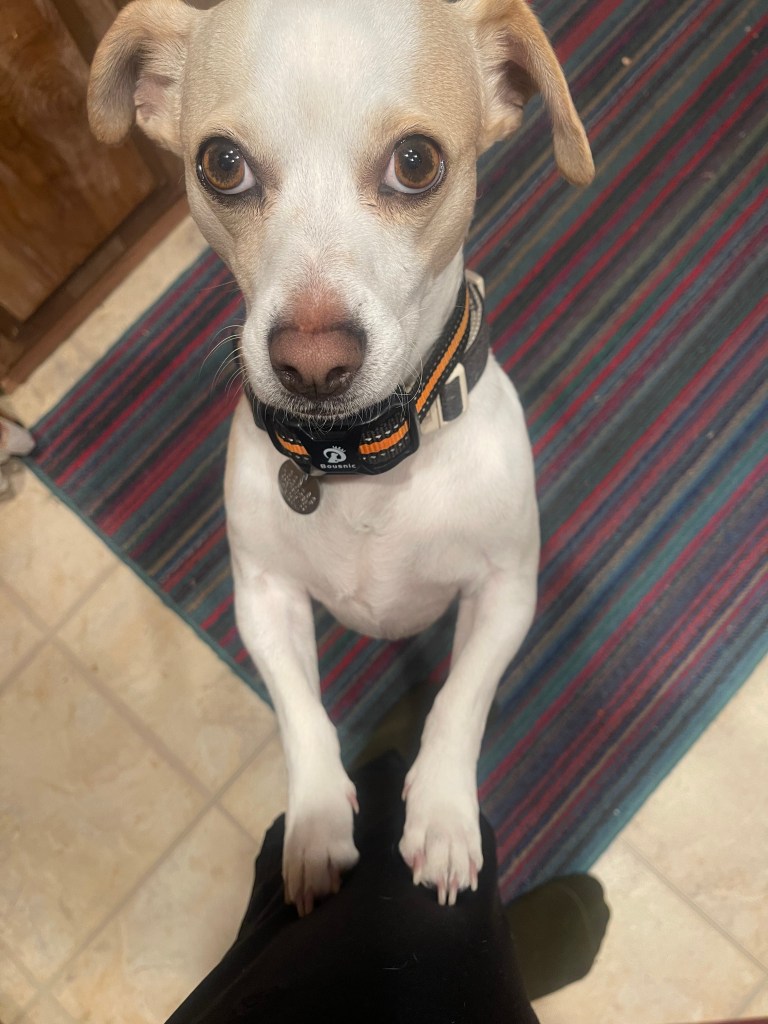
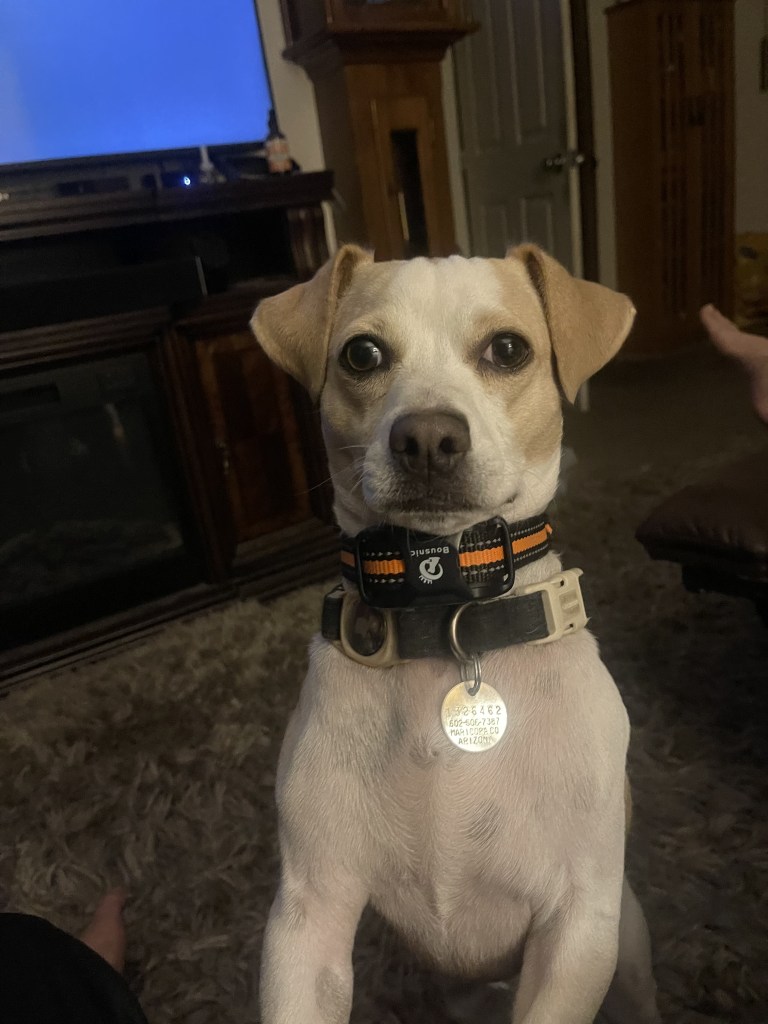
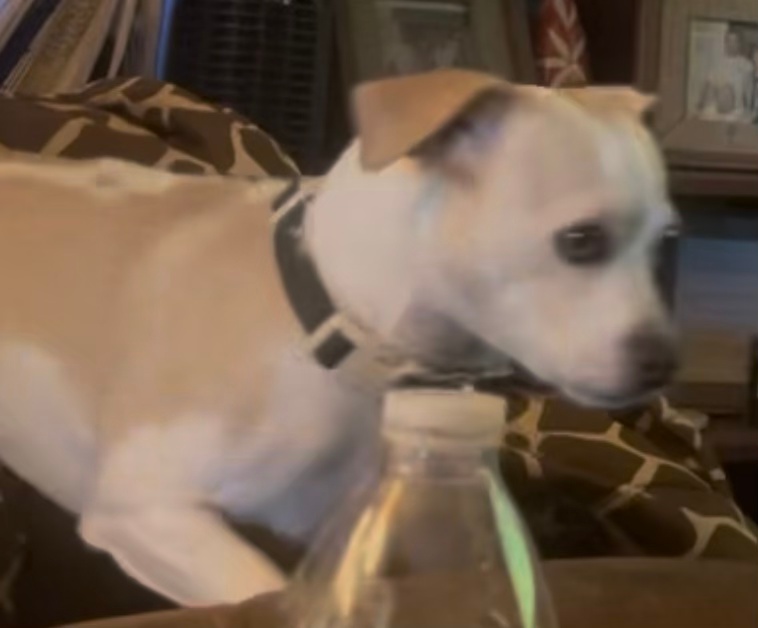
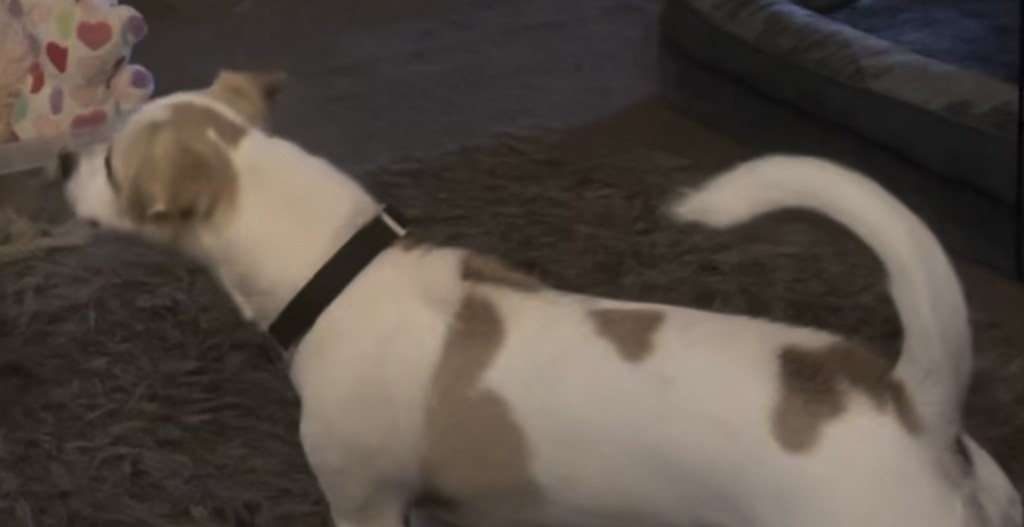
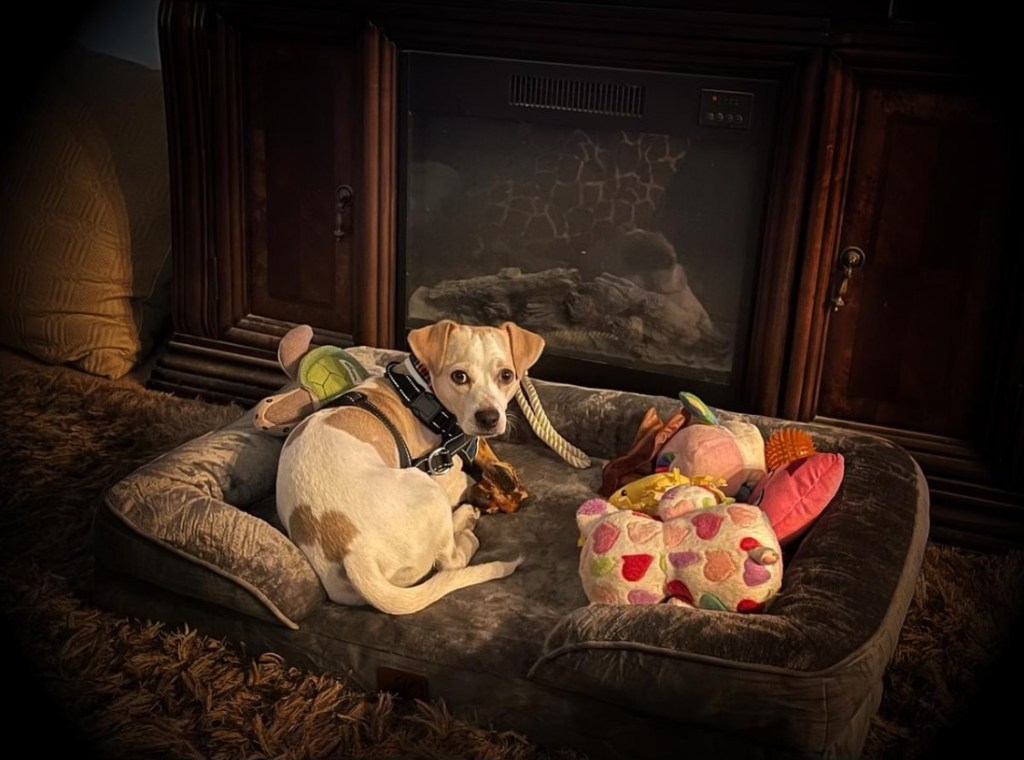
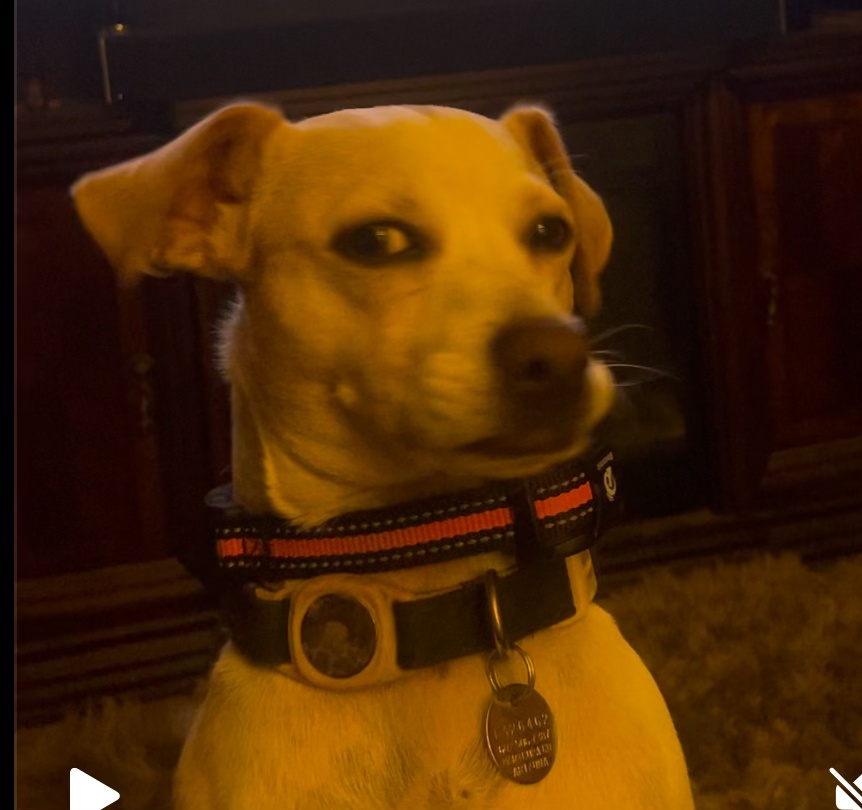
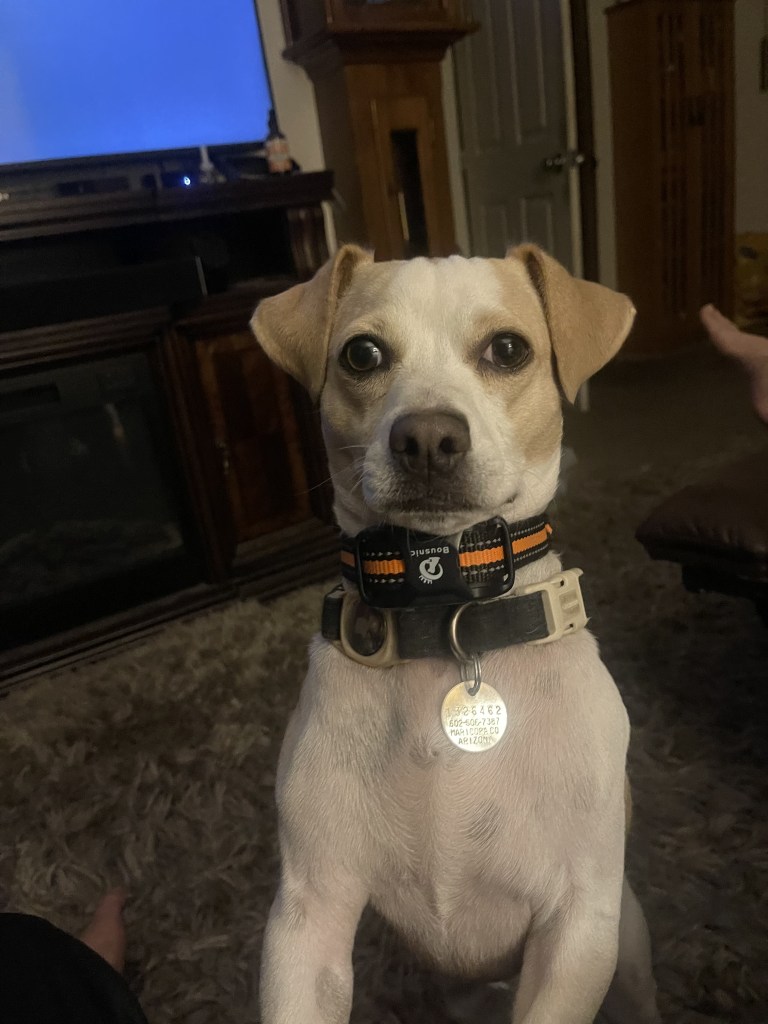
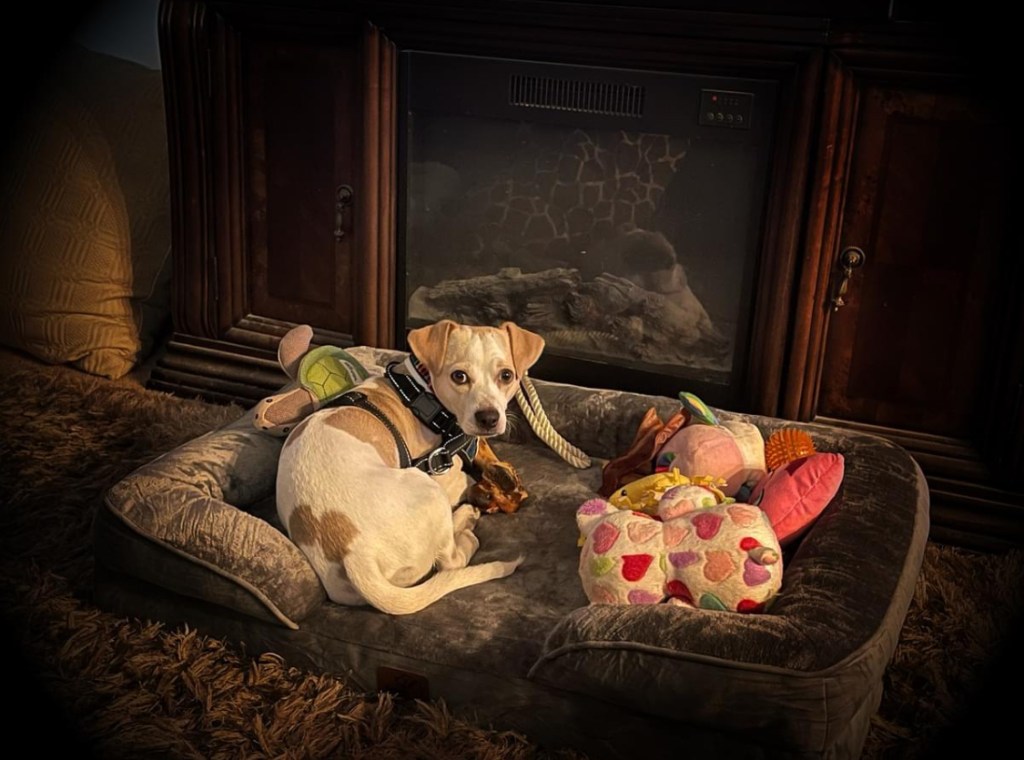
Today we have Otis. A Jack Russell Terrier. We describe him as a terror. He is a character. And a handful at times. He keeps us busy. Wanting to play, and running in and out of the house. He is very protective of his home. We have to put him in a safe area when we have company. He needs time to adjust to new people being inside. We wait to see what is up with him each day. Never knowing what he will do next.
“OTIS”
Otis is named after the drunk on the Andy Griffith show. This is mainly because when we went to adopt him, he escaped from the shelter. Four people were chasing him around the parking lot and buildings. He finally was captured. And placed in a holding cell. We couldn’t help but love his innocent look he had after his little run from the law. He has an attitude. He will growl when he has had enough of you. Telling you to let him be. If you notice not any single one of our dogs have a single thing in common. Except that they were rescued from animal shelters. And they live a full and happy life.
Our dog Otis is a handful—and that’s putting it mildly. He’s been part of our lives for over eight months now, and frankly, he has us wrapped around his paw. That’s how I see it, anyway.
Each morning, I dig into news articles. Meanwhile, Otis curls up on my lap. He looks like the innocent angel he most definitely is not. Don’t be fooled by the calm exterior—he’s always on high alert. He knows the sounds of the mail truck, the delivery van, and anything that dare to approach our house. With every rumble outside, he barks thunderously. He is desperate to storm the front lines. If only that pesky screened door weren’t in his way.
A simple knock on the door transforms Otis into a spinning, barking whirlwind. Imagine a Tasmanian devil with a bark louder than his bite (but don’t tell him that). He’s so protective that we often must hold him back when company arrives. Sometimes, he gets so worked up. He earns a timeout in his kennel. There, he huffs in protest like a disgruntled dragon.
Sunday was a special day—Otis got to join us for a visit with friends, one of his all-time favorite activities. He made nice with their dog, at least at first. But soon, his sly, bullish side took over. He snatched the ball and refused to return it, parading it like a trophy, asserting his love for socializing.
After a long day of play, Otis stayed awake the entire ride home, refusing to miss a moment. He joined us for some late-night TV, eyes heavy but stubbornly open. When bedtime finally arrived, he collapsed into a deep sleep filled with dreams. He was chasing tennis balls. He also was reliving his glorious day of dominance and friendship. I like to think he also dreamed of the day he outsmarted the mail truck.
From the moment Ben and Steve walked into the shelter, Otis knew they were his people. It wasn’t just how they crouched down to his level. It was the warmth in their eyes and the promise in their voices.
“You’re coming home with us,”
Steve had said. Otis had wagged his tail so hard he nearly toppled over. He vowed then and there to be the best protector any family ask for.
Life in his new home was nothing short of paradise. Otis had a cozy bed by the fireplace, more toys than he can chew, and an endless supply of love. But what truly mattered to him was his duty to keep Ben and Steve safe. He took it upon himself to investigate every rustle in the bushes, every knock at the door. No leaf dared to blow towards his masters without Otis standing his ground.
Otis’s vigilance, nevertheless, had its challenges. After one too many encounters with a growling Otis, the mail carrier learned to toss packages from a distance. Neighborhood passerby’s hoped drop off leaflets and country club newsletters. They were met with a flurry of barks so fierce they often retreated before reaching the door.
Things came to a head one sunny Saturday when their neighbor Marlene, visited. Otis had met her once before and didn’t trust her an inch. She was too loud, animated, and far too close to his people to his liking. When Marlene leaned in to hug Steve, Otis darted between them, barking his warning. Steve scooped him up, carrying him to the laundry room for a “time out.”
“Otis, you need to relax,”
Steve said, his voice equal parts exasperation and affection. Otis stared back, unconvinced. Who would protect them if he wasn’t on duty?
During one memorable stormy night, Otis proved why his protectiveness wasn’t just a quirk—it was his calling. The wind howled, rain lashed against the windows, and the house creaked under the storm’s force. Otis lay at the foot of the bed, his ears perked. Suddenly, a loud crash echoed from the backyard.
Ben and Steve bolted upright. Otis was already off the bed. He growled as he raced to the source of the noise. They found him at the patio door. He barked furiously at a tree branch. The branch had broken off and slammed into the house. While it wasn’t an intruder, Otis’s readiness reassured them that no danger would catch them off guard.
Over time, Ben and Steve learned to appreciate Otis’s protective nature and quirks. They worked with a trainer to help him distinguish between threats and friendly visitors, but his fierce loyalty never wavered. Otis accepted his ‘time outs’ with dignity. He understood that even the most dedicated guardians needed to let their pack relax occasionally.
Otis knew one thing for certain in his heart. Ben and Steve had rescued him from a lonely life. He would spend every day making sure they were loved, protected, and never alone. His love for them was as deep as the ocean, and his loyalty as unyielding as the mountains.
You can welcome a pet into your life if you have the love and resources. Reach out to your local animal shelter. Explore adoption if you’re ready for this commitment. Before taking this step, make sure your heart and home have plenty of space. Your budget should also be ready to support a forever family member. A new family member is waiting for you!
They will always find ways to expose the truth whenever it is necessary. A dog will keep you honest because they are always watching you. They know everything you do. They hear everything you say.
Take, for example, Otis, a Jack Russell Terrier with soulful eyes and a tail that wagged like a metronome. Otis belonged to Ben and Steve, who pride themselves on being organized and composed. But Otis saw through it all. He knew when Steve “accidentally” skipped the morning bike ride. Steve chose instead to lounge in his recliner with a cup of coffee. Steve tried to cover up his lapse in discipline. He mentioned a “hectic morning” to explain his work demands. Otis carried the bike shorts he had abandoned by the door into the middle of the living room. His silent reproach was explicit.
Dogs, after all, have a way of sniffing out the truth—not just with their noses but with their instincts. Otis had a keen sense of timing. He knew when Ben told little white lies to his mother over the phone. Ben claimed his last doctor’s appointment suggested he was healthy. Meanwhile, he was polishing off a bag of chips. Otis would sit by his feet. He stared intently, daring Ben to admit to the salty crunch he tried to hide. Finally, Ben conceded and gave Otis a chip. He did it to keep Otis quiet during the phone conversation.
But Otis’s honesty wasn’t just about catching lies. He had an uncanny ability to bring clarity to the chaos. One summer, Ben and Steve’s neighbor, Mary, argued about a missing garden gnome. Steve assured Mary they hadn’t seen it. Yet, when they let Otis out that evening, he returned with the gnome in his jaws, proudly wagging his tail. Maybe Ben and Steve had borrowed it. Or Otis had “borrowed” it himself. The truth stood on four legs, panting happily.
Otis also kept Steve honest about his emotions. When Steve plastered on a smile for his colleagues after a lousy day, Otis knew better. He’d gently nudge Steve’s arm. Sometimes, he laid his head on Steve’s lap. This grounded Steve with the companionship that didn’t tolerate pretending. Dogs don’t care for masks; they prefer the raw, unfiltered you.
And that’s the magic of a dog’s honesty. They don’t demand perfection—they demand authenticity. They hold you accountable not with judgment but with love. Otis didn’t care if Steve skipped a bike ride. He didn’t care if Ben ate chips or if there had been a misplaced garden gnome. What mattered was that they learned to face the truth. It was messy, but they became a better version of themselves because of it. Otis is a good boy, and he proved it, by helping others be good!
A dog will always keep you honest because they never stop believing in the good in you. They don’t just witness your life—they join in it, gently guiding you toward honesty in ways only a dog can.
If you have room in your heart and home for a pet, consider visiting your local animal shelter. These shelters hold loving animals waiting for a second chance to find their forever family. Adopting a pet changes their life and brings warmth, joy, and companionship to your own. A new furry friend can be the missing piece that turns your house into a proper home.
It had been a long year. On January 5th, 1983, we lost an officer in the line of duty. That spring, three officers were arrested for stealing from a business they’d responded to on an alarm call. By summer, automobile burglaries and thefts were on the rise. The suspects were careful, leaving no evidence. Their modus operandi was smooth and untraceable—no one ever heard, saw, or interrupted these thieves. Most stolen items ranged in value from around $200, making each theft a felony under Oklahoma law.
The city was facing yet another wave of crime. Typically, it had about 10,000 residents, but the recent oil boom brought an influx, swelling the population to around 25,000. The sudden increase in population put a strain on the city’s resources, leading to a rise in crime. Jobs attracted people from all over, but housing needed to catch up. Tent cities sprang up in the southern sector, and parks filled with tents when vacant lots overflowed. Expecting thousands of oil jobs, many newcomers broke and scraped by.
Among the job seekers were newly released inmates from Cook County Detention in Chicago. Judges offered a stark choice: a one-way bus ticket to Elk City, Oklahoma, or a lengthy jail sentence. Most took the bus ticket. Upon arrival, they had to call the detention center from Elk City’s bus depot to check-in. Ducks in the city park began disappearing as desperate people scavenged for food. In response, the city council enacted a law prohibiting the molestation of ducks, with fines and jail time for violations. Signs reading “DO NOT MOLEST THE DUCKS” popped up, adding a hint of levity to an otherwise grim situation.
But ducks were far from the town’s biggest problem. It wasn’t the bars, the transient hotels renting beds by the shift, or even the “ladies of the night.” The real threat seemed to be the string of broad daylight robberies plaguing the community’s three leading grocery stores, and each hit at least once. One robbery even happened just a block from the police station, with the suspects abandoning their getaway vehicle behind the station in a post office lot.
The police department’s image was suffering. Officers worked 12-hour shifts, often doubling up due to the flood of calls, sometimes stacked five to ten deep. I reported at 5 p.m. for a 6 p.m. start to my 12-hour shift one day, noticing a huddle of high-ranking officers and county deputies outside an office. Figuring I’d get briefed later, I didn’t poke around—I had enough court subpoenas already without getting involved in another incident. And this was one situation I was glad to avoid.
“You have got to be kidding me,”
When my Captain came over, he told me they’d just brought in an officer for raping his daughter. This shocking revelation not only shamed the individual officer’s reputation but cast a shadow on the entire department; as police officers failed, the public’s trust in law enforcement was further eroded.
“You have got to be kidding me,” was all I could say.
This scandal was nearly the final blow for our department, already reeling from the recent departure of a chief struggling with personal issues. Within hours, newspapers and television stations caught wind of the arrest, and the phone lines lit up. Callers unleashed waves of abuse, condemning every officer affiliated with the department. The calls went on for days, creating a hostile environment for all officers and making their jobs even more difficult.
The officers arrested earlier in the year were convicted, further damaging the department’s reputation.
Amid this turmoil, my law enforcement career truly began. Although I had worked in various positions and departments, it was in this community that I found my calling. This city is where I started my adult life and career earnestly. I remained loyal to this place, forming memories with people in the booking area, the jail, and the streets. A shift in the workforce followed, which opened doors for me—an unexpected opportunity in a turbulent time. Could it get any worse? The heat was about to get turned up. In coming stories!
(You’ve been reading the back story for the big news over the next forty years involving several lives and lifetimes.)
A coyote is threatening our dog on our patio at our home in Arizona, and we have few options to deal with it. The overpopulation of coyotes is a continuing problem, and there is nothing city, county, or state officials say they can do. Now, coyotes bravely walk onto our patio during the evenings and have threatened our dogs. We have witnessed the challenges of other dogs in the neighborhood by pairs of coyotes. Knowing when the animals will try to pass through or how many will appear is challenging. It has become necessary to be present with our dogs whenever we let them out to take breaks in the yard for their safety. We carry sticks and poles to beat the coyotes away. Is there anything someone can do to stop these animals?
The overpopulation of coyotes in many metropolitan areas, including Arizona, California, and Nevada, is a severe issue. This poses a threat to our pets and disrupts the balance of the local ecosystem, leading to potential conflicts with humans and other wildlife.
Immediate Steps to Protect Your Pet
Bring Pets Indoors: When a coyote is spotted nearby, the most effective action is immediately bringing pets inside. Never leave small pets, like dogs or cats, unattended outdoors, especially at night, as they are at high risk. This simple step can significantly reduce the chances of a coyote attack, giving you control over your pet’s safety.Make Noise: If you can do so safely, use loud noises to scare the coyote away. Yelling, clapping, or banging objects can be effective, as coyotes tend to be skittish around loud sounds.
Use Water or Bright Lights: If accessible, spray water or turn on outdoor lights to deter the coyote from staying near your property. Many coyotes dislike sudden light exposure or water splashes.
2. Long-Term Prevention Strategies
Secure Food Sources: Coyotes are drawn to food left outdoors, such as pet food, garbage, or bird feeders. Remove these attractants by keeping pet food indoors, securing trash bins, and cleaning up fallen fruit or food from patios.
Fence Your Yard: Installing a tall, solid fence (at least 6 feet high) with a roller at the top can prevent coyotes from jumping over. A ‘coyote roller’ is a simple yet effective device that one can add to the top of a fence. It consists of a PVC pipe or metal rod that spins freely, making it difficult for coyotes to gain a foothold. Use Coyote Repellents: Commercial coyote repellents around the yard. These products typically use strong odors to discourage coyotes from venturing too close.
3. Legal and Ethical Considerations
Consult Arizona Wildlife Authorities: For ongoing issues, contacting local wildlife or animal control agencies can help address concerns about coyote activity. In Arizona, the Arizona Game and Fish Department offers guidance on wildlife management.
4. Avoid Harmful Methods:
In Arizona, using traps and poison to deal with coyotes is generally prohibited. These methods can pose risks to other wildlife, pets, and even humans, and their use can result in legal consequences. Exploring humane and safe alternatives when dealing with coyote issues is essential. Educate the Community
Organizing neighborhood awareness of wildlife encounters is crucial in building a united approach to preventing conflicts with coyotes. Sharing best practices and staying alert about sightings will benefit other pet owners and encourage community-wide efforts to limit coyote activity. Educating the community can all play a part in keeping our pets and properties safe.
Despite the unbearable desert heat, Otis, a small white and tan dog with soft, sad eyes, bravely limped along the cracked streets of Mesa, Arizona. The sun beat down on him relentlessly, but he refused to give up. Abandoned on the outskirts of town, with nothing but the scorching pavement under his paws, every breath he took felt heavy, every step harder than the last.
He didn’t understand why he’d been left. One minute, he was curling up in the backseat of a car, and the next, the door swung open, and he was pushed out, and the car was speeding away. Otis had waited by the side of the road, panting and confused, hoping they’d come back. But they never did.
Days passed, and Otis grew weaker; the desert offered no relief, just endless heat. But fate wasn’t done with him yet.
At a local rescue center, George and Henry, an older couple known for their kindness to animals, were sitting at home when they got a call. They hadn’t owned a dog since Shooter, their beloved companion, had passed away three years ago. Shooter had been their family, filling their lives with joy and unconditional love. But when they lost him, the grief was so deep they couldn’t imagine having another dog.
Yet, the call they received from the rescue center had them thinking. Animal Control officers found the dog, who would be named Otis, wandering the streets, desperately needing a home. Could they come and see him?
When George and Henry arrived at the shelter, they saw Otis—thin and weary but with a glimmer of hope in his eyes. It reminded them of Shooter, of how he looked at them when he needed comfort. Without a word, George knelt beside the dog, his hand gently resting on Otis’ head. Henry stood beside him, his heart swelling at the sight.
Despite his weakness, Otis leaned into George’s touch, a silent acknowledgment that he was safe. In that moment, a bond was formed, strong and unbreakable. It was as if they had known each other for years, not just a few minutes.
The decision to bring Otis home was not a difficult one. George and Henry knew Otis needed them, but they hadn’t realized how much they needed him. Losing Shooter had left a hole in their hearts, and while Otis could never replace him, he had a way of healing parts of them they hadn’t realized were still broken.
Back at their home, Otis quickly settled in. George would joke that Otis had chosen them just as much as they had chosen him. The dog followed them everywhere, always by their side, as if he couldn’t believe his luck—he had found a family, a real home, where he would never get abandoned again.
As the weeks went by, Otis grew stronger. His coat filled out, his energy returned, and he thrived under the love and care George and Henry gave him. They’d take him on long walks, though always in the early mornings or evenings to avoid the brutal Arizona sun. Otis loved their little garden, where he’d chase butterflies and curl up under the shade of a tree, a far cry from the harsh desert streets where his journey had started.
For George and Henry, Otis brought life back into their home. The house felt warm again, filled with the sounds of paws on the floor and the happy panting of a dog that finally knew he was safe. They talked about Shooter often, his memory always present, but now there was a new energy and chapter that Otis had helped them begin. His joyous presence filled their home with warmth and happiness.
Otis may have started his life alone, abandoned, and lost, but in George and Henry, he found something special—a family who had also been waiting for a second chance at love.
In the cool evenings, as they sat on their porch with Otis at their feet, George would smile at Henry and say,
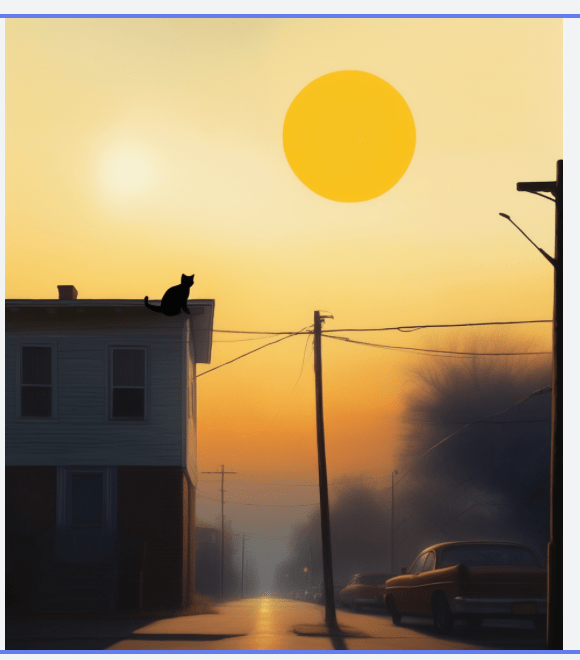
In the small, forgotten town of Solstice Hollow, days bled into each other with the relentless monotony of time. The sun hung heavy and perpetually on the horizon, a blazing sphere casting an otherworldly glow over the desolate streets. It was always twilight here, neither night nor day, as if the town existed in a pocket of suspended reality.
The alley in the photograph was known as Whispering Lane, a narrow pathway flanked by crumbling buildings that seemed to sigh with the weight of their own history. Shadows stretched long and lean across the cracked pavement, and the air was thick with the scent of old wood and dust. At the intersection of the lane and Main Street stood an old house, its paint peeling and windows dark, a silent sentinel in this forgotten part of the world.
On the roof of this house sat a black cat, its eyes glinting like emeralds in the perpetual twilight. The cat, known to the townsfolk as Midnight, had been there for as long as anyone could remember. Legend had it that Midnight was not an ordinary cat, but a guardian of secrets, a keeper of the town’s strange and sorrowful tales.
One such tale was that of Eleanor Weaver, a young woman who had lived in Solstice Hollow many decades ago. Eleanor was a spirited and curious soul, always wandering the boundaries of the town, seeking something beyond the endless dusk. She was fascinated by Whispering Lane, drawn to its eerie silence and the whispers that seemed to emanate from the very walls.
One evening, Eleanor ventured further down the lane than ever before. The sun, fixed in its eternal descent, bathed the alley in a warm, golden hue, casting long shadows that seemed to beckon her forward. As she walked, she heard faint murmurs, indistinct yet strangely comforting, as if the lane itself were sharing its secrets with her.
At the end of the lane, where the shadows were deepest, Eleanor discovered a hidden door set into the side of an old brick building. The door was ancient and weathered, its surface etched with cryptic symbols. With a mixture of trepidation and excitement, she pushed it open and stepped inside.
What Eleanor found beyond the door was a realm beyond her wildest imaginings—a place where time flowed differently, and the laws of reality were mere suggestions. She wandered through dreamlike landscapes, met beings of light and shadow, and learned the true nature of Solstice Hollow. She discovered that the town was a sanctuary, a refuge for those who had lost their way in the world. The perpetual twilight was a barrier, a protective veil that kept the town hidden from the rest of existence.
Days turned into weeks, and weeks into months, yet Eleanor felt no urge to return. She had found her place, her purpose, in this otherworldly dimension. But as with all who ventured too far into the unknown, a time came when she had to make a choice: remain in the dreamscape forever, or return to the world she had left behind.
Eleanor chose to return, carrying with her the knowledge and serenity she had gained. She emerged from the hidden door, back into the eternal twilight of Whispering Lane. The townsfolk noticed a change in her—a quiet wisdom in her eyes, a sense of peace that seemed to radiate from her very being. She never spoke of what she had seen, but Midnight, the ever-watchful cat, seemed to understand.
Years passed, and Eleanor’s tale became part of the whispered legends of Solstice Hollow. The hidden door was never found again, and some began to doubt it had ever existed. Yet, on still evenings when the sun cast its golden glow over Whispering Lane, the whispers could still be heard, faint but persistent, as if the alley itself remembered.
Midnight remained on the rooftop, a silent guardian, watching over the town and its secrets. And in the timeless twilight of Solstice Hollow, life continued, a delicate dance between reality and the unknown.
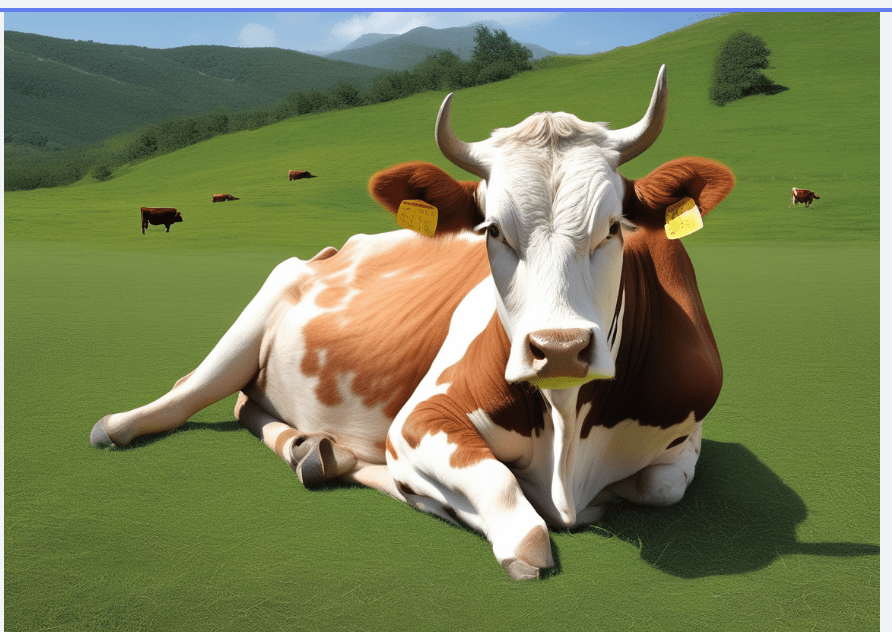
Once upon a time, in the idyllic countryside of Cloverfield, there lived a milk cow named Bella. Bella, with her gentle eyes and a coat that was brown and white as snow, was the heart and soul of a small family farm nestled between rolling hills and vibrant meadows. Her reputation preceded her, known throughout the village for her abundant milk and her kind and serene demeanor.
Each day, Bella’s world would brighten with the first light of dawn.
As the sun peeked over the horizon, Farmer Joe, a kind-hearted man with a weathered face and a perpetual twinkle in his eye, would greet Bella with a warm smile, his voice filled with affection,
“Good morning, Bella!”
Bella, in turn, would respond with a soft moo, her eyes sparkling with joy at the sight of her favorite human.
Farmer Joe would lead Bella to the milking shed, where she would stand patiently, chewing on sweet clover while Farmer Joe hummed old folk tunes. He had a gentle touch, and Bella never felt any discomfort. As the rhythmic sound of milk filling the pail echoed through the shed, Bella felt a deep sense of contentment, knowing her milk would soon nourish the family and their neighbors.
Bella’s milk was known for its rich and creamy texture. Every morning, Farmer Joe’s wife, Martha, would churn some of the milk into butter and cheese, filling their kitchen with delicious aromas. Martha’s dairy products were the talk of the town, and people from neighboring villages would come to buy them. But Martha always saved a special treat for Bella: a handful of fresh, juicy apples.
After her morning milking, Bella spent her day grazing in the lush pastures, enjoying the company of her fellow cows and the playful calves that bounded around. She had a special friend among the herd, a young and curious calf named Daisy. Daisy followed Bella everywhere, imitating her every move and looking up to her as a wise and gentle mentor.
One day, as Bella and Daisy were grazing near the forest’s edge, they heard a faint, distressed bleating. Bella’s ears perked up, and she looked around to find the source of the sound. It didn’t take long to spot a tiny lamb stuck in a thorny bush, its wool tangled and its eyes wide with fear.
Bella, with her calm and reassuring presence, approached the lamb slowly. Daisy watched in awe as Bella, displaying a courage that belied her gentle nature, gently used her nose to nudge the lamb free from the thorns. Once the lamb was free, it nuzzled Bella in gratitude before scampering to find its flock.
Daisy trotted up to Bella, eyes wide with admiration.
“Bella, you’re so brave!”
she exclaimed.
As the sun began to set, casting a golden glow over Cloverfield, Farmer Joe came to bring Bella and the other cows back to the barn. He noticed a new spring in Bella’s step and the proud look in Daisy’s eyes.
“Had an adventure today, did we?”
he asked, patting Bella affectionately. Bella responded with a contented moo, happy to be home and looking forward to another peaceful night.
Inside the barn, Bella settled into her cozy stall filled with fresh straw. As she lay down, she felt a deep sense of fulfillment. Bella had her family, friends, and the beautiful Cloverfield to call home. She closed her eyes, listening to the soft rustling of the barn and the distant hoot of an owl, grateful for the life she led and the small joys of each day. The tranquility of the night enveloped her, promising a peaceful sleep and a new day filled with possibilities.
And so, Bella the milk cow drifted off to sleep, dreaming of green pastures and new adventures, ready to face whatever the next day would bring with her steady heart and gentle spirit.
George was a happy-go-lucky sort of kid. His father raised quarter horses, and together, they were buddies. They go nearly everywhere together. George and his father’s friend Maynord, an older gentleman, probably a few years older than George’s father, spoiled George, treating him especially grandly. George didn’t emphasize the letter ‘s’ in some of his words, and some words he would say might need to be clarified. His father was known as a horseman and stern man, yet respected by most people, eyebrows raised to the bible-toting folks.
Maynord had a grown daughter who had already left home, but he and his wife had never had a son. With George, Maynord had the time of his life. As did George. The two were better buddies than Maynord, and George’s father became. But George would never say that to his father. Maynord treated George to parades, cheeseburgers, and ice cream cones and even got him a dog. George named the pooch, Ryder after Maynord’s last name.
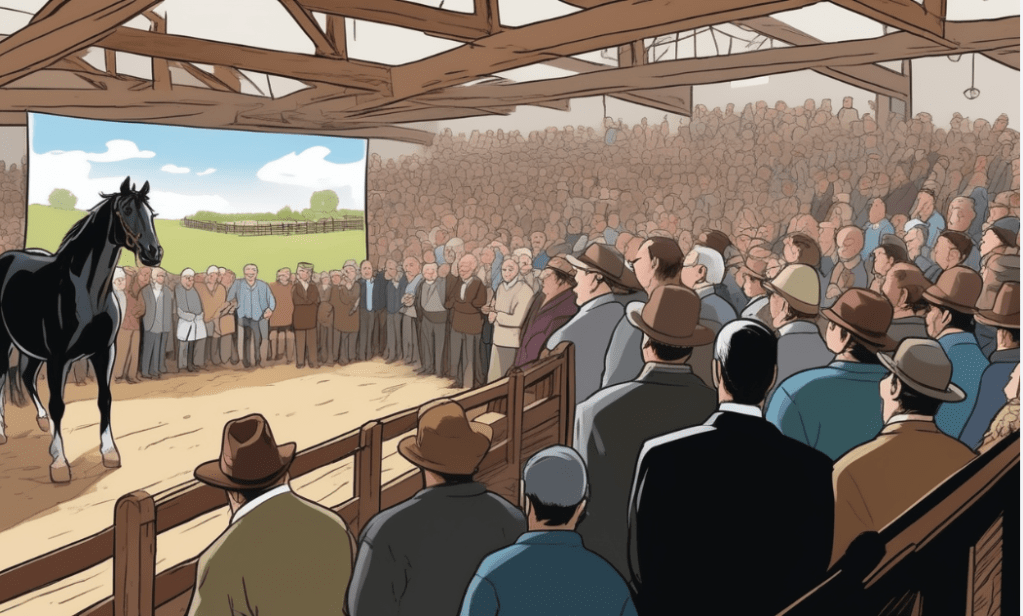
The two looked forward to Friday and Saturday nights. That is when George’s dad would take George and Maynord to auction barns in nearby cities where horses were sold. There, they would watch the many horses come through the sale ring, and the owners talk them up, saying how great of an animal the horse is, and try to sell it for top dollar. Of course, George’s father had always arrived before the auction to watch the horses lead in so he could see how they handled it and whether they were challenging to work with in getting to holding pens. He could also see if any auction workers tried to ride the horses before entering the sale ring and if the horses handled well. There were always little mishaps in the sale ring, a rider losing his grip and falling off, or a horse doing what the owner said it would not do. Or donkeys would be brought in, which always made George and Maynord laugh. They would jokingly suggest George’s father buy several to go with his quarter horses. The biggest thrill of the sales barn adventures was the cafe located within; that is where, halfway through, George and Maynord would slip away and eat cheeseburgers and drink soda pop.
The horse sales, as George and his father referred to them, caused the problem. Maynord didn’t help with the situation because he referred to the auctions as horse sales. And he had never referred to the auctioning of horses as anything else.
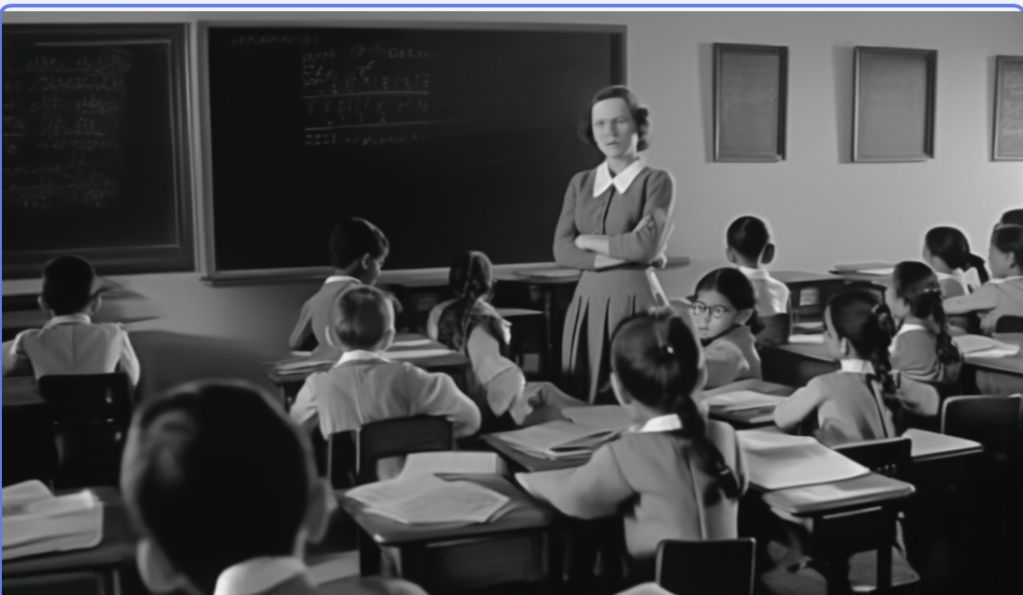
It was in the classroom one Monday morning when the third-grade teacher asked the class for each student to stand and say what the most fun activity they took part in over the weekend was. The town had just had a fair, and the teacher expected the students to explain their actions while visiting the celebration. And that is what the students did until coming to George.
George stood and said –––
“My dad and our friend Maynord took me to the city horse sale, and my dad bought two.
While George was speaking about horses, the teacher heard ‘whore sale.’
The teacher said –––
“George, you went where, and your dad what?”
George replied –––
“My dad took me to a horse sale and bought two. His friend Maynord helped with one of them. They made me watch from the pickup.”
The teacher, turning pale, said –
“George, stop talking; that is enough! Class, that is enough of what we enjoyed this weekend. I will have George explain what he did to the principal.”
George was perplexed. Hasn’t anyone ever watched a horse being sold and loaded into a livestock trailer? Why would the principal need to hear about it? Indeed, he knows about people selling horses.
In the office, the principal was being informed by the teacher about what she had heard and how terrible it was that this father and his friend had taken an 8-year-old boy to whore house and had him watch the goings on with two women. The principal then asked George what exactly did you say to your teacher?
Which George explained –––
“I just told her ––– My dad, Maynord, and I went to a horse sale, where my dad bought two horses. They made me get in the pickup and watch them while loading the horses so I wouldn’t get hurt or in the way. There have been days, I have even held on to some guys horse when he had too many to handle. But I didn’t get to explain it in such detail because the teacher told me to stop talking before I could tell more about what I was talking about. We go to horse sales every weekend. I don’t know what the big deal is!”
The principal and now the school’s superintendent were both in the office. Their faces were beet red, and they were trying to keep from laughing. The teacher, now understanding the situation, felt overreactive and apologizing.
Meanwhile, George is confused and asks everyone in the room –––
“Haven’t you all ever heard of horse sales? Horse sales? Horse Sales! A Place where a man can sell his horse? My dad, Maynord and I go to them every Friday and Saturday night, you should come with us and see what it is all about. If you get bored with the horse sale, you can get a cheeseburger, as I sometimes do. I don’t understand what this is all about just because I told my story about going to the horse sale with my dad and Maynord.”
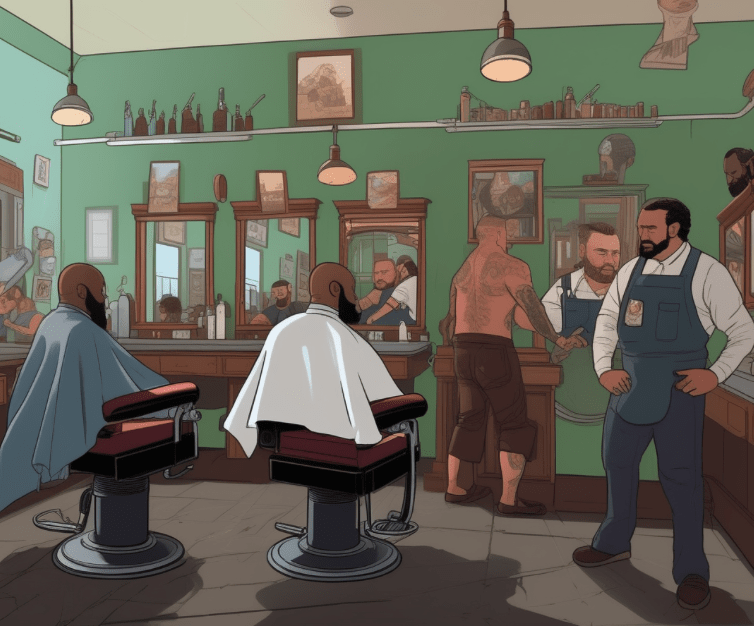
George’s dad, the town barber, was called and told of the situation. He later held court in his barber’s chair with his shop’s regulars. There, they had the bursts of laughter the school officials experienced.
Leaving the office, it was the loudest laughter George can ever remember hearing to this date. It wasn’t until he was older did he understand the rhyming of the words between horse and whores and how it could sound to others when saying to them –––
“You are headed to a horse sale to see what you can find.”
It was a lazy Sunday. We had been at the desert retreat. We had bought it and happily named it the Roads End Ranch. It is west of Phoenix, Arizona. The location was so remote. Cattle still stirred throughout the desert region. They crossed the roadways undeterred by speeding cars. These cars carried new homeowners to neighborhoods built further out of the city. Occasionally, you would see a dead cow with all fours extending straight up. It had fallen victim to a collision with someone from the big town. They were speeding over a hill at night. When we first moved to the Roads End, we brought our fearless terrier, “Buddie.” We built him a castle of a doghouse. It had access to an airconditioned tool building. He was all of ten pounds and fattened on hotdogs. He loved them and would fight the biggest opponent before him and win to get his. Earlier in the summer, Buddy appeared sluggish and started drooping.
We thought he had been caught out in the heat. He had refused to take shelter in the tool shed. Instead, he wanted to fight with a ground squirrel that terrorized him daily. But the more we checked on him, the worse he got. We rushed him to a veterinarian, and testing began. They were baffled for two days. They not conclude what was wrong with this terror of the UPS driver. The little black attack dog would hide behind his favorite bush. He watched the driver unload the truck. Then he would rush up to the fence. He raised Cain with a bark so fierce. It startled the driver every time. Buddie was in trouble. Finally, a phone call came. The Vet’s office tech informed us about Buddie’s test results. The results confirmed he had advanced Valley Fever. It can be deadly if not caught in time, and they were sorry. It had been due to the delay in returning test results. We met a few hours later at the Veterinary Office. We said our goodbyes to Buddie. He slowly went to sleep. We brought him home to the Roads End Ranch. We buried him in his favorite corner. This was the one he liked to catch the UPS man. After his passing, we were finished with the idea of having more pals. Losing him had just been too hard. Besides, we were taking care of Steve’s mother, and she was entering hospice and taking up all of our time. It was all we do to her.
We took the best care of Steve’s mother, keeping her in our home through many ups and downs. Then, in June, she passed early one Sunday morning. It was quiet. Nothing was moving, not even our cat. It had been over a year since losing Buddie. And, now we were experiencing loss again. A month of memorials seemed to take place. We remembered her in Arizona. Then, we returned to Oklahoma to lay her to rest.
Then, we came home. The house was empty. It was just the two of us and the cat, Blanche, a spade female, Siamese. We had brought her with us from the move when we left Wichita, Kansas following 9/11, nearly six years earlier. She only became vocal when something got on her nerves or when I talked to her. She would talk back to Steve if he yelled at her, they had a relationship like that.
A few months passed, and Steve suggested we drive to the South Phoenix animal shelter and look at dogs. He said we didn’t want to get one—just look to get out of the house. So we left. When arriving, we walked through the outdoor kennel area. There were so many dogs, all barking for attention—except for one. He was a hound dog. He looked pitiful. It was like he had lost his last best friend. He was moping over in a corner of his kennel. He was not excited to see anyone. Yet, he came to us. Steve asked if we take him for a walk, and the attendants provided a lead. The hound strolled around with us for ten minutes. He did not seem more excited than Eeyore from Winnie The Pooh.
We leave the Roads End Ranch. During our walk with this dog, we decide to adopt an 80-pound, six-month-old American Fox Hound. We get him to our car and load him into the backseat. As both of us sit down up front, his head appears between the seats. He looks at the two of us. I asked Steve what are we calling him? We were listening to a song by an artist named Shooter Jennings, whom we both enjoyed. So, our dog found himself named Shooter at that point. We only put a little thought into it.
Shooter grew into a 120-pound dog, the most loyal hound a person ever asked for. He never made a mistake or mess in the house. He always strives to please us. His life was one of loyalty. He was a big scaredy-cat but the most excellent protector. He hated thunderstorms. He would only go out in the rain if you went with him. You had to hold an umbrella over him while he did his business. He’d keep it and refuse to go outside if you didn’t offer to take the umbrella. If you had a big juicy bone, you lay a towel down on the floor. Tell him to keep it on the towel. Not a piece of the bone would hit any other part of the floor. He stayed put. He was the perfect boy. He loved other people. Too much sometimes. Steve often accidentally tripped our home alarm. The local police department would arrive. That is when you realize naming your dog Shooter was not the best choice. The first time they were here, we yelled, “Shooter, get down!” The look on the officer’s face was priceless. We were using the wrong tone. It wasn’t how we should have been saying it. The officer asked if we were alone and if we were okay. Are you being threatened?
We had to explain that was the dog’s name. We had to go through the whole dog licensing explanation. Fortunately, I had photo identifications made of ‘Shooter’. I offer them, which brought fun to the moment. After that incident, I took action to make sure the 911 center had a note. It stated that a dog named Shooter lived at our location. They should expect to hear us yelling commands at him because he loves everybody. “Shooter” lived until the age of 14. One summer, a micro-burst struck and tore the roof off our home. During the process, we were reduced to living out of one room of our home while it was under repair. “Shooter” had been showing signs of slowing down. We had been concerned we would find him gone some morning, but he was always there to greet us.
While the house was under construction, “Shooter” seemed worse. We called a veterinarian to come to our home. He not be there until the next day because of the damage. That evening, his breathing became labored, and we cuddled with him, holding our pal. He raised his head, let out two last whines, and died. Our “Shooter-boy” was gone. He had been our best friend and closest family member many times. He was filling in for the loss of others who passed. He taught us how to love and be brave during thunderstorms. In the end, I believe he showed us how even to die.
“Shooter”
Today we have Otis. A Jack Russell Terrier. We describe him as a terror. He is a character. And a handful at times. He keeps us busy. Wanting to play, and running in and out of the house. He is very protective of his home. We have to put him in a safe area when we have company. He needs time to adjust to new people being inside. We wait to see what is up with him each day. Never knowing what he will do next.
“OTIS”
Otis is named after the drunk on the Andy Griffith show. This is mainly because when we went to adopt him, he escaped from the shelter. Four people were chasing him around the parking lot and buildings. He finally was captured. And placed in a holding cell. We couldn’t help but love his innocent look he had after his little run from the law. He has an attitude. He will growl when he has had enough of you. Telling you to let him be. If you notice not any single one of our dogs have a single thing in common. Except that they were rescued from animal shelters. And they live a full and happy life.











 benandsteve.com
Leave a comment