Lookeba & Sickles: Two Towns, Three Families, and a Trail of Quiet Legends

By Benjamin GroffMedia© | benandsteve.com | ©2026

3–4 minutes

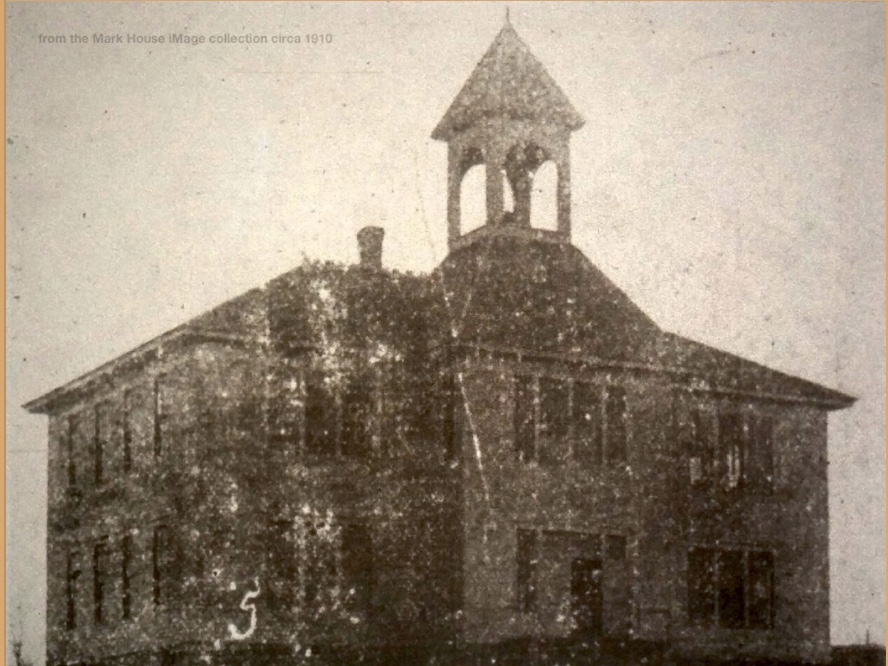
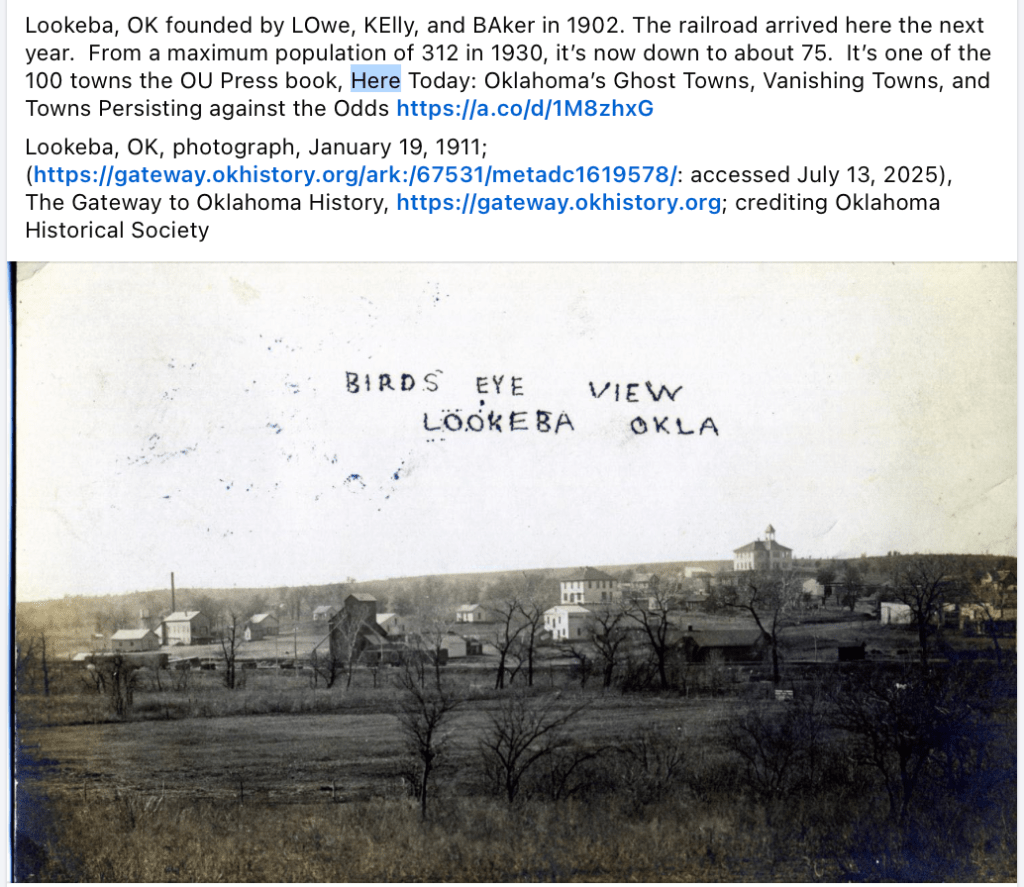
Lookeba School 1910

Most folks drive along the stretch of Oklahoma highway between Binger and Anadarko. They roll past Lookeba without ever knowing they’ve entered a place. This place is built on three simple names—Lowe, Kelly, and Baker. These names are stitched together like a handshake. Lookeba. A name that sounds almost tribal or mythic. Yet it originated from the ordinary people. They did what settlers always did in early-day Oklahoma: carved a life out of red soil and hope.

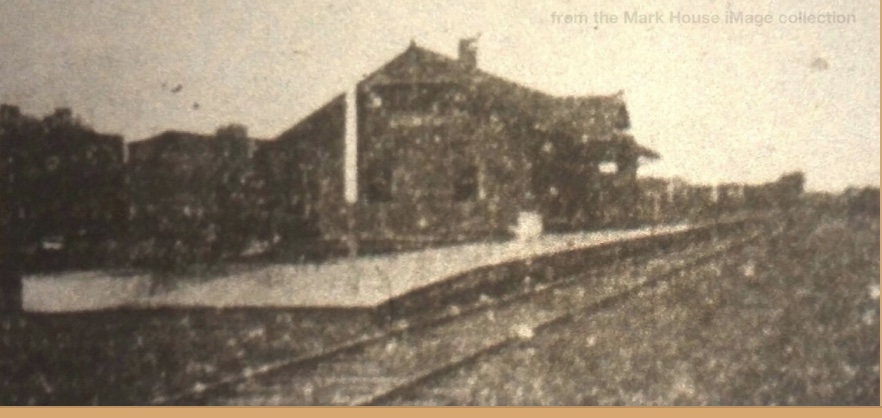
Lookeba Rock Island Depot 1904

Lookeba began as a crossroads community. It was a depot stop on the journey between larger towns. It was a place where wagons once creaked through cottonwood shade. Dust settled on the porch rails of the general store. Early schoolhouses rattled with the laughter of children carrying family names that would define the region for generations. The town’s claim to fame wasn’t oil or railroads or long sweeping history—it was quiet endurance. The land rolled gently. Storms gathered thick on the horizon. People stayed because they felt stitched to it.

Just down the way sat Sickles. It was often written as “Sickless” in old letters and memories. The name came from Hiram Sickles, a farmer. His influence stretched further than the little community ever did on a map. Sickles was more minor—more crossroads than village. Yet, it had what every reasonable Oklahoma settlement needed. This included a school, a store, and neighbors who shared tools and gossip. They also offered weather predictions no weather forecaster can match.

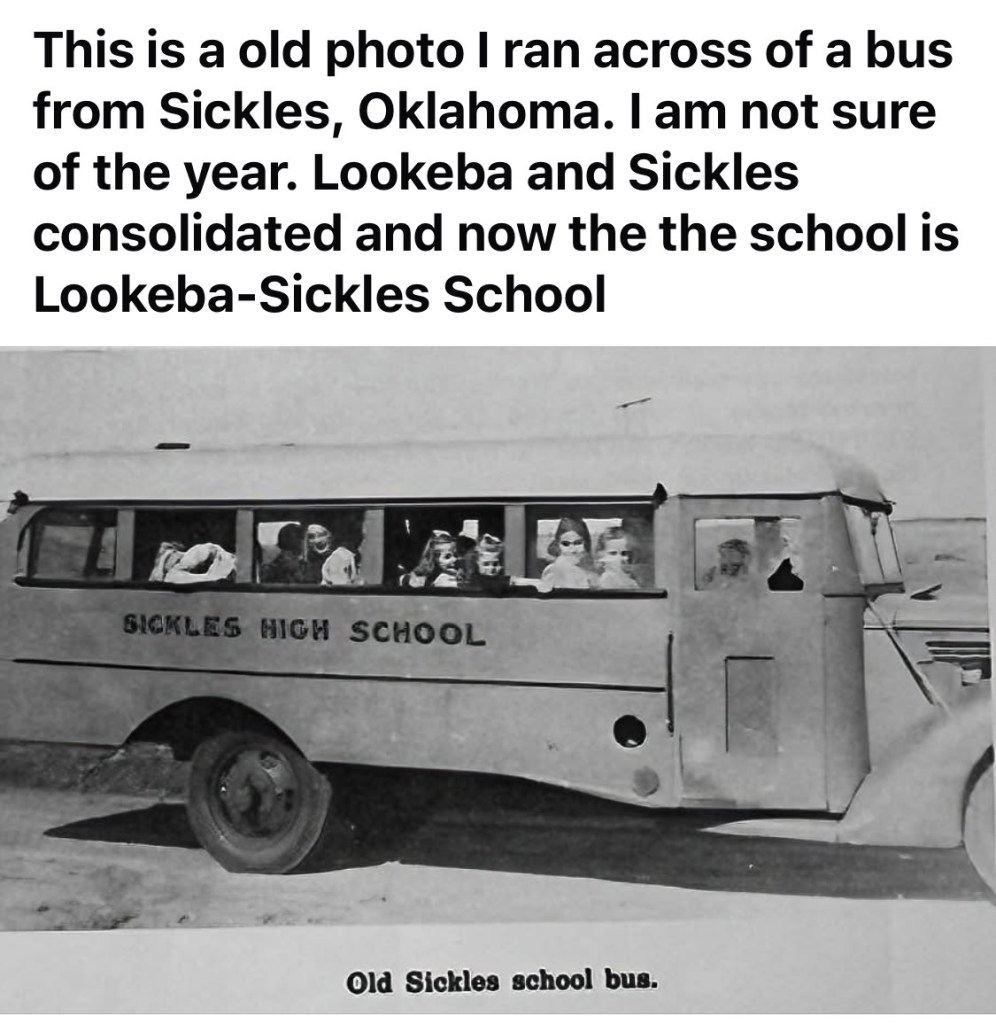
For decades, the two towns lived like siblings. Lookeba was the older and slightly larger child with a stronger sense of identity. Sickles was the quieter shadow tucked between wheat fields and pastures. Students from both communities would merge into the Lookeba-Sickles School District. They formed friendships and rivalries. These bonds outlasted the buildings that once separated them. Generations of ballplayers, farm kids, and rodeo hopefuls came together under one mascot. They were often unaware of the deep connections spanning miles of family history. This history converged whenever the gymnasium lights buzzed to life for Friday night basketball.

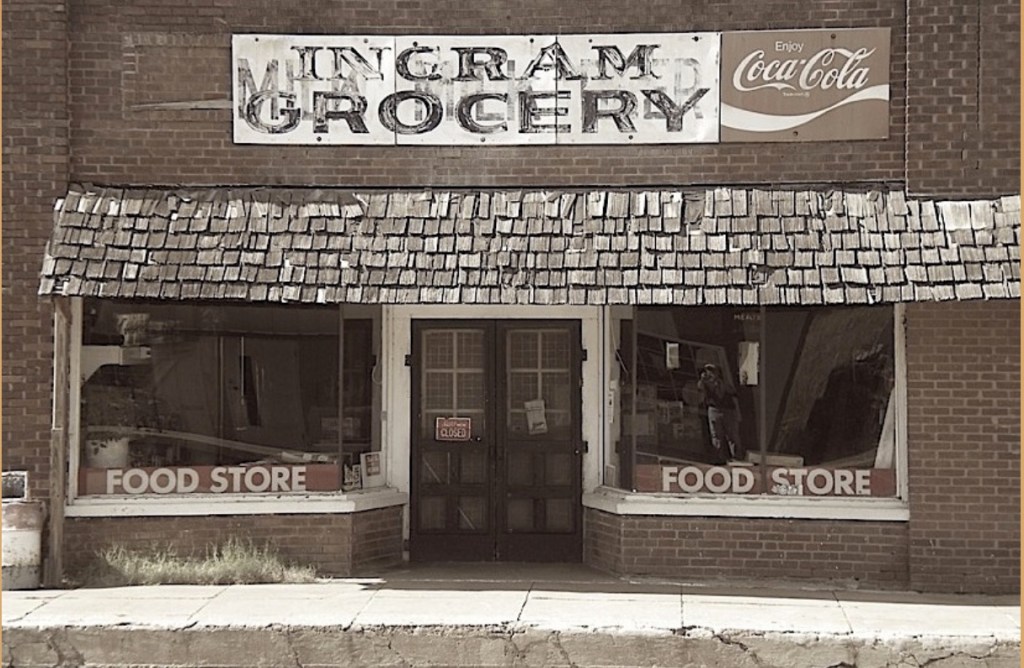
Ingram Grocery Lookeba

Time, as it always does in rural Oklahoma, thinned the businesses and emptied the old stores. The Sickles school population lowered long before its name faded from county conversations. Lookeba’s Main Street slowed to a pace that matched the prairie winds. But something remained—something that belongs only to towns like these.

A sense that history is not made by headlines but created by the people who refuse to disappear. Families make history. Their names still ring out in church directories, land deeds, and the memories of class reunions.

Stand in Lookeba today at dusk. The sun lays gold across the wheat. The cicadas start their evening hymns. You can still feel them: Lowe. Kelly. Baker. Sickles. The founders, the farmers, the families whose footprints shaped the land long before highway maps tried to catch up.

Somewhere between Lookeba and where Sickles still stands, you hear echoes of school bells if the wind is right. You also hear screen doors slamming. You hear the voices of children running toward a future. A future no one knew. But, it was a future built on names still remembered.

Lookeba-Sickles High School Current Day

Lookeba-Sickles High School is where I graduated many years ago. And, I still remember walking down the hallway and out the doors the last day of school. The thought of entering adulthood was on my mind. As I got to my car, I made a once glance back. A final goodbye, and I was gone.


By Benjamin GroffMedia© | benandsteve.com | ©2026

✨ December 22nd: The Day Christmas Quietly Comes Into View

Stories of Light, Hope, and Generosity That Shaped the Season

By Benjamin GroffMedia© | benandsteve.com | ©2025 

3–4 minutes

Some days in history whisper more than they shout. December 22nd is a unique day. It is close enough to Christmas to borrow its glow. Yet, it is far enough away to carry stories all its own. Across the world and across time, remarkable things have unfolded on this winter day. These include moments of peace, small miracles, and human resilience. There are also traditions that remind us what the season means.

Photo by Francis Seura on Pexels.com

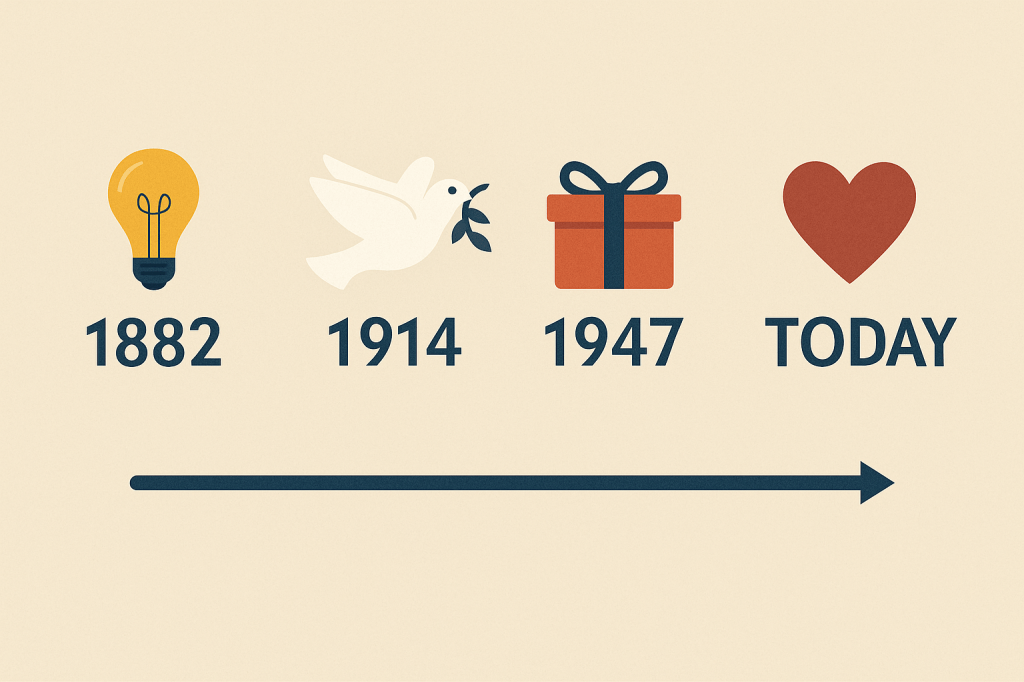
On December 22, 1882, in New York City, something quietly revolutionary happened. The first string of electric Christmas tree lights was displayed. Edward H. Johnson, a friend and partner of Thomas Edison, hand-wired 80 red, white, and blue bulbs. He wrapped them around a Christmas tree in his parlor window. Passersby stopped in awe, incapable of imagining a world where candles didn’t flicker dangerously among pine needles. That little illuminated tree didn’t just brighten a room. It changed how Christmas would look forever. It set the stage for every glowing neighborhood street and every child’s gasp at a living-room tree shimmering with color.

“Christmas doesn’t arrive all at once; it gathers quietly—in small lights, shared hopes, and simple acts of kindness.”

In 1914, during the early days of World War I, Pope Benedict XV made a plea. He renewed his call for a Christmas truce. He hoped soldiers would lay down their weapons in a gesture of peace. Though his appeal was formally rejected by commanders, the idea took root in the hearts of ordinary men. Just three days later, British and German troops stepped out of trenches. They shook hands and sang carols. They shared simple gifts—a handmade token, a cigarette, a song carried across the snow. December 22nd was the breath before the miracle, the moment hope stirred quietly in the cold.

December 22nd has also seen acts of generosity that echo the season’s oldest stories. In 1947, after the devastation of World War II, the U.S. Congress approved emergency assistance. This aid became part of what the world would know as the Marshall Plan. It ensured that families across Europe would have food on the table for their first Christmas. They would also enjoy warmth in their homes. It was a global gesture wrapped in the spirit of giving. One nation extended a hand to millions just as winter closed in.

Photo by RDNE Stock project on Pexels.com

In more recent times, December 22nd has become a day of community gatherings for modern traditions. These include the last holiday concerts before school breaks. Candlelight services start earlier each year. Charity drives reach their peak as people remember that giving is a privilege of the heart. Across cities and small towns, volunteers load food boxes, firefighters deliver toys, and neighbors check in on neighbors. It is the quiet engine of Christmas—the work done without fanfare.

And today, just as in years past, December 22nd invites us to pause. We are encouraged to notice the light in our own windows. We should join hands in the work of kindness. Let the warmth of the season reach places that have been cold for far too long.

“In every age, a single day can hold the spark that brings the season to life.”

That’s what makes December 22nd special. It is not the beginning of the season, nor the grand climax. It is the steadying moment before Christmas arrives. A day shaped by innovation, by hope for peace, by generosity, and by the simple acts that bind us together.

For Christmas is three days away,
but its spirit has already stepped quietly into the room.


By Benjamin GroffMedia© | benandsteve.com | ©2025 

Binger Oklahoma Home Of Johnny Bench – The slow vanishing of the heartland!

By Benjamin GroffMedia© | benandsteve.com | ©2025 

7–10 minutes

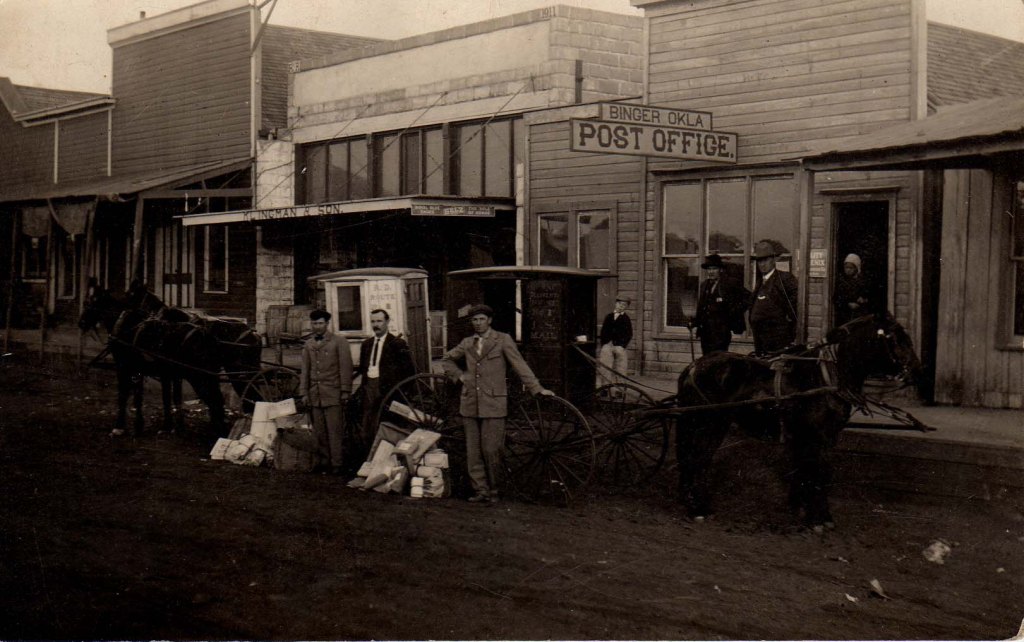
The next photographs depict an small town in Oklahoma from its birth through current day.

Going to town. Getting groceries, supplies and other needed items were essential trips in the late 1800s and early 1900s. Towns like Binger, Oklahoma were places where such trading centers would become popular. Train depots and later bus lines would bring needed connections to the area.

The above photos capture buildings that no longer stand. They were lost in one of the early fires that shaped the town’s history. The original downtown was once located near the area now known as the Johnny Bench Ball Park. This is at the Fair Grounds. After each fire, the town slowly shifted north. It rebuilt itself one block at a time. Eventually, it settled into its current location. The Post Office was a major accomplishment for any community to achieve. When a post office came, it marked the community’s success. The community became a reliable base for investors, visitors, and tourists.

State Highway 152 now runs through the center of town. Locals know it as Main Street. This familiar stretch has quietly observed generations pass through. This place is not what I call my hometown. But, it remains part of my associations. It is woven into the landscape of where I grew up and the memories that shaped me. During the 1950s to 1980s, hundreds of teenagers gathered on Binger’s Main Street. They saw it as the Main Drag on Friday and Saturday nights. It was as hot as a radio station spinning its latest hit. Both tunes filled the air from the City Hall. Tires spun all the way to the east end by the CO-OP. Button Williams, the towns Police Chief, watching carefully over the towns teen as he had since God’s creation. His Assistant Chief Jerry Wright there to catch calls on off nights.

Binger has always felt like one of those places where sports held the town together. The fields and courts were filled with tough farm kids. They were shaped by long days and dusty roads. Life taught them strength early. Many came from the Caddo and Kiowa Nations. People from other tribes joined them. Together they formed a close-knit spirit. This made every game feel like a community event.

From those humble beginnings came Johnny Bench. He was a local boy who carried his talent all the way to the Cincinnati Reds. He proudly wore number 5. The town still honors him with a small museum. It serves as a quiet reminder of how far a dream can travel from a place like this. And then there was Robert Johnson Jr., who tasted professional baseball but chose the familiar comfort of small-town life instead. In these memories, the heart of Binger lives on. It resides not just in its history. It also lies in the way it shaped those who once called it home. My grandfather bought the first Model T Ford from the town of Binger’s Ford dealership. They came to town to sell them when the Model T’s came out. “Pop” described the Ford outfit as being near where an old Caddo Electric building sets today. If you drive through the town, you will see the big white building. It’s on the corner near US281 and SH-152.

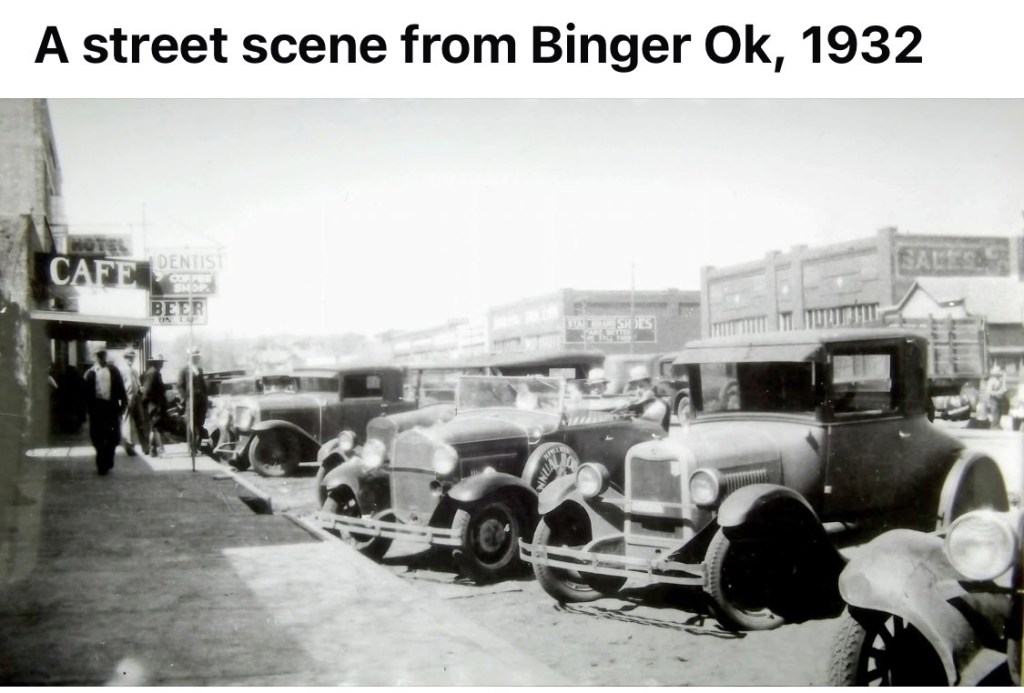
The above photo shows Main Street in Binger, Oklahoma, in 1932. It captures a quiet moment frozen in time. After the town burned twice, it rose again each time. It was rebuilt about a block north of its original location. This carried with it the stubborn spirit of those who refused to let it disappear. This image shows what became the final resting place of that rebuilt heart of town.
When the sidewalks were poured, metal rings were set into the concrete. They were meant to tether horses and wagons. Townsfolk stepped inside to conduct their daily business. For decades, those rings remained. They served as humble reminders of a slower pace and simpler life. In the mid-1970s, new federal accessibility requirements called for lower ramps and fresh pavement. With that change, the old sidewalks were replaced. The iron echoes of the past quietly vanished. Now, only memory and photographs tell their story.
This photo was found behind a old counter in the back of a business in the 1970s. Its dated as being in the 1920s. Which is a possibility. The name of the business is unknown. Yet longtime residents at the time did recognize the business as belonging to the town.
Binger once hosted three cafes and a hardware store. It also had two barber shops, a bar, and a propane company. There was a drug store, a movie theater, and two grocery stores. Additionally, it featured two laundries, a plumbing company, and a funeral home. The town included a post office, an electrical repair shop, a junk-pawn shop, and a pool hall. Binger also had two dry goods stores and a Western Auto. It had a Chevrolet Dealership, a TV Repair Service, and Three Service Stations. These were a Sinclair, a Gulf, and a Git-N-Go. There was also a dress shoppe. There was even a healthy farmer’s Co-Op. There were many other businesses that came and went in between the years. The public school was well respected in the County and had been given financial support to meet its needs.

This is a photo of the buses traveling both directions along Main Street in Binger. I’ve carried it with me for years. I have shared it many times. It always stirs the same familiar sense of remembering. This photo was taken while looking west. It captures the gentle rise at the end of the street — Binger Hill. For generations, this slope has slowed heavy trucks. It becomes unforgiving during icy winter storms.

On the right side, the white building stands just before the line of trees begins. It once served as City Hall. Inside were the fire department, water department, and city clerk. The building also housed a small police office. There was a jail that I can assure you no one was eager to test. The bars were thick, cold steel, reinforced and unyielding. I saw more than a few individuals placed there by the town’s two-man police force. This pair quietly carried more responsibility than most ever realized.

This photograph isn’t just about traffic or buildings. It holds a piece of a time when Binger moved at a gentler pace. The town watched over its own. Every corner held a story waiting to be remembered.


Johnny Bench rode home with the Binger High School baseball team on April 1, 1965. They had just played a game in nearby Riverside. This was a routine trip. It would become a moment forever etched into the town’s history. As the bus crested a hill, the coach suddenly realized the brakes had failed. The vehicle couldn’t slow down. It careened into a curve at dangerous speed. It burst through the guardrail and plunged nearly fifty feet into a ravine below.

The accident claimed the lives of two young teammates, Harold Sims and Billy Joe Wylie. This loss rippled through a small community that mourned deeply. Amid the chaos, Bench survived. He was guided by advice once given by his father. His father was a propane truck driver who understood the dangers of the road. He had told his son that in such a situation, the safest place was the floor of the vehicle. Remembering those words, Johnny dropped down. He instinctively pulled teammate David Gunter with him. This act well have saved both of their lives.

What followed was not just a tale of tragedy. It was also a story of instinct and survival. There was a quiet strength carried forth from a small Oklahoma town into the story of a legendary career.

Johnny Bench, the legendary Cincinnati Reds catcher, was known for the remarkable size and strength of his hands. Many claim he can palm as many as five baseballs in one hand. He famously demonstrated this skill on the television program This Is Your Life in the early 1970s. This moment is still remembered by many longtime fans.


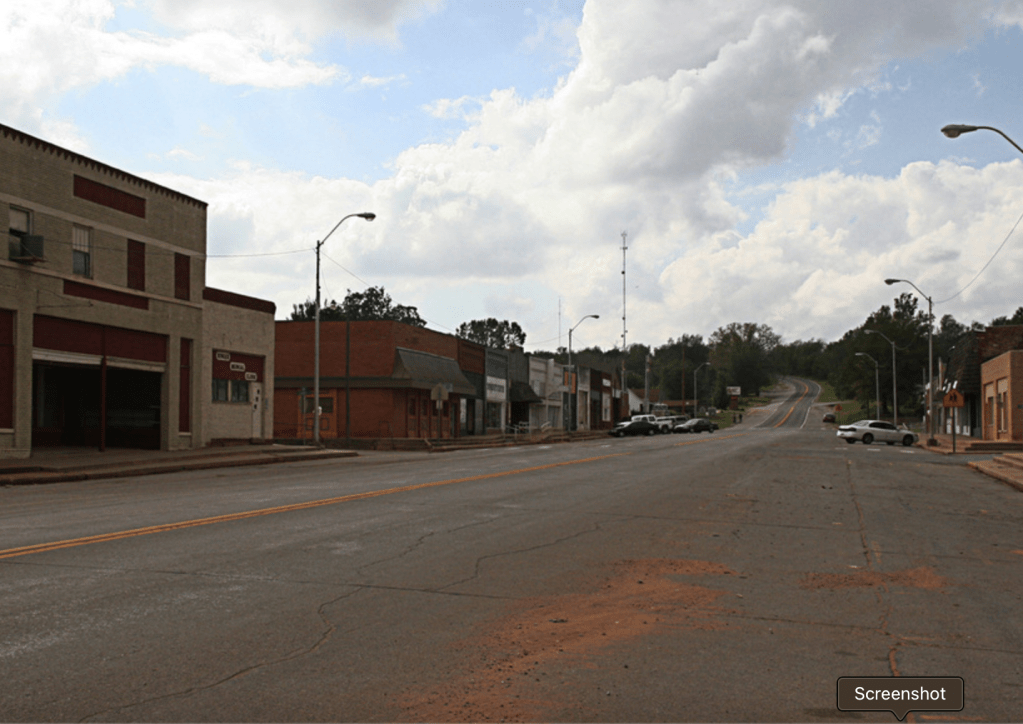
Today the state highway runs right through the town’s middle section. What once was a Main Street with shops and store fronts bustling with shoppers and townspeople is now empty. It is nearly deserted.

Cart’s Lumber on the Town’s East side is one of the few businesses providing services to the town.
The Medical Center reportedly closed some years ago.

There are a few businesses still open in the town. A dollar store, a satellite bank of a local branch is located on the hill. There is one diner. A convenience store. A bar and the Post Office. But for most part, the buildings you find will be empty, boarded up and closed. In the 1970s, the town’s streets were packed with people parking to go shopping on Main Street. Now, the streets are wide open. Many contribute the towns rundown to the Caddo Electric Headquarters moving it’s headquarters three miles east of town. It caused many doing business with the Electric Cooperative to avoid stopping in Binger. It was the first set of nails in the towns casket. The others were placed there when too much faith was placed in the oil industry. Then as shops began to close, people began to move, and the towns center stopped functioning. I know because I was there and watched it. This was the town closest to our farm. I graduated from a school some fifteen minutes away, a place called Lookeba-Sickles. And that place is story for another day!


By Benjamin GroffMedia© | benandsteve.com | ©2025 

Alice Kessler & Ellen Kessler — Twin Lives, Shared Stardom, and a Final Choice Together

By Benjamin GroffMedia© | benandsteve.com | ©2025 

3–4 minutes

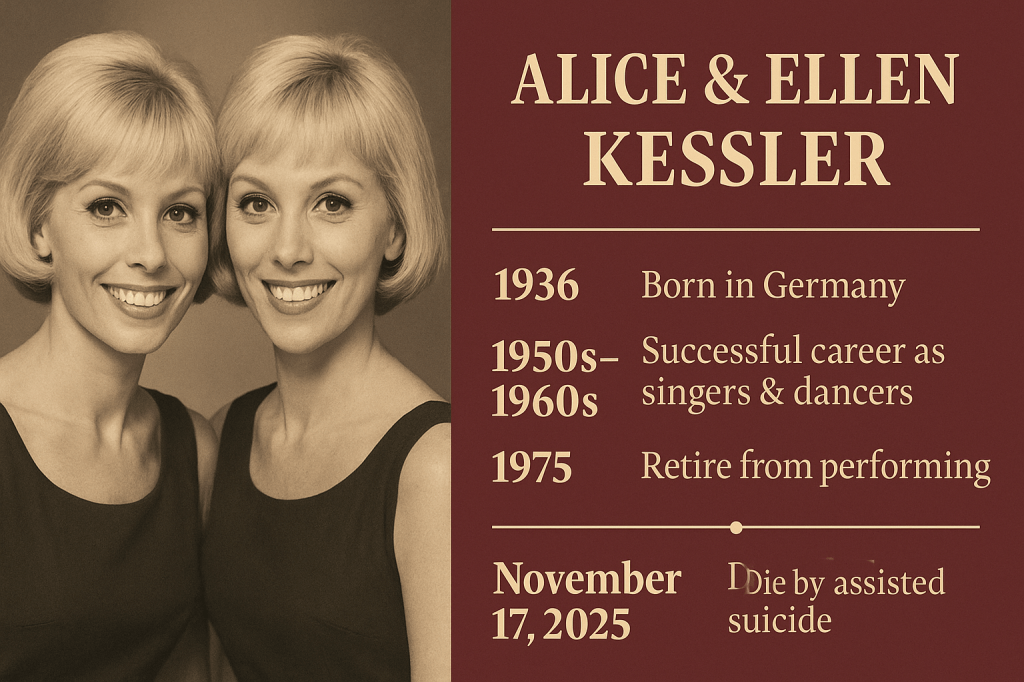
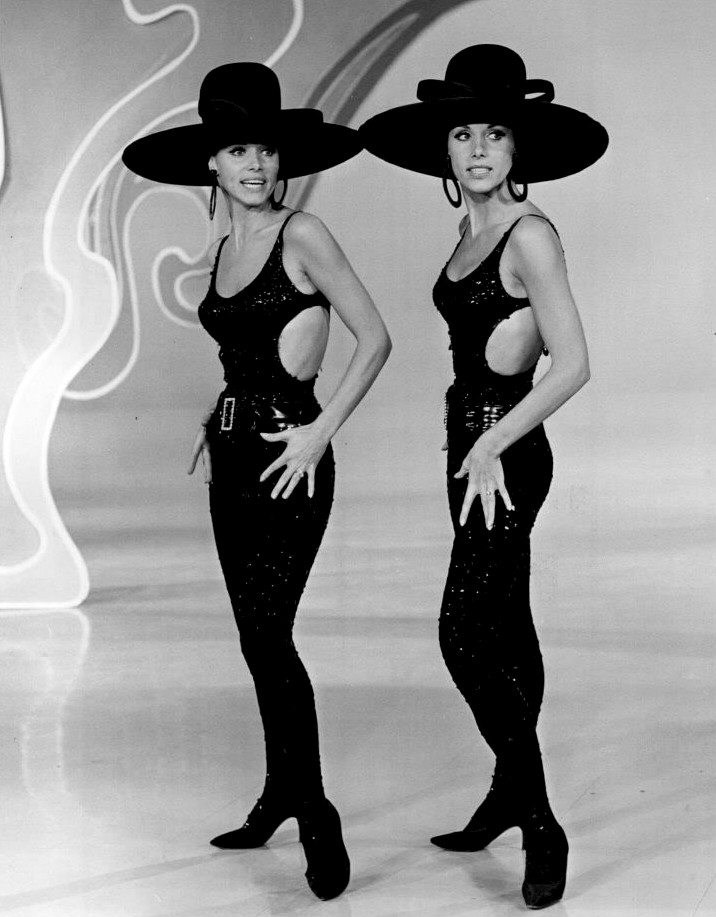
Alice and Ellen Kessler were born on August 20, 1936, in Nerchau, Saxony, Germany. From early childhood, they trained in ballet and performance, eventually emerging as a dazzling twin act in post-war Europe. They became known internationally for their synchronized dancing, singing, and television appearances. They found particular fame in Italy, where they were dubbed “Le gemelle Kessler”.  

They appeared in films like Love and the Frenchwoman and Dead Woman from Beverly Hills . Their careers expanded beyond dance into acting. 

Shared Career, Shared Life 

For decades, they performed as a unit—twins inseparable both on and off stage. Their image of elegance, glamour, and synchronized precision made them icons of entertainment in the 1950s and 1960s. Their bond remained strong even as they stepped away from the spotlight, ultimately returning to Germany and settling near Munich.

Their Final Days & Decision

On November 17, 2025, both Alice and Ellen passed away in Grünwald, Bavaria, Germany, at the age of 89.  Their cause of death is reported as assisted suicide. They made this decision together. It reflects how they had lived life: side by side. 

The sisters had long ago expressed the wish to be cremated together. They wanted their ashes placed in a single urn, according to reports. They had indicated they no longer wished to continue their current life. They chose to end their lives together. 

Why They Made That Choice

While the intimate details of their decision stay personal, the public record suggests the following contributing factors:

  • Age and quality of life: At 89, they faced the realities of aging. Having lived their whole careers, they wished to face death by choice rather than decline.
  • Deep bond: Their identity had been formed around always being together—professionally and personally. The decision to depart together echoes the unity they maintained for nearly nine decades.
  • Autonomy in the final act: In Germany, since 2019, medical aid in dying has been legal under certain conditions. This involves an individual administering prescribed medication themselves. They chose the timing, setting, and manner—affirming their autonomy to the end.

Legacy and Reflection

Alice and Ellen stay symbols of an era of variety-show glamour. They epitomize cross-European entertainment. Their twin synergy is unmatched by few acts. But beyond their performance, their final act raises profound questions about dignity. It also questions companionship and the nature of choice at the end of life.

Their journey is a full-circle narrative for fans, historians, and those intrigued by human stories. They start as childhood ballet students. They become international stars. Finally, they become co-authors of their own end. It shows how life can be lived. It also demonstrates how life can be shared and completed on one’s own terms.

Closing Thoughts Remembering The Kessler Sisters

How many partnerships in life are built to last so long, and so deeply? 

The Kessler twins remind us of devotion not only to craft, but to each other. In their final act, they teach us something tender and unsettling. They reveal the power of choice, the weight of togetherness, and the mystery of closure.

Latest on the Kessler Twins’ passing

NEWS BULLETIN. TUESDAY NOVEMBER 19, 2025

The Kessler Twins have left this world together.

Alice Kessler and Ellen Kessler—German twin sisters who performed as a variety entertainment duo—died by joint assisted suicide at their home in Gruenwald, Germany, on Nov. 17, according to the German Society for Humane Dying (DGHS).

“They had been considering this option for some time,” the association, which advocates for the right to a self-determined death, said in a statement to NBC News. “They had been members of the organization for over a year.”

Explaining that those “who choose this option in Germany must be absolutely clear-headed, meaning free and responsible,” the organization noted that the sisters engaged in thorough discussions with a lawyer and a doctor before setting on this path.

“The decision must be thoughtful and consistent,” the DGHS added, “meaning made over a long period of time and not impulsive.”

Assisted dying is legal in Germany, with the country’s constitutional court ruling in 2020 that an individual has the right to end their life and seek help from a third party under certain circumstances.

MEMORIAL: VIDEO – NOT A DRY EYE IN THE HOUSE


Groff Media ©2025 benandsteve.com Truth Endures

Guardians of Memory: Writing Our Truth Before It’s Rewritten

© Benjamin H. Groff II — Truth Endures / benandsteve.com

1–2 minutes

Tell It Like It Is

There comes a time in every nation’s history when silence becomes more dangerous than speaking. We are living in such a time now. Books are being banned, lessons erased, and truths rewritten to serve new agendas. What once stood as collective memory is being scrubbed clean, leaving behind a shell of what was. But history, real history, lives in the people who lived it — and that means you.

If the history of your people, your town, your family, or your country is under attack, write it down. Don’t wait for permission. Don’t assume someone else will record it for you. Every letter and every diary is a piece of the truth. Every recollection of how life was is also a piece of the truth. This includes the food you ate and the songs that played on your street. This truth is something that no one can erase.

Print it. Bind it. Keep it in a box, a drawer, or a chest. Place it anywhere it can be found by those who come after you. Share copies among your family members. Hide one in a place that time itself will forget. Digital memories are fleeting; servers fail, passwords vanish, and what is “deleted” online is often gone forever. But paper endures.

We have the power, still, to protect the soul of a free people — not through politics, but through preservation. Keep the banned books. Read them. Understand why they were silenced. They are often the keys to liberty’s locked door. The stories, poems, and records we save are not only for nostalgia’s sake. They defend against those who claim freedom was always fragile. They made it seem that way to future generations.

When freedom falters, truth is what leads us back.
Write your book. Tell your story.
Save it as if your grandchildren’s liberty depends on it — because one day, it just will.


By Benjamin GroffMedia© | benandsteve.com | ©2025 

October 20th — A Day to Reflect on the Strength of Democracy in a Republic

1–2 minutes

October 20: A Day of Quiet Turning Points

Some days in history roar with drama. Others whisper their significance so softly we almost miss it. October 20 is one of those whispering days. Yet, it carries lessons about resilience. It also teaches about change and the long arc of progress.

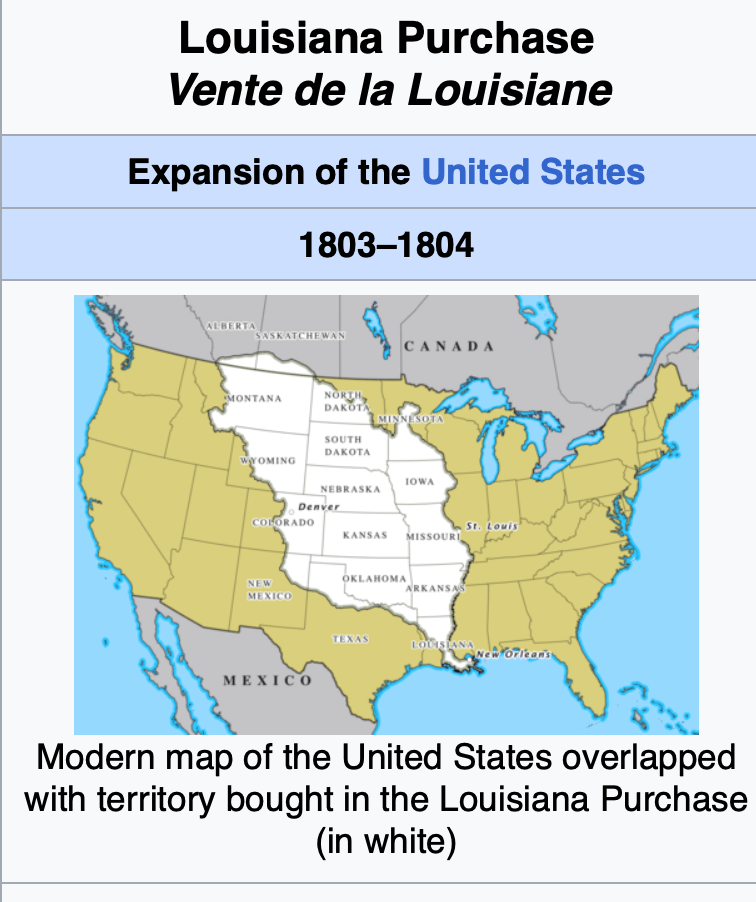
On October 20, 1803, the U.S. Senate ratified the Louisiana Purchase Treaty, doubling the size of a young America. It wasn’t just a land deal; it was a leap of faith in a still-unfolding national experiment. The deal shaped the destiny of millions who had not yet been born and transformed how people saw opportunity. That’s one perspective on October 20. It reminds us that big things often start quietly. They are inked onto paper while the world goes about its business.

Photo by Jacob Morch on Pexels.com

Fast-forward to October 20, 1973 — the “Saturday Night Massacre” during Watergate. The Attorney General and his deputy resigned rather than obey President Nixon’s order to fire the Watergate special prosecutor. It was a night of constitutional crisis, but also a night when individuals drew lines they would not cross. In retrospect, it became a defining moment of accountability, integrity, and public trust.

Even in culture, October 20 pops up. It’s the birthdate of artists, athletes, and ordinary people whose work changed lives. It’s also National Youth Confidence Day. It’s a chance to celebrate the courage of young people. They are forging their own paths, as each generation must.

Photo by Monstera Production on Pexels.com

So what does this all mean for us on October 20, 2025

Maybe it’s a nudge to honor the quiet decisions. It is about the unsigned papers and the moments of private courage. These shape our futures just as much as public fireworks. Maybe it’s a reminder to invest in tomorrow. Take the risk. Speak the truth. Double down on hope, even when nobody’s watching.

October 20 is not a “holiday” in the traditional sense. It is a hinge day. It is one of those unassuming points on the calendar. History reminds us that the choices we make today become the landmarks of tomorrow.


By Benjamin GroffMedia© | benandsteve.com | ©2025 

Where the Barrel Cactus Sits: Visiting Chiawuli Tak, Arizona

1–2 minutes

Welcome to Chiawuli Tak, Arizona—a sun-drenched speck of a census-designated place nestled in Pima County. The town had just 48 residents in 2020. It has risen to an estimated 112 today. It’s the town where “small population” doesn’t even start to cover it. (And yes, that growth rate of about 6.7% annually is basically like adding a few family reunions per year.) (1)


Once upon a Sunday, locals cheered when a tumbleweed gently tapped on the general store window. They marveled at it, of course. The nearest neighbor hosts alone can use the company. With a population density of around 20 people per square mile, it’s quieter than most people’s living rooms. If you shout “Howdy!” in Chiawuli Tak, you’ll hear your own echo. You also hear the echoes of three generations of family dogs responding in kind. (2)


Despite its tiny size, 19 households call Chiawuli Tak home. Nearly five people per house live there on average. There are a handful of single dads. They are brimming with dad jokes. There are also single moms who know the power of multitasking. Enough cousins exist to start a family band. Everyone’s related, and everyone knows the town gossip by breakfast. (3)


The name Chiawuli Tak comes from the O’odham language and means “the barrel cactus sits.” It is the only town in America deliberately named after a cactus that sat down. This cactus thereby became the most laid-back plant in the desert. (4)


Chiawuli Tak reminds us that it doesn’t take big cities to tell good stories. Sometimes, you just need a handful of folks, a trusty barrel cactus, and a whole lot of unexpected charm. So raise your morning coffee high. Do it for the towns that make you smile. These towns only show up on very sparse maps.


By Benjamin GroffMedia© | benandsteve.com | ©2025 

October 10 in History: Key Milestones and Cultural Impact

3–4 minutes

Oct 10th a good day for history
How history can pile up on any day of the year.

How did we arrive at our current state? It is a question a lot of people are asking. It didn’t happen all at once. Getting to where we are, was forever in the making. Before anyone alive today was here. There have been people making decisions, some not so great. Life happens. It is a popular saying for some people. And as you can tell through this date in history. October 10th was a great day for history to be set. It doesn’t explain everything that has happened. But it does give one an idea of how history can pile up on any given day.

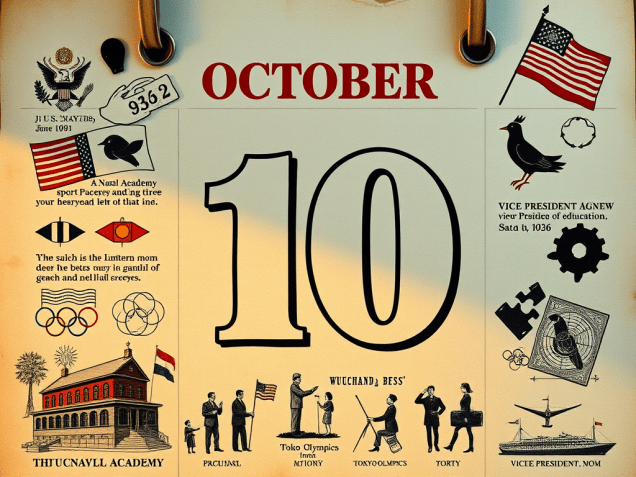
Here’s an evocative image of a calendar marking October 10. It serves as a visual prompt for a day rich in history. This day includes milestone events and global observances.

  1. 1845 – U.S. Naval Academy Founded
    • In Annapolis, Maryland, the Naval School opens with its first class of 50 midshipmen. This event lays the foundation for the modern U.S. Naval Academy.(1)
  2. 1911 – Wuchang Uprising Ignites Revolution This bold move sets the stage for the fall of China’s Qing dynasty. It also leads to the emergence of the Republic of China.(2)
  3. 1935 – ‘Porgy and Bess’ Debuts on Broadway
    • George Gershwin’s groundbreaking opera, featuring an all-Black cast, premieres to widespread acclaim.(3)
  4. 1964 – Tokyo Olympics Start: A Global Broadcast
    • Making history, these Summer Games are the first to be televised live worldwide.(4)
  5. 1973 – Vice-President Agnew’s Resignation
    • Spiro Agnew steps down amid tax evasion charges, a rare and dramatic political moment in U.S. history.(5)

October 10, 1973: A Domino That Changed the Presidency

On October 10, 1973, U.S. Vice President Spiro T. Agnew resigned in disgrace. He pleaded no contest to tax evasion charges. These charges stemmed from a bribery scandal dating back to his time as Maryland’s governor. A sitting Vice President had never stepped down under criminal accusations before. This event sent shockwaves through American politics.

The resignation created an immediate power vacuum. Under the 25th Amendment, passed just six years earlier, President Richard Nixon was capable of nominating a new Vice President. His choice was Michigan Congressman Gerald R. Ford, a steady Republican leader respected across party lines. Congress confirmed him in December 1973, setting in motion a sequence of events no one predicted.

Only months later, the Watergate scandal deepened. Nixon’s credibility unraveled under the weight of investigations into the cover-up of the break-in at the Democratic National Committee headquarters. With impeachment looming, Nixon resigned on August 9, 1974—the first U.S. president to ever do so.

In that instant, Gerald Ford became president. He told the American people in his swearing-in speech: 

“Our long national nightmare is over.” 

Ford’s ascent to the Oval Office was accidental. He became the only person to serve as both Vice President and president without being elected to either office.

Looking back, it’s clear that Agnew’s resignation on October 10 wasn’t just a scandal. It was a turning point in American history. Had he remained Vice President, Agnew—not Ford—would have been next in line when Nixon resigned. The nation, already reeling from Watergate, faced the reality of a president tainted by his own corruption charges. Instead, Ford’s calm, if brief, presidency offered a bridge back to stability.


👉 OCTOBER 10, 1973 stands as proof of how a single resignation reshaped the presidency. It altered the line of succession. It changed the course of American political history.

October 10 is more than a date—it’s a living mosaic of pivotal moments, human emotion, progress, and remembrance. It reflects how history shapes us and how we, in turn, continue writing it.

By Benjamin GroffMedia© | benandsteve.com | ©2025 

Leif Erikson Day: Honoring Exploration and Heritage and World Post Day Both From A Very Long Time Ago – Especially Now!

2–3 minutes

October 9 is more than just a date on the calendar. It’s a day rich with meaning. The day celebrates global communication. It also honors the spirit of exploration. Here are two powerful ways this day reminds us of human connection:


In 1874, the Universal Postal Union (UPU) was founded in Switzerland. This event marked the beginning of the modern era of global communication. Today—World Post Day—we honor the postal service’s vital role in connecting communities, families, and hearts across the globe. Post offices celebrate with stamp exhibits, open houses, and even letter-writing competitions for young people. (1)


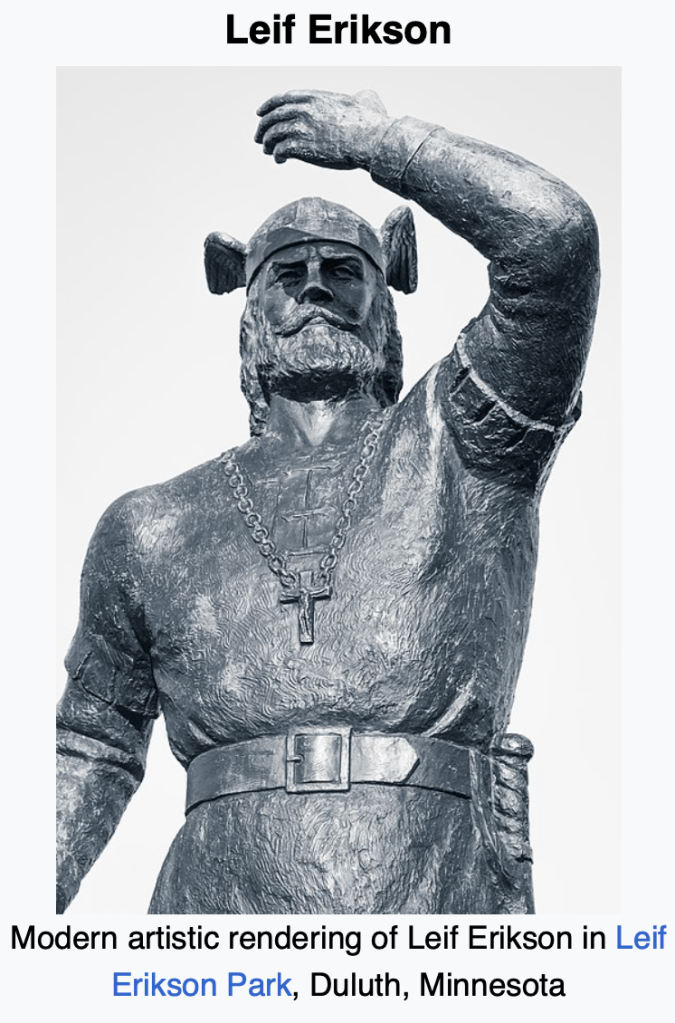
Leif Erikson Day is also celebrated today. This day honors the Norse explorer. He is believed to be the first European to reach North America. Established in the early 20th century and federally recognized in the U.S. in 1935, the day is especially cherished in communities of Nordic heritage. It’s a celebration of bravery, curiosity, and the timeless call of new frontiers.(2)

In 1929, the Wisconsin Legislature passed a bill to make 9 October “Leif Erikson Day” in the state. In the years after, several other states adopted laws to celebrate the day.[81] In 1935, legislation was introduced to the United States Congress requesting federal observance of the day. Before the legislation was passed, it was amended so that the observance would only occur in 1935. [82]  Which it was, after a proclamation that year by President President Franklin D. Roosevelt).[83] In future decades, many attempts to pass legislation were unsuccessful. They sought to have Leif Erikson Day proclaimed annually by the president.[84]Proponents eventually succeeded. In 1964, the Congress authorized and requested the president to proclaim 9 October of each year as “Leif Erikson Day”.[19]In the years since, each president has issued an annual proclamation calling for observance of the day.[85]. (3)


These historic observances brought to mind a personal story I experienced just last weekend:

Visiting the grocery store, I ran into a long-forgotten neighbor—someone I’d only exchanged waves with in passing. We chatted by the fruit stand for several minutes, sharing news, laughter, and even some life advice. When I left, I carried more than groceries. I carried renewed warmth. It was a reminder that connection doesn’t have to be epic to be meaningful.


  • Send a letter or thank-you note—traditional or digital. Let someone know how much they matter.
  • Reach out to someone you haven’t spoken to in a while. A simple chat can rekindle connection.
  • Think about exploration—big or small. Whether learning something new, trying a recipe, or visiting a new place, celebrate the courage that brought you there.

On this October 9, let’s honor our past. Let’s look ahead with open hearts. We will celebrate the small connections that make life rich and whole. Especially if countries around the world are shipping to America again. If not, keep an eye on history. It happened once. It will happen again. Maybe.


By Benjamin GroffMedia© | benandsteve.com | ©2025 

Lessons from the Last Broadcast: Questioning the Airwaves

1–2 minutes

The Last Broadcast

Sam Delaney had been a radio man his whole life. Station manager, on-air talent, janitor when needed—he had done it all. Now, in his seventies, he sat in the empty control room of what was once a bustling AM station. The place smelled of dust and warm circuitry. The walls hummed with silence.

Sam still knew every button by heart. Especially the one marked EBS—Emergency Broadcast System. Back in the day, the FCC’s rules were clear: tones were sacred. The piercing signal wasn’t just a sound; it was a promise. Tornado warnings. Flood alerts. The nation’s line of defense against panic. There had been rules—Title 47 of the CFR, etched into his memory like scripture.

But things had changed. With each new administration, the guardrails loosened. The equal-time law that once kept political chatter balanced had vanished decades ago. A president erased it. He feared his old Hollywood reels would force TV stations to give airtime to his critics. One law changed, and suddenly the airwaves were open territory—bluster, bias, and one-sided noise pumping into homes unchallenged.

Now Sam watched as networks ran those same tones he once revered, but not for weather or disaster. They tested loyalty. They triggered crowds into a frenzy. They commanded obedience in ways he never imagined. Once, tones meant safety. Now, they meant control.

He rubbed the crease in his neck where headphones had rested for thirty years. Outside, the town he had called home was no longer united. Neighbors didn’t trust neighbors. Families split along the fault lines of which voice on the radio they listened to.

Sam leaned into the old microphone. The ON AIR light flickered.

“What if I told you,”

He began. His voice was gravel but steady.

“The lie isn’t in what you’re hearing. It’s in what you stopped questioning.”

He paused, finger hovering over the tone button.

For the first time in his career, he considered sending out a tone. This was not to warn people of a storm but to warn them of themselves.


By Benjamin GroffMedia© | benandsteve.com | ©2025 

Statues, Highways, and History: Keeping Hate Visible as a Warning

Statues and names aren’t just honors—they’re reminders. By keeping the names of hate in public view, we offer the right context. This turns symbols of division into warnings for the future.

2–3 minutes

Why We Should Keep the Names of Hate in the Public Eye

Photo by Germar Derron on Pexels.com

We’re living in a time of debate across the country. Communities are considering whether to remove statues and rename highways. There’s also discussion on erasing the public memory of people who promoted hate, bigotry, and division. It’s an understandable impulse: why honor those who harmed others? But erasure carries a hidden risk—forgetting.

History teaches us that forgetting the darkest chapters makes it easier for them to repeat. When names are scrubbed away, the context can be lost. Future generations will not know the full weight of what those people stood for. Worse still, without clear memory, others try to rehabilitate these messages. Some try to whitewash them. Others rebrand the hateful messages into something even more dangerous.

Keeping those names visible—in the right way—turns them from tributes into lessons. A highway named after a segregationist can become an outdoor museum. A statue of a tyrant can stand in a public square. A plaque can explain exactly what they did. It can also explain why it was wrong. By preserving their presence as warnings, not celebrations, we turn the symbols of hate into tools for education.

This is not about reverence. It’s about responsibility. Public memory should hold two things at once. First, the good we want to emulate. Second, the evil we must never repeat. We can’t do that if we pretend the evil never existed.

The Takeaway

We remember the names of those who promoted hate and division. By doing so, we deny them the chance to be rebranded as something they were not. Their actions stay tied to their identities. Their legacy becomes a constant, unavoidable reminder of how close we once came to tearing ourselves apart. If we truly want a brighter, more united future, we need both inspiration—and warning signs along the way.


By Benjamin GroffMedia© | benandsteve.com | ©2025 

Warning Signs: What Recent Shootings Reveal About America’s Pressures

4–6 minutes

When Politics Turns Deadly: What Recent Shootings Reveals About America’s Pressures

Political Violence in the U.S.: A Historical Lens Political Pressure Pots That Are Exploding

On September 10, 2025, conservative activist Charlie Kirk was fatally shot while speaking at Utah Valley University. The attack shocked audiences nationwide and revived a painful question: Is political violence becoming more common in the United States? While the details of this case continue to unfold, history offers context. The Kirk shooting is tragic, but it’s not unprecedented—political assassinations and attacks have occurred before. Understanding that history can help us prevent future violence.

Throughout U.S. history, public figures have been targeted for their beliefs, activism, or positions of power. These events—though rare—often show deep social, political, or cultural tensions. Below is a timeline of key moments, followed by how they compare to today.

Year / Victim / Role / Context / Motive

On April 14, 1865, Abraham Lincoln, the U.S. President, was assassinated by John Wilkes Booth, a Confederate sympathizer.

1901 William McKinley, U.S. President, was killed by anarchist Leon Czolgosz.

1935 Huey Long, U.S. Senator / LA Governor, was shot by Carl Weiss amid political turmoil in Louisiana.

1963 Medgar Evers, a Civil Rights Activist, was shot outside his home for his activism in Mississippi.

In 1963, President John F. Kennedy was assassinated while riding in a motorcade in Dallas, Texas. Lee Harvey Oswald was arrested for the crime. He was shot and killed by Jack Ruby before standing trial. The official record names Oswald as the lone gunman. The motive has remained an issue of widespread debate and speculation for decades.

1965 Malcolm X, a Civil Rights Leader, was killed during a public speech in Harlem.

1968 Robert F. Kennedy, the Presidential Candidate, was shot after a campaign rally in Los Angeles.

On April 4, 1968, Dr. Martin Luther King Jr.—American Baptist minister, civil rights leader, and Nobel Peace Prize laureate—was assassinated. He was standing on the balcony of the Lorraine Motel in Memphis, Tennessee when it happened. James Earl Ray, an escaped convict, was arrested for the murder two months later and later pleaded guilty. Ray claimed he was part of a larger conspiracy. He later tried to recant his confession. Nonetheless, the official record names him as the assassin. The motive remains the topic of debate. King led the civil rights movement. He opposed systemic racism. These actions made him a frequent target of threats and hostility.

1969–70s Various bombings & shootings Political & protest-related Weather Underground, far-right and far-left extremist groups.

2011 Gabrielle Giffords (survived), U.S. Representative, was shot at a constituent event in Arizona; six others were killed.

High profile, targeted instances of political violence

Charlie Kirk shooting*

Killed

Orem, Utah

Kirk was shot and killed while speaking at an event on the campus of Utah Valley University. Kirk was a well-known conservative activist who founded Turning Point USA.

Sept. 2025

*Officials have not confirmed that the shooting was politically motivated.

*Officials have not confirmed that the shooting was politically motivated.

Minnesota lawmaker shootings

2 killed, 2 injured

Minneapolis, Minnesota

A gunman targeted several Minnesota election officials. He killed Minnesota House of Representatives member Melissa Hortman and her husband Mark Hortman in their home. State Sen. John Hoffman and his wife Yvette Hoffman were shot and injured in their home.

June 2025

Minnesota lawmaker shootings

Two killed, two injured

Minneapolis, Minnesota

A gunman targeted several Minnesota election officials. He killed Minnesota House of Representatives member Melissa Hortman and her husband Mark Hortman in their home. State Senator John Hoffman and his wife Yvette Hoffman were shot and injured in their home.

June 2025

Minnesota lawmaker shootings

Two killed, two injured

Minneapolis, Minnesota

A gunman targeted several Minnesota election officials. He killed Minnesota House of Representatives member Melissa Hortman and her husband Mark Hortman in their home. State Senator John Hoffman and his wife Yvette Hoffman were shot and injured in their home.

June 2025

Pennsylvania Gov. Josh Shapiro’s home arson

No injuries

Harrisburg, Pennsylvania

The Pennsylvania Governor’s Residence was set on fire while Shapiro and his family slept inside.

April 2025

Pennsylvania Gov. Josh Shapiro’s home arson

No injuries

Harrisburg, Pennsylvania

The Pennsylvania Governor’s Residence was set on fire while Shapiro and his family slept inside.

2025 Charlie Kirk, Conservative Activist, was shot while speaking at Utah Valley University; investigation ongoing.

Timeline of Notable Political Murders And Attacks In The U.S. (1865-2025)
  • Public Rhetoric Matters: In nearly every case, rhetoric and polarization preceded the violence.
  • Violence Rarely Comes From Nowhere: These events are almost always linked to broader grievances, social tensions, or extremist ideologies.
  • Modern Amplifiers: Today’s social media, 24/7 news, and intense partisanship can supercharge grievances faster than in past eras.

The Kirk shooting reflects how quickly divisions can escalate. This happens when marginalized or politically active groups feel threatened. It also occurs when public discourse frames opponents as existential enemies. Left unchecked, the result can spill over from online posts and protests into public spaces and deadly attacks.

History shows that violence rarely ends the debate—it deepens it. The antidote is not silence but inclusion, dialogue, and guardrails on how we treat one another, even when we disagree.

The U.S. is not doomed to repeat its worst moments, but it does need to recognize them. Political violence grows where alienation and fear fester. The Charlie Kirk tragedy, like earlier assassinations, should not only shock but also instruct. By confronting polarization and reinforcing democratic norms, communities can prevent these cycles from repeating.


About the Author:

Benjamin Groff is a former police officer and radio news anchor. He has hosted programs for CNN and ABC News affiliates in Colorado and Wyoming. His career in law enforcement began in 1980 and lasted more than two decades. This gave him firsthand insight into the criminal mind and public safety. Moreover, it provided him with an understanding of the human stories that often go untold. His writing draws on these experiences, blending street-level truth with a journalist’s eye for the bigger picture.

By Benjamin GroffMedia© | benandsteve.com | ©2025 

The Other Laws That Are Weird And Strange That Snag People!

2–4 minutes

When Weird Laws Get Real: Strange Rules That Actually Snagged People

We’ve all heard about oddball laws that lurk in dusty legal books. Some examples include bans on whistling at canaries or outlawing whale hunting in landlocked states. Most sound like punchlines, not punishments. But here’s the kicker: some of America’s strangest laws have actually been enforced. Real people have faced consequences because of them.


In Woburn, Massachusetts, city ordinances once required that bar patrons stay seated while drinking. Sounds silly? Local authorities enforced it. The rule came from strict licensing codes. Bar owners had to police their customers. A little too much standing around with a pint trigger fines or even a license suspension. Imagine being told to “sit down or get out” just for holding your beer upright!


In Alaska, it’s illegal for someone who is intoxicated to stay in a bar. That’s right: you can’t be drunk in a place that exists to serve alcohol. Police actively enforce this law. They have arrested bar patrons. They have even fined bartenders for allowing visibly drunk people to hang around. It’s like a bouncer’s dream written into law, with teeth.


Here’s one that isn’t just quirky—it’s downright controversial. Civil forfeiture laws let police seize property, like cars or cash, without ever charging the owner with a crime. It’s happened across the country. Regular folks are stripped of thousands of dollars. They have to fight uphill battles in court just to get their property back. Technically legal, often enforced, and more than a little surreal.


Another group that bumps into odd laws are self-proclaimed “sovereign citizens.” These are individuals who claim they’re not bound by U.S. laws, often flooding courts with bizarre paperwork or filing fake liens on judges and officials. Sounds like a fringe hobby—until the arrests come down. Many sovereign citizens have faced jail time for fraud, impersonation, or obstruction. Turns out the government doesn’t take kindly to “opting out” of its authority.


In 1997, Chandler, Arizona, became the stage for one of the strangest law enforcement crackdowns in modern memory. Police, alongside Border Patrol, conducted sweeps that targeted hundreds of people suspected of being undocumented immigrants. The problem? Many of those arrested were actually legal residents or citizens. What was meant to be law enforcement turned into a scandal over racial profiling and civil rights.


It’s easy to laugh at quirky laws about dogs’ hair or Sunday shopping bans. But when enforced, even the strangest rules can shape lives, communities, and freedoms. These cases remind us that laws, no matter how odd they sound, carry real consequences. Sometimes, the difference between comedy and tragedy is simply whether the rulebook is dusted off.


About the Author:

Benjamin Groff is a former police officer and radio news anchor. He has hosted programs for CNN and ABC News affiliates in Colorado and Wyoming. His career in law enforcement began in 1980 and lasted more than two decades. This gave him first hand insight into the criminal mind and public safety. Moreover, it provided him with an understanding of the human stories that often go untold. His writing draws on these experiences, blending street-level truth with a journalist’s eye for the bigger picture.

By Benjamin GroffMedia© | benandsteve.com | 2025 

Has Anyone Ever Been Arrested For Violating Silly Laws?

4–6 minutes

No one has been arrested for any of the silly laws on the books in various states around the country. I conducted a deep dive into the internet, exploring the latest trends in innovative computing, AI, and ChatGPT. This suggests that most of these laws include strict provisions for enforcement. Nevertheless, they seem to be purely regulatory. There are no documented arrests or prosecutions for violation.

There are no recorded cases of arrests for purchasing Silly String. Authorities also report no arrests for whistling to Canaries. Moreover, no one has been arrested for allowing someone to eat them. According to officials, these laws and their enforcement are purely regulatory. There are no documented arrests or prosecutions for violations, as I said above.

The law seems to exist mainly to deter careless purchases. It also aims to prevent property damage. It does not primarily encourage criminal enforcement against children. Still, there were more questions, and that led to today’s report.

Fundamental Laws That Still Raise Eyebrows (and Sometimes Cause Trouble)

1. Civil Forfeiture: The Law That Targets Your Stuff

This isn’t a fictional plot device—it’s real and deeply troubling. In the U.S., police can seize property—cars, cash—even without charging the owner with a crime. Imagine your gold crucifix being named as the defendant in a court case e.g., State v. One Gold Crucifix. The government confiscates nearly half a million dollars from travelers at airports. This happens despite no evidence of wrongdoing. These actions are legally permitted. Often, there are no arrests or convictions. Individuals must fight a labyrinthine process to reclaim their property. (1)

2. Sovereign Citizens: When Laws Are “Optional”

The sovereign citizen movement has seen people file frivolous court documents. They use homemade license plates and claim federal laws do not bind them. Authorities take it seriously. Some adherents have been arrested for filing fake liens, orchestrating “common law courts,” and engaging in wire fraud. One such case was deemed a racketeering enterprise, with convictions earning individuals lengthy prison sentences. (2)

3. Silly String Restrictions – Enforced for Safety Over Fun

In Meriden, Connecticut, silly string can’t be sold to anyone under 18 unless a parent is nearby. It must also be stored securely and can’t be sprayed in public spaces. There’s no record of teens being arrested. Retailers can face fines, up to $99, for violations. This means enforcement is real, even if narrowly targeted. (3)

Why These Laws Matter — Beyond the Weirdness

These aren’t costumes—these laws have tangible consequences. Civil forfeiture can strip people of property without due process. Sovereign citizen actions clog courts and sometimes spiral into criminal schemes. And yes—even silly string bans illustrate how enforcement can reach unexpected corners of daily life.

In the deep dive this is what the results showed –

Here’s what I found on whether anyone has ever been arrested for violating these odd laws:


Arrests? Not Really—But Enforcement Exists

Delaware: Selling Dog Hair

Delaware law prohibits selling or bartering dog or cat hair or fur. The penalties can be up to a Class B misdemeanor. There is also a fine around $2,500 (b). There are no documented cases of arrests or prosecutions solely for selling pet hair. This law appears more preventive than actively enforced.

Berkeley, CA: Whistling for Your Canary Before 7 AM

Berkeley’s noise ordinance indeed bars whistling for a lost canary before 7 a.m. (a). Still, there’s no evidence anyone has ever been arrested or cited for doing so. This one remains a quirky legal tidbit more than a prosecutable offense.

Idaho: Cannibalism

Idaho’s law criminalizes cannibalism, even if consensual, with penalties up to 14 years in prison.  Despite its notoriety, there are no known prosecutions under this statute (2e).

Meriden, CT: Selling Silly String to Minors

Silly string in Meriden can’t be sold to anyone under 18 unless accompanied by a parent. It must be locked away. Violators can face a fine of up to $99 (1d). Yet there’s no record of minors ever being arrested or cited for this — enforcement applies to retailers, not children.

Baltimore: Scrubbing Sinks

Rumor has it you can’t scrub a sink in Baltimore – one of those strange local restrictions (1c). That said, there’s no credible record of enforcement or arrests, and the law is generally considered obsolete or never serious.

Utah: Whaling Ban

Utah doesn’t have whaling laws because it was a myth. Still, commercial whaling is prohibited federally via the Whaling Convention Act (1a). Enforcement takes place at the federal level. It does not occur at a state-specific level. Clearly, no one was ever arrested for whaling in landlocked Utah.

Bergen County, NJ: Blue Laws

Bergen County maintains strict blue laws. These laws prohibit retail sales of non-essential items on Sundays. The rules are still actively monitored (2a). Retailers have faced legal pushback for Sunday operations. Investigations, like those involving the mega American Dream mall, have occurred. Nonetheless, no high-profile criminal arrests are generally reported (2b)


Summary Table

LawArrests Reported?Enforcement Notes
Delaware dog hair banNoRarely enforced, no cases
Berkeley canary whistle banNoNo known citations or arrests
Idaho cannibalism lawNoNo reported prosecutions
Meriden silly string saleNoRetailer fines possible; no youth arrests
Baltimore sink scrubbing prohibitionNoMostly folklore, unenforced
Utah whaling mythNoFederal whale protections apply nationwide
Bergen County blue laws

About the Author:

Benjamin Groff is a former police officer and radio news anchor. He has hosted programs for CNN and ABC News affiliates in Colorado and Wyoming. His career in law enforcement began in 1980 and lasted more than two decades. This gave him firsthand insight into the criminal mind and public safety. Moreover, it provided him with an understanding of the human stories that often go untold. His writing draws on these experiences, blending street-level truth with a journalist’s eye for the bigger picture.

By Benjamin GroffMedia© | benandsteve.com | 2025 

Strange Laws Still on the Books in the US

2–3 minutes

Laughable Laws Still Technically Legal in the U.S.

Believe it or not, there are plenty of bizarre laws still sitting in state and local legal codes. Some are outdated, while others are downright absurd. Some rules originated to deal with bygone concerns. Others weren’t removed with the times. These rules range from amusing to downright perplexing.


A Few Noteworthy Oddities

  • No dog hair for sale in Delaware. If you collect your pet’s hair, and you try to sell it, you will face a hefty fine. The fine is up to $2,400. (1).
  • Do not whistle for your canary in Berkeley before 7 AM. Ornithophiles, beware. Making that whistle too early can land you in legal hot water. (2).
  • Cannibalism loophole in Idaho? — It sounds bizarre, but Idaho’s law specifies that non-consensual cannibalism is illegal. This implies that if someone consents, the law doesn’t technically apply (3).
  • Selling silly string in Meriden, Connecticut is regulated. It must be locked up in stores. Anyone under 18 can’t buy it (4).
  • Helium balloon limits also apply in Connecticut. You can earn a $75 fine. This fine is incurred by releasing more than 10 balloons in 24 hours. (5).
  • The “pickle must bounce” myth — This rule is touted as a real law. In reality, it is mostly an urban legend with no legal basis. (6).
  • Sink scrubbing is outlawed in Baltimore. Cleaning your sink is seen as pollution under local regulations. (7).
  • Saying goodbye to blue laws — In Bergen County, NJ, malls are shut on Sundays. This is due to strict retail blue laws. These laws are a holdover from colonial-era legislation (8).
  • Whaling ban in landlocked Utah — Yes, it was once illegal to hunt whales there—though that law was repealed (9).

Why They Still Exist

These odd laws often stem from cultural quirks or outdated public health concerns. Many are no longer enforced, existing more as quirky relics than current legal threats (10). But they serve as a humorous reminder: sometimes our legal system moves at a glacial pace.

About the Author:

Benjamin Groff is a former police officer and radio news anchor. He has hosted programs for CNN and ABC News affiliates in Colorado and Wyoming. His career in law enforcement began in 1980 and lasted more than two decades. This gave him first hand insight into the criminal mind and public safety. Moreover, it provided him with an understanding of the human stories that often go untold. His writing draws on these experiences, blending street-level truth with a journalist’s eye for the bigger picture.

By Benjamin GroffMedia© | benandsteve.com | 2025 

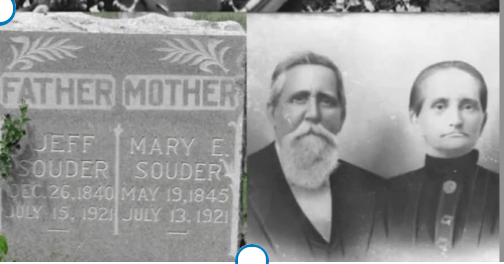
Until Death, Never Did They Part – Thomas & Mary Ellen Souder

In 1921, Thomas and Mary Ellen Souder of Texas proved love doesn’t end at goodbye.

1–2 minutes

A Story of Devotion: Thomas Jefferson Souder & Mary Ellen

In the gentle stillness of Hurst, Texas, Thomas Jefferson Souder and Mary Ellen East Souder shared a quiet love. It spanned six decades. They were married for 60 years. They raised a family and cultivated a home. They remained inseparable through every upturn and downturn of life.

July 1921 brought a cruel twist. Both fell victim to “the flux.” It was a brutal wave of gastroenteritis. It was so swift that it swept Mary Ellen away first, on July 13. Thomas Jefferson, already weakened, succumbed to grief and illness just two days later on July 15.

The community mourned—especially those who believed no bond was stronger than theirs. So it was decided: they would rest together, side by side, in a unique double coffin. Their shared burial echoed their life—inseparable, even in death.

Newspapers of the day captured the sentiment well. The Fort Worth Star-Telegram, on July 16, headlined their story: “Death fails to Separate Couple Wed 60 Years.” They honored not just the passing of two individuals. It was a love that truly endured it all.

More than a century later, their story endures. It is not a tragedy but a testament. True devotion can span lifetimes. It quietly reminds us that love, in its purest form, touches eternity.

Fact-Checked Details

  • Thomas Jefferson Souder and Mary Ellen East Souder were married for about 60 years. They passed within a couple of days of one another in July 1921 (1).
  • Mary Ellen died on July 13, 1921, and Thomas Jefferson followed two days later, on July 15, 1921 (2).
  • Their cause of death was identified as dysentery. It was referred to at the time as “the flux.” This is a severe form of gastroenteritis (3).
  • Both were well-known pioneers of Hurst in Tarrant County, Texas. They were buried together in a double coffin. It was a striking symbol of their lifelong unity (4).
  • Their joint burial made front-page news in the Fort Worth Star-Telegram on July 16, 1921, under a headline expressing how “Death fails to Separate Couple Wed 60 Years”

By Benjamin GroffMedia© | benandsteve.com | 2025 

Before It Gets Ignored By Governing Bodies – History Should Be Reported Far And Wide – Like the Camp Logan Disgrace In Texas

Sharing the history that some would rather hide, destroy, or deny is important. This truth must be told. It’s the very principle on which these United States were founded.

4–5 minutes

Sixty-three black soldiers were represented by one lawyer in the
largest court martial in U.S. history, the first of three that followed
the Houston riot of 1917. In total, 110 men out of 118 were found
guilty, and nineteen were sentenced to death by hanging.

Red Paint, Red History: Camp Logan’s Vandalized Truth

In the wake of Hurricane Harvey’s devastation in September, Houston crews were still hauling out debris. They were drying soaked walls when they stumbled upon something different. Red paint was smeared in thick defiance across a freshly rededicated historical marker at the former site of Camp Logan.

The vandals knew what they were doing. The paint wasn’t random—it covered the part of the inscription that told the uncomfortable truth:

Jesse Moore (right), the
great uncle of Angela Holder

These men were not strangers to segregation; most had grown up in the Jim Crow South. But in uniform, with the eagle on their buttons and rifles in their hands, they expected something closer to equality. Houston didn’t see it that way.

White residents and police officers saw armed Black soldiers as a threat. They were considered a dangerous example. This can inspire local Black citizens to demand the same respect. The insults were constant. Slurs were shouted from sidewalks. “Whites Only” signs were on streetcars. There was harassment for daring to walk where white men didn’t think they should.

Tensions reached a breaking point on August 23, 1917. That is when police arrested a Black soldier for intervening in the arrest of a Black woman. A Black military policeman went to inquire about it. There was an argument, gunfire, and rumors. False ones—that he had been killed and that a white mob was heading for the camp.

In a world already wired with racial hostility, that was enough. Over 100 soldiers grabbed rifles and marched into Houston. Two hours later, sixteen white people were dead—five policemen among them-and four Black soldiers had been killed. It was one of the few riots in U.S. history where more white people died than Black people.

The army’s response was swift and merciless. Martial law. The unit was shipped back to New Mexico. Courts-martial—the first one, the largest in U.S. military history.

Of 118 indicted Black soldiers, 110 were found guilty. Nineteen men were hanged, fifty-three sentenced to life in prison. No white civilians were charged. Two white officers faced trial and were released.

Families have carried the weight for generations. Jason Holt still has a 100-year-old letter from his relative, Private Hawkins. It was written to his mother the night before his execution. In it, he tells her not to grieve. He claims his innocence. He also says he is ready to “take his seat in heaven.”

Charles Anderson spoke bluntly. His relative, Sergeant William Nesbit, was among the hanged. “They sent those soldiers into the most hostile environment imaginable. The riot was a problem that arose from community policing in such hostility.”

Even some descendants of those killed admitted the trial was a travesty. “I have no doubt that the men executed were innocent. They had nothing to do with the deaths,” says Sandra Hajtman, great-granddaughter of a policeman who died that night.

In Houston, the story was buried for decades. Newcomers often know nothing about it. That’s changing—slowly—thanks to historians, museums, and family members pushing for recognition, even pardons. Angela Holder, great-niece of Corporal Jesse Moore, has fought for marked graves and posthumous justice. “We tried during the Obama presidency for a pardon… we can try again.”

And then there’s the final image—December 11, 1917—thirteen ropes swaying from a scaffold. The condemned men were silent, unresisting. Nesbit, moments from death, calling to his men: “Not a word out of any of you men now!”

The red paint on that marker wasn’t just vandalism—it was an effort to silence history. But the truth doesn’t scrub away that easily.

If you strip away the paint, you’ll see the exact words that got buried for decades. It serves as a reminder that justice denied is never fully past. The lessons of 1917 are still waiting to be learned.

The Progressive Magazine originally published a report on this topic and in fact has an extended piece on this incident. You can learn more by visiting Progressive Magazine to read the entire report here.

Reflections on the COVID-19 Pandemic and Its Legacy

By Benjamin GroffMedia© | benandsteve.com | 2025 Truth Endures©

3–4 minutes

A Note from the Pandemic

I was being driven to an appointment earlier this week when a reminder flashed on my phone. It was one of those “On This Day” memories—a flashback from five years ago. It was a note I had posted on social media during one of the darkest times I can remember.

It read:

Today, the national death toll in the United States reached 80,000. In the state where I live, the deaths are many. They have brought in refrigerated trailers to hold the bodies. The mortuaries have more bodies than they can carry. The coroner’s office is over capacity. It is being reported that 100 people died in the city where I live yesterday alone.

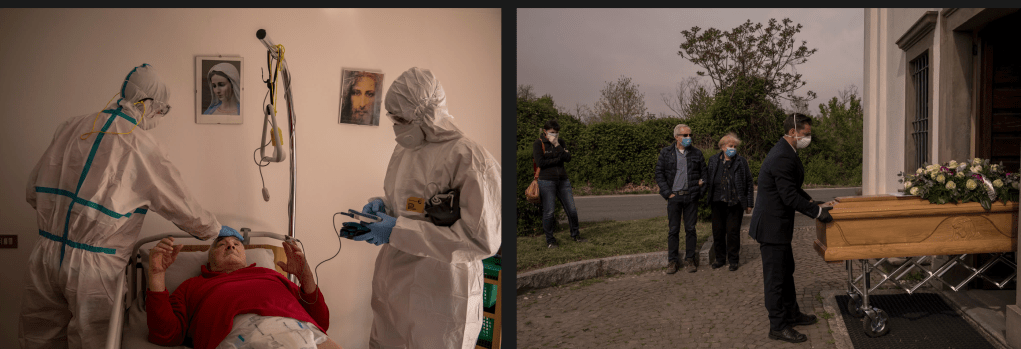
People separated by COVID-19. Pinterest

That note was one of millions posted by people around the world that day. It was part of a collective cry for help. It was a shared testimony during a global crisis. The crisis tested the very core of our humanity. The COVID-19 pandemic wasn’t just a health emergency—it was a historical reckoning.

The novel coronavirus (SARS-CoV-2), first identified in late 2019, swept through cities and countries with terrifying speed. It took the lives of the elderly and the young. It didn’t care about borders or status. It wasn’t limited by language, ideology, or belief. It was an indiscriminate invader—silent, invisible, and merciless.

Pinterest

Hospitals filled to capacity. ICUs ran out of beds and ventilators. Nurses worked 12–16 hour shifts in full protective gear. They returned the next day knowing more patients would be gone. They feared coworkers would be gone too. Some had to reuse PPE, others never had proper protection at all. Entire medical teams were decimated. The faces behind the masks—so many of them never seen again by their loved ones.

In some areas, morgues overflowed, and refrigerated trucks became temporary storage for the deceased. Funeral homes struggled to keep up. Families said goodbye to loved ones through screens or from behind glass, incapable of touching them one last time.

Pinterest

Masks became a symbol—of protection, of politics, of protest. While many wore them out of care for others, others rejected them, fueled by fear, misinformation, or political agendas. What should have been a unified public health response fractured along ideological lines.

The spread of disinformation only made things worse. Some media personalities claimed the virus was “just a flu.” Other public figures suggested it was a hoax designed for political or financial gain. Some of those very same people later contracted the virus. A few died from it—some reportedly urging others to take it seriously with their final breaths.

Pinterest

For me, it was personal. I knew approximately twenty—or more—people I had known for most of my life who died from COVID-19. Every day brought another notice: a friend from childhood, a neighbor, someone from church, a former coworker. Sometimes I would hear from relatives who lost someone. Other times, I’d check news from back home and learn that yet another familiar name had been claimed. In places I had once lived, people I had once shared moments and memories with—gone. The virus wasn’t abstract. It carved itself into the story of my life, my family, my friends, and their families.

Pinterest

Vaccines would eventually arrive, faster than any in modern history. But by then, millions had died, and countless others were left with long-term effects—some still suffering today. As of mid-2025, more than 1.1 million Americans have died from COVID-19. Globally, the death toll has surpassed 7 million, though some estimates suggest the real numbers were even higher.

That reminder on my phone was more than just a memory. It was a marker—a scar from a time we lived through together, yet each experienced in our own way.

Pinterest

Let it be said clearly: the virus was real. The loss was real. And for many, the grief still is.

Let that note stand as a record not just of tragedy, but of resilience. Of what we went through—and of what we must remember. Because forgetting invites the risk of repeating it all over again.

One Nation, Re-United, With Liberty And Justice For All…

By Benjamin GroffMedia© | benandsteve.com | 2025 Truth Endures©


It started with a single violin.

On a breezy Saturday morning in Kansas City, a young girl named Ava stood on the steps of Union Station. She was playing a melody her grandfather once taught her. It was soft, trembling, then bold. People stopped. A man on his bike pulled over. A mother hushed her toddler. A retired Marine tapped his foot.

Without a word, a banjo player joined in. Then a trumpet. Someone brought a drum. Across the plaza, a gospel choir leaving rehearsal couldn’t help but add their voices. Tourists lifted their phones, but eventually set them down, choosing instead to simply listen.

The news spread. Within days, public squares from Birmingham to Boise lit up with spontaneous concerts. There were folk and funk, jazz and country, hip-hop, mariachi, and bluegrass performances. No auditions. No politics. Just people showing up and playing.

The sound swept across the country. Arguments quieted. Strangers talked again. Community cookouts popped up. Elders shared stories. Kids danced. People stopped comparing flags and started waving them together.

A Simple Note

It wasn’t shouted or broadcast. It didn’t flash across screens or scroll across headlines.
It was just a single, simple note—played quietly on a porch in a small town.

No one knew where it came from at first. A child said it sounded like home. An old man wiped his eyes. A woman humming nearby forgot why she’d been angry. People paused. They listened.

The note turned into a song—one people didn’t realize they remembered.
Neighbors began to gather. Strangers smiled. Across the country, others started to hear it too.
Not through wires or speakers—but in hearts that had been waiting for something to believe in again.

It wasn’t about sides, slogans, or speeches.
It was about belonging.

One simple note…
And a nation began to find its way back to itself.

They called it the Harmony Movement—but there was no name when it began. Just one song, from one girl, on one morning, reminding a fractured nation what it still shared:

A rhythm.
A voice.
A chance to listen.
And something worth singing for.

From the Pages of History: July 11, 1955 — “Nightfall Over Wichita”

By Benjamin GroffMedia© | benandsteve.com | 2025 Truth Endures©

1–2 minutes

Wichita, Kansas – July 11, 1955

The heat had been unrelenting for days. By the evening of July 11th, something darker than the weather was brewing in the Kansas sky. Just after 6:30 p.m., local news reports began buzzing with concern. A fast-moving system was developing west of the city. Radar, still new technology for military meteorologists, was showing rotation in those days it wasn’t shared like it is now.

At 7:04 p.m., a Category F4 tornado touched down near the town of Udall, Kansas. It was the same town that had been devastated just two months earlier in the deadliest tornado in state history. This one skirted the more populated areas. Still, damage was widespread. Barns were flattened, power lines twisted, and wheat fields scraped bare. Miraculously, only minor injuries were reported. Many locals said they were prepared this time, keeping radios on and basements cleared after the trauma of May 25.

The Wichita Eagle published a late edition the next morning. The headline read

“Twister Brushes Wichita – City Spared, Farms Not So Lucky.” 

File Photo

A black-and-white photo captured a twisted silo lying like a crushed can under a red-orange sunrise.

Looking back, July 11, 1955, was a reminder that in the American Midwest, nature rarely knocks. It kicks in the door, and you learn to be ready.